Do Anything And Go Anywhere – Itala 35/45 hp

This months Tuesday blogs will feature four European Edwardian, built between 1905 and 1918, vehicles while Thursdays will feature vehicles from the same period built in the United States.

The story of the 9,000 mile plus 1907 Peking to Paris motor race begins with a challenge published in the Parisian newspaper Le Martin on the 31st of January 1907 that read “What needs to be proved today is that as long as a man has a car, he can do anything and go anywhere. Is there anyone who will undertake to travel this summer from Peking to Paris by automobile?”
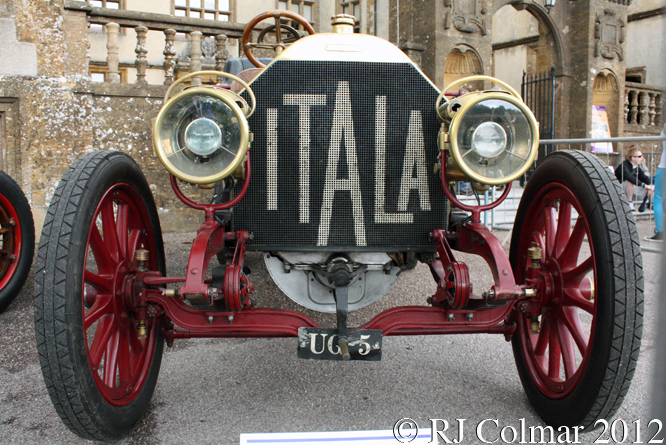
ITALA 35/45hp, Classics at the Castle, Sherborne  Castle

Despite the fact that the organising committee had cancelled the event, five of the original entry of 40 entrants turned up for the start of the race outside the French Embassy in Peking (today Bejing) on June 10th 1907; an Itala, a ‘borrowed’ Spyker, two DeDions and a three wheeled Contal cycle car. There were no rules beyond each vehicle having to carry a journalist.
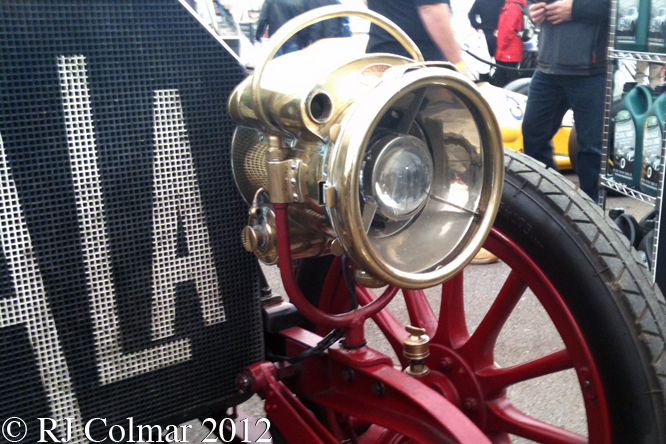
ITALA 35/45, Bristol Classic Car Show, Shepton Mallet

The absence of tarmac roads or road maps meant the vehicles roughly followed a line of telegraph stations, useful for the journalists to file their reports, between the two cities across the Gobi desert, Mongolia and Russia.
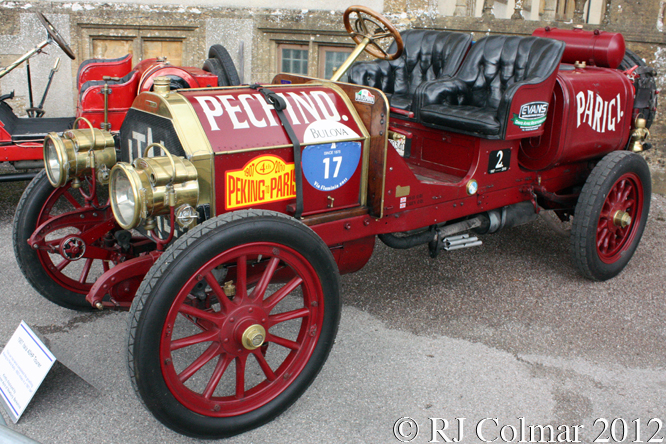
ITALA 35/45, Classics at the Castle, Sherborne  Castle

The eventual winners, despite their ITALA 35/45, similar to the model featured today, falling through a foot bridge and making a 900 mile detour to St Petersberg, to make a dinner date held in their honour, were Prince Scipione Borghese accompanied by the journalist Luigi Barzini, Sr who got to Paris on August 10th 1907.
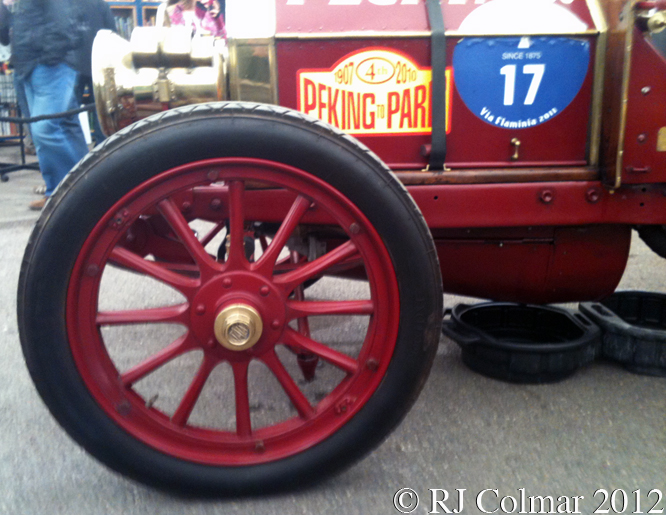
ITALA 35/45, Bristol Classic Car Show, Shepton Mallet

While taking part in a night rally in the early 1950’s Group Captain Rexford Welch found a hub cap of today’s featured ITALA in a hedge of a farm, near Abingdon, where it had been standing derelict for 30 years.
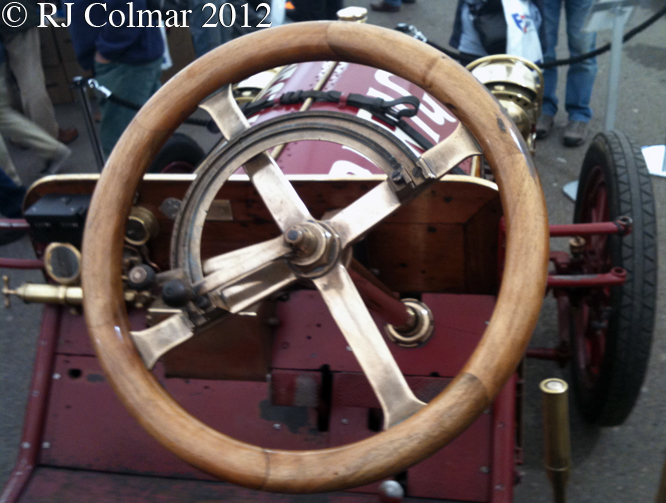
ITALA 35/45, Bristol Classic Car Show, Shepton Mallet

The Group Captain immediately abandoned the competition and waited until sunrise for the farmer, with whom he concluded a deal that morning, to awake. Rexford-Welch towed the car which had no working brakes at the time home to London behind his Lagonda in freezing conditions.
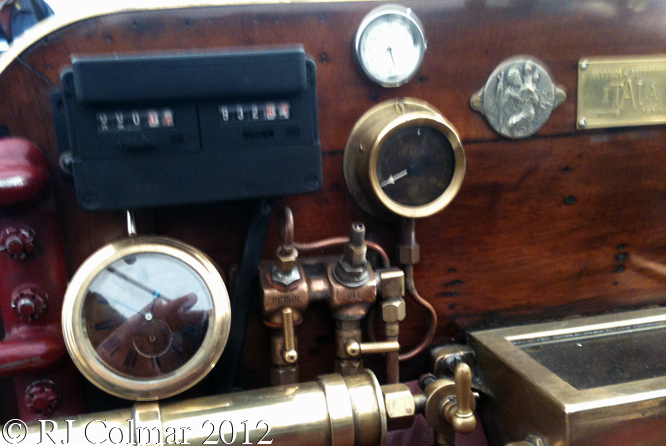
ITALA 35/45, Bristol Classic Car Show, Shepton Mallet

Once the car was roadworthy and fitted with a recreation competition body, it was used on numerous events through the 50’s and 60’s after which it was abandoned for a second time for 40 years until 2004 when the present owners acquired it from Rexford-Welch and managed to restore it again just in time to take part in the 36 day Centenary re run of the !907 Paris Peking Rally, in which St Petersberg was now included on the official route.
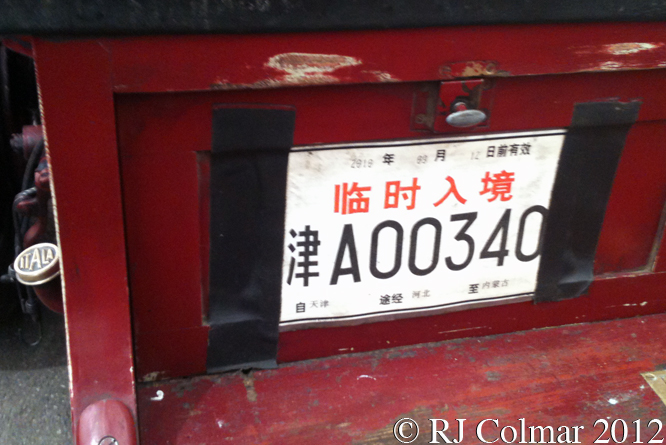
ITALA 35/45, Bristol Classic Car Show, Shepton Mallet

The Itala 35/45 is fitted with a 7.4 litre / 453 cui 4 cylinder motor, during the second restoration the current owners went and saw the original Paris Peking winning car at the Carlo Biscaretti Di Ruffia Museum in Turin and established their chassis was a sister to the 1907 Peking Paris winner albeit originally fitted with a landaulette body that had been rendered useless after standing derelict in a field for 30 years.

Thanks for joining me on this “Do Anything And Go Anywhere” edition of “Gettin’ a li’l psycho on tyres” I hope you will join me again tomorrrow. Don’t forget to come back now !

Share

Doubling Horse Power – Doe Dual Drive 130

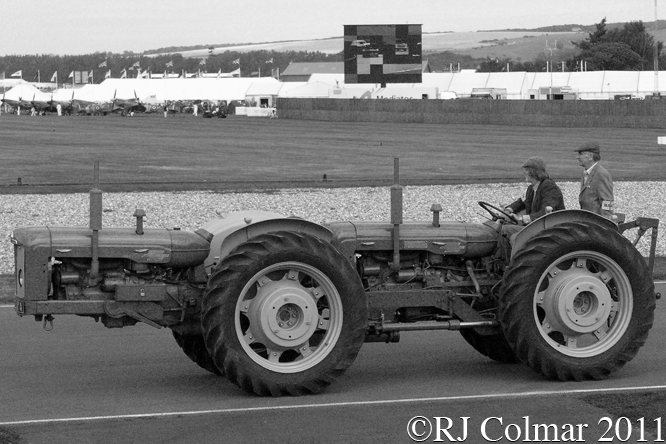
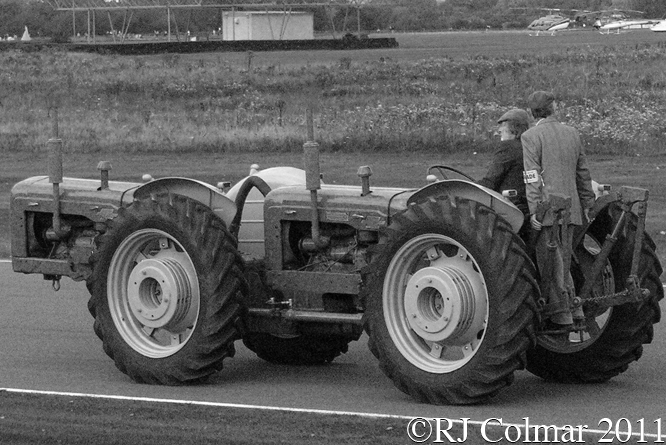
This month I thought it would be fun to look at a few farm vehicles I have stumbled across in recent years.

In June 1898 Ernest Doe took out a lease on a blacksmiths shop in Ulting near Maldon in Essex. By 1910 the business of shoeing horses and repairing agricultural equipment had been successful enough for Ernest to by the free hold for the business and a neighbouring farm.

11-Doe Dual Drive 130 4094sc

After the Great ’14-’18 war eldest son Ernest Charles persuaded his father to invest in some of the 6000 tractors which had been sent from by the US to help the Allied war effort. By the ’39-’45 war Ernst Doe were distributing Fordson, David Brown, Allis Chalmers and Case tractors with Ransome machinery.

Doe Dual Drive 130 4095sc

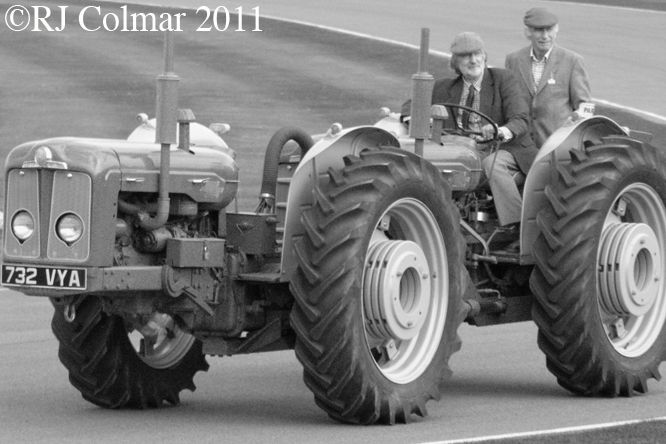
Wanting more power from his tractor Essex farmer George Pryor bought two new Fordsons removed the front wheels of both and linked them with a turntable that allowed the enlarged vehicle to be steered with the aid of a pair of hydraulic rams. In 1958 Ernst Doe built an improved version of Pryor’s tractor linking two Fordson Major tractors. With a combined 100 hp and all wheel drive the vehicle outperformed everything else available in the UK with the bonus that it required special equipment because regular farmyard equipment was too flimsy when operated by the Doe Dual Power.

Doe Dual Drive 130 4096sc

The name was later changed to Doe Dual Drive often abbreviated to Triple D. By 1963 Doe built an even more powerful tractor using to a pair Ford 5000’s like the Triple D 130 seen here at Goodwood. The final Triple D 150 variant was built with a pair of Ford Force 5000 units. Eventually more conventional tractors with more powerful single engines caught up with the performance of the Triple D and rendered it obsolete because of the increased maintenance necessitated by having a vehicle with two motors and two gearboxes.

It is thought around 300 Triple D’s were built and today they can fetch over £50,000 at auction. Today Ernst Doe, still a family business, operates from 19 outlets in the east of England distributing a variety of plant and machinery including New Holland tractors.

Thanks for joining me on this “Doubling Horse Power” edition of “Gettin’ a li’l psycho on tyres” I hope you will join me again tomorrow when I’ll be looking at the first of this months series of Edwardian vehicles. Don’t forget to come back now !
Share

Clash Of The Eccentrics – Bristol 412 S1

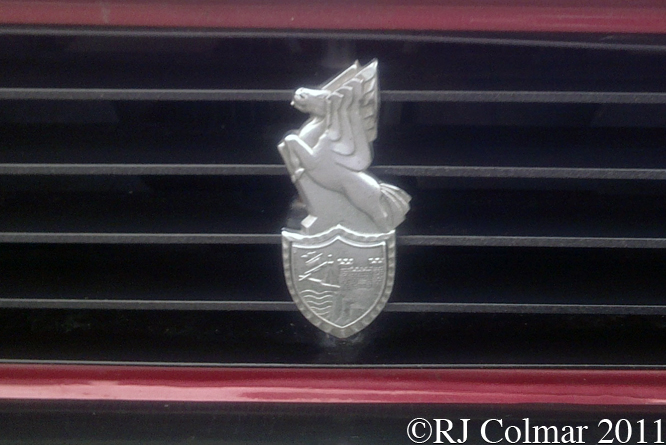
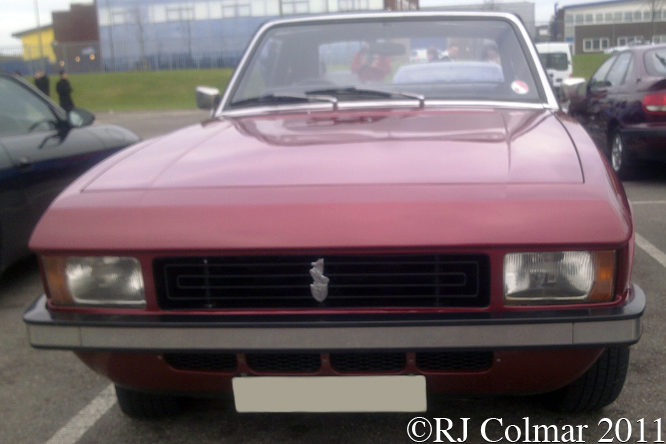
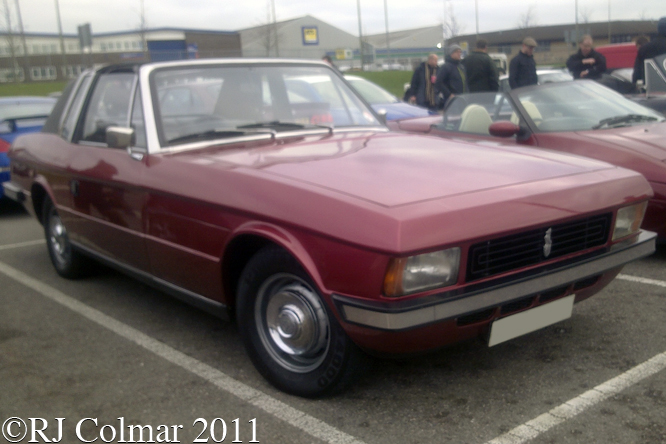
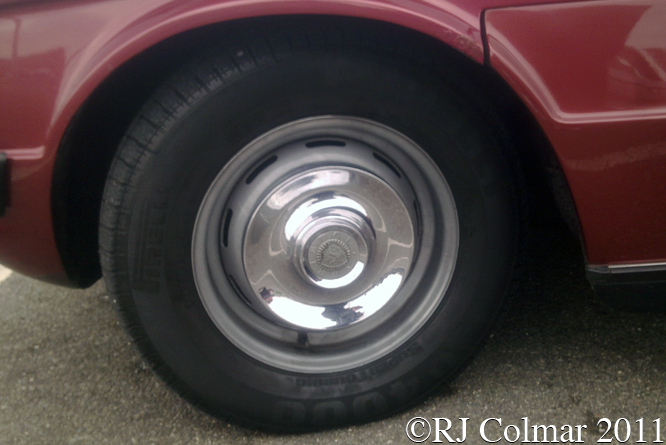
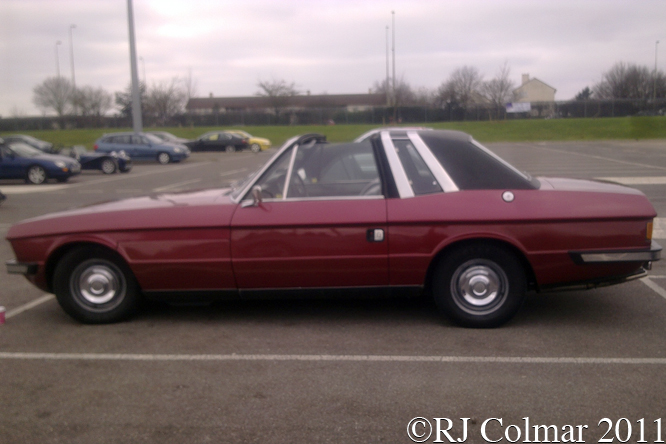
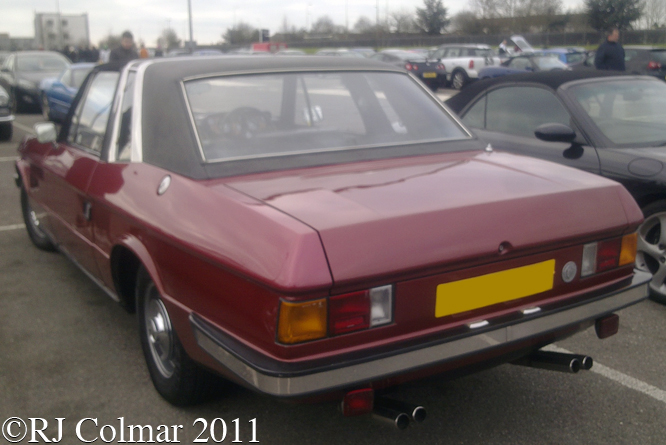
In 1975 Bristol replaced it’s 411 model with the 603 featuring a completely new body, a second new car was scheduled to appear on Bristol’s Earle Court Motor Show stand in October 1975 however despite pre event publicity the targa topped 412 model featured today was not ready and so did not appear as promised in the press.

Bristol 412 S2, Pistonheads Sunday Service, BMW Plant, Cowley

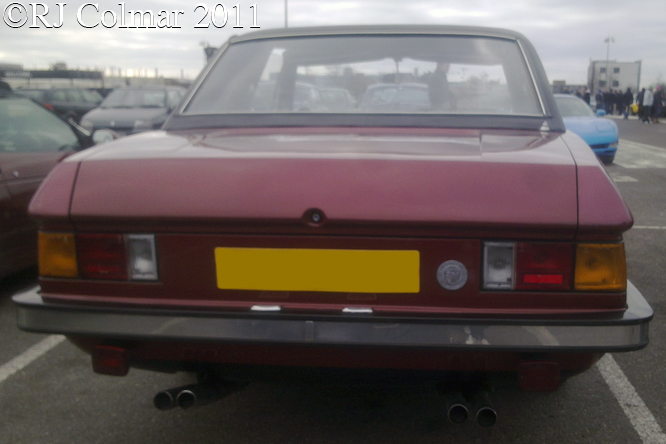
The 412 has been described as a clash of automotive eccentrics by some commentators because the body was designed and built by no less an eccentric company than Carrozzeria Zagato wih whom Bristol’s Tony Crook had earlier worked as their UK Concessionaire and Importer. The distinctive head light clusters appear to have been sourced from the second generation Opel Commodore.

Bristol 412 S2, Pistonheads Sunday Service, BMW Plant, Cowley

The first Series 412’s were built with the 300 hp 6.6 litre / 400 cui Chrysler B series V8’s but the second series introduced in late 1977 were fitted with the smaller 5.9 litre / 361 cui Chrysler motor.

Bristol 412 S2, Pistonheads Sunday Service, BMW Plant, Cowley

Series 2 412’s have front suspension modifications as a result of the lighter motor, improved ventilation for the cabin and redesigned seats. From the date of first registration, March 1977, and engine size it would appear today’s car, seen at a Pistonheads Sunday Service meeting held at the BMW Plant in Cowley a couple of years ago, is a Series 1 412.

Bristol 412 S2, Pistonheads Sunday Service, BMW Plant, Cowley

Apparently when Tony Crook went to see the the prototype 412 at Zagato it featured an even bluffer front end and was some 18 foot long, before Tony intervened.

Bristol 412 S2, Pistonheads Sunday Service, BMW Plant, Cowley

The appearance of the 412 divides opinion like few others, as can be seen on this linked Pistonheads thread, one either gets Bristol ethos or one does not their is little middle ground.

Bristol 412 S2, Pistonheads Sunday Service, BMW Plant, Cowley

In 1982 the 412 was fitted with a turbocharger and slightly face lifted which included twinned headlight clusters and called the Beaufighter production of around 27 of these continued until 1993. It is thought just one export only fully convertible versions of the Beaufighter with an electric roof, known as the Beaufort were built along with two non turbocharged US spec 412 known as the 412USAs.

Bristol 412 S2, Pistonheads Sunday Service, BMW Plant, Cowley

It is thought 24 412 Series 1’s were built and 34 Series 2 412’s. Of the 88 Targa tops and one Convertible it is thought 76% are still extent.

Thanks for joining me on this ” Clash Of The Eccentrics” edition of “Gettin’ a li’l psycho on tyres” I hope you will join me again tomorrow when I’ll be looking at something a little more agricultural. Don’t forget to come back now !
Share

Race On Sunday Work On Monday – Ginetta G4 Coupé by DARE

In 1958 brothers Bob, Ivor, Trevers and Douglas Walkett built their first car the Ginetta G1 based on a pre 1939 Wolsey Hornet in 1958, the car never went into production but a range of successive road/race vehicles, both turn key and self builds, gained a reputation for sporting prowess that has continued to this day despite the original company failing after the Walketts retired in 1989.

Ginetta G4 By DARE, Castle Combe

One of the companies most successful models was the race on Sunday work on Monday Ginetta G4 which was launched 1961 powered by a 1 litre / 61 cui motor sourced from the Ford 105E Anglia, of the type recently made famous by the Harry Potter films.

Coote, Ginetta Zetec G4 By DARE, Wiscombe Park

G4 production continued in both Roadster and, from 1963, Coupé forms until 1968. The Series III variant introduced in 1966 featured pop-up headlights, powered by a 1500cc / 90.5 cui motor a G4 was capable of 120 mph.

Ginetta Zetec G4 By DARE, Castle Combe

In 1981 a slightly longer and wider Series VI Ginetta G4 was launched. After the company had been sold in 1989 to Martin Phaff and moved to Scunthorpe it appears that continued demand for the G4 persuaded DARE UK a company based in Colchester Essex to take up production of the G4 in the mid 1990’s.

Ginetta Zetec G4 By DARE, Castle Combe

Today’s featured G4 was built by DARE UK in 2000 and is powered by a 1796cc / 109 cui Ford Zetec engine which will produce a minimum of 165 hp. The car is seen in the paddock at Castle Combe and returning to the paddock at Wiscombe Park with Exeter’s Roger Coote at the wheel.

Thanks for joining me on this “Race On Sunday Work On Monday” edition of “Gettin’ a li’l psycho on tyres” I hope you will join me again tomorrow when I’ll be looking at a Bristol. Don’t forget to come back now !
Share

Ferrari Friday – Autosport International

A couple of weeks ago the motor racing season kicked off with the Autosport International trade fair at Birmingham’s National Exhibition Centre (NEC) and I popped along to snacth a preview of the motor sporting year ahead. Today’s post show’s some of the Ferrari’s present.

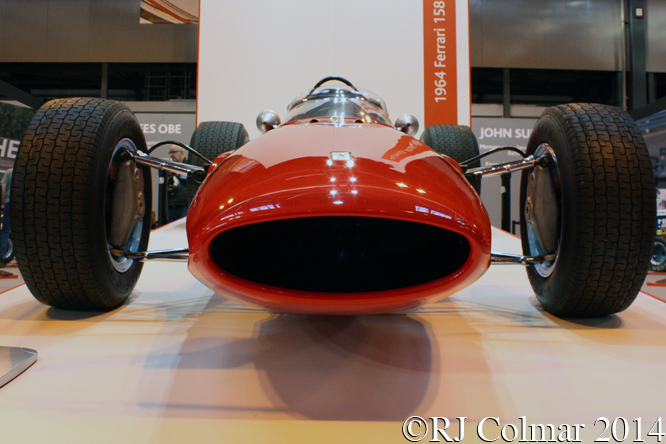
Ferrari 158, Autosport International, NEC Birmingham

Undoubted star of the show was this Ferrari 158 as driven by John Surtees to the 1964 World Drivers Championship, unusually despite not winning the most races, an honour that fell to 1963 Champion Jim Clark who won 3 races to John’s 2, or the most points, an honour that fell to 1964 Champion Grahmam Hill who had to drop two points because only the best 6 from a maximum 10 results counted, leaving John to win the Championship by one point from Graham. John will be demonstarting the 158 which is owned by George Barber and usually found at the Barber Museum in Alabama.

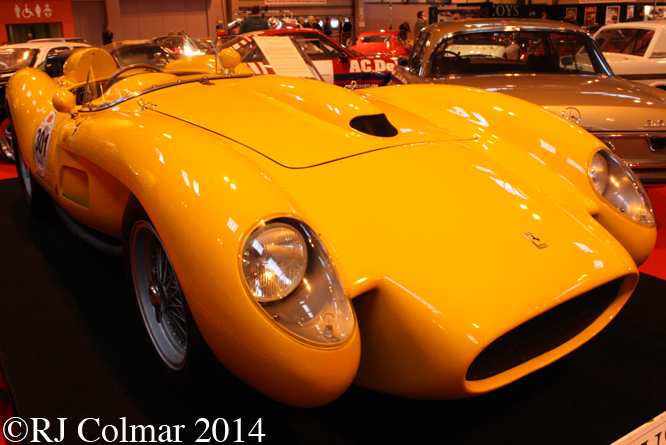
Ferrari 250 GT/TR, Autosport International, NEC, Birmingham

Oldest of the Ferrari’s that I noticed at the show was this 1956 Ferrari 250 GT Boano which in 1988 was fitted with a Scglietti pontoon style 250 TR Body by Giovannu Giordanengo in 1988 the car which was on the Coy’s Stand.

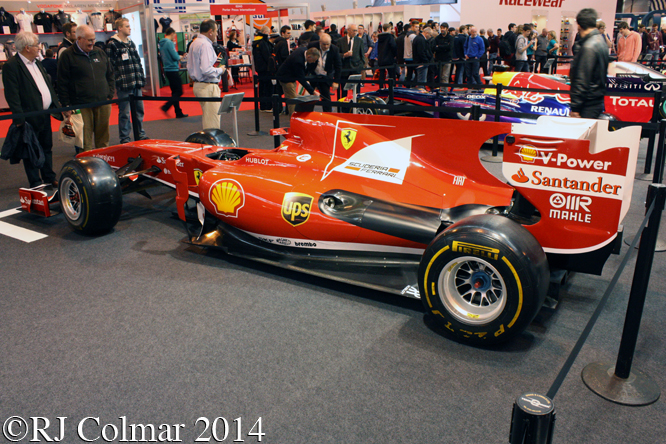
Ferrari F10, Autosport International, NEC, Birmingham

This 2010 Ferrari F10 was looking a little dated among the contemporary Formula One cars on display, with it’s long outlawed outsize fin twixt air box and rear wing.

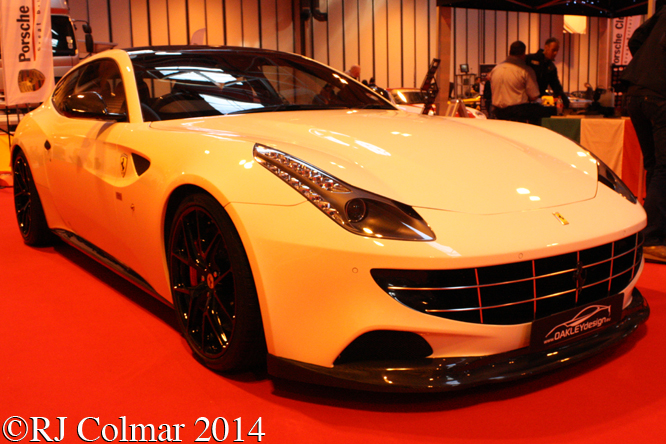
Oakley Design Ferrari FF,  Autosport International, NEC, Birmingham

This Ferrari FF is fitted with subtle “Ultimate Performance Enhancing” goodies by Oakley Design.

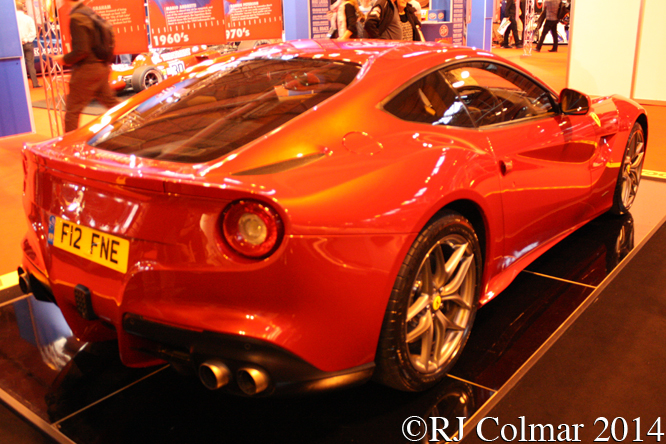
Ferrari F12, Autosport International, NEC, Birmingham

The Autocar stand featured a Ferrari F12, the first time I have seen one in the flesh.

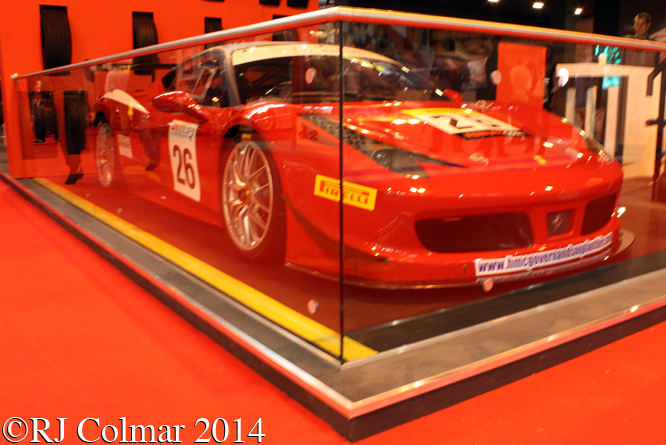
Ferrari 458 Challenge GTC, Autosport International, NEC,

Looking a little like a work of art by Damien Hurst in one of his vitrene’s this Ferrari 458 Challenge GTC has been developed by FF Corse to make it suitable for competition in The Pirelli Ferrari Open and The GT Cup Championships in 2014. Last year Alex Martin won the GTC class and FF Corse the overall teams title in the GT Cup.

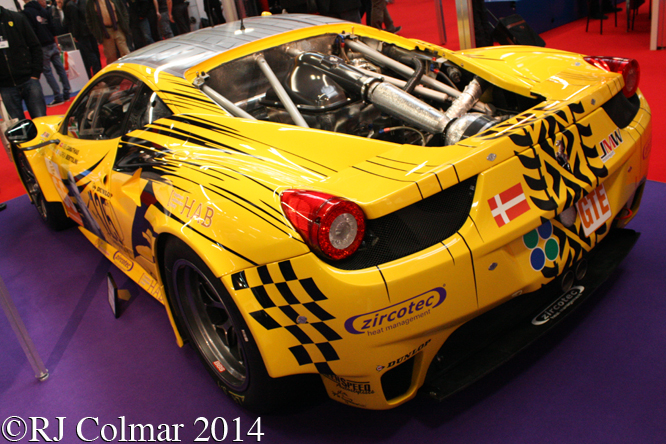
Ferrari 458 Italia GT2, Autosport International, NEC, Birmingham

While drivers with a bigger budget will be competing for a drive in the JMW Motorsports Ferrari 458 Italia GT2, which finished 34th in last years Le Mans 24 hours with Andrea Bertolini, Abdulaziz al Faisal and Khaled al Qubaisi at the wheel.

Share

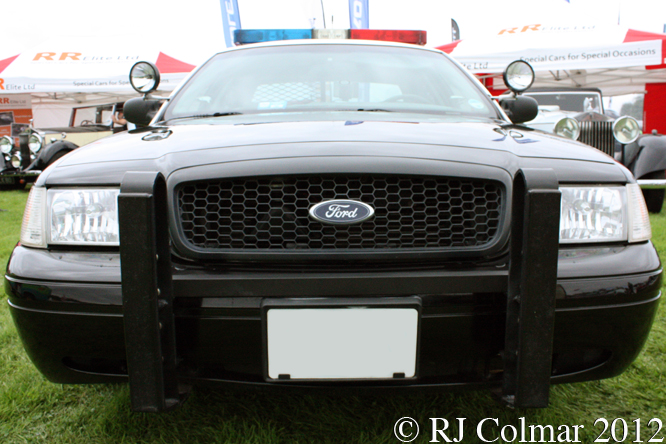
Power Adjustable Pedals – Ford Crown Victoria Police Interceptor

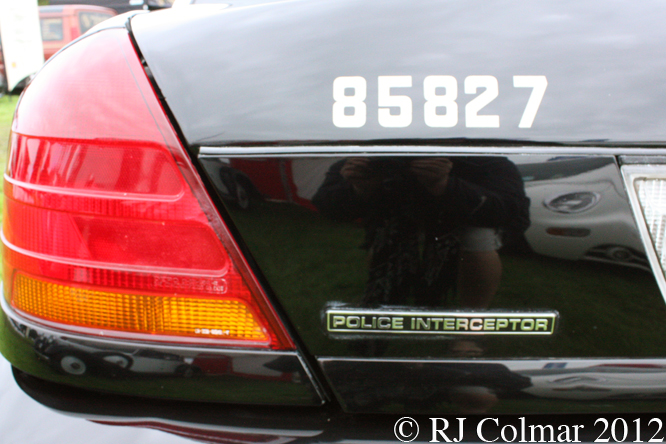
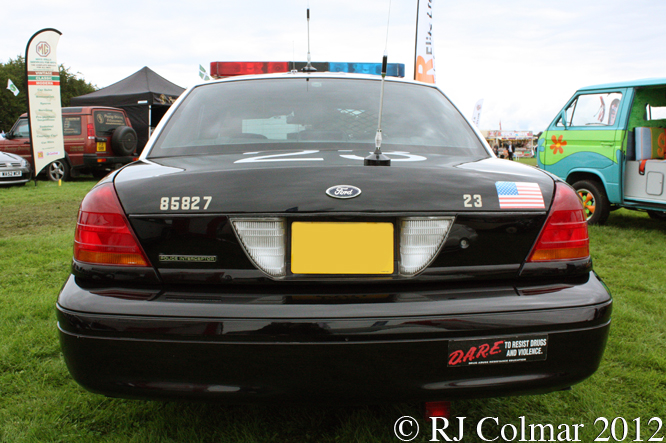
In 1992 the Ford Crown Victoria Police Interceptor also known as the CVPI, P71 and Crown Vic replaced the police package Ford LTD Crown Victoria which had been available to Law enforcement agencies since 1983.

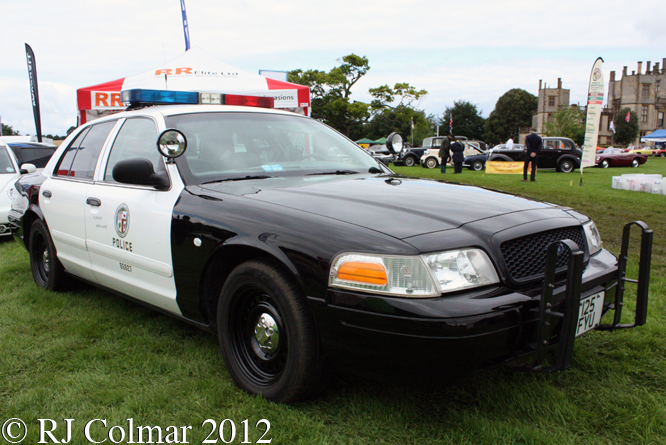
Ford Crown Victoria Police Interceptor, Classics At The Castle, Sherborne Castle

Like it’s LTD Crown Vic predecessor the new model was built with a cheap and easy to maintain separate body and chassis and a 251 hp V8 driving the rear wheels which provided handling characteristics preferred by law enforcement agencies over front wheel drive vehicles.

Ford Crown Victoria Police Interceptor, Classics At The Castle, Sherborne Castle

First generation CVPI’s were built between 1992 and 1997 by which time the CVPI’s closest rival the Chevrolet Caprice was discontinued to be replaced by front wheel drive models.

Ford Crown Victoria Police Interceptor, Classics At The Castle, Sherborne Castle

Despite it’s virtual monopoly on frame over body vehicles Ford introduced an upgraded second generation CVPI with slightly more conservative less rounded styling, in line with it’s other Crown Victoria models in 1997.

Ford Crown Victoria Police Interceptor, Classics At The Castle, Sherborne Castle

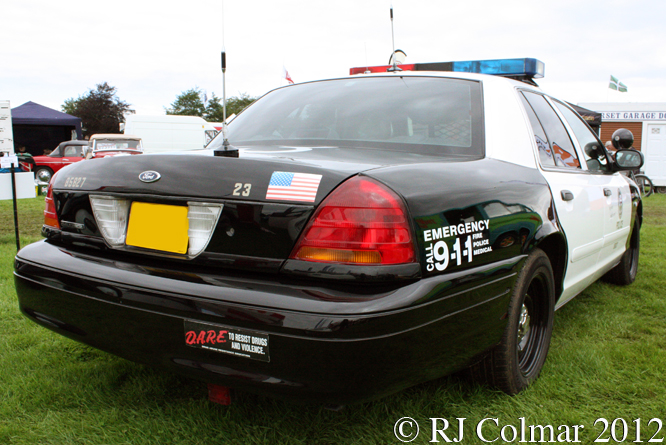
It was not until 1999 that the Police Interceptor badge replaced the Crown Victoria badge on the boot / trunk lid.

Ford Crown Victoria Police Interceptor, Classics At The Castle, Sherborne Castle

For 2001 Interceptors, including today’s featured 2001 example seen at Classics at the Castle in Sherborne, were given Power Adjustable Pedals to more easily accommodate height diversity among Law Enforcement officers using these vehicles. The CVPI model was discontinued in 2010 as was the regular Crown Victoria.

Ford Crown Victoria Police Interceptor, Classics At The Castle, Sherborne Castle

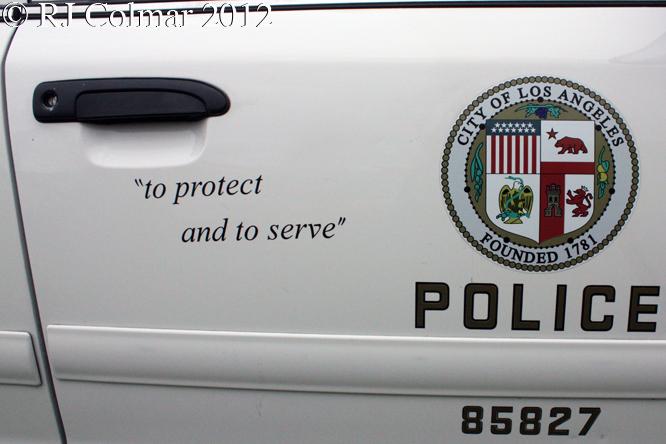
This particular CVPI belongs to RRElite Ltd and is used for weddings, special occasions and Film work. It comes with a chauffeur in full replica LAPD police uniform who will arrest the bride and deliver her safely to the Church on time.

Thanks for joining me on this “Power Adjustable Pedals” edition of “Gettin’ a li’l psycho on tyres” I hope you will join me again tomorrow when I’ll be looking at Some of the Ferrari’s that were on display at the recent Autosport International. Don’t forget to come back now.

Share

Talent Class Of ’13 – Toro Rosso Ferrari STR8

After 15 years of under achievement, in which the team bearing his name best season was marked by two fourth place finishes, Giancarlo Minardi sold out to Australian Airline Magnate Paul Stodart in 2000.

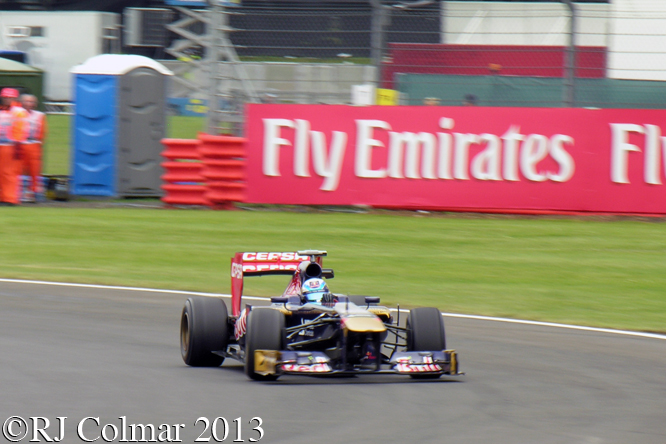
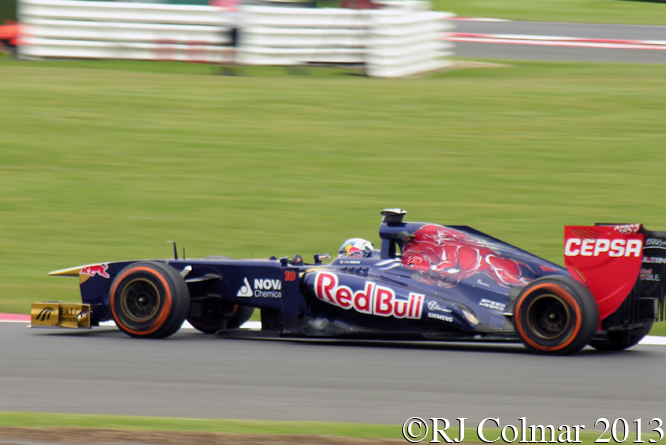
Kvyat, Toro Rosso STR8, Young Driver Test, Silverstone

Over the ensuing 5 seasons the perennial back markers remained just that scoring just 4 points scoring finishes, to his credit Paul Stodart determined that he would sell the team on only if those buying could add and commit to significantly improving the teams performance. He kept his word selling at the end of 2005 to a pair of Austrians Gerhard Berger, a former driver and Dieter Mateschitz, owner of Red Bull who had bought the Jaguar Grand Prix team only 12 months earlier and rebranded it Red Bull Racing.

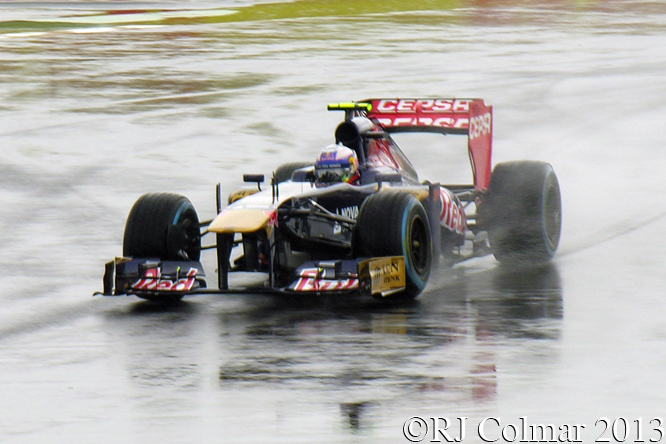
Ricciardo, Toro Rosso STR8, British Grand Prix P1, Silverstone

For 2006 the Minardi team became Suderia Toro Rosso in deference to it’s home town in Firenza, Italy, and was operated as a talent feed for Red Bull Racing. The team took over the contract for the supply of Cosworth motors from Red Bull Racing while Red Bull switched to a supply of Ferrari motors. Additionally Toro Rosso used an updated 2005 Red Bull chassis for it’s 2006 programme.

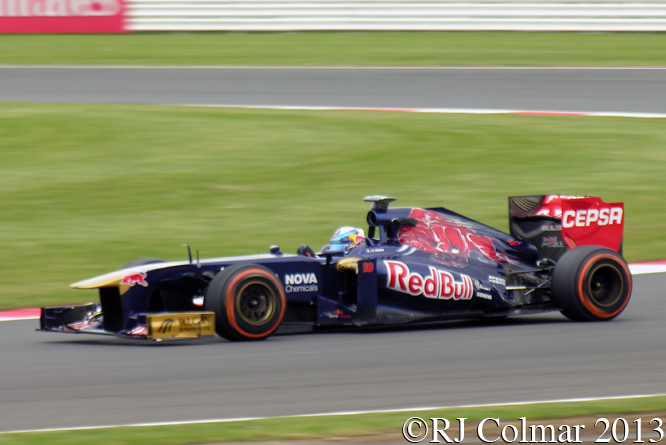
Vergne, Toro Rosso STR8, British Grand Prix P2, Silverstone

2006 and 2007 saw no significant improvement in results with just three points paying finishes despite the team taking over Red Bull Racings contract for the supply of Ferrari motors in 2007 when Red Bull Racing switched to Renault motors. 2008 however saw Sebastian Vettel join the team and there was a dramatic up turn in results with Vettel scoring 5 consecutive points paying finishes topped by a 100/1 win in the 2008 Italian Grand Prix.

Ricciardo, Toro Rosso STR8, British Grand Prix P1, Silverstone

With the team finishing sixth in the championship Berger shrewdly sold his share of Toro Rosso to Mateschitz who equally shrewdly moved Vettel over to his main show at Red Bull Racing which now had top designer Adrian Newey on it’s books. For 2009 Toro Rosso managed six points paying finishes and slipped back to a familiar 10th place in the Championship standings.

Vergne, Toro Rosso STR8, British Grand Prix P2, Silverstone

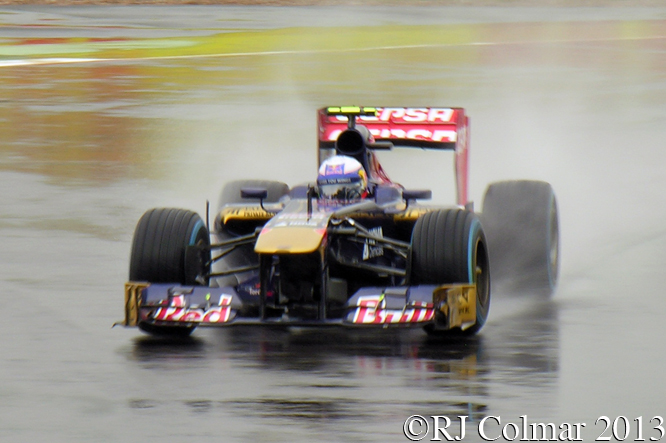
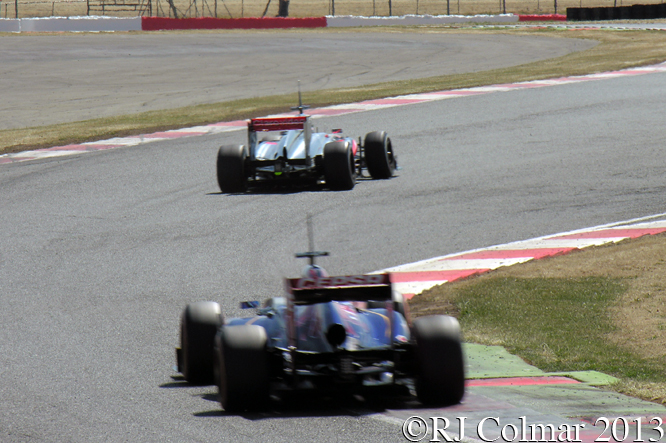
For 2010 new regulations meant the team could no longer rely on cast off chassis from Red Bull and so came up with it’s first unique chassis and since then points finishes have become a little less sporadic, but the team has not finished any season higher than 8th in the championship. Going into 2013 Jean Eric Vergne, above, and Daniel Ricciardo, below, were retained to drive the Ferrari powered STR8 designed under the leadership of Technical Director James Key.

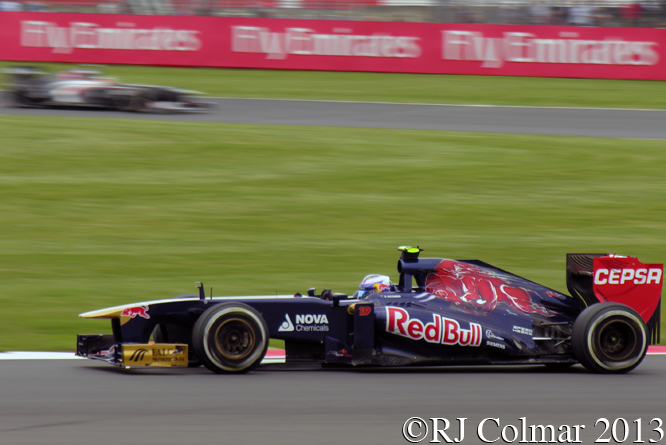
Ricciardo, Toro Rosso STR8, British Grand Prix P2, Silverstone

Having scored only 26 points between them in 2012 Vergne and Ricciardo managed an improvement to score 33 points in 2013. The main difference being the improvement in form of Ricciardo who scored seven more points more than his team mate, having scored six less the year before.

Vergne, Toro Rosso STR8, British Grand Prix P2, Silverstone

This was particularly noticable having kicked in after the announcement of the retirement from Red Bull from Ricciardo’s Australian compatriot Mark Webber. Ricciardo now looks forward to replacing Webber and driving alongside four time champion Sebastian Vettel.

Vergne, Toro Rosso STR8, Young Driver Test, Silverstone

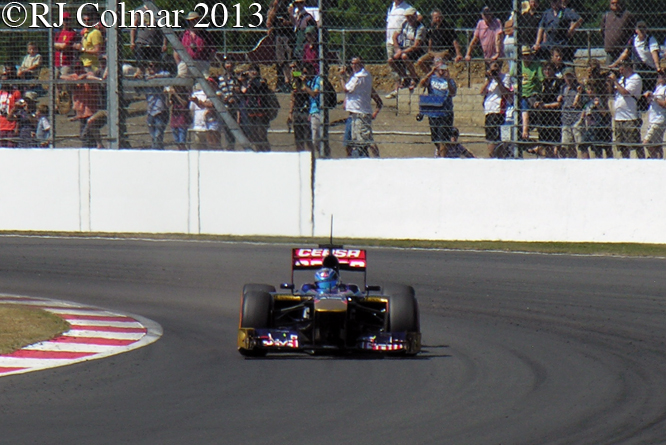
Having scored the teams best finish of 2013 a sixth place in the Canadian Grand Prix Jean Eric secured a third season at Toro Rosso where he will be joined by the teams Russian 2013 test driver Daniil Kvyat (seen testing at Silverstone in the first photo). For 2013 Toro Rosso will be powered by the same Renault power trains as Red Bull Racing and it will be interesting to see if the team can pick up it’s game in a season where reliability is expected to be a key issue with the introduction of new hybrid power trains.

You can follow the fortunes of Toro Rosso on their website linked here and twitter feed linked here.

Thanks for joining me on this “Talent Class Of ’13” edition of “Gettin’ a li’l psycho on tyres” I hope you will join me again tomorrow when I’ll be looking at an LA PD Interceptor. Don’t forget to come back now !
Share