Floreat Lindum – F.L. Automobiles of Paris Sports

Over the last few years I have come across Ron Birkett’s F.L. Sports several times and yesterday it was time to bite the bullet and find out what an F.L. Sports was.

After several hours I came up with not a lot, to be precise plenty of photo’s of today’s featured car, mention of a 1911 F.L. Torpédo that was auctioned so long ago in France there are no longer any photos of it on the web and two adverts the first from June 1912 and another depicting a 1909 12 hp 4 cylinder model that might have some relevance to the subject of this blog.
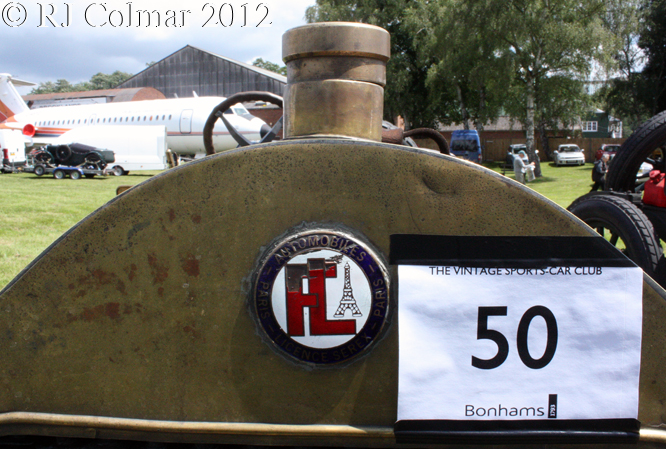
F.L. Sports, Brooklands Double Twelve

If there is an F.L. Owners club they are keeping a very low web profile. It would appear that the F.L. story begins with an organisation called Compagnie Française de Moteurs à Gaz which for 20 years manufactured stationary Otto 4 stroke motors perfected and designed by Nikolaus Otto and his partner Eugen Langen.

Between 1900 and 1914 Compagnie Française de Moteurs à Gaz got involved in the manufacture of motor cars through a company called Societé Générale des Voitures Automobiles Otto of Paris which were branded Otto, not to be confused with a brand of the same name manufactured in Philadelphia from 1909 to 1912.
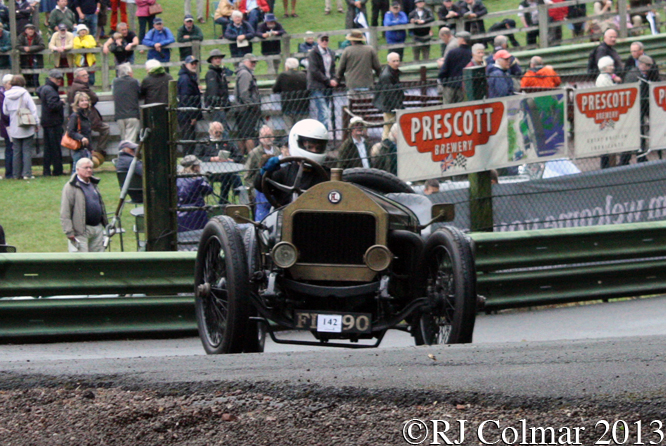
F.L. Sports, Birkett, Prescott

A Mr de la Frennaye came across an engineer called M Serex who had designed a simple yet reliable machine and de la Frennaye negotiated a licence for Societé Générale des Voitures Automobiles Otto of Paris to manufacture it.

To differentiate the Serex designed car from the Ottos, which appear to have gone out of production by 1909, Societé Générale des Voitures Automobiles Otto of Paris invented a new brand F.L. Automobiles of Paris, F.L. being a phonetic spelling eff ell of Eiffe, as in the Parisian Tower, a symbol of technological progress which appears on the F.L. badge.
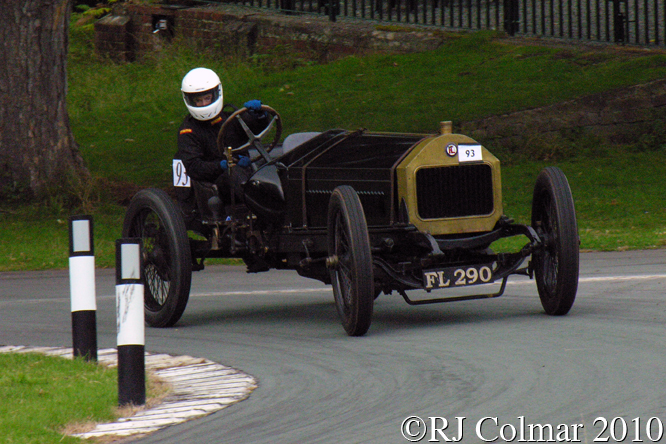
F.L. Sports, Birkett, Prescott

From at least 1908 F.L. manufactured vehicles with 2.4 litre / 146 cui 4 cylinder motors and from 1912 3.6 litre / 219 cui 6 cylinder motors that were fitted to vehicles with Landaulet, Double Phaeton, Coupe de Ville, Roadster bodies.

It would appear Mr de la Frennaye had good connections with Russia so it is possible some of these vehicles may have been sold there. Production of the F.L. marque came to a halt in 1914 with the onset of the 1914-18 Great War.
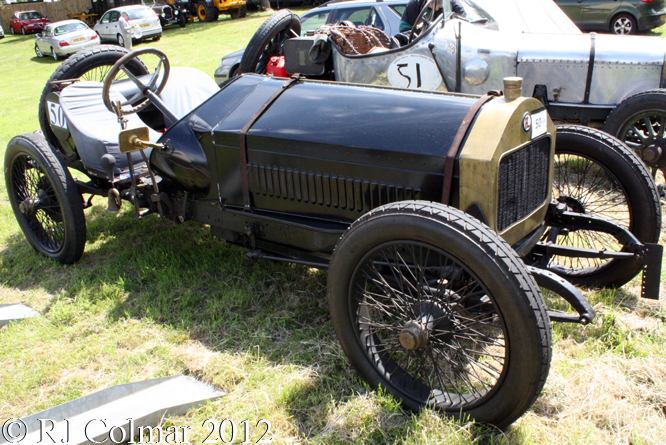
F.L. Sports, Brooklands Double Twelve

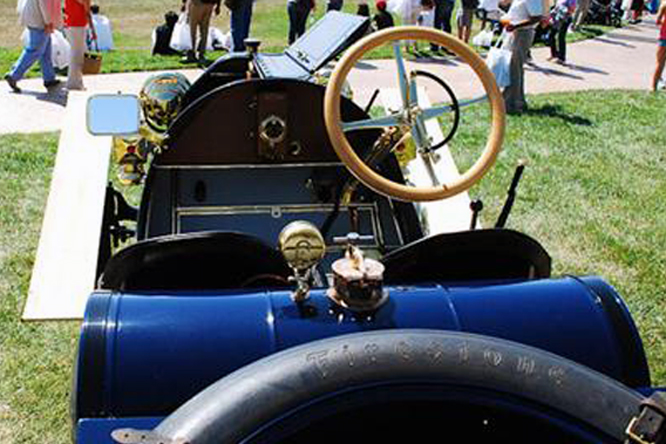
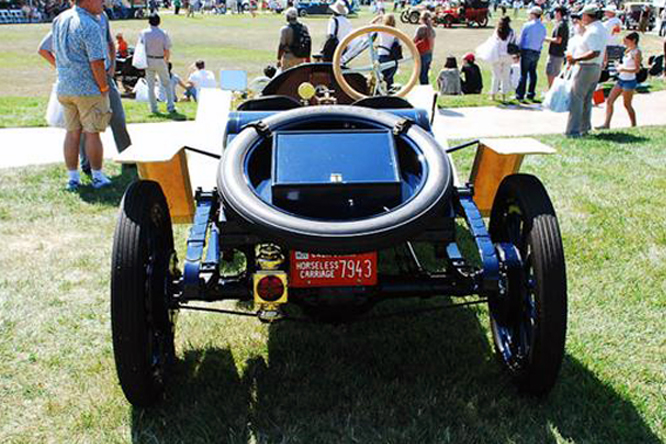
Today’s featured car was originally sold in 1909 and still bearing it’s original licnece plate number was sold to a lady in County Galway she sold it in 1914 and records of its 2nd and 3rd keepers in Ireland are known up until 1919.

When the chassis of today’s car was discovered in Nottinghamshire in 1998 it emerged that the English F.L. Agents RM Wright & Co of Lincoln sold F.L. vehicles with a different badge RM Wright & Co Licence Serex appeared around the out side, the FL letters within, but the Eiffel Tower illustration replaced by one of Lincoln Cathedral, and the Latin words “Floreat Lindum”, Flower Of Lincoln, appeared above and below the overlapping FL letters.
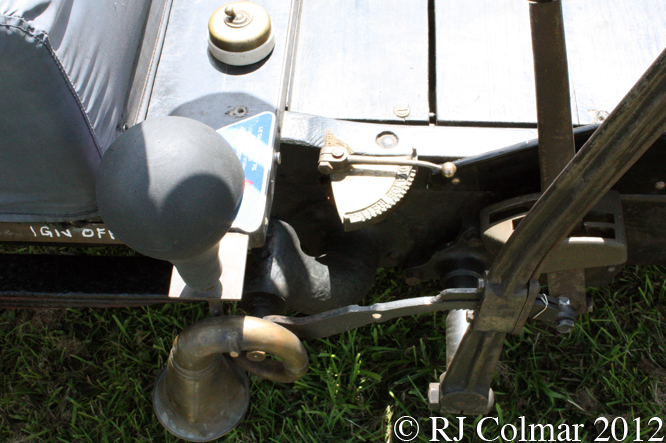
F.L. Sports, Brooklands Double Twelve

Starting with a bare chassis and no motor Ron Birkett has built the car up into a two seater runabout which was completed and put back on the road with it’s original licence plate number in 2001.

This vehicle is officially listed with a 3 litre / 183 cui motor, a size which I have not otherwise heard about in connection with the Marque and given that the chassis was found sans motor in 1998 it is possible the motor is of a similar period but different make. If you can put me out of my misery please do not hesitate to chip in below.
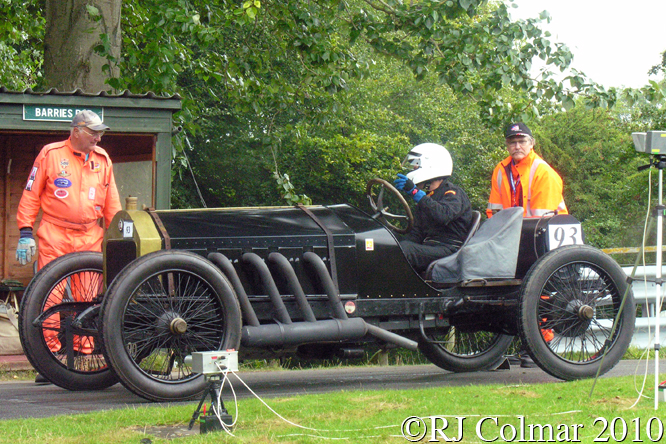
F.L. Sports, Birkett, Prescott

Since starting this article it has emerged that a further circa 1908 F.L. fitted with a four seat tonneau body was known to reside in Australia in 1998. With no known production figures and just three examples known to have survived there may be a simple reason why the F.L. Owners Club keeps such a low profile.
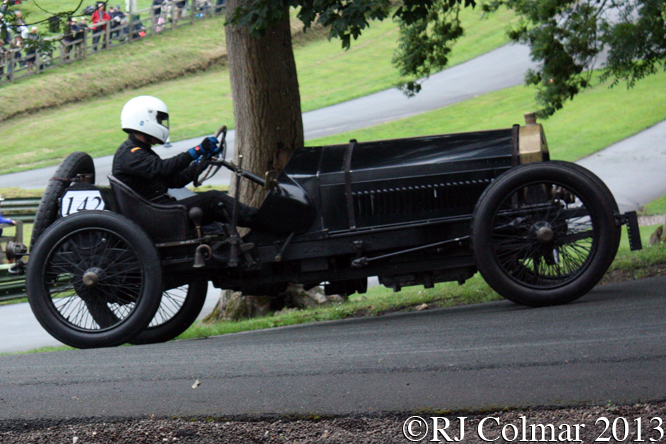
F.L. Sports, Birkett, Prescott

My thanks to TNFer’s Tim Murray, Steven Lines and Udo Leischner for additional information about the Marque and to Udo again for finding this linked period photo of an FL 12/16hp.

Thanks for joining me on this “Floreat Lindum” edition of “Gettin’ a li’l psycho on tyres” I hope you’ll join me tomorrow when I’ll be looking at Force India’s 2013 season. Don’t forget to come back now !

Share

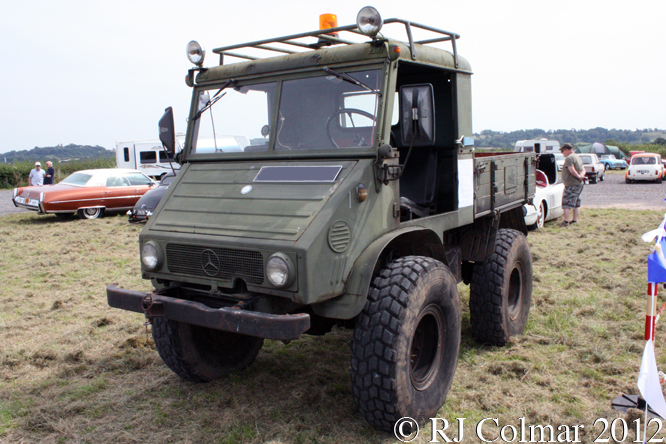
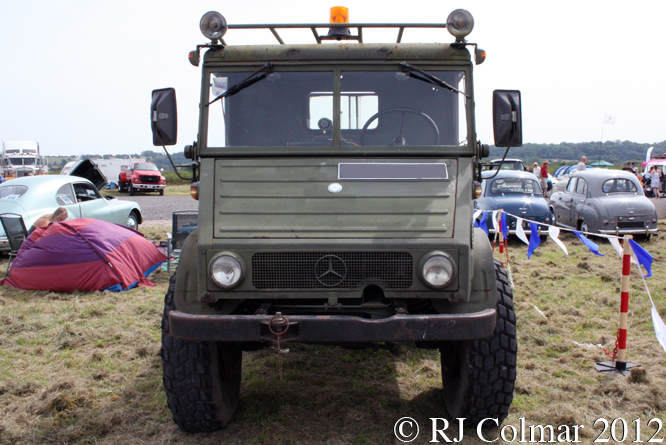
Universalmotorgerät – Mercedes Benz Unimog 406

As it became apparent that the Allies were going to win the Second World War ideas were sort about what to do with Germany after hostilities ceased. In 1944 United States Secretary of the Treasury Henry Morgenthau, Jr came up with the Morgenthau Plan which sort to split Germany into three sectors with a vision of a deindustrialised, pastoral agrarian nation. It soon became apparent however that such a plan would only be able to support 2/3rds of the German population meaning around 25 million Germans would have to be re-located.

Mercedes Benz Unimog 406, Summer Classics, Easter Compton

The plan for Germany that was eventually agreed by the allies was suitably adjusted to avoid such a migration, but with de militarisation high on the agenda in the immediate aftermath of the cease fire large organisations like Daimler Benz were prohibited from building all wheel drive vehicles.

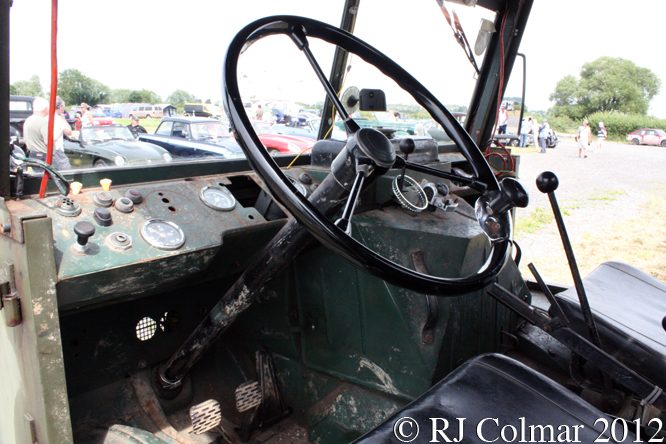
Mercedes Benz Unimog 406, Summer Classics, Easter Compton

As these events unfolded Albert Friedrich former head of aircraft design at Daimler Benz found his services to be little in demand and so he set about designing an all purpose vehicle that would meet a multitude on demands in the foreseen agrarian economy called the Universalmotorgerät abbreviated to Unimog which translates as Universal Motor Machine.

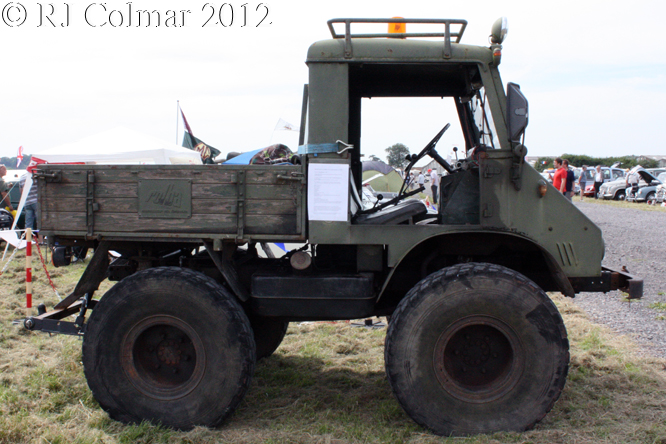
Mercedes Benz Unimog 406, Summer Classics, Easter Compton

The essential characteristics of the Unimog were that it had all wheel drive for all terrain work, front and rear axles to be equipped with suspension, brakes, unlike conventional tractors, and differential locks for conventional road use, two cab with heating and two padded seats, one ton load capacity, front and rear power take offs with equipment mounting facilities front, back top and sides.

Mercedes Benz Unimog 406, Summer Classics, Easter Compton

To give the vehicles additional ground clearance the axles were fitted with four wheels of equal size and portal gears so that the axle centers were above the wheel centers. The original track width was devised so that the vehicle could stand astride two rows of potatoes in a field. Many of these features can still be found on Unimogs leaving the factory today.

Mercedes Benz Unimog 406, Summer Classics, Easter Compton

The first prototype was built by Erhard & Söhne in 1946 and patents were soon granted so that the vehicle was classed as agricultural vehicle to reduce the tax burden on owners. A huge success from it’s launch 600 Unimogs were built by Erhard & Söhne until all wheel drive restrictions were lifted from Daimler Benz in 1950 when they took over production because Erhard & Söhne could no longer build enough vehicles to meet the demand.

Mercedes Benz Unimog 406, Summer Classics, Easter Compton

Daimler Benz built a new facility which went operational in 1951 producing around 300 vehicles a month. It was not long before variants appeared including military derivatives which were bought by the French Army. In 1966 the 100,000 Unimog was built and the 200,000 in 1977, and as mentioned production continues to this day> Despite not being known as performance models in 2012 Arnie Schwarzenegger swapped his Hummer for one customised by Mertec reputed to have cost US$ 250,000.

Mercedes Benz Unimog 406, Summer Classics, Easter Compton

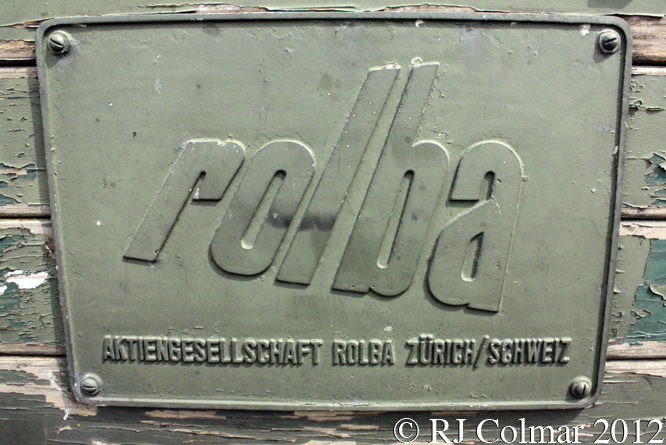
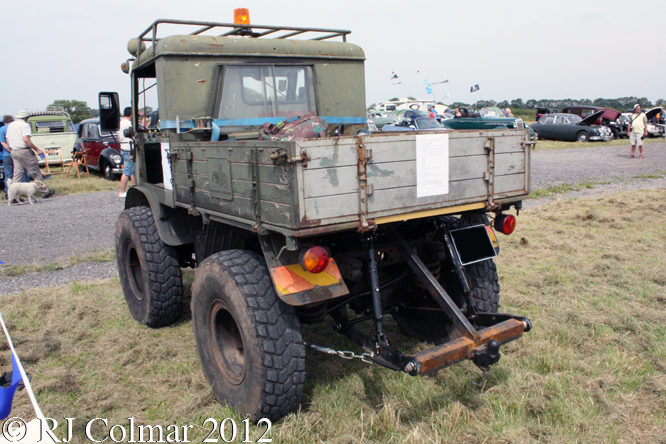
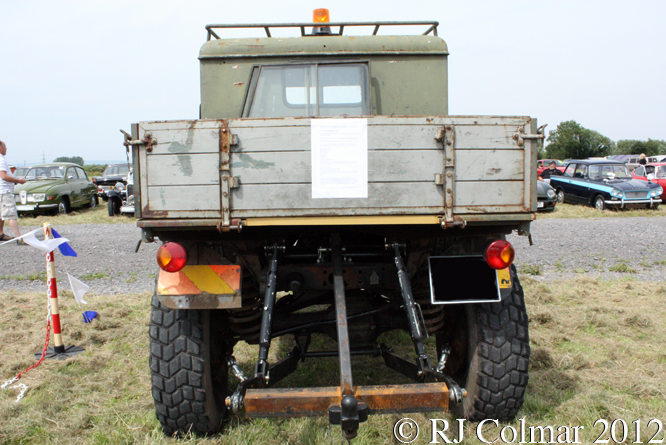
Today’s featured vehicle seen at Easter Compton Summer Classics show a couple of years ago is a 1965 406, a line that was in production from 1963 to 1988. Originally powered by a 65 hp diesel motor driving through a 6 speed gearbox, this one appears at some point to have been kitted out with snowplough equipment from the Swiss Rolba AG which was acquired by ZAUGG AG EGGIWIL in 2010.

Share

Unparalleld Vision – Bristol 603 E

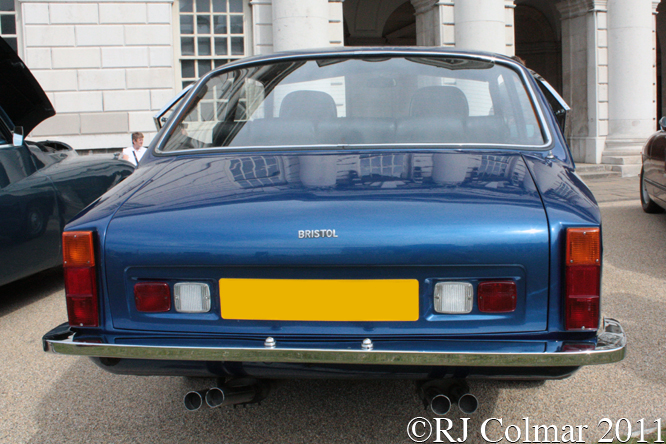
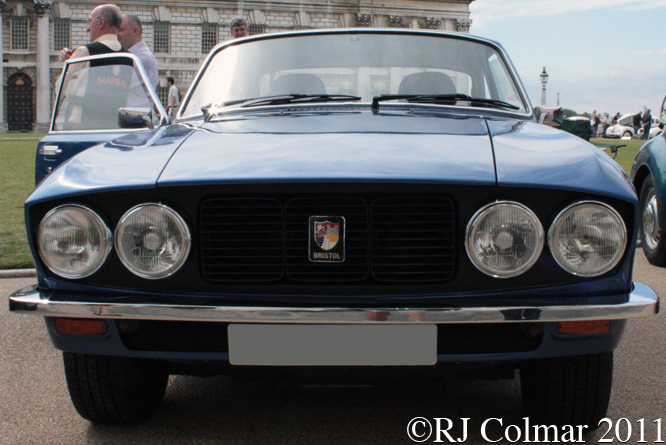
When Bristol replaced it’s faithful 411 models in 1976 it came out with all guns blazing launching the Targa topped 412 and today’s featured model the 603 which owed little to it’s older sister apart from a familial face with four round head lights.

Bristol 603 E, Bristol Concours d'Elegance, Greenwich

The 603 was launched in E and S form’s, the E like the 1977 example seen here was supplied with a 145 hp 5.2 litre / 318 cui Chrysler V8 while the S was fitted with the 170 hp 5.8 litre / 360 cui motor.

Bristol 603 E, Bristol Concours d'Elegance, Greenwich

Since it left the factory today’s featured car has been fitted with a stroked 360 Mopar to bring it up to 375 hp 6.6 litre / 408 cui spec. An Edelbrock carburetor and special inlet manifolds helping to more than double the cars original horsepower numbers.

Bristol 603 E, Bristol Concours d'Elegance, Greenwich

The official rest to 60 mph time for the more powerful S variant was a sprightly, for 1976, 7.6s with a 1/4 mile time of 18.2 seconds, one would imagine with double the horsepower these numbers would take a significant dive.

Bristol 603 E, Bristol Concours d'Elegance, Greenwich

The 603 is noted for it’s slim window pillars which offered unparalleled vision, and yet this did not give the car in anyway an overly futuristic glass house look, the 603 was very much of it’s time and it’s variants remained in production until the one off Blenheim S4 was built in 2009.

Thanks for joining me on this “Unparalleled View” edition of “Gettin’ a li’l psycho on tyres” I hope you will join me again tomorrow when I’ll be looking at an agricultural pick up. Don’t forget to come back now !
Tony Crook RIP.

It was with sadness that the motoring fraternity learned of the death of Tony Crook earlier this week.

Tony had a long and successful racing career which included driving two Bristol powered cars in the 1952 and 1953 British Grand Prix, run to Formula 2 regulations.

Tony went on to become an agent and later the sole agent for Bristol Cars in which he took a 40% stake when Bristol Cars became independent of it’s parent the Bristol Aeroplane Company in 1960.

In 1973 Tony bought out Bristol Cars founder Sir George White to become sole proprietor and distributor of Bristol Cars until 1997, when he sold a 50% stake to Toby Silverton which became 100% in 2001.

Tony continued working for Bristol until 2007.

We offer sincerest condolences to Mr Crooks family and friends.

Share

Versatile Winner – Ginetta Zetec G12 by DARE

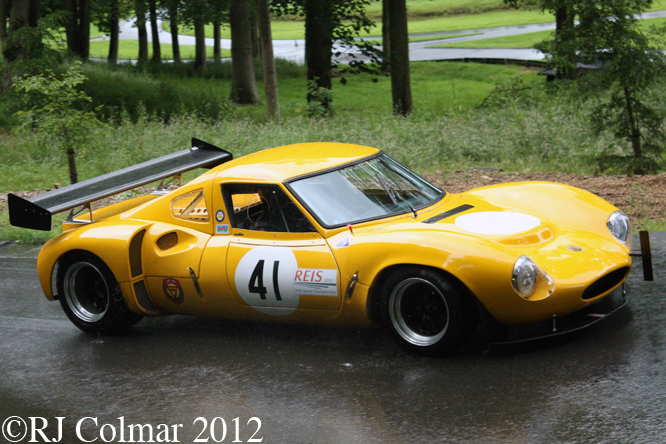
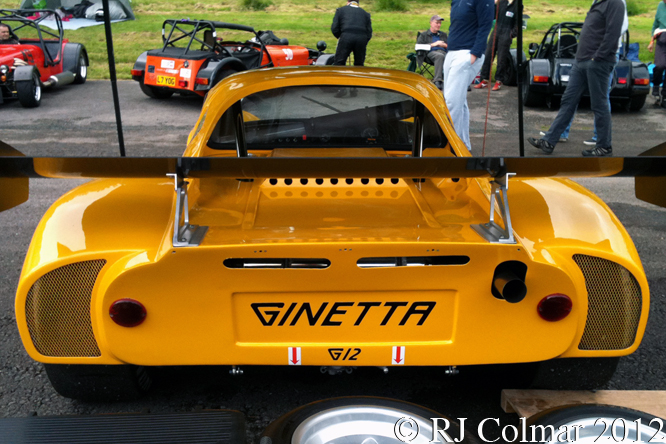
A contemporary of the similarly mid engined Lotus Europa, the Ginetta G12 launched in 1966 was designed for the club racer which could be bought for £1,200 in component form.

Ginetta Zetec G12, Prescott

The car was built round a tubular space frame with the fibre glass panels bonded to the frame to make up the cockpit.

Ginetta Zetec G12, Prescott

Numerous motors were fitted to G12’s including the 1 litre / 61 cui Ford (Cosworth) SCA from formula junior, 1.5 litre 91.5 cui Coventry Climax pre 1966 Formula One Motor, 1.6 litre Lotus Twin cam as used in the Elan and Lotus Cortina models, 2 litre Martin V8 and in at least one instance a 3.5 litre / 214 cui all aluminium Buick V8.

Stephens, Ginetta Zetec G12, Prescott

In it’s first year of track competition was the most successful G12 driver winning 11 national races and setting 5 fastest laps in 1966. By the following year the new Chevron B6 provided stiff competition for the G12 and by 1968 it had been succeeded by the open G16. G12’s were raced internationally at Spa and the Nurburgring but without any notable results.

Stephens, Ginetta Zetec G12, Prescott

The G12’s were however good hillclimbers and sprinters with successes by Walter Flückiger won the Swiss Hillclimb championship in his SCA powered example in 1968 and repeated the experience in 1969 after chopping the roof off. Similarly David Render drove his Buick powered example, chassis 05, to the British Sprint Championship title in 1971.

Ginetta Zetec G12, Prescott

It is thought around 27 of these cars may have been built between 1966 and 1968, it appears several may have ended up in Japan. As with the Ginetta G4 production of the G12 was restarted by DARE.

Ginetta Zetec G12, Prescott

Today’s featured 2 litre / 122 cui Zetec powered example, built by DARE, is seen at Prescott where it was driven by Nick Stephens, it should be good for rest to 60 mph times in the region of 4.9 seconds with a top speed of 150 mph. Last time I saw it in November it was for sale, if you would like to speak to the owner do not hesitate to get in touch.

Thanks for joining me on this “Versatile Winner” edition of “Gettin’ a li’l psycho on tyres” I hope you will join me again tomorrow. Don’t forget to come back now !
Share

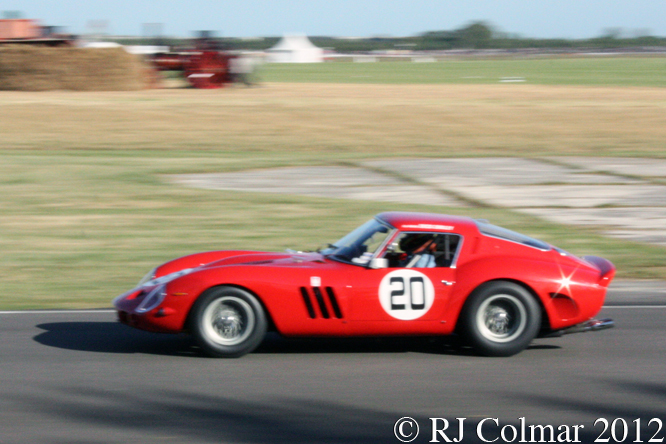
The White RHD One – Ferrari 250 GTO #3729GT

Blacksmiths, wheelwrights and coachbuilders Coombs of Guildford was founded in the 19th Century. Descendant of the founders John Coombs was taken to Brooklands before the 1939-45 was and on completion of his apprenticeship in 1949 began motor racing in open wheelers and sportscars with some success. He retired from race driving, after winning two races in a day at Mallory Park, because his business commitments no longer gave him the necessary time to compete, so he made the switch to becoming an entrant.

Teaming up with some of the best drivers of the day including his former Connaught team mate Roy Salvadori, BRM driver Ron Flockhart, John built up an excellent reputation with Coopers and Jaguar’s as Coombs of Guildford grew to become a major Jaguar dealership. When he was told Lotus founder Colin Chapman was interested in buying a Jaguar John had no hesitation in putting Colin, against whom he used to race, in one of his cars for a race at Silverstone which Colin promptly won and suitably impressed Colin duly placed his order.

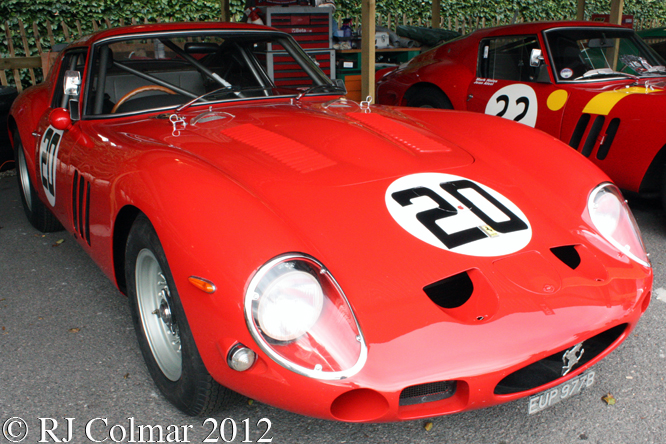
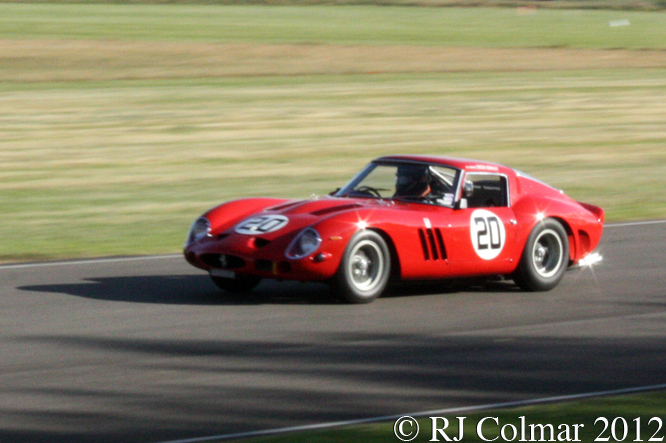
Ferrari 250 GTO, Goodwood Revival

In July 1962 John took delivery of a white right hand drive Ferrari 250 GTO chassis #3729GT after it became clear that the Jaguar E-Type was too heavy to compete against Maranello’s finest. Despite being driven by the likes of Salvadori, Graham Hill and Mike Parkes, all of whom were or went on to compete in Formula One, the car did not record any victories in 1963 but it did record a string of second places.

John also sent the car to Coventry where Jaguar made a close inspection of it before building John the first of 11 lightweight E-types with aluminium mononcoques and engine blocks.

Ferrari 250 GTO, Goodwood Revival

In 1964 Viscount Eddie Portman took over ownership of #3729GT who added another second place result before it was entered for Ritchie Ginther to drive in the Tourist Trophy run at Goodwood where he finished 9th.

JA Pearce of JA Pearce Engineering then used #3729 in a couple of sprints run at Brighton and Blackbushe airport in late 1964 and early 1965.

Ferrari 250 GTO, Goodwood Revival

John also known as Jack Pearce spotted the opportunity for building a formula one car for the new 3 litre / 183 cui regulations which became effective from the beginning of 1966 using a 250 GTO motor. For many years it was believed that the motor from #3729 found it’s way into the back of the JA Pearce 1964 Cooper T73 built originally for the older 1.5 litre / 91.5 cui formula.

In fact Chris Lawrence, who drove and co owned the Cooper Ferrari, many years later discovered that instead of having a Ferrari 250 GTO motor the Cooper was actually fitted with a on older less powerful motor that came out of Rob Walkers 1961 Ferrari 250 SWB #2735GT which had been driven by Stirling Moss to a string of five race victories. Unfortunately the unique Cooper Ferrari T73 was destroyed in a transporter fire at Silverstone in 1967, although the charred remains of both the motor and car are known to still exist.

Ferrari 250 GTO, Goodwood Revival

After #3729 had been sold on to noted historic racer Neil Corner in 1966 it was painted red and from 1970 to 1999 it belonged to 1958 and ’63 British Saloon Car Champion Jack Sears, who had raced the #3729 for John Coombs at Brands Hatch and Snetterton in 1963.

1n 1999 current owner Jon Shirley bought the car and had a new engine block installed by Ferrari Classiche nine years later.

Thanks for joining me on this “The White RHD One” edition of “Gettin’ a li’l psycho on tyres” I hope you will join me again tomorrow. Don’t forget to come back now !
Share

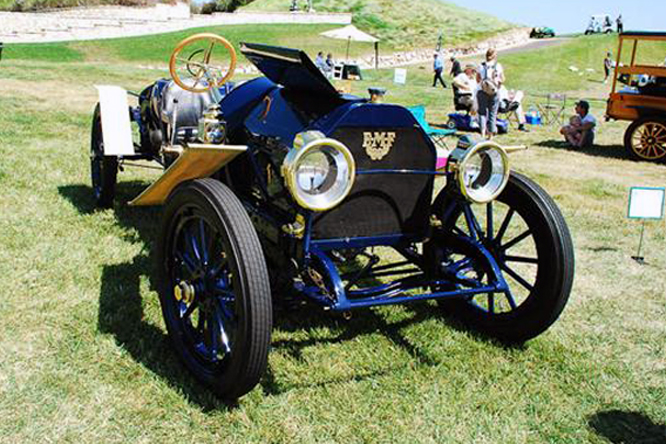
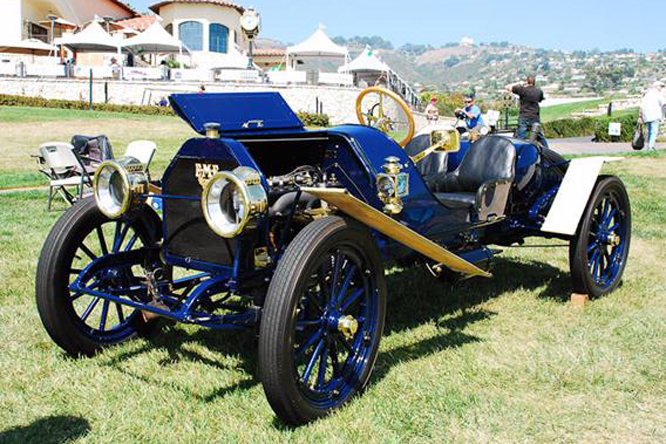
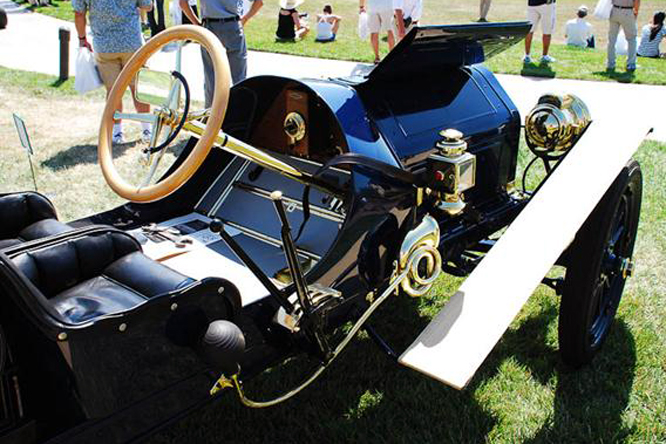
Unbelievably Complicated Story – E-M-F Model 30 Semi Racer #43222

Today’s post features the first of four Edwardian vehicles built in the USA. Reading any standard text on the history of the motor car 1908 is remembered as the year the mass produced Ford Model T went onto the market that it would dominate for nearly 20 years. For those of us born more recently this advent glosses over many other vehicles of that particular age some with no less interesting and almost unbelievable characters. One such is the story of E-M-F which has a strong link to the story of the Model T.

E-M-F Model 20, Palo Verdes, Concours d'Elegance

The initials stand for a wealthy coach builder and financial genius named Byron F. Everitt who did some work for Henry Ford, a super salesman who took 2700 orders for Cadilacs when they had only built three cars by the name of William E. Metzger and a industrial colosus Walter E. Flanders, of whom Henry Ford was fearful, who invented and organised much of the production machinery that was required to build the Model T.

E-M-F Model 20, Palo Verdes, Concours d'Elegance

In June 1908 circumstances brought Everitt, Metzger and Fanders together with E. LeRoy Pelletier, Fords secretary and publicity manager, to celebrate the merger of the Wayne Motor Company, under the control of Everitt and Flanders and the Northern Motor Company of which Metzger was in control to form E-M-F with the aim of mass producing a $2500 car which was to sell at $1250 or “twice the car for half the price”.

E-M-F Model 20, Palo Verdes, Concours d'Elegance

The in many ways, apart from it’s mid price range, unremarkable 4 cylinder Model 30 was launched in September 1908 with Pelletier basing his marketing strategy on “Nothing added-no frills or furbelows. Nothing omitted that experience has proven or convention taught you to consider a necessary part of a first- class motorcar. Not one original feature-not a single novelty-no startling innovations. Not one experiment-not one hair-brained theory or half-baked mechanical idea-not an untried or unproven invention-or metallurgical hallucination-will you discover in the E-M-F ’30’.”

E-M-F Model 20, Palo Verdes, Concours d'Elegance

The “Classy” Model 30 was well received although early examples relied on what turned out to be inadequate thermo-syphon cooling which damaged the new Marques reputation. The early cars were all recalled to have water pumps fitted, while low end Henry Ford went the other way deleting water pumps from the Model T in favour of themo syphon cooling ! Despite becoming, thanks to distribution by Studebaker, the second largest supplier of US automobiles by 1911, behind only Ford, as early as 1909 things started to unravel at E-M-F as the titans of the industry began to fall out. By 1912 Studebaker had taken full control and the E-M-F name disappeared for good though the Model 30 would live on in the Studebaker and parallel Everitt / Flanders Marques. For the full unbelievably complicated rise and fall story of E-M-F I recommend reading John M Daly’s E-M-F website linked here.

E-M-F Model 20, Palo Verdes, Concours d'Elegance

Today’s featured car #43222 was built originally built in 1912 and has recently been restored by Robb Stewart, pictures of the restoration can be towards the bottom of his flickr page linked here..

My thanks to Geoffrey Horton for sharing these photographs which were taken at Palo Verde in 2011.

Thanks for joining me on this “Unbelievably Complicated Story” edition of “Gettin’ a li’l psycho on tyres” I hope you will join me again tomorrow for Ferrari Friday. Don’t forget to come back now !
Share

The Steady Swiss – Sauber Ferrari C32

With nothing much but a top end niche motor industry as exemplified by the likes of the enigmatic Monteverdi, and no circuit motor racing since the fatal accident at Le Mans since 1955 Peter Sauber would have been hard pressed to find a less conducive environment in which to found a motor racing team that would build a succession of sportscars that competed first in the Swiss Hill Climb Championships and later with the backing of Mercedes win at Le Mans in 1989 and then the World Sports Car Championship in 1990 beating works teams from Jaguar, Nissan and Toyota.

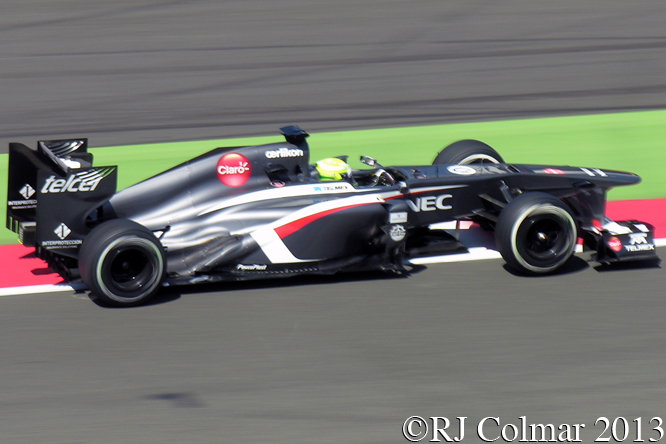
Gutiérrez, Sauber Ferrari C32, Young Driver Test, Silverstone

In 1993, with a little back door funding from Mercedes Benz, Sauber entered Formula One with a V10 Ilmor motor branded as a Mercedes Benz. This arrangement lasted for two years until Mercedes Benz decided to increase their involvement with McLaren as their partner. Sauber continued with Ford Motors in 1995 and 1996 and after four years has a reputation for being regular points finishers.

Gutiérrez, Sauber Ferrari C32, Young Driver Test, Silverstone

Form 1997 to 2005 a Sauber subsidiary built Ferrari motors and gearboxes under licence for his Formula one team, under this arrangement the team finished a best 4th in the championship with Nick Heidfeld and rookie Kimi Räikkönen sharing the driving duties.

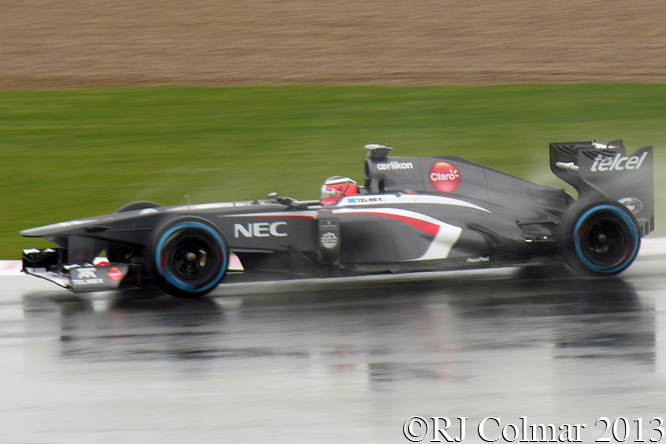
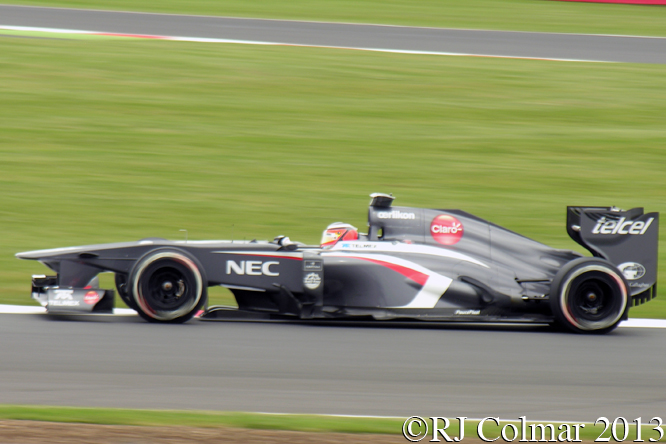
Hülkenberg, Sauber Ferrari C32, British Grand Prix P1, Silverstone

In 2006 BMW bought the Sauber team and called the shots until they sold it back to Peter Sauber in 2009 when the economic crisis precipitated by the credit crunch hit Formula One. Under BMW’s stewardship Sauber finished 2nd in the constructors championship in 2007 following McLarens exclusion. The following year they finished 3rd and Robert Kubica scored the team’s only win in Canada, ahead of team mate Nick Heidfeld.

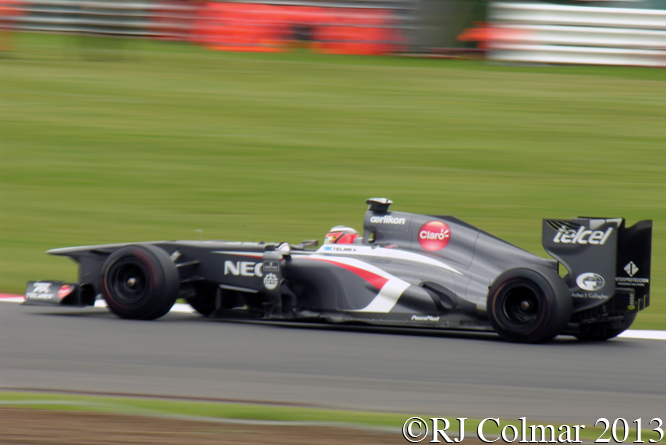
Hülkenberg, Sauber Ferrari C32, British Grand Prix P2, Silverstone

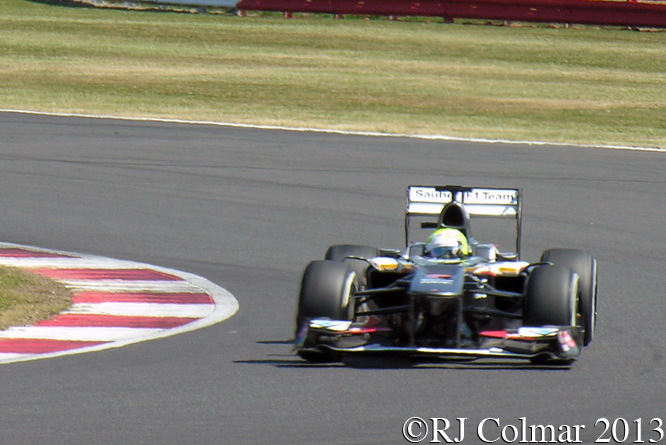
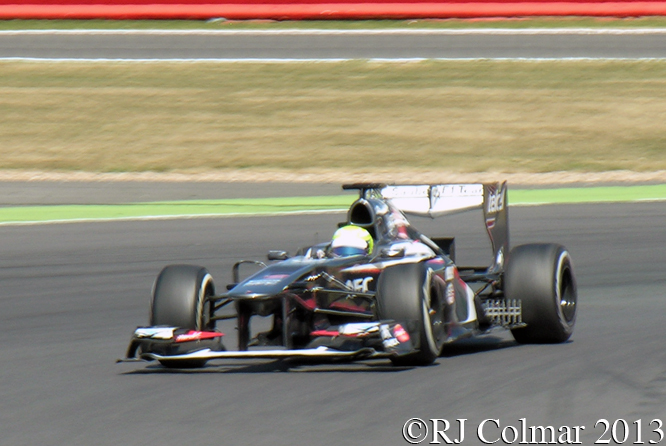
Since 2010 Sauber has returned to running with Ferrari motors, now built in Maranello. Last year Nico Hülkenberg, red helmet, joined the team from Force India and was joined by Mexican rookie Esteban Gutiérrez, yellow helmet, who had been the teams driver since 2011, to drive the Sauber C 32 designed under the direction of Matt Norris.

Hülkenberg, Sauber Ferrari C32, British Grand Prix P2, Silverstone

The highly rated Nico recorded ten points scoring finishes from 18 starts including the teams season high 4th place finish at the Korean Grand Prix. At the following Japanese Grand Prix Esteban came home 7th behind team mate Nico to record his only points finish. Sauber finished the year 7th in the championship.

Gutiérrez, Sauber Ferrari C32, Young Driver Test, Silverstone

For much of 2013 Nico was touted as a possible replacement for Felipe Massa at Ferrari, however as things began to unravel for Kimi Räikkönen at Lotus and Fernando Alonso committed the ultimate crime for any Ferrari driver, to suggest he wanted “another car”, i.e. built by another manufacturer, for his birthday, Ferrari President Luca di Montezemolo took exception to the comments and took the opportunity to wake Alonso up by signing up the man whom Alonso had replaced at Ferrari !

A disgruntled Hülkenberg took the only route available to him offering any hope of career advancement and rejoined the Mercedes Benz powered Force India Team. Esteban will be joined in 2014 by Force India refugee Adrian Sutil with a well financed young Russian prodigy Sergey Sirotkin doing the testing duties. The Ferrari powered C33 was launched a couple of days ago on the Sauber teams website and it’s progress can be followed on the team’s Facebook page.

Thanks for joining me on this “Steady Swiss” edition of “Gettin’ a li’l psycho on tyres” I hope you will join me again tomorrow when I’ll be looking at a US built Edwardian vehicle. Don’t forget to come back now !
Share