American Beauty – Scarab #3

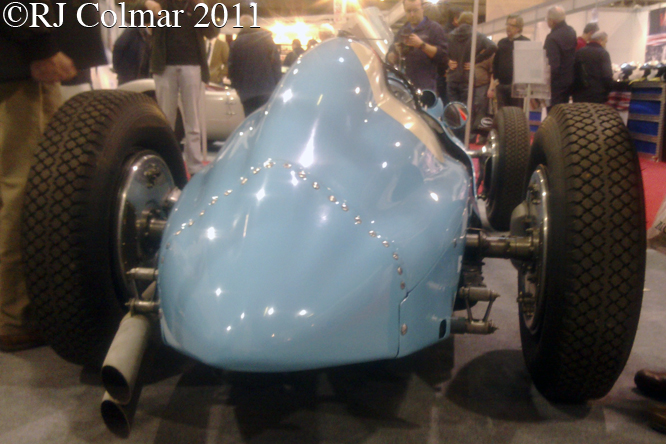
After writing off a Maserati 200S in a sports car race at Snetterton, having been banned from racing in the USA for racing underage, Woolworth heir Lance Reventlow visited Lister and Maserati in 1957 and was appalled by the apparent backward chaos he found at the factories.
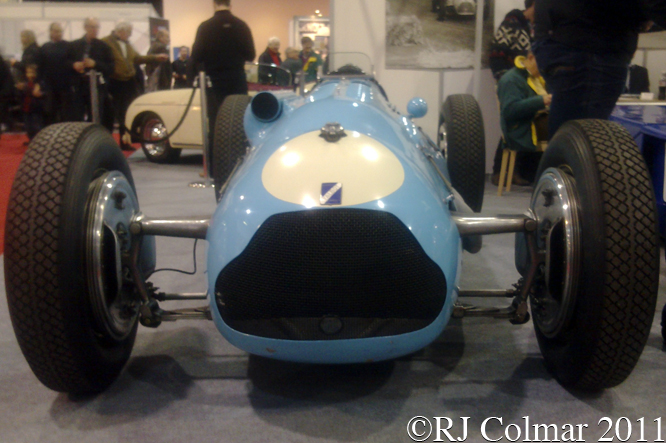
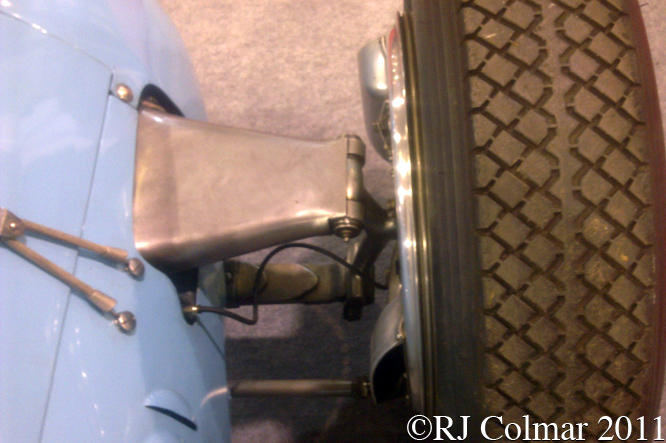
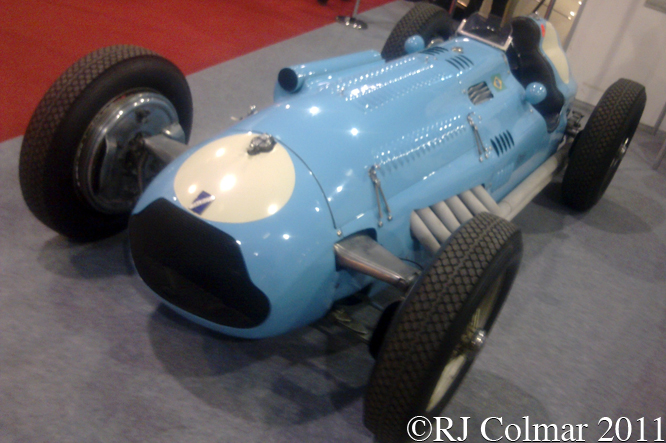
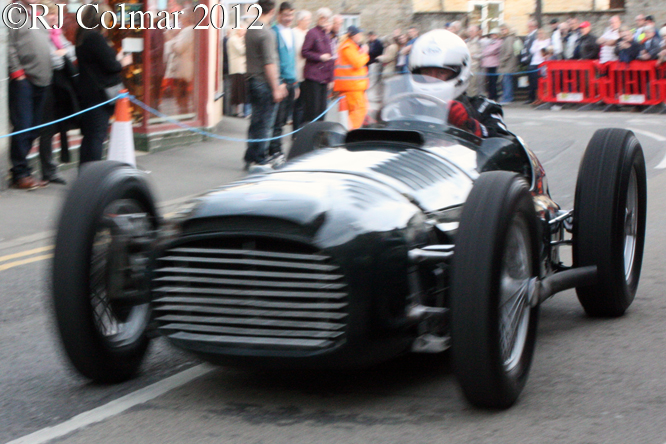
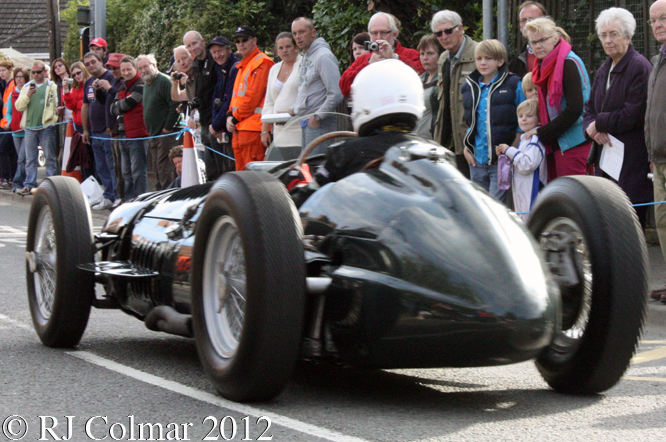
Scarab, Autumn Classic, Castle Combe

Determined that he could do better Lance Returned to the United States and founded Reventlow Automobiles Incorporated and initiated a successful sports car program for 1958.
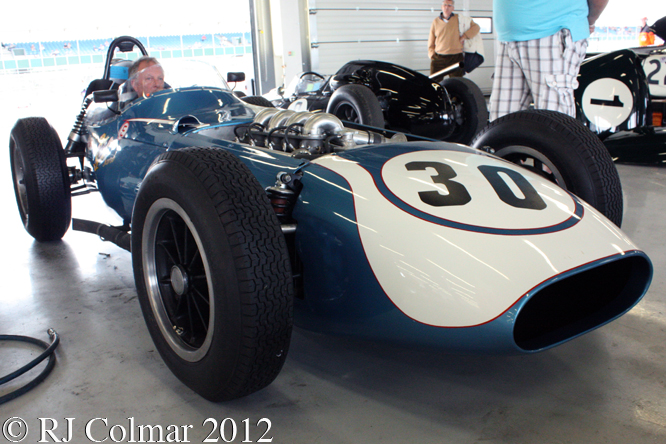
Scarab, Silverstone Classic,

Encouraged by his success Reventlow Automobiles Incorporated engaged Troutman & Barnes to design a space framed contender for the highest level of the sport, Formula One.
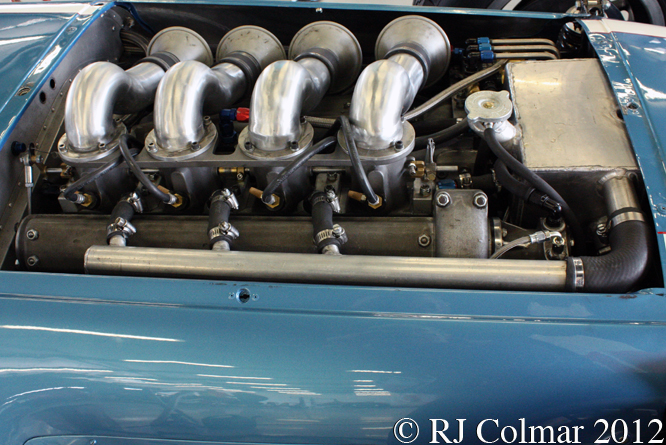
Scarab, Silverstone Classic,

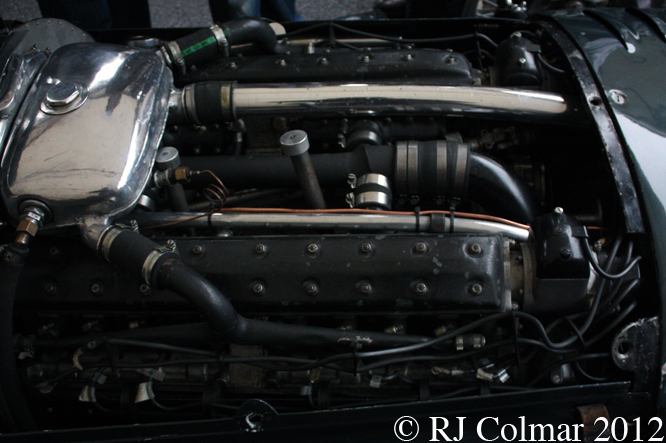
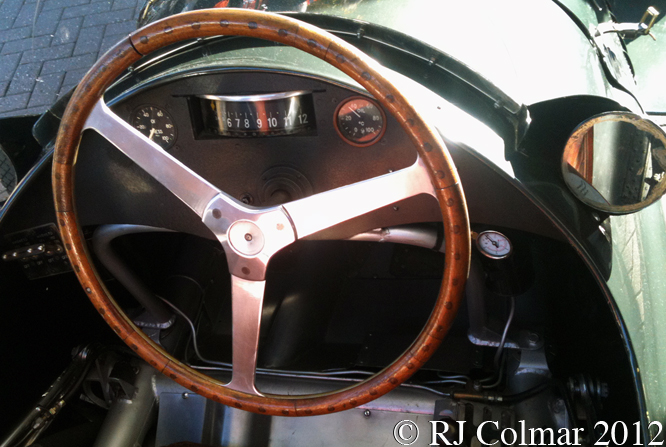
The motor for the new car was designed by Leo Goosens, of Offenhauser fame, who designed a Hilborn fuel injected 2.5 litre / 152 cui 4 cylinder motor with desmodronic, mechanically opened and closed which did away with valve springs, valves as had been favoured by Mercedes Benz during their successful Formula One campaigns from 1954 to 1955.
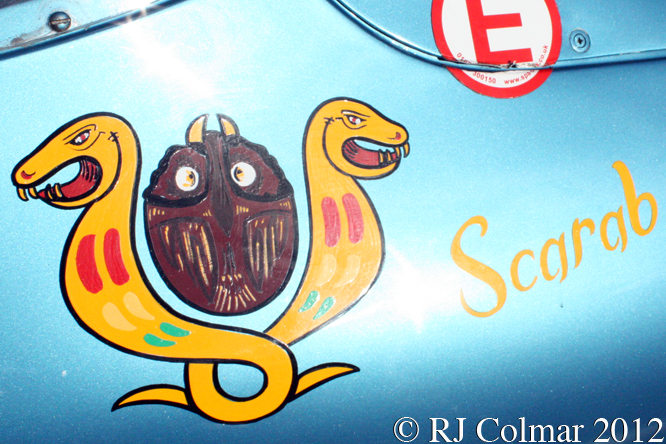
Scarab, Autumn Classic, Castle Combe

With a wry sense of humour Reventlow deliberately went against the grain of macho exotic names given to racing cars by chosing to call of the cars built by Reventlow Automobiles Incorporated Scarab after a compost beetle.
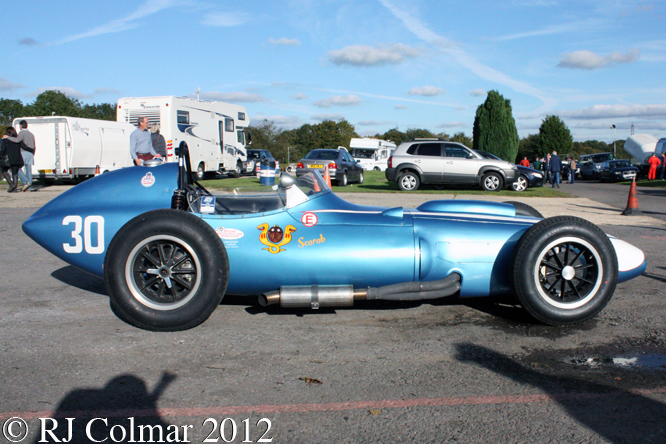
Scarab, Autumn Classic, Castle Combe

Widely respected for their beauty and build quality the team turned up in Monaco for the start of the World Championship season. Looks were deceiving as the cars proved to be too slow to qualify for the Monaco Grand Prix even after the Goodyear tyres had been replaced with Dunlops, not even Stirling Moss could set a competitive time in a Scarab.

Scarab, Autumn Classic, Castle Combe

Chuck Daigh and Lance Reventlow both qualified for the Dutch Grand Prix however they were both outside the top 15 which meant they did not qualify for start money and so both cars were withdrawn.
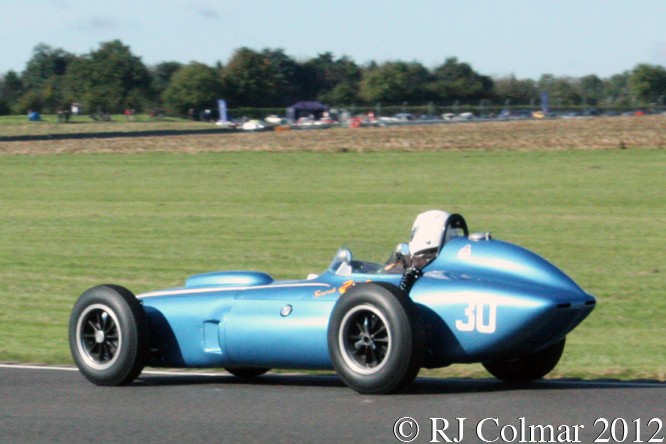
Bronson, Scarab, Autumn Classic, Castle Combe

Reventlow qualified 16th for the Belgian Grand Prix and Daigh 18th however Reventlow retired on the second lap and Daigh on the 17th, both with engine problems. In France Richie Ginther replaced Reventlow in the driving seat and qualified 20th with Daigh 23rd and last however neither started because of engine problems.
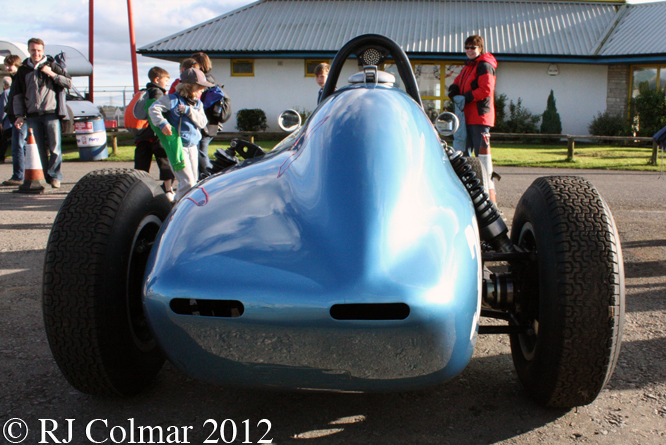
Scarab, Autumn Classic, Castle Combe

The team did not appear again until the 1960 US Grand Prix where a single car was entered for Chuck Daigh who qualified 18th. Chuck brought the car home 10th, 5 laps down, on what would be the teams final World Championship appearance.
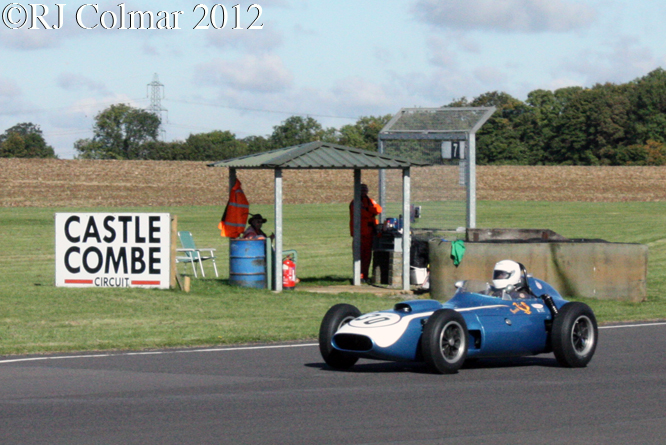
Bronson, Scarab, Autumn Classic, Castle Combe

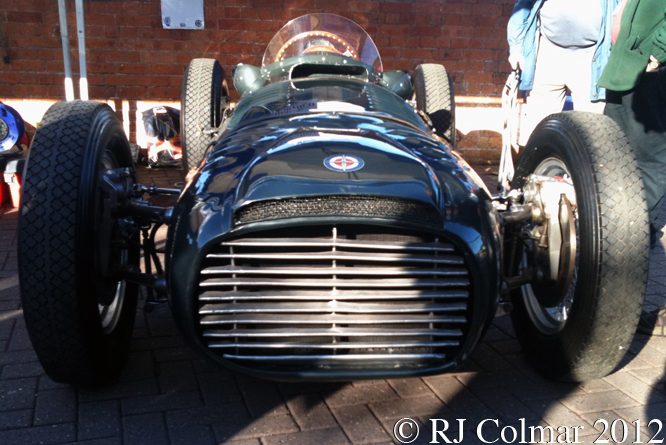
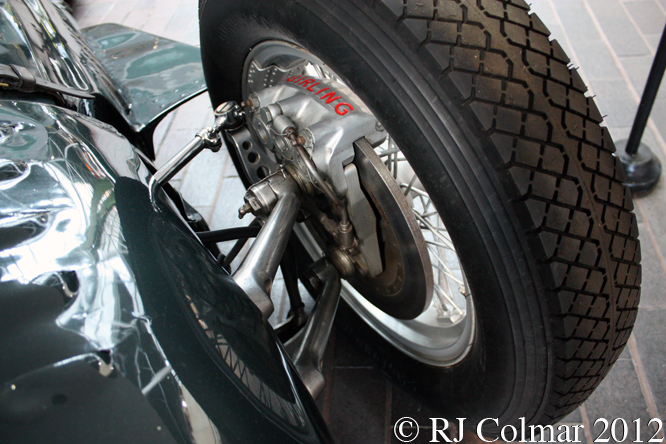
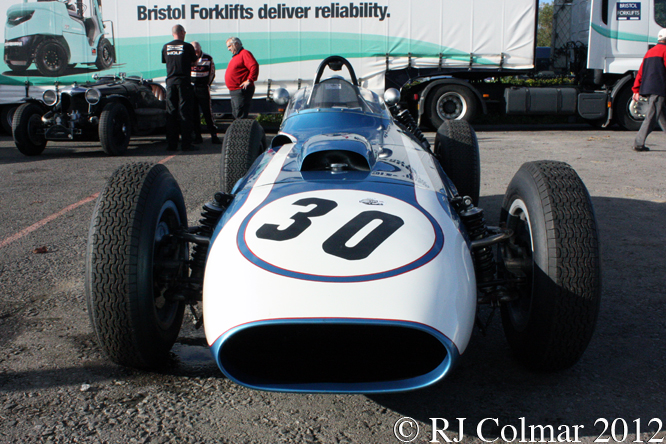
Chassis # 3 seen here was shipped to Europe in 1960 as the teams spare with out a motor. In 1961 Chuck Daigh drove the car fitted with an Offenhauser Indy type motor in the non championship International Trophy at Silvertone and Lavant Cup at Goodwood where he finished 7th and 8th. At the British Empire Trophy Meeting at Silverstone Daigh was badly injured when he crashed the car on what turned out to be the cars final ‘in period’ appearance.

The Scarab had proved to be underpowered and it’s front engined design rendered obsolete by the rear engined designs from Cooper and Lotus and Lance Reventlow had been deceived by the backward chaos he had seen in Europe which disguised much wisdom and craftsmanship gained from decades of experience.

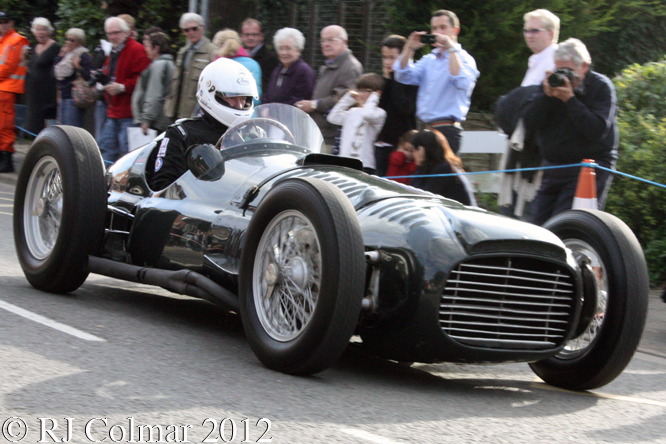
For many years this Scarab was exhibited sans motor at the Donington Park Museum before it was purchased by Julian Bronson who acquired another Offenhauser motor and can be seen demonstrating the car above at Castle Combe.

Wishing all my readers from the United States a festive Independence Day.

Thanks for joining me on this “American Beauty” edition of “Gettin’ a li’l psycho on tyres”, I hope you will join me again tomorrow.

Share

Number 2 Drivers – British Grand Prix

Last Friday I popped along to Silverstone last Friday to see the first two practice sessions for the British Grand Prix. This was my first visit to Silverstone for Formula One action since 1981 when John Watson won the race for McLaren.

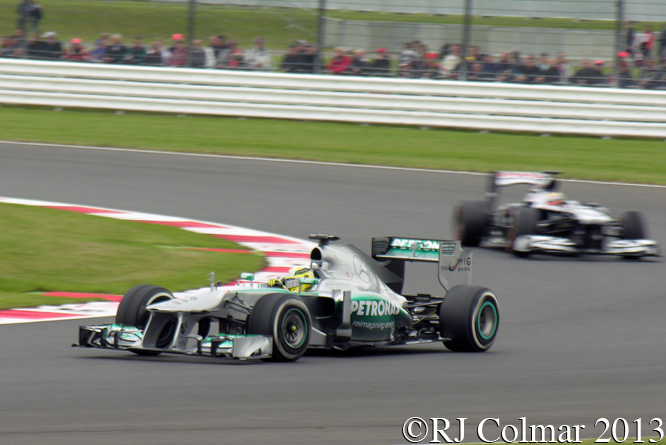
Rosberg, Mercedes Benz, F1 W04, British Grand Prix, P2, Silverstone

Today’s blog focuses on how the 11 teams number 2 drivers got on, above Nico Rosberg driving his Mercedes F1 W04 finished the opening day of practice at the top of the time sheets. Nico qualified second for the race and won after team mate Lewis Hamilton blew a tyre and then Sebastian Vettel retired with transmission problems. Despite having visiting pit row for the second time this season, twice more than his team mate Nico is still three seven points behind his team mate Lewis Hamilton, who has yet to win and fifty points behind Championship leader Lewis Hamilton.

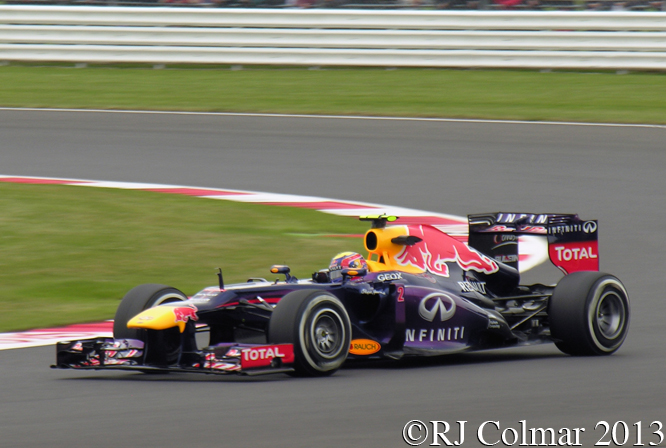
Webber , Red Bull Renault, RB9, British Grand Prix, P2, Silverstone

Last years British Grand Prix winner Mark Webber, seen driving his Red Bull Renault RB9 above, similarly set a faster time than his team mate Sebastian Vettel on the opening day of practice. Mark qualified 4th behind his team mate for the race and dropped to 15th after making contact with Romain Grosjean on the opening lap and recovered to finish in second place on his final British Grand Prix appearance. Mark announced at the British Grand Prix that he would be retiring from Formula One at the end of the season and joining Porsche’s Le Mans program for 2014.

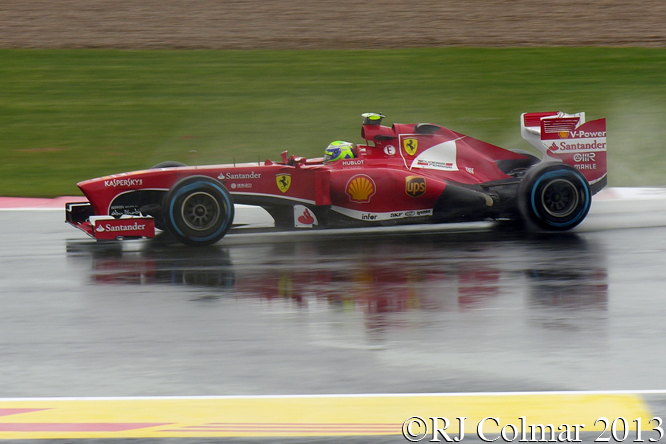
Massa , Ferrari, F138, British Grand Prix, P1, Silverstone

Ferrari’s Felipe Massa is seen driving his F138 in the first practice session he was slowest of the the eleven drivers to set a time in the morning and in the afternoon knocked a wheel of the front when he came off the drying track in the afternoon and again set the slowest time of the 22 drivers in the afternoon. Felipe could only qualify 12th for the race, but despite a high speed blow out did well to recover a sixth place finish by the end of the race.

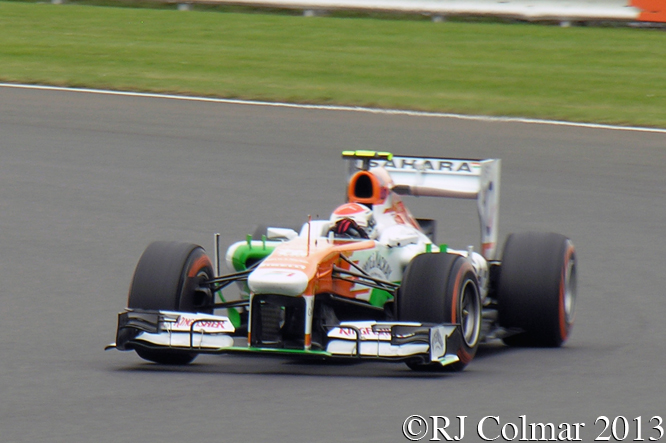
Sutil , Force India Mercedes, VJM06, British Grand Prix, P2, Silverstone

Adrian Sutil driving a Mercedes powered Force India VJM06 set 8th fastest time on day one, qualified 7th for the race and spent a long period running in third place behind Vettel and Rosberg but then got swamped at the end to finish 7th.

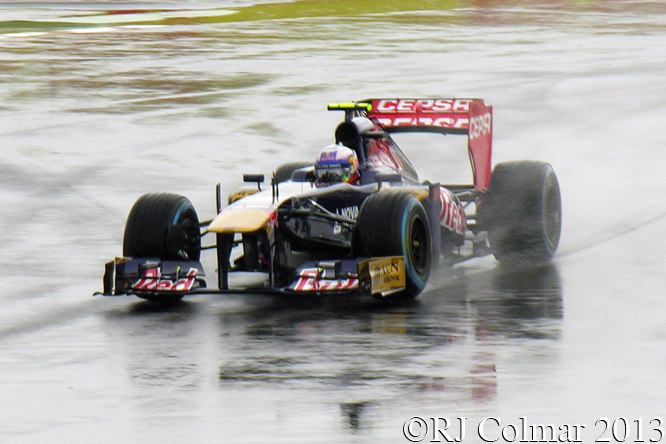
Ricciardo, Torro Rosso Ferrari, STR8, British Grand Prix, P1, Silverstone

Daniel Ricciardo one of several drivers in the frame to replace the retiring Mark Webber at Red Bull, finished the opening practice session at the top of the time sheets, he qualified his Ferrari powered Torro Rosso STR8 an impressive 6th, seven places ahead of his team mate Jean Eric Vergne. After running in 4th place for much of the race he too was swamped at the end to finish 8th.

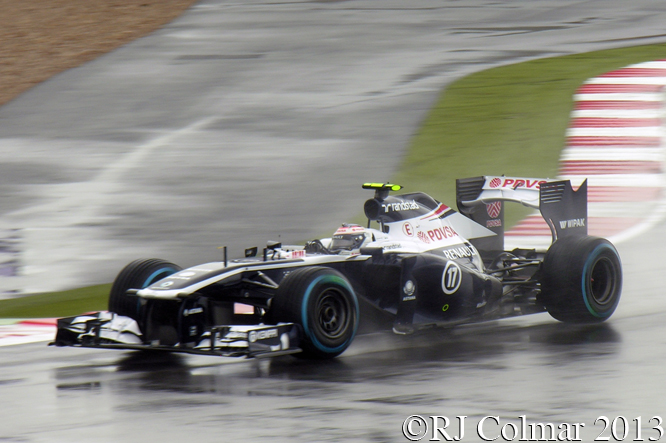
Bottas, Williams Renault, FW35, British Grand Prix, P1, Silverstone

Williams were celebrating the 600th Grand Pix at Silverstone unfortunately Valtteri Bottas driving his Renault powered FW35 could not repeat his fine Canadian 7th fastest qualifying performance. Starting 16th Valttteri came home 12th in the race.

Gutiérrez, Sauber Ferrari, C32, British Grand Prix, P1, Silverstone

Mexico’s Esteban Gutiérrez started the British Grand Prix from 17th place on the grid in his Ferrari powered Sauber C32 and climbed to 14th by the end of the race.

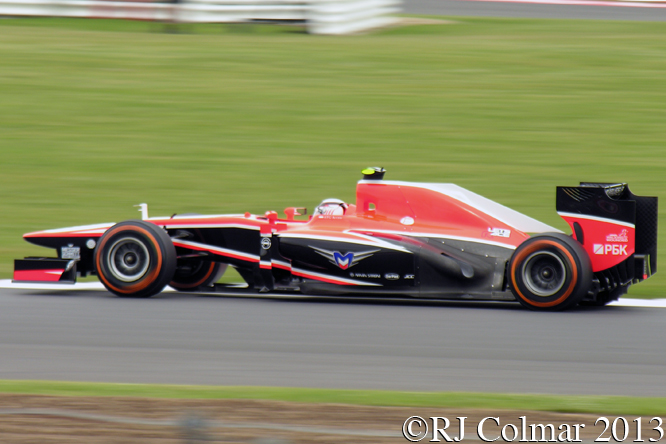
Chilton, Marussia Cosworth, MR02, British Grand Prix, P2, Silverstone

Max Chilton in the Cosworth powered Marrusia MR02 was the slowest qualifier but thanks to penalties for Paul di Resta and Giedo van der Garde he started his home Grand Prix from 20th and finished 17th.

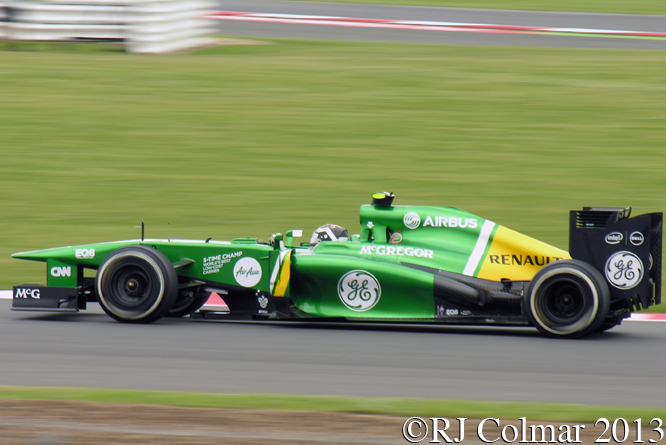
van der Garde, Caterham Renault, CT03, British Grand Prix, P2, Silverstone

van der Garde started the British Grand Prix from last place after ignoring blue flags, shown to signal that he was about to be lapped, in Canada and finished the race 18th and last unlapped runner.

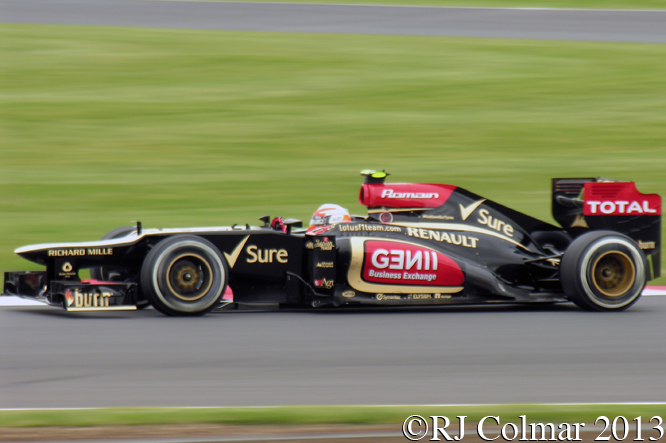
Grosjean, Lotus Renault, E21, British Grand Prix, P2, Silverstone

Driving his Renault powered Lotus E21 Romain Grosjean started the British Grand Prix from 7th on the grid but was involved in a collision with Mark Webber on the opening lap he finished the race 19th 1 lap down last car still running.

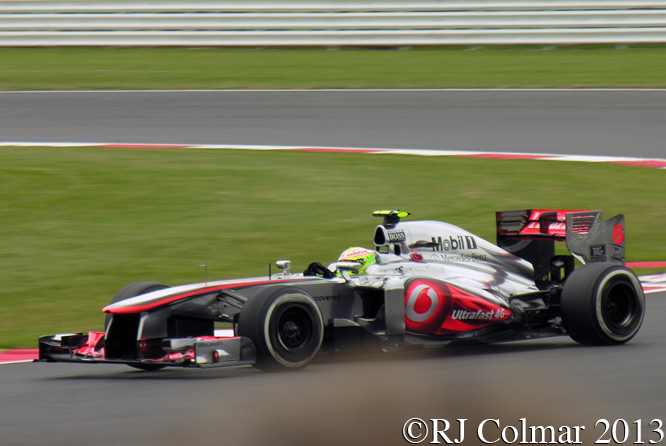
Perez, McLaren Mercedes, MP4-28, British Grand Prix, P2, Silverstone

Finally Sergio Pérez suffered a tyre failure during practice on the opening day that would be a portent for 4 similar failures on race day. Starting from 13th on the grid Sergio suffered a second puncture on race day that forced his retirement due to the damage to his Mercedes powered McLaren MP4-28 caused by the flailing remains of the tyre on lap on lap 46.

More on the British Grand Prix at Motorsports Unplugged.

Thanks for joining me on this “Number 2 Drivers” edition of “Gettin’ a li’l psycho on tyres” I hope you will join me again for an Independence Day edition tomorrow. Don’t for get to come back now !

Share

Phi Phi’s Parisian Winner – Talbot Lago T26 C #110008

If complicated automotive brand automotive geaneology is your thing then Talbot is most assuredly the brand for you.

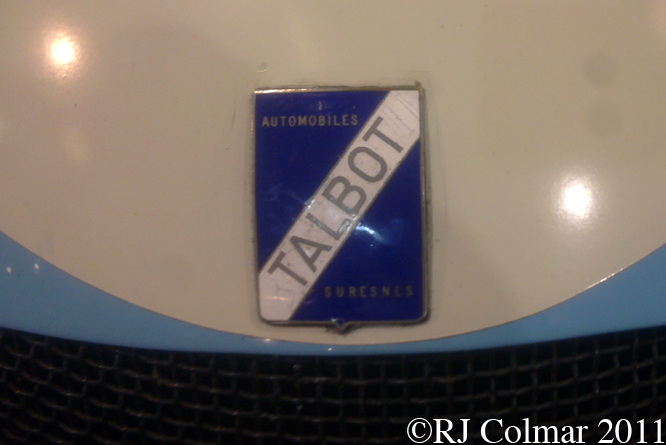
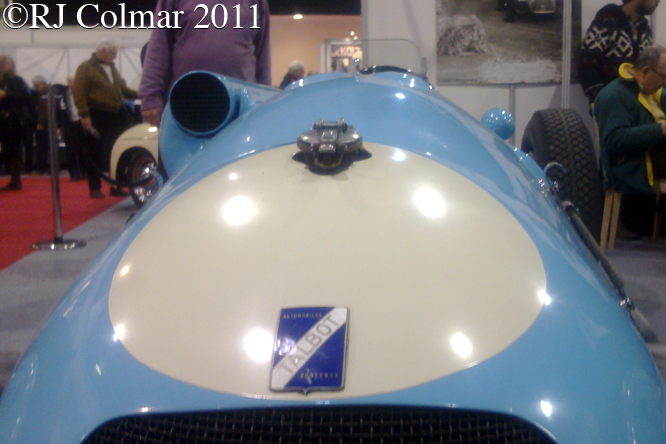
Talbot Lago, T26C, Race Retro, Stoneleigh

The name first appeared in Britain on French built Clément Bayard cars in 1905 taking the name from the British Charles Chetwynd-Talbot, 20th Earl of Shrewsbury who partenered Adolphe Clément-Bayard to sell his vehicles under the Clément-Talbot name before selling British assembled Clément Bayard’s which were sold as Talbot’s. In 1906 Talbot began selling British designs.

Talbot Lago, T26C, Race Retro, Stoneleigh

After The Great War of 1914/18 British owned French manufacturer Darracq took over the Talbot in 1919 marketing their products as Talbot-Darracqs. Another merger saw Talbot become part of the Sunbeam Talbot Darracq group in 1920 which became part of the Rootes Group in 1935. Antonio Lago acquired the French manufacturing facilities from the Rootes Group in 1935 and Talbot Lago continued production until 1960 when Simca who bought Talbot Lago in 1958 discontinued the brand.

Talbot Lago, T26C, Race Retro, Stoneleigh

Antonio Lago was keen to use motor racing as a platform from which to promote his vehicles and with help from the Société d’Etude et de Fabrication d’Automobiles de Corse racing institution Lago started building two seat racing cars before building two six cylinder 4.5 litre /274 cui single seaters in 1937 with offset drivers seats. These cars were further developed in to a single seater car with a central seat that was driven by Raymond Mays, founder of ERA and later BRM, at Reims in 1939 where it retired with a split fuel tank.

Talbot Lago, T26C, Race Retro, Stoneleigh

After the 1939/45 war a development of May’s car, which won the 1947 French Grand Prix with Louis Chiron at the wheel, would form the basis of today’s featured T26 C model of which twelve were built for clients to race.

Talbot Lago, T26C, Race Retro, Stoneleigh

Despite racing against more sophisticated opposition particularly from Alfa Romeo who’s pre war supercharged 1.5 litre / 91.5 cui straight eight cars were still the most successful cars of the immediate post war era the Talbot Lago T26 C had reliability and fuel consumption in it’s favour in the longer races.

Talbot Lago, T26C, Race Retro, Stoneleigh

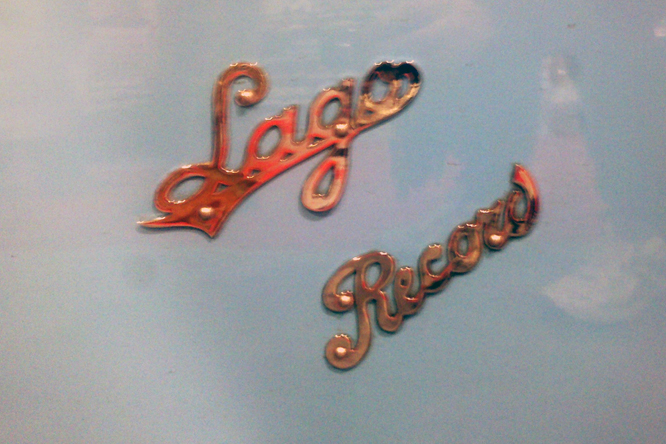
Averaging 9 miles per gallon compared to 2 – 3 mpg or worse for the supercharged cars meant that the Talbot Lago’s 200 plus horsepower was enough to cancel out the 100 hp advantage held by the more sophisticated machinery. The T26 C’s carried the road car Lago Record name on the side, some of the parts were interchangeable between the two models. The T26 C would be used as the basis for the Talbot Lago T26 GS sports cars one of which won Le Mans in 1950.

Talbot Lago, T26C, Race Retro, Stoneleigh

Chassis #110008 seen here was purchased by pre war racer Philippe “Phi Phi” Étancelin who drove the car to a second place finish at Albi in 1948, further second place finishes in the 1949 Italain, Czech and Pau Grand Prix with a season high win in the 1949 Paris Grand Prix.

At the Italian Grand Prix in 1950 “Phi Phi” aged 53, whose wife acted as his crew chief, became the oldest driver to score a point in the World Drivers Championship driving #110008.

#110008 was subsequently sold to Jean Achard a Frenchman resident in Brazil who intended to enter it in the Indy 500, before he was killed driving a Ferrari while competing in a hillclimb.

By the end of the ’50’s #110008 was raced by Brazilian Pinherio Pirres and later still was fitted with a Chevrolet motor and independent rear suspension. The car was brought back to the UK by Colin Crabbe in the late 70’s and restoration was completed while the car was owned by Tony Bianchi in the 1980’s.

My thanks to Tim Murray, hamsterace, Alan Cox, David McKinney, John Ruston and especially Tony “Odseybod” Turner who kindly sent me a copy of an article from September 2011 issue of Classic Cars about the T26C and T26 GS models.

Thanks for joining me on this “Phi Phi’s Parisian Winner” edition of ‘Gettin’ a li’l psycho on tyres’, I hope you will join me again tomorrow. Don’t forget to come back now !
PS My thoughts on the British Grand Prix can be found at Motorsports Unplugged on this link.

Share

British World Beater – BRM V16 Type 15 No. 1

After the on track success and commercial failure of his pre war English Racing Automobiles project and as the 1939-45 war drew to a close Raymond Mays returned to thoughts about how to build a British World Beater to compete in the highest form of motorsport.

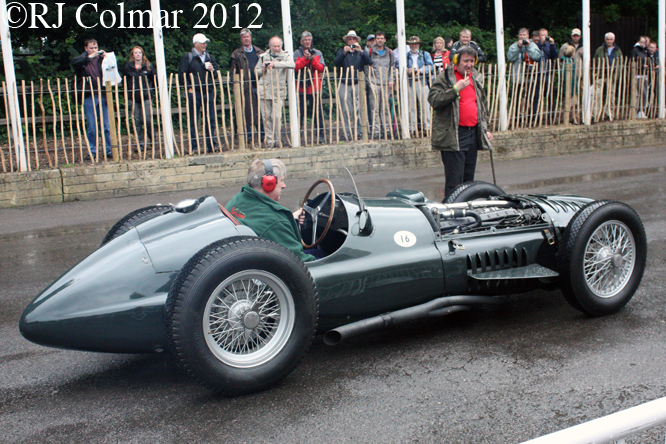
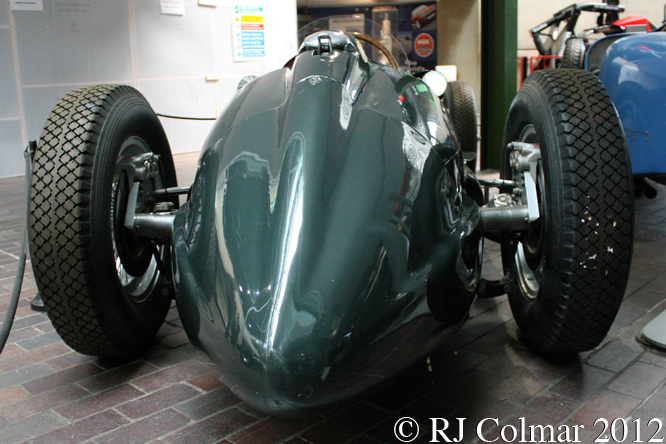
BRM V16 P15 Mk 1, National Motor Museum, Beaulieu

The saga that ensued was an object lesson in how not to go motor racing which began 2nd March 1945 when Raymond Mays announced an appeal to form a cooperative to design, build and race a national Grand Prix car.

BRM V16 P15 Mk 1, BRM Day, Bourne

Mays used his natural charm and reputation as a successful racing driver to attract over one hundred interested parties mostly from the motor industry and associated suppliers who were to contribute to the scheme with cash and or in kind.

BRM V16 P15 Mk 1, National Motor Museum, Beaulieu

Part of the problem with this way of working is that there were two many cooks, successful heads of industry, who in the kitchen that became known as the British Motor Racing Research Trust. As a result everything concerning the production of parts, running of the project and finances was done by committee. Note disc brakes did not appear on the BRM V16’s until 1952.

BRM V16 P15 Mk 1, BRM Day, Bourne

With more PR people, than mechanics, working for companies desperate to be associated with the project in order to drum up orders on the world stage the first of the new cars was completed at Bourne in 1949 and even given a run in the dead of night through the sleepy market hamlet of Bourne, Lincolnshire where it was built. Against May’s better judgement the car was shown to an eager audience of the Press on the 15th of December 1949.

BRM V16 P15 Mk 1, Goodwood Festival Of Speed

The concept for the car including the engine is credited to Raymond Mays collaborator at ERA Peter Betherton. Betherton’s choice of 1.5 litre V16 architecture with the two banks of cylinders inclined at 135° seems to have been inspired by the pre war unraced prototype Alfa Romeo Tipo 162 designed by Wifredo Ricart which was said to produce 490 hp.

BRM V16 P15 Mk 1, BRM Day, Bourne

BRM’s V16 was in essence two V8’s with a drive taken from the crankshaft between the two halves. Fatally the car was supercharged by an aircraft type centrifugal supercharger developed by Rolls Royce. The problem with this type of supercharger is that it gives great power, for aircraft operating continuously at a high rev range BUT it is almost unmanageable in a racing car application where smooth power band is required from low revs. The BRM V16 is said to have produced 550 hp at 12,000 unforgettable ear splitting RPM, see 8m 22s into this clip turn your volume up loud !

BRM V16 P15 Mk 1, BRM Day, Bourne

The gearbox for the car was a copy from Mercedes Benz blueprints obtained as ‘war reparations’ of the type used on their pre war Grand Prix dominating cars.

BRM V16 P15 Mk 1, BRM Day, Bourne

The V16 BRM’s were supposed to make their debut at the 1950 British Grand Prix however they were still far from ready and instead one car did a couple of demonstration laps in front of future Queen Princess Elizabeth and her husband Prince Philip.

BRM V16 P15 Mk 1, Goodwood Festival Of Speed

When the V16 did make it’s debut in the hands of Raymond Sommer it arrived at 9:40 am on the morning of the 1950 non championship Daily Express Trophy after an all night engine rebuild at Bourne. The car had been flown at the race organisers expense twixt factory and circuit where Sommer needed to complete 3 quick laps before 10 am in order to be given dispensation to start from the back of the grid.

BRM V16 P15 Mk 1, National Motor Museum, Beaulieu

Come the race and an expectant crowd who had been given a souvenir pamphlet on the new British wonder when the flag dropped the field sped away leaving Sommer behind as a universal joint snapped leaving the car with no drive.

Later in 1950 Reg Parnel driving the same car seen here won two minor races at Goodwood in the rain and the following season Reg used chassis No.1 on the cars Grand Prix debut at Silverstone where he finished 5th enough to score a point in the world championship. Team mate Peter Walker came home 7th in No.2 like Reg he was suffering from the intense cockpit heat with the addition of neat fuel vapor fumes coming from the motor.

The following year Formula One was abandoned in favor of Formula Two, in part because in their efforts to sign Juan Manuel Fangio BRM reneged on a deal to race in Turin which gave the unintended message to other race organisers that BRM was unable to challenge Ferrari. Ferrari won the two world championships run to Formula Two regulations in 1952 and 1953.

Fangio did sign for BRM and in one of the few non championship races held in 1952 and 1953 and he took a great liking to the V16 BRM’s. Driving chassis No.1 at Albi he beat the Ferrari driven by Alberto Ascari in the heat but then retired from the lead of the final when a tyre failed damaging the hub and brake disc. This was the high point of the BRM’s career as a British World Beater, although it did win 15 non championship races between 1951 and 1954 in all.

If you want to know the whole story behind BRM I can wholeheartedly recommend “BRM The Saga of British Racing Motors” by Doug Nye. Volume one of a projected two took almost sixteen years to write and while I am ploughing through a copy of volume one kindly lent to me by Tim Murray BRM fans are eagerly anticipating the appearance of BRM Volume 4 which Doug has repeatedly told his fans is in the pipe line.

Thanks for joining me on this “British World Beater” edition of “Gettin’ a li’l psycho on tyres” I hope you will join me again tomorrow when I shall be looking at a Formula One car from France. Don’t forget to come back now !

04 07 13 Errata the correct type designation for the original V16 BRM is Type 15, not P15, thanks to Tim Murray for pointing this out to me some time ago. Not also that the car featured here has been fitted with a later type large radiator and associated body work modifications first seen in 1952.

Share

99 Le Mans Class Wins – Porsche 991 RSR

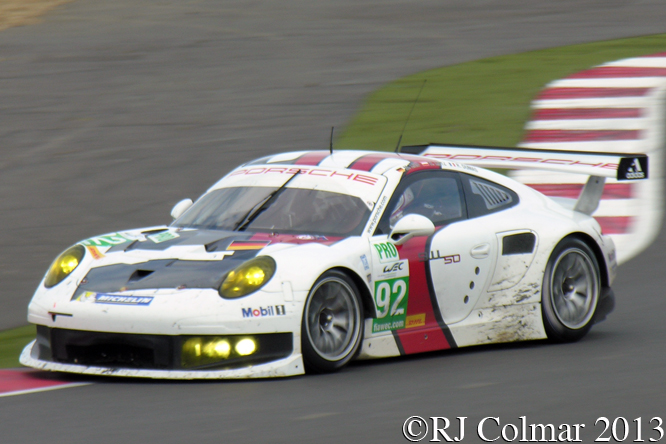
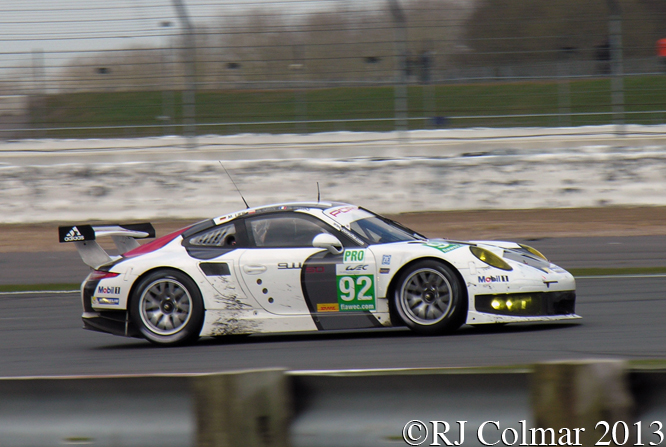
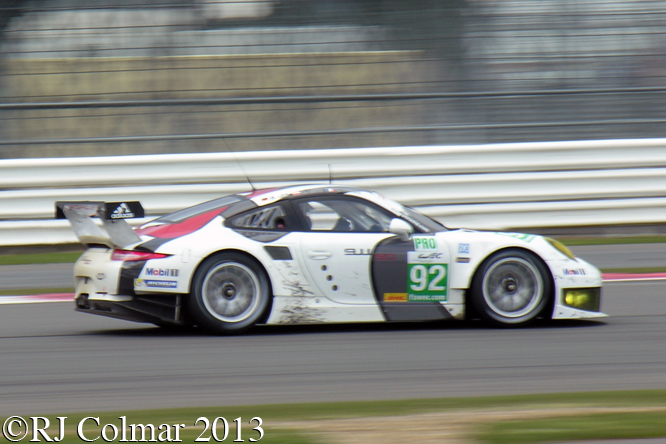
The Porsche 991 RSR is the latest Porsche GT2 racer which replaces the Porsche 997 GT3 RSR.

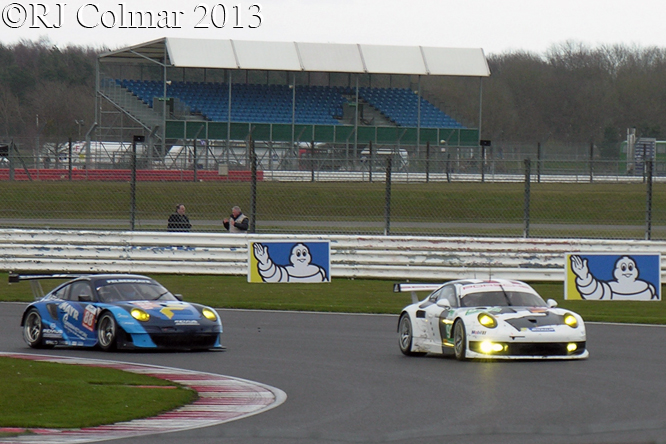
Lieb, Lietz, Dumas, Porsche, 991 RSR, 6 Hours of Silverstone

With the extensive use of carbon fiber for the quick release body work panels, polycarbonate windows and a lithium battery the center of gravity of the 991 RSR is considerably lower than on the 997 GT3 RSR.

Lieb, Lietz, Dumas, Porsche, 991 RSR, 6 Hours of Silverstone

The wheel base is a little longer than the older model thanks to a new six speed transmission operated from the steering wheel by paddle shift. The air restricted flat six 4 litre / 244 cui motor produces 460 hp which is comparable to both the Aston Martin V8 Vantage GTE and Ferrari 458 Italia GT2 cars against which it competes.

Lieb, Lietz, Dumas, Porsche, 991 RSR, 6 Hours of Silverstone

For 2013 Porsche AG have teamed up with 1990 Porsche Super Cup Champion Olaf Manthey who’s team Manthey Racing won it’s class first time out at Le Mans with a Porsche 911 GT3R in 1999.

Lieb, Lietz, Dumas, Porsche, 991 RSR, 6 Hours of Silverstone

Jörg Bergmeister, Patrick Pilet and Timo Bernhard are the drivers of the #91 Porshe AG Team Manthey entry while, Marc Lieb, Richard Lietz and Romain Dumas drive the #92.

Lieb, Lietz, Dumas, Porsche, 991 RSR, 6 Hours of Silverstone

At Silverstone where the cars are seen here they finished 17 and 20th overall and 4th and 6th in the GTE Pro class in reverse order on their debut. At Spa the #92 finished 19th overall and 15th in class while the #91 retired.

Bergmeister, Pilet, Bernhard Porsche, 991 RSR, 6 Hours of Silverstone

At Le Mans Aston Martin out qualified both Porshe AG Team Manthey cars but in the race Marc Lieb, Richard Lietz and Romain Dumas finished 16th overall and first in class to secure Porsche’s 99th class win in the endurance classic. They were followed by the #91 which was on the same lap to make it a Porsche 1-2 in the GTE Pro class.

I hope you have enjoyed my potted history of Le Mans over the past month, I am intending to continue it next June. Tomorrow I’ll be starting a month long potted history of Formula One cars, thanks for joining me, liking and linking my blogs on fb and else where. I hope you will join me again tomorrow. Don’t forget to come back now !
Share

RIP – Allan Simonsen

Simonsen, Poulsen, Nygaard. Aston Martin V8 Vantage GTE, 6 Hours of Silverstone

Allan Simonsen, who was born in Odense Denmark, won the Danish Formula Ford Championship in 1999. When the money for his open wheel aspirations ran out he found he was in demand as a driver of GT cars and ended up running in 30 to 40 events a year across the globe driving models from Ferrari, Porsche and more recently Aston Martin.

Such was his enthusiasm and the demand for his services that in 2007 by missing the last race Le Mans GT2 Series he gave up his chance to become champion in order to drive in the Australian GT Series which he won outright the same year with a pair of Mark Coffey Racing Ferraris.

Two years later Allan Simonsen won the 2009 Asian Le Mans GT2 series driving a Ferrari F430 for Team Farnbacher. Allan also competed in the Australian International V8 Supercar Championship and made seven starts at Le Mans with a best finish of second in class in a Farnbacher Ferrari.

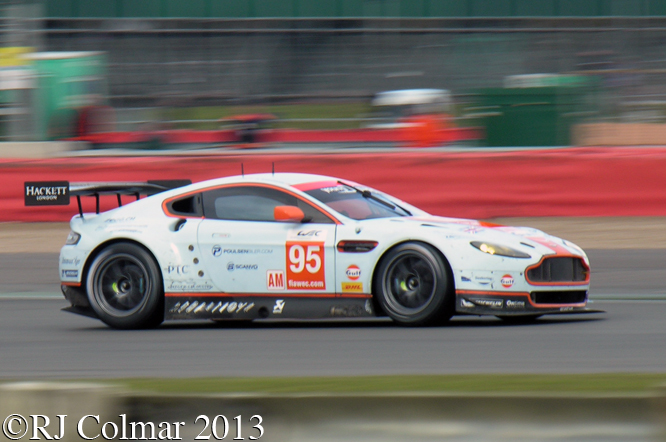
Known as a ‘cheeky chappie’ Allan teamed up for a full season in LMGTE Am driving an Aston Martin V8 Vantage GTE with fellow Danes Christoffer Nygaard and Kristian Poulsen for 2013. Their car is seen winning the LMGTE Am class at Silverstone in April above.

Having qualified for LMGTE Am class pole at Le Mans and with a victory well within the teams grasp Allan lost his life while at the top of his game after an accident at Tetra Rouge on lap two of the 24 hour classic last Saturday.

His family bravely asked the Aston Martin team to race on in Allan’s memory when informed of the tragedy. A Danish flag flew at half mast for the remainder of the race while overall race winner and fellow Dane Tom Kristensen dedicated his victory to the memory of his fallen friend.

Condolences to Allan’s family and friends.

RIP Allan Simonsen 1978 – 2013.

Share

90 Hours and 500 Zip Ties – Ferrari 458 Italia GT2 #2844

3 years after starting race car driving, in which the highlight was winning the 2005 Six Hours of the Glen with Niclas Jönsson in the Grand Am series, Tracey W Krohn founded his own Grand Am team in late 2005 and started competing in the at the 2006 Daytona 24 hours.

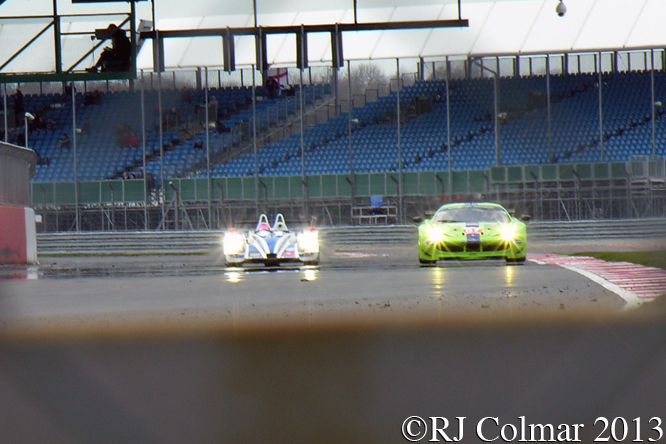
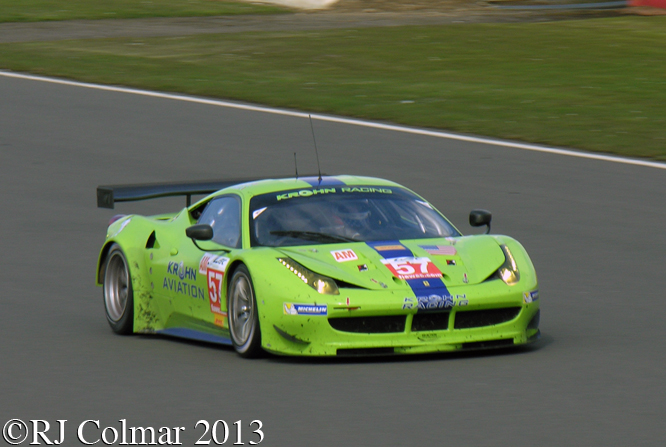
Ferrari 458 Italia GT2, 6 Hours of Silverstone

Success was immediate as Krohn team driver Jörg Bergmeister won the drivers championship and Krohn Racing finished second in the top DP division of the championship. Right from the start Krohn Racing also ran a parallel GT program mostly at Le Mans with Risi Competizione running Ferrari’s.

Krohn, Jönsson, Mediani, 6 Hours of Silverstone

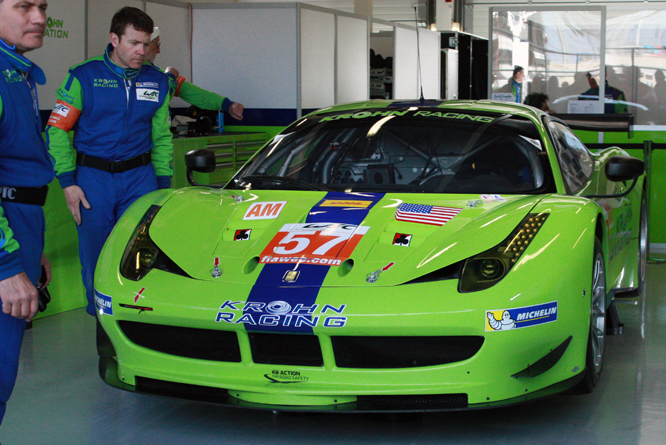
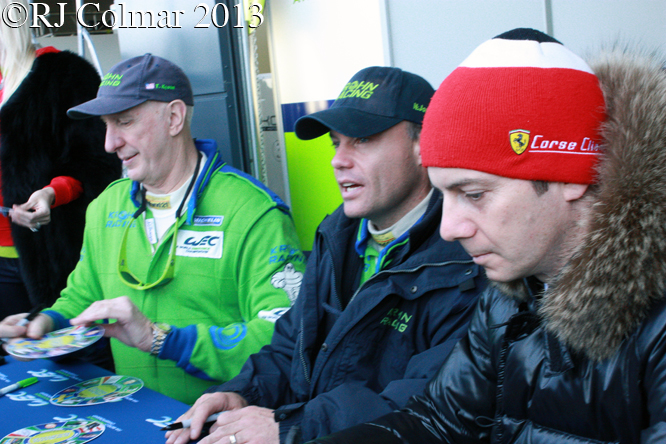
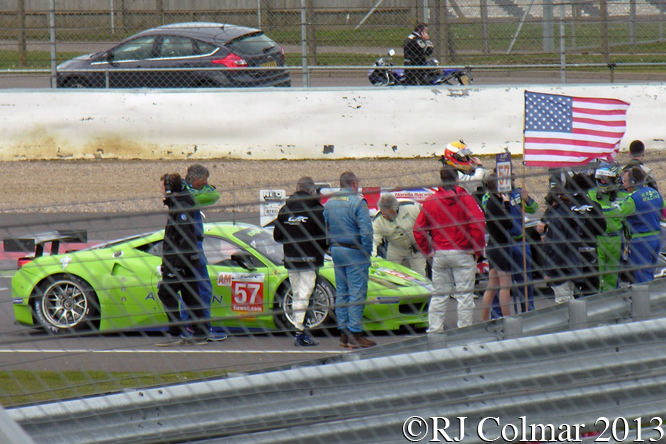
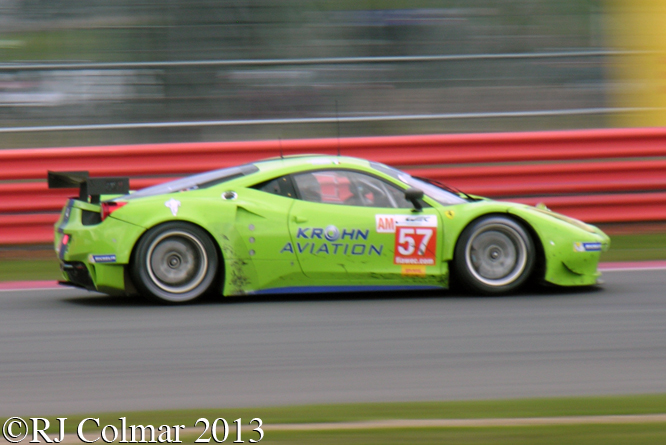
Since 2011 Krohn Racing has run it’s own GT programme to compete in the US and European Le Mans series, which in Europe last year became the FIA World Endurance Championship (WEC). Krohn Racing started competing in the GTE Am class of the WEC last year with today’s featured car the Ferrari 458 Italia GT2 chassis #2844 that this year has been driven by Tracey, Swede Niclas Jönsson with whom he won the Watkins Glen six hours and former Russian Formula 3 Open Wheel champion Maurizio Mediani.

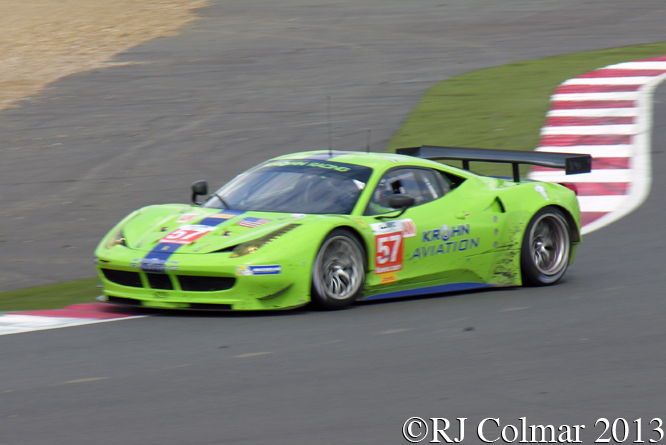
Ferrari 458 Italia GT2, 6 Hours of Silverstone

There seems to be some confusion about the name of this model with various sources quoting it as a GTC others including Krohn Racing’s own website calling it an F458 GTE however the Ferrari website calls the model a GT2 which is good enough for me. If you know different chime in below.

Ferrari 458 Italia GT2, 6 Hours of Silverstone

Based on the stunning Ferrari 458 Italia road car the GT2 differs with it’s more aggressive aerodynamic aids, however like the road car it has power steering, air conditioning to keep the cockpit temperatures tolerable and perhaps most surprisingly electric mirrors.

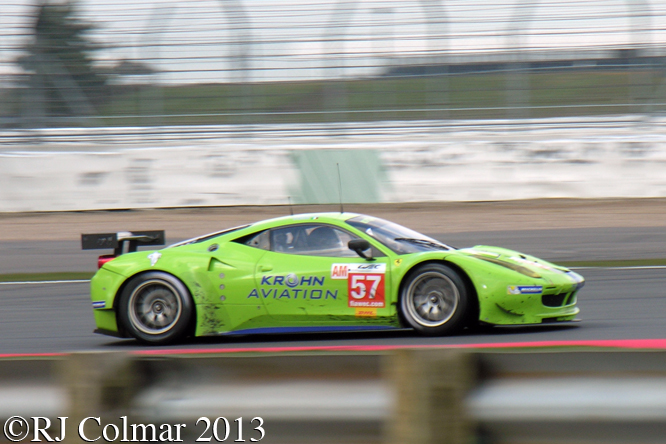
Ferrari 458 Italia GT2, 6 Hours of Silverstone

Power from the 4.5 litre / 274.6 cui V8 is restricted by air intake restrictor plates that means the motor produces a maximum 465hp at 6,250 rpm down from 562hp at 9,000 rpm in the road car.

Ferrari 458 Italia GT2, 6 Hours of Silverstone

#2844 is seen here at the recent 6 Hours of Silverstone where the team came home 25th overall and 6th in class. Since then the car has competed at the Spa 6 Hours where the team came home 28th overall and 8th in class and at the Le Mans test where Will and Maurizio recorded 61st fastest time.

Ferrari 458 Italia GT2, 6 Hours of Silverstone

The chassis final appearance was at the Le Mans 24 hours where during the opening day of practice Will, as Tracey is known, skidded off the track in the Dunlop Curves and wrecked the €480,000 / US$ 628,000 car fortunately with out any injury to himself.

Ferrari 458 Italia GT2, 6 Hours of Silverstone

By 11pm that night Krohn Racing had concluded a deal with Edelcriss Racing in Northern Italy to lease a their racing 458 chassis. Only problem was it was a more powerful GT3 spec car and it was 1,100 miles away. The Edelcriss Racing transporter set off with the car for a 15 hour sprint to Le Mans.

Ferrari 458 Italia GT2, 6 Hours of Silverstone

When it arrived it was promptly stripped and refettled to GT2 spec using all of the salvageable parts from #2844 a task which took a team of ten technicians 9 hours and some 500 Zip (cable) ties.

The new car was ready to roll for the Thursday qualification session in which Le Mans rookie Maurizio had yet to complete 5 laps in order to qualify.

The car made it to the grid but had to retire at 1am after another accident at the Porsche Curves left the new car stranded out on the track.

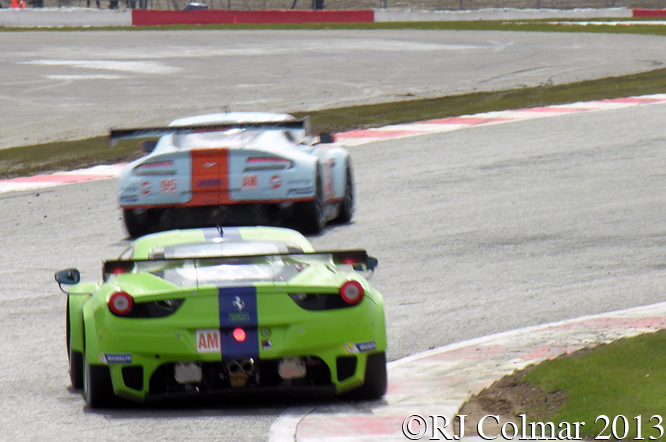
All of Krohn Racing troubles were put into perspective when they learned that fellow GTE Am competitor Allan Simonsen, seen above leading the Krohn Ferrari in the #95 Aston Martin, was killed in after a crash during the opening laps of the Le Mans 24 hours after he left the circuit at Tetre Rouge.

An appreciation of Allan’s life will be appearing in tomorrow’s blog.

Thanks for joining me on this ’90 Hours and 500 Zip Ties’ edition of “Gettin’ a li’l psycho on tyres”. I hope you will join me again tomorrow. Don’t forget to come back now !
Share