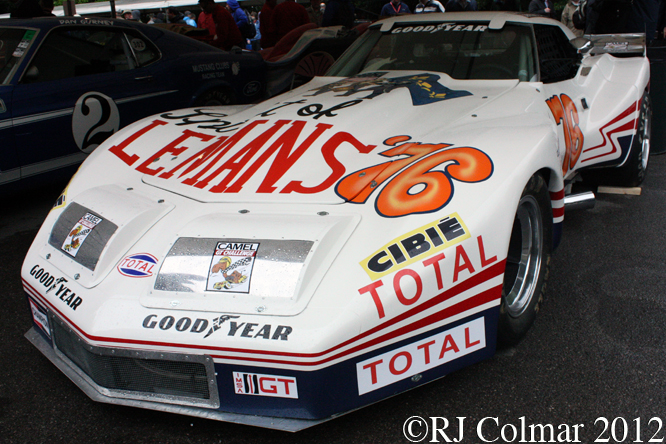
Spirit Of ’76 – Chevrolet Corvette Greenwood #007

John and Burt Greenwood were the children of a WW2 fighter pilot who worked at the GM Tech Center. As a teenager John was working paper rounds so that he could build a Briggs Stratton powered kart. From there the Greenwood’s moved into street racing, preparing a car, racing it and then selling it to so that they could build up another.

Around 1968 the Greenwoods set up Auto Research Engineering to build engines and tune suspension and the following year started racing. John won back to back SCCA championships in 1970 and 1971. Over the following two years the Greenwood Corvettes had made trips to the Le Mans 24 hours where they had failed to finish having a best 16th place on the grid in ’72 to show for their efforts.

Chevrolet Corvette, Goodwood Festival of Speed

In 1976 John Greenwood was invited to return to Le Mans and this time he brought a wide bodied car to share with Bernard Darniche. Featuring a body that was developed the the aid of ‘Farther of the Corvette’ Zora Arkus-Duntov and aerodynamicist Randy Wittine that covered a 700 hp fuel injected 7 litre / 427 cui motor.

Chassis #007 had been built up for Rick Mancuso a racer from Illinois who entered the car in the ’76 Sebring 12 hours but crashed it in practice so that it did not start, #007 is not to be confused with John Greenwoods “Spirit of Sebring ’76” which started from pole in the same race, but retired after 36 laps with clutch failure.

Chevrolet Corvette, Goodwood Festival of Speed

At his third attempt John’s Corvette, which was timed at over 215 mph on Mulsanne straight, qualified 9th behind a the turbocharged BMW CSl driven by Brian Redman and Peter Gregg and was one of just 12 cars to get below 4 mins in qualifying beating his own previous best time by a clear 20 seconds.

Unfortunately it was not third time lucky in the race as the car was retired with a split fuel cell during the early hours bringing to an end John’s hugely popular presence at the La Sarthe circuit.

Thanks for joining me on this “Spirit of ’76” edition of “Gettin’ a li’l psycho on tyres” I hope you will join me again tomorrow for “Ferrari Friday”. Don’t forget to come back now !

Share

5th Tony Marsh Memorial Weekend – Gurston Down

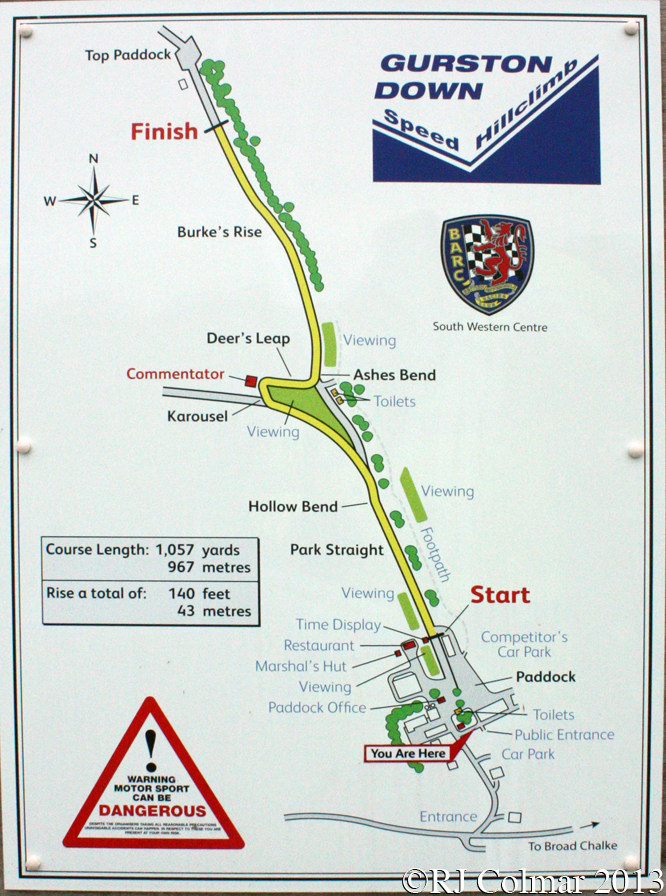
On Sunday I made the first of what I hope will be many visits to Gurston Down for the 5th Tony Marsh Memorial Weekend hillclimb. Gurston Down just west of Salisbury is set on a working farm and was devised by six time British Hillclimb champion Tony Marsh in 1965.

Gurston Down, Wiltshire

The course is just over a half a mile long and rises a total 140 feet, it is also the only Hillclimb in the UK that starts on a downward slope. As I found out on Sunday the facilities and viewing areas are excellent and it is no surprise to hear that Gurston Down has won the Norrie Galbraith Memorial Trophy for best organised British Hillclimb Championship event a record eight times.

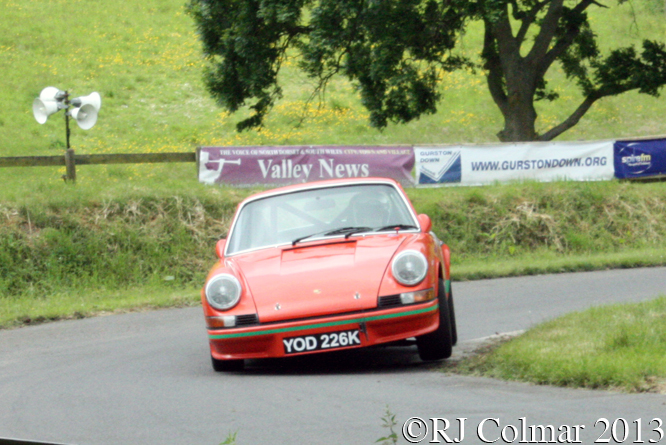
Mortimer, Porsche 911, Gurston Down, Wiltshire

After a cup of tea and obligatory bacon and egg roll in the excellent restaurant on arrival I made my way up to the Ashes Bend towards the top of the hill during the opening practice runs arriving in time to observe the second practice runs. Above Bob Mortimer lifts an inside front wheel in his Porsche 911 at the apex of Ashes.

Gates, Force LM, Gurston Down, Wiltshire

On his second practice run Johnathon Gates was forced into a bit of lawn mowing at Ashes bend as the back of his car stepped out unexpectedly under braking. No damage was done and he ended the day with 8th fastest time.

Rudge, Westfield SEi, Gurston Down, Wiltshire

Mike Rudge is seen correcting oversteer / push coming out of Ashes in his Westfield SEi, he easily won his class by seven seconds more surprisingly to me he finished with 9th fastest time of the day beating a number of single seat open wheel cars in the process.

Stapely-Bealing, Formula 1300, Gurston Down, Wiltshire

During her second practice run Hannah Stapely-Bealing came by showing signs of contact with the Wiltshire scenery however the car was repaired and put in two timed runs, however the motor of her Formula 1300 Clubmans car was no longer running cleanly and she was around a second off her first practice run.

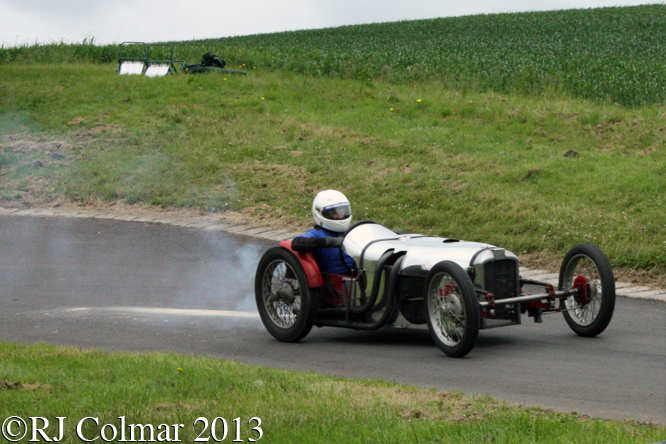
Bloody Mary, Gurston Down, Wiltshire

National Motor Museum Beaulieu kindly sent along former Autosport Technical Editor John Bolsters “Bloody Mary” Special for a welcome demonstration. The special started as a project for two teenagers to scare the cow’s in a nearby field and became a successful if by all accounts rather terrifying Brough Superior powered hill climb winner.

Penfound, Lester MG, Gurston Down, Wiltshire

I was introduced to another new, to me, manufacturer at Gurston namely Lester who built MG powered cars in the 1950’s. Stewart Penfound navigates the steep and tight Karousel in his example above.

Pamplin, MG XPAG Special, Gurston Down, Wiltshire

Another interesting MG was Chris Pamplin’s MG XPAG Special as listed in the programme and 1935 MG Magnette according to the registration plate.

Spicer, Ferrari 328 GTB, Gurston Down, Wiltshire

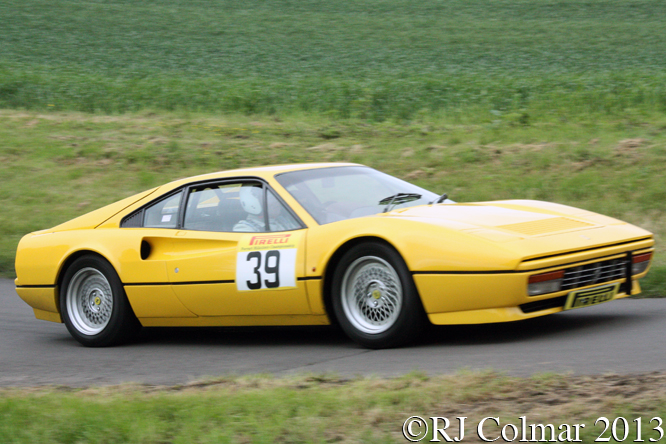
Standing out from an otherwise mostly red crowd of Ferrari’s was Mike Spicers Modena Yellow 328 GTB seen approaching Deer Leap which recorded 2nd fastest Ferrari time of the day.

Fanner, Subaru Impreza, Gurston Down, Wiltshire

Lewis Fanner will have given his wife with whom he shares their Subaru Impreza a scare as he spun the car going into Karousel. Fortunately he did not hit anything and returned to the paddock for his one remaining run.

Hadfield, Lotus 22, Gurston Down, Wiltshire

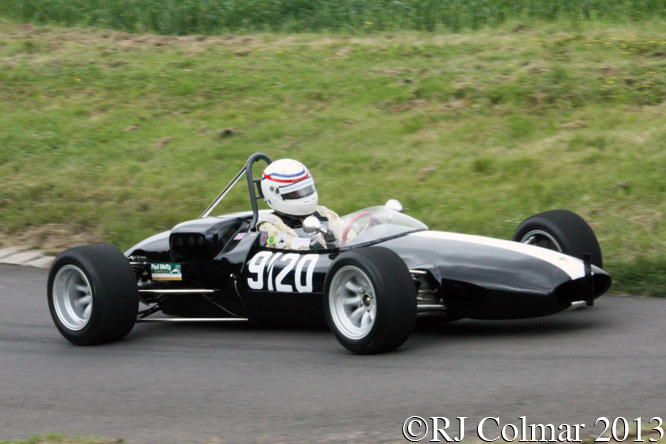
Simon Hadfield and Geoff Hunt shared this Lotus 22, originally designed for Formula Junior competition, and finished the faster of the two albiet second in class to the more modern Ensign LNF3 driven by Fyrth Crosse.

Beale, Ginetta G33, Gurston Down, Wiltshire

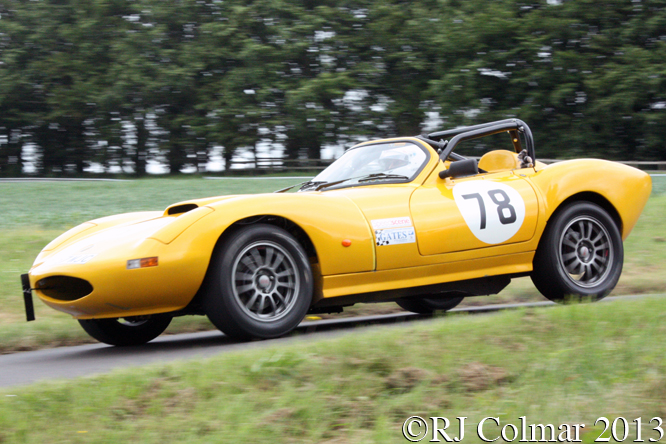
Over the past couple of months the lines of Graham Beales class winning Ginetta G33 have really grown on me, apparently the idea for the Rover V8 powered car was conceived on a table cloth in a pizzeria by Mark Warklett and Noel Palmer.

Street, Ford Escort XR31, Gurston Down, Wiltshire

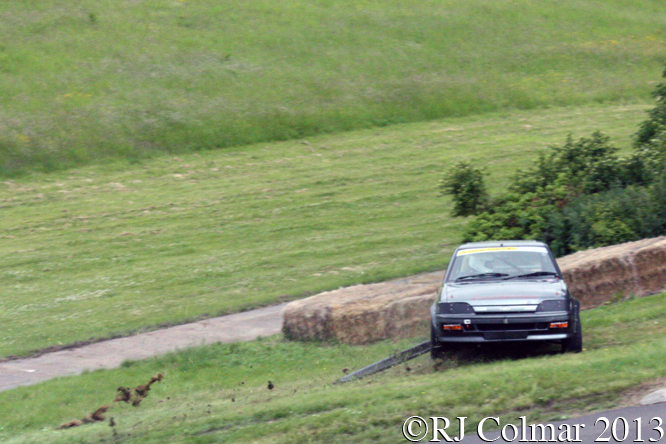
Darren Street was another who found the entry to Karousel a bit tricky in his Ford Escort XR3i, here he is seen on his way to an appointment with the hay bales. Fortunately he suffered no injuries and he eventually drove to the top of the hill under his own steam.

Lewis, St Bruno Roughcutter,  Gurston Down, Wiltshire

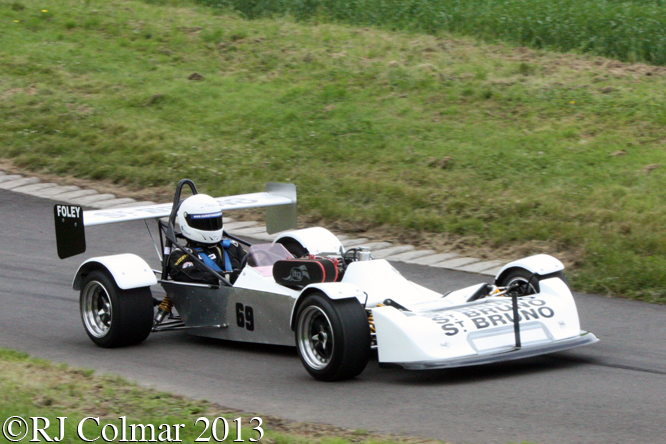
Like the Bloody Mary Special Adrian Lewis’s St Bruno Roughcutter Clubman’s car has an Autosport connection it being the creation of Barry Foley, best known as Autosports ‘Catchpole’ cartoonist. Barry built the car in the early 1970’s crediting help from a variety of sources including design input from Maurice Phillipe himself a part time Clubmans racer when not busy designing Formula One cars.

Dent, Hornet F3,  Gurston Down, Wiltshire

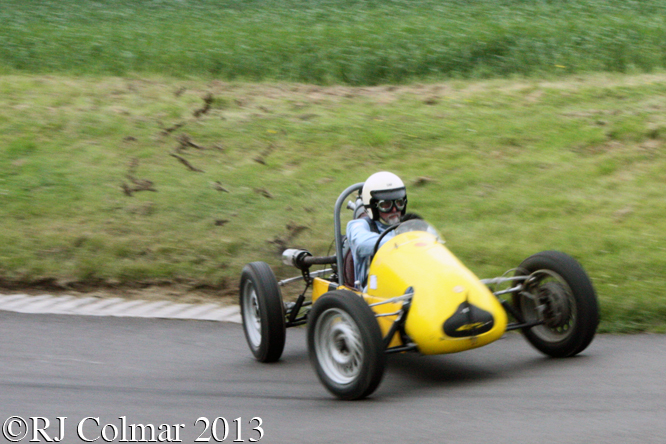
On both of his timed runs Alistair Dent lost time when his tail got onto the grass on the exit of Karousel, which had the benefit of at least entertaining those of us watching, above Alistair is seen on his first run in the Hornet JAP powered 500 F3 car.

Chard, Mazda MX5, Gurston Down, Wiltshire

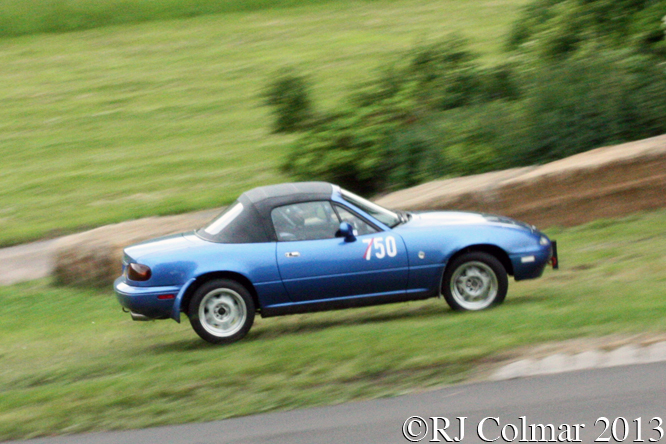
By for the most serious incident of the day was when Karl Chard left the road at Karousel and ended up going straight into the hay bales. Fortunately again Karl was unhurt which is more than can be said for the Mazda MX 5 which he shares with his brother Ian. At least all the wheels were still attached.

Flagg, Subaru Impreza STi, Gurston Down, Wiltshire

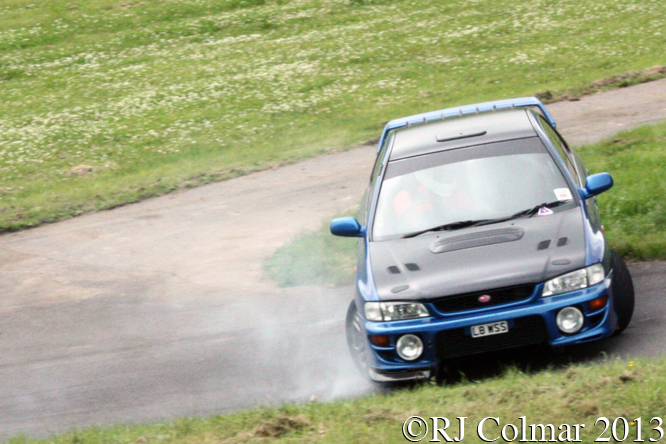
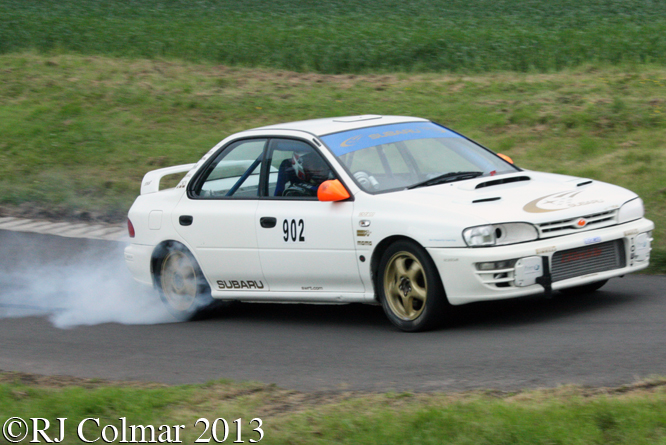
David Flagg lost 3/10ths of a second on his second timed run this display of wheel spin from his Subaru on the run to Deer Leap probably did not help his cause.

Hollier, Pilbeam MP62, Gurston Down, Wiltshire

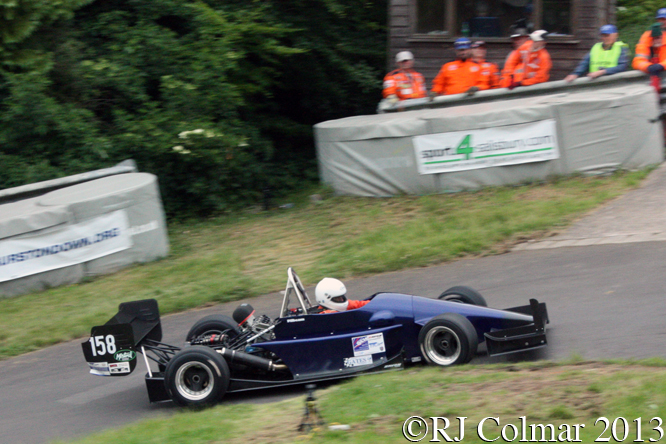
Edward Hollier set best time of the day (BTD) running the course in 29.19 seconds in his Pilbeam MP62, both of his runs were quicker than the next fastest competitor Peter Smith who was driving a Force in the same class as Edward. Coincidentally Ed won last time that I saw him running at Wiscombe Park last month.

Another great day out at yet another great venue, if you have never been I doubt you will be disappointed.

Thanks for joining me on this “5th Tony Marsh Memorial Weekend” I hope you will join me again tomorrow. Don’t forget to come back now !

PS Shameless plug my British Grand Preview can be found at Motorsports Unplugged on this link.

Share

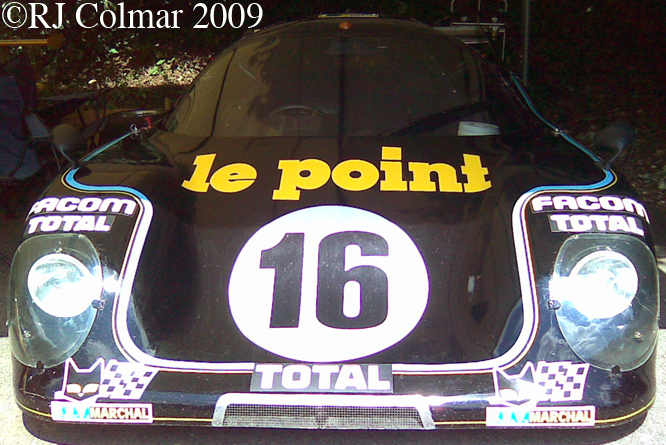
Le Point – Rondeau M379 B/C #003

Le Mans born Jean Rondeau had four cracks at the Le Mans 24 hours with a Chevron, Porsche (twice) and a Mazda RX3 when he decided to build his own 3 litre / 183 cui Ford Cosworth powered cars for the GTP category of the race. In 1976 and 1977 these cars known as Inatera’s the name of his wall paper manufacturing sponsor won the GTP class at Le Mans on both occasions the ’77 class win also netting drivers Rondeau and Jean Ragnotti a 4th place overall finish.

Rondeau 379B, Goodwood Festival of Speed

For 1978 Jean returned to the Le Mans circuit with a car bearing his own name for the first time and sharing his M378 with Bernard Darniche and Jacky Haran scored a third consecutive GTP class win as a manufacturer and his second as a driver coming home 9th overall from 40th on the grid.

Rondeau 379B, Goodwood Festival of Speed

Jean appeared at the 1979 race with updated M379 cars while the GTP entry he shared with Jacky Haran retired at two thirds distance with accident damage. A second car entered in the over 2 litre / 122 chi sportscar class came fifth overall and first in class piloted by well known French Rally drivers Ragnotti and Darniche. Today’s featured chassis M379 #003 came home tenth with Henri Pescarolo and Jean-Pierre Beltoise at the wheel.

Rondeau 379B, Goodwood Festival of Speed

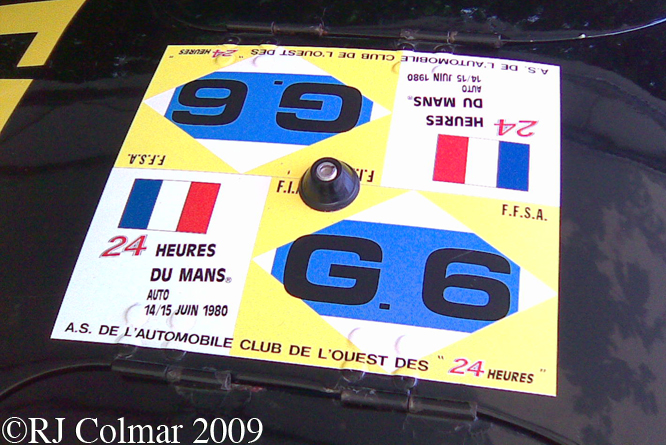
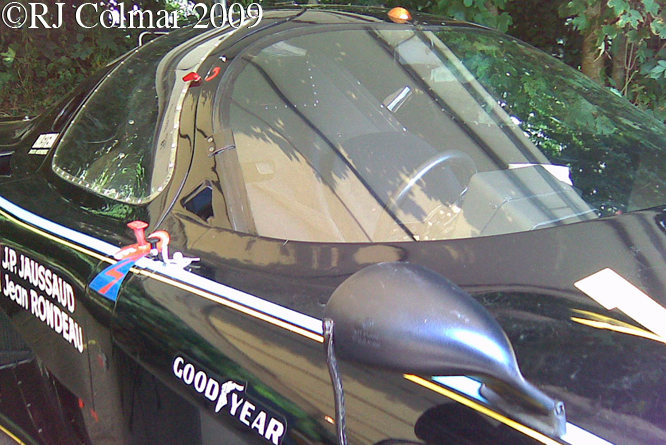
Going into the 1980 Le Mans 24 hours on a roll of four consecutive class wins for his cars Jean upgraded the M379 to b spec and teamed up with 1978 Le Mans winner Jean Pierre Jaussaud.

Starting from fifth on a very wet grid the Le Point newspaper sponsored Rondeau maintained a steady pace through out the race while the highly fancied privately entered Porsche 908/80 driven by Jacky Ickx and Reinhold Joest was delayed by an inability to see in the rain from the open cockpit car. When the rain eased the Porsche made up time and hit the front but was then delayed for quarter of an hour when Jacky had to replace the fuel injection pump belt out on the circuit. Jacky and Reinhold had regained the lead for a second time when 18 hours into the race the Porsche required a gearbox rebuild just as the winning Porsche 936 had required in 1977.

This time when the repairs were completed the Porsche had fallen too far behind the leading Rondeau and still had a two lap deficit when the clock turned 4 pm. On the last lap on a wet circuit Jaussaud had a spin while on slicks but managed to avoid hitting anything and crossed the line first in M379 #003 to make Jean Rondeau the only man to win the Le Mans 24 hours in a car he designed and bearing his own name.

Rondeau 379C, Goodwood Festival of Speed

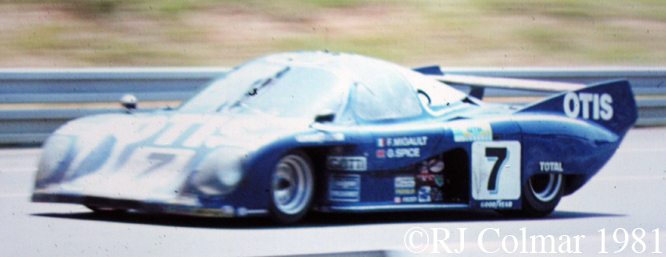
M379 #003 was prepared to C spec, seen above for Francoise Migault and Gordon Spice to race at Le Mans in 1981 they finished 3rd behind the GTP class winning Rondeau M379C #002 driven by Jacky Haran and Philippe Streiff and Jean-Louis Schlesser. M379C #002 had been driven to 3rd overall and 1st in GTP the previous rear by Gordon Spice and the Belgian Martin brother Jean Michele and Philippe.

Todays featured car ran at Le Mans for a fourth and final time in 1982 as a private entry for Pierre Yver, Bruno Sotty and Lucien Guitteny who started 35th and finished 10th.

Thanks for joining me on this “Le Point” edition of “Gettin’ a li’l psycho on tyres” I hope you will join me again tomorrow. Don’t forget to come back now !

Share

It Is Not A Green Audi – Bentley Speed 8 #004/1

Just over a week ago I visited Cholmondeley Pageant Of Power where I manged to catch up with today’s featured Bentley Speed 8 of the type which ten years ago were entered in the 2003 Le Mans 24 Hours.
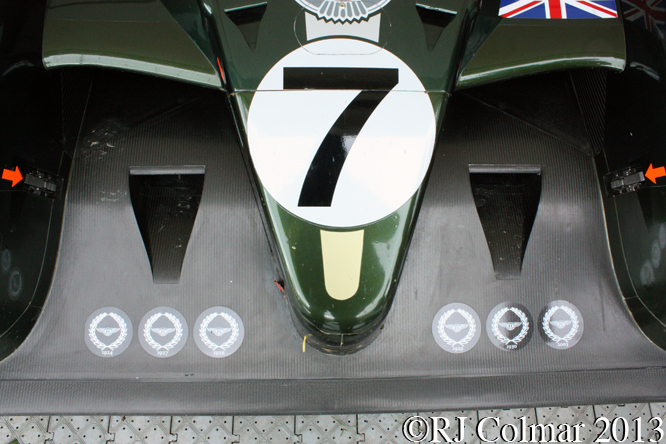
Bentley Speed 8, Cholmondeley Pageant Of Power

The origins of the Speed 8 lay in two Audi projects that raced at Le Mans in 1999 one of which was designed by Peter Elleray who would go on to design the Bentley’s which competed at Le Mans from 2001 and 2003.
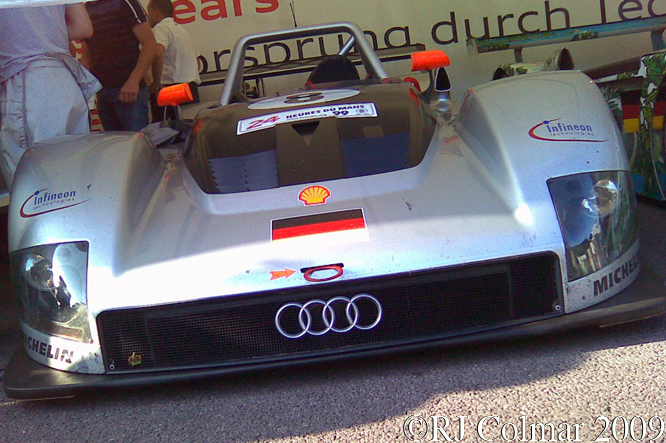
Audi R8R, Goodwood Festival Of Speed

Audi entered four cars in the 1999 endurance classic two open cockpit LMP class Audi R8R’s like the one above that was built by Dallara and entered by Audi Sport Team Joest which Frank Biela, Didier Theys and Emanuele Pirro drove third place one spot ahead of the sister R8R driven by Michele Alboreto, Rinaldo Capello and Laurant Laurent Aïello.
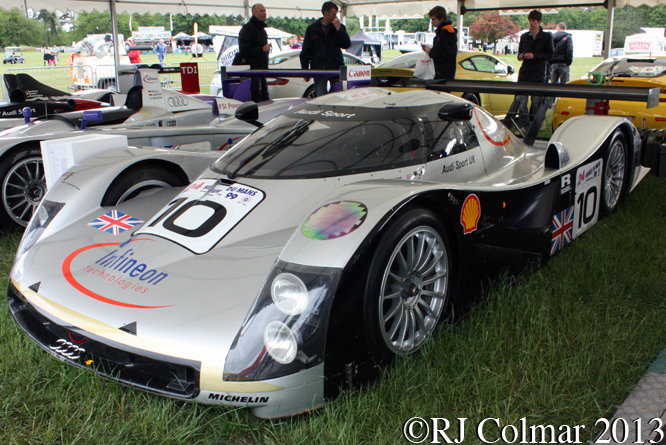
Audi R8C, Goodwood Festival Of Speed

The two remaining Audi’s were closed cockpit LMGTP Audi R8C’s designed by Peter Elleray and built by Racing Technology Norfolk (RTN) using the same twin turbo V8 motors and gearboxes as the R8R. Veteran Porsche Group C entrant Richard Lloyd ran the R8C’s in the ’99 Le Mans Race under the Audi Sport UK banner with James Weaver, Andy Wallace and Perry McCarthy in the #10, seen above which retired after 198 laps. The #9 R9C was driven by Stefan Johansson, Stéphane Ortelli and Christian Abt retired after 55 laps both cars experiencing gearbox issues that were shared with the R8R’s but which the Joest mechanics were better able to cope with.
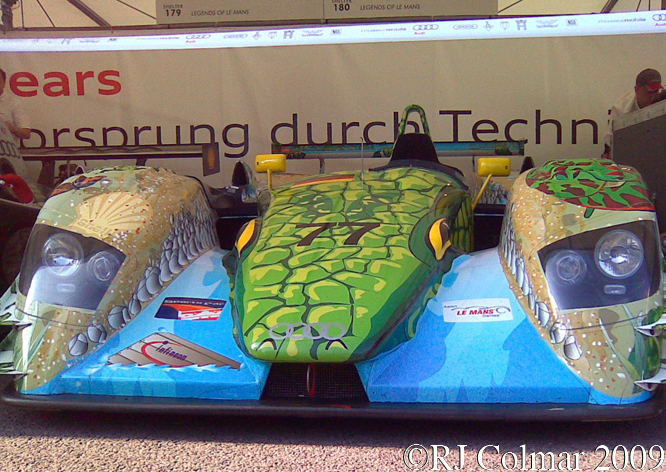
Audi R8, Goodwood Festival Of Speed

The R8R’s were quicker than the R8C’s which suffered from being the second project to get the go ahead and Audi decided to go with the open cockpit concept and developed the R8 of the type seen above which won five Le Mans 24 hour races in ’00, ’01, ’02, ’04 and ’05.
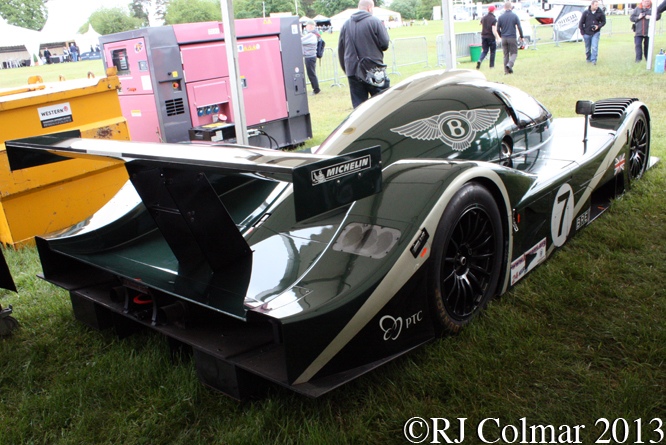
Bentley EXP Speed 8, Cholmondeley Pageant Of Power

In 1998 the Volkswagen Group, which includes Audi, acquired Bentley and Rolls Royce, for reasons that are not clear they did not acquire the rights to use the Rolls Royce name which went to BMW and an agreement was reached that saw Rolls Royce production separate from Bentley at Crewe, where the two marques had been manufactured alongside each other since 1946, with Rolls Royce becoming a BMW owned company located in a new production facility at Goodwood.

Following the acquisition of Bentley in 1999 a 220 mph concept car was announced. The Bentley Hunaudieres powered by a normally aspirated W16, a version of the motor that would be used to power another super car from the Volkswagen Group namely the Bugatti Veyron.

In 2000 Bentley announced that it was to return to Le Mans, for the first time in 71 years, in 2001 with two closed cockpit LMPGTP entires and that a prototype was being worked on by Peter Elleray at Racing Technology Norfolk.

By the time the design for the EXP Speed 8 was finalised it had been decided to use the same twin turbo V8 as was being used in the Audi R8 programme but fitted with an X-trac transmission. During the 2001 Le Mans race chassis #002/4 seen above was driven by Martin Brundle, Guy Smith and Ortelli, qualifying 7th but retiring with transmission failure. Chassis #002/3 driven by Andy Wallace, Eric van de Poele and Butch Leitzinger qualified 9th and finished 3rd overall behind two Audi R8’s 15 laps adrift of the overall winner, but winning the GTP class.
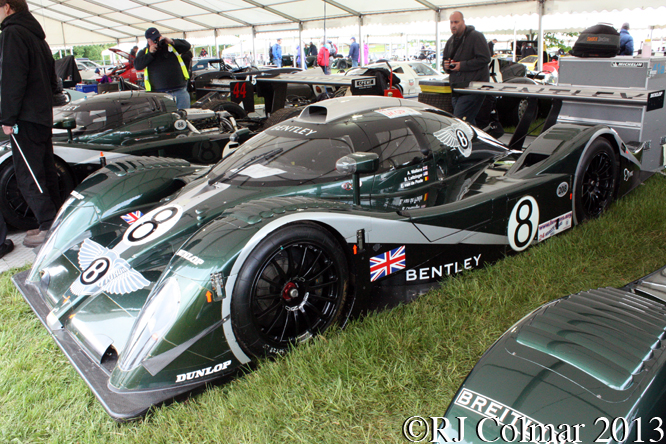
Bentley EXP Speed 8, Cholmondeley Pageant Of Power

For 2002 only one Bentley entry was prepared for the Le Mans 24 Hours, it’s upgrades included a new 4 litre / 244 cui version of the Audi based twin turbo V8 up from 3.6 litres / 219 cui, the 4 litre motors were unique to Bentley.

Driving a new chassis, #002/6 seen above, Wallace, van de Poele and Leitzinger qualified over two seconds faster than they had in 2001 but wound up only 11th on the grid. In the race they covered 62 laps more than in 2001 but finished 4th behind three Audi R8’s now only 13 laps behind the overall winner and again winning the LMGTP class.
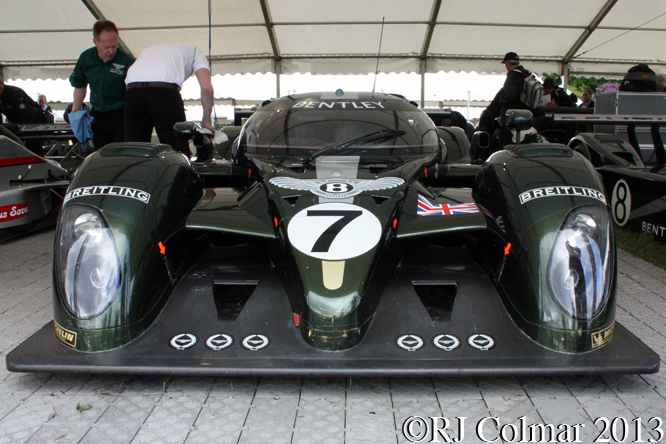
Bentley Speed 8, Cholmondeley Pageant Of Power

For the third and final planned onslaught at Le Mans Peter Elleray designed a completely new car based on a completely new safer carbon fiber tub.
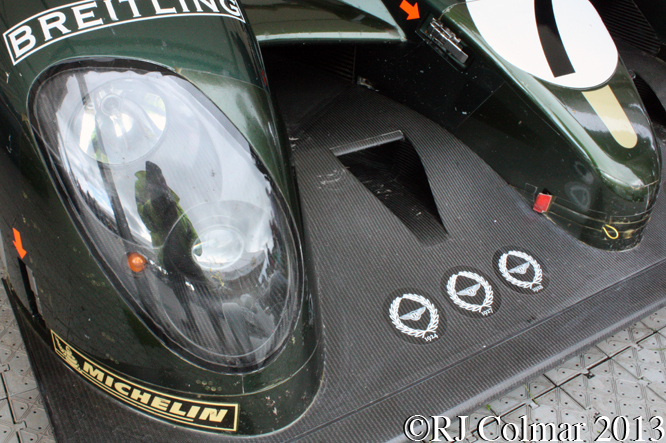
Bentley Speed 8, Cholmondeley Pageant Of Power

After Johnny Herbert crashed one of the new #004 cars, chassis #004/2, at 100 mph into a concrete wall without injury during testing, Peter persuaded the management that two even stronger tubs should be built. However one of these #004/4 “blew up” while being cured in the autoclave and the other #004/5 was prepared for the 2003 Le Mans 24 hours.
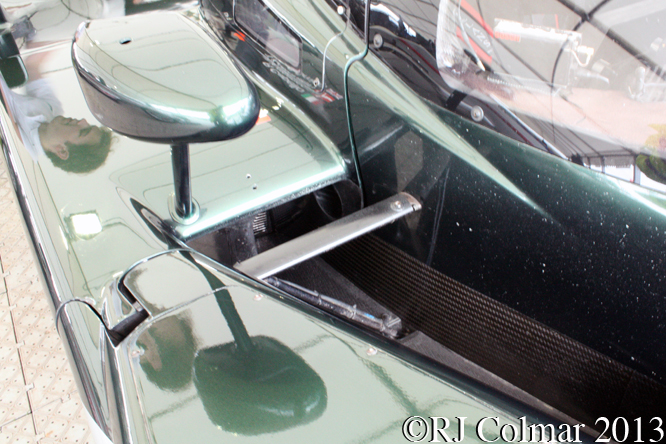
Bentley Speed 8, Cholmondeley Pageant Of Power

Today’s featured chassis #004/1 along with #004/3 was sent to Sebring to compete in the Sebring 12 Hours as a warm up preparation for Le Mans. However two privately entered Audi’s did not read the script and ended up beating the Bentley’s by 4 laps. #004/1 driven by Capello, Tom Kristensen and Smith qualified and finished 4th 5 laps down on the overall winner and behind the Johnny Herbert, David Brabham and Mark Blundell entry.
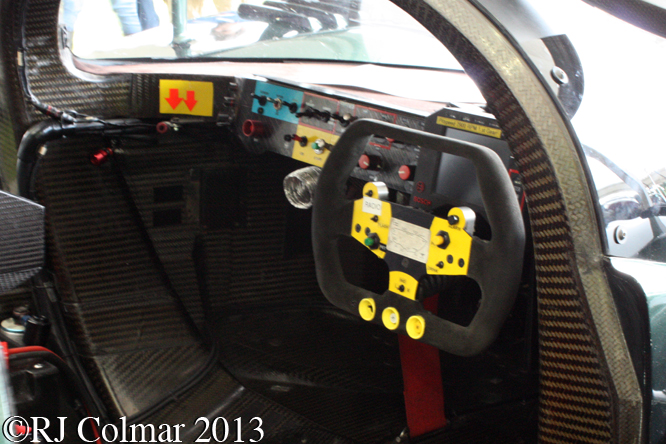
Bentley Speed 8, Cholmondeley Pageant Of Power

Both of the Sebring cars were then sent to Le Mans in May 2003 for the Le Mans test weekend where Capello, Kristensen and Smith driving #004/1 set the fastest time ahead of the Audi Sport Japan Team Goh R8 driven by Seiji Ara, Marco Werner and Jan Magnussen. Third fastest time went to Herbert, Brabham and Blundell in chassis #004/3.
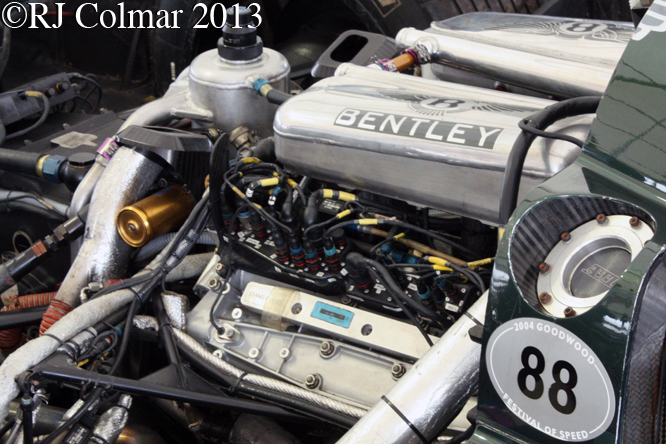
Bentley Speed 8, Cholmondeley Pageant Of Power

Like the 2002 EXP Speed 8 the 2003 Speed 8 retained exclusive use of the 4 litre twin turbo V8 which produces around 600 hp. When designing the prototype Bentley Le Mans challenger, 001 in 2000, Peter Elleray was expecting to use an unspecified normally aspirated motor apparently several options were discussed including the W16 and the prototype was tested with a Cosworth DFR Formula One motor before the twin turbo Audi V8 and later larger Bentley V8 derivative were selected.
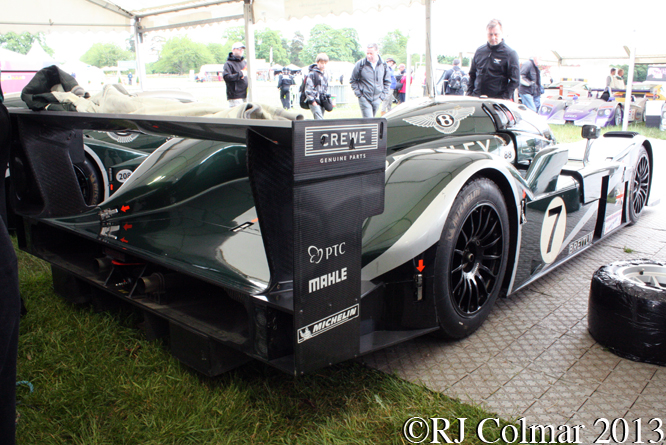
Bentley Speed 8, Cholmondeley Pageant Of Power

The Speed 8 Bentley’s were perfectly prepared for the 2003 Le Mans 24 hours and in the absence of works Audi R8 entries they called on Joest Racing to support their efforts in the pit lane. Capello, Kristensen and Smith were entered in the new chassis #004/5 which qualified on pole 2 seconds faster than older sister car #004/3 driven by Herbert, Brabham and Blundell that completed a Bentley sweep of the front row.
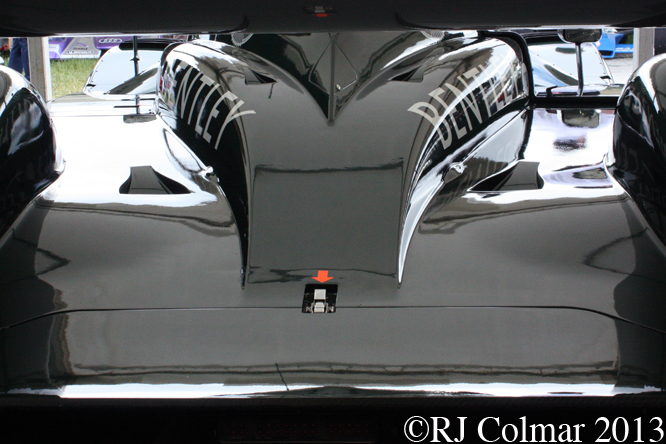
Bentley Speed 8, Cholmondeley Pageant Of Power

The Bentley’s then ran a text book race finishing in the order they qualified with the lead car two laps ahead completing 377 laps in total seven more that the third placed Champion Racing Audi R8 driven by JJ Lehto, Emanuele Pirro and Johansson. The last time a Bentley had won the Le Mans 24 hour race was when Woolf Barnato and Glen Kidston led the similar Bentley Speed Six of Frank Clement and Richard Watney in 1930 having completed ‘just’ 179 laps.
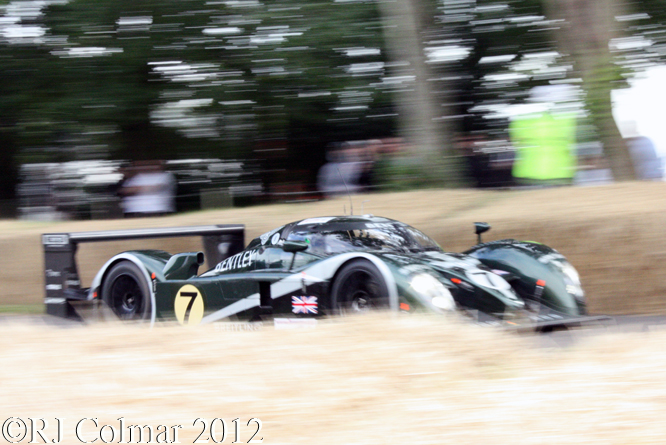
Bentley Speed 8, Goodwood Festival Of Speed

Designer Peter Elleray believes that Bentley possibly choose to enter the LMGTP class because of the ‘visual presence’ of the closed cockpit cars and it must have been satisfying to him that his final Speed 8 design was the first non Formula One car in 14 years to win be awarded the 2003 Autosport Racing Car Of The Year Award.

There have been many uniformed opinions that the Bentley Le Mans project that ran from 2001 to 2003 was simply a badge engineered Audi R8 with a roof, however this was most certainly not the case.

The Bentley Speed 8 had more British content than the successful Italian Dallara Audi R8’s had German content even though the British car was powered by a unique to Bentley version of the Audi V8.

Peter patiently answered some of the misinformed opinion about the cars he designed at The Nostalgia Forum recently.

I’ll leave the final word on this project to Peter “i(t) will be on my tombstone – “it wasn’t a green audi…”

My thanks to Peter Elleray for an engaging discussion on his involvement with today’s featured car at The Nostalgia Forum.

Thanks for joining me on this “It Is Not A Green Audi” edition of “Gettin a li’l psycho on tyres” I hope you will join me again tomorrow for a look at a car that was developed with a very different approach to winning the Le Mans 24 hours. Don’t forget to come back now !
Share

Endurance Survivor – Porsche 911 GT1-98 #003

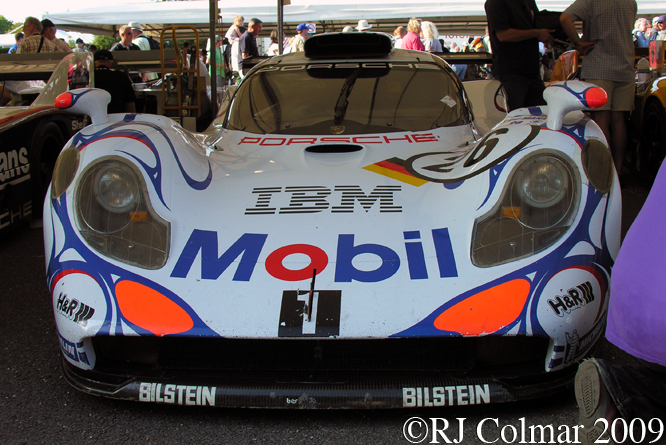
The Porsche 911 GT1-98 was the second evolution GT1 racer that Porsche contested the 1998 FIA GT1 championship with.

Porsche 911 GT1-98, Goodwood Festival of Speed

While the front of the new car bears a passing resemblance to the Generation 2 996 version of the Porsche 911 the rest of the car was essentially a prototype fitted with a 600hp twin turbo Group C type 24 valve twin cam water cooled flat 6 of the same type as used by the Porsche 962C with the addition of a sequential gearbox.

Porsche 911 GT1-98, Goodwood Festival of Speed

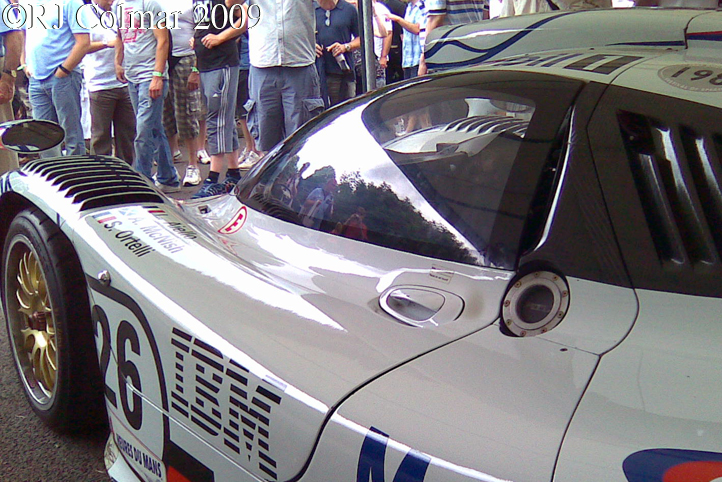
The 911 GT-98 was built around a tube frame and with carbon fibre bodywork. One road going example of the GT1-98 was built to meet the GT1 regulations.

Porsche 911 GT1-98, Goodwood Festival of Speed

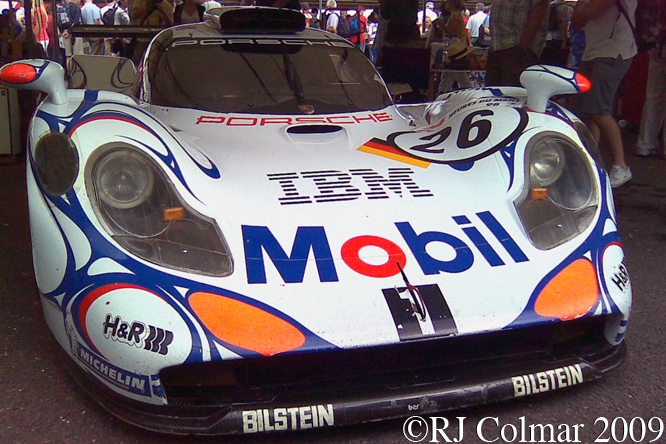
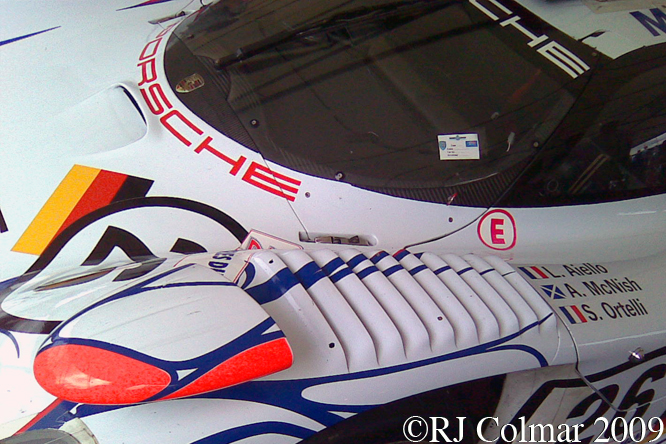
Going into the 1998 Le Mans 24 Hours race two normally aspirated 6 litre / 370 cui V8 Mercedes Benz CLK LM’s prepared especially for the endurance classic qualified 1st and 3rd. The fastest of three turbocharged Toyota GT-One qualified second with the Porsche 911 GT1’s 4th and 5th, the later car being chassis #003 driven by Allan McNish, Stéphane Ortelli and Laurent Aiello.

Porsche 911 GT1-98, Goodwood Festival of Speed

During the race the specially prepared Mercedes Benz CLK LM’s both retired by lap 31 with engine failures while the fastest of the Toyota GT-One’s retired after half distance after an accident which left the two works Porsches at the head of the field.

Porsche 911 GT1-98, Goodwood Festival of Speed

The #26 shared by NcNish, Ortelli and Aiello crossed the line a lap ahead of the sister car driven by Jörg Müller, Uwe Alzen and Brilliant Bob Wollek.

As had occured many times in the past the Le Mans winners did not win the championship which was dominated by Mercedes Benz who clocked up six 1-2 finishes, but it is Porsche who is best remembered from the GT1 championship for surviving to win an unlikely 1-2 at Le Mans.

Thanks for joining me on this “Endurance Survivor” edition of “Gettin’ a li’l psycho on tyres” I hope you will join me again tomorrow when I’ll be looking at a car that is ‘not a green Audi’. Don’t forget to come back now !
Share

Wall Of Noise – Aston Martin AMR 1 #01 & #03

In 1989 Group C sports car racing reached new heights popularity among manufacturers when Aston Martin joined in the fun as a manufacturer. Aston Martin Tickford had supplied motors for the Nimrod Group C cars that were run from 1982 until 1984. They also supplied the even less successful EMKA Productions and Cheetah teams which ran sporadically from 1983 to 1985.

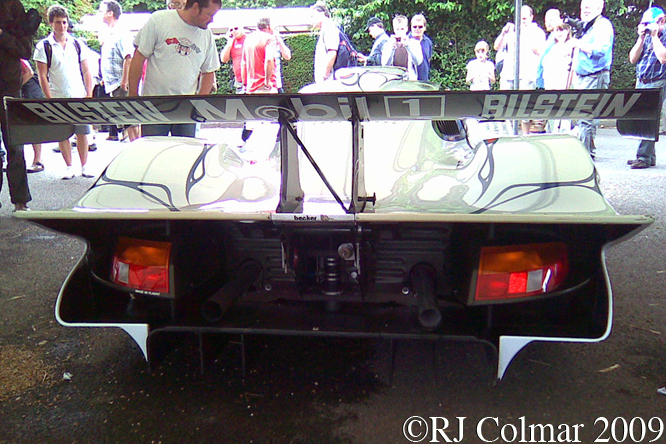
Aston Martin AMR1, Le Mans

The seeds of the 1989 program were laid after an agreement between Aston’s owners Victor Gauntlet and Peter Livanos that Aston Martin should go the whole hog and manufacture a Le Mans challenger wholly in house. A month after they announced their plans Ford took a controlling interest in Aston Martin and to the surprise of Gauntlet and Livanous agreed the racing program should continue on condition that it did not interfere with Aston’s production vehicles and that it would require no finance from Ford recommending a separate company should be set up to run the racing operation.

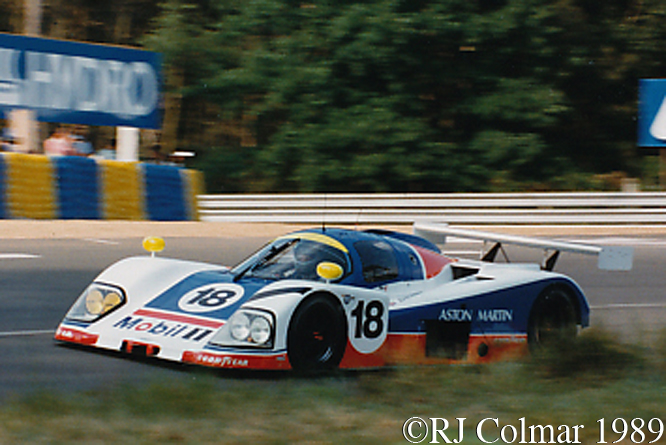
Aston Martin AMR1, Le Mans

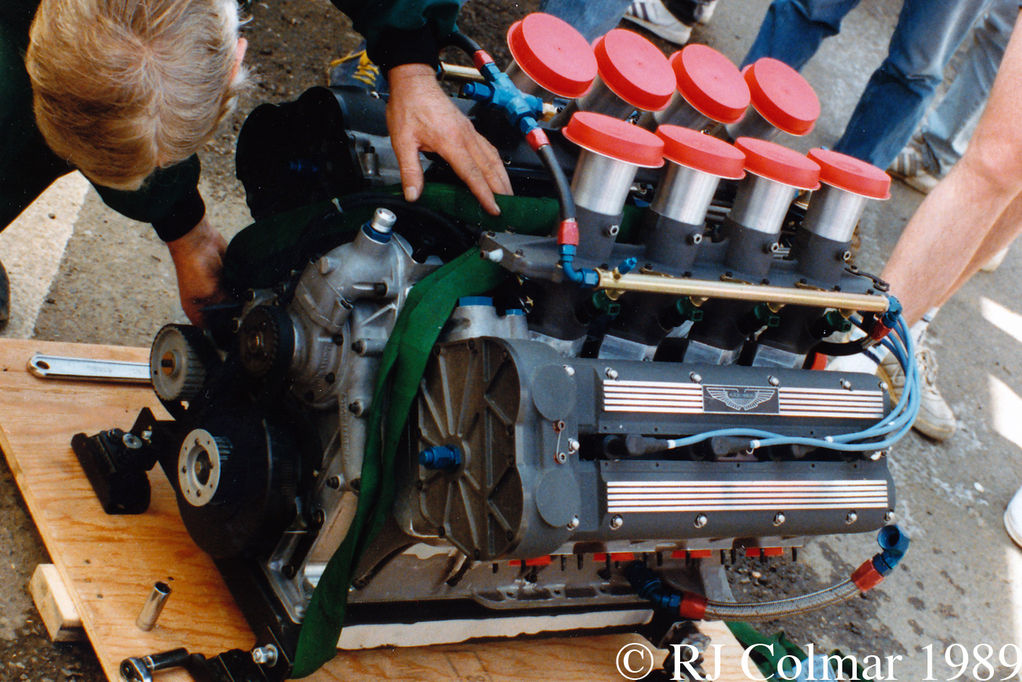
Aston Martin and Ray Mallock, using the Ecurie Eccose name with whom he had won the junior Group C2 championship in 1986 created a new company called Proteus Technology Ltd known as Protech. Protech was to be funded for six years to the tune of £26 million by the Livanos family. Callaway Engineering was engaged to develop the 5.3 litre Aston Martin Virage V8 motor into first a 600 hp 6 litre / 366 cui motor and later a 700 hp 6.3 litre unit.

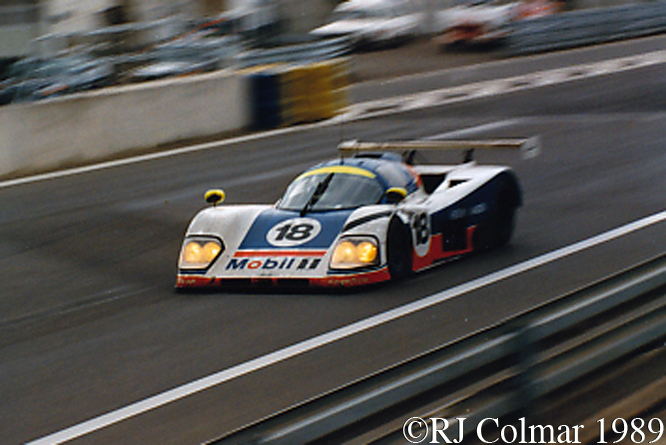
Aston Martin AMR1, Le Mans

The team hoped to have the first cars, designed by Max Bostrom, racing towards the end of 1988 and when the deadline passed they prepared themselves for a start at the first Group C race of 1989. An accident during testing meant the team were without a car to take to the first race of 1989 and so attracted a US$ 250,000 fine for missing the race.

Aston Martin AMR1, Le Mans

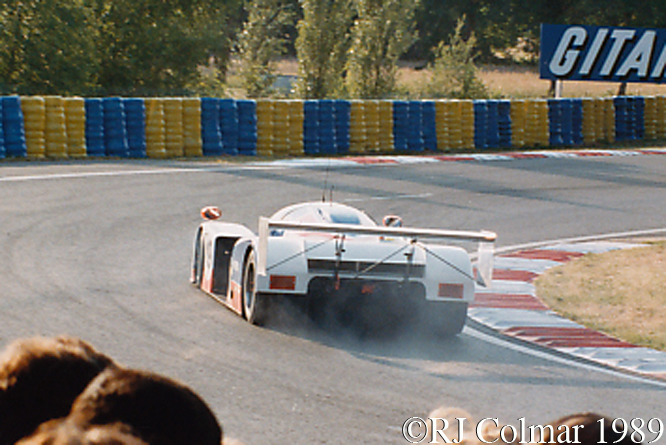
The AMR1’s first appearance was at Dijon where AMR1/01 driven by David Leslie and Brian Redman finished a distant 17th. At Le Mans which was a non championship event two cars were entered the #18 AMR1/01 for Redman, Micheal Roe and Costas Los while the #19 AMR/03 was driven by Leslie, Ray Mallock and David Sears.

Aston Martin (Callaway) RDP87, Le Mans

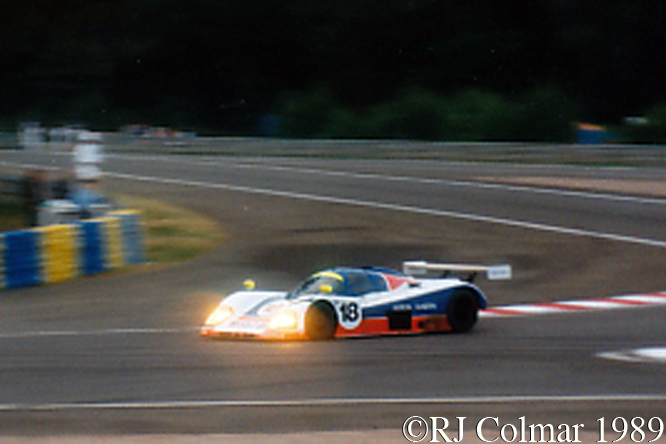
Despite circulating in a wall of noise equal to anything heard in the NASCAR Sprint Cup the AMR1’s were short on horsepower and overweight the #18 qualified 32nd while the #19 could only qualify 40th. The #19, seen at Arnage below, eventually retired with electrical issues early on the Sunday morning of the race while the #18 soldiered round to an 11th place finish.

Aston Martin AMR1, Le Mans

In the next race, at Brands Hatch, Redman and Leslie scored the teams best result a 4th place finish. Aston Martin finished the season 6th behind Mercedes-Benz, two private Porsche teams, Jaguar and Nissan but ahead of the factory Toyota team.

During the course of 1989 Bernie Ecclestone convinced the FIA that the future of Sports Car racing lay with 3.5 litre engine rules as required in Formula One from 1991. Aston Martin had no choice but to withdraw at the end of 1989 as they had no suitable engine and Ford had given the nod to Jaguar to use it’s own Ford Cosowrth HB V8 Formula One engine, and running the unfinished Aston Martin AMR2 for a year made no sense.

My thanks to fausto at The Nostalgia Forum for finding the link to the AMR2 wind tunnel models.

Thanks for joining me on this “Wall Of Noise edition of “Gettin’ a li’l psycho on tyres” I hope you will join me again tomorrow. Don’t forget to come back now !
Share

Do Not Lean On This Car – Ferrari 275 GTB/C #9079

In 1965 and 1966 Ferrari built a number of competition versions of the highly praised 275 GTB road car all using motors of the same type as found in the Ferrari 250 LM sports racer.

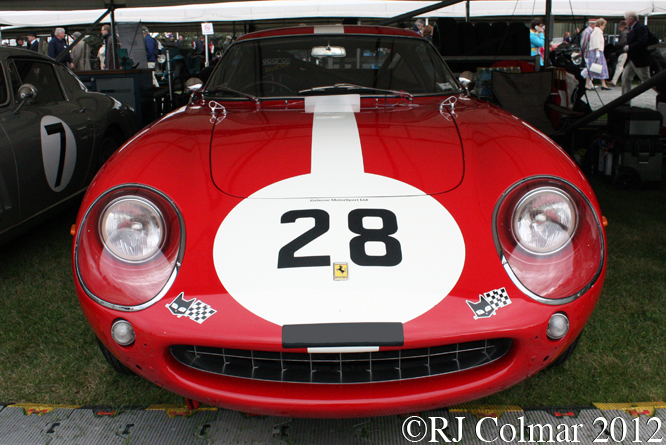
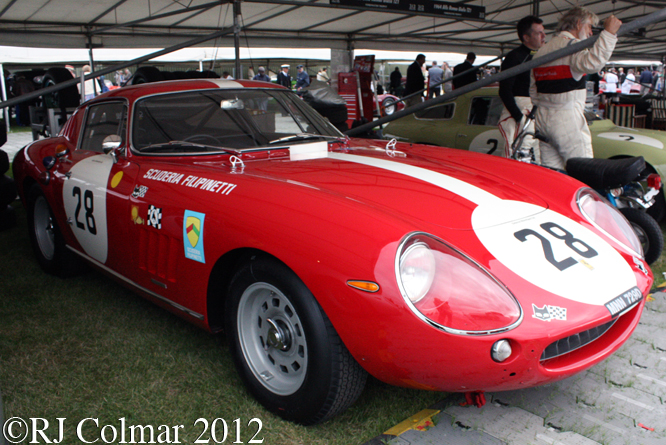
The last run of twelve competition 275’s known at the 275 GTB/C was built in 1966 and featuring aluminium bodies made of such a thin gauge it was reinforced with glass fiber, if you lean on this car you will almost certainly put a permanent dent in the body work.

Due to what appears to be a clerical error by someone at Ferrari the 275 GTB/C was mandated to run with only three carburetors, because someone at Maranello forgot to tell the FIA that a six carburetor option of the standard 275 GTB was available. This happened before the introduction of the 275 GTB/4 which featured six carburetors as standard.

Ferrari 275 GTB/C, Goodwood Revival

Even with this oversight a 275 GTB/C entered by Maranello Concessionaires and driven by Piers Courage and Roy Pike won its class at Le Mans in 1966 covering 310 laps and coming home 8th overall behind the three all conquering Ford GT40 Mk II’s and a fleet of four Porsche 906’s.

Today’s featured car chassis #9079 was the penultimate of the 12 GTB/C’s built in 1966 and it made it’s public debut at Le Mans in 1967 where it was entered for Swiss drivers Dieter Spoerry and Rico Steinemann by Scuderia Filipinetti. Dieter and Rico came in 11th and first in class covering 317 laps, 71 less than the overall winning Ford Mark IV.

Scuderia Filipinetti entered #9079 for Jaques Rey and Claude Haldi to drive at Le Mans in 1968 but the car retired after completing 78 laps as the consequence of an accident.

Ferrari 275 GTB/C, Goodwood Revival

The following year Jacques shared the car twice with Edgar Berney they came home 14th overall in the Spa 1000kms, 1st class. At Le Mans, where #9079 became the only 275GTB/C to start the race three times, the engine needed an oil top up after 39 laps which was against the regulations and so the car was disqualified.

By the end of 1969 #9079 went to the USA where it remained up until the 1980’s. In 1985 the fragile body, but not the tyres, melted in a workshop fire while in Los Angeles. By 1988 the car had been restored in Italy and sold on to Japan. Current owner Ross Warburton has owned this chassis since 2000.

Thanks for joining me on today’s “Do Not Lean On This Car” edition of “Gettin’ a li’l psycho on tyres” I hope you will join me again tomorrow for a look at an brutally noisy Aston Martin. Don’t forget to come back now !
Share