Ashes To Ashes – Audi Quattro

I have to confess I have not watched a whole episode the British Broadcasting Corporations (BBC) science fiction police drama ‘Ashes to Ashes’ which ran from 2008 to 2010, I never seemed to be at the right place at the right time, but I have enjoyed some of the trailers which feature a bright red early version of the Audi Quattro.
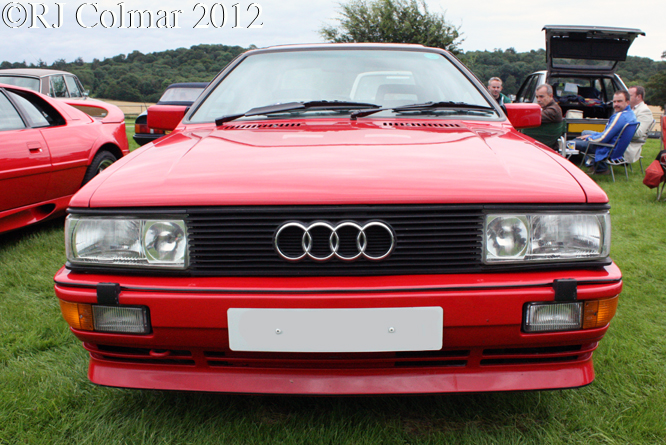
Audi Quattro, Classics at the Castle, Sherborne

According to official records the registration JLY751V as seen on the Ashes to Ashes Quattro actually belongs to a 1979 Nissan New Sunny quite the opposite of the 200 hp performance beast seen here at Sherborne Castle last year which is a slightly later version of the car seen in the TV series.
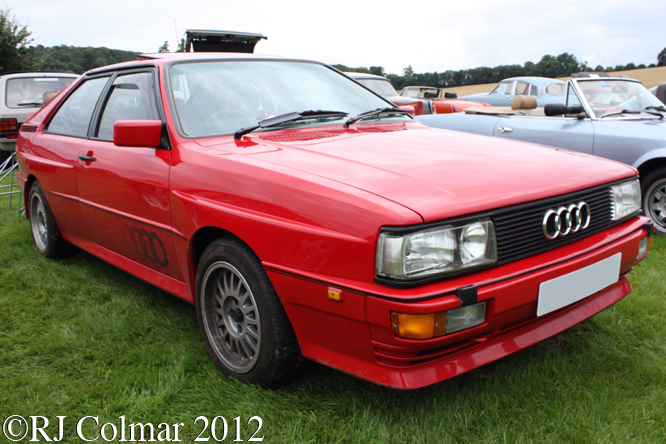
Audi Quattro, Classics at the Castle, Sherborne

The Audi Quattro was launched in 1980 featuring a great rumbling 200 hp five cylinder turbo charged motor and permanent all wheel drive which at the time was a novelty reserved almost exclusively for off road vehicles, however with the strap line “Vorsprung Durch Technick” “Forward Through Technology” Audi almost single handedly, with the aid of a healthy competition program, convinced the public of the benefits of permanent all wheel drive to traction, handling and safety. As DCI Gene Hunt says in this linked trailer for the third and final Ashes to Ashes series “You’ve either got it my friend, or you haven’t.”
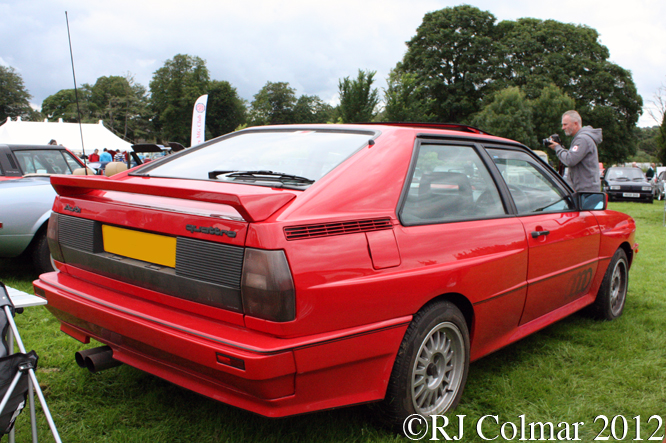
Audi Quattro, Classics at the Castle, Sherborne

I was surprised to learn that only 11,452 Quattro’s were built between 1980 and 1991, but this was the niché model aimed at the performance market that opened up the permanent all wheel drive concept up to a much wider public. I’ll leave you with a link to a funny clip that shows the Ashes to Ashes Quattro in action with a sound track taken from a 1980 edition of Top Gear soon after the car was launched which starts at 30 seconds in.

Thanks for joining me on this “Ashes to Ashes” edition of “Gettin’ a li’l psycho on tyres” I hope you will join me again tomorrow. Don’t forget to come back now !

Share

Pillow Talk – MG TF 1500

Billed as a “sexcapade” about “what goes on when the lights go out” the 1959 film Pillow Talk stared Rock Hudson and Doris Day.

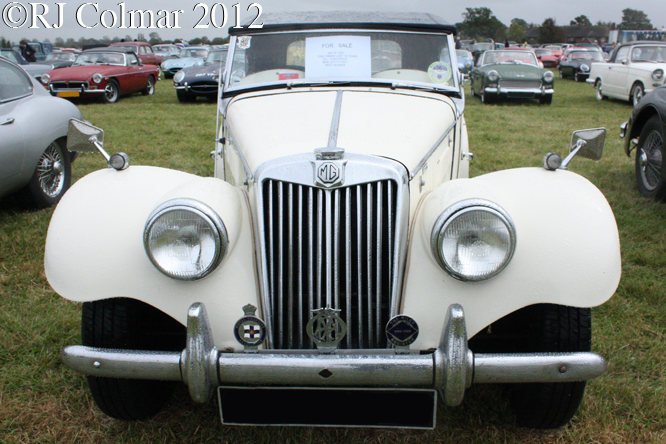
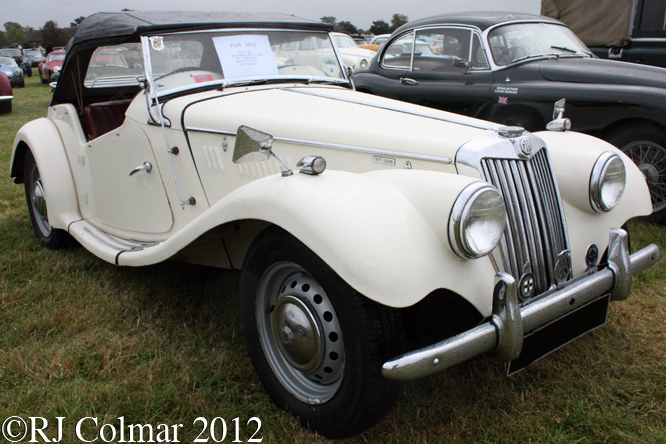
MG TF 1500, Goodwood Revival

The plot centres on the romance between neighbours Brad Allen played by Rock and career girl Jan Marrow played by Doris who share an old school telephone line, a concept probably long since phased out. At the beginning of the film the son of a client of Jan’s offers her a lift home in his MG TF 1500, fitted with optional wire wheels. On the way home the couple stop for a drink and the client’s son gets too drunk to drive when in steps Brad.

MG TF 1500, Goodwood Revival

Apparently watching big Rock Hudson climbing in and out of the little MG is worth the price of admission alone, the car does not feature in the trailer but you can get the gist of the film on this link.

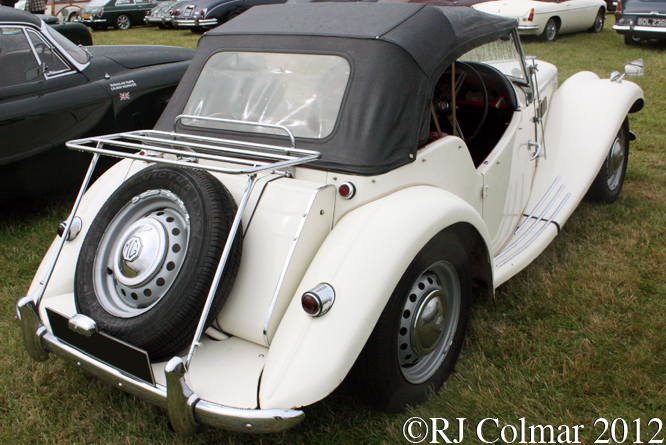
MG TF 1500, Goodwood Revival

The MG TF was launched in 1953 as a stop gap between the square rigger T series, which traced it’s ancestry back to the 1936 MG TA, and the MG A. The management of the British Motor Corporation, BMC, did not want the MG-A to be launched at the same time as the Austin Healey 100.

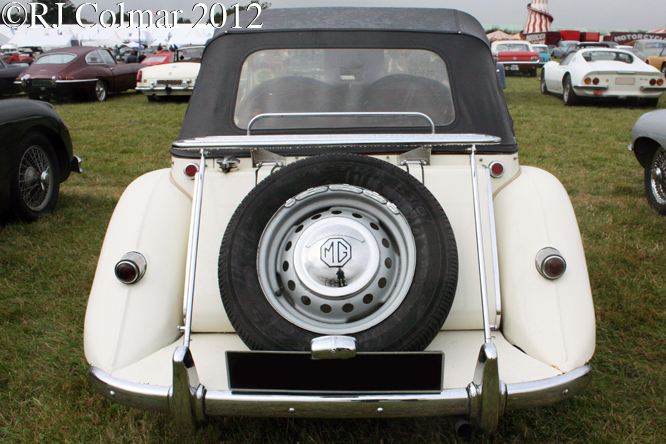
MG TF 1500, Goodwood Revival

The TF 1500 was first seen in 1954 with a 63 hp motor up from the 57hp on the original TF. 3,400 MG TF 1500’s were built before production switched to the MG A in 1955.

Thanks for joining me on this “Pillow Talk” edition of “Gettin’ a li’l psycho on tyres” I hope you will join me again tomorrow. Don’t forget to come back now !
Share

Viva Las Vegas – Elva Mk 6

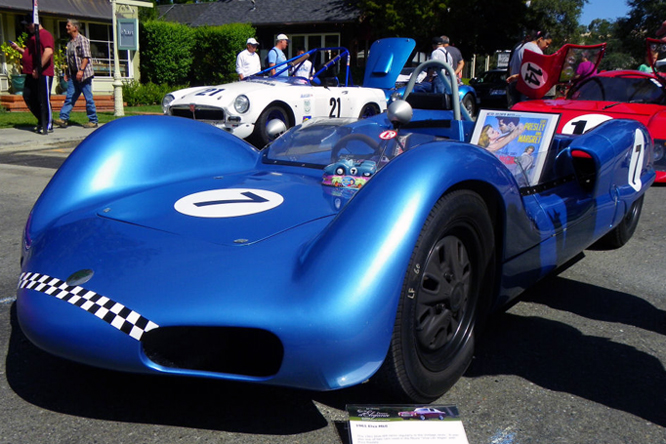
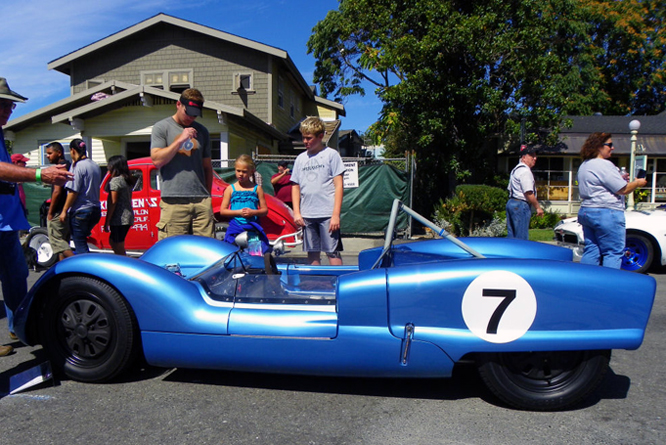
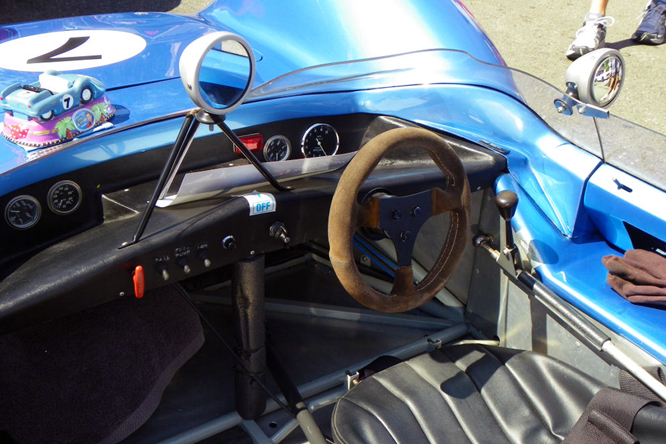
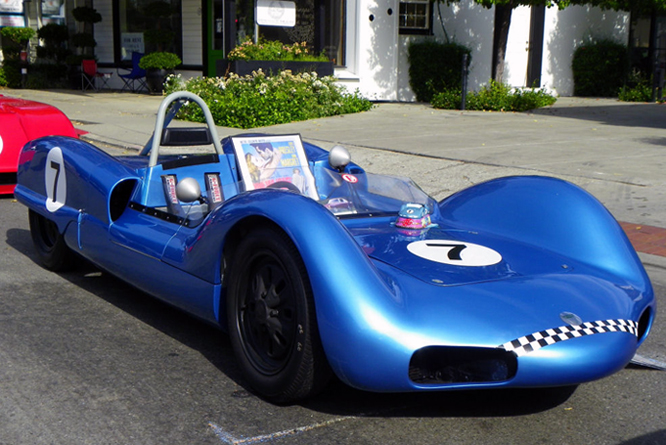
In 1964 Elvis Presley was teamed up with Ann Margret to make one of his better films Viva Las Vegas, a story about a race car driver trials and tribulations as he attempts to compete in the Las Vegas Grand Prix in a blue Mk 6 Elva.

Elva Mk 6, Danville Concours d'Elegance

In the process Lucky Jackson, played by Elvis, falls head over heals for the hotel swimming instructor Rusty Martin played by “marvlous” Ann Margret and promptly loses his money set aside to pay for a new engine and spends the rest of the film working as a waiter to pay his way and preparing for a talent contest which handily has a prize big enough to pay for a new motor.

Elva Mk 6, Danville Concours d'Elegance

It has recently been rediscovered that two different Elva Mk 6’s were used in the Viva Las Vegas film, the first seen on the trailer pulling into Las Vegas and in the workshop is a rare Maserati powered example, which has an extra pair of nose air intakes required by the Maserati motor. The Maserati powered car was a non runner at the time of filming thanks to a ceased bearing in the motor. The second car is a Coventry Climax powered example and can be most easily distinguished by the pair of faux centre air inlets in the nose seen in this linked photograph.

Elva Mk 6, Danville Concours d'Elegance

The lack of four air inlets in the nose points to the possibility that the car photographed by Jay Wollenberger at Danville Concours d’Elegance last year “might” be the Climax powered car that Elvis is seen racing in the film. However it would take a lot more evidence to confirm the possibility before I would part with any cash to either bet on it or purchase the vehicle on the basis that it is the Climax powered Elvis car.

Elva Mk 6, Danville Concours d'Elegance

I won’t give the plot away but I’m sure you can work it out Elvis + Hot Girl + Talent Contest + Las Vegas Grand Prix = ?, here is a link to the official trailer to help you with your maths.

Wishing Elvis a Happy 78th Birthday tomorrow.

My thanks to Jay Wollenweber for his smashing photographs, to harmonizer, RA Historian, David Birchall, Jerry Entin, Peter Morley, and ovfi at The Nostalgia Forum for illuminating the story of the two Elvis Elva’s.

Thanks for joining me on this “Viva Las Vegas” edition of “Gettin’ a li’l psycho on tyres”, I hope you will join me again tomorrow. Don’t forget to come back now !
Share

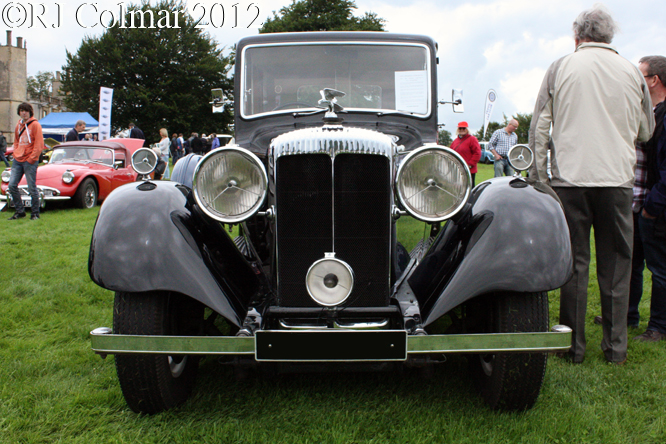
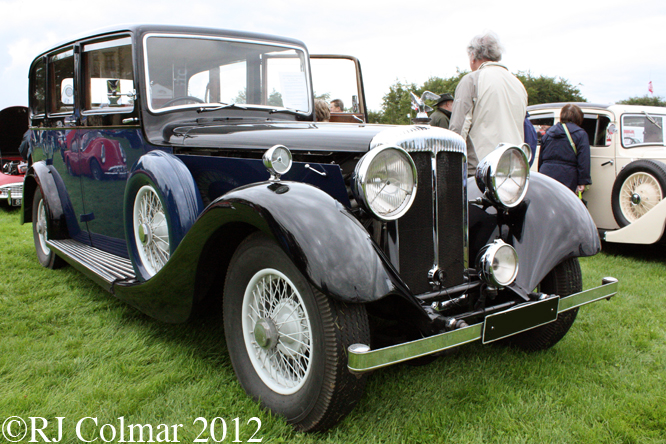
Peripatetic Exile – Daimler 32 hp Straight Eight Limousine

Daimler received royal patronage in 1902 from King Edward VII and it was to maintain the Royal Warrant of Appointment as motor manufacturers to the Royal family until 1950 when the husband of the then Princess Elizabeth ordered a Rolls Royce.

Daimler 32 hp Straight Eight Limousine, Classics at the Castle, Sherborne

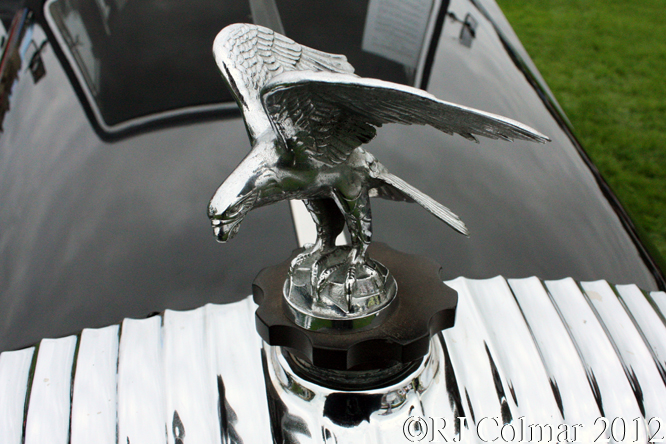
Today’s featured Daimler Straight Eight is reputed to have been built in 1937 for the recently abdicated King Edward VIII and his wife who were exiled in France.

Daimler 32 hp Straight Eight Limousine, Classics at the Castle, Sherborne

The car remained in France until it was sent to Park Ward by a titled owner for ‘minor revisions’.

Daimler 32 hp Straight Eight Limousine, Classics at the Castle, Sherborne

In the 1960’s this Daimler was sent to Minnesotta by a US Airman and it was poorly restored by a subsequent owner in the 1990’s.

Daimler 32 hp Straight Eight Limousine, Classics at the Castle, Sherborne

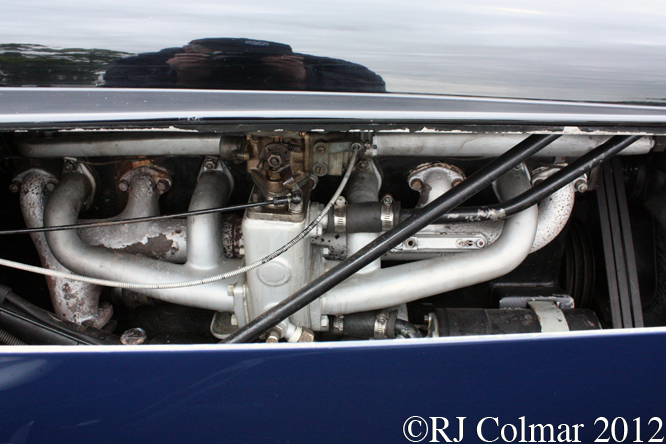
The straight eight motor has a capacity 4.624 litres 282 cui and remained in production from 1936 to 1953 and is rated at 32hp by multiplying the square of the diameter of the cylinders, in inches by the number of cylinders and dividing the sum by 2.5.

Daimler 32 hp Straight Eight Limousine, Classics at the Castle, Sherborne

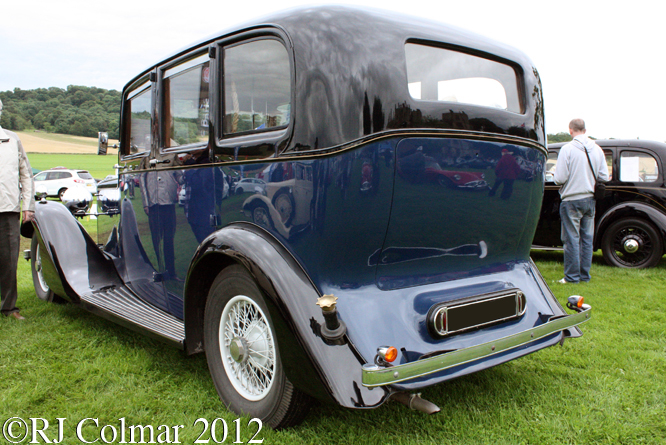
The current owners, vintage-wheels.co.uk, found the Daimler at the Hershey auctions in Pennsylvania and had her restored to her present condition 2000.

Daimler 32 hp Straight Eight Limousine, Classics at the Castle, Sherborne

wintage-wheels.co.uk offer the Peripatetic Exile for hire at weddings and for filming.

Daimler 32 hp Straight Eight Limousine, Classics at the Castle, Sherborne

A recent television credit includes appearances in several episodes of the British Broadcasting Corporations (BBC) detective series staring David Suchet as Belgian peripatetic detective in exile ‘Poirot’.

Thanks for joining me on this “Peripatetic Exile” edition of “Gettin’ a li’l psycho on tyres”, I hope you will join me again tomorrow. Don’t forget to come back now !
Share

Chassis or Aerodynamic Aid – Lotus Ford 88

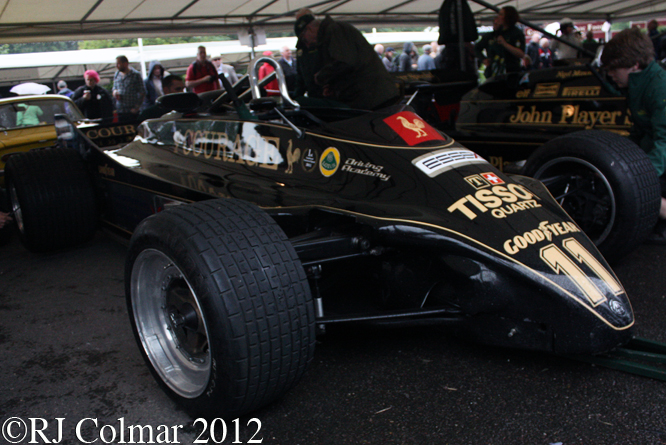
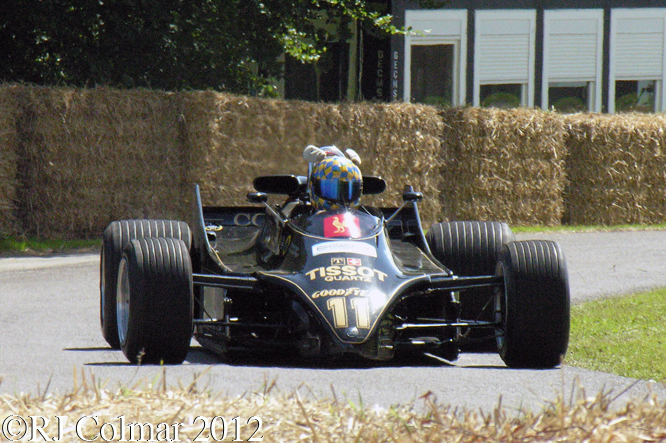
The Lotus 88 was a development from the ideas tested with the twin chassis Lotus 86. It differed, and was developed, in two crucial respects from the Lotus 86 it was designed to run with out skirts to seal the flow of air and would meet the 6 cm minimum ride height mandated by rules around late in 1980 for the 1981 season.

By having a secondary independently sprung chassis Lotus hoped to avoid the need to run their car with solid suspension which aided the road holding of ground effects pioneered by the Lotus Ford 79 which were sucked to the road surface as they moved through the air.

Lotus Ford 88B, Goodwood Festival of Speed

Gordon Murray designer at Brabham also came up with a solution to the 6 cm ride height rule which involved using hydraulic rams to raise the car above the minimum ride height in the pits, the only place the measurement could be checked, and lowering the ride height out once out on the track. This left the Brabham running effectively solid suspension once out of pit road.

All of the teams protested that the second Lotus chassis was in fact an independently aerodynamic aid and eventually the ruling body changed it’s mind having accepted the idea of a twin chassis car before the season started.

Lotus Ford 88B, Goodwood Festival of Speed

As a consequence after being protested during practice for the the United States West, Brazilian and British Grand Prix Lotus withdrew the 88 bodies with out ever having raced and used the more conventional Lotus 87 which used inner Lotus 88 chassis but with conventional side pods to generate ground effect and a similar hydraulic ram system for the suspension as used by Brabham.

Colin Chapman is said to have been disappointed that the twin chassis Formula One cars developed with Peter Wright, Tony Rudd and Martin Ogilvie were never allowed to compete believing that Formula One was supposed to be a proving ground for new innovation.

Thanks for joining me on this “Chassis or Aerodynamic Aid” edition of “Gettin’ a li’l psycho on tyres”, I hope you will join me again tomorrow. Don’t for get to come back now !

Share

Raced, Crashed, Stolen & Returned – Ferrari 250 GTO #3387

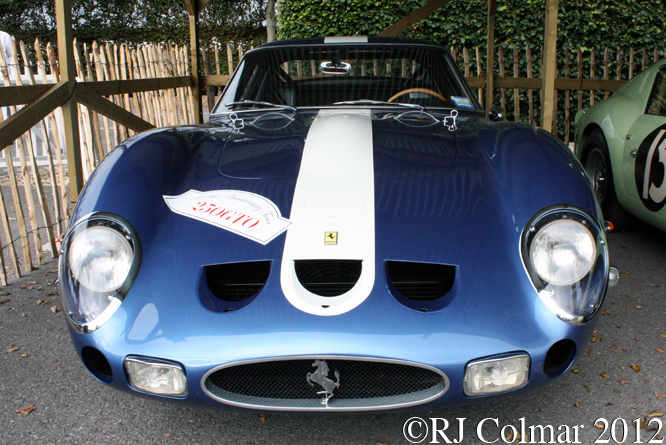
With the price of Ferrari 250 GTO’s in the 20 – 30 million US dollar range it occurred to me recently that to be a mere millionaire is probably no longer enough to purchase one of the 39 cars built.

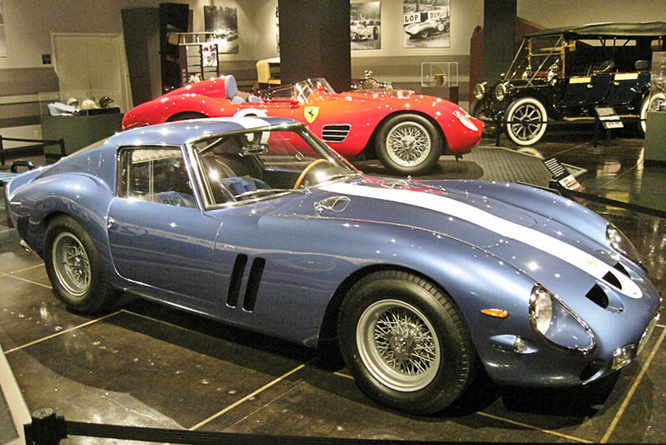
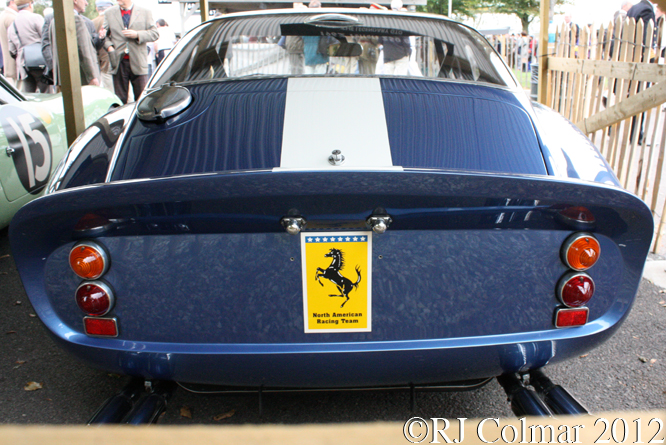
Today’s featured Ferrari 250 GT0 #3387 was sold to Luigi Chinetti in March 1962 after the factory had done some testing with it at Monza earlier in the month.Chinetti entered the car for Phil Hill and Oliver Gendebien in the Sebring 12 hours under his NART banner and came home 2nd OA, 1st in class.

Ferrari 250 GTO, Goodwood Revival

Bob Grossman bought the car and entered it for himself and George Roberts jr in the ’62 Le Mans 24 hours coming home 6th overall 3rd in class behind two more GTO’s. Grossman scored one more class win at Bridgehampton in ’62 before selling the car to the Gammino family.

Mike Gammino raced the car through ’63 and ’64 scoring 4 class wins and 2 outright victories, during practice for ’64 Daytona 2000kms Mike crashed the car and ended up replacing the body with a new body from Scaglietti

Ferrari 250 GTO, Petersen Automotive Museum

Gammino sold the car back to Grossman who drove #3387 to another class victory at Nassau in 1965 before the car retired from active competition and was sold to K F White.

In 1979 R Finger bought the car and eleven years later a Kawasaki motorcycle dealer masterminded a plan to relieve Dr Finger of #3387 after offering the car to interested parties from his fax machine.

Ferrari 250 GTO, Goodwood Revival

Six men from the Savanah manged to steal #3387 and K F White showed up with a US$ 4.3 million cashiers cheque, but backed out of the deal when he suspected the car was a fake because the “real” #3387 was confirmed to be with Dr R Finger. The FBI picked up #3387 later that afternoon returning the car to it’s rightful owner and sending the perpetrators on their way to a Federal Penitentiary.

The car as seen today is seen wearing the colours the original body wore at the Sebring in 1962.

My thanks to Geoffrey Horton for his photo of #3387 seen at the Petersen Automotive Museum in 2011, the two other photo’s were taken at the 2012 Goodwood Revival.

Thanks for joining me on this “Raced, Crashed, Stolen & Returned” edition of “Gettin’ a li’l psycho on tyres”, I hope you will join me again tomorrow. Don’t forget to come back now !
Share

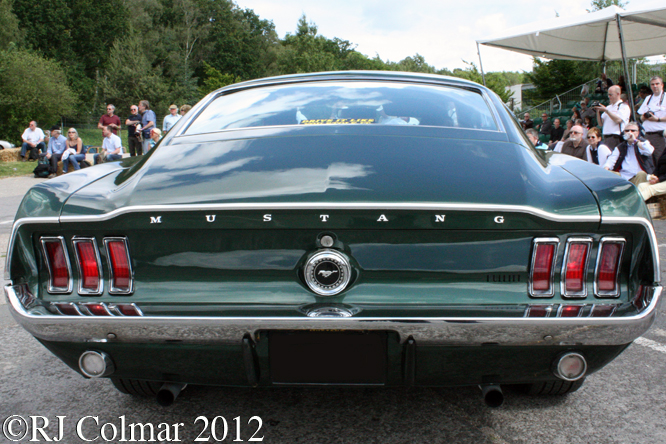
Highland Green 302 – Ford Mustang Fastback

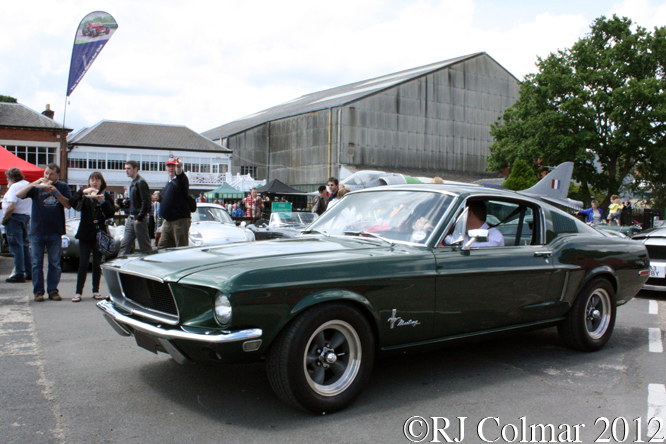
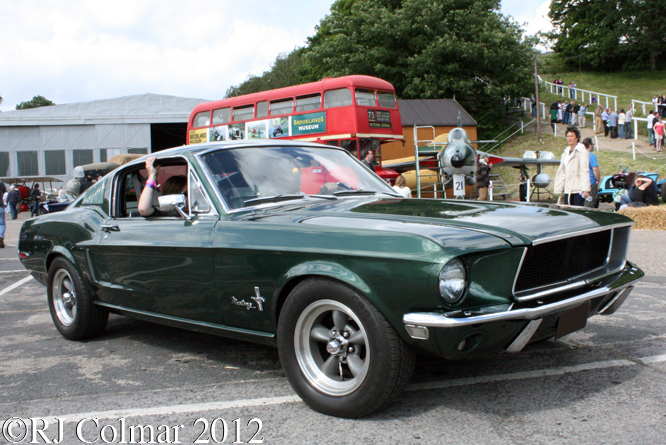
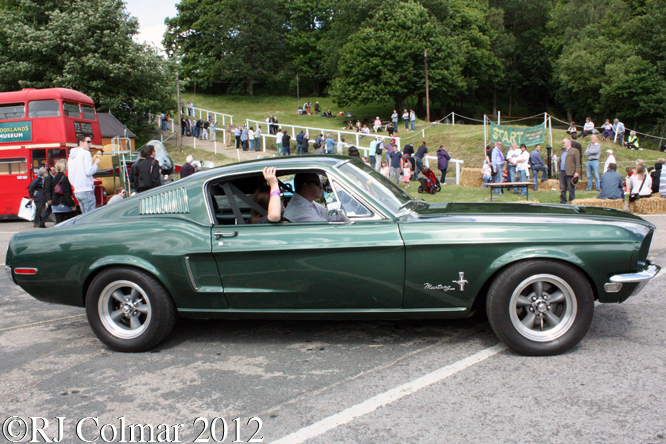
In 1968 a Highland Green Mustang GT Fastback running on Torque Thrust alloy wheels with Steve Mcqueen in the drivers seat became one of the motorised film icons of all time when it starred as the pursuit vehicle in a 10 min 53 sec car chase through the streets of San Francisco in the film Bullit. Thanks in no small part to that chase sequence the films editor Frank P Keller won an Academy Award for Best Film Editing.

Ford Mustang Fastback, Brooklands Double Twelve

In 1967 the Mustang was given it’s first face lift with more aggressive styling the Mustang became larger, thanks to a Ford Thunderbird type big block 6.4 litre FE V8 heavier, but now with 320 hp also more powerful.

Ford Mustang Fastback, Brooklands Double Twelve

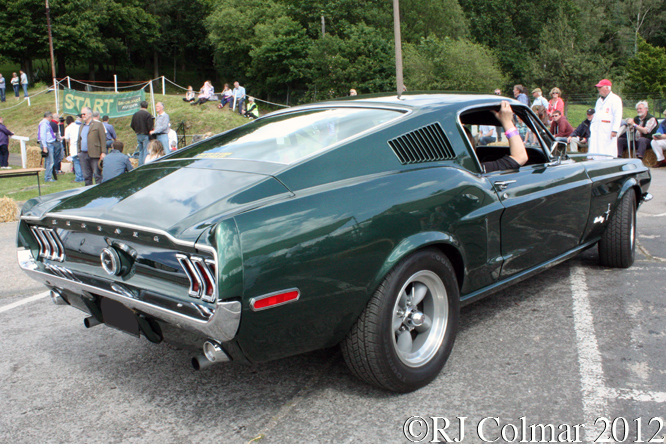
For 1968 the Mustang gained mandatory side reflectors, the ’67 only brushed steel interior trim was replaced with woodgrain interior trim, 3 point seat belts became standard for the front seats as did seat belt warning and door ajar warning lights. Those last two safety items were way ahead of their time, I did not see those sorts of warning lights on any vehicle at all until I sat inside a brand new Honda while I was working as a car valet at a Honda Dealership during a college break in the summer of 1979.

Ford Mustang Fastback, Brooklands Double Twelve

Unlike Lt Bullit’s Mustang today’s 1968 model is powered by a, then new addition to the Mustang range, 4.9 litre / 302 cui Windsor V8 a motor. The 302 was designed to meet Federal Standards being introduced and would become a regular for the option for mustangs through to the end of third generation Mustang production in 1993.

Ford Mustang Fastback, Brooklands Double Twelve

Although two Mustangs were supplied by Ford Motor Company to the producers of Bullit both cars were debadged of all Mustang lettering logo’s that normally appeared on the model.

Ford Mustang Fastback, Brooklands Double Twelve

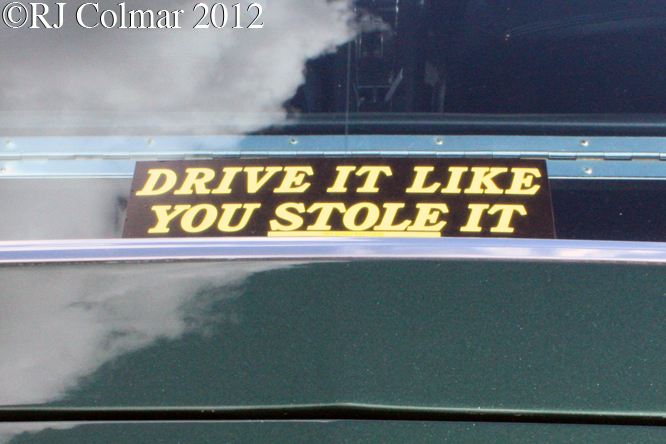
If one were foolish enough to steal this Mustang one would be disappointed to find that one could not recreate the double declutching sounds that are a strong aural feature of the Bullit car chase, not only is the motor smaller but this car has an automatic transmission. The Bullit film soundtrack also won an Academy Award.

Ford Mustang Fastback, Brooklands Double Twelve

In the United Kingdom Ford made a promotional film to launch the new Ford Puma in 1997. The film used some of the San Francisco Bullit film sets and edits from the Bullit film to make it look like Steve McQueen, who died in 1980, is driving a Silver Puma, pulling into his garage next to which is parked Lt Bullit’s Highland Green Fastback GT ‘stang, as can be seen in this link.

Thanks for joining me on this “Highland Green 302” edition of “Gettin a li’l psycho on tyres”, I hope you will join me again tomorrow. Don’t forget to come back now.

Share