Sheerline But Not A Princess – Austin Sheerline

Before the airing of The Prisoner, Patrick Magoohan who played the lead “free man” stared in another show called Danger Man again playing the lead character John Drake an on call NATO agent for a “messy job”.
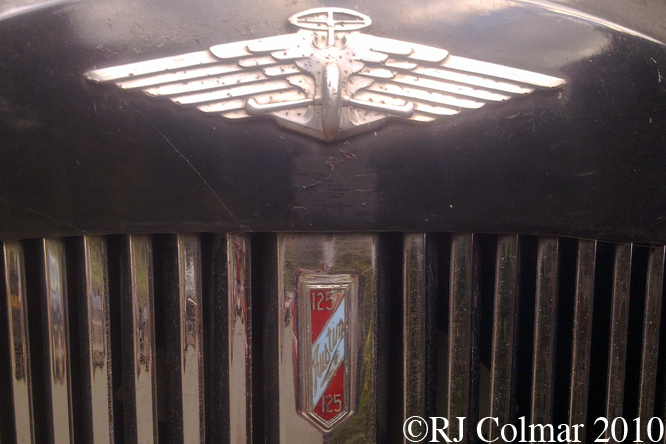
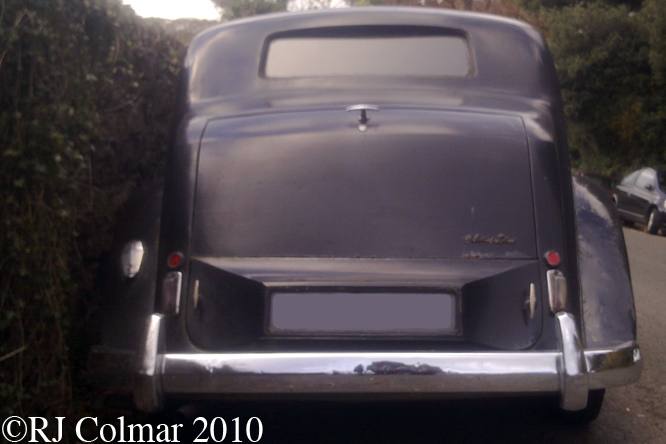
Austin Sheerline

Episode 12 of Danger Man show’s John Drake arriving at his boss Mr Hardy’s office in an Austin Sheerline similar to the one featured today.
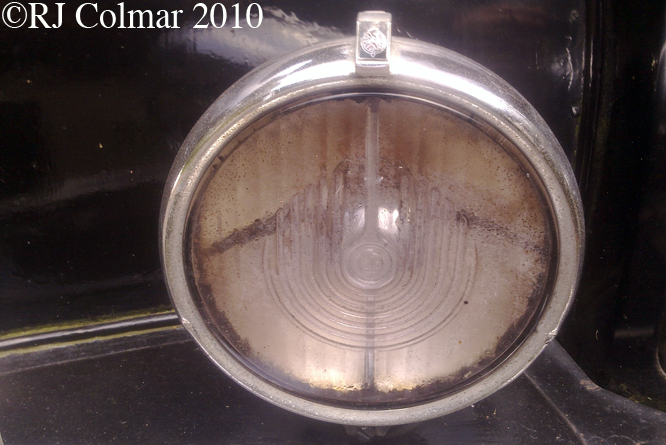
Austin Sheerline

Design of the traditional Sheerline started in 1942 under the direction of Leonard Lord.
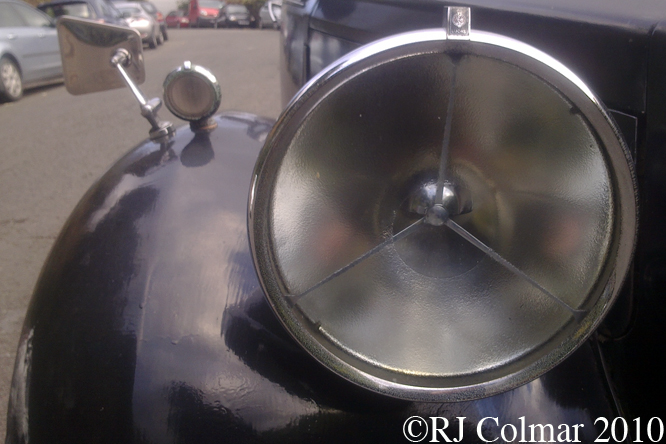
Austin Sheerline

The first 12 Austin Sheerlines were built with a 110 hp straight six motor in 1947.
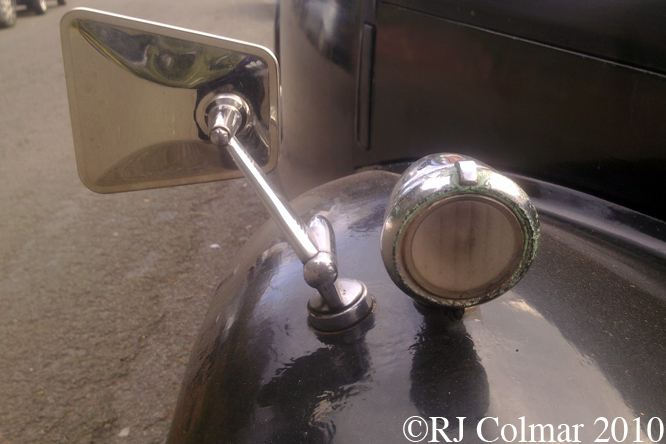
Austin Sheerline

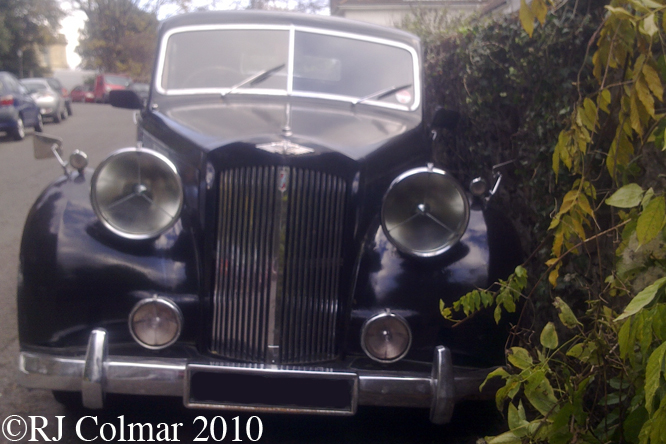
The remaining 11,065 were built up until 1954 with 125 hp straight six motors of the type that would eventually also be found in the Jensen 541R.
Austin Sheerline

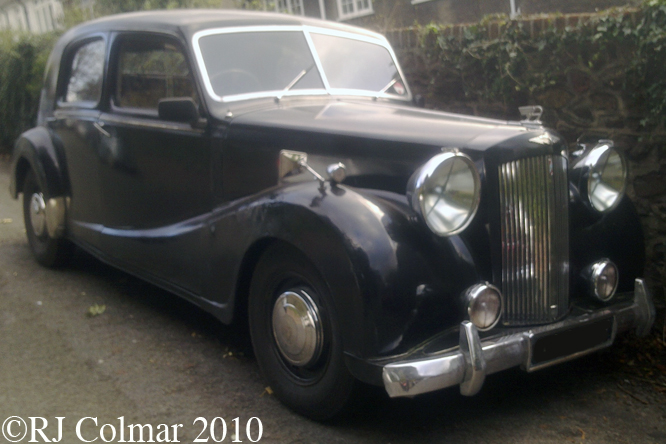
This nearly two tonne car was capable of a top speed of 82 mph, while the glass fibre bodied Jensen 541R with which it shared it’s motor was capable of 120 mph.
Austin Sheerline

One would not want to meet an out of control Sheerline in anything less substantial, as this linked photo of the aftermath of a collision between a Sheeline and a Bond three wheeler shows.
Austin Sheerline

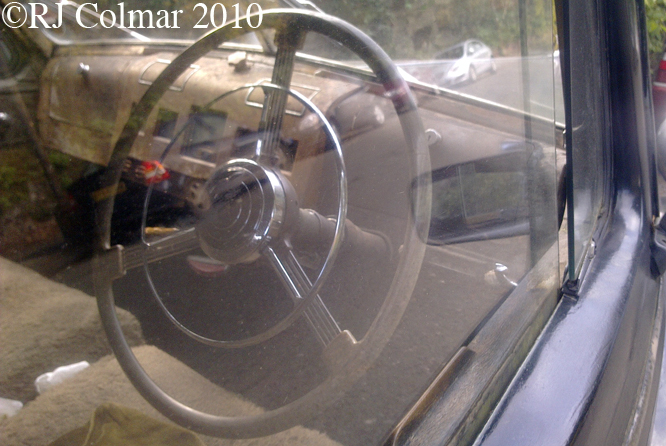
The inside of the Sheerline was opulently appointed with acres of walnut finishing on the dash, all three of the Sheerlines I have seen to date have radios fitted, I am not sure if this would have been standard as early as 1947 to 1954.
Austin Sheerline

Like the more expensive Rolls Royces and Bentleys of the day Sheerlines were also built as limousines and hearses on a longer chassis frame than the saloon shown here, Sheelines could also be ordered for use as ambulances.
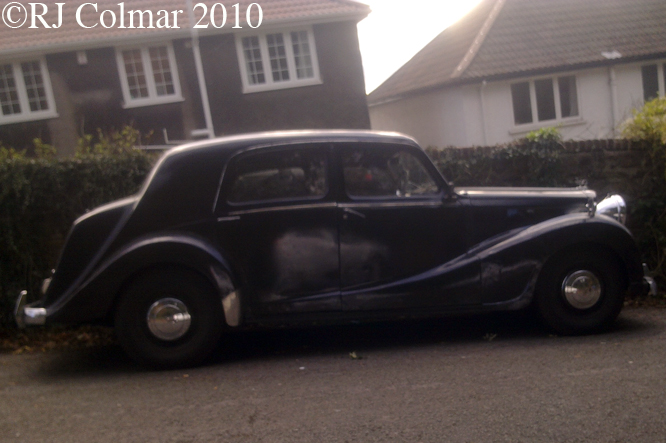
Austin Sheerline

In 1946 Austin acquired the Van den Plas coach building company which was to build an even more up market version of the A125 known as the Austin A135 Princess using the same chassis and running gear.
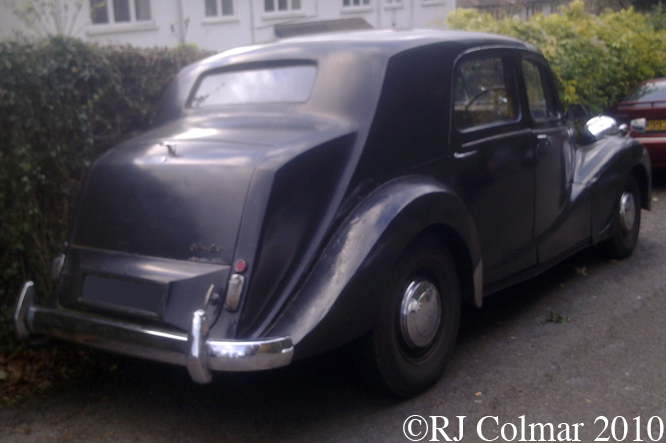
Austin Sheerline

A Sheerline cost £1277 new in 1948 matching suitcases were available for an additional £21.
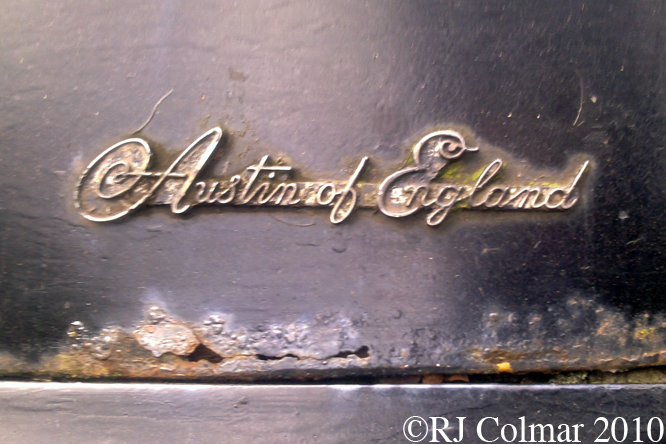
Austin Sheerline

Along with minor parts in TV show’s like Danger Man, Invisible Man and The Saint, Sheerlines also appeared in films like The Belles of St.Trinian’s 1954, The Village of The Damned 1960, The Bedsitting Room 1964 and Hammer House of Horror 1980.
Austin Sheerline

An Austin Sheerline replacement was developed in 1950 but production never, some would say wisely, went beyond a single prototype. The A125 Sheerline was dropped in 1954 in favour of Vanden Plas bodied Austin A135 Princess range.
Austin Sheerline

When I first started coming to Bristol in the early 1990’s this particular car became a regular land mark indicating I was completely lost in the crazy maize that is Bristol’s road network.

I hope you will join me in sending Birthday Greetings to GALPOT contributor Steve Arnaudin in Brevard NC.

Thanks for joining me on this “Sheerline But Not A Princess” edition of “Gettin a little psycho on tyres” and that you will join me again tomorrow. Don’t forget to come back now !

Share

Ronnie’s Rocket – Lotus Ford 72 E

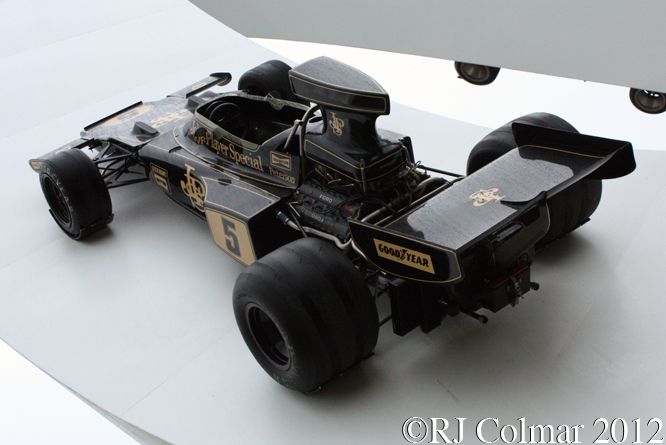
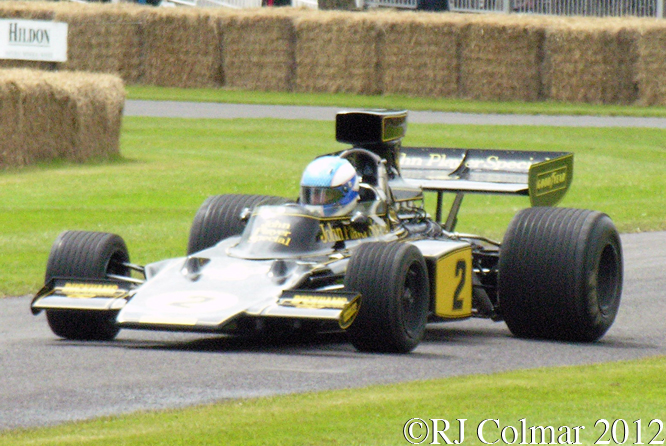
Lotus went into the 1973 Formula One Championship season as World Champion Constructors with reigning World Drivers Champion Emerson Fittipaldi being joined by a new team mate 1971 Championship runner up Ronnie Peterson.

Lotus 72 E, Goodwood Festival of Speed

The team started the season with the same Lotus 72 D model as they had used through out 1972 albeit now running on Goodyear tyres in place of the previous seasons Firestones. Emerson started the season well with 2 wins and a 3rd place from his first 3 starts while Ronnie had only two retirements and an 11th place finish to show from the same three races.

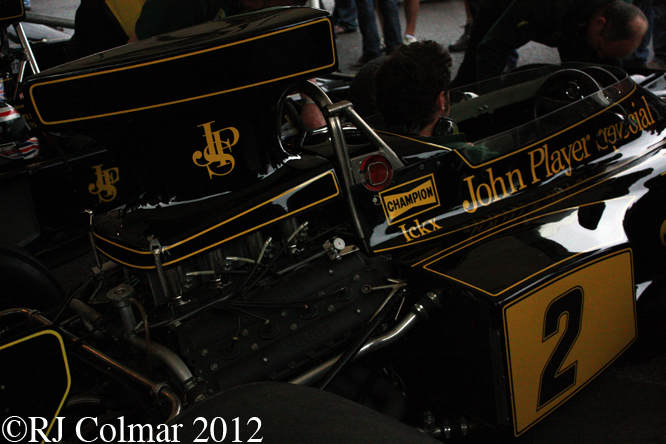
Lotus 72 E, Goodwood Festival of Speed

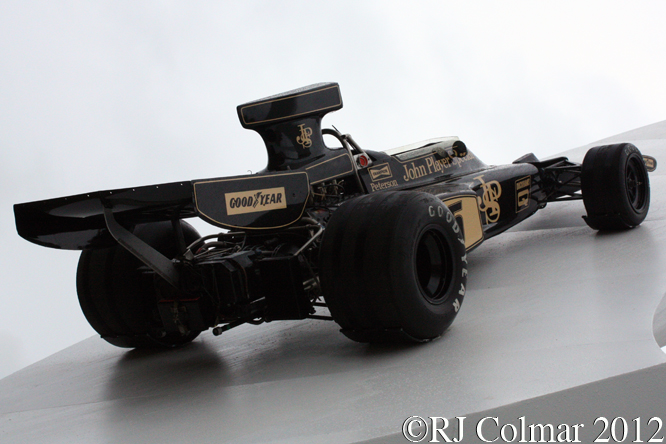
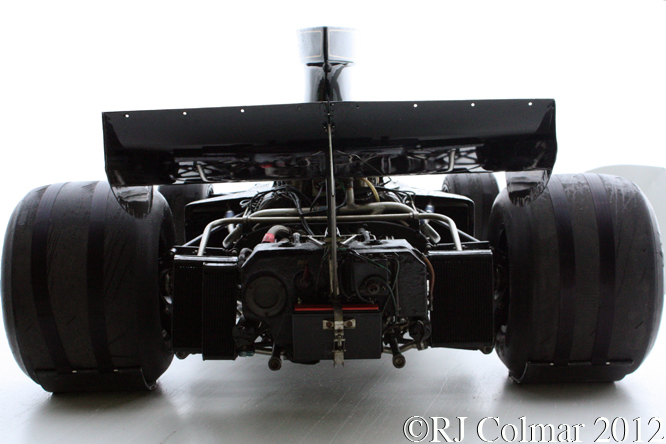
At the non championship Race of Championship the Lotus 72 D were brought up to E specification which included mounting the rear wing above the oil tank further back from the rear wheels and a wider track for the wheels front and rear. I well remember seeing both of the new cars spectacularly bottoming out on their debut at Brands Hatch as they approached the fearsome off camber and steep drop to Paddock Bend sending a shower of sparks from under the cars.

Lotus 72 E, Goodwood Festival of Speed

Both cars retired from the Race of Champions but Emerson won the 1973 Spanish Grand Prix, his last in a Lotus, before scoring three further second place finishes and a third on his way to a distant 2nd place championship finish behind Jackie Stewart and his Tyrrell Ford 006 who had clocked up five wins and two seconds on his way to his third and final title.

Lotus 72 E, Goodwood Festival of Speed

Ronnie meanwhile scored his first four Grand Prix wins and two second place finishes on his way to third in the championship title, helping Lotus win their second consecutive constructors championship. For 1974 Jackie Stewart retired, Emerson moved to McLaren to drive the M23, based very much on the principles of the Lotus 72, and Ronnie was joined at Lotus by Belgian Jacky Ickx.

Lotus 72 E, Goodwood Festival of Speed

Lotus started the 1974 season with the 72 E for the first two championship races and then Ickx used a 72E at the non championship Race of Champions and won after pulling off a brilliant overtaking move on Niki Lauda in his Ferrari 312 B3 going into Paddock Bend right in front of my nose. If all had gone to plan this would have been the last ever race for the Lotus 72 which had been introduced in 1970.

Lotus 72 E, Goodwood Festival of Speed

The Lotus 76 was first raced in the 1976 South African Grand Prix where neither car finished, Ronnie qualified his 76 at the non championship International Trophy at Silverstone and again at the Spanish Grand Prix but getting the car to finish proved impossible and so the Lotus 72 E’s were wheeled out again for the 1974 Monaco Grand Prix where Ronnie won from third on the grid, Ronnie added to more victories to the Lotus 72 E’s tally during the season to finish a distant fifth in the Championship which was won by his former team mate Emerson Fittipaldi in his Lotus 72 copy the McLaren M23.

For 1975 the Lotus 72 E’s were wheeled out again as the Lotus 76 had been abandoned as a failure, it would take a full twelve months for Lotus to build a new challenger such was the lack of financial resources and Lotus commitment to road car and sundry other projects. Ronnie gamely struggled on scoring just three points paying finishes while Jacky Ickx quit the team before the seasons end having scored a single second place finish.

I believe the two cars seen here both belong to Classic Team Lotus with the #2 most likely being a replacement chassis for the wrecked Lotus 72/R5 driven by Emerson Fittipaldi in C spec to victory in the 1970 US Grand Prix and last used in E spec by Brian Henton in the 1975 US Grand Prix.

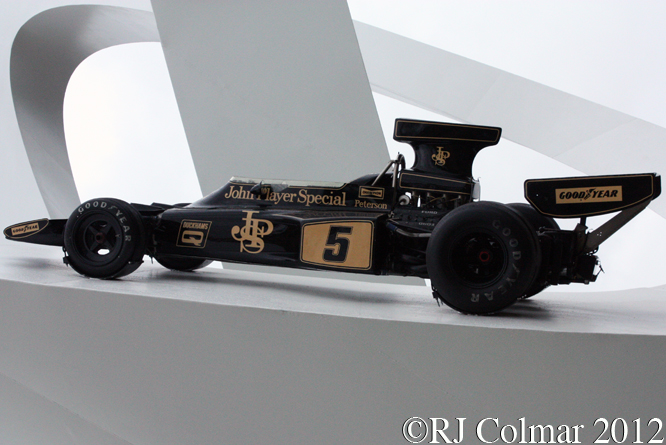
The #5 appears to be #72/R9 built new for the 1975 season and used exclusively by Ronnie Peterson who scored a best third place finish in the non championship 1975 Race of Champions at Brands Hatch, and three further points paying finishes including a 5th place finish in the 1975 United States Grand Prix which would be the cars final appearance.

Fans of the Lotus 72 in the UK will be interested to know that there will be a 24 min documentary on the story behind the Lotus 72 on Motors TV in December, keep your eye out for it in the schedule. The films director Gary Crichter will also be releasing a full 90 min version with 60 mons of extra’s of the film on dvd in the near future. Keep your eye out on the www.lotus72dvd.com website for further announcements.

Thanks for joining me on this “Ronnie’s Rocket” edition of “Gettin’ a li’l psycho on tyres” I hope you will join me again tomorrow, don’t forget to come back now !

Share

Needs Must – Ferrari 375 America Vignale Coupé #0327AL

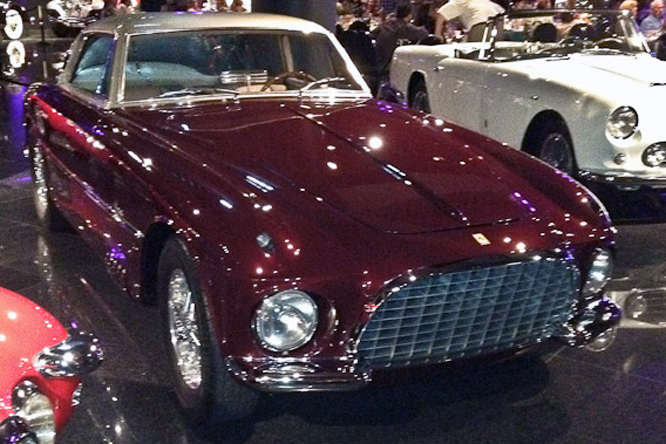
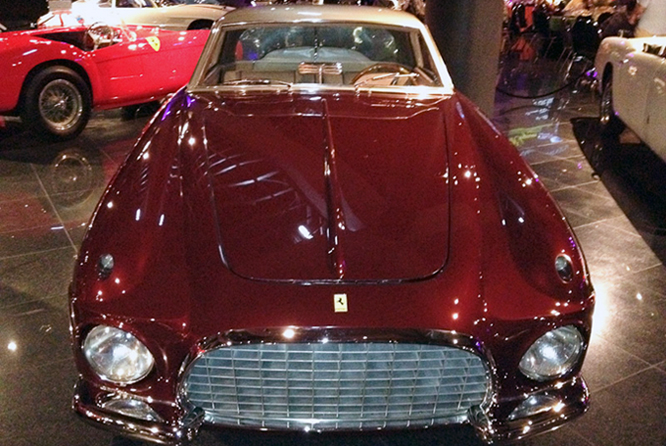
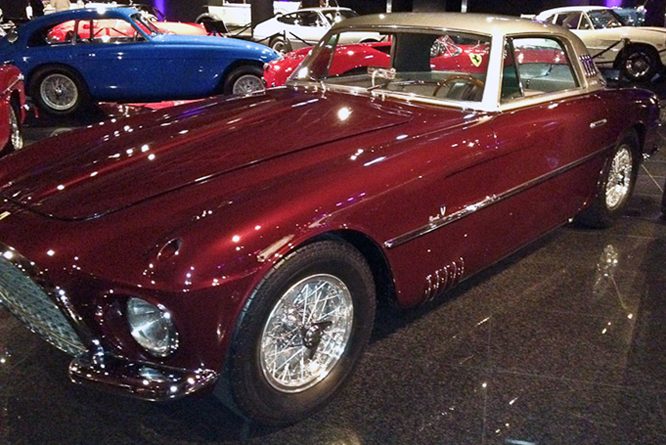
Never wildly keen on selling road cars Enzo Ferrari was persuaded to build a few, which not only helped him defray the costs of developing new technology for his racing programme but also satisfied a demand for his products at near exclusive prices.

Ferrari 375 America Coupé, Danville Concours d'Elegance

The 1953 375 America was his second series of road cars following the 342 America of which only twenty three were built. The 375 was powered by a 300 hp 4522 cc / 275 cui long block V12 similar to that used in the 4.5 litre V12 Ferrari 375 Formula One Car and slightly longer Ferrari 375 Indy Car.

Ferrari 375 America Coupé, Danville Concours d'Elegance

Only 11 Ferrari 375 America’s were built, with a 12th one being converted from 250 Europa spec to 375 America spec by the Ferrari factory in 1955. Regular readers may remember that a Pininfarina bodied 375 America chassis #0319AL was the subject of a GALPOT blog in May last year.

Ferrari 375 America Coupé, Danville Concours d'Elegance

This particular chassis #0372AL is one of just three cars built with Vignale bodies, each of the Vignale bodies has unique features making this one easy to recognise, due to it’s low bumper and recessed headlights, as the second of the three built. This car was displayed at the Geneva and New York automotive shows in 1954 and then sold to Robert C. Wilke, of Milwaukee, WI, USA – President of Leader Cards Inc.

Thanks for joining me on this “Needs Must” edition of “Gettin a li’l psycho on tyres”. I hope you will join me again tomorrow when I’ll be looking at a Lotus 72E. Don’t forget to come back now !

Share

Finest, Fiercest Yet – Chevrolet Corvette C1

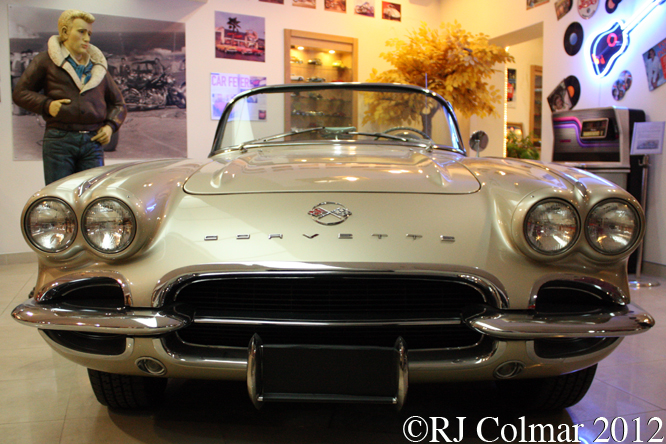
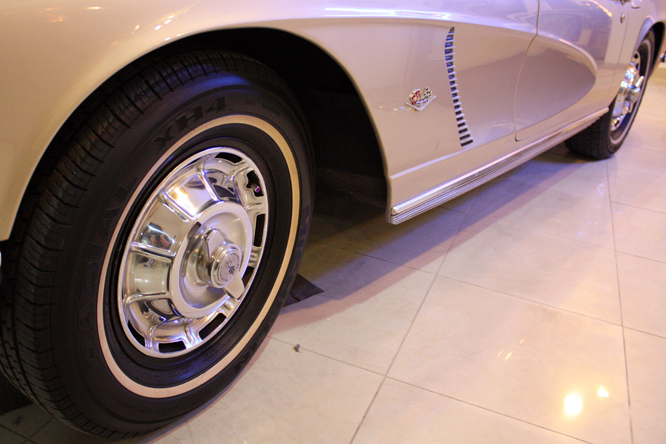
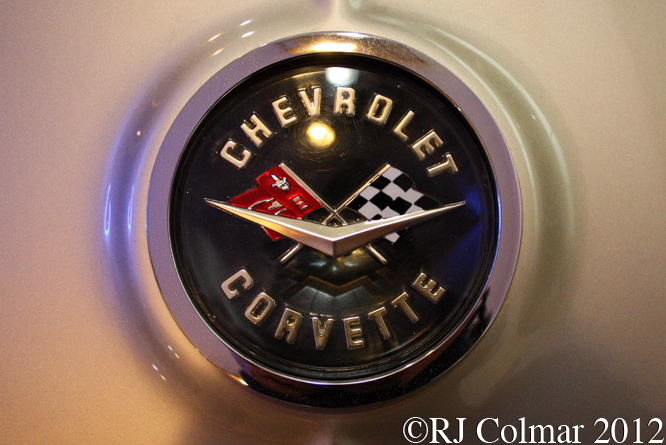
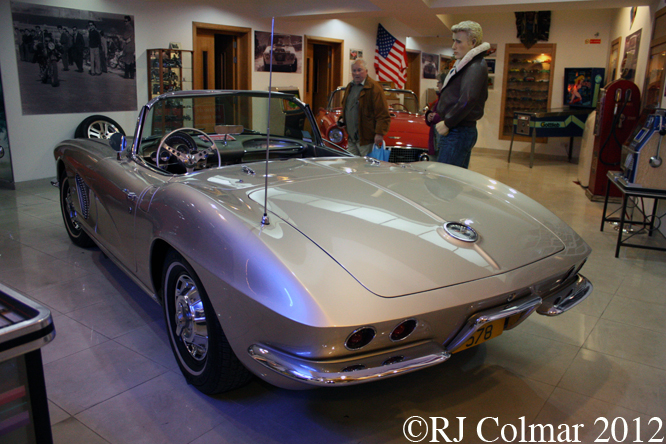
The 1962 Chevrolet Corvette, like this one seen in the Malta Classic Car Collection in Qwara was the last of four variations known collectively as the C1 models and was advertised with the strap line ” Finest, Fiercest Yet – ’62 Corvette by Chevrolet“.

Chevrolet Corvette C1, Malta Classic Car Collection, Qwara

The front end styling was similar to that first seen in 1958 with four head lights, however the trade mark baroque tooth grill which had been a feature of Corvettes since their inception in 1953 was removed in 1961.

Chevrolet Corvette C1, Malta Classic Car Collection, Qwara

The engine displacement was increased from 4.6 litres / 283 cui to 5.4 litres / 327 cui which gave from 250 hp to 340 dependent of the carburetors and lifters specified or 360 hp when fitted with fuel injection. Two tone paintwork was no longer an option in 1962.

Chevrolet Corvette C1, Malta Classic Car Collection, Qwara

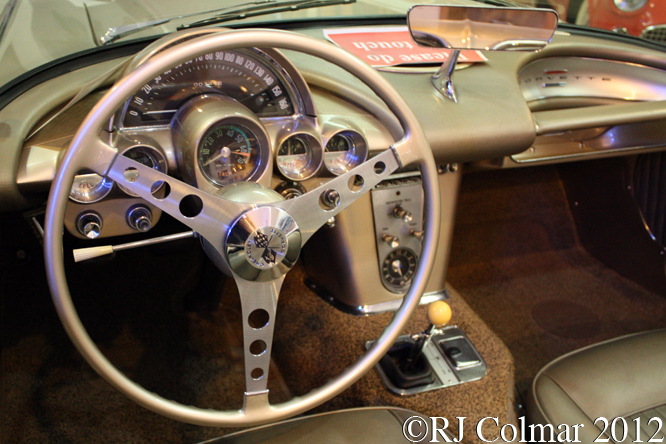
The instrumentation of the ’62 ‘vette remained largely unchanged from 1959 when the engine revolution counter first appeared in the centre of the drivers view below the outsize speedometer.

Chevrolet Corvette C1, Malta Classic Car Collection, Qwara

Among the rosta of winners driving ’62 Corvettes out on the race track were Dick Thompson, Delmo Thompson, Joe Freitas , Dave MacDonald, Everett Hatch, Mack Yates, Bob Moore, Dan McMahnon, Tom Robinson, Don Meline, Bob Paul, Joe Weiter, Jerry Grant, David Stanley, Martin Krinner, Paul Reinhart, Norman Namerow, Ralph Salyer, Nate Karras, Scott Briley, Mike Gammino, Lew Draper, Bob Brown, Roy Kumnick, Red Faris, Jim Collipriest, Roy Tuerke, Hank Mergner, John McVeigh and Mike Stephens.

Chevrolet Corvette C1, Malta Classic Car Collection, Qwara

The 120 mph 250 hp ’62 Corvette seen here was restored over a period of three years and has won numerous awards at classic car shows.

Thanks for joining me on this “Finest, Fiercest Yet” edition of “Gettin’ a li’l psycho on tyres” I hope you will join me again, for Ferrari Friday, tomorrow. Don’t for get to come back now !

Share

Mille Miglia Tribute – Goggomobil TS Coupé

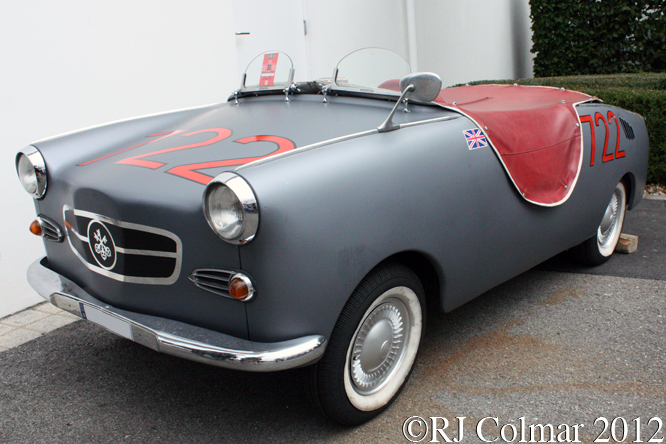
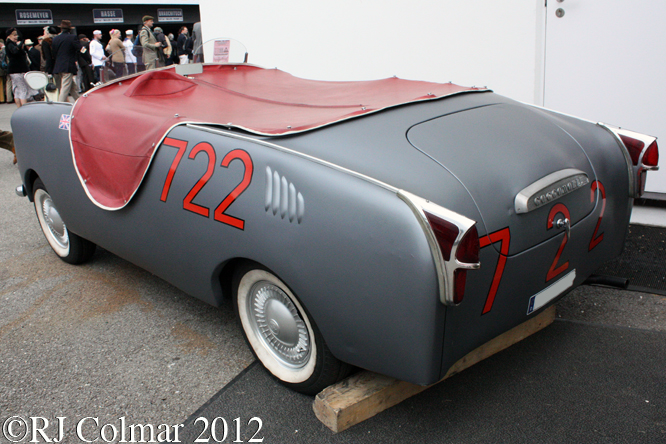
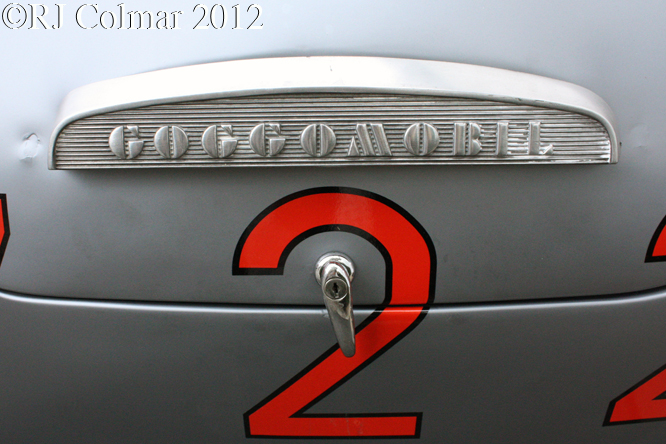
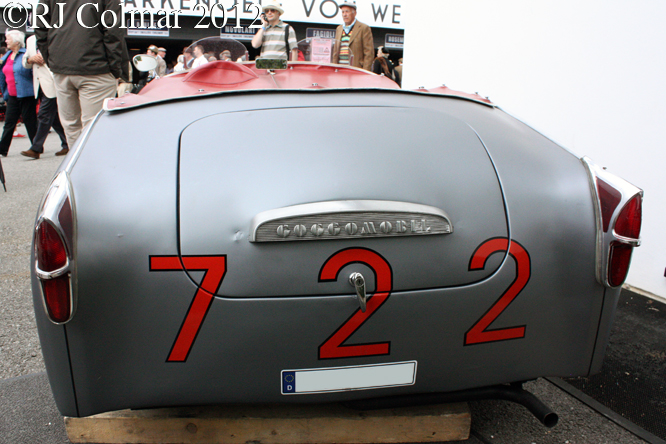
Over the last couple of years here at GALPOT Towers I have seen a few tribute cars from a modest #177 1967 Monte Carlo winning Mini to the enormous #3 1950 Le Mans Cunningham Cadillac Petite Pataud with the occasional odd ball like the #88 Mountain Dew MG B thrown in, but I’d hazard a guess that today’s cut down Goggomobile TS Coupe which stands as a tribute to the #722 1955 Mille Miglia winning Mercedes Benz 300 SLR of Stirling Moss and Denis Jenkinson is the strangest tribute car I have seen yet.

Goggomobil TS Coupe MM Tribute, Goodwood Revival

Goggomobil was a brand belonging to Glas that manufactured 4 different micro vehicles between 1955 and 1966 when Glas was taken over by BMW.

Goggomobil TS Coupe MM Tribute, Goodwood Revival

The car seen here would appear to be a TS Coupé that has had the roof and doors removed while the windscreen has been replaced by two ‘Brooklands’ aeroscreens.

Goggomobil TS Coupe MM Tribute, Goodwood Revival

Because the car is on foreign plates I have not been able to determine either it’s age or the engine size. What ever the exact details the engine will be an aircooled two stroke straight twin of between 250 cc / 15.3 cui and 400 cc 24.6 cui which would give somewhere between 13 hp and 20 hp depending on size.

Goggomobil TS Coupe MM Tribute, Goodwood Revival

The #722 Moss/Jenkinson 300 SLR, which won the 1000 mile street race at an all time record average speed of 97.96 mph, is widely regarded as being the worlds most desirable and expensive car, if Mercedes Benz were to ever make it available. One of the remaining Goggomobil TS Coupés, of the total 66,511 built, could be purchased for anything up to €7,000/£5,800,/USD 9000 depending on condition.

Thanks for joining me on this “Mille Miglia Tribute” edition of “Gettin’ a li’l psycho on tyres” I hope you will join me again tomorrow for a look at a li’l red Corvette. Don’t forget to come back now !

Share

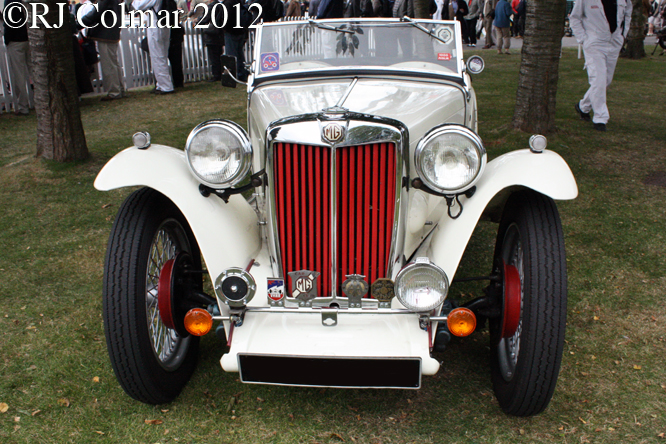
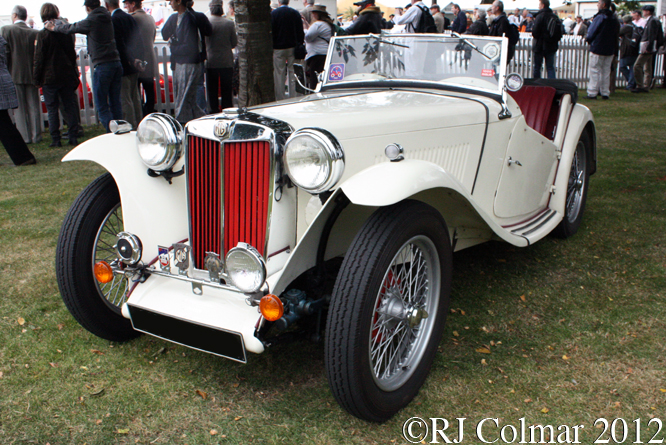
10,000 RHD’s Only – MG TC Midget

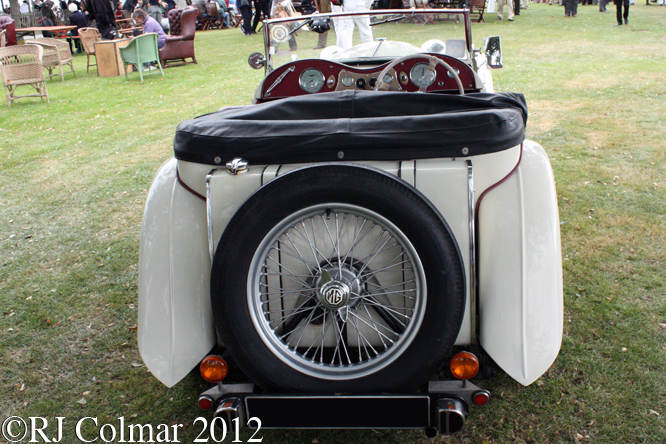
A development of the pre-war 1939 MG TB, of which only 379 were built, the MG TC was launched in 1945. and experienced comparatively huge popularity thanks to large numbers of US service men who served in the UK during the 1939 – ’45 war who fell for the cute li’l pre war MG’s that were still in evidence on the roads during the hostilities.

MG TC, Goodwood Revival

The MG TC experienced comparatively huge popularity thanks to large numbers of US service men who served in the UK during the 1939 – ’45 war who fell for the cute li’l pre war MG’s that were still in evidence on the roads during the hostilities.

MG TC, Goodwood Revival

Powered by a high compression version of the M TB 1250 cc / 76 cui 4 cylinder motor which produced 54 hp in standard trim, the motors could be supplied in different states of tune for specific, competition, purposes.

MG TC, Goodwood Revival

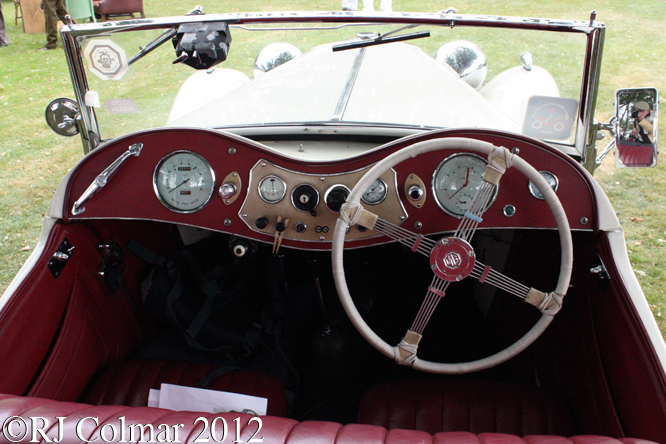
The TC’s cockpit was wider than that of the TB and featured a tachometer mounted directly in front of the driver, particularly useful for competition purposes.

MG TC, Goodwood Revival

TC’s were raced extensively in Europe, Australasia and North America recording many outright and class wins, both Carroll Shelby and Phil Hill raced and won driving MG TC’s, in their early careers, on their way to becoming stars on the world motorsports stage. Bill Bradley is known to have won his, HP, Class in an SCCA sanctioned event at Opelousas as late as July 1963.

MG TC, Goodwood Revival

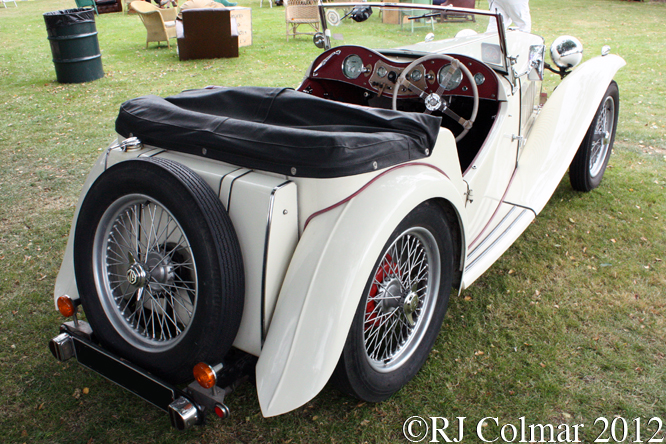
All of 10,000 MG TC’s built between 1945 and 1949 were right hand drive, despite most of them being exported to Left Hand Drive countries particularly the United States.

Share

Bertones Czech Brief – Škoda Favorit Pick-up

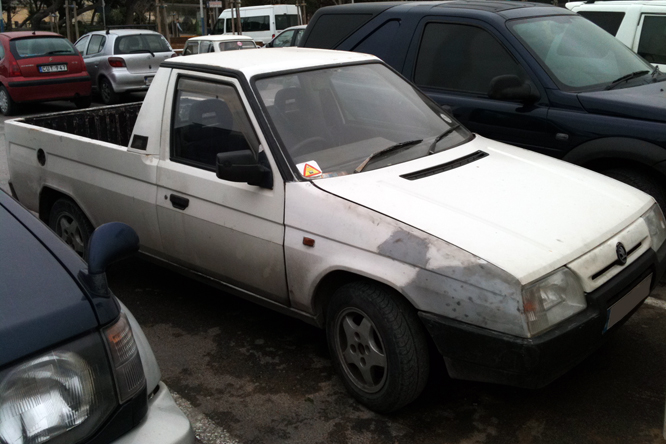
From the late 1950’s until 1987 Škoda had been best known for building cars with the engine in the boot trunk which culminated in the 130L / Estelle series.

Škoda Favorit Pick-up, Mdina, Malta

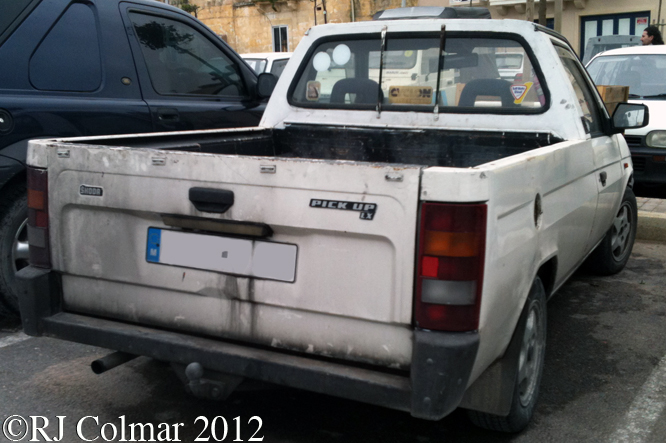
The front engine front wheel drive Favorit concept was originally approved by Škoda’s owners the Czechoslovakian government in 1982 with Nuccio Bertone being given the brief for the design. The first hatchback Favorit’s were seen in 1987. The Pick Up (Type 787) did not arrive until 1991 by which time Volkswagen had replaced the Czech government as owners of the company.

Škoda Favorit, Pick-up, Mdina, Malta

The Favorit name was first used by Škoda for a saloon / sedan in 1936.

Škoda Favorit Pick-up, Mdina, Malta

Volkswagen were quick to make improvements to the quality and trim levels of the Favorit while the all new Felicia model was developed. The Felicia Pick up replaced the Favorit Pick Up in 1995.

Thanks for joining me on this “Bertones Czech Brief” edition of “Gettin’ a li’l psycho on tyres” I hope you will join me again tomorrow. Don’t forget to come back now !
Share