Coffee, Croissant & Cars #5 – Avenue Drivers Club

Last Sunday I was due to take part in a production trial however for the second time this season heavy rain the week before saw the event canceled so I trundled down the hill to Queen Square in Bristol on Sunday for a morning of Coffee, Croissant & Cars, well actually Rooisbos Tea, Lemon Cake and Cars but I’m sure you’ll forgive the truth getting in the way of a good headline.
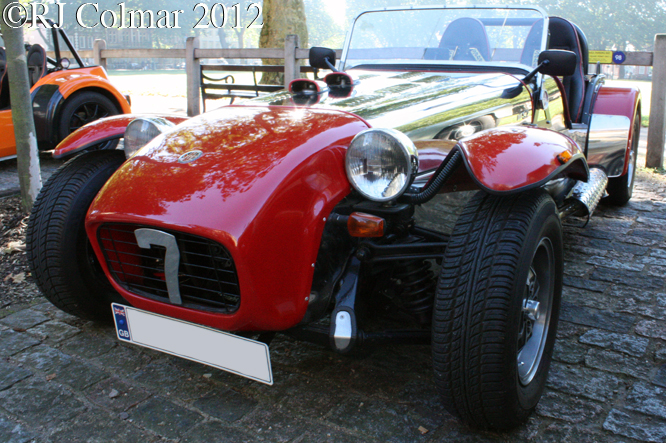
Robin Hood S7, Avenue Drivers Club, Bristol

Adding to the collection of vehicle manufacturers I have never heard of before, above is a Robin Hood S7, a kit car made, quelle surprise, in Nottingham, unlike the Caterham 7 the Robin Hood uses a steel monocoque chassis in place of the space frame chassis of it’s better known competitor.
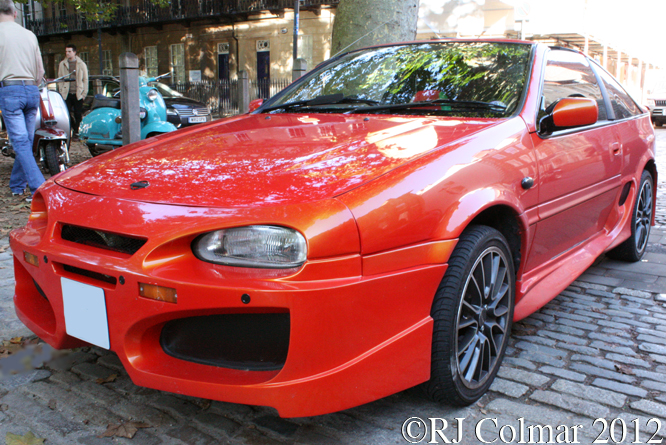
Nissan 100 NX Pacific, Avenue Drivers Club, Bristol

Nissan’s 100NX is a small sports orientated vehicle alongside the 200SX and larger 300ZX that was built from 1991 to 1996. The Targa top is a factory option unlike the wild body panels on the front and sides.
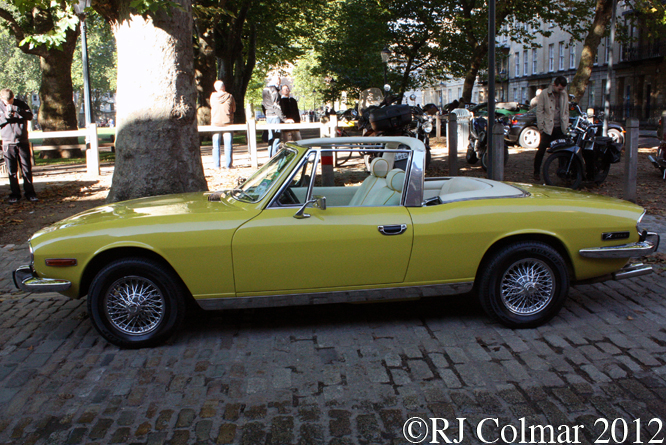
Triumph Stag, Avenue Drivers Club, Bristol

A law student friend of mine had a Triumph Stag back in the early 1980’s and he used to take great delight in filling it with five people and going into town for a wild night out on the tiles in it. Regrettably it was in nowhere near as good condition as this example built in 1971.
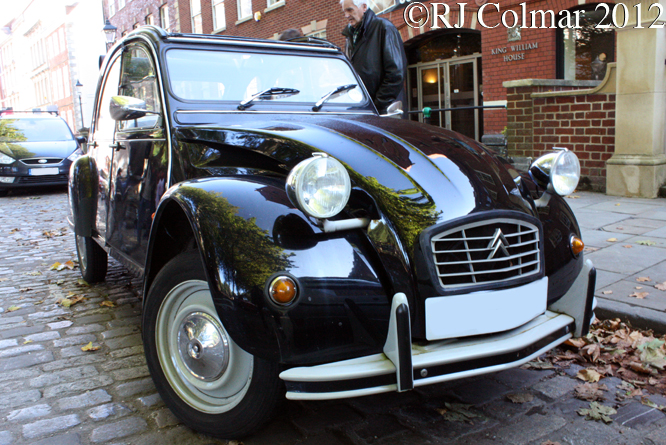
Citroen 2CV, Avenue Drivers Club, Bristol

Easily the most fun car I have ever driven is Citroen’s 2CV this one dates from 1989 just over a year before production came to an end after 42 years.
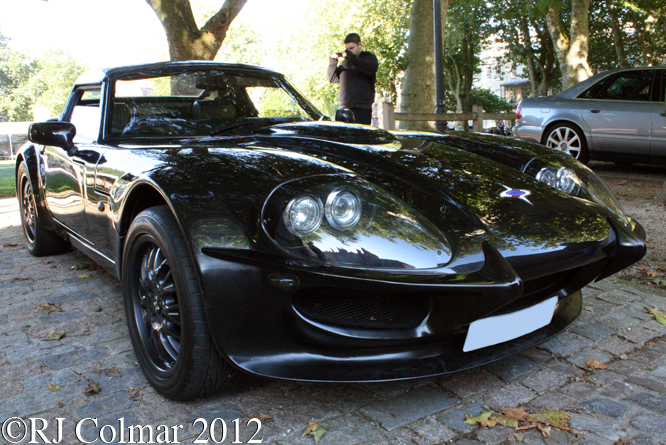
Marcos Mantara, Avenue Drivers Club, Bristol

In 1992 Marcos abandoned the kit car market in favour of manufacturing complete vehicles like the Mantara, this 1996 model is powered by a 3.9 litre / 240.7 cui all aluminium Rover V8 that dates back to Buick in 1960.
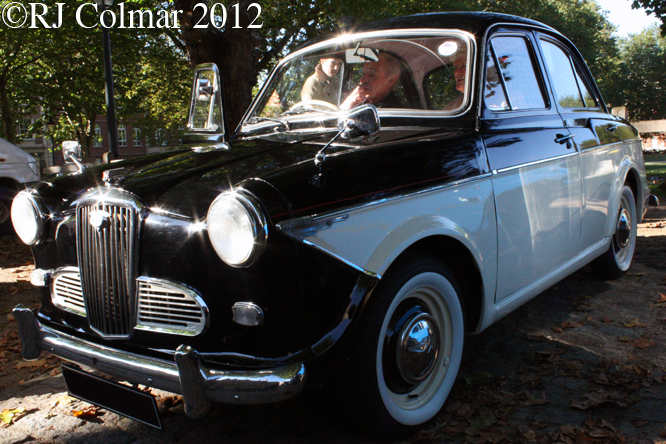
Wolseley 1500, Avenue Drivers Club, Bristol

This 1961 Series II Wolseley 1500 share it’s chassis and running gear with the Morris Minor but shares its body with the Riley 1.5.
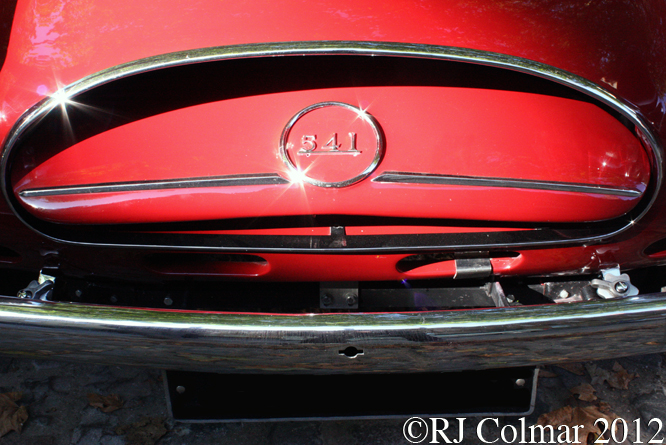
Jensen 541, Avenue Drivers Club, Bristol

This 1956 Jensen 541 is powered by a 125 hp Austin Sheerline six cylinder limousine motor enough to give glass fibre the four seater a 120 mph plus performance.
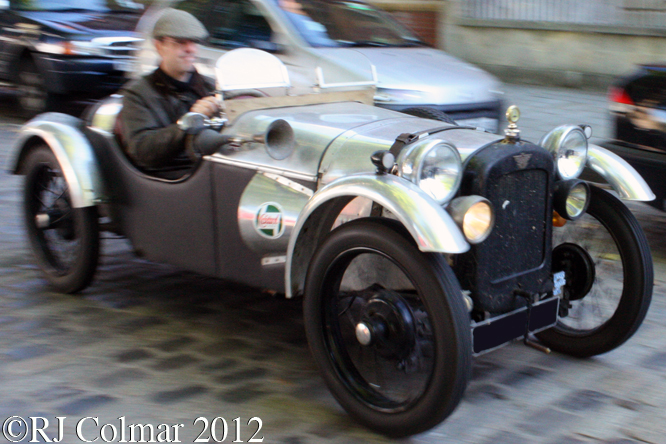
Austin Seven, Avenue Drivers Club, Bristol

The sort of car one might have expected to see taking part in Production car trials in 1938 is this Austin Seven, probably nearly as much driving one of these as a 2CV judging by the smile on the drivers face.
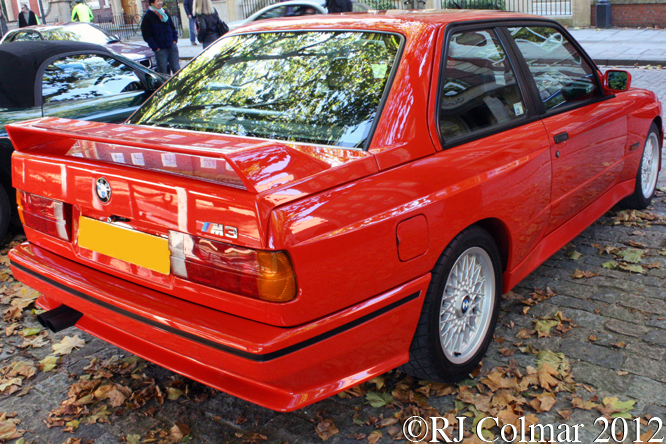
BMW M3, Avenue Drivers Club, Bristol

The BMW M3 was primarily devised as a production car on which to base racing versions to run against the Ford Sierra RS Cosworth and Mercedes 190 2.3-16V. It had 12 body panels that differed to the stand 3 series E30 body shell including the high boot / trunk lid and spoiler. This completely original 1987 example looks like is a sure Concours d’Elegance winner.
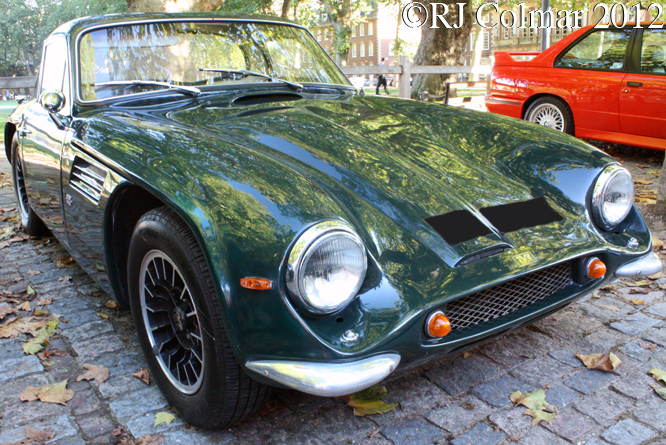
TVR Vixen S2, Avenue Drivers Club, Bristol

Launched in 1967 with an 88 hp Ford Kent motor the glass fibre bodied TVR Vixen easily out performed mass produced sports cars like the large engined MGB GT, the example above is a 1969 Vixen S2.
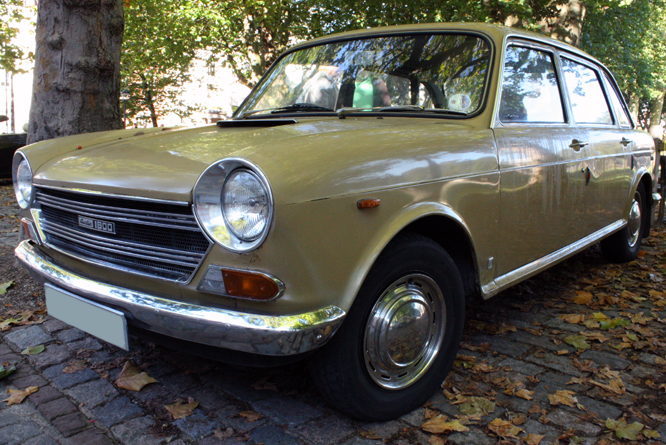
Austin 1800, Avenue Drivers Club, Bristol

The Austin 1800 was voted Car of the Year in 1965 when it was launched, it’s odd dimensions are the result of it having a transverse mounted motor and front wheel drive. Over the years it was steadily improved the car above appears to be a 1973 Series 3 version.

Ford F100, Avenue Drivers Club, Bristol

Finally just as the morning came to a close a couple of US 8 foot beds that never have to be made turned up including this 1971 fifth Generation Ford F100 which comes with a 5.9 litre / 359 cui V8 motor.

Thanks for joining me on this “Coffee, Croissant & Cars #5” edition of “Gettin’ a li’l psycho on tyres” I hope you will join me again tomorrow when I’ll be looking at a little pick up. Don’t forget to come back now !

Share

April Fool ? – Lotus 72 B #72/R1

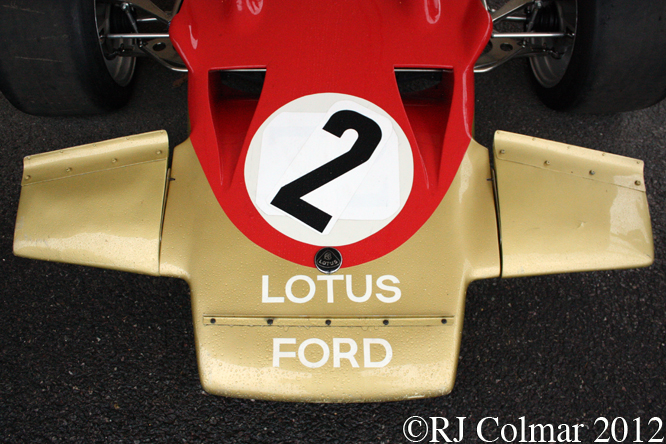
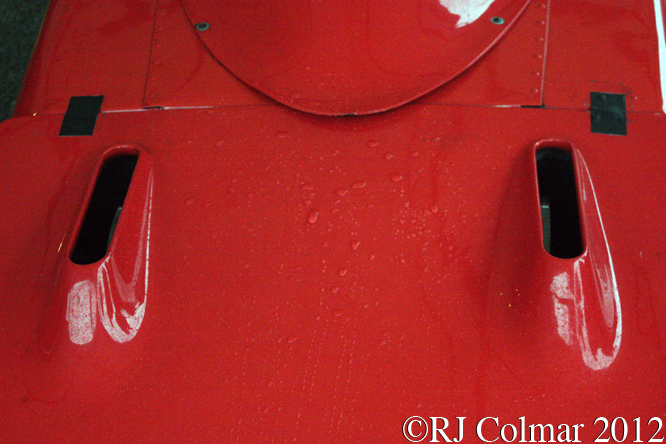
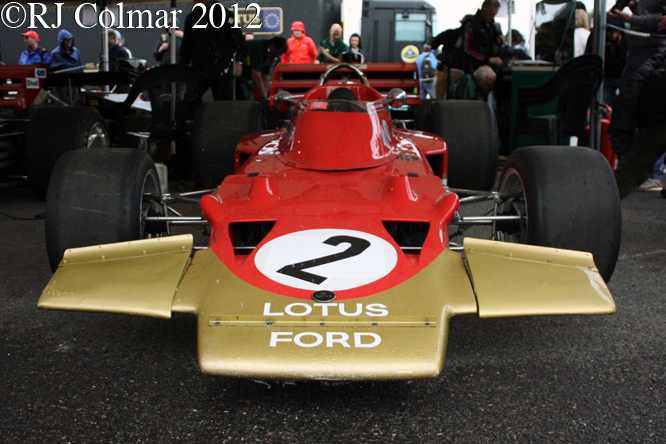
On the 1st of April 1970 the press were invited to see the Lotus 72 for the first time. The clean wedge shape was a return to the theme from the 1968 Lotus 56 Indy Car and Lotus 58 Formula 2/Tasman car.

Lotus 72C, Goodwood Festival of Speed

When the car was first tested by works drivers Jochen Rindt, John Miles and John Walkers driver Graham Hill they all reported the cars innovative front anti dive and rear anti squat suspension which aimed to reduced suspension travel under braking and acceleration was difficult to drive on the limit.

Lotus 72C, Goodwood Festival of Speed

As a result of this Jochen Rindt got his 1970 championship campaign under way with a fortuitous win in Monaco driving an updated four year old design in the form of a Lotus 49 C.

Lotus 72C, Goodwood Festival of Speed

At the 1970 Dutch Prix Lotus arrived with the second 72 chassis #72R2 updated to C-specification, with the anti dive and anti squat features of the suspension removed, for Jochen Rindt to drive which he found much more to his liking and proceeded a sting of four successive wins in Holland, France, Britain and Germany which gave Jochen what would become an unassailable lead in the World Championship.

Lotus 72C, Goodwood Festival of Speed

Unfortunately during practice for the 1970 Italian GP when he was testing #72/R2 without any wings, under braking an inboard front brake shaft broke, sending the 28 year old Jochen into a crash barrier post with fatal results.

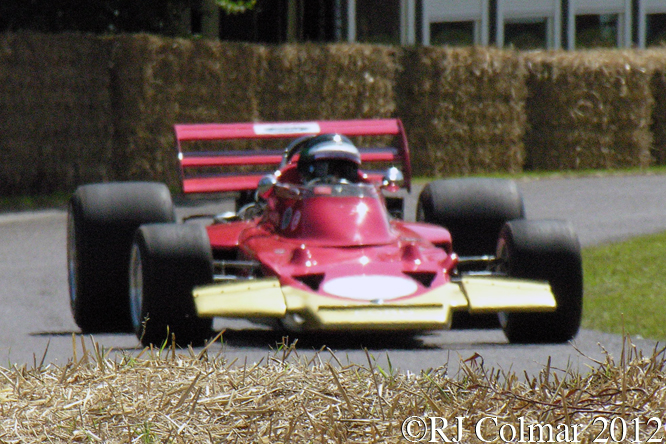
Lotus 72C, Goodwood Festival of Speed

New team leader Emerson Fittipaldi won the last race of the 1970 season driving a new 72 C. Jochen Rindt became the only posthumous World Champion and Lotus won their 4th Constructors Championship. For 1971 the Lotus 72 C proved to be not quite so competitive against Jackie Stewart and the Tyrrell Team, but otus would bounce back with the upgraded Lotus 72 D in 1972.

Lotus 72C, Goodwood Festival of Speed

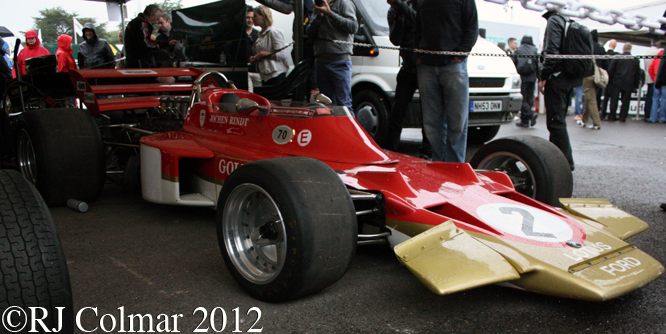
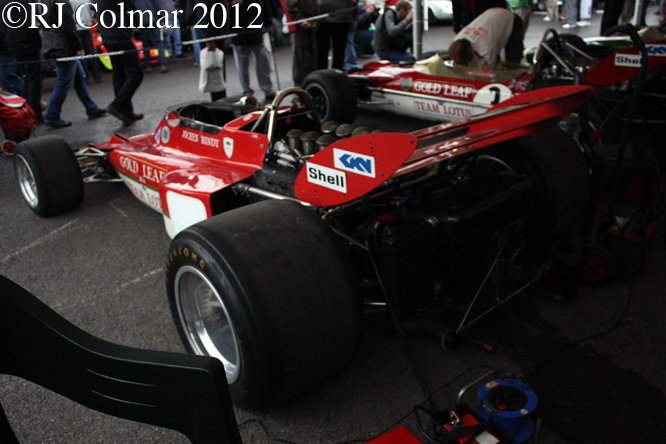
Lotus 72 #72/R1 is the only remaining 1970 spec car left, it was the car shown to the press on April 1st 1970 and subsequently entered and raced for Jochen’s team mate John Miles in original and B spec with only the anti squat removed from the rear suspension. John’s best result was a 7th place finish in the 1970 Dutch Grand Prix.

The Lotus 72 spawned many successful imitations including the McLaren M16 multiple winning Indy car and the McLaren M23 multiple world championship winning Grand Prix car.

Today’s Grand Prix and Indy cars all fitted with side radiators in side pods can all be said to be descendants of the Lotus 72.

Note the cockpit surround of #72/R1 has a shallow perspex screen from a later post 1972 Lotus 72.

Thanks for joining me on this “April Fool ?” edition of “Gettin’ a li’l psycho on tyres” I hope you will join me again tomorrow. Don’t forget to come back now !
Share

Running In At 116 mph – Ferrari 212 Inter Vignale

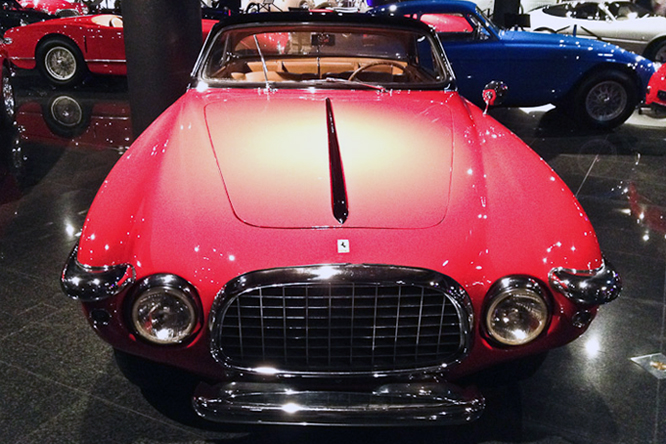
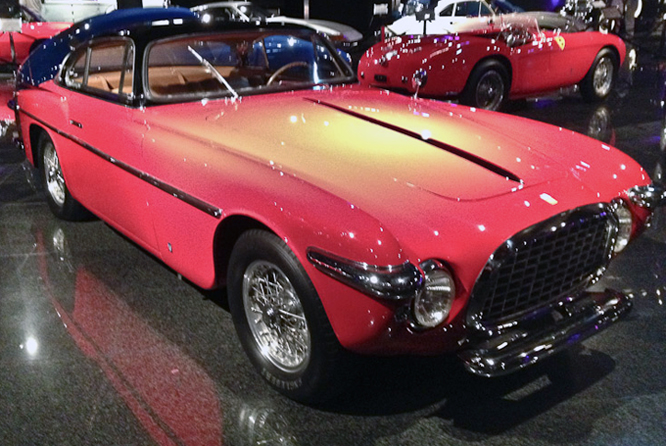
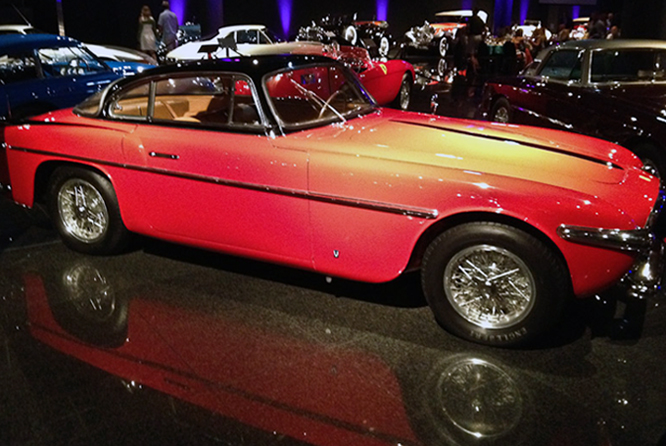
As we saw last week the 1951 Ferrari 212 came in two flavours Export for sports car racing and Inter as daily driver. Today’s featured 212 Inter with body work by Vignale is one of the long wheel base road cars.

Ferrari 212 Inter Vignale, Danville Concours d'Elegance

Of the 82 212 Inters built 37 of them had Vignale bodies while Touring and Ghia were amongst others to build bodies for this model.

Ferrari 212 Inter Vignale, Danville Concours d'Elegance

The British magazine tested the first production 212 Inter in 1950 recording rest to 60 mph in 10.5 seconds reaching 100 mph in 22.5 seconds and a top speed of 116 mph. The magazine noted that they were asked to keep to a 6,500 rpm limit as the engine had not been fully run in.

Ferrari 212 Inter Vignale, Danville Concours d'Elegance

Of course just because a Ferrari is designated primarily as a road car there is nothing to stop owners entering them for races, Centro Deportivo Italiano bought two 212 Inters, chassis #0161 EL and 0171 EL and entered them in to the fearsome 1951 Carrera Panamericana in Mexico for Alberto Ascari and Luigi Villoresi in the #9 and Pierro Taruffi and Luigi Chinetti in the #34 respectively. The Centro Deportivo Italiano scored a 1-2 finish with Taruffi/Chinetti leading home Ascari/Villoresi by over eight minuets.

My thanks to Geoffrey Horton for sharing his photo’s taken at Danville Concours d’Elegance.

Thanks for joining me on this “Running In At 116 mph” edition of “Gettin’ a li’ psycho on tyres” I hope you’ll join me again tomorrow when I’ll be looking at another innovative formula one car from Colin Chapman. Don’t forget to come back now !
Share

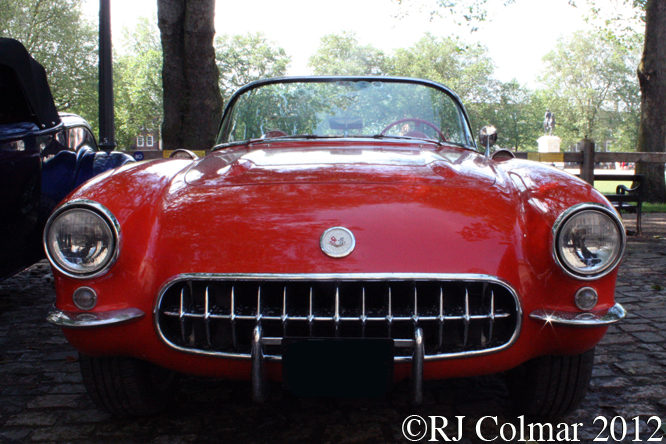
FI = 1 H.P. per CU. IN. x 283 – Chevrolet Corvette C1

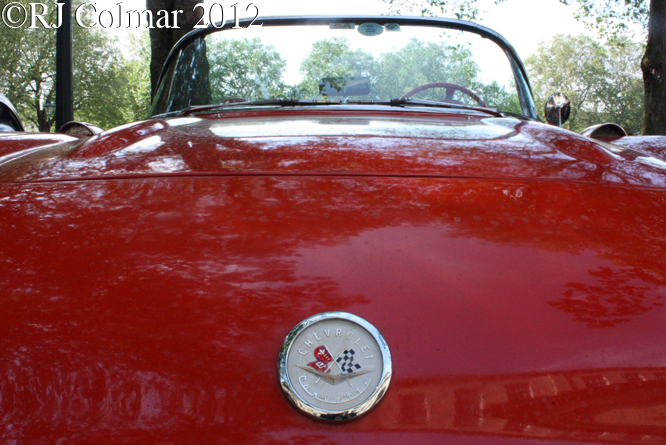
With the arrival of the enthusiastic Zora Arkus-Duntov in GM’s engineering department, the famous Chevrolet small block in the engine bay and some competition in the form of the Ford Thunderbird, Chevrolet ramped up it’s commitment to building and American sports car in 1956 by replacing the first iteration of the Corvette which was considered low on performance, high on water leaks into the cockpit and less than a true sports car.

Chevrolet Corvette, Avenue Drivers Club, Bristol

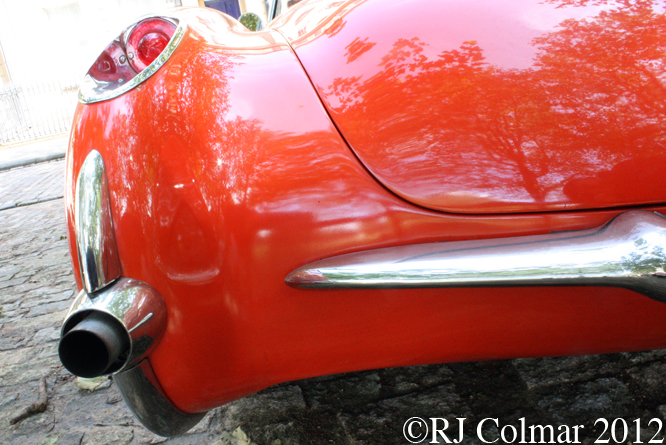
Banished for ever in 1956 was the 155 hp triple carburetor Blue Flame six cylinder engine, the Corvette from 1956 on was strictly a V8 powered vehicle.

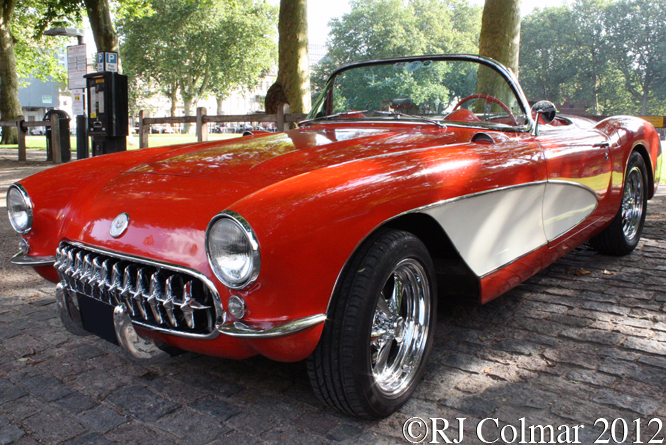
Chevrolet Corvette, Avenue Drivers Club, Bristol

For ’56 there was all new bodywork, replacing the first generations body that was close to the original concept Corvette first seen in 1953.

Chevrolet Corvette, Avenue Drivers Club, Bristol

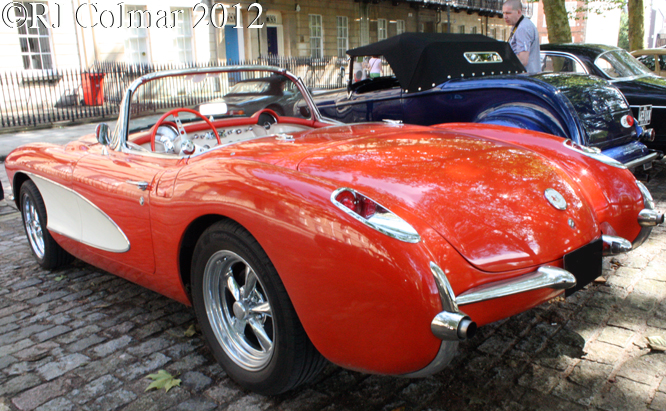
The bold sculpted sides behind the front wheels really helped the second iteration two tone Corvette stand out from the crowd.

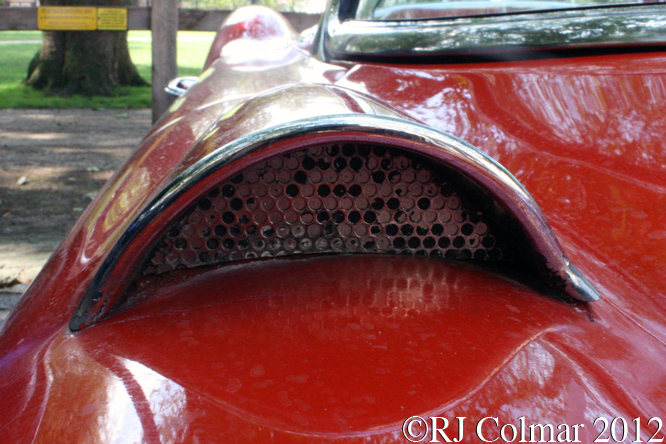
Chevrolet Corvette, Avenue Drivers Club, Bristol

As did the faux air scoops on the front wing/fender.

Chevrolet Corvette, Avenue Drivers Club, Bristol

There was a hard top hood option and the much improved soft top had a power assisted option as did the roll up glass window’s.

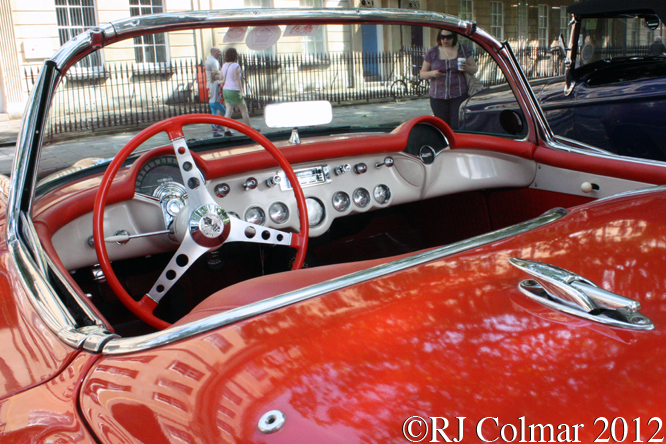
Chevrolet Corvette, Avenue Drivers Club, Bristol

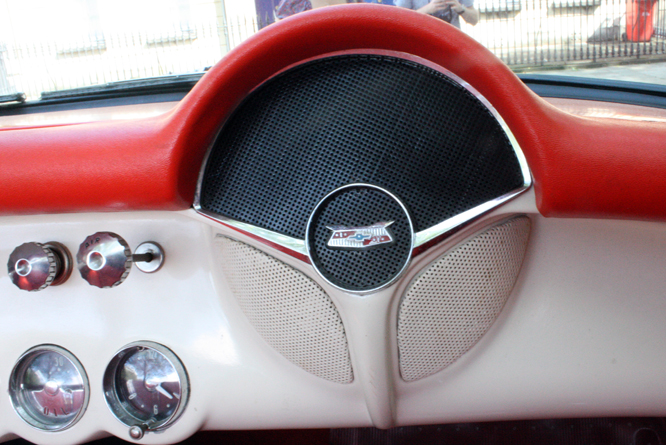
The three speed manual transmission became standard but the, inferior performance wise, Powerglide automatic remained an option. The cockpit controls fittings and instrumentation of the ’56 and ’57 ‘vettes remained similar to the original Corvette cockpit.

Chevrolet Corvette, Avenue Drivers Club, Bristol

Following in the footsteps of 1953 Gutbrod and the 1954 Mercedes Benz 300SL in 1957 the GM Rochester constant flow fuel injection was an option for the Corvettes small block V8. This innovation while not widely taken up, 1040 FI units were sold, took the power up to 290 hp, however for marketing purposes the car was said to have 1 hp for every one of of the small block V8’s 283 cubic inches.

Chevrolet Corvette, Avenue Drivers Club, Bristol

Thanks to Zora Arkus-Duntov ’57 Corvettes could be ordered with ready to race options including the fuel injection, heavy duty suspension and if the advertising is to be believed even the power windows were said to be lighter than the manual window mechanisms.

Among the race outright Corvette winners in 1956 were Bob Stonedale, Mansfield, Bark Henry, Road America, Bill Pollack, Buchanan Field, Robert Bennet, Mansfield and most successful of all in ’56 was Dick Thompson who won at Beverly, Seafair, Thompson CT, and Palm Springs.

In 1957 Corvette drivers winning outright are known to have included Ruben Ciriacks and Peter Talbot at Hawaii, Ned Yarter at Willow Springs and Bakersfield, Jerry Parsons at Smartt Field, Bob Drake, Santa Barbra, Dick Thompson, Cumberland, Eagle Mountain, Marlboro, Viginia, Road America, Bob Byrd, John Masterson and Lloyd Gray at Cotati, Jim Jeffords, Milwaukee, Lloyd Porter at Bakersfield, Bark Henry, Lime Rock and Montgomery, Dean McCarthy, Watkins Glen, Jerry Austin, Pomona, Santa Barbra, Riverside, Palm Springs and Paramount Ranch, Bob Bent Cotati and Arcata, Leonard Butscher, Thompson CT, Fred Windridge, Watkins Glen and Bridgehampton, Dan Gurney at Riverside, John Wood, Willow Springs, H. C. Hoppe (Ladies Races) Bakersfield, Willow Springs and Orange County, Hugh Woods and Cal Bailey at Hourglass Field, Jack Bates and Frank Cairns at Pomona, John Voevodsky and Bill Moore at Phoenix and finally Elgin Holmes who won at Willow Springs and Orange County.

With Duntov’s vision the American sports car had finally arrived.

Thanks for joining me on this “FI = 1 H.P. per CU. IN. x 283” edition of “Gettin’ a li’l psycho on tyres”, I hope you will join me tomorrow for Ferrari Friday. Don’t forget to come back now !
Share

Kleinwagen mit Grosser Zukunft – Trabant Tramp

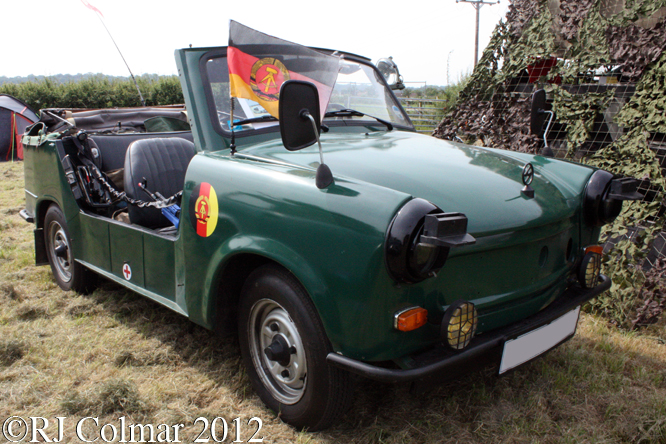
The Trabant Marketing Department certainly hit the spot when they came up with the “Small Car With A Big Future Strapline” it was not unusual for these these little two strokes to last over 20 years, such was the shortage of supply of new vehicles the old ones were meticulously maintained to standards well beyond those of most ten year old vehicles today.

Trabant Tramp, Summer Classics, Easter Compton

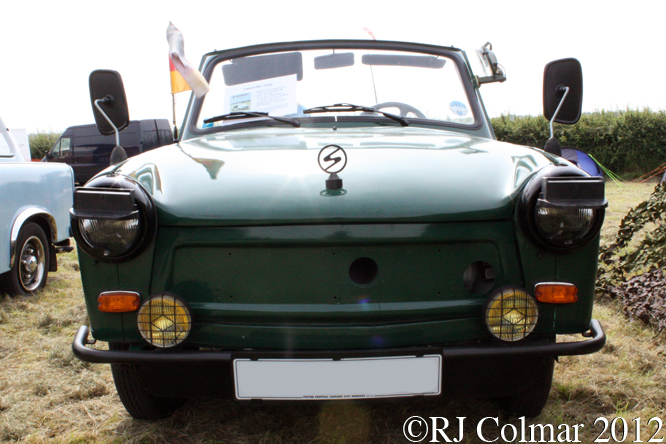
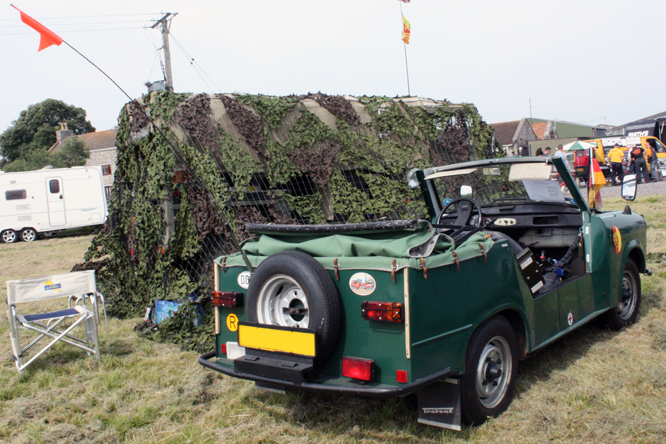
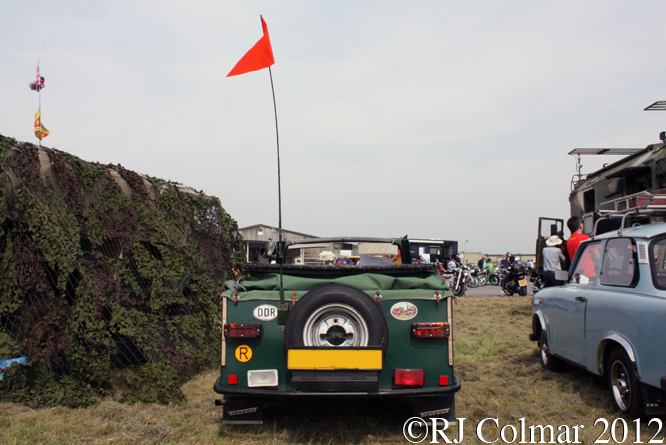
The Trabant Tramp is an all purpose vehicle based on the Trabant 601, I am not sure when they were introduced but they were obviously in production in 1983 when this one was built for civilian use. The convertible is shown on this clip as being capable of a somewhat suspect 100 kph / 62.5 mph on this undated linked commercial.

Trabant Tramp, Summer Classics, Easter Compton

Colin the owner of this particular Tramp has a rather interesting collection of military vehicles including a cold war era 6 wheel drive Zil Radio Truck, and an all wheel drive Volvo military ambulance so it is perhaps no surprise that Colin has decided to turn his Tramp into the military Kübelwagen (jeep) variant as used by the East German Military and Boarder Patrols in the 1980’s.

Trabant Tramp, Summer Classics, Easter Compton

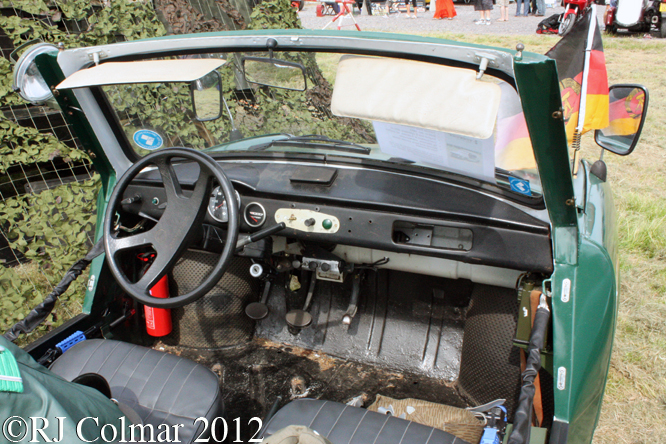
Amongst the paraphernalia Colin has fitted to his Tramp are a decommissioned AK47, first aid kit, axe, hand pump (for the tyres), signals flags, trench tools (spades),

Trabant Tramp, Summer Classics, Easter Compton

not forgetting an authentic Russian made field telephone with short and long range field radio’s. All wired up ready to go needing only to be connected to the batteries Colin has and someone else with whom to communicate.

Trabant Tramp, Summer Classics, Easter Compton

Having spent some time resolving a range of 6 volt electrical issues Colin has stripped the car down for a complete respray this winter in order to give his ‘Kleinwagen’ a ‘Grosser Zukunft’. You can follow his progress on this link.

Thanks for joining me on this “Kleinwagen mit Grosser Zukunft” edition of “Gettin’ a li’l psycho on tyres” I hope you will join me again tomorrow. Don’t for get to come back now !

Share

One Step Back, Two Steps Forwards – MG TA

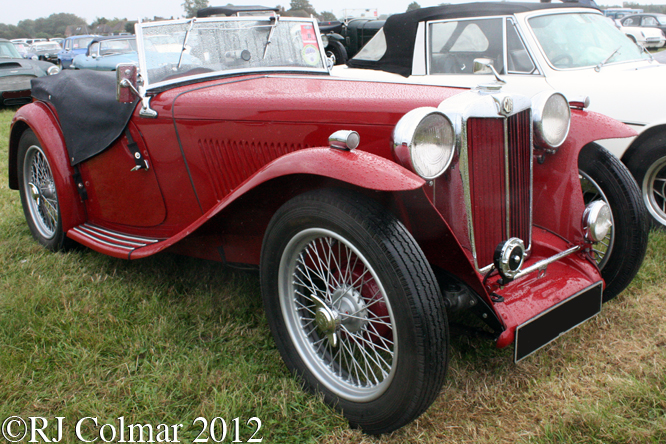
The MG TA Midget replaced the MG PB Midget in 1936 with many, of it’s parent company, Morris components. The TA and following T series variants opened up the appeal of sports cars in general to a huge new market that had remained hitherto untapped thanks to the reputation sports cars had for being temperamental if not plain difficult to drive.

MG TA, Goodwood Revival

Built with a 7″ longer and 3″ wider chassis the TA’s motor was technically a retrograde step from it’s PB predecessor which had an over head cam motor. The Morris 10 based TA motor ‘only’ featured pushrod operated over head valves, but with 2 carburetors this still produced 50 hp with the benefit that the valve clearances were much easier to maintain.

If the motor was a technological retrograde step both the synchromesh gearbox, making changing gear much easier and the hydraulic brakes, which needed much less maintenance, were both technological steps forwards that made the TA a much easier car to drive and maintain, than it’s predecessor and added to the durability of the whole TA package.

Top speed of the TA was around 80 mph with a rest to 60 mph acceleration time of just over 23 seconds. 3,000 TA Midgets were manufactured between 1936 and 1939.

Thanks for joining me on this “One Step Back, Two Steps Forwards” edition of “Gettin’ a li’l psycho on tyres”, I hope you will join me again tomorrow when I’ll be looking at an unusual tribute car. Don’t forget to come back now !
Share

Shelby Pierce Arrow – Niello Concours at Serrano

The weekend before last Geoffrey Horton took his Jaguar out of it’s garage for the last time this year to attend the Niello Concours at Serrano. He kindly sent today’s featured photographs for us to enjoy.

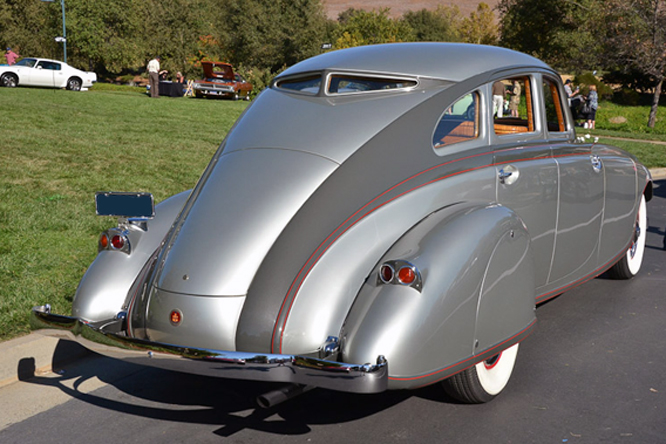
Pierce Silver Arrow, Niello Serrano Concours d'Elegance

The achievements of Pierce Arrow and Carroll Shelby were being celebrated at Niello, above a 1933 Pierce Silver Arrow one of only three such 115 mph V12’s known to exist.

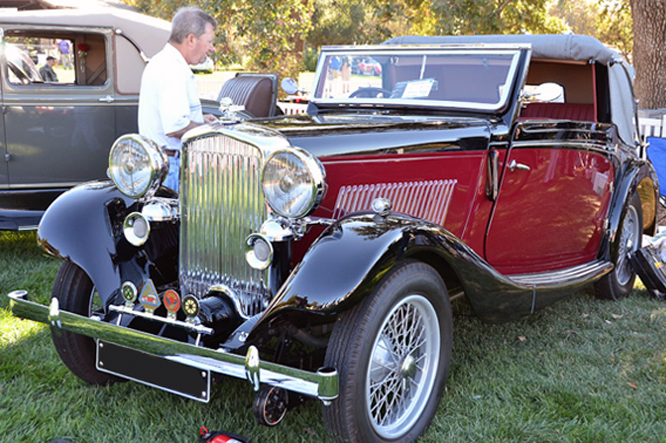
British Salmson S4C, Niello Serrano Concours d'Elegance

Suffering from slow sales of aero engines made under license from (French) Salmson in 1934 British Salmson extended it’s license deal to include local manufacture of Salmson cars. Above is a 1936 S4C similar to it’s French counterpart except that it has syncromesh on the top two gears of the gearbox. Around 250 S4C’s were manufactured from 1934 to 1938.

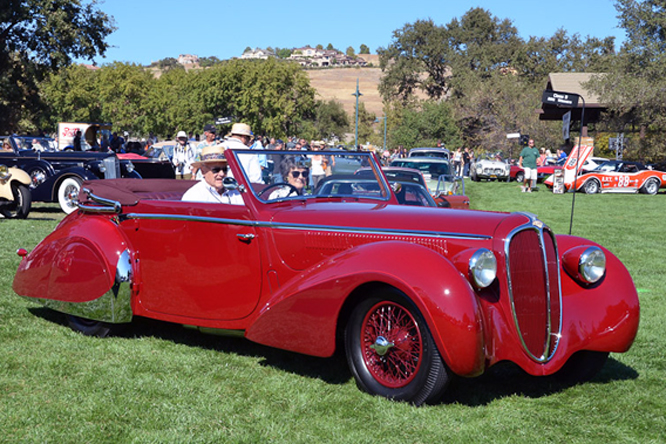
Delahaye, Niello Serrano Concours d'Elegance

For a Delahaye the vehicle above is pretty tame, by Delahaye standards, I’m not sure of either the year, model or coachbuilder, looks most likely a 135 which could have been built 1935 and 1954. If you know which more please do not be afraid to chime in below.

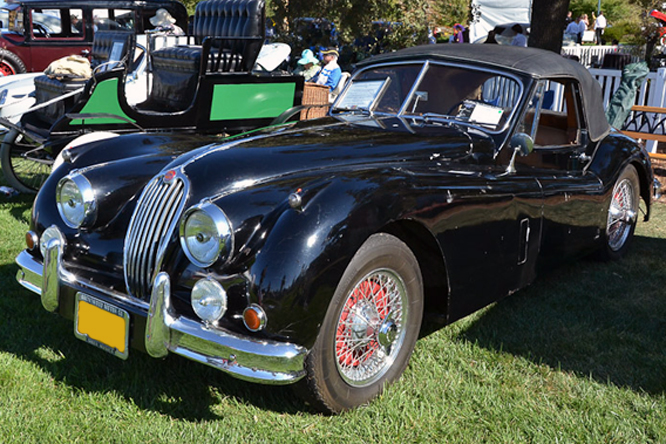
Jaguar XK140 MC DHC SE, Niello Serrano Concours d'Elegance

As regular GALPOT readers will know Geoffrey Horton restored a rats nest back into a 1955 Jaguar XK140 FHC SE / MC which he now enters in Concours events. The 1956 example above has been in the same family since 4th January 1956, it is totally original and unrestored, as the owner says “cost of $90,000” and “cost of to keep it original, with sentimental value = priceless”

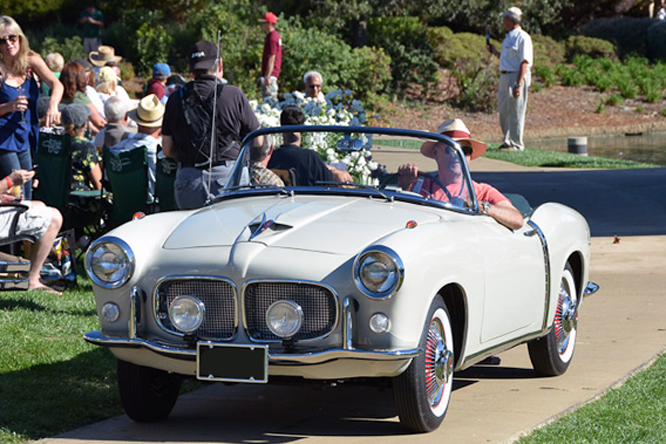
FIAT 1200 TV Spider, Niello Serrano Concours d'Elegance

Not sure what this one is at the time of writing looks a little like a Mk 1 Triumph Spitfire with a lot of additional chrome, the wheels look like they come from a Berkeley. If you know what this one is please chime in below, it’s certainly not in my I-spy book of cars.

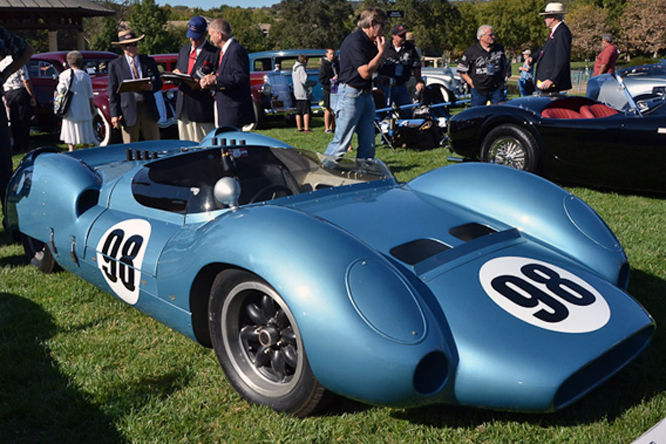
Shelby King Cobra, Niello Serrano Concours d'Elegance

Carroll Shelby ordered two new Cooper Monaco’s beefed up to carry Shelby’s 289 Ford V8’s for the 1963 URRSC sports car championship.
Chassis #CM/1/63 seen here was driven by rapidly rising star Dave MacDonald to victories in both the 1963 Los Angeles Times Grand Prix at Riverside and the Monterey Pacific Grand Prix at Laguna Seca which along which helped MacDonald secure the 1963 URRSC sports car championship.

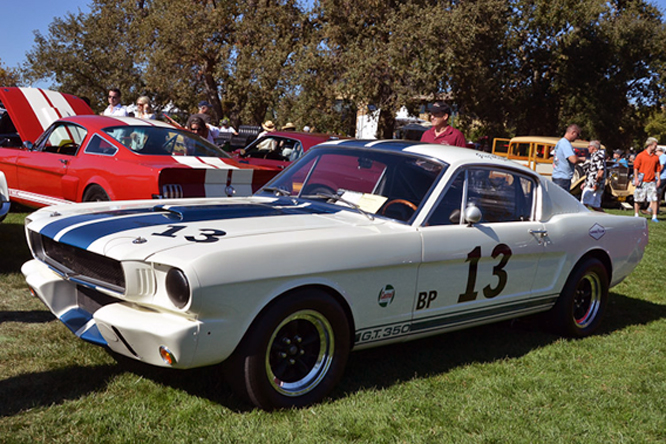
Shelby GT.350, Niello Serrano Concours d'Elegance

The 1965 Shelby GT 350 was built to compete in the SCCA National B Production Championship with full race suspension larger oil pan and straight through exhaust side pipes. It was fitted with ‘only two’ seats to comply with the SCCA regulations. This particular copy, one of 562 built in 1965, has been in the same family since new.

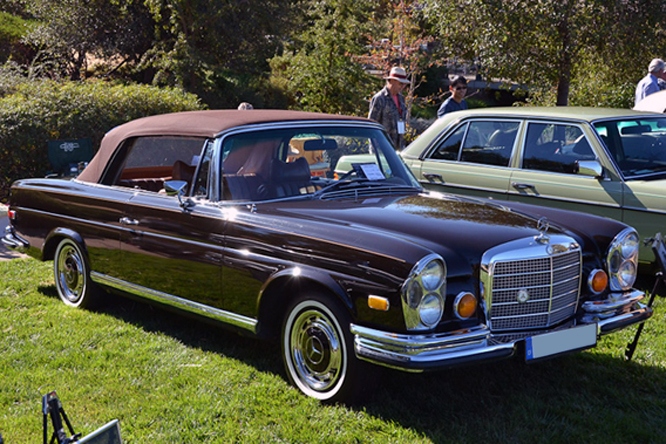
Mercedes Benz 280 SE, Niello Serrano Concours d'Elegance

For 1970 the US Department of Transport demanded extra visibility over the bonnet / hood of all cars and so all post 1970 model year Mercedes 280 SE’s received a lower grill than in previous years. The Low Grill 280 SE Cabriolet above is one of just 237 built in 1970.

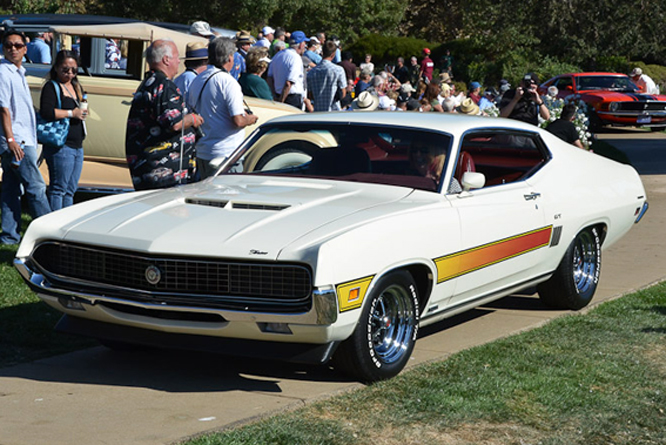
Ford Gran Torino, Niello Serrano Concours d'Elegance

Capable of reaching 60 mph in six seconds and covering the quarter mile in just 14.4 seconds the Ford Torino GT introduced in 1970 could be ordered with sports deck, hideaway head lamps and reflective side stripes, just like the one seen above.

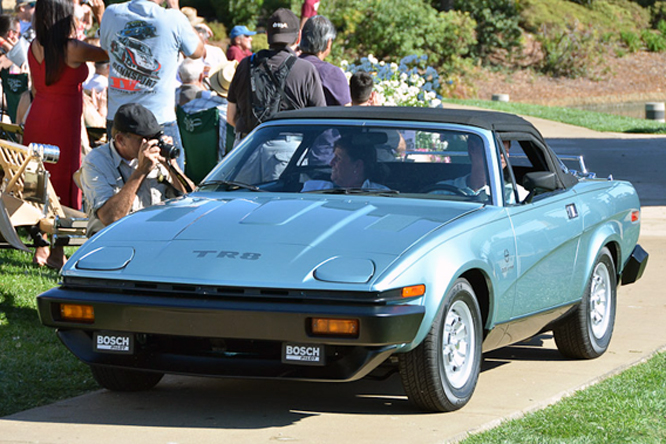
Triumph TR8, Niello Serrano Concours d'Elegance

The English Corvette as the Triumph TR8 was known was manufactured 1978 to 1982. This one would appear to be one one of the 2400 dropheads built between 1980 and 1982.

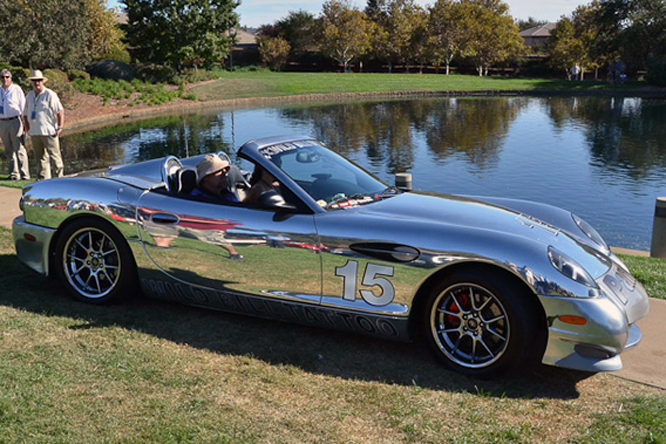
Panoz Esperante GTLM, Niello Serrano Concours d'Elegance

The Panoz Esperante can be ordered in GT, GTLM and GTS specs with an after market JRD upgrade available if you need the speed and have the budget to satiate it. The car above is a 2005 model is the first of 80 Supercharged GTLM models. Amongst Wild Bills other vehicles are an amphibious Amphicar and Messerschmitt Kabinen Roller !

Jaguar XK140 MC DHC SE, Niello Serrano Concours d'Elegance

And so it’s time to thank Geoffrey one the last time this year for his fabulous Concours d’Elegance contributions to GALPOT this year, there will of course be further contributions about individual vehicles, and hope that his Jaguar stays safe over the off season in anticipation of the 2013 California Concours d’Elegance season.

Thanks for joining me on this “Shelby Pierce Arrow” edition of “Gettin’ a li’l psycho on tyres” I hope you will join me again tomorrow. Don’t forget to come back now !
PS Since writing this Geoffrey has informed me that the unidentified car that looks like a cross between a Triumph and a Berkeley is a 1956 FIAT 1200 TV Spider. We live and we learn ! Thanks again to Geoffrey.

Share