Worlds First 200 mph Race Lap – Dodge Charger Daytona

On Thursday I looked at a car driven by Jerry Grant the first man to lap an open wheeler at an average 200 mph during qualifying at Ontario Motor Speedway in 1972 and I was surprised to learn that Buddy Baker recorded the first 200 mph race lap, in today’s featured Grand National Dodge Charger Daytona two years earlier at Talladega.
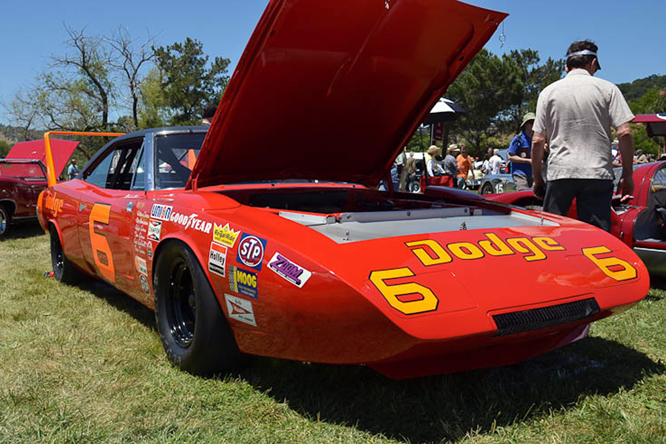
Dodge Charger Daytona, Marin Sanoma Concours d'Elegance

After NASCAR leveled the playing field by allowing Ford to run four barrel carburetor’s against Dodges 2 barrel carburetor Hemi’s Chrysler hit back by introducing the limited edition Dodge Charger Daytona model in 1969 using a Charger body shell with an aerodynamic nose and high rear wing which aided traction to the rear driven wheels.
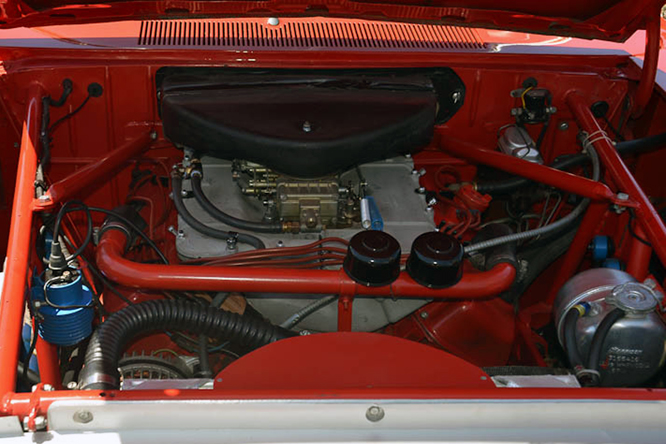
Dodge Charger Daytona, Marin Sanoma Concours d'Elegance

The 6980 cc / 426 cui Hemi V8 fitted a 2 barrel carburettor was good for over 475 hp. In 1969 Bobby Isaac won 20 poles and won 17 of 54 Grand National championship races in his Charger Daytona but poor reliability meant he only finished 6th in the championship won by David Pearson with ‘only’ 11 wins. The following year Isaac won the championship with only 11 wins with Richard Petty finishing the championship 4th driving a similar Plymouth Road Runner Superbird with 18 championship wins.
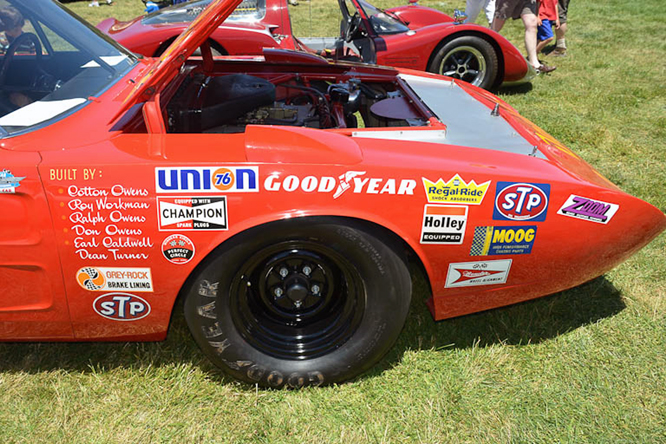
Dodge Charger Daytona, Marin Sanoma Concours d'Elegance

For the 1970 season Cotton Owens entered Buddy Baker in today’s featured Daytona, while leading 101 laps at Talladega Baker recorded the world first 200 mph average race lap speed before a spin forced retirement. Note that baker was not driving a #88 Daytona in the Alabama 500 when he achieved this feat as reported in some sources. Baker later drove this car to victory lane at Darlington where he beat the eventual 1970 Champion Bobby Isaac by an entire lap.

Dodge Charger Daytona, Marin Sanoma Concours d'Elegance

NASCAR took the decision to outlaw all of the “Winged Warriors” at the end of the 1970 which included the Charger Daytona, Plymouth Superbird, Fords Torino Talladega and Mercury Cyclone Spoiler II.

This car has never been restored, simply kept in immaculate condition during long loan spells Cobo Hall in Detroit and the Darlington Museum.

My thanks to Geoffrey Horton who shared today’s photographs which were taken earlier this year at the Marin Sanoma Concours d’Elegance.

Thanks for joining me on this “Worlds First 200 mph Race Lap” edition of “Gettin’ a li’l psycho on tyres” I hope you will join me again tomorrow. Don’t forget to come back now !

Share

Cut and Bury – Lotus Ford 64

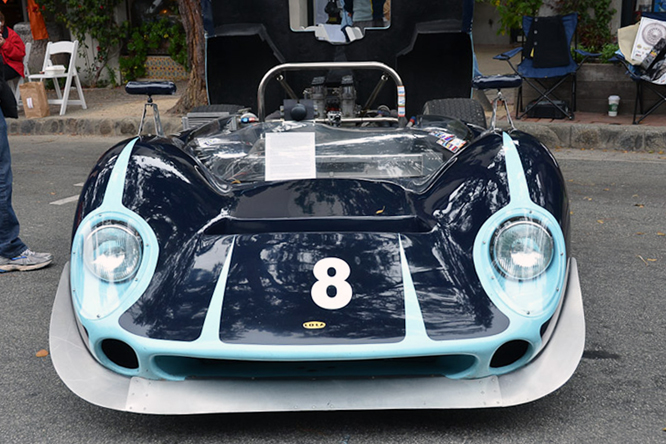
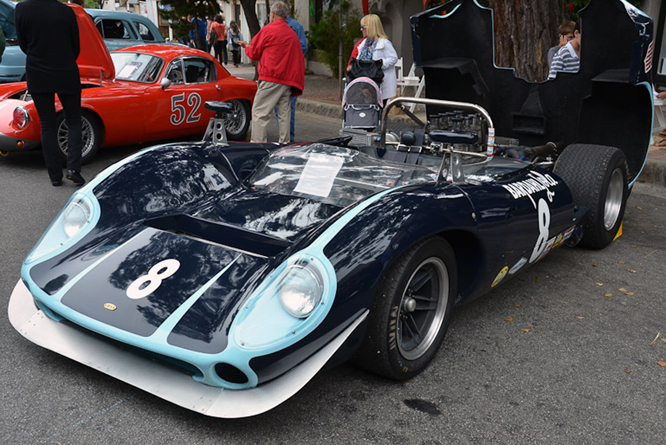
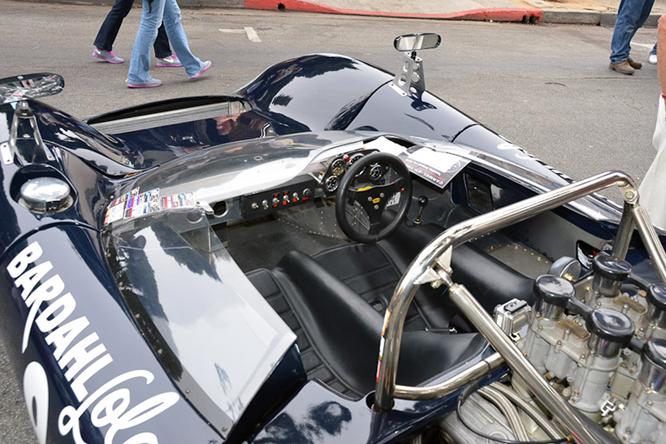
After coming close to winning the 1968 Indianapolis 500 with the Pratt & Whitney gas turbine powered Lotus 56 driven by Joe Leonard the powers at Indianapolis decided to ban gas turbine power and all wheel drive for the 1969 season, but eventually relented and allowed all wheel drive vehicles that had wheels no more than 9″ wide all round. Rear wheel drive vehicles were allowed to go to 14″ wide wheels at the rear.

Lotus Ford 64, Goodwood Festival Of Speed

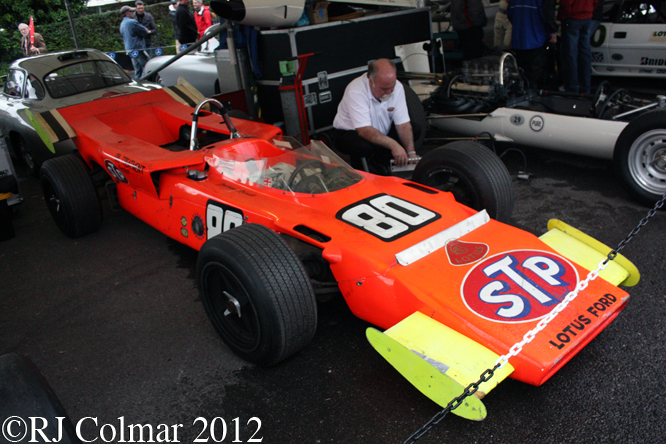
Colin Chapman rose to the challenge of building a car to the new regulations with the financial encouragement from Andy Granatelli’s STP Oil Treatment. The Lotus 64 was a new chassis which was powered by a 700hp turbocharged double overhead cam Ford V8 motor driving an all wheel drive system that was lifted from the Lotus 56 as indeed was much of the rest of the chassis.

In order to connect the motor to the mid mounted gearbox the motor had to be mounted backwards so the drive came from the front, as on the ill feted Lotus Ford 63 all wheel drive Grand Prix car.

Mario Andretti, Graham Hill and Jochen Rindt were lined up to drive the three team cars and a spare was built just in case of unforeseeable eventualities. Straight out of the box the cars were on the pace of the gas turbine Lotus 56 from the year before setting record speeds. However Mario Andretti’s car had a rear hub failure which sent him into the wall. Mario was lucky to get away with superficial burns to his face and after it was determined the failure was due to a design fault that could not be rectified in the available time frame the three Lotus 64’s were withdrawn from the race.

Mario jumped into the #2 Hawk Ford belonging to Granatelli and promptly qualified 2nd to AJ Foyt and then won the race after Lloyd Ruby was knocked out of contention by leaving the pits with his refueling hose still attached.

Andy Granatelli wanted to buy one of the remaining 64’s but when negotiations broke down Colin Chapman is alleged to have ordered the now engineless cars be returned to Hethel, Lotus home base, where he promised to take a hack saw to them personally cut them up and dig a whole and personally bury them. As it turned out all three cars were put in a shed.

Jochen Rindt’s #80 is seen above sans motor, this is the second of the three remaining 64’s to have emerged in recent years the other one has a correct Ford motor installed.

Thanks for joining me on this “Cut and Bury” edition of “Gettin’ a li’l psycho on tyres, I hope you will join me again tomorrow when I’ll be looking at the first car to record a 200 mph average closed circuit lap during a race. Don’t forget to come back now !

Share

The Breadvan – Ferrari 250 GT SWB #2819

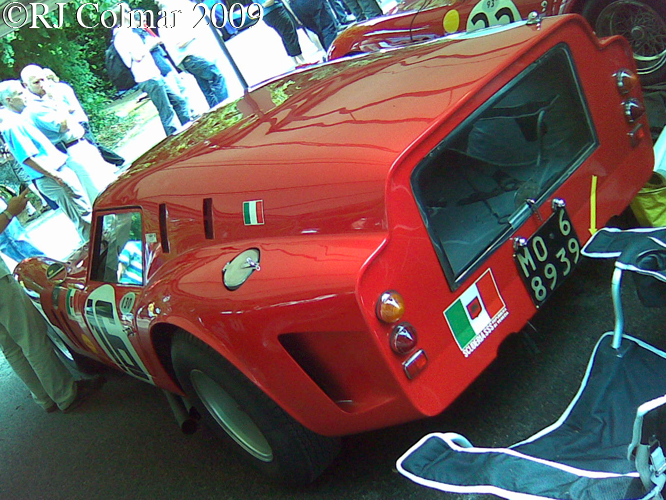
Today’s unique vehicle came to be built after Count Giovanni Volpi di Misurata fell out with Enzo Ferrari for financing a rival Formula One team ATS which employed ex Ferrari personnel Carlo Chiti, Giotto Bizzarrini and World Champion driver the American Phil Hill.

#2819 started life as a regular Ferrari 250 GT SWB and was entered in the 1961 Tour de France by Ecurie Francochamps for Olivier Gendebien and Lucien Bianchi who finished 2nd. The car was then acquired by Count Giovanni Volpi di Misurata who’s Scuderia Serenissima di Venezia entered the 1961 Paris 1000 kms for Maurice Trintignant and Nino Vaccarella who finished 3rd.

Ferrari 250 GT SWB, Goodwood Festival Of Speed

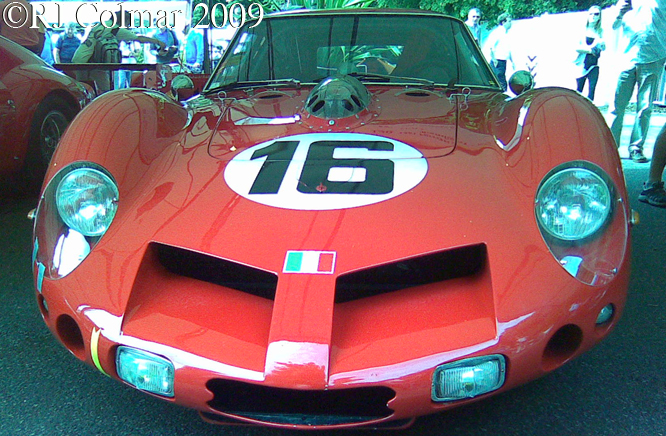
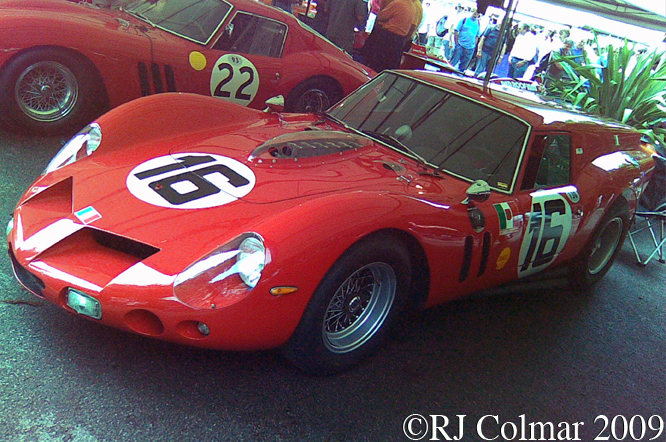
Wanting a third vehicle to enter in his Le Mans team which included one 250 GTO, #3445 and a Ferrari TR/61, #0792TR which won at Sebring, but unable to secure a second 250 GTO from Ferrari, Count Volpi di Misurata had his 1961 250 GT SWB upgraded to 250 GTO spec by the very man responsible for conceiving the original 250 GT SWB and 250 GTO series Giotto Bizzarrini.

Allegedly in just 14 days Giotto Bizzarrini & Piero Drogo modified Count di Misurata’s 250 GT SWB by moving the dry sumped engine back 5 inches behind the front axle so that it could be mounted lower in the chassis. Piero Drogo came up with a staggeringly beautiful body with a cut off ‘Kamm’ tail which led to the name Breadvan. The finished car was 143 lbs lighter than the 250 GTO and 7 mph faster on the 4 mile Mulsanne straight at Le Mans.

Ferrari 250 GT SWB, Goodwood Festival Of Speed

The body of the 250 GT SWB Breadvan is so low that a plastic bubble was devised for the hood to cover the six Webber carburettors. The 276 horse power 2953 cc / 180 cui V12 engine weighed nearly half that of the contemporary XK straight six used by Jaguar in it’s D & E Type racers.

#2819 driven by Carlo Maria Abate and Colin Davis was leading the works 250 GTO’s in the 1962 Le Mans 24 Hours when it retired after four hours with drive shaft failure. After a 4th place finish at Brands Hatch for Abate, and 3rd place in Paris for Ludovico Scarfiotti and Davis the ‘Breadvan’ was used by Count di Misurata as a road car.

Ferrari 250 GT SWB, Goodwood Festival Of Speed

The original SWB body from #2819 was fitted to chassis #2439 by Scaglietti in 1962 after Gunnar Anderson had a couple of accidents at Falkenberg and Västkustloppet in Scandinavia.

Apparently Count Volpi di Misurata lent The Breadvan to Gianni Agnelli, then head of FIAT, who had the vehicle painted black by his butler because it reminded him of a hearse, it is not noted if this had anything to do with then delicate state of Ferrari finances at the time, the Ferrari road car division was eventually absorbed by FIAT in 1969.

Thanks for joining me on this “The Breadvan Edition” of “Gettin’ a li’l psycho on tyres” I hope you will join me again tomorrow when I’ll be looking at Colin Chapmans 1968 turbo charged all wheel drive Indy challenger. Don’t forget to come back now !

Share

Merry Christmas – Lola T70 #SL70/10

Today’s Americana Thursday blog remembers Jerry Grant the first man to be credited with a 200 mph closed circuit lap in an open wheel car at Ontario in September 1972.

Lola Ford T70, Concours on the Avenue, Carmel by the Sea

Among the many cars Jerry drove was this 1965 Lola Ford T70 chassis #SL70/10 that was run by Dan Gurney’s All American Racers team in 1966.

Lola Ford T70, Concours on the Avenue, Carmel by the Sea

Jerry qualified on pole first time out at the USRRC Stardust Grand Prix held in Las Vegas as he did on at least two other occasions for USRRC events at Riverside and Watkins Glen.

Lola Ford T70, Concours on the Avenue, Carmel by the Sea

Known for always answering the phone “Merry Christmas this is Jerry Grant” what ever time of year, Jerry won the USRRC event at Bridgehampton with this car in May 1965.

Lola Ford T70, Concours on the Avenue, Carmel by the Sea

After an accident during practice for the Can Am race at Mosport in September 1966 the car was given a new lighter Mark 2 T70 chassis which it carries to this day. Although the Ford V8 could pull higher revs than the Chevrolet motor used by everyone else in the 1966 Can Am season it lacked the torque of the Chevy and team owner Dan Gurney is the only man to have won a Can Am race with Ford Power in a similar Lola T70.

Lola Ford T70, Concours on the Avenue, Carmel by the Sea

Allegedly on one occasion when his Ford failed Jerry pulled his car up to a stop along the pit wall jumped over the wall picked up a revolver and emptied it’s contents into the motor saying “Well you shoot injured horses, don’t you?”. Jerry conceded that leaving the AAR team at the end of the season was a mistake, AAR went on to become winners of the Indy 500 with Bobby Unser in 1968.

Lola Ford T70, Concours on the Avenue, Carmel by the Sea

Despite many wins driving sports cars, a close call with Victory Lane at Indy in 1972 when a puncture forced him to pit from a comfortable lead in 1972 and another in the 1966 Sebring 12 Hours when the GT 40 he was sharing with Dan Gurney was pushed over the line for the for the win and subsequently disqualified, Jerry’s most notable achievement was his 200 mph lap at Ontario in 1972 driving an Eagle for Dan Gurney again. Jerry passed away on August 12th, 2012 aged 77.

RIP Mr Grant.

My thanks to Geoffrey Horton for today’s photographs taken at Carmel By The Sea Concours on the Avenue.

Thanks for joining me on this “Merry Christmas” edition of “Gettin a li’l psycho on tyres”, I hope you will join me again tomorrow. Don’t forget to come back now !
Share

Scavenged and Salvaged – Trabant P60

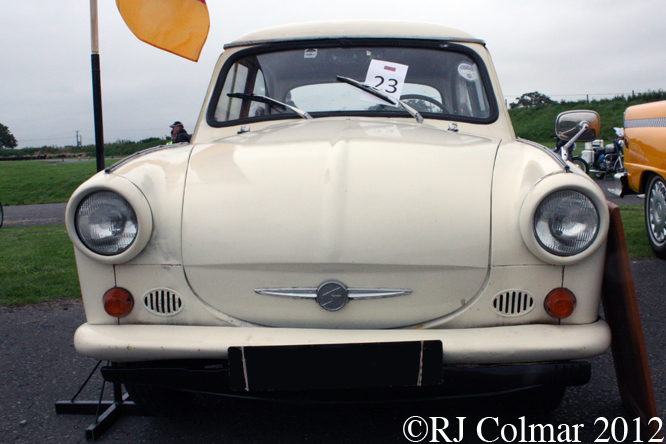
VEB Sachsenring Automobilwerke in Zwickau, Sachsen, East Germany was named after the Sachsenring race track and made use of manufacturing plants that had once belonged to Horsch and Audi before the 1939/45 war.

Trabant P60, Rare Breeds, Haynes International Motor Museum

East Germany’s need for agricultural equipment led VEB Sachsenring to making tractors before moving into the automobile market with a variety of water cooled 2 stroke and 4 stroke vehicles.

Trabant P60, Rare Breeds, Haynes International Motor Museum

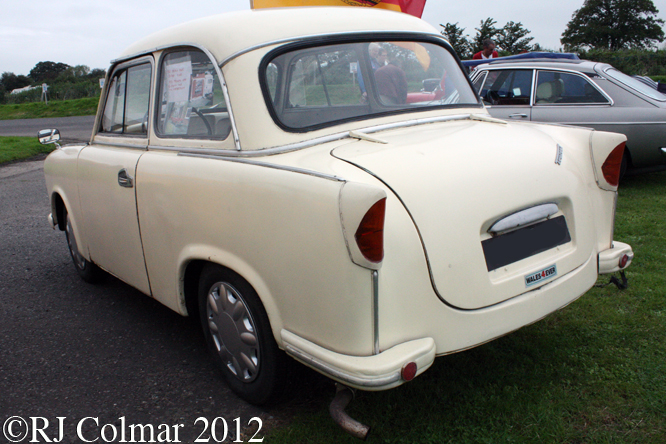
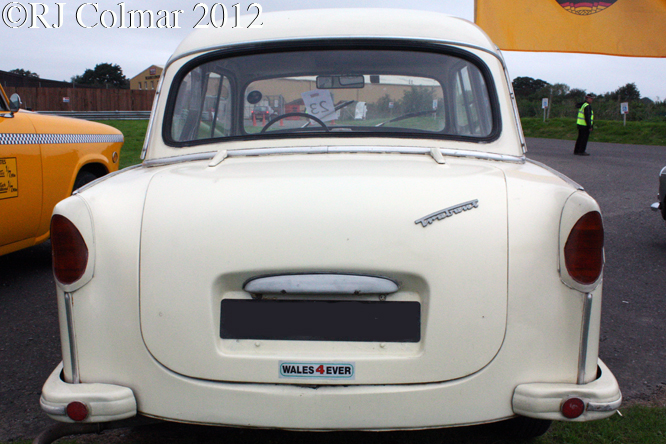
The P60 was the second Trabant to be powered by an aircooled 594 cc / 36 cui 2 stroke motor which produced no more than 20hp.

Trabant P60, Rare Breeds, Haynes International Motor Museum

Like all Trabants the petrol tank was mounted above the motor and used only gravity to feed the two stroke mixture to the engine. The fuel gauge was a piece of graduated wood which acted as a dip stick.

Trabant P60, Rare Breeds, Haynes International Motor Museum

This particular 1962 P60, seen at the Rare Breeds show held at Haynes International Motor Museum, was rescued in 1996 from atop a pile of cars in Gatebeck, Cumbria, after it had been scavenged for parts for another P60 that resided in the Isle of Man.

Trabant P60, Rare Breeds, Haynes International Motor Museum

P60’s were in production from 1962 to 1964 when they were replaced by the Trabant 601 that remained in production until 1991.

Thanks for joining me on this “Scavenged and Salvaged” edition of ‘Gettin a li’l psycho on tyres” I hope you’ll join me again tomorrow when I’ll be honoring the first man to record a 200 mph lap in an Indy Car. Don’t forget to come back now !

Share

Some Synchromesh – MG VA

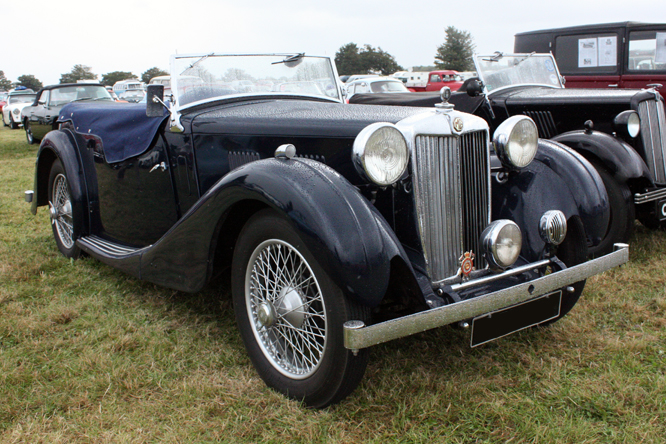
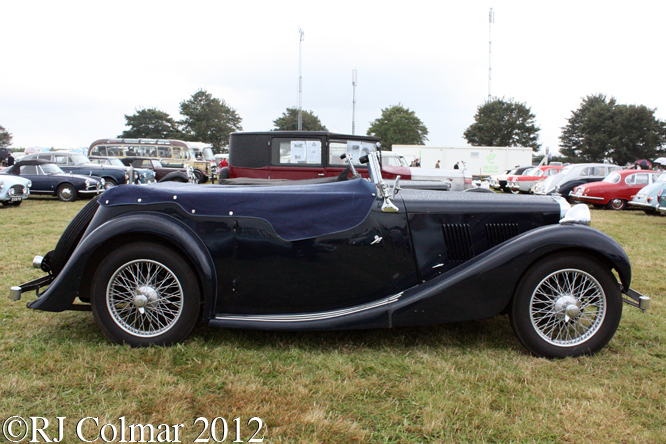
In 1937 the MG VA succeeded the MG N-type I looked at in last weeks MG Blog.

MG VA, Goodwood Revival

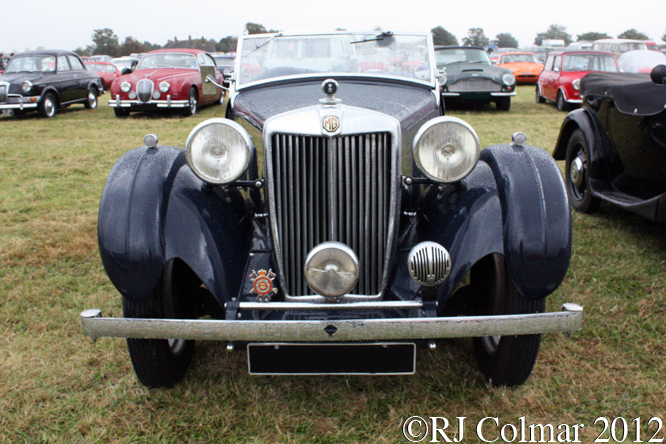
VA’s were fitted with a twin carburetor 54 hp 1548cc / 94 cui straight 4 motor that sans twin carburetors was shared with MG’s parent companies Morris 12 and Wolseley 12/48 models.

MG VA, Goodwood Revival

The motor was attached to a four speed gearbox some of which had synchromesh on the top two gears but most of which had synchromesh on the top three gears.

MG VA, Goodwood Revival

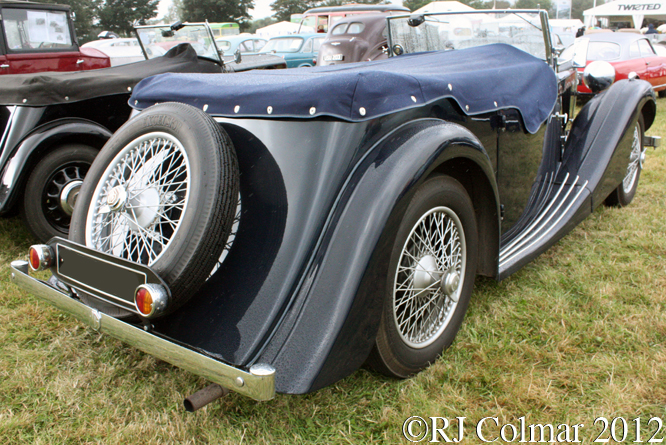
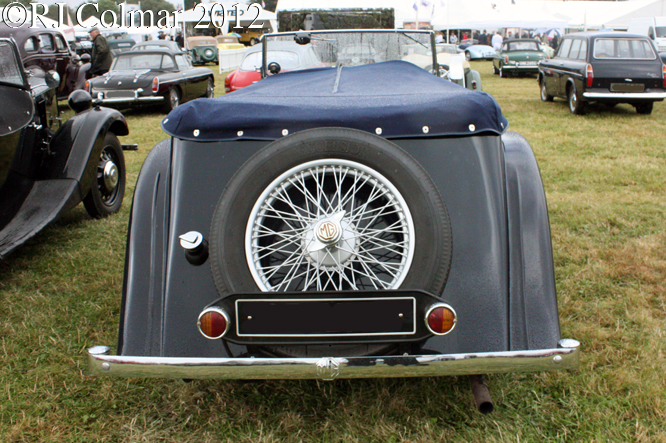
The VA was available with either four door saloon, 4 seat tourer, like the 1938 model seen here or drophead coupé bodies, further Tickford drophead Coupés and 4 seat tourers, distinguished by spare wheels mounted ahead of the passenger door were also offered.

MG VA, Goodwood Revival

With the windscreen folded down a tourer could accelerate to 50 mph in under 16 seconds and reach a top speed of over 80 mph.

MG VA, Goodwood Revival

MG ceased production of the VA in 1939 and it was replaced after the 1939/45 war by the Y-type in 1947.

Share

Annual Face Lift – Vauxhall Velox Series E Pick Up

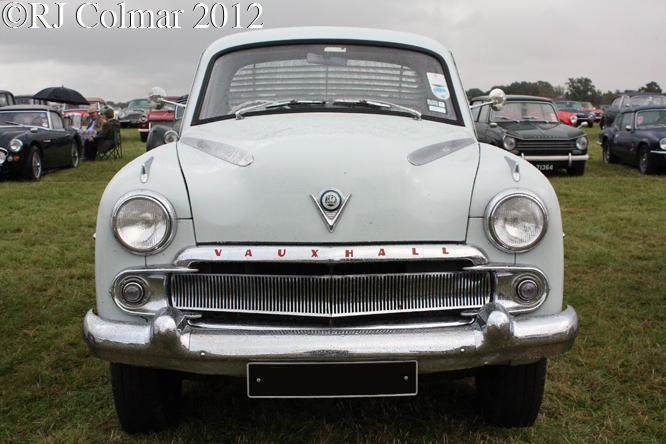
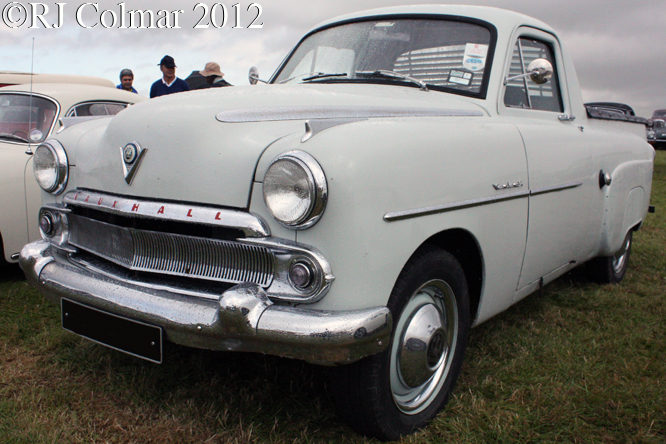
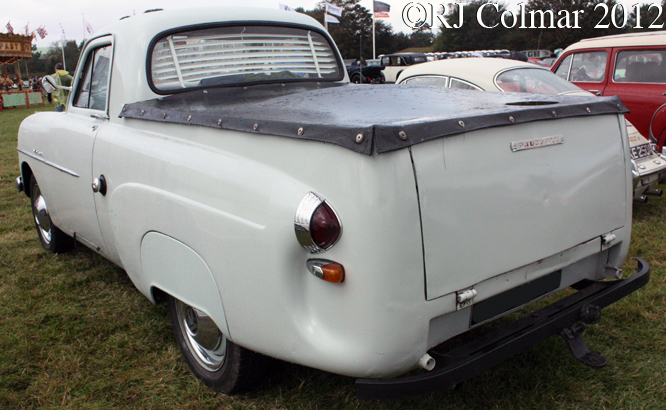
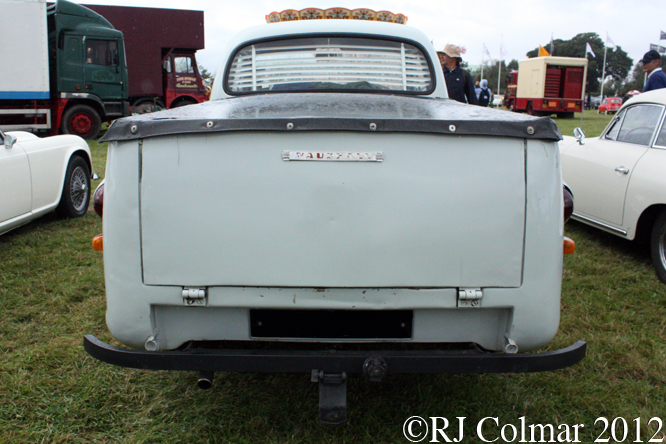
The Velox Series E was launched in 1951 with 4 door saloon/sedan, 2 door tourer and Coupé pick up versions.

Vauxhall Velox Pick Up, Goodwood Revival

In 1955 Vauxhall owners General Motors mandated annual face lifts for it’s Vauxhall models and the car seen here is a 1955 model with a less clumsy front grill than it’s predecessors.

Vauxhall Velox Pick Up, Goodwood Revival

Power came from a six cylinder motor that produced 64 hp or 68 hp if specified in high compression spec. Note the faux sculpted chrome bonnet trim, a throw back to Vauxhalls built in 1911.

Vauxhall Velox Pick Up, Goodwood Revival

Velox’s were assembled in Vauxhall’s home town of Luton, Australia and New Zealand. Utility pick ups were and are particularly popular in the farming communities of Australia where they were sold with Vauxhall badges by Holden.

Vauxhall Velox Pick Up, Goodwood Revival

The Series E Velox was phased out in 1957 to make way Velox and Cresta PA models introduced for 1958.

Thanks for joining me on this “Annual Face Lift” edition of “Gettin’ a li’l psycho on tyres” I hope you will join me for a look at an MG tomorrow. Don’t forget to come back now !
Share