General Belgrano – Toleman Hart TG 181C #06

Nearly thirty years ago, July 18th 1982, I had the privilege of taking a couple of day’s off from my summer job, at Golden Arch Foods where I was employed on the production line making 24,000 buns an hour for Ronald McDonald, to visit Brands Hatch for the British Grand Prix.
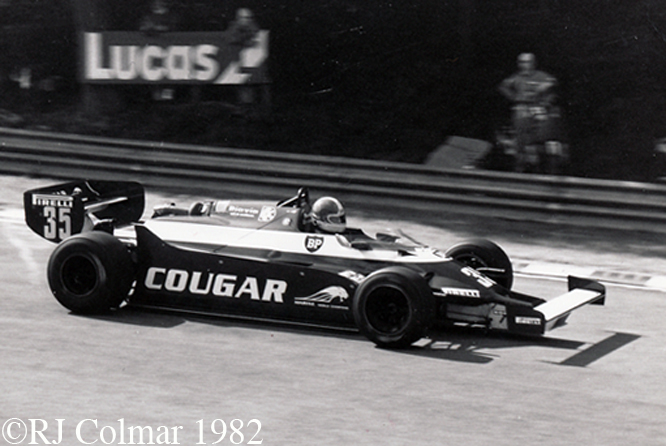
Toleman Hart TG 181C, British Grand Prix, Brands Hatch

Niki Lauda driving a McLaren starting from 5th on the grid easily won the race from the Ferrari 126 C2’s of Didier Pironi and Patrick Tambay who had both fought hard from their respective 4th and 13th place starts.

One of the best stories of the race however came from the fledgling Toleman Team which was founded in 1981. Their car was designed by a Formula One novice Rory Byrne who had designed many successful open wheel vehicles first with Royale who manufactured many Ford Kent and Pinto powered racers and then with Toleman in the the second tier Formula 2 who’s Hart powered cars dominated the European Formula 2 championship in 1980 with drivers Brian Henton, who was crowned champion, and Derek Warwick came second.

For 1981 Toleman and Brian Hart made the brave move to step up to Formula one with a car designed by Byrne and a turbocharged 1.5 litre / 90.5 cui 415T four cylinder motor which was a development of the Hart 420R 2 litre / 122 cui motor successfully used in Formula 2. The team ran with unfancied Pirelli tyres who were returning to the top tier of the sport after a prolonged absence of 32 years.

During the 1981 season Henton and Warwick each made 12 attempts at pre qualifying for Grand Prix races each missing the cut for qualifying just once at Monaco. However both drivers only qualified once Henton at Monza where he finished 10th and Warwick in the parking lot at Ceasers Palace where he retired.

For the 1982 season Henton opted out and moved to the Tyrrell team while Warwick, who used to be a regular competitor at Aldershot Raceway had won the World Super Stox Championship aged 16 in 1973, was joined by Formula One novice Teo Fabi who had finished third in the 1980 Formula 2 championship.

From 28 attempts to pre qualify in 1982 Warwick and Fabi both failed make the cut once with Warwick qualifying for 11 races and Fabi 7. Warwick managed to finish just two of his 11 starts with a best of tenth place in Germany equalling Henton’s best result at Monza the year before, while Fabi did not finish any of the races he started.

The hight light of the Toleman Teams 1982 season was however the British Grand Prix, having set fastest lap during the previous Dutch Grand Prix, Warwick qualified
16th and proceeded to march through the field with some breath taking maneuver’s during the race. Having worked his way passed Elio de Angelis in a Lotus, Derek Daly in a Williams he next set about attempting to get past the Ferrari of Pironi which proved a little more troublesome as both cars had similar performance thanks to their turbocharged motors however he eventually went past Pironi on the start finish ‘straight’, it’s actually a curve, out braking the Frenchman into the heart stopping paddock bend.

Now in second place Warwick set about catching Niki Lauda who was well ahead however after 40 glorious laps Warwick retired thanks to a broken CV joint in the back of his car, chassis #06, which had acquired the ‘General Belgrano’ nick name from the ancient Argentinian battleship that had been sunk in the 1982 Falklands Conflict. The next week the hitherto back marker and underdog was on the cover of all the magazines and Toleman, Byrne and Warwick began to enjoy some hard earned respectability.

Toleman started scoring points finishes in 1983 and were taken over by Benetton in 1986. Rory Byrne penned many winning cars for them including those driven to championship victories by Micheal Schumacher in 1994 and 1995. Byrne followed Schumacher to Ferrari after a retirement that became a sabbatical for the 1997 season.
Byrnes cars driven by Schumacher dominated the sport from 1999 to 2004 securing 71 victories and six constructors championships and five drivers championships before he retired for good in 2006.

Brian Henton driving his Tyrell got fastest lap at the 1982 British GP and retired from Formula One at the end of the season. Derek Warwick gained a reputation for never being in the right place at the right time in Formula One his best championship finish being 7th in 1984 when he drove for Renault. Derek was crowned World Sports Car Champion in 1992 when he also won the Le Mans 24 hours driving for Peugeot. His 1982 Toleman Team mate Teo Fabi was crowned 1991 World Sports Car Champion in 1991 driving a Tom Walkinshaw Racing (TWR) Jaguar.

Thanks for joining me on this “General Belgrano” edition of “Gettin’ a li’l psycho on tyres”, I hope you will join me again tomorrow. Don’t forget to come back now !

Share

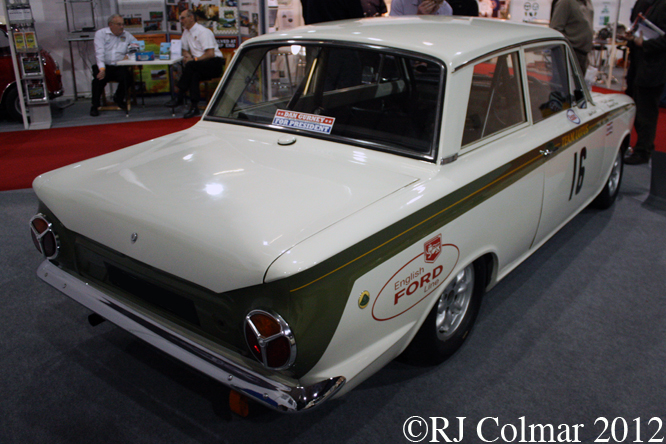
The English Ford Line – Lotus 28 #17

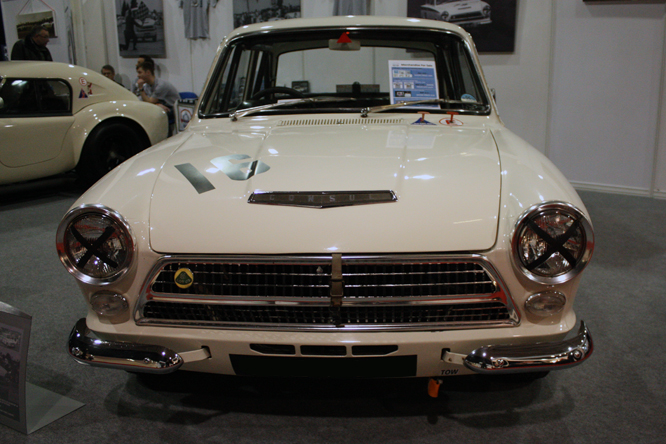
I first featured a Ford Consul Cortina by Lotus, Lotus Type 28, just over a year ago and believe the model is worth a second look today because the car featured here is thought to be the 17th of 1000 that were originally scheduled to be built.

Ford Consul Cortina by Lotus, Race Retro

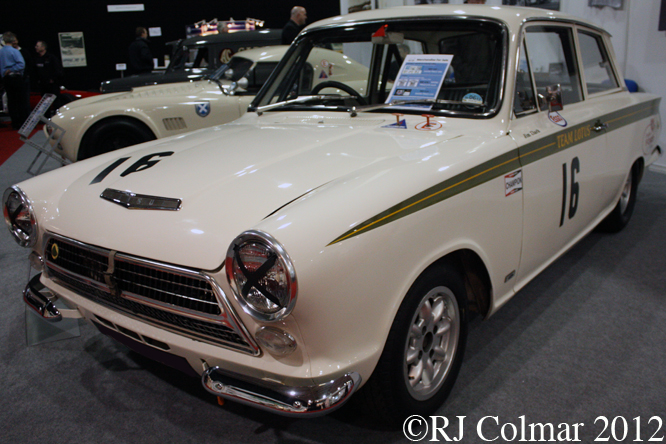
Furthermore this car registered ‘166 RUR’ is the first, of a team of twelve works Team Lotus racers, that was built in 1963.

Ford Consul Cortina by Lotus, Race Retro

“166 RUR’s” racing career started at Oulton Park on the 20th September 1963 with inaugural, 1958, British Saloon Car Champion Jack Sears at the wheel. This ‘Lotus Cortina’ along with an earlier Ford Cortina GT and Ford Galaxie helped Jack become the British Saloon Car Champion for a second time in 1963.

Ford Consul Cortina by Lotus, Race Retro

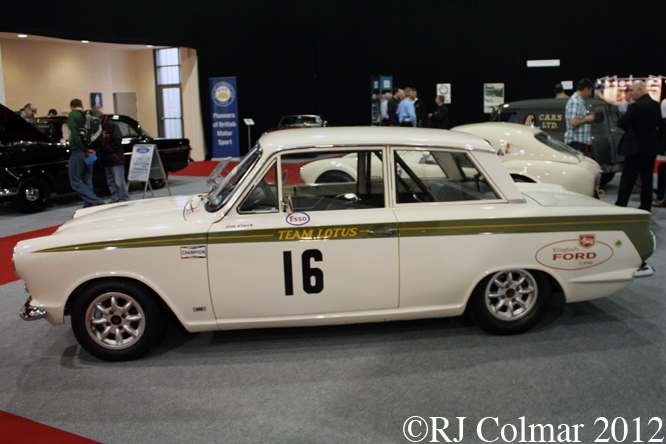
The week after “166 RUR’s” debut 1963 World Driver Champion Jim Clark took over the wheel at Snetterton, Jim would become the 1964 British Saloon Car Champion driving Works Lotus Cortina’s.

Ford Consul Cortina by Lotus, Race Retro

This cars next appearance was as a part of “The English Ford Line” team entered for the Sebring “250” on the 22nd March 1964 with Dan Gurney at the wheel. Dan came in 16th while Clark in the sister team car came home third behind Augie Pabst, driving a Galaxie, and Walt Hangsen driving a Falcon Sprint.

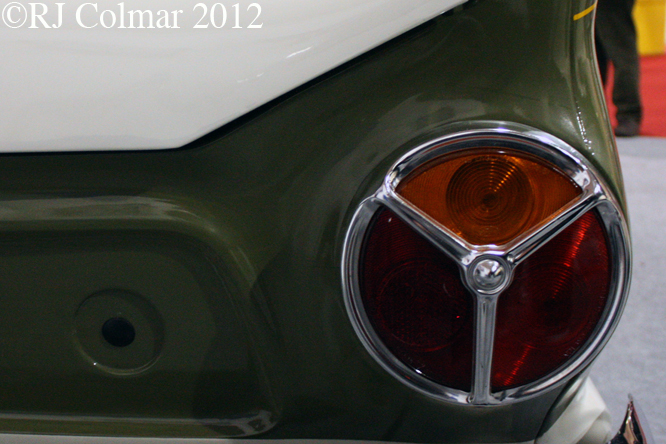
Ford Consul Cortina by Lotus, Race Retro

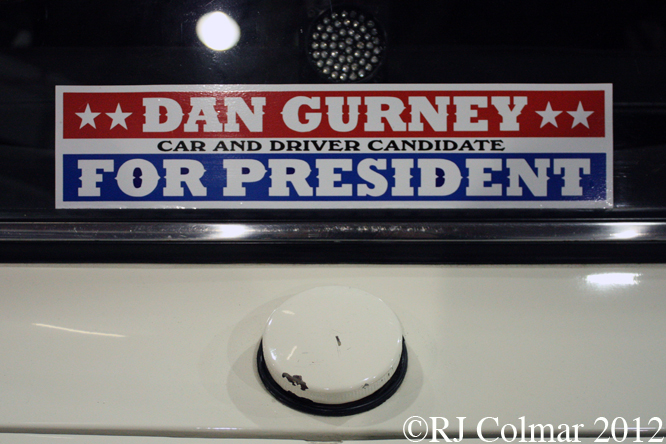
Dan Gurney’s 1964 presidential campaign started by Car and Driver Editor David E. Davis Jr did not get under way until May 1964, just over a month after Dan drove this car.

Ford Consul Cortina by Lotus, Race Retro

A variety of drivers continued to campaign “166 RUR” through 1964 including Sir John Whitmore winner at Pensacola, Grand Prix driver Peter Arundell, 6th at Riverside, abd towards the end of the year future TV pundit David Hobbs shared the car with Dave Clark, no relation to Jim, for a 9th place finish in the Marlboro 12 hours in Virginia.

Thanks for joining me on this “The English Ford Line” edition of “Gettin’ a li’l psycho on tyres” I hope you will join me again tomorrow. Don’t forget to come back now.

Share

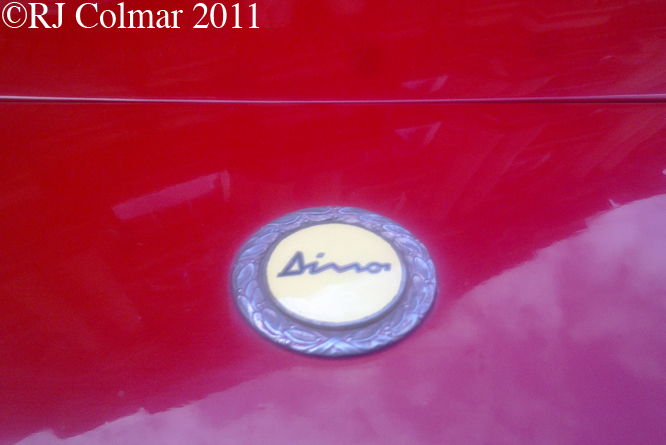
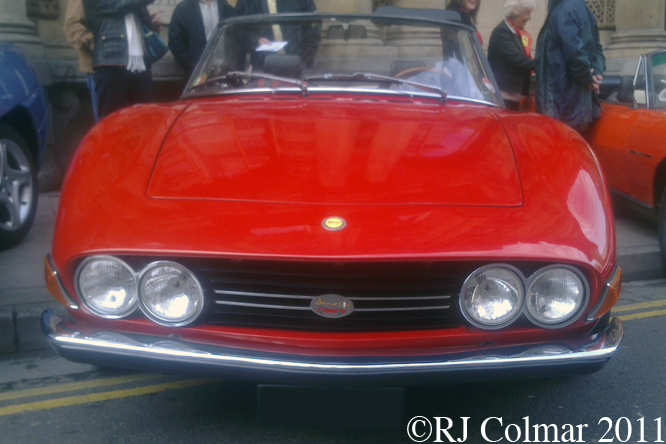
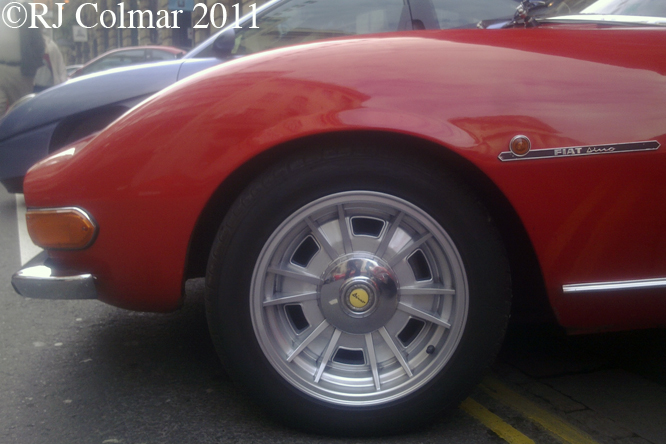
When Is A FIAT A Ferrari ? – FIAT Dino 2.4 Spider

With sales volumes falling production of the FIAT Dino Coupé and Spider was moved from FIAT’s production facilities in Turin to Ferrari’s at Maranello in 1969.

FIAT Dino 2.4 Spider, Bristol Italian Auto Moto Festival

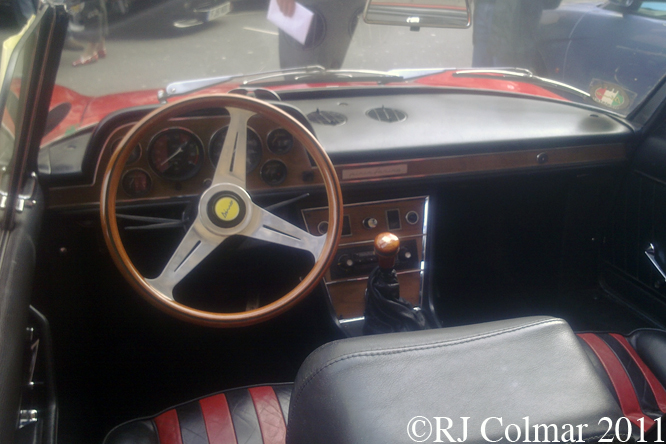
Amongst the changes to the specifications of the Maranello built FIAT Dino’s was an engine upgrade to the larger 178 hp 2.4 litre / 146 cui version of the Dino V6.

FIAT Dino 2.4 Spider, Bristol Italian Auto Moto Festival

An iron block replaced the aluminium block of the smaller motor but aluminium heads were retained. Curiously although the FIAT and Ferrari, as used in the mid engined Dino 206 & 246 GT’s, motors all came from the same production line in Turin Ferrari always liked to quote higher hp figures for ‘his’ motors than FIAT.

FIAT Dino 2.4 Spider, Bristol Italian Auto Moto Festival

The FIAT Dino’s Girling disc brakes are said to be interchangeable with those fitted to the de Tomaso Pantera and Lamboughini Miura.

FIAT Dino 2.4 Spider, Bristol Italian Auto Moto Festival

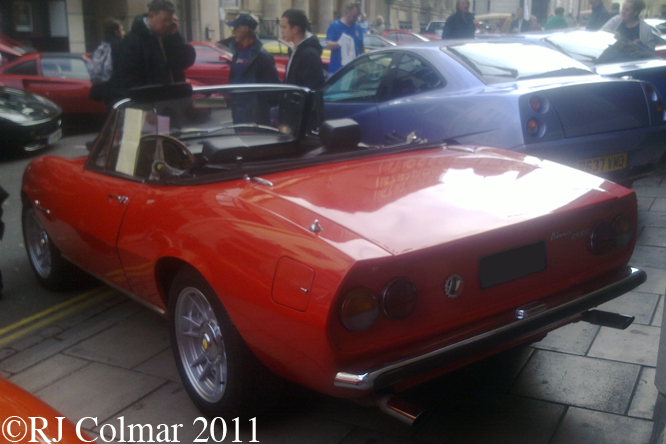
With the Pininfarina bodied FIAT Spider being built along side the Pininfarina bodied 246 GTS there was not much to tell the two vehicles apart for anyone except the FIAT marketing department. Of the two models the FIAT Dino Spider with only 424 examples built is the rarer against 1,274 Ferrari Dino GT Spiders.

FIAT Dino 2.4 Spider, Bristol Italian Auto Moto Festival

When production of the FIAT Dino Spider moved to Maranello the original live axle and leaf spring rear suspension was replaced with a coil sprung independent rear suspension which shares much in common with the FIAT 130.

Today’s featured 1970 model, seen at last years Bristol Italian Auto Moto Festival was acquired as a non runner in 1987 and has been gradually restored ever since.

Thanks for joining me on this “When Is A FIAT A Ferrari” edition of “Gettin’ a li’l psycho on tyres, I hope you will join me again tomorrow. Don’t forget to come back now !
Share

Formula One Wheels – Shadow Mk II

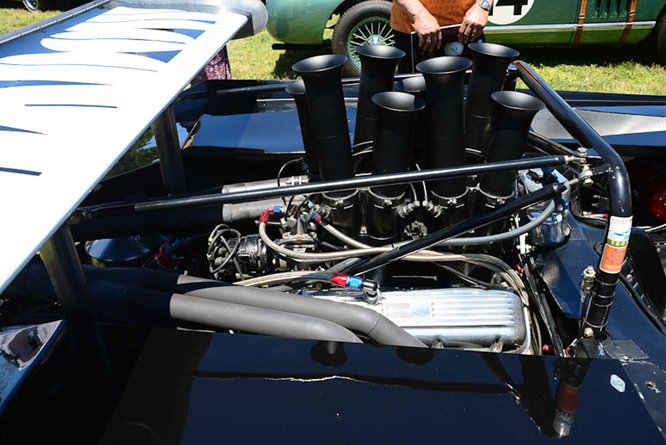
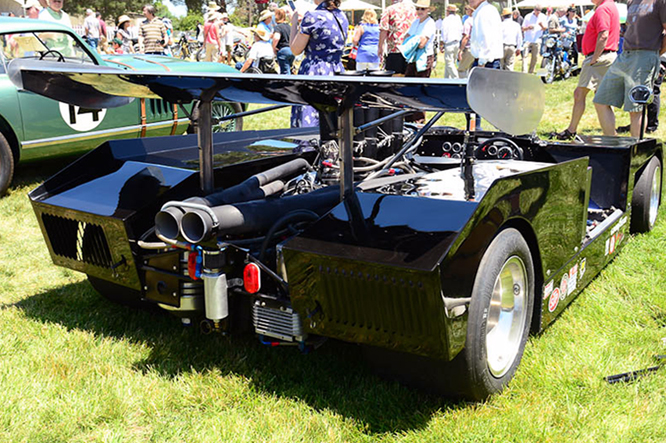
A couple of weeks ago I was delighted to receive today’s featured photo’s from Geoffrey Horton of a Shadow Mk II , a vehicle that had been built for Jackie Oliver to drive in the 1971 Can Am Series.

Shadow Chevrolet Mk II, Marin Sanoma Concours d’ Elegance

The story of the Shadow racing team begins with an orphan Don Nichols who as a child was influenced by The Shadow radio series, after service in the ’39 – ’45 war and a career in military intelligence Don appears to have gravitated to the world of motor racing supplying American tyres to the Japanese racing fraternity during the 1960’s.

Shadow Chevrolet Mk II, Marin Sanoma Concours d’ Elegance

In 1970 Don founded Advanced Vehicle Systems which built a red vehicle notorious for it’s tiny size and wheels designed by Trevor Harris called the Shadow Mk I. The car qualified well with first George Folmer and then Vic Elford at the wheel, but was hampered with a 100% unreliability record not finishing any races.

in 1969 Peter Bryant had designed and entered his titanium chassised Ti 22 Can Am car which Jackie Oliver had been qualifying even better, than the Shadow, ever since it was first seen and managed two 2nd place finishes in 1970.

Shadow Chevrolet Mk II, Marin Sanoma Concours d’ Elegance

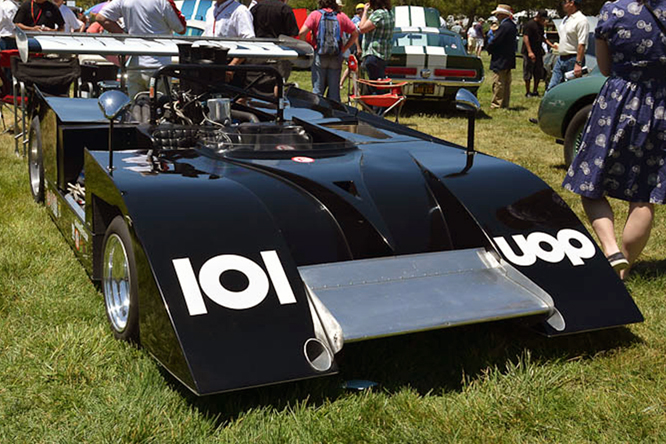
Bryant ran out of funds for the Ti 22 and both he and Jackie Oliver joined Don Nichols for the 1971 season. Don was keen that Peter keep the frontal area of the Shadow Mark II to a minimum and so the Mk II was designed around Formula One size wheels and tyres which were smaller than those ordinarily found in Can Am.

Powered by a 8.1 litre / 494 cui Chaparral prepared Chevrolet V8 Jackie scored a best third place finish at Edmonton when the car appeared painted white with black lettering on all the upward facing surfaces except the rear wing. Jackie used chassis Mk II #1 through out the 1971 season.

Shadow Chevrolet Mk II, Marin Sanoma Concours d’ Elegance

As we shall see next week Peter Bryant was responsible for designing the 1972 Shadow MK III and Jackie for driving it. What I did not know until recently was that Advanced Vehicle Systems built three Mk II monocoque tubs and that all three were used to build the Shadow Mk III which ran on full size Can Am tyres.

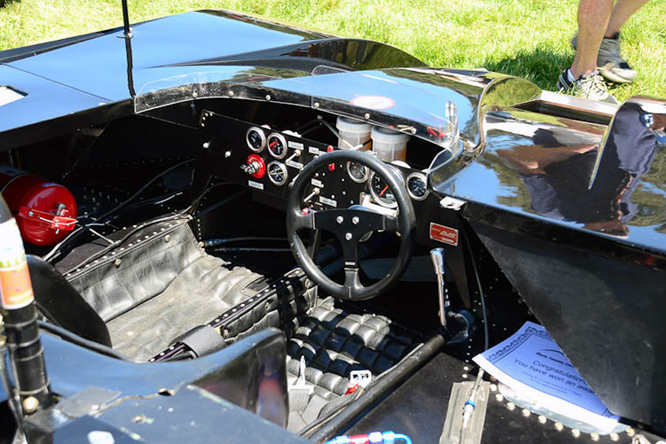
In 2009 Don Nichols sold off the chassis, seen here at Marin Sanoma Concours d’Elegance where it won it’s class, which is actually the third chassis that was only ever raced in Mk III specification. Mr Losher the owner decided, that as the first two chassis are still in 1972 Mk III spec, he would build his up to the older 1971 Mk II Formula One wheel spec.

My thanks to Geoffrey Horton for sending me these photographs.

Thanks for joining me on this “Formula One Wheels” edition of “Gettin’ a li’l psycho” on tyres”, next week I’ll be looking at the Shadow Mk III on Americana Thursday, meantime I hope you will join me for another edition of Ferrari Friday tomorrow. Don’t forget to come back now !
Share

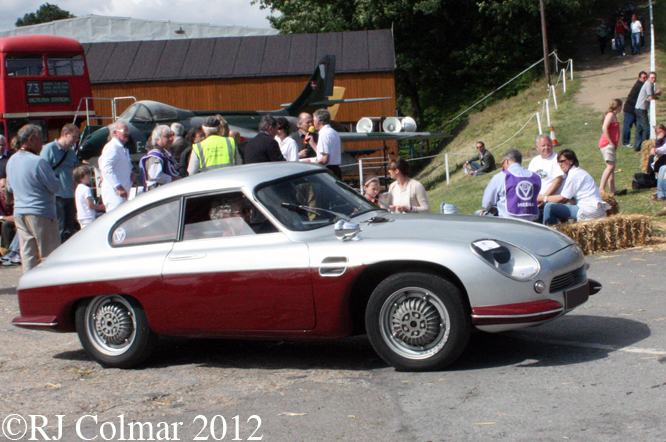
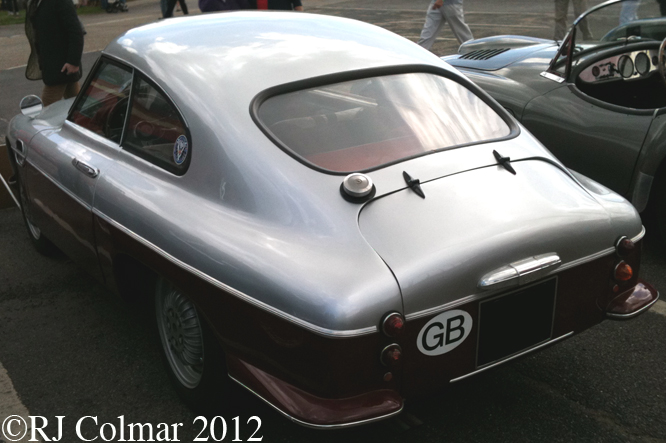
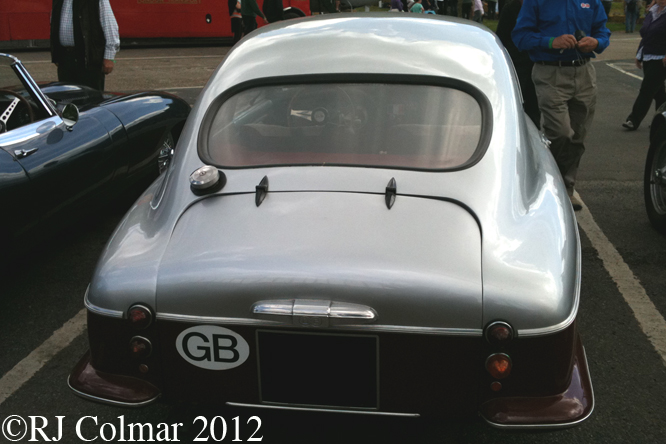
Derelict & Abandoned In Pennsylvania – DB Panhard HBR 5 #1004

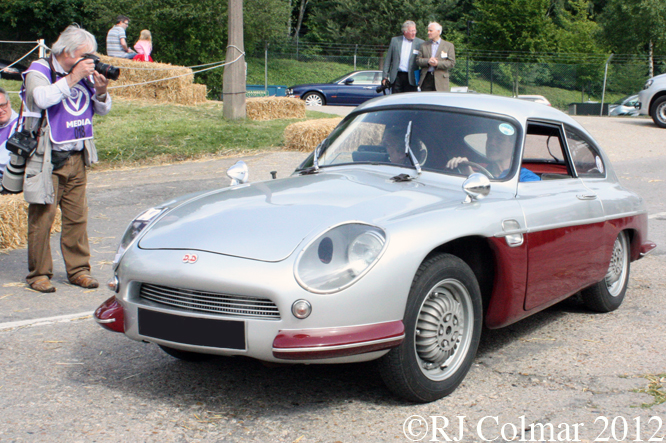
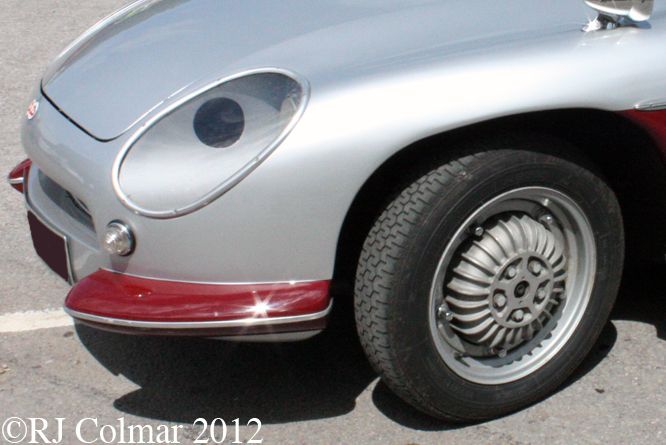
It’s hard to believe that nothing is known about this DB (Deutsch Bonnet) HBR 5, seen at Brooklands a few weeks ago, between it’s export from France to the USA in 1959 until it’s discovery derelict and abandoned in Pennsylvania in 1982.

DB Panhard HBR 5, Brooklands Double Twelve

After restoration to racing spec in 1985 it was shown and raced regularly until 1991 and then stored until 1999.

DB Panhard HBR 5, Brooklands Double Twelve

The current owner acquired it in 2001 and restored it to European road legal condition by 2005.

DB Panhard HBR 5, Brooklands Double Twelve

HBR 5’s were manufactured between 1954 and and 1961. The 850 cc / 51.8 cui 2 cylinder Panhard motors sourced from the Panhard Dyna Z was upgraded from 42 hp to 58 hp spec by René Bonnet.

DB Panhard HBR 5, Brooklands Double Twelve

The upgraded Panhard motor which could be taken up to 6500 rpm when combined with the slippery Charles Deutsch designed body produced a vehicle capable of 140 mph though acceleration was rather leisurely with a rest to 62 mph time of 21.5 seconds.

DB Panhard HBR 5, Brooklands Double Twelve

Available as Coupé’s, Convertibles or outright racers the DB HBR 5 had a long competition career winning it’s class in the Mille Miglia, Le Mans and Sebring multiple times.

Thanks for joining me on this “Derelict & Abandoned In Pennsylvania” edition of “Gettin’ a li’l psycho on tyres” I hope you will join me again tomorrow when I’ll be looking into the shadow’s on Americana Thursday. Don’t forget to come back now !

Share

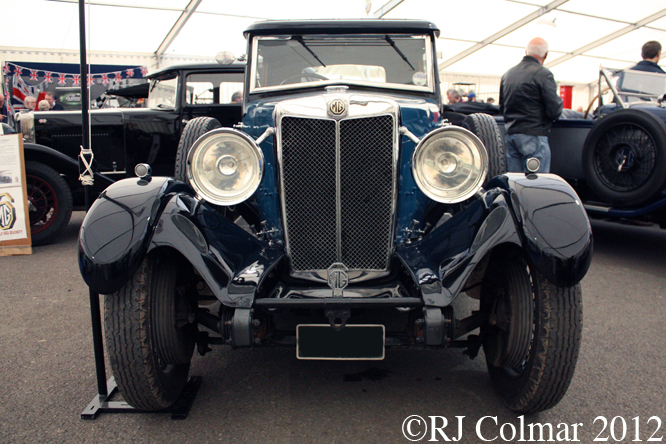
Last Known Survivor – MG 18/80 Six deluxe Saloon MkII

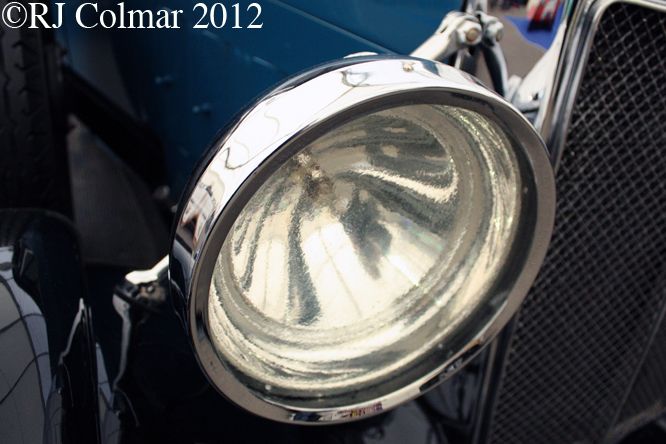
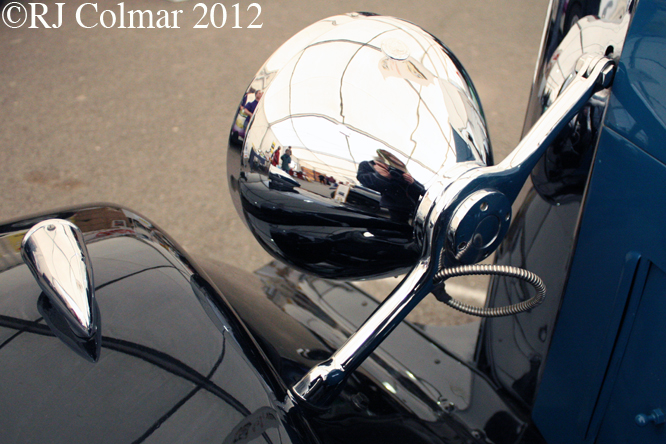
Between 1930 and 1932 MG built 236 18/80 Mk II’s with heavier frames and softer springs than the earlier Mk I’s which eventually replaced the Mk I which had been manufactured between 1928 and 1931.

MG 18/80 Six deluxe Saloon Mk II, Bristol Classic Car Show

Of those 236 Mk II’s 50 were deluxe Saloons.

MG 18/80 Six deluxe Saloon Mk II, Bristol Classic Car Show

Only 25 18/80 Six Mk II’s are known to exist, one of them is the prototype featured here a couple of weeks ago which now has a later Tigress style body, and another is the Six Saloon featured last week.

MG 18/80 Six deluxe Saloon Mk II, Bristol Classic Car Show

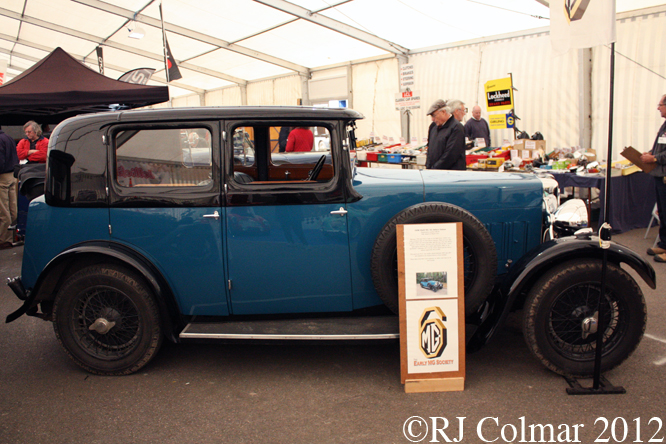
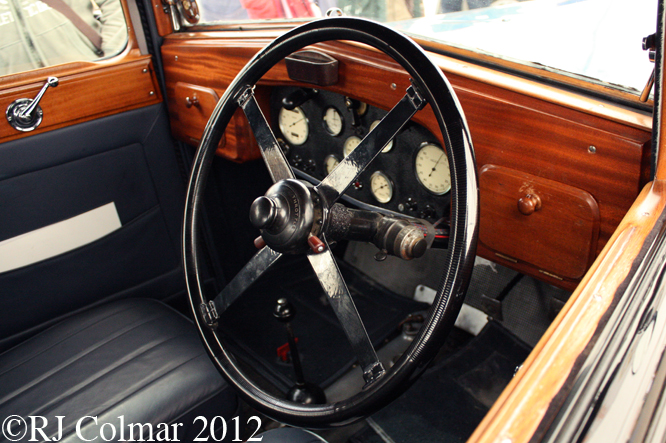
Today’s featured 1931 model is the only known top of the range 18/80 Six deluxe Saloon Mk II known to exist.

MG 18/80 Six deluxe Saloon Mk II, Bristol Classic Car Show

It was completely rebuilt between 2005 and 2007 and restored to it’s original factory colour scheme.

MG 18/80 Six deluxe Saloon Mk II, Bristol Classic Car Show

Since restoration it has been regularly used on rallies and tours of Europe.

Thanks for joining me on this “Last Known Survivor” edition of “Gettin’ a li’l psycho on tyres”, next week I’ll be rounding out the recent Tuesday features on early MG’s with a look at the oldest MG known to exist, meantime I hope you will join me for a continental curiosity tomorrow. Don’t forget to come back now !
Share

Classic & Sports Car Action Day – Castle Combe

On Saturday David Roots kindly invited me to join him and the Bath & West Car Club for the Classic and Sports Car Action Day at Castle Combe.

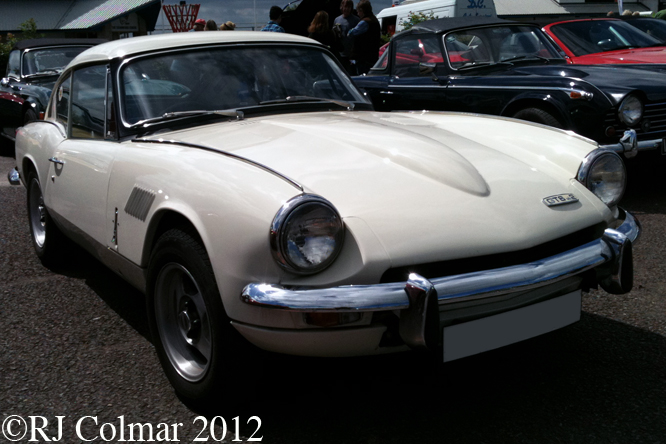
Triumph GT6 MkII, Castle Combe C&SCAD

Among the cars on display was this Triumph GT6 MkII which reminded me that GT6 enthusiast Hazen Wardle is soon to release the third of his Reche Plimpton, The Triumph Detective stories.

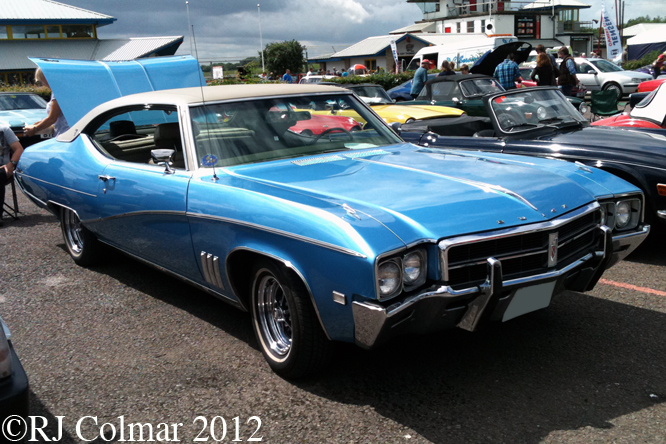
Buick Skylark, Castle Combe C&SCAD

With out a doubt car of the show for me was this third Generation 1969 Buick Skylark, with the post modern descending curved chrome that harks back to an all together different age of motoring before the use of unitary bodies became commonplace.

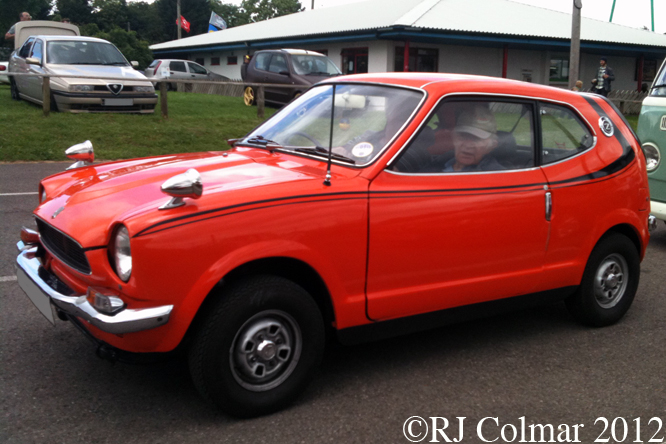
Honda Z600, Castle Combe C&SCAD

The 1972 Honda Z600, from the Honda S800 Sports Car Club, preparing to take part in the on track parade above predated the Honda Civic range and is powered by 36 hp 598cc / 36.4 cui two cylinder single overhead cam motor that could be taken up to 9,000 revolutions per minute and was recorded as capable of using less than 130 mpg (imperial) at a steady 30 mph.

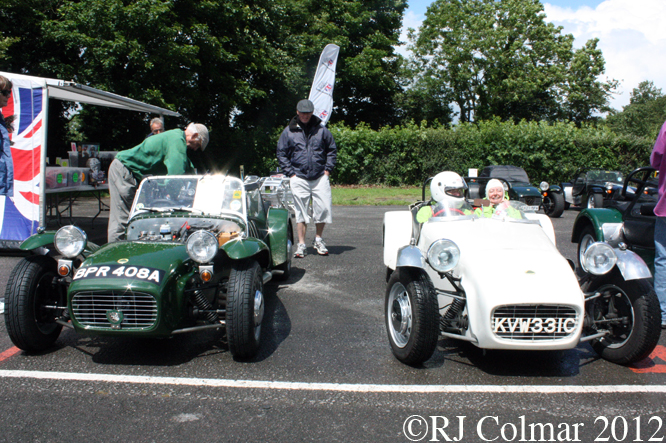
Lotus Seven S2, Castle Combe C&SCAD

The Lotus Seven Club were in attendance in large numbers, above two Lotus Seven S2’s one of which was the feature on my regular Lotus blog on Saturday.

Bobbies, Castle Combe, C&SCAD

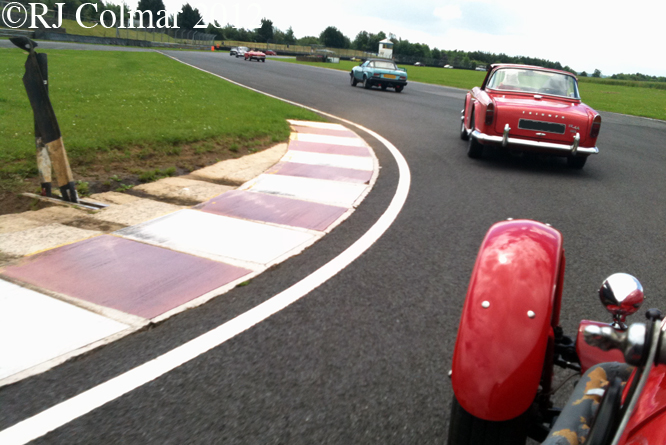
Despite his far better judgement David kindly took me round Castle Combe on the parade laps, here we are passing through the Bobbies Chicane.

Lotus Esprit Sport 350, Castle Combe, C&SCAD

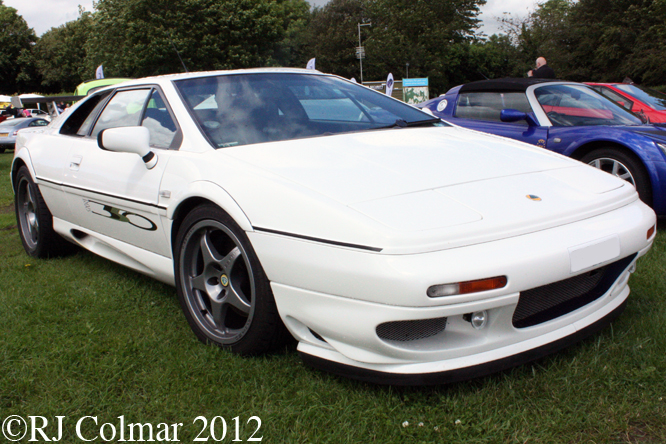
Coming all the way from Wales in the Club Lotus (South Wales) area was this 2000 Lotus Esprit Sport 350, the final iteration of the Esprit line of which just 50 were manufactured.

Lotus Carlton, Castle Combe, C&SCAD

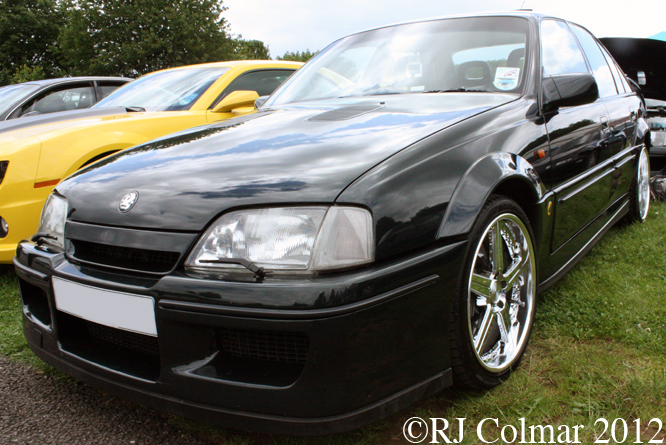
Four years after acquiring Lotus, GM handed Lotus the task of upgrading the mundane Vauxhall Carlton, The 177 mph Lotus, Type 104, Carlton was the result, capable of reaching 60 mph in just 5.2 seconds with the aid of twin turbochargers, Corvette Z1 gearbox and Holden rear limited slip differential. This was a Q car of the first order, very popular with both police forces and security services when helicopters and light planes were in short supply. All Lotus Carlton’s and Lotus Omega’s, for the European Market, were painted a shade of green so dark it looks black in all but the strongest sunlight.

Dacia Duster, Castle Combe, C&SCAD

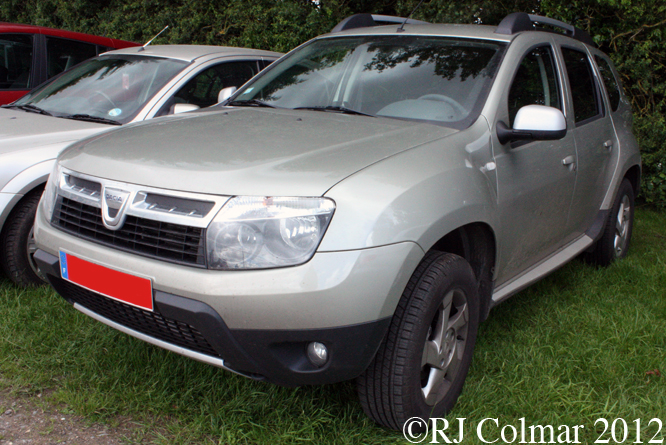
We don’t see too many Romanian built Dacia’s in the UK and when we do they are usually on Romanian plates so it was a surprise to see this Dacia Duster on French diplomatic plates. The Dacia Duster is based on a Nissan platform and running gear with 2 and 4 wheel options available, they are priced to compete with second hand cars. Expect to see a Dacia powered by an 850 hp Nissan GTR motor on Pikes Peak in the not too distant future.

Volvo 850, Castle Combe, C&SCAD

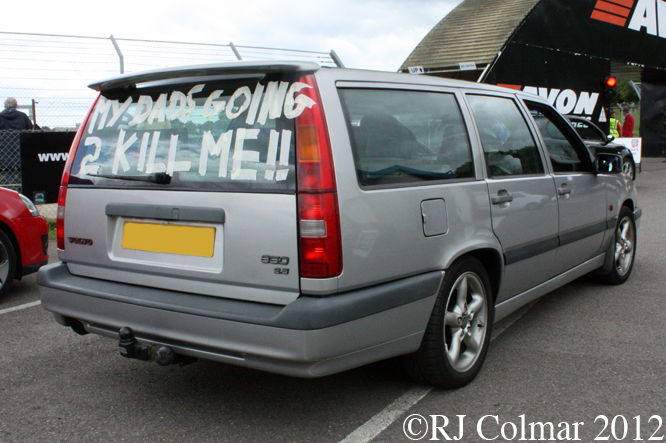
Looks like someone borrowed a 1996 Volvo 850 while Dad was still asleep last Saturday morning.

Bedford Rascal, Castle Combe, C&SCAD

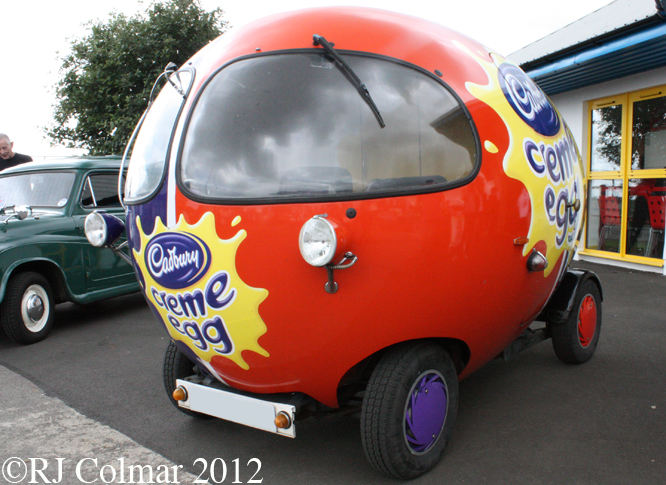
There used to be an advertisement on British TV that advised us to go to work on an egg, this Cadbury’s cream egg was built on a 1995 Bedford Rascal Microvan.

Marcos Owners Club, Castle Combe, C&SCAD

Marcos which used to be based in Bradford upon Avon in Wiltshire used to be one of several local car manufacturers during the 1960’s and 1970’s prior to moving to Kenilworth in 1981, following insolvency in 1972. So it was no surprise to see a strong showing from the Marcos Owners Club.

Victory Car Club, Castle Combe, C&SCAD

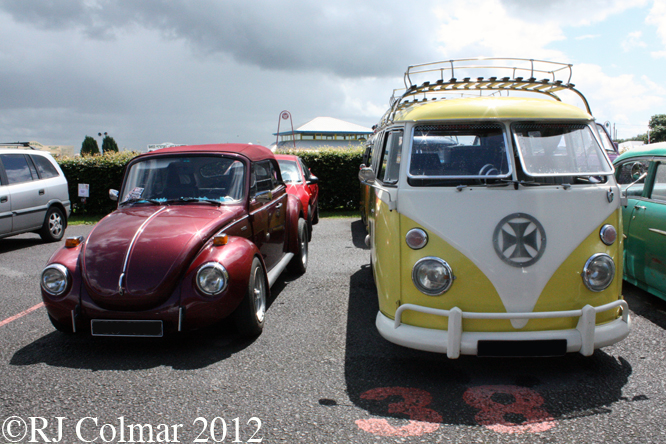
The 1972 Beetle Cabriolet and 1964 VW Type 2 show that my own ’99 Golf Mk IV still has an achievable if long way to go before becoming a classic !

Thanks for joining me on this “Classic & Sports Car Action Day” edition of “Gettin’ a li’l psycho on tyres” I hope you will join me again tomorrow. Don’t forget to come back now !
Share