43rd Wedding Anniversary – Dana Point Concours d’Elegance

Such is the inclement weather here at GALPOT Towers that when my landlady asked for a theme for her 50th Birthday Party I had no hesitation when I suggested having a Diving Suit Party, dry wit after all is an Englishman’s stock in trade, so it’s always a pleasure to receive photo’s from Geoffrey Horton’s adventures in the sunny world of the California Concours d’Elegance scene.

Dana Point, California

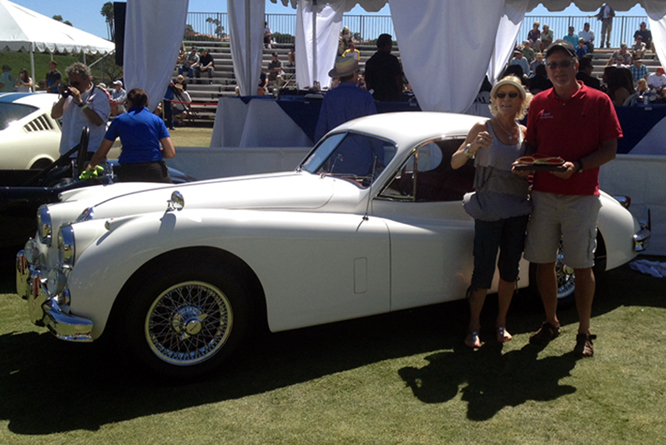
Above is Dana Point where Geoffrey and his wife Gayle spent the weekend celebrating their 43rd Anniversary a couple of weeks ago.

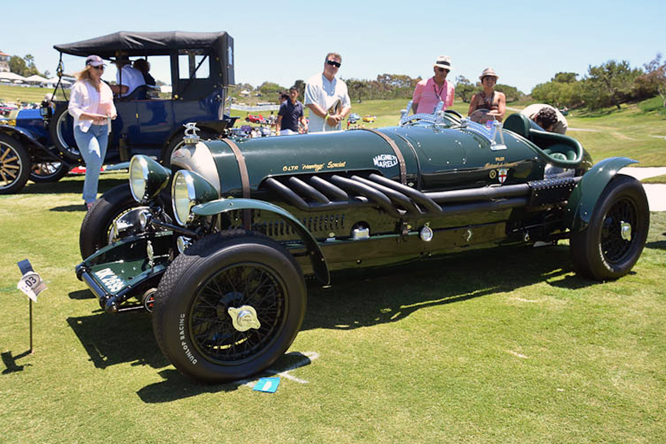
Bentley Hawkeye Special, Dana Point Concours d'Elegance

During their stay they entered their Jaguar XK140 FHC SE in the Concours d’Elegance in which this 8 litre / 488 cui 1924 Bentley Hawkeye Special was also taking part.

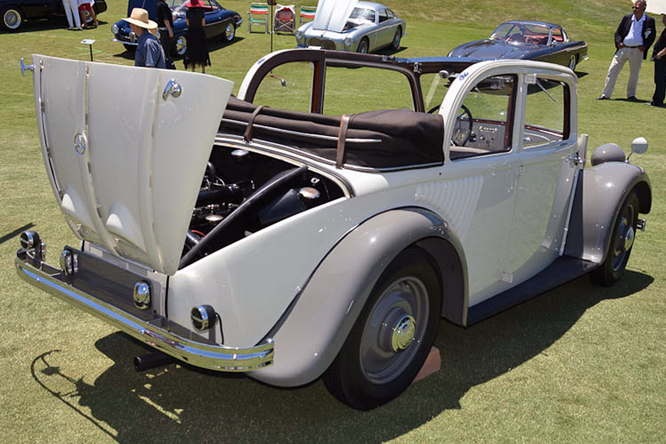
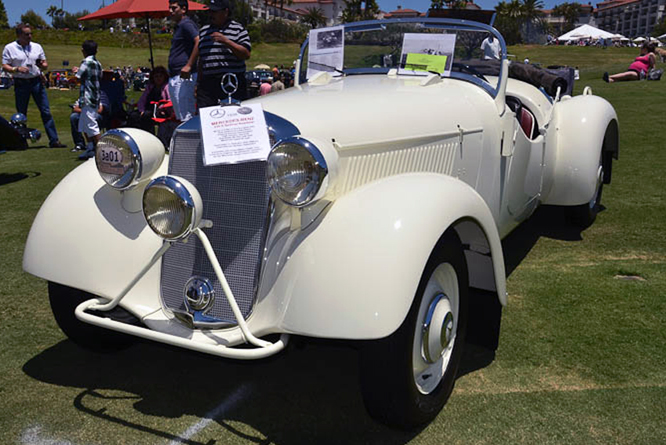
Mercedes Benz 130 Cabrio Limosine, Dana Point Concours d'Elegance

Among the Mercedes Benz vehicles entered was this 25 hp rear engined 1935 130 H Cabrio,

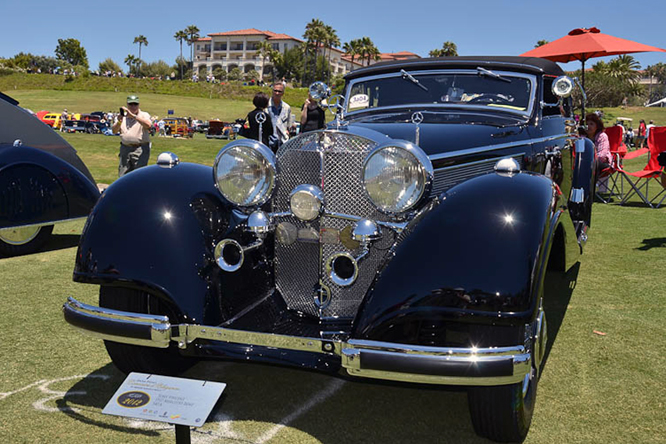
Mercedes Benz 540 K, Dana Point Concours d'Elegance

and class winning 1937 540K W24 Roadster with up to 180 supercharged hp capable of reaching 110 mph.

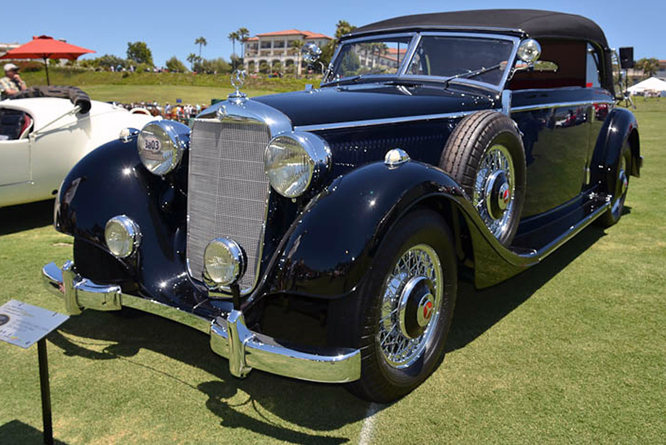
Mercedes Benz 320 Cabriolet B, Dana Point Concours d'Elegance

Marginally more modest from 1937 was this 320 Cabriolet B W124 similar to the four door type used as German military staff cars in films including The Great Escape, The Longest Day, The Train and Schindler’s List.

Mercedes Benz 230 S / W153, Dana Point Concours d'Elegance

The Mercedes Benz 230S W153 above was developed for taking part in trials and rallies, hence the unusual bumpers which feature front and rear designed for co drivers to stand on should a redistribution of weight be required to aid traction or steering. Only 52 of these cars were ever built.

Kurtis 500M Roadster, Dana Point Concours d'Elegance

Leaping into the post ’39-’45 War era I believe this 1953 Kurtis 500M has appeared in a previous GALPOT post, I find it’s chunky styling even more appealing from the rear.

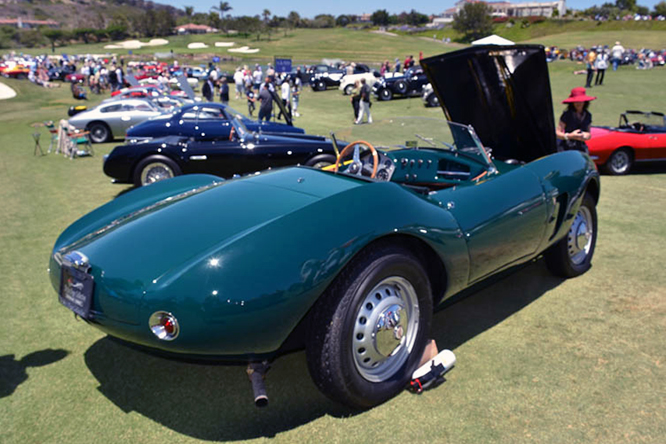
Arnolt Bristol, Dana Point Concours d'Elegance

Like wise an Arnolt Bristol has appeared on these pages before, the green example above is from the final 1959 year of production which totaled just 200.

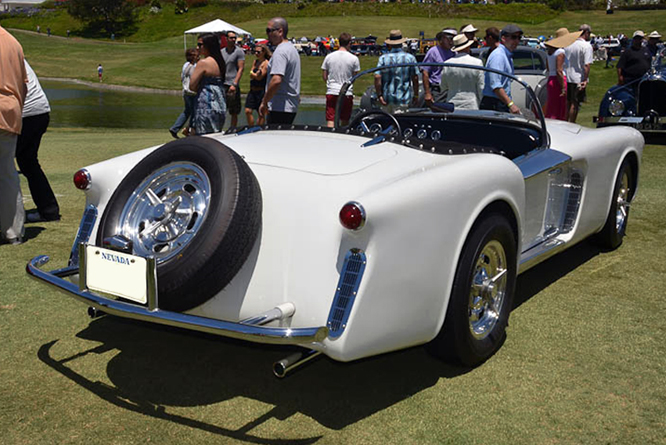
Chevrolet Corvette Italia by Scaglietti, Dana Point Concours d'Elegance

Only three Chevrolet Corvette Italia’s were built in 1959 with coachwork by Scaglietti in Italy. The idea for the car was born out an expensive to replace Ferrari crankshaft required by Gary Laughlin who turned to Jim Hall and Carroll Shelby to help in realise an exotic hand built car with affordable and reliable mechanical components. The example, above, owned by the Peterson Automotive Museum is the only one of the three built with a manual transmission.

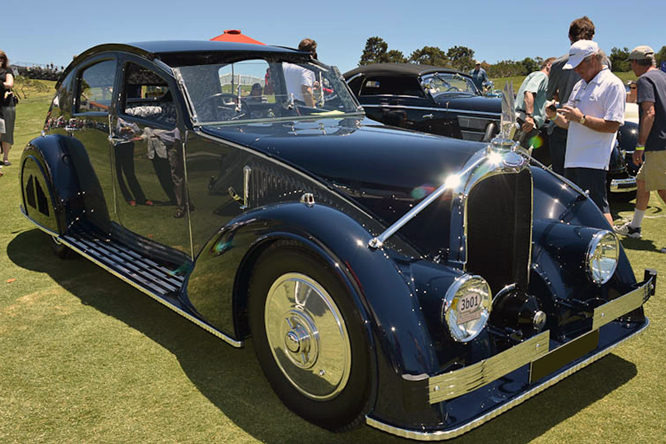
Voisin C-25 Aerodyne, Dana Point Concours d'Elegance

Not for the first time this 1934 Voisin C-25 Aerodyne, from the Mullin Automotive Museum, won the best in show award, it won at Pebble Beach last year too ! Among it’s novel features are a radial engine as used more commonly in aircraft, and a pneumatically operated retractable roof.

Jaguar XK140 FHC SE, Dana Point Concours d'Elegance

Finally I hope you will join me in congratulating Geoffrey and Gayle not only on their 43rd wedding anniversary but also on winning their class at the Dana Point Concours d’Elegance with the faithful Jaguar XK140 FHC SE that has been a part of their lives for 26 years.

My thanks to Geoffrey for his photographs.

Thanks for joining me on this “43rd Wedding Anniversary” edition of “Gettin’ a li’l psycho on tyres” I hope you will join me again tomorrow. Don’t forget to come back now !

Share

I Am Not A Number – Lotus Super Seven 1500 Cosworth #SB1688

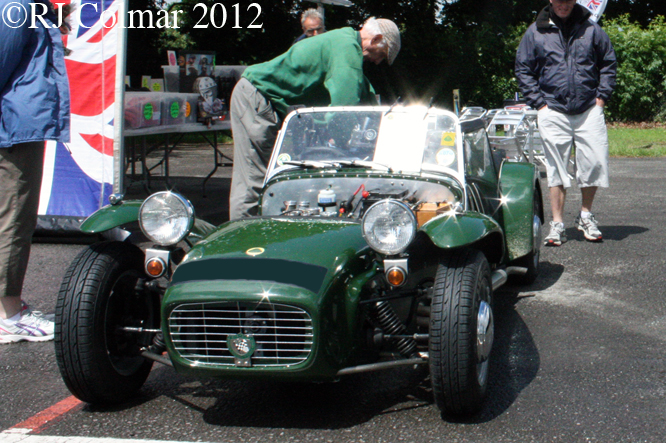
Series 2 Lotus Sevens were introduced in June 1960 and remained in production until August 1968, they could be ordered either ready made or as complete knockdown kits (CKD’s). In order not to attract purchase tax the CKD’s were not allowed to be sold with instruction manuals on how to assemble the car. Ever the genius Colin Chapman sold his CKD’s with instructions on how to ‘disassemble’ his CKD’s.

Lotus Super Seven 1500 Cosworth, Castle Combe C&SCAD

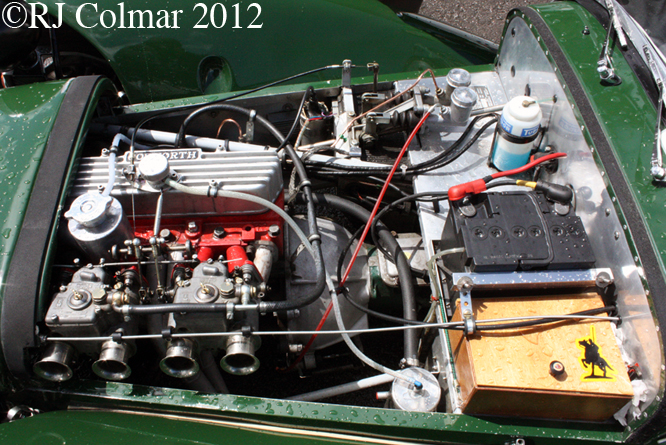
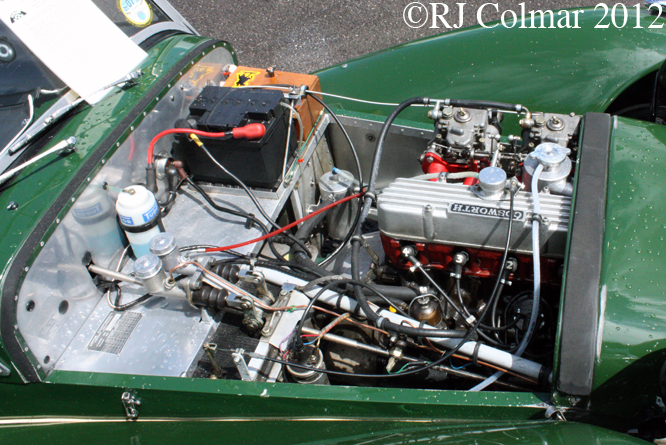
The Super Severn 1500 Cosworth variation of the Lotus Seven S2 was first seen in 1961 featuring 1498 cc / 91.4 cui pre coss flow Ford Motor that was more commonly found in the Ford Consul Classic, it’s two door sibling the Consul Capri and later the Ford Cortina.

Lotus Super Seven 1500 Cosworth, Castle Combe C&SCAD

Alongside the fast bits like the Cosworth camshaft and close ratio gearbox, came a Standard 10 rear axle with drum brakes, a Triumph Herald steering rack, front hubs, fitted with 9″ Girling disc brakes and on this particular car fetching optional wheels with hubcaps from the Lotus Elan.

Lotus Super Seven 1500 Cosworth, Castle Combe C&SCAD

Television buffs will recognise the Lotus Super Seven as the vehicle Patrick McGoohan selected as “A symbol of all The Prisoner was to represent; standing out from the crowd, quickness and agaility, independence and a touch of the rebel” for his character in ‘The Prisoner’ TV series.

This 1963 model, one of 1310 Series 2 cars built, is thought to have originally been sold to a Clubmans racing driver and was found and restored by the current owner eighteen years ago.

Thanks for joining me on this “I Am Not A Number” edition of ‘Gettin a li’l psycho on tyres’, I hope you will join me again tomorrow. Don’t forget to come back now !

Share

Three Continent Veteran – Ferrari Dino 166/246 #0004

Last week I looked at a FIAT Dino Spider that was part of a programme to homologate (legitimise) Ferrari’s V6 Dino engine, which had impressed many when fitted to the 166 P sportscar in 1965, for the second tier European Formula 2 Championship which mandated 1.6 litre / 97.6 cui motors with a maximum of 6 cylinders based on production blocks of which at least 5000 examples had been cast.

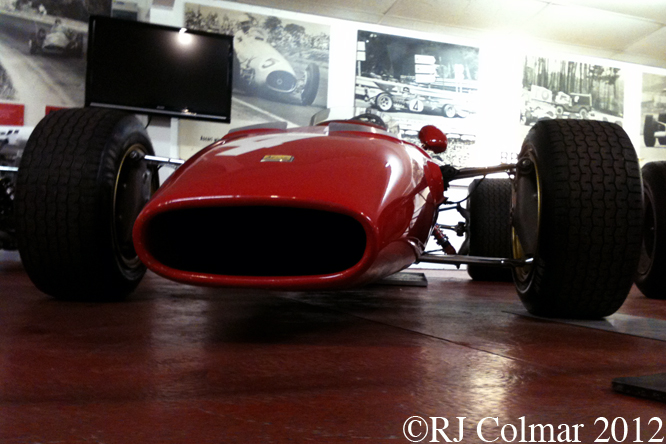
Ferrari, Dino, 166/246, Donington Museum

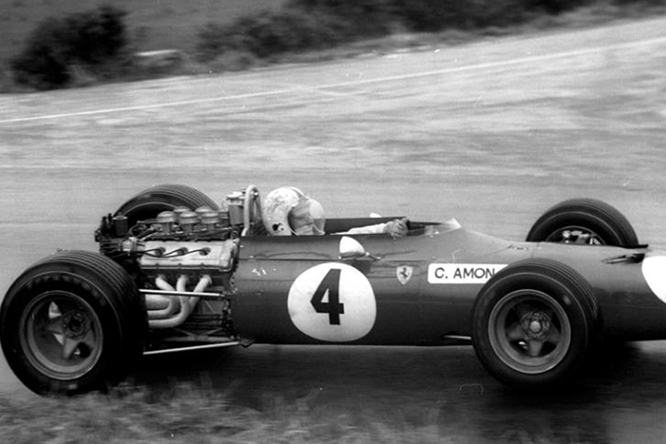
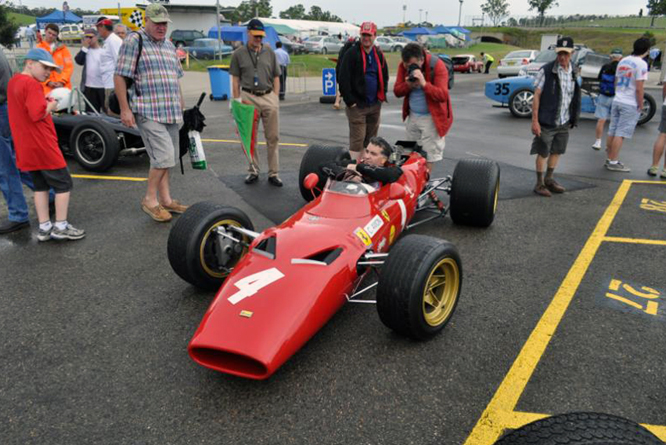
Today’s featured car is the second of seven Ferrari Dino 166’s, that were built to compete in the European Formula 2 Championships from 1967 to 1969. It was first raced in 1967 by Chris Amon at the Hockenheimring in a Formula 2 race in which it did not finish. #0004 was then used by Chris in the Tasman series run in Australia, New Zealand and Tasmania where engines of up to 2.5 litres / 152 cui were mandated.

Chris Amon, Ferrari, Dino, 166/246, Longford, Tasmania

(Chris Amon, Ferrari 166/246 #0004, Longford, Tasmania, March 4th, 1968, Copyright Rod Mackenzie 1968)

Ferrari sent two motors ‘down under’ one a 2.4 litre / 146 cui V6 with three valves per cylinder and the second with 4 valves per cylinder. Amon won the first two races of the 1968 Tasman series in New Zealand and scored two further second place and two 4th place finishes to be in with a mathematical shot at the championship going into the final round but Jim Clark was not to be denied and Amon finished second to the Scotsman in the final championship standings. Chris is seen in Rod Mackenzie’s photo above driving to a 7th place finish in the last race of the season at Longford, Tasmania. Without doubt this photo represents the furthest point south in a photograph ever published on ‘Gettin’ a li’l psycho on tyres’.

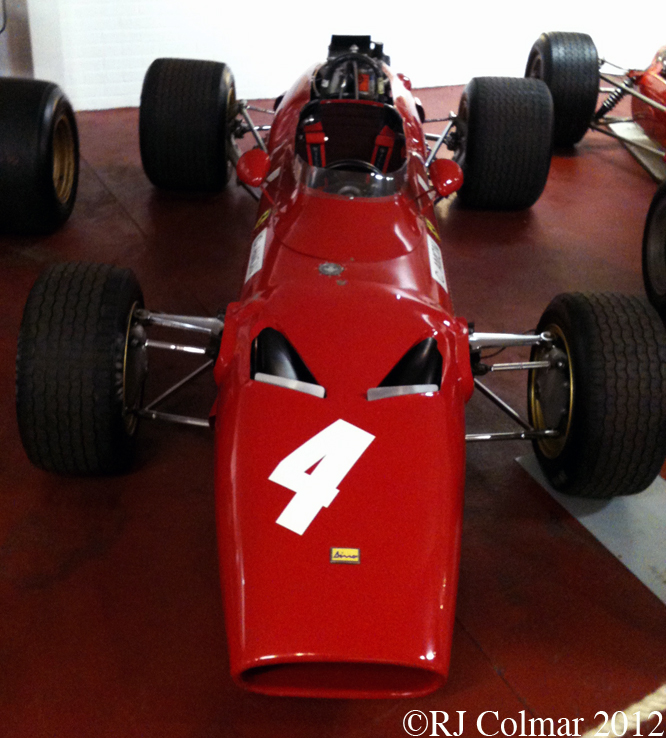
Ferrari, Dino, 166/246, Donington Museum

Back in Europe #0004 was returned to Formula 2 specification with a longer wheel base and an upgraded 225 hp 1.6 litre / 97.6 cui motor with four valves per cylinder in place of the original F2 spec 3 valves per cylinder. On October 13th 1968 Ernesto “Tino” Brambilla scored a memorable victory, from an 8th place start, at the Hockenheimring by putting all four wheels on the grass as he overtook his team mate Derek Bell and Henri Pescarolo driving a Matra on the last lap. Brambilla’s greatest moment was also Ferrari’s first Formula 2 victory since Wolfgang “Taffy” von Trips class win in the 1960 Italian Grand Prix.

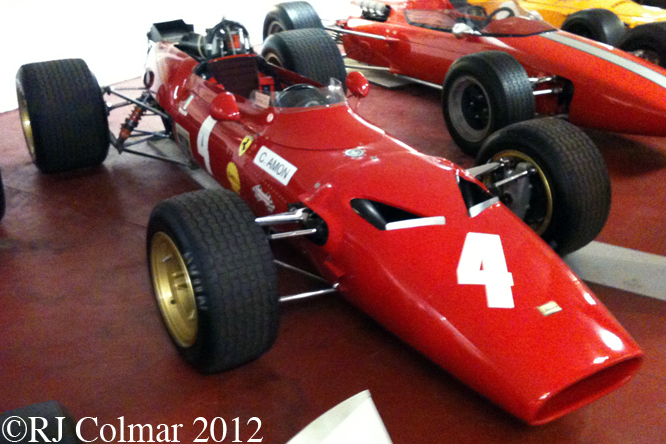
Ferrari, Dino, 166/246, Donington Museum

Brambilla then drove chassis #0004 to two further consecutive victories at Vallelaguna in Italy and Buenos Aires, Argentina where the #0004 was being used in the South American Temporada F2 series. Andrea de Adimich driving another Dino 166 took three victories in the remaining ’68 Temporada Series races to win the Championship while Tino recorded three DNF’s (Did Not Finish). Tino drove the car four more times in Europe in 1969 recording a best 4th place at Jarama in Spain.

Ferrari, Dino, 166/246, Donington Museum

Chris Amon often considered by everybody except himself to be the unluckiest man in Grand Prix racing went back to compete in the Tasman championship with 166/346 chassis #0008 in 1969. Taking five wins from ten races along with four podium finishes Chris sealed the deal with the Dino at the second time of asking. Fellow New Zealander Graeme Lawrence repeated the Tasman Championship winning feat in 1970 using the same #0008 chassis Chris had used the year before.

Rob Hall, Ferrari, Dino, 166/246, Tasman Revival, Eastern Creek Internaltional Racway

(Rob Hall, Ferrari 166/246 #0004, Eastern Creek International Raceway November 2010, Copyright Rod Mackenzie 2010)

Everett Anton Singer owned #0004 from the mid 1980’s to the late 1990’s during which time the car won it’s class twice in Concours d’Elegance events at Atlanta (’89) and Watkins Glen (’90). #0004, now owned by Graham Adleman has revisited the Antipodes twice since it’s heyday. With Rob Hall drove #0004 to win the 2008 Tasman Revival meeting at Eastern Creek International Raceway just outside Sydney Australia and just getting pipped by a a 3 litre 183 cui Lotus 49 in 2010 Tasman Revival meeting at the same venue. The Tasman Revival will be taking place again this year further details of the event can be found on this link.

My thanks to Rod Mackenzie for the use of his photographs and to everyone who contributed to the “1968 Ferrari Tipo 166 Dino Formula II” thread at The Nostalgia Forum where more photo’s of #0004 have been posted, particular thanks to Alan Cox for identifying #0004 and ellrosso of the OldRacePhoto.com website which gives viewers a fascinating insight into racing down under over a period spanning several decades.

Thanks for joining me on this “Three Continent Veteran” edition of “Gettin a li’l psycho on tyres”, I hope you will join me again tomorrow. Don’t forget to come back now !

Share

Muscovite Service Barge – Moskvitch Scaldia 427

The Russian Moskvitch brand was launched with the construction of the Moscow Automotive Plant in 1929, after the cessation of hostilities in 1945 an entire Opel production line was imported from Brandenburg in Germany and production of the Moskvitch 400, based on the Opel Kadet, commenced in 1947.

Moskvich Scaldia 427, Race Retro

Between 1947 and 2002 there were four generations of of Moskvitch were built before the company was liquidated.

Moskvich Scaldia 427, Race Retro

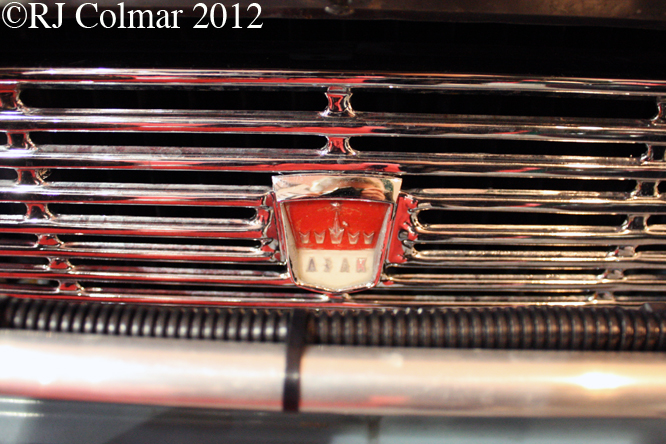
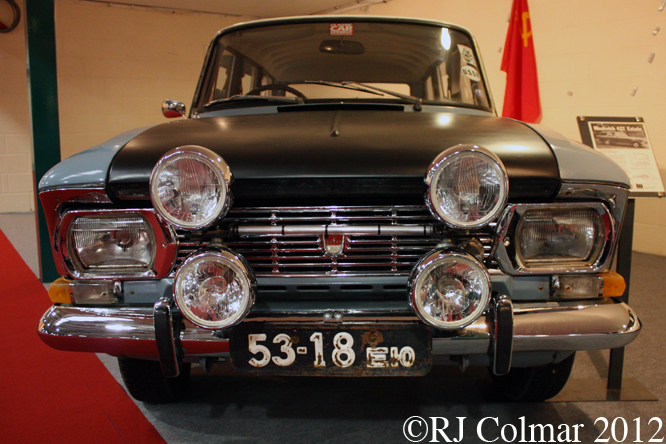
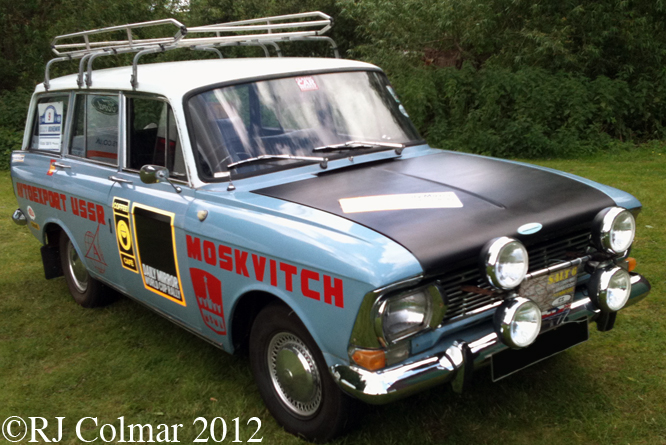
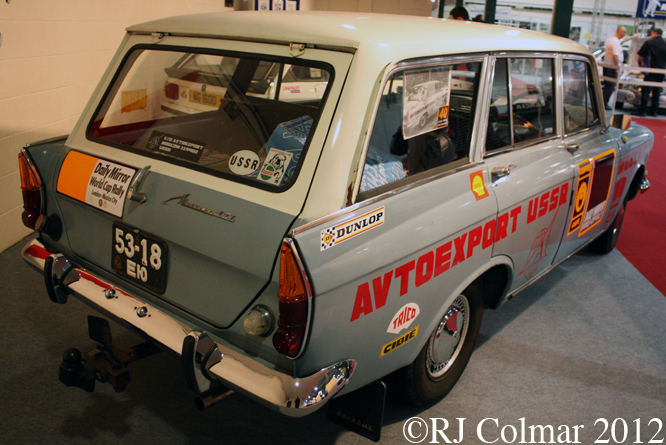
The 1972 Scaldia 427, seen here at Race Retro and the Brooklands double Twelve, is a third generation Moskvitch which was in production from 1965 to 1986.

Moskvich Scaldia 427, Double Twelve Brooklands

The 427 Estate / Station Wagon was in production from 1969 to 1976 it’s saloon / sedan twin the 412 was produced from 1967 to 1975 and marketed as the “1500” in export markets.

Moskvich Scaldia 427, Race Retro

During the mid 1970’s when some British Production Car racing series were run in price classes the exceptionally cheap Moskvich saloon / sedan with it’s comparatively large motor, for it’s price did very well, particularly in the hands of Tony Lanfranci.

Moskvich Scaldia 427, Race Retro

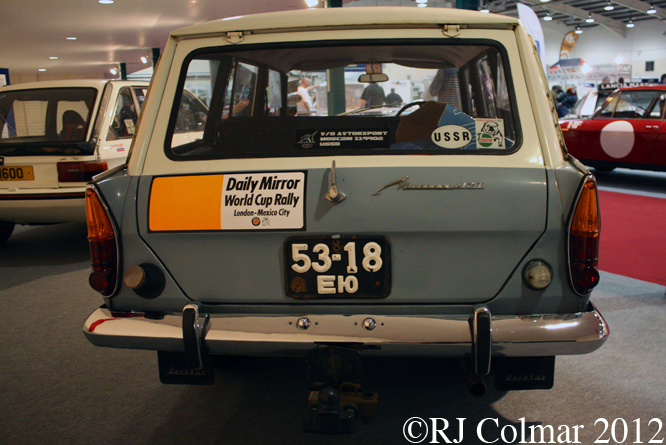
Moskovich also vigorously promoted their brand to a global audience by participating in marathon rallies like the 1970 Daily Mirror World Cup Rally.

Moskvich Scaldia 427, Race Retro

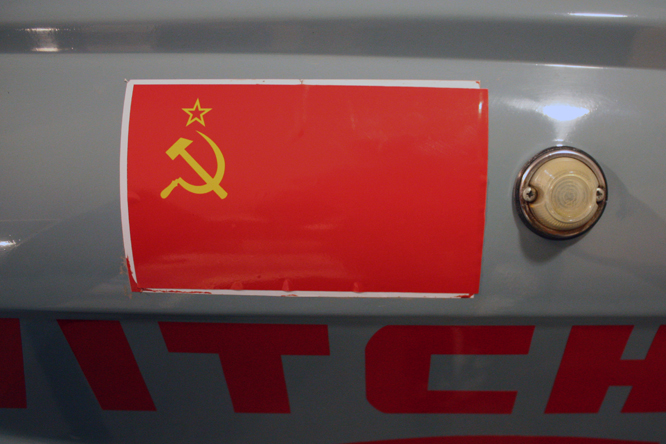
Today’s featured car until recently looked like a daily driver, but it’s current owner has added some tribute decorations to make it look like a works team service barge, and competes with it in rallies dedicated to Cold War Soviet Bloc vehicles.

Moskvich Scaldia 427, Race Retro

While researching this blog I found this linked photo of what appears to be one of the 1970 World Cup Moskvitch’s decaying in a junkyard.

Thanks for joining me on this “Muscovite Service Barge” edition of “Gettin’ a li’l psycho on tyres”, I hope you will join me for Ferrari Friday tomorrow. Don’t forget to come back now !

Share

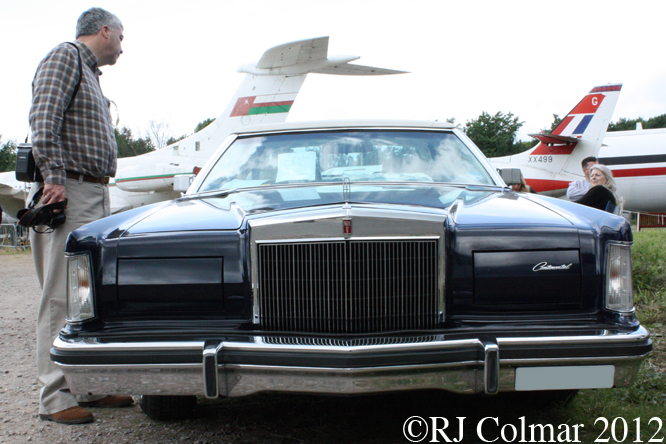
Now It Get’s Confusing – Continental Mark V

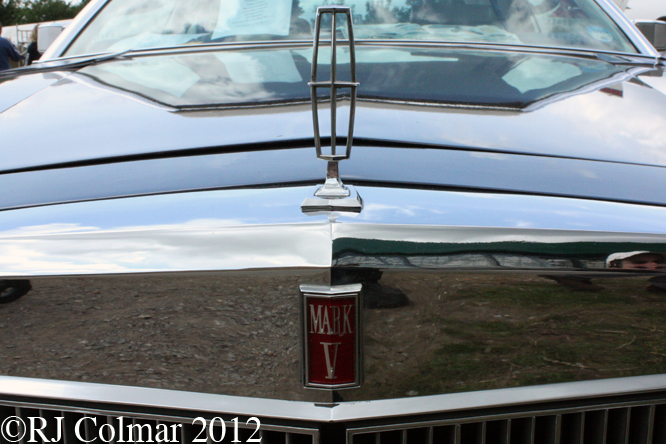
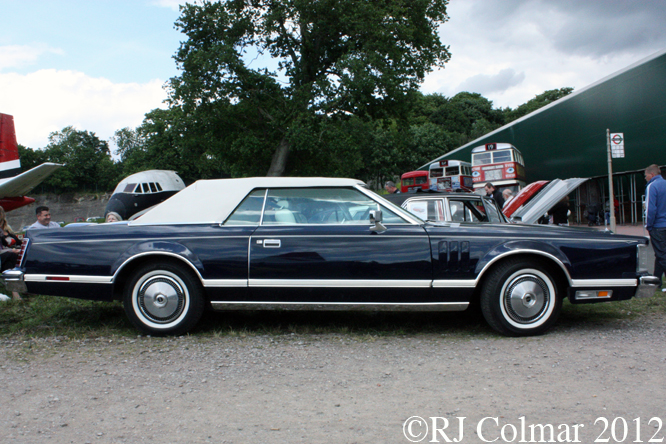
To honour Independnce Day I have brought forward this weeks Americana blog featuring a 1978 Continental Mark V.

Continental Mark V, Brooklands Double Twelve

The Continental name has served as both a model name and separate brand division of Lincoln and Ford respectively. The first Continental branded car was the Continental Mark II produced from 1955 to 1957.

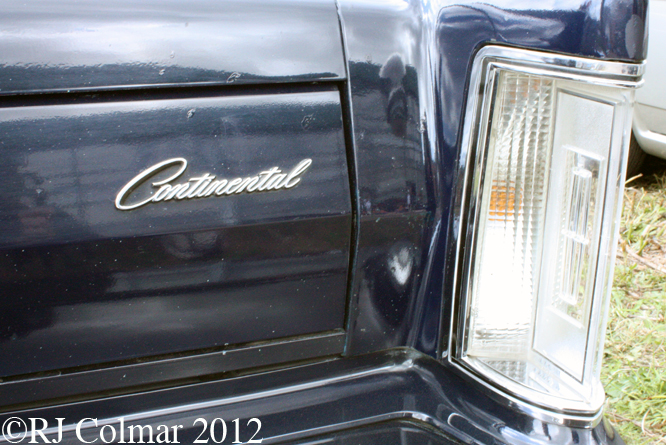
Continental Mark V, Brooklands Double Twelve

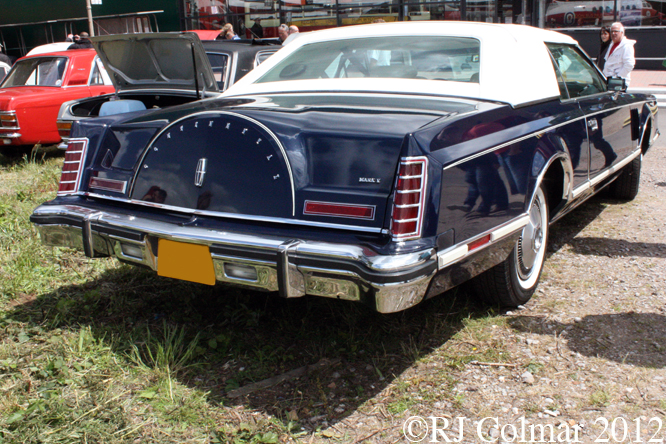
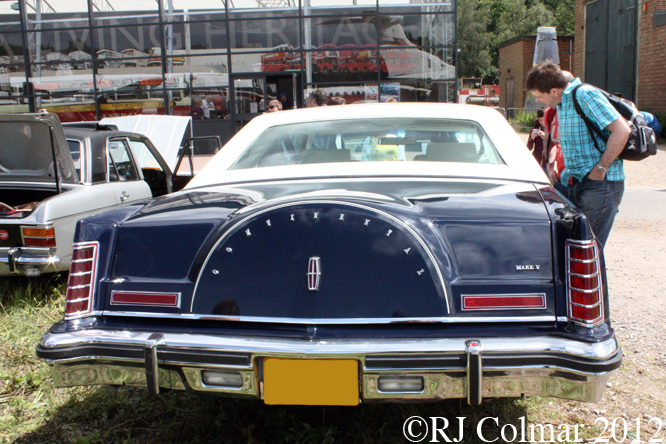
Note although the 1978 Continental Mark V carries Lincoln Cross emblems there is no other reference to Lincoln on the car and contemporary advertising referred to the car as a Continental Mark V omitting the Lincoln name which was used only in connection with the Versailles model.

Continental Mark V, Brooklands Double Twelve

Confusingly from 1968 to 1980 the Lincoln Mercury division manufactured both the Lincoln Continental and separate Continental marque Mark III, IV and V models alongside one another.

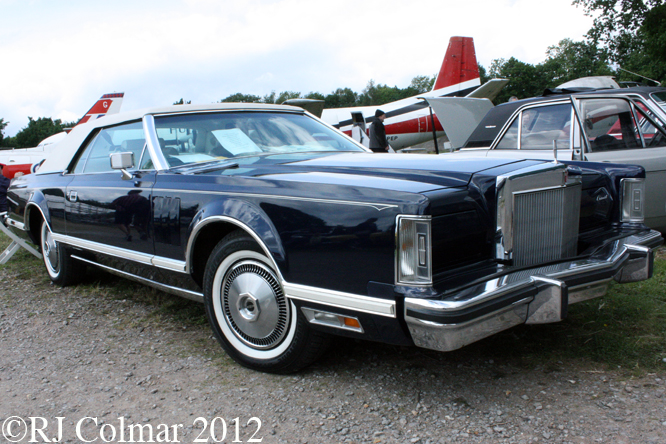
Continental Mark V, Brooklands Double Twelve

The Continental Mark V launched in 1977 was 250 lbs lighter than it’s predecessor with a 6.6 litre / 400 cui Cleveland motor as standard. The model seen here is powered by the optional 208 hp 7.5 litre / 460 cui ‘385’ big block motor manufactured in Lima Ohio, said to have recorded the worst ever fuel economy by the Environmental Protection agency, 7 mpg on the highway and 3-4 mpg in the city.

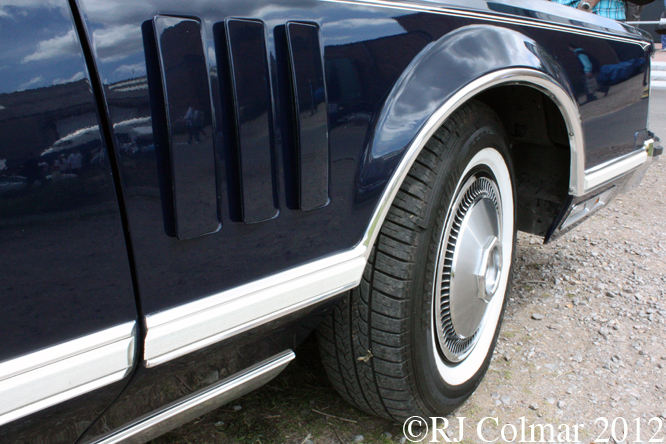
Continental Mark V, Brooklands Double Twelve

There were five special edition ’78 Continental Mark V’s the Bill Blass, Cartier, Givenchy, Pucci and Diamond Jubilee editions are all distinguishable by their cast alloy ‘turbine’ wheels and markings in the opera window’s which this model does not have. The Diamond Jubilee edition marked the 75th Anniversary of the Ford Motor Company.

Continental Mark V, Brooklands Double Twelve

An innovation for the Continental Mark V was the ‘miles to empty’ LED fuel gauge display option which calculated the number of miles to empty based on the fuel level speed and consumption rate.

Continental Mark V, Brooklands Double Twelve

The upright spare wheel in the tail of the car dates back to the 1939 Lincoln Zephyr V12 Convertible Coupé Edsel Ford has custom built for his vacations in Florida.

Continental Mark V, Brooklands Double Twelve

Depending on options and limited editions selected the Continental Mark V could cost anywhere between US $11,000 to $23,000. The ’78 Diamond Jubilee Edition was billed as the most expensive standard production American automobile available in the sales literature. For each of the three years of production an average of over 75,000 vehicles was manufactured making the Mark V the best selling cars of the Continental marque.

This particular vehicle was advertised for sale a couple of weeks ago when I took the photo’s at the recent Double Twelve meeting at Brooklands, if you are interested in purchasing it I’ll gladly pass on the telephone number that was on display, all disclaimers apply.

Thanks for joining me on this “Now It Get’s Confusing” edition of “Getting a li’l psycho on tyres” wishing all my readers across the pond a happy Independence Day. I hope you will join me again tomorrow. Don’t forget to come back now !

Share

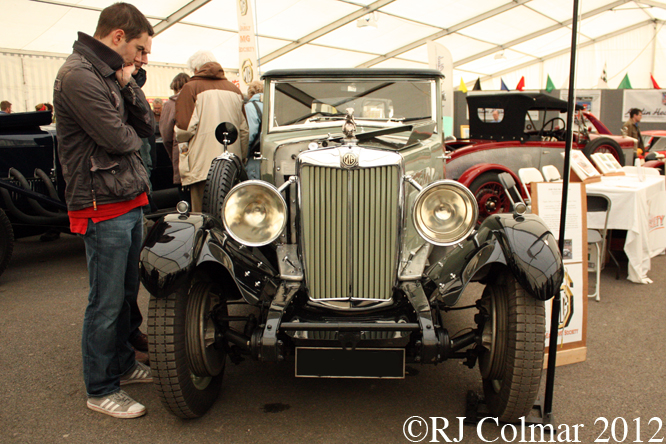
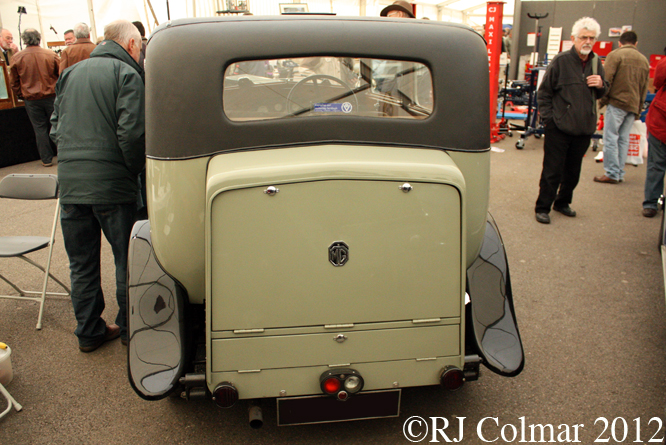
More Strength & Softer Springs – MG 18/80 Six Saloon Mk II

MG 18/80 Six Mk 1, Bristol Classic Car Show

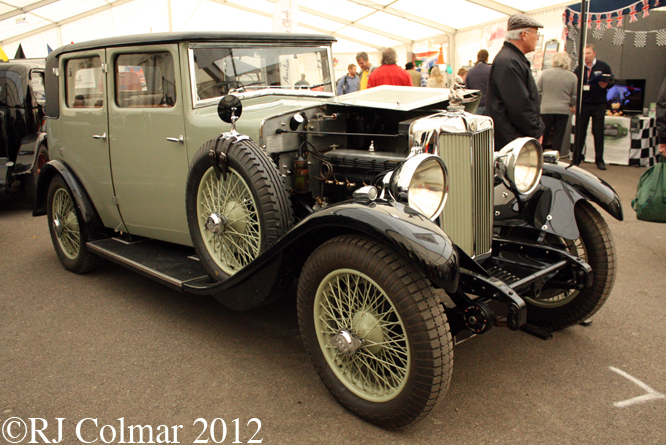
Rather confusingly MG marketed both the MG 18/80 Six Mk I, featured a couple of weeks ago, and Mk II, featured today, simultaneously from 1929 to 1931.

MG 18/80 Six Mk 1, Bristol Classic Car Show

The 18/80 Six Mk 1 was developed from the still born Morris Light Six project, with a much sturdier chassis, the first to be designed by MG rather than inherited from Morris.

MG 18/80 Six Mk 1, Bristol Classic Car Show

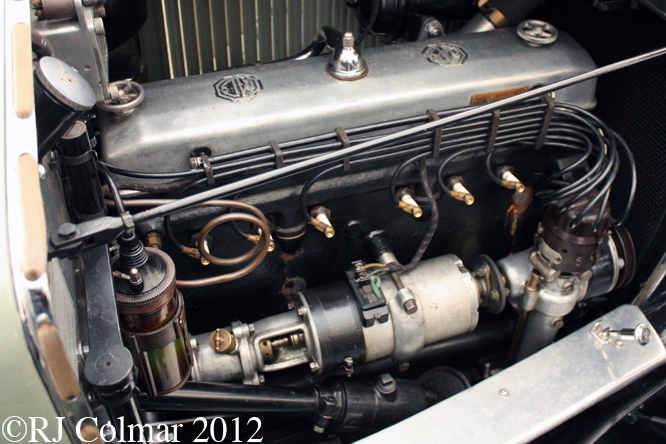
Unfortunately many of the painstaking chassis details like the MG motifs set into the aluminium bulkhead brackets were lost once the bodies had been affixed.

MG 18/80 Six Mk 1, Bristol Classic Car Show

The motor was derived from the failed Morris Light Six but featured a new all in one crank case and cylinder block casting with a separate cylinder head. The motor made use of the then new shell type big end and main bearings for smooth and quiet running.

MG 18/80 Six Mk 1, Bristol Classic Car Show

The 60 hp 18/80 Six Mk 1 is said to have been capable of out accelerating comparable models with good racing reputations from both Lagonda and Alvis, however the performance advantage was lost on the 18/80 Mk II which was built on an even sturdier chassis with a wider track that added weight which was not made up by any improvement in engine performance.

MG 18/80 Six Mk 1, Bristol Classic Car Show

The Mk I was £100 cheaper than the Mk II which made the latter car all the harder to sell despite it’s four speed gearbox, sturdier construction and softer springs. The 1930 model seen here is thought to be one of just 3 MK II’s known to have survived.

Thanks for joining me on this “More Strength & Softer Springs” edition of “Gettin’ a li’l psycho on tyres”, I hope you will join me for an independence day edition again tomorrow. Don’t forget to come back now !

The 1930 model seen here is one of

Share

Theme Lotus – Goodwood Festival Of Speed

On Friday I headed off under grey skies with friends, Tim, Pete and Dave to Goodwood House just outside Chichester for the Festival Of Speed.
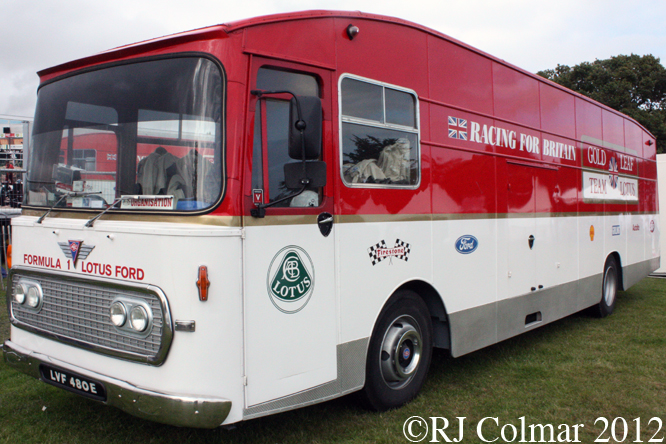
AEC Swift, Goodwood Festival Of Speed

The featured manufacturer this year was Lotus which was founded 60 years ago by Colin Chapman who’s cars not entirely uncoincidentally are currently also featured every Saturday here at GALPOT. Welcoming us on the way into Goodwood House was this 1967 AEC Swift based transporter used by Gold Leaf Team Lotus from 1967 to 1970 during which period team won two world drivers championships with Graham Hill(’68) and Jochen Rindt (’70) and two world constructors in the same years.
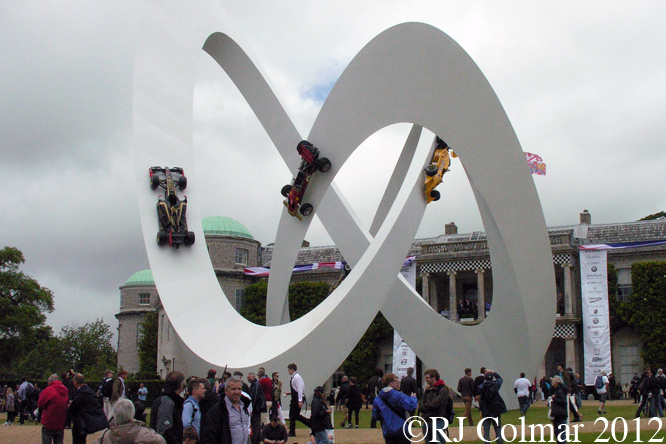
Race Track, Gerry Judah, Goodwood Festival of Speed

Gerry Judah’s art work on the lawn in front of Goodwood House featured no less than six cars five of them winners and a contemporary F1 car built in Enstone which I find as difficult to call a Lotus in the same way as I had trouble calling the Lotus 76 a John Player Special back in 1974.
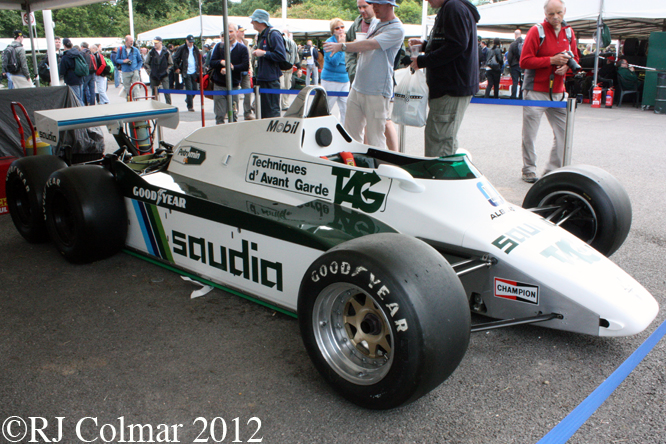
Williams FW08B, Goodwood Festival of Speed

In the paddock there were several cars I had heard of but never seen in the flesh including the six wheel, 4WD, 1982 Williams FW08B which was never raced thanks to a late call to ban more than four wheels from Formula Once cars with only two to be driven from the start of the 1983 season.
BRM P15 Mk 1, Goodwood Festival of Speed

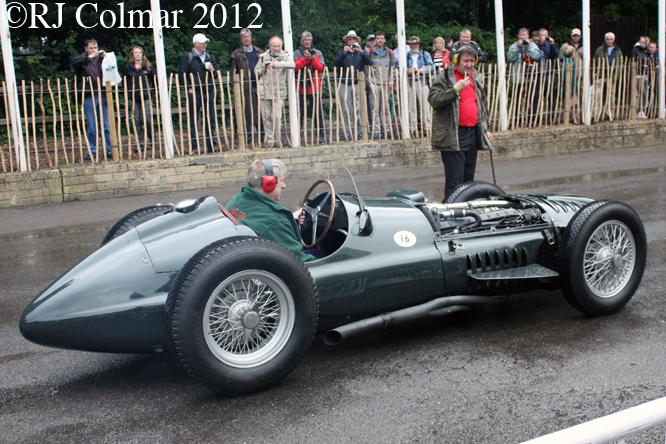
Of all the many stories of British grit in Grand Prix Racing perhaps none exemplifies how not to organise a team better than BRM which managed to organise the support in cash, kind and facilities from the British Motor Industry to make two of the most complex racing motors ever built. The first was a 1.5 litre / 91 cui supercharged V16 which comprised to 750 cc / 45.5 cui V8’s mounted back to back. The 500 hp motor, which could be taken up to 12,000 rpm, was more powerful than any of it’s contemporaries but the combination of organisational and design complexity did not result in a particularly reliable motor car. It did not win any championship Grand Prix, it was only entered in two but it did score championship points, and won a non championship 12 lap race at Goodwood. The most memorable thing about this vehicle is the sound it makes, utterly unmusical in comparison to a V8, and as harsh as granite, note two people in this photo are wearing ear defenders ! The smell of oil coming off it’s engine after the warming up session seen here was quite unforgetable too !
Maserati Tipo 151/3, Goodwood Festival of Speed

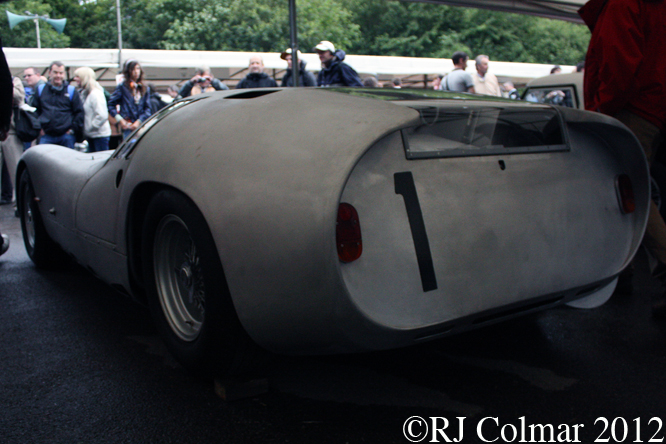
Amongst the sports cars this Maserati Tipo 151/3 is a 1980’s replica of one of three 151’s that were prepared for Le Mans in 1962 and then continually modified. The 151/3 seen here made of from orginal parts and fitted with the low Pierre Drogo body made from the same buck as the body made specially for the 1964 24 Hours at Le Mans where 151/3 was timed at 196 mph on the Mulsanne Straight, like the BRM P15 it suffered poor reliability and retired as it has had in ’62 and ’63.
Shelby American Cobra 'Daytona' Coupé, Goodwood Festival of Speed

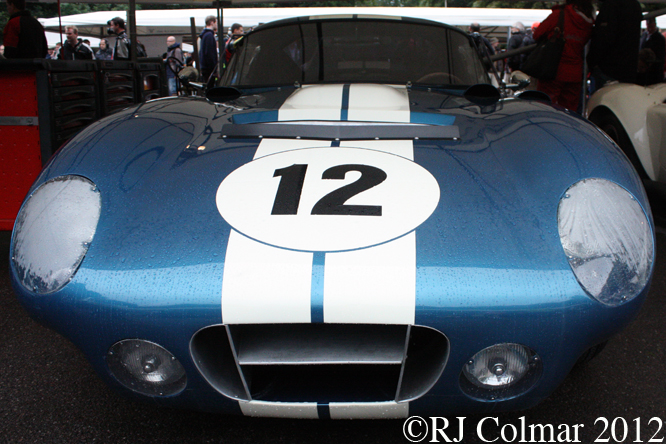
Racing successfully against the original 151/3 were the Shelby American Cobra Coupé’s also known as the ‘Daytona’ Coupé. So far as I can tell this #12 car is chassis CSX2300 which scored a best 6th place finish at Daytona in 1965 with Ed Leslie and Allen Grant at the wheel, the cars next appearance was at Sebring where it carried the #12 with Leslie and Grant again driving finishing 13th.
Ford Mk IV, Goodwood Festival of Speed

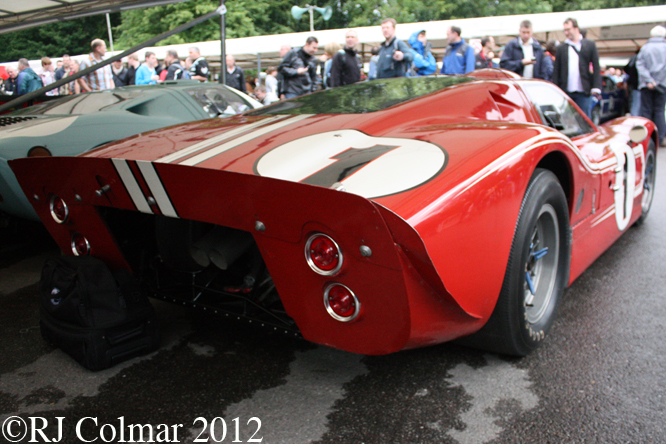
Dan Gurney and AJ Foyt won the 1967 Le Mans 24 Hours driving this Ford Mk IV, beating two Ferrari P4’s in the process thus avenging Enzo Ferrari’s last minuet refusal to sell out to Ford earlier in the decade.
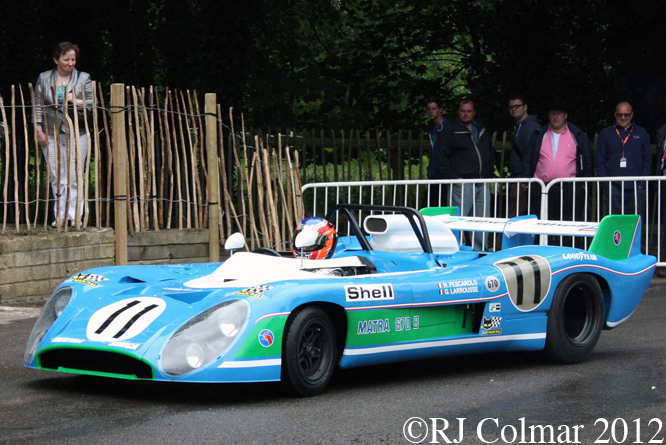
Matra MS670 B, Goodwood Festival of Speed

The Matra 670 B with a long tail, by Matra standards, won Le Mans in 1973 with Henri Pescarolo and Gerrard Larrousse at the wheel, also beating a Ferrari this time a 312PB driven by Art Mezario and Carlos Pacé.
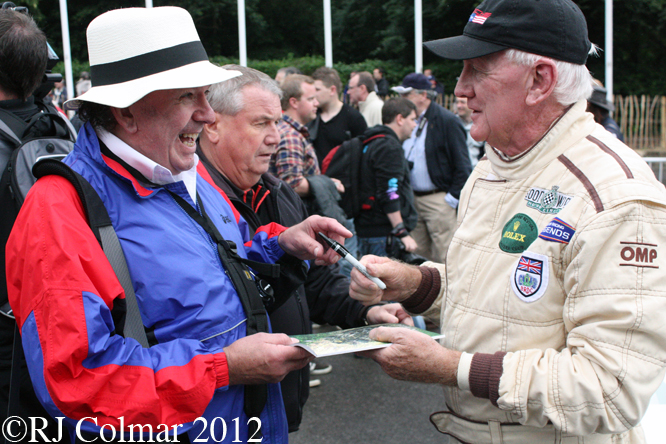
Tony 'Giraffe' Gallagher, Goodwood Festival of Speed

Above regular GALPOT contributor, through The Nostalgia Forum, Tony ‘Giraffe’ Gallagher happily accepts an invitation to sign 1980 IMSA Champion John Fitzpatrick’s programe.
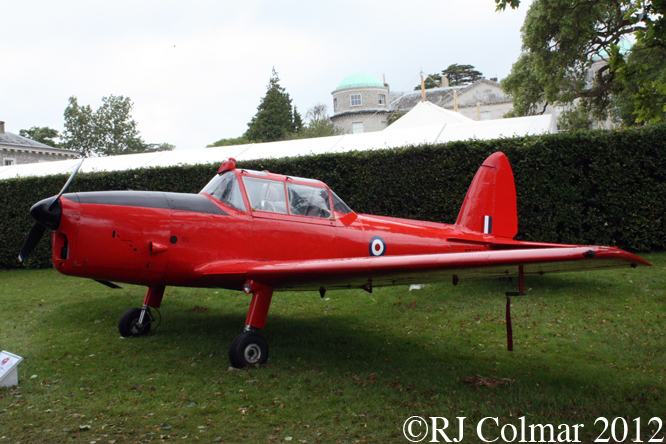
De Havilland DHC-1 Chipmunk, Goodwood Festival of Speed

Continuing the Diamond Jubilee celebrations this years Concours d’Elegance centered on numerous vehicles the Queen and other state dignitary’s have used, this De Haviland of Canada DHG – 1 Chipmunk was used by both HRH Prince Phillip and HRH Prince Charles for training purposes in the 1950’s and 60’s. Back in the day when I was a schoolboy and an RAF Cadet I went up in one of these on a couple of occasions, being handed the controls mid flight on one of them !
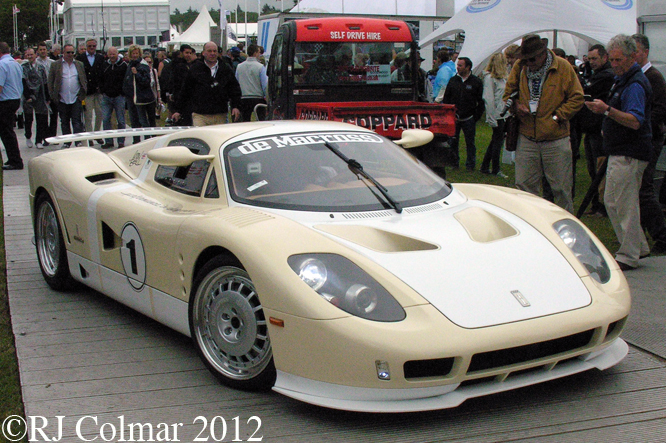
de Macross GT1, Goodwood Festival of Speed

The De Macross GT1 appears to be constructed from a mix of Korean Finance, Canadian Manufacturing and US Roush Yates power and any number of styling queues taken from an equally diverse range of vehicles. The drivers name on the side of the car was none other than that of motorsports TV presenter Justin Bell.
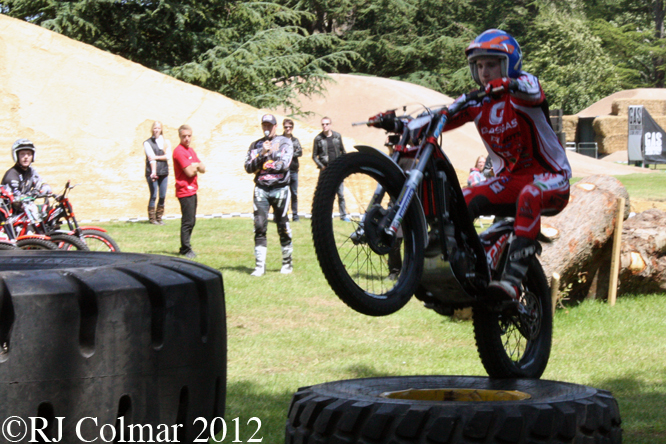
Goodwood Action Sports, Goodwood Festival of Speed

Keeping folks entertained on two wheels were a number of youngsters who were doing things on motor bikes that I have only been able to aspire to dreaming of.
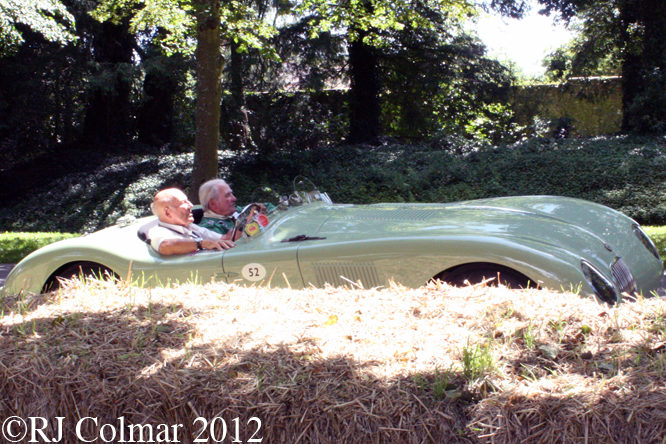
Jaguar C Type, Goodwood Festival of Speed

Sir Stirling Moss shares a little joke with former Jaguar works test driver and team mate Norman Dewis as they prepare for a quick blast up Goodwood’s hill climb.
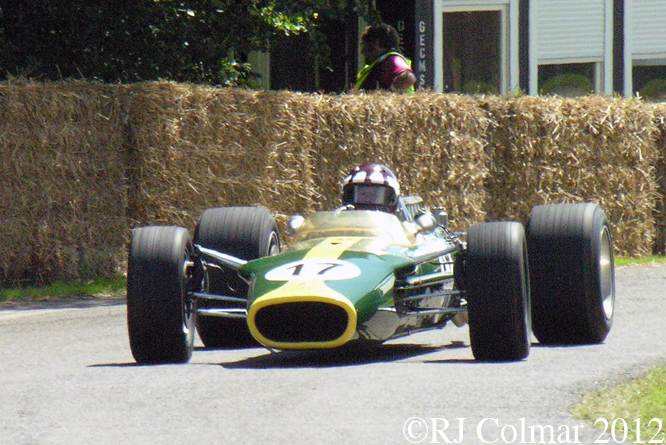
Lotus 49, Goodwood Festival of Speed

Jackie Oliver drove a Gold Leaf Team Lotus 49B in 1968 here he is seen driving the 1967 Lotus 49 chassis R2, later renamed R11, that Jim Clark used to win the 1967 Dutch Grand Prix the first of 155 Grand Prix victories for the Ford Corworth DFV engine that powered it and the first of 12 for the Lotus 49 type.
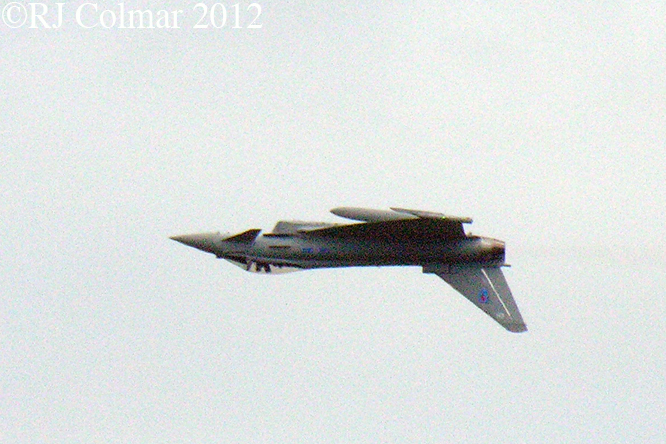
Eurofighter Typhoon, Goodwood Festival of Speed

Delivered nearly five years late and horrendously over budget the Eurofighter Typhoon made up for it with a simply stunning display of power, speed and maneuverability. With 40,000 lbs of thrust this plane can be flown like one of the better short nosed paper aeroplanes I used to make when I was a kid with the added bonus it does not crash when landing.
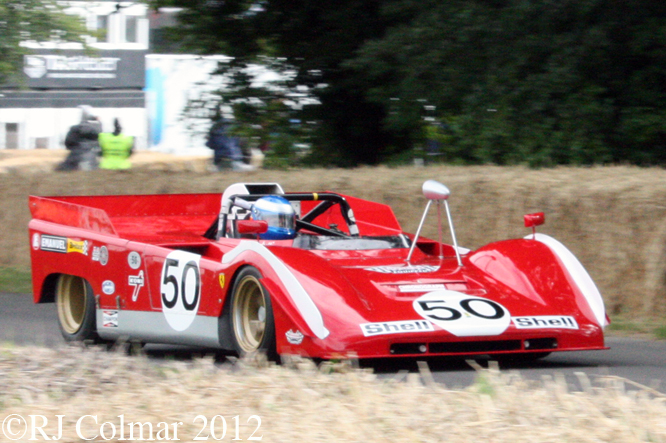
Ferrari 712, Goodwood Festival of Speed

Paul Knapfield’s Ferrari 712 chassis #1010 haa a long story to tell suffice to say here that in period it has underwent two body upgrades from it’s original 512S spec and an engine upgrade to make it the Ferrari with the largest Ferrari motor ever raced. This car will be the subject of a blog in the fulness of time.
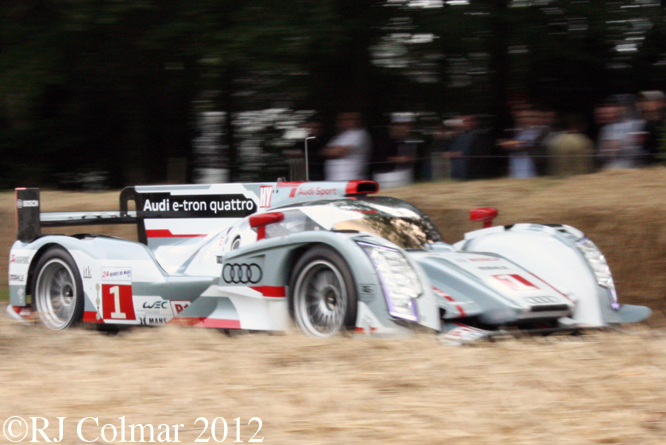
Audi R18 e-tron quattro, Goodwood Festival of Speed

Le Mans 24 hours will be remembered this year as the first ever to be won by a hybrid diesel, the #1 Audi R18 e-tron quattro of André Lotterer, Marcel Fässer and Benoit Tréluyer beat the the sister car of Allan McNish, Rinaldo Capello and Tom Kristensen, with a regular diesel coming in third. McNish is seen driving the e-tron quattro above which despite the stickers is not necessarily the car that crossed the line first at Le Mans.
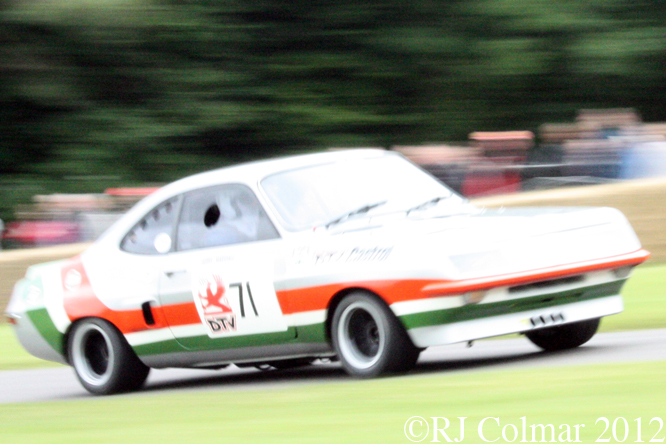
Vauxhall Firenza 'Old Nail', Goodwood Festival of Speed

The ‘Droop Snoot’ Vauxhall Firenza “Old Nail” belonging to Paul Chase-Gardener scored over 60 victories with Gerry Marshall at the wheel back in the 1970’s Gerry’s son Gregor, another contributor to GALPOT through The Nostalgia Forum, was scheduled to drive this car later in the weekend.
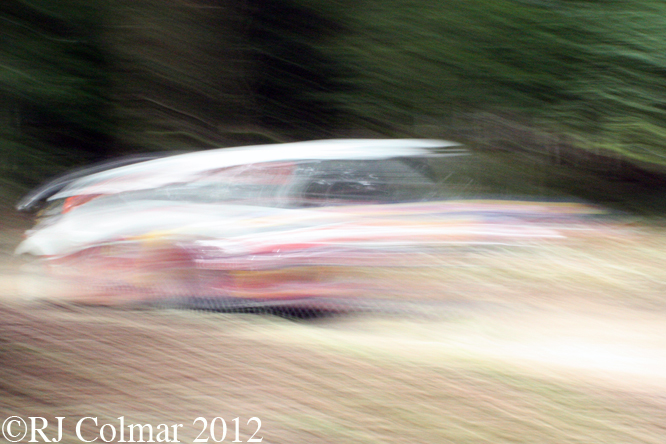
Citroen DS3 WRC, Goodwood Festival of Speed

There were several Citroen DS3’s entered on the Goodwood Rally stage I believe this may have been the DS3 WRC example of Thierry Neuville, but I’ll happily take a second better informed opinion if you have one to add below.
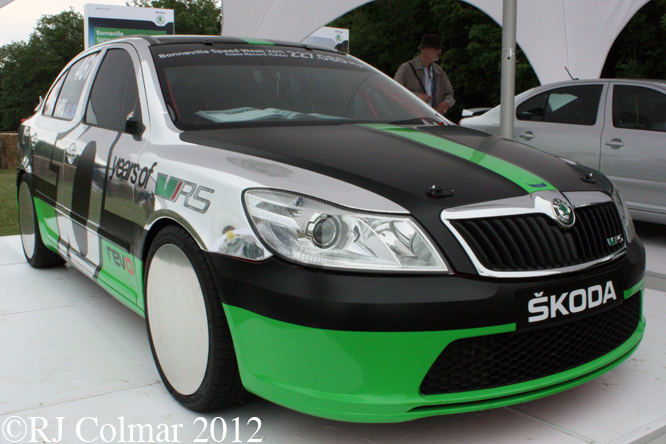
Skoda Octavia vRS, Goodwood Festival of Speed

One of the pleasant rewards for taking the time to walk to the top of the hill was finding this Skoda Octavia vRS, a car that might not ordinarily bring the phrase ‘psycho on tyres’ to mind however this one had it’s turbo 2 litre / 122cui engine uprated from 200 hp to 500 hp and along with a few other safety mods achieved 227.080 mph at Bonneville to claim the 2 litre production car class record with Richard Meaden at the wheel last year.
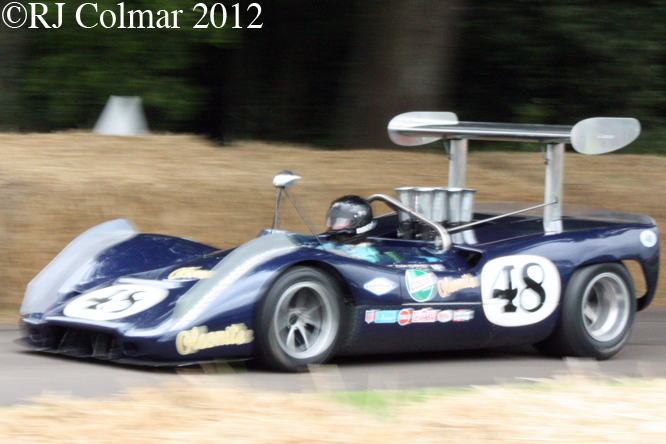
McLaren M6B 'McLeagle', Goodwood Festival of Speed

Four time World Drivers Champion Alain Prost was the honoured driver at Goodwood this year, though there were probably more vehicles present that were associated with Dan Gurney including the McLaren M6B, driven on this occasion by owner Andy Boone, which Dan modified so much it gained the ‘McLeagle’ sobriquet. Dan’s efforts were not enough to beat the Bruce and Denny show, Denny won the championship. Gurney’s best result with the car was a 4th place in the 1968 Can Am race at Riverside.
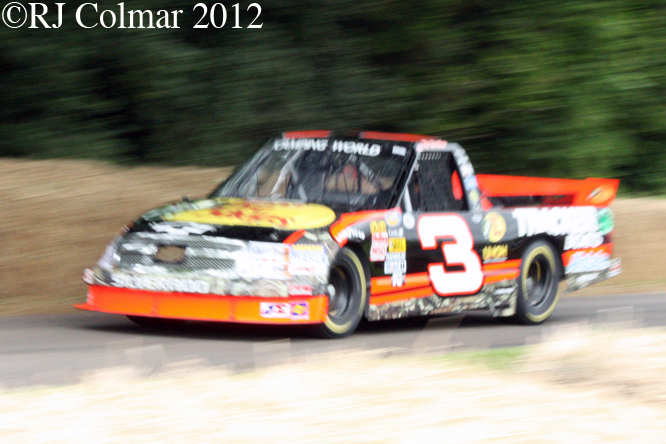
Chevrolet Silverado, NCWT, Goodwood Festival of Speed

It’s always great to see and hear a little NASCAR action, Goodwood marked the first occasion on which I have seen a Camping World Truck Series (CWTS) truck in action, the #3 Chevrolet Silverado was driven by Austin Dillon to the Championship last season his brother Ty was scheduled to drive over weekend.
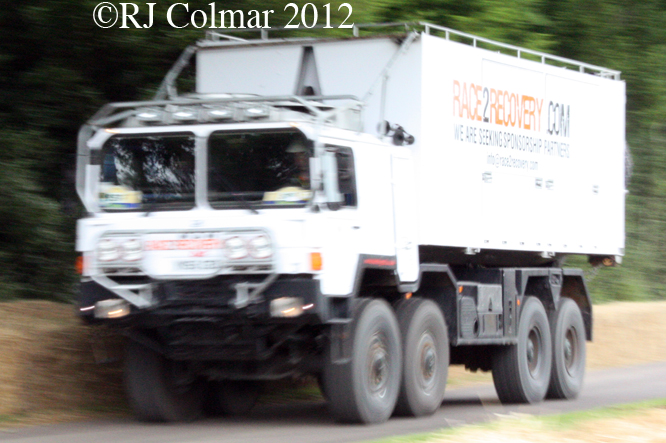
MAN 8x8, Goodwood Festival of Speed

Largest vehicle on the track was the Race 2 Recovery MAN 8×8 Dakar support truck driven by Ben Gott. Race 2 Recovery plans to enter a team of Land Rovers in next years Dakar Rally all driven by injured soldiers. If you would like to help their cause you can find details on this Race2Recovery link.
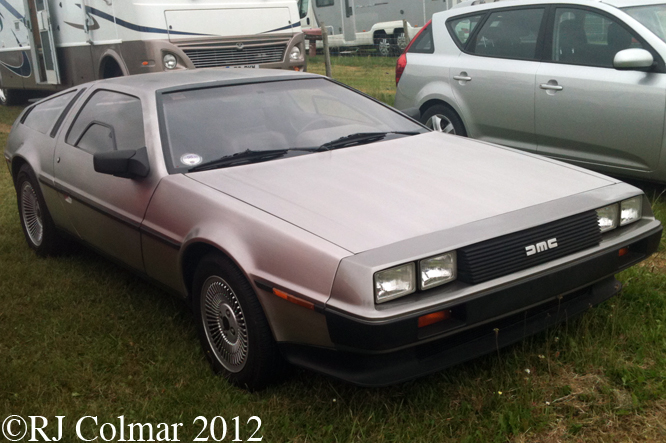
DeLorean DMC-12, Goodwood Festival of Speed

All too soon after a pleasurably exhausting day wondering around the grounds of Goodwood House without having seen everything it was time to say a quick hello to a couple of friends and then rejoin my passengers for the two hour back to the future drive home, my nomination for top car in the car park award went to the DeLorean DMC-12 which was substantially re-engineered by Lotus founder Colin Chapman, prior to the commencement of production in 1981.

Thanks for joining me on this ‘Theme Lotus’ edition of “Gettin’ a li’l psycho on tyres” I hope you will join me again tomorrow. Don’t forget to come back now !
Share