Mavis – Packard Bentley

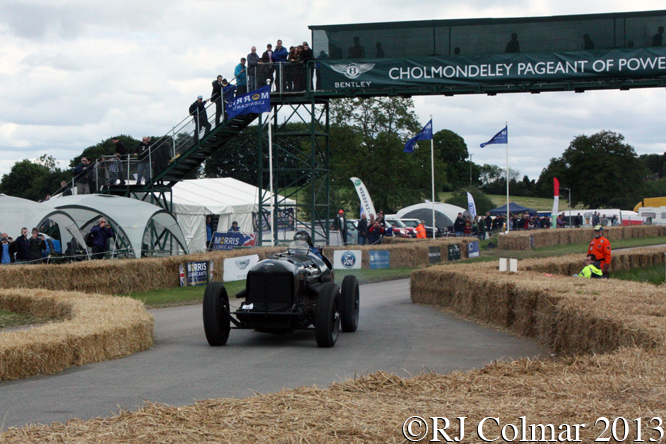
Today’s featured vehicle Mavis is a creation of Chris Williams, the owner of The Ultimate Laxative Napier Bentley I looked at a couple of years ago.

Mavis, Packard Bentley, Chris Williams, Cholmondeley Pageant of Power, Cholmondeley Castle

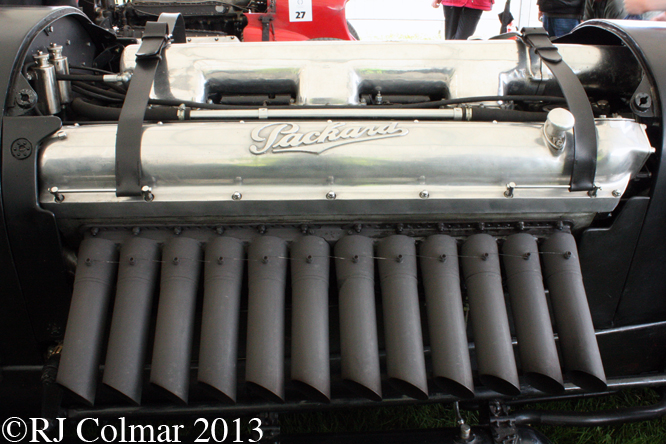
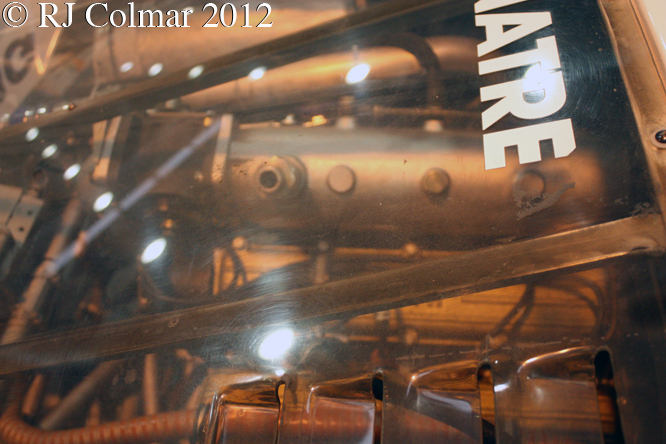
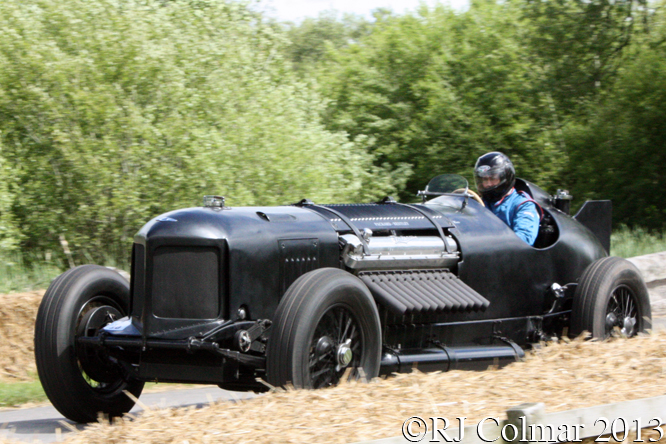
Mavis is built on a 1930 Bentley Speed 8 chassis which has been extensively modified to accommodate it’s 41.8 litre / 2563 cui V12 motor which was purchased by Williams at the suggestion of Duncan Pittaway.

Mavis, Packard Bentley, Chris Williams, Cholmondeley Pageant of Power, Cholmondeley Castle

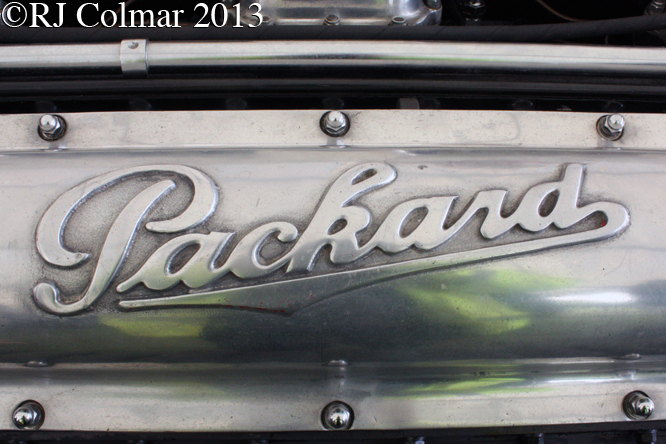
This particular 1500 hp Packard 4M 2500 V12 is a marine variant of an aero engine that was orignally installed in a 45 mph 2nd World War PT, Patrol Torpedo, boat.

Mavis Packard Bentley, Cholmondeley Pageant of Power, Cholmondeley Castle

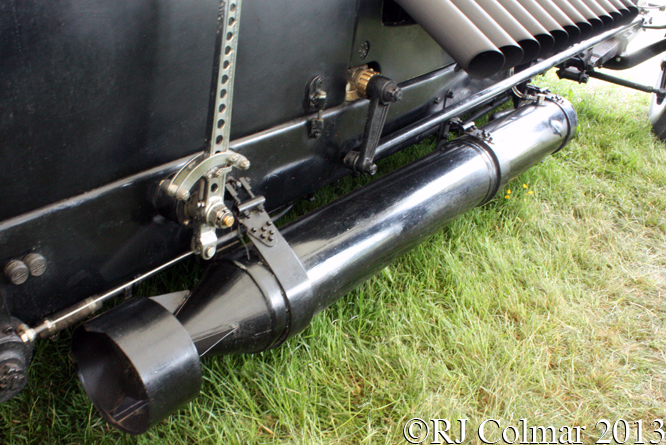
The supercharged Packard M4-2500 has twin exhaust ports and hence is fitted with 24 exhaust pipes, the faux torpedoes are actually oil tanks.

Mavis Packard Bentley, Cholmondeley Pageant of Power, Cholmondeley Castle

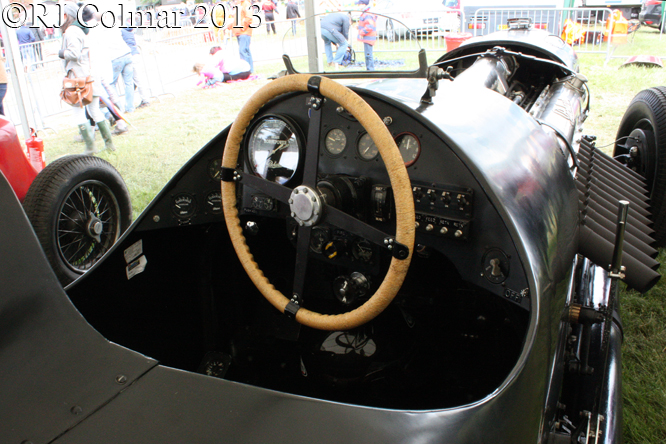
Up to 1500hp is transmitted to the rear wheels through a Bentley C type gearbox that has no synchromesh, note that this vehicle has no front brakes !

Mavis Packard Bentley, Cholmondeley Pageant of Power, Cholmondeley Castle

The rear wheels can be spun in any gear and Chris Williams “drive it like you stole it” attitude ensures that spectators are entertained with copious quantities of fire from the exhaust and clouds of smoke from the rear wheels at every opportunity.

Mavis Packard Bentley, Cholmondeley Pageant of Power, Cholmondeley Castle

Chris says that Mavis was once lightheartedly described as “biggest automotive waste of time, money and engineering expertise ever built”.

Thanks for joining me on this “Automotive Waste Of Space” edition of “Gettin’ a li’l psycho on tyres” I hope you will join me again tomorrow when I’ll be looking at an event which returned Motorsport to Hullavington in Wiltshire. Don’t forget to come back now !

Share

Forbes Best GT – Maserati Spyder

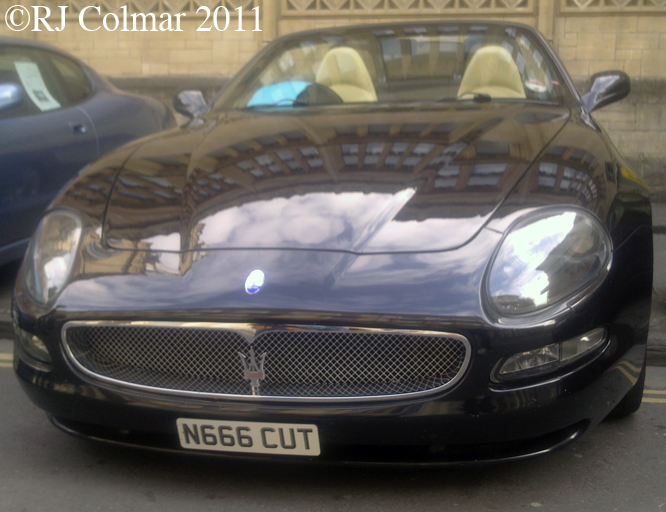
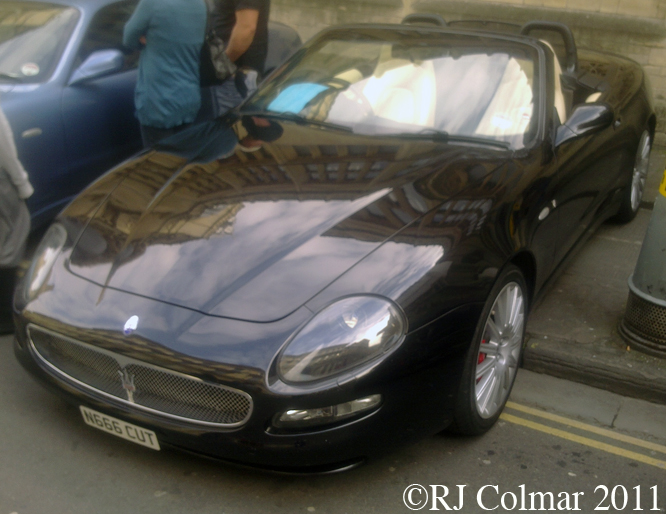
Launched at the 2001 Frankfurt Show the Maserati Spyder marked the return of the Maserati brand to the North American market where Forbes Magazine crowned the Spyder with it’s Best GT of 2001 accolade.

Maserati Spyder, Bristol Italian Auto Moto Festival,

The Spyder shares a shortened version of the Tipo M138 platform and running gear of it’s contemporaneous Coupé sibiling.

Maserati Spyder, Bristol Italian Auto Moto Festival,

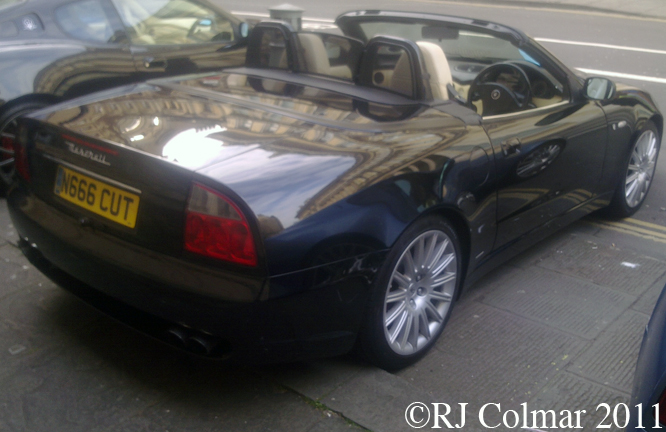
The push button operated soft top will stow or deploy in 30 seconds, despite it’s shorter length chassis strengthening raises the overall weight of the Spyder by 140 Coupé.

Maserati Spyder, Bristol Italian Auto Moto Festival,

Despite the weight difference the performance of the Coupé and Spyder are virtually identical some testers finding the Coupé faster while other found the Spyder, such as the 2002 example seen here at the Bristol Italian Auto Moto Festival, to be quicker.

Both variants were replaced by the Maserati Gran Turismo in 2007.

Thanks for joining me on this “Forbes Best GT” edition of “Gettin’ a li’l psycho on tyres” I hope you will join me again tomorrow when I’ll be looking at “biggest automotive waste of time, money and engineering expertise ever built”. Don’t forget to come back now !

Share

Tube Monocoque – BRM P261 #2615

In 1963 Tony Rudd followed the lead set by Colin Chapman’s 1962 Lotus 25 and designed BRM’s first P61 monocoque chassis, unlike the Lotus bathtub monocoque Tony’s chassis was a tube monocoque which dispensed with the need for a fibre glass cockpit surround.

Despite Graham Hill’s 3rd place finish on it’s debut in the 1963 French Grand Prix the P61 raced only twice in the 1963 season as it became apparent that the chassis flexed.

For 1964 a Mk2 P61 evolved that replaced the separate subrame that carried the motor with pontoons made from stressed sheet metal that extended from the back of the monocoque, the P 61 Mk2 became known as the P261.
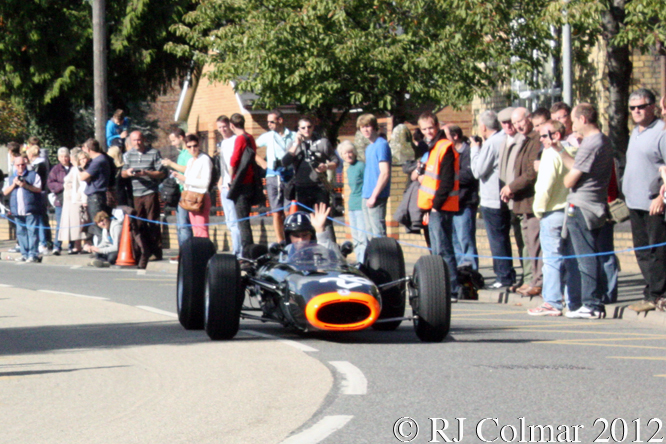
BRM P2615, Damon Hill, BRM Day, Bourne,

In all 6 P261’s were built in 1.5 litre V8 spec for the 1964 and ’65 Formula One seasons, in 1.9 litre and 2.0 litre V8 spec for the 1966 Formula One season which now permitted 3.0 litre engines and 2.1 litre V8 spec for part of 1967 Formula season.

BRM also opted to compete with 1.9 litre V8 spec P261’s in the 1966 Tasman series of races, which permitted motors of up to 2.5 litres, run during the winter months in Australia and New Zealand, and ran 2.1 litre V8 P261’s in the following year when Jackie Stewart and BRM failed to repeat the title winning successes, 4 wins from 8 races, of 1966.

These cars served the works BRM team up until 1967 and today’s featured chassis #2615 carried on racing in privateers hands until 1969 by which time it had been fitted with a 3 litre BRM V12 motor.
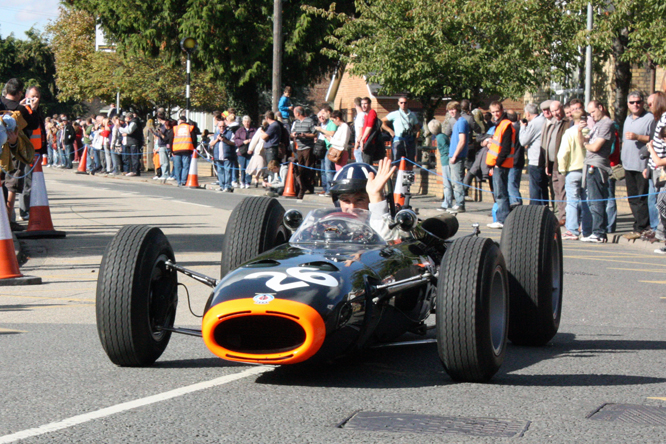
BRM P2615, Damon Hill, BRM Day, Bourne,

#2615 first appeared at the the 1964 Belgian Grand Prix where Graham Hill drove it qualifying 2nd and finishing in 5th place. At the following race Graham finished 2nd in the French Grand Prix his best result in 1964 driving this chassis. Two wins and two further 2nd places helped Graham secure second place to John Surtees in the 1964 Championship season.

Richie Ginther drove the car at the 1964 US and Mexican Grand Prix’s recording a best 4th at Watkins Glen, Graham returned to drive #2615 a couple of times in early 1965 recording a best 2nd place in the Goodwood non championship race.

Jackie Stewart was the last works driver to drive #2615 in a Championship Formula One race in Mexico where he retired but still finished 3rd in the championship behind Jim Clark and team mate Graham.
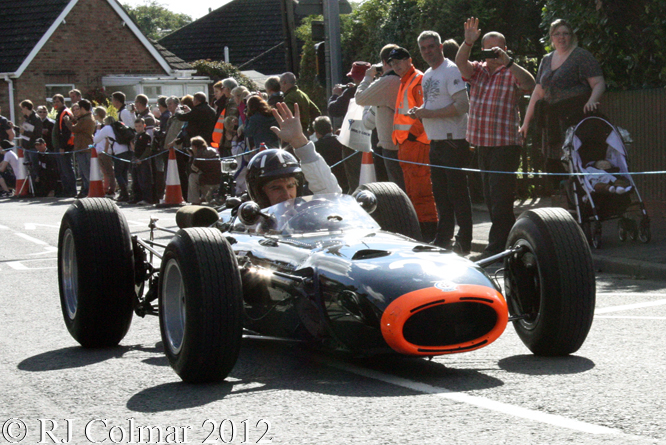
BRM P2615, Damon Hill, BRM Day, Bourne,

Bernard White Racing bought the car for 1966 and entered it at various non championship and championship events for Vic Wilson, Bob Bondurant and Innes Ireland who all managed best 4th place finishes, at Syracuse, Monaco and Oulton Park respectively, on their first acquaintance with the car.

BRM borrowed #2615 from Bernard White Racing for the 1967 Tasman Series intending it to be a spare car for the works drivers. However it ended up being driven by Richard Attwood who finished 3rd in his first two starts with the car and won the minor Vic Hudson Memorial non championship race at Levin.

Piers Courage then drove #2615 in three events finishing a best 4th in the Teratonga International at Invergill. Chris Irwin was put in the car for the last three meetings of the Sandown meetings of the ’67 Tasman season finishing a best 3rd at Longford where Jackie Stewart borrowed the car for the 2nd preliminary to finish 2nd before returning to his own car which needed gearbox repairs for the final.
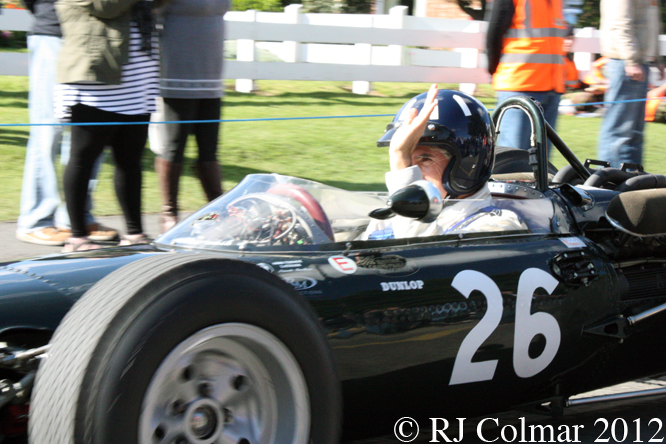
BRM P2615, Damon Hill, BRM Day, Bourne,

After #2615 was returned to the UK Bernard White Racing nominated David Hobbs to drive it in the 1967 British and Canadian Grand Prix but he could do no more than finish 8th and 9th even with a 2.1 litre motor.

For 1968 Bernard White Racing fitted the latest 3 litre BRM V12 but David finished only 9th and 6th in the non championship Race of Champions and International Trophy events run at Brands Hatch and Silverstone respectively.

It fell upon Frank Gardener to attempt to drive a P261 in a Championship Formula One event for the last time at the 1968 Italian Grand Prix however incorrect gearing meant he had no hope of even qualifying.

In 1969 #2615 still fitted with the V12 changed hands twice, Tony Dean bought the car and raced it in the Gran Premio de Madrid de F1 at Jarama, which was run for F5000 and F1 cars with a separate Formula 2 division, where he finished third behind the Formula 5000 Lola Chevrolet T142 driven by Keith Holland and F5000 McLaren Chevrolet M10A driven by Peter Gethin.

Later in the year Ben Moore bought #2615 and entered Charles Lucas to race, still with a V12 fitted, in the Gold Cup at Oulton Park where he retired with ignition box failure on the cars and models final “in period” appearance.

Graham Hill’s son Damon is seen demonstrating #2615 in these photograph’s at the BRM Day in Bourne a couple of years ago.

My thanks to Tim Murray or lending me a copy of Doug Nye’s invaluable BRM Volume 3 which proved to be an invaluable reference resource, incidentally there is a photo of in the aforementioned book showing Graham Hill testing #2615 at Snetterton with an “onboard data recorder, wrapped in aluminised cloth, braced on a tall gearbox bracket and steadied by bungee cords.”

The recorder is described as being attached to sensors taped to every suspension link and the data, which revealed for example that Graham Hill’s height accounted for a loss in performance equivalent to 100 rpm on the straights against his more diminutive team mate Jackie Stewart, appears to have been recorded on light sensitive paper tape.

Thanks for joining me on this “Tube Monocoque” edition of “Gettin’ a li’l psycho on tyres, I hope you will join me again tomorrow. Don’t forget to come back now !
Share

Kenyan National Champion – Lancia Rally 037

In 1982 the FIA mandated new rules for sports car racing and rallying called Group B which allowed manufacturers to compete with any vehicle they had built 200 examples of, further more evolutions of these models were permitted each year so long as 20 examples had been built.

Lancia Rally 037, Race Retro, Stoneleigh,

The category never really took off in racing with only Porsche and Ferrari building legible cars and only Porsche racing a works example on a limited schedule, but in for rallying Group B proved popular amongst manufacturers including Lancia, Audi, Austin Rover, Ford, Peugeot and Porsche, who all built models to compete in the Group B category.

Lancia Rally 037, Race Retro, Stoneleigh,

With the career of the successful FIAT 131 Abarth at an end the FIAT Group turned to Abarth to develop a vehicle loosely based on the Lancia Beta Montecarlo / Scorpion mid engined coupé.

Lancia Rally 037, Race Retro, Stoneleigh,

Abarth working with Pininfarina and Dallara under project manager Sergio Limone used the central floor pan of the Beta Montecarlo with subframes fitted front and rear as the basis of their new Group B contender.

Lancia Rally 037, Race Retro, Stoneleigh,

The 2 litre / 122 cui twin cam motor from the three time World Rally Championship winning FIAT 131 Abarth was upgraded by fitting a Volumex supercharger which brought the power up to 285 hp, but more importantly significantly improved the throttle response over turbocharged motors. The engine was fitted longitudinally, on the original Montecarlo’s the motor was transversely mounted, and drove only the rear wheels.

Lancia Rally 037, Race Retro, Stoneleigh,

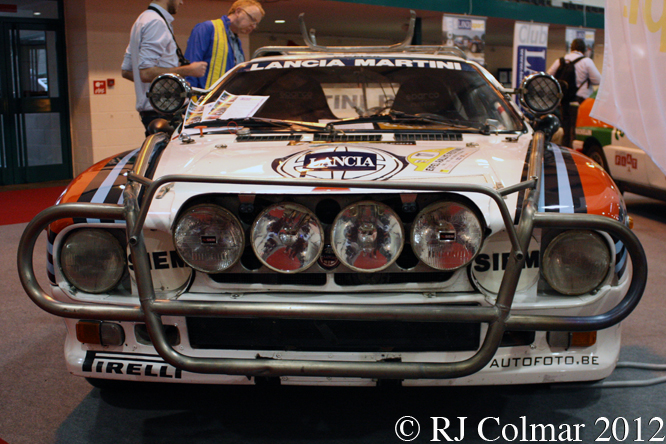
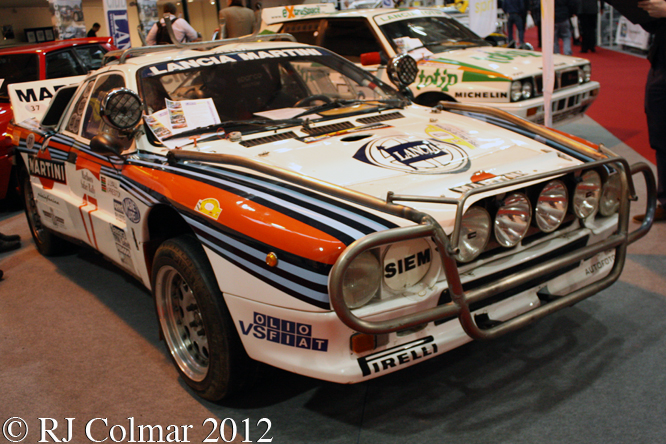
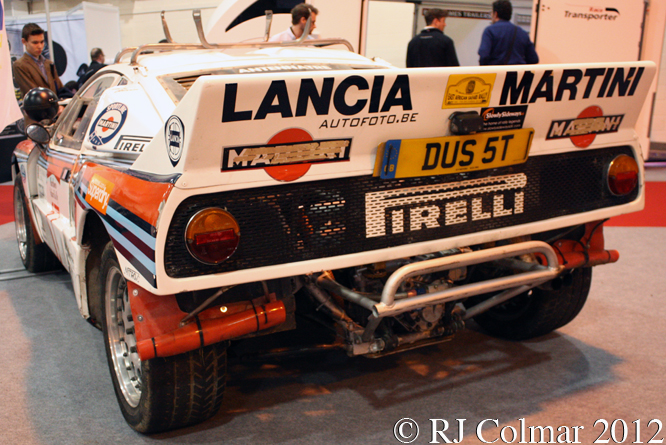
The Olio Fiat backed Lancia Rally 037 made it debut in 1982 but recorded only two finishes from 9 starts. However in 1983 the now Martini sponsored team recorded 5 wins from the 6 events it started, four to Walter Rörhl and one to Makku Alén, enough to secure the 1983 World Rally Championship for Lancia, the last such win for a rear wheel drive car, but not enough to secure the drivers championship for Walter who left the team at the end of the season to join Audi.

Lancia Rally 037, Race Retro, Stoneleigh,

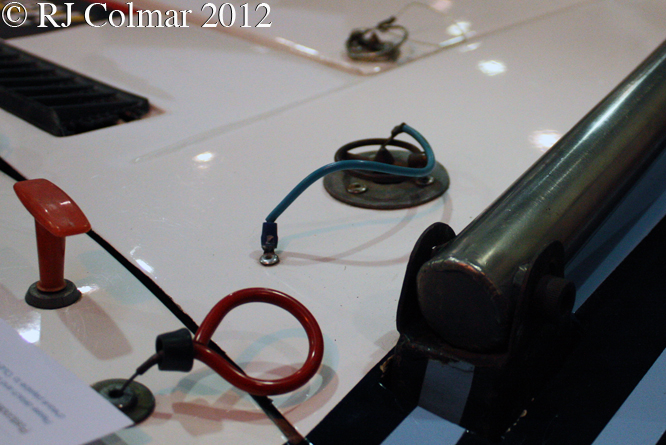
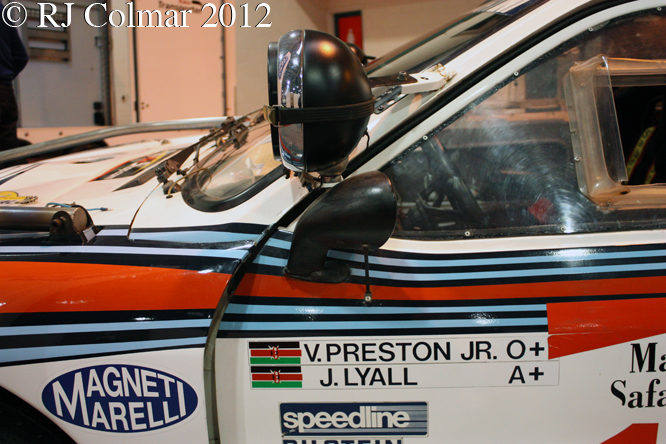
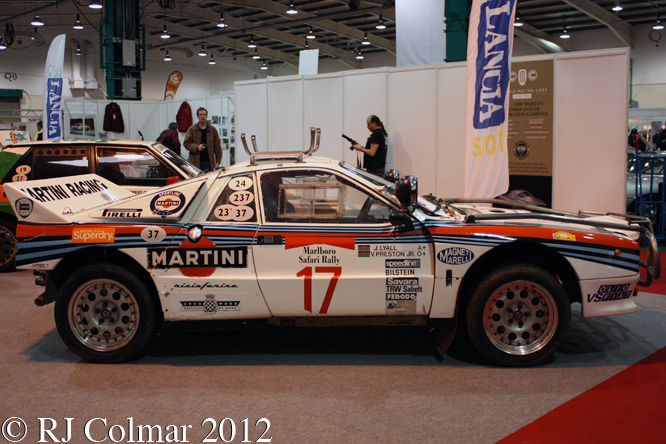
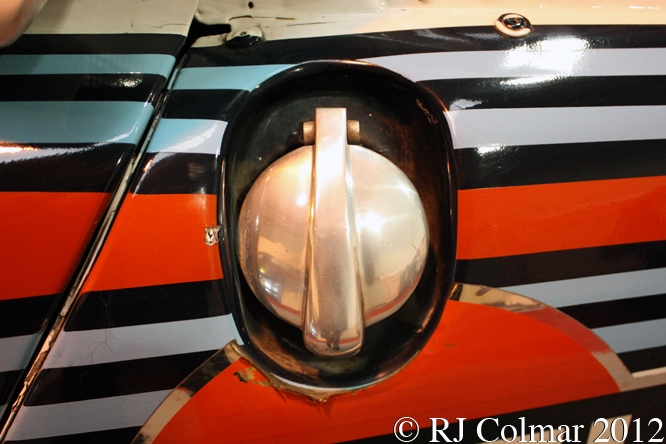
The #17 seen in these photographs was built in 1983 and is believed to have been used by Attilio Bettega during that season in Europe before being shipped to Kenya in 1984 in preparation for the Safari Rally.

Lancia Rally 037, Race Retro, Stoneleigh,


Vic Preston Jnr
, returned to the Martini fold to drive the car to a win in a Kenyan national championship round in preparation for the Safari on which he finished 6th in the same car with John Lyall.

Lancia Rally 037, Race Retro, Stoneleigh,

Subsequently Vic and John won the 1984 Kenyan National Rally Championship with the car after recording 10 wins from 12 events.

The car remained in Kenya and for the 1986 Safari Rally the Martini Lancia team prepared it with the latest 325hp 2,111 cc 128.8 cui motor with water injection to cool the supercharged air for John Hillier and David Williamson who recorded a 10th place finish.

Current owner David Kedward bought the car in Kenya and imported it to the UK.

Thanks for joining me on this “Kenyan National Champion” edition of “Gettin’ a li’l psycho on tyres” I hope you will join me again tomorrow when I’ll be looking at a BRM. Don’t forget to come back now !

Share

Nuova Balilla – FIAT 508C

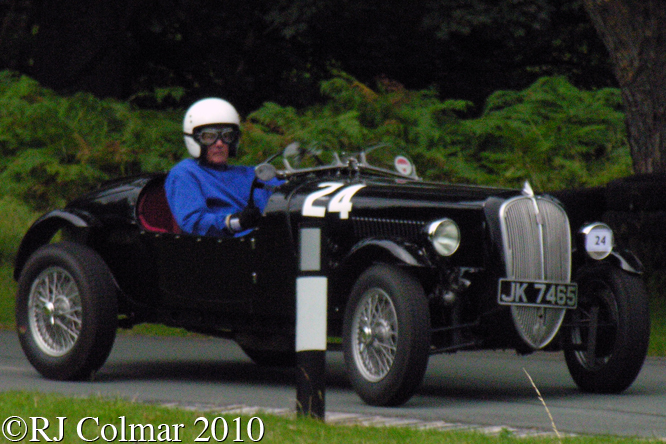
The FIAT 508C replaced the earlier 508, 508S and 508B models in 1937, 508C’s are also variously known as Nuova Balilla’s and 1100 in deference to their 1089 cc / 66 cui motor 4 cylinder motors producing 30 hp in standard spec and 40 hp in sporting CMM spec.

FIAT 508C, Cyril Hancock, VSCC Loton Park,

The FIAT 500 Topolino like styling of the 508C is credited to Dante Giacosa who was responsible for styling both models.

Modestly priced with independent front suspension and four speed gearbox the 508C was considered both a peoples car and a drivers car.

Cyril Hancock’s example seen above at Loton Park is a 1938 model first registered in the UK on March 3rd 1938.

With minor restyling and the 1100B name more popularly known as the “big nose” or ‘1100 musone’ in Italian production continued until the outbreak of hostilities.

Production of the 508C resumed after the ’39-’45 hostilities, with further modifications, in 1949. The post war model became the 1100E which remained in production until 1953.

Thanks for joining me on this “Nuova Balilla” edition of “Gettin’ a li’l psycho on tyres” I hope you will join me again tomorrow when I’ll be looking at a Safari Rally Lancia. Don’t forget to come back now !

Share

145 Inch Prototype – Chrysler Imperial 8 CG LeBaron Roadster Prototype

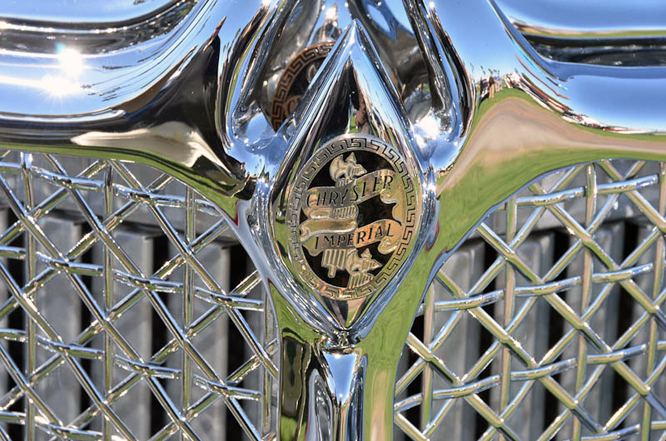
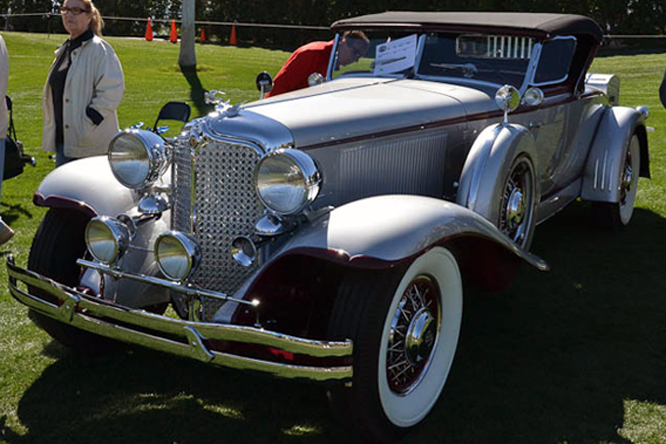
In July 1930 Chrysler launched the second generation CG Imperial referred to in the sales literature as the Imperial 8.

Chrysler Imperial 8 CG LeBaron Roadster, Desert Classics, Palm Springs,

The 8 referred to the new L head 6.3 litre 384.8 cubic-inch, nine-main bearing straight 8 motor which developed 125 horsepower in it’s original incarnation.

Chrysler Imperial 8 CG LeBaron Roadster, Desert Classics, Palm Springs,

The CG’s chassis has an imposing 145″ wheel base, the same as a contemporary Duesenberg.

Chrysler Imperial 8 CG LeBaron Roadster, Desert Classics, Palm Springs,

Imperial 8’s could be ordered with either roadster, coupé, saloon / sedan or limousine bodies, the latter could be ordered with a way ahead of the curve dictaphone.

Chrysler Imperial 8 CG LeBaron Roadster, Desert Classics, Palm Springs,

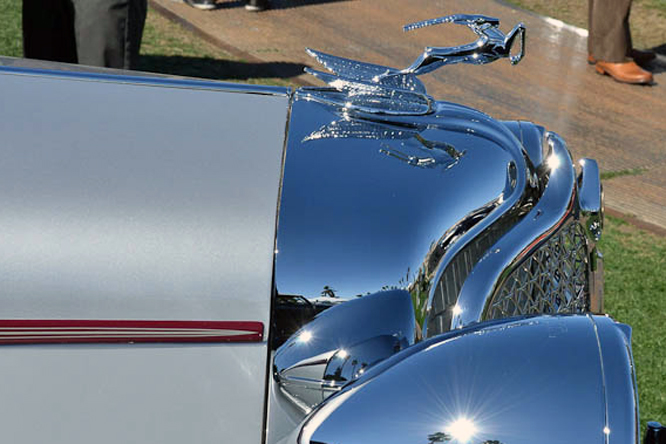
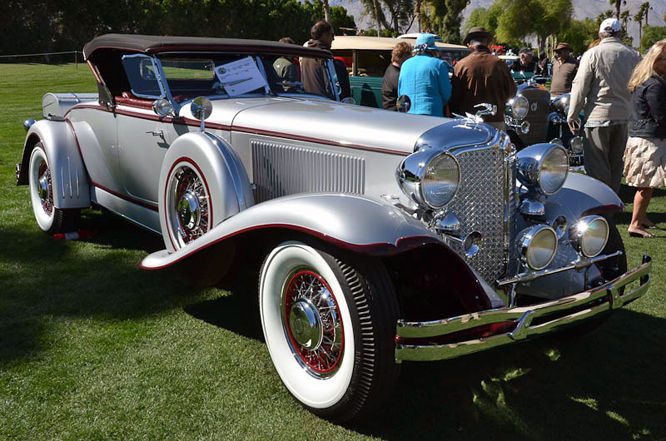
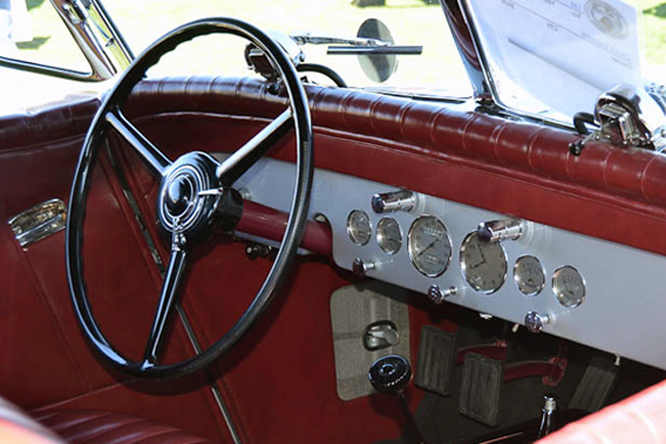
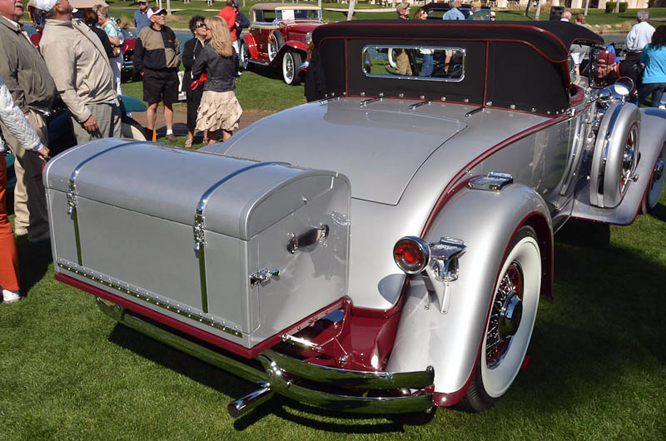
This particular car photographed by Geoffrey Horton at the 2013 Desert Classic meet in Palm Springs is a 1931 CG with a prototype body by LeBaron.

Chrysler Imperial 8 CG LeBaron Roadster, Desert Classics, Palm Springs,

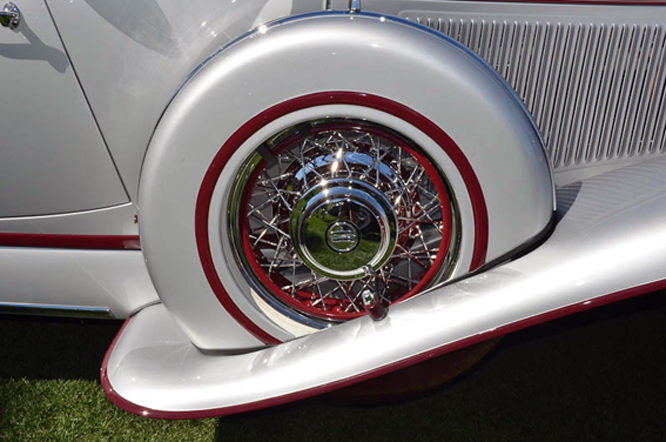
Unusually this roadster, which is believed to have been taken to the Chicago Auto Show, has no running boards.

Chrysler Imperial 8 CG LeBaron Roadster, Desert Classics, Palm Springs,

When the current owner bought this car he it restored in burgundy and silver in the absence of any knowledge as to the cars original colour scheme.

Chrysler Imperial 8 CG LeBaron Roadster, Desert Classics, Palm Springs,

The 145″ CG Imperial 8’s were only manufactured for one year the succeeding CL only had a 133″ wheel base.

My thanks to Geoffrey Horton for sharing his photographs.

Thanks for joining me on this “145 Inch Prototype” edition of “Gettin’ a li’l psycho on tyres” I hope you will join me again tomorrow. Don’t forget to come back now !
Share

The Great Western Sprint – Castle Combe

A couple of weeks ago I popped along to help out the Bristol Motor Club marshall there annual freeze fest better known as The Great Western Sprint at Castle Combe, mercifully it was a dry sunny day but as ever the persistent freezing wind out at Bobbies where I was stationed meant that humour had a very tough fight on it’s hands.

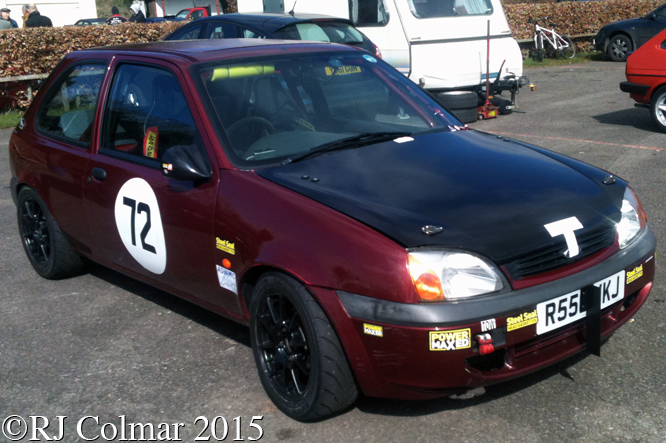
Ford Fiesta, Great Western Sprint, Castle Combe

My responsibilities precluded taking any photo’s of the action so here are a selection of arbitrary shots taken in the paddock shown in running order, first up from Abergavenny Martyn Davies’s Ford Fiesta with which he won the A1 Roadgoing class for cars with motors up to 1400 cc / 85.4 cui.

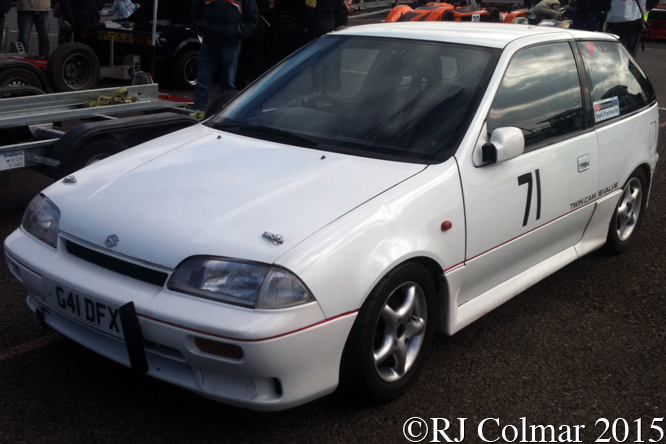
Suzuki Swift, Great Western Sprint, Castle Combe

Phil Tuckers 1989 Suzuki Swift, which finished second in class behind Martyn, caught my attention because the model was also sold as a Subaru Justy like the one Robert Solarski drove on the recent Tavern Motor Club Washingpool Farm Targa Rally.

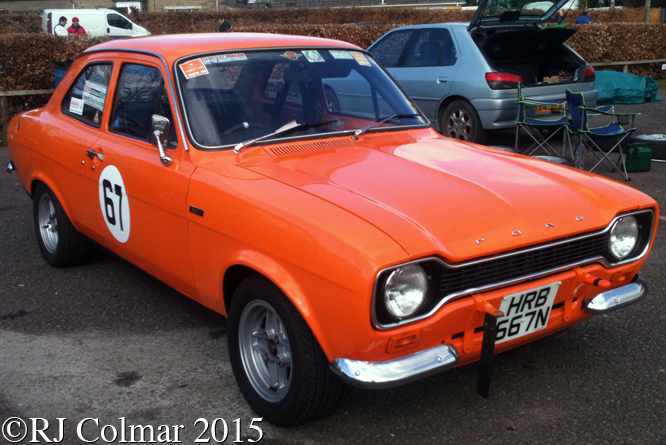
Ford Escort Mexico, Great Western Sprint, Castle Combe

On my way over to Castle Combe I observed Rowland Turner was wearing ear protectors at the wheel of his 1975 Mk 1 Ford Escort as he made steady progress on the motorway, Rowland finished 8th in the up to 1800 cc / 109.8 cui class.

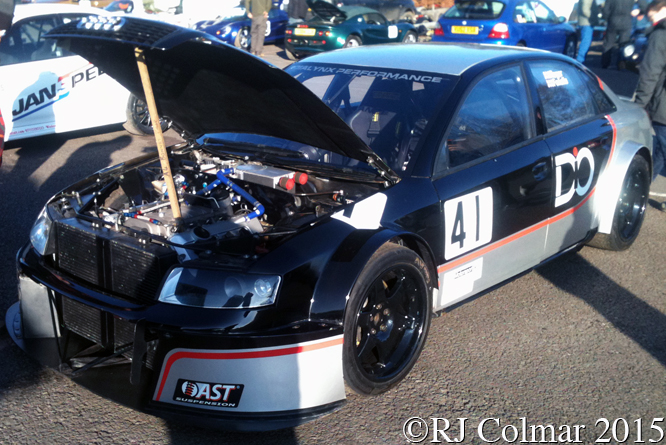
Audi S4, Great Western Sprint, Castle Combe

One of the more powerful cars in the paddock was Roger Banks’s Audi S4 powered by a twin turbo 4.2 litre / 256 cui 40 valve V8 said to produce over 700 hp. Roger recorded fastest time in his all wheel drive beast with a NASCAR sized rear spoiler in the C3 modified class on the practice run but broke down on his first timed run, leaving Keith Murray in his old school Audi 80 to take class spoils as he had done on this event in 2013.

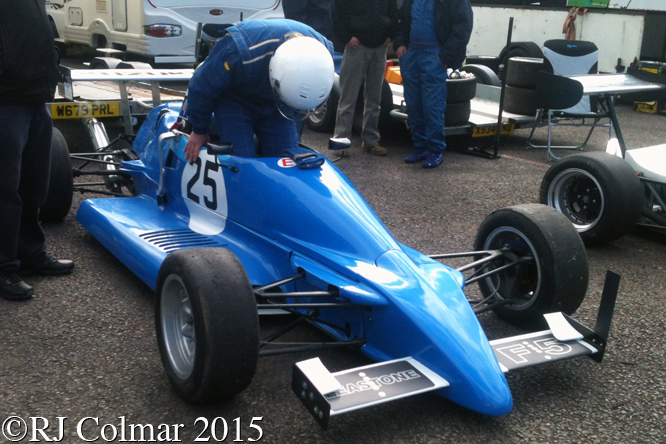
Leastone F5, Great Western Sprint, Castle Combe

6th in the up to Racing Cars up to 1100cc / 67 cui E1 category was Nick Mizen in his Irish built Leastone F5 fitted with a 900cc / 54.9 cui Suzuki Motorcycle engine.

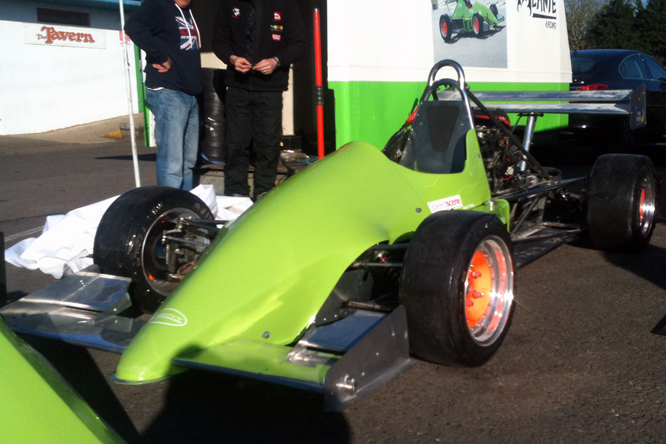
Jedi Mk 1, Great Western Sprint, Castle Combe

Martin Pickles qualified for the top 12 run offs and finished with 7th best time of the day with his 1 litre / 61 cui Jedi Mk1.

The larger engined Reynard DB Mk 1 shared by Mark Smith and Craig Sampson recorded first and second fastest times of the day respectively.

Thanks for joining me on this “The Great Western Sprint” edition of “Gettin’ a li’l psycho on tyres” I hope you will join me again tomorrow when I’ll be looking at a 1931 Chrysler. Don’t forget to come back now !
Share