The Sultan’s Super Sport – Bugatti EB110 Super Sport #39001

Having launched the Bugatti EB110 GT in 1991 Bugatti Automobilli SpA started working on an even higher performance model of the 212 mph EB110 GT known as the EB 110 SS (Super Sport).

Bugatti EB110 Super Sport, Classic Motor Show, NEC, Birmingham

The Super Sport made more use of carbon fibre to make the vehicle lighter and the quad turbo 60 valve V12 motor received a 50hp upgrade to just top 600hp. Externally the Super Sport is identifiable by the seven spoke alloy wheel rims.

Rest to 62.5 mph performance was reduced from 4.2 seconds to 3.2 seconds and top speed went up to 216 mph. In 1995 an EB110 Super Sport became the fastest car on ice with a world record speed of 185 mph.

Former World Rally Champion Juha Kankkunen first broke this record in 2007 taking the speed up to 199 mph and four years later took the record to over 205 mph driving Bentley’s on both occasions.

Chassis #39001 seen here, a couple of years ago at the Classic Motor Show at the NEC in Birmingham, was purchased new by The Royal Family of Brunei in 1993.

Thanks for joining me on this “The Sultan’s Super Sport” edition of “Gettin’ a li’l psycho on tyres” I hope you will join me again tomorrow. Don’t forget to come back now !

Share

The Corporation’s 300S – Maserati 300S

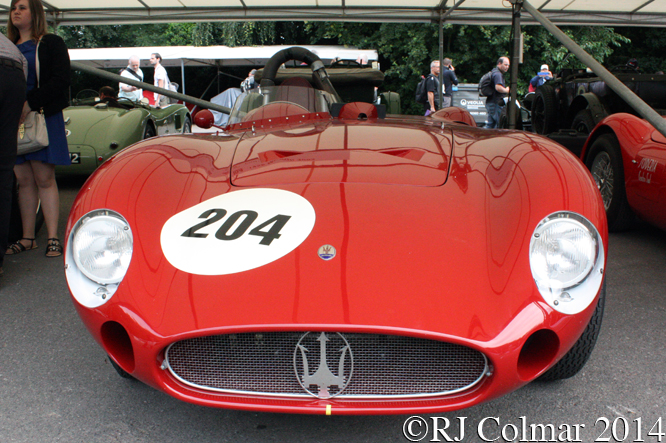
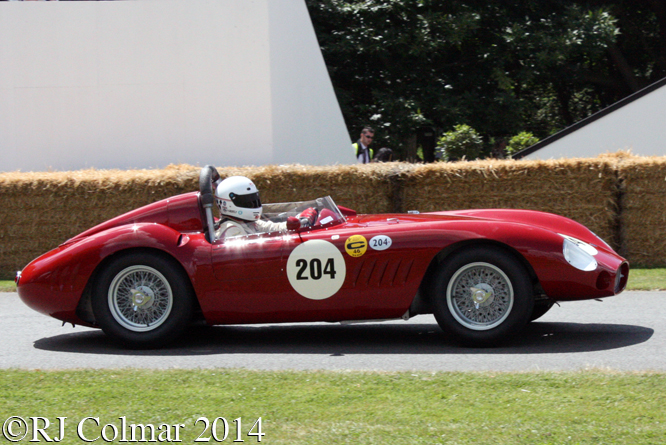
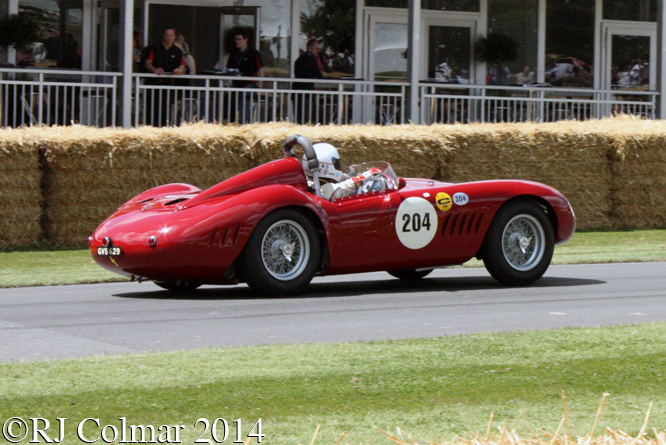
If cars had karma one might wonder what on earth today’s Maserati 300S chassis #3060 had been upto in it’s previous life.

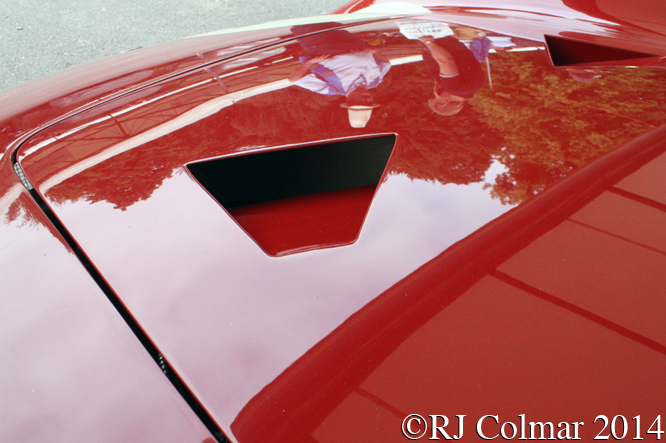
Maserati 300S, Goodwood Festival of Speed

#3060 was originally sold to Maserati Corporation of America in October 1955 and the car made it’s debut at the 1956 Sebring 12 hours with Italian Cesare Perdisa and Argentinian Carlos Menditéguy at the wheel.

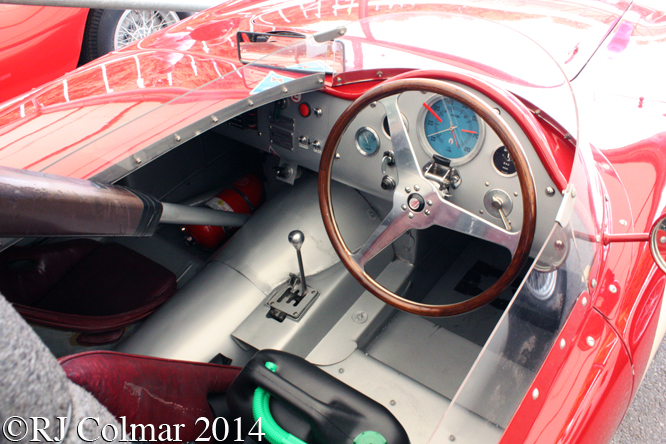
Maserati 300S, Goodwood Festival of Speed

39 laps into the race the car was retired with accident damage, then on the way back to New York the trailer carrying #3060 was hit by a truck causing further damage.

Maserati 300S, Goodwood Festival of Speed

By 1957 Maserati Corp of America had repaired the car and Dale Duncan drove #3060 to victory on the Little Switzerland Hillclimb at Euraka Springs. A week later Carroll Shelby then drove the car to the first of two consecutive victories first at Caumberland Airport and then a month later at Lime Rock.

Maserati 300S, David Franklin, Goodwood Festival of Speed

Bob Butcher bought the car miway through 1957 and he scored a 2nd at Thompson before hiring Carroll Shelby to drive #3060 in the Road America 500 at Elkhart Lake where he finished 2nd.

Maserati 300S, David Franklin, Goodwood Festival of Speed

It is believed that #3060 passed into the hands of Rallye Motors by 1959 and it is possible that #3060 was scheduled to be driven in the ’59 Sebring 12 Hours by Edwin P. Lawrence and James Cook. However there is at least one other 300S chassis, of a still extant vehicle, that Edwin was driving when he fatally crashed in practice.

Maserati 300S, David Franklin, Goodwood Festival of Speed

During the 1960’s #3060 was seen with a ‘ugly’ fibre glass body allegedly covering the original aluminium body, the chassis was also fitted with a Chevy V8 and GM Auto transmission.

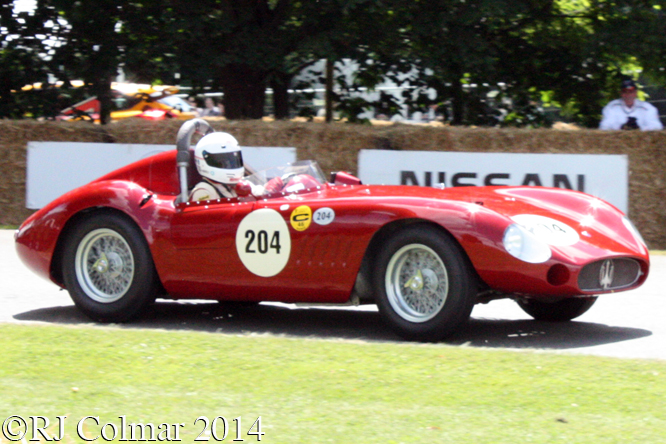
The car was restored in 1991 and fitted with a motor that was assembled from ‘an amalgam of’ parts held by Cameron Miller. 1978 British Hillclimb Champion David Franklin is seen at the wheel of #3060 in these photographs during this years Goodwood Festival of Speed.

Thanks for joining me on this “The Corporation’s 300S” edition of “Gettin’ a li’l pshycho on tyres”, I hope you will join me again for a look at a Sultan’s Bugatti tomorrow. Don’t forget to come back now !

Share

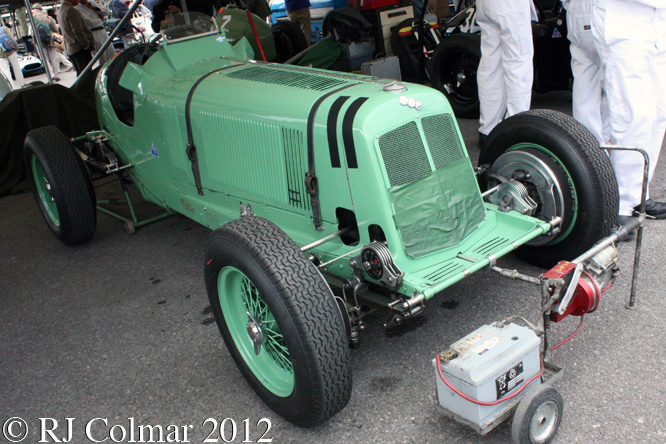
Conquering Europe :- ERA R3A

In 1933 Raymond Mays the leading founder of ERA (English Racing Automobiles), set out to manufacture racing cars capable of upholding British prestige in Continental European races.

ERA R3A, Mark Giles, VSCC Spring Start, Silverstone.

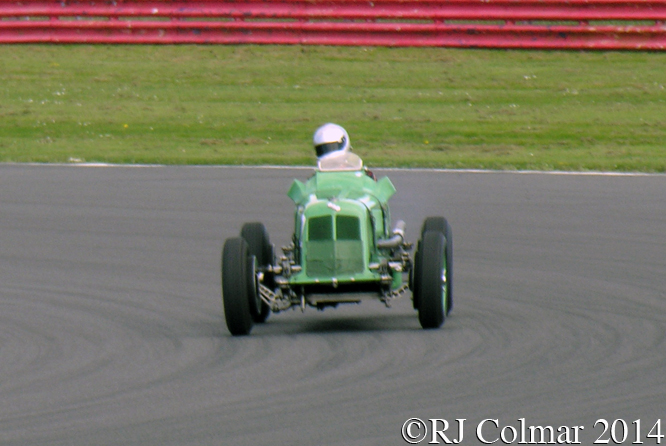
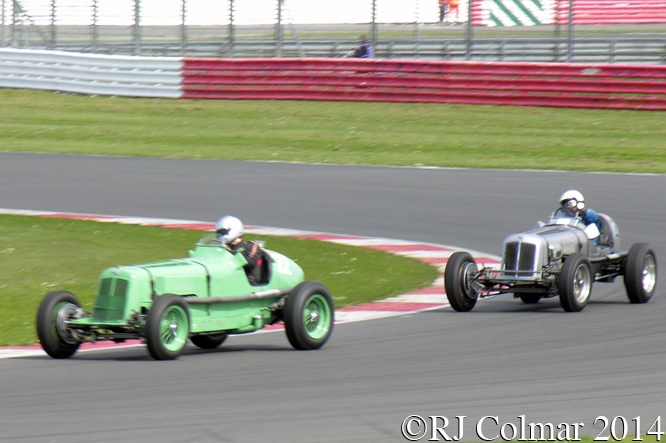
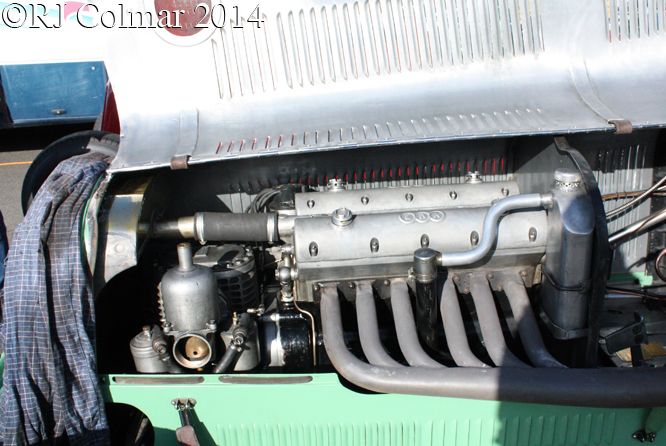
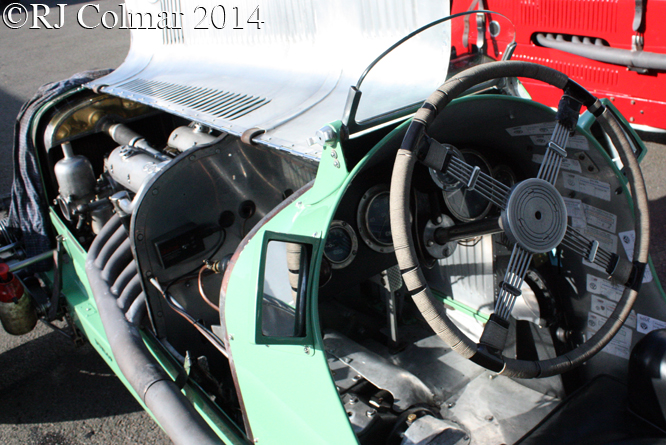
In 1934 ERA completed three vehicles and ERA R3A seen here was the third and first ERA to be built with a 2 litre / 122 cui motor.

ERA R3A, Mark Giles, Spring Start, Silverstone.

Raymond Mays drove R3A until it was sold at the end of 1935 and counted among his successes in the car an outright standing start world 1km record and more importantly the marques first victory in Europe.

ERA R3A, Goodwood Revival.

For the 1935 Eifelrennen meeting at the Nurburgring a 1.5 litre / 91.5 cui six cylinder voiturette class motor and Raymond drove the car to victory in the Voiturette Race beating the Maserati of Hans Reusch.

ERA R3A, VSCC Spring Start, Silverstone.

R3A remained a voiturette when it was sold in 1936. In 1937 Charlie Martin recorded another win in the Voiturette event supporting the German Grand Prix at Avus .

ERA R3A, VSCC Spring Start, Silverstone.

In 1938 Roy Hesketh bought R3A and took it home to South Africa where it remained until at least 1957. Current owner RT Skipworth is a second time custodian of R3A having first owned it 1998 to 2003 and then again since the start of 2014.

ERA R3A, VSCC Spring Start, Silverstone.

R3A was fitted with an original spec 2 litre motor in 1976 and it is in this form that Mark Gillies can be seen driving the to victory in the 80th ERA Anniversary race during the VSCC Spring Start meeting at Silverstone earlier this year.

Thanks for joining me on this “Conquering Europe” edition of “Gettin’ a li’l psycho on tyres” I hope you will join me again for Maserati Monday tomorrow. Don’t forget to come back now !

Share

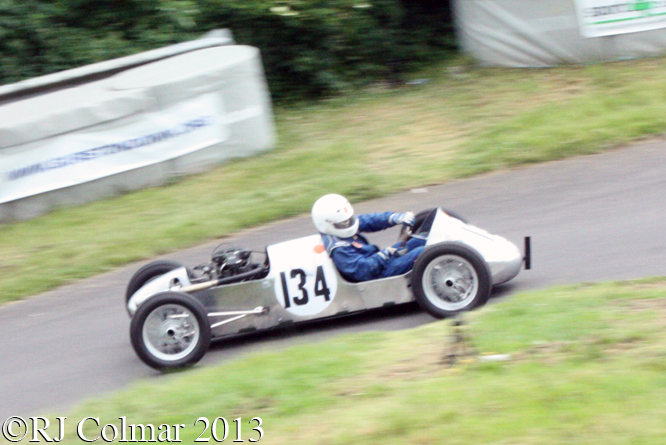
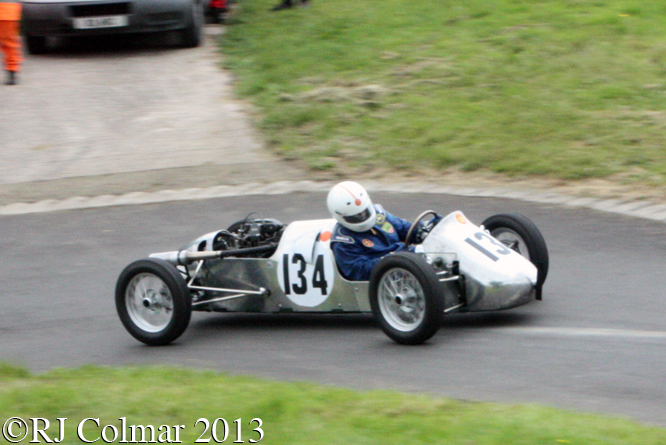
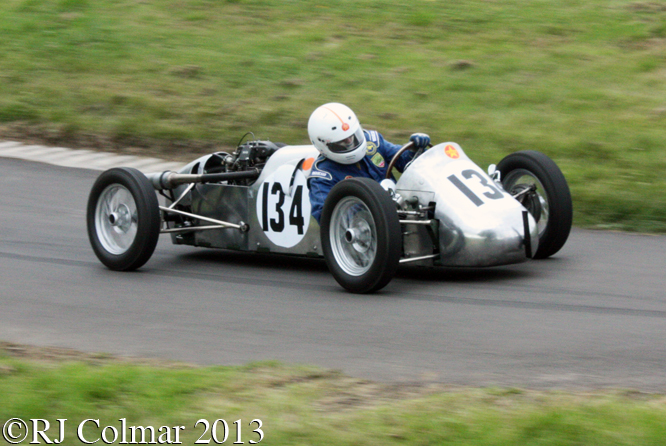
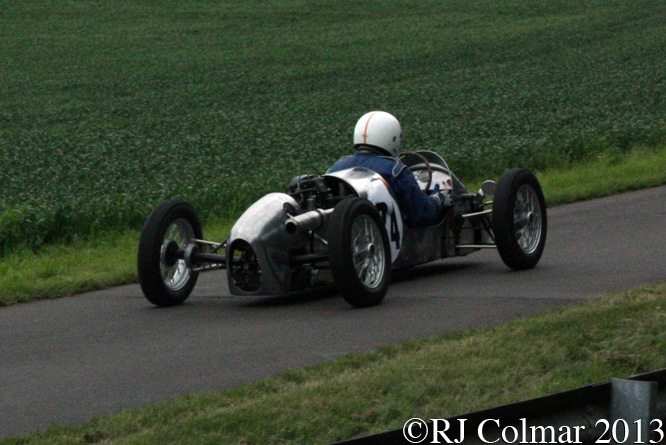
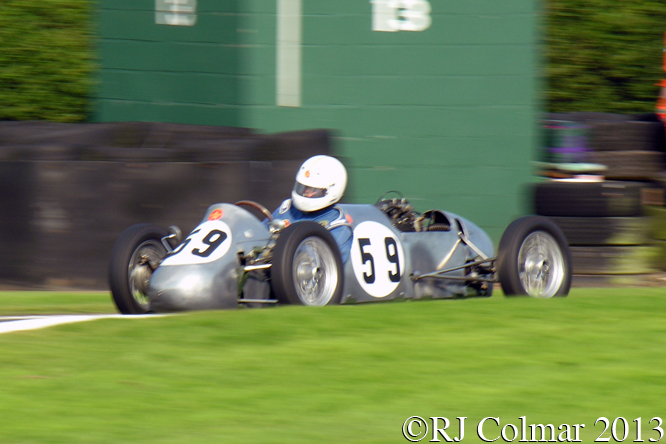
Pinacle Of 500cc F3 Design – Staride Mk 3

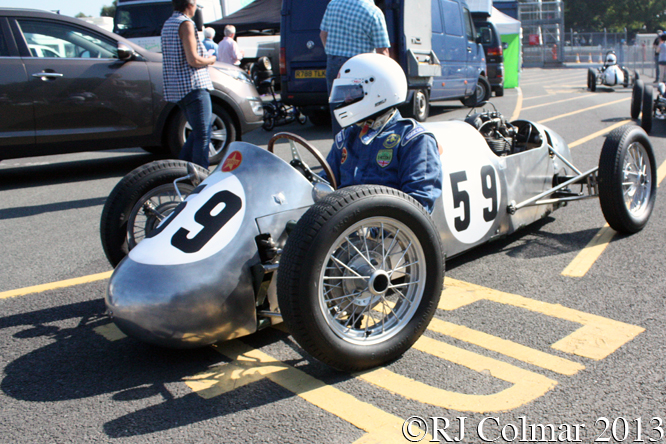
Mike Erskine Speedway rider who owned a factory that manufactured motor vehicle radiators who also built Staride frames for Speedway motorcycle racing in Southampton.

Staride Mk3, Xavier Kingsland, Gurston Down.

At the end of 1951 he quit Speedway and started building a prototype 500cc Formula 3 car to a design, an evolution of a Kieft design, by former Kieft designer Dean Delamont and Cecil Mitchell for John Hambin.

Staride Mk3, Xavier Kingsland, Gurston Down.

On it’s debut at Goodwood in April 1952 John finished 4th. A production protoype Staride also appeared in 1952.

Staride Mk3, Xavier Kingsland, Gurston Down.

For 1953 a production run was started and Reg Bicknell who had successfully built and raced the Revis was one of the works supported drivers.

Staride Mk3, Xavier Kingsland, Gurston Down.

Reg was a regular top three finisher in International Formula 3 events through 1953 as was Dennis Taylor in 1954.

Staride Mk3, Xavier Kingsland, Oulton Park.

It is believed 10 Starides, weighing 500lbs, were built and they were offered for sale at £550 less engine and gearbox.

Staride Mk3, Xavier Kingsland, Oulton Park.

Today’s featured 1953 Staride Mk3 is seen at Gurston Down and Oulton Park last year with Xavier Kingland at the wheel.

Anyone within traveling distance of Castle Combe will have the opportunity to see 500cc Formula 3 cars, like the Staride and Revis I looked at last week, tomorrow where they will be racing for the Bristol Aeroplane Company Motor Sports Club Challenge Trophy along with seven more races and a plethora of classic car demonstrations and static displays.

Thanks for joining me on this “Pinacle Of 500cc F3 Design” edition of “Gettin’ a li’l psycho on tyres”, I hope you will join me again tomorrow when I be starting an 80th Anniversary Celebration of English Racing Automobiles (ERA). Don’t forget to come back now.

Share

Roelofs Replica – Ferrari 250 GTO Replica

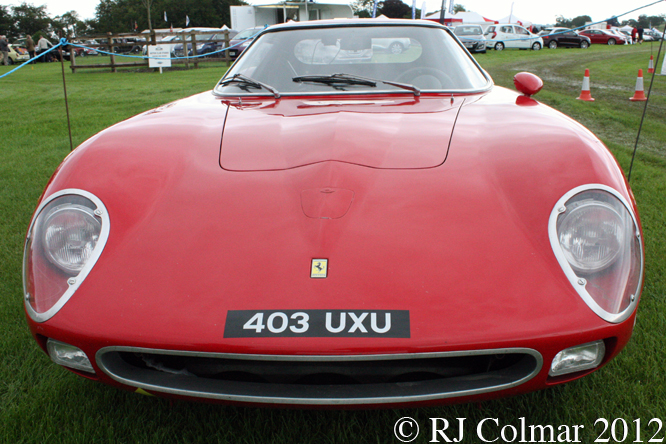
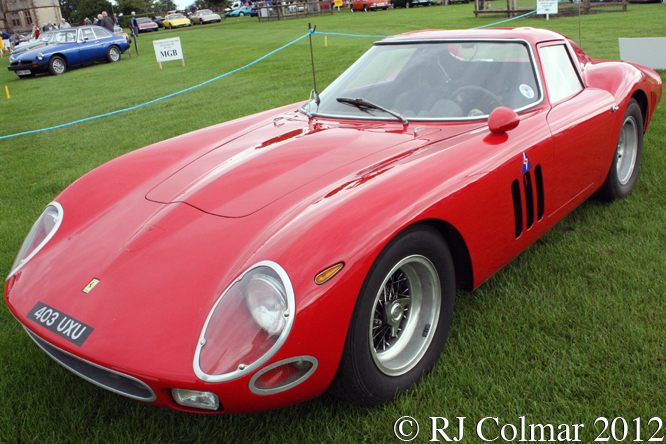
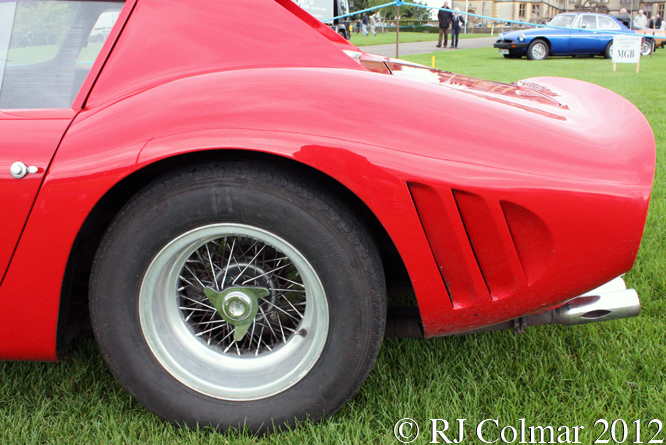
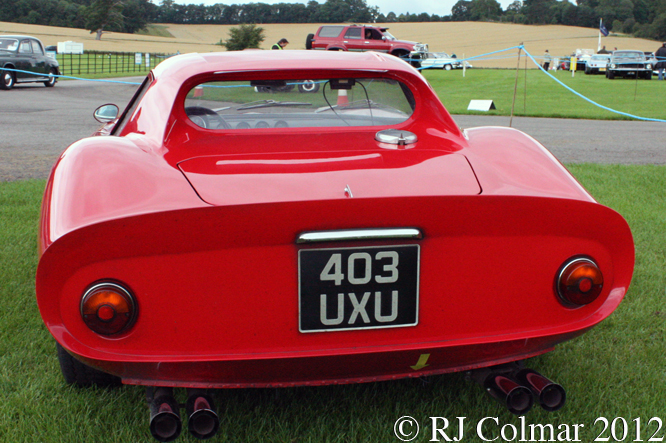
Today’s featured Ferrari is a Replica ’64 250 GTO notchback seen at Sherbourne Castle a couple of years ago.

Ferrari 250 GTO Replica, Sherborne Castle

The ever growing demand for real classic Ferrari’s drove up prices massively in the late 1980’s and saw some seek a cheaper alternative by commissioning replica’s usually based on a Ferrari 250 GT/E chassis.

Ferrari 250 GTO Replica, Sherborne Castle

By shortening a 250 GT/E chassis a passing likeness to the more desirable 250 GT SWB, GTO, and TR models could be achieved at a cost of $300,000 plus a 250 GT/E donor car.

Ferrari 250 GTO Replica, Sherborne Castle

While the exterior likeness might pass muster shortening a 250 GT/E chassis meant that often the gear shift was not in the correct place and or the seats beeing too far forward as a result of the 250 GT/E suspension being bulkier than that on the model being copied, also the steering geometry for a long wheel base GT/E was not the same as for shorter models.

Ferrari 250 GTO Replica, Sherborne Castle

It appears that today’s featured Replica was built by Piet Roelofs, on the eastern outskirts of Arnhem in The Netherlands, who is reckoned to be one of the better Replica manufacturers by Micheal Sheehan an exotic car broker who tracks over 200 replica Ferrari’s.

My thanks to El Wayne at Ferrari Chat for pointing me in the direction of the manufacturer of today’s Replica.

Thanks for joining me on this “Roelofs Replica” edition of “Gettin’ a li’l psycho on tyres” I hope you will join me again tomorrow when I’ll be looking at another 500cc Formula 3 Car. Don’t forget to come back now !

Share

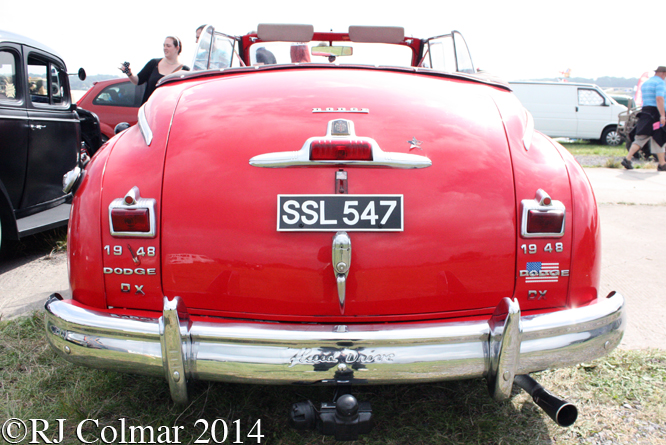
The Smoothest Car Afloat – Dodge Deluxe Convertible

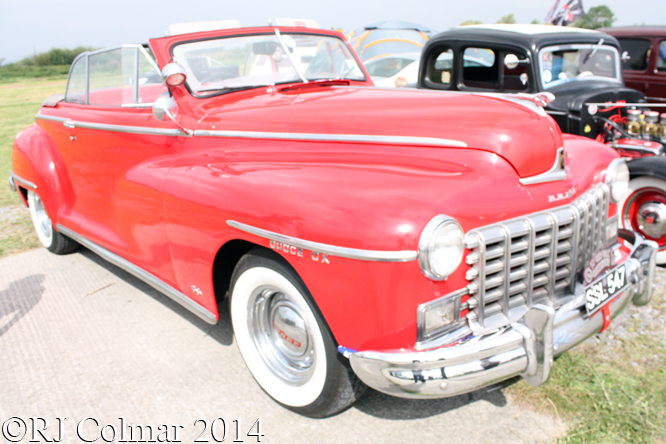
To mark the Centenary Anniversary of the foundation of Dodge, by brothers Horace and John, in 1914 this months Americana Thursday posts will feature five post ’45 Dodge models starting with today’s featured 1948 Dodge Deluxe Convertible.

Dodge Deluxe Convertible, Summer Classics, Easter Compton

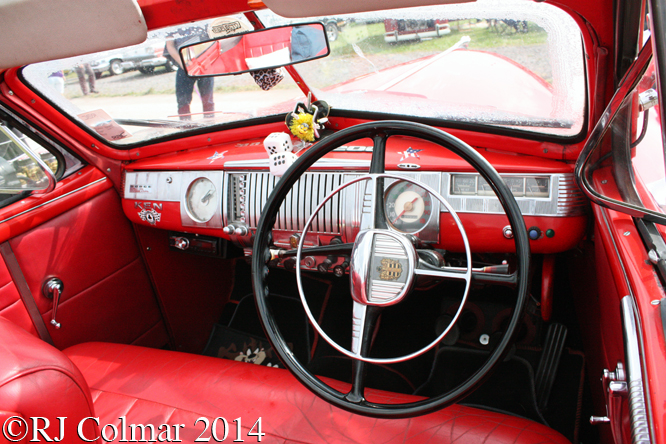
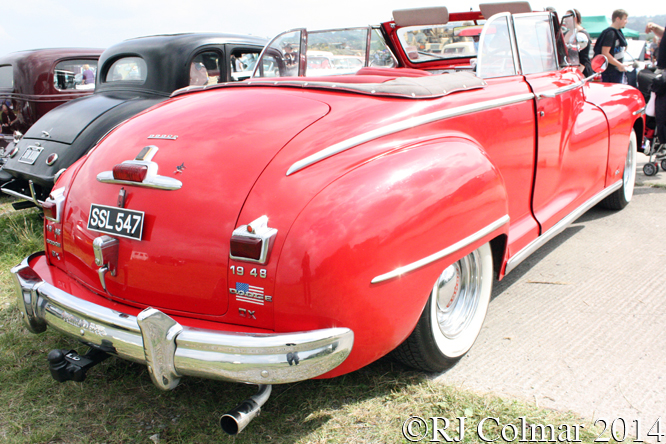
When Dodge resumed production of private motor vehicles in 1945 like most manufacturers it turned to it’s 1942 designs with minor cosmetic alterations. The D24 1948 Dodge Deluxe Convertible, seen here at Summer Classics Easter Compton, is no exception being based on a design that can be traced back to 1940.

Dodge Deluxe Convertible, Summer Classics, Easter Compton

Power for the ’48 Deluxe models came from an L head 3.8 litre / 231 cui in line six which produced 100 reliable horsepower. Note the DVLA records for this car show it is fitted with a 5 litre / 302 cui motor of unspecified age and origin.

Dodge Deluxe Convertible, Summer Classics, Easter Compton

1948 D24 Dodges were available with 6 or 7 passenger sedan, 4 door town sedan, 2 door club coupe or convertible bodies supplied to Dodge by Briggs Manufacturing Company which was eventually purchased by Chrysler in 1953 after the death of Walter O. Briggs in 1952.

Dodge Deluxe Convertible, Summer Classics, Easter Compton

The success of the D24 models can be judged by the fact that 10 years after the model had stopped being produced they were still being used by taxi operators across the USA such was their comfort for fares and reliability for operators.

Dodge Deluxe Convertible, Summer Classics, Easter Compton

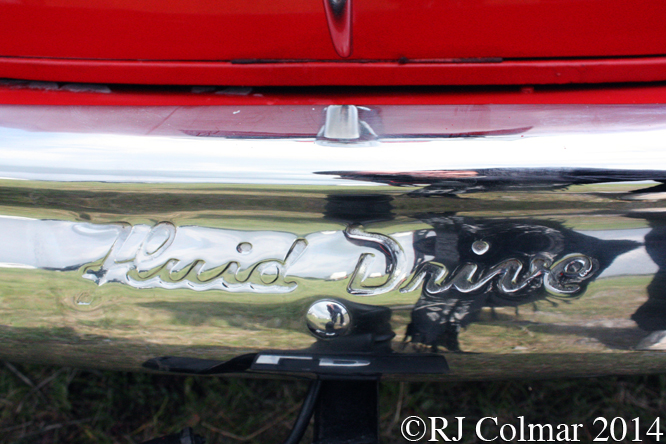
One of the innovations the series benefited from was Fluid Drive, a fluid clutch which meant a stick shift manual could be operated like an automatic requiring less clutch operation than a conventional friction clutch and no doubt contributed to the strap line “The Smoothest Car Afloat” which stayed with the Dodge D24 series from 1946 to 1949.

Dodge Deluxe Convertible, Summer Classics, Easter Compton

Production of the Dodge D24 Deluxe and sister Custom models peaked in 1948 at over 250,000 units, production of these models continued into the first three months of 1949 before they were replaced by an all new design.

Thanks for joining me on this “The Smoothest Car Afloat” edition of “Gettin’ a li’l psycho on tyres”, I hope you will join me again for Ferrari Friday tomorrow. Don’t forget to come back now !

Share

Inspiring Engineers :- Renishaw Castle Combe Heat 2014

On Sunday I popped along to Castle Combe where my friends son Ben Goodman was taking part in the Renishaw Castle Combe Heat 2014 meeting for electric vehicles in the Greenpower series designed to inspire young engineers.
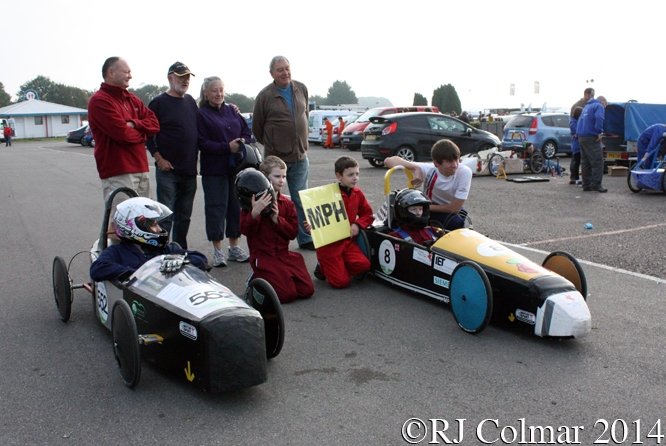
Team MPH, Renishaw Castle Combe Heat

Ben seen above in the #552 MPH+, Magnotsfield Petrol Heads, races in the F24+ class for 24 volt powered vehicles with drivers aged 16 to 25. Next to him is Magnotsfield Schools original #8 MPH which finished 8th in last seasons F24 class for drivers 11 to 16.
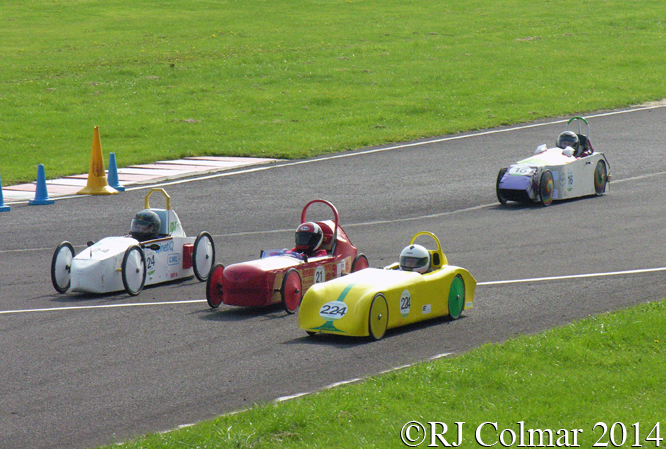
Renishaw Castle Combe Heat 1 F24

The Greenpower Series races last 90 mins for the younger F24 class requiring 2 driver changes while the races for the F24+ class are single driver one hour ‘sprints’. There were two races for the F24 class and only one for the F24+ class.
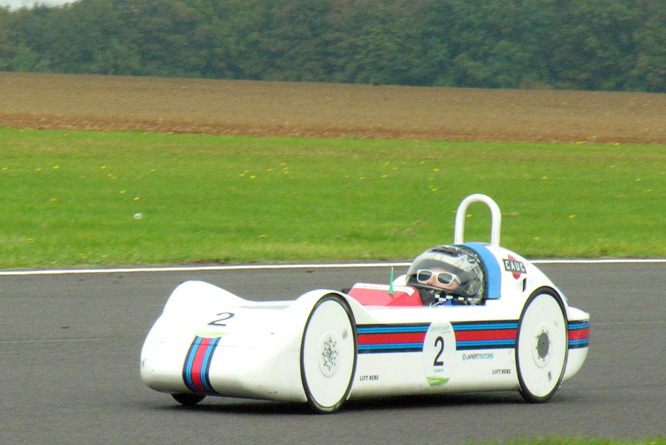
Dougal, Renishaw Castle Combe Heat

What really astounded me about these races was variety of approaches to making a vehicle with a stock battery and stock motor go the furthest distance, added to which Sandbach High School went the extra mile and added cool graphics to both of their vehicles the Martini striped Dougal above and …
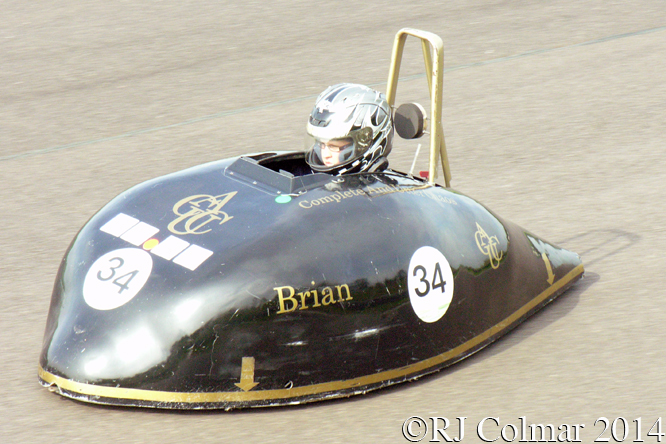
Renishaw Castle Combe Heat

…Brian which alongside the circa 1973 Lotus inspired graphics above carries the strap line “Complete And Utter Chaos” with CAUC logo’s. Unfortunately while quick Dougal proved to be unreliable while Brian made it to two mid table finishes in the F24 races and 15th from 19 in the F24+ race.
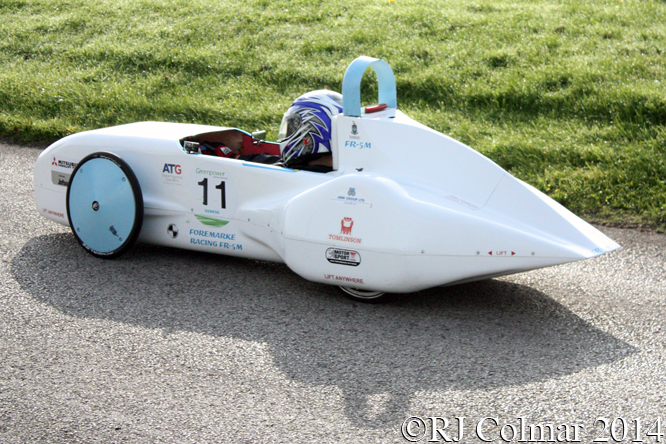
FR-5M, Renishaw Castle Combe Heat

The FR-5M from Foremarke Hall school in Derbyshire showed some particularly elegant lines around the rear wheels. The FR-5M only took part in the F24 races finishing 10th in the first race and 13th in the second.
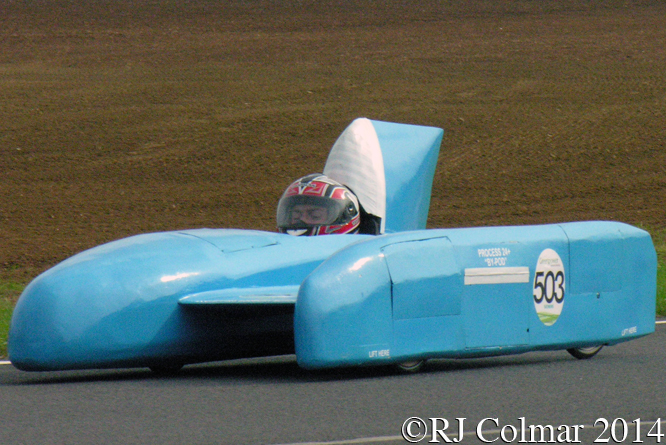
BY-Pod, Renishaw Castle Combe Heat

Twin boom cars are a rarity despite having appeared in Can Am in the 1980’s, the Indy 500 in the 1960’s and Le Mans 24 hours in the 1950’s, if with little success. The local Chipping Sodbury School have revisted the theme with their BY-Pod which finished 7th in the F24+ race covering 31.5 miles in an hour.
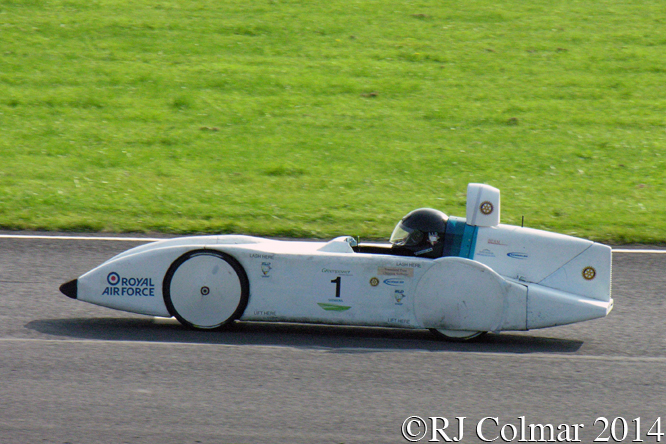
Rotary Racer +, Renishaw Castle Combe Heat

Chipping Sodbury’s lead entry Rotary Racer+ won both of the F24 races and finished second in the F24+ event covering 37 miles in an hour.
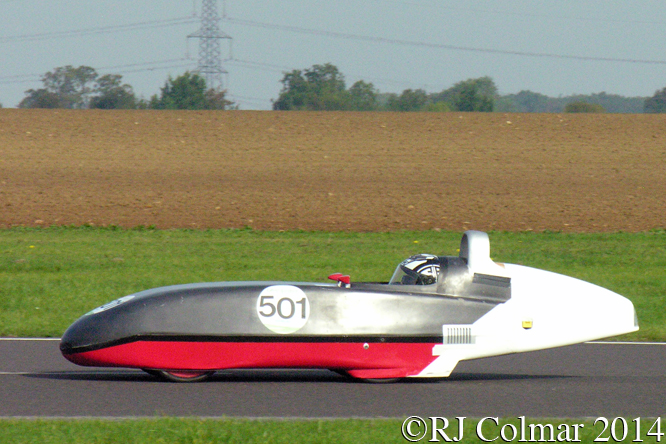
Jet, Renishaw Castle Combe Heat

Winning the F24+ event by a whole lap was Jet entered by Cullimore Racing for David Cullimore, National Champion since 2012, who covered 38.8 miles in the hour.

Ben finished a respectable 10th with 27.6 miles recorded and the #8 Magnotsfield School car finished 9th in the first F24 race with a team of rookie drivers, but could only manage 23rd in the second thanks to suspected tracking damage.

My thanks to Pete Goodman and Martin Baker for telling me about this event.

Thanks for joining me on this “Inspiring Engineers” edition of “Gettin’ a little psycho on tyres” I hope you will join me again tomorrow. Don’t forget to come back now !
Share