Tag Archives: Art

Goodwood Revival #3 – Volvo P1800S

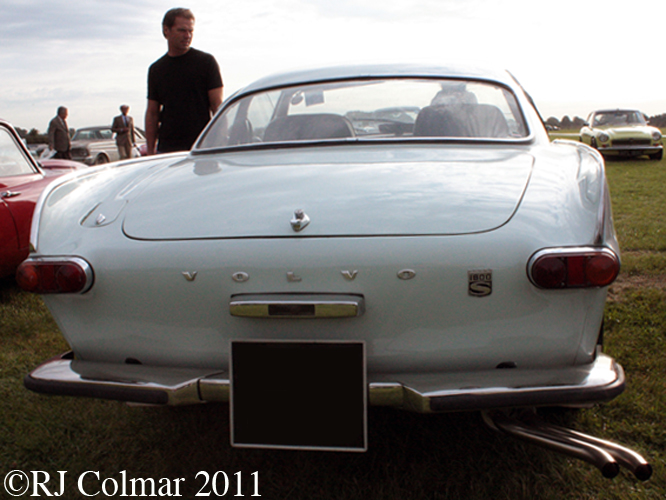
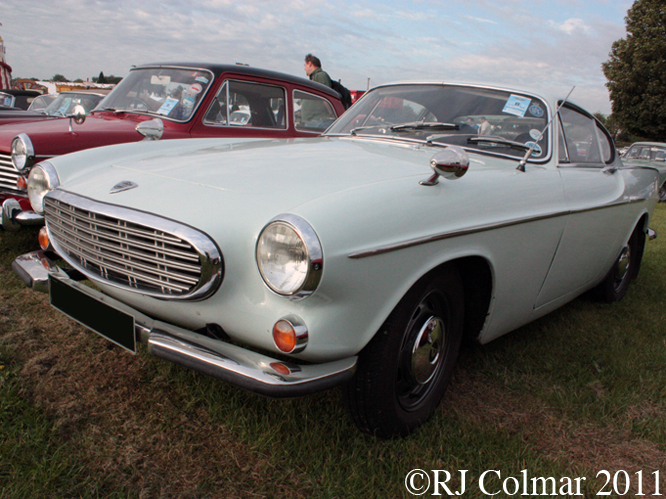
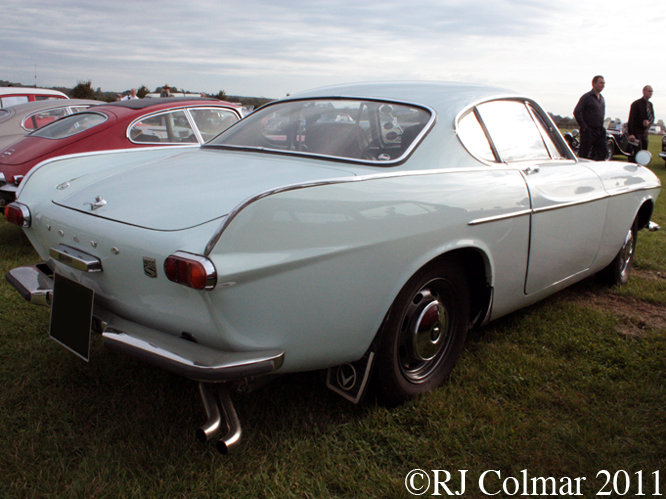
The Volvo P1800 designed by Pelle Peterson, is celebrating it’s 50th Anniversary along with the E-Type Jaguar this year, surprisingly in the UK the Volvo was the more expensive of the two models.

Volvo P1800S, Goodwood Revival

Like the E-Type the P1800 was launched at the 1961 Geneva Motor Show, with a 4 cylinder 115hp B18 motor this 1967 model is capable of 109 mph.

Volvo P1800S, Goodwood Revival

The producers of the thriller TV series The Saint initially approached Jaguar to see if they would supply a couple of, the much in demand, E-Types for the show, after they were turned down they asked Volvo for a couple of P1800’s who obliged by supplying two British bodied, built by Jensen, P1800’s for the first series and a Swedish built P1800S for a later series.

Volvo P1800S, Goodwood Revival

The actor Roger Moore star of The Saint, which immortalised the P1800, liked the P1800 so much he bought one.

Volvo P1800S, Goodwood Revival

In the late 80’s I came very close to taking on a P1800S as an investment, a second look at the car in daylight revealed I’d need to double my investment just to stay ahead of the rust, the following year the economy tanked. Wonderful cars full of character that the P1800’s are, I’m glad I played it safe on that particular occasion.

Thanks for joining me on this Simon Templar edition of ‘Gettin a lil’ psycho on tyres’, I hope you join me again for some Goodwood Americana tomorrow. Don’t forget to come back now !

Share

Goodwood Revival #2 – Rover 2000TC

Welcome to the 365th edition of ‘Gettin’ a lil’ psycho on tyres’ when I started this blog one year ago I thought I might struggle to make it last a week, I can’t quite believe that my enthusiasm now is stronger than it was then, this is in no small part due to every one of the 44,000 plus hits that I have had from over 20,000 views.

I’d like to thank every one who has popped by, all those who have left comments and especially all those who have generously given, tickets, invitations, time and effort donating photographs details on the vehicles and stories for me to publish. Over the next couple of weeks I will be powering up a dedicated GALPOT website for these blogs, all of the existing blogs will be kept on line, you will receive timely updates as the new website progresses.

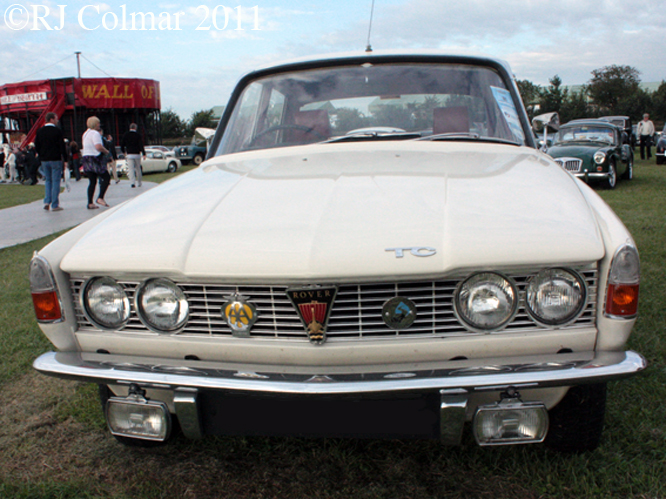
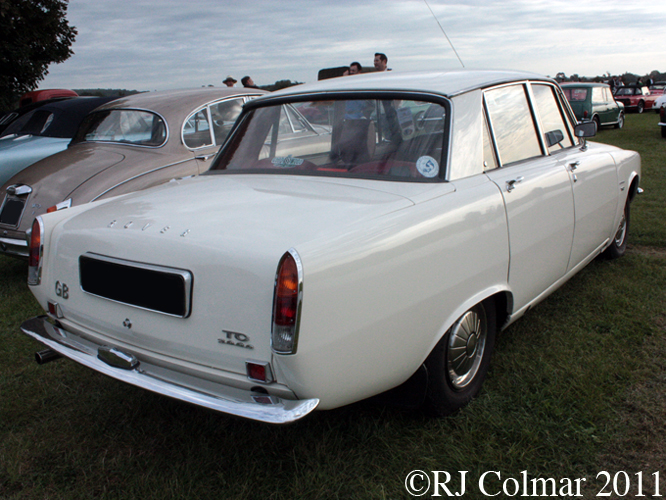
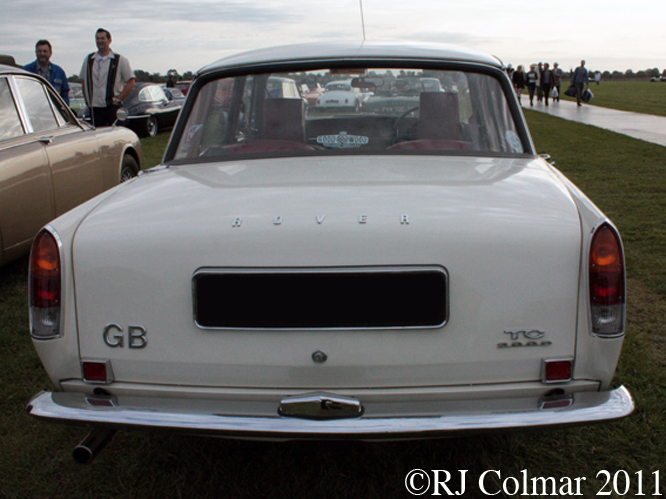
Today’s car the Rover 2000TC is a personal favourite, identical to a little Corgi model I had that featured jewel head lights, a sky roof and golden jacks so that I could swap the wheels. I must have driven that toy Rover 2000TC several hundred thousand miles on my hands and knees and changed the wheels several thousand times too.

Rover 2000 TC, Goodwood Revival

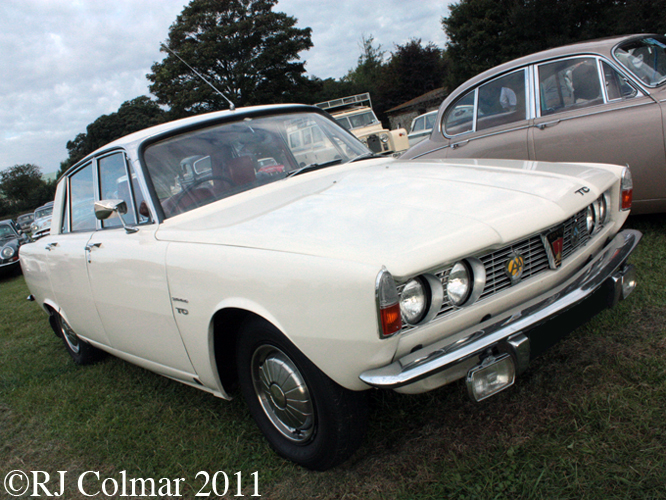
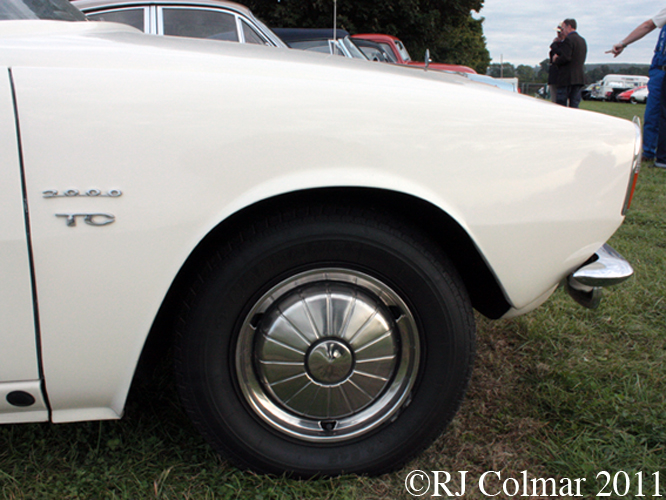
Launched in 1963 the Rover 2000 was originally supplied with 104 hp single carburettor 4 cylinder motor, by 1966 Rover launched an export model with a more powerful 124 hp Twin Carburettor (TC) motor.

Rover 2000 TC, Goodwood Revival

Initially the 2000TC was only made available to export markets, officially because the twin carb manifolds were in short supply and because of a 70 mph speed limit introduced in the UK in 1965.

Rover 2000 TC, Goodwood Revival

Six months after the 2000 TC was launched supply of twin carburettor inlet manifolds improved and the 2000 TC was made available in Britain.

Rover 2000 TC, Goodwood Revival

Unlike rivals like the Citroen DS and Triumph 2000 the heavily sculpted rear seats of the P6 meant only two passengers could be carried in the back.

Rover 2000 TC, Goodwood Revival

The de Dion rear suspension used in the construction of the P6 limited the amount of space in the boot and many P6’s used to carry a spare tyre wrapped in a purpose made vinyl bag, on top of the boot lid.

Additional P6 blogs can be found on the following links, P6 Cabriolet, P6 2200SC, P6 Estoura.

Thanks for joining me on this 1st anniversary edition of ‘Gettin’ a lil’ psycho on tyres’, I hope you will join me again for the 366th edition tomorrow. Don’t forget to come back now !

Share

Goodwood Revival #1 – Track Action

After four all to brief hours sleep I woke up at 4:30 am on Friday and got togged up in swinging sixtyish accessorized fancy dress which included button collard shirt, period scarf, flat hat and a pair of round blue shades.
Jaguar XK 140, Goodwood Revival

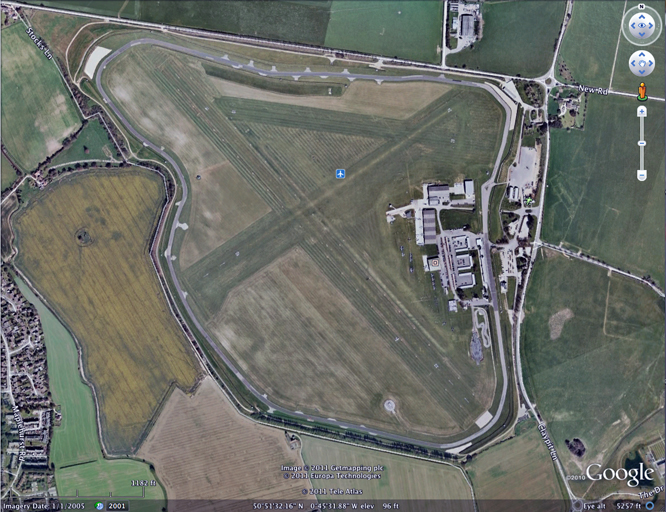
By 5.30 am I was headed back towards Lord Marches renowned Goodwood estate, this time to visit his private race track which I had not seen since in 1987. Back then I was visiting to take part in a track day, the circuit had not been used for racing since 1966 and the facilities were in a sad state of disrepair.
Goodwood Revival

Five years after the runaway success of the inaugural 1993 Goodwood Festival of Speed, held on a special hill climb track round the main buildings of his estate, Lord March decided to revive events on his racing circuit with an event dedicated to vehicles that raced in the Circuits halcyon days from 1948 to 1966.
Goodwood Revival

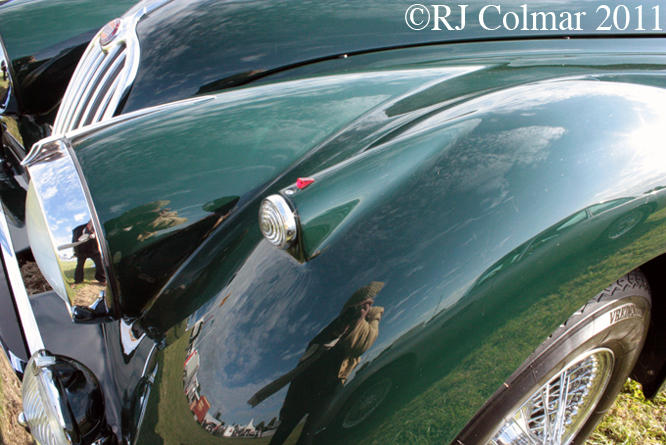
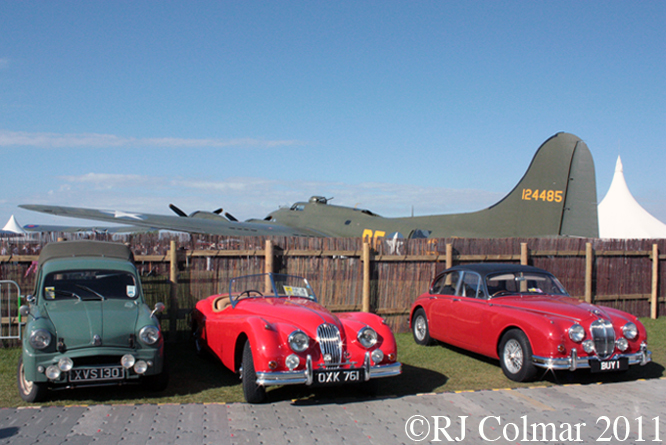
The Revival has become a huge fancy dress party covering possibly the most optimistic two decades the Western World has ever known. More on the fancy dress side of the Revival will follow with a special blog on Saturday. Like the Festival of Speed the Goodwood Revival has also become a runaway success both racing days this year were completely sold out. Seen here a Standard 6CWT Pickup, XK140 and a Mk2 Jaguar.
Brian Redman, Mercedes Benz 300 SE, Tiff Needel, Ford Anglia, Goodwood Revival

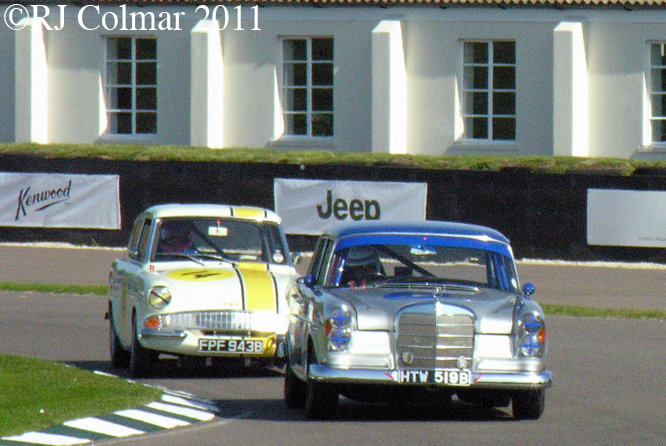
I got to the track in plenty of time to catch all the practice sesions which were held on the Friday, but I had not counted on spending well over an hour dribbling around the car park reserved for those spectators arriving in classic cars ! The first action I caught on track came courtesy of the touring cars, here Brian Redman in his Mercedes Benz 300SE leads another former Grand Prix driver and, in my humble opinion, one of the better former Top Gear presenters, Tiff Needell driving a Ford Anglia through Woodcote.
Supermarine Spitfires, Goodwood Revival

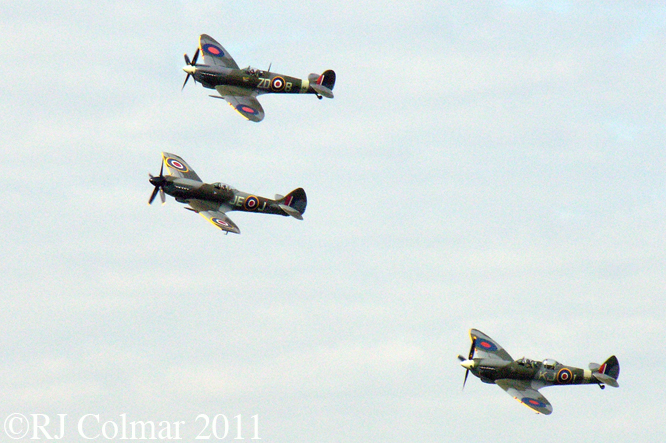
Organisers hoped to gather 15 Supermarine Spitfires at last weekends event here a Mk5, short wing 5 blade screw Mk 15 and two seater Mk9 fly past these awesome machines are powered by 24 litre / 1465 cui Rolls Royce Merlin motors.
Ford P68/F3L, Goodwood Revival

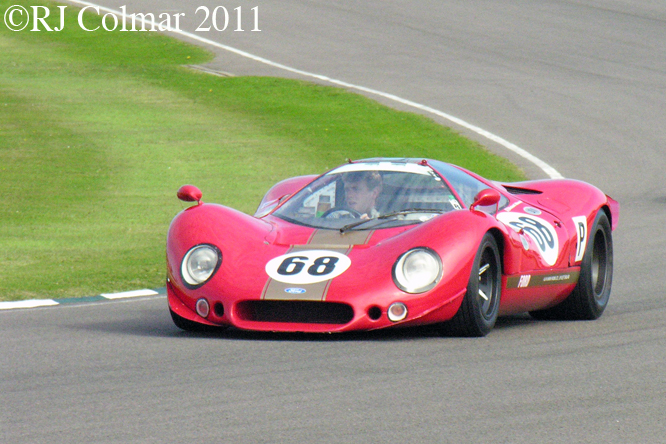
Ford of Britain celebrated it’s centenary with a stupendous collection of passenger, military and commercial vehicles, none quite as breathtaking as the Ford 3 litre / 183 cui formula 1 DFV powered Ford P68 /F3L designed by Len Bailey and built by Alan Mann Racing. Jim Clark was to have driven this car on it’s debut at Brands Hatch but because of conflicting tyre contracts Jim ended up racing a Formula 2 car at Hockenheim with fatal consequences.
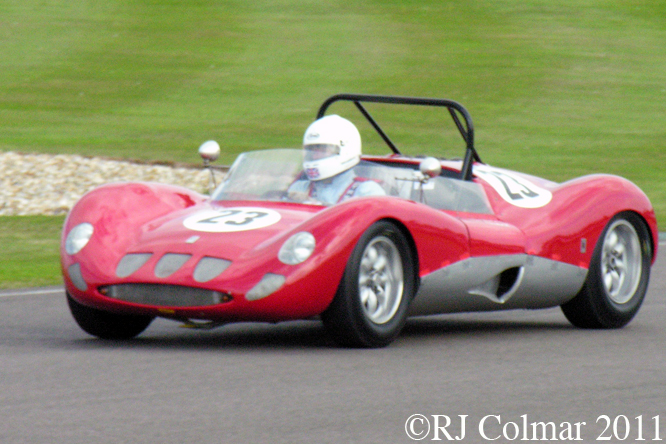
Marina Rolls Royce, Goodwood Revival

Surprise car of the meeting that I had never heard of before is the #23 Marina Special powered by Rolls Royce V8 driven by Mark Ashworth, turns out this car was built by Alan MacDonald at the Beagle Aircraft Hanger in Shoreham for Alan Mann who would later be responsible for the Ford P68. Rolls Royce were not in the least impressed with the Marina RR and the car appears to have been exiled in Belgium for fear that it might be impounded.
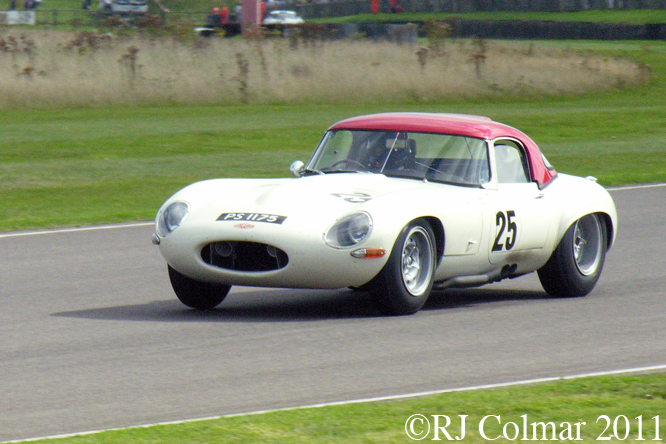
Adrian Newey, Jaguar, E-type, Goodwood Revival

Ueber Formula One aerodynamicist Adrian Newey has an important day job at with reigning Formula One Champions Red Bull Racing, during this rare weekend off he teamed up to drive the #25 E-type Jagaur with 10 time Grand Prix winner Gerhard Berger. Some interesting tweaks to the boot lid helped the pair stick this car on pole over 2 seconds clear of the rest of the field for Saturdays Fordwater Trophy Race.
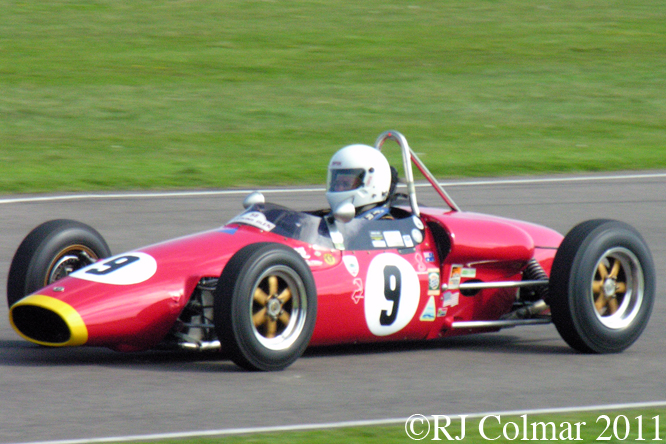
Bill Hemming, Elfin Ford, Goodwood Revival

I had never seen or heard a screaming formula Junior car before Friday and their 1100 cc / 67 cui 4 cylinder motors scream enough to make your eyes water. The #9 Elfin Ford above of Bill Hemming was one of two Antipodean designed and built Formula Junior cars entered in the Chichester Cup.
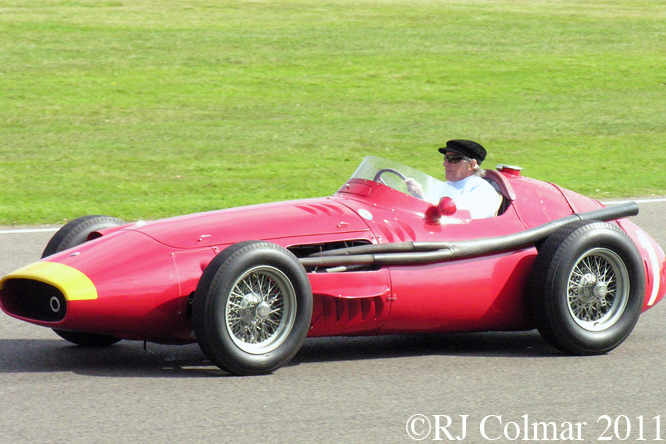
Sir Jackie Stewart, Masrati 250 F, Goodwood Revival

Among the many features was a display of cars driven by the first five time world champion Juan Manuel Fangio. The #1 Maserati 250 F seen above was driven by Fangio to his last and perhaps the most masterful Grand Prix victory of all time at the Nurburging in 1957, after a botched pit stop Fangio made up over 50 seconds on two Ferrari’s over taking them on the penultimate lap and holding on to win by three seconds. Seen at the wheel of a 250F for the first time in his trade mark hat is Sir Jackie Stewart, who by his own admission also drove his finest race at the Nurburgring winning a wet and foggy 1968 German Grand Prix by four minutes despite driving round the torturous 14 mile track with a broken wrist !
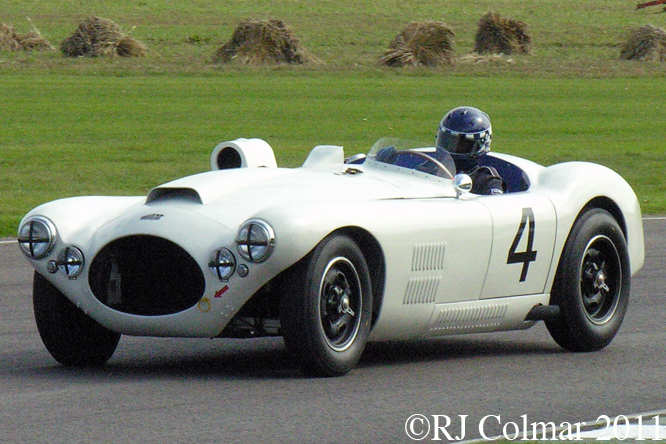
Ben, Schuckburgh, Cunningham C4R, Goodwood Revival

Among many evocative vehicles of US origin at Goodwood was this 1953 Chrsyler Hemi powered Cunningham C4R replica roadster, initially designed to compete at Le Mans, driven by Ben Shuckburgh during practice for the in the Freddie March Memorial Race.

Elva Porsche Mk7P, Helmut Reis, Goodwood Revival

The Madgwick Cup for under 3 litre / 183 cui sports cars built between 1960 and 1966 featured this rare Elva Porsche Mk 7P driven by Helmut Ries. Most Elva’s entered for the Madgwick Cup were BMW powered.
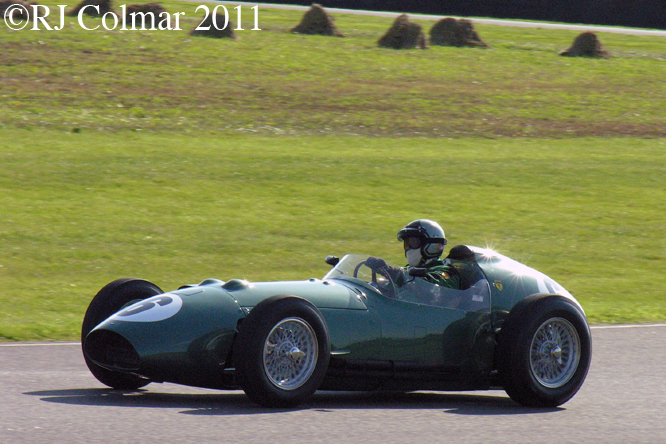
Aston Martin DBR4, Hubert Fabri, Goodwood Revival

The Richmond Trophy of the last front engined Grand Prix Cars had a fittingly international entry of vehicles, Hubert Fabri is seen here at the wheel of his Aston Martin DBR4.
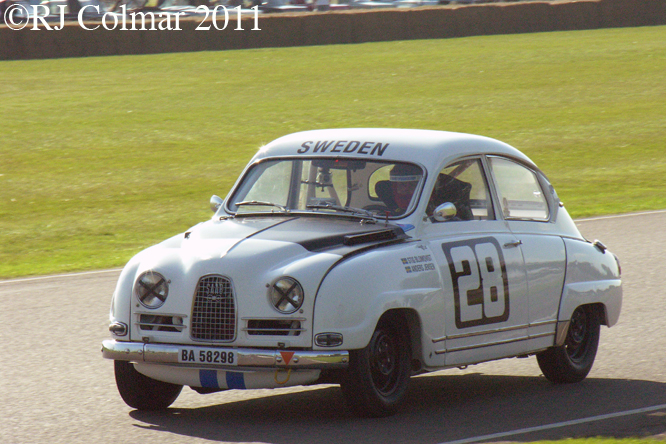
Saab 96 Sport, Anders Jensen, Goodwood Revival

The one and only Stig Blomquvist, 1984 World Rally Champion, mercifully no relation to the poor imitation on Top Gear, shared the 2 stroke #28 1963 Saab 96 Sport with Anders Jensen seen here at the wheel during the second touring car practice for the St Mary’s Trophy.
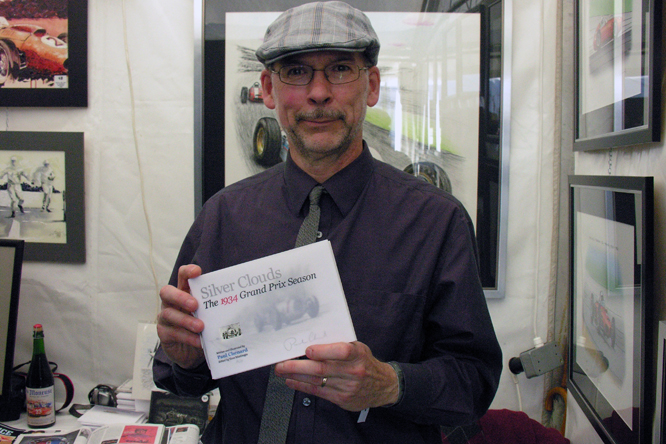
Paul Chenard, Goodwood Revival

I made time to take a break from the on track action to catch fellow blogger artist Paul Chenard who came all the way from Nova Scotia to promote his latest publication the illustrated story of the 1934 Grand Prix season “Silver Clouds”. Apparently the Daimler Benz Museum were so impressed with this hand bound limited edition they have acquired two copies. Going fast, act now ! To avoid forthcoming seasonal disappointment you can contact Paul to order your copy on his blog here.
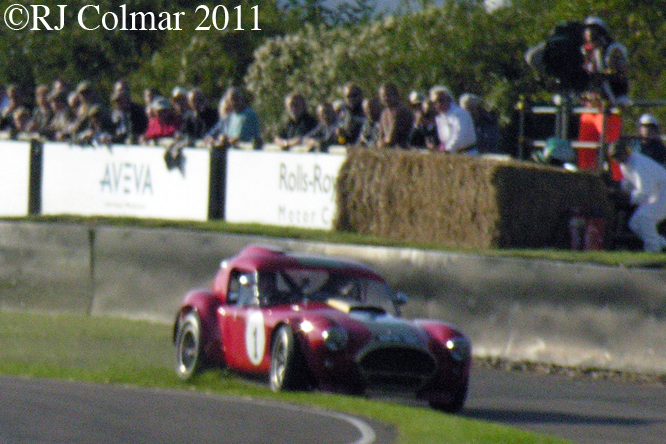
AC Cobra, Gerhard Berger, Goodwood Revival

A number of incidents during the days qualifying sessions for the races held on Saturday and Sunday conspired to delay the proceedings by up to an hour. Gerhard Berger, sharing Grahame Bryant’s #1 AC Cobra entered in the Glover RAC TT Celebration race, left the course going into Woodcote,
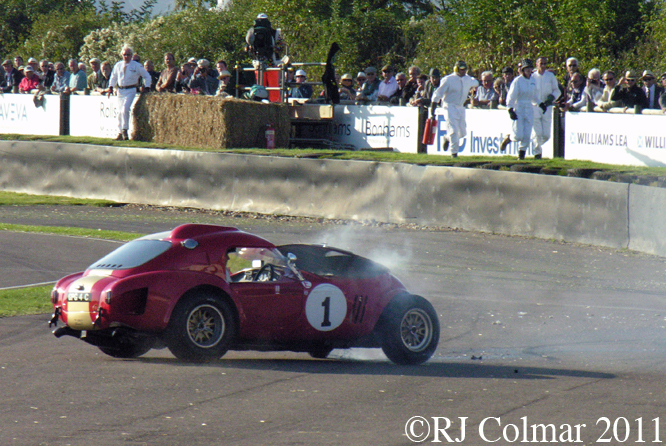
AC Cobra, Gerhard Berger, Goodwood Revival

the resultant damage precluded the vehicles participation in the rest of the weekends proceedings.
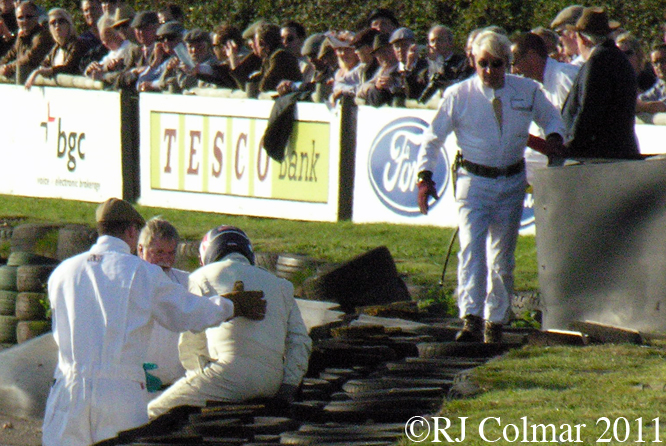
AC Cobra, Gerhard Berger, Goodwood Revival

Fortunately Gerhard was not seriously injured and finished second sharing Adrian Newey’s E-type Jaguar in the Fordwater Trophy Race on the Saturday.
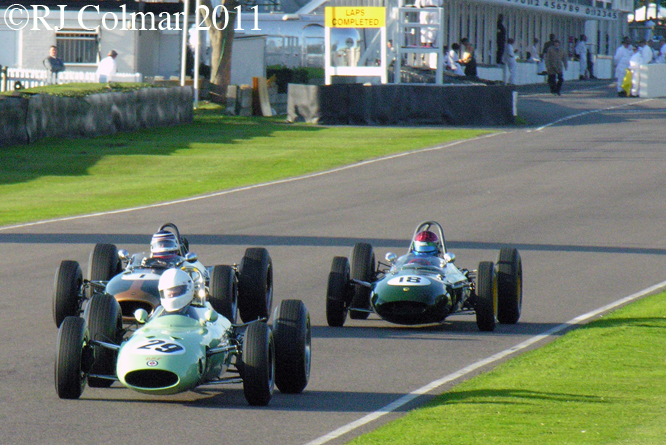
BRP-BRM, Brabham Climax, Lotus BRM, Goodwood Revival

The 1.5 litre / 91.5 cui era of Formula One goes back to the heyday of British driver participation in Grand Prix racing when Graham Hill, Jim Clark and John Surtees took three consecutive World titles from 1962 to 1964 and Jim Clark won his second title in 1965. Above Kurt DelBene in the 1964 #29 BRP-BRM, Roy Walzer the 1964 #1 Brabham Climax BT11 and Paul Drayson in the 1962 #18 Lotus BRM during qualifying for the Glover Trophy. This era of cars were immortalised in the film Grand Prix, though many of the chassis used in the film are actually cheaper Formula Juniors.
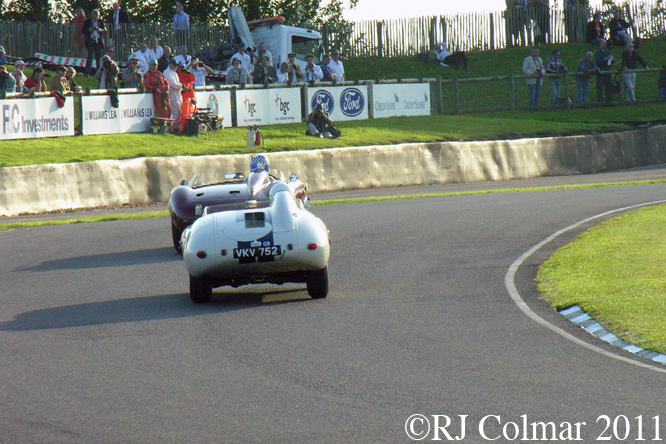
Jaguar E2A, Goodwood Revival

For romantic dreamers like myself there is a sad tale to relate to the prototype E2A ‘VKV 752’ seen here being driven by Tony Dron. This was the second of two E type Jaguar prototypes featuring components including the independent rear suspension that would be carried over into the production ‘E-Type’ model.

E2A was driven at Le Mans by Hangsen & Gurney without success in 1960 and used by the Cunningham team in the USA with Sir Jack Brabham and Bruce McLaren amongst others at the wheel scoring a single minor victory against weak opposition. In 1961 Jaguar used E2A as a test mule back in England.

Roger Woodley Jaguar’s customer competition manager at the time was allowed to save E2A from the scrap heap on condition that the car would not be raced again. Sadly the first thing new owner Stefan Ziegler did after acquiring E2A for US$4,957,000 was turn E2A into a weapons grade racer and disregard Jaguars request that the car not be raced again.

Seems rather pointless when any number of weapons grade ‘D-types’ can be acquired for a fraction of the cost of E2A. More on the ‘to race or not to race E2A’ argument can be seen on this Nostalgia Forum thread.
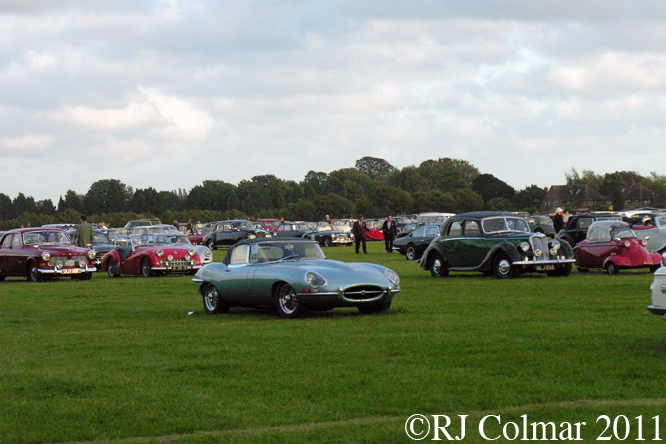
Goodwood Revival

After the qualifying sessions were over it was time to head back through the spectators Classic Car Park, I could have stayed longer but it was getting to the dark end of an already long day.

Thanks for joining me on this Goodwood Revival edition of ‘Gettin’ a lil’ psycho on tyres’, I will continue to bring you more stories from Goodwood all week, I hope you will join me again for the first anniversary edition of ‘Gettin a lil’ psycho on tyres’ tomorrow. Don’t forget to come back now !
Share

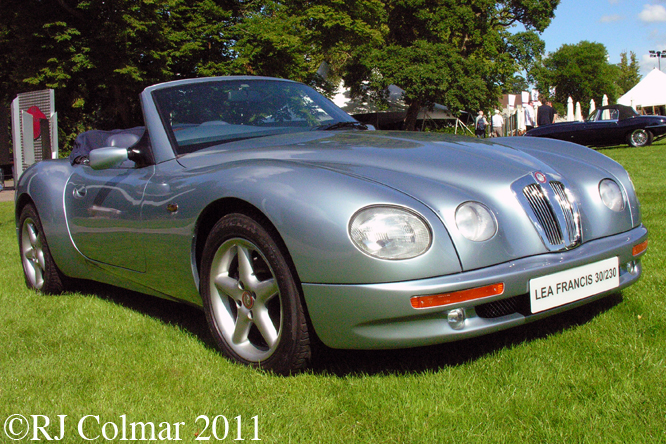
Jig Free – Lea Francis 30/230

In August 1895 Richard Lea and Graham Francis entered into a partnership to manufacture bicycles, like the another cycle turned motor manufacturer Rover, Lea Francis was based in Coventry. In 1903 Lea Francis manufactured three unconventional vehicles with complex three cylinder motors that were not a success and from 1912 to 1924 the company manufactured motor cycles.

Lea Francis 30/230, Goodwood Festival of Speed

Lea Francis entered motor car manufacture again in 1919 with vehicles using popular Meadows engines, Lea Francis became the first marque to offer a supercharged production car, the Hyper in 1927 and the following year a Hyper won the Tourist Trophy.

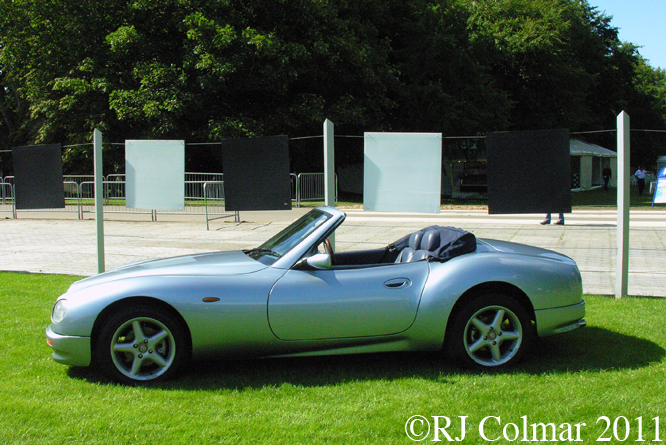
Lea Francis 30/230, Goodwood Festival of Speed

The company went bankrupt in the early 1930’s and was revived in 1937 to produce a fresh vehicle designed by former Riley engineer Hugh Rose, the successors to this car proved popular after the second world war in saloon and sports car forms.

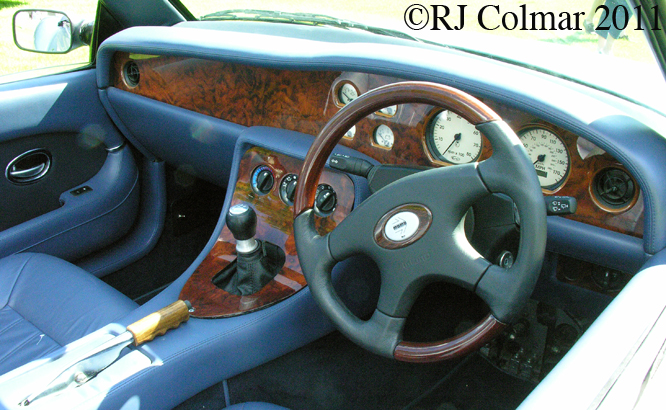
Lea Francis 30/230, Goodwood Festival of Speed

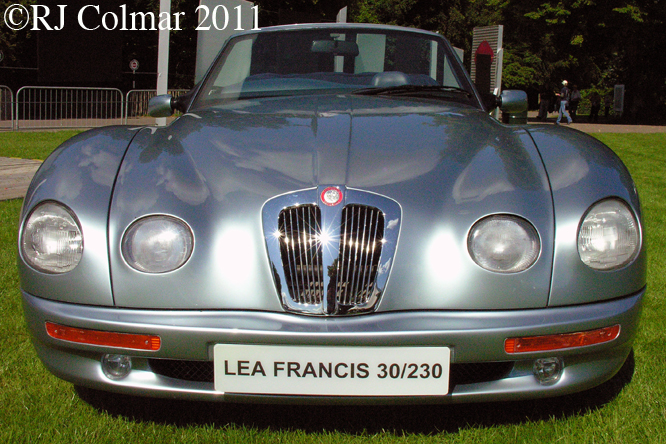
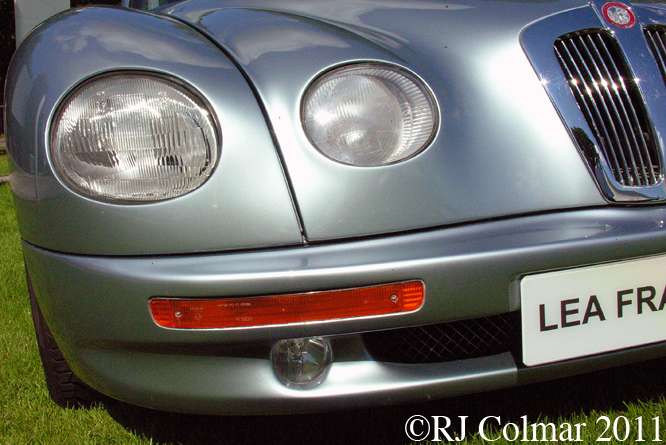
Car production ceased again in 1962 since when the company was kept alive by Barrie Price who provided spares and restoration services and occasional new low volume cars. In 1996 father of the Jaguar XJ220 Professor Jim Randle was engaged to design the 30/230 seen here at Goodwood Festival of Speed.

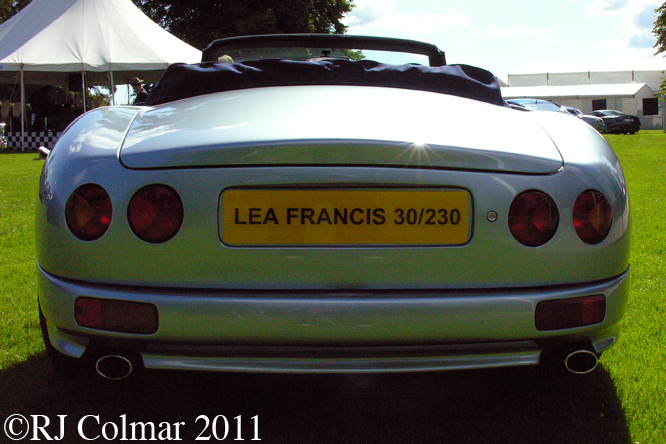
Lea Francis 30/230, Goodwood Festival of Speed

The aluminium bodied car was to be powered by a 235 hp 3 litlre / 183 cui V6 Vauxhall (UK GM) motor.

Lea Francis 30/230, Goodwood Festival of Speed

Among the novel features the chassis was made by riveting laser cut aluminium panels, a process that requires no conventional jigs, and a patented active suspension system.

Lea Francis 30/230, Goodwood Festival of Speed

Unfortunately, like the planed Lea Francis Limousine which aimed to fill the niche left by the Daimler DS240, the 30/230 did not go into production.

Thanks for joining me on this Lea Francis edition of ‘Gettin’ a lil’ psycho on tyres’. I hope you will join me again tomorrow when I’ll be reviewing some of the event’s at this weekend’s Goodwood Revival. Don’t forget to come back now !

Share

Perfect Car For A Wedding #6 – Rolls Royce Corniche

I am off to a wedding today, the first one I have attended where my friends children are the ones getting married, so it seems appropriate to feature another Perfect Car for a wedding on today’s blog.

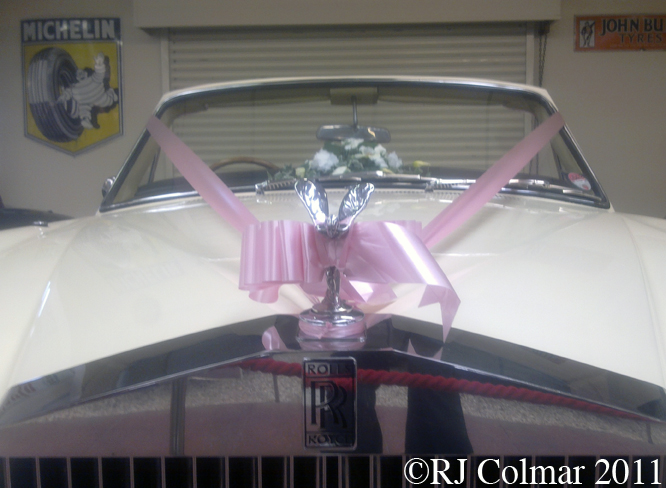
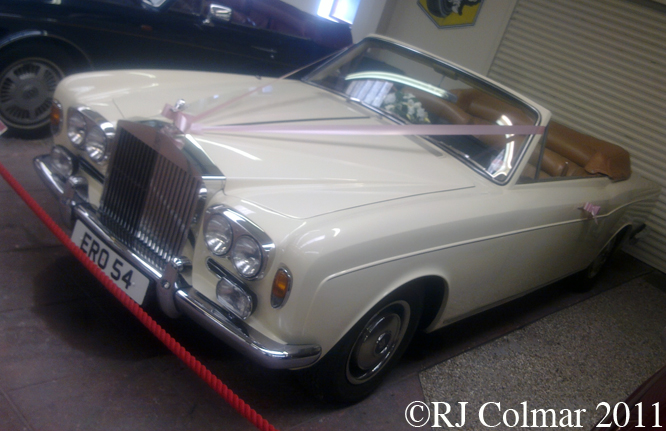
Rolls Royce Corniche, Haynes IMM

Today’s Rolls Royce is known as the Silver Shadow Mulliner Park Ward Drop Head Coupé which first appeared in 1967 was renamed Corniche in 1971 when this model scene at the Haynes International Motor Museum was built.

Rolls Royce Corniche, Haynes IMM

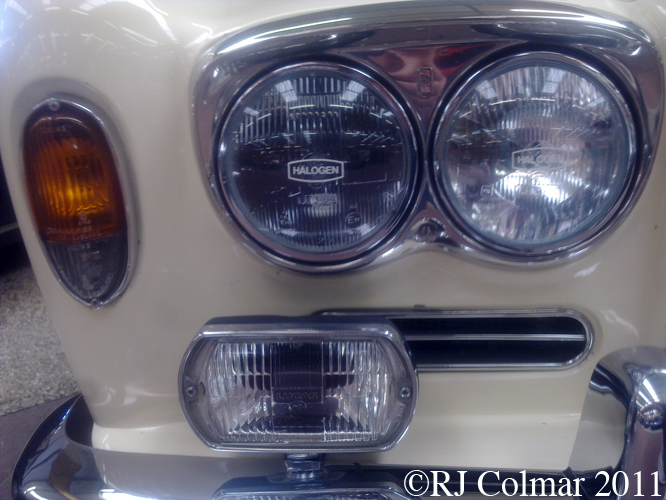
The Corniche assembled and finished in London by Mulliner Park Ward is based on the Rolls Royce Silver Shadow / Bentley T floor plan with the same ‘adequate’ aluminium 6230 cc / 380 cui Rolls Royce motor.

Rolls Royce Corniche, Haynes IMM

The Corniche name was first used by Rolls Royce in the 1930’s for a Mark V prototype with Parisian coach work by van Vooren, legend has it that after 15,000 miles of Continental testing in Europe was awaiting repatriation to England when it was hit by a bomb at Dieppe docks.

In the UK it would probably take a particularly brave couple to opt for a convertible on their wedding day but then as they used to say in Rome ‘Fortes fortuna adiuvat’. For the brave this Corniche can be hired from the Haynes International Motor Museum.

Wishing Lotti & Ronnie and all those getting married today all the best and many happy years together.

Thanks for joining me on this Corniche edition of ‘Gettin a lil’ psycho on tyres’, I hope you’ll join me again tomorrow. Don’t forget to come back now !
Share

Two Time World Champ – Ferrari 500 #005

In 1951 there was a close fought contest for the World Drivers Championship between the Alfa Romeo drivers in old pre war 1.5 litre / 91.5 cui supercharged cars and Ferrari drivers in new 4.5 litre / 274.5 cui normally aspirated cars. Juan Manuel Fangio won the title but a run of three straight victories by Ferrari drivers González and Ascari was enough to convince Alfa Romeo that they could not hope to be so competitive with their old cars and so with no money to fund the building and development of new machines they quit Grand Prix racing as two time champions.

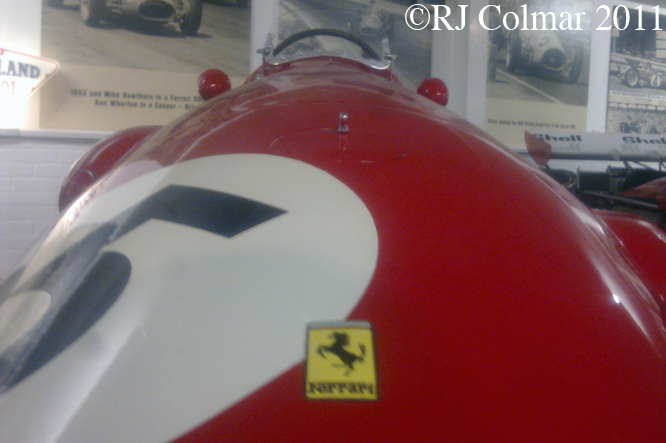
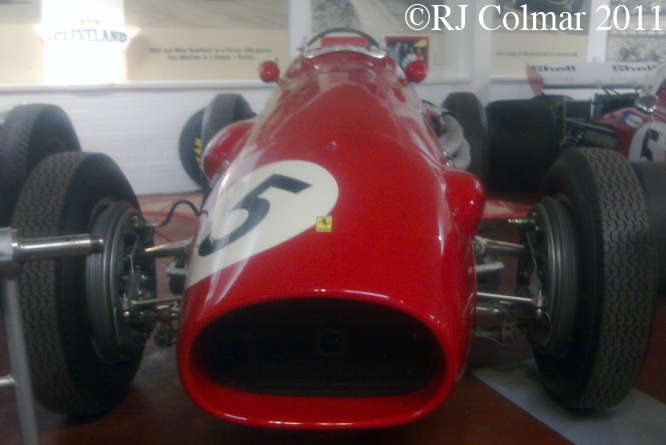
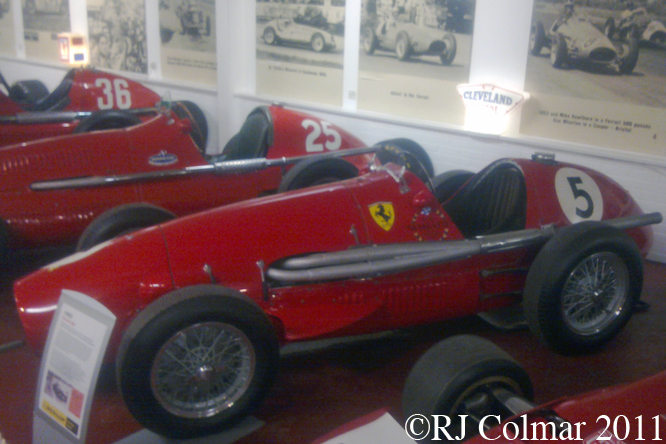
Ferrari 500, Donington

Alfa Romeo’s withdrawal left the FIA, organisers of World Championship Grand Prix Racing, with a shortage of entrants for the 1952 season only the up and coming Ferrari and brand new BRM team, who had built a beautiful sounding, but hideously complicated and unreliable 1.5 litre 91.5 cui supercharged V16 vehicle being prepared to enter events run to the existent formula one regulations.

Ferrari 500, Donington

The FIA decided that they would run the 1952 and 1953 World Championship for cars built to Formula 2 regulations with normally aspirated 2 litre / 122 cui engines while new formula one regulations would be introduced in 1954. Ferrari had all the bases covered for 1952 as he had coincidentally just instructed Aurelio Lamperdi to design a 4 cylinder 2 litre / 122 cui engine that was powerful and extremely efficient.

Ferrari 500, Donington

For 1952 Ferrari built six type ‘500’ Formula 2 Cars cars to compete in the World Championship and they won all of seven races into which they were entered missing the Indy 500, run to different regulations in which Alberto Ascari competed with a Ferrari 375.

On his return from the 1952 Indy 500 Alberto Ascari won the six remaining World Championship races with the car, seen here at Donington Park, on his way to capturing the 1952 World Championship. Ascari retained the title using the same chassis in 1953 with another 5 victories.

The Ferrari ‘500’ design is one of the most successful of all time only the McLaren MP4/4 which won 15 races out of 16 in 1988 as against 7 out of 8 eligible events in 1952 for the ‘500’ is statistically more successful, though it could be argued that since the Indy 500 was not run to the same regulations as the rest of the 1952 World Championship the Ferrari ‘500’ has a 100 % winning record for the 1952 season.

This particular #005 chassis won an unequalled 7 straight World Championship Grand Prix races from 1952 to 1953, and 9 straight world championship races entered again the 1953 Indy 500 counted as a World Championship Grand Prix in 1953, and is credited with a total of 11 World Championship Grand Prix wins in total. As the highly regarded Doug Nye says of chassis #005 “Possibly the most successful chassis in Grand Prix history.”

The 4 cylinder engine went on to have a hugely successful career in sports car racing when installed in the 500 Mondial and 500 Testa Rossa’s.

Thanks for joining me on this Ferrari Friday edition of ‘Gettin’ a lil’ psycho on tyres, I hope you will join me again tomorrow. Don’t forget to come back now !
Share

The Hot One’s Even Hotter – 1956 Chevrolet Nomad

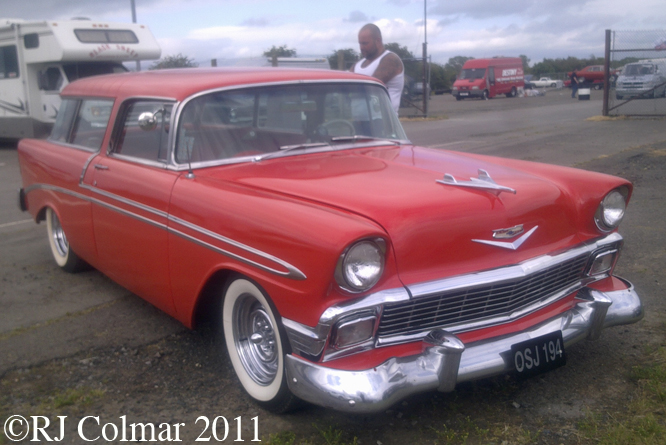
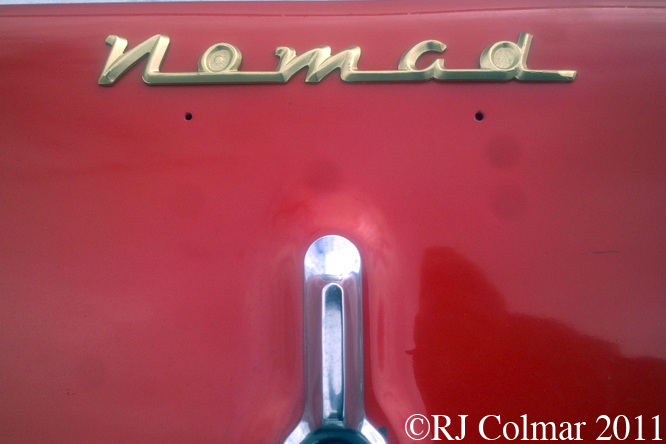
At the travelling 1954 General Motors Motorama motor show, attended by 1.9 million visitors, Chevrolet displayed a Corvette based concept vehicle the Nomad a 2 door estate / station wagon among Head Stylist Harley Earl’s collection of ‘Dream Cars’.

Chevrolet Nomad, Shakespeare CR

In 1955 Chevrolet launched it’s second generation Bel Air models with the strap line ‘The Hot One’. The Bel Air range included the 2 door Nomad estate / station wagon.

Chevrolet Nomad, Shakespeare CR

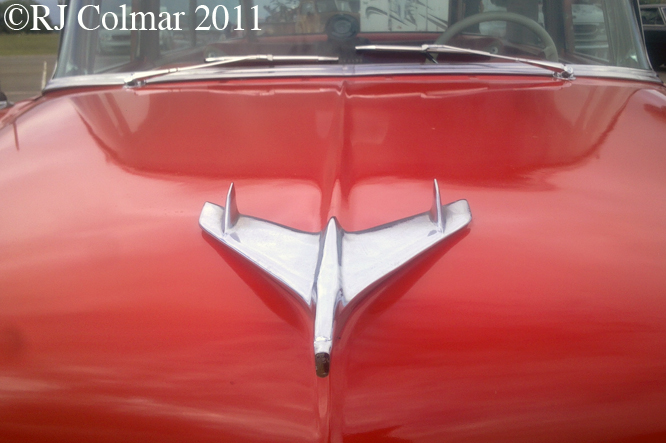
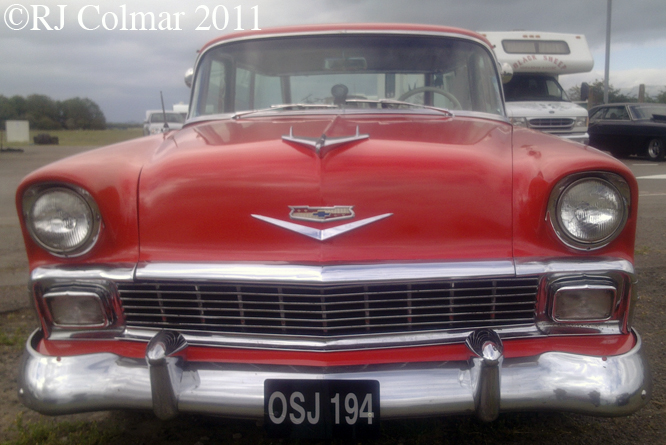
The second generation Bel Air and the Nomad had a three year life cycle, knowing that if the car was to sell well in the second year of production the range had to look new for 1956, even if it was not, GM upgraded the Nomad saving no expenses on styling and tooling the exterior trim, including a fresh front bumper and new full width front grill.

Chevrolet Nomad, Shakespeare CR

The ’56 Chevrolet’s Bel Air range was marketed with the new strap line ‘The Hot One’s even hotter’.

Chevrolet Nomad, Shakespeare CR

Power for the Bel Air was provided by either a 4.3 litre / 265 cui or 4.6 litre / 283 cui V8, so far as I can tell this particular Nomad, seen at Shakespeare County Raceway, has a 5.7 litre / 347 cui V8.

Chevrolet Nomad, Shakespeare CR

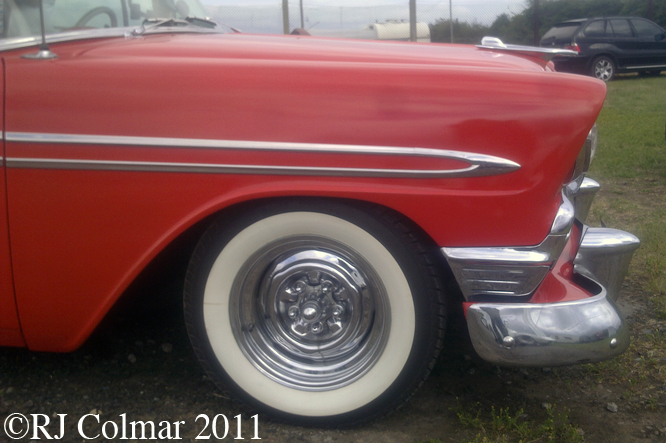
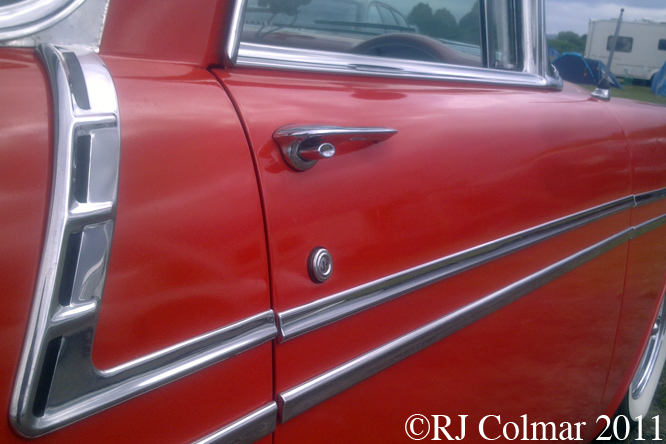
Chrome trim levels on the humble Nomad were comparable to contemporary high end Cadillacs.

Chevrolet Nomad, Shakespeare CR

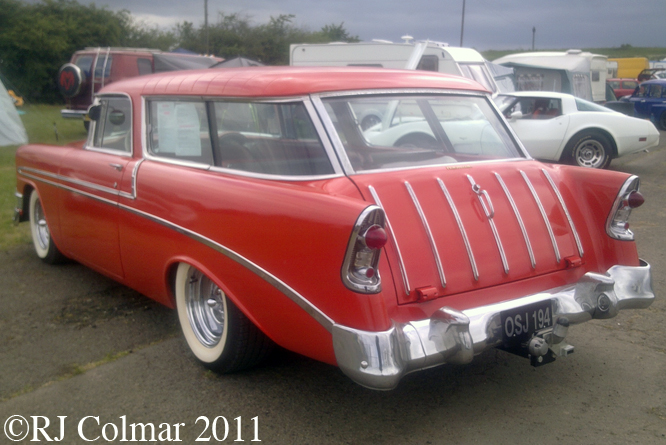
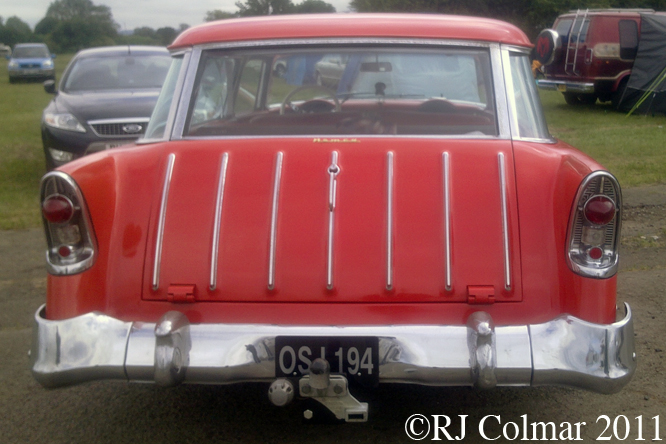
A feature introduced on the ’56 Nomad was the concealment of the filler for the petrol tank by the chrome tail light housing on the drivers side.

Chevrolet Nomad, Shakespeare CR

With $585 premium over the standard $2025 2-door Bel Air the Nomad was the most expensive vehicle in the Bel Air range.

Chevrolet Nomad, Shakespeare CR

Production numbers show that Estate Station Wagons were not top of the Bel Air demographics list of priorities in 1956, just 7,886 Nomads were built compared to 103,000 pillarless four door hard tops and 128, 000 base 2 door model Bel Airs.

Thanks for joining me on this Nomad edition of ‘Gettin’ a lil’ psycho on tyres’, I hope you’ll join me again tomorrow Ferrari Friday. Don’t forget to come back now !

Share