Tag Archives: Bristol

Coffee, Croissant & Cars #4 – Avenue Drivers Club

Last Sundays Avenue Drivers Club meeting filled Queen Square with another staggering selection of motor vehicles.
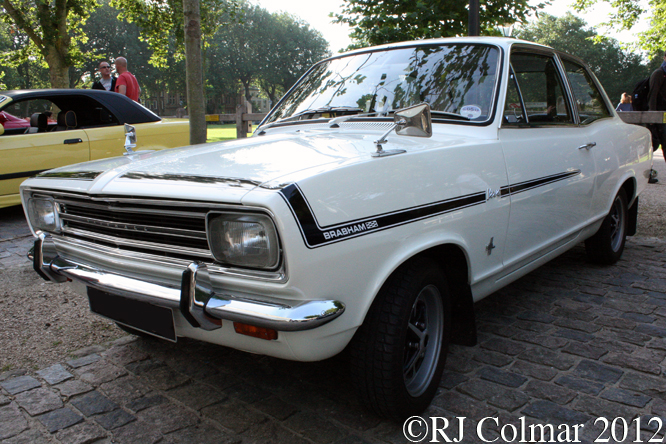
Vauxhall Viva SL, Avenue Drivers Club, Queen Square, Bristol

This 1968 Vauxhall Viva SL 90 has some go faster stripes, but not just any go faster stripes, these are replica’s of those that were originally supplied as part of the over the counter Brabham tuning kits that were available from 1968 to 1971 when the HB Viva was in production.
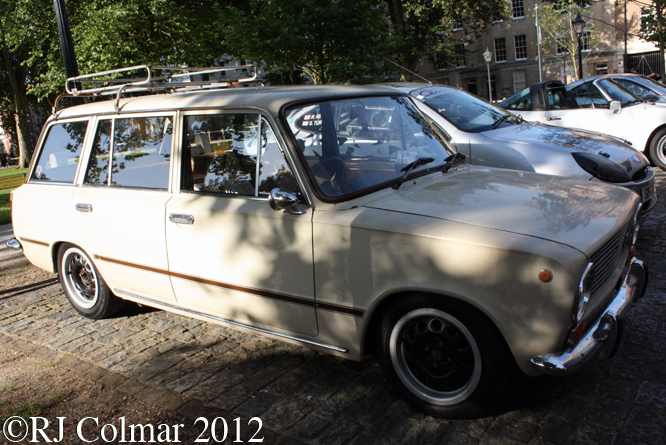
Lada 1200, Avenue Drivers Club, Queen Square, Bristol

Like so many popular cars you do not notice them until they are almost all gone. This 1983 Lada is one of a fast disappearing breed, first time I have seen one slammed, modified with extreme lowered suspension.
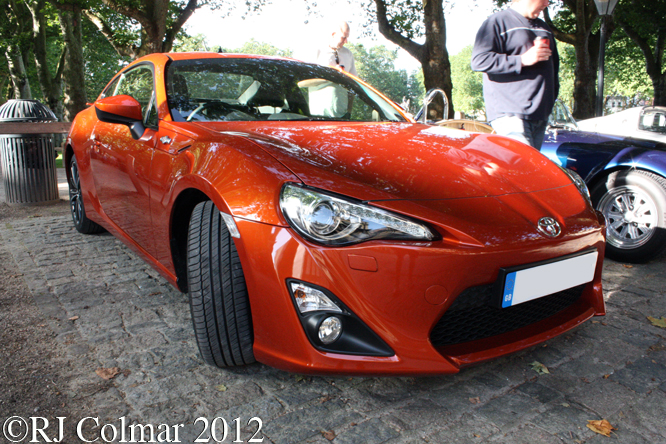
Toyota GT86, Avenue Drivers Club, Queen Square, Bristol

This is certainly the first Toyota GT 86 I have ever seen on the road, it comes with rear wheel drive and even more unusually a 4 cylinder boxer engine !
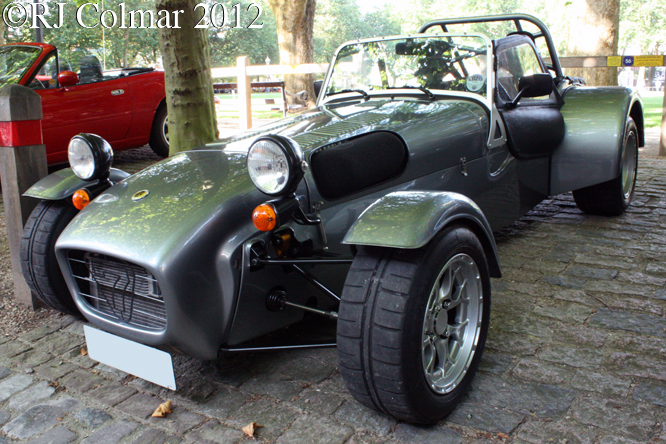
Caterham Seven, Avenue Drivers Club, Queen Square, Bristol

Continuing the sports theme was this 2007 Caterham 7 with a 50th Anniversary Paint option.
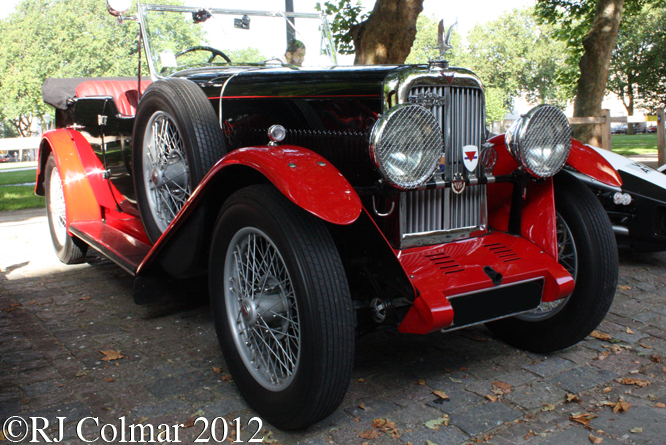
Alvis Silver Eagle, Avenue Drivers Club, Queen Square, Bristol

Among the vintage vehicles present this 1931 Alvis Silver Eagle sold with the strap line “The Freedom of the air comes to the road with the Silver Eagle”
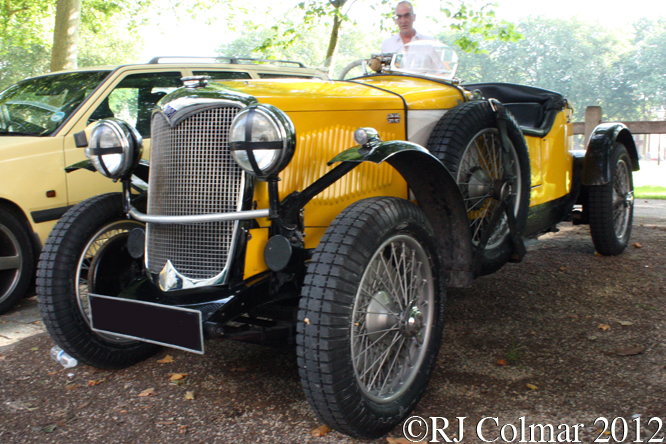
Riley Nine Falcon Special, Avenue Drivers Club, Queen Square, Bristol

Staying with an ornithological theme further round the block I found this 1936 Riley Nine Falcon Special.
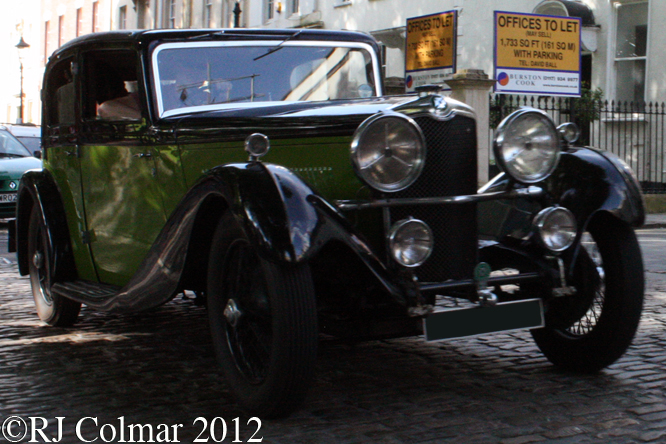
Crossley 2 litre Sports Saloon, Avenue Drivers Club, Queen Square, Bristol

Only 25 Crossley 2 Litre Sports Saloons were built this one, chassis and engine #16/103 was the third built in 1934, and is thought to be the only one that is still road worthy.
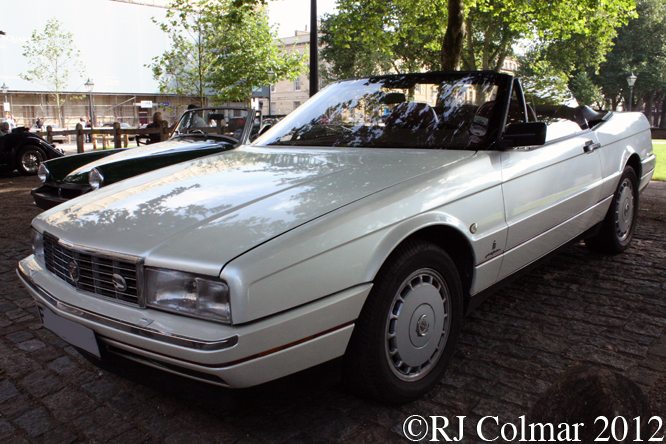
Cadillac Allanté, Avenue Drivers Club, Queen Square, Bristol

Cadillacs are rarities in Britain what ever the age this is a Pininfarina designed 1988 Allanté Roadster, the only option available for it when new was a ‘cellular phone’.
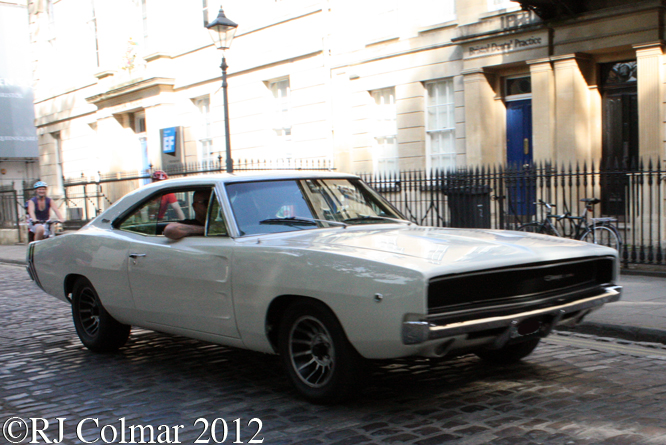
Dodge Charger, Avenue Drivers Club, Queen Square, Bristol

Harking back to the zenith of the Muscle Car Era was this 1968 Dodge Charger, about the only option missing was Miss Daisey Duke !
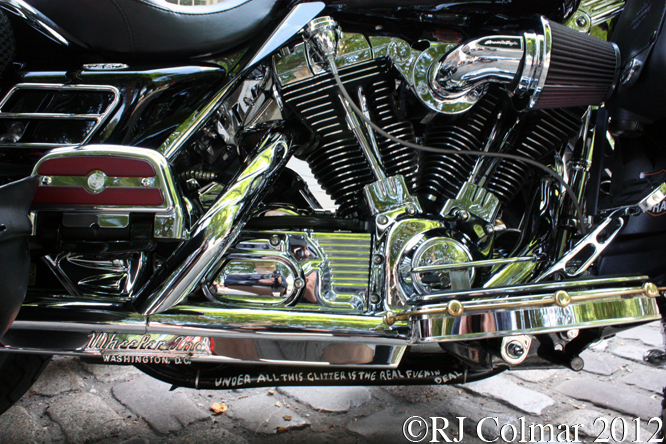
Harley Davidson Road King, Avenue Drivers Club, Queen Square, Bristol

A little humour from the owner of this Harley Davidson Road King.
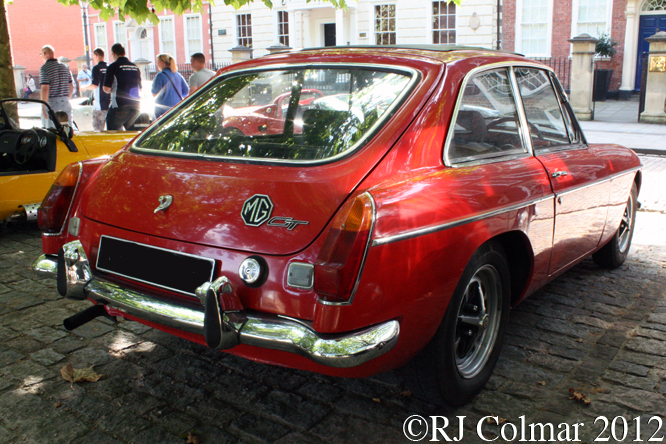
MGB GT, Avenue Drivers Club, Queen Square, Bristol

A couple of months ago I met Rich and Matt and related their tale of an adventure going to fetch a left hand drive Volvo 121 from Sweden, this is one of Matt’s cars a tidy 1971 MGB GT.

Bristol 412, Avenue Drivers Club, Queen Square, Bristol

Finally as it was time to head home this 1977, Chrysler powered, Bristol 412 came purring past.

Thanks for joining me on this “Coffee, Croissant & Cars #4” edition of “Gettin’ a li’l psycho on tyres”. I hope you will join me again tomorrow with the first of my Goodwood Revival 2012 posts. Don’t forget to come back now !

Share

International Favorite – MG Magnette ZB

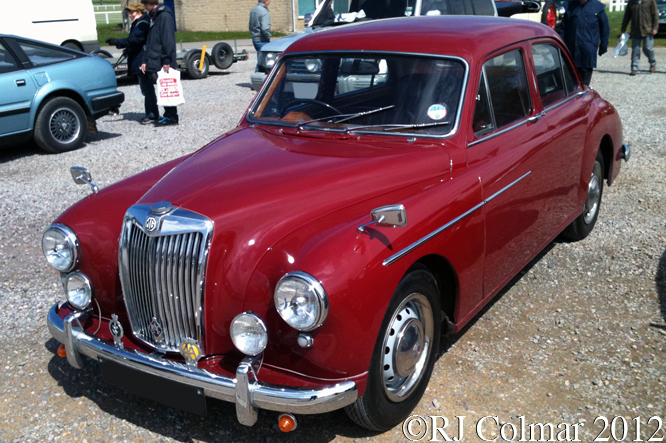
There are six MG’s models in three model groups which have had been marketed with Magnette name :- the K and N types built from 1932 to 1936, the Wolseley based ZA and ZB types built from 1953 to 1958 and the BMC Farina bodied Mark III and Mark IV built from 1959 to 1968.

MG Magnette, Bristol Classic Car Show, Shepton Mallet

Today’s 1957 Magnette ZB, seen earlier this year at the 33rd Bristol Classic Car Show, is the fourth iteration based on the Wolseley 15/50 built from 1956 to 1958.

MG Magnette, Bristol Classic Car Show, Shepton Mallet

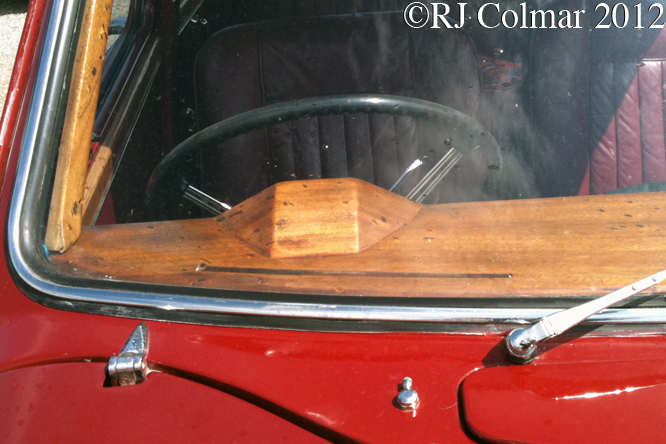
The Magnette ZA was launched in 1953 with a cut down body similar to the Wolseley 14/40 launched earlier the same year. The only interchangeable panels between the two models, and those of the later ZB, launched in 1956 and Wolseley 15/50 are the front doors, roof and boot lid.

MG Magnette, Bristol Classic Car Show, Shepton Mallet

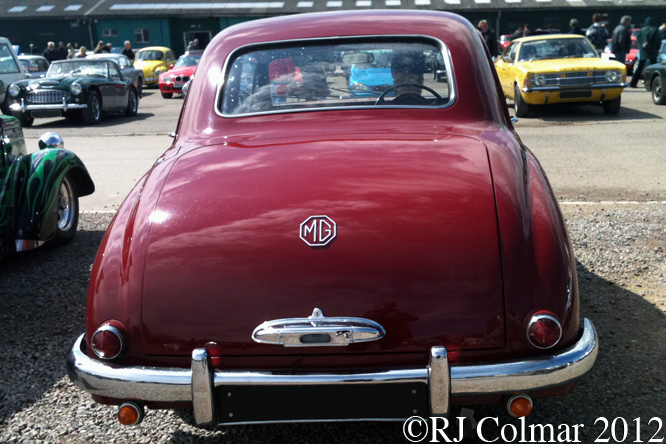
Gerald Palmer was responsible for the detail differences between the ZA and Wolseley 14/40. The ZA would became the first unitary monocoque constructed MG without a separate chassis.

MG Magnette, Bristol Classic Car Show, Shepton Mallet

The ZB, seen here, features a 64 hp motor, up from 60 hp on the ZA, with a bigger carburetor and higher compression ratio than the original British Motor Corporation (BMC) B- Series motor used for the ZA, was capable of 86 mph with a rest to 60 mph time of 18.5 seconds.

MG Magnette, Bristol Classic Car Show, Shepton Mallet

With advertising advertising benefits like “Spots-car Performance, Family-car Comfort, Small-car Economy” and a strap line that ran “Style and luxury combined with the nimble roadability that has made the MG and international favorite” the low slung ZB outsold the Wolseley 15/50 BMC stable mate by 3 to 2 with 18,524 being built from 1956 to 1958.

Thanks for joining me on this “International Favorite” edition of “Gettin’ a li’l psycho on tyres” I hope you will join me again tomorrow for a look at a Brooklands legend. Don’t forget to come back now !
Share

Put The Family On The Road – Trojan 200

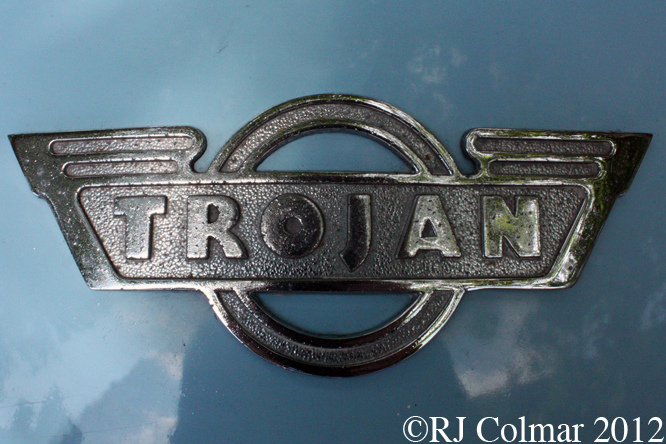
Trojan was founded by Leslie Hayward Hounsfield who in 1913 built a prototype vehicle with a 2 stroke 4 cylinder motor. Production never got under way due to the commencement of hostilities in the 1914 – 1918 war.

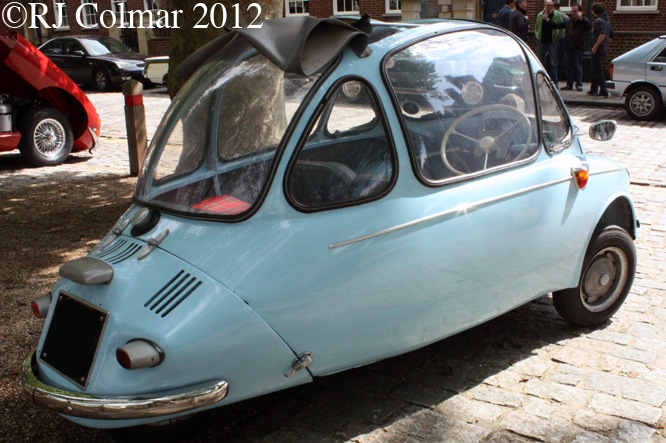
Trojan 200, Avenue Drivers Club

After World War 1 Trojan reached an agreement with Leyland Motors to produce cars and vans at a surplus facility where Leyland had been contracted to maintain military vehicles. With over 17,OOO private and commercial vehicles built this agreement came to and end in 1928.

Trojan 200, Avenue Drivers Club

Car production declined at Trojans own factory despite the introduction of new models but sales of vans continued until the 1950’s. Peter Agg acquired Trojan in 1959 and amongst the changes he initiated was the production of the Heinkel Kabine under license which commenced in 1960.

Trojan 200, Avenue Drivers Club

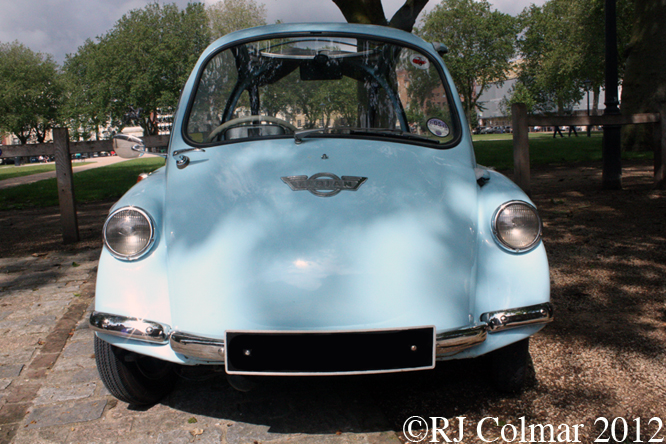
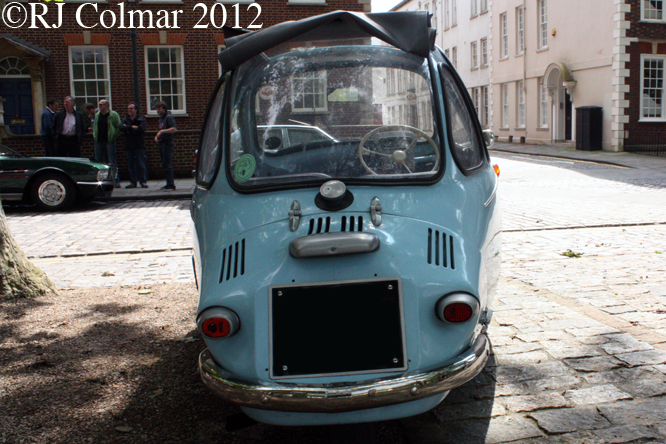
The Heinkel Kabine was designed by Heinkel Flugzeugwerke and built by them from 1956 to 1958 when they licensed Dundalk Engineering Company in Ireland to manufacture the car. Quality issues saw the license quickly withdrawn and transferred to Trojan who sold the vehicles with the strap line “Put The Family On The Road”.

Trojan 200, Avenue Drivers Club

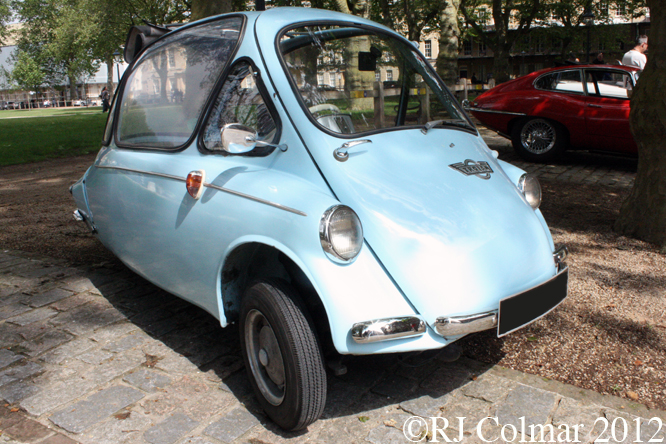
Today’s featured car was built in 1963 entry is effected through a front hinged door, similar to the Italian designed Isetta, but with out the benefit of the steering being attached to the door.

Trojan 200, Avenue Drivers Club

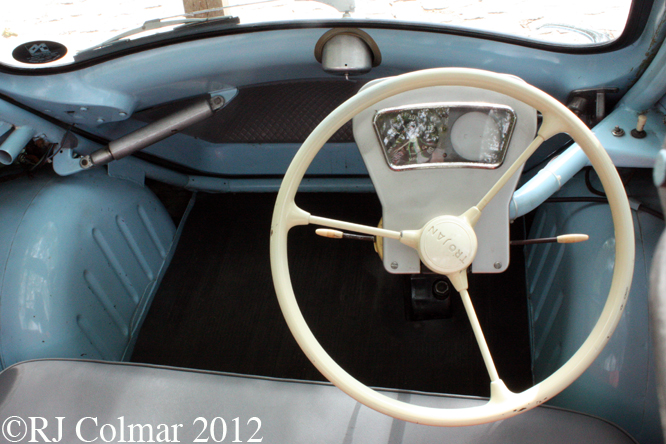
The car is powered by an air cooled single cylinder 4 stroke motor attached to a four speed gearbox which, unusually for a bubble car, included a reverse gear.

Trojan 200, Avenue Drivers Club

Around 6000 Trojan 200’s were built by Trojan up until 1965. Trojan diversified into building Elva sports cars from 1962 until 1965 before building 200 McLaren racing cars until the early 1970’s. The company went on to build it’s own Formula 5000 cars and a one off Grand Prix car, the Trojan 103 in 1974.

Thanks for joining me on this “Put the family on the road” edition of “Gettin’ a li’l psycho on tyres”, I hope you will join me again tomorrow. Don’t forget to come back now !
Share

Power & Roadholding – Bond Equipe 2 Litre Convertible

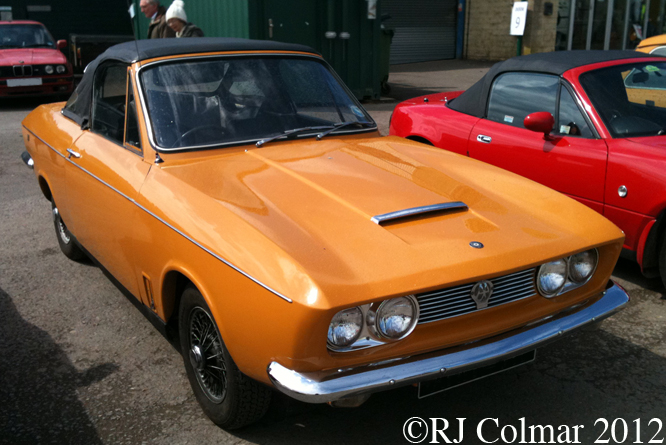
In 1967 Bond expanded it’s range of four wheel vehicles from the hitherto single Triumph Herald based Equipe 4S to include a Triumph Vitesse based Equipe 2 Litre GT.

Bond Equipe Convertible, Bristol Classic Car Show

The following year the chassis was upgraded to the new Mk II Vitesse type which featured improved power and rear suspension leading to the marketing strap line “The New Bond is great on power, great on road holding.

Bond Equipe Convertible, Bristol Classic Car Show

1968 also saw the launch of the Convertible version of the six cylinder Equipe 2 litre which was marketed like all Equipe’s through Standard Triumph dealerships.

Bond Equipe Convertible, Bristol Classic Car Show

With an envious eye on Bond’s distribution agreement with Standard Triumph, Reliant, manufacturers of Scimitar cars, purchased Bond in 1969 with a view to expanding the distribution of it’s own vehicles. However these plans came to nought in the wake of Triumphs merger into the British Leyland conglomerate which rationalised that the sales of Bond’s alongside Triumphs own products was superfluous.

Bond Equipe Convertible, Bristol Classic Car Show

The 1969 model seen here is one of just 841 convertibles built between 1968 and 1970 when production of all Bond’s in Preston was wound down and the manufacturing facilities closed by their new owners Reliant.

Thanks for joining me on this “Power & Roadholding” edition of “Gettin’ a li’l psycho on tyres” I hope you will join me again tomorrow. Don’t forget to come back now !
Share

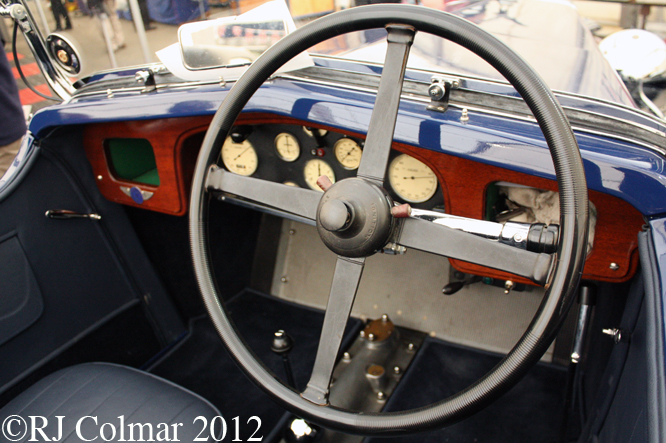
Four Wheel Handbrake – MG 18/80 Sports Six Mk II Tourer

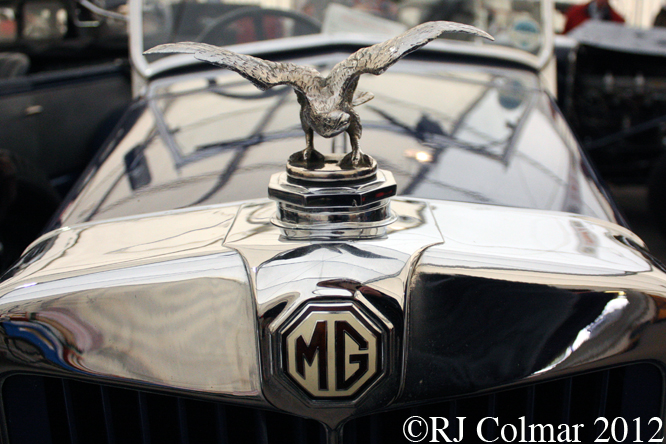
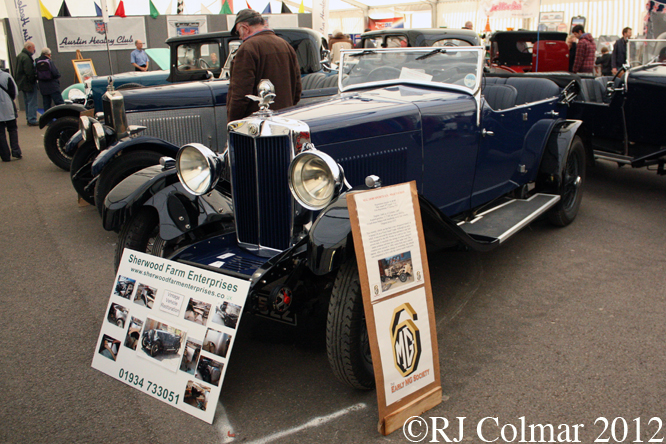
Built in August 1930 with a fixed head coupé (FHC) body today’s featured 18/80 Sports Six sat around for three whole before it was first registered in October 1933.

MG 18/80 Super Sports Mk II Tourer, Bristol Classic Car Show

This car was then damaged a year later by the MG Works on a service run.

MG 18/80 Super Sports Mk II Tourer, Bristol Classic Car Show

After being stored in first a barn and later a coal cellar this car was rescued in 1984 minus body.

MG 18/80 Super Sports Mk II Tourer, Bristol Classic Car Show

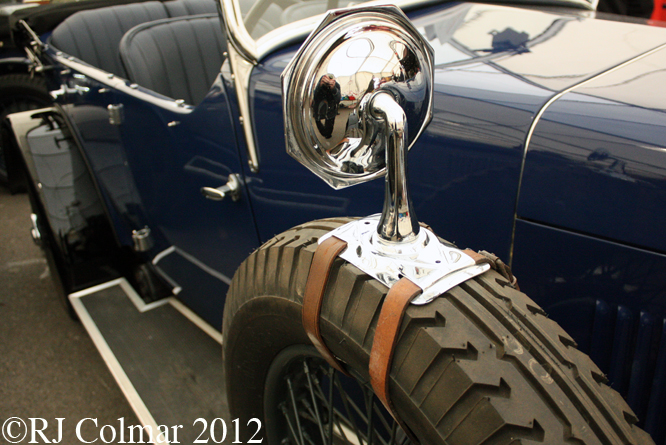
Restoration complete with a cable operated handbrake operating on all four 14 inch drum brakes took 27 years during which time the car also changed ownership.

MG 18/80 Super Sports Mk II Tourer, Bristol Classic Car Show

With a 17.7 hp six cylinder motor driving a four speed gearbox a top speed of 74 mph was quoted for this vehicle which cost £525 when new.

Thanks for joining me on this “Four Wheel Handbrake” edition of “Gettin’ a li’l psycho on tyres” I hope you will join me again for a Continental Curiosity tomorrow when I’ll be looking at an NSU Prinz. Don’t forget to come back now !
Share

When Is A FIAT A Ferrari ? – FIAT Dino 2.4 Spider

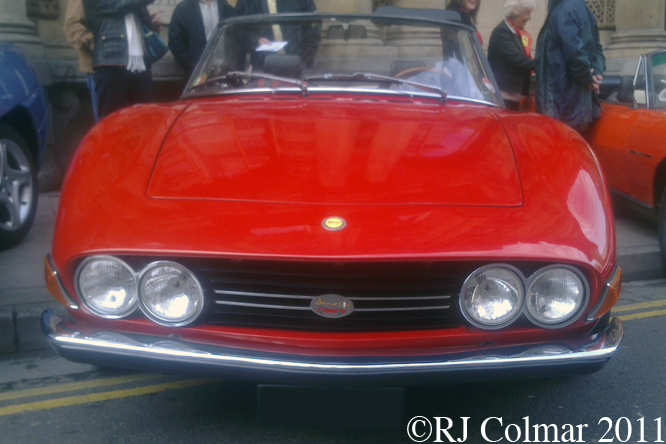
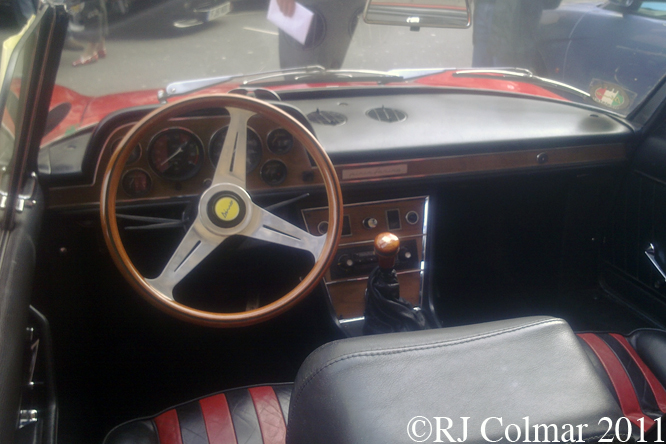
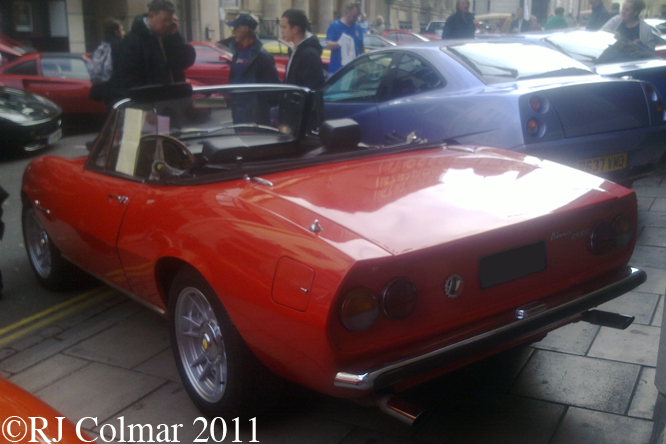
With sales volumes falling production of the FIAT Dino Coupé and Spider was moved from FIAT’s production facilities in Turin to Ferrari’s at Maranello in 1969.

FIAT Dino 2.4 Spider, Bristol Italian Auto Moto Festival

Amongst the changes to the specifications of the Maranello built FIAT Dino’s was an engine upgrade to the larger 178 hp 2.4 litre / 146 cui version of the Dino V6.

FIAT Dino 2.4 Spider, Bristol Italian Auto Moto Festival

An iron block replaced the aluminium block of the smaller motor but aluminium heads were retained. Curiously although the FIAT and Ferrari, as used in the mid engined Dino 206 & 246 GT’s, motors all came from the same production line in Turin Ferrari always liked to quote higher hp figures for ‘his’ motors than FIAT.

FIAT Dino 2.4 Spider, Bristol Italian Auto Moto Festival

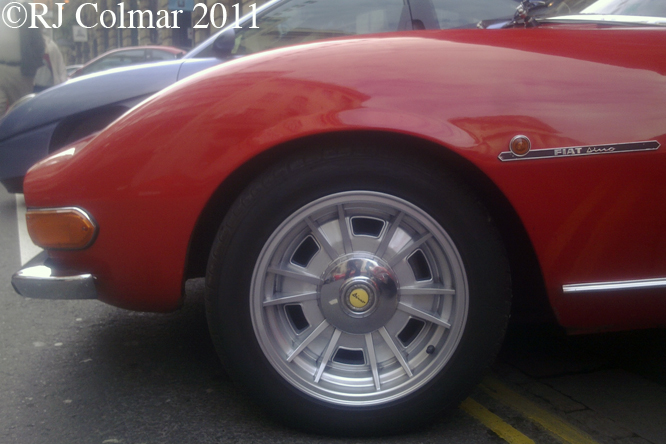
The FIAT Dino’s Girling disc brakes are said to be interchangeable with those fitted to the de Tomaso Pantera and Lamboughini Miura.

FIAT Dino 2.4 Spider, Bristol Italian Auto Moto Festival

With the Pininfarina bodied FIAT Spider being built along side the Pininfarina bodied 246 GTS there was not much to tell the two vehicles apart for anyone except the FIAT marketing department. Of the two models the FIAT Dino Spider with only 424 examples built is the rarer against 1,274 Ferrari Dino GT Spiders.

FIAT Dino 2.4 Spider, Bristol Italian Auto Moto Festival

When production of the FIAT Dino Spider moved to Maranello the original live axle and leaf spring rear suspension was replaced with a coil sprung independent rear suspension which shares much in common with the FIAT 130.

Today’s featured 1970 model, seen at last years Bristol Italian Auto Moto Festival was acquired as a non runner in 1987 and has been gradually restored ever since.

Thanks for joining me on this “When Is A FIAT A Ferrari” edition of “Gettin’ a li’l psycho on tyres, I hope you will join me again tomorrow. Don’t forget to come back now !
Share

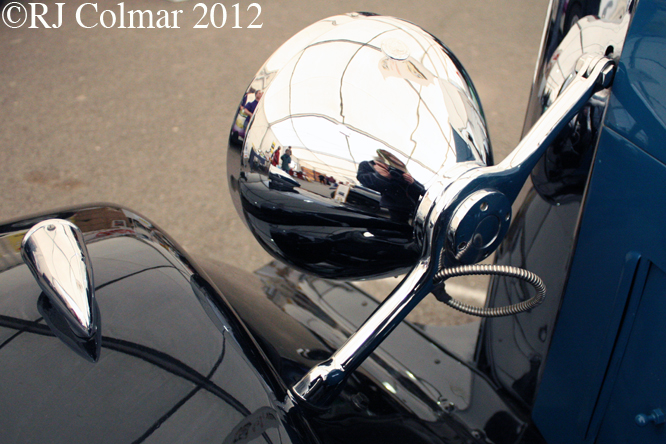
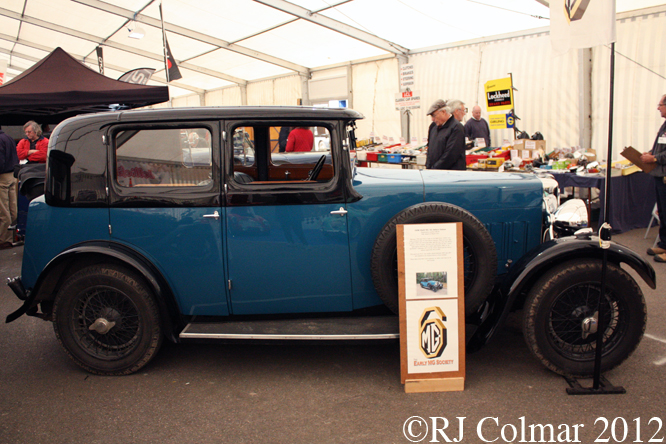
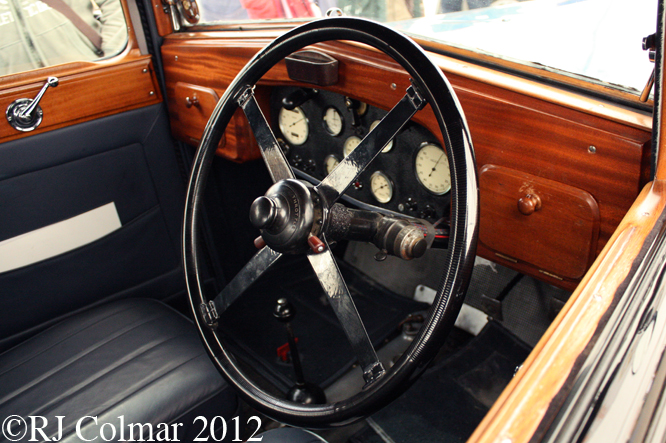
Last Known Survivor – MG 18/80 Six deluxe Saloon MkII

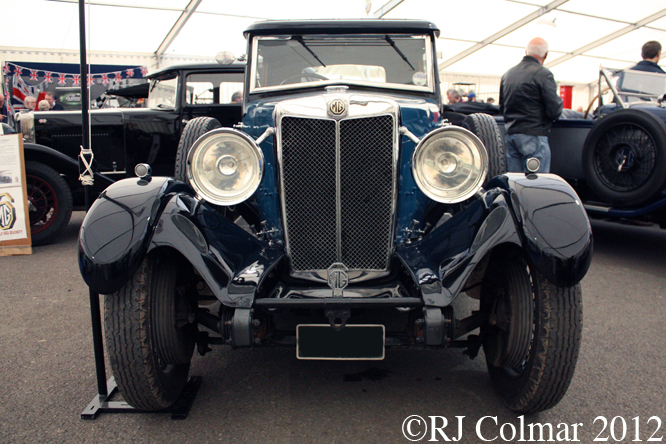
Between 1930 and 1932 MG built 236 18/80 Mk II’s with heavier frames and softer springs than the earlier Mk I’s which eventually replaced the Mk I which had been manufactured between 1928 and 1931.

MG 18/80 Six deluxe Saloon Mk II, Bristol Classic Car Show

Of those 236 Mk II’s 50 were deluxe Saloons.

MG 18/80 Six deluxe Saloon Mk II, Bristol Classic Car Show

Only 25 18/80 Six Mk II’s are known to exist, one of them is the prototype featured here a couple of weeks ago which now has a later Tigress style body, and another is the Six Saloon featured last week.

MG 18/80 Six deluxe Saloon Mk II, Bristol Classic Car Show

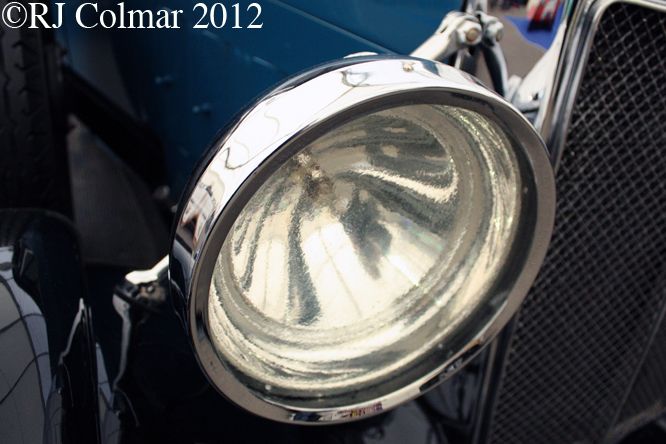
Today’s featured 1931 model is the only known top of the range 18/80 Six deluxe Saloon Mk II known to exist.

MG 18/80 Six deluxe Saloon Mk II, Bristol Classic Car Show

It was completely rebuilt between 2005 and 2007 and restored to it’s original factory colour scheme.

MG 18/80 Six deluxe Saloon Mk II, Bristol Classic Car Show

Since restoration it has been regularly used on rallies and tours of Europe.

Thanks for joining me on this “Last Known Survivor” edition of “Gettin’ a li’l psycho on tyres”, next week I’ll be rounding out the recent Tuesday features on early MG’s with a look at the oldest MG known to exist, meantime I hope you will join me for a continental curiosity tomorrow. Don’t forget to come back now !
Share