Tag Archives: Bristol

The Misfit – MG C GT Sebring Replica

During the endless mergers that took place in the British motor industry after 1945 many models like today’s MG C GT owe more to merged corporate parts bins than to fresh from the ground up planning.
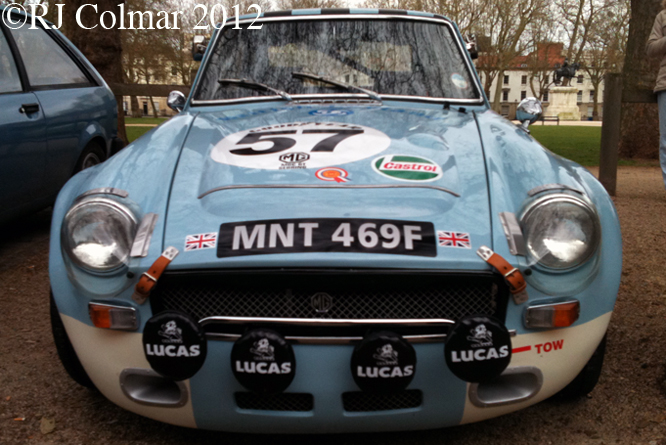
MG C GT, Sebring Replica, Avenue Drivers Club, Queens Sq, Bristol

The rational behind the MG C roadster and GT models was too build a vehicle to replace the six cylinder Austin Healey 3000 whose ancestry can be traced back to the Austin Healey 100-Six launched in 1956.
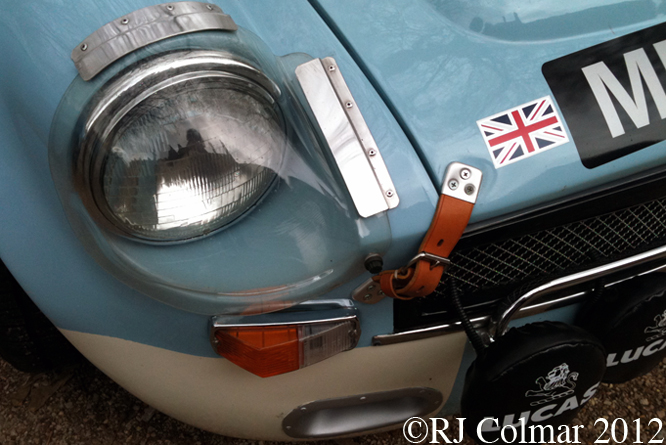
MG C GT, Sebring Replica, Avenue Drivers Club, Queens Sq, Bristol

The recipe for the new MG-C was to use the MG B body shell first seen in 1962 and fit it with the 3 litre / 183 cui six cylinder Austin C series motor that was more commonly found in the Austin Healey 3000 sports car and Austin Westminster saloon/sedan.
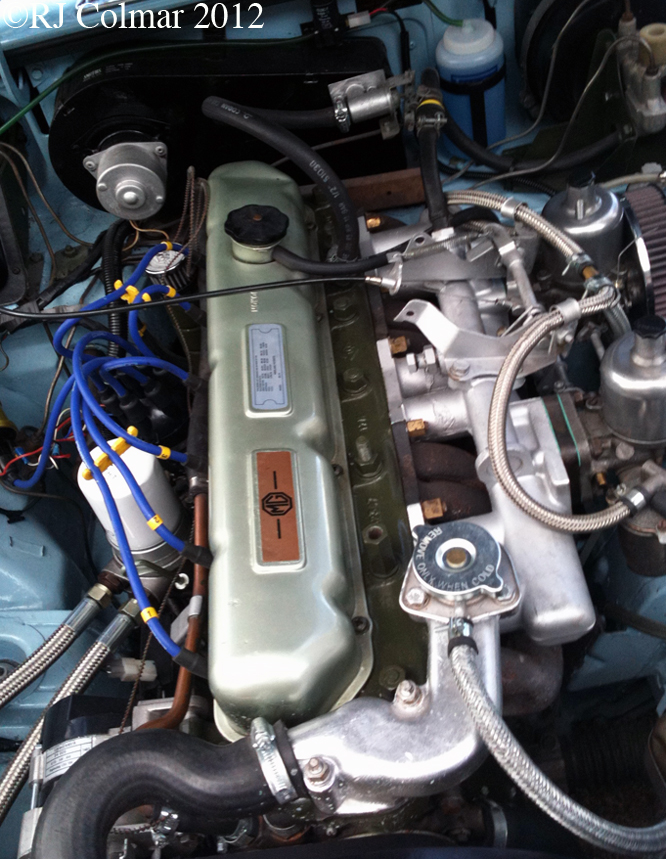
MG C GT, Sebring Replica, Avenue Drivers Club, Queens Sq, Bristol

Unfortunately the cast iron block C series motor has 2 cylinders more than the motor around which the MG B was designed around and the C series motor was a good deal taller than the MG B 4 cylinder. This meant the chassis cross member that held the 4 cylinder motor had to be replaced, the front suspension strut suspension replaced with torsion bar suspension, the front bulkhead had to be modified and when all was said and done to accommodate an automatic transmission option the engine was not placed as far back as the engineers would have liked to achieve a 50/50 front rear weight balance.
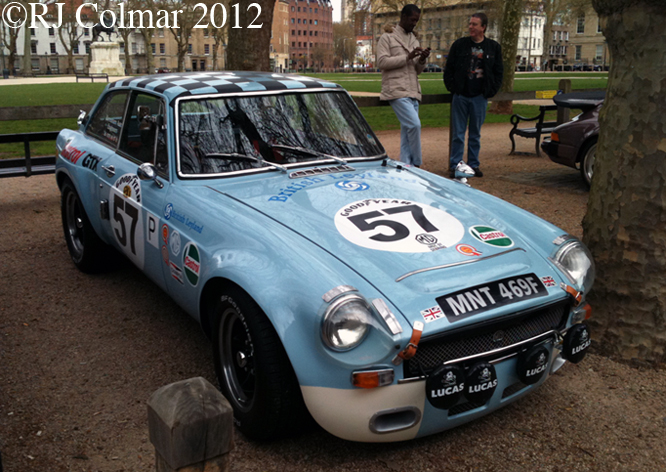
MG C GT, Sebring Replica, Avenue Drivers Club, Queens Sq, Bristol

The new MG C also had to run on 15″ wheels in order to keep the oil sump off the ground, but all in all the engineers were pleased with their 120 mph creation which had a respectable 53/47% front to rear weight balance.
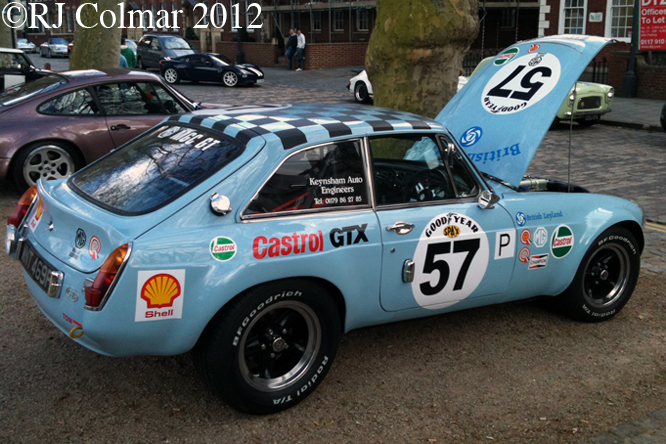
MG C GT, Sebring Replica, Avenue Drivers Club, Queens Sq, Bristol

Unfortunately the press panned the car in essence for not being different enough from the MG B but also because they found the handling tended towards understeer / push. It has been noted in some circles this characteristic may well have been exacerbated by the fact that the MG C was so much smoother than the MG B that journalists might not have been aware of the speeds they were traveling when experiencing the understeer push phenomenon.

MG C GT, Sebring Replica, Avenue Drivers Club, Queens Sq, Bristol

Completely oblivious to the handling criticisms Prince Charles took delivery of an MG C in 1967 and this car has apparently been passed onto Prince William. The car seen here has been turned into a replica of the triple carburetor MG C’s raced at Sebring in 1968 and 1969, though the tailgate spoiler was not used by the works cars of 1968 and 1969 which were racing in the same class as full blown racing cars like the Porsche 907 and 908 models.
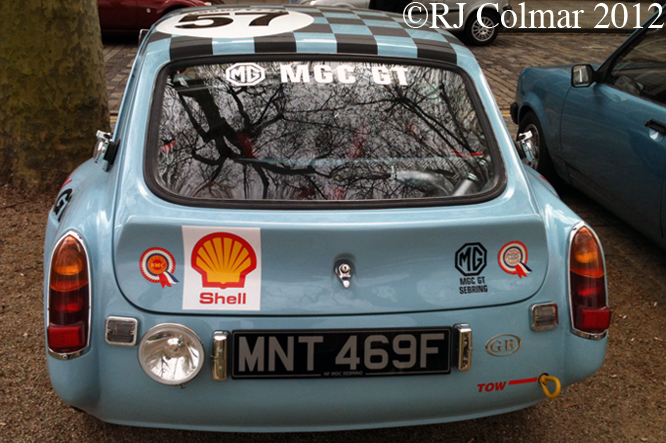
MG C GT, Sebring Replica, Avenue Drivers Club, Queens Sq, Bristol

Of the 9002 MG C’s manufactured between 1967 and 1969 4458 were hard top GT’s. With the merger of British Motor Holdings with Leyland owners of the Triumph brand in 1968 the Triumph TR 6 was chosen as the newly merged corporations 6 cylinder sports car of choice and so the MG C died an early death, though in 1973 an even larger, but much lighter, engined MGB GT V8 would appear.

Thanks for joining me on ‘The Misfit’ edition of ‘Gettin’ a li’l psycho on tyres’, I hope you will join me again tomorrow. Don’t forget to come back now !

Share

Coffee, Croissant, Vintage & Classic – Avenue Drivers Club

The Avenue Drivers Club was formed in 2009 by a small group of enthusiasts of cars that will do at least 100 mph and the Avenue Café on Queen Square, Bristol. Every second Sunday of the month they meet at 9 am at Queen Square for coffee and a chat.

Talbot 10/23, Avenue Drivers Club, Queens Sq, Bristol

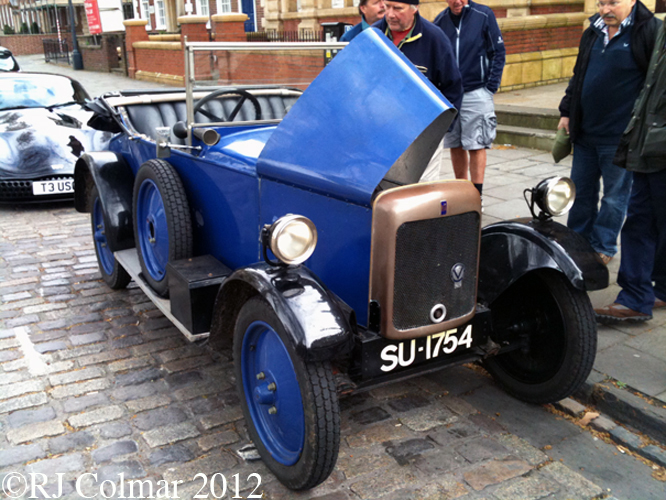
Being Bristol the 100 mph criteria is not strictly adhered to, as I found out yesterday when I was pleasantly surprised to find several interesting Vintage vehicles, like this 1925 Talbot 10/23, which would struggle to reach that 100 mph speed under their own steam.

The BSA Ten, Avenue Drivers Club, Queens Sq, Bristol

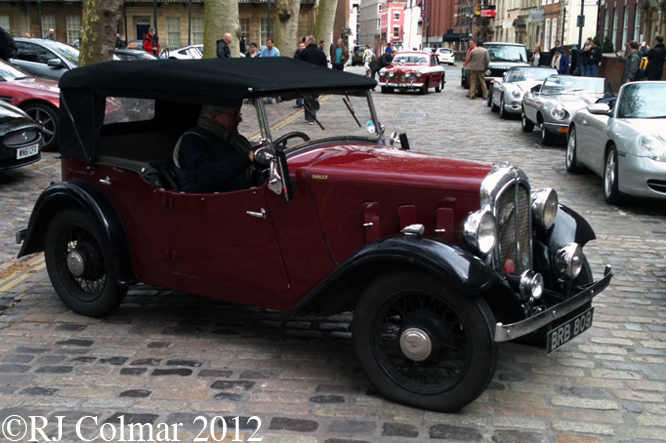
Like wise The BSA Ten powered by a twin cylinder air cooled engine from 1925/26 would struggle to reach 100 mph and if it did the owner would not know about it as his speedometer fell out on the way over to the meeting.

Morris Cowley, Avenue Drivers Club, Queens Sq, Bristol

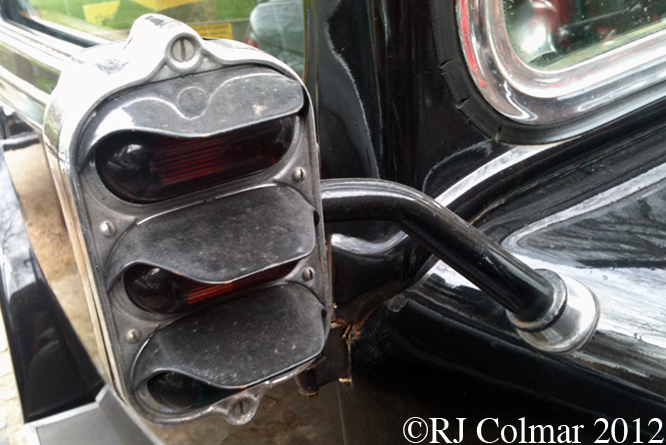
Not too sure what the function of these accessory is it appears to shine red yellow or green lights forwards and rearwards and one was mounted either side of a 1933 Morris Cowley. If you know what purpose these lights were designed for please chime in below.

Austin 10/4 Ripley Sports, Avenue Drivers Club, Queens Sq, Bristol

GALPOT regulars may remember this Austin 10 choking on a clothes peg from an earlier blog, turns out the full name for the car is Austin 10/24 Ripley Sport. This car is thought to have been first owned by the Debyshire County Constabulary in black.

MG, Avenue Drivers Club, Queens Sq, Bristol

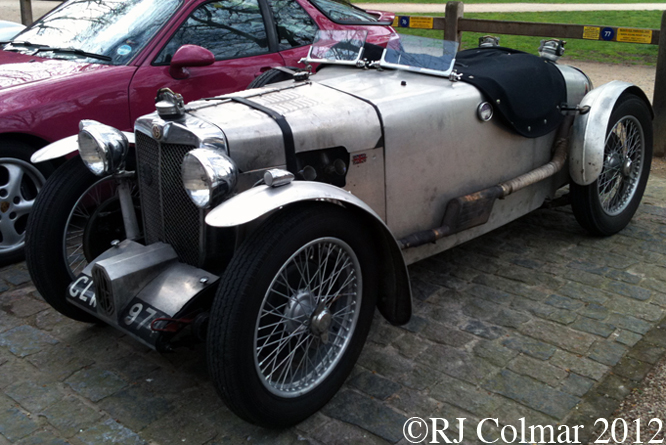
Despite my many recent Tuesday MG blogs I have not yet been able to establish exactly what model MG this nifty little 1936 racer is, if you know please chime in below.

Bristol 403, MG, Avenue Drivers Club, Queens Sq, Bristol

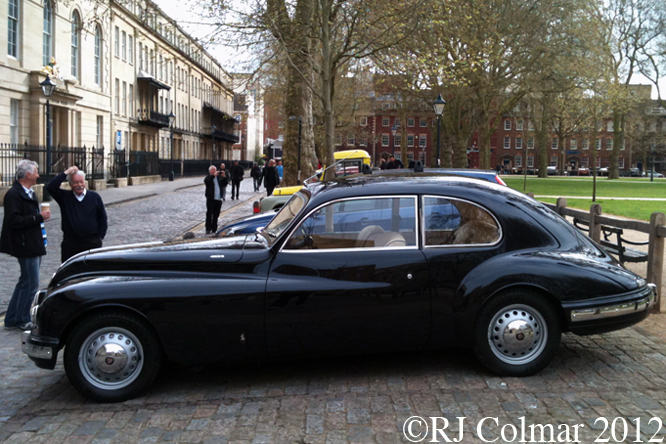
In the running for car of the day was this absolutely immaculate 1953/55 Bristol 403, the condition of this car really has to be seen in the flesh to be believed, I can imagine this car will still be turning heads in 60 years time.

Austin Gipsey, Avenue Drivers Club, Queens Sq, Bristol

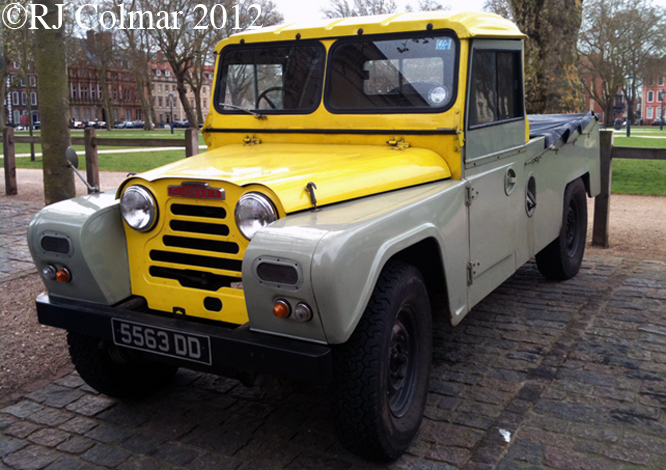
Another vehicle falling into the sub 100 mph bracket was this 1962 Austin Gipsy a would be competitor to the otherwise ubiquitous Land Rover this one with a 110″ wheelbase. There was also an immaculate Series One Land Rover and an early ‘proper’ Range Rover in attendance.

Triumph TR5PI, Avenue Drivers Club, Queens Sq, Bristol

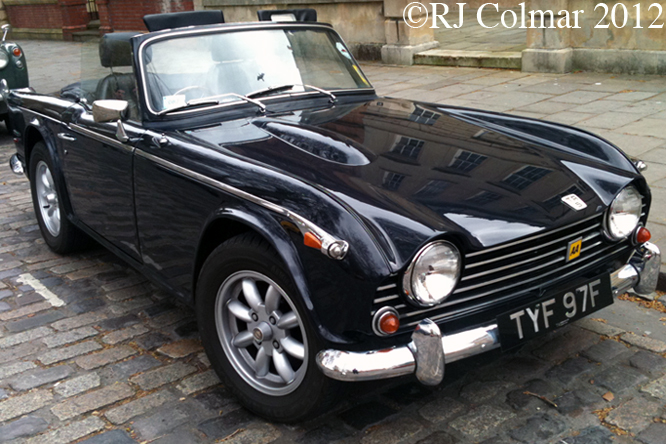
Representing Triumph was a 2000, 2500PI a GT6 and this 1966/67 TR5PI which rather took my fancy.

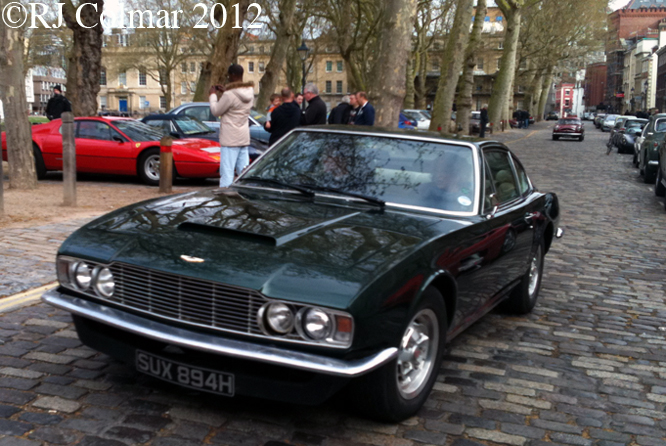
Aston Martin DBS, Avenue Drivers Club, Queens Sq, Bristol

At the more powerful end of the scale was this 1969/70 Aston Martin DBS, with an even more powerful Ferrari 365 GTB/4 parked up behind it.

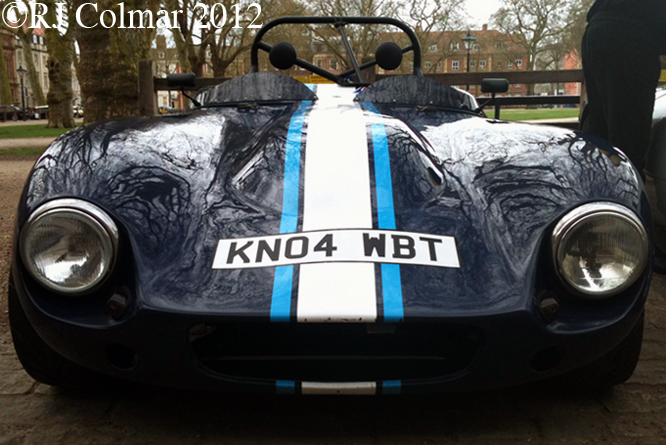
Fisher Fury, Avenue Drivers Club, Queens Sq, Bristol

Among many things I learned yesterday was the existence of Fisher cars, I mistook this for a Ginetta G4, it is actually a Fisher Fury powered by a 1 litre / 61 cui motorcycle motor.

Attack K1, Avenue Drivers Club, Queens Sq, Bristol

Car of the day was without doubt this K1 Attack, another vehicle I had never heard of before which originates from Slovakia and is powered by a Honda Type R engine. Sundays blog will reveal more about this car. Only 4 are thought to exist in the UK and this is the only one with RHD.

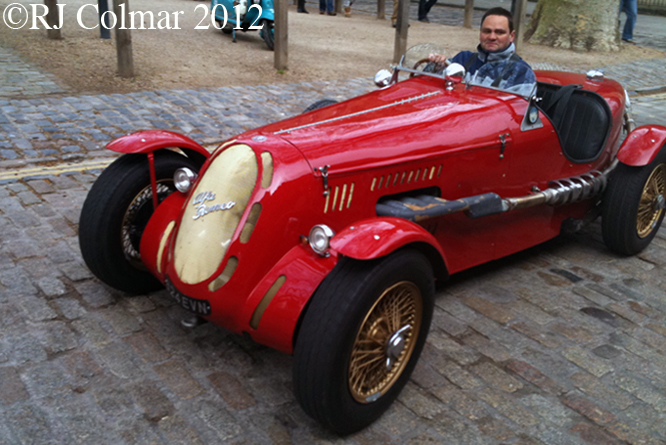
Lenham ALFA Romeo, Avenue Drivers Club, Queens Sq, Bristol

At the end of the meeting which lasted a very short 3 hours David Roots, who told me about the Avenue Drivers Club a couple of weeks ago kindly gave me a highly entertaining ride home ‘aboard’ his unique Lenham ALFA Romeo.

My thanks to David and everyone else who brought out their pride and joy I simply did not have time to include in today’s blog, can’t wait for the next meeting on the second Sunday in May.

Thanks for joining me on this Coffee, Croissant, Vintage & Classic edition of ‘Gettin’ a li’l pscho on tyres, I hope you will join me again tomorrow. Don’t forget to come back now !

12 04 12 Errata I originally had the cool white car down as a Attack K1, it’s actually a K1 Attack and it is not powered by a motor cycle engine but a Honda Type R, apologies to all concerned.

Share

Same Body Bigger Motor – Ferrari 365 GTC

In 1966 Ferrari launched the 330 GTC of which some 600 hundred were built up until 1968.

Ferrari 365 GTC, BIAMF

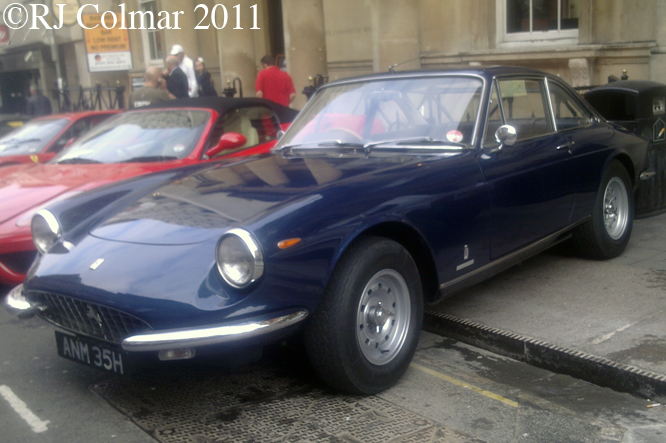
The body of the 365 GTC which replaced the 330 GTC in 1968 was almost identical apart from the absence of the large cooling ducts in the front wings/fenders which vented air from the engine bay.

Ferrari 365 GTC, BIAMF

Ferrari’s 4 litre / 244 cui V12 from the 330 cars was upgraded to a 4.4 litre / 268 cui V12 for the 365 series cars which increased the horsepower from 300 to 320.

Ferrari 365 GTC, BIAMF

One other significant difference between the 330 GTC and 365 GTC was that the later car had the gearbox moved from behind the motor to in front of the rear axle to improve the weight distribution.

Ferrari 365 GTC, BIAMF

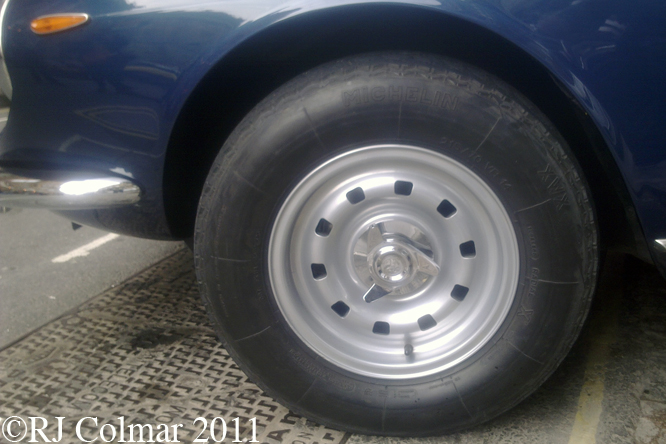
Alloy wheels came as standard Borrani wire wheels were an optional extra.

Ferrari 365 GTC, BIAMF

This 1969 car has covered over 80,000 miles and is one of 150 that were built up until 1970 when it was superseded by the elegantly understated Ferrari 365 GTC/4.

28 04 12, date for your diary, this car and several others featured on ‘Gettin’ a li’l psycho on tyres’ over the past year was seen at the Bristol Italian Auto Moto Festival (BIAMF) last year. This years BIAMF event, the largest annual participatory automotive event in Bristol will be on Saturday April 28th. Event details can be found on the BAIMF website linked here. If your planing on going leave a message below or e-mail me see address at the very bottom of this page and we will see if we can’t organise a GALPOT meeting.

Thanks for joining me on this ‘Same Body Bigger Motor’ edition of ‘Gettin’ a li’l psycho on tyres, I hope you will join me again tomorrow. Don’t forget to come back now !

Share

Fintail Without Fintails – Mercedes Benz 250 SE

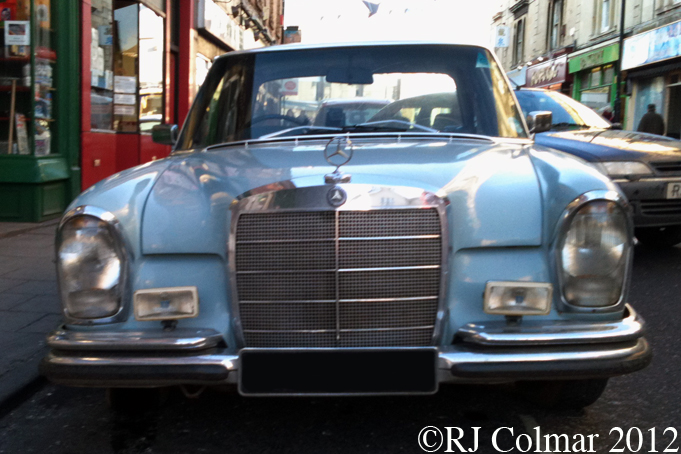
By all accounts it would appear that the Mercedes Benz models built on the W108 platform such as the 250 SE seen here from 1965 – 1972 laid the foundation stones in the Mercedes Benz palate for what is now known as the range topping ‘S Class’.

Mercedes Benz 250 SE

Back in 1965 the W108 was launched with three 6 cylinder engine options the carburated 2496 cc / 152 cui 250S, fuel injected 2496 cc / 152 cui 250 SE or 2996 cc / 182.8 cui 300 SE and 300 SEL built on the long wheel base W109 chassis platform.

Mercedes Benz 250 SE

Behind the 14″ wheels were disc brakes all round to match the 15 second 0 – 62 mph acceleration and 114 mph top speed of the 150 hp automatic seen here.

Mercedes Benz 250 SE

Often referred to as the fintail without fintails the W108 cars added to Mercedes Benz reputation for building reliable and durable motor cars that helped turn the company into a World Automotive leader again.

Mercedes Benz 250 SE

Paul Bracq styling of the W108 was evolutionary from the slightly smaller tailfined W111 of 1957 to 1971, which would evolve into the E Class, while laying clear markers as to the styling of the immensely successful ‘new generation’ W114 and W115 models that were built from 1968 to 1976.

Mercedes Benz 250 SE

Unusually for European cars of the period the automatic gear box featured 4 speeds and a fluid coupling in place of the usual torque converter, it was also developed and built by Mercedes Benz at a time when most European manufacturers used US designed and built automatic transmissions.

Mercedes Benz 250 SE

This 1967 250 SE is one of 130,000 250 models assembled on the W108 platform between 1965 and 1967.

Thanks for joining me on this Fintail Without Fintails edition of ‘Gettin’ a li’l psycho on tyres’, I hope you will join me again tomorrow. Don’t forget to come back now !
Share

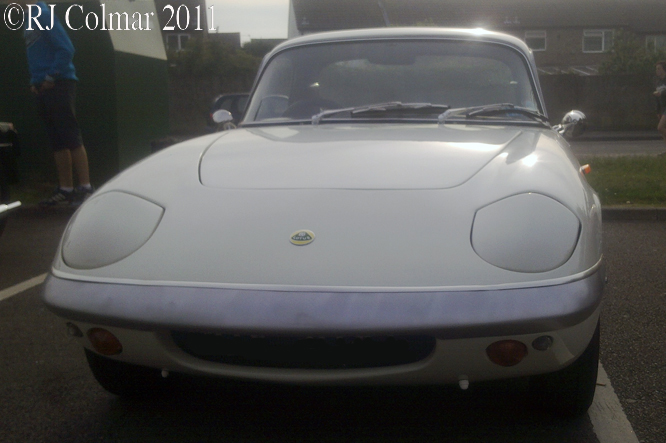
Special Equipment – Lotus Elan Coupé S/E

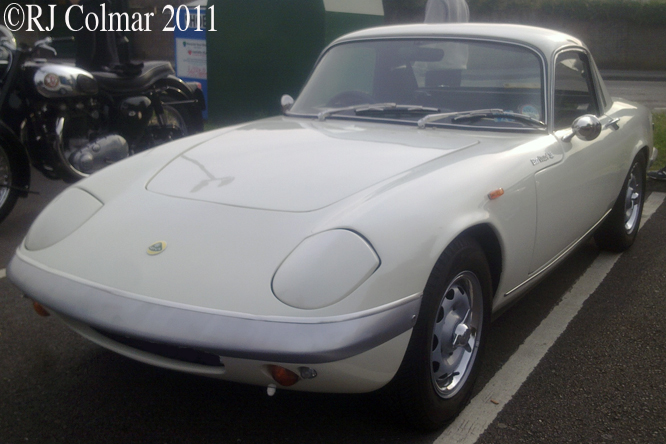
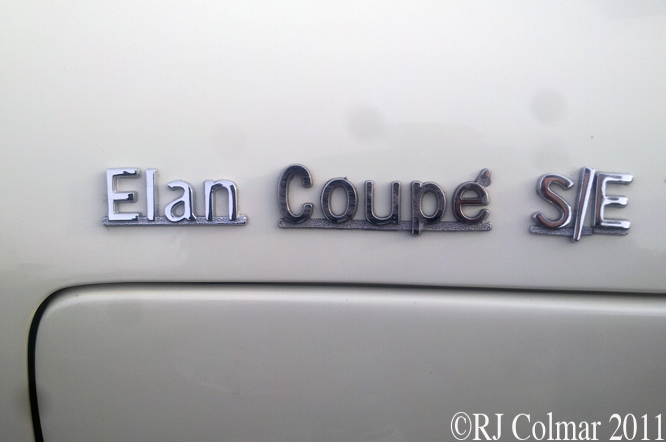
A couple of weeks ago you may remember I attempted my first navigation exercise with Bristol Pegasus Motor Club membership secretary Bob in his ‘daughters’ Mini Cooper. Today I am looking at Bob’s own car his Lotus Elan Coupé S/E otherwise known as an Elan S3 FHC (Type 36).

Lotus Elan Coupé S/E

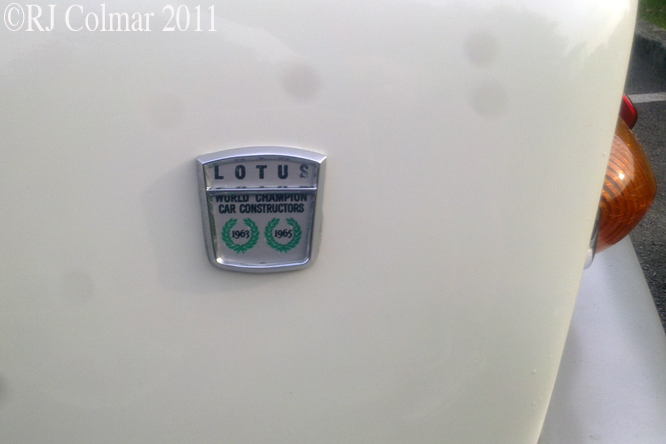
Like the racing Lotus 26R the Elan Coupé S/E has a fixed hard top unlike the original Lotus 26 Elan’s which were all convertibles.

Lotus Elan Coupé S/E

The first 36 Coupé’s were introduced in September 1965, with a 105 hp version of the Lotus Twin Cam 4 cylinder engine.

Lotus Elan Coupé S/E

An S/E version as seen here became available in July of the following year with a 118hp ‘L Block’ version of the Lotus Twin Cam.

Lotus Elan Coupé S/E

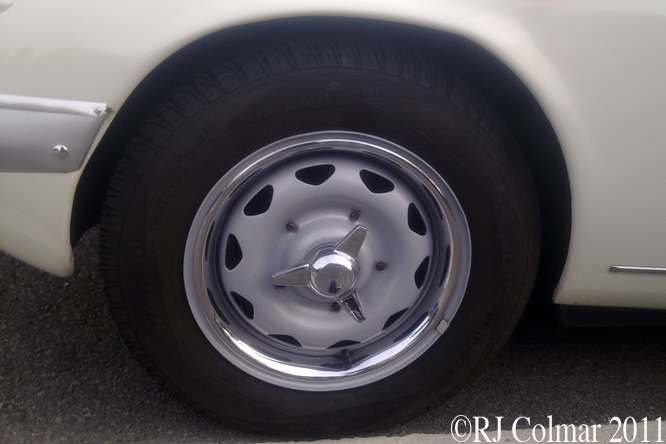
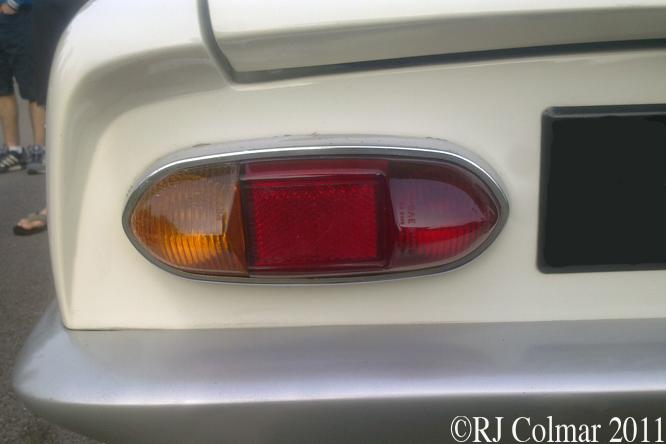
S/E Coupés are distinguished from all earlier Elan models by the repeater lights on the front wings and stainless steel trim on the sides.

Lotus Elan Coupé S/E

Bob’s car was built in 1967 by which time Lotus had won two of an eventual seven Grand Prix constructors titles with the Lotus 25 and Lotus 33.

Lotus Elan Coupé S/E

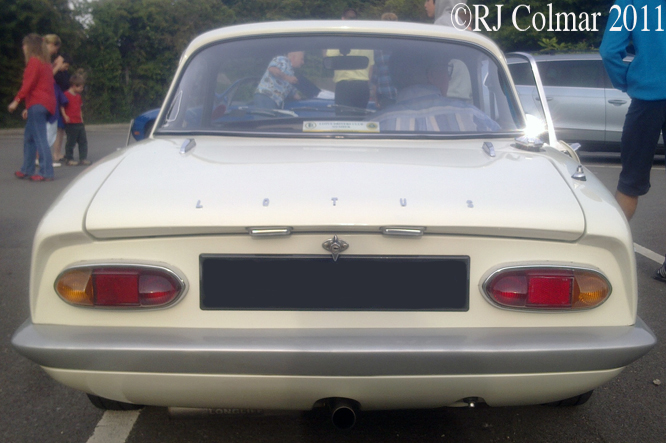
The Elan S3 body was the first Elan to have a boot lid that extended all the way to the tail of the car.

Lotus Elan Coupé S/E

It is estimated that approximately 1,200 Elan S3 FHC’s were built between 1965 and 1968 when the S4.

My thanks to Bob for his help with this blog.

Thanks for joining me on this ‘Special Equipment’ edition of ‘Getting’ a li’l psycho on tyres’ I hope you will join me again tomorrow’. Don’t forget to come back now !

Share

Supercharged Map Reading – BPMC Navigation Exercise

At long last the 2012 motor sport season has got under way, though not in quite the way I have ever experienced ever before. A couple of weeks ago I was informed that Bristol Pegasus Motor Club (BPMC) Membership Secretary Bob Bull was looking for a navigator to take part in the January BPMC Navigation exercise. I got in touch with Bob and he kindly agreed to take me along on Friday despite the fact that I have not read an Ordnance Survey map in something approximating 4 decades, since being introduced to the modern talking route finder a couple of years ago I have rarely had use for any kind of map at all !

BPMC Navigation Exercise

This event was organised on three levels Beginners which included Bob and I, Novices for those competent at reading maps who were given an additional false origin exercise, a tulip reading exercise, a map feature reading exercise and herringbone reading exercise. Finally for the Experts there were map reading, false origin, tulip not in the correct order, map feature an a herringbone exercise. I’ll come back to the more difficult exercises in a future blog.

BPMC Navigation Exercise

Photo Courtesy Dick Craddy

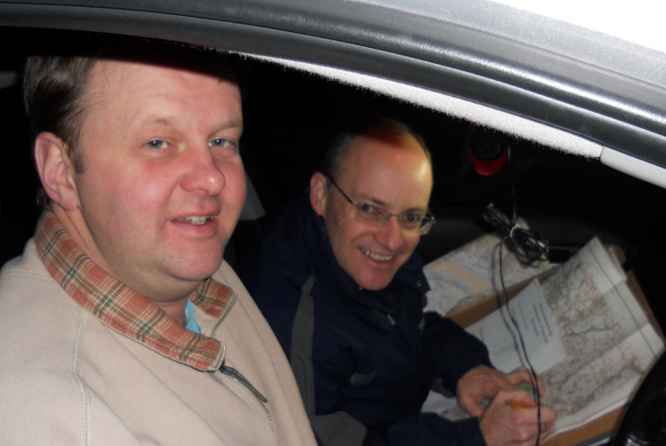
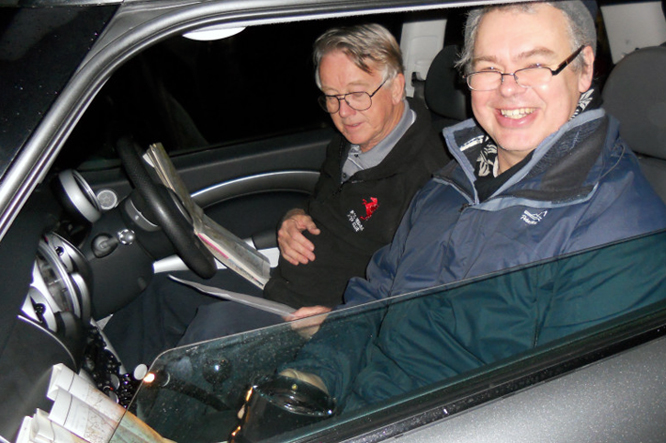
Bob kindly came and picked me up on Friday night in his ‘daughters Mini Cooper S’ a tidy supercharged model that would be ranged against the Mazda 6 of BPMC Chairman Andy Moss with co driver Chris Goodchild (above) ,

BPMC Navigation Exercise

Photo Courtesy Dick Craddy

the Peugeot 106 Rallye of Chris Thompson and Alan Dillamore …

BPMC Navigation Exercise

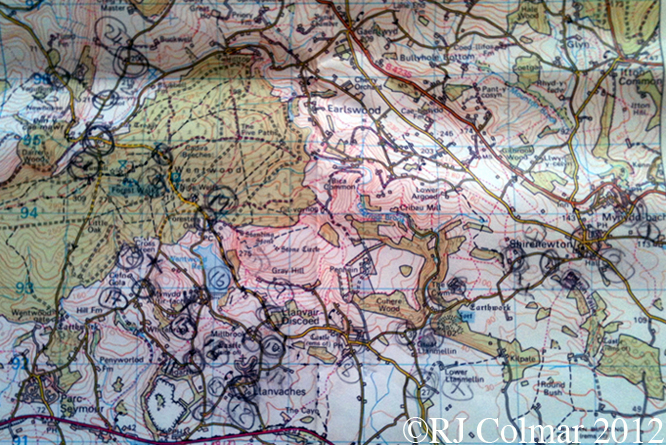
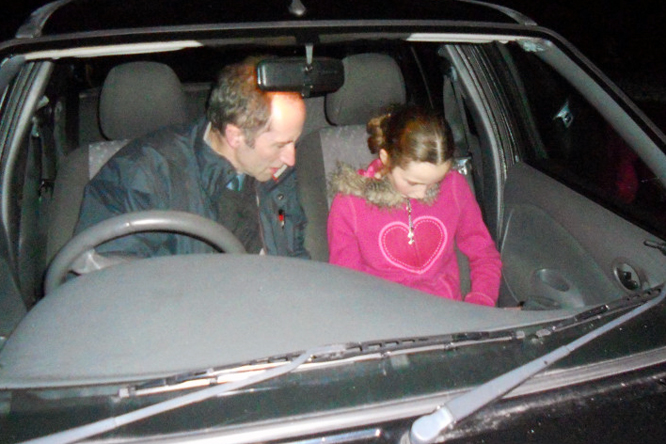
and the Ford Fiesta driven by Martyn with his teenage daughter Katie Davies doing the co driving. We all met with the event organiser Dick Craddy at map reference 494 943 on O/S Map 162 for a 19:30 start.

BPMC Navigation Exercise

Bob and I arrived at the lay-by nice and early and wondered if we might try navigating by stars on what was a clear and dark night on the Welsh Boarder.

BPMC Navigation Exercise

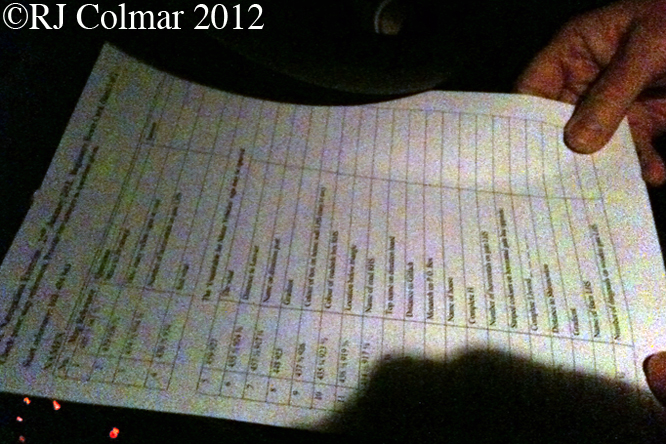
Once everyone had arrived and signed on Dick went through some basics about not using anything other than normal driving lights, observing the highway code at all times and he warned us that the local constabulary had been informed of our presence and that we should expect to see them at anytime, before handing us our instructions. In our case a list of fifty 6,7 and 8 figure map references with questions about features we could expect to find when we reached them.

BPMC Navigation Exercise

Photo Courtesy Dick Craddy

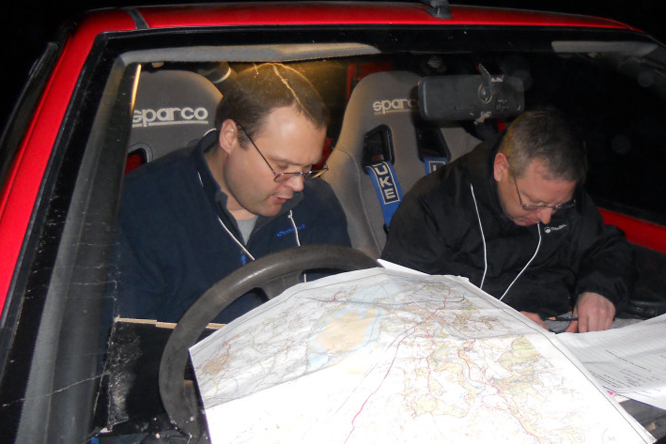
Before setting off we plotted the map references and after the first dozen I realised I had forgotten to label them so we had to start again, nothing like starting at the bottom of the learning ladder. After what must have been nearly an hour I had about half the references plotted and Bob put the Supercharged Mini in gear and off we set towards our first map reference a junction in Mynydd-bach where we had to find out how many miles the sign post to Brynbuga read before heading in the opposite direction towards Shirenewton !

BPMC Navigation Exercise

So far so good but then things soon started to get complicated, somewhere between reading the map and looking for clues as to where we actually were I missed a junction and we found our selves on a single lane track facing Chris Thompson coming from the opposite direction ! Chris kindly backed up to let us pass, somehow, it still escapes me how, we managed to do a figure of 8 and ended up back in Shirenewton. Doh ! we retraced our steps and found the junction we missed, found the correct answers to the questions and headed on toward Llanvair Discoed and found the answers to around a dozen questions before deciding to call it a day and heading to the final meeting place a pub next to Tintern Abbey. Note to self not all pubs are marked on an Ordnance Survey Map as PH (Public House) or Inn.

BPMC Navigation Exercise

Needless to say we did not do very well coming in well and truly last, but Bob kindly offered to redo the exercise with me in a couple of weeks. They say practice makes perfect so if all goes well we will be back for crack at the next Navigation event a little the wiser.

If you live in the Bristol area and fancy having a go at this entertaining low cost sport why not check out the Bristol Pegasus Motor Club site join the club for just £10 and give it a go. The next BPMC organised Navigation Exercise is on March 16th.

Congratulations to Andy and Chris who easily won even with a deduction for being previous winners !

My thanks to Bob for his patience and taking me along, Dick for organising the event and providing some of the photo’s for today’s blog.

Thanks for joining me on this Supercharged Map Reading Edition of ‘Gettin’ a li’l psycho on tyres’, I hope you will join me again tomorrow. Don’t forget to come back now !
Share

Unlisted – Bristol Blemheim S4

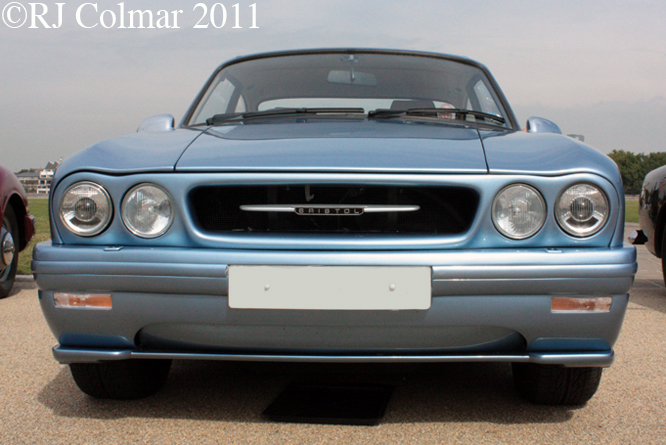
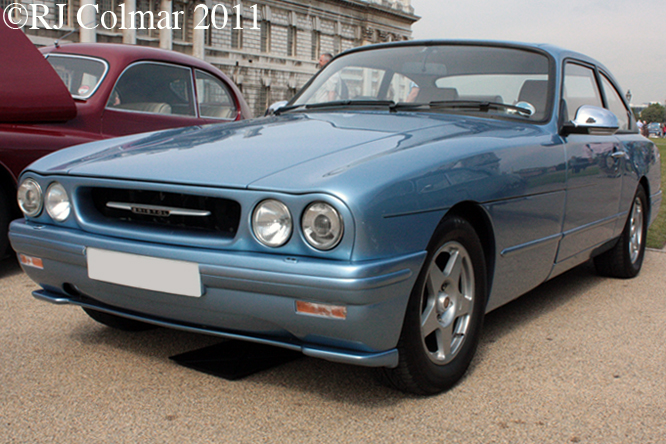
Every once in a while I stumble across a car that stands out from all the others of the marque for no discernible reason that I can accurately pin point. The Bristol Blenheim S4 pictured below at the Bristol Owners Club Concours d’Elegance last year, is one such vehicle that ever since I have seen it I immediately associate with the Bristol marque in much the same way as I associate big red buses with London.

Bristol Blenheim S4, Greenwich C d'E

Bearing a superficial resemblance to earlier Blenheim models this S4 has subtle alterations to every single panel, each shaped in aluminium with an english wheel, save those at the front and rear which are made from kevlar.

Bristol Blenheim S4, Greenwich C d'E

Power comes courtesy of a 5.9 litre / 360 cui dual fuel Chrysler derived V8 good enough to propel this nearly 4000 lb vehicle from rest to 60 mph in around 6 seconds, considerably less time than it took me to write this sentence !

Bristol Blenheim S4, Greenwich C d'E

Yet for all of it’s impressive size and performance it would be so easy to simply not notice the car at all, it simply refuses to scream it’s presence in the way an Italian car with similar capabilities would almost certainly do, and that is perhaps why I love Bristol Cars so much they are understated yet more than a match for most.

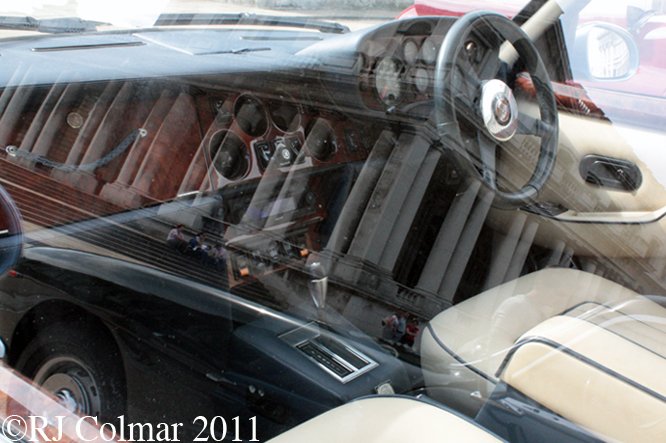
Bristol Blenheim S4, Greenwich C d'E

The interior of the S4 is significantly tidied up over previous Blenheim models with a walnut dash and Connolly leather seats.

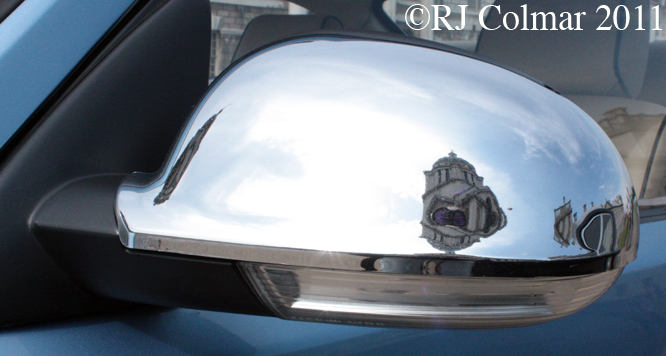
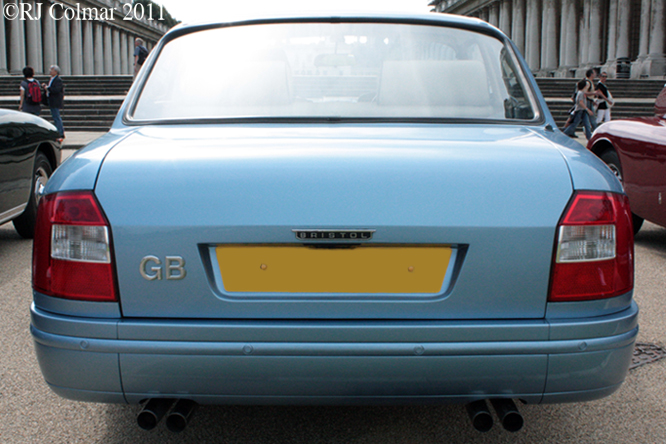
Bristol Blenheim S4, Greenwich C d'E

The S4 is the only Blenheim to feature rear proprietary lights from Audi, giving the rear end a fresh look. Amazingly the S4 is no where to be found in Bristol Cars Sales literature, it is a one off ordered and built to the customers exacting specifications in 2009, this S4 represents a zenith on the arc of development for the Blenheim which traces it’s ancestry back to the 603 model first built in 1976. A unique car regrettably with a terminal place in the production history of Bristol Cars.

Thanks for joining me on this ‘Unlisted’ edition of ‘Gettin’ a li’l psycho on tyres’ I hope you will join me again tomorrow. Don’t forget to come back now !
Share