Tag Archives: Bristol

Lynley mystery – Bristol 410

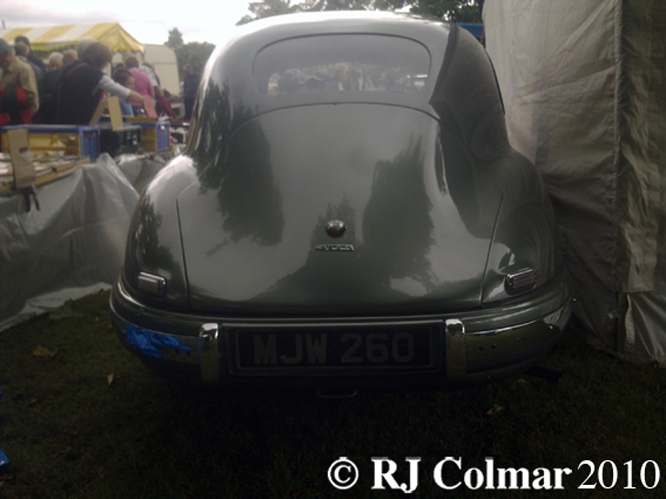
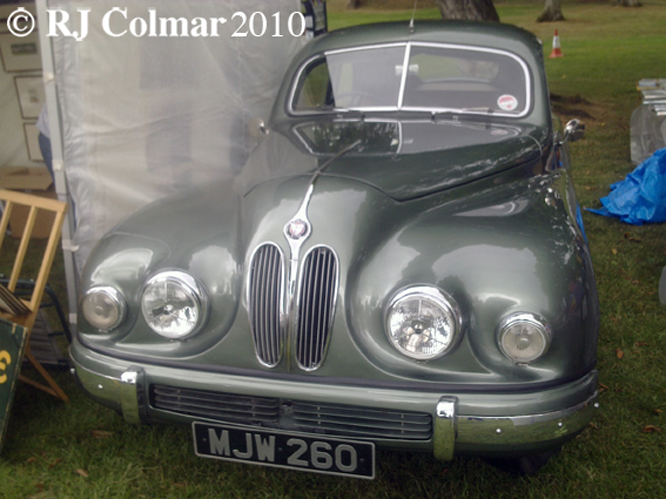
The Bristol 410 was the fourth Bristol model to use the chassis architecture laid out for the 407 model.

Using the A block Chrysler engine now with a swept volume of 5211 cc / 318 cui for the last time before switching to the larger Chrysler B block for subsequent models the 410 marked a return to a floor mounted shift for the Torqueflight gearbox after US legislation had outlawed the previous push button system.

A Bristol 410 has two chrome strips running the length of the vehicle a feature unique to this Bristol model.

Fitted with ZF power steering as standard the 410 had a lower centre of gravity than the yet to be blogged 409 thanks to smaller 15″ diameter wheels down from 16″ on the previous model.

The 410 was the first Bristol fitted with separate front and rear brake circuits the servo’s. The servo’s were housed in a compartment between the front of the drivers door and the rear of the front wheel arch, the top hinge of which can just be distinguished below the badge in the photo above.

Some of you may recognise this as the model that Inspector Lynley drives in some episodes of the television series The Inspector Lynley Mysteries, mysteriously in the novels by Elizabeth George on which some of the episodes are based Lynley is actually described as driving a Bentley.

As ever exclusivity is the watch word for this manufacturer with just 79 Bristol 410’s being built between 1968 and 1969.

With thanks to the PistonHead who kindly brought this car to the recent Sunday Service at the BMW Plant at Cowley and to Cristopher Balfour who’s book ‘Bristol Cars a very British story‘ provided many of the insights in today’s blog.

Hope you have enjoyed today’s TV detective edition of ‘Gettin’ a lil’ psycho on tyres’ and that you will join me again for Ferrari Friday tomorrow. Don’t forget to come back now !

Share

Going it alone – Bristol 407

Just 88 Bristol 407’s were built between 1961 and 1963.

The 407 was the first Bristol model launched after ownership of the Bristol Car Company had been taken over by the Bristol Aeroplane Company founders grandson Sir George White 3rd Bt in partnership with Bristol’s preeminent retailer Tony Crook in September 1960.

The exterior of the Bristol 407 is distinguished from its predecessor the 406, which I have yet to write a blog about, by a horizontal bar across the radiator grill at the front and twin exhaust pipes at the rear.

Underneath the car could not be more different, the 407 is powered by a Canadian built 5130 cc / 313 cui Chrysler V8 connected to a push button operated Torqueflight transmission, a combination which first came to the attention of of Sir Reginald Verdon Smith the Bristol Aeroplane Company director in the 1950’s on a private visit to Canada.

Bristol attempted to develop it’s own aluminium block V8 in the 1950’s but, insufficient experience casting aluminium and lack of capital thanks to the spiralling cost of aircraft development elsewhere in the Bristol group of companies meant that the V8 never got beyond an underdeveloped prototype stage at which crankshaft main bearing housing distortion presented an obstacle to production.

Changing to the Canadian V8 from the hitherto BMW inspired straight 6 necessitated replacing the former transverse leaf front suspension with a pair of coil springs and replacing the highly praised rack and pinion steering with Marles worm driven steering.

The chassis was fitted with Dunlop disc brakes all round and the aluminium body production was moved from Jones Brothers to Park Royal Vehicles in London.

The 407 chassis set out the basic architectural features for all Bristol’s with many incremental modifications right through to the introduction of the Bristol Fighter in 2004.

This particular model photographed at a Loton Park VSCC meeting is registered in Sweden, notice that it is a Right Hand Drive model, Sweden switched to Left Hand Drive in September 1967 to bring it into line with it’s Scandinavian neighbours.

My thanks to Christopher Balfour who’s book ‘Bristol Cars a very British story‘ provided many of the insights in today’s blog.

Hope you have enjoyed today’s Marles worm driven steering edition of ‘Getting a lil’ psycho on tyres and that you’ll join me again tomorrow for a look at the even rarer Bristol 410. Don’t forget to come back now !

Share

Fit for a Sheikh – Bristol 405 Drophead

The Bristol 405 introduced in 1953 was the first Bristol to dispense with the BMW inspired grill and is unusual for having a single fog light placed in the middle.

There were two versions of the 405 this Drophead of which 43 were built and an imposing 4 door saloon of which 308 were built until production ended in 1958.

A 1971 cc / 120 cui straight six motor was exclusively tuned to produce 125 hp for the Drophead, the Saloon was given a 105 hp version of this engine. One blogger described the sound of this motor as being like ‘a squadron of Lancasters‘.

The first two 405 D’s were strictly two seaters with fully retracting roofs, however all bar one of the remaining Dropheads had roofs that rested on the rear body work making space for rear seats. A one off 405 D was produced for Sheikh Yusuf Mohammed Al Tawil and shipped to Jeddah in 1955 painted gold with silver wheels, white wall tyres and an electro-hydraulic operated roof.

The slick action four speed gearbox of all 405’s were fitted with a Laycock overdrive for high speed cruising operated by the large toggle switch to the right of the steering wheel.

The first 18 to 20 Bristol 405 Drophead chassis were sent to Abbots of Farnham where the bodywork was crafted. Abbots landed a large contract to build estate / station wagon version of the Ford Zephyr and Zodiac models and the remaining 405 D’s were sent to Tickford, in Newport Pagnell, for body work to be built according to the Abbots of Farnham drawings. I am not sufficiently drenched in Bristol Cars lore to tell you where this particular body was crafted… yet.

I suspect I could get used to fresh air motoring in a vehicle fit for a Sheik that sounds like a ‘squadron of Lancasters‘ how about you ?

Thanks to the owner of this fabulous vehicle for bringing it to the Sunday Service at the BMW Plant a couple of weeks ago.

Hope you have enjoyed today’s fit for a Sheikh edition of ‘Gettin’ a lil’ psycho on tyres and that you will join me again tomorrow for a Swedish tease. Don’t forget to come back now !

Share

Under The Skin – Bristol 403

Continuing the Centenary Celebrations of the Bristol Aeroplane Company which for my part went horribly wrong when I originally identified the car in today’s photographs as a Bristol 401.

Image0856sc

With that error thankfully corrected I am now armed with a Bristol Owners Club Membership and Car List and a Christmas treat to myself recommended by Teb Marius, the excellent ‘Bristol Cars, a very British story‘ by Christopher Balfour to help correctly identify the various Bristol models in future.

Apart from the badging differences and chromed bumper of the 403 detailed in my Bristol 401 blog there is little externally to help tell a 401 apart from a 403.

Image0857sc

Internally however there were many changes between the two models, the 403’s engine ran with larger valves in the cylinder head and larger crankshaft bearings which helped boost the power of the BMW derived engine by 15 hp up to 100 hp. Coupled with improved ‘Alfin’ brakes and an antiroll bar on the front suspension the 403’s performance was much crisper loosing 3 seconds from the standstill to 60 mph acceleration test to record a time of 13.4 seconds.

Just 287 104 mph Bristol 403’s were produced from 1953 to 1955 when the process of separating the Bristol Car Company from the Bristol Aeroplane Company, it’s parent, was getting underway.

Hope you have enjoyed to days ‘Alfin’ arrested edition of ‘Gettin’ a lil’ psycho on tyres’ and that you’ll join me again tomorrow for a look at a fabulous drop head Bristol with tail fins. Don’t forget to come back now !

Share

Sunday Service – MINI Plant Car Park

I took the 191,000 mile Passat out for a 180 mile spin yesterday to the MINI plant in Cowley just outside Oxford where the PistonHeads had organised a Sunday Service, a free gathering of 800 folks who like to worship their cars.

When I read through the list of vehicles that were booked to attend including a Ferrari California at the top of the list, my sceptical, if it’s too good to be true on the internet it is, side imagined some of those hoping to attend might be having a laugh.

However as evidenced by this very expensive tax disc, many people did in fact turn up in the vehicles promised, of the 50 plus vehicles from 28 manufacturers I photographed there were two current different model Rolling Royces, five Ferraris, helping to secure Ferrari Fridays for a while yet (!), 5 Bristols in 4 flavours a couple of Chevrolets and a 1938 Ford Deluxe Hotrod.

On an absolutely freezing morning the MINI visitor provided a welcome shelter with a completely eclectic collection of Mini’s both originals and Retro models photo’s of which I look forward to sharing in the fullness of time.

The meeting started at 9 am prompt and we were asked to clear the area by 1 pm. Ironically the afternoon drive home was in brilliant sunshine which would have been very welcome while I was taking these pix, but I guess we can’t have everything, certainly not in January.

With over 400 photographs to sort out I thought I’d share a handful of details to give you a flavour of what is to come here at Gettin’ a lil’ psycho on tyres !’

I’d like to thank everyone at Pistonheads and the MINI visitor centre who made my first Sunday Service so much fun and finally I’d like to thank all the PistonHeads who brought such a fascinating collection of vehicles.

Hope you enjoyed some of the details in today’s edition of ‘Gettin’ a lil’ psycho on tyres’ and that you’ll join me again tomorrow for a trip inside the MINI Visitor centre. Don’t forget to come back now !

Share

Knobbly Cat – #61 Lister Jaguar

Thanks again to Steve and Ed Arnaudin for today’s photos from Lime Rock in April / May 1959.

The story of the Jaguar powered Lister is that it only came about despite the initial reticence of builder Brian Lister and that it was only after a) the failure of the difficult to maintain Maserati engines which powered Listers in 1956 to improve on the the Lister Bristol of 1955, b) a diamond merchant Norman Hillwood had dropped a 300 hp Jaguar D type engine into his own second hand chassis after Brian had refused to do it for him and c) Jaguar supremo Sir William Lyons had shown his enthusiasm for supplying Lister with the D-type power train in order to back up the private D-types of Ecurie Ecosse to double the odds against the increasingly competitive Aston Martins that Brian Lister eventually saw sense and built 17 series 1 ‘Knobbly’ Jaguar powered Listers and between six and eight more with small block Chevrolet motors from 1957 – 1958.

The #61 Lister Jaguar seen here is one of the Cunningham team cars, Ed Arnaudin’s photo throws up a mystery since neither the Cunningham Website or Terry O’Neils Northeast American Sports car races 1950 – 1959 list the car as being present at Lime Rock for the April 24th meeting that got held over to May 9th after rain stopped play and the cops shut the show down on the original date.

The best fit theory thrown up on The Nostalgia Forum is the possibility that this car had different gearing to the #62 Lister Jaguar that was raced by Briggs Cunningham that day and may have been used for comparison by Briggs Cunningham.

With thanks to all those on The Nostalgia Forum Lister Register thread who contributed including David McKinney , raceanouncer 2003 Vince H, RA Historian Tom and Terry O’Neil.

Hope you have enjoyed today’s Knobby Cat edition of ‘Gettin’ a lil’ psycho on tyres’ and that you’ll join me for the concluding edition of this Jaguar week featuring a vehicle that out qualified Stirling Moss driving a Maserati 250 F in a historic race. Don’t forget to come back now !

Share

Bristol Blue Hackney Carriage – LTI TX1

A hackney carriage is a taxicab licensed by a local authority to ply the streets looking for passengers to pick up.

London’s stringent Public Carriage Office licensing authority has always been at the fore front of legislation demanding particular qualities of licensed taxicabs which have led to the evolution of a London Taxi. These include a max 28 foot / min 25 ft turning circle in order to be able to safely maneuver round the entrance of London’s Savoy Hotel and most recently, a wheel chair accessibility requirement.

London’s Black Cabs have mostly, but not exclusively been built by a company called Carbodies now known as London Taxis International (LTI), in Coventry since 1948, and are almost as well known as London’s bright red AEC Routemaster RML buses.

This model is a 2.7 litre / 164 cui Nissan powered TX1 built from 1997 to 2002 the retro lines recall the classic Carbodies FX4 / LTI Fairways design that dates back to 1958.

Recently the Bristol Hackney cab licensing authority issued an edict declaring that all of Bristols 780 Hackney Carriages would be Bristol Blue Glass blue by May 2011. There were attempts to appeal this decision in the courts on grounds of the repainting costs incurred by cab drivers, but the legal process proved too expensive to fight the decision.

Hope you have enjoyed this Bristol Blue edition of ‘Gettin’ a lil psycho on tyres’ and that you’ll join me tomorrow for a look at an award winning Brazilian in Switzerland. Don’t forget to come back now !
Share