Tag Archives: Brooklands

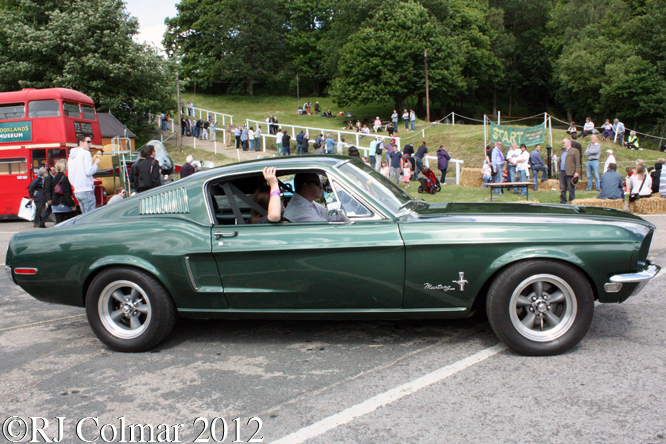
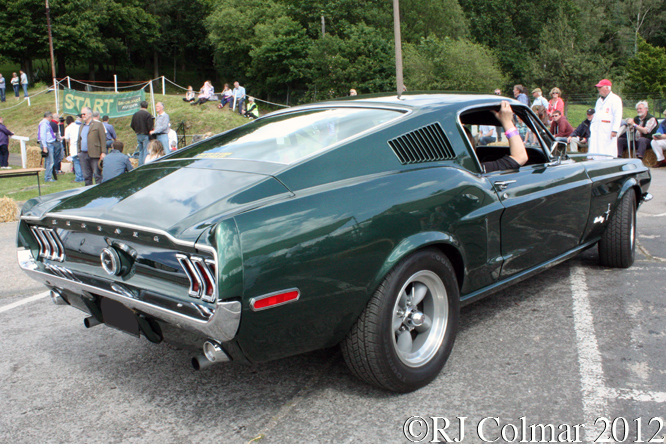
Highland Green 302 – Ford Mustang Fastback

In 1968 a Highland Green Mustang GT Fastback running on Torque Thrust alloy wheels with Steve Mcqueen in the drivers seat became one of the motorised film icons of all time when it starred as the pursuit vehicle in a 10 min 53 sec car chase through the streets of San Francisco in the film Bullit. Thanks in no small part to that chase sequence the films editor Frank P Keller won an Academy Award for Best Film Editing.
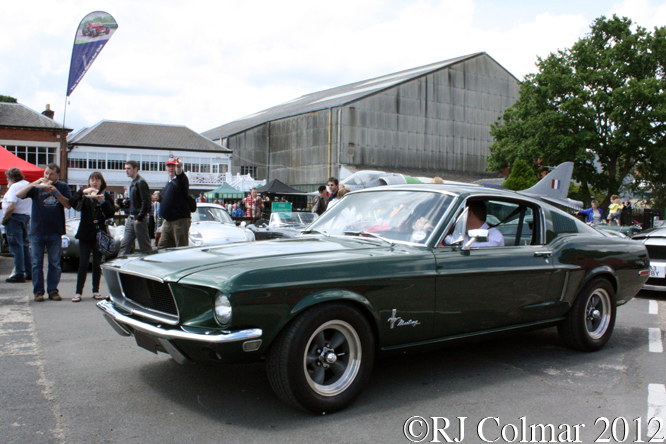
Ford Mustang Fastback, Brooklands Double Twelve

In 1967 the Mustang was given it’s first face lift with more aggressive styling the Mustang became larger, thanks to a Ford Thunderbird type big block 6.4 litre FE V8 heavier, but now with 320 hp also more powerful.
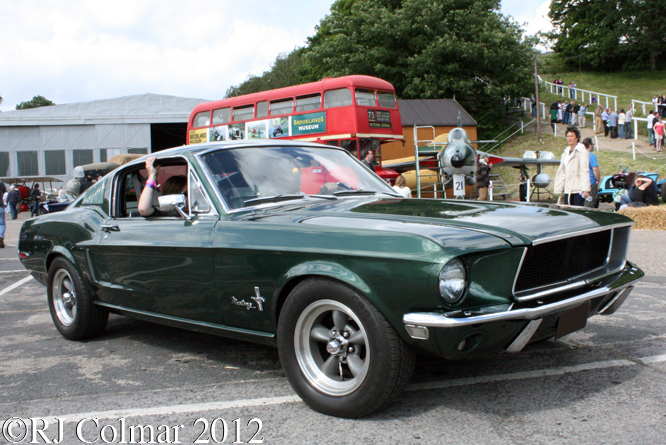
Ford Mustang Fastback, Brooklands Double Twelve

For 1968 the Mustang gained mandatory side reflectors, the ’67 only brushed steel interior trim was replaced with woodgrain interior trim, 3 point seat belts became standard for the front seats as did seat belt warning and door ajar warning lights. Those last two safety items were way ahead of their time, I did not see those sorts of warning lights on any vehicle at all until I sat inside a brand new Honda while I was working as a car valet at a Honda Dealership during a college break in the summer of 1979.
Ford Mustang Fastback, Brooklands Double Twelve

Unlike Lt Bullit’s Mustang today’s 1968 model is powered by a, then new addition to the Mustang range, 4.9 litre / 302 cui Windsor V8 a motor. The 302 was designed to meet Federal Standards being introduced and would become a regular for the option for mustangs through to the end of third generation Mustang production in 1993.
Ford Mustang Fastback, Brooklands Double Twelve

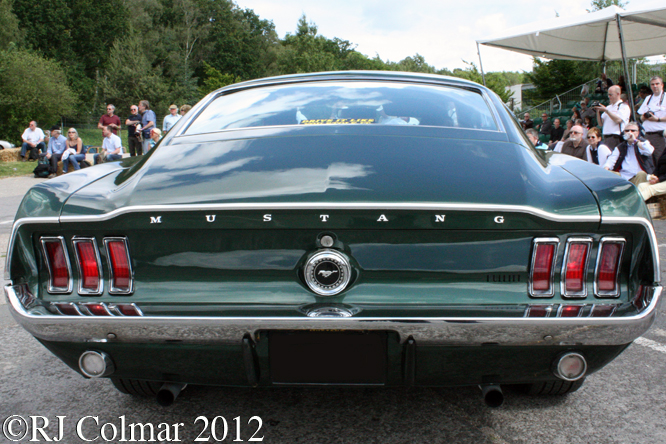
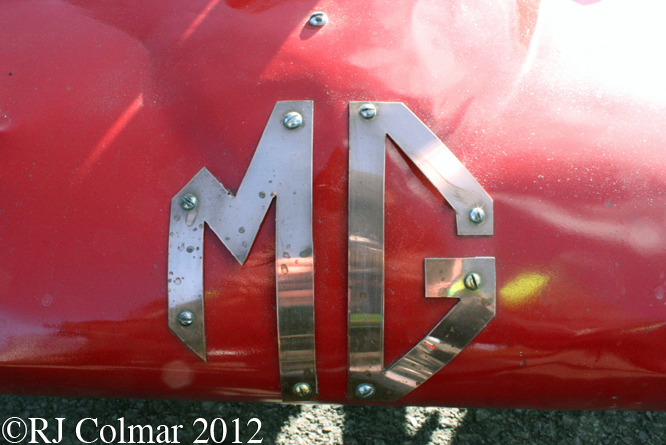
Although two Mustangs were supplied by Ford Motor Company to the producers of Bullit both cars were debadged of all Mustang lettering logo’s that normally appeared on the model.
Ford Mustang Fastback, Brooklands Double Twelve

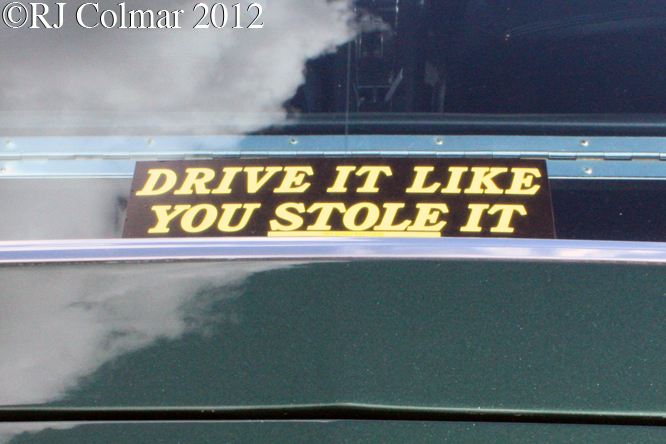
If one were foolish enough to steal this Mustang one would be disappointed to find that one could not recreate the double declutching sounds that are a strong aural feature of the Bullit car chase, not only is the motor smaller but this car has an automatic transmission. The Bullit film soundtrack also won an Academy Award.
Ford Mustang Fastback, Brooklands Double Twelve

In the United Kingdom Ford made a promotional film to launch the new Ford Puma in 1997. The film used some of the San Francisco Bullit film sets and edits from the Bullit film to make it look like Steve McQueen, who died in 1980, is driving a Silver Puma, pulling into his garage next to which is parked Lt Bullit’s Highland Green Fastback GT ‘stang, as can be seen in this link.

Thanks for joining me on this “Highland Green 302” edition of “Gettin a li’l psycho on tyres”, I hope you will join me again tomorrow. Don’t forget to come back now.

Share

150 MPH ex POW – MG K3 #K3007

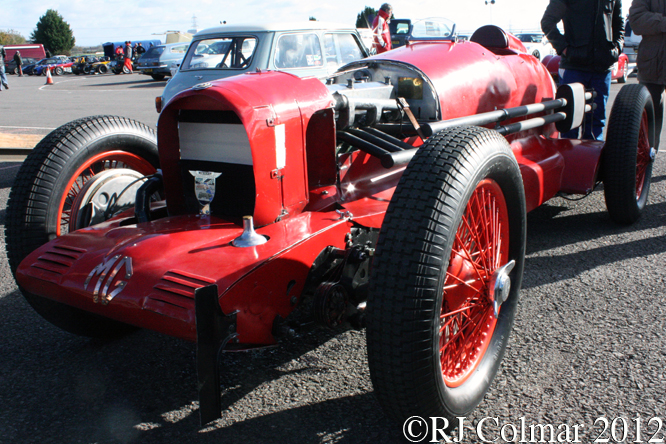
In 1933 today’s featured record breaking MG K3 chassis #K3007 was sold new with a two seater body to successful amateur racer Ron Horton who in 1932 had won a British Racing Drivers Club (BRDC) Gold Star, which would be the same as calling him British Motor Racing Champion in today’s terminology.

MG K3, Sunlight Textile Services Pegasus Sprint, Castle Combe

The car appears to have never been registered for road use but extensively raced and hill climbed. Driving K3007 in 1933 Horton set a 1100cc class Outer Circuit Record at Brooklands of 115.55 mph and class wins on the Shelsley Walsh Hill Climb.

MG K3, Sunlight Textile Services Pegasus Sprint, Castle Combe

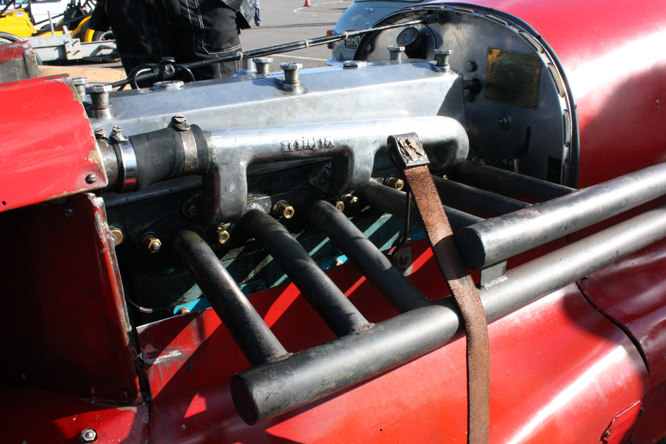
For 1934 Ron Horton had an offset single seat body manufactured by Jensen of West Bromwich and made numerous other upgrades. In March 1934 Ron set six international class records, four of which still stand as British class records, at Brooklands from 50 kms to Hour averaging 117 mph with a best lap average of over 119 mph. Unusually Ron received not only a customary letter of congratulation MG’s Cecil Kimber but also another from Lord Nuffield of Morris Motors Ltd who’s Overhead Cam Wolseley 6 Cylinder motors were supercharged and tuned by MG for use in the K3 model.

MG K3, Sunlight Textile Services Pegasus Sprint, Castle Combe

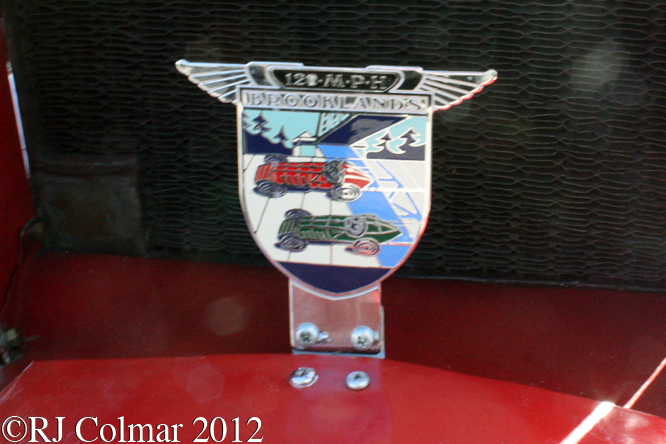
Later in 1934 Ron won a Brooklands Whitsun Meeting race at an average speed of over 110mph and set a new 123.88 mph lap record later the same day which earned him the first 120 mph badge given to the driver of a car fitted with 1100cc / 67 cui motor.

MG K3, Sunlight Textile Services Pegasus Sprint, Castle Combe

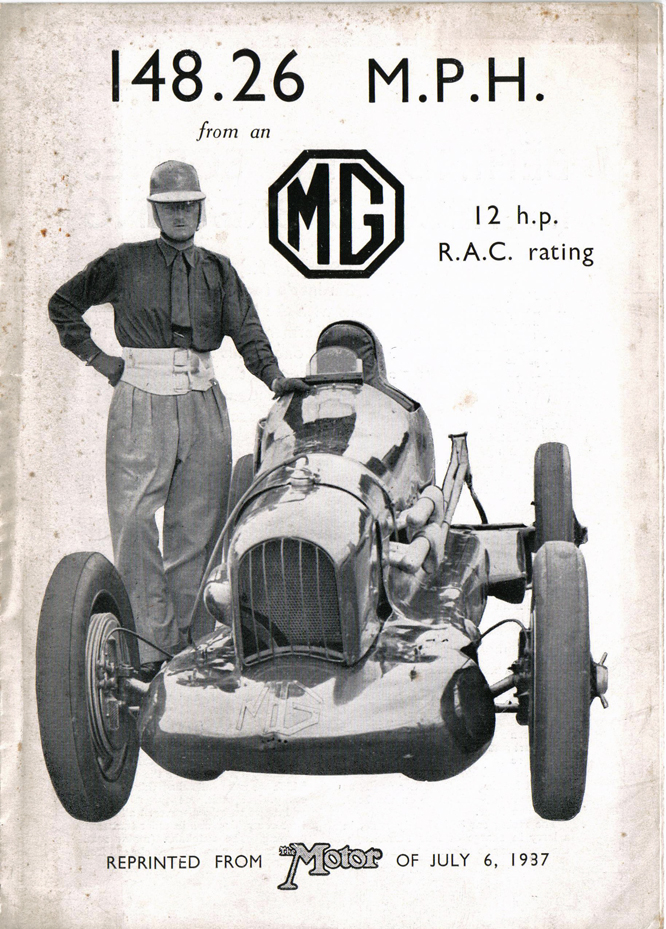
In 1935 Goldie Gardener acquired K3007 and had it continually updated, in 1937 he became the first driver to record a one way 150 mph average in an MG at the October Frankfurt Speed Week with a two way class record breaking average of over 148 mph timed over the flying kilometer and mile distances.

MG K3

In 1939 Gardener had the the motor taken out of #K3007 and fitted in to K3023/EX 135 which had a lower seat thanks to an offset gearbox and had been used by George Easton. Goldie set a 200 mph record with his new bolide. The chassis of K3007 along with the discarded motor from K3023/EX 135 ended up at the Abingdon MG factory and reassembled into a complete car with an ENV Crash gearbox from an MG K1 and sent to Singapore where a contemporary Mercedes Grand Prix single seater style body was fitted for it’s new owner Mic Jennings.

MG K3, Sunlight Textile Services Pegasus Sprint, Castle Combe

After recording fastest lap in the rain shortened 1940 Johore Grand Prix Jennings was forced to abandon K3007 at Singapore Docks while fleeing the incoming Japanese invasion. A Japanese Imperial Army Officer commandeered #K3007, after which it appears to have been liberated by MG racer Lim Peng Han who broke it up and kept in storage ‘for the duration’. Jennings was offered the car back after the war but declined. The original #K3007 motor was destroyed in a bombing raid during the ’39/’45 war.

MG K3, Sunlight Textile Services Pegasus Sprint, Castle Combe

In 1969 MG J2 owner Mike Hawke was sent to Singapore with the Royal Navy and secured the very rusty ex K3023/EX 135 motor with a bottle of whiskey without any knowledge of it’s history. The motor had at one point been buried and then been kept at the bottom of the previous owners garden. It was only when Mike started to dismantle the engine that it’s identity became clear.

MG K3, Sunlight Textile Services Pegasus Sprint, Castle Combe

Having established the identity of his rusty motor Mike recovered the chassis which had the front cut off with the remains being used for a trailer, the ENV gearbox was discovered being used as a door stop at a veterinarian’s surgery.

After many adventures by 1985 Mike had salvaged enough bit’s and pieces to restore #K3007 to something approximating it’s 1934/37 single seat specification and the the car ran for the first time in just over 40 years under it’s own power and has since recorded 125 mph laps at Millbrook.

Mike says he considers himself fortunate to have discovered, recognised and put back together one of the worlds more historic MG’s.

My thanks to Jeremy Hawke for his time and patience retelling the story of the storied K3, found by his father, seen in today’s photographs at the recent Sunlight Textile Services Pegasus Sprint.

Happy Christmas and Best Wishes for the year ahead to all “Gettin’ a li’l psycho on tyres” readers and contributors !

Thanks for joining me on this “150 MPH ex POW” edition of “Gettin’ a li’l psycho on tyres” I hope you will join me again tomorrow when I’ll be looking at the first Formula One car that Peter Connew was involved with. Don’t forget to come back now !

Share

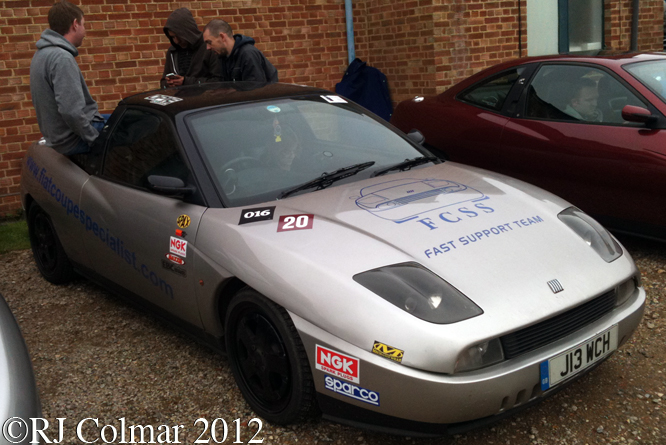
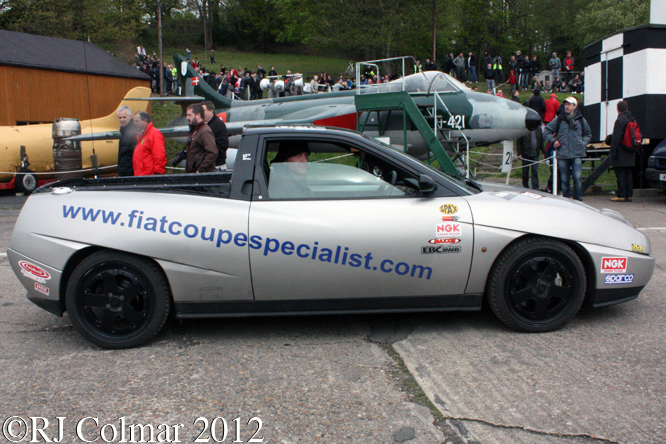
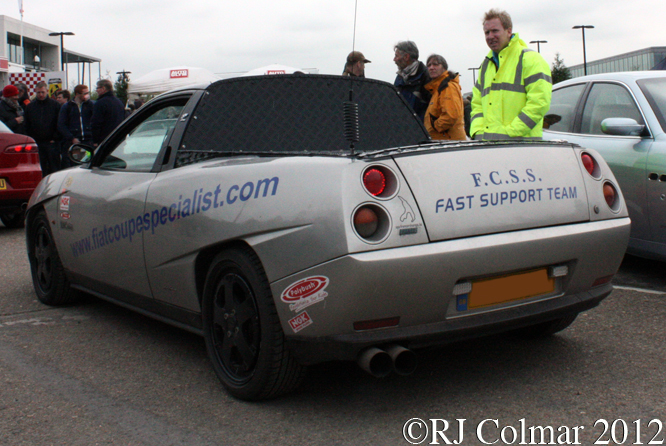
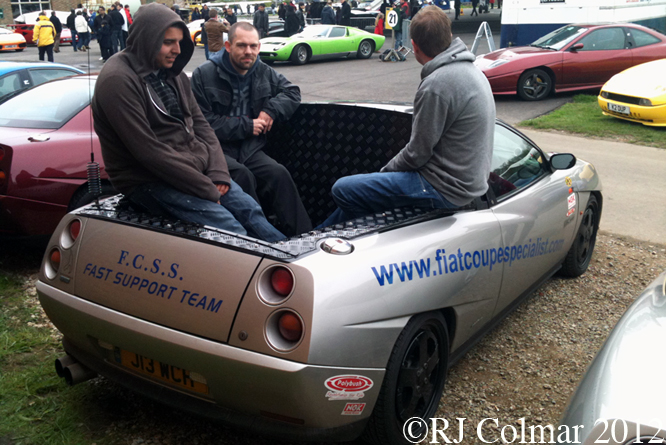
Bangles Pick Up – FIAT Coupé (Type 175) 20v Turbo

After working on the Opel Junior Concept vehicle Chris Bangle moved to Centro Stile FIAT where he designed the body for, today’s featured, FIAT Coupé which was launched in 1993 after which Chris moved on to become one of the most talked about designers, in the last twenty years, at BMW.

FIAT Coupé 20v Turbo Pick Up, Auto Italia, Brooklands

The FIAT Coupé was originally powered by a turbo charged and normally aspirated variations of the 4 cylinder Twin Cam motor used in the Lancia Delta Integrale. By 1998 when todays featured car was built 5 cylinder turbocharged 20 valve engines had been introduced, the turbocharged variant on this car would have given over 200 hp a top speed of 155 mph and a rest to 62 mph time of 6.5 seconds.

FIAT Coupé 20v Turbo Pick Up, Auto Italia, Brooklands

Pininfarina was responsible for the design of the for the original Coupé interior which like the motors would receive numerous upgrades between 1993 and 2000 when production was terminated.

FIAT Coupé 20v Turbo Pick Up, Auto Italia, Brooklands

This appears to be an early 1998 car characterised by the non colour coordinated sill panels below the doors, the absence of red Brembo brake calipers indicates that it is unlikely to be one of the limited edition LE models.

FIAT Coupé 20v Turbo Pick Up, Auto Italia, Brooklands

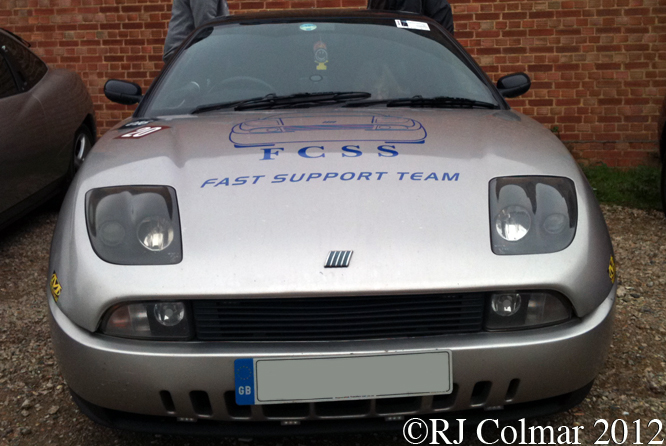
While FCSS (Fiat Coupe Service Specialist) were responsible for converting this car which had a damaged roof, in the space of a week, this is by no means the only Chris Bangle design to become a pick up.

FIAT Coupé 20v Turbo Pick Up, Auto Italia, Brooklands

On April 1st last year BMW revealed a one off Bangle originated E93 BMW M3 Pick Up, complete with removable roof, towing hitch and a claimed 186 mph capability making it faster than even the legendary Australian HSV Maloo !

Thanks for joining me on this “Bangles Pick Up” edition of “Gettin’ a li’l psycho on tyres” I hope you will join me again tomorrow when I’ll be looking at a MG badge engineered variation of what was Britain’s top selling car much of the 1960’s. Don’t forget to come back now !

Share

Record In Perpetuity – Napier Railton

Last week I looked at the Birkin Bentley with which Tim Birkin set the outright Brooklands circuit record from John Cobb driving a V12 Delage at 137.58 mph in 1932.

Napier Railton, Brooklands Double Twelve

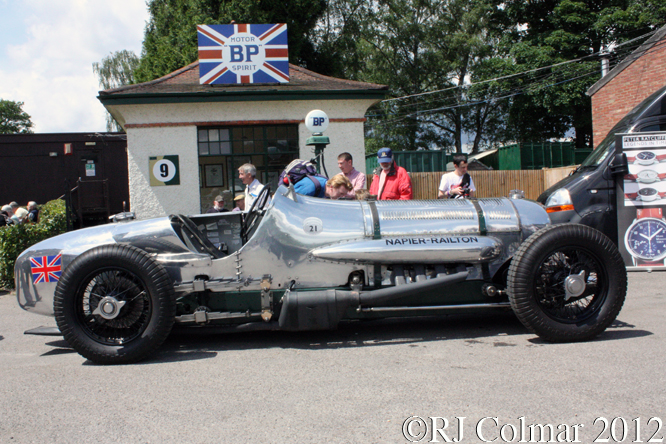
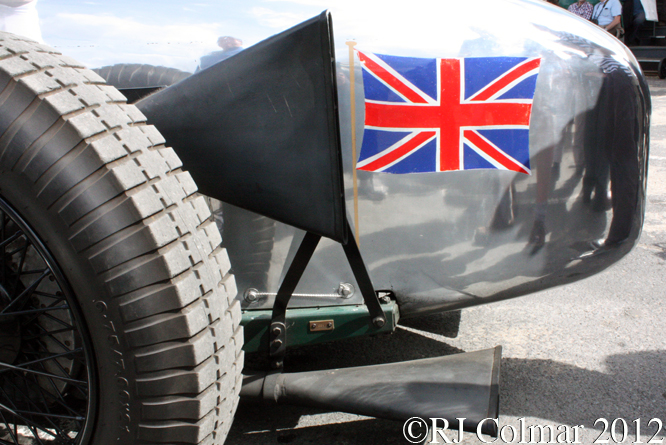
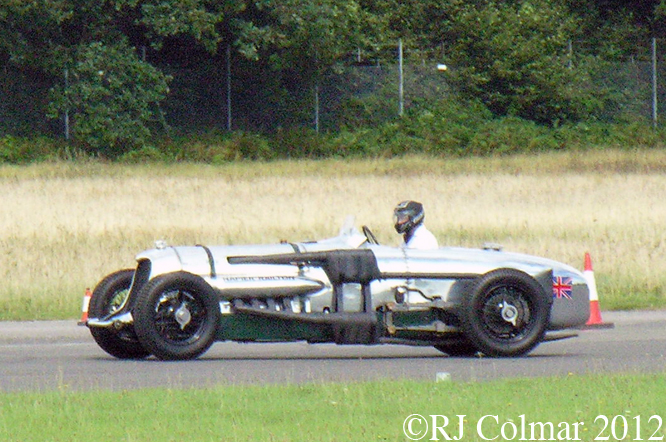
In order to regain the Brooklands outer circuit record John Cobb commissioned Thomson & Taylor to build a racing car to replace his 1923 Delage. Ried A Railton was given the task of developing what has become known as the Napier Railton around a 24 litre / 14,627 cui 12 cylinder Napier Lion motor that started life as a design for aviation applications in 1917.

Napier Railton, Brooklands Double Twelve

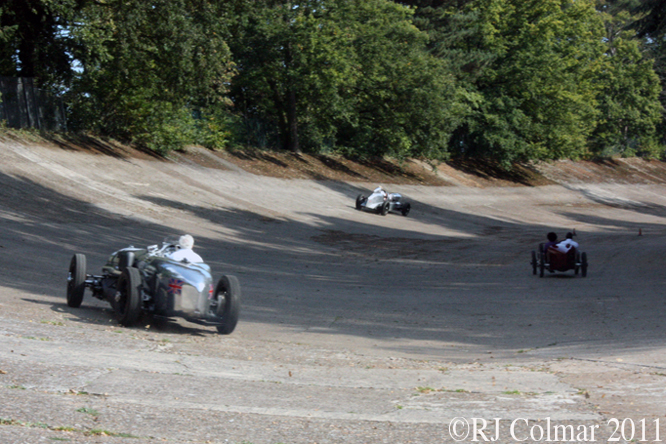
The extremely rough nature of the 2.75 mile Brooklands outer circuit meant that no single detail of the new challenger could be anything less than rock solid to withstand the pounding punishment of the concrete track which would regularly pitch cars into the air at speeds in excess of 120 mph.

Napier Railton, Brooklands Double Twelve

Weighing in at two tons the Napier Railton had a theoretical top speed of over 160 mph, despite this it was only fitted with 16 inch rear drum brakes to save weight.

Napier Railton, Brooklands Double Twelve

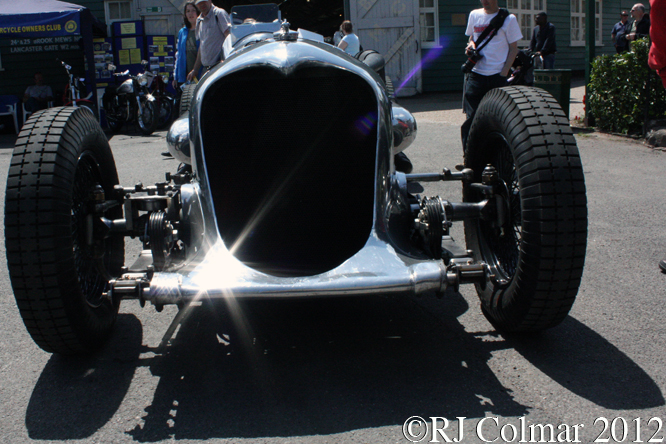
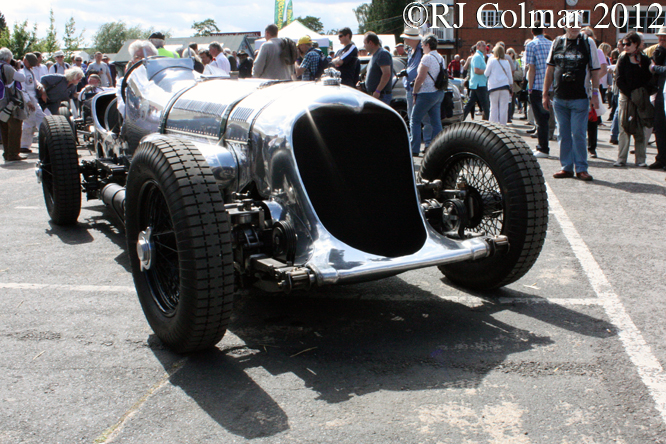
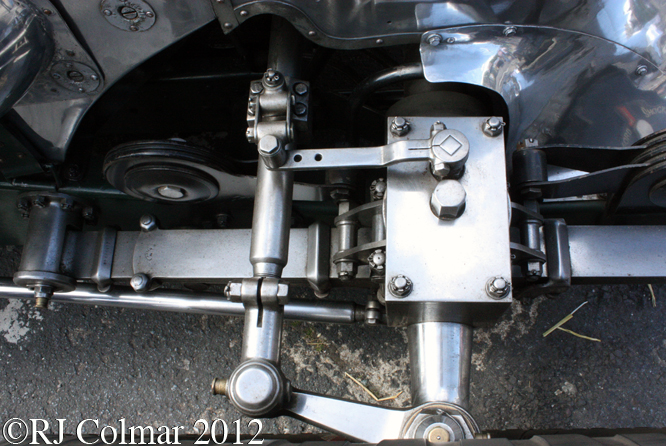
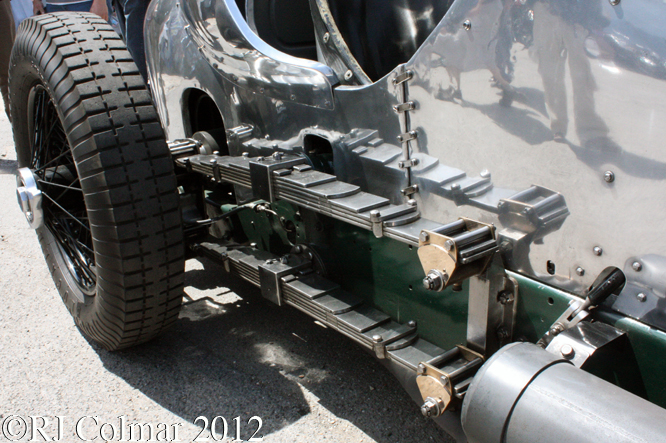
Equipped with beam axles, front and rear, the front one was suspended by a pair of semi-elliptic leaf springs and four friction dampers.

Napier Railton, Brooklands Double Twelve

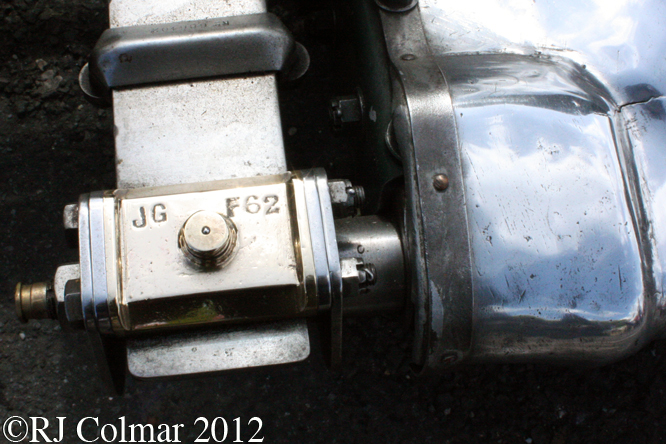
Where ever the eye falls on the Napier Railton there is an overwhelming sense of strength, above the front leaf spring, on the right is the beam axle ahead of the steering arm on the left.

Napier Railton, Brooklands Double Twelve

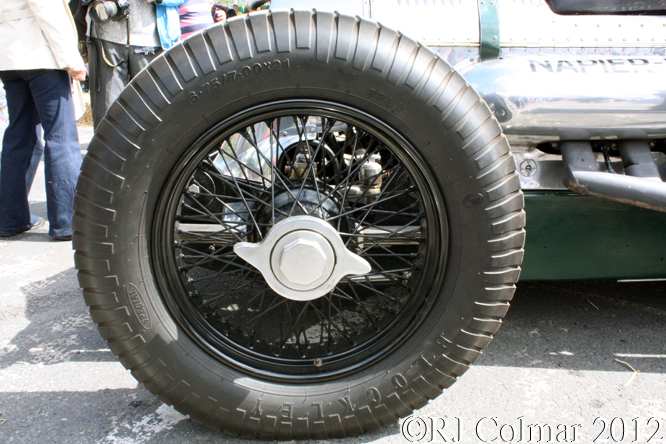
During it’s first tests the Dunlop tyres proved wholly inadequate, but this problem was overcome by the time Cobb made his first appearance in the car at Brooklands in 1933.

Napier Railton, Brooklands Double Twelve

Despite it’s large capacity the Napier Lion motor with it’s three banks of four cylinders each with twim overhead cam shafts was relatively compact, compared to a similar capacity V12 with two row’s of six cylinders for example.

Napier Railton, Brooklands Double Twelve

However in order to keep the machine stable over the bumps at speed the Napier Railton has a 130 inch wheel base with a 60 inch track front and rear.

Napier Railton, Brooklands Double Twelve

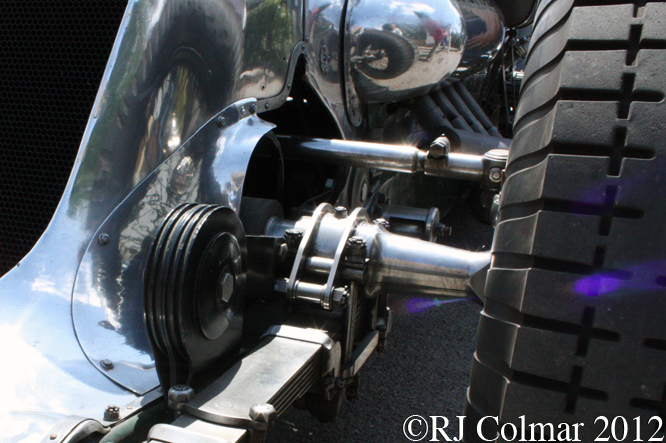
The mounting points for the twin rear leaf spring sets is alongside the cockpit.

Napier Railton, Brooklands Double Twelve

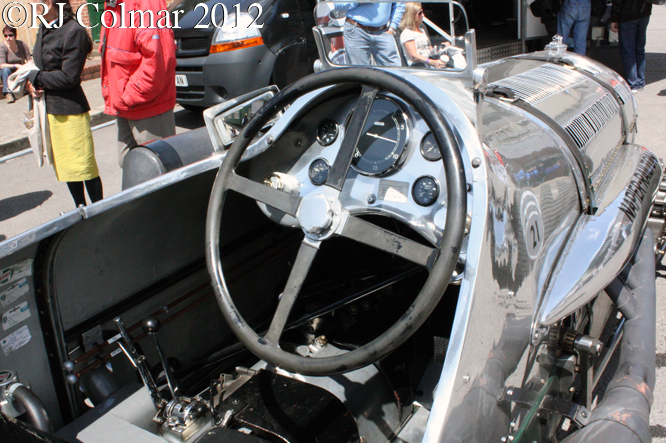
The huge revolution counter did not have to work particularly hard the Napier Lion produced over 500 hp at just 2,200 revolutions per minuet. The gear box had three forward gears and no reverse.

Napier Railton, Brooklands Double Twelve

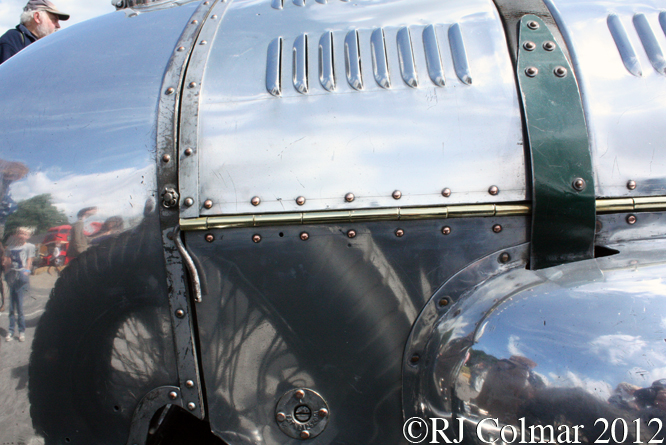
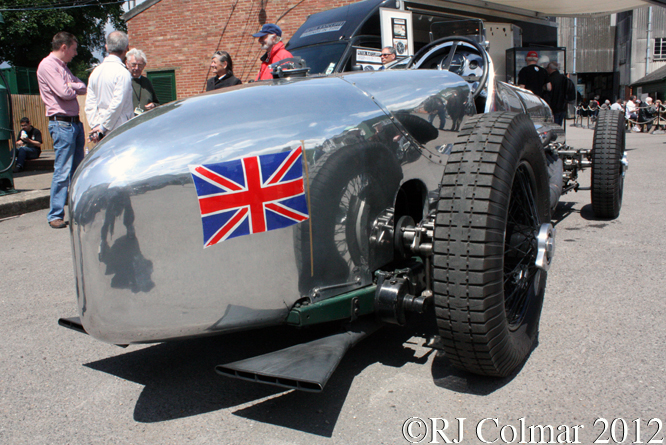
The bare aluminium bodywork is credited as being by Gurney Nutting.

Napier Railton, Brooklands Double Twelve

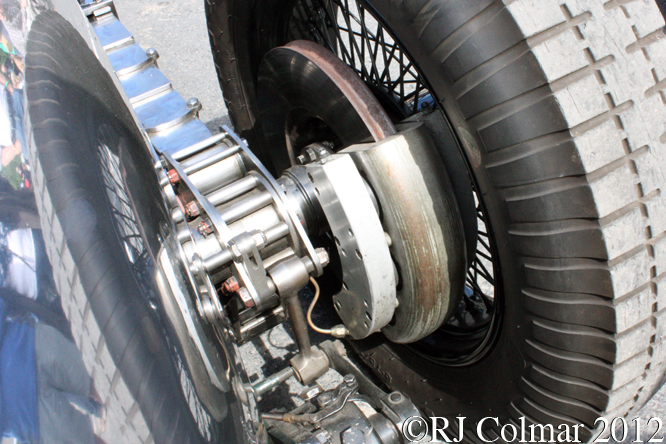
After it’s success on the track pre 1939 and after an appearance in the film Pandora and the Flying Dutchman alongside James Mason and Ava Gardner released in 1951, the rear drum brakes were replaced with these aircraft style disc brakes so that the car could be used to test aircraft braking parachutes by the GQ Parachute Company at Dunsfold Aerodrome in the early 1950’s.

Napier Railton, Brooklands Double Twelve

After John Cobb set the outright Brooklands circuit record at 143.44 mph, thanks to the subsequent break up of the circuit a record that will stand in perpetuity, Cobb took the Napier Railton to Bonneville Salt Flats where he set a world 24 hour record at 150.6 mph.

Napier Railton, Brooklands WB Memorial

John Cobb and Reid A Railton would work together again on the Railton Special featuring two Napier Lion engines, one driving each axle. The Railton Special became the first car to exceed 350 mph in 1939 and renamed the Railton Mobil Special it became the first car timed over 400 mph in 1947 when Cobb left the Land Speed Record at a two way average of 394.19 mph. Cobb was killed making an attempt on the water speed record in his jet powered boat Crusader in 1953.

Napier Railton, Wings and Wheels, Dunsfold Aerodrome

In 1997 the Brooklands Museum acquired the car after it had been repatriated from a collection in Leipzig.

When not in view at the Brooklands Museum or on what remains of the Brooklands track the Napier Railton can be seen doing what it does best at events like Wings and Wheels at Dunsfold Aerodrome.

Share

Wedge Evolution – Lotus 61

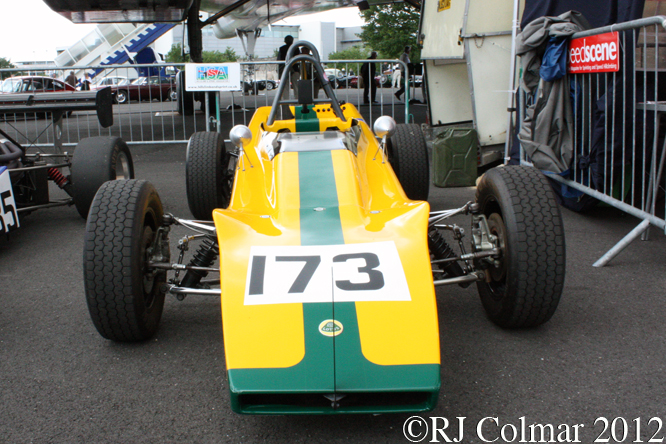
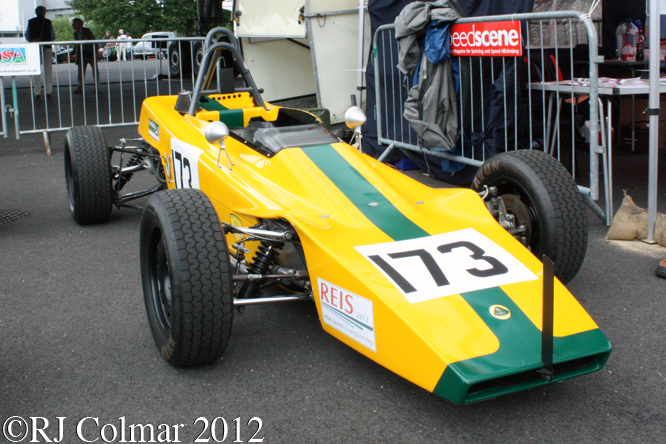
The 1969 Lotus 61 Formula Ford chassis origins can be traced back through the Lotus 51 Formula Ford, Lotus 31 Formula 3, and to the Lotus 22 Formula Junior designs.

Lotus Ford 61, Brooklands Double Twelve

The main external difference between the broadly cigar shaped Lotus 51 and the 61 is the introduction of the wedge shaped body which was first seen on the Pratt & Whitney turbine powered Lotus 56 Indy Car of 1968.

Lotus Ford 61, Brooklands Double Twelve

The last Lotus 51’s were in fact built concurrently with the first Lotus 61’s under the wedge body the 61’s have a slightly stiffer chassis thanks to additional chassis tubes that optimised the triangulation of the structure.

Lotus Ford 61, Brooklands Double Twelve

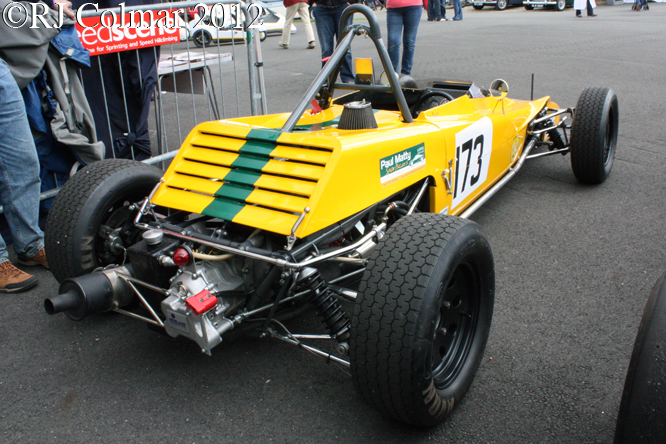
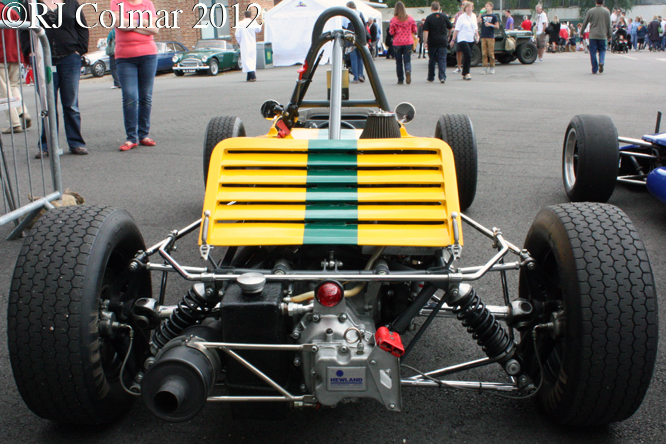
Further differences between the 51 and 61 models can be seen in the mounting of the steering rack, easier to adjust on the 61, and the brake master cylinder resevoirs, integral on the 51 and remote on the 61 which was not always considered an advantage when they needed topping up on the latter.

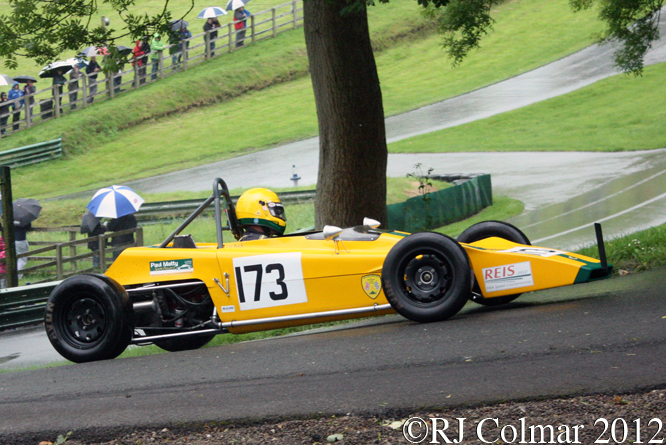
Lotus Ford 61, Prescott

Above Les Buck is seen at Prescott Hillclimb competing in the Pre 1972 Classic Racing car class.

Australian Dave Walker and Brit Ian Ashley drove for the works Lotus Formula Ford team in 1969, Walker won the British Formula Ford Championship and came third in the European Formula Ford Championship.

Lotus Ford 61, Brooklands Double Twelve

There were three variants of the Lotus 61 with M and MX featuring aerodynamic updates to improve the efficiency of the cooling system, the MX nose finished up with a lower nose than the original and no engine cover was supplied as most customers had found their cars were quicker without them.

Lotus Ford 61, Brooklands Double Twelve

Despite Dave Walkers championship success and sales of 248 Lotus 61’s this would prove to be the last but one Lotus model built for Formula Ford a class that would be come dominated by a new breed specialist Formula Ford suppliers.

Thanks for joining me on this “Wedge Evolution” edition of “Gettin’ a li’l psycho on tyres”, I hope you will join me for a Concours d’Elegance edition tomorrow. Don’t forget to come back now !
Share

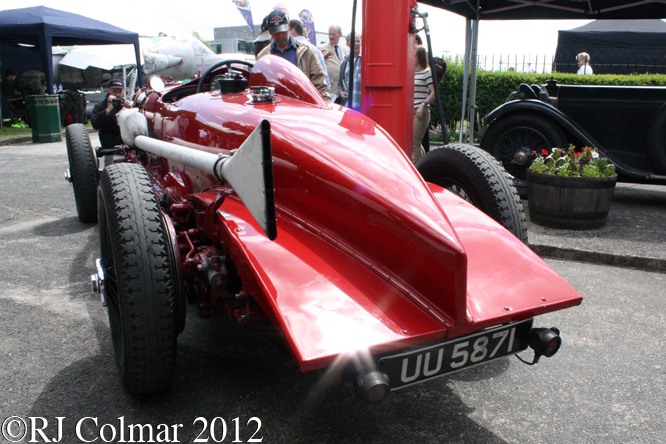
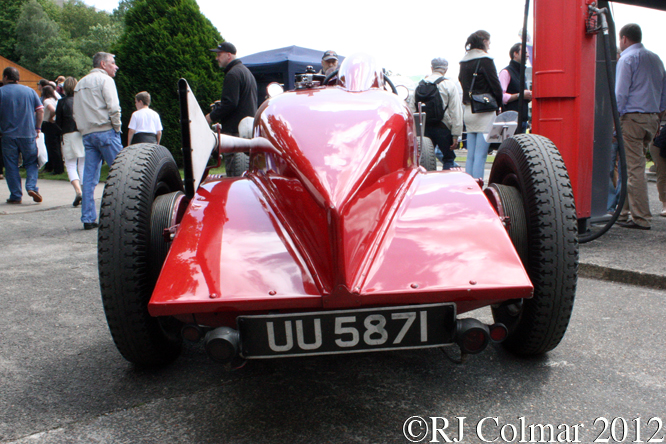
Successful Perversion & Corruption – 4 1/2 Litre Supercharged “Blower” Bentley #HB 3402

Bentley Boy Tim Birkin was described by W.O. Bentley to be “the greatest Briton of his time”, despite the fact that W.O Bentley adhered to a dogma of “there is no substitute for cubic inches” while the latter thought that supercharging, as was the norm for Mercedes Benz and many others was the way to go.

4 1/2 litre S/C Bentley, Brooklands Double Twelve

With W.O. Bentley’s disapproval but with the approval majority Bentley share holder Woolf Boranto, Tim Birkin and Mike Couper formed Birkin & Couper Ltd in Welwyn to supercharge the 55 4 1/2 litre Bentley’s required to meet the regulations to enter a team of three such cars at Le Mans for the 24 hour classic in 1930.

4 1/2 litre S/C Bentley, Brooklands Double Twelve

The whole Birkin & Couper enterprise including the three entries at Le Mans was funded by successful horse race breeder and owner Dorothy Paget. W.O. Bentley said of the operation “They would lack in their preparation all the experience we had built up in (our own) racing department over 10 years. I feared the worst and looked forward to their first appearance with anxiety…”.

4 1/2 litre S/C Bentley, Brooklands Double Twelve

W.O. Bentley’s anxiety proved to be correct as the “Blower” Bentley’s proved to be unreliable with a best 2nd place overall and first in class being recorded in the 1929 Tourist Trophy in Ulster with Birkin at the wheel and W.O. Bentley in the passenger seat, the result of a bet which W.O. had accepted.

4 1/2 litre S/C Bentley, Brooklands Double Twelve

The team of three 4 1/2 litre Blower Bentley’s all retired at Le Mans in 1930, the win being secured by a normally aspirated 6 1/2 litre Bentley, as it had been, in 1929 which vindicated W.O. Bentley’s assertion regarding cubic inches and led W.O. to claim “The supercharged 4½ never won a race, suffered a never-ending series of mechanical failures, brought the marque Bentley disrepute and incidentally cost Dorothy Paget a large sum before she decided to withdraw her support in October 1930…”.

4 1/2 litre S/C Bentley, Brooklands Double Twelve

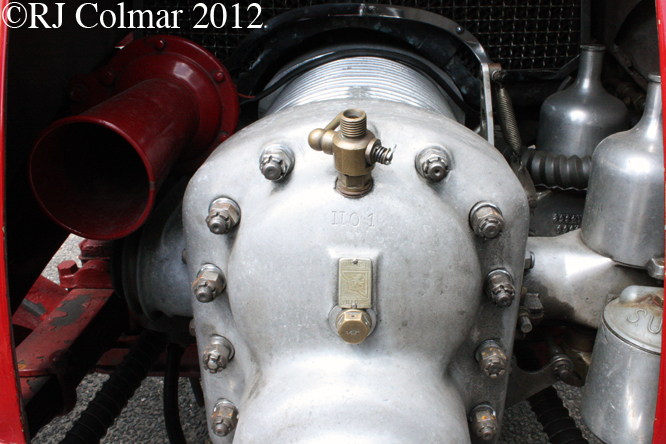
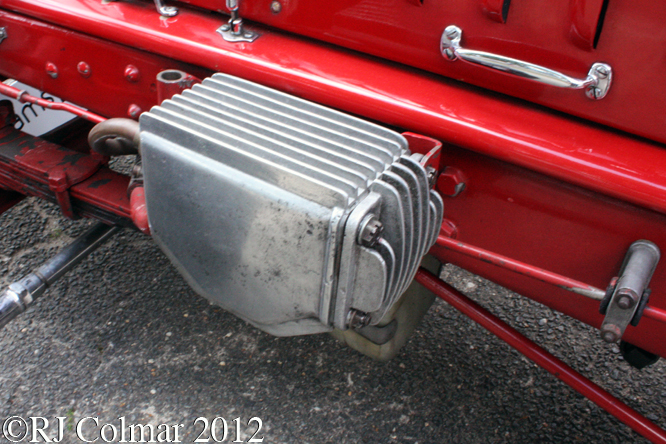
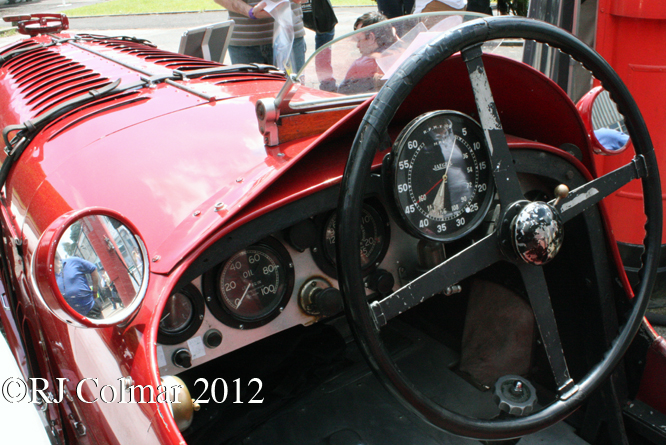
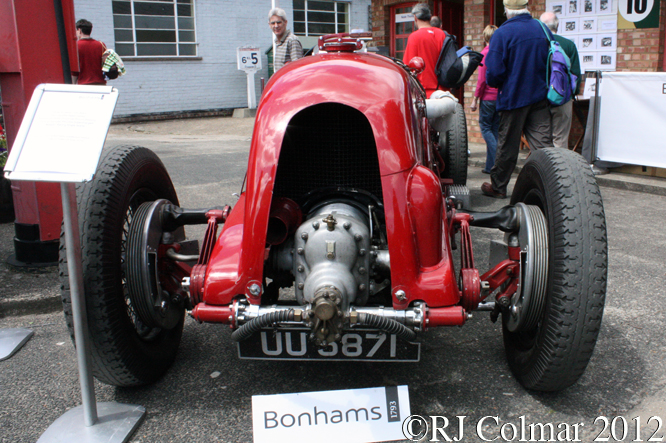
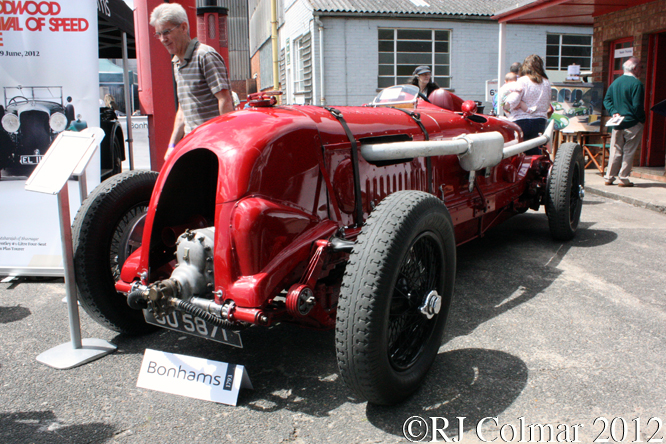
However W.O. spoke too soon because in 1929 “Tiger” Tim Birkin had also persuaded supercharging experts Amehust Villers, Baranto, Paget and Captain Clive Gallop to develop a special track racing car for competition at Brooklands. Chassis #HB 3402 was fitted with a methanol burning four cylinder engine, #SM 3901, was given a special fabric skin body, originally painted blue in 1929.

4 1/2 litre S/C Bentley, Brooklands Double Twelve

The cars one outing at Brooklands 1929 included several mishaps, a loose fuel tank, an oil leak, exhaust pipe disintegration and a subsequent fire. For 1930 this 1 1/2 seater was producing 240 hp, 65 more than a standard Blower, that burnt 1 imperial gallon of fuel every 74 seconds !

4 1/2 litre S/C Bentley, Brooklands Double Twelve

With a new, fire proof, body designed by Reid A. Railton and built by A.P. Compton & Co of Merton, Tim drove #HB 3402 to victory in the Kent Long Handicap run over just four laps of 2.75 mile circuit. Tim had little good to say about the Brooklands Outer Circuit, thanks to the poor condition of the track which frequently saw cars going airborne with all four wheels well clear of the ground.

4 1/2 litre S/C Bentley, Brooklands Double Twelve

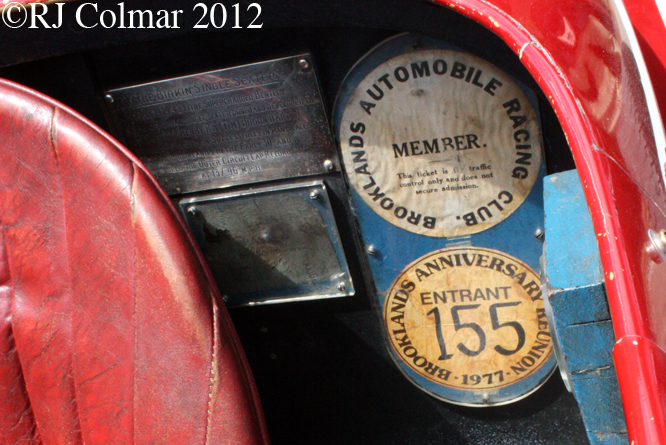
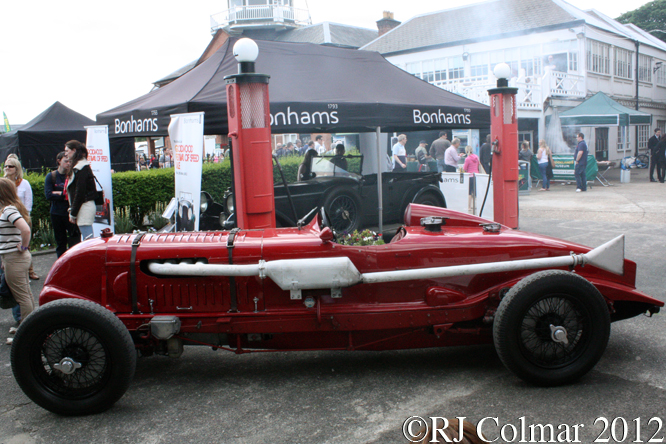
Birkin won two further races driving HB 3402 at Brooklands in 1931 and 1932 and held the outright track record on several occasions, leaving it at 137.58 mph in the 1932 August Brooklands Meeting winning 100 Sovereigns as the car won it’s third race a 3 lapper. By now the car had been painted red as seen here. By comparison pole at Indy that year was won by Lou Moore in the Boyle Valve Special Miller at 117.363 mph.

4 1/2 litre S/C Bentley, Brooklands Double Twelve

W.O. Bentley said of forced induction “to supercharge a Bentley engine was to pervert its design and corrupt its performance”, a comment that was not reflected in # HB 3402’s price earlier this year when the 1 1/2 seater with a blower set another record at Bonham’s fetching UK £ £5,042,000 to become the most expensive Bentley ever bought at auction.

Thanks for joining me on this “Successful Perversion & Corruption” edition of “Gettin’ a li’l psycho on tyres I hope you will join me again tomorrow. Don’t forget to come back now !
Share

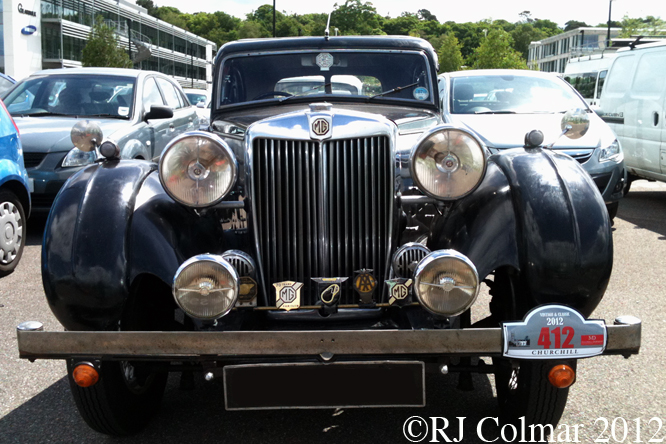
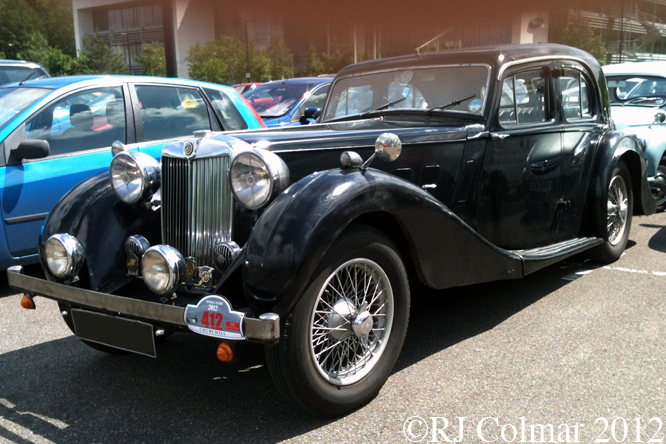
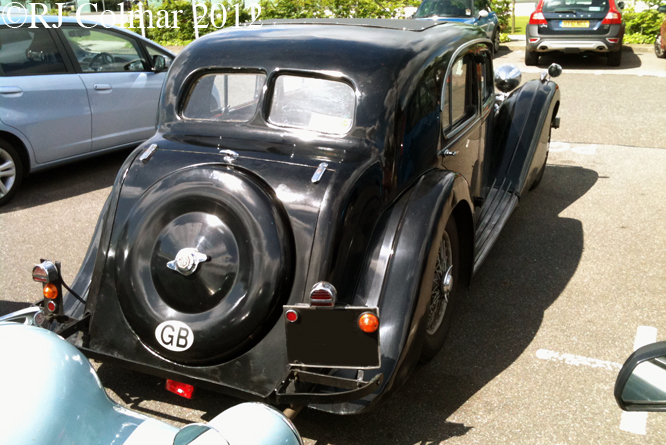
Corporate Fudge – MG SA

In 1935 MG merged with Morris Motors and Leonard Lord was appointed by Lord Nuffield to look after his interests at MG over Cecil Kimber. The plan was for MG to move away from it’s sporty roots and to rationalise it’s model line with Wolseley another marque with in the group.
MG SA Charlsworth Tourer, Brooklands

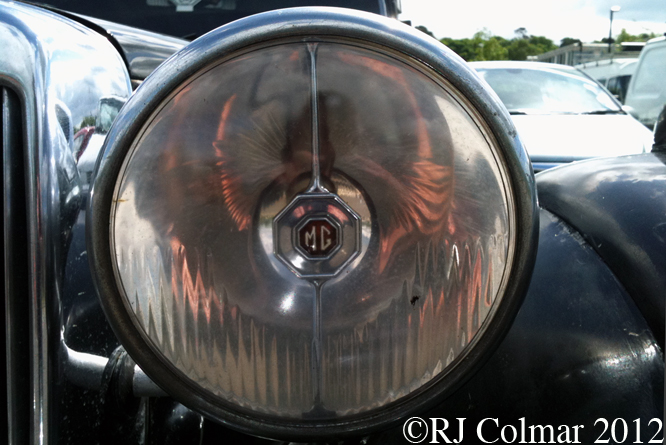
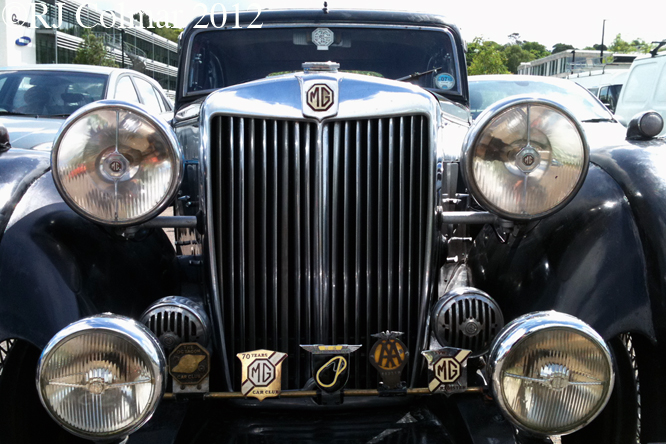
Kimber recognised that Leonard Lord’s intention to sell a Wolseley with an MG radiator at a premium price was not going to work and persuaded Lord to let him design a distinctive body on a, heavy, Wolseley Super Six chassis.

MG SA Charlsworth Tourer, Brooklands

The new car suffered from corporate indecision resulting in production delays and numerous specification changes including two complete upgrades to compete with the very first, superior, Jaguar which was launched at the same time.

MG SA Charlsworth Tourer, Brooklands

The Saloon body was made in house by Morris, it would later be joined by a Charlesworth open tourer and Tickford drophead Coupé.

MG SA Charlsworth Tourer, Brooklands

Rationalisation meant that a 75 hp Wolseley Super Six derived motor with pushrod operated valves was chosen in favor of MG’s own overhead cam unit leaving the car underpowered much like MG’s earlier 18/80’s.

MG SA Charlsworth Tourer, Brooklands

At £375 the saloon was well appointed with leather seats and a walnut dash, among the options offered was a Philco radio for 18 Guineas (£18.90).

MG SA Charlsworth Tourer, Brooklands

MG enthusiasts did not take too kindly to the new model with it’s heavy chassis and retrograde pushrod engine and many sales were lost to Jaguar as a result of production delay’s.

MG SA Charlsworth Tourer, Brooklands

In all over 2,700 SA’s were built between 1936 and 1939 with 350 of them being exported to Germany.

Thanks for joining me on this “Corporate Fudge” edition of “Gettin’ a li’l psycho on tyres” I hope you will join me again tomorrow. Don’t for get to come back now !

Share