Tag Archives: Car

Which Type ? – Lotus Esprit X180R

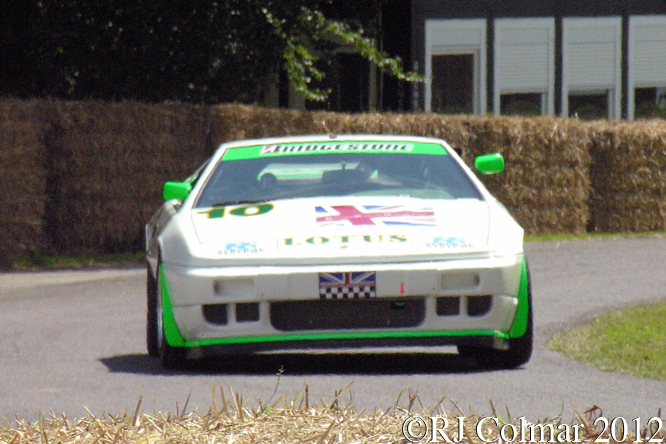
In 1990 Lotus built 2 racing cars based on the Peter Stevens designed Esprit Turbo SE X180 which became known as the X180R and everyone appears to agree that the car was given the Lotus Type 105 number. These cars were built to be raced in the Sports Car Club of America (SCCA) Escort World Challenge by Doc Bundy and Scott Lagasse and won 4 times in 8 races.

Lotus  Esprit X180R, Goodwood Festival of Speed

Flush with success Lotus then built three new 300hp versions of the X180R’s the following season for the IMSA Bridgestone Super Car Championship in 1991 which Doc Bundy duly won in 1992.

There is some disagreement amongst internet sources about the type numbers of the 3 cars built in 1991 which some sources suggest were given the Type 106 number while others have it that all five race cars built in 1990 and 1991 are Type 105’s and that 20 road going versions of the X180R racer were given the Lotus Type 106 type number. Other sources suggest the 20 road going versions of the X180R are actually Type 105’s.

To confuse the identification issue further it would appear the 2 1990 race cars were updated to 1991 spec so technically these might be Type 105/106’s.

If you are a Lotus historian and can definitively put the record straight on the type 105’s and 106’s please do not hesitate to chime in below. I’d be most grateful.

The car seen above driven by Doc Bundy at Goodwood Festival of Speed carries the later 1991 spec body work differentiated by the splitter (green) that runs into extended lower front wheel arches (also green)

Thanks for joining me on this “Which Type ?’ edition of “Getting a li’l psycho on tyres” I hope you will join me again tomorrow. Don’t forget to come back now.

Share

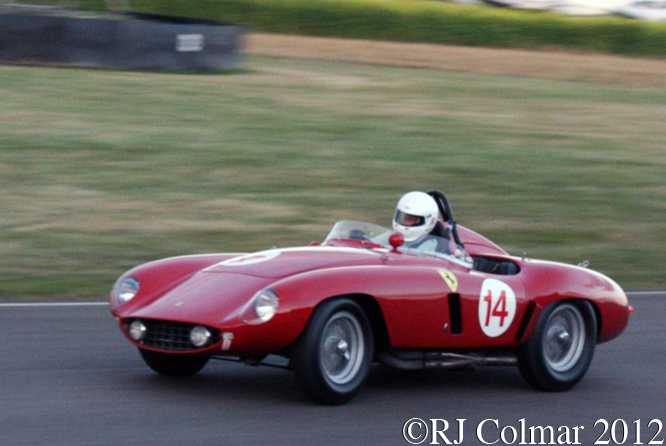
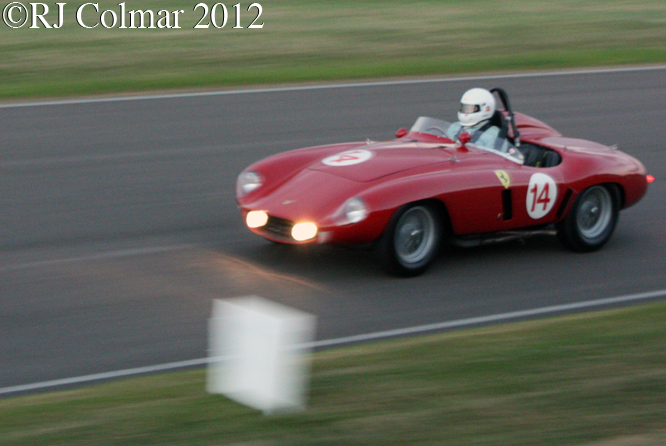
Ferrari For Hire – Ferrari 750 Monza Scaglietti Spider S1 #0504M

Today’s featured Ferrari 750 Monza chassis #0504M was purchased new in 1955 by S.A.I.P.A. Srl in Modena Italy in February 1955 and nine days latter it was rented out to Frenchman Michel Poberejsky who entered and won the Agadir Grand Prix for sport cars entered under the pseudonym “Mike Sparken”.

Ferrari 750 Monza, Goodwood Revival

After retiring, having started from pole, from the 1955 British Empire Trophy and then coming second, from pole again in the Easter meeting at Goodwood, Sparken was joined by Marsten Gregory at Le Mans where the pair retired with engine problems. Marsten Gregory then drove #0504M in two races in Portugal and one in Brazil scoring 2 2nd plce finished and a win at the Portuguese Monsanto track.

Ferrari 750 Monza, Goodwood Revival

The last known races for the car were in the United States with Donald Johnson driving to a 3rd and 2nd place finishes at Lawrenceville and Greenwood in 1963, Donaldson is credited with a final race appearance in 1964 at Mid America Raceway where he is believed to have started but his finishing result is unknown. Dudley Cunningham drove the car in the 1969 Mt Equinox Vintage hillclimb where he set a record time.

Ferrari 750 Monza, Goodwood Revival

In 1970’s the car returned to Europe and has been with its current owner Richard Frankel since 2000, #0504M is seen in these photographs competing in the Freddie March Memorial Trophy at the Goodwood Revival meeting last year where it’s owner retired with less than half an hour to go.

Thanks for joining me on this “Ferrari For Hire” edition of ‘Gettin’ a li’l psycho on tyres’, I hope you will join me again tomorrow. Don’t forget to come back now !

Share

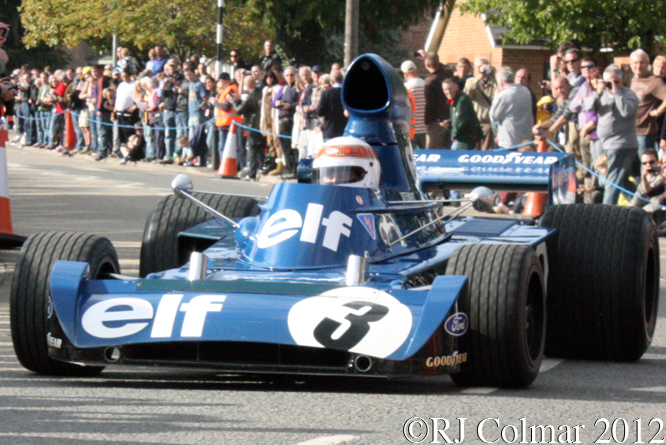
Championship Foundation – Tyrrell Ford #006

In 1970 Jackie Stewart and Ken Tyrrell were convinced that it was better to stick with the Ford Cosworth DFV power and seek a new chassis than move to the Matra powered car of their hitherto chassis supplier Matra. Ken Tyrrell bought a couple of new March chassis to tide the team over until Derek Gardener was ready to introduce the new Tyrrell 001 chassis late in 1970.

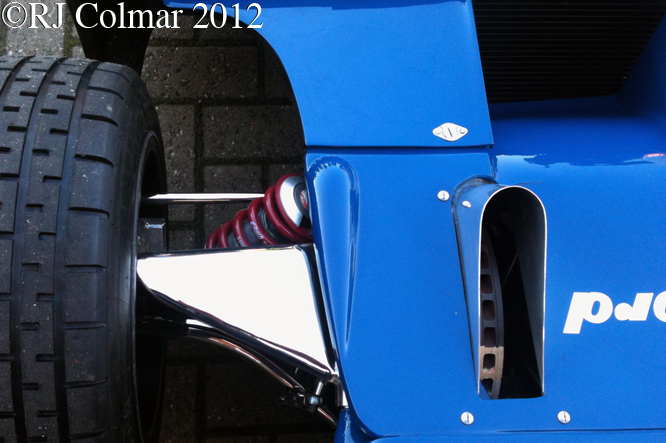
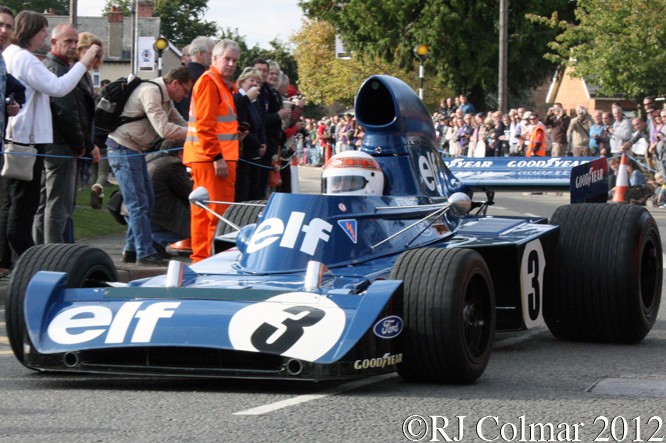
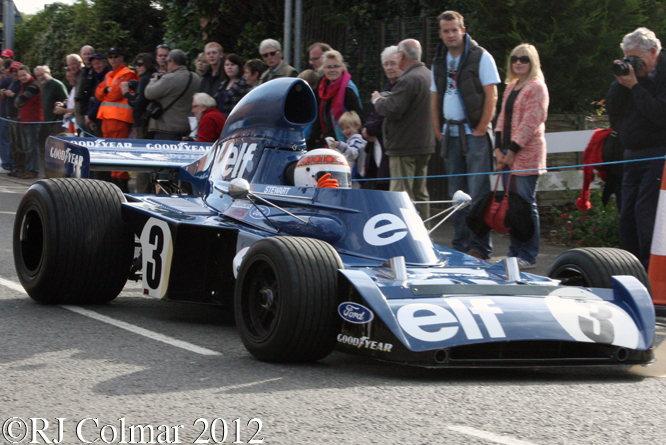
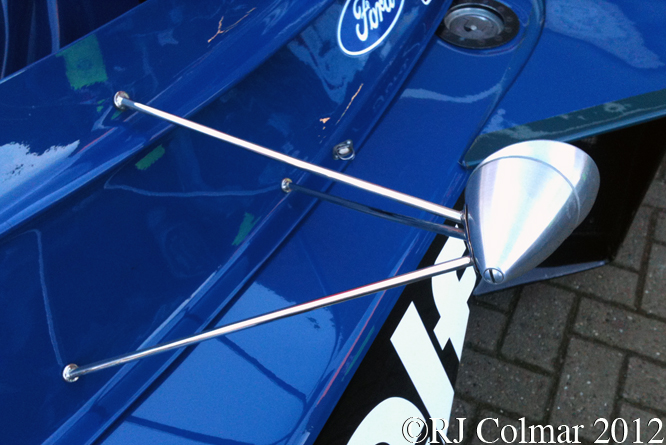
Tyrrell Ford 006, BRM Day, Bourne

Tyrrell 001 was followed by the similar 002, 003 and 004 chassis in 1971 with Jackie Stewart driving #003 to championship success in 1971. At the 1972 French Grand Prix Gardners all new slab sided Tyrrell #005 was introduced and Jackie Stewart finished the 1972 season with two convincing wins at the season ending Canadian and US Grand Prix, albeit too late to overhaul the advantage built up by Emerson Fittipaldi driving a Lotus Ford 72.

Tyrrell Ford 006, BRM Day, Bourne

Stewart’s team mate Francois Cevert was given today’s featured car Tyrrell chassis #006 to drive at the two 1972 season ending races he retired with gearbox problems after qualifying 8th in Canada and finished 2nd to team mate Jackie from 4th on the grid in US Grand Prix. Chassis #006 was essentially to the same design as #005.

Tyrrell Ford 006, BRM Day, Bourne

In 1973 Jackie started the season of with #005 scoring a third place finish in Argentina and 2nd place in Brazil with Cevert finishing 2nd in Argentina but only 10th in Brazil in the #006 chassis. At the third race of the 1973 season the South African Grand Prix Jackie crashed #005 on the first day of practice and immediately took over Cevert’s 006 car running with Ceverts name and #4 race number. Note the second link showing Stewart driving the #4 is incorrectly labelled as chassis #005.

Tyrrell Ford 006, BRM Day, Bourne

#005 was repaired for Cevert to drive in South African Grand Prix, he started 25th and last having failed to set a time and was unclassified at the races end 13 laps behind the leaders, Stewart meanwhile qualified 16th and came through to score the first of five wins in his third and final championship season. Three of those wins would be 1-2 finishes with team mate Francois following closely behind. Note Stewart ran chassis #006 with his #3 race number in the 1973 race and lost a piece of his rear wing end plate as seen in this linked photo.

Tyrrell Ford 006, BRM Day, Bourne

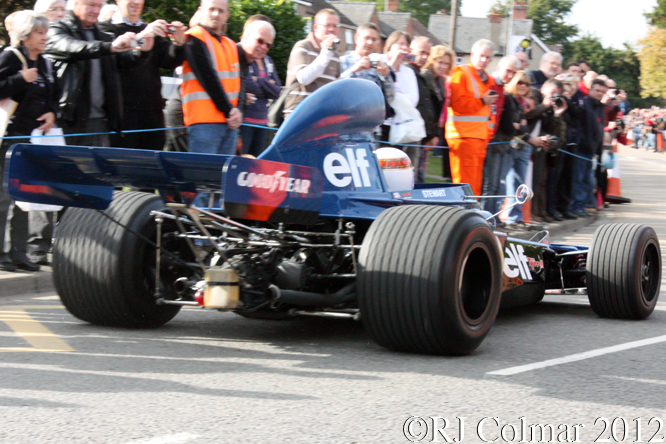
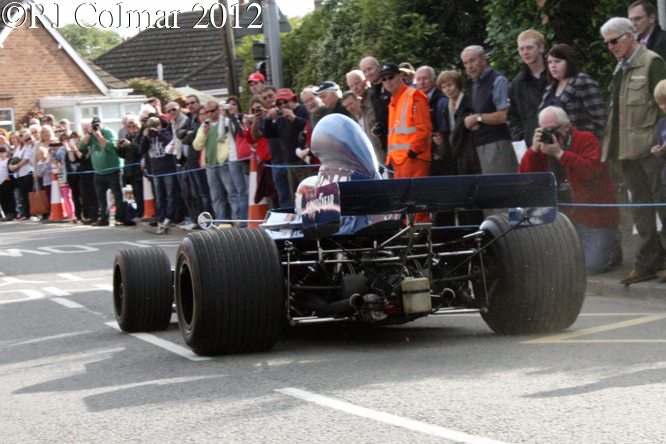
For the 1973 Spanish Grand Prix Stewart was given a new chassis #006/2 to race that, like #006 which reverted to Cevert, had been fitted with the distinctive angular deformable structure on the sides that were required by new regulations that came into force. At this race both Cevert and Stewart ran with the oblong end plates as seen on #006 in today’s blog driven by Sir Jackie at last years BRM Day.

Tyrrell Ford 006, BRM Day, Bourne

Cevert finished 2nd in the 1973 Spanish Grand Prix as he did in the following Belgian GP where he followed Stewart home in a Tyrrell one-two finish. Still driving #006 Francois finished 2nd at his home French Grand Prix.

Tyrrell Ford 006, BRM Day, Bourne

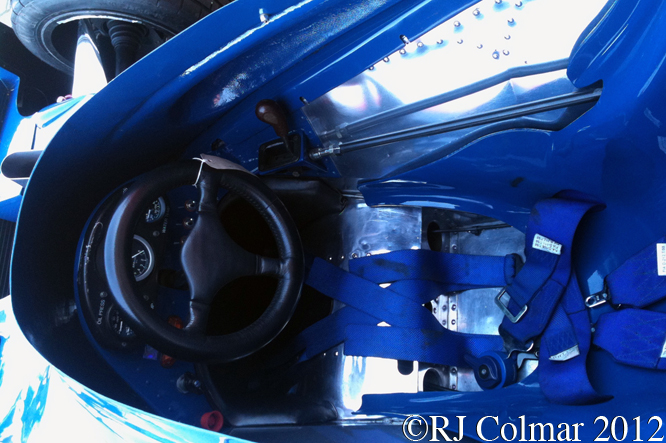
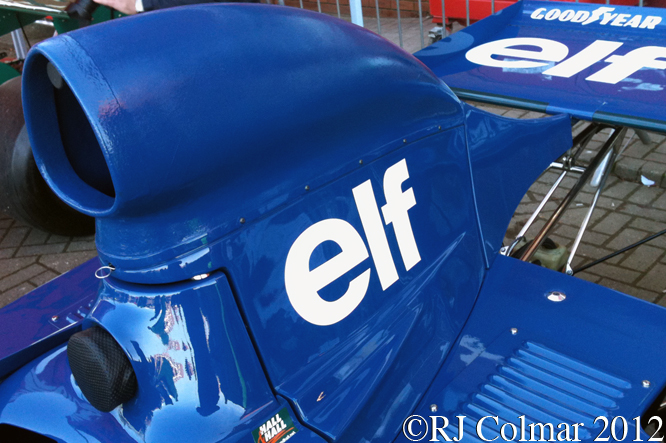
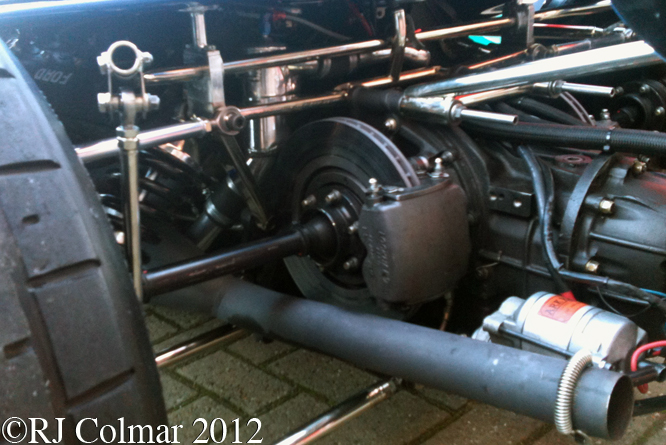
Airboxes went through many interesting stages of development in the 1972 and 1973 seasons, the Tyrrell 005/006 airbox seen here was a second development the first having resembled the airboxes seen on the earlier Tyrrell 002 and 004 cars, Derek Gardner is quoted as having been influenced by the design of the central engine intake of the Hawker Siddley Trident having gained access to Hawker Siddeleys Test and Development research on the shape of the inlet. The top piece of the trident airbox as seen here and in period has a buff appearance because it appears to have been made inside out with the rough side of the fibre glass on the outside of moulding rather than on the inside as one might normally expect.

Tyrrell Ford 006, BRM Day, Bourne

At the British Grand Prix #006/2 used by Stewart and #006 for Cevert both appeared with older tear drop shape rear wing end plates, but sans the aerodynamic appendage hitherto mounted to the back of the airbox and sans bodywork covering the Ford DFV cam covers and rear suspension. Despite qualifying 4th and 7th Stewart and Cevert could only finish the British Grand Prix 10th one down and 5th respectively.

Tyrrell Ford 006, BRM Day, Bourne

Next up came two one two finishes in the Dutch and German Grand Prix with Cevert in #006 behind Stewart in #006/2, at the Austrian Grand Prix Stewart finished second and clinched the World Championship with a 4th place finish ahead of Cevert at the 1973 Italian Grand Prix after a tremendous recovery from a puncture.

Tyrrell Ford 006, BRM Day, Bourne

#006 with Francois at the wheel was damaged in a collision with Jody Scheckter on 36th lap of the 1973 Canadian Grand Prix and parts of #006 were salvaged to build up #006/3 in time for the following US Grand Prix. Francois was killed in the new car during practice for that race and the Tyrrell team withdrew from what should have been Stewart’s swan song and last Grand Prix before retirement.

The current owner had #006 restored by Hall and Hall to 1973 Spanish to French Grand Prix spec, from 17 Grand Prix starts, along with winning the 1973 South African Grand Prix in the hands of Stewart, #006 was driven to seven 2nd place finishes by Francois Cevert in the 1972 and 1973 seasons.

Sadly first Gerry Birrell and then Roger Williamson, who were successively chosen to have replace Jackie Stewart, died during the 1973 season and eventually Jackie and Francois were replaced by Jody Scheckter and Patrick Depailler.

1973 was the last year in which a variety of numbering methods were used for Grand Prix cars, the Tyrrells ran with the #6 and #8 in Argentina, the #3 and #4 from Brazil through to Spain and then for no obvious reason the #5 and #6 for the remainder of the season.

My thanks to all those who contributed to the Airboxes the Good the Bad and the Ugly along with the Tyrrell 006 threads including Tim Murray who highlighted the absence of any logic to the Formula One numbering system at The Nostalgia Forum.

Thanks for joining me on this Championship Foundation edition of “Gettin’ a li’l psycho on tyres” I hope you will join me again tomorrow. Don’t forget to come back now.

Share

Tour de France Winner – Ferrari 250 GTO #4153GT

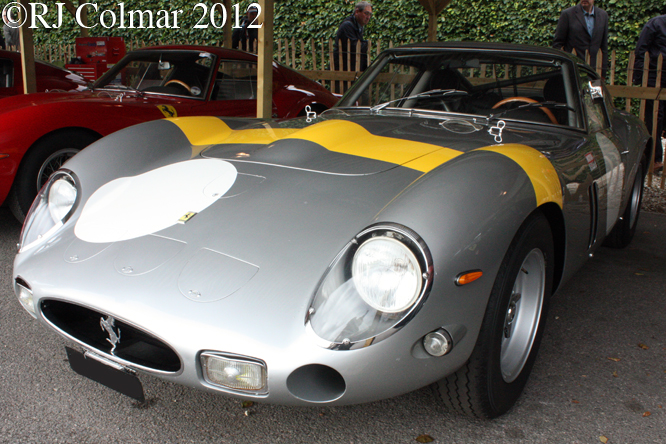
On June 2nd 1963 Frenchman Pierre Dumay took delivery of a silver Ferrari 250 GTO chassis #4153 and two weeks later it was entered under the Ecurie Francochamps banner in the 1963 Le Mans 24 Hours for himself and Belgian Léon “Elde” Dernier in which they finished 4th overall and second in class. Dernier means ‘last’ and Léon prefered to race under a pseudonym of the pronunciation of his initials LD. By the following week it appears that ownership of the car had been transferred to Ecurie Francochamps and entered in race for first Dernier and then Dumay at Zolder and Reims where 2nd overall and 3rd in class finishes were recorded respectively.

Ferrari 250 GTO, Goodwood Revival

The following season it appears that the Marquis Philippe de Montaigu bought #4135 but continued to enter it in numerous events from 1964 through 1965 under the Ecurie Francochamps banner for the likes of; Georges Berger, Lucien Bianchi, Pierre Dumay, “Gauvin”, Gustave Gosselin, “Lagae”, “Lambrecht”, Francis van Lysbeth, Willy Mairesse, Gerard Langlois van Ophem

Ferrari 250 GTO, Goodwood Revival

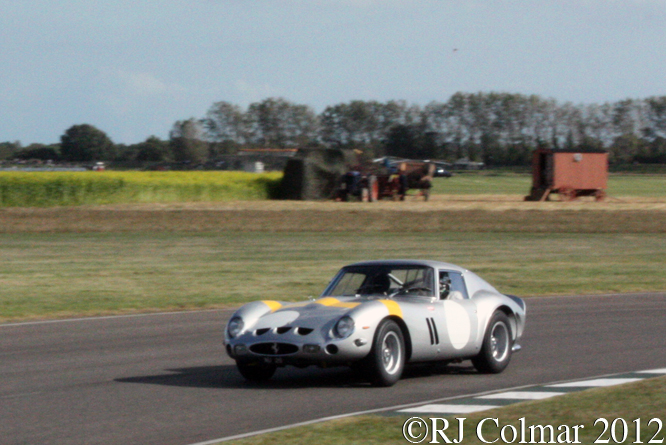
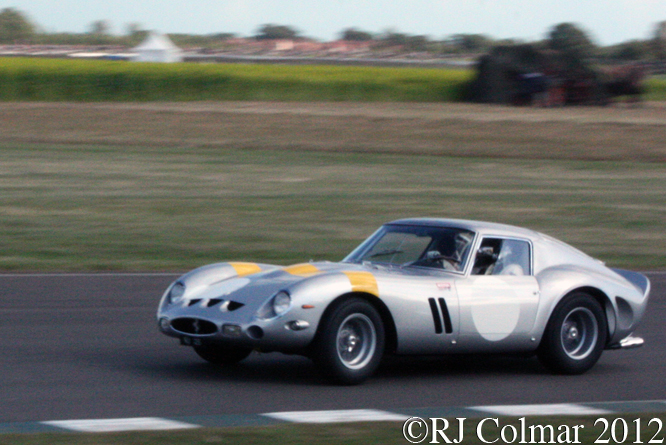
#4153’s biggest win was when Lucian Bianchi and and Georges Berger won the 1964 Tour de France. In 1965 chassis #4153 was entered into the first Marathon de la Route, an 82 hour race held at the Nurburgring that replaced the Liege Rome Liege Rally, but Bianchi, Berger and Jean Blaton failed to finish. Since then the car has remained in Europe with the current German owner acquiring it in 2003.

Ferrari 250 GTO, Goodwood Revival

Seen at the wheel of chassis #4153GT during a 250 GTO demonstration at last years Goodwood Revival meeting is Daniela Ellerbrock.

Thanks for joining me on this “Tour de France Winner” edition of “Gettin’ a li’l psycho on tyres” I hope you will join me again for a look at a Lotus tomorrow. Don’t forget to come back now !

Share

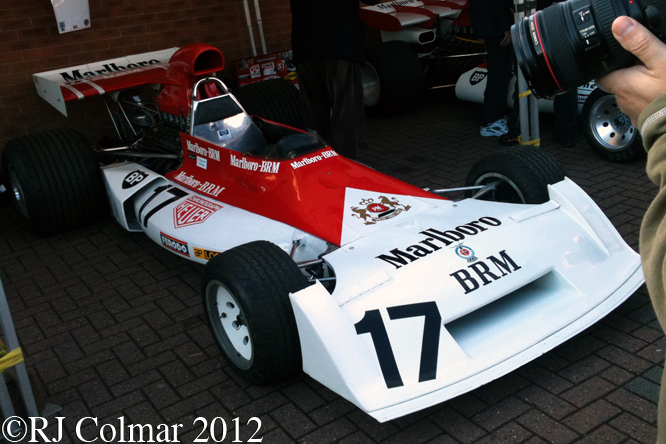
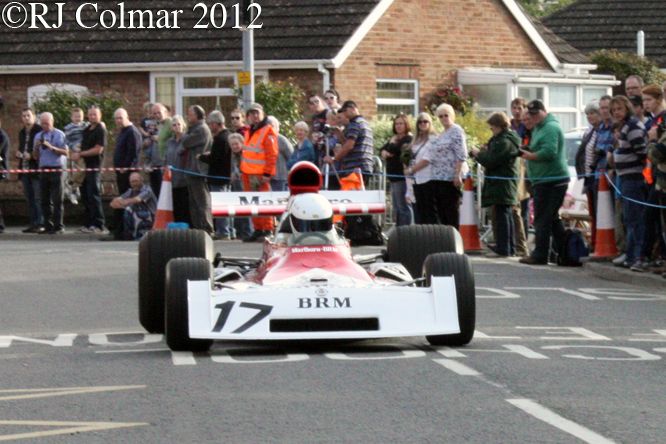
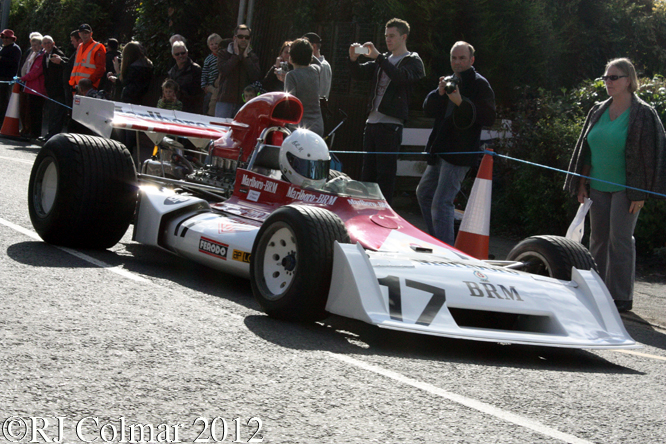
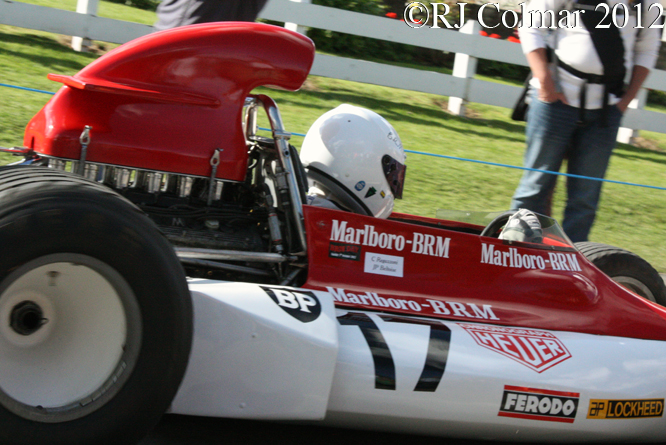
Fifty Fifty – BRM P160E # P160-07

For 1972 BRM lost their Yardley sponsorship but managed to land an even bigger sponsor in the form of Philip Morris who were interested in stealing some of the lime light Players were basking in thanks to their “Gold Leaf” brand logo’s appearing on the championship winning Lotus cars of Graham Hill and Jochen Rindt in 1968 and 1970 respectively.

BRM P160 E, BRM Day, Bourne

In order to give Philip Morris’s Marlboro brand maximum exposure BRM determined it would enter every Grand Prix of the 1972 season with five 48 valve V12 powered cars of three different designs dating back to 1970 with a roster of eight different drivers. Some how Jean Pierre Beltoise managed to keep his head in the ensuing chaos and won the Monaco Grand Prix in a BRM P160 a design dating back to 1971 and the final non championship John Player Victory Trophy race of the season in the new for 1972 BRM P180. These two races would prove to be the last ever contemporary Formula One race victories for the team ever.

BRM P160 E, BRM Day, Bourne

For 1973 designer Tony Southgate left the chaos at BRM to start afresh with the new Shadow Team while BRM decided to downscale to a three car operation for a more or less regular trio of drivers, using an updated version of the BRM P160. Swiss driver Clay Regazzoni who was on what turned out to be a one year sabbatical from Ferrari and Frenchman Jean Pierre Beltoise BRM’s incumbent winner who was in the middle of a three year stint at British Racing Motors (BRM) were joined by a young Austrian upstart called Niki Lauda who decided that suicide was best avoided in favour of yet another bank loan for one last attempt at hitting the big time in Formula One.

BRM P160 E, BRM Day, Bourne

Clay Regazzoni made an immediate impact by winning pole for the first race of the 1973 season at the Argentinian Grand Prix but from there things went steadily down hill for the team particularly after they had locked out the first three starting positions for the 1973 Race of Champions at Brands Hatch with Beltoise and Lauda sharing the fastest lap of the race with the Lotus of Ronnie Peterson.

BRM P160 E, BRM Day, Bourne

At the very next race the non championship International Trophy held at Silverstone today’s featured chassis #P160-07 the first of four E specification chassis, appeared for the first time with Clay Regazzoni qualifying 8th and finishing a respectable 3rd. Clay drove the car on five more occasions failing to improve on 8th in qualifying and slipping no lower than 12th and finishing similarly.

BRM P160 E, BRM Day, Bourne

#P160-07 was not used for the British Grand Prix and when it reappeared at the 1973 Dutch Grand Prix Jean Pierre Beltoise was at the wheel. Beltoise qualified the car no better than ninth and no worse than 16th in 6 races netting two 5th place finishes and a season high 4th place finish at the Canadian Grand Prix from a 16th place start.

JP Beltoise drove #P160-07 on it’s last in period appearance at the 1973 US Grand Prix where the car finished 9th from a 14th place start after which the car was briefly fitted with a Westlake V12 for testing in 1974 again with Beltoise at the wheel. By now Regazzoni had signed to rejoin Ferrari and on his recommendation Ferrari signed Niki Lauda to join him and so the Austrian finally started repaying his bank loans on his way to becoming a triple World Champion.

Philip Morris moved their Marlboro sponsorship to McLaren in 1974 with whom they won the first of many championships with Emerson Fittipaldi at the wheel in the opening year of their thirty year partnership.

Tony Southgates new for 1973 Shadow DN1 design did not better his BRM P160 design the Shadow team finishing 8th at the seasons end, 3 points and one spot below BRM in the championship table.

Today’s featured car was seen at last years BRM Day in it’s home town Bourne, Linconshire with J Burt at the wheel.

Thanks for joining me on this “Fifty Fifty” edition of “Gettin’ a li’l psycho on tyres” I hope you will join me again tomorrow. Don’t forget to come back now !

Share

Two Bearing Crankshaft – Singer 8 Junior

Like many pioneering manufacturers of motor cars Singer Motors Ltd was founded as a manufacturer of bicycles, by George Singer in 1874. By 1901 the company had diversified into producing powered tricycles which were soon followed by powered bicycles. Singer built their first car in 1905. Over the next four Tuesday’s GALPOT will be looking at four models from the interwar years.

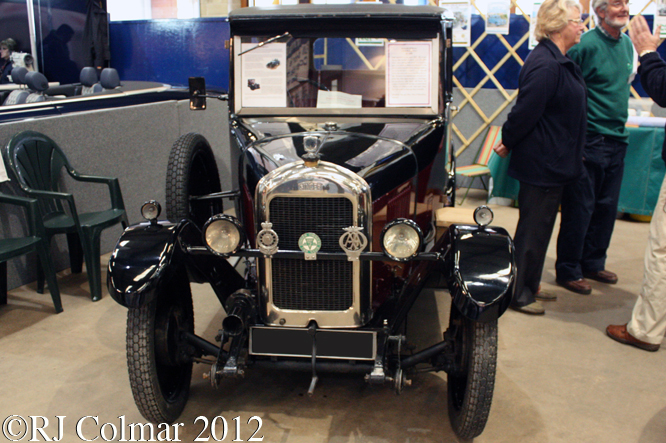
Singer 8 Junior, Bristol Classic Car Show, Shepton Mallet

The Singer 8 Junior was launched in 1926. Initially only a four seat tourer was available, in blue with black wings / fenders.

Singer 8 Junior, Bristol Classic Car Show, Shepton Mallet

For tax purposes the 4 cylinder motor was classed as having 8 horsepower, it featured gravity fuel feed, a crank running in just two bearings, overhead cam shaft, 6 volt electrics, that produced 16.5 hp at 3250 rpm. The motor would be the progenitor of future Singer power units for three decades.

Singer 8 Junior, Bristol Classic Car Show, Shepton Mallet

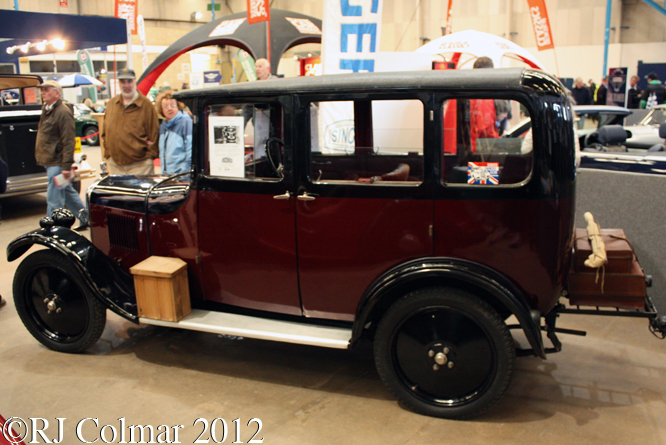
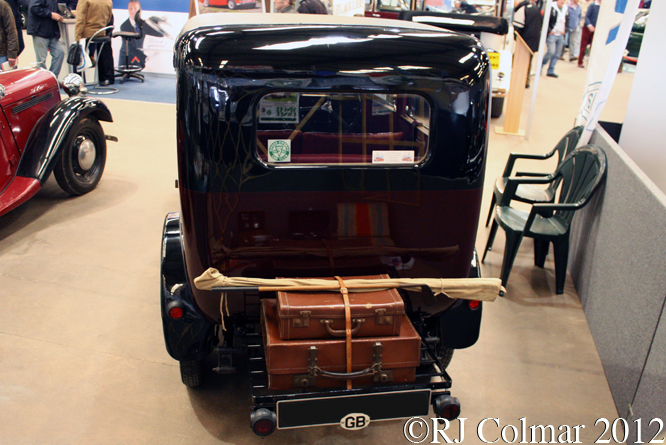
Eventually a range of different body styles were offered including Two Seater Tourer, Sunshine Saloon, Coachbuilt Saloon as seen here, Fabric Saloon, a two plus two called the Sportsman’s Coupe and a boat-tailed Sports which helped sell 6000 8 Juniors a year between 1927 and 1931 which made Singer the third largest manufacturer in the UK behind Austin and Morris.

Singer 8 Junior, Bristol Classic Car Show, Shepton Mallet

There were plans for the German Aga “Aga Fahrzeugwerke GmbH” company to manufacture Singer 8 Juniors under license, in much the same way as BMW manufactured the Austin 8 under license, but these plans came to naught, after a single prototype had been built Aga disappeared.

Today’s featured 1928 saloon / sedan was purchased by the current owners in 2009 at the Bristol Classic Car Show in Shepton Mallet, it is known to have resided in Cornwall and Surrey about 20 years ago. The owners say the car is great fun to drive “and we always get there eventually.”

Thanks for joining me on this “Two Bearing Crankshaft” edition of “Gettin’ a li’l psycho on tyres” I hope you will join me again tomorrow. Don’t forget to come back now !

Share

The Green Batmobile – Ensign Cosworth N173 #MN01

1973 was the year in which my interest for motor racing and particularly Grand Prix motor racing ramped up from excited enthusiast to bordering, and some might say well exceeding, obsessive.

I thought it would be fun for the five Sundays in March to share the 40th anniversary of my passion for international motor racing with you by looking at five Grand Prix cars that took part in the 1973 season.
Ensign Ford N173, Silverstone Classic

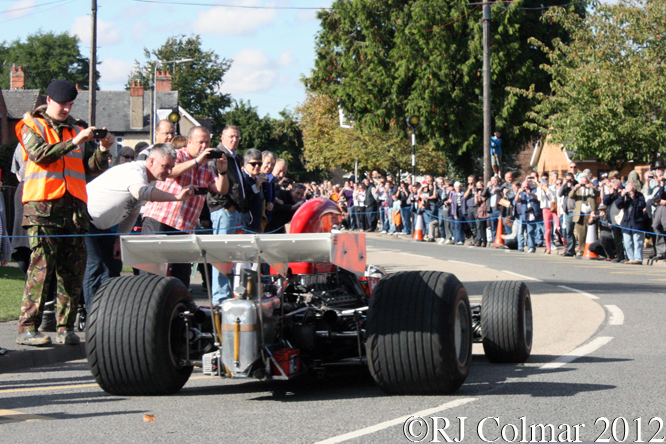
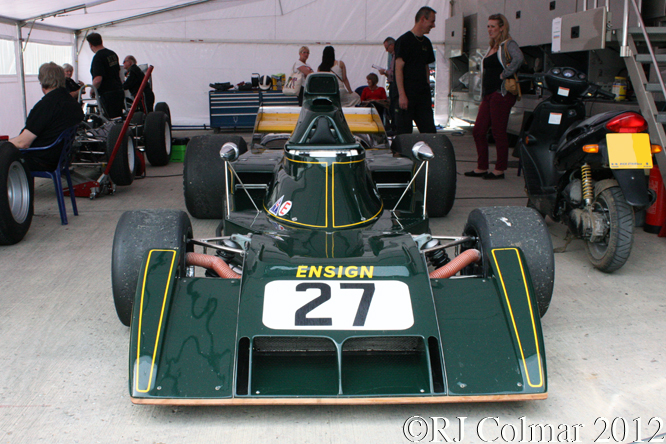
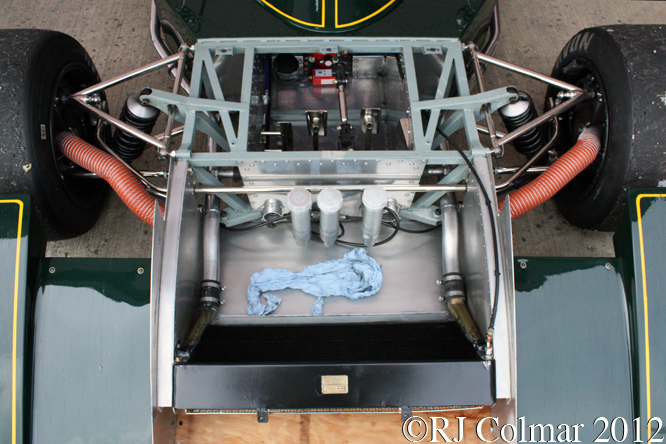
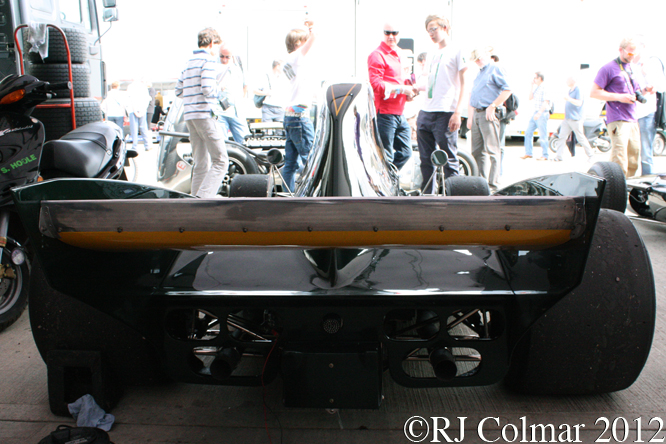
The first car in this series of five Sunday blogs is the Ensign N173, it did not appear until 1973 French Grand Prix half way through the season, but I remember the first time I set eye’s on a picture of it printed in a copy of Motorsport I had an extremely affirmative WOW ! Looks like a green Batmobile, reaction to both it’s shape and colour scheme which was unspoiled by any concessions to commercial considerations quite simply because the team had no sponsor.
Ensign Ford N173, Silverstone Classic

Morris ‘Mo’ Nunn had progressed as far as the works Lotus Formula 3 team by 1969 when he decided his future lay not in the driving seat but as a manufacturer of racing cars. He started building his first car to the third tier Formula 3 regulations in his immaculately prepared garage behind his house in Walsall.

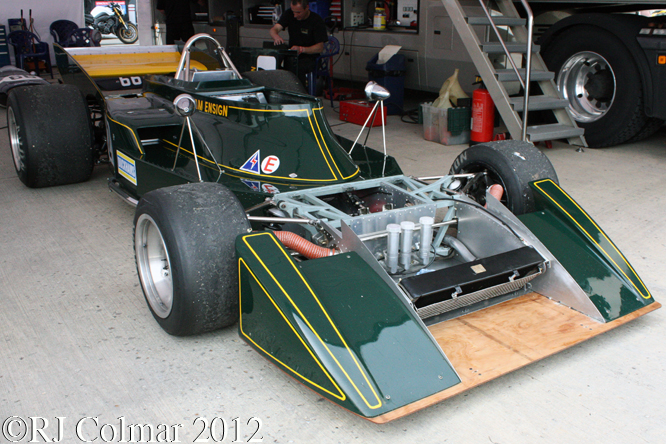
By 1971 the Ensign was up and running and Bev Bond won a race, with the space frame chassis car that featured Lotus 59/69 front up rights and Brabham magnesium rear uprights, fourth time out at Brands Hatch.
Ensign Ford N173, Silverstone Classic

In 1972 Rikky von Opel, son of rocket car pioneer Fritz von Opel and grandson of Opel car manufacturer Adam Opel joined Mo Nunn’s Formula 3 team and together they won the 1972 Lombard North British Formula 3 Championship.

Encouraged by this success “Mo” and Rikky decided to take the step up into Formula One together, despite the fact that they had no commercial backer.
Ensign Ford N173, Silverstone Classic

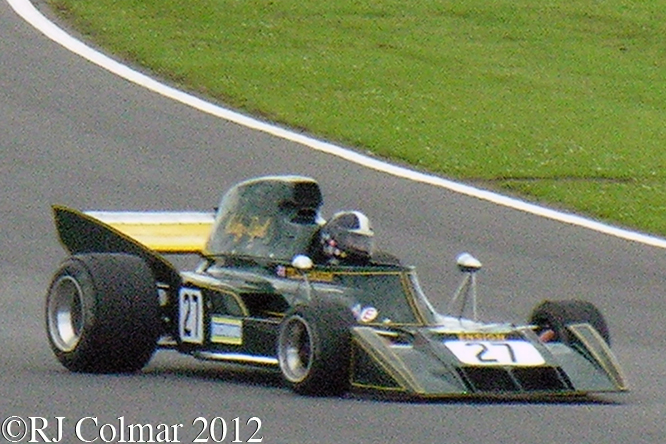
The Ensign N173 was a typical garagiste’s vehicle of the period, built around a monocoque powered by a Ford Cosworth DFV driving the rear wheels through a 5 speed Hewland gearbox.

By qualifying 25th, last but one, for the 1973 French Grand Prix and finishing 15th Rikky von Opel became the first driver from Lichtenstein to take part in a Grand Prix. He is still the only driver from the principality, population less than 40,000, to take part in a Grand Prix.
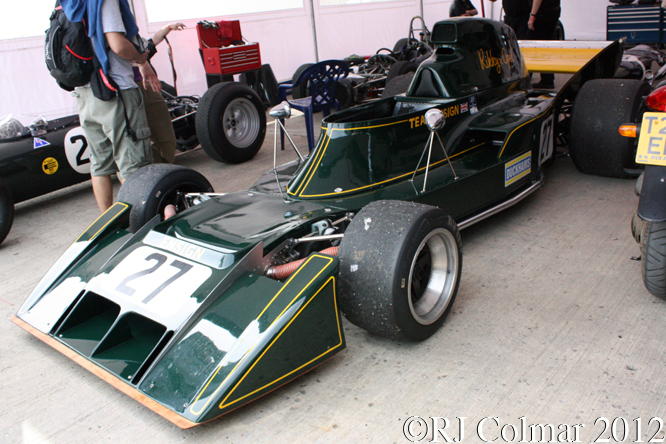
Ensign Ford N173, Silverstone Classic

At the following British Grand Prix Rikky qualified 21st and finished 13th which was to be the highlight of Ensign’s 1973 season.

Reliability would become an increasing factor in the teams lack of performance over the remaining season, a seasons best 14th place qualification for the 1973 Dutch Grand Prix came to naught when the car did not start the race due to suspension damage.
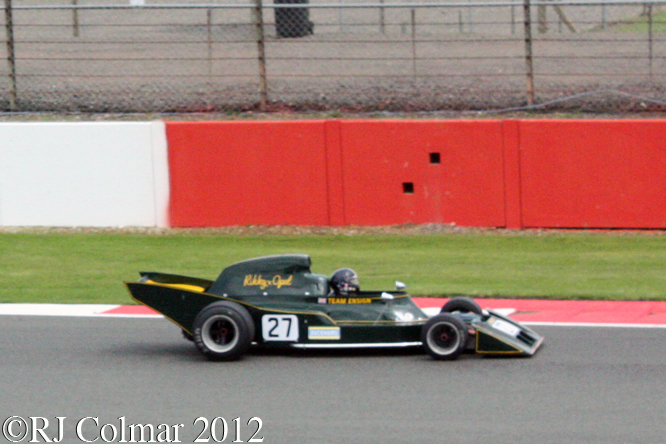
Ensign Ford N173, Silverstone Classic

Rikky persevered with the Ensign team into 1974, but after two failures to start due to uncompetitiveness and handling issues he switched to the second works Brabham car which netted him two career best 9th place finishes in Sweden and Holland.

A couple of failures to qualify in Monaco and France was enough to bring Rikky’s Grand Prix career to an end on the anniversary of his first season at the top table of the sport.
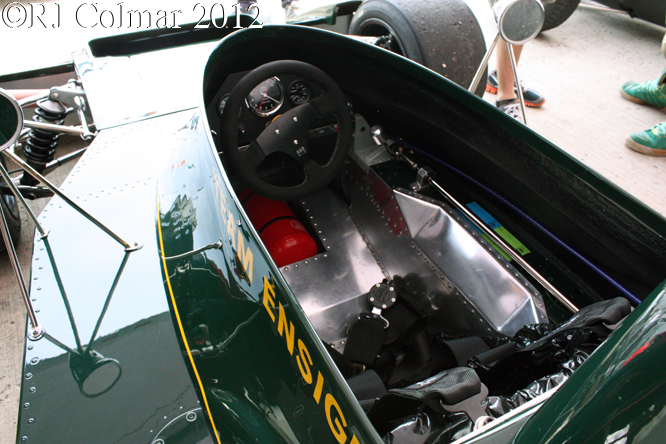
Ensign Ford N173, Silverstone Classic

The car seen here was used primarily as a back up car in 1974, Vern Schuppan raced the car in the 1974 Swedish Grand Prix, but was disqualified for having started unofficially from 26th place on the grid having completed 77 laps and finished 12th.

Mike Wilds attempted in vane to qualify MN01 for the Austrian, Italian and Canadian Grand Prix before finally qualifying 22nd for the 1974 United States Grand Prix where he completed 50 of the scheduled 59 laps to record an unclassified finish in a car that was much modified from it’s original appearance.
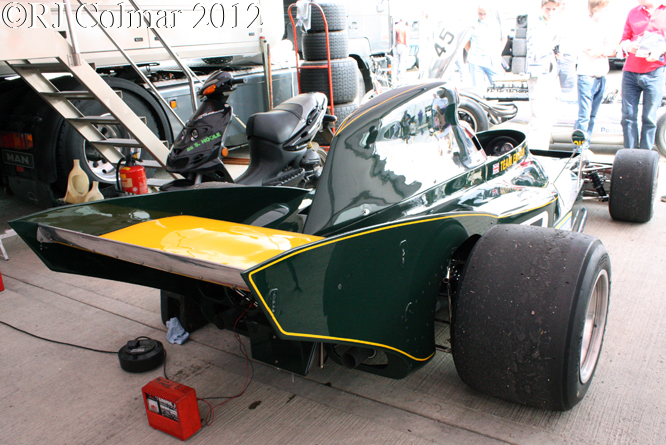
Ensign Ford N173, Silverstone Classic

Mo Nunn continued in Formula One mostly as an at best underfunded single car team until 1982.

1972 Le Mans winner Gils Van Lennep scored the Ensign team’s first point at the German Grand Prix in 1975 and the teams best finish was recorded by Marc Surer who finished 4th and was credited with the fastest lap in the 1981 Brazilian Grand Prix.
Ensign Ford N173, Silverstone Classic

Among the many drivers that drove Ensign cars in Grand Prix were Le Mans winners Vern Schuppan, Chris Amon and Jacky Ickx, Ferrari refugee Clay Regazzoni, USAC/Cart winner Danny Ongias and future World Champion Nelson Piquet was given his Formula One debut at the 1978 German Grand Prix where he qualified 22nd and retired after 31 laps.

After his team was sold to Teddy Theodore “Mo” moved to the United States where he was chief engineer for Alex Zinardi and Juan Pablo Montoya at Chip Ganassi Racing when they dominated the CART championship from 1997 to 1999 and the Indy 500 in 2000. After a spell running his own IRL cars with varying degrees of success Mo Nunn returned to Ganassi as a technical adviser in 2004.

Thanks for joining me on this “The Green Batmobile” edition of “Gettin’ a li’l psychoontyres” I hope you will join me again tomorrow. Don’t forget to come back now !
Share