Tag Archives: Car

One Step Back, Two Steps Forwards – MG TA

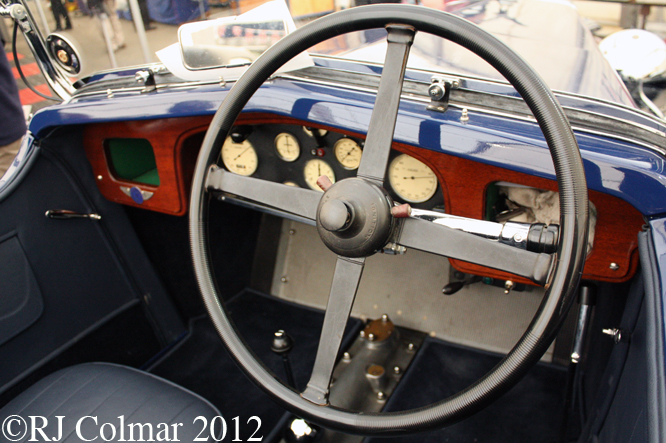
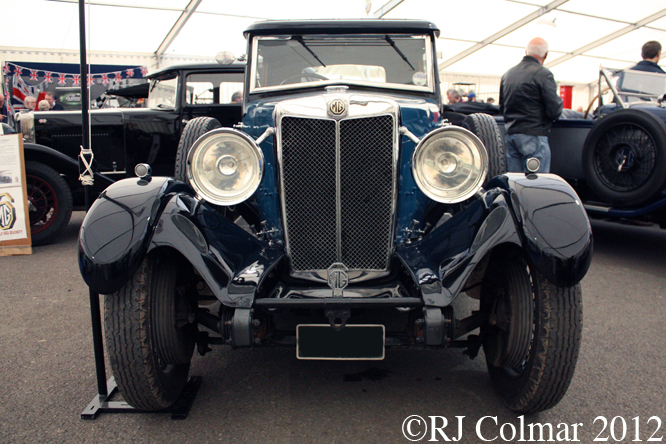
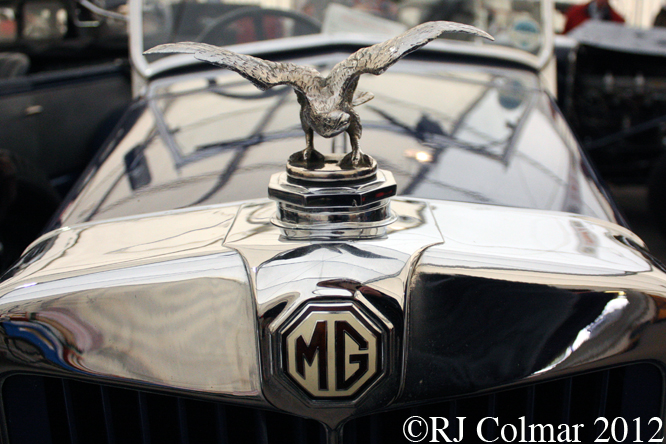
The MG TA Midget replaced the MG PB Midget in 1936 with many, of it’s parent company, Morris components. The TA and following T series variants opened up the appeal of sports cars in general to a huge new market that had remained hitherto untapped thanks to the reputation sports cars had for being temperamental if not plain difficult to drive.
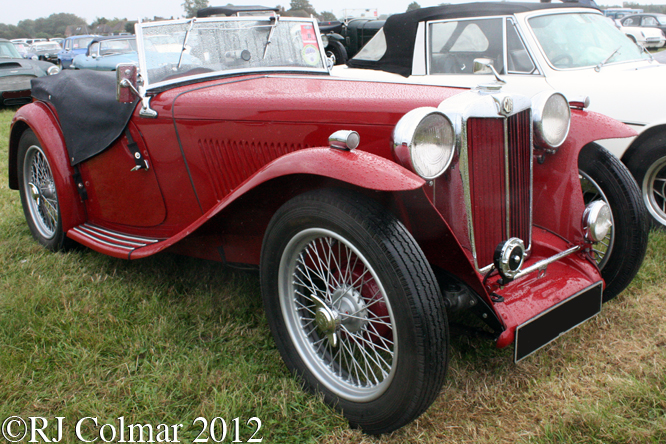
MG TA, Goodwood Revival

Built with a 7″ longer and 3″ wider chassis the TA’s motor was technically a retrograde step from it’s PB predecessor which had an over head cam motor. The Morris 10 based TA motor ‘only’ featured pushrod operated over head valves, but with 2 carburetors this still produced 50 hp with the benefit that the valve clearances were much easier to maintain.

If the motor was a technological retrograde step both the synchromesh gearbox, making changing gear much easier and the hydraulic brakes, which needed much less maintenance, were both technological steps forwards that made the TA a much easier car to drive and maintain, than it’s predecessor and added to the durability of the whole TA package.

Top speed of the TA was around 80 mph with a rest to 60 mph acceleration time of just over 23 seconds. 3,000 TA Midgets were manufactured between 1936 and 1939.

Thanks for joining me on this “One Step Back, Two Steps Forwards” edition of “Gettin’ a li’l psycho on tyres”, I hope you will join me again tomorrow when I’ll be looking at an unusual tribute car. Don’t forget to come back now !

Share

Single Year Production – MG PB

Introduced in 1935 the MG PB was an upgrade of the MG PA featuring a larger 939 cc / 57 cui over head cam motor that produced 43 hp and drove the wheels through a non synchromesh gearbox.

Externally the PA and PB are differentiated only by the radiator grill which features a honeycomb pattern on the PA and vertical slats on the PB, the latter pattern would remain an MG feature right the way through until the early 1960’s.

MG PB’s were entered in the Le Mans 24 hours in 1935, ’37 and ’38 scoring a best 12th place finish in 1938 with Claude Bonneau from Belgium and Mme Anne Itier from France at the wheel of the formers car. Ernest Harewood won handicap events at Goodwood with his PB chassis #PB0528 in 1952 and 1953.

526 MG PB’s were manufactured from 1935 to 1936 when the model was replaced by the easier to drive and maintain MG TA.

Thanks for joining me on this “Single Year Production” edition of “Gettin’ a li’l psycho on tyres” I hope you will join me again tomorrow. Don’t forget to come back now !
Share

Power & Roadholding – Bond Equipe 2 Litre Convertible

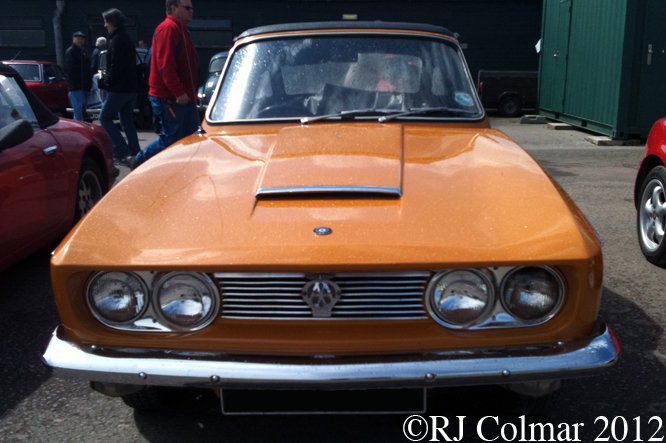
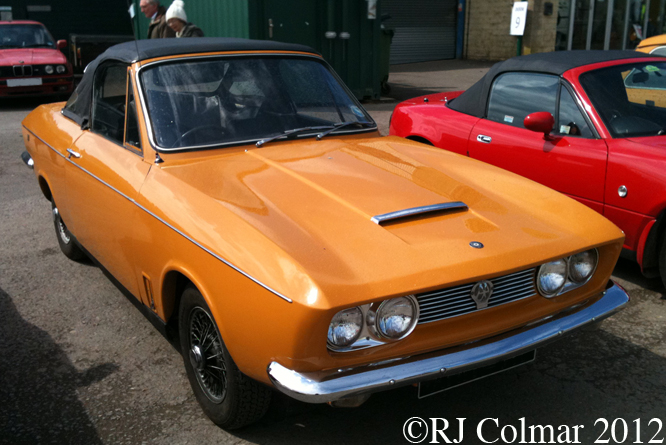
In 1967 Bond expanded it’s range of four wheel vehicles from the hitherto single Triumph Herald based Equipe 4S to include a Triumph Vitesse based Equipe 2 Litre GT.

Bond Equipe Convertible, Bristol Classic Car Show

The following year the chassis was upgraded to the new Mk II Vitesse type which featured improved power and rear suspension leading to the marketing strap line “The New Bond is great on power, great on road holding.

Bond Equipe Convertible, Bristol Classic Car Show

1968 also saw the launch of the Convertible version of the six cylinder Equipe 2 litre which was marketed like all Equipe’s through Standard Triumph dealerships.

Bond Equipe Convertible, Bristol Classic Car Show

With an envious eye on Bond’s distribution agreement with Standard Triumph, Reliant, manufacturers of Scimitar cars, purchased Bond in 1969 with a view to expanding the distribution of it’s own vehicles. However these plans came to nought in the wake of Triumphs merger into the British Leyland conglomerate which rationalised that the sales of Bond’s alongside Triumphs own products was superfluous.

Bond Equipe Convertible, Bristol Classic Car Show

The 1969 model seen here is one of just 841 convertibles built between 1968 and 1970 when production of all Bond’s in Preston was wound down and the manufacturing facilities closed by their new owners Reliant.

Thanks for joining me on this “Power & Roadholding” edition of “Gettin’ a li’l psycho on tyres” I hope you will join me again tomorrow. Don’t forget to come back now !
Share

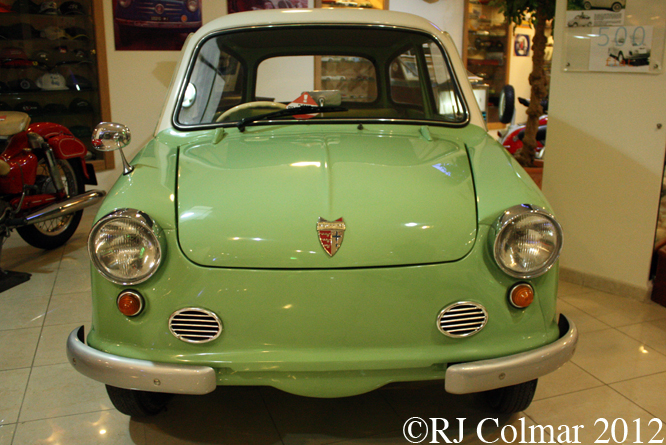
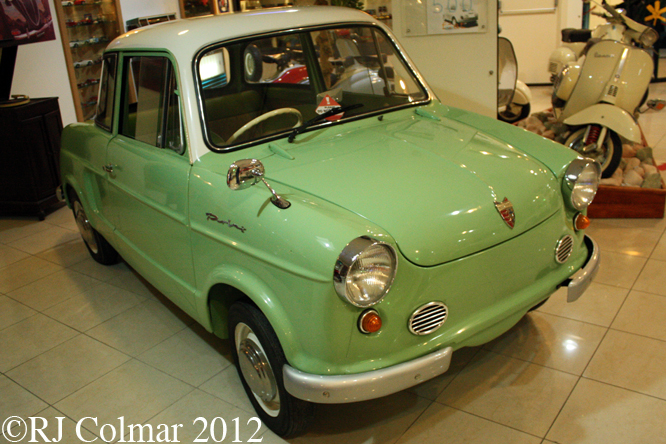
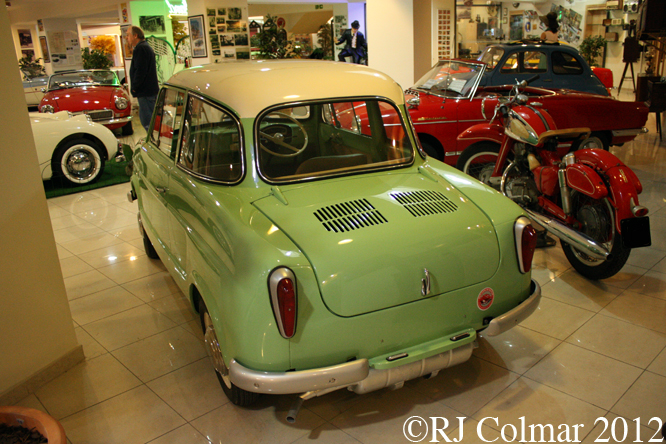
On Prince’s And Pharoh’s – NSU Prinz 30

NSU was founded as a knitting machine manufacturer in 1873, moving into bicycle manufacture in 1886 and motorcycle manufacture in 1901 by which time it had ceased making knitting machines. In 1905 NSU began manufacturing motor cars of their own design before production was given over to the manufacture of FIAT cars under license in 1929. The production of FIAT’s under the NSU-FIAT brand continued until 1967. Thereafter FIAT cars were manufactured at the same factory under license but marketed under the FIAT brand until 1973.

NSU Prinz, Malta Classic Car Collection

Capitalising on the goodwill and reputation of it’s motorcycle business, the first motorcycle to reach 200 mph was an NSU in 1955, the company moved back into manufacture of a car of it’s own design in 1957 with the NSU Prinz 30.

NSU Prinz, Malta Classic Car Collection

Although billed as a Wunder Buy! full four seater in reality the rear seats were only suitable for small children.

NSU Prinz, Malta Classic Car Collection

In order to keep the maintenance to a minimum the rear mounted 20 hp 583 cc / 35.6 cui air cooled two cylinder, motor cycle derived, engine, gearbox and transaxle were contained in a single casting meaning that the lubricating oil level could be maintained from a single filler, the only other lubrication required was for the king pins on either side of the front suspension.

Production of the Prinz 30 lasted until 1962 by which time models were also being built in Australia, the Prinz 30 floor pan and drive was also used to launch Egypt’s entry into motor vehicle manufacture for various NSU Ramses vehicles including the Utilica and Gamila the latter featuring a Vignale styled cabriolet body.

Thanks for joining me on this “On Prince’s And Pharoh’s” edition of “Gettin’ a li’l psycho on tyres” I hope you will join me again tomorrow for Americana Thursday when I’ll be looking at an Italian Styled Chevrolet. Don’t forget to come back now !
Share

Four Wheel Handbrake – MG 18/80 Sports Six Mk II Tourer

Built in August 1930 with a fixed head coupé (FHC) body today’s featured 18/80 Sports Six sat around for three whole before it was first registered in October 1933.

MG 18/80 Super Sports Mk II Tourer, Bristol Classic Car Show

This car was then damaged a year later by the MG Works on a service run.

MG 18/80 Super Sports Mk II Tourer, Bristol Classic Car Show

After being stored in first a barn and later a coal cellar this car was rescued in 1984 minus body.

MG 18/80 Super Sports Mk II Tourer, Bristol Classic Car Show

Restoration complete with a cable operated handbrake operating on all four 14 inch drum brakes took 27 years during which time the car also changed ownership.

MG 18/80 Super Sports Mk II Tourer, Bristol Classic Car Show

With a 17.7 hp six cylinder motor driving a four speed gearbox a top speed of 74 mph was quoted for this vehicle which cost £525 when new.

Thanks for joining me on this “Four Wheel Handbrake” edition of “Gettin’ a li’l psycho on tyres” I hope you will join me again for a Continental Curiosity tomorrow when I’ll be looking at an NSU Prinz. Don’t forget to come back now !
Share

Last Known Survivor – MG 18/80 Six deluxe Saloon MkII

Between 1930 and 1932 MG built 236 18/80 Mk II’s with heavier frames and softer springs than the earlier Mk I’s which eventually replaced the Mk I which had been manufactured between 1928 and 1931.

MG 18/80 Six deluxe Saloon Mk II, Bristol Classic Car Show

Of those 236 Mk II’s 50 were deluxe Saloons.

MG 18/80 Six deluxe Saloon Mk II, Bristol Classic Car Show

Only 25 18/80 Six Mk II’s are known to exist, one of them is the prototype featured here a couple of weeks ago which now has a later Tigress style body, and another is the Six Saloon featured last week.

MG 18/80 Six deluxe Saloon Mk II, Bristol Classic Car Show

Today’s featured 1931 model is the only known top of the range 18/80 Six deluxe Saloon Mk II known to exist.

MG 18/80 Six deluxe Saloon Mk II, Bristol Classic Car Show

It was completely rebuilt between 2005 and 2007 and restored to it’s original factory colour scheme.

MG 18/80 Six deluxe Saloon Mk II, Bristol Classic Car Show

Since restoration it has been regularly used on rallies and tours of Europe.

Thanks for joining me on this “Last Known Survivor” edition of “Gettin’ a li’l psycho on tyres”, next week I’ll be rounding out the recent Tuesday features on early MG’s with a look at the oldest MG known to exist, meantime I hope you will join me for a continental curiosity tomorrow. Don’t forget to come back now !
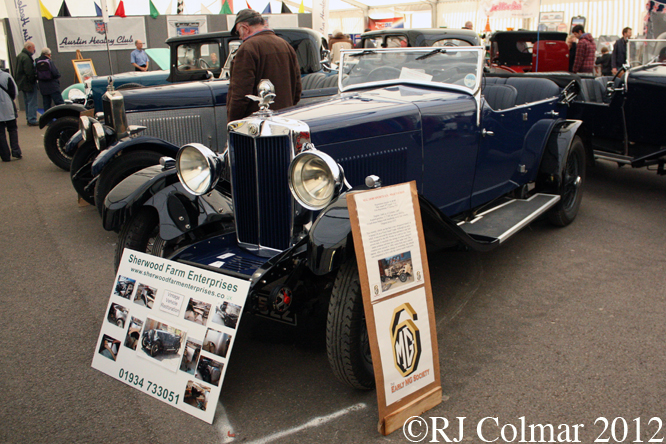
Share

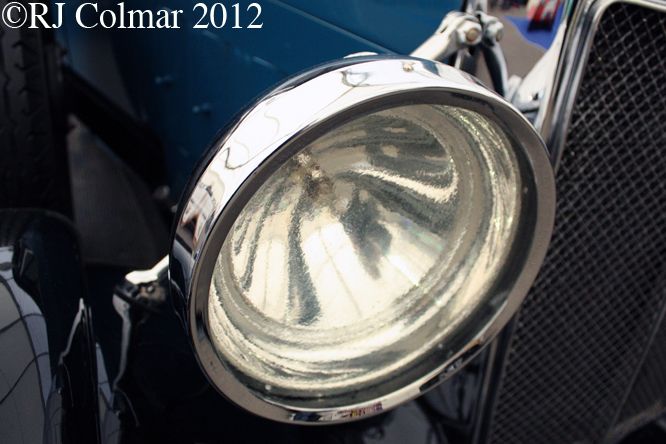
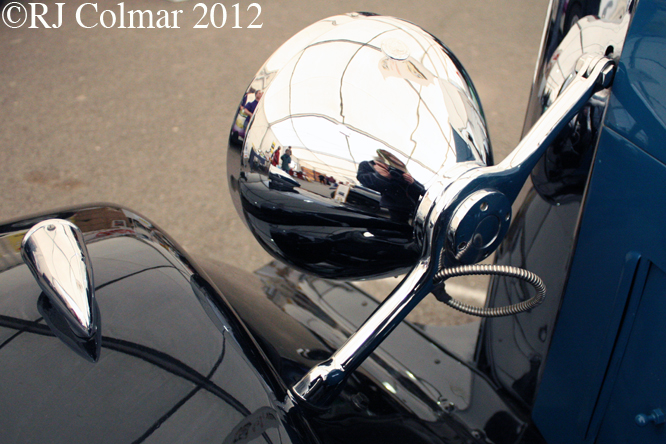
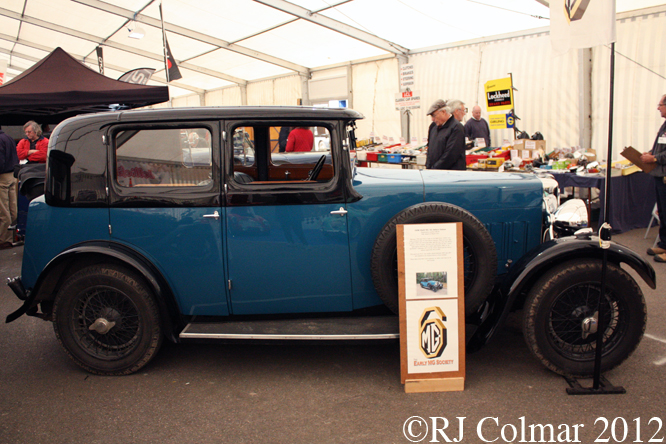
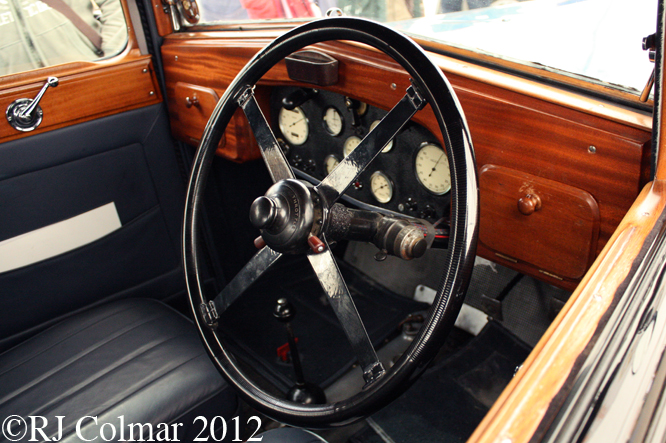
More Strength & Softer Springs – MG 18/80 Six Saloon Mk II

MG 18/80 Six Mk 1, Bristol Classic Car Show

Rather confusingly MG marketed both the MG 18/80 Six Mk I, featured a couple of weeks ago, and Mk II, featured today, simultaneously from 1929 to 1931.

MG 18/80 Six Mk 1, Bristol Classic Car Show

The 18/80 Six Mk 1 was developed from the still born Morris Light Six project, with a much sturdier chassis, the first to be designed by MG rather than inherited from Morris.

MG 18/80 Six Mk 1, Bristol Classic Car Show

Unfortunately many of the painstaking chassis details like the MG motifs set into the aluminium bulkhead brackets were lost once the bodies had been affixed.

MG 18/80 Six Mk 1, Bristol Classic Car Show

The motor was derived from the failed Morris Light Six but featured a new all in one crank case and cylinder block casting with a separate cylinder head. The motor made use of the then new shell type big end and main bearings for smooth and quiet running.

MG 18/80 Six Mk 1, Bristol Classic Car Show

The 60 hp 18/80 Six Mk 1 is said to have been capable of out accelerating comparable models with good racing reputations from both Lagonda and Alvis, however the performance advantage was lost on the 18/80 Mk II which was built on an even sturdier chassis with a wider track that added weight which was not made up by any improvement in engine performance.

MG 18/80 Six Mk 1, Bristol Classic Car Show

The Mk I was £100 cheaper than the Mk II which made the latter car all the harder to sell despite it’s four speed gearbox, sturdier construction and softer springs. The 1930 model seen here is thought to be one of just 3 MK II’s known to have survived.

Thanks for joining me on this “More Strength & Softer Springs” edition of “Gettin’ a li’l psycho on tyres”, I hope you will join me for an independence day edition again tomorrow. Don’t forget to come back now !
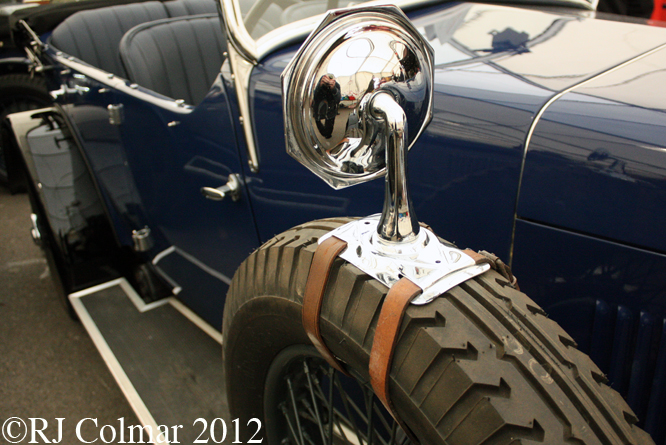
The 1930 model seen here is one of

Share