Tag Archives: Car

Booby Prize from Wide Track Country – Pontiac Firebird

In 1954 vice president of engineering at General Motors Oliver K Kelly called Packards head of Research and Development John DeLorean to offer him a choice of jobs across the five divisions on General Motors. DeLorean who at the time also had the choice of moving to Studebaker with whom Packard had just merged settled on becoming assistant to chief engineer Elliot ‘Pete’ Estes at Pontiac.

Pontiac Firebird, Silverstone Classic

By 1963 John had become chief engineer at Pontiac, and Estes had become general Manager when they together with engine specialist Russell Gee and chassis engineer Bill Collins convinced the GM management to let them offer a $296 performance package on the Pontiac LeMans Coupé and Convertible body stiles that included a 325 hp 6.4 litre / 389 cui V8 motor normally found in the full size Pontiac Catalina and Bonneville models, from whence the ‘Wide Track’ strap line was born and named it GTO a name John picked up from the Ferrari 250 GTO.
Pontiac Firebird, Silverstone Classic

The Pontiac GTO with initial production limited to 5,000, by a disbelieving Pontiac Sales Manager Frank Bridge, was an instant hit with Ronnie and the Daytonas, the youth market at which it was aimed and GM Management. The GTO was responsible for transforming the image of the brand from an ‘aunties car’ to a youth orientated performance brand with over 32, 000 units built in 1964.
Pontiac Firebird, Silverstone Classic

As the GTO was launched John DeLorean moved on to the development of the Pontiac Banshee a concept car to compete with the Chevrolet Corvette which was killed by GM’s top management. DeLorean seen as Pontiacs golden boy was promoted to head of the entire Pontiac division and given the consolation task of turning the Chevrolet Camaro into a Pontiac Pony Car with the proviso that there could be no alterations to the sheet metal except to the front and rear panels.
Pontiac Firebird, Silverstone Classic

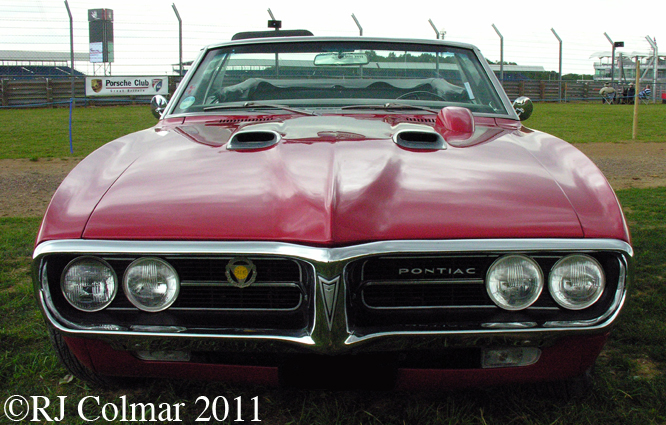
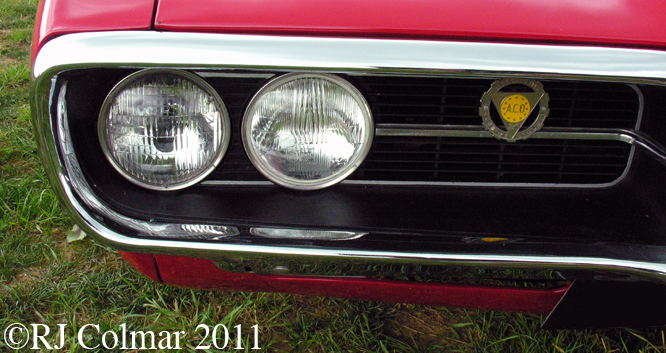
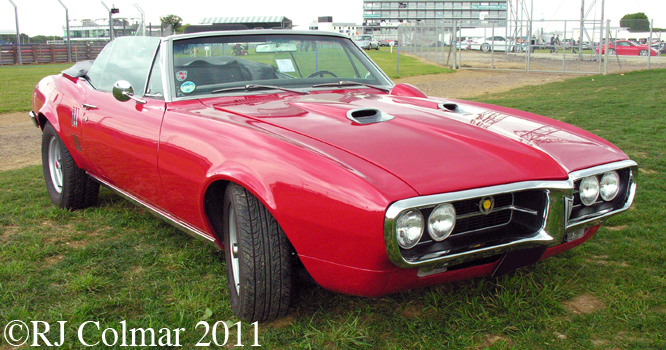
By incorporating a signature Pontiac split grill with built in bumper at the front and a version of the rear strip lights seen on the two Banshee concept cars the Pontiac Pony car was easily distinguishable from it’s Chevrolet sibling, Having failed to acquire the Banshee naming rights from rocket scientist Eugene F. Lally, who had successfully raced a Corvette powered special of the same name, for less than ¢50 per car, the name Firebird which had been previously used by GM on three seriously out landish gas turbine concept cars, was eventually adopted for the Pontiac pony car.
Pontiac Firebird, Silverstone Classic

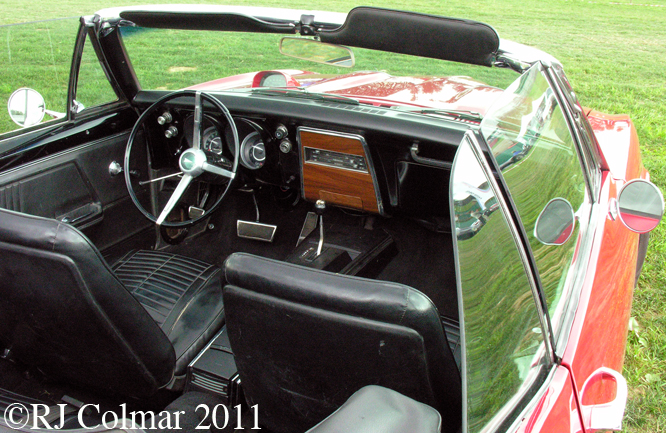
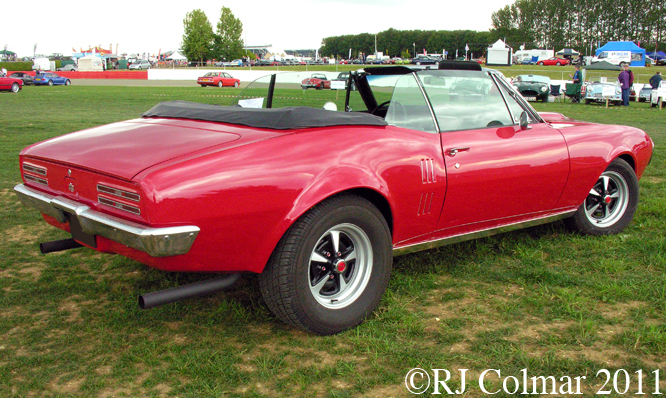
The absence of marker lights, Federally mandated in 1968, and the E suffix on the registration plate confirm this as most likely one of the five variations of the 1967 model line up.
Pontiac Firebird, Silverstone Classic

The Ram Air bonnet / hood suggests this car had the top of the range 6.6 litre / 400 cui motor installed when it left the factory.

Pontiac Firebird, Silverstone Classic

Just over 100,132 1967 Firebirds are thought to have been manufactured of which 9,980 were convertible.

Thanks for joining me on this Wide Track Country edition of ‘Gettin’ a lil’ psycho on tyres’, I hope you will join me again tomorrow. Don’t forget to come back now !

Share

Awaiting TLC #3 – Lotus Mark 6

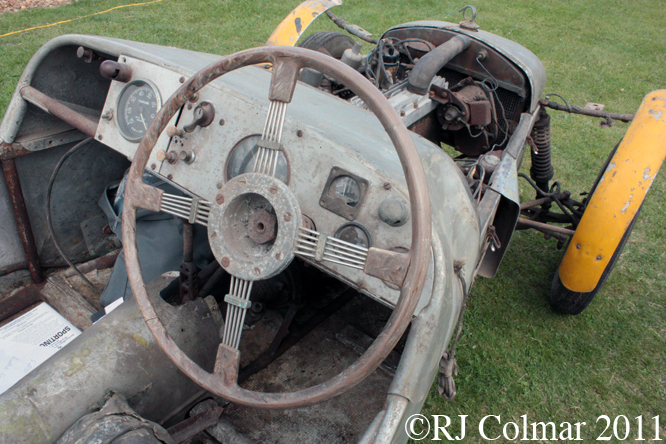
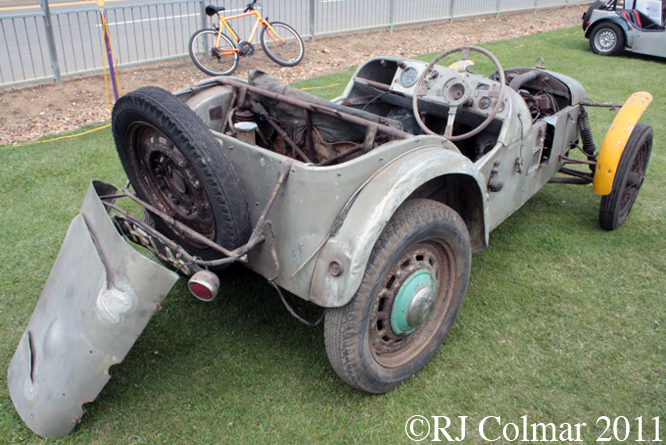
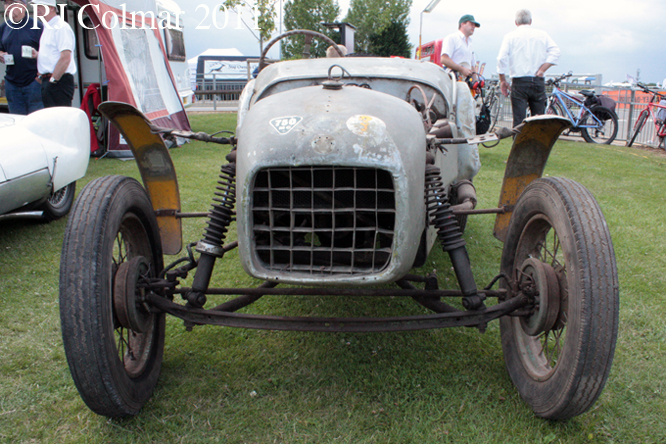
Third in my occasional series of blogs about cars in need of tender loving care is this uniquely ungainly looking Lotus Mark 6 seen earlier this year at the Silverstone Classic.

Lotus XI, Silverstone Classic

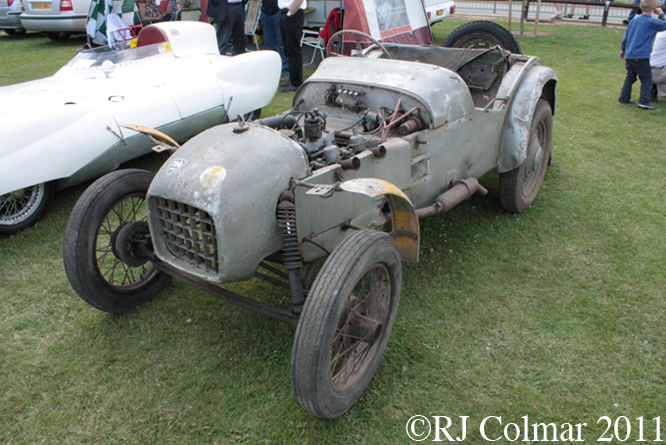
The Lotus Mark 6 was the first Lotus design to go into to production and it was sold in kit form saving purchasers a small fortune in new car taxes. The reason this particular vehicle is both unique and ungainly is because it is the only Lotus Mark 6 built as a mud plugging trials car requiring more ground clearance than either the road going or track racing versions.

Lotus VI, Silverstone Classic

The chassis and Williams and Pritchard built body was originally supplied to Mr Horace Sinclair Sweeney in 1953 at a cost of £110. Once Mr Sweeney had finished installing the engine and running gear he entered and won the London Motor Club’s Annecy Spring Sporting Trial on the 7th of June 1953.

Lotus VI, Silverstone Classic

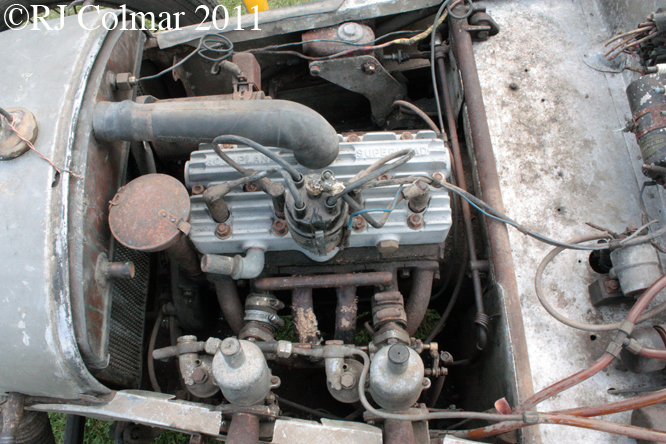
The motor is an Aquaplane tuned 1172 cc / 71.5 cui side valve E93A unit sourced originally from a Ford 10 built in the 1930’s.

Lotus VI, Silverstone Classic

In 1954 Mr Arthur Hay acquired this Mark 6 and over the next ten years won three Motor Cycling Club (MCC) Triple awards for completing the Exeter, Lands End and Edinburgh trials unpenalised in three separate calendar years. Since then car has remained in the Hay family, but unused since 1964.

Lotus VI, Silverstone Classic

The current owner hopes to restore the car to working order and use it for sporting trials as originally intended by Mr Sweeney.

Thanks for joining me on this mud plugging edition of ‘Gettin’ a li’l psycho on tyres, I hope you will join me again tomorrow when I shall be looking at a Jensen. Don’t forget to come back now !

Share

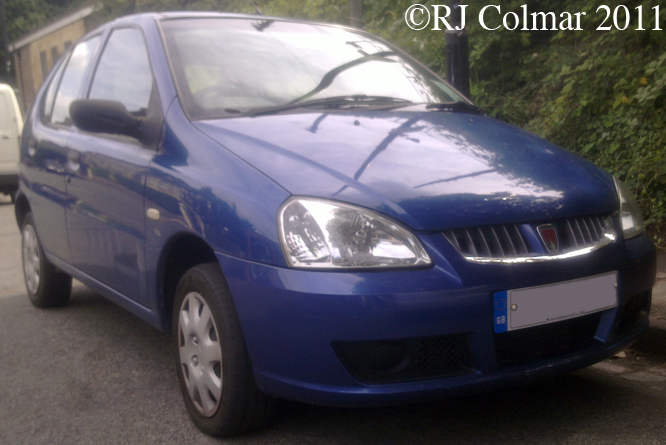
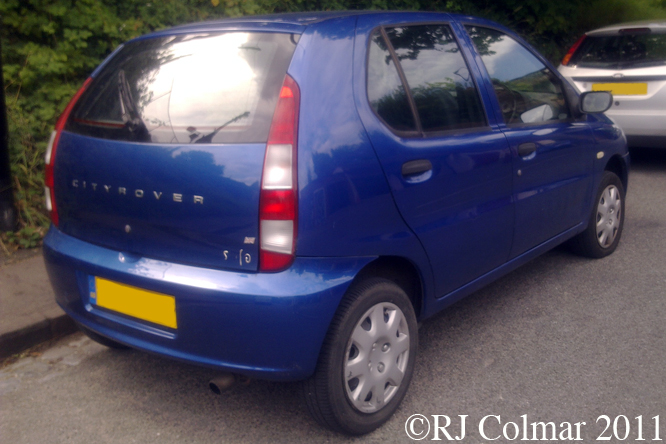
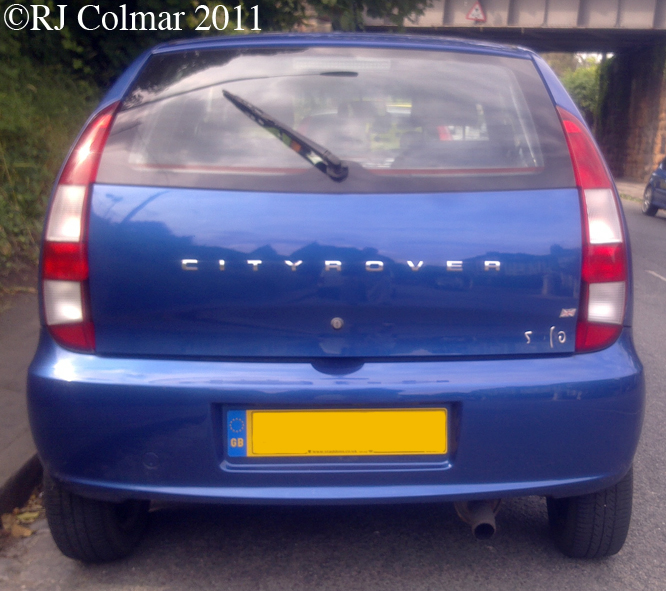
A Passage From India – Rover CityRover

In 2000 BMW gave up on it’s attempt to revive the Rover Group after six years and sold most of the assets packaged as the MG Rover Group to the Phoenix consortium. At this point all models, bar one the ’75’, in the MG Rover groups portfolio were around five years old and Phoenix determined that their first new car would be aimed at the city car market segment that had once been an almost exclusive preserve of the Mini, a product of earlier incarnations of the MG Rover Group.

CityRover Solo

MG Rover Group did not have any research and development assets so they looked for a partner that would be offered a stake in the group in return for a new car. A deal was done with Indian manufacturers TATA who would build a version of the first ever completely indigenous Indian passenger car the Indica.

CityRover Solo

The design criteria for the Indica were that it would be the size of a Maruti Zen, similar to the Suzuki Cervo Mode, the internal dimensions of the Hindustan Ambasador, a cast off from a previous in carnation of the MG Rover Group that is still in production who’s design heritage can be traced back to the Morris Oxford of 1948, the price of a Maruti 800, another Suzuki related product, and the running cost of a diesel.

CityRover Solo

The design work was carried out by I.D.E.A. in Italy and after a false start with some quality issues the TATA Indicia, launched in 1998, with a Peugeot derived motor proved to be a big hit on the Indian sub continent. Despite the absence of a development budget, apart from the badging, alterations made to the Indicia to suit the needs of European motoring included an upgraded engine to produce 84 hp and exceed more stringent emissions regulations, increase in road wheel size from 13 to 14 inches and corresponding alteration of gear ratio’s, stiffer front and rear spring rates, lowered suspension and increased gearing for the steering.

CityRover Solo

Production of the Rover CityRover began in Pune India in 2003 but the cars launch was marred by questions over the MG Rover Groups finances and by the newly crowned 2004 European Car of the year the FIAT Panda which was a game changing generation ahead of the CityRover and cheaper too.

CityRover Solo

While the CityRover was praised for it’s performance and handling it was let down by interior quality, lack of equipment and above all headlining city car market segment price. In July 2005 MG Rover was liquidated with the loss of 6,000 jobs in the company and a further 25,000 jobs in related suppliers companies. Nanjing acquired the assets of the MG Rover Group.

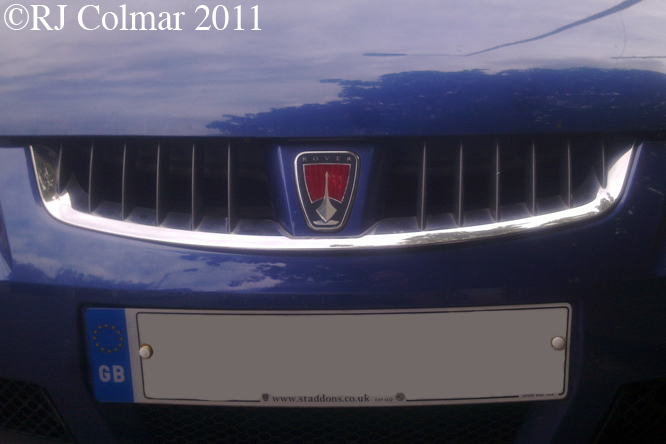
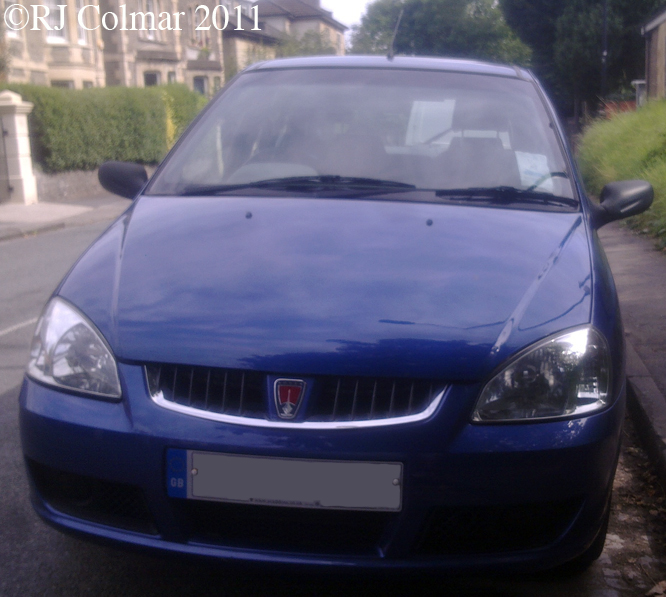
Around 6000 CityRovers, such as the base Solo model seen here, were sold in it’s first year and a further 1200 Mk2 versions were sold through non franchised dealers after the MG Rover Groups liquidation.

Thanks for joining me on this ‘CityRover’ edition of getting a lil’ psycho on tyres’. I hope you will join me again tomorrow when I’ll be looking at a Coupé built in The Netherlands. Don’t forget to come back now !

Share

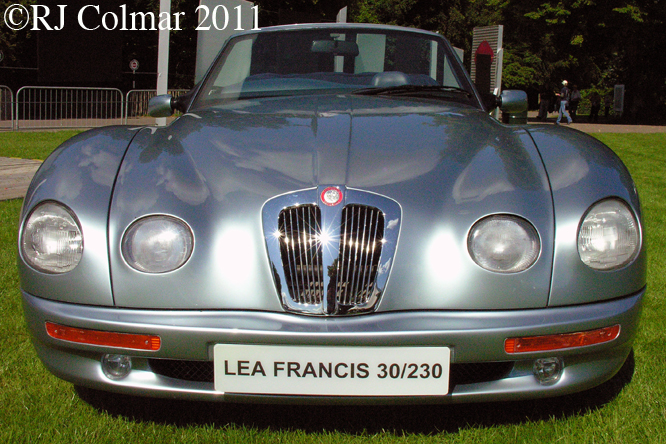
Jig Free – Lea Francis 30/230

In August 1895 Richard Lea and Graham Francis entered into a partnership to manufacture bicycles, like the another cycle turned motor manufacturer Rover, Lea Francis was based in Coventry. In 1903 Lea Francis manufactured three unconventional vehicles with complex three cylinder motors that were not a success and from 1912 to 1924 the company manufactured motor cycles.

Lea Francis 30/230, Goodwood Festival of Speed

Lea Francis entered motor car manufacture again in 1919 with vehicles using popular Meadows engines, Lea Francis became the first marque to offer a supercharged production car, the Hyper in 1927 and the following year a Hyper won the Tourist Trophy.

Lea Francis 30/230, Goodwood Festival of Speed

The company went bankrupt in the early 1930’s and was revived in 1937 to produce a fresh vehicle designed by former Riley engineer Hugh Rose, the successors to this car proved popular after the second world war in saloon and sports car forms.

Lea Francis 30/230, Goodwood Festival of Speed

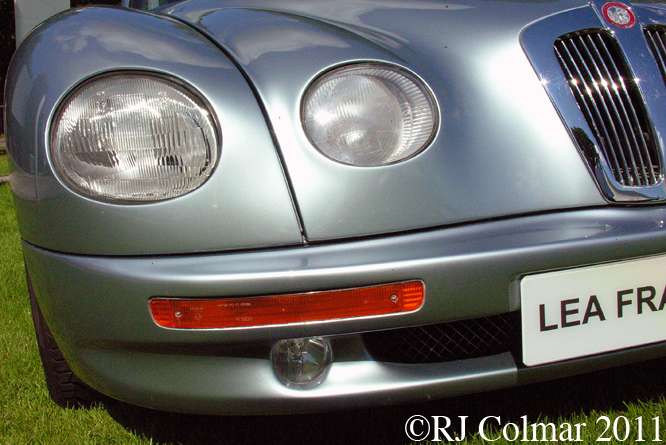
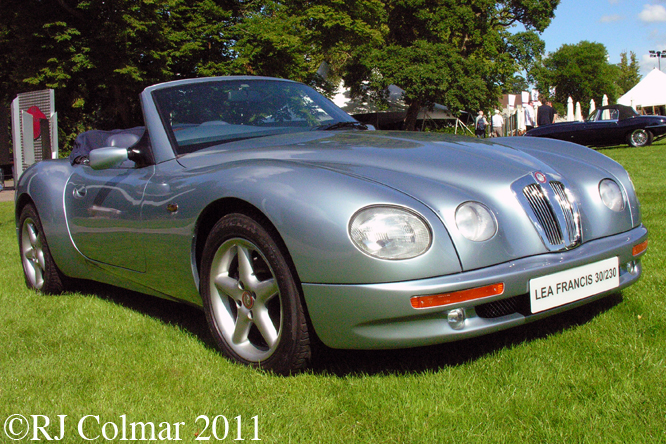
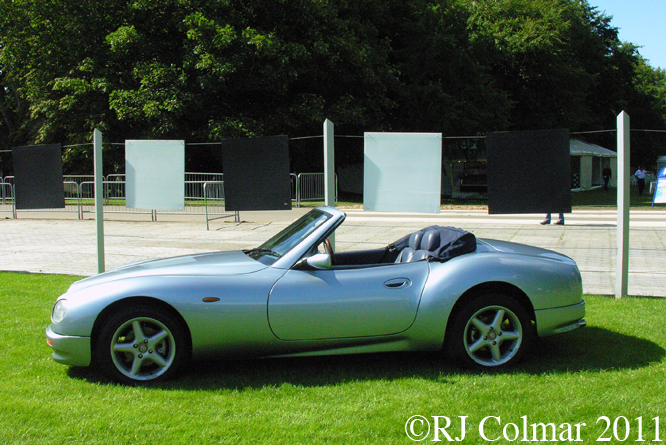
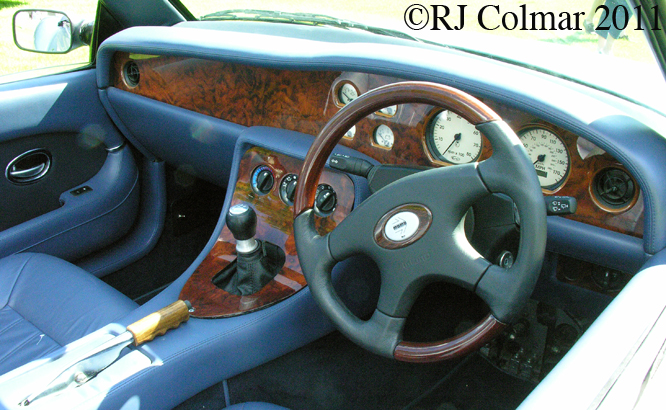
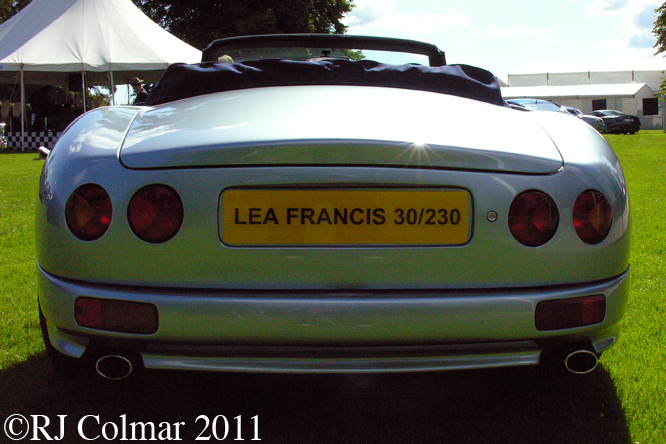
Car production ceased again in 1962 since when the company was kept alive by Barrie Price who provided spares and restoration services and occasional new low volume cars. In 1996 father of the Jaguar XJ220 Professor Jim Randle was engaged to design the 30/230 seen here at Goodwood Festival of Speed.

Lea Francis 30/230, Goodwood Festival of Speed

The aluminium bodied car was to be powered by a 235 hp 3 litlre / 183 cui V6 Vauxhall (UK GM) motor.

Lea Francis 30/230, Goodwood Festival of Speed

Among the novel features the chassis was made by riveting laser cut aluminium panels, a process that requires no conventional jigs, and a patented active suspension system.

Lea Francis 30/230, Goodwood Festival of Speed

Unfortunately, like the planed Lea Francis Limousine which aimed to fill the niche left by the Daimler DS240, the 30/230 did not go into production.

Thanks for joining me on this Lea Francis edition of ‘Gettin’ a lil’ psycho on tyres’. I hope you will join me again tomorrow when I’ll be reviewing some of the event’s at this weekend’s Goodwood Revival. Don’t forget to come back now !

Share

La Machine – #17 Vollstedt – Offenhauser 77

As I have blogged elsewhere in 1978 the USAC Championship came to England and I was lucky enough to see the one of the two championship races at Silverstone and meet some of those involved at a meet and greet at Jubilee Gardens on the banks of the Thames in Central London.

Vollstedt Offy 77, Jubilee Gardens

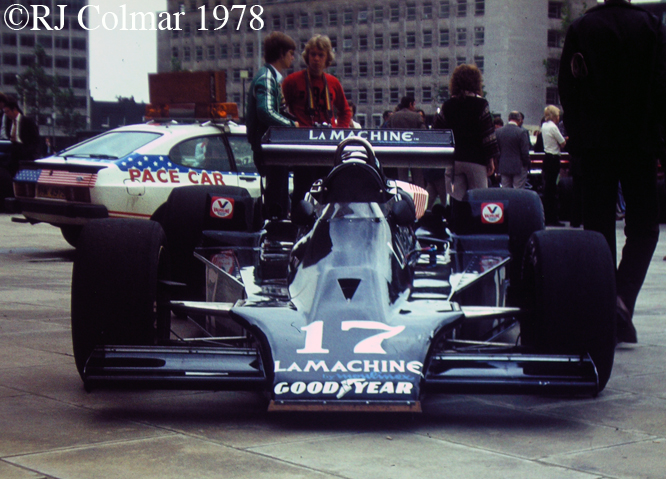
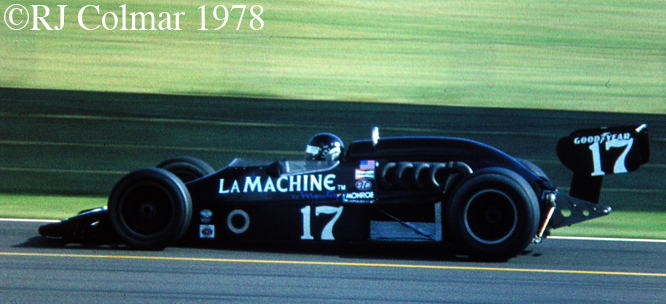
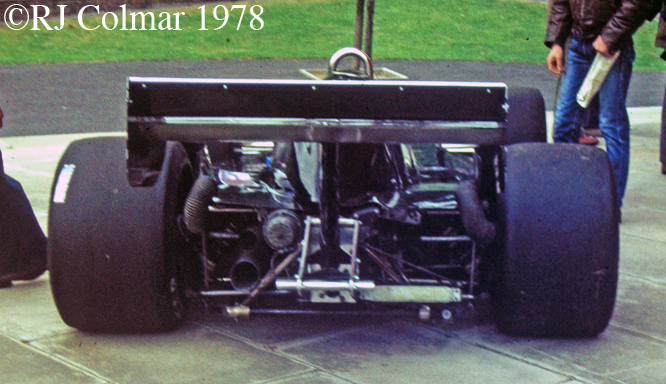
One of the enduring memories of those two events was seeing the striking lines of Rolla Vollstedts #17 La Machine – Vollstedt – Offenhauser 77, to my mind one of the most visually arresting open wheelers ever built, one that has a place of special veneration reserved at the top table in Art Tidesco’s Automotive Temple of Speed.

Vollstedt Offy 77, Silverstone

1960 US Olympic Team Skiing alternate Dick Simon was the driver of the immaculately turned out Vollstedt. Simon’s best finish in 1978 was 4th at Phoenix he also scored three further top tens finishing the season 18th in the Champ Car Series standings.

Vollstedt Offy 77, Jubilee Gardens

The master mind behind the car was Rolla Vollstedt, a man with more stories to tell than I’ll ever have hot dinners. Rolla has been devoting his life to racing since 1937 when he took part in unsanctioned Oregon street races with a Buick Coupé in 1937.

Working with modest budgets among Rolla’s many achievements since starting his team in 1947 are building the first rear engined Offenhauser powered Indycar complete with rear wing to improve traction and counting the legendary Jim Clark, in 1967, along with Janet Guthrie, the first woman to compete in the Indy 500 among the drivers of his Championship cars. Rolla was also the last owner to attempt to qualify an Offenhauser powered for the Indy 500 in 1983.

I would like take this opportunity to wish Rolla a happy 93rd Birthday Day and thank him for building one of the most alluring automobiles it has ever been my privilege to see.

Thanks for joining me on Rolla Vollstedt’s Birthday edition of ‘Gettin’ a lil psycho on tyres’, I hope you’ll join me again tomorrow for Ferrari Friday. Don’t forget to come back now !

Share

Thunder In The Hills – Mendips Raceway

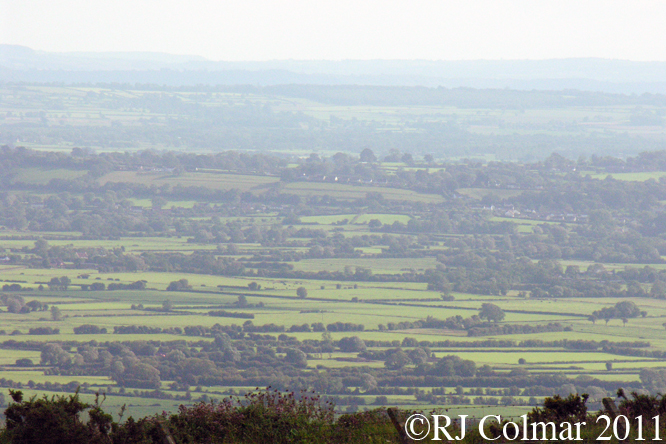
Last Sunday after I had dropped friends off at the airport I found myself with some unscheduled time on my hands. Normally I might have sauntered home to watch what remained of the Belgian GP but when I got to the roundabout of decision I headed in the opposite direction from home and went on a little drive through Somerset.

Somerst

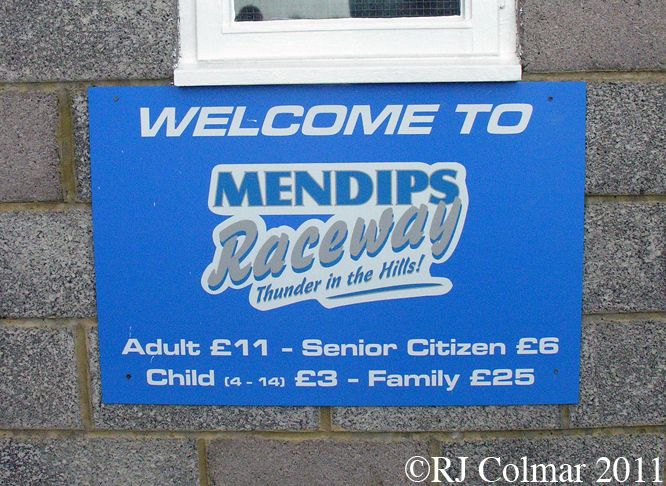
After a couple of deviations from the main road I came to a tiny sign saying ‘STOCK CAR RACING’, I needed no encouragement to follow it and ended up at Mendips Raceway.

Mendips Raceway

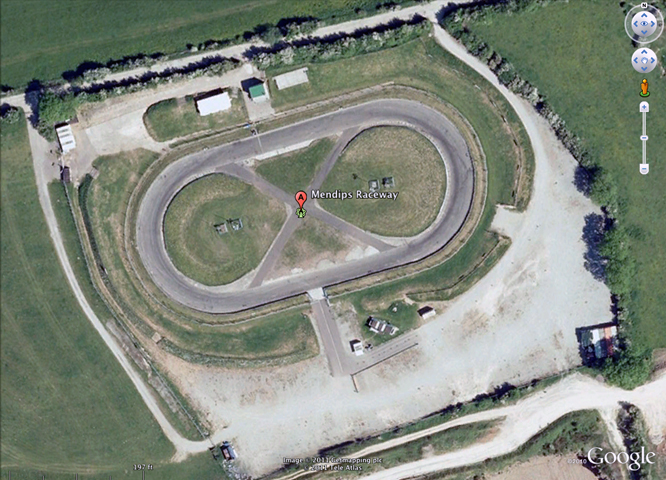
Mendips Raceway turns out to be my local paved oval located between Shipham and Charterhouse it caters for the four formulae which collectively are often referred to as Banger racers.

Mendips Raceway

The Mendips Raceway oval, opened in 1969, dips to the east with an optional figure of 8 configuration. This year fourteen dates comprised the fixture list.

Mendips Raceway

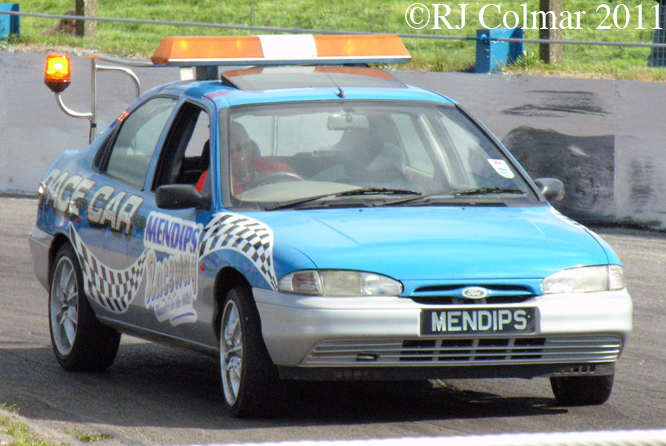
Races are started behind a pace car with drivers starting positions usually in reverse championship or reverse previous race order.

Ford Mondeo, Mendips Raceway

This series I Ford Mondeo served as both Pace Car and Victory Parade car on Saturday.

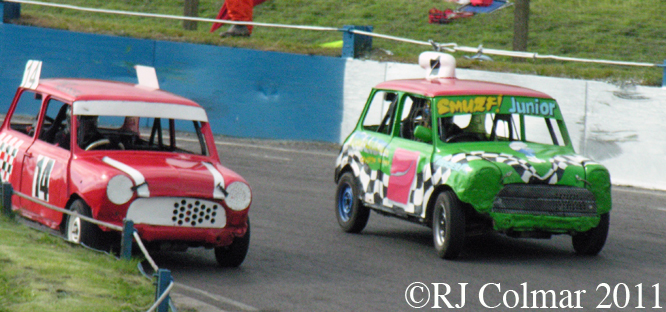
Andy Russel, Aaron Charles, Mendips Raceway

The entry level into banger racing is known as Junior Rods featuring vehicles with engines up to 1000cc / 61 cui such as the Mini’s of #14 Andy Russell and #7 Aaron Charles. Junior Rods are a strictly non contact form of banger racing aimed at attracting competitors aged 11 -16.

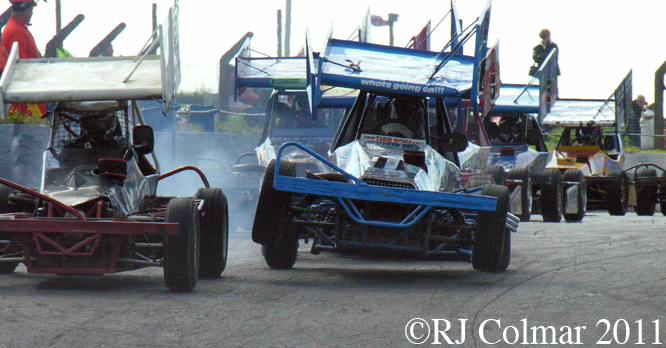
Liam Rowe, Mendips Raceway

BriSCA Formula 2 can trace it’s origins back to 1960 when a formula for heavily armoured, usually self built cars weighing 650 kgs / 1430 lbs was introduced. Today these cars maybe powered either by Ford Pinto or Ford Duratec motors. Contact between vehicles is permitted in F2 though Liam Rowe was probably wondering if it was worth it as his front wheels get airborne. Note unlike the closed wheel cars which turn right F2 cars turn left.

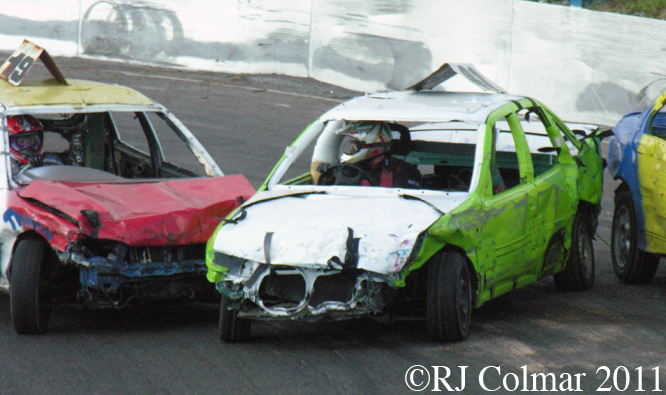
#14 Sam Holdings, Mendips Raceway

Finally there were several heats and a final for Rookie Bangers in which almost anything appears to go as #41 Sam Holdings finds out on the way to winning the Rookie Bangers trophy.

Thunderbird 1 & 4,  Mendips Raceway

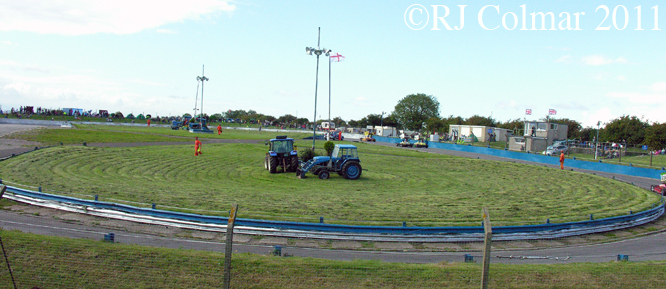
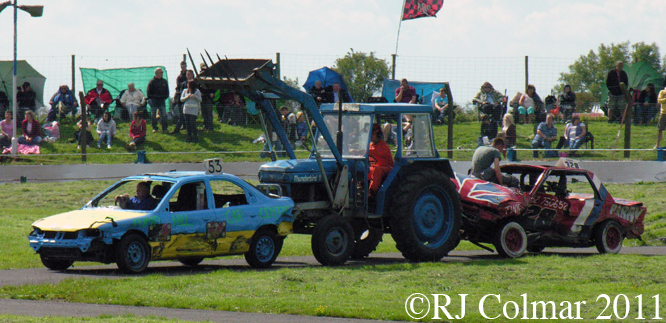
After the races four tractors, named Thunderbirds 1 to 4 were used to clear up the mess. Thunderbird 1 is seen pushing Adrian hearts Mondeo and pulling Lee Dalton’s Ford Cortina to the paddock, where repairs were made, and both cars started further races !

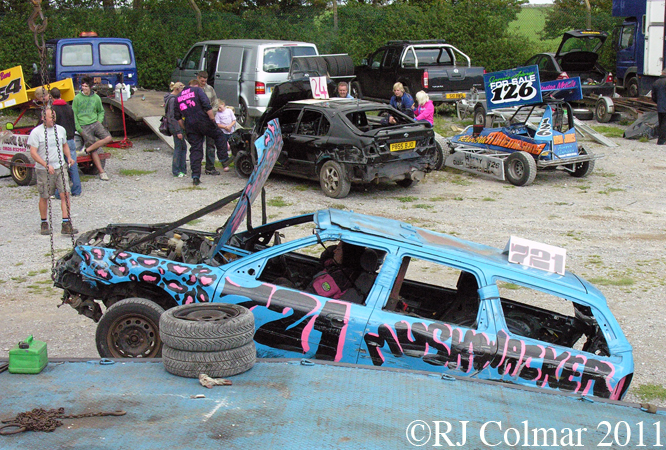
Mushwacker, Mendips Raceway

Having a lifting crane on your transporter can make access to vehicles for routine maintenance and repairs easier tasks. Note the driver of the #721 Mushwacker is powered down ‘a la’ Jimmy Johnson at Texas in Fall 2010.

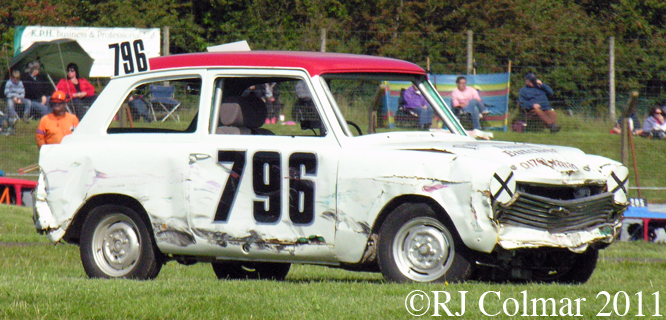
Austin A40 Countryman, Mendips Raceway

Car of the day for me was this Pininfarina designed Austin A40 Countryman, a car of the type I first steered on a beach while sitting on my old mans lap aged all of 5, this one being a tad over enthusiastically pedalled by Dan Steeds who got himself black flagged from one of the Junior Rods races for avoidable contact.

Thanks for joining me on this Banger edition of ‘Gettin’ a lil’ psycho on tyres’ I hope you will join me again tomorrow. Don’t forget to come back now !
Share

Suspension by Chris Lawrence – Morgan Aero 8

Up until 2000 the last time Morgan had introduced a new body style was 1964, only 26 glass fibre bodied +4+ cars were built over 4 years and since that time Morgan have successfully focused on improving a design that dates back to 1936.

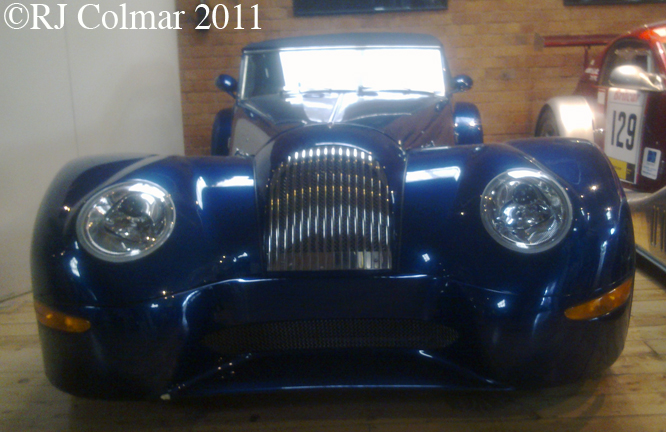
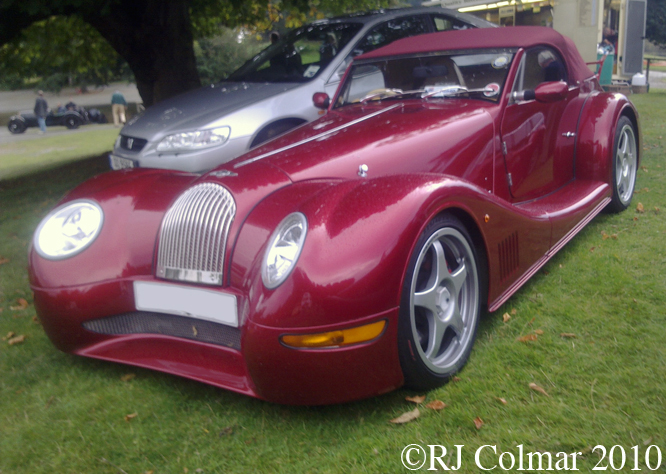
Morgan Aero 8, Morgan Cars Malvern

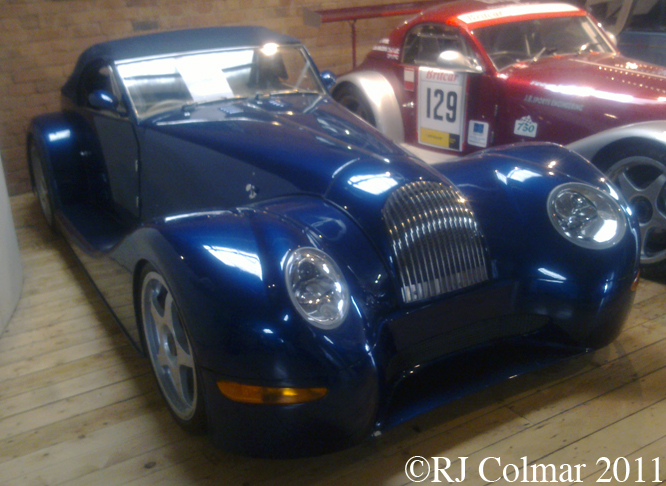
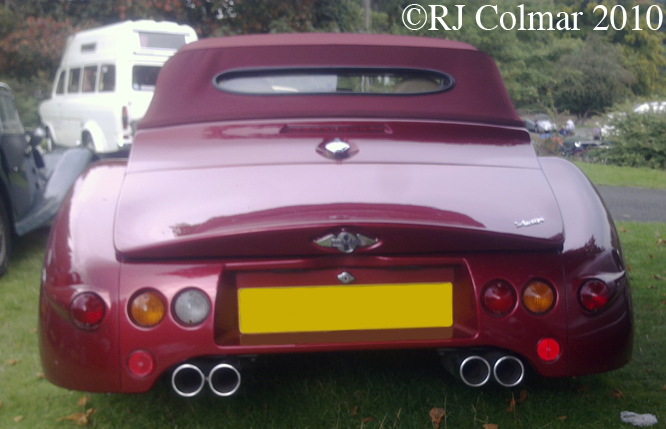
In 2000 Morgan launched a genuinely ground up new ‘retro’ design the Morgan Aero 8, a clear nod to Morgan’s successful past with an eye on the future.

Morgan Aero 8, Morgan Cars Malvern

The heart of the Aero 8 was a 325 hp 4.4 litre / 268.5 cui BMW V8, with fake Morgan cam covers, capable of accelerating the car from rest to 60 mph in 4.5 seconds and on to a top speed of over 170 mph.

Morgan Aero 8, Prescott

The all new aluminium chassis, completely unrelated to the steel ladder chassis of earlier models, was developed with the help of Morgan’s best known racing exponent and tuner Chris Lawrence. Unusually for a vehicle with this kind of performance the chassis and suspension are so stiff that the suspension does not have anti roll / sway bars.

Morgan Aero 8, Prescott

The Aero 8 has since been offered as a limited edition coupé the Aero Max, of which just 100 have been built and the Targa topped Aero SuperSports. Production of these cars is coming to an end at the Morgan factory, in anticipation of a new Morgan 4 wheel model.

An insight into some of the work of Chris Lawrence, who passed away on August 13th, can be found on this link.

Thanks for joining me on this edition of ‘Gettin’ a lil’ psycho on tyres, I hope you will join me again tomorrow. Don’t forget to come back now !
Share