Tag Archives: Chrysler

Chthonic deity of vengeance – Plymouth Fury

Plymouth Fury, Atwell Wilson Museum

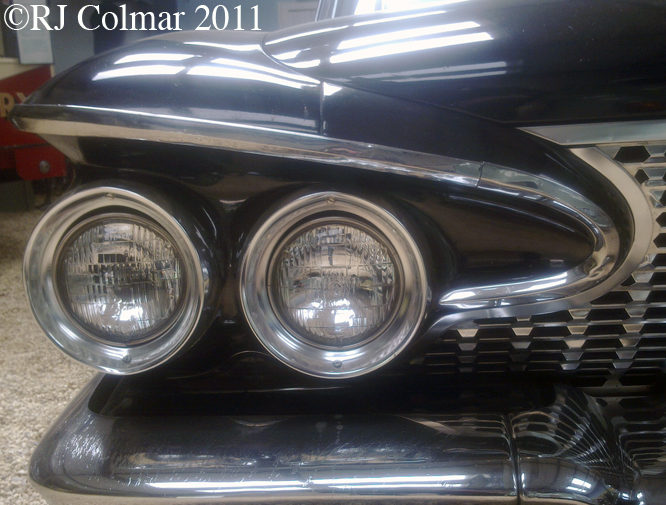
The second generation Plymouth Fury was in production from 1960 to 1964, in 4 door saloon / sedan, 2 door coupé, 4 door estate / station wagon or 2 door convertible body styles. The model featured in today’s blog was built in 1961.
Plymouth Fury, Atwell Wilson Museum

Second generation Furies are distinguishable from their earlier siblings by featuring unit-body construction doing away with the need for a separate chassis.
Plymouth Fury, Atwell Wilson Museum

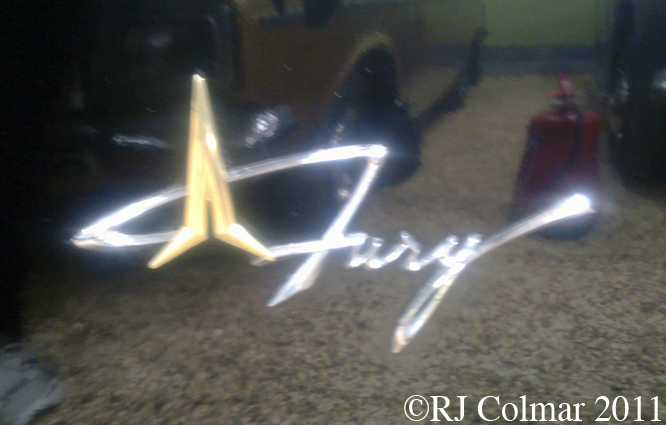
The Fury takes its name from mythological subterranean personifications of vengeance.
Plymouth Fury, Atwell Wilson Museum

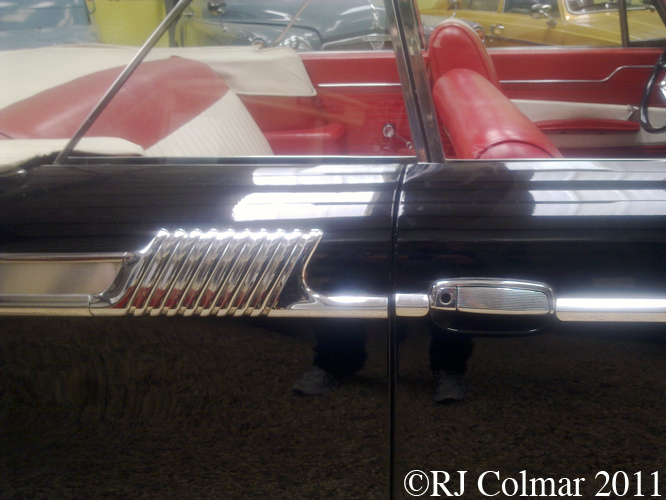
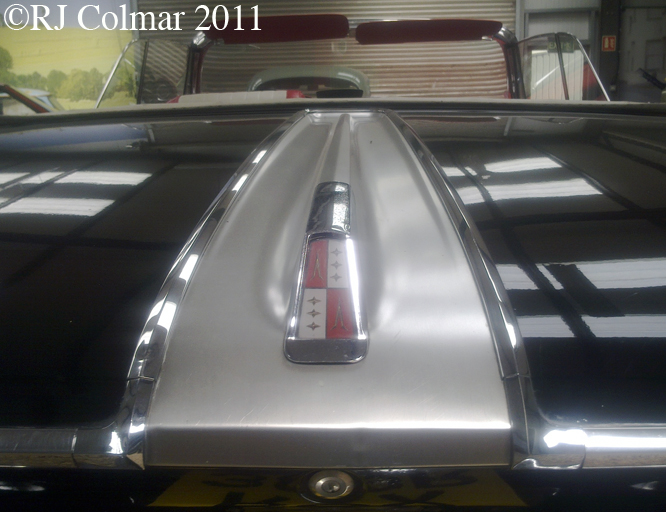
An electric motor powers a hydraulic pump which acts to power the hood down and back up, the hood is locked shut manually and sealed with a couple of press studs.
Plymouth Fury, Atwell Wilson Museum

Allegedly the ’62 Fury was downsized after the President of Chrysler misheard a GM executive saying that Chevrolet, GM’s bargain equivalent of Chryslers Plymouth brand would not have any full size cars in it’s ’62 model line up.
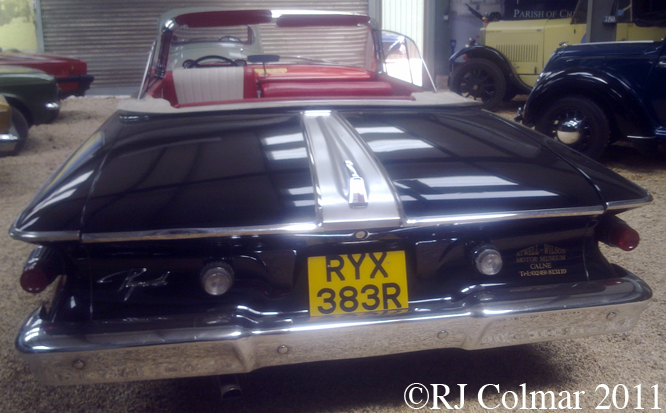
Plymouth Fury, Atwell Wilson Museum

With some 5,400 body welds to each Plymouth the unitary construction of the second generation Fury was estimated to have 40% more sag resistance and double the twist resistance of the first generation Fury with its body on frame construction method.
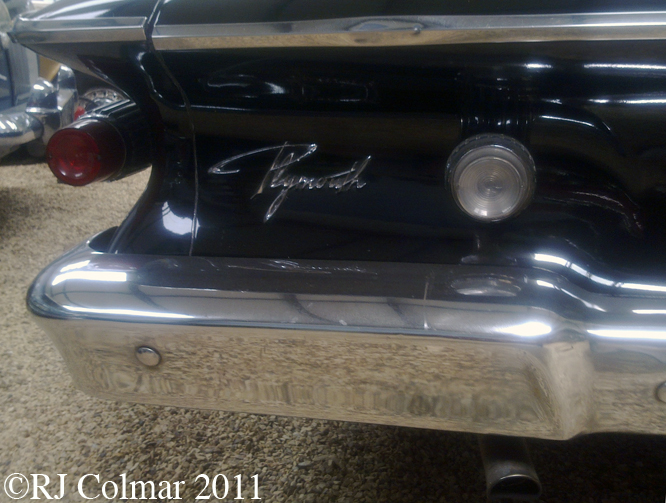
Plymouth Fury, Atwell Wilson Museum

There is some debate about the ’61’s down turned fins which were critically acclaimed but not well received by the public , were they a deliberate feature or an unresolved feature by designer Virgil Exner who suffered a heart attack in 1960 and was near death when the 1961 and ’62 Fury designs were finalised.
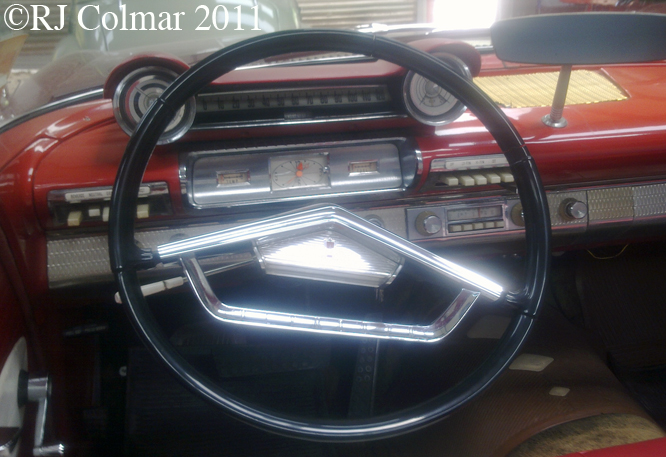
Plymouth Fury, Atwell Wilson Museum

A particularly cool feature of the second generation Fury is that it has no gear stick / shift either floor or column mounted but instead the Torqueflite automatic gearbox is operated by just five simple push buttons at the 9 o’clock position to the left of the steering wheel.

A copy of this transmission operating system was also adopted by Bristol Cars on their 407 model which also used identical Chrysler 313 cui V8 engines and Torqueflite gearboxes to this particular Plymouth Fury.
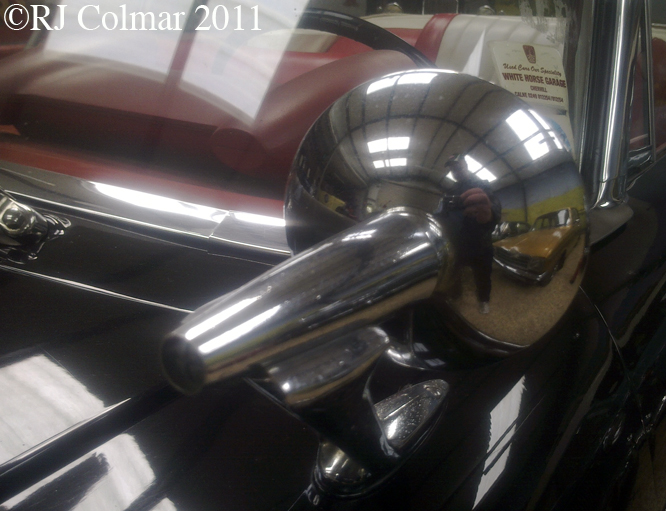
Plymouth Fury, Atwell Wilson Museum

Imported from California in 1976 this is thought to be the only working ’61 Plymouth Fury in the United Kingdom and can be hired for weddings for a modest £275 pounds.

My thanks to the Atwell-Wilson Motor Museum for keeping this magnificent land yacht in working fettle and on display,

Thanks for joining me for another Mopar edition of ‘Gettin’ a lil’ psycho on tyres’ I hope you will join me again tomorrow when we take a peak at something very large and in charge from behind the Iron Curtain. Don’t for get to come back now !

Share

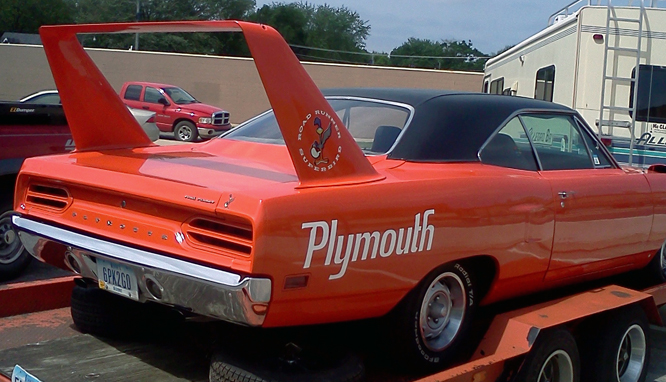
Beep Beep – Plymouth Road Runner Superbird

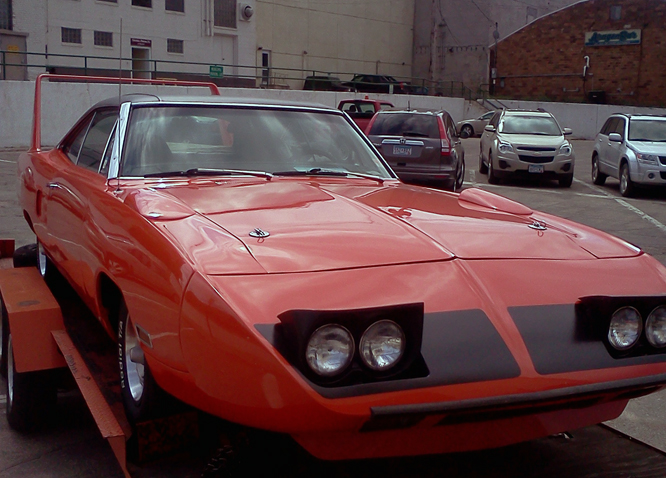
Thanks to GALPOT’s biggest fan Jr Cracker today we are looking at a Plymouth Road Runner Superbird allegedly seen behind a strip bar.

Plymouth Road Runner Superbird

In 1969 NASCAR legend Richard Petty left Chrysler for Ford, Petty had wanted to run a more aerodynamically efficient Dodge Charger but Chrysler executives insisted Richard run the Plymouth Road Runner in the Grand National Series now known as the Sprint Cup. Richard came second in the 1969 Championship to David Pearson also driving a Ford although Bobby Isaacs took the seasons most wins 17, driving the Dodge Daytona model Petty had been so keen to run, Isaacs finished only 6th in the ’69 seasons final standings.

Plymouth Road Runner Superbird

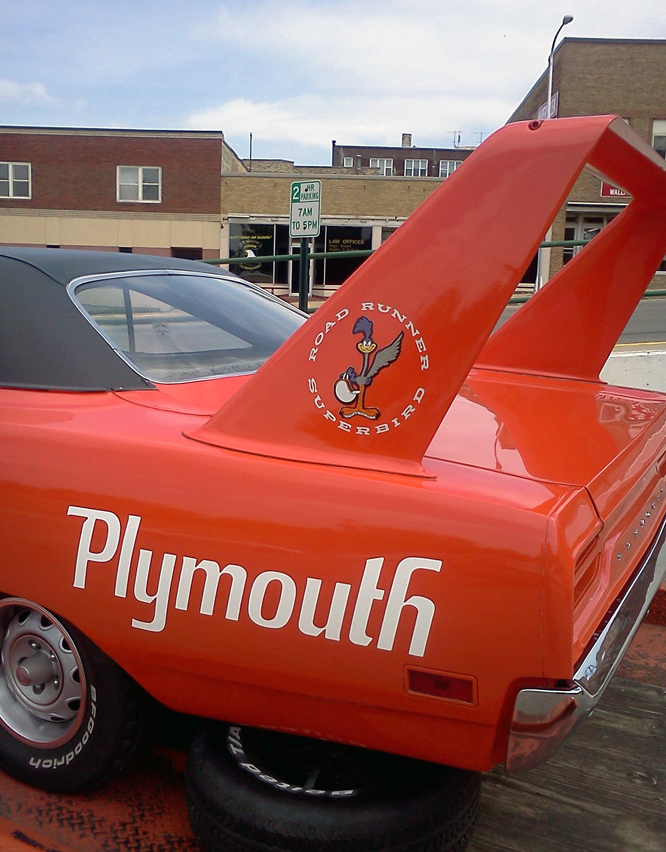
Chrysler executives managed to tempt Richard Petty back into the Plymouth fold by introducing the Road Runner Speedbird with it’s aerodynamic nose and enormous back wing, the height of which was determined as much by the requirement of the public to be able to open the boot/trunk of the road going versions as by any aerodynamic considerations.

Plymouth Road Runner Superbird

Ironically Richard was injured in an accident driving his Road Runner Superbird in the Rebel 400 at Darlington in 1970, the resultant injuries meant “The King” had to sit out 5 races of the season which allowed Bobby Isaac to win the 1970 title in his #71 Dodge Daytona, effectively Dodge Challenger with the same nose and rear wing modifications as the Superbird.

Plymouth Road Runner Superbird

By 1971 NASCAR had outlawed these aerodynamic curiosities, the advantages of which only kicked in at around 90 mph plus.

Chrysler needed to build 1920 Superbirds, one for every two dealerships in the USA, in order to be allowed to race, published figures suggest up to 2,783 examples may have been built though the generally accepted figure is 1,935, of which 1000 are thought to still exist.

Only 135 Superbirds were originally fitted with the 426 Hemi V8, outlawed from NASCAR racing, while the rest had 440 Super Commando motors with either a single 4 barrel carburettor or three two barrel carburettors.

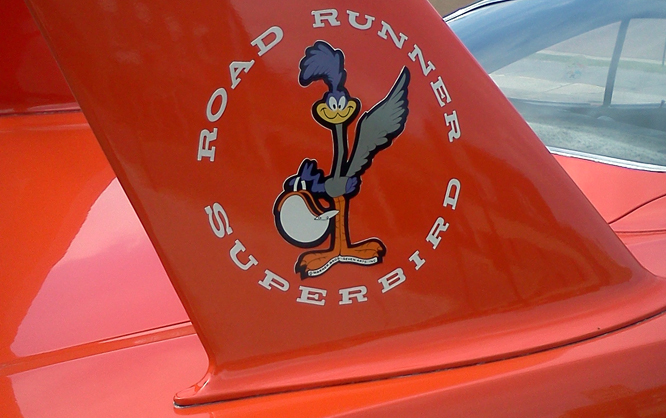
All road going Superbirds were fitted with horns that imitated the famous cartoon Road Runner who’s logo adorns the rear wing supports and the off side front pop up head light cover.

My thanks to JC for his photographs taken on his Android.

Thanks for dropping in on this Superbird edition of ‘Gettin’ a lil’ psycho on tyres, I hope you will join me again tomorrow. Don’t forget to come back now ! Beep ! Beep !

Share

30% More Power – Bristol 411

The first blog I did on a Series 3 411 has been lost in the mists of Rowdy but a couple of photo’s remain.

Today’s model is a first series Bristol 411 built from 1969 to 1971 the first Bristol model to feature a big block B series 335 hp 6,277 cc / 383 cui motor with 30 % more horsepower than the previous model that gave this car a 140 + mph capability.

The original series 411 models featured slightly enlarged windscreens than the 410 an almost imperceptible difference that can be seen in this photo of a 411 in the foreground and 410 to the left of the photograph.

Sir George White one of the three Directors in Bristol Cars in 1969 suffered serious head injuries in a road accident in September 1969 so it was left to his partner Tony Crook to take over the reins at Bristol in Sir George’s absence a process that ended with Tony buying his partner out in 1973.

To help feed all that power to the road the rear axle was fitted with a limited slip differential (LSD) that allows some difference in angular velocity of the output shafts as long as there is some traction available on at least one of the wheels.

With thanks to the PistonHead who kindly brought this car to the recent Sunday Service at the BMW Plant at Cowley and to Cristopher Balfour who’s book ‘Bristol Cars a very British story‘ provided many of the insights in today’s blog.

Hope you have enjoyed today’s TV detective edition of ‘Gettin’ a lil’ psycho on tyres’ and that you will join me again tomorrow. Don’t forget to come back now !

Share

Lynley mystery – Bristol 410

The Bristol 410 was the fourth Bristol model to use the chassis architecture laid out for the 407 model.

Using the A block Chrysler engine now with a swept volume of 5211 cc / 318 cui for the last time before switching to the larger Chrysler B block for subsequent models the 410 marked a return to a floor mounted shift for the Torqueflight gearbox after US legislation had outlawed the previous push button system.

A Bristol 410 has two chrome strips running the length of the vehicle a feature unique to this Bristol model.

Fitted with ZF power steering as standard the 410 had a lower centre of gravity than the yet to be blogged 409 thanks to smaller 15″ diameter wheels down from 16″ on the previous model.

The 410 was the first Bristol fitted with separate front and rear brake circuits the servo’s. The servo’s were housed in a compartment between the front of the drivers door and the rear of the front wheel arch, the top hinge of which can just be distinguished below the badge in the photo above.

Some of you may recognise this as the model that Inspector Lynley drives in some episodes of the television series The Inspector Lynley Mysteries, mysteriously in the novels by Elizabeth George on which some of the episodes are based Lynley is actually described as driving a Bentley.

As ever exclusivity is the watch word for this manufacturer with just 79 Bristol 410’s being built between 1968 and 1969.

With thanks to the PistonHead who kindly brought this car to the recent Sunday Service at the BMW Plant at Cowley and to Cristopher Balfour who’s book ‘Bristol Cars a very British story‘ provided many of the insights in today’s blog.

Hope you have enjoyed today’s TV detective edition of ‘Gettin’ a lil’ psycho on tyres’ and that you will join me again for Ferrari Friday tomorrow. Don’t forget to come back now !

Share

Going it alone – Bristol 407

Just 88 Bristol 407’s were built between 1961 and 1963.

The 407 was the first Bristol model launched after ownership of the Bristol Car Company had been taken over by the Bristol Aeroplane Company founders grandson Sir George White 3rd Bt in partnership with Bristol’s preeminent retailer Tony Crook in September 1960.

The exterior of the Bristol 407 is distinguished from its predecessor the 406, which I have yet to write a blog about, by a horizontal bar across the radiator grill at the front and twin exhaust pipes at the rear.

Underneath the car could not be more different, the 407 is powered by a Canadian built 5130 cc / 313 cui Chrysler V8 connected to a push button operated Torqueflight transmission, a combination which first came to the attention of of Sir Reginald Verdon Smith the Bristol Aeroplane Company director in the 1950’s on a private visit to Canada.

Bristol attempted to develop it’s own aluminium block V8 in the 1950’s but, insufficient experience casting aluminium and lack of capital thanks to the spiralling cost of aircraft development elsewhere in the Bristol group of companies meant that the V8 never got beyond an underdeveloped prototype stage at which crankshaft main bearing housing distortion presented an obstacle to production.

Changing to the Canadian V8 from the hitherto BMW inspired straight 6 necessitated replacing the former transverse leaf front suspension with a pair of coil springs and replacing the highly praised rack and pinion steering with Marles worm driven steering.

The chassis was fitted with Dunlop disc brakes all round and the aluminium body production was moved from Jones Brothers to Park Royal Vehicles in London.

The 407 chassis set out the basic architectural features for all Bristol’s with many incremental modifications right through to the introduction of the Bristol Fighter in 2004.

This particular model photographed at a Loton Park VSCC meeting is registered in Sweden, notice that it is a Right Hand Drive model, Sweden switched to Left Hand Drive in September 1967 to bring it into line with it’s Scandinavian neighbours.

My thanks to Christopher Balfour who’s book ‘Bristol Cars a very British story‘ provided many of the insights in today’s blog.

Hope you have enjoyed today’s Marles worm driven steering edition of ‘Getting a lil’ psycho on tyres and that you’ll join me again tomorrow for a look at the even rarer Bristol 410. Don’t forget to come back now !

Share

200 mph Viscous Traction – Lamborghini Diablo VT 6.0

When the Diablo was launched in 1990 it was the first Lamborghini capable of over 200 mph and in the process it relieved the Ferrari F40 of ‘the worlds fastest production road car’ title. The design brief set by then Lamborghini owners the Swiss Mimram brothers for the Lamborghini Countach replacement back in the late eighties was relatively straight forward – Minimum speed capability 315 kph / 196 mph.

Marchello Gandini was responsible for the styling but when Chrysler took over Lamborghini in 1987 they were unimpressed and after the Chrsler Styling Centre in Detroit smoothed out the design Gandini was so unimpressed he took his original drawings which later were realised in the form of the Cizeta-Moroder V16T.

By the time this one of 251 penultimate VT 6.0 variants was built in 2000 Audi had become owners of Lamborghini and the Diablo had; acquired 4 wheel drive (Viscous Traction), an upgraded 547 hp 6 litre / 370 cui V12 and been fitted with made under licence Nissan 300 ZX Z32 head light clusters. The title of worlds fastest production car was short lived and handed on to the 213 mph Bugatti EB110 in 1991.

Hope you have enjoyed the Viscous Traction edition of ‘Gettin’ a lil’ psycho on tyres’ and that you will join me again tomorrow for Ferrari Friday, don’t forget to come back now !

Share