Tag Archives: Classic

Scratched Entry – Lola T70 SL70/13

In 1955 aged just 15 John Mecom Jr went to work for one of the wealthiest independent oil men in Texas and indeed the world, namely his father John Whitfield Mecom Snr. By 1960 Jr had dropped out of University of Oklahoma, but was kept busy negotiating oil deals in the middle east and founding the Mecom Racing Team.

Lola T70, Silverstone Classic

The Mecom Racing Team ran sports cars for the likes of a young Roger Penske and Augie Pabst, a one off open wheel Formula One Lotus for Rob Schroeder in 1962, before running rookies Jackie Stewart and Graham Hill at the Indy 500 in 1966. Graham won the race which had been dominated by Jackie until 8 laps from the end.

Lola T70, Silverstone Classic

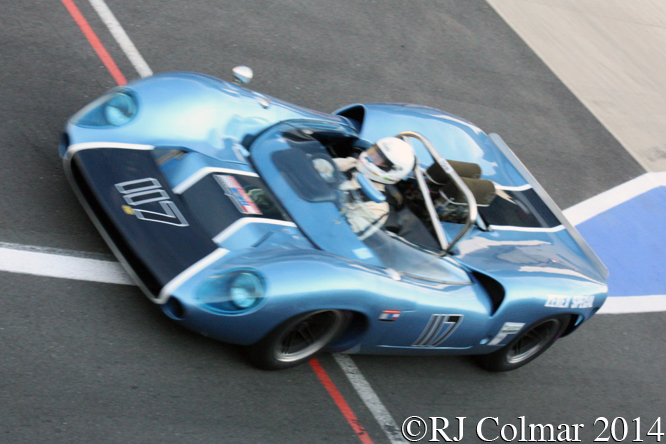
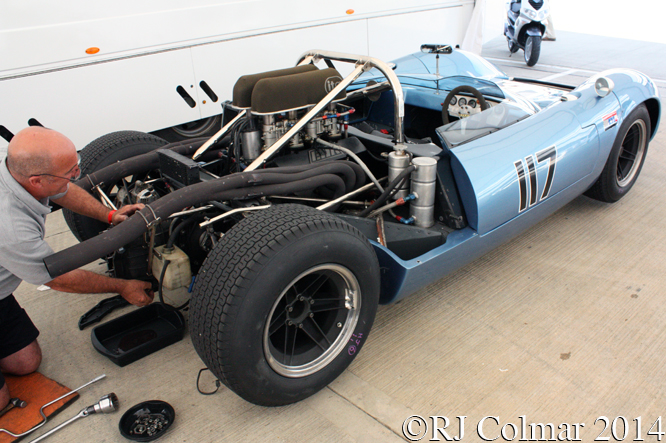
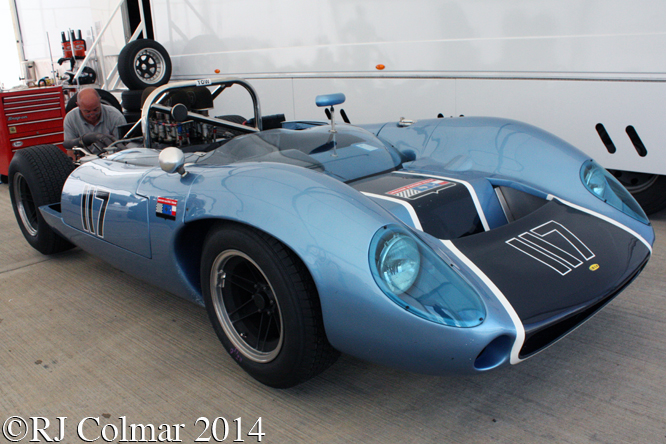
Today’s featured Lola T70, which I believe is chassis SL70/13, is one of at least three T70’s that were owned by the Mecom Racing Team. So far as I know the car was driven by Walt Hangsen in qualifying for the 1965 Las Vegas 200 mile race during which Walt crashed and seriously damaged the Ford 4.7 litre / 286 cui powered car after qualifying 6th fastest.

Lola T70, Jones, FIA Masters Historic Sports Cars, Silverstone Classic

As a result of the accident the Mecom Racing Team scratched their entries for this car and the sister chassis SL70/12, which was to have been driven by Jackie Stewart, from the 1965 Nassau Speed Week.

Lola T70, Silverstone Classic

Alongside his racing activities John Mecom Jr founded the New Orleans Saints football, grid iron, team in 1966 and wound up the Mecom Racing Team in 1967.

SL70/13 eventually found its way to the UK where Colin Parry-Williams raced it with a 5 litre / 302 cui Chevy motor in the 1980’s and 1990’s.

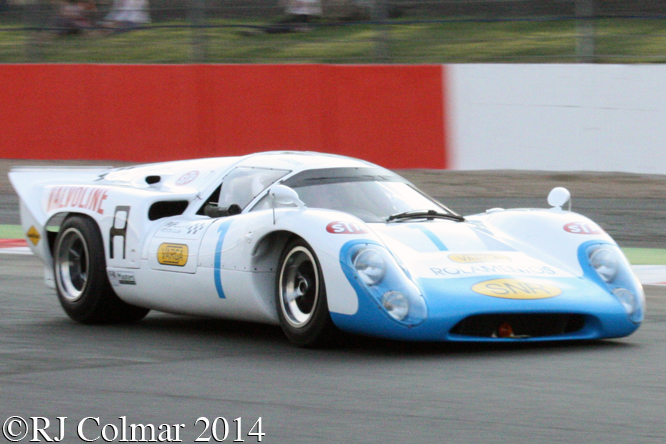
Howard Jones is seen at the wheel of SL70/13, now powered by a 5.7 litre / 328 cui motor, about to take part in the FIA Masters Historic Sports Cars race at Silverstone Classic above. Howard acquired the car in 2006.

Thanks for joining me on this “Scratched Entry” edition of “Gettin’ a li’l psycho on tyres”, I hope you will join me again for Ferrari Friday tomorrow. Don’t forget to come back now !

Share

Super Saturday Part 2/2 – Silverstone Classic

Today’s blog continues on from yesterday with coverage of the second half of the Silverstone Classic Super Saturday race programme.

Porsche 911, Slater, Silverstone Classic

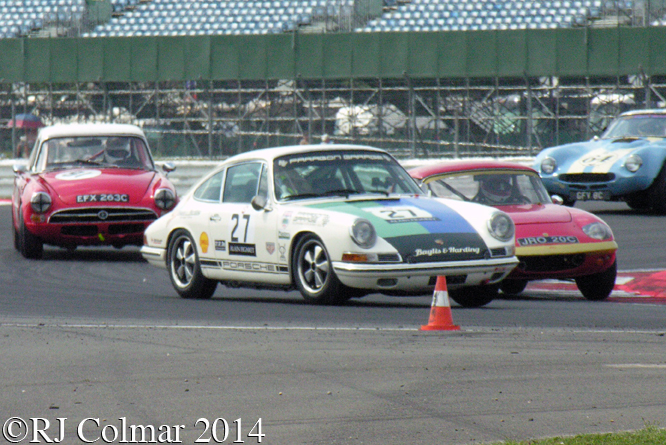
The 50 min Choppard International Trophy for pre’66 GT Cars was won convincingly by Sean McInerney driving the #64 TVR Griffith seen above about to thread it’s way passed the; #27 Porsche 911 driven by Adrian Slater, the #31 Lotus Elan driven by John Sheldon and the #91 Sunbeam Tiger shared by Neil Merry and Terry van der Zee.

Brabham BT4, Minshaw, Silverstone Classic

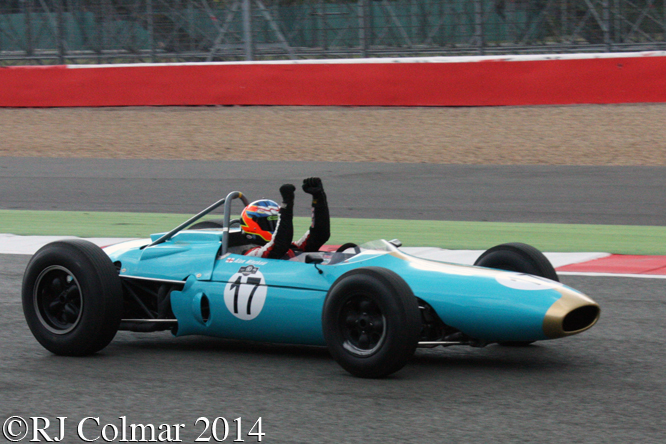
Jason Minshaw won the first of the weekends two Jack Brabham Memorial Trophy races driving the 1962 Brabham BT4 seen above. It is sad to have to report that in the second race for pre ’66 Grand Prix cars the following day Denis Welch was killed in an accident while driving his Lotus 18. I am sure you will want to join me in offering sincerest condolences to Denis’s family and many friends.

Ford Falcons, Voyazides, Gardiner, Silverstone Classic

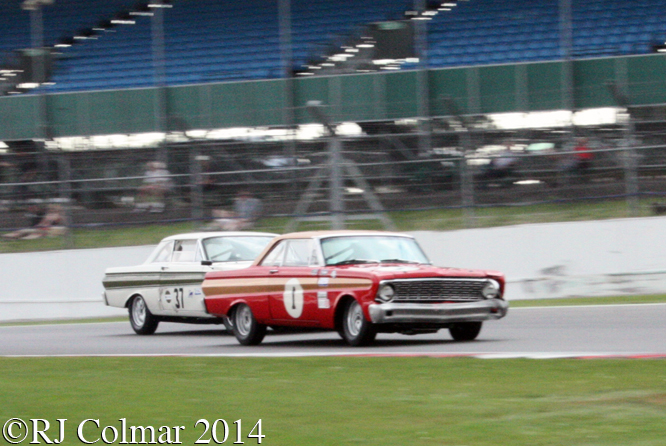
Perversely the Mustang Celebration Trophy proudly presented by Pure Michigan was dominated by the type that the Mustang wiped off the sales floor, namely the Ford Falcons driven by Leo Voyazides #1 and Mike Gardiner #37. Leo is seen above sweeping into a lead that he did not relinquish for the rest of the race.

Maserati Centenary Trophy Start, Silverstone Classic

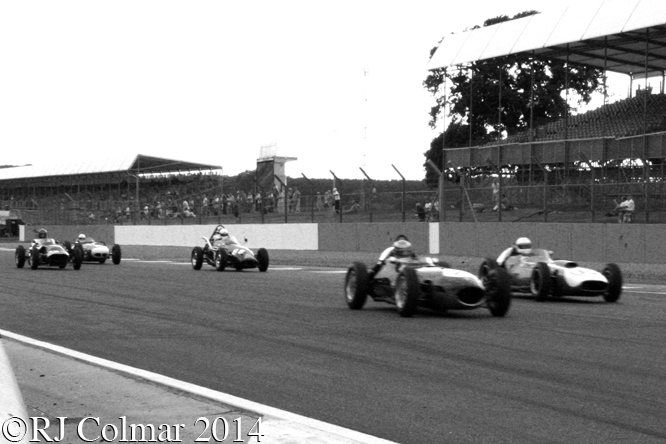
Light was fading at the start of the Maserati Centenary Trophy for pre ’61 Grand Prix cars and photographers such as your truely were having to resort to every trick in photoshop to get an image. Above Philip Walker driving the #1 Lotus 16 is seen streaking into what proved to be an unassailable lead ahead of; the #30 Offy powered Scarab driven by Bristol’s Julian Bronson, #88 ‘Toothpaste Tube’ Connaught C Type driven by Michael Steele, the, #27 Tec-Mech driven by Tony Wood, #35 Kurtis driven by Fred Harper.

Lola T70, Voyazides, Silverstone Classic

Leo Voyazides thirst for victory was unsatiated after winning the Mustang Celebration trophy and he is seen above driving his Lola T70 in the FIA Historic Masters Sports Cars race in hot pursuit of the cheeky 2 litre / 122 cui Chevron B19 driven by Martin O’Connell. No one knows exactly what happened to Martin, but he ended up in the rough stuff, uninjured leaving Leo and Simon Hadfield a clear road to victory lane.

Mercedes Benz C11, Berridge, Silverstone Classic

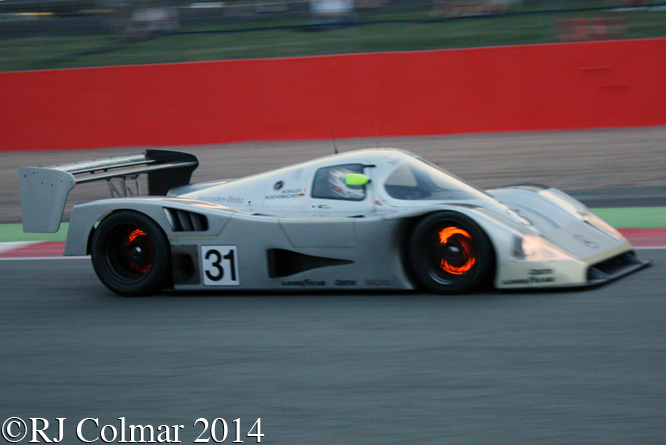
The final race of Super Saturday was my favourite not because it was the most closely contested, it was not despite the best efforts of Katsu Kobota driving a Nissan to take the challenge to the winning #31 Mercedes Benz C11 driven by eventual Group C Endurance winner Bob Berridge, but because the twin turbo V8 C11 driven at full speed is music to my ears and poetry in motion to my eyes. I could watch that car circulating all day and night as I did in 1991 at Le Mans, with out a care in the world.

Approaching 9pm it was all over time to return my photographers bib to the Media Office, jump into a courtesy BMW, driven by an ex Royal Protection Officer, which on the way back to the car park took me past the crowds waiting for Bonnie Tyler to give a rendition of “Total Eclipse Of The Heart”.

Thanks for joining me on this “Super Saturday Part 2/2” edition of Gettin’ a li’l pscyho on tyres. I’ll be staying with Silverstone Classic for the rest of the week I hope you will join me starting with Maserati Monday tomorrow. Don’t forget to come back now !

Share

Super Saturday Part 1/2 – Silverstone Classic

Artist Gerhard Richter once observed something akin to ‘that so long as one still has an object from the past it remains contemporary’, at Silverstone Classic on Super Saturday, the world’s biggest classic car show, there were many objects from man’s not so long past and many came to life in a vibrant crescendo of the twelve races which I was privileged to witness.

de Tomaso ISIS, Gregory, Silverstone Classic

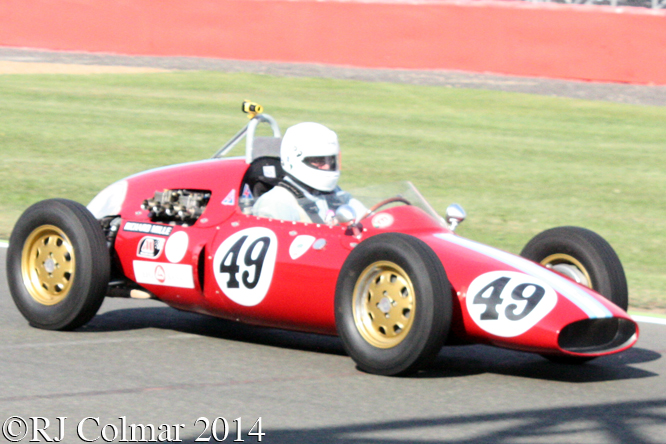
For some time I have been on the look out for a Formula Junior de Tomaso. The 1959 FIAT powered ISIS example driven by Mike Gregory was one of two different de Tomaso models in the opening Peter Arundell Trophy Formula Junior race of the day which was won by Sam Wilson driving a Lotus after his main challenger David Methley spun out in his evil handling Brabham.

March 783, Padmore, Silverstone Classic

Silverstone Classic are great at introducing new events to their crowded schedule and one of the debutant events on this years schedule was the Brian Henton Trophy for classic Formula 3 cars of the type that helped launch the careers of Tony Brise, Tom Pryce, Gunnar Nilsson and Stephen South not to mention Nelson Piquet, Derek Warwick, and a chap called Ayrton da Silva who changed his name to something more snappy. Above Nick Pardmore guides his 1978 March 783, with ’79 side pods, through Stowe Corner on his way to victory.

Ford Cortinas, Shedden, Meaden, Silverstone Classic

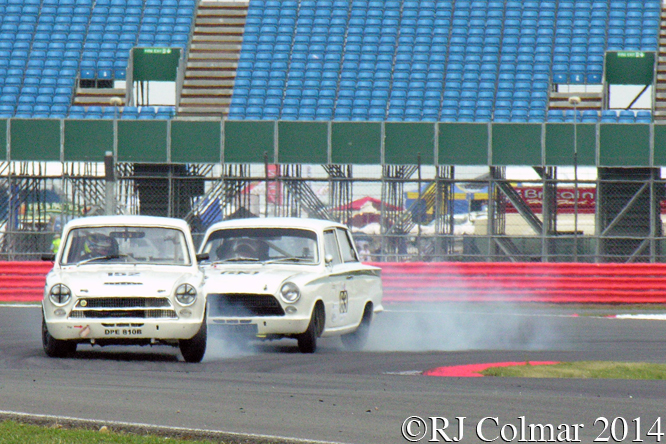
For the best part of half an hour British Touring Car Championship (BTCC) regular Gordon Shedden and Richard Meaden kept us entertained with door handle to door handle racing at the front of the Sir John Whitmore Trophy race for under 2 litre / 122 cui saloon cars. Unfortunately when Gordon, seen leading above, came in for his mandatory pit stop his Lotus Cortina expired with an over heating issue before BTCC veteran Matt Neale could take over leaving Richard and Grant Tromans to take a well earned win.

Lister Costin Jaguar, Ward, Silverstone Classic

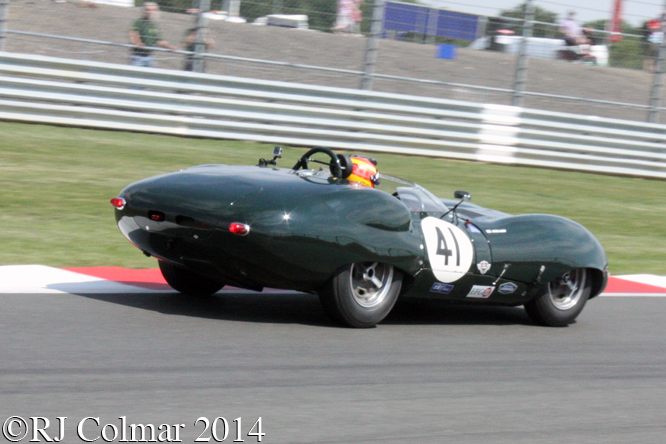
Chris Ward driving the Costin bodied Lister Jaguar above twice held the lead in the Stirling Moss Trophy for pre ’61 Sports Cars but he could not hold off the winning Knobbly bodied Lister Jaguar driven by Jon Minshaw/Phil Keen.

Hesketh 308C, Jones, Silverstone Classic

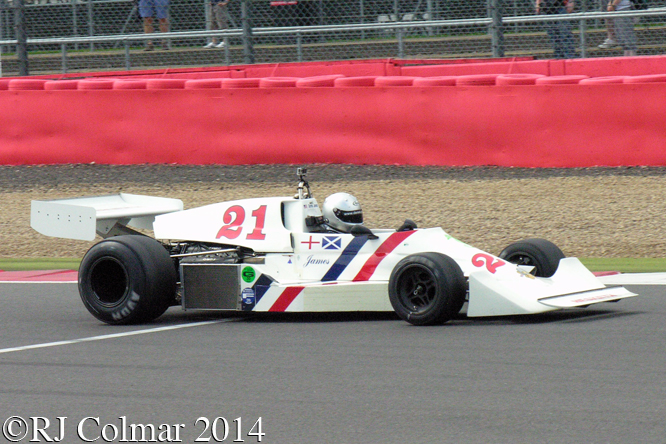
In 1975 it was announced that the hitherto enormous air boxes that had become an aesthetic blight on Formula One were to be banned along with various other changes. The first car to be built to the new regulations was the Hesketh 308C which was designed by Harvey Postlethwaite for James Hunt to drive. Above Derek Jones is seen driving a 308C in the FIA Masters Formula One race which was won by Ollie Hancock in a ’78 Fittipaldi F5A, after the race was stopped to allow the extraction of Sidney Hoole from what remained of the fabulous Ensign N173. Sidney was taken to hospital with a leg injury described as not ‘thought to be serious’.

Opel Belmont (sic), Wolfe, Silverstone Classic

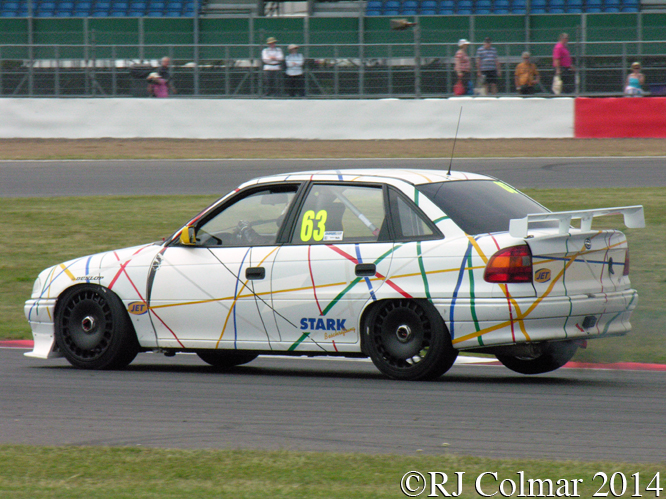
The sixth event of the Silverstone Classic ‘Super Saturday’ was the Jet Super Touring Car Trophy for a variety of Touring cars from the Early 70’s to the turn of the Millennium. The close fought race was won by James Dodd from Stewart Whyte both driving Honda Accords. Andy Wolfe is seen driving a 1993 Jet sponsored Opel Astra, listed incorrectly in the programme as an Opel Belmont, which won it’s class in the 1993 Nurburgring 24 hours.

Thanks for joining me on this ‘Super Saturday Part 1/2′ edition of “Gettin’ a li’l psycho on tyres” I hope you will join me again tomorrow when I’ll continue with the second half of the Super Saturday race programme. Don’t forget to come back now !

Share

Hot In Miami – Jaguar XJR5 #006

If one foreigner deserves a knighthood for trying to keep the British Motor industry alive while it was in self destruct mode twixt the early 1960’s and late 1980’s my nomination without question would go to Bob Tullis who prepared and raced a succession of British sports cars from Triumph and Jaguar to numerous victories over the 30 years in question.

Perhaps most remarkably of all having been a successful driver for 20 years, which included driving a few non British vehicles like the Dodge Dart, AMC Javelin,Bruce Jennings Porsche 911 and a one off drive in a works Oldsmobile Cutlass, Bob and Group 44 Inc business partner Brian Feurstenau managed to persuade Mike Dale of Jaguar Cars Inc, New Jersey, to fund an IMSA GT Prototype project which would see Jaguar return to Le Mans nearly 30 years after their last official appearance at the circuit in 1955.

Tullis who’s diverse endurance experience included driving the Triumph Spitfire Coupé and Howmett gas turbine car at Le Mans employed Lee Dykstra to design the new Jaguar XJR5 IMSA GTP challenger.
Jaguar XJR5, Miles, Silverstone Classic

The XJR5 was to be powered by a variant of the 2 valve per cylinder 5.34 litre / 326 cui Jaguar V12 which Bob had successfully campaigned in his Trans Am Quaker State Group 44 Inc Jaguar E-Type and later XJS models since the mid 1970’s.

In August 1982 Bob and long time co driver Canadian Bill Adam drove the XJR5 to a debut 3rd place finish behind two of the outgoing Porsche 935’s at Road America to score a debut class victory.

Bob and Bill scored the teams first overall victory at Road Atlanta in April 1983, two more followed at Lime Rock and Mosport, Doc Bundy then shared the final XJR5 victory in 1983 at Pocono with Bob.
Jaguar XJR5, Miles, Silverstone Classic

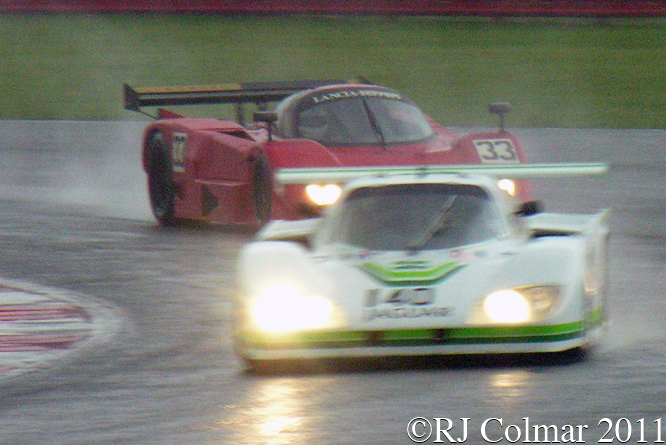
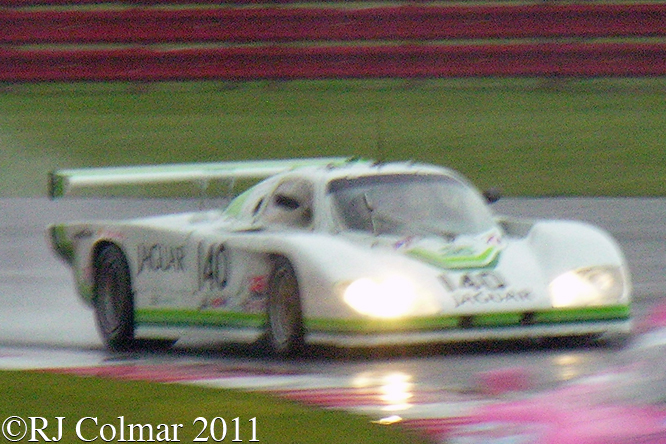
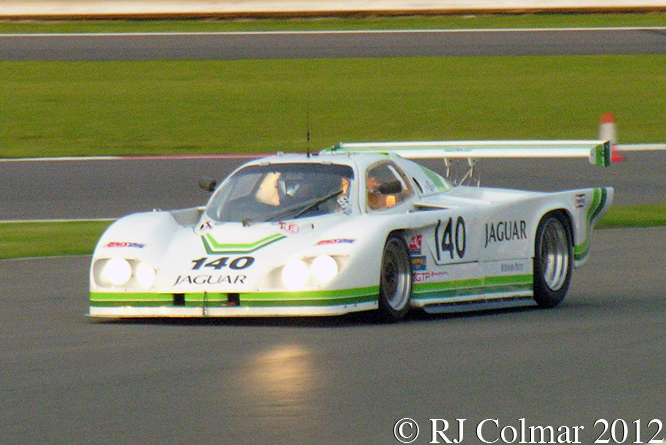
Today’s featured chassis #006 first appeared at the 1984 Daytona 24 Hours where Bill Adam, Pat Bedard and Brian Redman qualified 6th and were classified a disappointing 24th, the sister car driven by Doc Bundy, David Hobbs and Bob Tullius qualified and finished 3rd.

Next time out at Miami with Brian and Doc at the wheel chassis #006 qualified 4th but more importantly crossed the line first when the chequered flag fell. Despite the team increasing the capacity of it’s V12 motors to a full 6 litres / 366 cui a couple of months later this would prove be their only overall victory in 1984.

After Porsche’s top driver Derek Bell had been suitably impressed with the XJR5 after testing it in 1983 Jaguar gave the green light to Bob and Group 44 to take the cars, one of which would be #006 driven by Tony Adamowicz, John Watson and Claude Ballot-Léna to Le Mans in 1984.
Jaguar XJR5, Miles, Silverstone Classic

Tony, John and Claude qualified 19th and retired after an accident on lap 212 while the sister car driven by Brian, Doc and Bob qualified 14th and made it to lap 291 before the gearbox gave up.

Chassis #006 returned to the States and finished the season with a 2nd place finish in the Daytona 3 Hours with Brian and Hurley Haywood at the wheel.

For 1985, by which time Lee Dykstra reckoned he had redesigned 99% of the XJR5, #006 was prepared for the Le Mans 24 hours.
Jaguar XJR5, Miles, Silverstone Classic

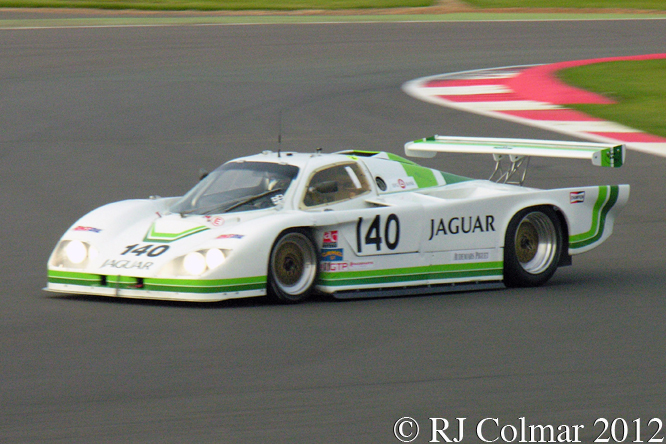
Jim Adams joined Brian and Hurley in chassis #006 where the car was qualified 17th and retired after only 151 laps with a constant velocity joint failure.

The sister car driven by Bob, Chip Robinson and Claude qualified 16th and finished 13th overall and first in the GTP class.

The cars final two races were back in the States where Chip Robinson joined Hurley to score a best 2nd place finish at Pocono in September 1985 on it’s final in period race appearance.

At Daytona in December 1985 the XJR5 model appeared for the last time, before it was replaced by the all new XJR7 in 1986, Brian and Hurley sent the model into retirement with a fine second place less than 8.5 seconds behind the winning Hobert Racing Porsche 962 driven by Al’s Holbert and Unser.

Today #006 is owned by Don Miles who can be seen driving the car at Silverstone Classic events in these photographs.

Thanks for joining me on this “Hot In Miami” edition of “Gettin’ a li’l psycho on tyres” I hope you will join me again for Ferrari Friday tomorrow. Don’t forget to come back now !
Share

Peterson’s Poles – Lotus Cosworth 72E #R6

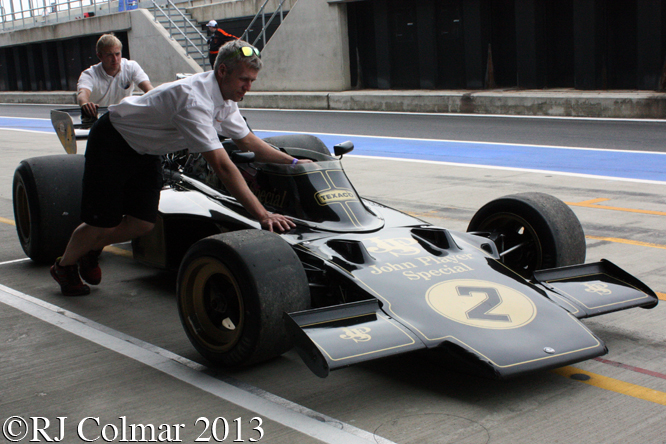
The 1973 Formula One season is remembered for many things some good Jackie Stewart’s third and final world championship some bad the death’s of Jackie’s team mate Francois Cevert and Roger Williamson who had been selected to replace Jackie upon his retirement. However one of my overwhelming memories of the season, the first which I avidly followed in the printed press which was as close to the internet as I could find back in the day, was the raw speed shown by Ronnie Peterson driving his Ford Cosworth DFV powered John Player Special sponsored Lotus 72.

Lotus Cosworth 72E, Silverstone Classic

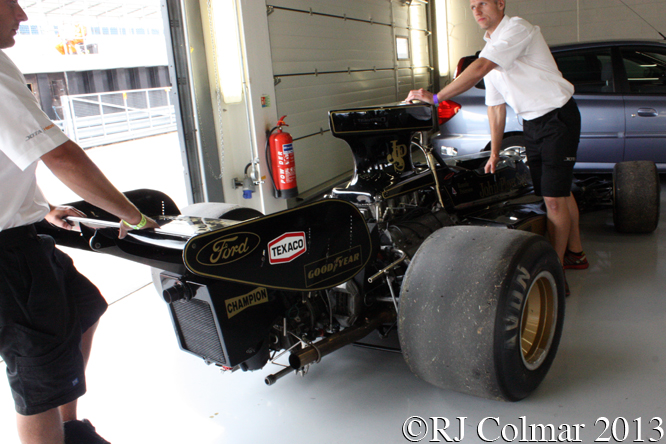
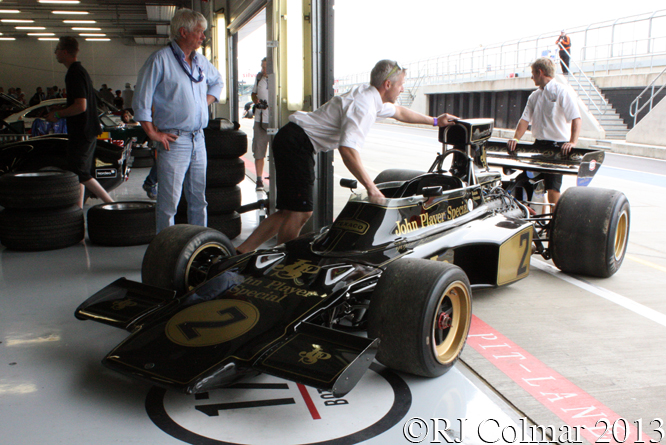
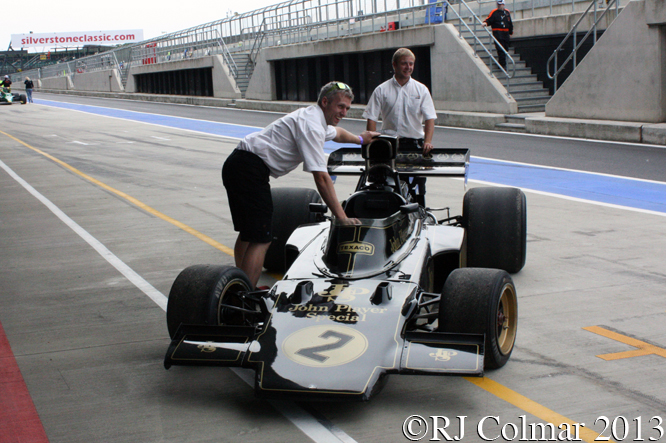
During the 1973 season Ronnie Peterson set a new record number of 9 pole position starts from the 15 race championship season as he finally found himself with a car capable of winning races rather than out lasting the opposition has the March cars he drove in 1971 to second place in the world championship standings had done. I believe seven of those pole positions and Ronnie’s four 1973 championship race victories were recorded in today’s featured chassis which I believe to be #R6.

Lotus Cosworth 72E, Silverstone Classic

#R6 first appeared towards the end of the 1971 season in ‘D’ spec wearing the Gold Leaf Team Lotus colours with another Swede Reine Wisell at the wheel. Reine’s best result was a 4th place finish in the 1971 Austrian Grand Prix.

For 1972 #R6 still in ‘D’ spec but now painted in the black and gold livery of John Player Special was driven by Australian Dave Walker. Dave who had built an enviable record in the junior ranks on his way up could not perform to the same level at the sports top table and only managed a best 5th place finish at the non championship Brazilian Grand Prix with today’s featured chassis. Reine Wisell was reunited with #R6 at the 1972 United States Grand Prix where he finished 10th.

Lotus Cosworth 72E, Silverstone Classic

Over the winter of 1972/73 Ronnie Peterson joined Lotus from March and #R6 was brought up to 72 E spec which included wide track front suspension revisions which were soon abandoned and structural revisions to include a deformable structure around the side fuel tanks. By the time R6 appeared in ‘E’ spec at the non championship Race of Champions at Brands Hatch Ronnie had already scored his first pole for the Brazilian Grand Prix. At Brands Ronnie qualified 6th and fought his way into the lead by lap 5 an was running away from the field when his gearbox broke and forced his retirement on his 18th lap but not before he had set what would be a shared fastest lap time with the BRM drivers Jean Pierre Beltoise and Niki Lauda who had been Ronnie’s team mate at March in 1972.

Ronnie drove to pole position for the following Spanish Grand Prix in chassis #R8 recording fastest lap before the gearbox failed. Back in #R6 Ronnie then won pole for the Belgian Grand Prix from which he retired after an accident. Ronnie was back in #R8 for the Monaco Grand Prix where he qualified 2nd and finished third behind Stewart and team mate Emerson Fittipaldi. Back in #R6 for the remainder of the 1973 season Ronnie was claimed his forth pole of the season in his home Grand Prix but finished second after leading his team mate for most of the race and in the process wearing out his tyres. Emerson retired with gearbox failure four laps from home leaving Denny Hulme to pick up the pieces and sweep by to win the Swedish Grand Prix.

Lotus Cosworth 72E, Silverstone Classic

At the 1973 French Grand Prix Ronnie finally took his maiden Grand Prix victory from 5th on the grid driving today’s featured car and two weeks later he claimed his fifth pole position of the season at the British Grand Prix, where he finished second. At the Dutch Grand Prix Ronnie was on pole in again but retired with gearbox and engine issues. In Germany Ronnie qualified 2nd but failed to finish. Ronnie won 3 of the final 4 championship races in 1973 in Austria Italy and the United States and pole for the final three races of the season in Italy, Canada and the USA. He retired from the Canadian Grand Prix with a puncture.

Ronnie finished third in the 1973 World Drivers Championship behind Stewart and team mate Fittipaldi and there is no doubt that Emerson might have won the championship if he had not been forced to race his team mate as hard as he did. Lotus again won the constructors championship as they had with the same model in 1970 and ’72.

For 1974 Lotus had planned to replace the Lotus 72 with the Lotus 76, but when that failed to show potential the Lotus 72 design was pressed into service for the remainder of the season in slightly modified form with the oil tank moved from behind the gearbox to a position ahead of the rear wheels as mandated by new regulations.

#R6 ended it’s in period competition career in South Africa where Team Gunston entered the car in the local Formula One series for Ian Scheckter, brother of Jody, in in 1974 Ian scored five wins in the South African series to finish second to Dave Carlton who drove a McLaren M23. For 1975 Ian drove his brothers 1974 Tyrrell 007 and Team Gunston entered Eddie Keizan in #R6. Eddie like Ian the year before in the same car finished 13th in the South African Grand Prix but could only manage a season high second in the local South African championship races after which it was retired.

Ronnie Peterson fan Katsu Kubota is the current owner of #R6 seen here earlier this year at the Silverstone Classic meeting.

Thanks for joining me on this “Peterson’s Poles” edition of “Gettin’ a li’l psycho on tyres” I hope you will join me again tomorrow. Don’t forget to come back now !
Share

Narrow Gauge Thunderbird – Auto Union 1000 Sp Coupé

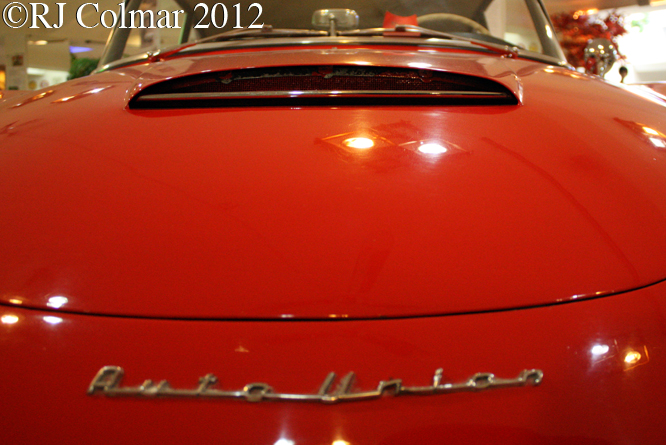
At the same time the Auto Union 1000 S models were launched in 1958 Auto Union launched a sports car based on the same chassis known as the 1000 Sp.

Auto Union 1000 Sp, Malta Classic Car Collection, Qwara

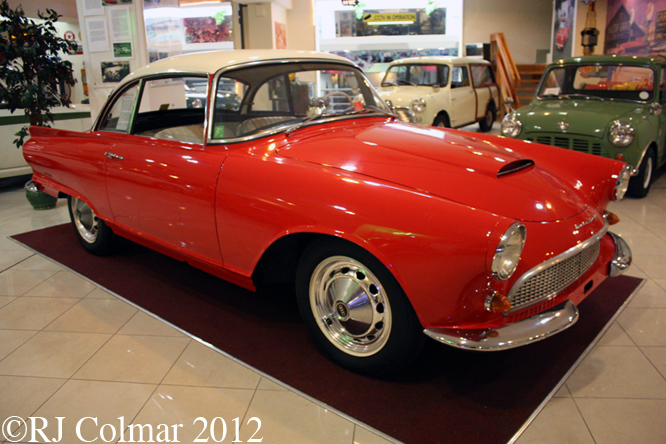
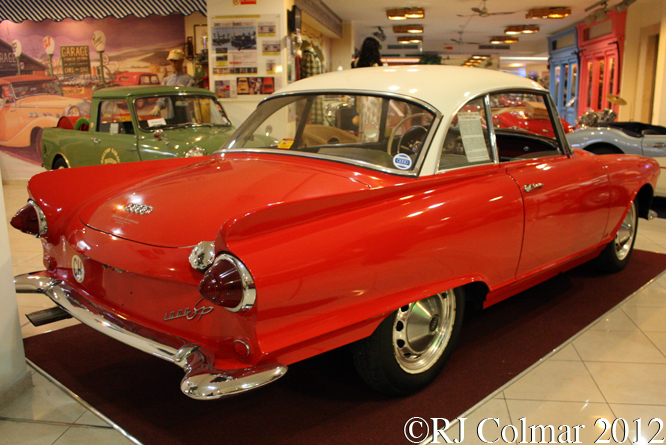
The new 1000 Sp bore a striking resemblance to the 1955 Ford Thunderbird and was soon known as the schmalspur Thunderbird, translated literally “narrow gauge Thunderbird” but usually known in the UK as the Baby Thunderbird.

Auto Union 1000 Sp, Malta Classic Car Collection, Qwara

The coachwork available as a hard top from 1958, or soft top from 1961, was by Baur in Stuttgart who are probably best known for their BMW conversions.

Auto Union 1000 Sp, Malta Classic Car Collection, Qwara

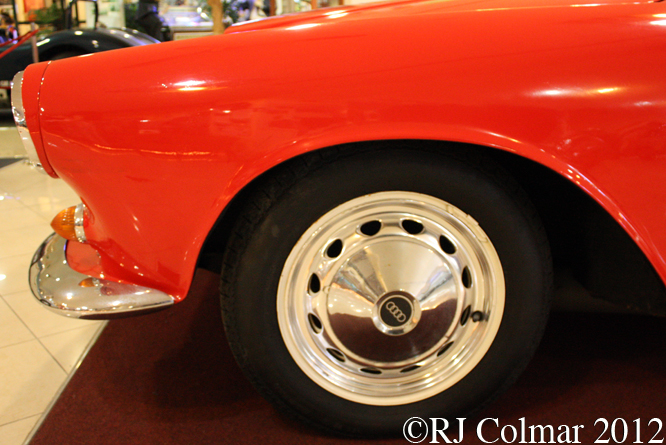
Power for the 1000 Sp 2 stroke 3 cylinder motor was up from the original 44 hp of the 1000 S models to 55 hp which gave the 1000 Sp a top speed of 87 mph, 7 mph than its lesser powered siblings.

Auto Union 1000 Sp, Malta Classic Car Collection, Qwara

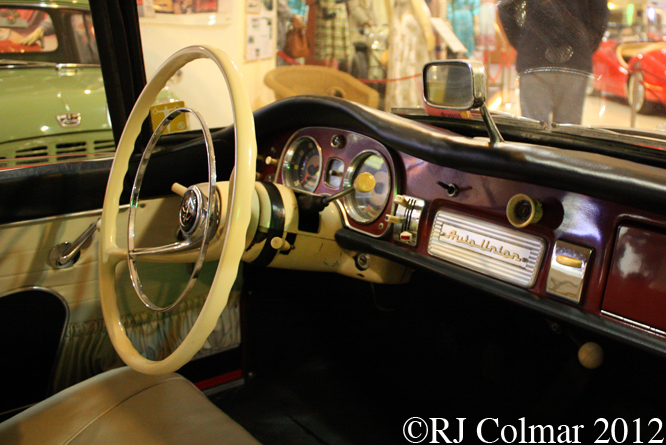
Note the fashionable fifties column shift, not as fast as a stick shift but has the benefit of allowing your better half to snuggle up next to you with out interruptions for gear changes. Although the 1000 Sp’s were lower than the 1000 S models they were not significantly lighter.

Auto Union 1000 Sp, Malta Classic Car Collection, Qwara

From 1958 to 1965 5000 of the hard top Auto Union 1000 Sp’s were built. Today’s featured vehicle is seen in the Malta Classic Car Collection in Qwara.

Thanks for joining me on this Narrow Gauge Tunderbird edition of “Gettin’ a li’l psycho on tyres”, Don’t forget to come back now !

Share

Split Screen Forward Control Pick Up – Volkswagen Type 2 (T1) Pick Up

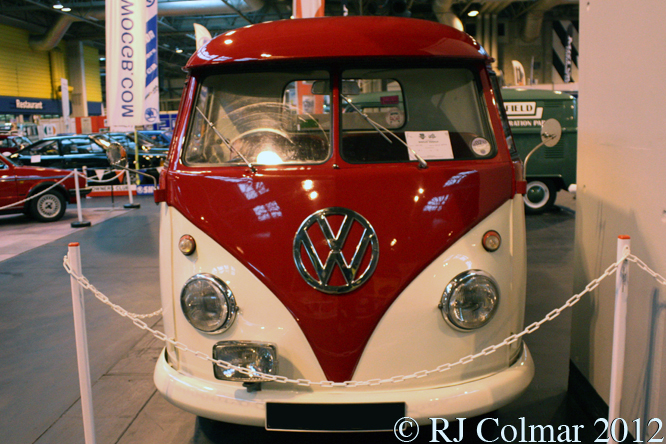
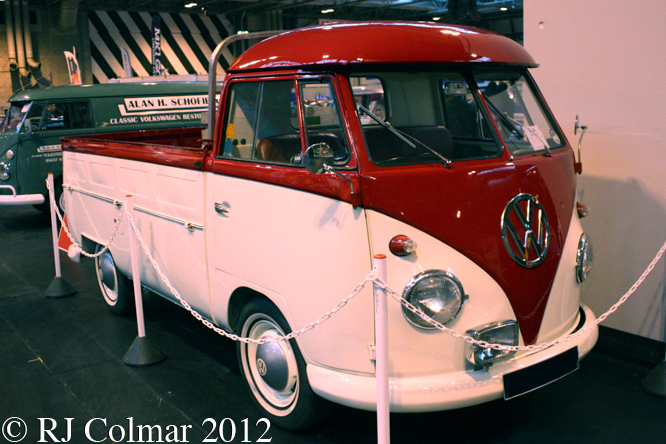
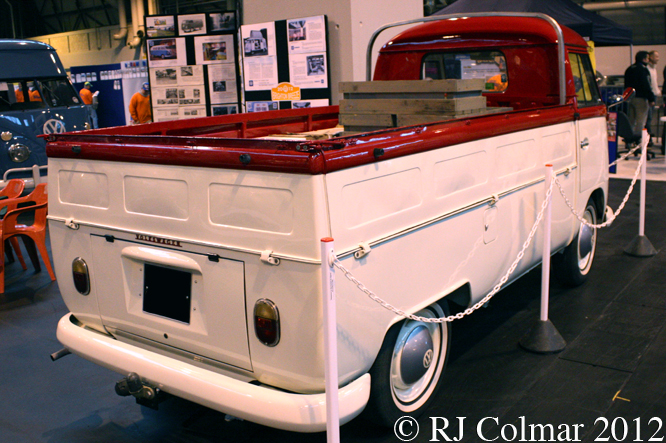
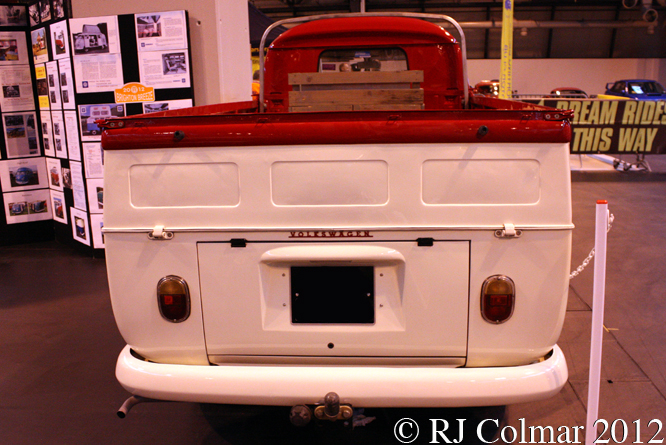
This month’s monday blog sees a return to the pick up theme, today’s featured pick up is a 1963 Volkswagen Type 2 (T1) seen at last years Classic Motor Show held at the NEC in Birmingham.

01 Volkswagen Type 2 (T1) Pick Up,

The pick up version of the Volkswagen Type 2 was not introduced until 1952 three years after Type 2 production commenced. The pick up variant had the fewest changes of all the Type 2 (T1)’s until the introduction of the bigger Type 2 (T2) in 1968.

02 Volkswagen Type 2 (T1) Pick Up,

1963 saw the introduction of the 51 hp 1500 cc / 91.5 cui flat 4 cylinder air cooled motor which replaced the 40hp 1200 cc / 72 cui unit first seen in 1959.

03 Volkswagen Type 2 (T1) Pick Up,

Sales of Type 2 (T1)’s are often incorrectly thought to have been adversely affected in 1964 by the so called Chicken Tax introduced by the United States on imported panel vans and pick ups, a response to the on going trade tariff war between the US and Europe after West Germany had introduced trade restriction on imported US Chicken. In fact President Johnson appears to have applied a 25% tax on imported panel vans and pick ups in order to avert a strike by the United Auto Workers before the 1964 Presidential election and it was the UAW’s President Walter Reuthner who wanted the reduction on such imports.

04 Volkswagen Type 2 (T1) Pick Up,

Volkswagen pick ups were ready made for transporting racing cars without the need for a trailer, perhaps the single most famous example of such a transporter was run by Fife, WA Volkswagen dealer Pete Lovely who was frequently seen pulling into the Formula One paddock in his VW Type 2 (T1) pickup with his Lotus 49 on the back.

Split screen forward control VW Pick Ups today are highly collectible, I have seen examples in good condition being offered for €22,000, GBP £18,000, US$ 30,000 which is probably a bargain when one takes into account the amount of time and effort it requires to keep one in good condition.

Thanks for joining me on this “Split Screen Forward Control Pick Up” edition of “Gettin’ a li’l psycho on tyres” I hope you will join me tomorrow for the first in a series of two stroke Tuesday’s. Don’t forget to come back now !
Share