Tag Archives: Classic

Wheels & Ears – Lotus Esprit S2 Type 79

The pace of innovation and development at Lotus was far too high for organised record keeping to be a strong point and some how the Lotus Type 79 number ended up being given to both the 1978 World Championship winning Formula One car and the otherwise unrelated Lotus Esprit S1 & S2 variations.
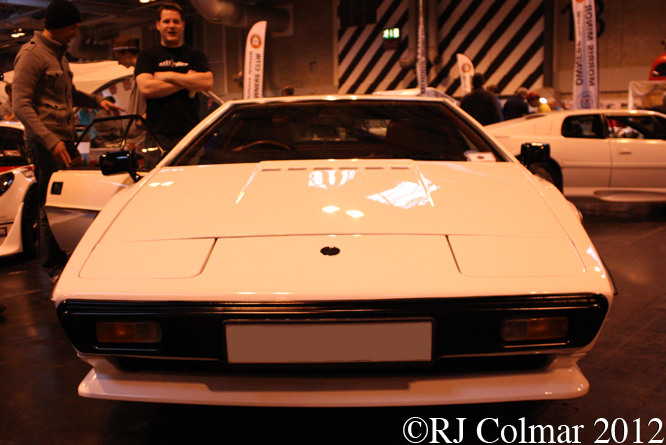
Lotus Esprit S2, The Classic Motor Show, NEC, Birmingham

The second iteration of the Giugiaro designed Esprit, launched in 1978, featured a wrap around bumper which brought down the aerodynamic measure to Cd 0.355 and improved the handling in cross winds.
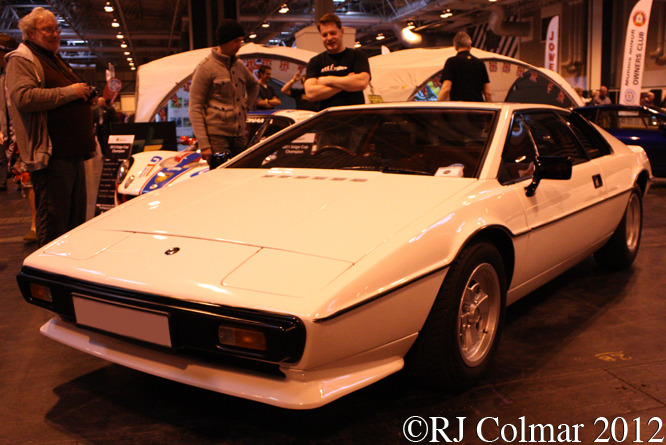
Lotus Esprit S2, The Classic Motor Show, NEC, Birmingham

The Gotti alloy wheels of the original Elite were replaced by Lotus designed alloy wheels manufactured by Speedline. Inside wider seats were fitted along side new instrumentation and switch gear illuminated by fibre optics, the external rear view mirrors became remotely operated too.
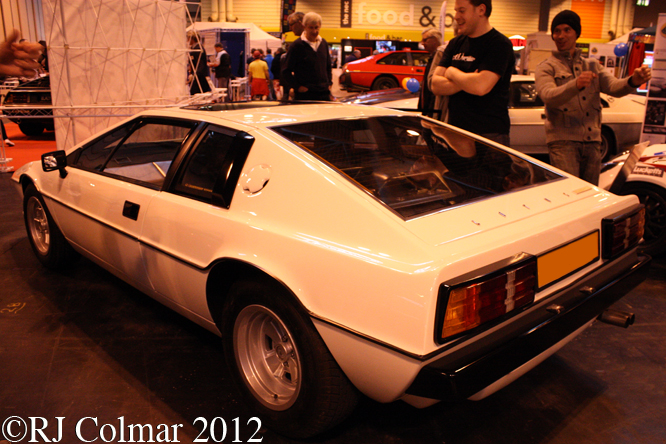
Lotus Esprit S2, The Classic Motor Show, NEC, Birmingham

Ears behind the rear 3/4 window were used to feed air into the carburetor on the left and into the engine bay on the right.
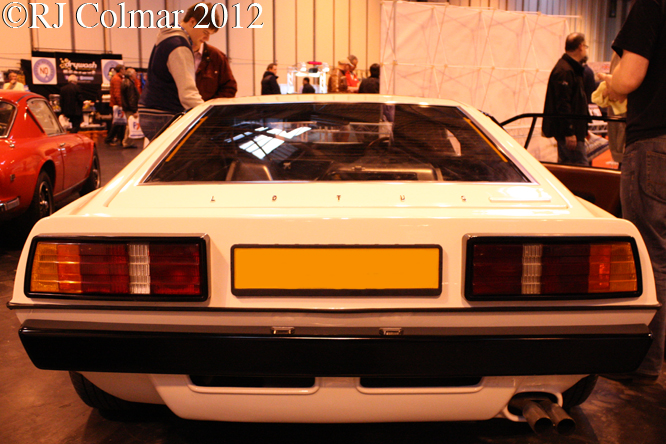
Lotus Esprit S2, The Classic Motor Show, NEC, Birmingham

The Rover SD1 sourced rear lights now incorporated high intensity fog lamps. 1061 Esprit S2’s were built with the original Type 907 2 litre / 122 cui motor that gave the car a top speed of 124 mph. A further 88 S2.2’s were built with the an identical body, galvanised chassis and Type 912 motors of 2.2 litre / 134 cui with the same 160 hp but much improved torque which made the Esprit much easier to drive around town.

Thanks for joining me on this “Wheels & Ears” edition of “Gettin’ a li’l psycho on tyres” I hope you will join me again tomorrow. Don’t forget to come back now !

Share

Hot Rover #3 – MG ZT-T

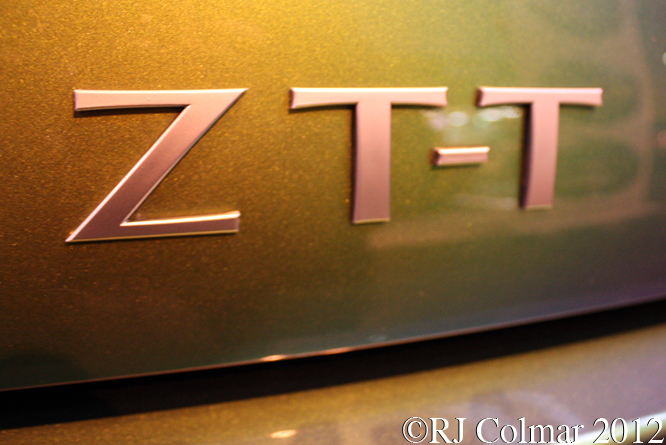
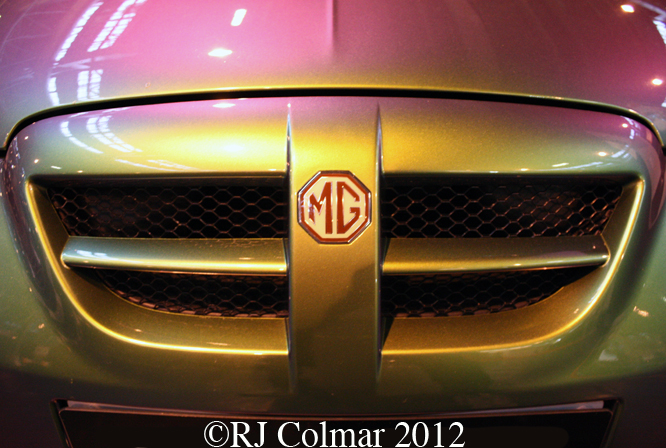
Like the MG ZR and MG ZS models the MG ZT was based on a Rover model in this case the Rover 75 and like the smaller ZR and ZS it was launched in 2001 and face lifted in 2004.

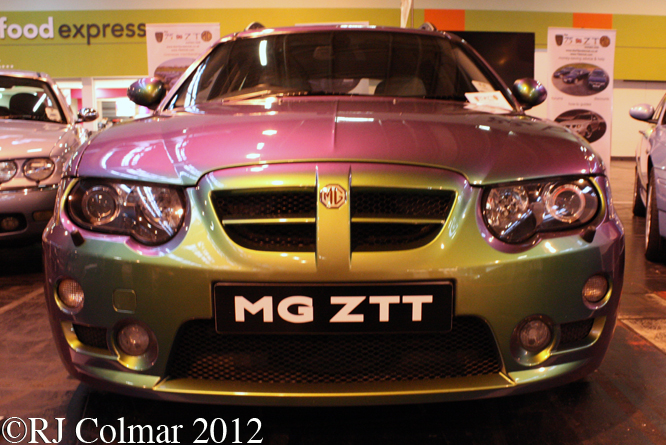
MG ZT-T, The Classic Motor Show, NEC, Birmingham

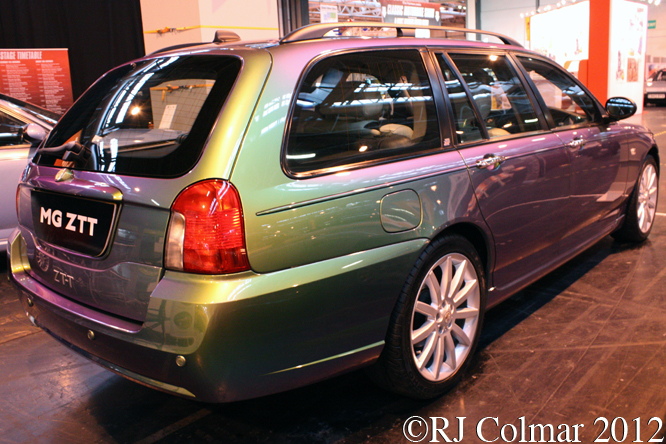
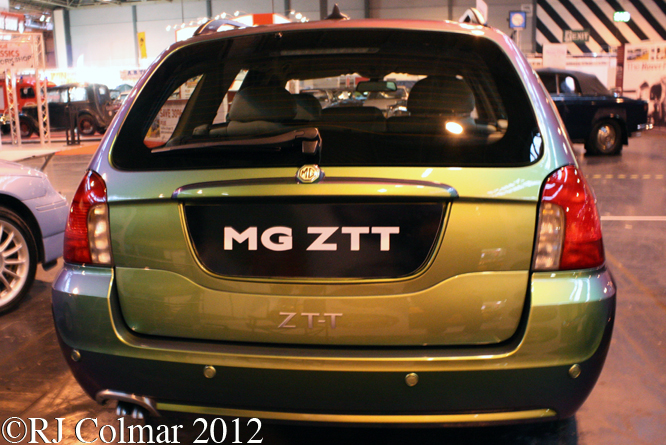
The ZT-T is the estate / station wagon version of the ZT and today’s face lifted car is said to have been completed on the 20th of January at 13:19 making it the 11th ZT to be built in 2004.

MG ZT-T, The Classic Motor Show, NEC, Birmingham

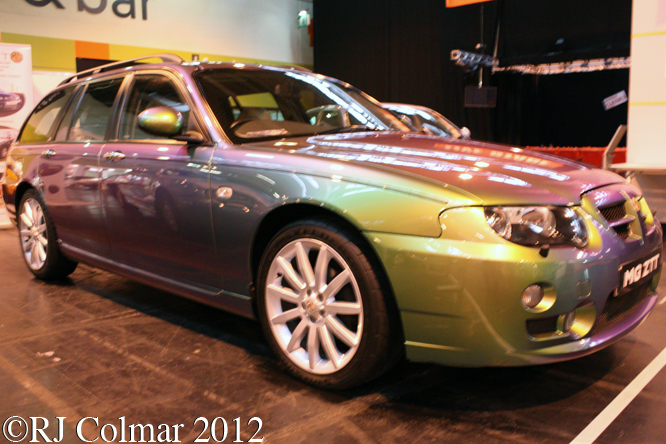
The cars chassis plate shows this car to have been intended to be biomorphic green however it was finished in shot silk chromescent, like only two other ZT-T models, one of which also has a chassis plate showing the intended colour was biomorphic green.

MG ZT-T, The Classic Motor Show, NEC, Birmingham

On 5th April 2004 the car was registered to MG Rovers Press Fleet and was subsequently used by MG Director Dr Chris Millard who had many updates and extras retro fitted to keep the car up to date with all the latest developments barring an electric sunroof.

MG ZT-T, The Classic Motor Show, NEC, Birmingham

Shot Silk Chromescent paintwork was part of MG Rovers Monogram Personalisation Programme which offered customers an exclusive opportunity for MG and Rover customers to realise their personality through automotive style.

MG ZT-T, The Classic Motor Show, NEC, Birmingham

Power for this car comes from a 129hp Turbo Diesel motor which is connected to a 5 speed automatic transmission which gives a rest to 60 mph time of 11.4 seconds and a maximum speed of 117 mph.

MG ZT-T, The Classic Motor Show, NEC, Birmingham

Just over a month after MG Rover called in the receivers in April 2005 ownership of this ZT-T transferred to the Royal Bank of Scotland before being sold on to a salesman.

My thanks to The Rover 75 and MG ZT Owners Club for the details about today’s car which is seen at the The Classic Motor Show held at the NEC, Birmingham a couple of weeks ago.

Thanks for joining me on this Hot Rover #3 edition of “Gettin’ a li’l psycho on tyres” I hope you will join me again tomorrow. Don’t forget to come back now !
Share

Pick Up Man – Hillman Imp Super Pick Up

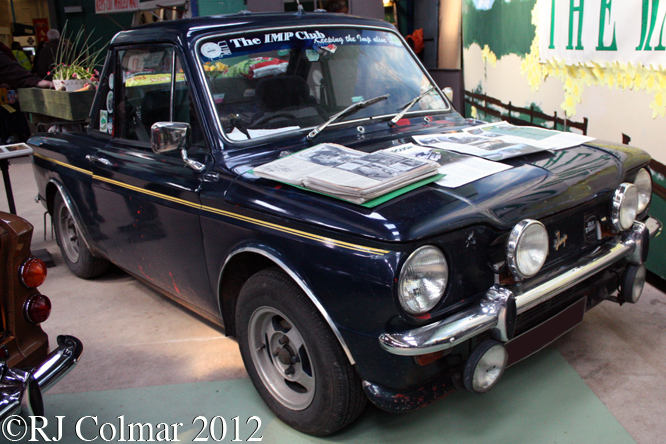
Bob has a passion for Hillman Imps which can be traced back to learning to drive one. Since then he has owned many more and become something of an expert on the model.

Hillman Imp Super Pick Up, Bristol Classic, Shepton Mallet

Living out in the country not far from Bristol he has need of an all purpose run around and one day Bob had the good fortune to be in his autocross racer friend Philip’s garage when Philip was poking holes with a screw driver through an Imp he had just acquired.

Hillman Imp Super Pick Up, Bristol Classic, Shepton Mallet

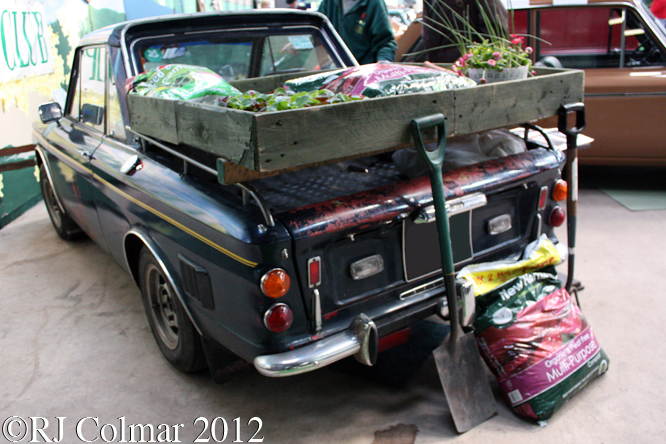
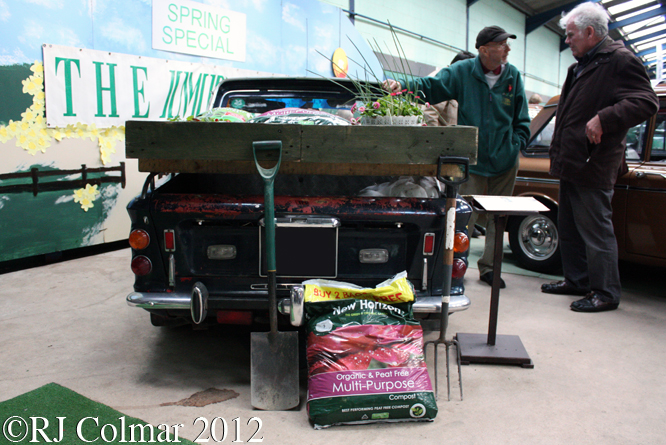
Philip agreed to give the Imp to Bob for nothing and before Philip could change his mind Bob got the car home and chopped the roof off with an angle grinder and then strategically added some steel to maintain structural rigidity.

He then matched up the C pillars and tailgate with the remaining roof behind the door frame which allowed the seats, rescued from a Peugeot 205 GTi, to be moved all the way back on their runners.

Hillman Imp Super Pick Up, Bristol Classic, Shepton Mallet

Bob has made a few mechanical improvements to the car including removing the original transverse mounted radiator and installing one from a Nissan Micra longitudinally which improves cooling of the alloy engine.

With five years on and off work completed and expenses that “didn’t run in to thousands” Bob took his Imp Pick Up to an Imp Club meeting for it’s first run and came home with second place prize in the modified class.

Best of all his wife finds the pick up far more comfortable than his other car, a Sunbeam Imp but with out the Peugeot seats. Which all goes to show as Joe Diffie observed there is something women like about a pick up man.

Thanks for joining me on this “Pick Up Man” edition of “Getting a li’l psycho on tyres”. I hope you will join me again tomorrow. Don’t forget to came back now !

Share

Royal Enfield Transporter – Volvo 740 GL Pick Up

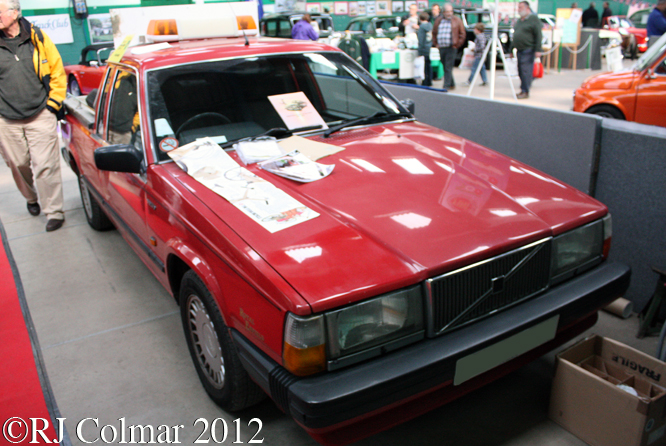
The Volvo 740 as introduced in 1984, it featured the same body as the V6 and 4 cylinder Turbo Intercooler 760 models but was fitted, initially, only with normally aspirated versions of the 4 cylinder motor which had hither too been found in the Volvo 240 models.

Volvo 740 GL Pick Up, Bristol Classic Car Show, Shepton Mallet

Today’s featured model was built in 1989 with a fuel injected pushrod overhead valve 1986 cc / 121 cui 4 cylinder B20F motor that was known in the trade as a log burner because it’s 120 hp worked hard to move the older 240 models at a respectable pace. This car is fitted with a standard 5 speed manual transmission.

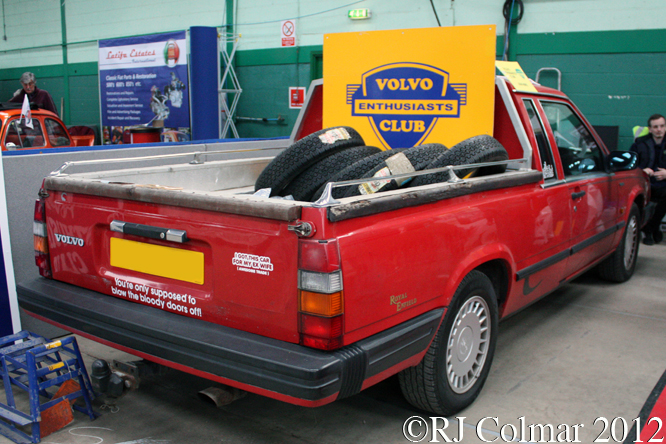
Volvo 740 GL Pick Up, Bristol Classic Car Show, Shepton Mallet

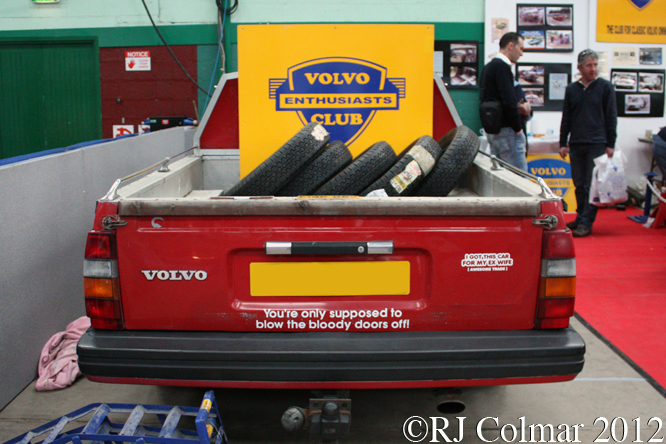
In 2000 the previous owner of today’s featured car converted his estate / station wagon into a pick up so that he could carry his Royal Enfield motor cycle to rallies and shows.

Volvo 740 GL Pick Up, Bristol Classic Car Show, Shepton Mallet

With over 265,OOO miles and a full service history Volvo Enthusiasts Club member Colin Hughes expects to keep this vehicle for a good while yet, when I was selling these cars new back in the day we used to boast that such cars could easily be made to last over 20 years this one looks like it could easily last twice as long. Colin has another Volvo 740, a hearse.

Thanks for joining me on this “Royal Enfield Transporter” edition of “Gettin’ a li’l psycho on tyres” I hope you will join me again tomorrow for a look at a vehicle billed as “Born To Perform Miracles”. Don’t forget to come back now !

Share

Lighter Stiffer Faster – Chrysler Viper Phase II RT/10

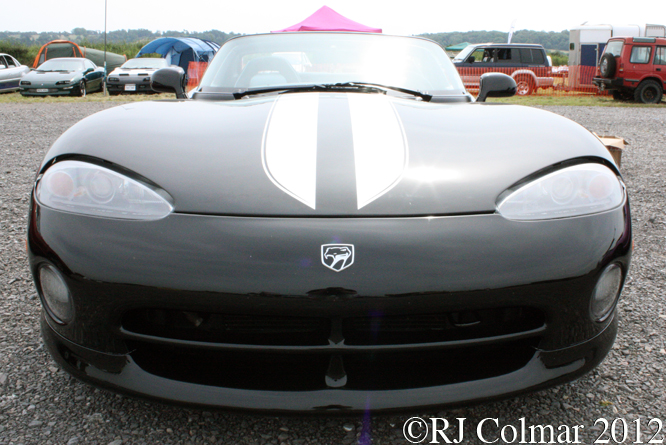
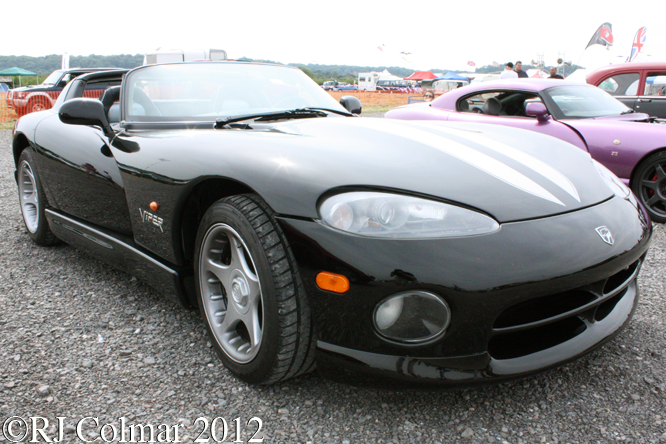
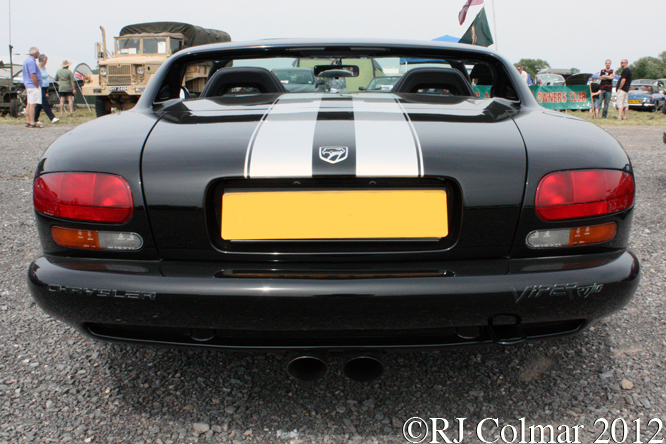
The Dodge Viper was conceived as a modern Cobra by Chrysler’s Advanced Design Studios in 1988 and realised by 85 “Team Viper” engineers hand picked by Chief Engineer Roy Sjoberg ready the first deliveries in 1992.

Dodge Viper RT/10, Summer Classics, Easter Compton

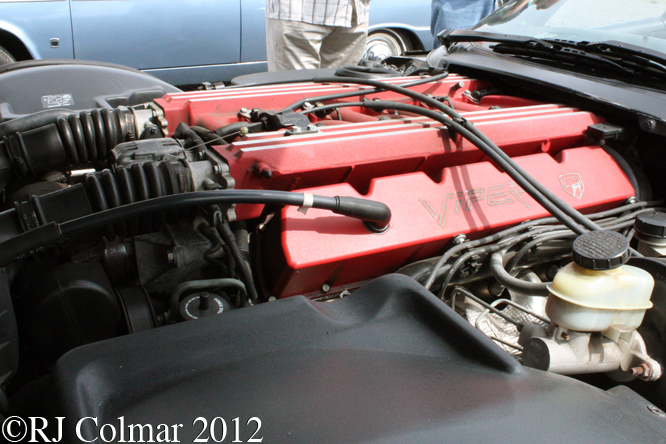
The brutal aesthetics are matched by a few agricultural underpinnings including a pushrod operated 2 valve per cylinder motor originally designed for the Dodge Dakota Pick up as were the tie rod ends and parts of the front wheel hubs.

Dodge Viper RT/10, Summer Classics, Easter Compton

For 1996 the RT/10, like the model seen here at Summer Classics Easter Compton, was revised which resulted in a lighter car with a stiffer chassis and more powerful motor.

Dodge Viper RT/10, Summer Classics, Easter Compton

Viper engine blocks aluminium cast versions of the cast iron Dodge Dakota blocks, with the castings originally being done by Lamborghini a Chrysler subsidiary at the time. In Phase II RT/10 form seen here the V10 produced 415 hp from its 7,998 cc / 488 cui.

Dodge Viper RT/10, Summer Classics, Easter Compton

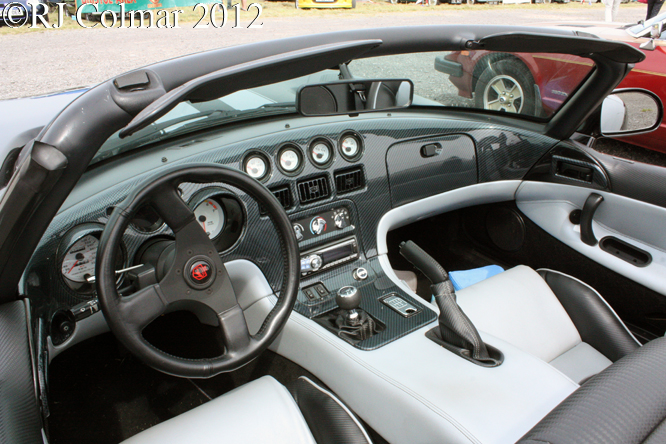
The RT/10 is intended to be a garaged vehicle originally these cars are supplied with a roof, side screens and instructional video on how it all fitted together.

Dodge Viper RT/10, Summer Classics, Easter Compton

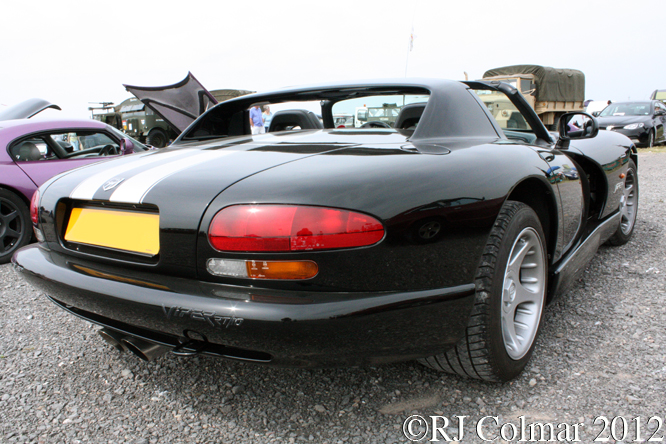
Vipers exported to Europe like the example seen here are sold under the Chrysler brand, but do not appear to differ in any other way than their Dodge branded siblings for the US domestic market.

Dodge Viper RT/10, Summer Classics, Easter Compton

Capable of reaching a 119 mph in a quarter mile run and with a top speed of over 180 mph the Viper’s only week spot has been it’s brakes even after ABS became available in 2001.

Second generation Phase II Vipers were replaced by the third generation ZB series in 2003.

Thanks for joining me on this “Lighter Stiffer Faster” edition of “Gettin’ a li’l psycho on tyres” I hope you will join me for Ferrari Friday tomorrow. Don’t forget to come back now !
Share

Wolly Bulli – Volkswagen Type 2 (T2)

In the Autumn turn of 1982 twenty odd college class mates and I made our way from the Untied Kingdom to Paderborn University for the first half of the third year of our European Business Studies course. I overslept on the train and ended up a hundred kilometers further east than intended in Kassel having missed my stop, but I digress.

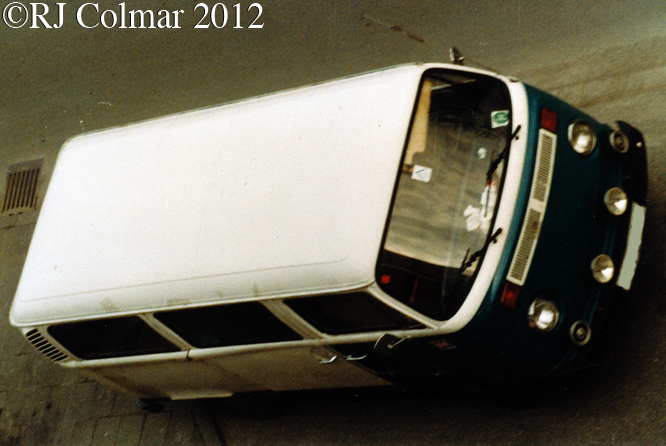
VW Type 2 (T2) Kombi, Paderborn, Germany

Once in Paderborn we soon made friends with our fellow German students some of whom had banded funds together to buy a late bay VW Type 2 (T2b) Kombi seen above, in Germany these vehicles are known locally as “Bulli”. The Type T2 (T2) was first seen in 1967, it was wider and longer than it predecessor the Type 2 (T1) which I looked at last week. The motor was slightly larger starting at 47 hp wich increased to 70 hp by the mid 1970’s, but the real improvements were in low end torque which helped this heavy vehicle keep pace with the rest of the traffic.

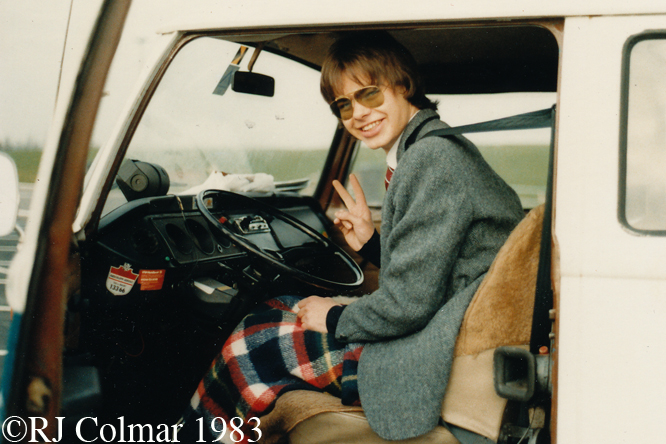
VW Type 2 (T2) Kombi, Paderborn, Germany

Above I can be seen sitting at the wheel of my friends Type 2 wrapped in a blanket in the middle of February as I was about to return from Wolsburg where I had a placement at Volkswagen to Paderborn. To reduce the intake of exhaust fumes, because the heat exchangers were breaking up, the heating pipes were blocked up and the windows were kept open hence the blanket was necessary to keep warm in the well ventilated unheated bus.

Type 2s went through three distinctive body developments from ’67 to ’71 the early bay T2a was characterised by low front indicators and rear light clusters inherited from the Type 2 (T1), from ’71 to the early 1990’s the late bay Type 2 (T2b) is characterised by high front indicators and larger vertical oblong rear light clusters. By the early 1990’s production in Mexico and Brazil moved to the Type 2 (T2c) which has a raised roof and the latest models now built only in Brazil have duel fuel water cooled engines which run on petrol or ethanol.

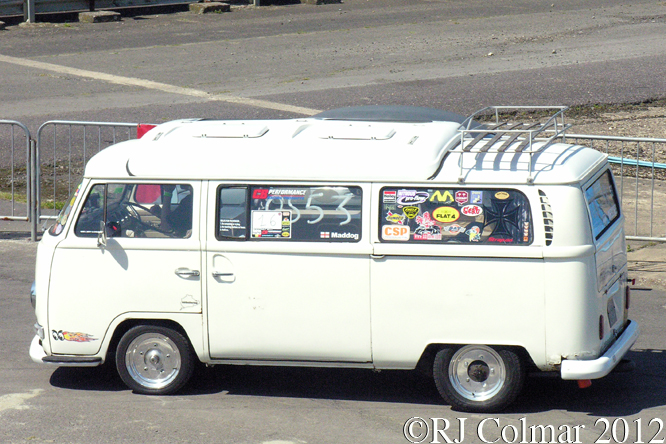
Type 2 (T2) Camper, Shakespeare County Raceway

Chris Maddog Antell’s VW Type 2 camper van seen above at Shalespeare County Raceway is an early bay Type 2 (T2a) with low front indicators and small rounded rear light clusters he runs it with a 2276 cc / 138 cui motor of yet to be determined origin, if you know please do not hesitate to chime in below.

Volkswagen Type 2 (T2c), The Classic Motor Show, NEC, Birmingham

The Type 2 (T2c) as seen above at The Classic Motor Show is still in production in Brazil a couple of years ago they were being manufactured at a rate of 100 a day, some of these vehicles can be seen in Europe where they are often used as camper vans. The latest news courtesy of mariner at The Nostalgia Forum is that Type 2 (T2c) production is planned to come to a halt in Brazil next year.

Thanks for joining me on this “Wolly Bulli” edition of “Gettin’ a li’l psycho on tyres”. I hope you will join me again tomorrow. Don’t forget to come back now !
Share

Twin Carburetor ADO16 – MG 1300 MkII

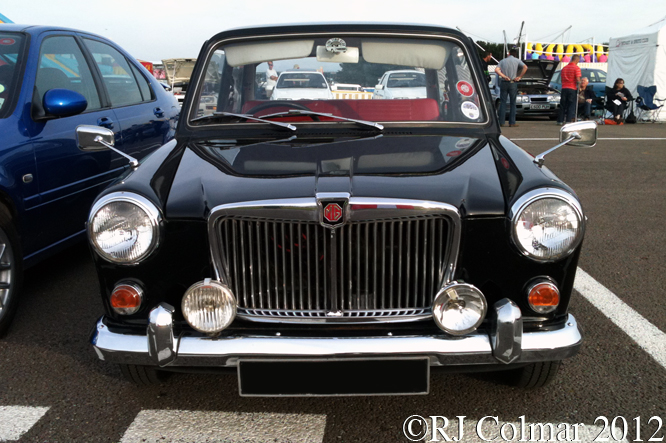
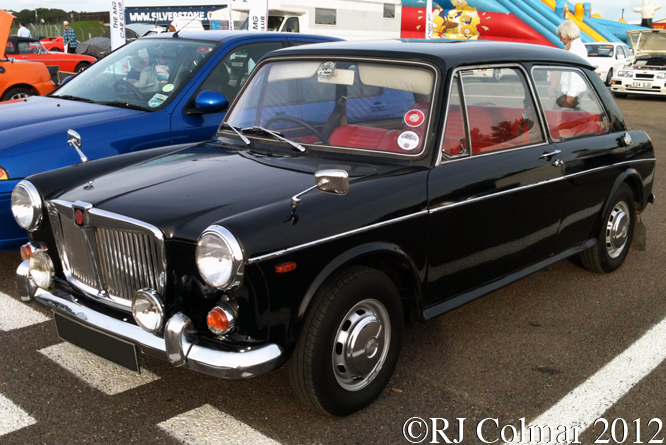
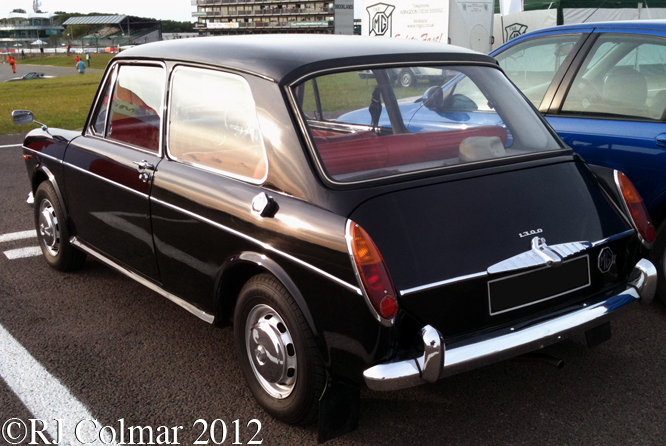
In 1962 at the same time as the launch of the, rather conventional, MG B the British Motor Corporation (BMC) launched a revolutionary new car the Morris 1100 which was technically like a grown up version of the Mini first seen in 1959 featuring a transverse front mounted engine driving the front wheels through a transverse mounted gearbox. This allowed for the monocoque body to sit low to the ground compared to its conventional contemporaries which need a prop (propeller) shaft to run from the gearbox at the front to the rear axle.

MG 1300 Mk II, Silverstone Classic

Like the Mini the Morris 1100, which had carried the code ADO16 through it’s development, was designed by Alec Issigonis and would become one of Britain’s consistently best sellers through the 1960’s until the more conventional Ford’s began to make an impact thanks to overwhelming competition success on the race track which translated into sexy marketing campaigns. The body work for the ADO16 was styled by BMCs Italian styling house of choice Pininfarina and was available eventually in two and four door variations.

MG 1300 Mk II, Silverstone Classic

BMC also launched badge engineered 1100’s in Austin, Wolseley, Riley, van den Plas and 55 hp twin carburetor MG variants, in the UK market, before offering larger 1275 cc / 77.8 cui variations which in twin carburetor MG form produced 70 hp. In 1962 soon after the launch of the MG 1100 Alan Foster and Andrew Hedges drove a R.W.Jacobs entered MG 1100 to a 12th place overall and 1st in the 1300 cc class in the 1962 The Motor 6 Hours held at Brands Hatch beating a Ford Anglia in class that finished on the same lap.

MG 1300 Mk II, Silverstone Classic

Mk II versions of all the ADO16’s were introduced in 1968 with the rounded rear light clusters and ventilated steel wheels as seen on the 1968 MG 1300 MkII above which also has a walnut dash housing additional revolution counter, water temperature and oil pressure gauges. The leather bound 3 spoke steering wheel completed the sporty look.

MG 1300 Mk II, Silverstone Classic

The options list for all ADO 16’s included reclining seats and heated rear window. MG ADO16’s were replaced in 1971 by Austin and Morris GT variations using the same twin carburetor, MG, motors. In all 26,240 MG variants of the ADO16 were built between 1962 and 1971. One curious thing about the ADO16 when looking at it with the benefit of several decades of hindsight, they never made one with a hatchback only a small boot / trunk. I guess success in this instance bred what would become terminal complacency.

My thanks to Roger Lund, Rod Hunt, Michael Hickey, Ray Bell, Rob Kayemod, David ‘Red Bill Racing’ Coulthard and Frank de Jong at The Nostalgia Forum for their observations regarding the R.W.Jacobs MG 1100.

Thanks for joining me on this “Twin Carburetor ADO16” edition of “Gettin’ a li’l psycho on tyres” I hope you will join me again tomorrow when I’ll be looking at a VW Microbus which I used back in my college days. Don’t forget to come back now !
Share