Tag Archives: Classic

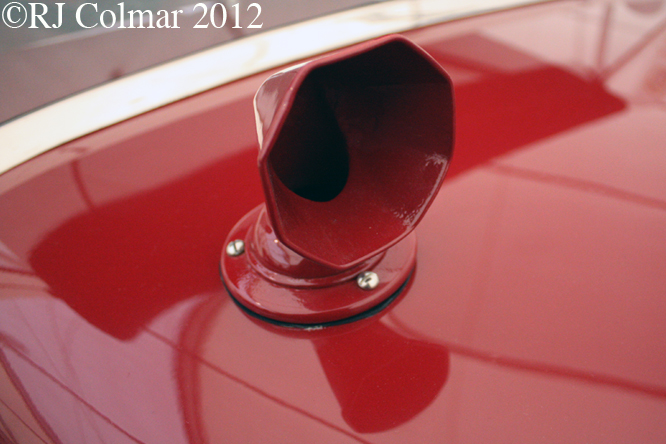
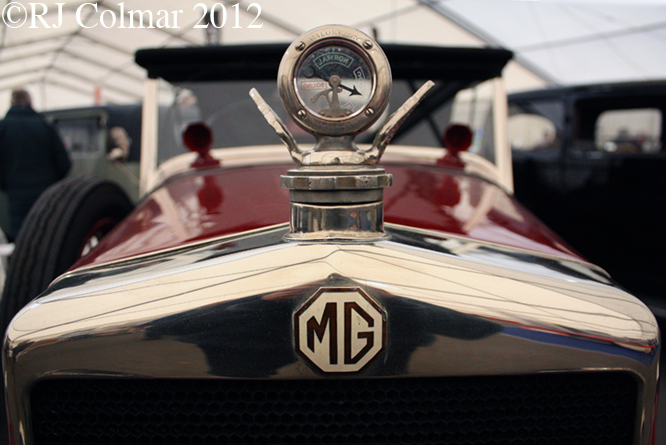
Silver Plated Steering Wheel Boss – MG 18/80 Mk II Prototype

In 1928 MG moved away from it’s original remit of giving Morris Bullnose products wider appeal which culminated in the MG 14/40 and started to manufacture it’s own chassis and engine blocks.

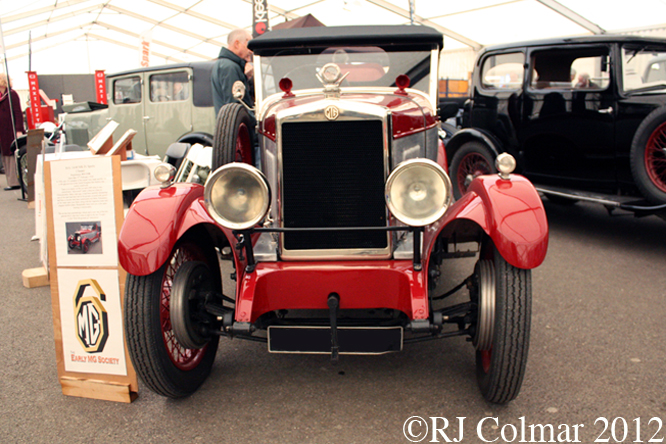
MG 18/80 Mk II Prototype, Bristol Classic Car Show

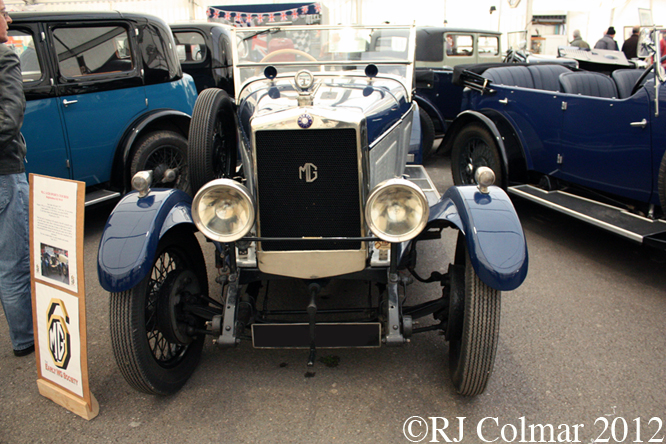
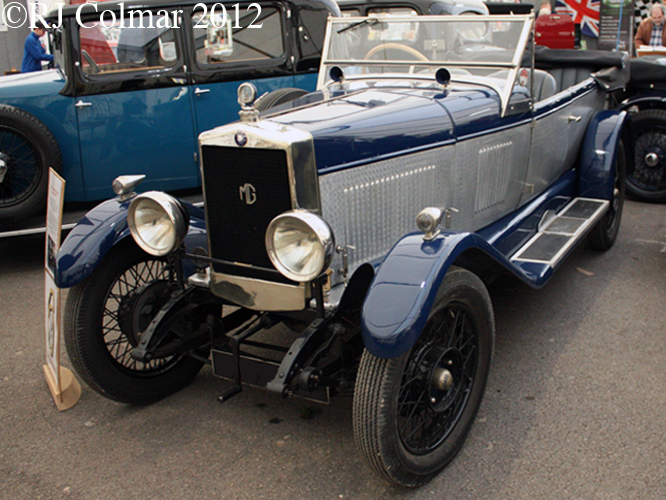
The new 18/80 model featured both a unique MG chassis and engine block both of which had been developed from lessons learned from a Morris Light Six Saloon that never went into production. The new distinctive radiator design would be maintained all the way through to the T Series.
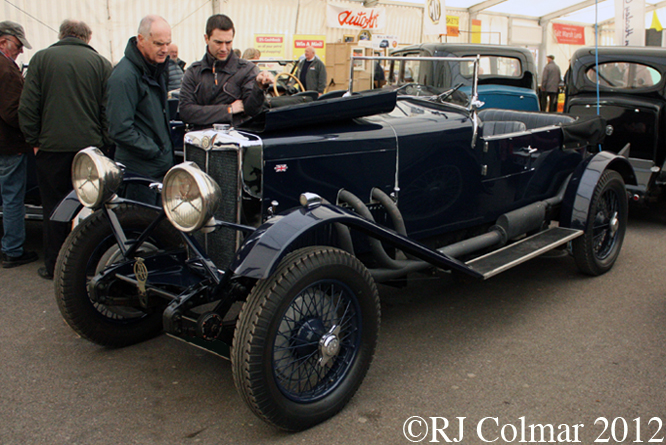
MG 18/80 Mk II Prototype, Bristol Classic Car Show

The 18/80 also featured unique to MG front and rear axles with Rudge Whitworth centre lock wheels an either tourer or saloon body styles.
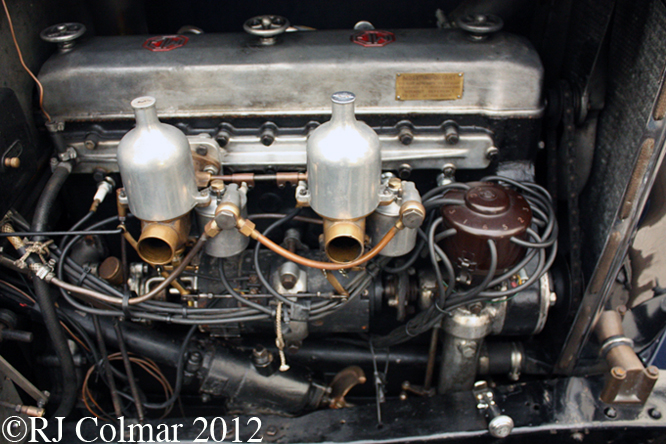
MG 18/80 Mk II Prototype, Bristol Classic Car Show

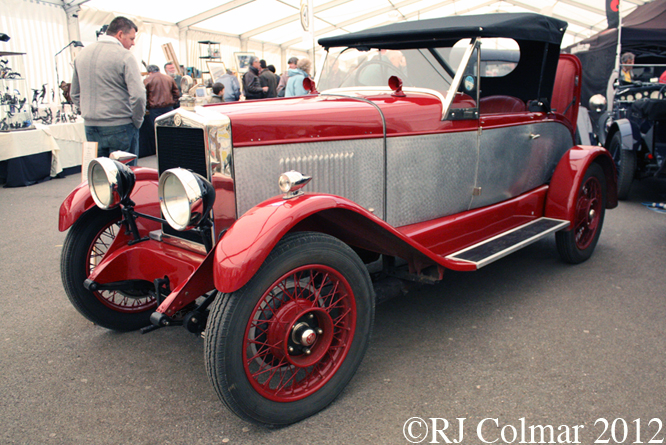
The twin carburetor six cylinder motor featured a four bearing crankshaft with a Duplex chain, see behind the radiator on the right, which drives the camshaft, distributor, water pump, oil pump and dynamo. The MG 80 hp rated six gave the 18/80 enough power to reach 100 mph. The motor seen here has been upgraded with a MK III cylinder head and ignition and drives through a Rover SD1 clutch in place of the original cork in oil unit.
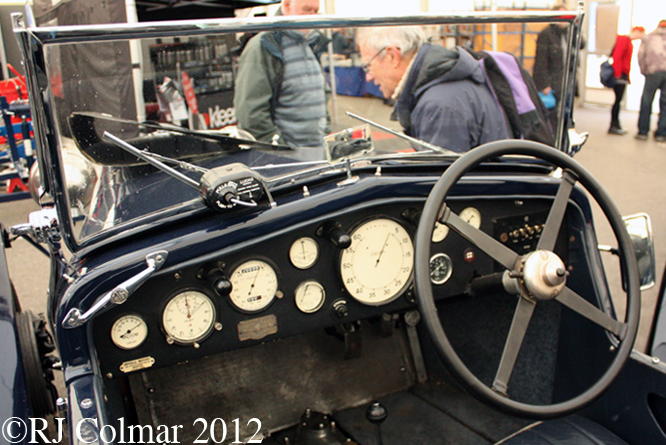
MG 18/80 Mk II Prototype, Bristol Classic Car Show

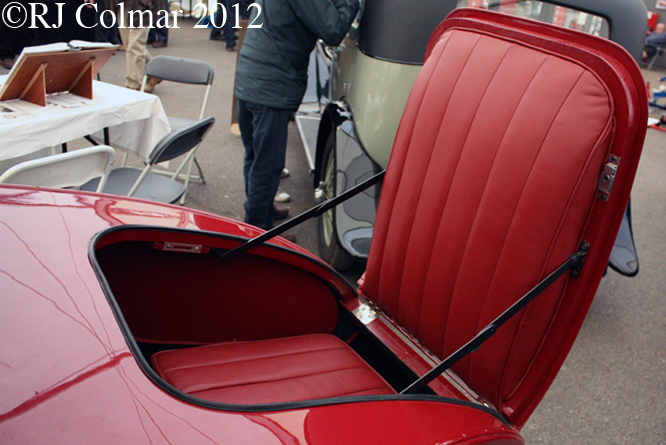
The 1929 chassis of the vehicle featured today was originally built as a prototype for the MK II saloon in 1929 however by the early 80’s the body was in such a poor state that it was replaced with a Mk III 18/100 ‘Tigress’ style body. Note the unique silver plated steering wheel boss from the original Mk II Prototype has been retained, but the dash and instrumentation are from a Mk III Tigress.
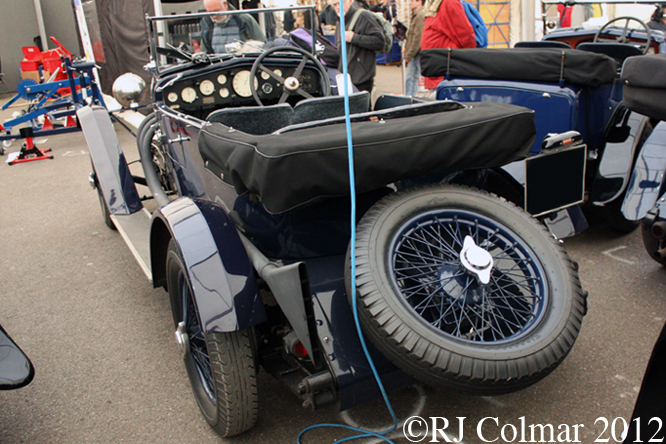
MG 18/80 Mk II Prototype, Bristol Classic Car Show

As a result of underwhelming track performance, only five ready to race Mk III ‘Tigress’ vehicles, styled after the contemporary Bentley competion models, were built in period.

Thanks for joining me on this “Silver Plated Steering Wheel Boss” edition of “Gettin’ a li’l psycho on tyres” I hope you will join me again tomorrow when I’ll be featuring a Techno DAF. Don’t forget to come back now !

Share

Buried And Covered In Concrete – MG 14/40 MK IV Sports

Towards 1927 production of MG’s moved to a new factory in Edmund Road, Oxford and production of the MG 14/40 MK IV commenced, with MG Car Company becoming a legal entity in 1928.

MG 14/40 Mk IV Sports, Bristol Classic Car Show

14/40’s were built around bare Morris Oxford chassis, unlike earlier MG’s that were built from completed frames that were striped and rebuilt to MG specifications, as the MG 14/28 had been but were now given MG chassis numbers, MG badges and motors, optimistically, estimated to produce 40hp.

MG 14/40 Mk IV Sports, Bristol Classic Car Show

MG publicity at the 1928, London, Motor Show mentions Land Speed Record Breaker Malcolm Campbell as an owner of a 14/40, a model which was struggling to sell at the time in part due to the age of the Oxford chassis and side valve motor underpinning the car.

MG 14/40 Mk IV Sports, Bristol Classic Car Show

MG founder Cecil Kimber went to great lengths to differentiate his cars from their Morris inheritance before fitting MG bodies, his alleged obsession with octagons is said to have been frequently overdone.

MG 14/40 Mk IV Sports, Bristol Classic Car Show

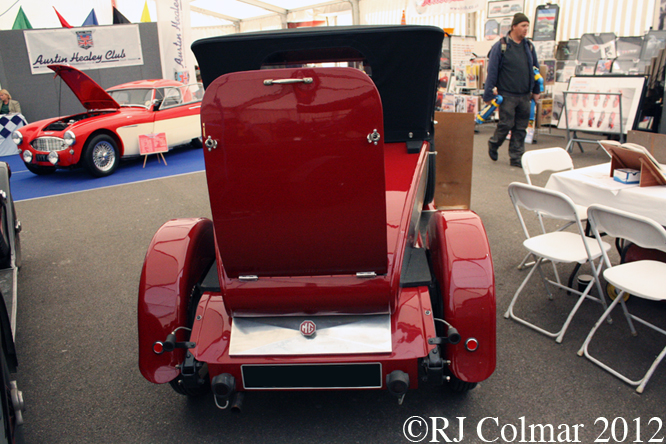
This Mk IV Sports is one of 135 such vehicles built in 1928 and the only survivor in the UK of a total of just four that are known to exist.

MG 14/40 Mk IV Sports, Bristol Classic Car Show

The winner of Best Vintage Car award at the Bristol Classic Car Show, where it is seen in these photo’s, has no history prior to 1999 when it was found beneath a ripped up concrete base of a shed in Gloucestershire.

MG 14/40 Mk IV Sports, Bristol Classic Car Show

The disassembled car was found carefully preserved beneath a further layer of gravel complete with it’s guarantee plate and original number plates apparently ready for it’s ground up restoration.

Thanks for joining me in this ‘Buried And Covered In Concrete’ edition of “Gettin’ a li’l psycho on tyres’ I hope you will join me again tomorrow when I’ll be going Dutch with a Daf. Don’t forget to come back now !
Share

Au Revoir P et L – Panhard 24 bt

In 1887 French Engineers René Panhard and Émile Levassor founded Panhard et Levassor to manufacture motor cars and using a Daimler motor manufactured under license offered their first car in 1890. All of their early cars were one off designs as they introduced a string of improvements on successive models. In 1891 they built a vehicle with a front mounted motor and rear wheel drive that would become ubiquitous in the motor industry for over half a century.

Panhard 24 bt, Malta Classic Car Collection

After a 48 hour 48 min drive Émile Levassor crossed the finish line first in the first mass start motor race, the 1,178 km / 731 mile which in 1895 Paris Bordeaux Paris. Panhard et Levassor was not awarded the win because the race was intended for vehicles with 4 seats and Levassor’s car only had two as did the Panhard et Levassor which came second.

Panhard 24 bt, Malta Classic Car Collection

Recording many race victories Panhard et Levassor became one of the largest automotive manufacturers prior to the Great War of 1914/18. Between the two World Wars Panhard et Levassor diversified into new areas including, like Bugatti, into rail buses.

Panhard 24 bt, Malta Classic Car Collection

After the 2nd World War Panhard focused on making light cars with two horizontally opposed cylinder motors and front wheel drive. Unofficial support for racing car manufacturers like Deutsch et Bonnet led to many success at Le Mans in the Index of Efficiency classifications during the 1950’s and 1960’s.

Panhard 24 bt, Malta Classic Car Collection

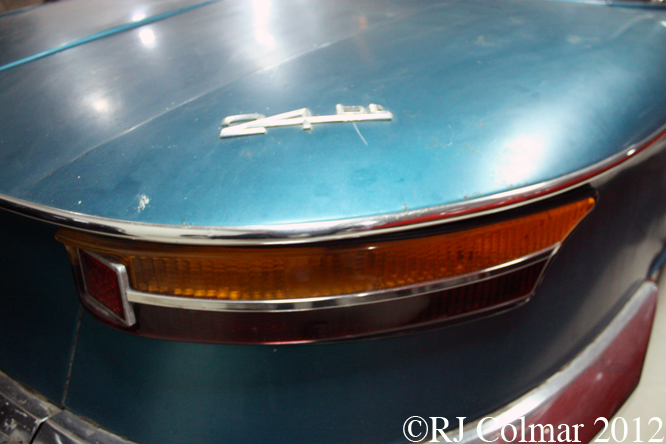
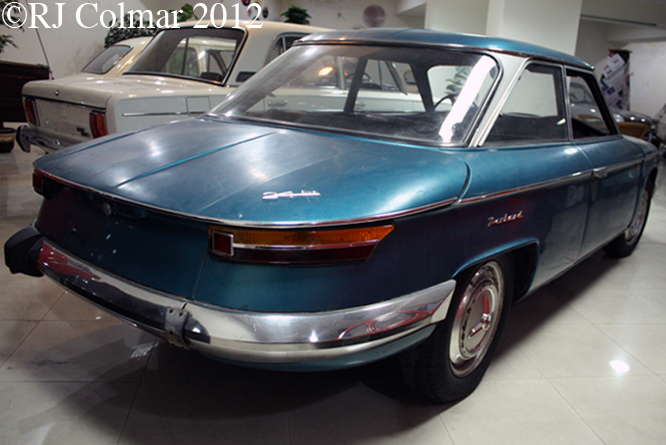
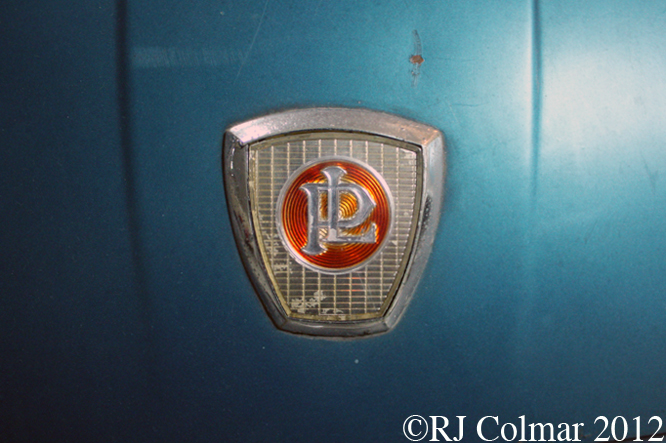
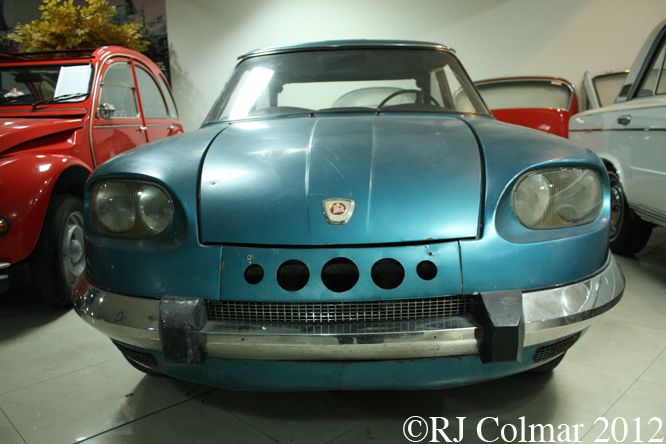
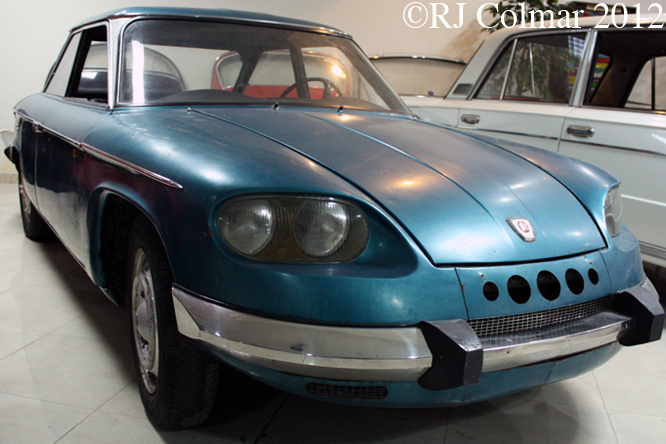
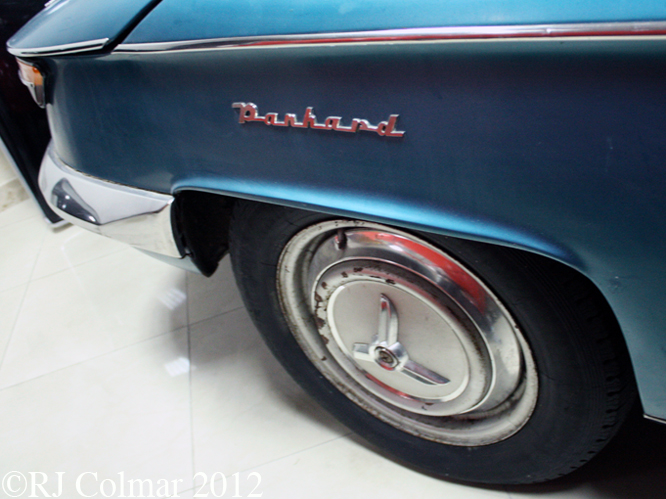
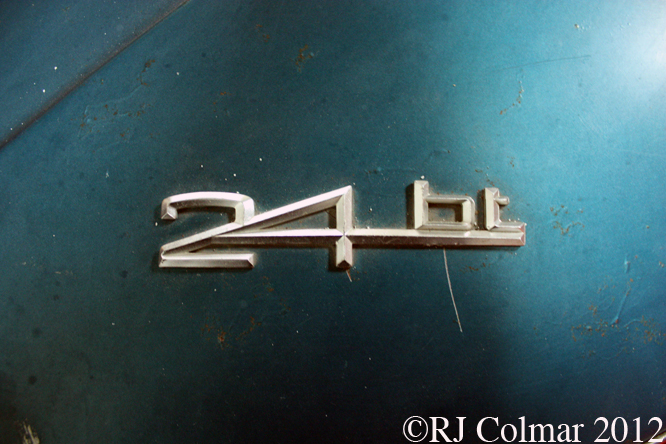
The Panhard 24 bt like the one seen here at the Malta Classic Car Collection was launched in 1964 featuring and air cooled 848 cc / 51.7 cui two cylinder engine, with origins dating back to the late 1940’s, driving the front wheels which allowed for the exceptionally low bonnet line which results in exceptional aerodynamic efficiency.

Panhard 24 bt, Malta Classic Car Collection

In 1965 Panhard was absorbed by Citroen during a period of rationalisation that was rampant throughout the European motor industry, so as not to compete with Citroen’s de luxe four door, four seater AMI 6 Citroén kept the spec of the 24 bt high and vetoed the development of a four door version.

Panhard 24 bt, Malta Classic Car Collection

Like, among many others, numerous BMW’s, the NSU Prinz, Stingray Corvette and Corvair from Chevrolet the Panhard 24 bt had a distinctive chromed trimmed midrift.

Panhard 24 bt, Malta Classic Car Collection

Saloon / Sedan 24 bt’s and the Coupé 24 ct‘s were amongst the earliest vehicles to feature integrated front and rear bumpers which gives the cars an efficient and stylish appearance which is taken for granted on new models these days but was well ahead of the curve even when production of the 24 bt ceased in 1967 marking the end of Panhard as a passenger vehicle manufacturer.

Thanks for joining me on this “Au Revoir P et L” edition of ‘Gettin’ a li’l psycho on tyres’ I hope you will join me again tomorrow when I’ll be looking the 1955 Indianapolis Pace Car on Americana Thursday. Don’t forget to come back now !
Share

Imshi Chassis – MG 14/28

The history of the foundation of MG cars as a manufacturer is closely linked to the development of a vehicle, by Cecil Kimber of Morris dealer Morris Garages in 1923, based on a 14/28 Morris Oxford chassis purchased directly from the Morris Factory. In 1927 Morris Garages started registering their cars for the road with the local council as MG’s advertising one such car as being based on the ‘Imshi chassis’. Imshi, Arabic for ‘get a move on’, refers to a news paper journalists six month expedition through Europe and North Africa in a 14/28 Morris Oxford.

MG 14/28 Classic Car Show, Bristol Classic Car Show

MG badges did not appear on the cars with MG bodies and modifications to Morris chassis and motors until 1928 and the blue radiator badge on the 1927 14/28 seen here bears the ‘Morris Oxford’ name. The car, seen here at the Bristol Classic Car Show, belonging to an Early MG Society member, is one of just 10 of the later 290 flat radiator 14/28’s built, the original 14/28 maintained the bull nose radiator from the original 14/28 Morris Oxford chassis.

MG 14/28 Classic Car Show, Bristol Classic Car Show

This car was found in 1989 and the current owner acquired it in 1996 and since proceeded with a restoration to bring the 65 mph car, which cost £350 new, to it’s current condition.

Thanks for joining me on this ‘Imshi Chassis’ edition of ‘Gettin’ a li’l psycho on tyres, I hope you will join me again tomorrow when I’ll be featuring a Panhard. Don’t forget to come back now !
Share

Easy Handler – Ford Gran Torino

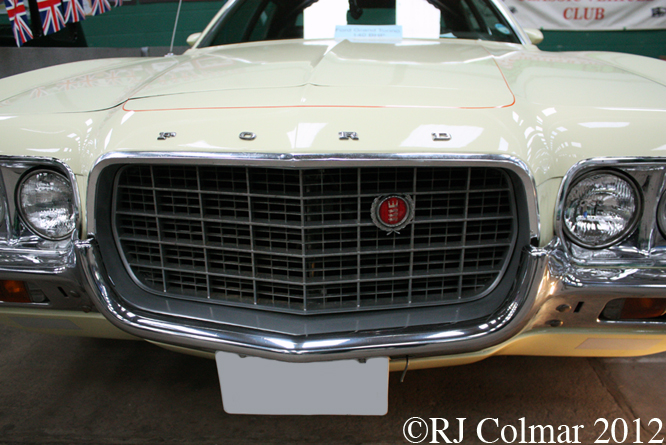
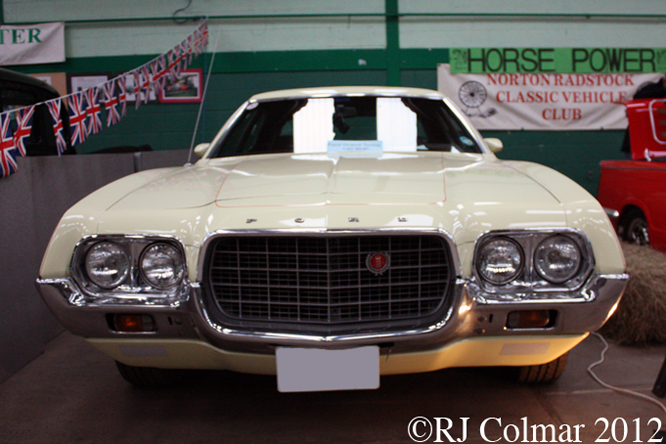
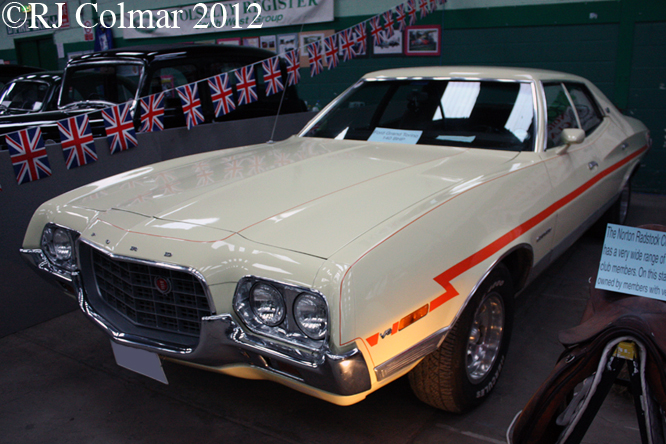
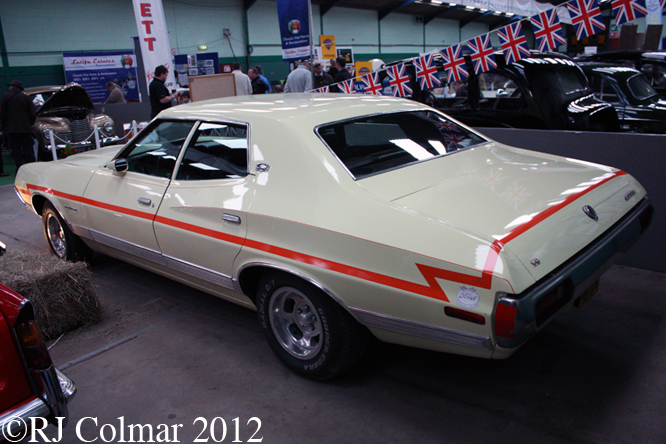
For 1972 Ford stepped back in time and revived the separate chassis frame and body technique to build the Torino and Gran Torino models that were made both wider and heavier in Ford’s relentless pursuit of a comfortable quiet ride, ‘easy handling‘ and not forgetting a good profit.

Ford Gran Torino, Bristol Classic Car Show

Behind the basking shark like mouth of this particular Gran Torino sits a mid range 5.8 litre / 351 cui Windsor or Cleveland V8.

Ford Gran Torino, Bristol Classic Car Show

The Torino’s improved ride was said in Ford’s publicity to be down to the ‘computer tuned’ suspension and was well received in contemporary press reports.

Ford Gran Torino, Bristol Classic Car Show

Styling of the ’72 was typical for the period long bonnet / hood, short boot / deck. The two and four door models were built on 114″ and 118″ frames respectively, allowing Ford to make significant savings in interchangeable body panels.

Ford Gran Torino, Bristol Classic Car Show

In a nod to advances in braking technology that had been widely available in Europe for five or six years the Torino along with its Mercury Montego twin became the first US mid size vehicle to have front disc brakes fitted as standard. It’s hard to imagine FIAT, the Italian automobile manufacturer, naming a model ‘Great Detroit’ after the USA’s great motor city but it is probably best not to tempt fate.

Ford Gran Torino, Bristol Classic Car Show

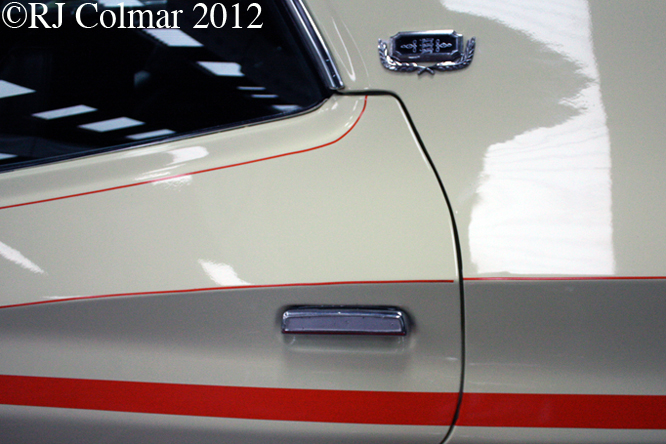
Recessed door handles were a new safety feature for the ’72 Torino models. The vehicle seen in these images at the Bristol Classic Car Show belongs to a member of the Norton Radstock Classic Vehicle Club.

Ford Gran Torino, Bristol Classic Car Show

The success of the 9 model ’72 Torino range can be judged by nearly 500,000 sales that for the first time since 1964 allowed Ford to eclipse the Chevrolet Chevelle to claim top spot in the mid size market segment. It was probably not by accident that Clint Eastwood chose a ’72 Gran Torino as an analogous model for his 2008 film of the same name to chart the decline of public civility in Detroit.

Thanks for joining me on this ‘Easy Handler’ edition of “Gettin’ a li’l psycho on tyres” I hope you will join me tomorrow. Don’t forget to come back now !
Share

Hilly Country Gathering – Classic Motorsports Mitty presented by Mazda

For the last 36 years Classic Sports and Racing Car enthusiasts have been gathering year for the Classic Motorsports Mitty for what is now claimed to be the oldest such gathering on the east coast. Kerry Williams kindly sent Steve Arnaudin his photo’s of last weekends event with permission for them to be used here.

Chevrolet Corvair, Road Atlanta, Classic Motorsport Mitty

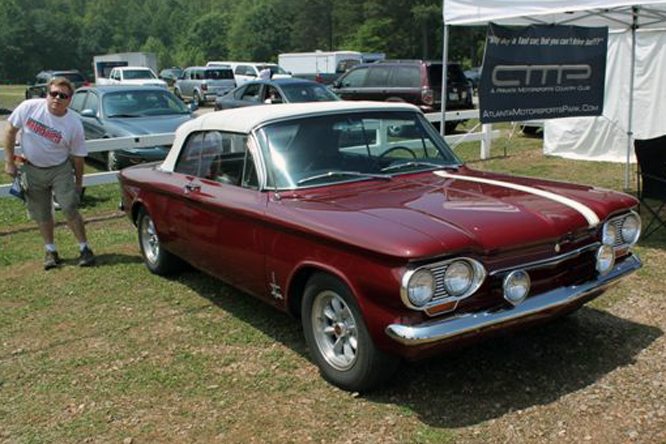
Among the classics present was this 1st generation convertible Chevrolet Corvair.

Chevrolet Corvair, Road Atlanta, Classic Motorsport Mitty

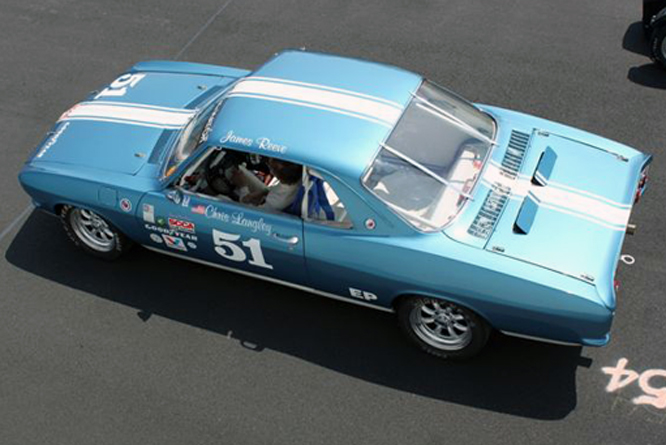
One of 15 racing Corvairs present the #51 above is a second generation model distinguished by it’s arrow like shape when seen from above.

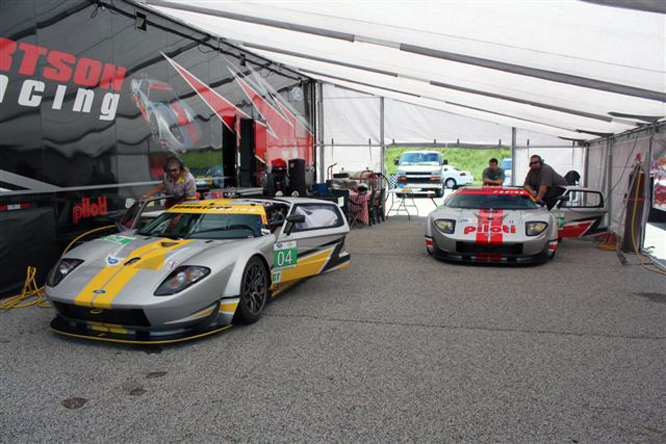
Ford GT40, Road Atlanta, Classic Motorsport Mitty

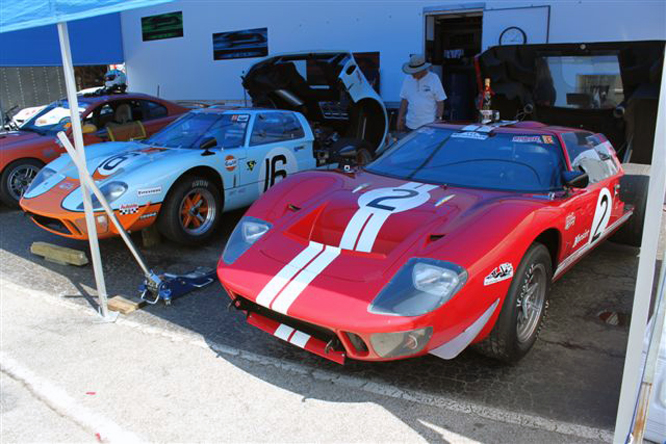
While I cannot speak for the historical authenticity of either of the vehicles above, they look like a pair of Ford GT40’s of the type Ford would come to dominate Le Mans with during the mid to late 1960’s.

Ford GT, Road Atlanta, Classic Motorsport Mitty

Robertson Racing is based in Braselton, GA, not far from the Road Atlanta track from 2008 until 2011 they raced Kevin Doran built Ford GT’s in the GT2 category of the American Le Mans Series. The highlight of their four years in the sport was a 3rd in class finish at Le Mans in 2011. The car with the yellow stripes appears to be chassis #JE5-004066-002 and the one with the red stripes appears to be chassis #JE5-004066-004.

Penske PC17, Road Atlanta, Classic Motorsport Mitty

All thought the Penske above is carrying the #8 as used by Rick Mears on the 1987 Penske PC16 the sidepods are more reminiscent of the 1988 PC 17, if you happen to know which car this is, or who is driving it please do not hesitate to chime in below.

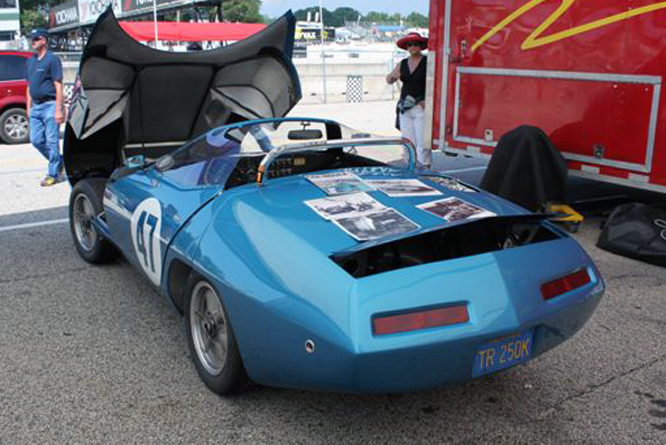
TR250 K, Road Atlanta, Classic Motorsport Mitty

The first of two vehicles I have never heard of before are the Brock Racing Enterprises (BRE) TR 250 K concept vehicle built in 1967 around a Triumph TR6 chassis and motor, some would have you believe this car should have been developed into the Triumph TR7.

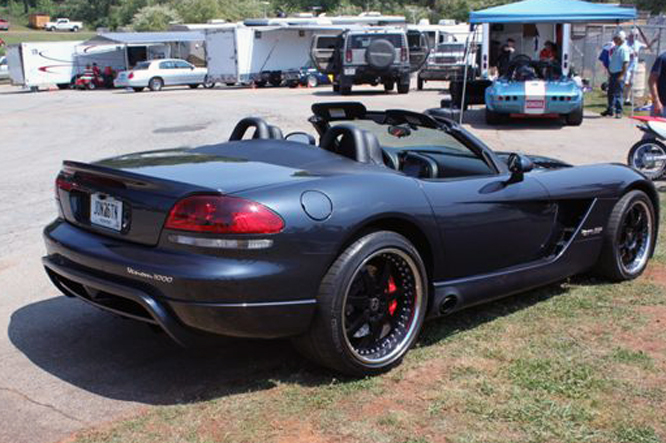
Hennessey Venom 1000, Road Atlanta, Classic Motorsport Mitty

Finally I’d like to suggest that if your 500 hp Viper is feeling a bit tame and you happen to have US $187,710 in spare change you might take car & cash over to Hennessey who will double the horsepower with a pair of Turbo Chargers and give the body and chassis some modification and leave you with a Hennessey Venom 1000 timed from rest to 200 mph in just 20.3 seconds by Road & Track, now that is what I call ‘Gettin’ a li’l psycho on tyres’ !

My thanks to Kerry Williams for permission to use his photo’s and to Steve Arnaudin to think to forward them.

Thanks for joining me on this ‘Hilly Country Gathering’ edition of ‘Gettin’ a li’l psycho on tyres’, I hope you join me tomorrow for Ferrari Friday. Don’t forget to come back now !
Share

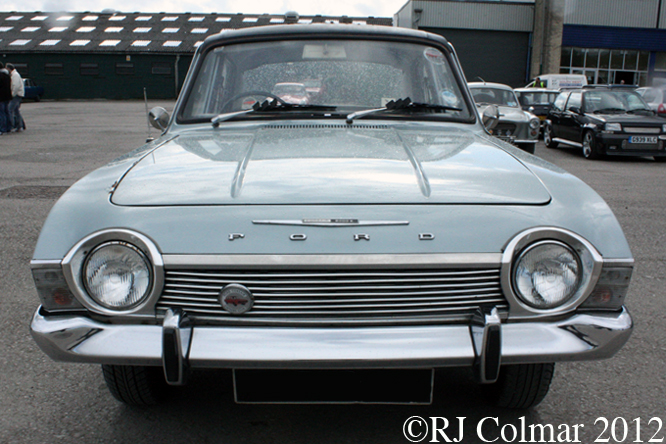
“We’ve Got A V In Our bonnet” – Ford Corsair 2000E

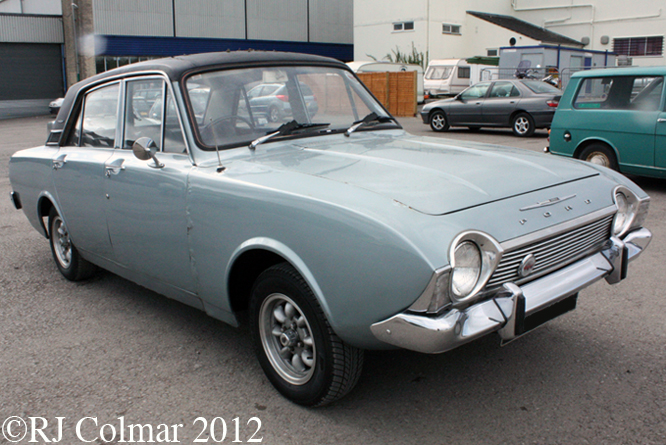
The UK Ford Corsair sharing mechanical components with the Cortina, Classic and Capri was a midsize car launched in 1963.

Ford Corsair 2000E, Bristol Classic Car Show

Drawing on styling queues from the contemporary US Ford Thunderbird it was initially powered by a 1500cc 91.5 cui Ford Kent engine.

Ford Corsair 2000E, Bristol Classic Car Show

In 1964 twins Tony & Micheal Brookes set 13 World Speed Records in Italy for 1500 cc / 91.5 cc cars in a Corsair GT managing to average over 100 mph over a distance of 15,000 miles / 24,000 kms.

Errata 12 05 08 It has transpired that the record setting at Monza by a Ford Corsair is a myth that started with a Ford Corsair sales booklet. It would appear that a team of five drivers Eric Jackson, Ken Chambers, John Beckhart, Michael Bowler and John Maclean go to Monza and set some records in a Ford but in a Ford Zodiac IV not in a Ford Corsair. Apologies for any confusion caused.

Eric Jackson and Ken Cambers did however narrowly beat the RMS Windsor Castle in a race from Cape Town to Southampton in 1967. Owners of the Windsor Castle, Union Castle, were apparently gracious in defeat pointing out that all though they were not as fast as the Ford Corsair their passengers traveled in considerably more comfort.

Ford Corsair 2000E, Bristol Classic Car Show

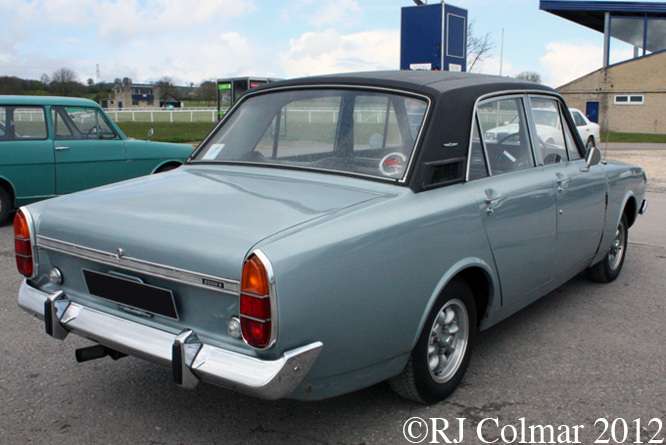
In 1965 the Kent straight four motor was phased out in favour of the Essex V4 which led to the strap line “I’ve got a V in my bonnet”, the Essex V4 in both 1663 cc / 101 cui and later 1996 cc / 121.8 cui forms was out of balance configuration which led to rough idling and course characteristics making a mockery of the strap line “Smooth Silent V Power” that was also used when the V4 Corsair was launched.

Ford Corsair 2000E, Bristol Classic Car Show

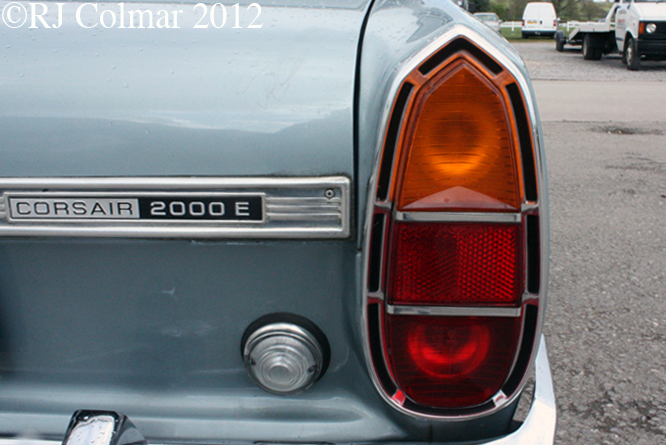
Performance of the V4 was down with a maximum of just 95 mph achievable even with the larger engine as seen in the 2000E variant seen here at the 33rd Bristol Classic Car Show.

Ford Corsair 2000E, Bristol Classic Car Show

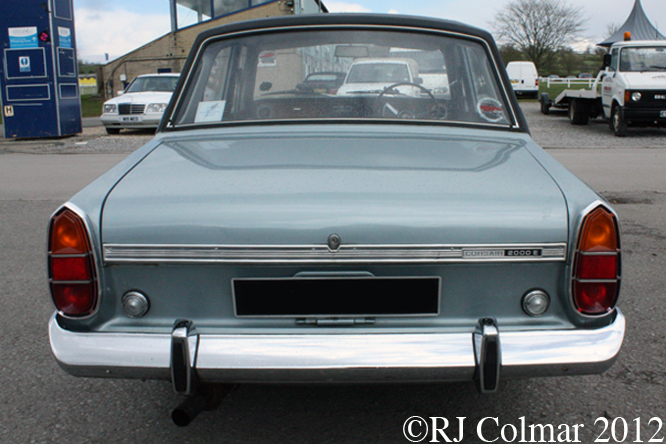
The 2000E, executive, featuring dechromed sides, leaving the door handles looking oddly exposed, upgraded cabin fittings, lots of dials, and reversing lights, was undercut the Rover 2000 model against which it was competing for sales by £310, £1357 for the Rover against £1047 for the 2000E.

Ford Corsair 2000E, Bristol Classic Car Show

With vestiges for the Jet Age styling prevalent in the 1950’s the Corsair was in production until 1970 with 310,000 units built.

Thanks for joining me on this “We’ve Got A V In Our bonnet” edition of ‘Gettin’ a li’l psycho on tyres’, I hope you will join me again, tomorrow. Don’t forget to come back now !
Share