Tag Archives: Colmar

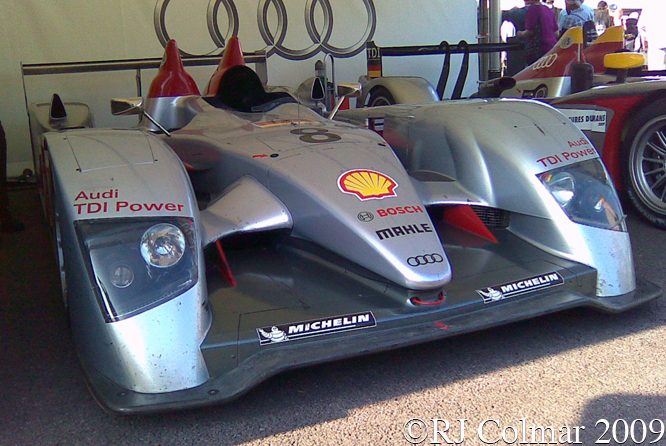
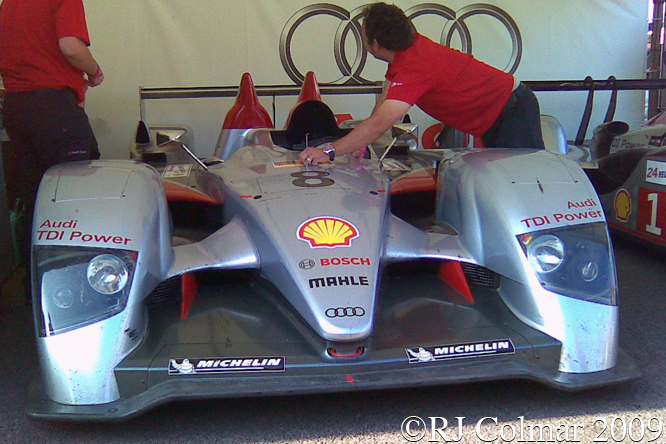
Diesel Über Alles – Audi R10 TDI #102

After winning Le Mans five times from six attempts between 2000 and 2005, interrupted only by Bentley with it’s Audi derived V8 motor, Audi entered the 2006 season with a real game changer.

The turbocharged 5.5 litre V12 335 cui motor used to power the Audi R10 TDI was to run on diesel, and thus reopen a frontier of development in top line motorsport not seriously looked at since the turbocharged Cummins Diesel Special appeared at Indianapolis Motor Speedway in 1952.

Audi R10 TDI, Goodwood Festival of Speed

Chassis #102 seen here at Goodwood Festival of Speed appeared in just six races in 2006, after being the fastest car in testing at the Sebring it disgraced it’s self by retiring with an overheating motor in the Sebring 12 hours with Frank Biela, Marco Werner and Emanuele Pirro at the wheel. It’s sister car chassis #101 driven by Rinaldo Capello, Tom Kristensen and Allan McNish became the first diesel powered vehicle to win an international sports car race.

The #102 was 4th fastest on it’s next appearance at the Le Mans test day and two weeks later qualified second for the 2006 Le Mans 24 Hour Race with the Frank, Marco and Emmanuel again sharing the driving.

Audi R10 TDI, Goodwood Festival of Speed

The 2006 Le Mans 24 Hours was won by today’s featured car which finished four laps ahead of the petrol powered Pescarolo Sport C60 Hybrid driven by Rally legend Sebastian Loeb with Eric Hélary and Franck Montagny.

After Le Mans #102 was sent back to the States to compete in the American Le Mans series where it competed in four more events with Emanuele Pirro and Frank Biela sharing the car for two second place finishes at Portland and Laguna Seca.

The R10 TDI claimed two further Le Mans victories in 2007 and 2008 and every Le Mans winner between 2006 and 2011 would be diesel powered with Peugeot interrupting the Audi juggernaut with it diesel powered 908 HDI in 2009. In 2012 and 2013 Audi continued winning Le Mans with it’s diesel electric hybrid R18 e-tron quattro model.

Thanks for joining me on this “Diesel Überalles” edition of “Gettin’ a li’l psycho on tyres”, I hope you will join me again tomorrow for another pre ’39/’45 war British Le Mans competitor designed by W.O.Bentley, that is not a Bentley. Don’t forget to come back now !

Share

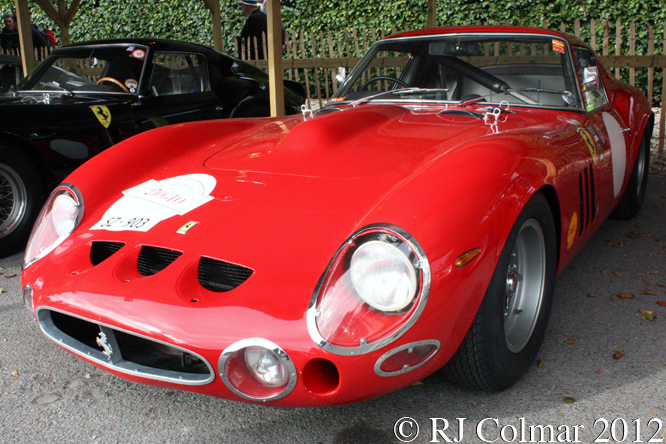
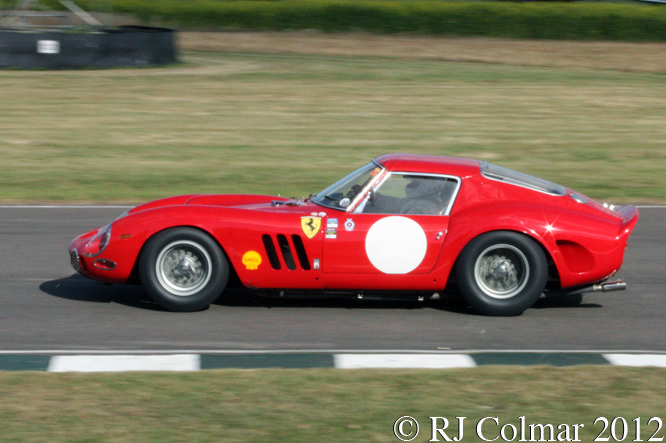
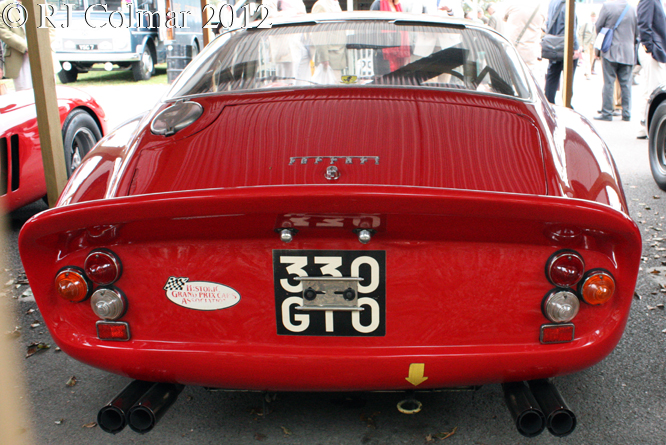
Directors Special – Ferrari 330 GTO #4561SA

In 1962 Le Mans 24 hour race organisers the Automobile Club Ouest announced a special class for prototype racers, with a motor displacement limit of four litres / 244 cui, in addition to the World Championship Grand Turismo class for prototype racers which included the Ferrari 250 GTO and later Ford Daytona Cobra’s.

Ferrari 330 GTO, Goodwood Revival

Ferrari having launched it’s 4 litre Superamerica in 1959 had the perfect motor for the class on it’s books and wasted no time tuning racing versions of the 4 litre / 244 cui V12’s to produce 390 hp.

Ferrari 330 GTO, Goodwood Revival

Ferrari prepared two cars to run with the special prototype class motors, one was fitted to a modified 250 TR which won the race with Phil Hill and Oliver Gendebien driving to their combined third and final win, it was also Oliver’s fourth Le Mans win.

Ferrari 330 GTO, Goodwood Revival

While the second 4 litre V12 was fitted to a modified 250 GT0 chassis #2765LM that completed 56 laps of the ’62 Le Mans race in the hands of Mike Parkes and Lorenzo Bandini, before retiring with an overheating motor after an accident.

Ferrari 330 GTO, Goodwood Revival

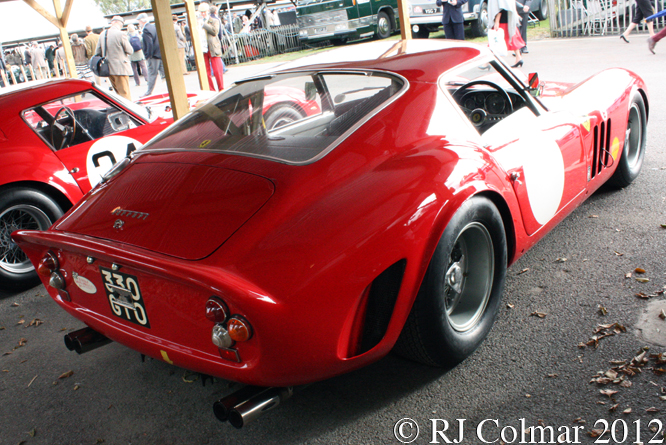
It believed that five more 330 GTO’s were built all of them on Superamerica chassis, as opposed to a modified 250 GTO chassis, 4 of them with angular Pininfarina Berlinetta body work and today’s featured car #4561SA which shares the same 250 GTO style body work as the original 330GTO chassis #3765LM.

Ferrari 330 GTO, Goodwood Revival

Today’s car chassis #4561SA built in 1963 is one of two 330 GT0’s that was never actually raced at Le Mans being built originally for Michel Paul-Cavallier.

Michel was a French industrialist who owned a number of Ferrari’s through the 1950’s and became the only foreign board member of SEFAC SpA when it was founded by Enzo Ferrari on the 23rd of May 1960.

In 1965 Charles Daniels bought the car and both he and #4561SA survived a road accident later the same year which necessitated the car being sent back to Maranello for repairs.

Charles raced the car twice in 1966 crashing at Snetterton and finishing 3rd at a Maidstone and Kent Motor Club Meeting organised at Brands Hatch.

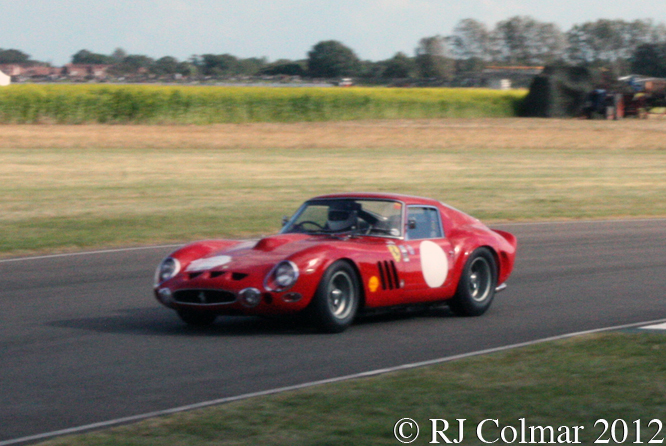
Swiss owner Carlo Voegele is seen at the wheel during the 250 GTO anniversary parade at Goodwood Revival in 2012.

Thanks for joining me on this “Directors Special” edition of “Gettin’ a li’l psycho on tyres” I hope you will join me again tomorrow when this months Le Mans series of blogs continues with a look at the first diesel powered car to win the Le Mans 24 Hours. Don’t forget to come back now !

Share

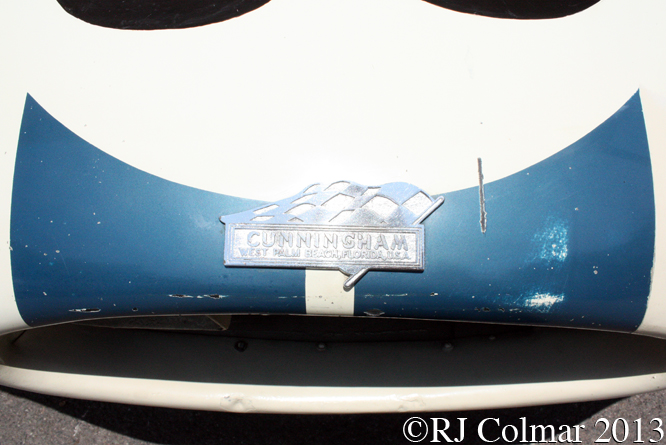
Smaller, Lighter, RHD – Cunningham C6R

After experiencing less than outright success at Le Mans with the Cadillac Le Monstre Cunningham in 1950, Chrysler powered Cunningham C2R in 1951, similarly powered C4R in 1952 and C5R in 1953 Briggs Cunningham decided that three short comings of the previous designs had to be addressed.

His next new project the C6R, had to be smaller, lighter and right hand drive to optimise weight distribution on a circuit with predominantly right hand corners.

Cunningham C6R, Goodwood Festival of Speed

The C6R was also originally intended to be powered by a race bred 340 hp 4.5 litre / 274 cui Ferrari V12 motor of the type more commonly found in a Ferrari 375MM of the type he had run at Le Mans in 1954 for Phil Walters and John Fitch.

Cunningham C6R, Goodwood Festival of Speed

Responsibility of the design for the body of the C6R was handed over Herbert “Bud” Unger who had worked on the bodies of the Cunningham C4R and C5R Cunningham’s as a metal worker.

In correspondence with me, about the design, Mr Unger said; “The engineers wanted maximum air flow to the brakes front and rear…” These were 13 inch air cooled drum brakes, prone to fading when hot. “I made the front air intake as large as possible and also extra air intakes on both sides beside the main grille air intake.

Cunningham C6R, Goodwood Festival of Speed

Next, I tapered the side of the body in from the front fenders all the way back to the rear fenders and by large air scoops to get maximum ram air into both rear brakes.”

By the time the car appeared at Sebring in 1956 with it’s unpainted aluminium body, crafted by “a man form Europe that was an expert with the (English) wheel.

Cunningham C6R, Goodwood Festival of Speed

Briggs, for reasons unknown, compromised the original design criteria by fitting a modified 3 litre Indy 500 engine running on petrol instead of the usual alcohol brew.

Le Patron shared the driving at Sebring with John Gordon Bennett and they retired from the race on the 54th lap after the clutch disintegrated.

Cunningham C6R, Goodwood Festival of Speed

When the C6R appeared at Le Mans the body had some alterations including a single smaller front intake and a D-Type Jaguar like headrest and rear fin and the car ran over the weekend with the rear brake cooling intakes in open and blanked off configurations.

During the course of it’s second race Briggs and Sherwood Johnson found the C6R started loosing gears and it retired from 13th place after 18 hours after the engine had enough of pushing the car round in forth, top, gear only.

Cunningham C6R, Goodwood Festival of Speed

Briggs Cunningham raced the car one more time in 1955 at Road America where the Offy motor again expired for good.

The car did not run again until 1957 by which time a 3.8 litre 6 cylinder Jaguar six cylinder motor had been fitted.

Cunningham C6R, Goodwood Festival of Speed

Briggs raced the car on four occasions with a best known result of 9th at Lime Rock in June 1957.

The car was permanently retired to Briggs Cunningham’s collection thereafter which has since become part of the Collier Collection. It is seen here at recent Goodwood Festival of Speed meetings.

My thanks to Mr Unger, Cunningham Motorsport Historian Lawrence W. Berman, Paul Kierstein from the photo archive and Sondre Kvipt in Norway who facilitated my correspondence with Mr Unger. Thanks also to Herbert at The Nostalgia Forum who brought up the subject of the C6R’s blanked off rear air intakes.

Thanks for joining me on this “Smaller, Lighter, RHD” edition of “Gettin’ A L’il Psycho On Tyres” I hope you will join me for Ferrari Friday tomorrow. Don’t forget to come back now !

Share

Unfinished Business – Lister Coupe #

After building a successful range of open top sports racing cars powered by MG, Bristol, Jaguar and Chevrolet motors between 1953 and 1958 Brian Lister turned to Frank Costin to build an all new spaceframe chassis with an open body to be powered by a 3 litre six cylinder Jaguar XK motor for a crack at Le Mans which he considered “unfinished business”.
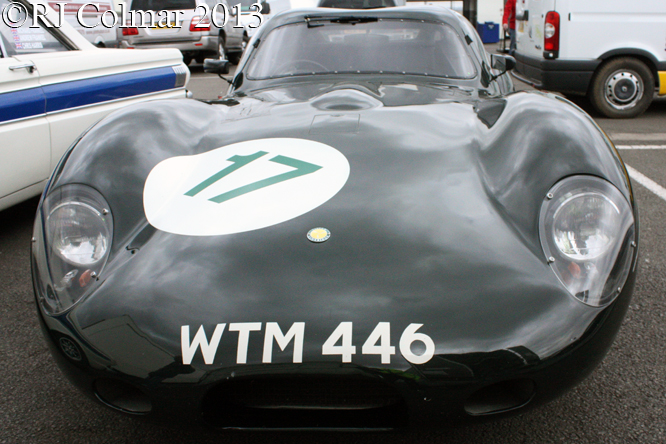
01 Lister Coupé_7625sc

However after the death of his lead driver Archie Scott-Brown at Spa driving a Lister in 1958 and the fatal accident which killed his 1959 leading driver Ivor Bueb, driving a Cooper open wheeler in 1959, Brian Lister was prompted to retire from building racing cars bearing his name leaving the 3 litre spaceframe project which had never been given a chassis number unfinished.
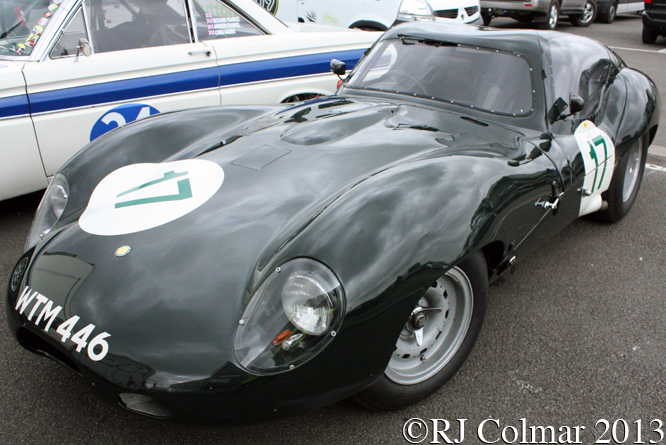
Lister Coupé, HGPCA Test Day, Silverstone

Rhostyllen, North Wales, garage proprietor Syd Diggory finished the open bodied spaceframe car off fitting a 3.8 litre Jaguar motor in 1960. Syd entered the car in several events for Bruce Halford, who won one race at Brands Hatch with it.
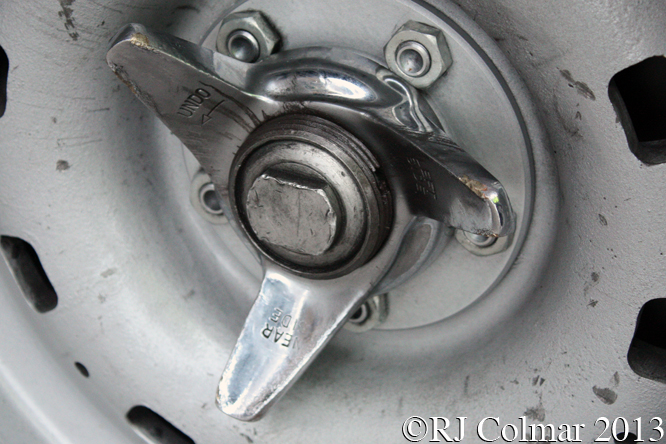
Lister Coupé, HGPCA Test Day, Silverstone

John Coundley acquired it in 1961 after his own Lister chassis #126 with the registration WTM446 had been damaged by Stephen Ouvaroff on the set of the film “The Green Helmet”.

Lister Coupé, Goodwood Revival

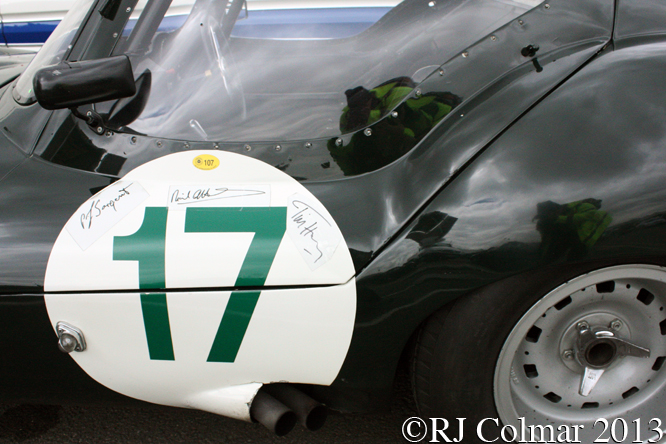
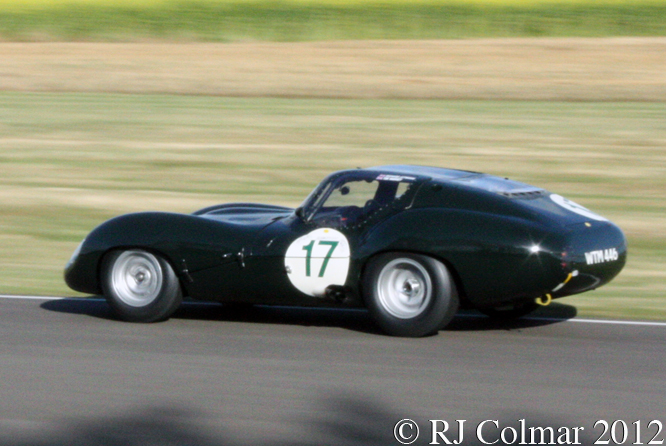
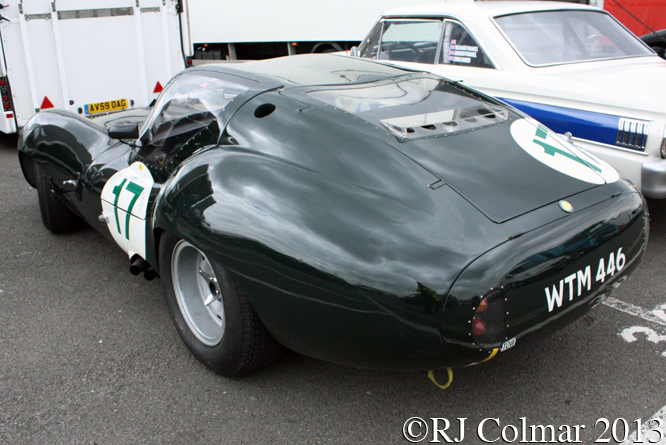
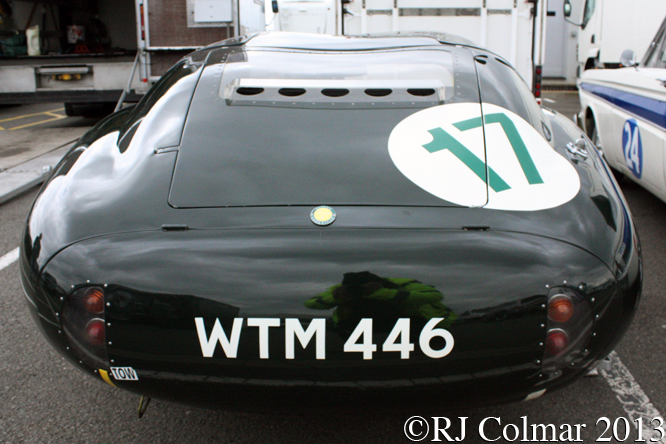
12 months later Le Mans racer Peter Sargent bought both the space frame Lister and the damaged, in former owner John Coundley’s eyes ‘written off’ tube framed #BHL126 registered WTM446. Peter commissioned the space framed car’s designer Frank Costin to design the double bubble closed coupé body fabricated from aluminium which is seen on the car today. Frank also made various chassis and suspension modifications to accommodate rising rate front suspension and 15″ Dunlop wheels.
Lister Coupé, HGPCA Test Day, Silverstone

Peter Sargent was joined by Peter Lumsden at the 1963 Le Mans test weekend to drive the barely finished unpainted rebodied car, bearing the registration number WTM446 from the older #BHL126 Lister and temporarily fitted with Webber carburetors.
Lister Coupé, Goodwood Revival

The Coupé proved to be quicker than the E-Type Jaguar the two Peters had shared at Le Mans in 1962 but was in need of further development which continued right up until the day before the race when it was found that a subframe was allowing the front wheels to toe out like a ‘barn door’.
Lister Coupé, HGPCA Test Day, Silverstone

With a fix for the suspension the Lister went to the grid with a fuel injected motor rebuilt by Jaguar fitted with oval exhausts in place of the round ones to raise the ground clearance. The Lister reached 16th place by the third hour of the event when it’s retirement was brought about by clutch failure.
Lister Coupé, HGPCA Test Day, Silverstone

Peters Lumsden and Seargeant continued developing and racing the Lister Coupé with some success in club meetings through 1963.

In 1964 John Coundley and Jack Fairman shared the car in the 1000 kms race at the Nurburgring where they qualified a lowly 68th and retired with rear suspension failure on the Coupé’s final international appearance.

David Harvey, now Jaguar owners club chairman become the next owner of the unique Lister and had it fitted with a D-Type motor and gearbox. David and his wife drove it competitively in sprints and hillclimbs, earning a class record at Gurston Down, and when his usual road car was off the road the Coupé was also used as a daily driver since it was registered and taxed with it’s WTM 446 registration.

The known chain of ownership of the Coupé includes historic owner and collector Neil Corner before it was acquired by Hexagon of Highgate who had the roof chopped off to return the car to the open top specification as it was raced from 1960 to 1962. In 1972 Gerry Marshall won the last ever motor race run at Crystal Palace in the open top space frame Lister. Some years later Gerry drove the car again under new ownership to win the 1980 Lloyds and Scottish Championship historic series.

The Coupé GT bodywork was returned to the car by Maurice Gomm for Dr Philippe Renault a private museum owner from Le Mans in the mid 1980’s.

More recently the Lister Coupé has become a regular competitor at Goodwood Revival where it survived major damage in 2006 and 2010. In 2012 the Lister Coupé was shared by 1970 Le Mans winner Richard Attwood and 1992 British Touring Car Champion Tim Harvey.

The two entities that have born the registration WTM446 became the subject of a court battle after the Lister #BHL126, which former owner John Coundley had considered a “write off”, was brought back to life.

The new owner of the rebuilt #BH126 took the owner of the spaceframe Lister Coupé and the Driver and Vehicle Licensing Agency (DVLA) to court in a dispute over who owned the WTM446 registration. The Court appears to have found that no car should have that number and has not issued it to either vehicle since.

Thanks for joining me on this “Unfinished Business” edition of “Gettin’ a li’l psycho on tyres” I hope you will join me again tomorrow for a look at a Cunningham. Don’t forget to come back now !
Share

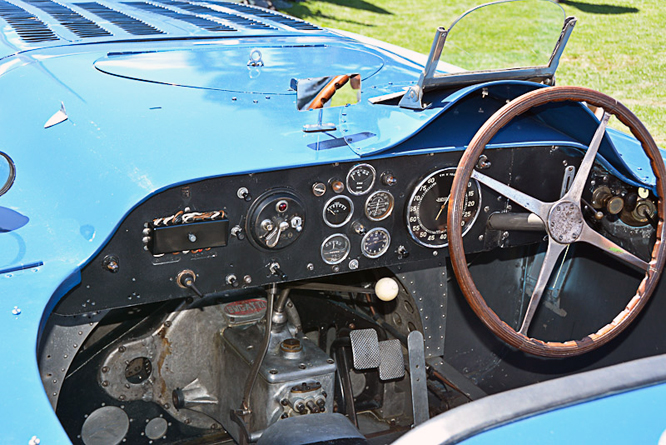
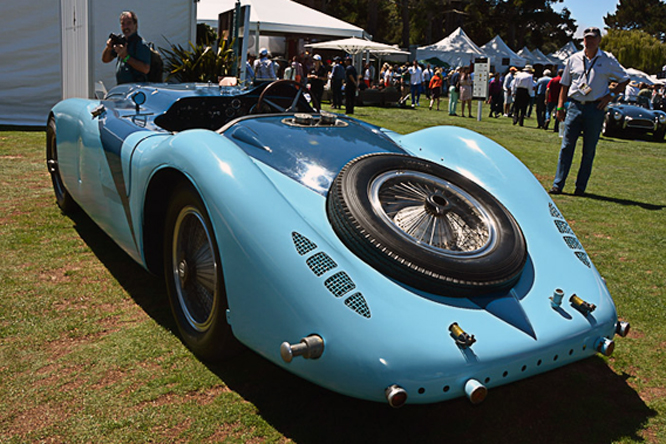
High Front Wheel Vents – Bugatti Type 57G #57335

Two years after disassociating himself from remarks made in the the French Press in which Ettore Bugatti is alleged to have described the dominant Bentleys of the day as the “fastest lorries in the world” Bugatti made his first official attempt at the Le Mans 24 Hours in 1931.

The three supercharged 5 litre / 302 cui straight eight powered Type 50S models however proved unreliable and up until 1936 when today’s featured Type 57G was built the marques best result on the worlds fastest roundabout was a sixth place recorded by the privateers Jean Sébilleau and Georges Delaroche aboard there 1.5 litre / 91.5 cui Type 40 in 1932.

Bugatti Type 57G, The Quail

For 1936 Bugatti are believed to have taken four low slung Type 57S chassis fitted with Type 59 (Grand Prix car) wheels and brakes, unsupercharged 3.3 litre 24 valve straight eight motors and built aerodynamic bodies for them that did away with the prevalent cycle wings / fenders giving the whole body a unitary look more familiar to a Land Speed Record vehicle.

During testing at Montlhéry in prior to Le Mans the prototype car is believed to have been damaged. The Le Mans 24 Hours was cancelled because of a General Strike in 1936.

Bugatti Type 57G, The Quail

In preparation for their delayed attempt at the Le Mans 24 hours the three remaining cars were all entered into the GP de l’A.C.F run at Circuit Routier de Linas-Montlhéry and then again the Marne Grand Prix run at Reims in June and July 1936.

The owner of today’s featured car neurosurgeon Fred Simeone believes his chassis #57335 won both of them, with Jean-Pierre Wimille and Raymond Sommer sharing the honours driving the #84 at Montlhéry and Jean-Pierre driving the #12 solo at Reims.

Bugatti Type 57G, The Quail

This proved a powerful portent of things to come, over the winter of 1936 and 1937 chassis #57355 in particular appear to have gone on a diet.

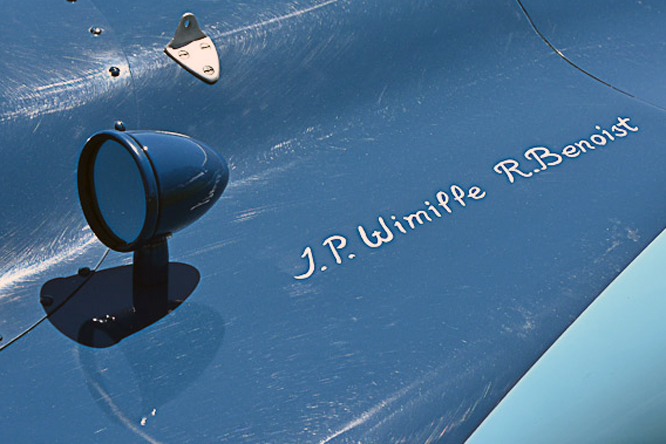
Only two Type 57Gs were entered into the 24 Hours of Le Mans both entered by Roger Labric a driver and journalist, the #1 for Roger and Pierre Veyron while the lighter #2 chassis #57355 was driven by Jean Pierre and Robert Benoist.

Bugatti Type 57G, The Quail

The #1 entry retired just after half distance while Jean Pierre and Robert went on to win by 7 laps from the 2nd place Delhaye driven by Joseph Paul and Marcel Mongin to score the first of Bugatti’s two overall Le Mans victories.

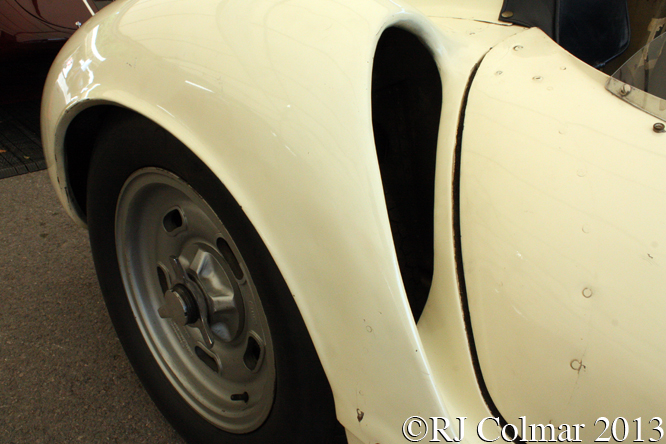
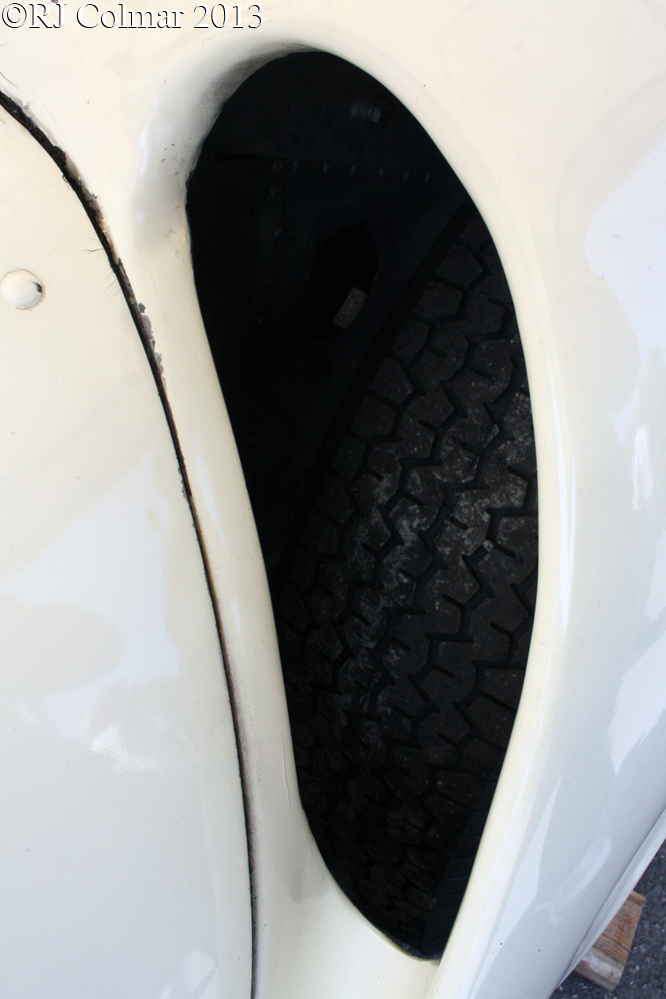
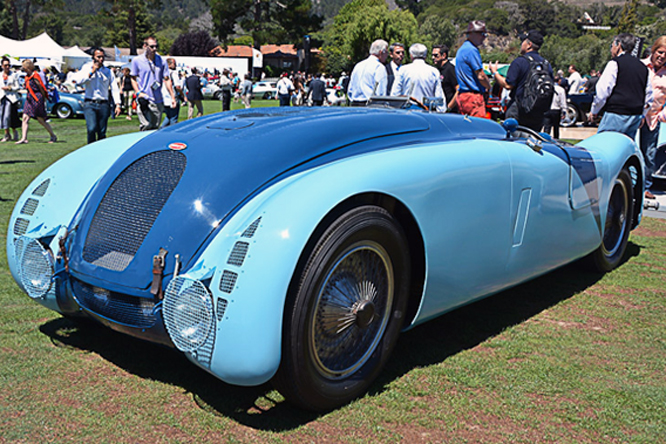
#57355 is easily distinguished from it’s siblings by the high front wheel vents, unique to the #84, which can easily be seen in this linked black white photo of the three undamaged cars taken at Montlhéry in 1936 and confirms that #57355 won each of the three races into which it was entered.

Today #57355 is the only 57G survivor, though there is at least one copy that was finished earlier this year that appeared at Goodwood. #57355 is normally to be found at the Simeone Foundation Automotive Museum in Philadelphia, Pa. but is seen in these photographs by Geoffrey Horton at The Quail last year.

My thanks to Geoffrey Horton for sharing his photographs. I’d also like to thank The Nostalgia Forum contributors Roger Clark for debunking the “Fastest Lorry Myth” and MT Anorak for his insights into the story of the Bugatti Type 57G cars.

Thanks for joining me on this “High Front Wheel Vent” edition of “Gettin’ A Li’l Psycho On Tyres” I hope you will join me again tomorrow. Don’t forget to come back now !
Share

Unwelcome Early Night – Maserati 300S #3054

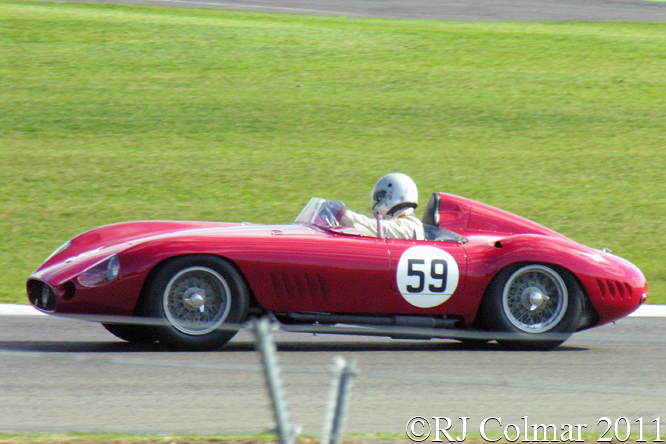
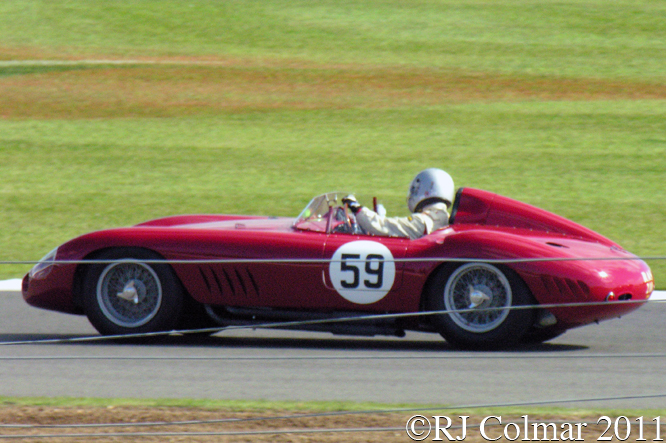
Carrying the #15 on the 1955 Le Mans entry list, one spot below Mike Sparken’s #14 Ferrari 750 Monza chassis 0504M which I looked at some time ago, was today’s featured Maserati 300S chassis #3054 which was to be driven by Roberto Mieres and Cesare Perdisa two weeks after the car had been driven to victory at Monza by Luigi Musso and Jean Behra.

24 laps into the race #3054 was running in second place overall when it retired with a gearbox problem giving the drivers an unwelcome early night. Ironically this occurred 1 lap after the #14 Ferrari had retired with a broken motor.

Maserati 300S, Rettenmaier, Silverstone Classic

A second Maserati 300S #3055, driven by Luigi Musso and Luigi Valenzano lasted 239 laps before it’s gearbox also failed making it the last car to retire from the 24 hour classic.

From it’s first four starts, by a 2 litre A 6GS in ’54 another in ’55 along side the two 3 litre cars, in the Le Mans 24 Hours Maserati had yet to record a single finish.

Maserati 300S, Rettenmaier, Silverstone Classic

With it’s gearbox repaired Jean Behra drove #3054 two weeks later to victory in the 1955 Portuguese Grand Prix and at the end of 1955 Juan Manuel Fangio drove #3054 to victory in the first Venezuelan Grand Prix.

For 1956 the #3054 was fitted with a long nose body and the car was taken to Buenos Aires where Stirling Moss and Carlos Menditeguy drove her to victory in the 1000km race. Piero Taruffi and Jean Behra then drove #3054 to 5th overall and 1st in class in Sebring 12 Hours.

Carlos Menditeguy teamed up with Jean Behra to drive #3054 in the 1957 1000kms race at Buenos Aires finishing second but 1st in class.

The #3054 was subsequently sold to Venezuelan Escuderia Sorocaima and the known results during his ownership include a 22 overall and 3rd in class finish in the 1962 3 hour Daytona race with Guido Lollobrigida at the wheel.

After Daytona Charlie Kolb bought the car and recorded 2nd place finishes with it at Fernandina Beach and Marlboro before going one better to record a win at Savanah which appears to be the last recorded in period outing for #3054.

The car is seen in these photo’s at the Silverstone Classic with Stephan Rettenmaier at the wheel.

Thanks for joining me on this “Unwelcome Early Night” edition of “Gettin’ A L’il Psycho On Tyres”, I hope you will join me again tomorrow for a look at the first Le Mans winning Bugatti. Don’t forget to come back now !
Share

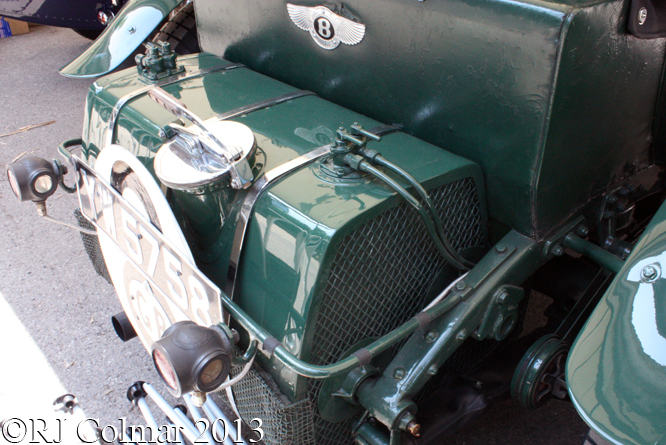
4th Of Four – Bentley 4 1/2 Litre #TX3246

Just as May is the month motorsport turns it’s attentions to the Indianapolis 500 and Monaco Grand Prix June is traditionally the sports interest focuses on the Le Mans 24 Hours. This month I have lined up 29 vehicles that either competed in the event, are of a type that competed in the event and or were designed to compete in the event but for one reason or another did not compete on the fastest roundabout in the world.

Humphrey Wyndham Cook is listed on the peerage.com as being born in 1893 to Wyndham Francis Cook and Frederica Evelyn Stillwell Freeland he attending Harrow on the Hill School and Christ Church, Oxford University.

Bentley 4 1/2 Litre, Goodwood Festival of Speed

Described as quiet and enthusiastic Humphrey started racing in 1914 and continued after The Great 1914/18 war racing Vauxhall’s and Bugatti’s mostly at Brooklands.

In 1928 he entered today’s featured car an unsupercharged 4 1/2 litre Bentley, chassis #TX3246 in the 1928 Tourist Trophy at Ards where he finished 7th.

Bentley 4 1/2 Litre, Goodwood Festival of Speed

The car next appears to have been entered by W.O. Bentley in to the Double Twelve at Brooklands, two 12 hour races being run in daylight on the same weekend, so as not to disturb the neighbors at night, in May 1929 where Humphrey and Frank Clement retired with a big end failure.

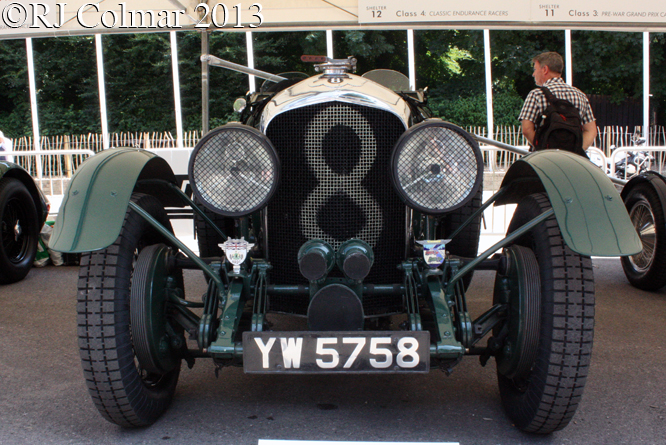
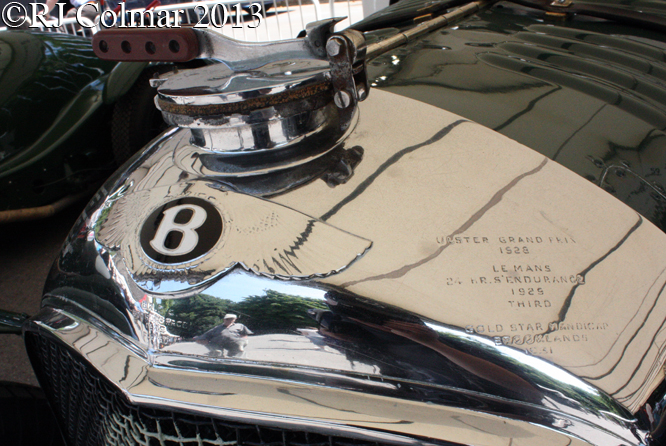
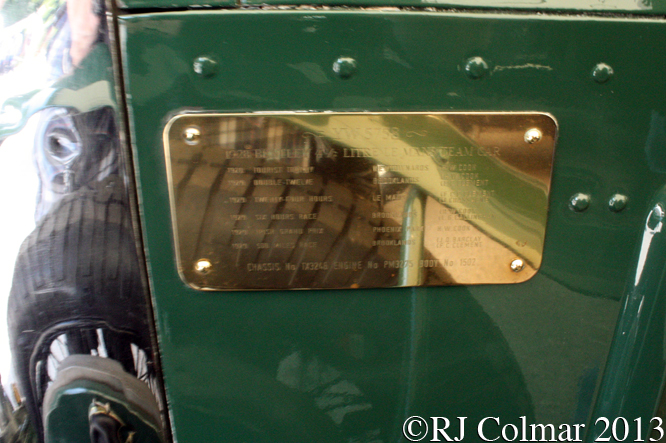
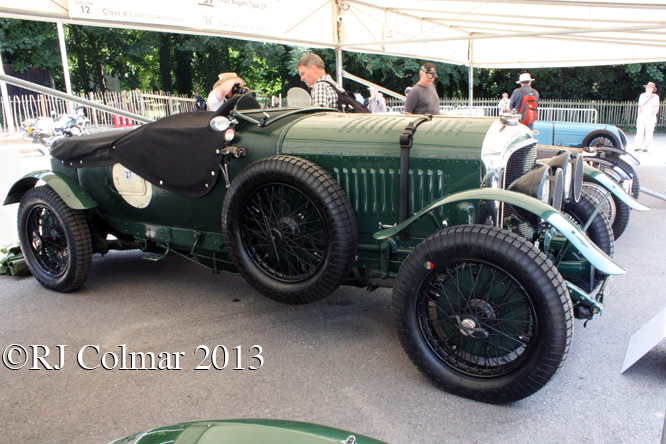
A month later and with the big end repaired #TX3246 powered by it’s original motor #PM3275 was entered into the Le Mans 24 Hour race by Bentley Motors Ltd for Frank Clement and Jean Chassagne to drive. Carrying the #8 They finished 4th completing a 1st to 4th place sweep for the Marque behind the Woolf Barnato and Henry Birkin driving the #1 Speed Six and the #9 and #10 4 1/2 litre cars driven by Jack Dunfee and Glen Kidston with Dr. Dudley Benjafield and André d’Erlanger in the latter.

Bentley 4 1/2 Litre, Goodwood Festival of Speed

Humphrey Cook and Leslie Callingham drove #TX3246 to a third place finish in the Brooklands 6 hour race at the end of June 1929 where a Bentley 1,2 finish interupted by an ALFA Romeo running in the 2 litre / 122cui class.

Two weeks later in the Irish GP Eireann Cup run at Phoenix Park Humphrey finished 5th before #TX3246 returned to Brooklands where Jack Barclay and Frank Clement drove her to victory lane in the Brooklands 500, the first race ever organised by the British Racing Drivers Club, BRDC, in October 1929.

Bentley 4 1/2 Litre, Goodwood Festival of Speed

Humphrey Cook went on to fund and race Raymond Mays and Peter Berthon’s English Racing Automobiles, ERA, project.

While Jack Barclay is still best known in London for his Rolls Royce and Bentley Dealerships in Mayfair.

Bentley 4 1/2 Litre, Goodwood Festival of Speed

#TX3246 powered by the 4 1/2 litre motor number #PM3275 is seen in these photographs at Goodwood Festival of Speed last year.

Thanks for joining me on this “4th Of Four” edition of “Getting A Little Psycho On Tyres” I hope you will join me again tomorrow. Don’t forget to come back now !
Share