Tag Archives: Colmar

Triple London Championship Night – Wimbledon Stadium

Thanks to a recent fb friendship struck up by Ray Miles in Florida and Rob Hughes in Liverpool I was alerted to the Triple London Championship Night which ran at Wimbledon Stadium couple of weeks ago.
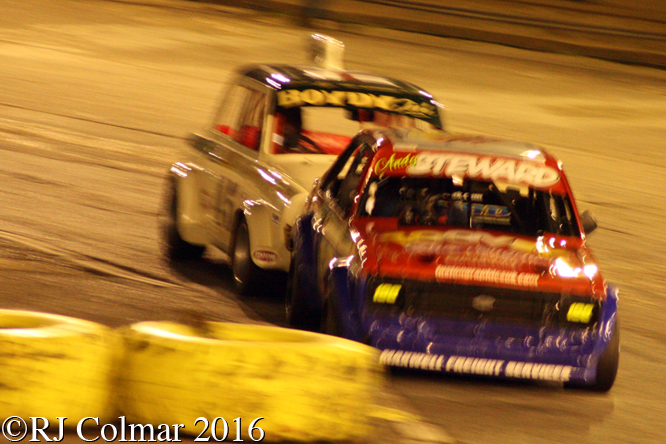
Ford Escort Mk2, Andy Steward, Classic Hot Rods, London Championship, Wimbledon,

Thanks to a soccer match in Chelsea I got snarled up in traffic and missed the first heats for the Junior Micra Stock Cars, Superstox and 2.0 Hot Rods, but made it just in time to catch the first heat for the beautifully turned out Pinto powered Classic Hot Rods which featured a great battle for the lead between the #198 Mk2 Ford Escort driven by Andy Steward and the #45 Austin A40 Countryman driven by Craig Boyd which went Andy’s way.
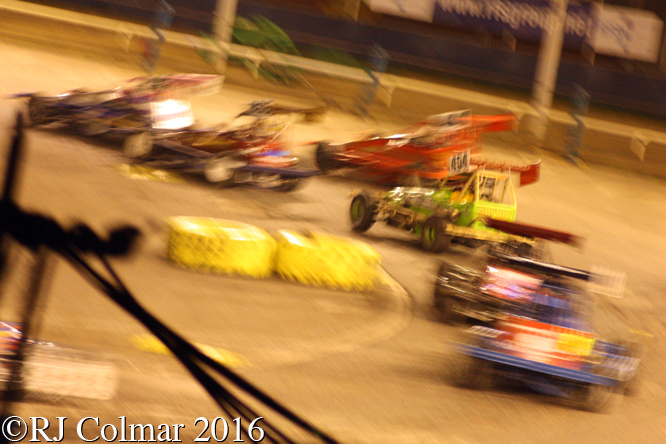
Superstox, London Championship, Wimbledon,

The Superstox action featured a bit more bumping and boring for which the cars are better equipped, unfortunately I arrived too late to get a programme and the only thing I can tell you is that the race was won by John Saunders, who also won the first heat and that the green #454 seen above finished 5th in heat to having finished 4th in Heat 1, if you know who the driver of the #454 is please do not hesitate to chip in below.
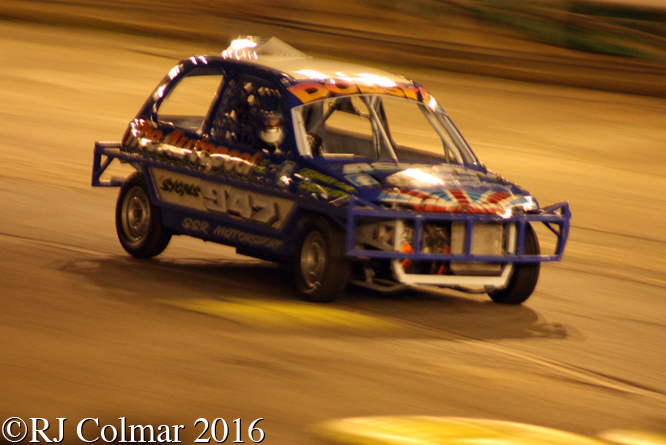
Nissan Micra,  Samuel Dobbs, Junior Micra Stock Cars, Wimbledon

Samuel Dobbs is seen above on his way to a win in the 2nd heat of the Junior Micra Stock Cars which with all their additional safety equipment and what appeared to be standard suspension have some interesting handling characteristics.
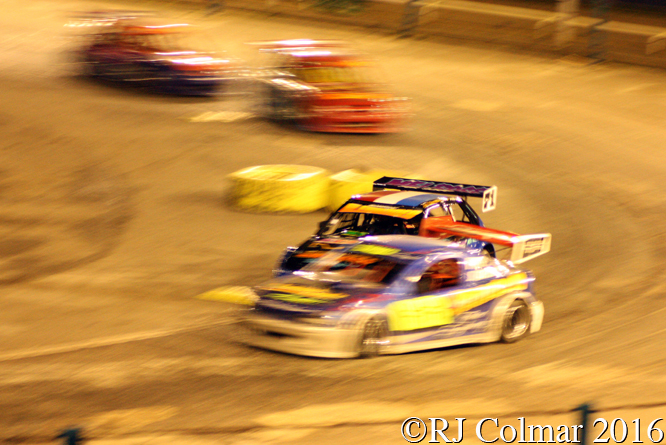
Vauxhall Tigra, Robert Gamble, 2.0 Hot Rod, London Championship, Wimbledon

Robert Gamble seen in his #133 Vauxhall Tigra above held on to win the 2nd Heat for the 2.0 Hot Rod’s from the #71 Citroën Saxo driven by Gordan Alexander.
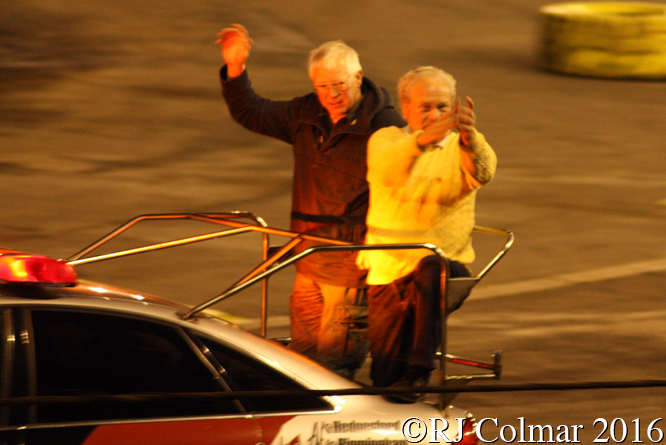
Barry Lee, Kenny Ireland, Wimbledon Stadium

Four time Hot Road World Champion Barry “#351 Leapy” Lee, and Scottish Saloon Stocks, Superstox & Hot Rods champion Kenny Ireland are seen on a lap of honour above they were joined as guests of honour by 1976 World Champion George Polley and 1980 World Champion Mick ‘Duffy’ Collard.
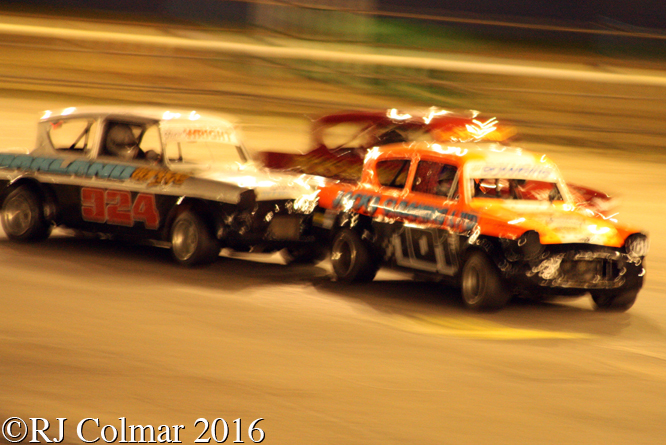
Ford Anglia, John Bowring,  Classic Hot Rods, London Championship, Wimbledon,

Craig Boyd retired his Austin early in the 2nd Classic Hot Rods heat, leaving Andy Steward to an easy win once he had battled his way into the lead, the race featured a fantastic race long scrap between the Ford Anglia’s driven by #101 John Bowring, #924 Stuart Wright and #911, seen on the outside, driven by Harry Steward who crossed the finish in 6th, 7th and 8th places respectively.
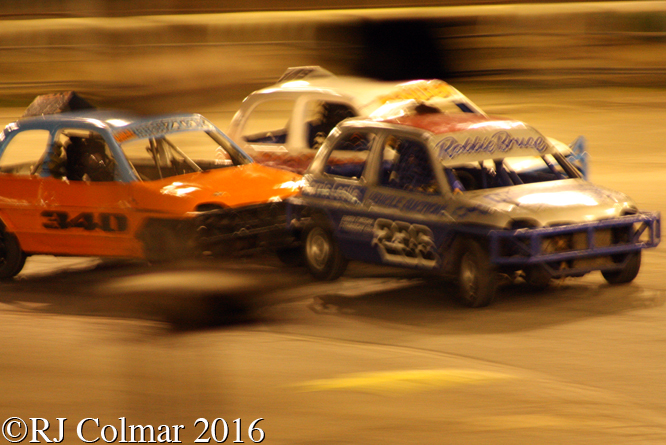
Nissan Micra, Robbie Bruce, Junior Micra Stock Cars, Wimbledon

Repeating his heat one Junior Micra Stock Cars win in the final was Robbie Bruce seen above three wheeling his way around turn 2 aided by second place finisher #340 Will Blazer.
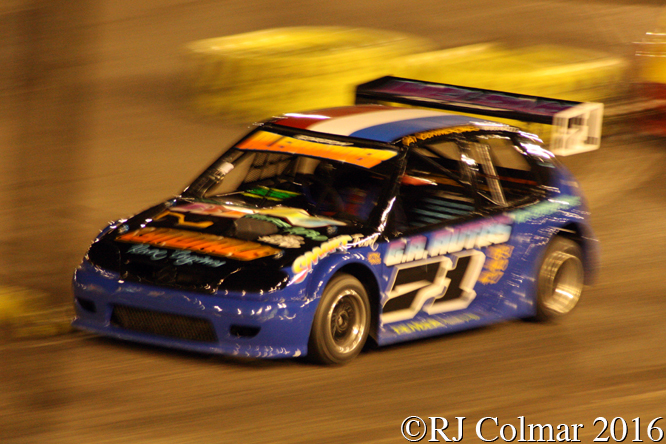
Citroén Saxo, Gordan Alexander, 2.0 Hot Rod, London Championship, Wimbledon

Gordan Alexander fought his way to the front to claim the 2.0 Hot Rod Final in his #71 Citroën Saxo the #565 driven by Dan Smith and the #39 driven by Rick Parnell who were both also pedaling Citroën Saxo’s.
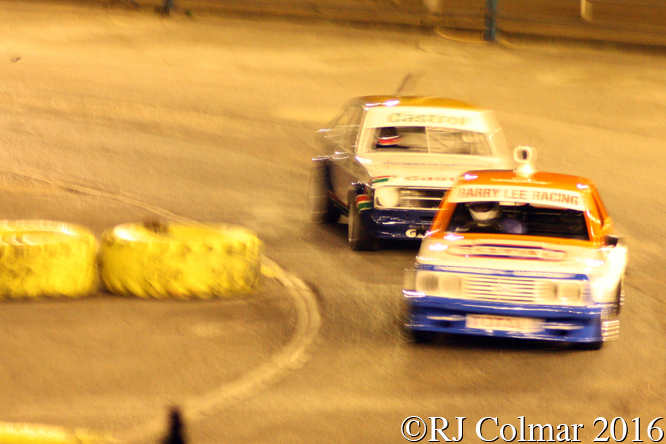
Ford Escort RS2000 Mk2, Lee Wood, Wimbledon Stadium,

Lee Wood is seen above leading Mick ‘Duffy’ Collard during a demonstration run for the fans in their immaculate replica World Championship winning cars.
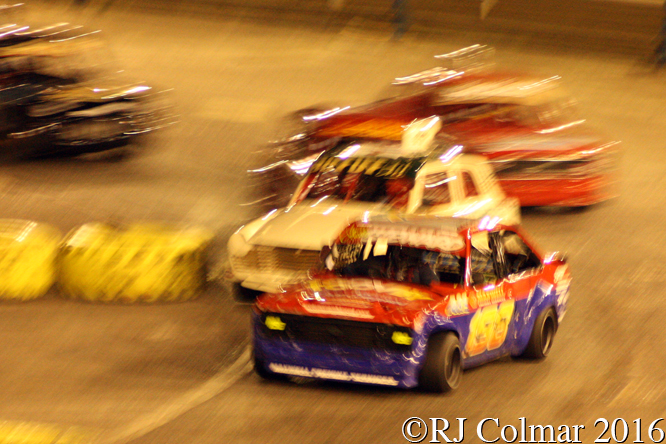
Ford Escort Mk2, Andy Steward, Classic Hot Rods, London Championship, Wimbledon,

Andy Steward retained his Classic Hot Rods London Championship title despite the best efforts of Craig Boyd in his repaired #45 Austin seen lifting an inside wheel above.
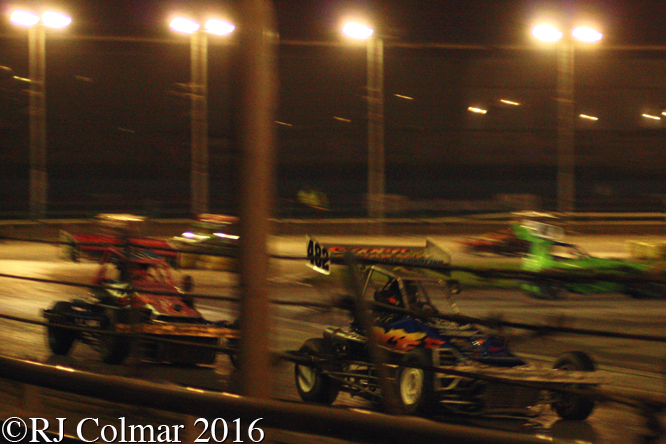
Jason Cooper, Superstox, London Championship, Wimbledon,

Jason Cooper is seen above taking the flag in the Superstox final at the end of an entertaining evening at Wimbledon Stadium which I hope to visit again before it is scheduled to be swallowed up by dreaded property developers.

My thanks to Ray Miles and Rob Hughes for giving me the heads up also to Rob for event programme details, to keep up with news on Classic Hot Rods follow Rob Hughes dedicated fb page linked here, news on Spedeworth events at Wimbledon and their other venues can be found on this link.

Thanks for joining me on this “Triple London Championship Night” edition of “Gettin’ a li’l psycho on tyres” I hope you will join me again tomorrow for Americana Thursday. Don’t forget to come back now !

Share

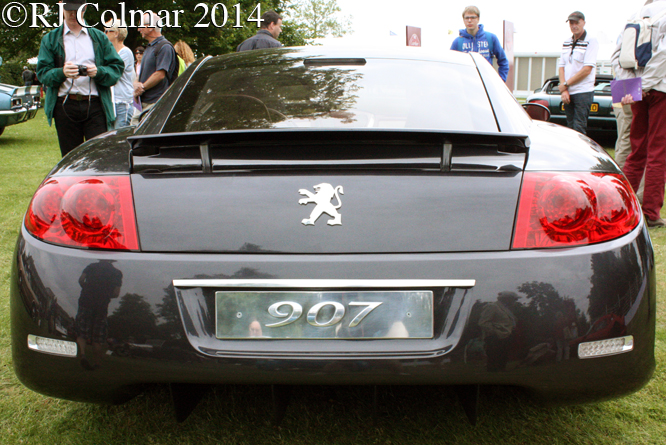
Moving To The Suburbs – Peugeot 907

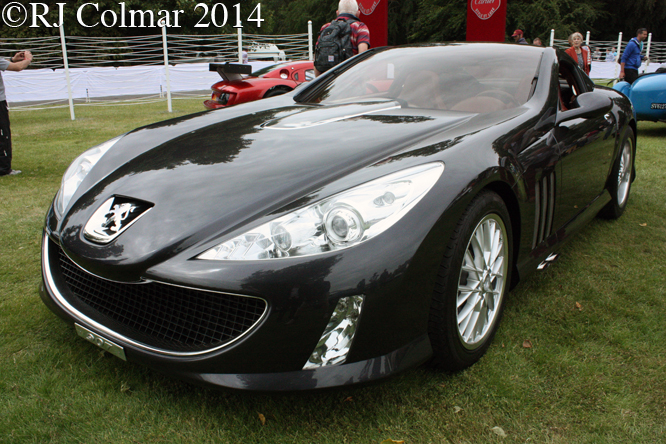
To celebrate the moving of Peugeot’s 40 year old design center, from La Garenne in the center of Paris to Vélizy in the South Western suburbs of Paris, Peugeots styling chief Gérard Welter and designer Jean-Christophe Bolle-Reddat concieved today’s featured Peugeot 907 Coupé Concept.

Peugeot 907, Goodwood Festival of Speed,

The carbon fibre coupé body features front wing / fender vents that hark back to innumerable Ferrari’s from the 250 GT’s to the more modern Maranello.

Peugeot 907, Goodwood Festival of Speed,

The 500 hp 6 litre / 366 cui V12 engine is built from two 3 litre / 183 cui V6 engines spliced together with a single new crankshaft and 4 new overhead cams to operate the 48 valves.

Peugeot 907, Goodwood Festival of Speed,

The six speed sequential gearbox is mounted in front of the rear axle and all four wheels have double wishbone independent suspension.

Peugeot 907, Goodwood Festival of Speed,

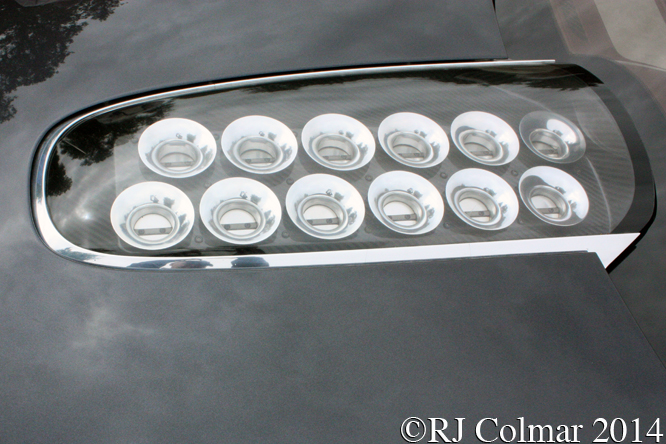
As per late 1950’s Ferrari Testa Rossa the air intakes sit beneath a plastic bubble, and as per contemporary racing practice for front engine cars the exhausts are short with exits behind the front wheels.

Peugeot 907, Goodwood Festival of Speed,

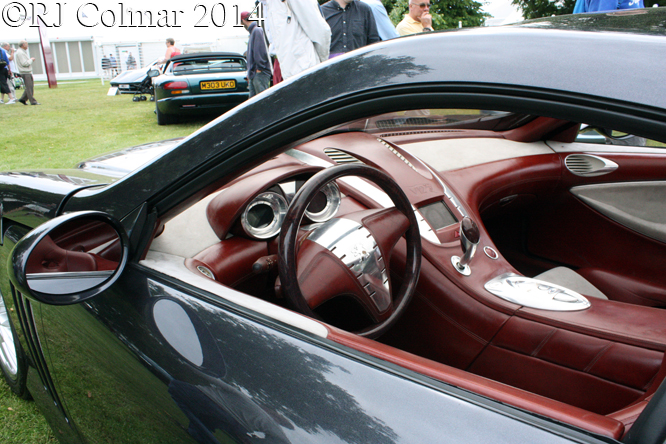
Although the 907 was never designed to go into production this car is a completely drivable prototype.

Peugeot 907, Goodwood Festival of Speed,

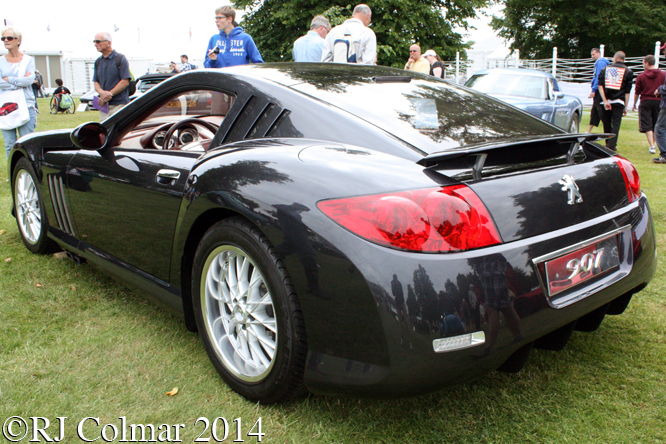
The 907, seen here at Goodwood Festival of Speed 10 years after it’s launch at the 2004 Paris Motor Show, is estimated to be able to reach 60 mph from rest in 4 seconds with an estimated top speed of 186 mph.

Thanks for joining me on this “Moving To The Suburbs” edition of “Gettin’ a li’l psycho on tyres” I hope you will join me again tomorrow when I’ll be visiting Wimbledon. Don’t forget to come back now.

Share

1914 French GP Winner – Mercedes 18/100 #15364

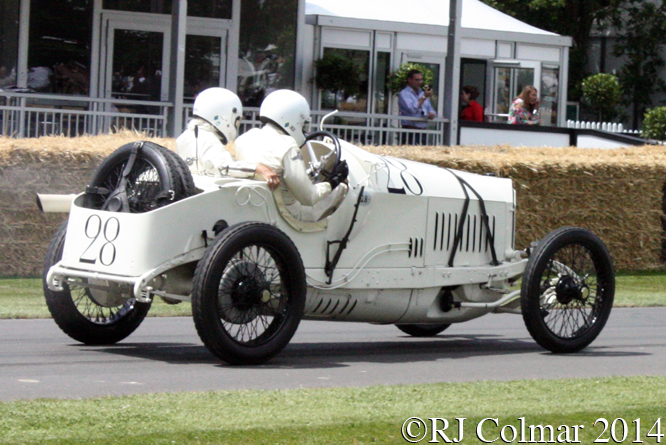
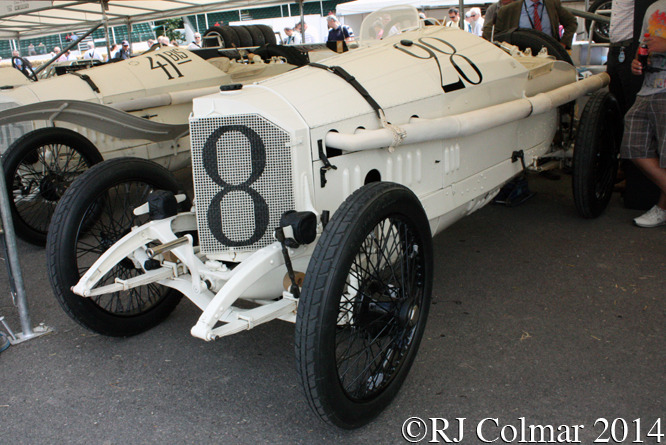
For the first time regulations for the 1914 French Grand Prix mandated a maximum engine size of 4.5 litres / 274 cui which put a premium on engine efficiency not least because a minimum 1,100 kgs / 2425 lbs minimum weight limit was also mandated.

Only entries from factory supported teams were accepted and these came from Alda, Aquila Delage, Fiat, Nagant, Nazzaro, Opel, Peugeot, Pichard-Pictet, Schneider, Sunbeam, and Vauxhall with 37 entries in all.

Mercedes 18/100, Martin Viessmann, Goodwood Festival of Speed,

Peugeot were the 1913 French Grand Prix winners and their 1914 Grand Prix challenger retained both an advanced overhead twin cam 16 valve engine design and brakes on all four wheels, while the slightly more crude Mercedes only had a single overhead cam engine and brakes acting only on the rear wheels.

Less than a week before the event news that Archduke Franz Ferdinand had been assassinated in Sarajevo was a strong omen that a major conflict was about to be set in motion that would see Russia, France and Britain align themselves against the forces of Germany and Austria.

Mercedes 18/100, Martin Viessmann, Goodwood Festival of Speed,

Rookie driver Max Sailer, possibly through inexperience, went charging into the lead of the seven hour race in his Mercedes 18/100 and unwittingly dragged a proud and upset to be in second Georges Boillot into an unequal dual, it turned out that the vertically mounted spare tyres in the rear of the Peugeot L45 gave the car inferior handling to the Mercedes with it’s spare tyres mounted tilting slightly forward.

Nonetheless Sailer retired from the lead at one quarter of the race distance with a broken engine, leaving Boillot to lead for the next 12 laps despite having to make several pit stops for tyres compared to the one planned stop made by Christian Lautenschlager and his team mate Louis Wagner.

Mercedes 18/100, Martin Viessmann, Goodwood Festival of Speed,

Despite plenty of pre event practice Christian Lautenschlager’s planned pit stop was unusually disorganised which left Louis Wagner to pursue Boillot’s Peugeot.

Wagner destroyed his second set of tyres in the pursuit of the Peugeot which had kept up a relentless pace to stay in the lead.

Mercedes 18/100, Martin Viessmann, Goodwood Festival of Speed,

By three quarter distance Wagner made an unscheduled stop for new tyres handing second place to Lautenschlager.

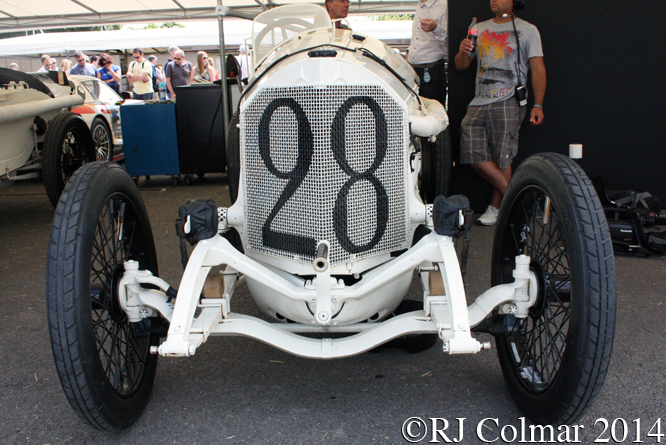
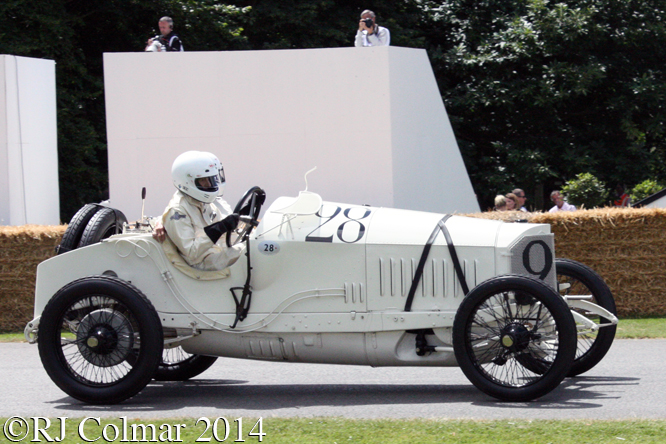
With two laps to go Boillot’s Peugeot engine had nothing left when Christian Lautenschlager driving today’s featured chassis #15364 silenced the French crowds by storming into the lead to be followed into second place by Louis Wagner and a third Mercedes driven by Otto Salzer.

Mercedes 18/100, Martin Viessmann, Goodwood Festival of Speed,

#15364 sent to Berlin where it was put on show immediately after the race and was sent to London for similar purposes only to arrive just in time for the start of the 1914/18 hostilities.

After the war Count Zborowski acquired #15364 and was the first of several owners to race it at Brooklands.

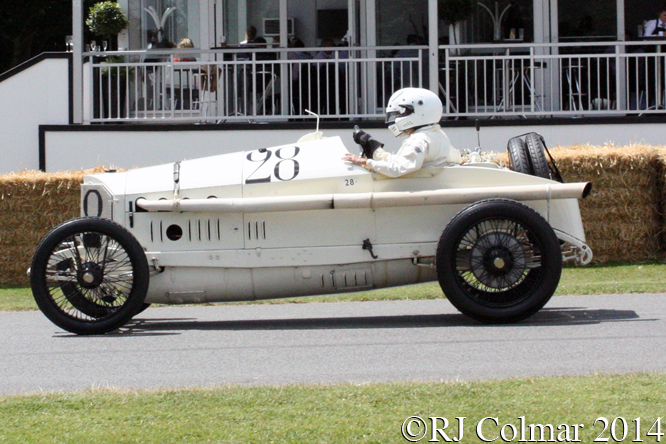
One owner had a Berliet body and front brakes fitted to the car which remained until it was restored to running order by Stanley Sears in the 1960’s, current owner Martin Viessmann, seen at the wheel in these photograph’s taken at Goodwood Festival of Speed, has been the custodian of #15364 since 1984.

Thanks for joining me on this “1914 French GP Winner” edition of “Gettin’ a li’l psycho on tyres” I hope you will join me again tomorrow. Don’t forget to come back now !
Share

As Seen On TV – ERA R7B

Austin and Arthur Dobson were to wealthy brothers who raced between the great wars of the twentieth century.

Arthur the younger, considered the more talented and more successful made his racing debut at the wheel of a FIAT 508S in the 1935 RAC Tourist Trophy from which he retired out of petrol.

ERA R7B, VSCC Spring Start, Silverstone,

By 1936 when he bought today’s featured ERA R7B Arthur was a busy racing driver also running a Riley TT Sprite.

Arthur was so busy he let Cyril Paul drive R7B in it’s first three events before taking the wheel himself.

ERA R7B, VSCC Spring Start, Silverstone,

In August 1937 Arthur won the Junior Car Club 200 at Donington running a works entered ERA C with a 1.1 / 67 cui motor while Charles Brackenbury raced the 1.5 litre / 91.5 cui R7B and Carlo Pintacuda finished the same race in 7th place.

Later in October Arthur drove ERA R7B to a second place finish half a car length behind B.Bira driving another ERA known as R2B or Romulus at Crystal Palace, the event was notable for being the first to be screened on British Television by the steam powered British Broadcasting Corporation.

ERA R7B, VSCC Spring Start, Silverstone,

Arthur continued racing R7B through 1938 scoring a third place behind the Maserati 6CM of Franco Cortese and 4CM of Armand Hug at Modena.

Arthur followed this with a 6th place in the 1938 Donington Grand Prix, R7B was the first non Auto Union and non Mercedes Benz to cross the finish line only 6 laps down on Tazio Nuvolari who drove the winning D-Type Auto Union.

ERA R7B, VSCC Spring Start, Silverstone,

1939 would prove to be Arthur’s final season as a racing driver in which he continued to race R7B and at the 1939 Albi Grand Prix in France he crashed the first ERA E-type.

During the 1939/45 war Arthur was briefly a Pilot officer, the termination of his commission might have been related to the brothers love of the occasional tipple of the falling down waters though the reason has not been identified.

ERA R7B, VSCC Spring Start, Silverstone,

After 1945 Arthur Dobson found himself in “straitened circumstances” having spent his fortune and only attended three more race meetings before his death in Battersea aged just 65.

His great ERA rival B.Bira died similarly anonymously after suffering a heart attack at Barons Court tube station five years later.

ERA R7B, VSCC Spring Start, Silverstone,

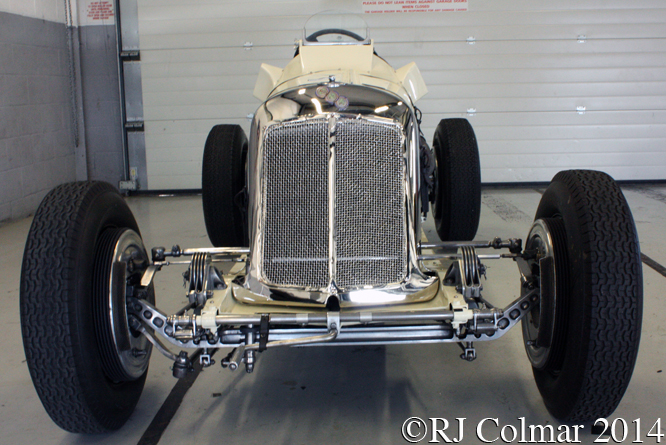
While in the care of H L Brooke between 1945 and 1948 R7B lost it’s unique chrome radiator, an item that was not restored until after P Mullins bought her in 2002.

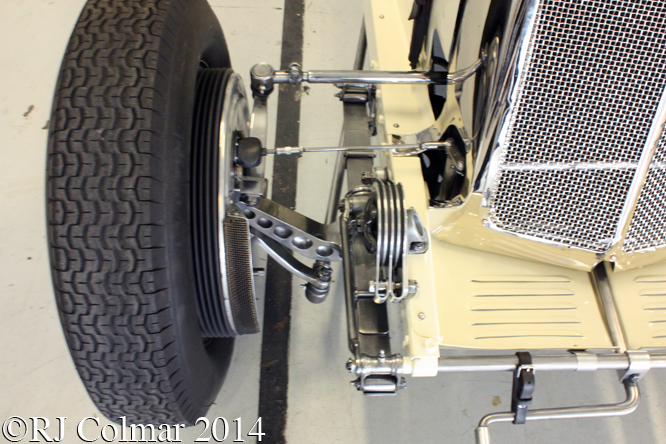
Ken Hutchison had the 2 litre / 122 cui motor fitted in 1948/49 by Robin Jackson who was also responsible for upgrading the brakes to hydraulic operation.

ERA R7B, VSCC Spring Start, Silverstone,

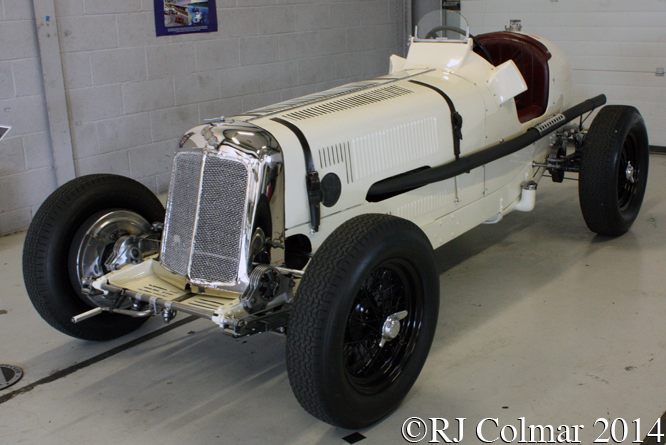
R7B was bought by current owners Ms S & Ms F Wilton in 2014 and is seen in these photographs at the start of ERA’s 80th Anniversary Celebrations at the VSCC’s Spring Start meeting the same year.

Thanks for joining me on this “As Seen On TV” edition of “Gettin’ a li’l psycho on tyres I hope you will join me again for Mercedes Monday tomorrow. Don’t forget to come back now !
Share

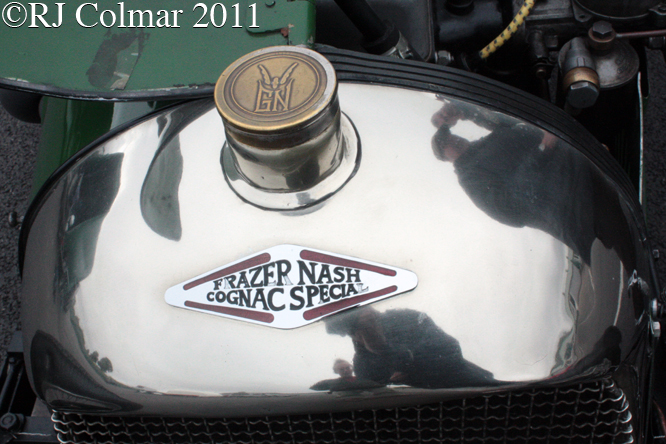
COhen GN & AC – COGNAC Frazer Nash Special

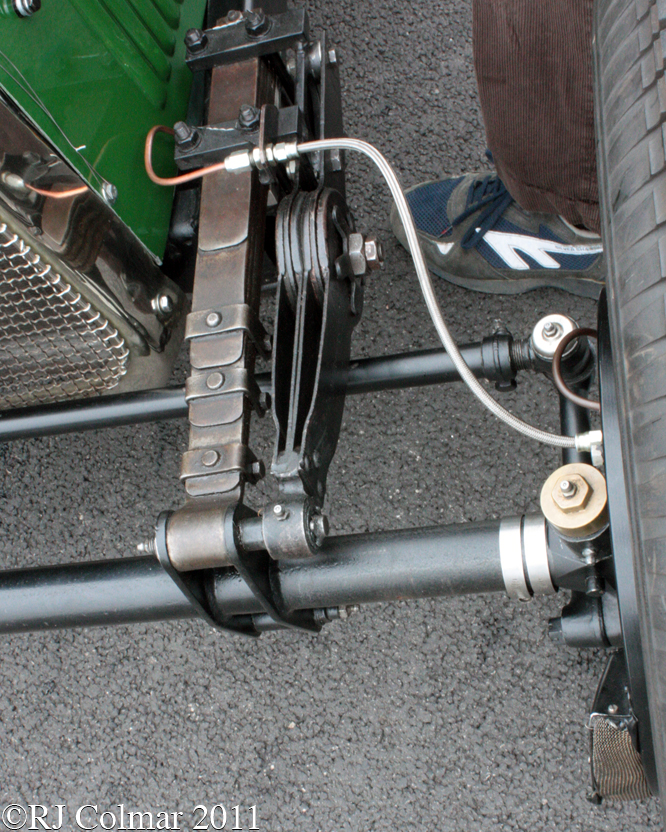
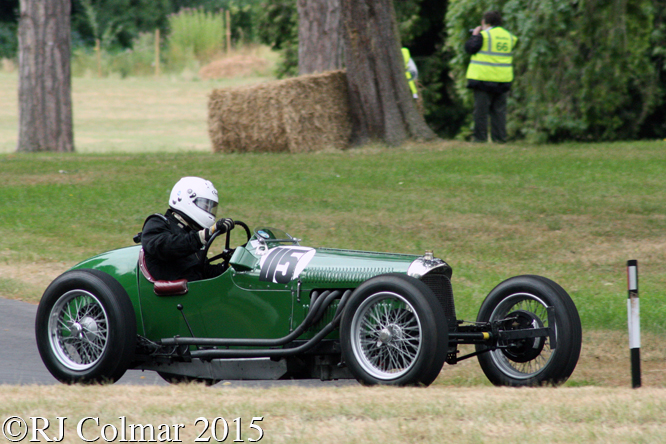
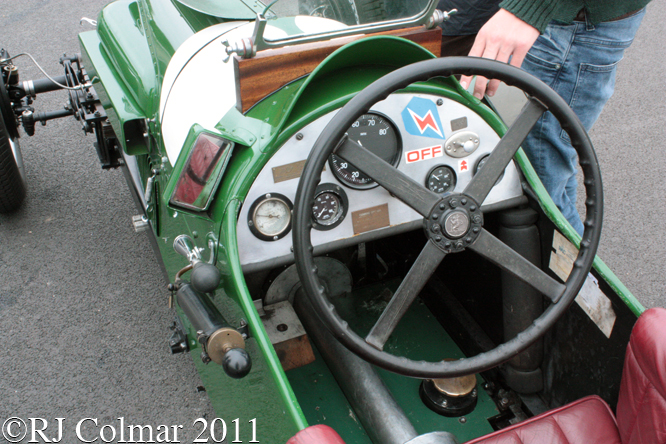
S.A. COhen was responsible for building the first iteration of today’s featured car using I believe a 1925 Frazer Nash chassis with a solid axle and chain drive as originally developed by GN.

COGNAC Frazer Nash Special, Mallory Park,

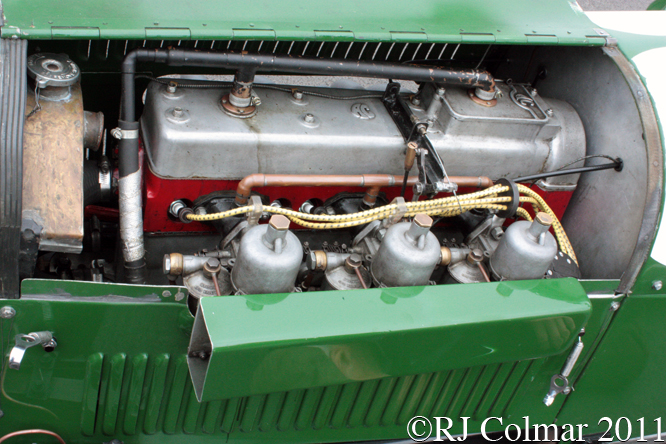
The triple carburetor 2 litre / 122 cui aluminium block iron head six cylinder AC motor, that lent it’s initials to the last two letters of the cars name, is of a design that dates back to 1919 and remained in production up until 1963.

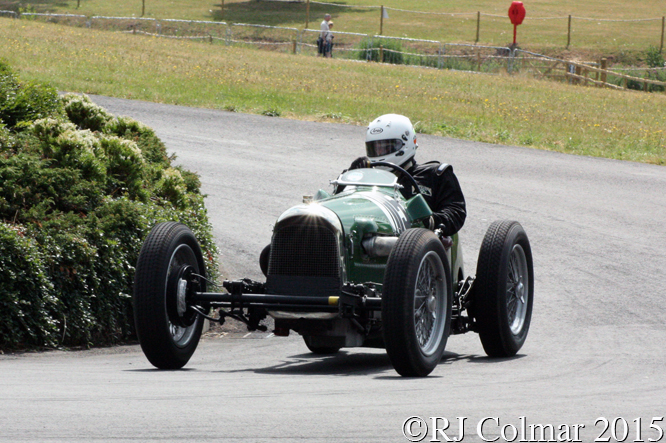
COGNAC Frazer Nash Special, Tony Lees, Chateau Impney

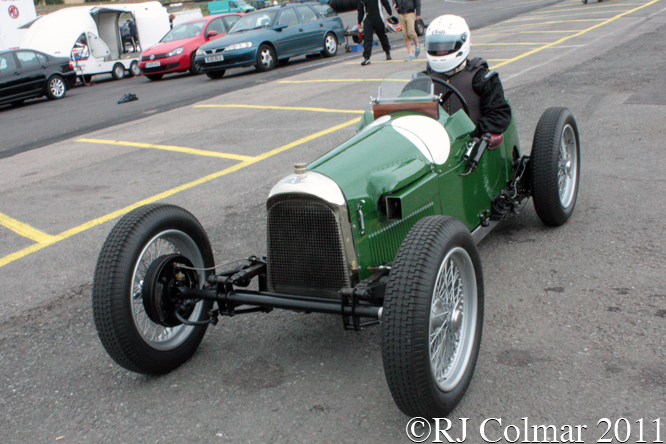
My understanding is that COGNAC was originally fitted with a two seat body that originated from an Amilcar with the radiator coming from a Hampton of a type I have not yet identified, if you know which model Hampton is shown in this linked image please do not hesitate to chime in below. and that the tail was modified to fit a spare wheel across the back of the car.

COGNAC Frazer Nash Special, Mallory Park,

It appears that the tail of the Amilcar body was modified to fit a spare wheel across the back of the car.

COGNAC Frazer Nash Special, Tony Lees, Mallory Park,

I am not sure exactly when S.A. Cohen competed with the car, the only report I have found so far describes him suffering with a slipping clutch at the Lewes speed trials in the June 1937 issue of MotorSport.

COGNAC Frazer Nash Special, Mallory Park,

A chap called Duchy at the Nostalgia Forum recalls his father owned the COGNAC Frazer Nash Special and used it as a road car in the mid 1950’s and that it was not converted into the single seater form seen here until the 1970’s.

COGNAC Frazer Nash Special, Tony Lees, Chateau Impney

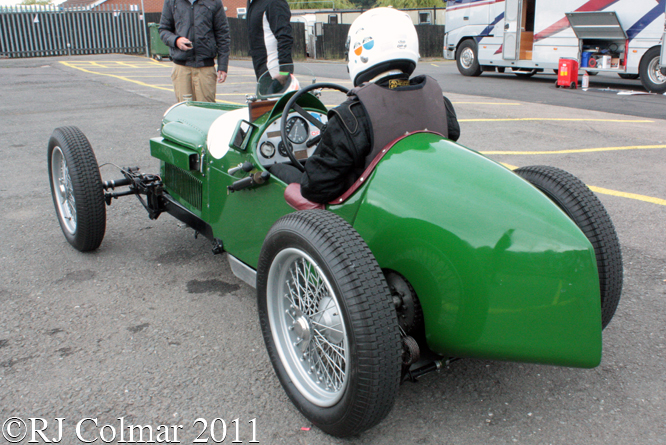
Ron Footitt is the man responsible for converting the COGNAC Frazer Nash Special into a single seater for vintage racing in the 1970’s.

COGNAC Frazer Nash Special, Mallory Park,

I have seen several accounts of the story that Ron wanted his ashes scattered onto a racing circuit upon his death and that COGNAC’s next owner Freddie Giles obliged at Oulton Park, after winning a race he is said to have scattered Ron’s ashes from a glove on his slowing down lap.

COGNAC Frazer Nash Special, Tony Lees, Mallory Park,

Current owner Tony Lees is seen testing COGNAC at Mallory Park soon after he bought it in 2013 and at last years Chateau Impney Hillclimb.

Thanks for joining me on this “COhen GN & AC” edition of “Gettin’ a li’l psycho on tyres” I hope you will join me again tomorrow far a look at the last in the current series of ERA’s. Don’t forget to come back now !
Share

Rebel With Out A Clue – FIAT 128 1100 2 Door Saloon

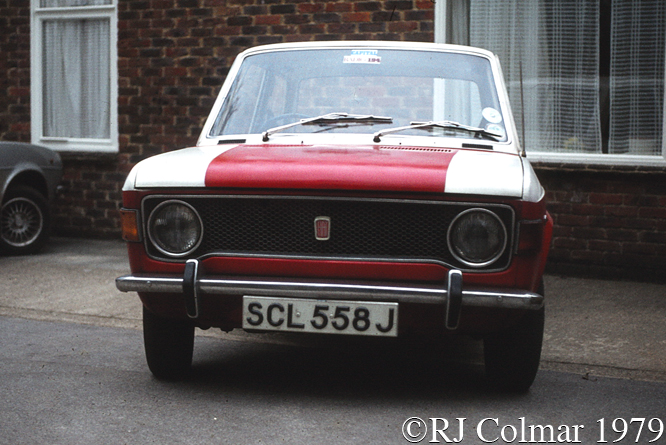
Today’s featured FIAT 128 1100 2 Door Saloon was first registered in the UK between 1st of August 1970 and the 31st of July 1971 we know this because of the ‘J’ suffix in the registration number, the 2nd and third letters CJ tell us that the car was first registered in the Norwich area about 100 miles North East of London.

In the Spring of 1978 my Grandmother came over to London from Germany and kindly gave me a small sum of cash to buy my first car.

My idea was to spend it on a cheap to run and insure Citroën 2CV which I knew from a friends experience had no go, but was great fun getting there all the same.

My civil engineer Dad had other idea’s, he did not want his one and only to be at risk driving a French tin can on wheels and promised to pay the insurance if I bought something a little more substantial.

I suggested a FIAT 124 like the one I had learned to drive in Zambia, but eventually settled for the front wheel drive 128 seen below which had made it’s way down from Norwich to Uxbridge.

FIAT 128, Haselmere,

The car was originally maroon, a scrape against a fence post was all the excuse I needed to invest heavily in body filler and spray paint to end up with the refrigerator white and bright red paint job seen above.

With hindsight it is amazing my lungs survived two days locked up in a tiny garage with 10 tins of spray paint and little if anything in the way of fume protection.

In case you are wondering I was trying to make the car look something like Niki Lauda’s 1976 Ferrari 312T2, with more time and perhaps a spot of green paint I am sure I would have got there… eventually !

All though the car had half an areal it did not come with a radio or speakers, so an old radio compact cassette combination system served as my ICE, in car entertainment.

Among the many excursions I made in the car I visited Silverstone for the 1978 USAC race won by AJ Foyt, 1979 Six Hour Race won by John Fitzpatrick, Hans Heyer and Brilliant Bob Wollek driving a Gelo Porsche 935 and the 1979 British Grand Prix won by Clay Regazzoni driving a Williams FW07.

Then there was Reading Rock ’79 where Mike and the mechanics with both Phil Collins and Peter Gabriel on stage, The Cure, Molly Hatchet, Motörhead, Scorpions, Eurythmics, the Police and DJ John Peel kept us entertained for my first weekend of unadulterated debauchery, it was so bad I could not remember my own phone number on the way home and finally Knebworth Park for the second of the two Led Zepplin gigs.

The following spring I was hoping to do more of the same, but although the car passed it’s MOT it started falling to bit’s after I gently parked it up a kerb outside a friends flat in Earls Court.

Later that evening I was visiting another friend down in Haselmere when strange noises started coming out of the front of the car, the suspension was collapsing.

I took it to a garage and they showed me that the frame to which the suspension arms were mounted was completely rotten and they advised me this was true on the other side and rather than bodge a repair I’d be better off spending the money on another car, reluctantly I agreed.

Thanks for joining me on this “Rebel Without A Clue” edition of “Gettin’ a li’l psycho on tyres” I hope you will join me again tomorrow when I’ll be looking at the last of the current Saturday series of GN Specials. Don’t forget to come back now !
Share

Frank’s Championship Winner – Chevrolet Camaro Z/28

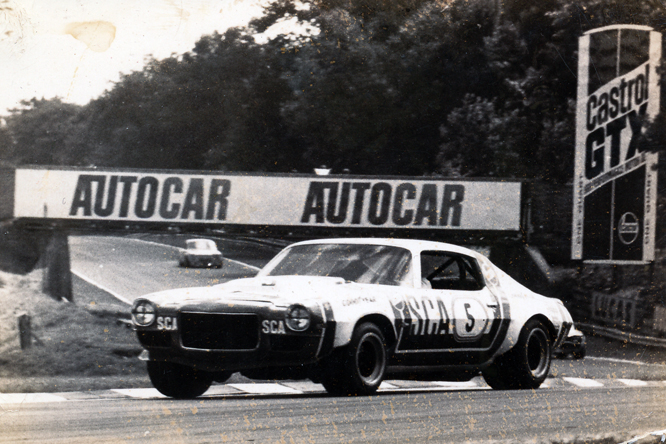
For 1972 Adrian Chambers Castrol SCA Freight team built a second generation Chevrolet Camaro with Mark Lesueur and Norman Lockwood to replace the ex-Bobby Brown first generation Camaro Z/28 it had been campaigning with Australian Frank Gardner at the wheel.

The car was initially fitted with a 5,736 cc / 350 cui motor and raced in the British Saloon Car Championship while the team saved the first generation Z/28 for selected appearances in the Deutsche Rennsport Meisterschaft.

During 1972 Frank won outright and by definition his class at Thruxton, Silverstone, Oulton Park, Mallory Park and no less than 3 times at Oulton Park to secure a class win in the championship but still had to give way in the overall championship to Bill McGovern driving a George Bevan Hillman Imp to a perfect 11 out of 11 class victories.

Chevrolet Camaro Z/28, Frank Gardner, Brands Hatch

Frank is seen driving the car above to victory at the 1972 British Grand Prix meeting at Brands Hatch in this photograph given to me by someone at school in the mid 1970’s.

The following season Frank drove today’s featured car, now fitted with a 7 litre / 427 V8 to six victories from 9 starts to secure his third British Saloon Car Championship and can be seen driving the car round Oulton Park that year in the clip below.

For 1974 the British Saloon car championship mandated a change to less radically modified Group 1 specification cars and Frank drove the SCA Group 2 spec Camaro with Australian compatriot Brian Muir in Europe where the car always qualified in the top six but frequently failed to start and when it did always failed to finish.

Frank retired to Australia at the end of 1974 where he continued racing into the the early 1980’s and running Australian Touring Car programmes with success for BMW.

Today’s featured car was then bought from Adrian Chambers by Stuart Graham with the intention to run it in Super Saloon races alongside his Group 1 Brut 33 Camaro British Saloon Car Championship program but the car proved to heavy to be a competitive super saloon.

Stuart sold the car onto Dutchman Rob Slotemaker who raced the car in Group 5 spec with a 7,443 cc 454 cui V8 up until his death at the wheel of his Group 1 spec 1974 Camaro at Zandvoort in 1979.

Rob bequeathed today’s featured car to current owner Bert Moritz and Bert’s son Patrick recently failed in an attempt to crowd fund an estimated US$200,000 restoration of the car.

Thanks for joining me on this “Frank’s Championship Winner” edition of “Gettin’ a li’l psycho on tyres” I hope you will join me again for FIAT Friday tomorrow. Don’t forget to come back now !
Share