Tag Archives: Colmar

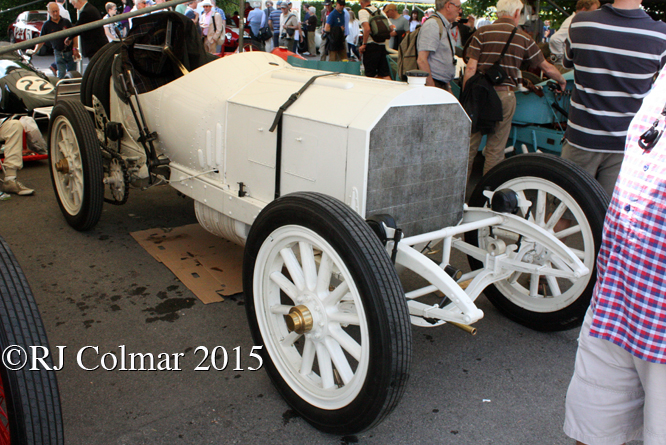
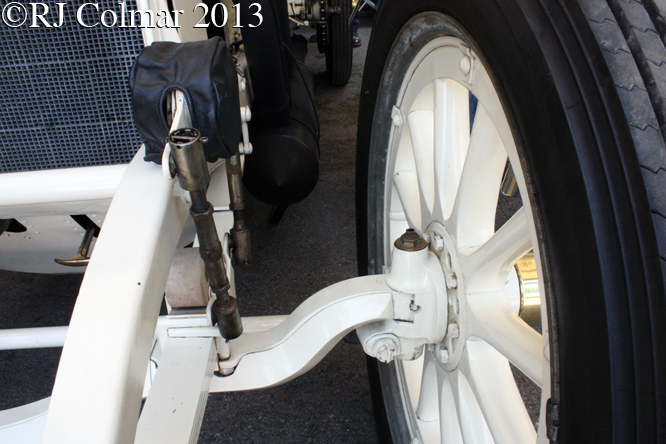
Airship Powered Belgian – Métallurgique 60/80 Maybach

In 1898 the Belgian manufacturer of railway locomotives and rolling stock Métallurgique in an effort to diversify unveiled it’s first prototype car that resembled the contemporary German two cylinder Daimlers.

Encouraged by the public’s enthusiastic response Métallurgique built a factory for car manufacture in 1900 and launched it’s first 2 cylinder model for sale in 1901 before expanding it’s range to include four cylinder models with pressed-steel chassis, swing axles, high-tension ignition and with a novel for the period electric dynamo option to facilitate electric lighting.
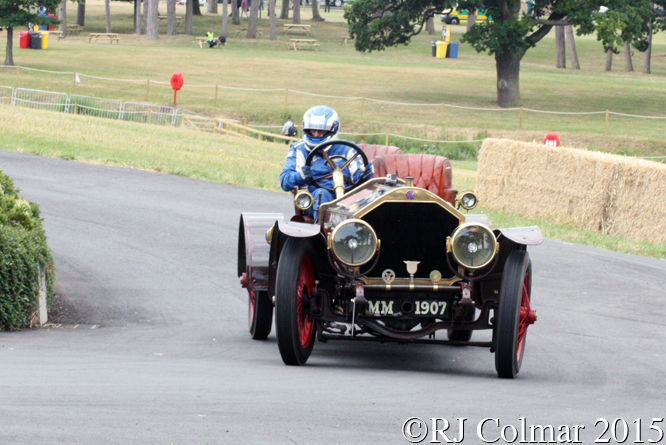
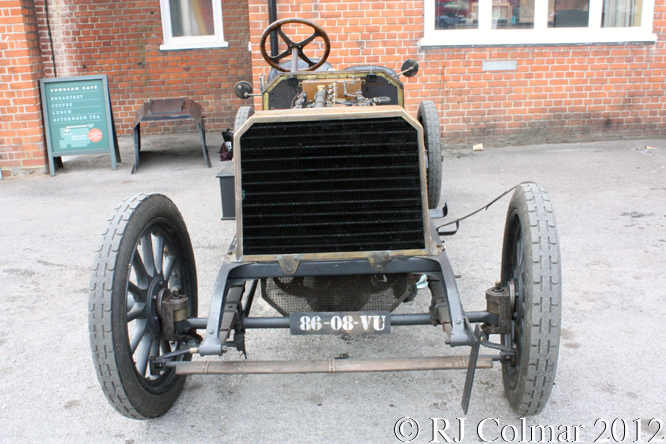
Métallurgique 60/80 hp Maybach, Brian Moore, Chateau Impney

The companies pre 1914/18 range was topped by the 60/80 model that was powered by a 4 cylinder 10 litre / 610 cui motor that could reach speeds of 62.5 mph.
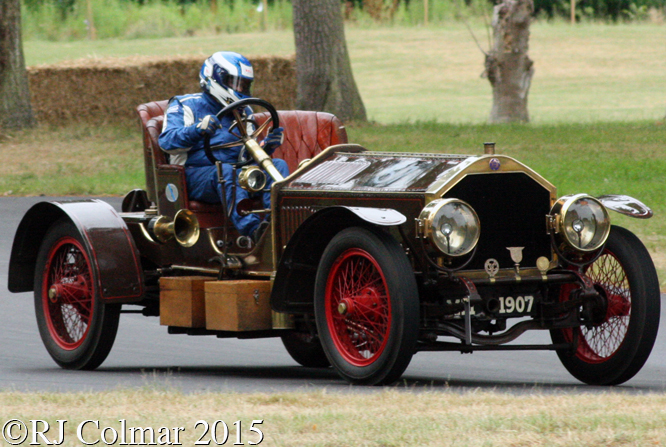
Métallurgique 60/80 hp Maybach, Brian Moore, Chateau Impney

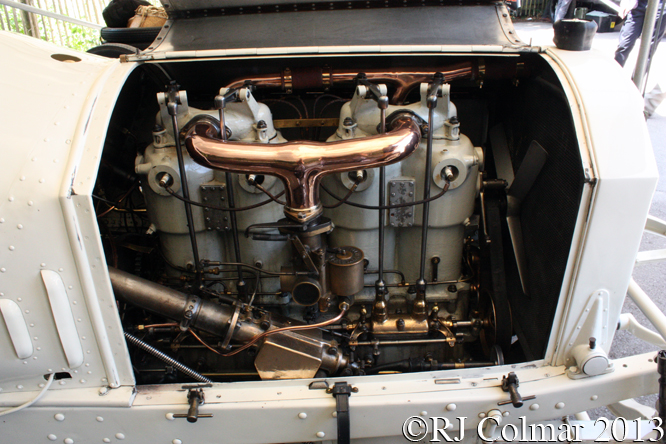
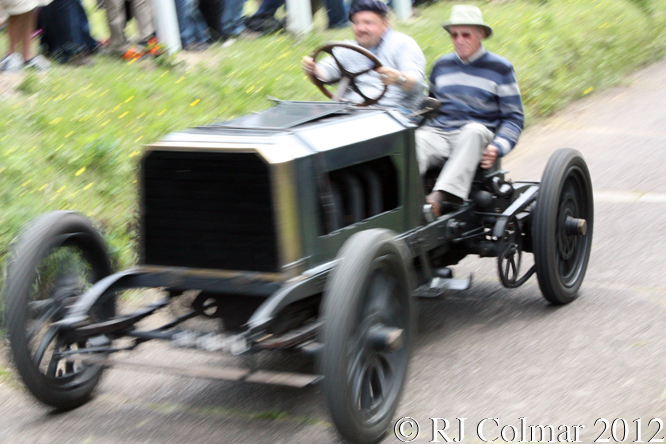
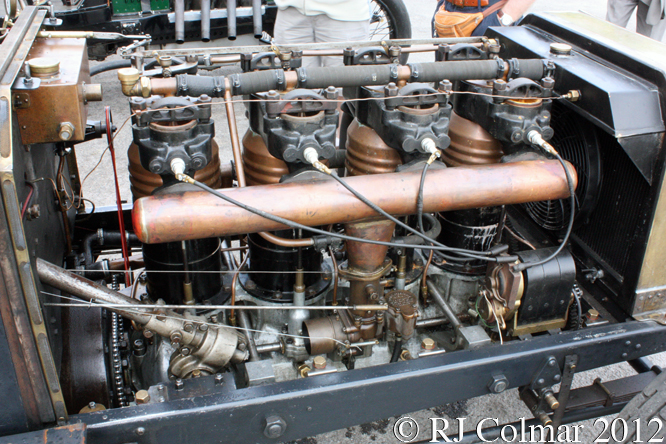
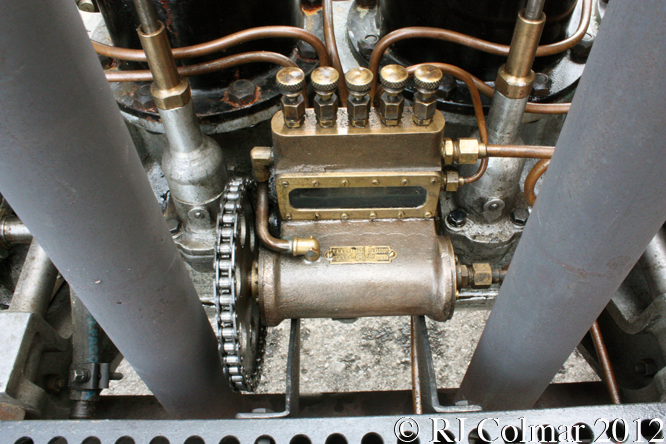
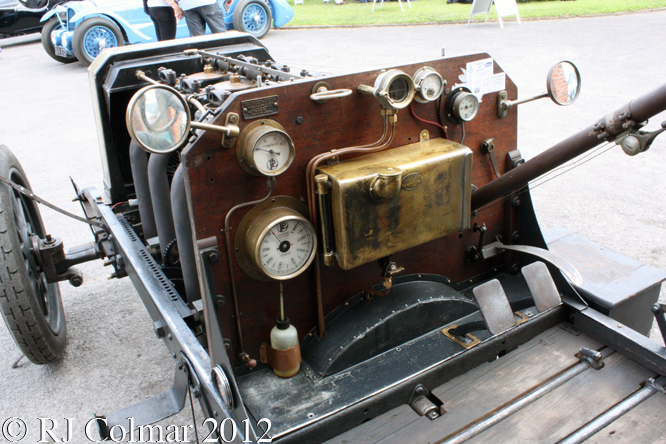
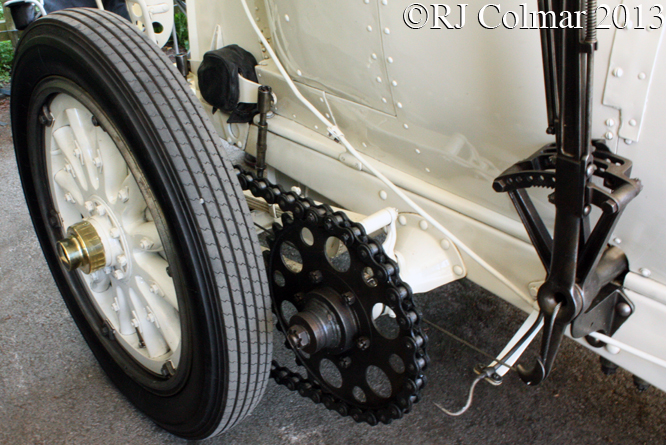
The engine today’s featured 60/80 car is said to have been swapped for it’s current 6 cylinder 21 litre / 1281 cui Maybach airship motor in 1910 when the motor was new, one source suggests this was allegedly done to satisfy run away school boy turned racer David Loney Bruce Brown’s requirement that the Métallurgique should have a 100mph capability, but I have not seen any independent corroborating evidence backing the allegation.
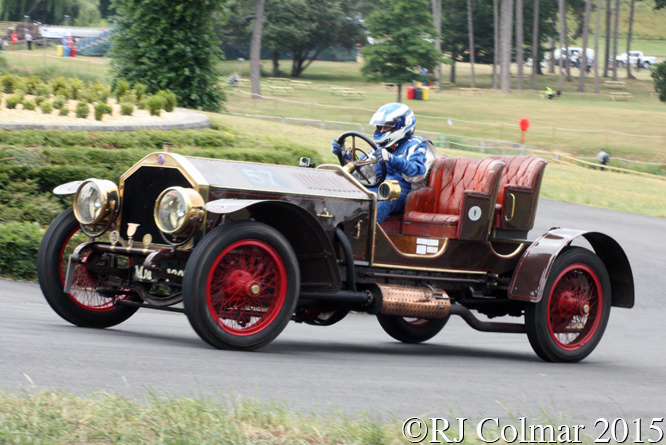
Métallurgique 60/80 hp Maybach, Brian Moore, Chateau Impney

MM 1907 was first registered for use on British roads on 17th of May 1950, thanks to the “YoungManGoneWest” blog published in August 2011 we know that Douglas Fitzpatrick, believed to be Douglas Bader’s flying instructor, appears to have owned this Métallurgique from at least 1957 as evidenced by a Pathé newsreel that show’s him polishing the car at Beaulieu and that he drove it in the Brighton Speed Trials in 1959, ’61 and ’64, Douglas reckoned his Métallurgique was capable of 120 mph in one report on Bizarre Cars in 1966.
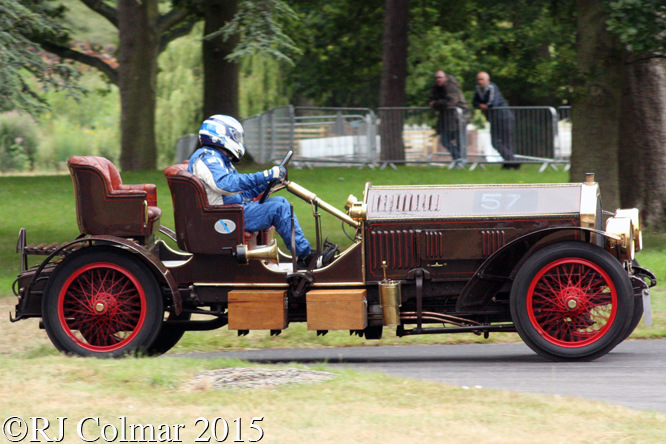
Métallurgique 60/80 hp Maybach, Brian Moore, Chateau Impney

A Dutchman Ad Schuring who visited Douglas Fitzpatrick at Sheringham Hall in Norfolk and was taken for rides in the Métallurgique seems to recall that the 60/80 appeared in non staring rolls in the films Around the World in 80 Days 1956 and Chitty Chitty Bang Bang 1968.

Douglas Fitzpatrick had a German called Gerry, who lived above the garages at Sheringham Hall, look after the Métallurgique along with his other cars that included an Achilles, a Wolseley Siddley, a brace of Rolls Royces and a supercharged Singer Gazelle.

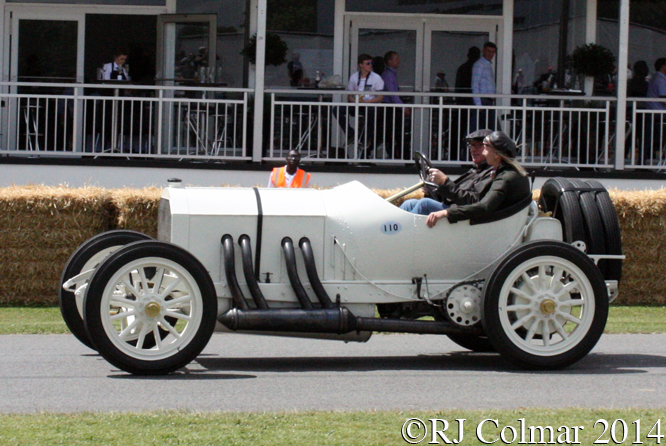
Brian Moore is seen at the wheel of the Métallurgique 60/80 Maybach in these photograph’s at Chateau Impney Hillclimb last year, if you happen to know anything about the veracity of the story about David Loney Bruce Brown’s involvement with the fitting of the Maybach engine to this Métallurgique in 1910 please do not hesitate to chime in below.

Thanks for joining me on this “Airship Powered Belgian” edition of “Gettin’ a li’l psycho on tyres” I hope you will join me again tomorrow for another visit to Aust Services. Don’t forget to come back now !

Share

Minimum Weight Restricted Bore- 1908 Mercedes Grand Prix

The very first Grand Prix de l’Automobile Club de France run at Le Mans in 1906 was run to a maximum weight of 1000 kgs / 2204 lbs and maxiumum fuel consumption formula which encouraged manufacturers to put large engines into flimsy chassis, the winning car was a 90hp 13 litre / 793 cui Renault with shaft drive to the rear wheels driven by Ferencsz Sziz.

Mercedes Grand Prix, Goodwood Festival of Speed,

For the 1907 Grand Prix de l’Automobile Club de France run at Dieppe the maximum permissible weight restriction was abandoned but the 9.4 miles per gallon maximum fuel consumption was retained, this much shorter race run over a single day was won by 1906 second place finisher Felice Nazzaro aboard a chain driven 16.5 litre / 1006 cui FIAT ahead of the 1906 winner Ferencsz who was again driving a Renault.

Mercedes Grand Prix, Goodwood Festival of Speed,

In 1908 the Automobile Club de France ran it’s Grand Prix on the same course at Dieppe but for vehicles that weighed a minimum of 1100 kgs and a maximum cylinder bore of 155 milimeters / 6.1 inches for 4 cylinder motors or 127 mm / 5 inches for 6 cylinder motors, no one built a six cylinder car for the race.

Mercedes Grand Prix, Goodwood Festival of Speed,

Mercedes turned to Paul Daimler to conceive it’s 1908 Grand Prix challenger in the absence of William Maybach who conceived the 1907 Daimler Grand Prix challenger before leaving Daimler to form his own company with his son Karl.

Mercedes Grand Prix, Goodwood Festival of Speed,

Paul did not stray far from William Maybach’s idea’s, but did build a much lower car which improved the the handling.

Mercedes Grand Prix, Martin Viessmann, Goodwood Festival of Speed,

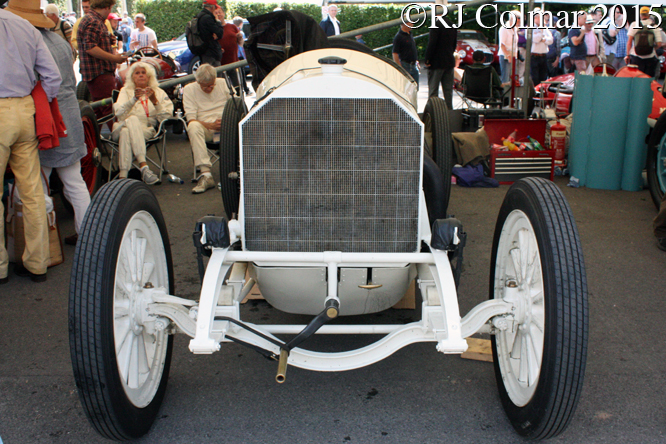
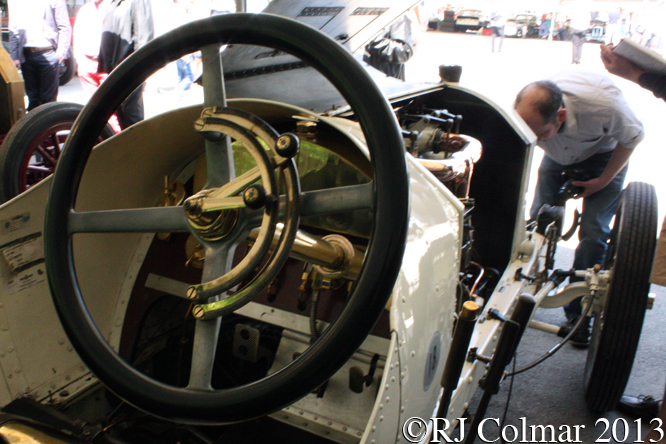
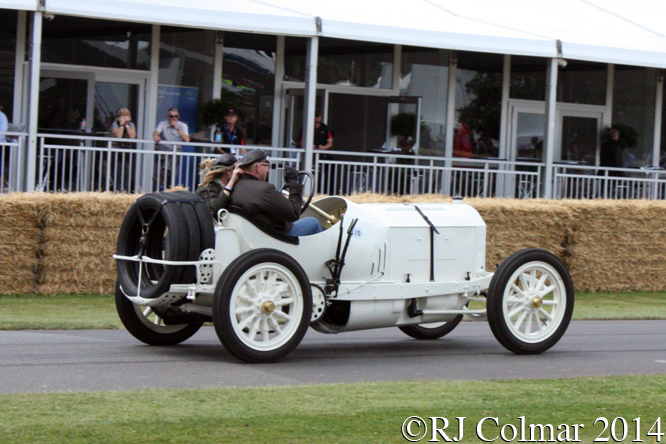
The car had a 2.7 meter / 106″ wheel base with a 1.4 meter / 55″ track, it was powered by a 12.8 litre / 780 cui motor that produced 135hp at just 1400 rpm, the rear wheels were driven through a 4 speed gearbox chain drive, despite a top speed in excess of 100 mph the foot and hand brakes operated only on the rear wheels.

Mercedes Grand Prix, Goodwood Festival of Speed,

Three cars were built for the 1908 French Grand that were to be crewed by Willy Pöge, Otto Salzer, Christian Lautenschlager and their respective mechanics.

Mercedes Grand Prix, Goodwood Festival of Speed,

Otto set fastest lap of the race at over 78 mph but retired on the third lap with a broken wheel, Willy came home 5th over 36 mins behind the winner Christian who on his last set of 100psi Michelin tyres came home over 8 mins ahead of a pair of 150hp Benz’s that finished 2nd and 3rd.

Mercedes Grand Prix, Martin Viessmann, Goodwood Festival of Speed,

All three cars were sold after the 1908 Grand Prix de l’Automobile Club de France, one of them was tuned to produce 180hp and recorded a speed of over 107mph over the flying kilometer during the Ostend Speed week with the bearded Belgian Camille “Le Diable Rouge” Jenatzy at the wheel.

President and CEO of the family German Heating System company bearing his name, and former sponsor of Niki Lauda’s hat, Martin Viessmann is seen at the wheel of one of the Mercedes Grand Prix cars that is the sister to the one driven to victory by Christian in the 1908 Grand Prix de l’Automobile Club de France.

Thanks for joining me on this “Minimum Weight Restricted Bore” edition of “Gettin’ a li’l psycho on tyres” I hope you will join me again tomorrow when I will be looking at a Zeppelin powered Belgian car. Don’t forget to come back now !
Share

Two Beat Half Note – Bath MINIM

Until 2013 16 year olds were permitted to drive three wheel vehicles with learner plates and a provisional driving licence, when Gerry Bath in `north Somerset reached that age in 1946 short of the funds to buy a Morgan he decided to build a three wheeler using a Raleigh chassis, with a single steering wheel at the front, and engine to which he fitted an open 3 seat abreast body with enclosed wheels and fold down windscreen.

MINIM, Autumn Classic, Castle Combe

A Mr. Walker of Walker and Ward of Cheltenham was keen to put the body into production but a shortage of preferred proprietary Reliant chassis scuppered the plan, before selling the Raleigh Special in 1952 Gerry fitted the Raleigh Special with a Ford 8 engine and gearbox which improved the performance but adversely effected the life span of the front fork spindles.

MINIM, Autumn Classic, Castle Combe

By this time Gerry started building and running his first competition special, the Pegasus, which was built while he was working for a Ford agent in Bath from the discarded parts of two Triumph Super 7’s and an ex Ministry of Defence Ford 10 engine.

Gerry drove the Pegasus competitively from 1951 in races, driving tests, sprints and hillclimbs winning his class at Naish Hillclimb outside Bristol after three run off’s against a Morris Special driven by Ashley Cleave in June 1953 by which time Gerry was an employee at the Bristol Aeroplane Company.

MINIM, Autumn Classic, Castle Combe

The Pegasus was sold to a competitor in Cheshire who competed with it at Oulton Park and Gerry’s next project transforming his 1939 Ford Thames van into a special, was facilitated by the acquisition of a brand new van in late 1954 which Gerry chose in favour of a couple of Bugatti’s he had been offered around the same time.

The open two seater Ford Special carried Gerry to a class victory in a sprint at Long Marston before he decided to sell it and continue his competitive driving with his by now much modified 1954 Ford Thames van in club rallies.

MINIM, Autumn Classic, Castle Combe

Gerry built one more open special for the 750 to run in the 750 Formula however after first designing the car around a 1931 Austin chassis in 1957 it took until 1964 to complete and so was considerably out of date thought Gerry did win his class in sprint at Castle Combe in August 1964.

Further modifications were carried out to the 750 Formula Special for the 1965 season and after competing with it a couple of times Gerry retired from racing open cars for good saying “I am convinced that the time and money spent on a car for racing is out of all proportion to the amount of enjoyment derived from it “.

MINIM, Autumn Classic, Castle Combe

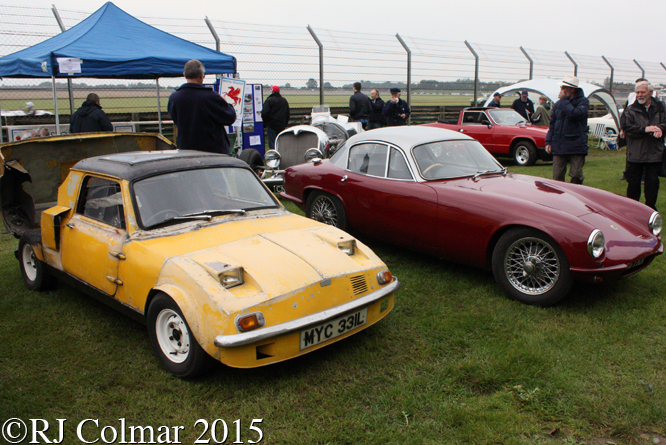
Instead Gerry continued competing with a Mini van and later his last special today’s featured MINIM which started out powered by a MG 1100 engine and gearbox transversely fitted to a chassis which was fashioned with a pair of Mini front subframes… at both ends !

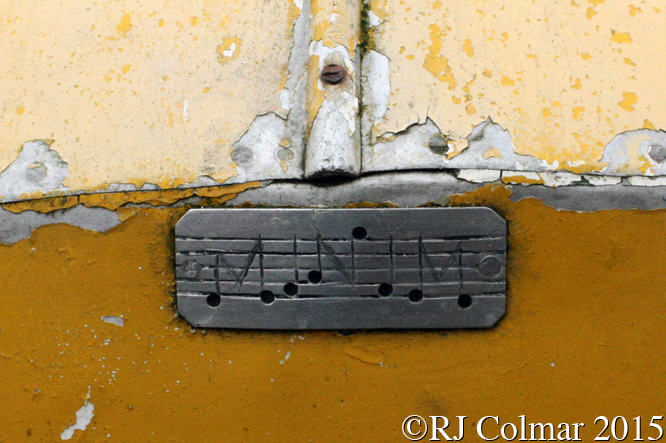
Gerry also an accomplished jazz pianist no doubt had much fun fashioning the name plate as the rest of the car with it’s perspex sunroof and cut down Mini doors and Mk1 Mini exterior hinges.

MINIM, Autumn Classic, Castle Combe

The Bath MINIM was registered for the road on the 11th of September 1972 and used in competition for “many years”.

After retiring from the British Aircraft Corporation into which the Bristol Aircraft Company had been absorbed in 1960 Gerry continued his interest in motoring helping others prepare and run competition vehicles in French hillclimbs and making 45 improvements to his Lotus Elite which was featured on Gettin’ a li’l psycho on tyres many moons ago.

MINIM, Autumn Classic, Castle Combe

Gerry died in 2014 aged 83, more details on his specials can be found on Pete Stowe’s linked page here, and an appreciation of his life on James Page’s linked page here.

The man responsible for giving the Bath MINIM, seen at Castle Combe Autumn Classic in these photograph’s, it’s most recent MOT, roadworthiness certificate in September 2015 confessed to the current owner that he was surprised the car passed at the first time of asking without so much as an advisory, a testament to Gerry’s thoroughness if ever there was one.

MINIM, Autumn Classic, Castle Combe

Thanks for joining me on this “Two Beat Half Note” edition of “Gettin’ a li’l psycho on tyres” I hope you will join me again tomorrow when I’ll be looking at a Dakar Defender. Don’t forget to come back now !
Share

Narrowing Down The Options – Ferrari 250 GT Pininfarina Cabriolet Series 2

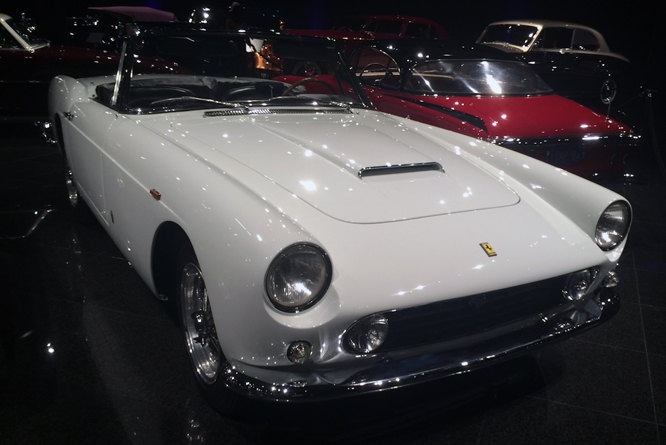
Playing the identify the Ferrari in the picture Geoffrey Horton has sent me has proved a fun challenge over the last 5 or so years and so it was with today’s featured 1960 Ferrari 250 GT Pininfarina Cabriolet Series 2 seen at the Blackhawk Museum.

Geoffrey kindly sent me a photo of the information board which identified the model but gave no details over which of the 204 Series 2 Cabriolet S2’s built between 1959 and 1962 today’s featured cars is.

Ferrari 250 GT Pininfarina Cabriolet, Blackhawk Museum

To give me a clue as to which car this might be I turned to the on line Register of Ferrari 250 GT Pininfarina Cabriolet Series 2’s published by Barchetta, which indicates that only 4 of these cars has been seen with white paintwork in recent years and all have full width front bumpers.

Of those one chassis #2737GT has a hard top and bumper overiders and so can be discounted, of the remaining three chassis #1775GT has it’s fog lights behind the decorative front grill and a tan interior and so can also be discounted.

Of the two remaining white cars chassis #1805GT can be differentiated from today’s car only by it’s tan interior which points to the possibility this car is chassis probably #1779GT which ticks all the identifying boxes available to me short of a photo of the chassis plate.

Barchetta does not have many details on the ownership of #1779GT except that the original owner appears to have been Gianni Agnelli who was of course the head of the FIAT empire.

My thanks to Geoffrey Horton for sharing today’s photo, if you can confirm the identity of the car please do not hesitate to chip in below.

Thanks for joining me on this “Narrowing Down The Options” edition of “Gettin’ a li’l psycho on tyres” I hope you will join me again tomorrow when I will be looking at a one off competition car. Don’t forget to come back now !
Share

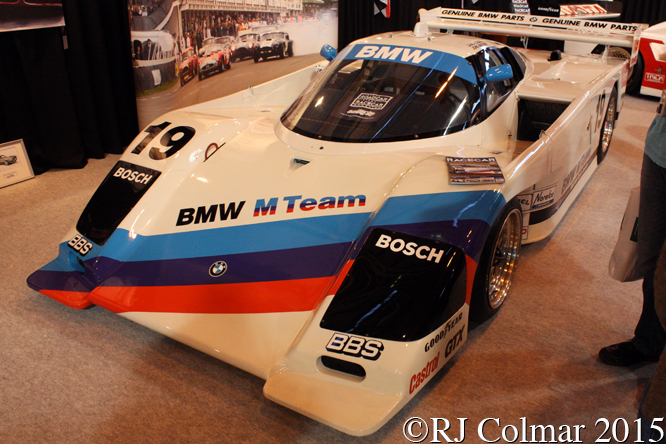
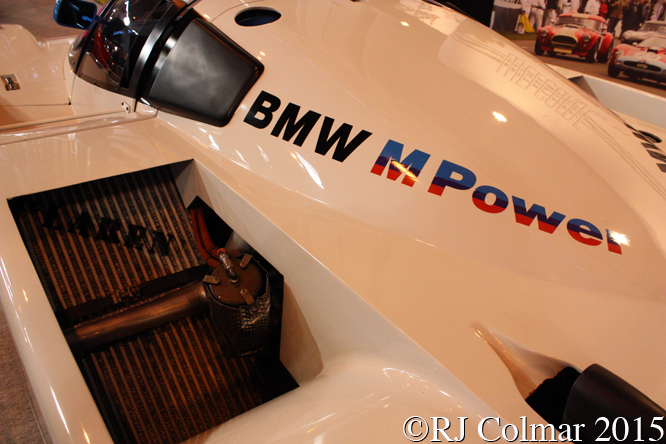
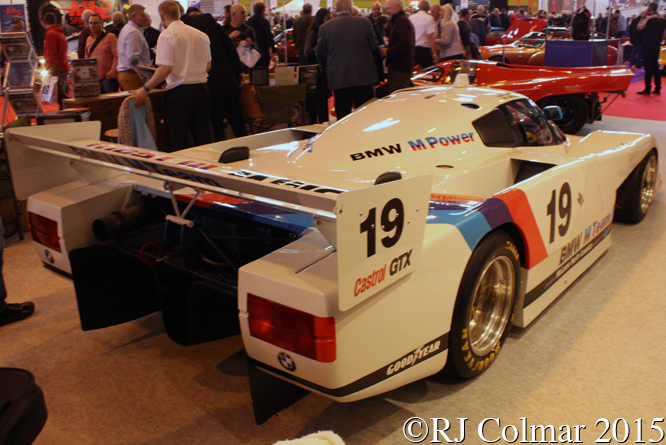
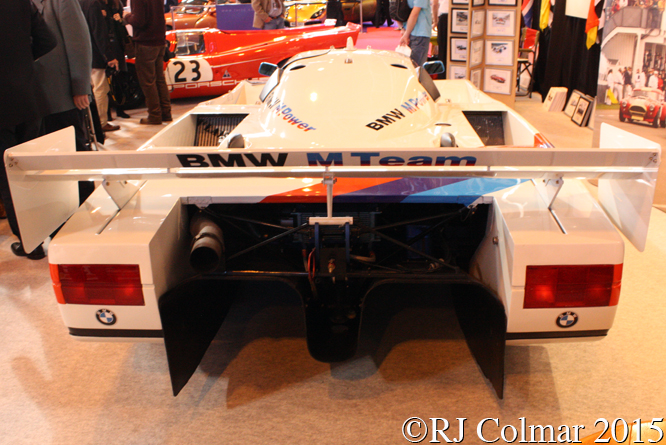
Firing Up Brand Awareness – BMW GTP

The early to mid 1980’s were boom years for many capitalist economies as the price hike in fuel prices provoked by the 1970’s fuel crises became normalised as increased oil production outside the OPEC nations that forced the crises became more economically viable.

In 1983 Nelson Piquet became the first driver to win the World Championship driving a vehicle with a turbo charged motor, his Brabham BT52 being powered by a BMW engine that brought the Bravarian brand much attention, despite Ferrari winning the 1983 Formula One Constructors Championship, in almost all of the global automotive markets except the biggest one in the USA.

BMW GTP, Classic Motor Show, NEC Birmingham

To fire up brand awareness in the USA for the 1986 season BMW tasked McLaren North America to run two BMW North America financed cars in the increasingly popular IMSA GTP series for prototype 2 seat coupé racing cars.

Time and considerable development expense was saved when BMW commissioned March to build four GTP chassis based on the previous race winning March 82G, 83G and 84G GTP prototypes that had been run with Porsche Flat 6, Buick V6 and Chevrolet V8 engines.

BMW GTP, Classic Motor Show, NEC Birmingham

The BMW GTP prototypes, said to have been designed by Gordon Coppuck, were fitted them with 2 litre / 122 cui 4 cylinder 16 valve turbo charged motors and to be driven by American young guns Davy Jones and John Andretti backed up by the more experienced pairing of John Watson and David Hobbs.

During testing for the Daytona one of the cars caught fire and wary of adverse publicity the team withdrew it’s cars from the season opening 24 Hours race.

BMW GTP, Classic Motor Show, NEC Birmingham

A second car burned during qualifying at Sebring and it’s sister was withdrawn after a separate accident, but in the remaining races the cars proved fast, regular top ten qualifiers, but fragile recording 8 did not finishes plus two accidents from 17 starts.

At Watkins Glen the team locked out the front row of the grid and the pole sitting youngsters Davy and John drove their BMW GTP to the models only victory in the Watkins Glen 500 while the sister did not finish.

BMW GTP, Classic Motor Show, NEC Birmingham

At the end of the year BMW announced it’s imminent withdrawal from International motor sport after the BMW powered Brabham F1 team scored only two points and BMW powered vehicles from both series appeared to attract more publicity for catching fire than for racing success.

BMW saw out it’s contract to supply motors to Brabham for one more season and the GTP programme was shut down immediately, although two of the remaining BMW GTP’s, two replacements for the ones that were destroyed were sent to McLaren North America, appeared in 1988 as Buick powered March 86G’s with Gianpiero Moretti’s Momo Racing in 1988.

BMW GTP, Classic Motor Show, NEC Birmingham

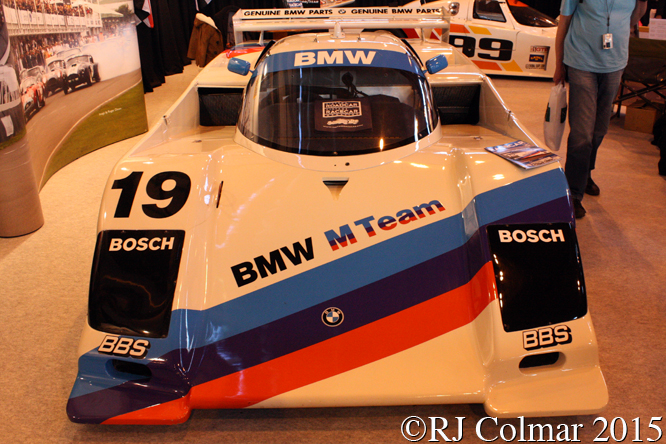
The BMW GTP, like the one seen here at last years Classic Motor Show, NEC, Birmingham, should not be confused with the four Group C spec Nissan V6 turbo powered March 86G’s or the IMSA spec Buick V6 turbo powered 86G supplied to Conte Racing all of which were also raced during 1986.

Thanks for joining me on this “Firing Up Market Awareness” edition of “Gettin’ a li’l psycho on tyres”, I hope you will join me again for Ferrari Friday tomorrow. Don’t forget to come back now !
Share

Le Jog – Aust Services

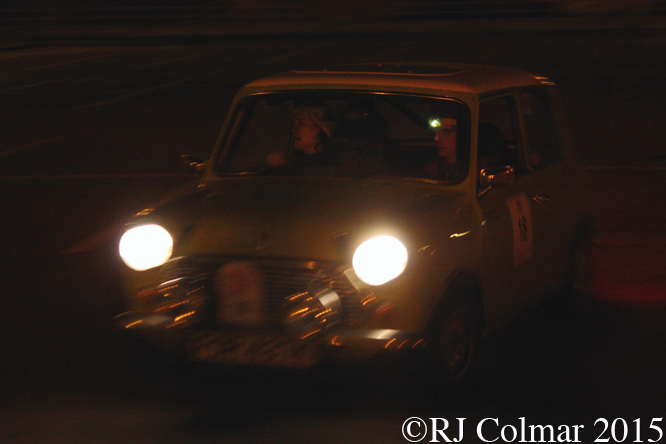
At the beginning of December Le Jog passed through Aust Services for an Autotest in the Car Park, below are some of the runners and riders.

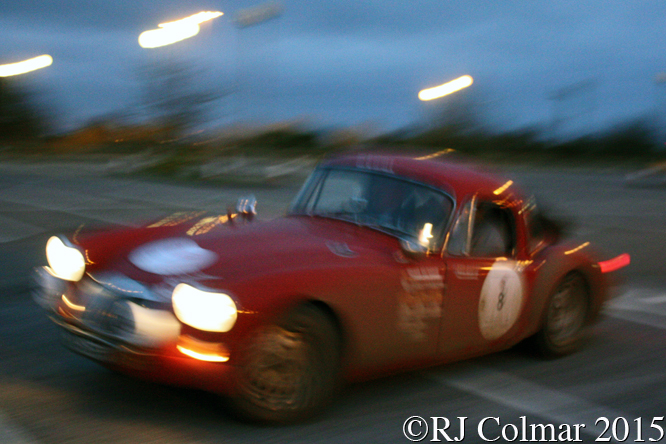
MG A, Volker Haltenhof, Horst Pokroppa, Le Jog, Aust Services,

Volker Haltenhof and Horst Pokroppa collected a nice round 100 min time penalty and were classed 30th in their 1957 MG A.

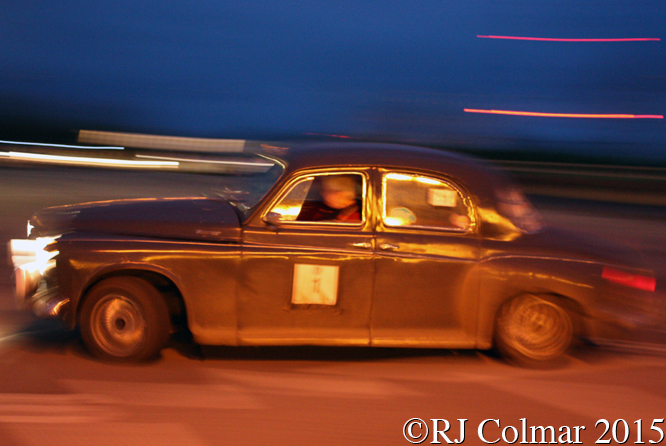
Rover P4, Robert McClean, Susan McClean, Le Jog, Aust Services,

Spirit of the Rally Trophy winners were Robert and Susan McClean who were classified 19th in their 1962 Rover P4.

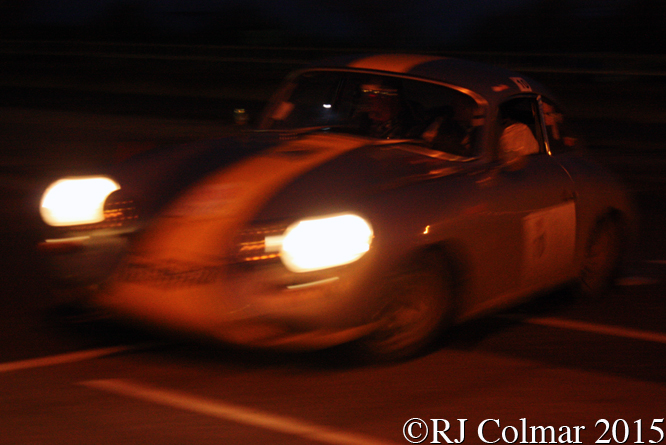
Porsche 356, Jonathan Miles, Andy Elcomb, Le Jog, Aust Services,

The #10 Porsche 356, also built in 1962, was driven by Jonathan Miles and Andy Elcomb who were classified 11th overall first in class and won a Bronze Medal Status.

Volvo 123GT, Roger Osborne, Barbara Osborne, Le Jog, Aust Services,

Roger and Barbara Osborne appear to have retired their #4 Volvo 123 GT early in the event, which was won by a similar car driven by Andy Lane and Iain Tullie who clocked up just 8 mins 1 sec in penalties over the three day drive from Lands End to John O’Groats.

Austin Mini, Rachel Vestey, Owen Turner, Le Jog, Aust Services,

Classified 14th in their 1972 Austin Mini 1275 GT were Rachel Vestey and Owen Turner, Australian Rachel won the Ladies prize too.

MG B, David Maryon, Andy Ballantyne, Le Jog, Aust Services,

The 1966 MG B driven by David Maryon and Andy Ballantyne also retired from the event.

Thanks for joining me on this “Le Jog” edition of “Gettin a li’l psycho on tyres” I hope you will join me again tomorrow when I’ll be looking at a Daytona 24 Hour competitor. Don’t forget to come back now !
Share

City To City Racer – Panhard et Levassor 70hp S²4M R

In June 1854 on the Bristol & Exeter Railway a broad gauge steam train set an out right speed record of 82 mph that appears to have stood until July 1934 when a Milwaukee Road class F6 recorded a top speed of 104 mph to become the fastest steam train.

Panhard et Levassor 70hp S²4M R, Brooklands Double 12

The year before the Wright Brothers made the first controlled powered flight William K. Vanderbilt recorded a top speed of just over 76 mph aboard his Mors in 1902 to set the first Land Speed Record for a vehicle powered by an internal combustion engine, the following year AEG and Siemens & Halske built an electric train that recorded a top speed of just over 130 mph.

Panhard et Levassor 70hp S²4M R, Brooklands Double 12

Having pioneered the Panhard System of placing the engine in front of the automobile and driving the rear wheels with the aid of a clutch operated gearbox and pioneered the use of a steering wheel in place of the hitherto ubiquitous tiller steering Panhard et Levassor were vying with their former collaborator Gottlieb Daimler to supply the best vehicles in Europe to Royalty and industrial leaders at the turn of the 20th Century.

Panhard et Levassor 70hp S²4M R, Brooklands Double 12

To ensure their clients awareness of it’s products Panhard et Levassor took part in the popular city to city races of the day, Émile Levassor crossed the line first ahead of another Panhard et Levassor in the 1895 Paris Bordeaux Paris race, but the cars only had two seats, four seats being mandated for prize eligibility.

Panhard et Levassor 70hp S²4M R, Brooklands Double 12

By 1903 Panhard et Levassor had developed it’s 70hp model to compete with the Mercedes Simplex.

Panhard et Levassor 70hp S²4M R, Brooklands Double 12

The 13672 cm³ / 834 cui 70 hp S²4M 4 cylinder motor and chain drive train was fitted to an R chassis along with two seats and a fuel tank and enough space to carry a few spare tyres.

Panhard et Levassor 70hp S²4M R, Brooklands Double 12

16 70hp Panhard et Levassors are believed to have been built, I believe Charles S Rolls, of Rolls Royce fame, drove one in the fatal 1903 Paris Madrid race, but retired before the race was abandoned at Bordeaux and city to city racing was banned in France.

Panhard et Levassor 70hp S²4M R, Brooklands Double 12

Felice Nazzaro won the 1km flying sprint at Florence in June 1903 aboard his 70hp and 2 days later won the La Consuma Hillclimb in the same car, a week later Baron Pierre de Crawhez won the 500km Circuit des Ardennes driving another 70hp and Felice rounded out his season with a win in the 10km Padua-Bovolenta Sprint and flying 1km Padua Sprint in October.

Panhard et Levassor 70hp S²4M R, Brooklands Double 12

Richard Black’s 70hp, seen in these photographs at a Brooklands Double Twelve meeting with Michael New at the wheel, was first registered in the UK on the 1st of October 2007.

Share