Tag Archives: Colmar

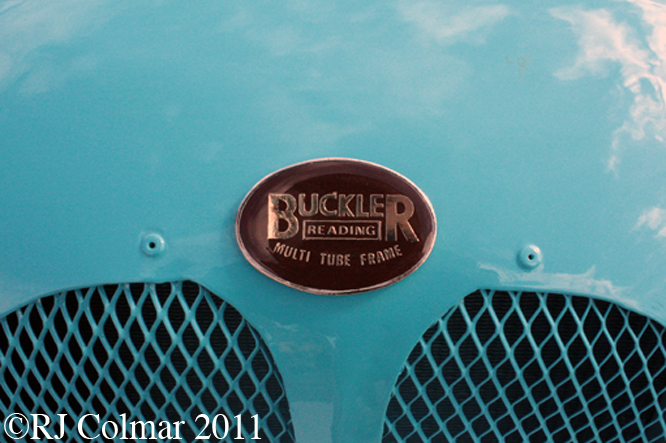
Multi Tube Frame – Buckler MK V

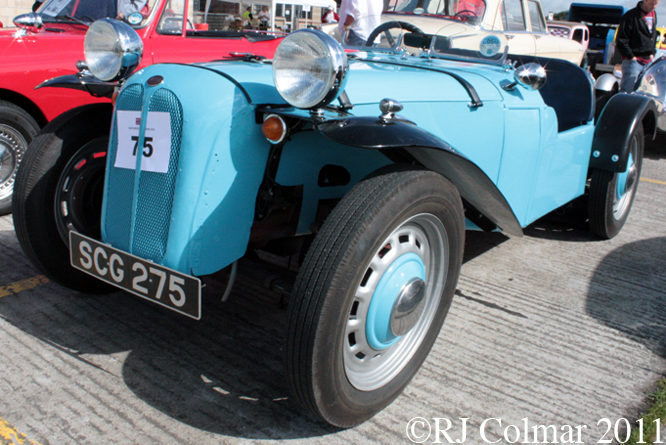
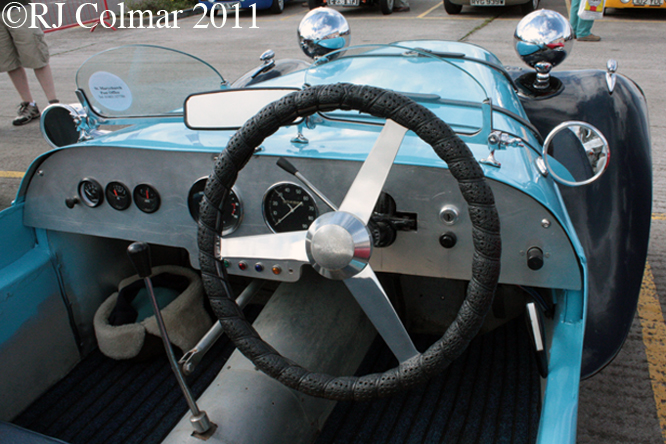
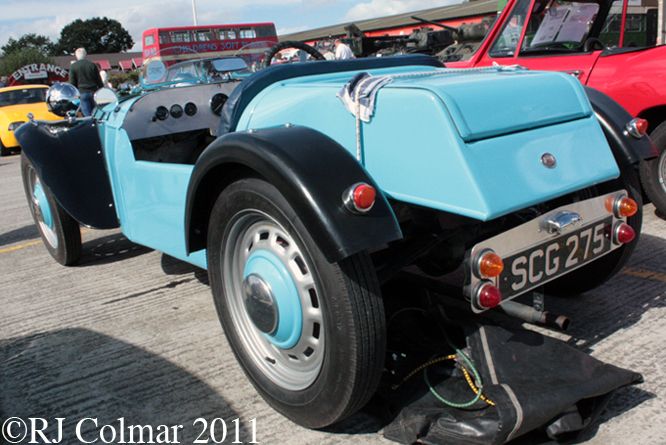
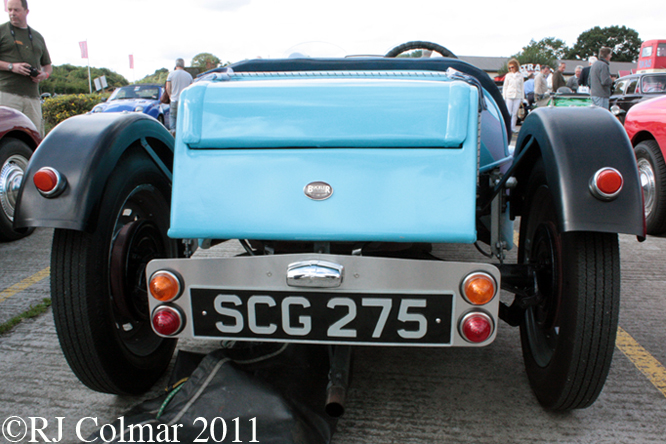
In 1947 CDF Derek Buckler from Reading built a special for rallying, racing, hillclimbs, trials and speed events, of his own design featuring an unusual, for the time, space frame chassis into which a four cylinder side valve 1172cc / 71.5 cui E93A Ford engine was fitted.

Buckler MK 5, Rare Breeds, Haynes IMM

After much competition success Derek placed an advert in ‘Motor Sport’ for an export version of his his special designed for competition car called the Colonial, while also offering independent front suspension conversions kits and go faster parts for Ford Anglias and Prefects.

Buckler MK 5, Rare Breeds, Haynes IMM

Orders soon started to flood in and at some point the Colonial name seems to have been replaced by the MK 5 name, allegedly to disguise the fact that this was Derek’s first design.

Buckler MK 5, Rare Breeds, Haynes IMM

Through the early fifties Buckler Mk 5’s could be purchased either ready finished by the factory, which moved to Crowthorne in Berkshire, or in kit form saving the purchaser a fortune in car sales taxes.

Buckler MK 5, Rare Breeds, Haynes IMM

Buckler went on to introduce two further models the enclosed body MK 90 and DD1 while building several one offs and single seater racing cars that fell outside this range along with a range of successful Karts for racing.

Buckler MK 5, Rare Breeds, Haynes IMM

After building the first cars for Jack Brabhams customer racing car business Brabham MRD Derek sold up due to ill health in 1961 and the company soldiered on until 1965. Derek died in 1964 aged just 53.

Buckler MK 5, Rare Breeds, Haynes IMM

It is thought around 500 Buckler cars of all types were built between 1949 and 1964. The model seen here at the Rare Breeds show at the Haynes International Motor museum is a 1957 MK 5.

My thanks to bucklercars.com for additional information on the MK 5 and the Buckler marque.

Thanks for joining me on this Multi Tube Frame edition of ‘Gettin’ a li’l psycho on tyres’, I hope you will join me again tomorrow. Don’t forget to come back now !

Share

Fatal Firebird – Lotus Ford 29 #29/3

In May 1961 a piece of successful Formula One technology percolated into the environs of Indianapolis which started a whole sale revolution in the layout of the cars that would dominate the Indy 500 hence forth in the form of the Kimberly Cooper Special driven by Jack Brabham.

The Kimberly Cooper Special was the smallest car in the field and possibly with the least powerful motor, but what everyone present learned from the car that started 19th and came in 9th was that the li’l funny car with the engine in the back could handle the corners so much better than the hitherto dominant front engine Roadster machines that the lack of 150 hp made little or no difference.

Lotus 29 Ford, Indianapolis

Imagine just putting the engine in the back of your car giving a 150 hp advantage ! It was a no brainer, but in 1962 only the Californian Speed King Micky Thompson and ’55 & ’56 Indy winning owner John Zink had rear engined cars prepared for the Indy 500.

Rookie Dan Gurney who passed his Rookie test in a Roadster was keen to drive either of the rear engined cars in the race in an effort to impress Lotus boss Colin Chapman whom he had invited over from Europe at his own expense in an effort to entice Colin into building Lotus indy cars for 1963. Dan gave up on the turbine powered John Zink Track Burner but did manage to qualify 8th in the under powered Thompson Buick and come home in 20th.

Lotus 29 Ford, Indianapolis

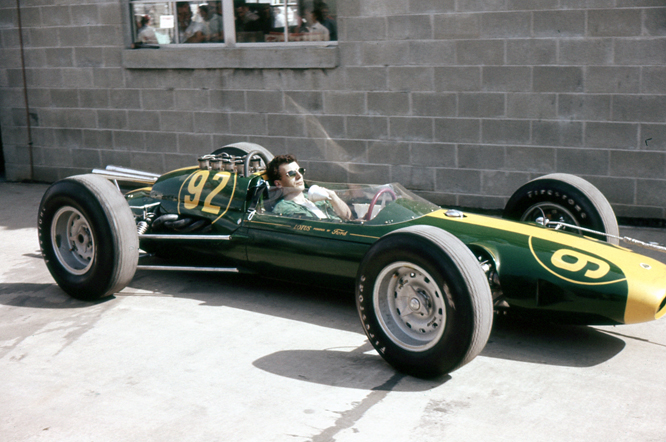
Chapman was sufficiently impressed with the Indy 500 and it’s potential rewards to build the Lotus 29 seen here for the 1963 race. The Lotus 29 featured a monocoque chassis, as campaigned in Chapman’s successful 1962 Lotus 25 Grand Prix car, in place of the usual tube space frame and it had a powerful version of a Ford stock block V8 in place of the almost ubiquitous 4 cylinder Offy that had been winning at Indy since the mid 1930’s and could trace their ancestry back to the Millers of the 1920’s.

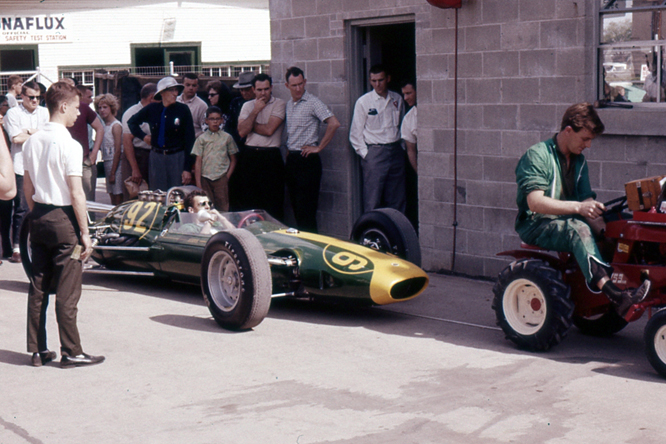
Jim Clark and Dan Gurney were to race the Lotus challengers Clark qualified chassis 29/3 5th and Gurney chassis 29/1 12th. Towards the end of the race Clark was challenging Parnelli Jones for the lead when Jones Watson developed an oil leak, but the USAC officials managed to refrain from black flagging Jones before the oil stopped leaking which allowed Parnelli to take his one and only Indy 500 victory ahead of the Rookie Clark. Dan came in 7th also completing the full 200 laps. Dan’s chassis #29/1 today sits in the IMS museum painted in the green and yellow colours of Jim Clark’s #92 chassis 29/3.

Indy 1964, Ed Arnaudin

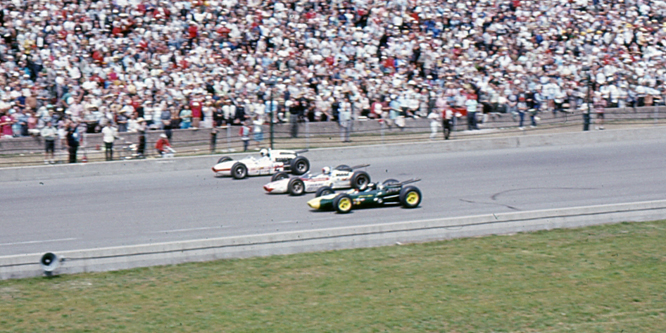
The following year Bob Marshman put #29/2 now known as the Pure Firebird Special on the middle of the front row for 1964 Indy 500 right next to pole sitter Jim Clark in his newer Lotus Ford 34, see above. Bob lost an oil plug going low on the apron while in the lead on lap 37 trying to avoid the slower Johnny White, Bob was eventually classified 25th.

Bob crashed #29/2 at Milwaukee and his owner Lindsey Hopkins bought Clark’s #29/3 as a replacement which Bob drove with no more success than he had with #29/2.

Despite the fireball at Indy in 1964 Bob tested chassis 29/3 at the seasons end wearing nothing but the usual, for the period, t-shirt and jeans at Phoenix. During the session Bob’s car was involved in an accident which ruptured the fuel tank, a week later Bob died of the burns he subsequently sustained.

Ed Arnudins photo’s show Lotus Mechanic Colin Riley at the wheel of Jim Clarks of #92 Lotus 29 Ford being towed through the Indianapolis garage area by another Team Lotus mechanic Dave Lazenby who is at the wheel of the dinky li’l towing tractor in the top photograph.

My thanks to Ed and Steve Arnaudin for the photo’s, Tim and B Squared at The Nostalgia Forum informing me of which chassis is featured in today’s post for identifying Colin and Dave in the photo’s.

Thanks for joining me on this ‘Oil Leak ? What Oil Leak ?’ edition of ‘Getting’ a li’l psycho on tyres’ I hope you will join me again tomorrow. Don’t forget to come back now !

05 02 12 ps Thanks to Brian for pointing out the now corrected Bobby Marshman spelling error and pointing out that Bob did not spin out of the 1964 Indy 500.

12 05 14 Since writing this piece it has come to my attention that Bobby Marshman signed his autographs ‘Bob Marshman’ and it seems fitting and respectful to have removed the references to “Bobby”.

It has also come to my attention that Bob drove #29/2 on the paved surfaces of USAC’s Champ Car Series up until Milwaukee in ’64 and not #29/3 as originally suggested. He also appears to have lost an oil plug rather than damaged an oil line at Indy as originally suggested.

I hope you’ll accept my sincerest apologies for any unintentional confusion caused.

Share

Life is More Important Than A Championship – Ferrari 312 T2 #028, #027 & #026

Today’s photographs come courtesy of another school friend Sven Platt who was lucky to see one of the most controversial British Grand Prix of all time at Brands Hatch in 1976.

The 1976 Grand Prix season was probably the most fascinating of all time, it had technical innovation in the form of a six wheel car, it had a dashing up and coming Englishman given a last minute chance in a top team, all trying to wrest the drivers and constructors title from the reigning champions Ferrari and “Super Rat” Niki Lauda, the first titles Ferrari had won since 1964. The track action was matched by some equally spectacular off track twists and turns that saw Ferrari and McLaren pressure all and sundry who stood in their way. To put into perspective the grandeur of the season Ron Howard famed for making films like Cocoon, Apollo 13 and The Da Vinci Code is currently shooting a film in England all about the 1976 Grand Prix Season called ‘Rush’ which will probably be released before the end of the year.

Niki Lauda started the 1976 season pretty much where he left the 1975 season off taking two straight wins and his team mate Clay Regazonni taking Ferrari’s third straight win of the season all with 1975 Ferrari 312 T’s. Then at the Spanish Grand Prix new rules were adopted mostly tightening up the maximum dimensions of the cars including the overall width. The big technological innovation was the six wheel Tyrrell driven by Patrick Depailler 3rd behind Niki Lauda and James Hunt, McLaren’s last minute signing at the start of the season, who was on his third pole position from four races.

James Hunt crossed the line first in his modestly revised McLaren M23 and Niki Lauda came in second with a more heavily revised 312 T2 still with the 180 degree V12 engine the same transverse gearbox but an all together slimmer model than it’s predecessor the 312 T. Then the fun and games really started when the M23 failed its post race technical inspection for being 1.8 cm less than an inch too wide. This saw James instantly disqualified elevating Niki Lauda to the top spot of the podium. McLaren immediately posted an appeal, and the circus moved on to Belgium and Monaco where Niki Lauda again triumphed both times form pole.

Pending a McLaren appeal Niki was now in an almost unassailable lead in the championship with 5 victories from six races and with Ferrari pending appeal on six for six. In Sweden however real technological innovation broke the Ferrari by taking it’s one, and only, win and an easy second place in the hands of Jody Scheckter who beat team mate Patrick Depailler driving the novelty six wheel Tyrrells since the two Tyrrells had three axles a piece in theory they locked out the three step between them !
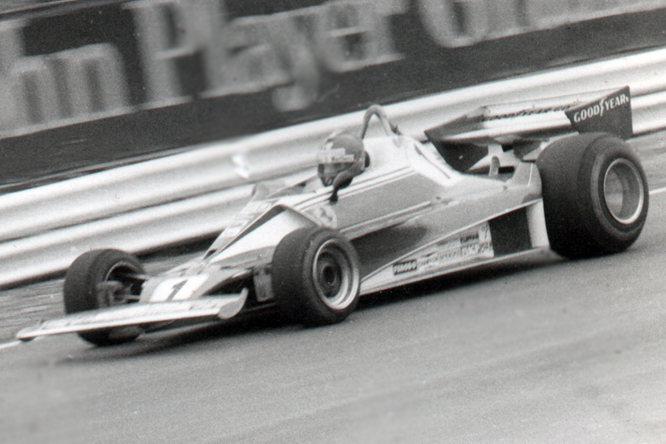
Ferrari 312 T2, Brand Hatch, Sven Platt

However the six wheel Tyrrells were never to win, let alone dominate, a race again and at the French Grand Prix it was James Hunt who pending his Spanish appeal made his first win for McLaren official. The next race was the British Grand Prix where these photo’s were taken by my school friend Sven. On the opening corner of the opening lap of British Grand Prix Clay Regazzoni starting from 4th on the grid got the drop on Hunt starting second but in the process lost control clipping Lauda who was ahead of him and leaving James Hunt no place to go except to broadside Clay in the #2 Ferrari.

This collision brought out an immediate red flag Lauda’s car was undamaged, Clays car could take no further part and James car took a short cut back to the pits for hasty repairs. There was nearly a riot when James was initially refused permission to take the 2nd start but following a near riot the organisers saw sense and let the race go ahead with a full compliment of cars. James won the race from the second start with Lauda second. Immediately after the race followed more protests which saw Regazzoni disqualified for failing to start in the same car he qualified. Hunts win was also protested all the way to the FIA who would decide Hunts fate some months later.

Around this time the outcome of the Spanish GP was decided in favour of James Hunt after the the governing body of the FIA accepted McLaren’s argument that their car had only been too wide because the tyres when not moving buldged outwards by at least the amount of the infraction due to the absence of centrifugal force acting on them when measured and therefore the infraction was not deliberate and gave no advantage. Immediately after the Spanish GP McLaren narrowed the rear track of their cars to prevent any reoccurence of this problem.

So it was on to the German GP where this Niki Lauda fan had the questionable privilege of spectating as first Hunt beat Lauda to pole and then not more than half a mile away from me a thin column of smoke arose on the second lap where Niki Lauda who pitted on the opening lap for slick tyres had come to rest with his car ablaze after loosing control of it on a relatively simple part of the Nurburgring.
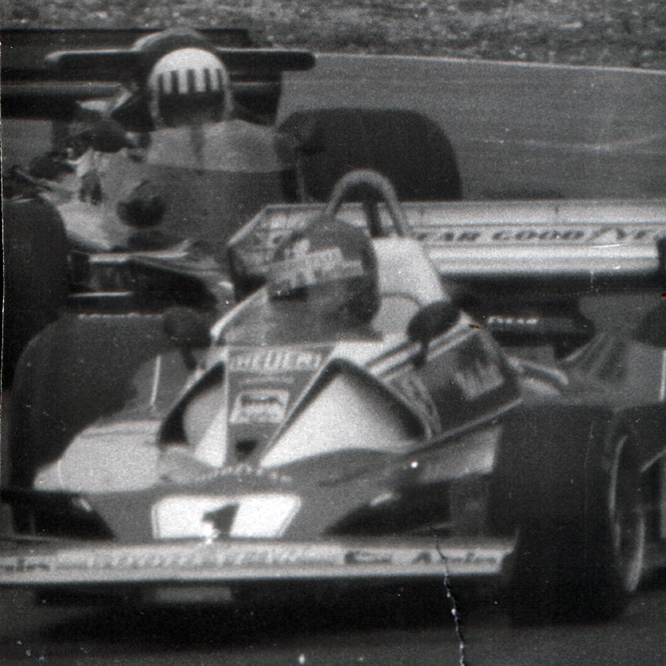
Ferrari 312 T2, Brand Hatch, Sven Platt

With the track blocked fellow drivers Guy Edwards, Harold Ertl, Brett Lunger and Art Mezairio were the only people in reach to release Niki from his burning car. Eventually a helicopter arrived and took Niki to hospital where he would be read the last rights by a priest before making an astounding come back just six weeks later.

Hunt won the restarted German Grand Prix and the Dutch Grand Prix in Niki’s absence with John Watson driving the Penske scoring the last Grand Prix victory until this day in an American entered car, at the intervening Austrian Grand Prix.

At the Italian Grand Prix Ferrari showed in strength with an unusual for the time three car team one car for Regazzoni which qualified 9th, a car for new signing Carlos Reutemann which qualified 7th and amazingly a car for Niki Lauda who’s head was still heavily rapped in bandages from the burns he had received 6 weeks earlier in Germany qualifying fastest of the Ferrari’s in 5th.

Further shenanigans came to ahead when Watson, Hunt and his team mate Jochen Mass had their Saturday qualifying times of 8th to 10th respectively disallowed due to fuel irregularities which rendered them out of the race until it was found that Otto Stupacher had already gone home and then Art Mezario and Guy Edwards had both withdrawn allowing Hunt, Mass and Watson back into the race at the back of the grid.
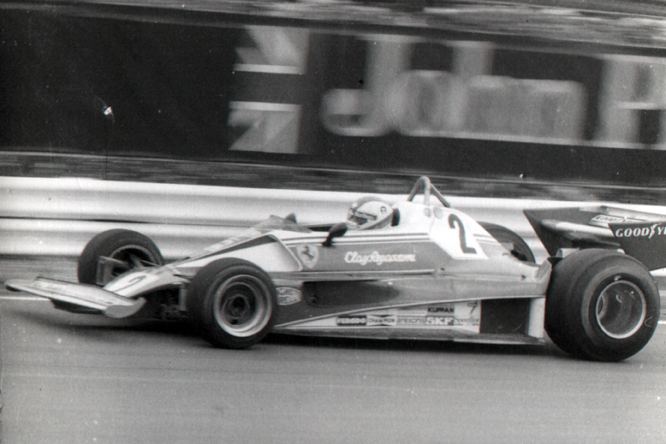
Ferrari 312 T2, Brand Hatch, Sven Platt

By the races end it mattered little neither Hunt nor Mass finished and Lauda made moved only 3 points further ahead of Hunt with a 4th place finish. Hunt was then disqualified from the British Grand Prix for an alleged push start away from the incident with Regazzoni on the opening lap. At the Canadian Grand Prix James lead from pole making up nine points on Niki who qualified sixth but could only finish out of the points in 8th.

Still 8 points behind Lauda going into the US Grand Prix East James won from pole again scoring nine more points but Niki managed to convert 5th on the grid to an unbelievable, considering he was still heavily wrapped in bandages, 3rd place and four points and so maintained a 3 point lead going into the final race of the season at Fuji in Japan.

Mario Andretti took pole in the single most improved design of the 1976 season the Lotus 77 with championship contenders Hunt and Lauda right behind him in 2nd and 3rd. Race day dawned monsoon like with mist and fog shrouding the track. Despite much debate and water running across the track the race went ahead with all drivers taking the start and Hunt leading the way from Andretti, at the end of the opening lap Niki with no eyelids decided his life was worth more than a title and pulled into the pits virtually handing James the title on the plate.

However as the track dried Hunt started to fall back and pitted with a puncture rejoining in 5th place with just two laps to go since Andretti had by now lapped the entire field. Hunt went storming off needing to over take at least two cars to level the points and take the title on a count back of wins 6-5 in favor of James, he pulled it off passing Alan Jones and Clay Regazzoni who were struggling on the drying track with their worn wet tyres, James completely unaware of his position in the race or the Championship then passed Depailler in the six wheel Tyrrell to take third and win the title by a single point.

Ferrari 312 T2, Brand Hatch, Sven Platt

Ferrari won the constructors championship by nine points, having a more reliable car and having a higher scoring 2nd string driver in Regazzoni than Jochen Mass in the McLaren. So ended possibly the most storied season in Grand Prix racing, certainly so far as the author, who got up at 5am to watch the final race of the season on television is concerned.

In the first two photographs the #1 Ferrari is seen driven by Niki Lauda, during practice in the top photo without his name on the cokcpit side. This chassis 028 was brand new for the British Grand Prix, where Niki was eventually awarded the win. In the second photo Niki is seen leading Welshman Tom Pryce driving a Shadow whom Niki had just lapped. At the following race in Germany Niki so very nearly met his maker when he lost control of chassis 028 on lap 2 of the German Grand Prix, impact with the crash barrier knocked Niki’s helmet off while the car simultaneously burst into flames. #028 was never to be seen in public again.

Clay Regazzoni is seen in the third photo driving the #2 car chassis #027 which Clay used throughout the 1976 season from the Monaco Grand Prix onwards scoring two second place finishes in Holland and Italy. Clay damaged this car during the first corner fracas at the British Grand Prix and so took the restart in chassis #026 for which he would later be disqualified for not having used it to qualify for the race.

In the fourth and final photo Clay is seen prior to retirement, and eventual disqualification, battling with Gunnar Nilson in the #6 Lotus 77 at the entrance to the notorious off camber downhill Paddock Bend after the restart of the race. Chassis #026 was used by Niki Lauda early in the season with which he came 2nd in Spain and First in Monaco and third in Sweden, the car was then past over to Regazzoni who after damaging it at the British Grand Prix only used it as a spare car for practice there after in Germany and Holland before it was re prepared for Niki’s comeback in Italy and the remainder of the season scoring 4th in Italy and a 3rd place in the United States East.

My thanks to Sven Platt for the use of his photo’s.

Thanks for joining me on this ‘Life Is More Important Than A Championship edition of ‘Gettin’ a li’l psycho on tyres’, I hope you will join me again tomorrow, don’t forget to come back now !
Share

Indy Winning Roadster Heritage – Kurtis 500 S

Frank Kuretich was born in the Crested Butte a Colorado mining village to Croation immigrants in 1908. At six Frank started helping in his Dads blacksmith shop, in Sunnyside Utah, fixing horse shoes and wagons and automobiles as they began to populate the neighbourhood.

The economic instability of the times saw Franks family move to California where his Dad took a job with Don Lee Coach & Body Works in 1922. Standing over 6 feet tall at 14 years old Frank claimed to be 18 years old and landed a job as a helper to his father customising cars for Hollywood stars where his and his fathers names were anglicised to Kurtis by the personnel dept.

Kurtis 500S, Silverstone Classic

While at Don Lee’s Frank started an apprenticeship at seventeen and such was his skill that he swiftly rose to become manager working in the shop for a short time with designer Harley Earl before the latter left for General Motors in 1927. After work hours Frank engaged in building numerous hot rods and special and eventually started working on midget racers with Don Lee’s son Tommy building the bodies.

In 1937 Frank went to work for the Hollywood Trailer company where he learned to how the work tubing to build vehicle frames and by 1938 Frank had set up his own shop to build “virtually unbeatable” midgets of which he would build over 1000 supplied either complete or as kits.

Kurtis 500S, Silverstone Classic

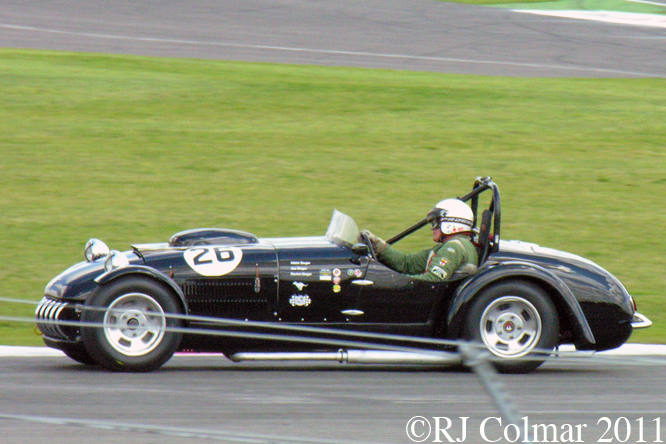
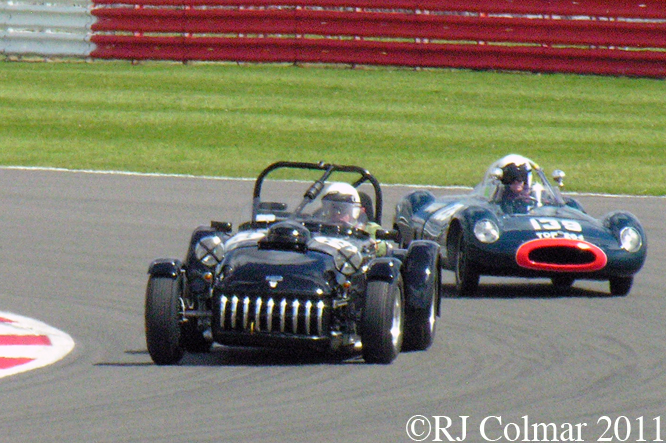
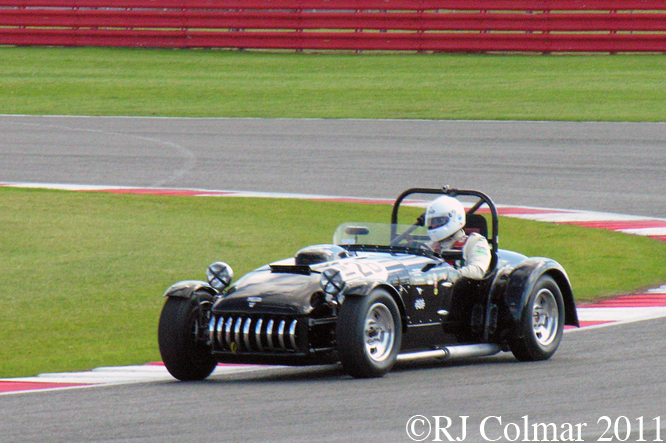
During the 1950’s Frank also built 120 champ cars for the Indy 500, building 5 winners. During this time Frank also built several road cars selling the design for on which became the Muntz Jet. The 500S, as seen in todays photographs at last years Silverstone Classic, along with the fully enclosed body 500KK and 500M models are all based on the 1953 Roadster Frame and suspension as used by Bill Vukovich to win the Indianapolis 500 that year.

Kurtis 500S, Silverstone Classic

The 500S could accommodate any motor and transmission available between 1953 and 1955 when it was manufactured. Bill Strope appears to have been one of the more successful exponents on the track with his Mercury powered 500S. Of the 20 – 20 500S known to have been built 14 are known to exist during the 1980’s a further 24 continuation models were built with the approval of Frank Kurtis son Ahren.

Thanks for joining me on this ‘indy Winning Roadster Heritage’ edition of ‘Gettin’ a li’l psych on tyres’ I hope you will join me again tomorrow. Don’t forget to come back now !
Share

Perfect Car For A Wedding #7 – Ford Escort Mexico

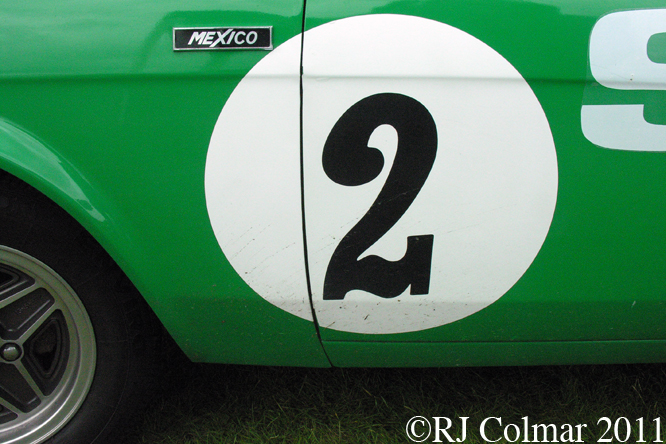
Today’s Ford Escort is has a multipurpose history going back to 1973 when it was built along with 19 others for Motor Circuit Developments (MCD) to take part in an ad hock celebrity series of races.

Ford Escort Mexico, Oulton Park, Gold Cup

The Ford Escort Mexico was a not so limited edition special built to celebrate the success of Hannu Mikkola driving FEV 1H, which I looked at last week, and his team mates in the 1970 Daily Mirror World Cup Rally that covered 16,000 miles in 25 days.

Ford Escort Mexico, Oulton Park, Gold Cup

Built at Ford’s Advanced Vehicle Operations (AVO) plant in Aveley Mexico’s came with a strengthened competition spec unitary body shell known as the type 49, by all accounts a much copied item these days. The Mexico like FEV 1H was powered by the Kent cross flow motor albeit only the 1600 cc / 97 cui version with an 8 valve head which produced 96 hp.

Ford Escort Mexico, Oulton Park, Gold Cup

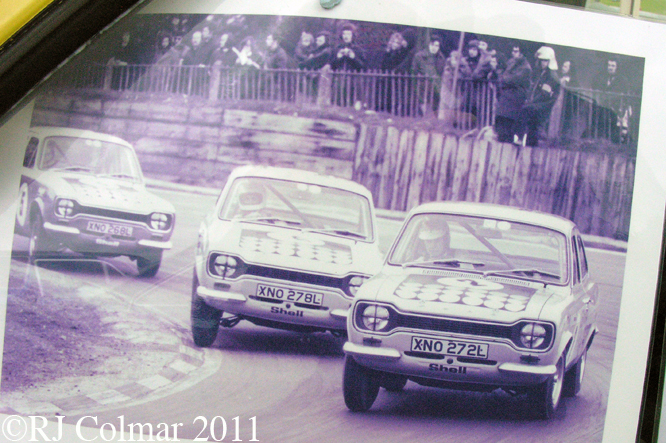
Ford of Britain and John Webb of MCD introduced the idea of celebrity racing in 1970 inviting pro’s and celebrities alike to race Ford Capri’s which helped broaden the appeal of motor racing well beyond seasoned anoraks like your truely. When I was first taken to a race meeting at Brands Hatch in 1973 Ford were promoting the 3 litre / 183 cui Ford Consul GT executive saloon in celebrity races, round the world yachtsman Chay Blyth winning on that occasion.

Ford Escort Mexico, Oulton Park, Gold Cup

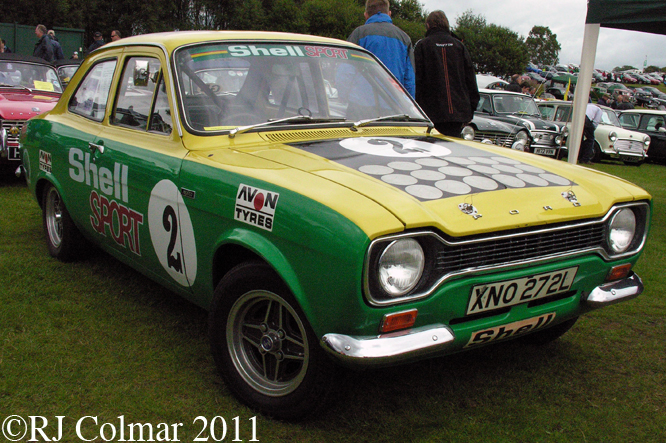
For the 1974 season a batch of 20 Celebrity Escort Mexico’s, all registered in 1973 was upgraded at AVO to racing spec with a safety cage, three point harnesses on both front seats, battery cut off switch, fire proof rear bulkhead with the only concessions to performance being uprated Bilstein dampers and RS 4 spoke alloy wheels.

Ford Escort Mexico, Oulton Park, Gold Cup

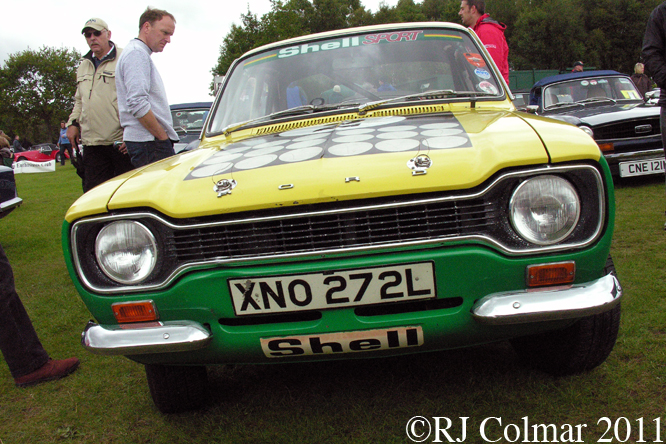
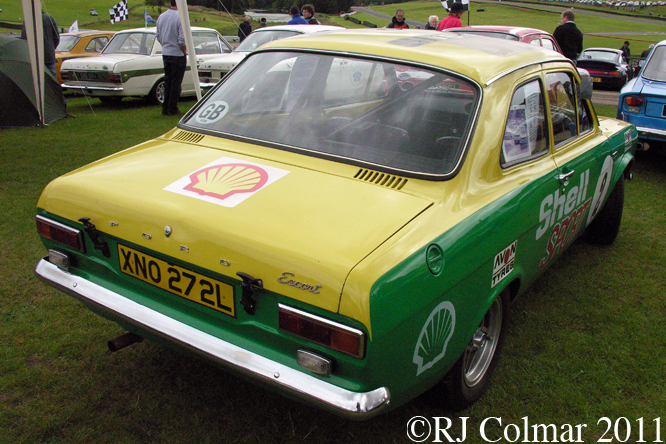
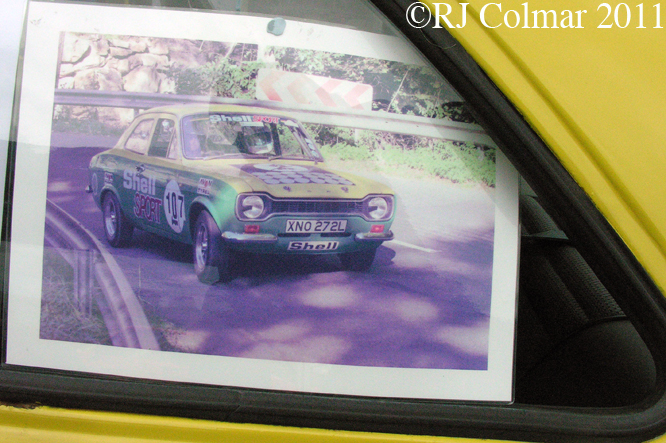
This particular Celebrity car is known to have been driven to a win by Radio and Television presenter Noel Edmonds. Lella Lombardi, Tony Lanfranchi, Patrick Neve and Richard Lloyd also drove XNO272L through the course of the 1974/1975 seasons.

Ford Escort Mexico, Oulton Park, Gold Cup

After it’s celebrity racing career was over MCD director John Webb took the car over and used it until the early 1980’s, even used it on his wedding day. For a period during the 1980’s this car was kept in storage until it was dusted off and put on display. John sold the car in 1990 and the current owner acquired it in 1992 since when he has used it on classic car tours, holidays with an occasional sprint and hillclimb thrown in for good measure.

Thanks for joining me on this ‘Perfect Car For A Wedding #7’ edition of ‘Gettin’ a li’l psycho on tyres’ I hope you will join me again tomorrow when I will be marking the 500th edition of ‘Gettin’ a li’l psycho on tyres’ with a look at a Kurtis. Don’t forget to come back now !
PS Just noticed that according to the WordPress Post Counter this is my 500th blog. I’d like to sincerely thank everyone who has contributed to, followed and especially recommended what has become the GALPOT journey of discovery.

Share

Supercharged – MG PA

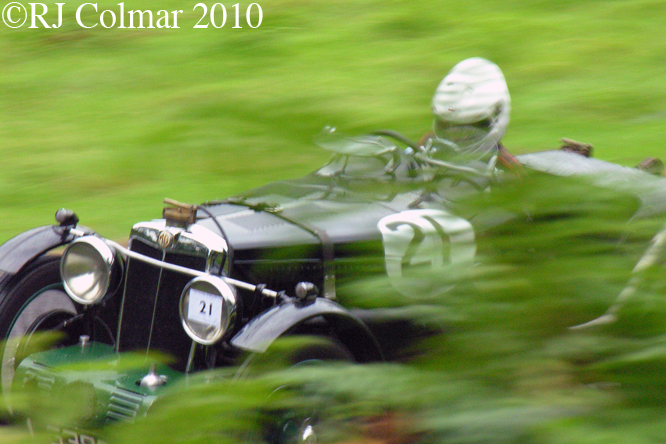
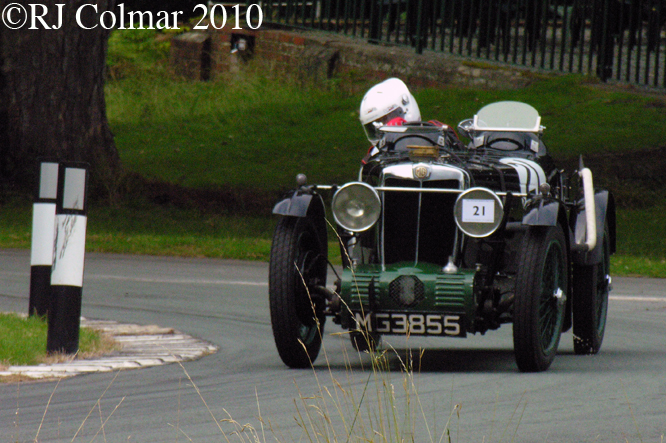
The MG P series was launched in 1934 part of a continuing series of upgrades of the earlier M-Type and J-Type roadsters.

MG PA, Loton Park

The main differences were that the P Types had a slightly longer wheel base and a 36 hp variant of the over head cam cross flow Morris Minor / Wolseley 10 4 cylinder motor with more reliable 3 bearing crankshaft. The PB types launched in 1934 had a slightly larger and more powerful 43 hp motor.

MG PA, Loton Park

Andrew Morlands 1934 PA seen here at Loton Park is fitted with an earlier supercharged motor possibly originating from an MG J3. Around 2000 PA types were built and a further with a further 500 PB types up to 1936.

Thanks for joining me on this PA edition of ‘Gettin’ a li’l psycho on tyres’ I hope you will join me again tomorrow when I’ll be looking at a celebrity Ford Escort Mexico. Don’t forget to come back now !
Share

Supercharged Map Reading – BPMC Navigation Exercise

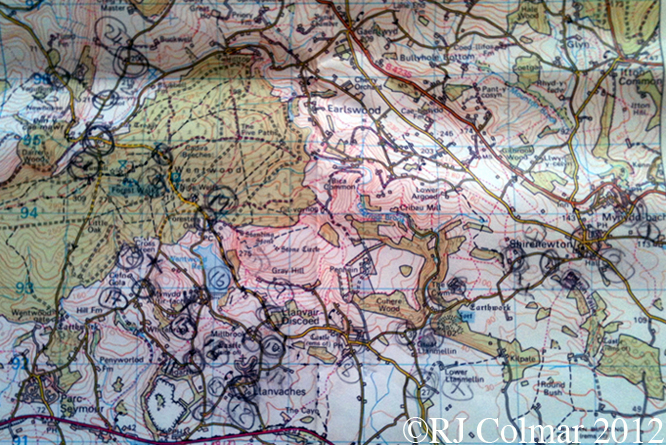
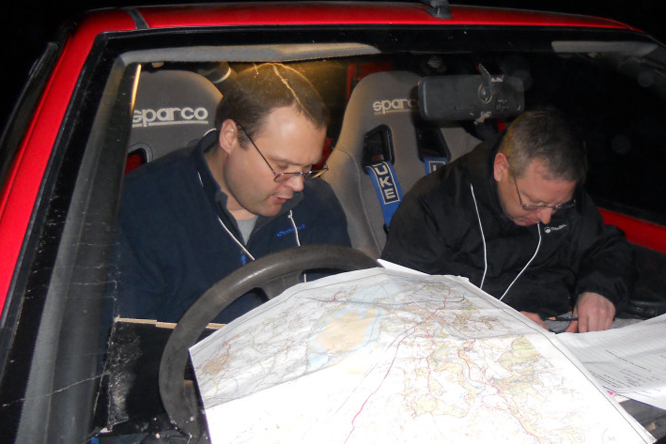
At long last the 2012 motor sport season has got under way, though not in quite the way I have ever experienced ever before. A couple of weeks ago I was informed that Bristol Pegasus Motor Club (BPMC) Membership Secretary Bob Bull was looking for a navigator to take part in the January BPMC Navigation exercise. I got in touch with Bob and he kindly agreed to take me along on Friday despite the fact that I have not read an Ordnance Survey map in something approximating 4 decades, since being introduced to the modern talking route finder a couple of years ago I have rarely had use for any kind of map at all !

BPMC Navigation Exercise

This event was organised on three levels Beginners which included Bob and I, Novices for those competent at reading maps who were given an additional false origin exercise, a tulip reading exercise, a map feature reading exercise and herringbone reading exercise. Finally for the Experts there were map reading, false origin, tulip not in the correct order, map feature an a herringbone exercise. I’ll come back to the more difficult exercises in a future blog.

BPMC Navigation Exercise

Photo Courtesy Dick Craddy

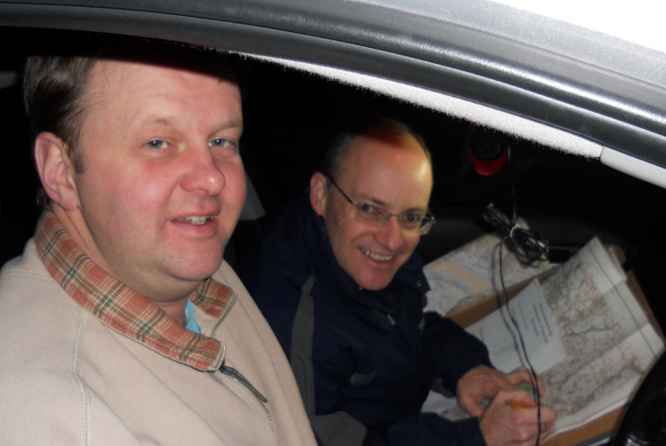
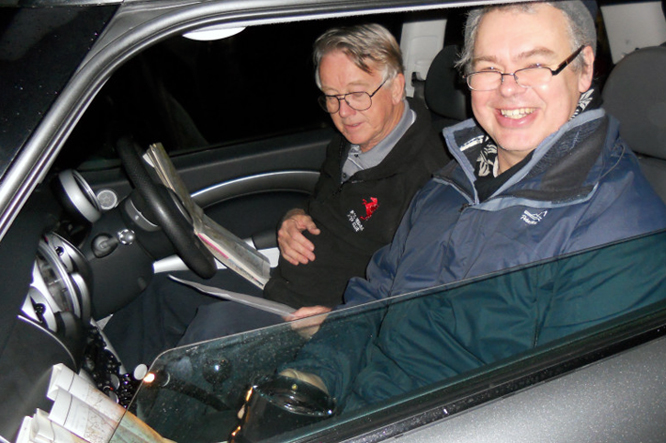
Bob kindly came and picked me up on Friday night in his ‘daughters Mini Cooper S’ a tidy supercharged model that would be ranged against the Mazda 6 of BPMC Chairman Andy Moss with co driver Chris Goodchild (above) ,

BPMC Navigation Exercise

Photo Courtesy Dick Craddy

the Peugeot 106 Rallye of Chris Thompson and Alan Dillamore …

BPMC Navigation Exercise

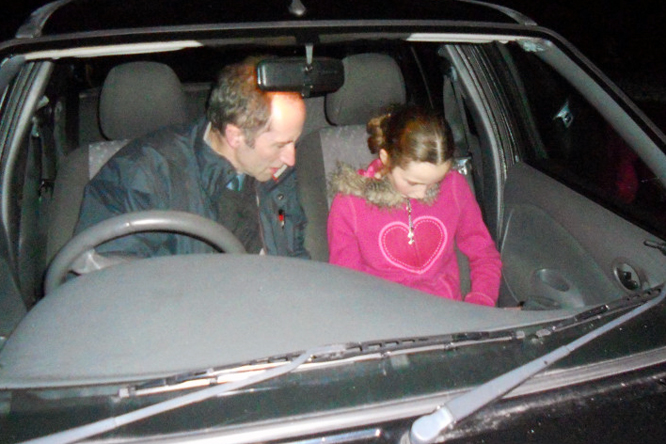
and the Ford Fiesta driven by Martyn with his teenage daughter Katie Davies doing the co driving. We all met with the event organiser Dick Craddy at map reference 494 943 on O/S Map 162 for a 19:30 start.

BPMC Navigation Exercise

Bob and I arrived at the lay-by nice and early and wondered if we might try navigating by stars on what was a clear and dark night on the Welsh Boarder.

BPMC Navigation Exercise

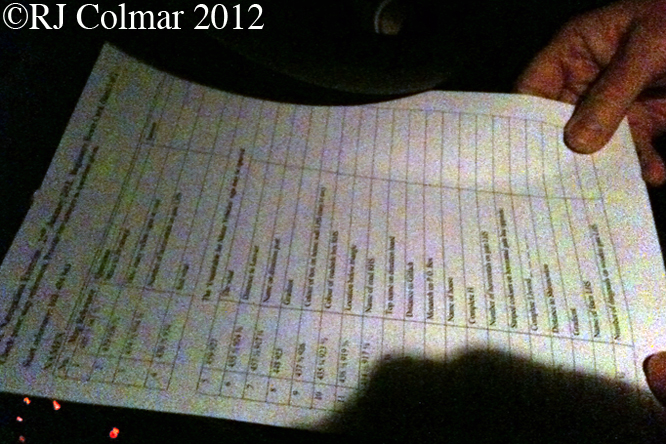
Once everyone had arrived and signed on Dick went through some basics about not using anything other than normal driving lights, observing the highway code at all times and he warned us that the local constabulary had been informed of our presence and that we should expect to see them at anytime, before handing us our instructions. In our case a list of fifty 6,7 and 8 figure map references with questions about features we could expect to find when we reached them.

BPMC Navigation Exercise

Photo Courtesy Dick Craddy

Before setting off we plotted the map references and after the first dozen I realised I had forgotten to label them so we had to start again, nothing like starting at the bottom of the learning ladder. After what must have been nearly an hour I had about half the references plotted and Bob put the Supercharged Mini in gear and off we set towards our first map reference a junction in Mynydd-bach where we had to find out how many miles the sign post to Brynbuga read before heading in the opposite direction towards Shirenewton !

BPMC Navigation Exercise

So far so good but then things soon started to get complicated, somewhere between reading the map and looking for clues as to where we actually were I missed a junction and we found our selves on a single lane track facing Chris Thompson coming from the opposite direction ! Chris kindly backed up to let us pass, somehow, it still escapes me how, we managed to do a figure of 8 and ended up back in Shirenewton. Doh ! we retraced our steps and found the junction we missed, found the correct answers to the questions and headed on toward Llanvair Discoed and found the answers to around a dozen questions before deciding to call it a day and heading to the final meeting place a pub next to Tintern Abbey. Note to self not all pubs are marked on an Ordnance Survey Map as PH (Public House) or Inn.

BPMC Navigation Exercise

Needless to say we did not do very well coming in well and truly last, but Bob kindly offered to redo the exercise with me in a couple of weeks. They say practice makes perfect so if all goes well we will be back for crack at the next Navigation event a little the wiser.

If you live in the Bristol area and fancy having a go at this entertaining low cost sport why not check out the Bristol Pegasus Motor Club site join the club for just £10 and give it a go. The next BPMC organised Navigation Exercise is on March 16th.

Congratulations to Andy and Chris who easily won even with a deduction for being previous winners !

My thanks to Bob for his patience and taking me along, Dick for organising the event and providing some of the photo’s for today’s blog.

Thanks for joining me on this Supercharged Map Reading Edition of ‘Gettin’ a li’l psycho on tyres’, I hope you will join me again tomorrow. Don’t forget to come back now !
Share