Tag Archives: Colmar

Alan’s Spyder – Ferrari 275 GTS #07395

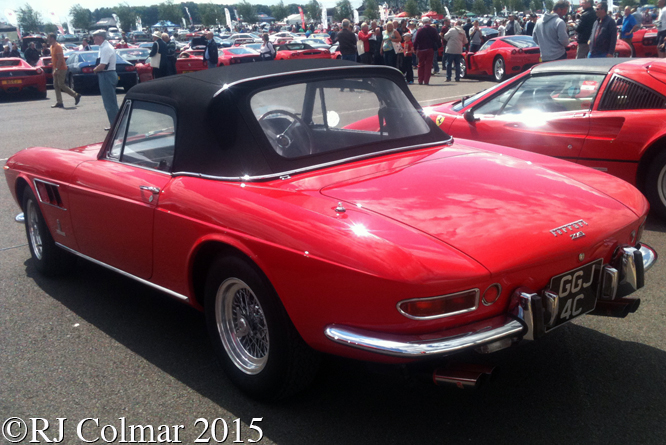
With it’s looks more closely related to the Ferrari 250 GT Cabriolet than any of it’s similarly 3.3 litre V12 powered 275 siblings, as I noted earlier this year the 200 275 GTS convertibles built are the odd balls of the Ferrari 275 family.

Ferrari 275 GTS, Silverstone Classic,

Today’s featured car, seen at the recent Silverstone classic was imported into the UK by Maranello Concessionaires in 1965 and first registered in the UK on the 19th of July the same year, #07395 appears to have kept it’s original registration ever since.

Ferrari 275 GTS, Silverstone Classic,

The only named owner detectable for chassis #07395 is shown as 1980 Formula One World Champion Alan Jones though no specific dates are given for when he acquired or disposed of the car. The car is shown as having been at Christie’s Beaulieu auction on the 14th of July 1986 by which time, if Alan still owned the car, he had probably come to the conclusion that restarting his Formula One career with Team Haas was probably not going to bear the fruits he was expecting, #07395 is said to have been sold for £47,500 including buyers premium to an undisclosed purchaser.

Thanks for joining me on this “Alan’s Spyder” edition of “Gettin’ a li’l psycho on tyres” I hope you will join me again tomorrow. Don’t forget to come back now !

Share

Monterey Porsches – Rolex Monterey Motorsports Reunion

On our fourth visit to this years Rolex Monterey Motorsports Reunion I’ll be looking at some of the Porsches and Porsche powered cars present.

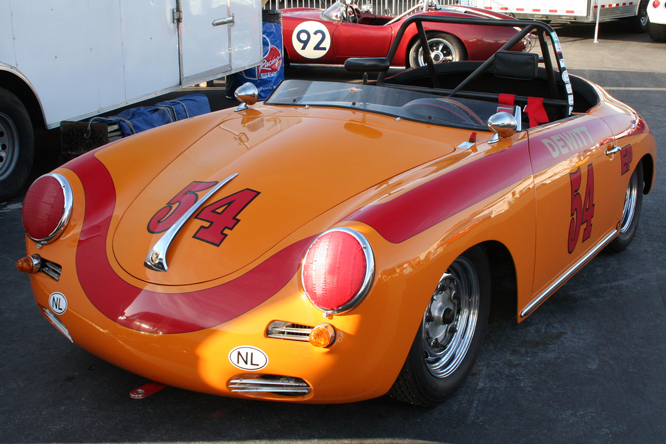
Porsche 1500 Super Continental, Rolex Monterey Motorsports Reunion,

First up the 1955 Porsche 1500 Super Continental owned and driven by Clinton deWitt, US Porsche importer Max Hoffman had the 1500 Continental supersede the 1500 America in 1955 with the less powerful ‘normal’ motors because he thought they would give his customers better low engine speed performance than the more powerful “Super” motors, the inverse of what a race car needs. The Continental name did not last long because objections from Ford who used the Continental name at that time for a stand alone brand.

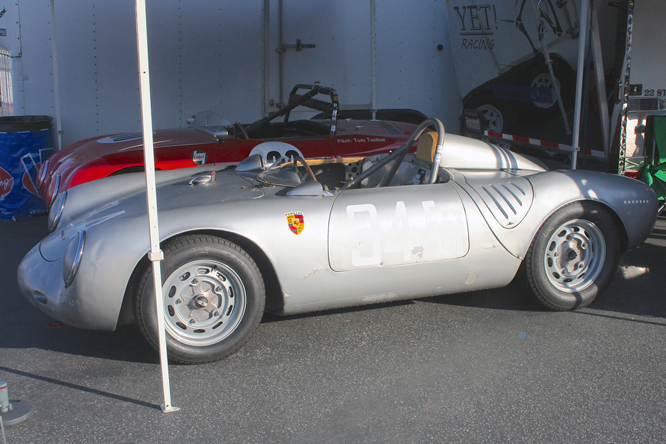
Porsche 550A, Rolex Monterey Motorsports Reunion,

Porsche 550’s have a long tradition of being raced on the East and West coast of North America the 1955 34 F Modified 550 A belongs to Tom Tarbue a regular visitor to the Rolex Monterey Motorsports Reunion.

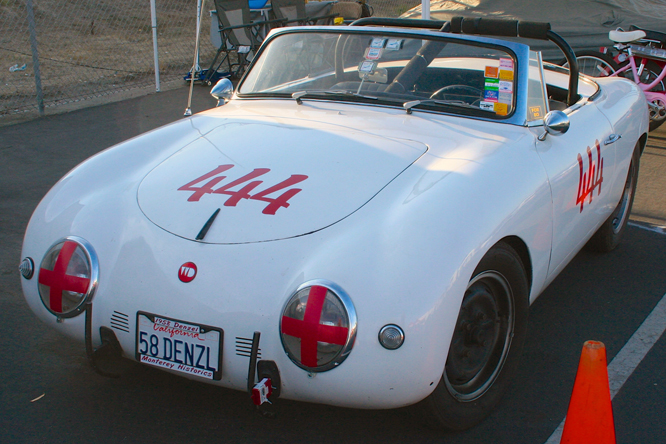
Denzel Roadster, Rolex Monterey Motorsports Reunion,

Strictly speaking the 1958 Denzel 1300 Roadster owned and driven to Terry Sullivan does not belong in this blog since Wolfgang Denzel came up with his Roadster completely independently of Porsche and like Porsche developed his own range of performance parts for use in motors sourced from contemporary Volkswagen Beetles, but I included it just for the benefit of disambiguation.

PAM Platypus Porsche, Rolex Monterey Motorsports Reunion,

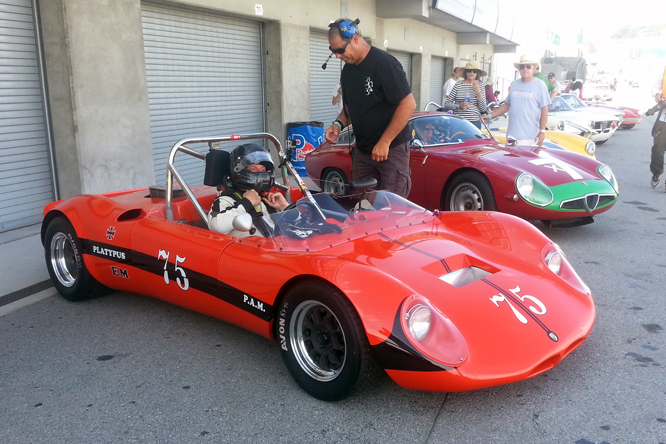
Scooter Patrick, Hans Adam, and Don Mitchell are credited with building the Porsche powered 1964 PAM Platypus out of P.A.M. Foreign Cars of Hermosa Beach, California for NO FEAR pilot Miles Gupton who raced the car with a number of different Porsche motors finishing 1964 as runner-up West Coast Champion, second only to Frank Monise’s Lotus 23B. The car was latter fitted an Oldsmobile V8 but as since been restored with a 2 litre Porsche 901 motor and is currently run by owner driver Arthur Conner.

Porsche 935J, Rolex Monterey Motorsports Reunion,

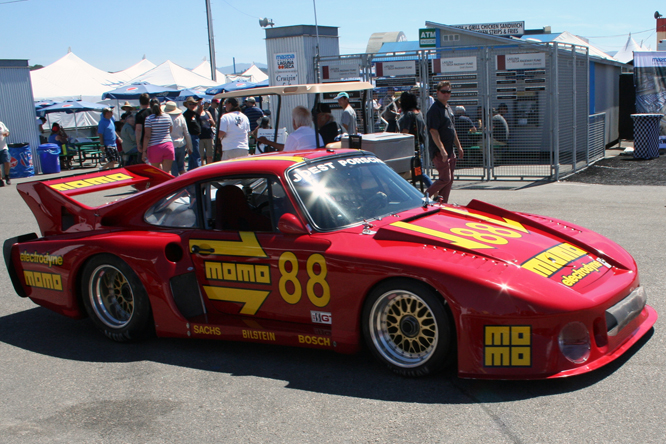
From 1977 the story of the Porsche 935 became increasingly confusing with the works offering 10 ’76 935 spec customer cars known as 935/77A’s while proceeding with their own development plan on the works 935/77 that featured improved aerodynamics that necessitated a more inclined second rear screen which covered the mandated original. The works 935/77 also adopted a twin turbo motor to stay ahead of the expected competition from a turbocharged BMW CSL. Meanwhile the Kremer brothers had been developing it’s own K series of 935’s which were the class of the field at Le Mans in 1979 when a K3 took overall honours, to keep up Joest Racing, better known these days for their exploits at Le Mans with Audi, developed there own version of the 935 known as the 935J above is the 935 J 000 00012 one of two cars that appeared in 1980 for the Momo sponsored Electrodyne racing. This car, now owned by William Chip E Connor, only recorded the one race win at Daytona in July 1981 when Mauricio de Narvaez and Hurley Haywood drove the now DeNarvaez entered car to victory lane in the Paul Revere 250 at Daytona.

Porsche 962C, Rolex Monterey Motorsports Reunion,

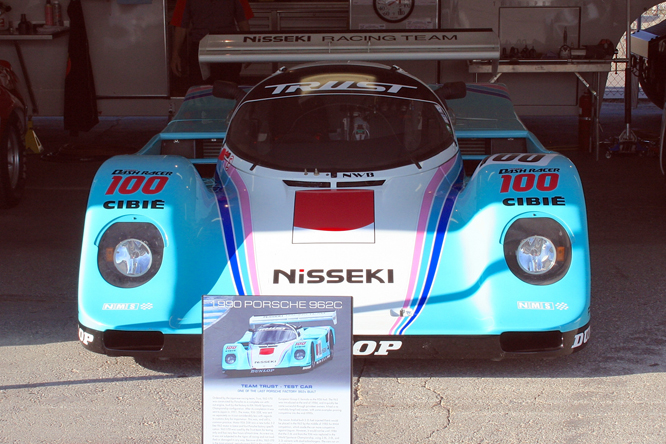
Finally we have the 962C chassis #962-170 being offered for sale by Canepa said to be an unraced spare, one of the last four 962’s built in 1991. While I do not doubt it was never raced I wonder if as well as being sent to Team Trust in Japan sans engine it was also sent sans factory body work since to the best of my knowledge no factory supplied 962 was ever supplied with a central pillar mounted rear wing or a nose with single head lamps on either side, where as the likes of Britten Lloyd Racing, from whom Trust also bought a 962 chassis, Kremer and Joest all built a variety of body variants for the 962 with unusual headlight arrangements and centrally mounted rear wings.

My thanks to Geoffrey Horton and Karl Krause for organising and taking today’s photographs respectively.

Thanks for joining me on this “Monterey Porsches” edition of “Gettin’ a li’l psycho on tyres” I hope you will join me again tomorrow for Ferrari Friday. Don’t forget to come back now !

Share

Monterey Brits – Rolex Monterey Motorsports Reunion

Today’s post features a selection of the British built cars seen at this years Rolex Monterey Motorsports Reunion at Laguna Seca by Karl Krause.

Morgan Super Aero, Rolex Motorsports Reunion, Laguna Seca

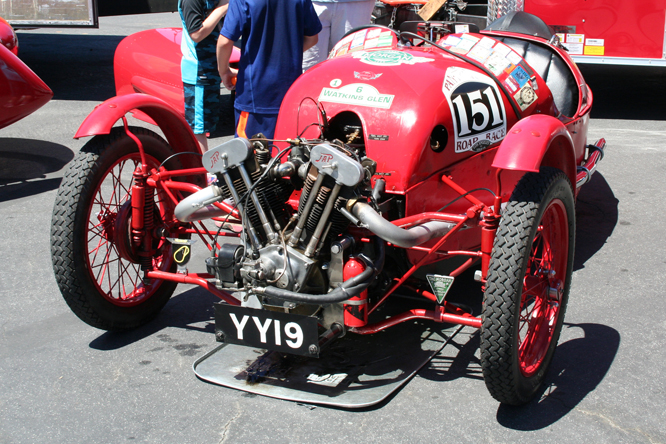
Instantly recognisable by it’s V twin engine, sliding pillar front suspension and three wheels is this JAP powered 1930 Morgan belonging to and driven by Larry Ayres.

ERA R2A, Rolex Motorsports Reunion, Laguna Seca

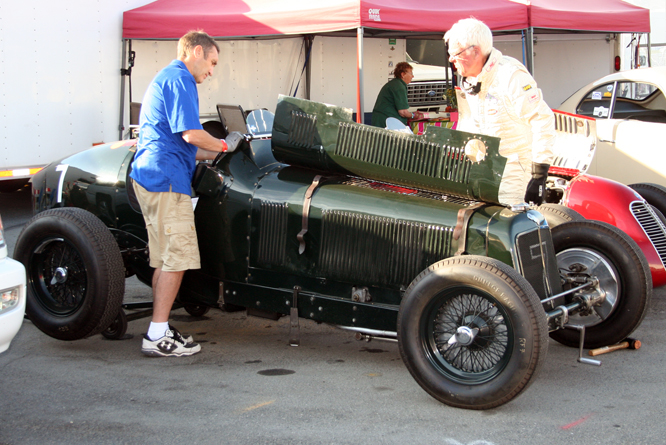
It was a great pleasure to find that the second ever ERA to be built, R2A built for the companies financer Humphrey Cook in 1934, was flying the flag in California driven by Paddins Dowling who only bought the car last year.

Lagonda V12, Rolex Motorsports Reunion, Laguna Seca

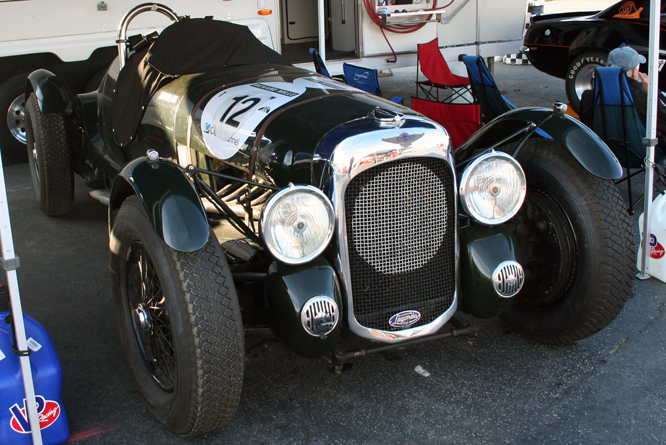
I don’t believe Richard Morrison’s short wheel base 1939 Lagonda V12 is one of the Le Mans Team cars but that does not make it any less desirable in the authors eye’s.

Turner Mk III, Karl Krause, Rolex Motorsports Reunion, Laguna Seca

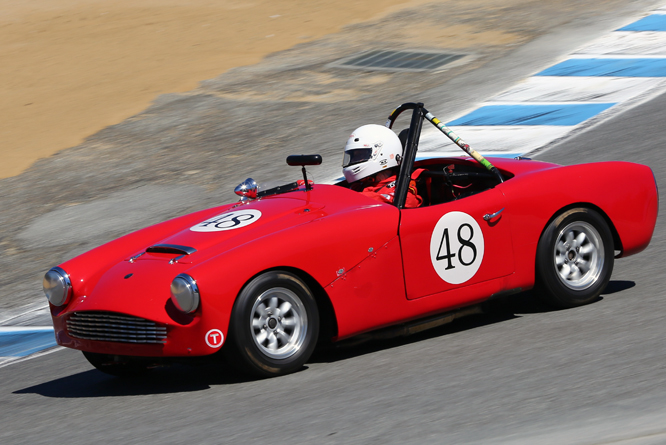
I understand Karl Krause recently qualified for his racing licence and during the run up to the Reunion he got a run in Steve Lilves #48 1965 Turner Mk III. Karl is seen above coming down the Corkscrew one of the most famous corners in motor racing.

Triumph TR6, Bill Warner, Rolex Motorsports Reunion, Laguna Seca

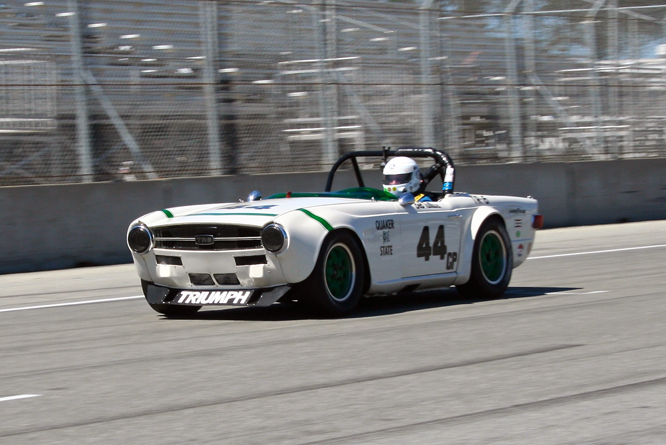
Above Bill Warner drives the 1971 Group 44 Triumph TR6 of the type the US champion of the British sports car Bob Tullis drove between 1969 and 1973 before switching to a V12 E-type Jaguar.

Lola T332, Rolex Motorsports Reunion, Laguna Seca

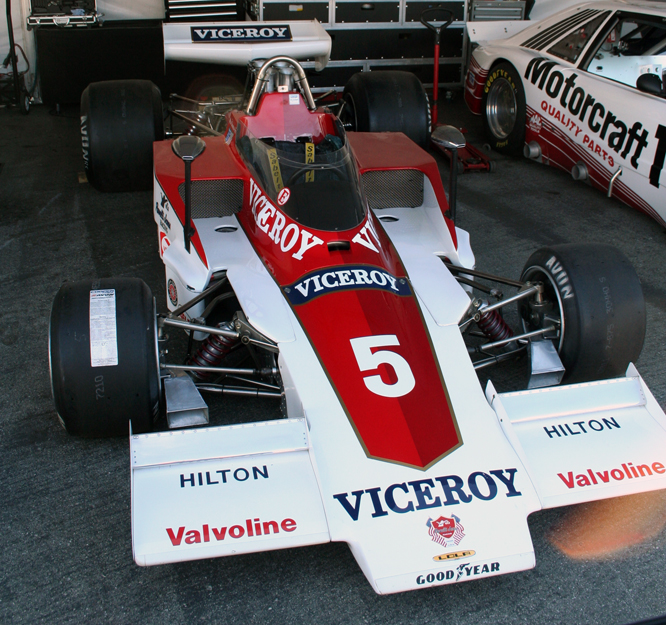
Finally I understand the 1974 #5 Viceroy Lola T332 above was driven to victory twice over the Reunion week, once by owner Zak Brown and secondly by Richard Dean who in a tenuous link was the first driver to show me the ropes around Brands Hatch at the wheel of a Brands Hatch Racing School Ford Escort XR3i in 1989 when he was an emerging talent in Formula Three !

My thanks to Geoffrey Horton and Karl Krause for arranging to take and taking today’s photographs respectively.

Thanks for joining me on this “Monterey Brits” edition of “Gettin’ a li’l psycho on tyres” I hope you will join me again tomorrow when I’ll be looking at some of the Porsche’s at the Reunion. Don’t forget to come back now !

Share

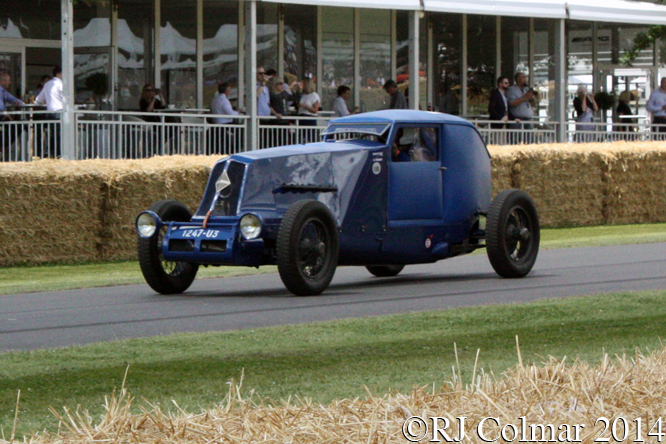
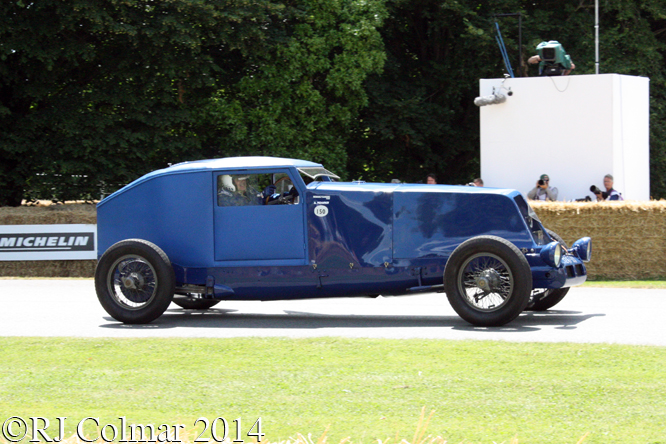
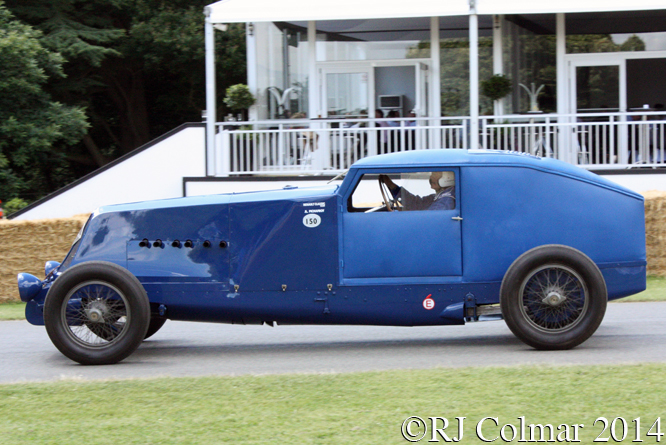
Presidential Speed King – Renault 40CV NM Montlhéry Coupé

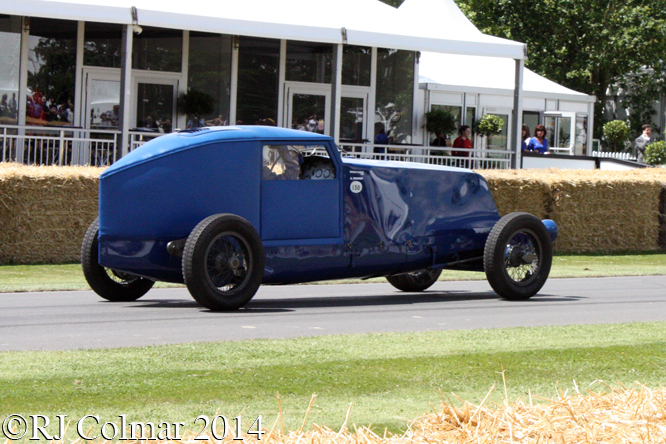
The Renault 40CV was launched in 1911 powered by a 7.6 litre / 460 cui straight six and could be ordered with either an 3.6m / 11′ 9″ or 3.9m / 12′ 9″ chassis.

Renault 40CV Montlhéry Coupé, Jean-Louis Pichafroy, Goodwood Festival of Speed,

With the introduction of the 40CV Type HF in August 1920 the engine was upgraded to a 9.1-litre 9,120 cc / 557 cui straight six.

Renault 40CV Montlhéry Coupé, Jean-Louis Pichafroy, Goodwood Festival of Speed,

From 1920 to 1928 the Renault 40CV replaced the Panhard 20CV as the French Presidential vehicle of choice.

Renault 40CV Montlhéry Coupé, Jean-Louis Pichafroy, Goodwood Festival of Speed,

François Repusseau drove a 40CV to victory in the 1925 Monte Carlo Rally and the following year a vehicle similar to today’s featured 40CV MN was modified and fitted with a single seat Coupé body and taken to the Montlhéry Oval outside Paris for a record braking 24 hour run.

Renault 40CV Montlhéry Coupé, Jean-Louis Pichafroy, Goodwood Festival of Speed,

Facilitated by a pit crew of 14 who could complete a pit stop including changing all four tyres in 50 seconds every hour and a team of unnamed drivers the 40CV set a new 50 mile average speed record of 190.013 kmh / 118 mph and a 24 hour record of 173.649 kmh / 107.9 mph, by comparison the fastest average speed on the road course at Le Mans for the 24 hours race in 1926 was just 106.35 kph / 66 mph set by Robert Bloch and André Rossignol in their 3.4 litre / 207 cui Lorraine-Dietrich B3-6.

Jean-Louis Pichafroy is seen at the wheel of an exact replica of the 40CV MN Montlhéry Coupé, built in the 1970’s by Renault, at last years Goodwood Festival of Speed,

Thanks for joining me on this Presidential Speed King edition of “Gettin’ a li’l psycho on tyres” I hope you will join me again tomorrow when I’ll be revisiting the Monterey Rolex Reunion. Don’t forget to come back now !

Share

Heck Motor – Mercedes Benz 130 H Cabriolet

After designing the first Nesselsdorfer-Wagenbau, later Tata, Präesident in 1897, patenting the first rear swing axles in in 1903 while working for Adler and designing the first motor with a built in gearbox Austrian Edmund Rumpler founded the first German aircraft manufacturer Rumpler Flugzeugwerke GmbH with August Euler in 1908 which in 1909 gave birth to the Rumpler Luft Verkehr department.

Following the 1914-18 war Rumpler Luft Verkehr was reconfigured as an airline that in 1926 became part of Deutsche Luft Hansa AG.

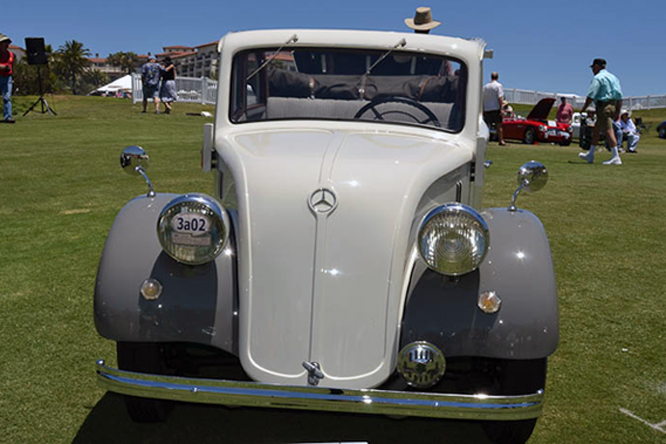
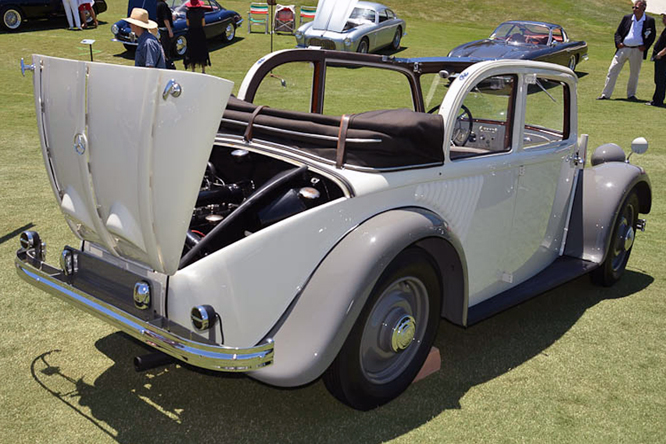
Mercedes Benz 130 H Cabriolet, Dana Point Concours d'Elegance

Meanwhile Edmund turned his attention to the design and manufacture of automobiles again and well over a decade before the streamlined Tata T77 and Chrylser Airflow went into production in 1934 and designed the sensation of the 1921 Berlin Auto Show known as the Rumpler Tropfen, droplet, Wagen.

It is believed that around 100 of these 5 seat vehicles; with a 36 hp W6 motor mounted ahead of the rear axle, capable of 70 mph, who’s body design was inspired by aerodynamic principles of the day were built. Many served as taxi’s and were immortalised as such in Fritz Lang’s 1927 epic expressionist master peace Metropolis.

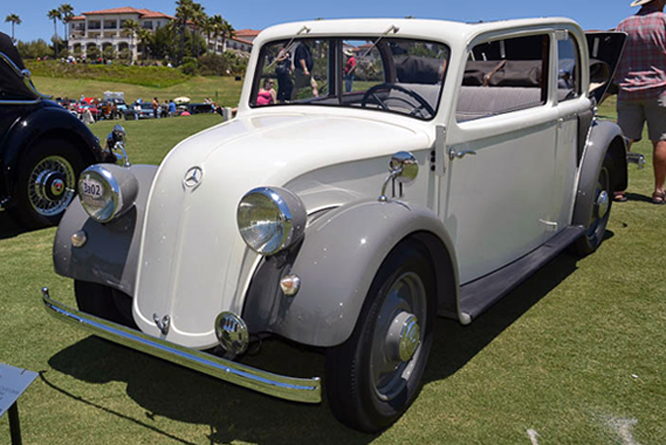
Mercedes Benz 130 H Cabriolet, Dana Point Concours d'Elegance

Chief Benz engineer Hans Nibel was so impressed with the chassis design of the Rumpler he convinced Benz to use a virtually unchanged Rumpler chassis to construct their own single seat Grand Prix racing car which was powered by an 80hp 2 litre 122 cui double overhead cam straight six in 1923.

The Benz Tropfenwagen was not a great success and was abandoned after the merger of Daimler with Benz in 1926, Auto Union under the direction of Dr Ferdinand Porsche would be the next team to progress the concept of the mid engined racing car.

Mercedes Benz 130 H Cabriolet, Dana Point Concours d'Elegance

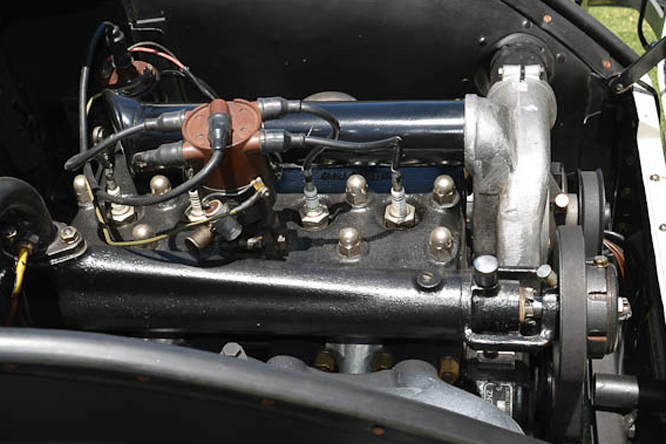
In 1931 Hans Nibel set to work designing a small 4 seat two door car which again was inspired by the Rumpler, but this time he put the 25 hp 1.3 litre / 79 cui 4 cylinder side valve motor behind the rear axle in the heck, hither to boot / trunk with the 4 speed synchromesh transmission in front of both the engine and rear axle.

From 1934 to 1936 130 H (Heck) was sold as a two door hard top saloon/sedan, soft top as seen here or convertible with out the side windows, while the ride was considered good for the passengers the handling was only adequate for contemporary conditions and described as awkward for the driver.

Mercedes Benz 130 H Cabriolet, Dana Point Concours d'Elegance

Nibel had Daimler’s Max Wagner design a new chassis for the more powerful 55hp, but similarly laid out, 150 H 2 seat roadster which had the petrol tank moved from the back as in the 130 H to the front meaning the new model had virtually no storage space, this second model was only offered and sold in limited numbers in 1936.

My thanks to Geoffrey Horton for sharing these photographs of the Mercedes Benz 130 H taken at Dana Point Concours d’Elegance a few years ago.

Thanks for joining me on this “Heck Motor” edition of “Gettin’ a li’l psycho on tyres” I hope you will join me again tomorrow when I’ll be revisiting this years Monterey Rolex Reunion. Don’t forget to come back now !

Share

Tyre Contract For Sale – Spirit Cosworth 101D

There is no room for sentimentality in sport even if one has designed a triple Indy 500 winning Indy Car and a car that has secured one constructors World Championship and two world drivers championships after 4 year of steady decline to the bottom of the top ten one must expect ones sponsors to either walk or agree a merger with an up and coming team.

Such was the situation Gordon Coppuck found himself in at McLaren at the end of the 1980 season when sponsors Phillip Morris agreed to fund a merger between the upstart Project Four hither to Formula Two team headed by former Brabham mechanic Ron Dennis and McLaren who had not won a race since the Japanese Grand Prix in 1977.

Part of the deal would include Ron hiring John Barnard to design a new car with a fully composite chassis leaving Gordon little alternative to seek employment else where. Gordon joined his former colleague and McLaren employee Robin Herd at March for 1982 and after a year there became a founding member of a new Formula 2 team with March Formula 2 team manager John Wickham which was funded by Philip Morris and was to be powered by potent 2 litre Honda V6 engines with Belgian Thierry Boutsen and Swede Stefan Johansson as drivers.

Thierry won three races and finished third in the 1982 F2 championship behind March BMW drivers Corrado Fabi and Johnny Cecotto but more importantly for the Spirit team they had outscored the similarly powered Ralts of Kenny Acheson and Dr Jonathon Palmer so that when Honda was deciding on which team to partner in their planned for 1983 entry into Formula One it was easy to go with Spirit.

Withdrawing completely from Formula 2, having won the championship with Geoff Lees in 1981, Honda developed it’s turbocharged 1.5 litre V6 engine while Spirit adapted one of it’s Formula 2 chassis to take the engine while simultaneously working on today’s featured design the 101 from scratch.

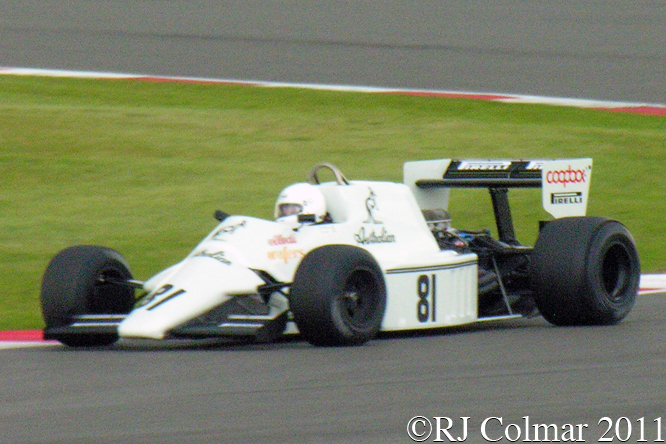
Spirit Cosworth 101D, Mark Williams, Silverstone Classic,

Spirit entered a limited programme of six races mid way through the 1983 season and Stefan Johansson managed to qualify the adapted Formula 2 201 and later 201C for all the races entered retiring from three of them and finishing a season best 7th in Holland. The 101 was ready for the last two of this programme but was left unraced.

For 1984 the team had hoped to retain the Honda Engines and attract 1972 and 1974 World Champion Emerson Fittipaldi out of retirement, but Honda decided to go with the more established Williams team who had the slightly younger 1982 World Champion Keke Rosberg already on their books.

Wickham and Coppuck wasted little time and did a deal to run the 4 cylinder turbocharged Hart 415T engines, that had hitherto been developed exclusively with Toleman since 1980 and Spirit adapted the unraced 101 in time for Emerson to test before the season got underway.

Emerson decided that this was not what he really wanted and so Mauro Baldi was entered for the first six races of the season scoring 8th places finishes in South Africa and San Marino before Huub Rothengatter was entered for the next eight races. With Hart motors in short supply Huub failed to qualify with a Cosworth DFV installed in Detroit but finished a best 8th in the Italian Grand Prix at Monza on his final start in the car.

Mauro returned to the seat for the final two races of the 1984 season finishing 8th in the European Grand Prix at Brands Hatch.

For 1985 Mauro was retained to drive the 101, now in D spec with longer side pods, as was a supply of Hart engines and Pirelli tyres, which would become significant because fellow Hart powered team Toleman had switched from Pirelli to Michelin part way through the 1984 season and when Michelin withdrew from Formula One at the end of 1981 neither Goodyear or Pirelli were prepared to step in and supply tyres to the team.

Without tyres Toleman had to withdraw from the first three races of the 1985 season while Mauro could do no better than qualify 24th for the first two races of the season, after qualifying last at San Marino nearly 10 seconds off the pace and posting it’s third consecutive retirement Spirit decided to call it a day and sold their contract for a supply of Pirelli Tyres to Toleman who could do no better than post one 12th and one 14th place finish all season though Teo Fabi did qualify on pole in Germany which helped secure the teams take over by sponsor Benetton at the end of the season.

Mark Williams is seen at the wheel of the 101D powered by a Cosworth DFV motor at Silverstone Classic a couple of years ago.

Thanks for joining me on this “Tyre Contract For Sale” edition of “Gettin’ a li’l psycho on tyres” I hope you will join me again tomorrow. Don’t forget to come back now !

Share

Fury, Gravity And Inertia – Ferrari 312T #024

When the new 3 litre / 183 cui Formula One regulations for 1966 were announced most teams were caught on the hop not least because when Colin Chapman went to meetings to negotiate new post 1.5 litre regulations with the sports authorities he expected that if he asked for 3 litre engines he and the authorities might reasonably settle on a maximum 2 litre / 122 cui size, instead the authorities simply rubber stamped the 3 litre suggestion.
Ferrari 312T, Goodwood Festival of Speed,

At this time Ferrari were in the process of securing their second Formula One World Constructors Championship with John Surtees and caught in a ferocious spending war with Ford in the World Sports Car series, short of funds having turned down an offer from Ford, Ferrari were left with little choice to adapt a sports car V12 engine to meet the new regulations and fit it to the 1966 Ferrari 312.
Ferrari 312T, Goodwood Festival of Speed,

An internal squabble stymied what should have been a successful couple of years with the 312, as until the arrival of the Ford financed Cosworth DFV in 1967, there were few 3 litre engines of equal power, but without John Surtees the Ferrari team lost out to the reliable Repco powered Brabhams in both 1966 and ’67.
Ferrari 312T, Goodwood Festival of Speed,

After Ferrari were thoroughly beaten by Ford at Le Mans in 1966 and 1967 the sporting authorities rashly announced that future sports cars would also be restricted to a maximum 3 litre capacity and Ferrari’s technical Director Mauro “Fury” Forghieri at last time and funding to turn his attentions to building an uncompromised 3 litre / 183 cui racing engine.
Ferrari 312T, Rob Hall, Goodwood Festival of Speed,

His intentions with the new motor were to keep the centre of gravity low and so he chose a 180°, also known as flat, V12 architecture, not a true boxer despite the 312 B, 312 B2 and 312 B3 designations of the first 3 Formula One designs to which they were to be fitted from 1970 to 1974.
Ferrari 312T, Goodwood Festival of Speed,

By 1972 “Fury” had turned his attention to reducing the polar moment of inertia to improve the handling of his designs by moving the front radiators behind the front axle line on the unraced curiosity known as the Spazzaneve, snow plough, however Enzo Ferrari’s failing health led to FIAT executives demoting Mauro when taking over the running of the Formula One team and a most disastrous season followed in 1973 until Il Commendatore returned to work midway through the season.
Ferrari 312T, Goodwood Festival of Speed,

Enzo immediately reinstated Mauro who set about turning the poorly conceived and executed 1973 Ferrari B3 into a winner for the 1974 season.
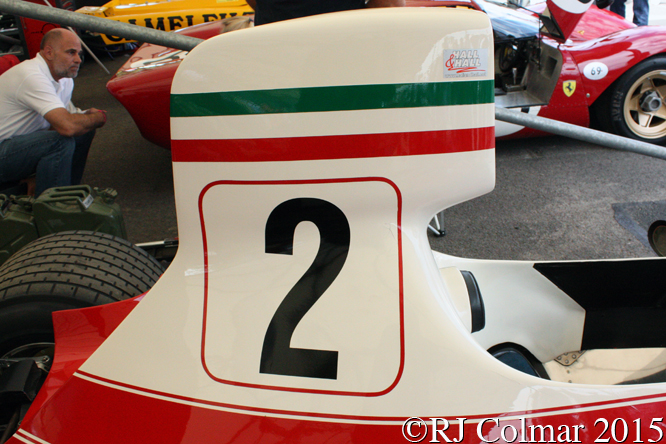
Ferrari 312T, Goodwood Festival of Speed,

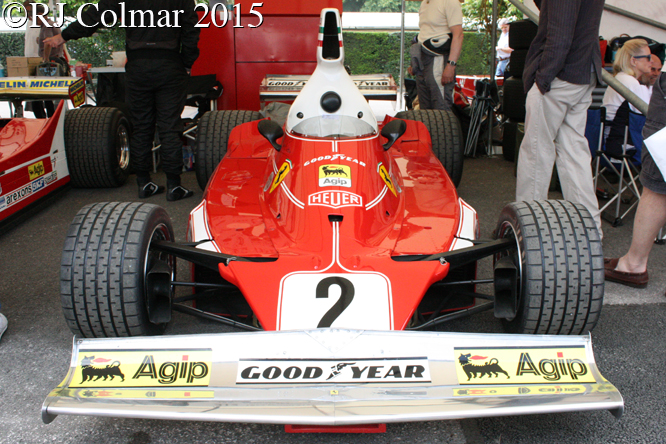
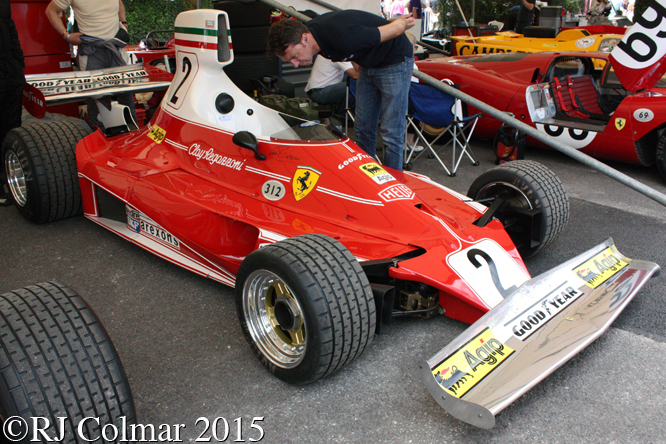
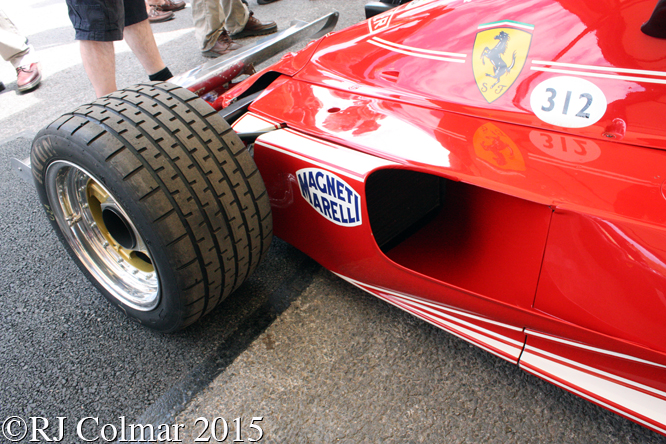
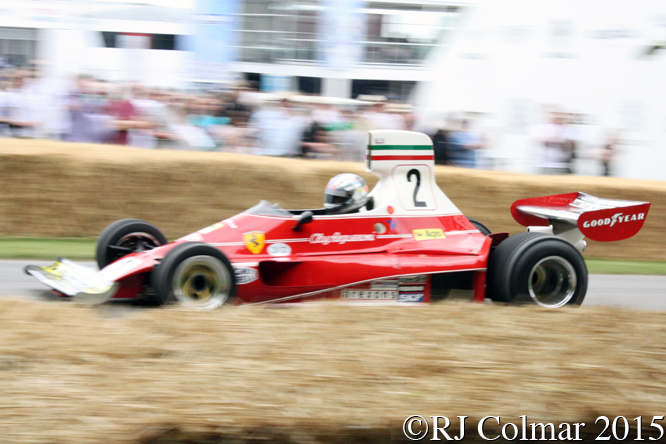
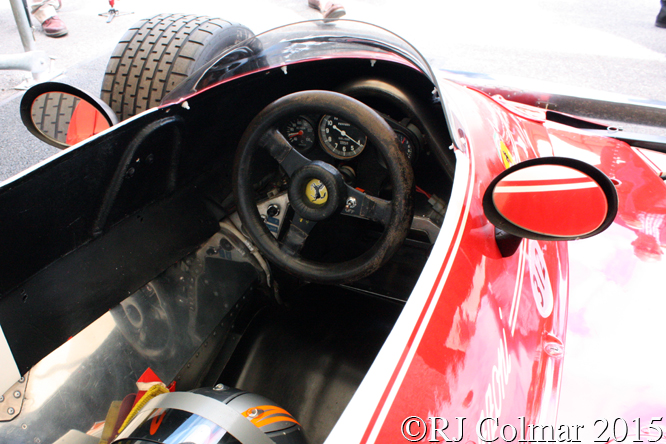
For 1975 “Fury” started with a clean sheet and designed today’s featured reliable 510 hp flat 12 powered 312 T that not only had the front radiators mounted behind the front axle, but also had the gearbox mounted transversely ahead of the rear axle so that only the front and rear wings, used to aerodynamically balance the car, protruded from the axles of the car, which when developed with Niki Lauda at the wheel resulted in a superior handling.
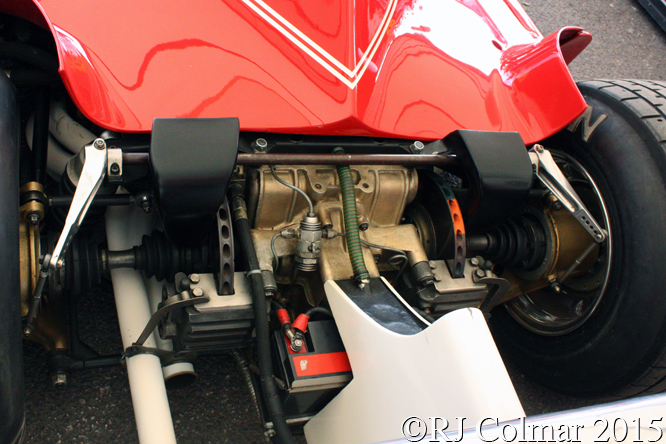
Ferrari 312T, Goodwood Festival of Speed,

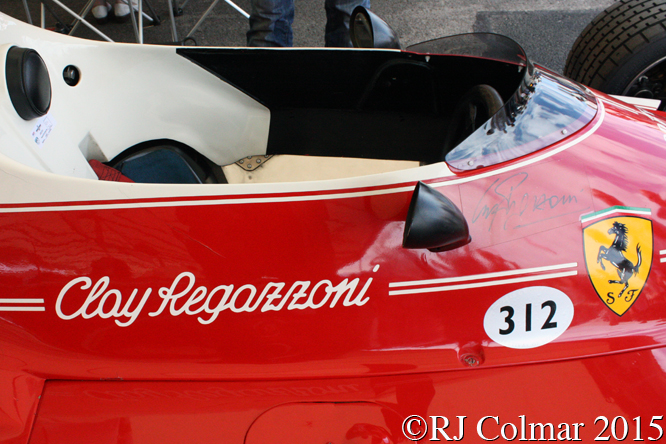
After starting the 1975 season with the older B3 design, the 312T was introduced at the South African Grand Prix, after all of the bugs of the new car had been ironed out Niki Lauda went on a winning streak in Monaco, Belgium and Sweden, finished second to James Hunt in Holland and won again in France and at the season ending US Grand Prix, having rapped up the Drivers World Championship with a third place finish at Monza where team mate Clay Regazzoni took a popular win in today’s featured car chassis #024, which helped Ferrari win their first Formula One Constructors Championship since 1964.
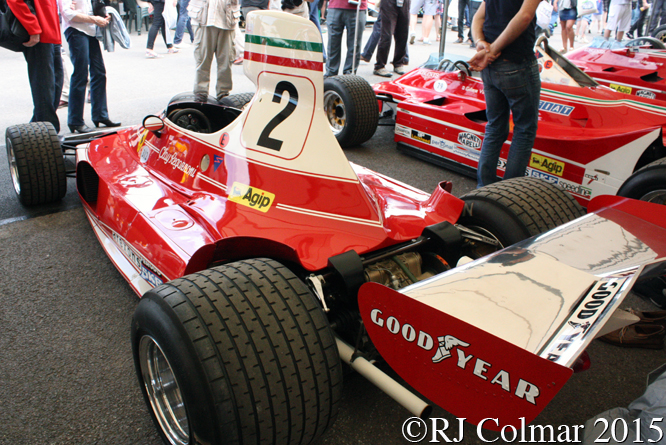
Ferrari 312T, Goodwood Festival of Speed,

Chassis #024 was the last of of five 312T’s to be built prior to his win at Monza Clay drove this car in France, where he retired, Britain where he finished 13th and Austria where he came home 7th. Subsequent to the race at Monza Clay drove the car to a seventh place finish at the 1976 season opening Brazilian Grand Prix before winning the inaugural US Grand Prix West at Long Beach.

New rules were mandated after this final appearance and the 312T’s were superseded by the 312T2, this particular chassis ended up with British computer leasing magnate John Foulston before his death in 1987 and is seen with Rob Hall of Hall and Hall at the wheel at Goodwood Festival of Speed earlier this year.

Thanks for joining me on this “Fury, Gravity And Inertia” edition of “Gettin’ a li’l psycho on tyres” I hope you will join me again tomorrow when I’ll be returning to Oulton Park to wrap up this years Gold Cup coverage. Don’t forget to come back now !

Share