Tag Archives: Cosworth

Reliability Dividend – Marussia Cosworth MR02

In 2009 John Booth’s Manor Grand Prix was one of three teams selected to join the Formula One™ Chmpionship series in 2010, by which time the team had change it’s name to Virgin Racing in deference to their principle backer the Virgin budget airline.
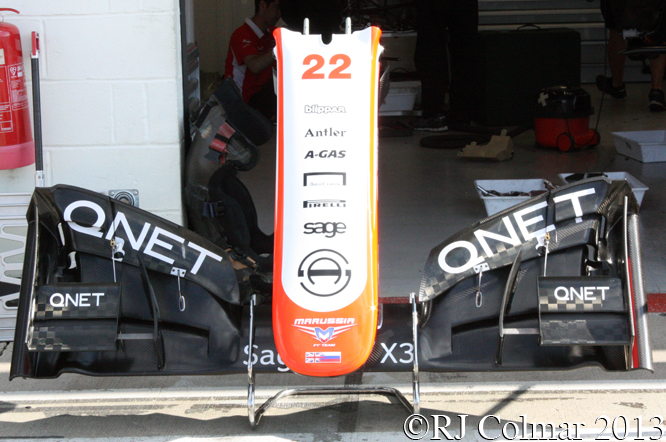
Marussia Cosworth MR02, Young Driver Test, Silverstone

None of the three new teams did particularly well in 2010 and Virgin racing finished the season with the Championships would spoon for scoring a seaoson high two 14th place finishes like Hispania Racing F1 Team (HRT) but with only one 15th place were unable to match the Spanish teams three 15th place finishes.
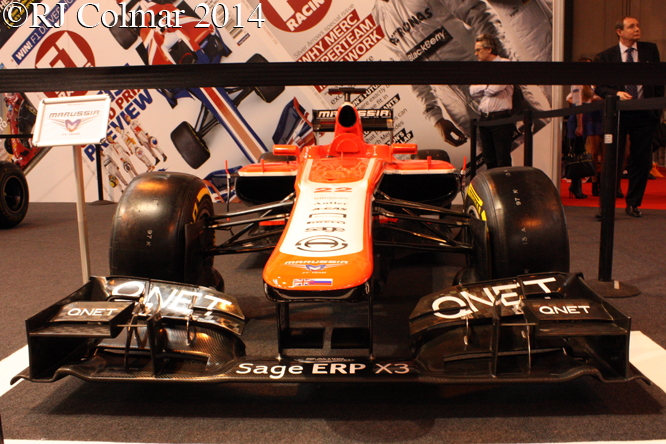
Marussia Cosworth MR02, Autosport International, NEC, Birmingham

In 2011 Russian automobile manufacturer and sponsor Marussia’s increased involvement in the team was recognised by a change of name to Marussia Virgin Racing but the team finished the season with a second consecutive wooden spoon with three season high 15th place finishes unable to match the single 13 th place finish scored by HRT.
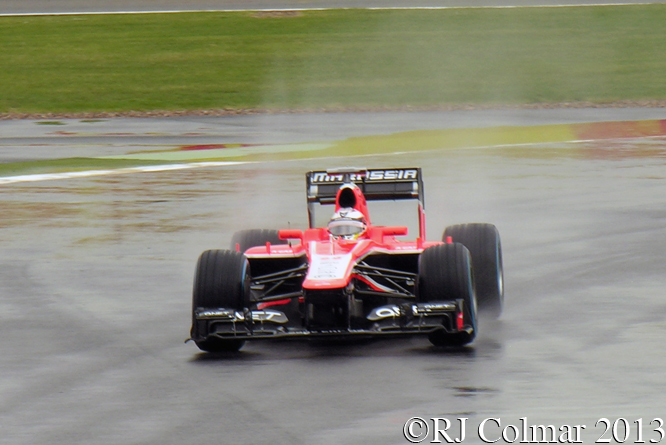
Marussia Cosworth MR02, British GP P1, Silverstone

In 2012 the team became known as the Marussia F1 Team as Virgin ceased it’s involvement after two disappointing years. With two season high 14th place race finishes Marussia finally bested HRT who could only manage a season high 15th place race finishes before the Spanish team folded at the season’s end.
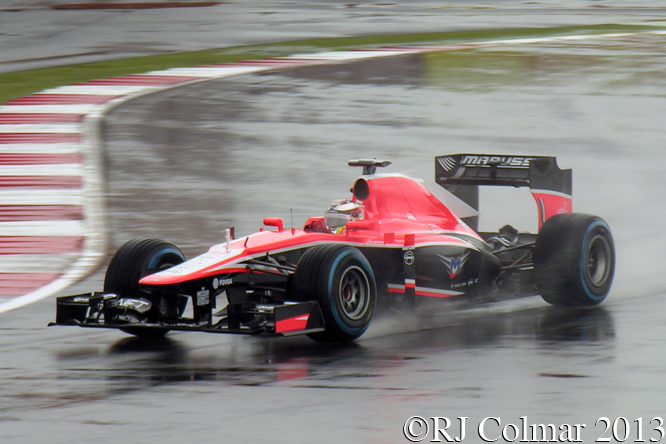
Marussia Cosworth MR02, Bianchi, British GP P1, Silverstone

Rookies Jules Bianchi, seen above during Practice Session 1 (P1) of the British Grand Prix and Max Chilton, seen during the Young Driver Test below joined Marussia for 2013.
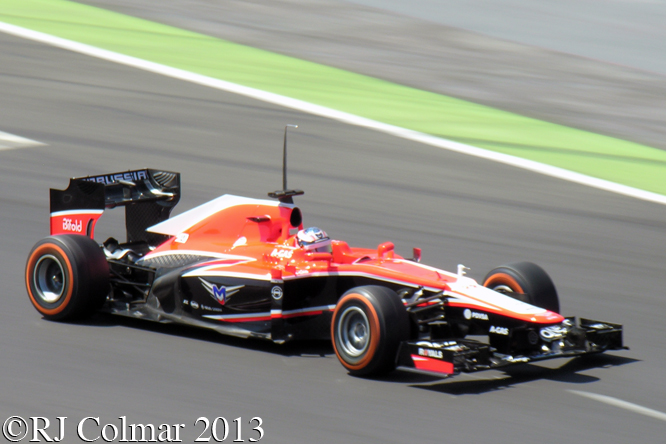
Marussia Cosworth MR02, Chilton, Young Driver Test, Silverstone

Marussia also hired former Renault Technical Director Pat Symonds to act as a consultant and employed input from McLaren Applied Technologies wind tunnel on their MR02 design.
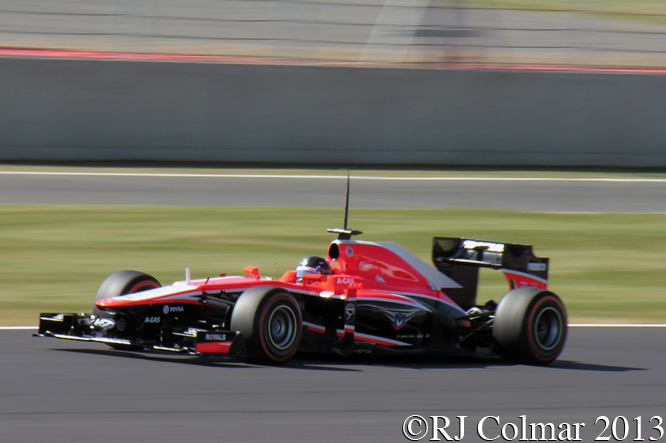
Marussia Cosworth MR02, González, Young Driver Test, Silverstone

By now Marrusia were the only team still using the most affordable but unfancied Cosworth V8 spec motors, closest rivals Caterham having switched to Renault power in 2011. Venezuelan test driver Rodolfo González is seen driving the Marussia Cosworth MR02 during the Young Driver Test at Silverstone above.

Marussia Cosworth MR02, Autosport International, NEC, Birmingham

Despite regularly qualifying behind the Renault powered Caterhams Jules managed not only to regularly out qualify team mate Max but against expectations Max also finished a season high 13th in Malaysia which turned out to be enough to save Marussia from regaining the Formula One wooden spoon in 2013.
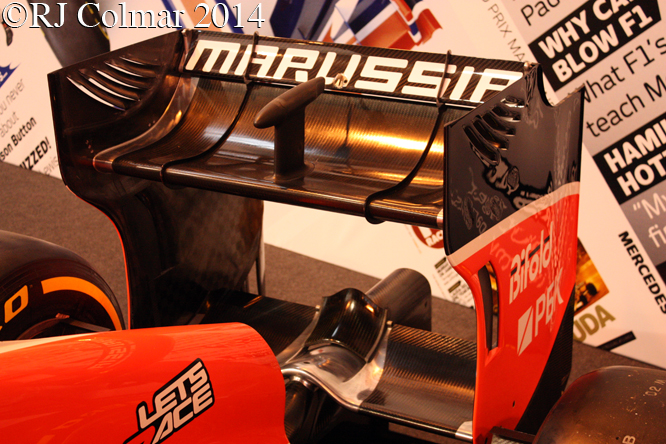
Marussia Cosworth MR02, Autosport International, NEC, Birmingham

Max meanwhile became the first rookie in the history of Formula One to finish every race of the entire season, Jules had three retirements, a finishing feat only matched in 2013 by seasoned McLaren drivers Jenson Button and Sergio Perez.
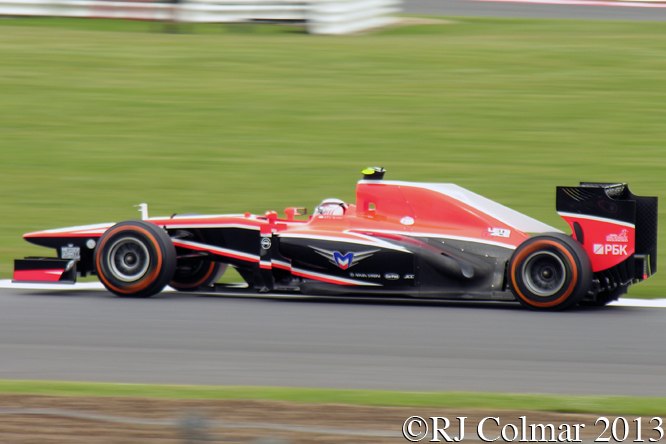
Marussia Cosworth MR02, Chilton, British GP P2, Silverstone

For the first time in the teams history Marussia will keep the same driver line up for 2014 while much else changes, Pat Symonds has been snapped up by the, relative to their own Championship winning standards, struggling Williams team.

So far we know that Marussia will employ a Ferrari power train on the 2014 MR03 design, to keep abreast of Marussia’s developments you might try joining the fastest growing Formula One Team facebook page on this link or try Marussia’s official web site here.

Thanks for joining me on this “Reliability Dividend” edition of “Gettin’ a li’l psycho on tyres” I hope you will join me again tomorrow when I’ll be looking at a field full of Indiana State law enforcement vehicles. Don’t forget to come back now !

Share

Peterson’s Poles – Lotus Cosworth 72E #R6

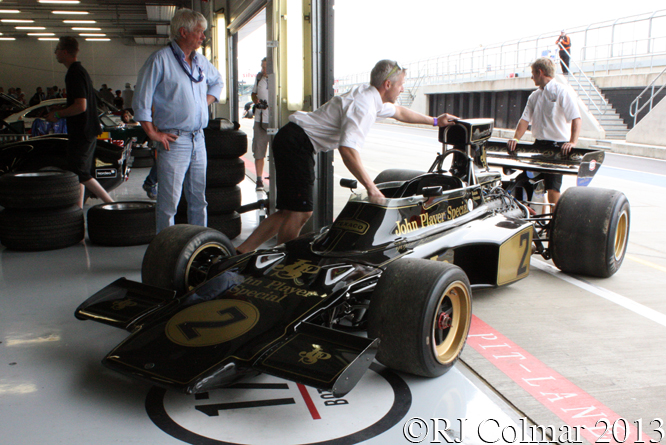
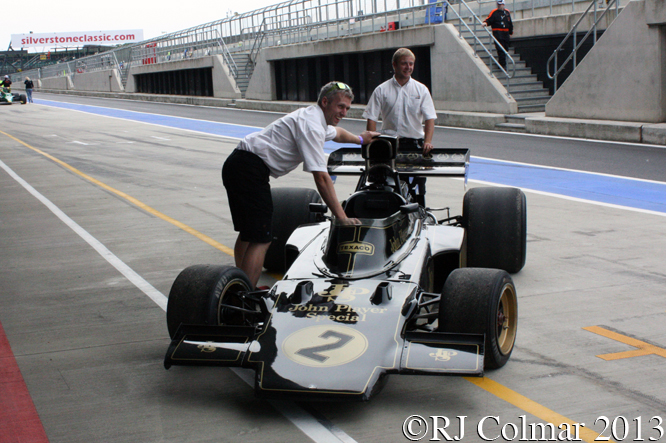
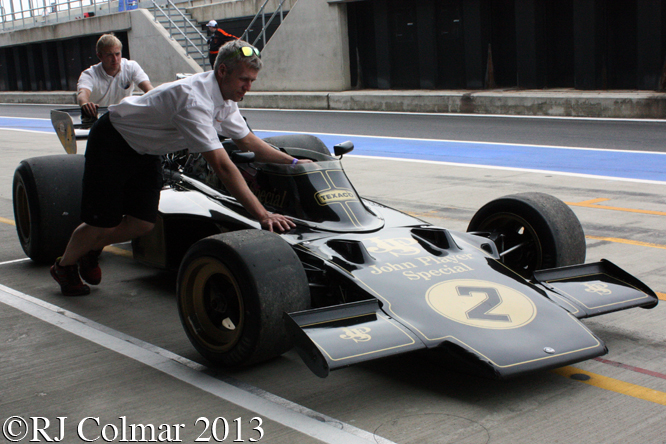
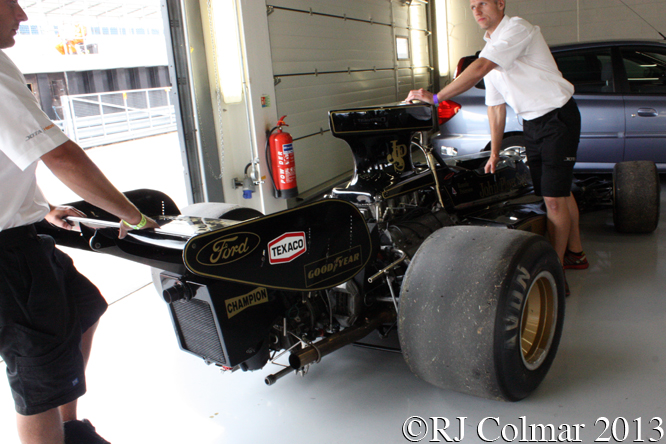
The 1973 Formula One season is remembered for many things some good Jackie Stewart’s third and final world championship some bad the death’s of Jackie’s team mate Francois Cevert and Roger Williamson who had been selected to replace Jackie upon his retirement. However one of my overwhelming memories of the season, the first which I avidly followed in the printed press which was as close to the internet as I could find back in the day, was the raw speed shown by Ronnie Peterson driving his Ford Cosworth DFV powered John Player Special sponsored Lotus 72.

Lotus Cosworth 72E, Silverstone Classic

During the 1973 season Ronnie Peterson set a new record number of 9 pole position starts from the 15 race championship season as he finally found himself with a car capable of winning races rather than out lasting the opposition has the March cars he drove in 1971 to second place in the world championship standings had done. I believe seven of those pole positions and Ronnie’s four 1973 championship race victories were recorded in today’s featured chassis which I believe to be #R6.

Lotus Cosworth 72E, Silverstone Classic

#R6 first appeared towards the end of the 1971 season in ‘D’ spec wearing the Gold Leaf Team Lotus colours with another Swede Reine Wisell at the wheel. Reine’s best result was a 4th place finish in the 1971 Austrian Grand Prix.

For 1972 #R6 still in ‘D’ spec but now painted in the black and gold livery of John Player Special was driven by Australian Dave Walker. Dave who had built an enviable record in the junior ranks on his way up could not perform to the same level at the sports top table and only managed a best 5th place finish at the non championship Brazilian Grand Prix with today’s featured chassis. Reine Wisell was reunited with #R6 at the 1972 United States Grand Prix where he finished 10th.

Lotus Cosworth 72E, Silverstone Classic

Over the winter of 1972/73 Ronnie Peterson joined Lotus from March and #R6 was brought up to 72 E spec which included wide track front suspension revisions which were soon abandoned and structural revisions to include a deformable structure around the side fuel tanks. By the time R6 appeared in ‘E’ spec at the non championship Race of Champions at Brands Hatch Ronnie had already scored his first pole for the Brazilian Grand Prix. At Brands Ronnie qualified 6th and fought his way into the lead by lap 5 an was running away from the field when his gearbox broke and forced his retirement on his 18th lap but not before he had set what would be a shared fastest lap time with the BRM drivers Jean Pierre Beltoise and Niki Lauda who had been Ronnie’s team mate at March in 1972.

Ronnie drove to pole position for the following Spanish Grand Prix in chassis #R8 recording fastest lap before the gearbox failed. Back in #R6 Ronnie then won pole for the Belgian Grand Prix from which he retired after an accident. Ronnie was back in #R8 for the Monaco Grand Prix where he qualified 2nd and finished third behind Stewart and team mate Emerson Fittipaldi. Back in #R6 for the remainder of the 1973 season Ronnie was claimed his forth pole of the season in his home Grand Prix but finished second after leading his team mate for most of the race and in the process wearing out his tyres. Emerson retired with gearbox failure four laps from home leaving Denny Hulme to pick up the pieces and sweep by to win the Swedish Grand Prix.

Lotus Cosworth 72E, Silverstone Classic

At the 1973 French Grand Prix Ronnie finally took his maiden Grand Prix victory from 5th on the grid driving today’s featured car and two weeks later he claimed his fifth pole position of the season at the British Grand Prix, where he finished second. At the Dutch Grand Prix Ronnie was on pole in again but retired with gearbox and engine issues. In Germany Ronnie qualified 2nd but failed to finish. Ronnie won 3 of the final 4 championship races in 1973 in Austria Italy and the United States and pole for the final three races of the season in Italy, Canada and the USA. He retired from the Canadian Grand Prix with a puncture.

Ronnie finished third in the 1973 World Drivers Championship behind Stewart and team mate Fittipaldi and there is no doubt that Emerson might have won the championship if he had not been forced to race his team mate as hard as he did. Lotus again won the constructors championship as they had with the same model in 1970 and ’72.

For 1974 Lotus had planned to replace the Lotus 72 with the Lotus 76, but when that failed to show potential the Lotus 72 design was pressed into service for the remainder of the season in slightly modified form with the oil tank moved from behind the gearbox to a position ahead of the rear wheels as mandated by new regulations.

#R6 ended it’s in period competition career in South Africa where Team Gunston entered the car in the local Formula One series for Ian Scheckter, brother of Jody, in in 1974 Ian scored five wins in the South African series to finish second to Dave Carlton who drove a McLaren M23. For 1975 Ian drove his brothers 1974 Tyrrell 007 and Team Gunston entered Eddie Keizan in #R6. Eddie like Ian the year before in the same car finished 13th in the South African Grand Prix but could only manage a season high second in the local South African championship races after which it was retired.

Ronnie Peterson fan Katsu Kubota is the current owner of #R6 seen here earlier this year at the Silverstone Classic meeting.

Thanks for joining me on this “Peterson’s Poles” edition of “Gettin’ a li’l psycho on tyres” I hope you will join me again tomorrow. Don’t forget to come back now !
Share

Fragrant Debut Pole – McLaren Cosworth M23 #M23/1

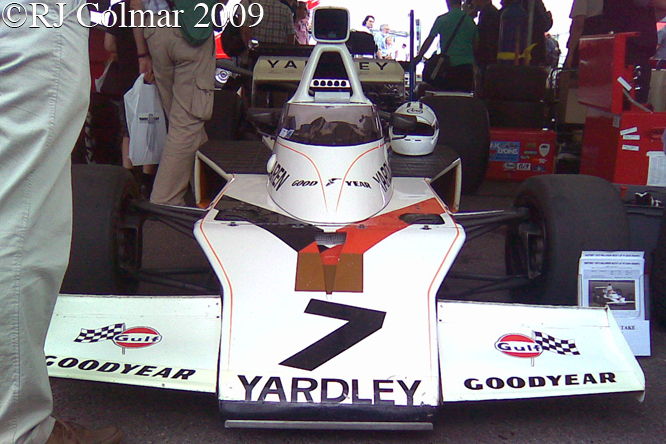
At the 1973 South African Grand Prix 1967 World Champion New Zealander Denny Hulme qualified on pole for the first and only time in his entire formula one career which lasted from 1965 until 1974. Remarkably he was driving a brand new Ford Cosworth powered McLaren M23, #M23/1 featured today, that was designed by Gordon Coppuck and which was to replace the Ralph Bellamy designed McLaren M19C.

McLaren Cosworth M23, Goodwood Festival Of Speed

The design of the M23 was broadly similar to the design of the 1972 turbo Offy powered McLaren M16 which Mark Donohue drive to victory in the 1972 Indy 500, except in the DFV motor of the M23 was bolted into the chassis rather to a sub frame and the side radiators of the M23 were surrounded by a deformable structure to protect the fuel tanks in the side of the chassis.

Denny Hulme came fifth in the 1973 South African Grand Prix which was won by Jackie Stewart driving a Tyrrell 006. At the 1973 Swedish Grand Prix Denny Hulme took the first of the M23’s 16 World Championship race victories, two races later Peter Revson scored the models 2nd victory at the British Grand Prix a feat Peter would repeat at the Canadian Grand Prix towards the end of the season. Despite scoring two more wins than in the previous season McLaren again finished third in the 1973 World Constructors championship as they had in 1972.

McLaren Cosworth M23, Goodwood Festival Of Speed

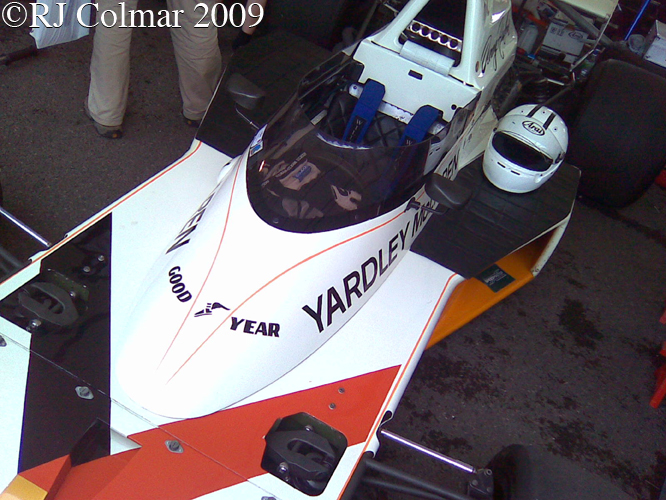
For 1974 McLaren again attracted BRM’s sponsor Philip Morris and the Marlboro brand, Yardley having sponsored BRM in 1970 and 1971 prior to joining McLaren for 1972. Peter Revson moved to join the UOP Shadow outfit and was replaced at McLaren by 1972 World Champion Emerson Fittipaldi from Lotus.

Emerson won three world championship races in 1974 on his way to his second World Drivers Championship and McLaren’s first World Constructors Championship, backed up by Denny Hulme who won the first race of the 1974 World Championship season in Aregetina which would be his last prior to retiring from the sport at the end of the season. Chassis #M23/1 was used in the early 1974 season by a third Yardley backed factory entry for Mike Hailwood who joined McLaren from Surtees. Mike ‘the Bikes’ best result was third in the South African Grand Prix which would become his career high world championship result. An accident in Germany at the wheel of another M23 prematurely terminated Mikes driving career, though he would return to motor cycling at which he was a seven time world champion and add two Isle of Man TT trophies in 1978 and 1979 to bring his total to fourteen.

In 1975 Emerson claimed two more championship victories on his way to second in the title behind Niki Lauda in the superior Ferrari 312T which had a more powerful motor and superior handling thanks to a transversely mounted gearbox and the testing skills of it’s driver. Another Surtees refugee Jochen Mass who had teken over Mike Hailwoods Yardley McLaren drive in 1974 replaced Denny Hulme and scored his only Grand Prix victory at the ill feted 1975 Spanish Grand Prix.

James Hunt replaced Emerson Fittipaldi for 1976 and McLaren ended up using the M23 for a forth straight season as they were locked in an epic battle with Niki Lauda for the 1976 title that has been immortalised by Ron Howard in the film “Rush” released earlier this year. On his way to the 1976 World Drivers Championship James won 6 races to become the M23 model’s most successful driver.

By 1977 the M23 was pressed into a fifth season of competition as a works racer before a much modified McLaren M26 was finally brought up to speed mid way through the season, non works McLaren’s were used sporadically in World Championship events until 1978 when rising star Nelson Piquet recorded a 9th place finish in the Canadian Grand Prix on what was to be the M23’s final World Championship appearance.

Tony Trimmer won the British Formula One Championship driving a Melchester Racing McLaren M23 in 1978.

Thanks for joining me on this “Fragrant Debut Pole” edition of “Gettin’ a li’l psycho on tyres” I hope you will join me again tomorrow. Don’t forget to come back now !
Share

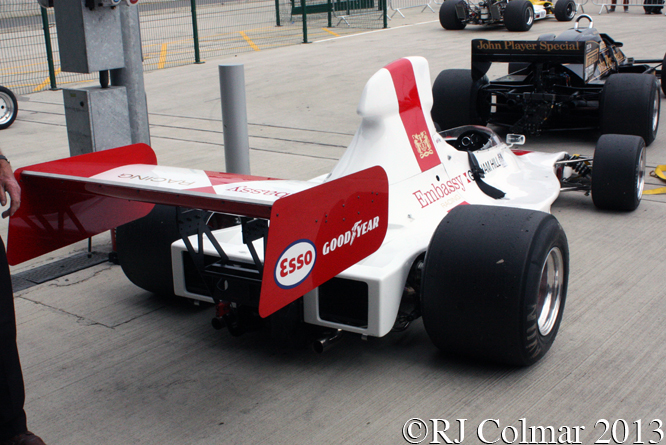
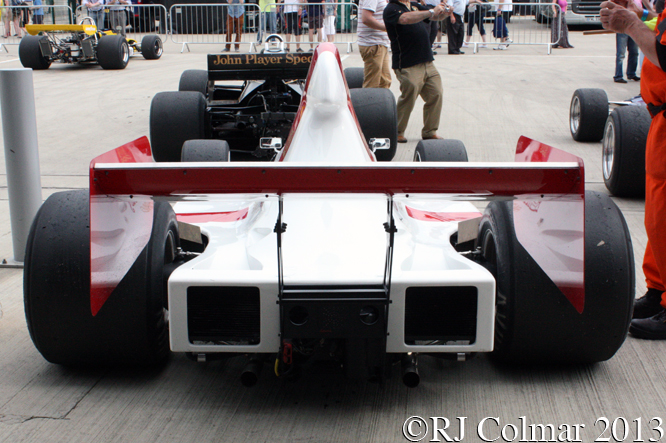
The Ambassador’s Embassy – Shadow Cosworth DN1 #DN1-3A

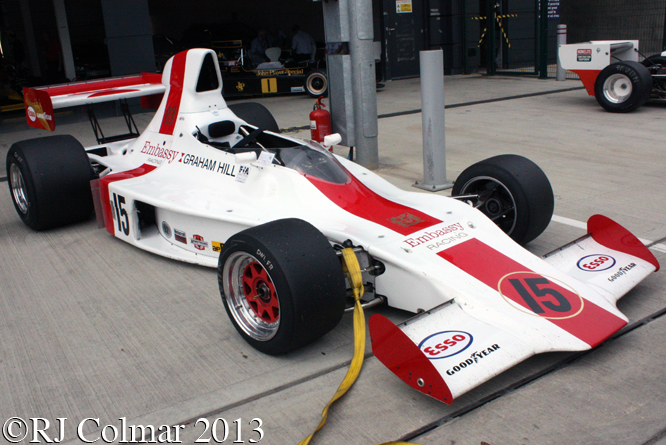
Ten years after winning his first World Championship driving for BRM, in 1963, and five years after winning his second World Championship driving for Lotus, in 1968 (Norman) Graham Hill had become the senior citizen of the sport with wins at Indianapolis in 1966 and at Le Mans in 1972 to make a unique triple crown of victories which only he has achieved, making him arguably the most versatile driver in the history of the sport. Graham was also the first man to win the Monaco Grand Prix five times a record that was not equaled until 1992 and beaten until 1993 when Ayrton Senna won his fifth and sixth Monaco Grand Prix victories.

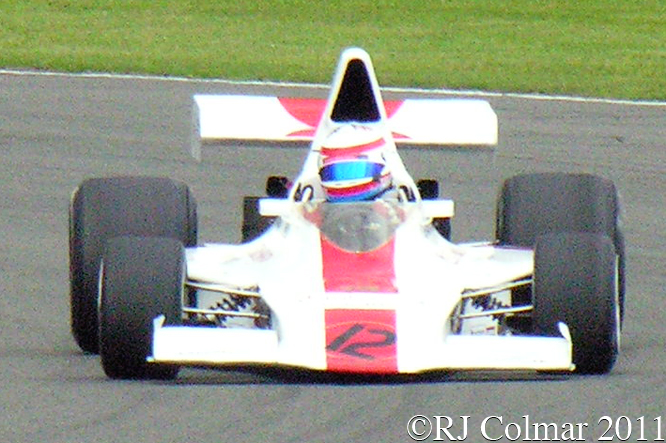
Shadow Cosworth DN1, Silverstone Classic

As the wise cracking head of Embassy, UK brand cigarettes, quipped in 1973 at the launch of Graham Hills Embassy sponsored Formula One Team every ambassador needs an Embassy. Graham’s was built by, the then relatively unknown in Europe, Shadow a team that had cut it’s teeth in Can Am primarily with Graham Hill’s former Lotus Team mate Jackie Oliver.

Shadow Cosworth DN1, Silverstone Classic

The Shadow DN1 was designed by Tony Southgate who’s CV includes designing the last two BRM’s to win major races the P160, an example of which Jackie Oliver had driven in 1972, and P180 which bears a familial resemblance to today’s featured DN1 apart from the fact that the latter is powered by a by 1973 ubiquitous Ford sponsored Cosworth V8 which Graham Hill had been instrumental in testing back in 1967.

Shadow Cosworth DN1, Silverstone Classic

Under the umbrella of Mr Shadow, Don Nichols, sponsored by UOP Lead Free fuel the Shadow team ran two black works cars for Jackie Oliver and 1972 Can Am Champion George Follmer and sold a third car #DN1-3A to Graham Hill for him to run as a privateer. Not for the first, or the last, time none of the Shadow cars were ready for the start of the season the works team missed two races before making their debut in South Africa where George starting 21st came through to finish 6th and score a single world championship point on his Grand Prix debut.

Shadow Cosworth DN1, Silverstone Classic

Graham’s car was ready at the next race the Spanish Grand Prix where Graham qualified 22nd but failed to finish after experiencing problems with his brakes, while George Follmer came through to a seasons equal best 3rd place finish in his second championship Grand Prix. At the Belgian Grand Prix Graham qualified 23rd and came through to finish ninth which would prove to be his best result in an otherwise totally frustrating year for his fledgling Embassy Racing Team.

Shadow Cosworth DN1, Silverstone Classic

The works UOP Shadow teams debut season was similarly also fraught with disappointment until the Canadian Grand Prix where Jackie Oliver scored his a career equaling best third place finish, five years after he had finished 3rd in the 1968 Mexican Grand Prix. For the 1974 season Graham Hill took his Embassy sponsorship to Lola while Jackie Oliver and George Follmer returned to the Can Am series where they finished 1st and 2nd respectively when the series finally stopped one race short of the scheduled season.

Shadow Cosworth DN1, Silverstone Classic

Jackie Oliver became increasingly involved in the management of the Shadow team while keeping his hand in driving the mighty Dodge powered Shadow DN6 Formula 5000 cars and put in a one off final Formula One appearance at the 1977 Swedish GP where he finished 9th.

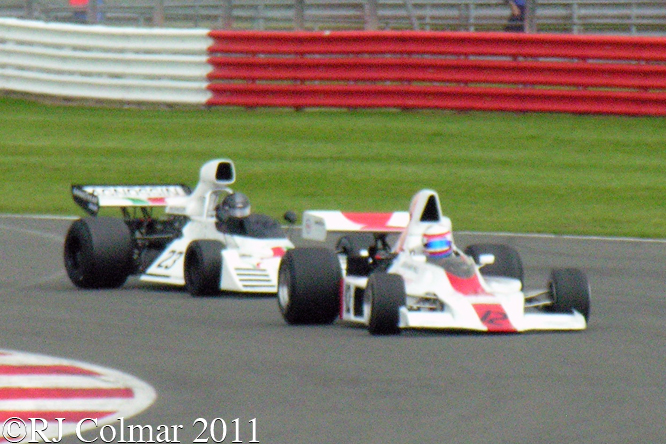
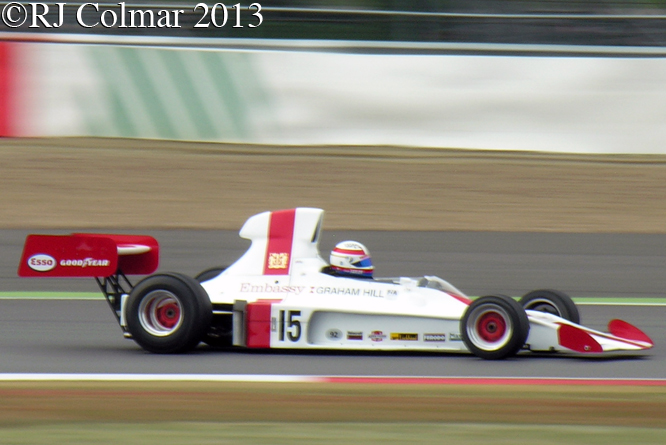
Daryl Taylor is seen at the wheel of #DN1-3A at recent Silverstone Classic events.

Thanks for joining me on this “The Ambassador’s Embassy” edition of “Gettin’ a li’l psycho on tyres” I hope you will join me again tomorrow. Don’t forget to come back now !
Share

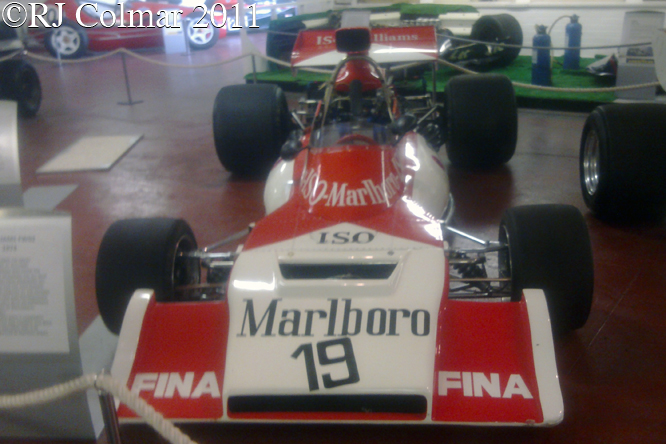
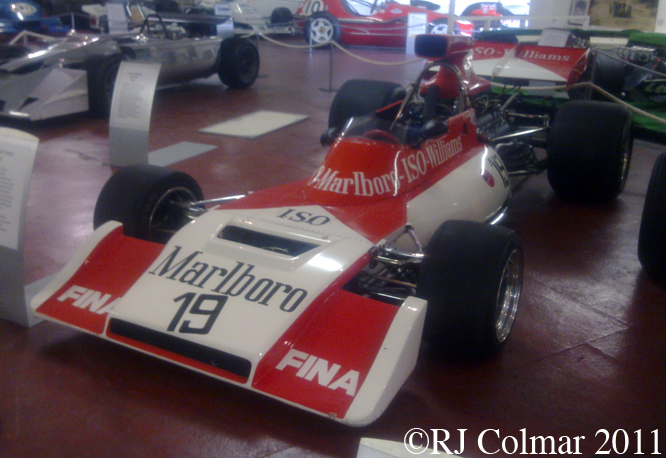
Stop Gap – Williams Cosworth FX3B #FX3/2

Sunday’s for November will feature a few more Formula One Cars from the 1973 season, the season during which my interest in Motor Sport became a passion.

Today’s featured car the Williams Cosworth FX3 was designed in 1971 by Len Bailey who after working for British Motor Corporation, Daimler and Rover emigrated to the USA where he worked for American Motors on their first V8 and Ford on the prototype Mustang. Len returned to the UK with Ford Special Vehicle Operations (SVO) and worked on the original Ford GT Le Mans contenders and after SVO was taken over by JW Automotive he worked on the design of several mostly Ford powered prototype sports cars including the Ford P68 and later Mirage M6 both of which were powered by the Cosworth designed, Ford financed DFV.

Williams Cosworth FX3/2, Donington Park Museum

Williams had intended for the Len Bailey designed car to be built and running in 1971 but a shortage of funds meant the car was not ready until the 1972 British Grand Prix by which time Williams had done a deal with Politoys to call the car the Politoys FX3.

Williams Cosworth FX3/2, Donington Park Museum

1972 Le Mans winner Henri Pescarolo qualified the Frank Williams Racing Cars entered Politoys 26th on it’s debut at the 1972 British Grand Prix but retired after 7 laps due to a suspension failure which caused an accident from which Henri emerged unscathed.

Williams Cosworth FX3/2, Donington Park Museum

The Politoys was repaired in time for Chris Amon to drive it in the non championship John Player Challenge Trophy for which he qualified 20th but retired after 33 laps with engine failure.

Williams Cosworth FX3/2, Donington Park Museum

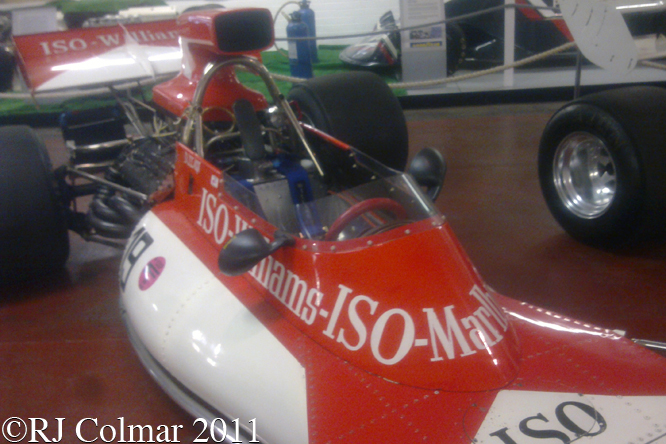
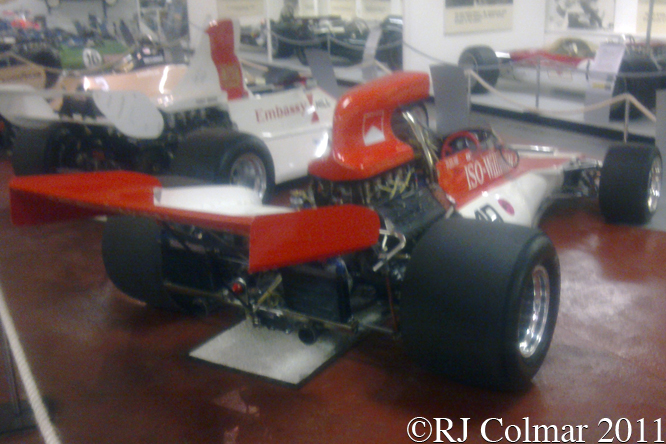
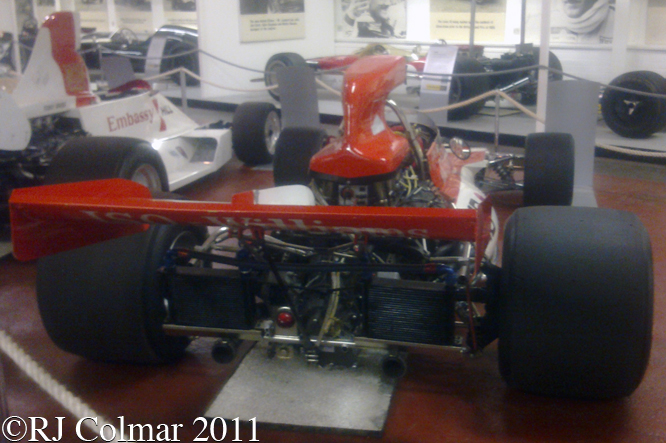
For 1973 Frank Williams did deals with Iso Rivolta and Marlboro for the 1973 season and his cars became known as Iso Marlboro Fords. For the start of the 1973 season the 1972 Politoys FX3 was upgraded to B specification with a shovel like nose replacing the winged original and a second car, the one featured today, was built up to join it though both cars known as Iso Marlboro Ford FX3B’s would only remain legal until the 1973 Spanish Grand Prix when new rules concerning fuel tank safety would make them both obsolete.

Williams Cosworth FX3/2, Donington Park Museum

Howden Ganley drove today’s featured car, seen at the Donington Park Museum, in five races 2 of which were non championship events with a best result of 7th in the 1973 Brazilian Grand Prix. Tony Trimmer scored the models best in period result at Brands Hatch where he finished 4th in the non championship Race of Champions watched by a 14 year old who became the author of today’s piece.

For the 1973 Spanish Grand Prix Williams had 3 new cars built to meet the new safety requirements that were designed by John Clarke with IR model numbers.

Today’s featured car was next seen racing on two occasions in Formula Libre events at Mallory Park in 1983 powered by a Formula 5000 motor and driven by Alistair Thompson to 2nd place and 4th place finishes. Later still a Ford Cosworth DFV was refitted to #FX3/2 the car was raced by Richard Peacock.

After spending much of the 1990’s in Italy it would appear that #FX3/2 is currently being offered for sale by Hall & Hall in Bourne, Lincolnshire.

My thanks to everyone who contributed to the Williams FX3B thread at The Nostalgia Forum for additional information relating to today’s post.

Thanks for joining me on today’s “Stop Gap” edition of “Gettin’ a li’l psycho on tyres” I hope you will join me again tomorrow when I’ll be returning to the Monday Pick Up feature. Don’t forget to come back now !
Errata, my thanks to Tim Murray for pointing out it was Len Bailey who designed the Williams FX3 not Len Terry as originally stated and subsequently corrected. Apologies for any confusion.

Share

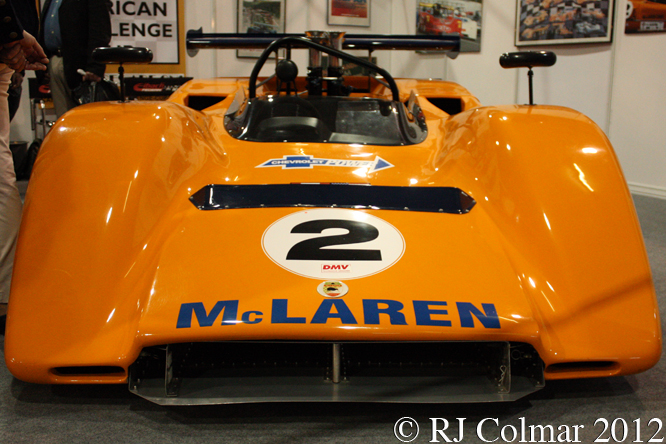
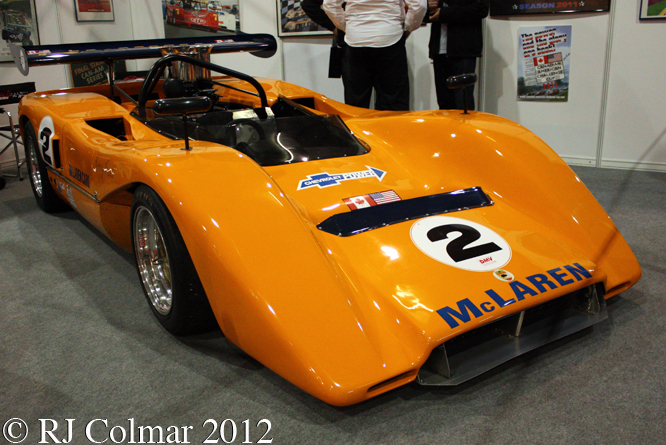
Traffic Yellow Customer Racer – McLaren Chevrolet M8 C

The 1969 season saw the Canadian American Challenge expand to an eleven race series, the most run in any year of the challenge, but only the McLaren Cars Team cars with New Zealanders Bruce McLaren and Denny Hulme recorded wins. Bruce won six of the races driving his McLaren M8B and with Denny recording the remaining five.

McLaren M8C/D, Race Retro

For 1970 McLaren Cars updated the M8B to a design known as the M8D while offering a production version of the M8B built by Trojan known as the M8C, of the type featured today. Confusingly Trojan also built 15 McLaren M12’s featuring updated M6 chassis running with M8 size wheels and adapted M8 bodywork in 1969. The most successful exponent of the customer M8C in the 1970 Can Am Challenge was Canadian Roger McCaig who recorded 3 5th place finishes and an eventual 10th place in the 1970 Challenge standings.

Lothar Motschenbacher who drove one of the 1969 Mclaren M8B’s, a 1969 McLaren M12 and an M8C during the 1970 Can Am Challenge recorded one 5th place in his M8C at the last race of the season to finish a distant 2nd in the 1970 Can Am Challenge, to Denny Hulme who won 6 of the ten 1970 Can Am races in his M8D to secure his second Can Am Championship.

McLaren M8C/D, Race Retro

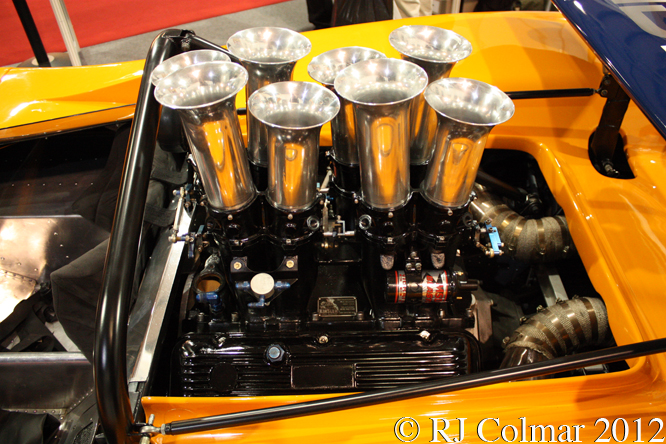
According to the Bruce McLaren Trust website Trojan built 15 M8C’s which were also raced in Europe and South American series. The Ford Cosworth DFV powered M8C driven by Chris Craft won the 1970 Swedish Grand Prix run for sports cars including a couple of Porsche 917K’s.

The most successful McLaren M8C appears to have been chassis #70-08 which was driven to three victories in Argentina by; Nasif Estéfano at Buenos Aeries in April 1971, Carlos Pairetti at Buenos Aeries in August 1971 and Osvaldo López at San Martin in March 1973. The car was listed on each occasion as being powered by a Ford motor.

McLaren M8C/D, Race Retro

The only other in period victory recorded for an M8C is the Chevrolet example driven by Siegfried Rieger at Hockenheim in November 1971, his car featured an M12 chassis with M8C bodywork.

The last ‘in period’ race recorded for any M8C, thought to be for today’s featured car M8C #30-25, was driven by Richard Dotkins at an Interserie event run at Zolder in August 1992, where the car finished 6th in Heat 2. Since then #30-25, which would never have run in the works McLaren Traffic Yellow colour scheme as seen here, is thought to have recorded at least 5 race victories in sundry (primarily classic/historic) events through the 1990’s; 2 by Richard Dotkins, 2 by Richard Eyre and 1 by Geoff Farmer.

McLaren M8C/D, Race Retro

The #30 series chassis number of the car would more normally be associated with a space/tube frame Trojan built McLaren M1B. The history of McLaren M1B #30-25 is, like the history of M8C/D #30-25 prior to 1992, also unknown at the time of writing.

The car featured to day was seen at Race Retro and is raced by Harry Reed.

My thanks to raceanouncer2003, Belmondo, David McKinney and Duncan Fox at The Nostalgia Forum for their help in identifying today’s car and it’s history.

Thanks for joining me on this “Traffic Light Yellow Customer Racer” edition of “Gettin’ a li’l psycho on tyres” I hope you will join me again tomorrow when I’ll be looking at a Can Am BRM. Don’t forget to come back now !
Share

6 Wheel 4WD Final Call – Williams FW08B

Going into the 1982 season Williams had won not only a drivers Championship with Alan Jones in 1980, but two consecutive constructors Championships on which the team openly has always prided it’s self on more than any drivers championship.

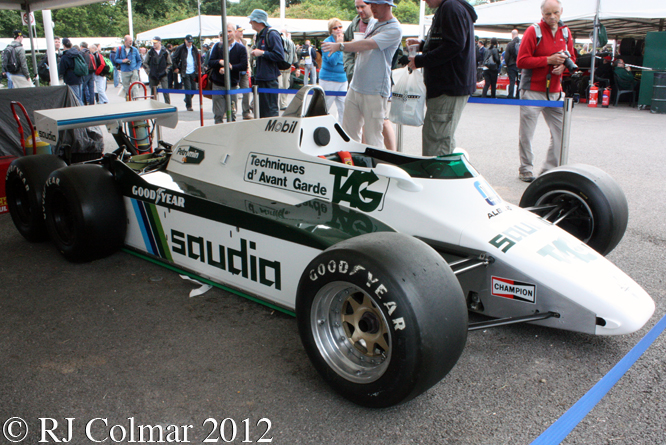
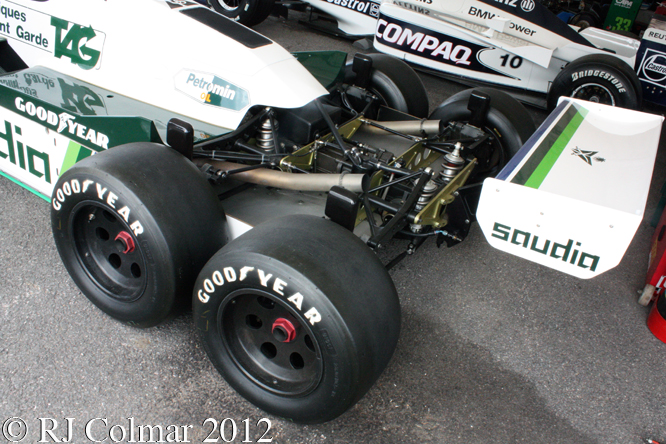
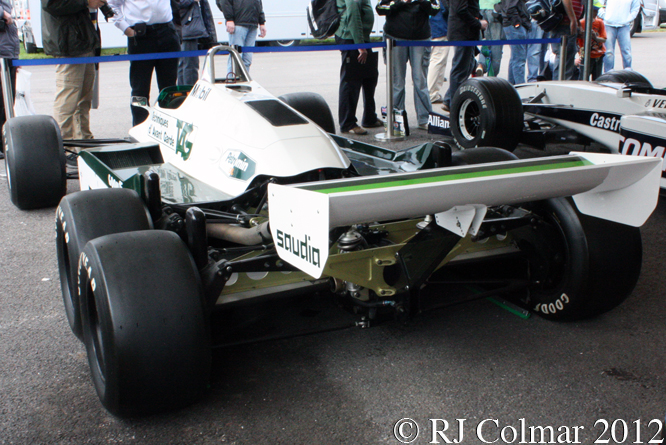
At the end of 1981 Williams designer Patrick Head and aerodynamicist Frank Dernie revisited the idea of running a six wheel formula one car with four driven wheels as Robin Herd at March had done during the winter of 1976/77 with the March 2-4-0.

Williams, Cosworth, FW08B, Goodwood Festival of Speed

Unlike March the Williams team were not interested in the publicity from the concept but, already having sufficient financial backing to see the concept through, they were interested in the results and specifically a third consecutive constructors championship which the concept might be able to deliver.

Williams, Cosworth, FW08B, Goodwood Festival of Speed

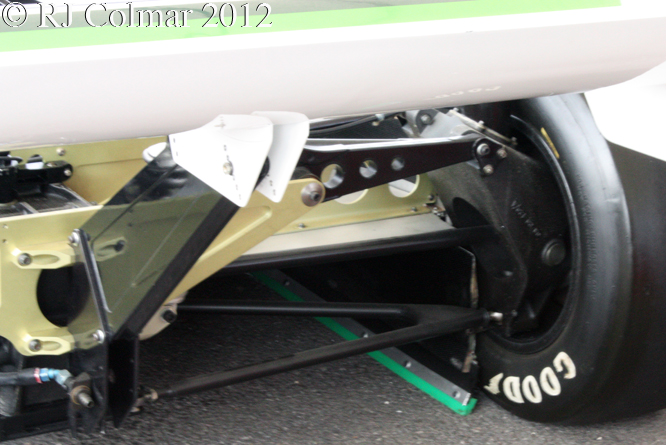
The rear 4 wheel drive transmission was tried out first on a 1981 FW07C chassis #FW07C/11 which became D spec with the additional driving wheels. Alan Jones tested the car before heading off into ‘temporary’ retirement in Australia.

Williams, Cosworth, FW08B, Goodwood Festival of Speed

With Jones team mate Carlos Reutemann also considering retirement after blowing an opportunity to win the 1981 World Drivers Championship at the last race in 1981, Fittipaldi refugee, Keke Rosberg was taken on to test both the FW07D, the new two wheel drive FW08 and four wheel drive FW08B as seen in these photographs.

Williams, Cosworth, FW08B, Goodwood Festival of Speed

In January 1982 it was reported in Motor Sport that “Patrick Head is pressing on with his experimental six wheeled Williams….”, by February 1982 Motor Sport reported that “Williams will not be racing the six wheeler…” without any further reasons being given leading one to conclude the 4 wheel 2 wheel drive FW08 had proved sufficiently superior not to proceed with the FW08B.

Although Patrick Head has said that at a meeting of the Formula One teams others were horrified at the increased expense of the system and prospect of the chaos that would ensue during pitstops. The FIA eventually also put a restriction on the number of wheels for a Formula One car limited to just 4 of which 2 maybe driven.

Despite being reliant on the venerable, but reasonably reliable Cosworth DFV motor when all around them the turbo charged motors were showing ever more horsepower Keke Rosberg managed to win the 1982 drivers championship with the FW08, winning just one race in the sixteen race series but scoring enough points from his remaining placings to beat his turbocharged competitors.

The constructors championship was won by Ferrari and had not Gilles Villeneuve been killed and Didier Pironi injured during the season a Ferrari driver might well have won the 1982 championship.

Thanks for joining me on this “6 Wheel 4WD Final Call” edition of “Gettin’ a li’l psycho on tyres”, I hope you will join me again tomorrow. Don’t forget to come back now.

Share