Tag Archives: Cosworth

It Is Not A Green Audi – Bentley Speed 8 #004/1

Just over a week ago I visited Cholmondeley Pageant Of Power where I manged to catch up with today’s featured Bentley Speed 8 of the type which ten years ago were entered in the 2003 Le Mans 24 Hours.
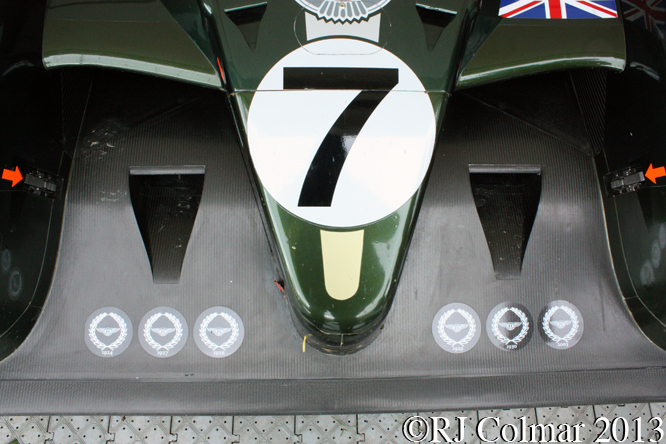
Bentley Speed 8, Cholmondeley Pageant Of Power

The origins of the Speed 8 lay in two Audi projects that raced at Le Mans in 1999 one of which was designed by Peter Elleray who would go on to design the Bentley’s which competed at Le Mans from 2001 and 2003.
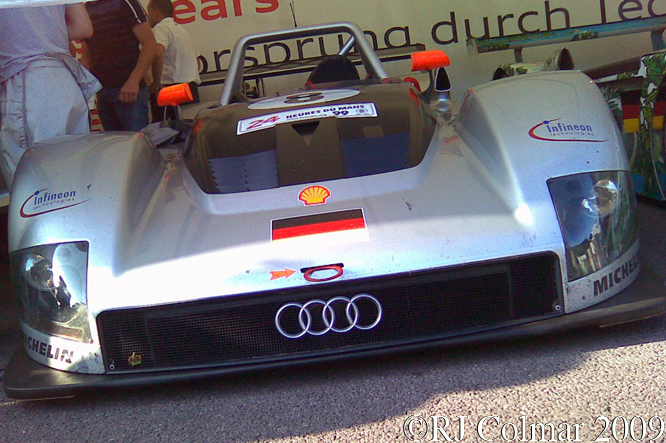
Audi R8R, Goodwood Festival Of Speed

Audi entered four cars in the 1999 endurance classic two open cockpit LMP class Audi R8R’s like the one above that was built by Dallara and entered by Audi Sport Team Joest which Frank Biela, Didier Theys and Emanuele Pirro drove third place one spot ahead of the sister R8R driven by Michele Alboreto, Rinaldo Capello and Laurant Laurent Aïello.
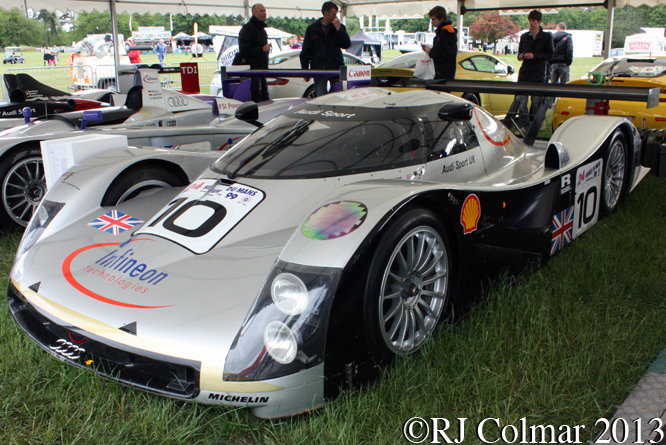
Audi R8C, Goodwood Festival Of Speed

The two remaining Audi’s were closed cockpit LMGTP Audi R8C’s designed by Peter Elleray and built by Racing Technology Norfolk (RTN) using the same twin turbo V8 motors and gearboxes as the R8R. Veteran Porsche Group C entrant Richard Lloyd ran the R8C’s in the ’99 Le Mans Race under the Audi Sport UK banner with James Weaver, Andy Wallace and Perry McCarthy in the #10, seen above which retired after 198 laps. The #9 R9C was driven by Stefan Johansson, Stéphane Ortelli and Christian Abt retired after 55 laps both cars experiencing gearbox issues that were shared with the R8R’s but which the Joest mechanics were better able to cope with.
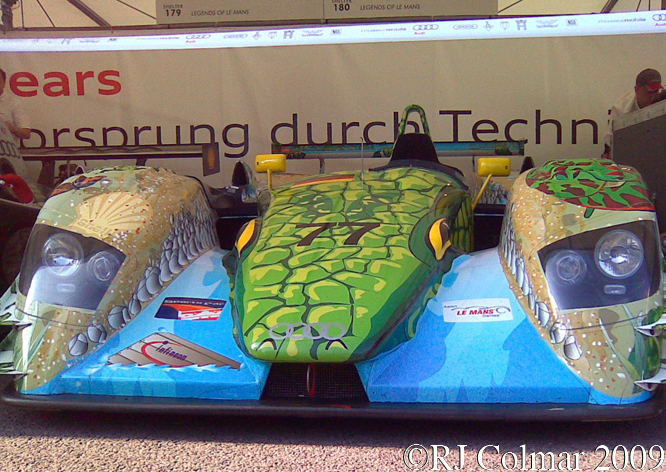
Audi R8, Goodwood Festival Of Speed

The R8R’s were quicker than the R8C’s which suffered from being the second project to get the go ahead and Audi decided to go with the open cockpit concept and developed the R8 of the type seen above which won five Le Mans 24 hour races in ’00, ’01, ’02, ’04 and ’05.
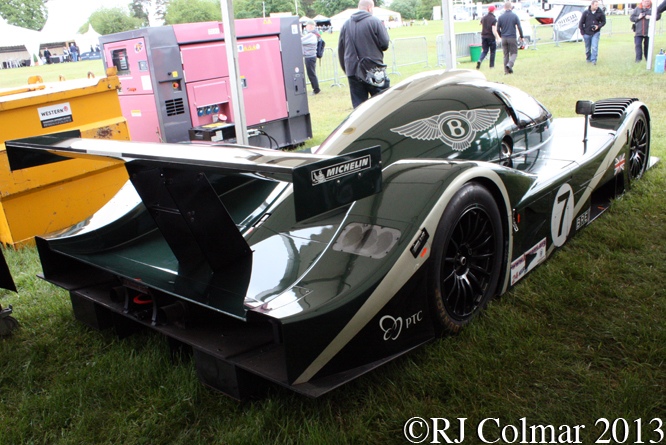
Bentley EXP Speed 8, Cholmondeley Pageant Of Power

In 1998 the Volkswagen Group, which includes Audi, acquired Bentley and Rolls Royce, for reasons that are not clear they did not acquire the rights to use the Rolls Royce name which went to BMW and an agreement was reached that saw Rolls Royce production separate from Bentley at Crewe, where the two marques had been manufactured alongside each other since 1946, with Rolls Royce becoming a BMW owned company located in a new production facility at Goodwood.

Following the acquisition of Bentley in 1999 a 220 mph concept car was announced. The Bentley Hunaudieres powered by a normally aspirated W16, a version of the motor that would be used to power another super car from the Volkswagen Group namely the Bugatti Veyron.

In 2000 Bentley announced that it was to return to Le Mans, for the first time in 71 years, in 2001 with two closed cockpit LMPGTP entires and that a prototype was being worked on by Peter Elleray at Racing Technology Norfolk.

By the time the design for the EXP Speed 8 was finalised it had been decided to use the same twin turbo V8 as was being used in the Audi R8 programme but fitted with an X-trac transmission. During the 2001 Le Mans race chassis #002/4 seen above was driven by Martin Brundle, Guy Smith and Ortelli, qualifying 7th but retiring with transmission failure. Chassis #002/3 driven by Andy Wallace, Eric van de Poele and Butch Leitzinger qualified 9th and finished 3rd overall behind two Audi R8’s 15 laps adrift of the overall winner, but winning the GTP class.
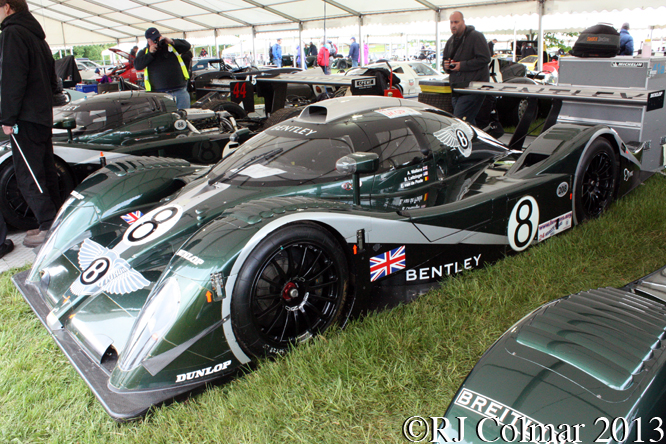
Bentley EXP Speed 8, Cholmondeley Pageant Of Power

For 2002 only one Bentley entry was prepared for the Le Mans 24 Hours, it’s upgrades included a new 4 litre / 244 cui version of the Audi based twin turbo V8 up from 3.6 litres / 219 cui, the 4 litre motors were unique to Bentley.

Driving a new chassis, #002/6 seen above, Wallace, van de Poele and Leitzinger qualified over two seconds faster than they had in 2001 but wound up only 11th on the grid. In the race they covered 62 laps more than in 2001 but finished 4th behind three Audi R8’s now only 13 laps behind the overall winner and again winning the LMGTP class.
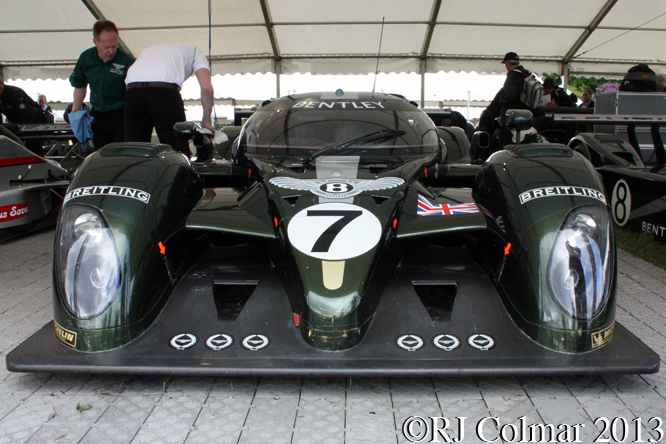
Bentley Speed 8, Cholmondeley Pageant Of Power

For the third and final planned onslaught at Le Mans Peter Elleray designed a completely new car based on a completely new safer carbon fiber tub.
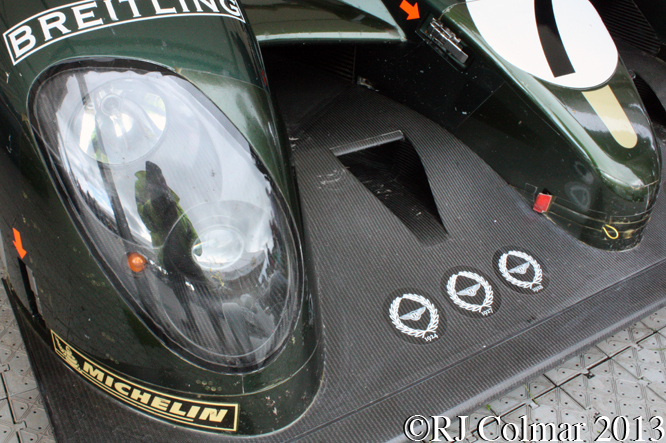
Bentley Speed 8, Cholmondeley Pageant Of Power

After Johnny Herbert crashed one of the new #004 cars, chassis #004/2, at 100 mph into a concrete wall without injury during testing, Peter persuaded the management that two even stronger tubs should be built. However one of these #004/4 “blew up” while being cured in the autoclave and the other #004/5 was prepared for the 2003 Le Mans 24 hours.
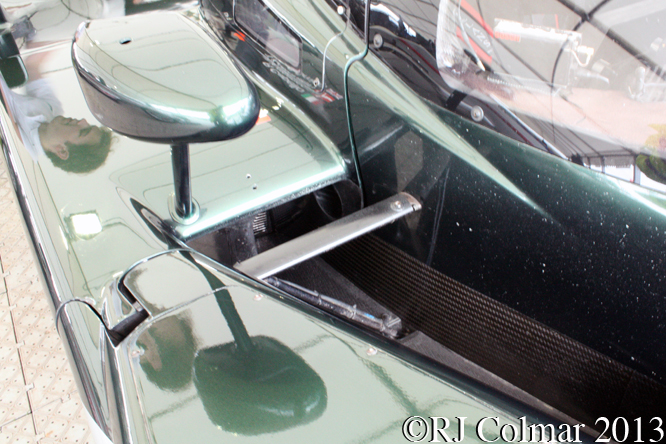
Bentley Speed 8, Cholmondeley Pageant Of Power

Today’s featured chassis #004/1 along with #004/3 was sent to Sebring to compete in the Sebring 12 Hours as a warm up preparation for Le Mans. However two privately entered Audi’s did not read the script and ended up beating the Bentley’s by 4 laps. #004/1 driven by Capello, Tom Kristensen and Smith qualified and finished 4th 5 laps down on the overall winner and behind the Johnny Herbert, David Brabham and Mark Blundell entry.
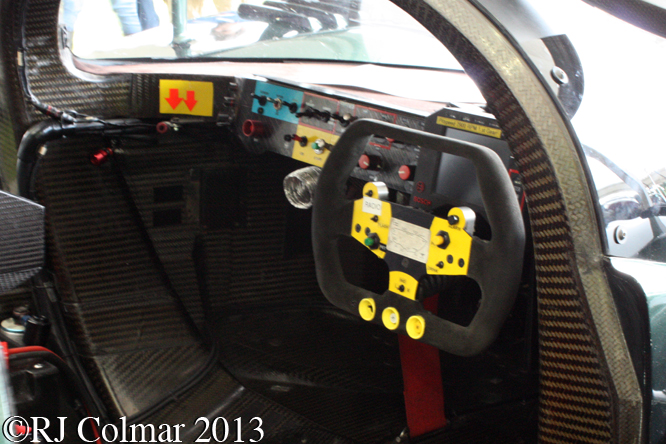
Bentley Speed 8, Cholmondeley Pageant Of Power

Both of the Sebring cars were then sent to Le Mans in May 2003 for the Le Mans test weekend where Capello, Kristensen and Smith driving #004/1 set the fastest time ahead of the Audi Sport Japan Team Goh R8 driven by Seiji Ara, Marco Werner and Jan Magnussen. Third fastest time went to Herbert, Brabham and Blundell in chassis #004/3.
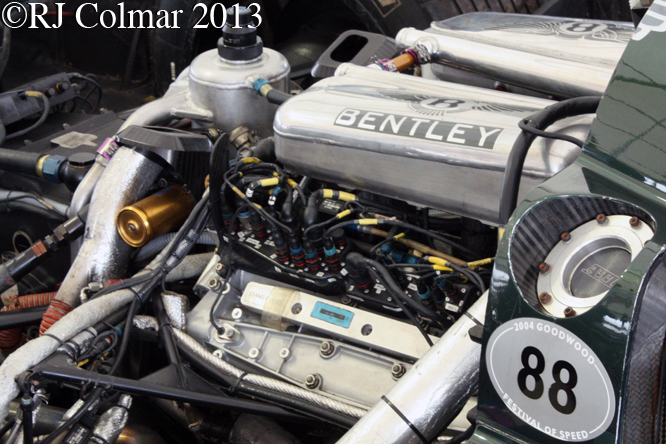
Bentley Speed 8, Cholmondeley Pageant Of Power

Like the 2002 EXP Speed 8 the 2003 Speed 8 retained exclusive use of the 4 litre twin turbo V8 which produces around 600 hp. When designing the prototype Bentley Le Mans challenger, 001 in 2000, Peter Elleray was expecting to use an unspecified normally aspirated motor apparently several options were discussed including the W16 and the prototype was tested with a Cosworth DFR Formula One motor before the twin turbo Audi V8 and later larger Bentley V8 derivative were selected.
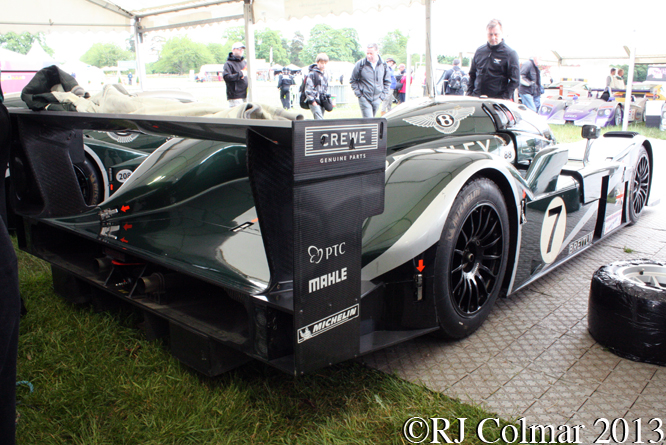
Bentley Speed 8, Cholmondeley Pageant Of Power

The Speed 8 Bentley’s were perfectly prepared for the 2003 Le Mans 24 hours and in the absence of works Audi R8 entries they called on Joest Racing to support their efforts in the pit lane. Capello, Kristensen and Smith were entered in the new chassis #004/5 which qualified on pole 2 seconds faster than older sister car #004/3 driven by Herbert, Brabham and Blundell that completed a Bentley sweep of the front row.
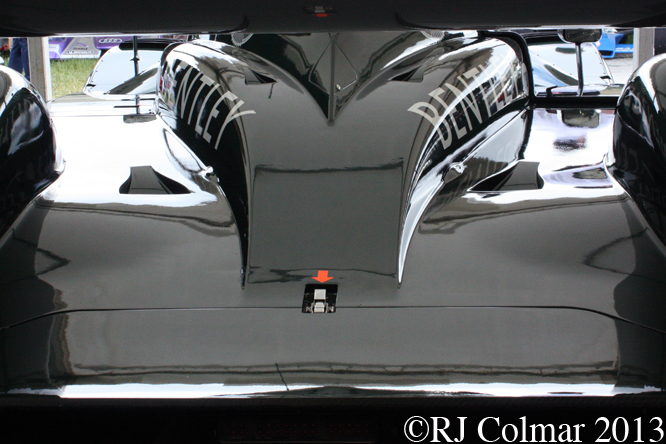
Bentley Speed 8, Cholmondeley Pageant Of Power

The Bentley’s then ran a text book race finishing in the order they qualified with the lead car two laps ahead completing 377 laps in total seven more that the third placed Champion Racing Audi R8 driven by JJ Lehto, Emanuele Pirro and Johansson. The last time a Bentley had won the Le Mans 24 hour race was when Woolf Barnato and Glen Kidston led the similar Bentley Speed Six of Frank Clement and Richard Watney in 1930 having completed ‘just’ 179 laps.
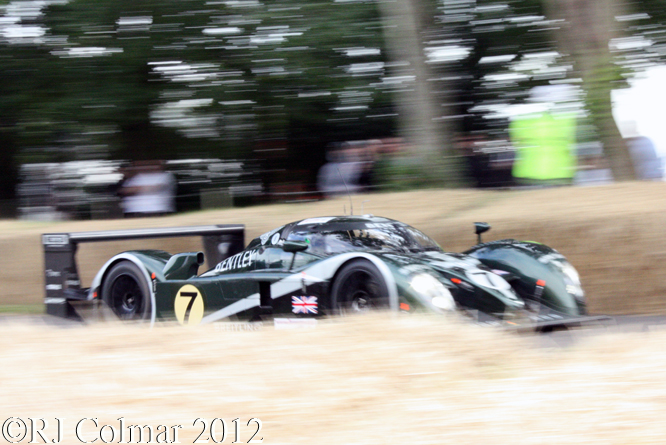
Bentley Speed 8, Goodwood Festival Of Speed

Designer Peter Elleray believes that Bentley possibly choose to enter the LMGTP class because of the ‘visual presence’ of the closed cockpit cars and it must have been satisfying to him that his final Speed 8 design was the first non Formula One car in 14 years to win be awarded the 2003 Autosport Racing Car Of The Year Award.

There have been many uniformed opinions that the Bentley Le Mans project that ran from 2001 to 2003 was simply a badge engineered Audi R8 with a roof, however this was most certainly not the case.

The Bentley Speed 8 had more British content than the successful Italian Dallara Audi R8’s had German content even though the British car was powered by a unique to Bentley version of the Audi V8.

Peter patiently answered some of the misinformed opinion about the cars he designed at The Nostalgia Forum recently.

I’ll leave the final word on this project to Peter “i(t) will be on my tombstone – “it wasn’t a green audi…”

My thanks to Peter Elleray for an engaging discussion on his involvement with today’s featured car at The Nostalgia Forum.

Thanks for joining me on this “It Is Not A Green Audi” edition of “Gettin a li’l psycho on tyres” I hope you will join me again tomorrow for a look at a car that was developed with a very different approach to winning the Le Mans 24 hours. Don’t forget to come back now !

Share

Broken Wrist – Lotus Ford T 91 91/7

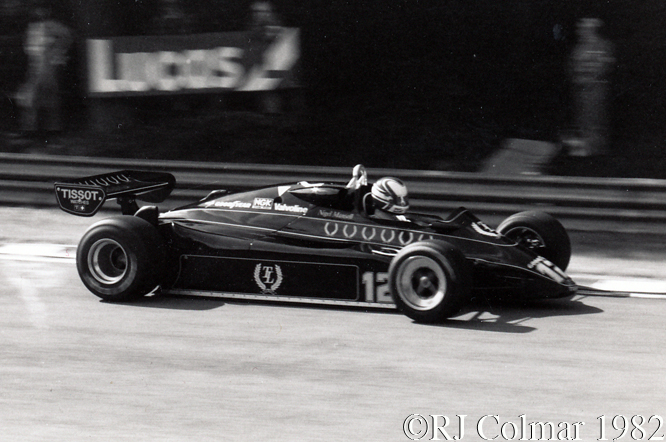
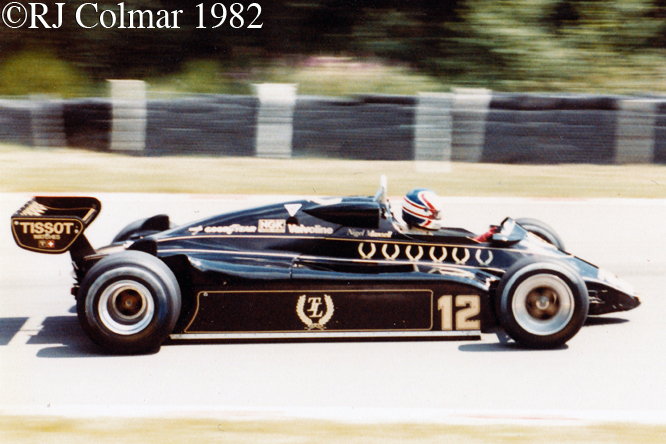
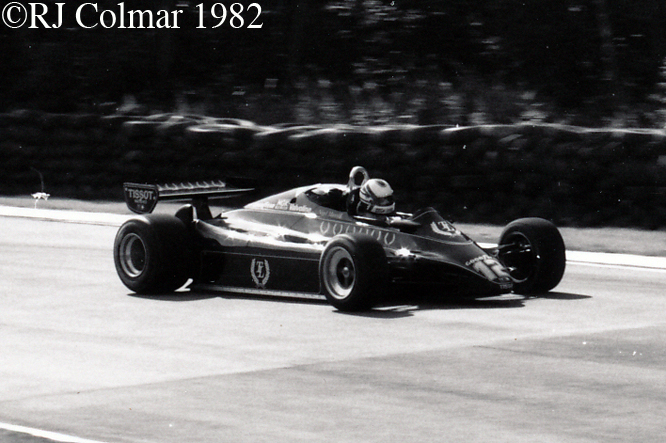
After the controversy of the 1981 season with the twin chassis Lotus 88 the Lotus team upgraded it’s conventional single chassis Lotus 87 for the 1982 season giving it the Lotus T 91 tag. Still powered by the by now venerable Ford Cosworth V8 the Lotus 91 was one of the more attractive entries on the grid.

Lotus Ford 91, British Grand Prix, Brands Hatch

The 91 was a modest improvement on the Lotus 87 Nigel Mansell scoring a seasons best 3rd place finish on his debut in the model in the Brasilian Grand Prix. At the Canadian Grand Prix Nigel Mansell broke his wrist in an accident and after sitting out the Dutch Grand Prix where he was replaced by Roberto Moreno who failed to qualify. Nigel came back for the British Grand Prix at Brands Hatch where he is seen in today’s photographs.

Lotus Ford 91, British Grand Prix, Brands Hatch

Unfortunately Nigel was not fully recovered and he could only qualify 23rd on the grid in chassis #91/7 before retiring from the race due to the discomfort from his wrist. While waiting for his wrist to recover properly Nigel missed the following French Grand Prix where Geoff Lees stood in and finished 12th.

Lotus Ford 91, British Grand Prix, Brands Hatch

Team mate Elio de Angelis scored a famous victory with his Lotus 91 at the 1982 Austrian Grand Prix where he held off, eventual 1982 champion, Keke Rosberg and his Williams to win by just half a cars length. The 1982 Austrian Grand Prix was the first, of two, for de Angelis, the last for a Ford Cosworth powered Lotus and the last for Colin Chapman who succumbed to a heart attack in December 1982.

Thanks for joining me on this “Broken Wrist” edition of “Gettin a li’l psycho on tyres” I hope you will join me again tomorrow. Don’t forget to come back now !
Share

Engineering Adventure Get Involved – The BLOODHOUND Project

Earlier this year a team of 300 workers in the Hakskeen Pan in the Nothern Cape of South Africa set about clearing rocks and obstacles from 9,500,000 square meters of desert, by hand, in order to prepare a 19 km long surface 500 meters wide in anticipation of the arrival in the new year of what may well prove to be the biggest land based engineering adventure of the decade.

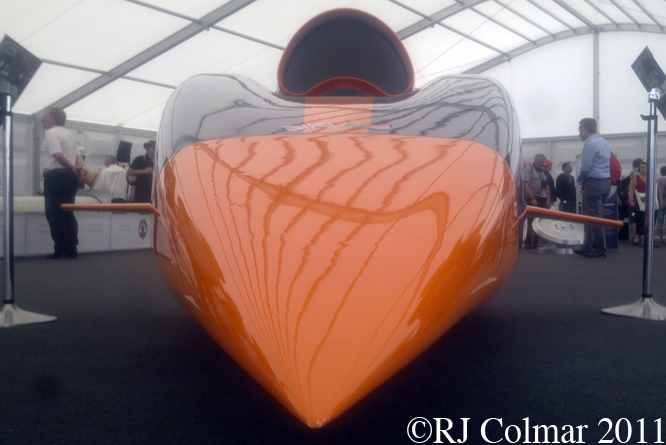
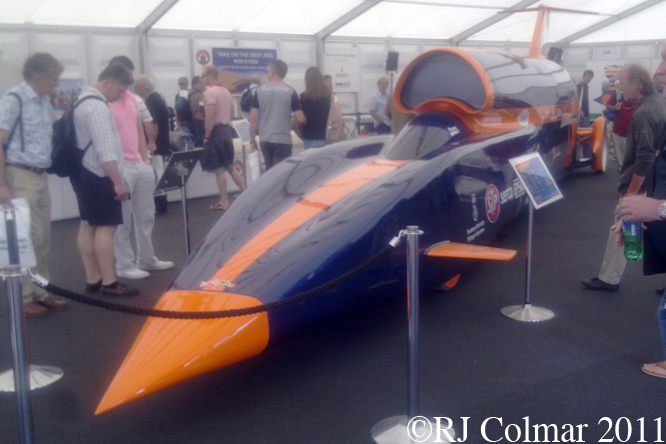
BLOOHOUND SSC, Mock Up, Goodwood Festival Of Speed

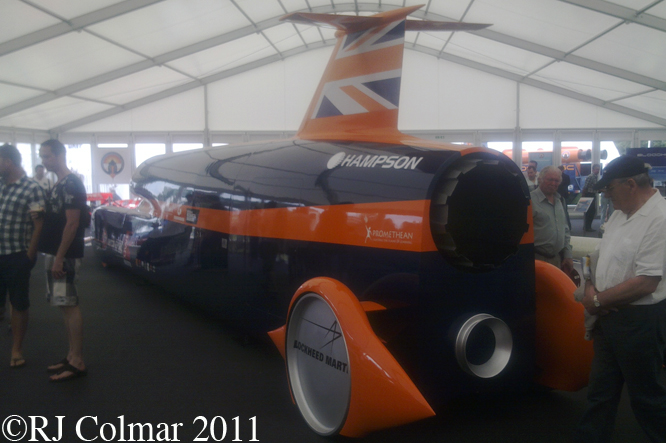
The Hakskeen Pan was chosen by former World Land Speed Record Holder Richard Noble, 633 mph in 1983, and present World Land Speed Record Holder Wing Commander Andy Green, 763mph in 1997, and their BLOODHOUND Project team as the most suitable venue to realise a £15 million pound dream in just over 80 seconds by driving their six and a half ton vehicle at a two way average speed of over 1,000 mph in 2 consecutive runs.

BLOOHOUND SSC, Mock Up, Goodwood Festival Of Speed

In order to achieve this goal some lateral thinking was required in order to get some basic backing. The BLOODHOUND project was announced in 2008 as one who’s primary mission is too inspire future generations of engineers with a program of school projects in both the UK and South Africa which are designed to inspire youngsters to see the possibilities and realise their dreams through engineering and team work. One school has already broken the Land Speed Record, for a model car.

BLOOHOUND SSC, Mock Up, Goodwood Festival Of Speed

Serving RAF pilot Wing Comander Andy Green will be taking the wheel of the BLOODHOUND SSC when it gets to Hakskeen Pan and to train for the 2.5g he will experience during acceleration and 3g he will experience during breaking he will be engaged in stunt flying exercises that expose his body to similar forces.

BLOOHOUND SSC, Mock Up, Goodwood Festival Of Speed

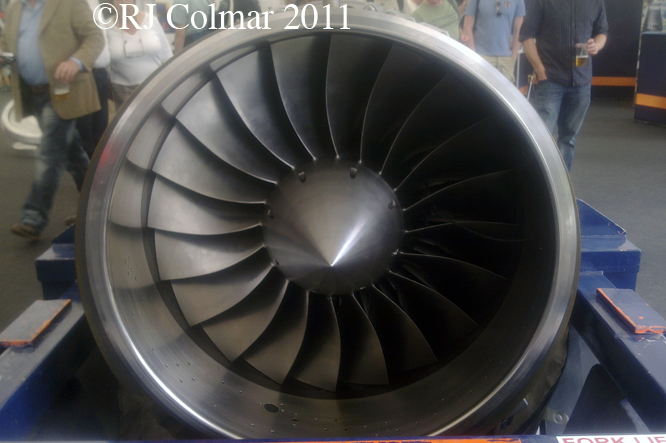
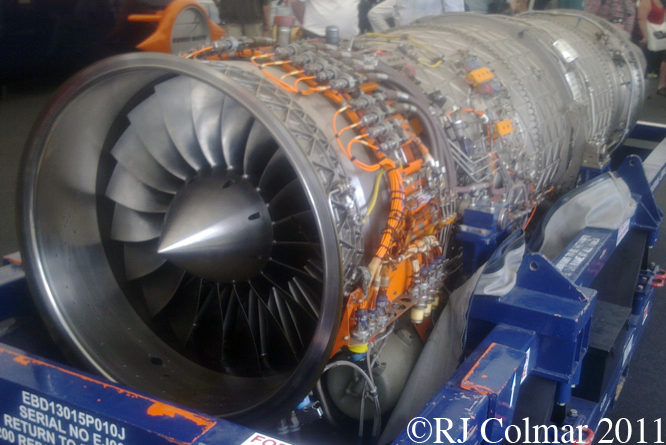
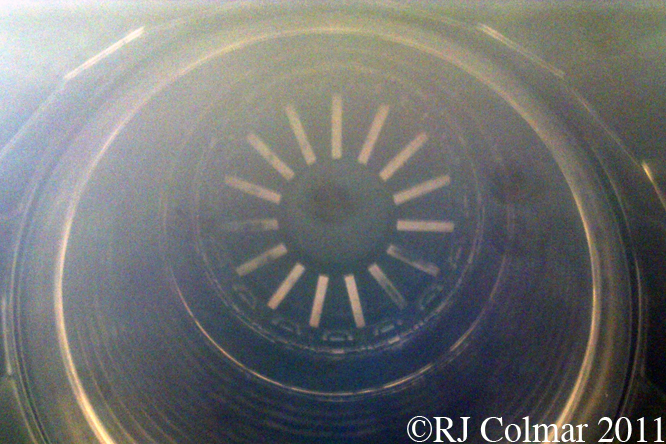
To propel the 6.5 ton BLOODHOUND SSC to 300 mph the team have acquired a prototype Eurojet EJ200 jet engine which produces 90 kN / 20,000 lb/f of thrust with the after burner on.

BLOOHOUND SSC, Mock Up, Goodwood Festival Of Speed

Allegedly the motor was destined for a Museum before getting reassigned to Land Speed Record breaking duties.

BLOOHOUND SSC, Mock Up, Goodwood Festival Of Speed

Two such motors are usually to be found in the Eurofighter Typhoon.

BLOOHOUND SSC, Mock Up, Goodwood Festival Of Speed

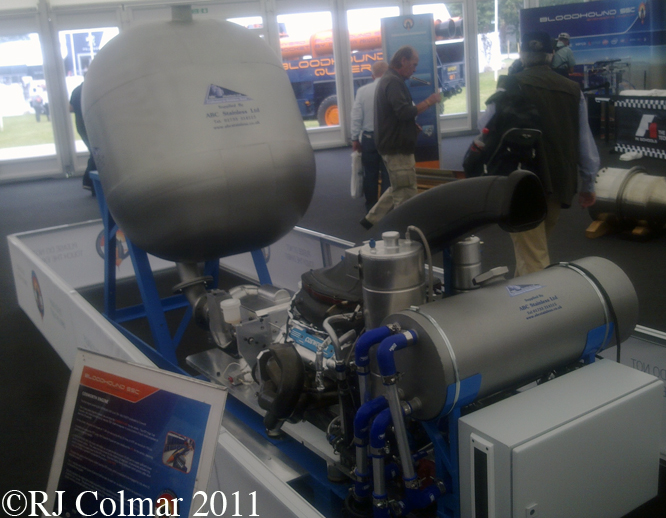
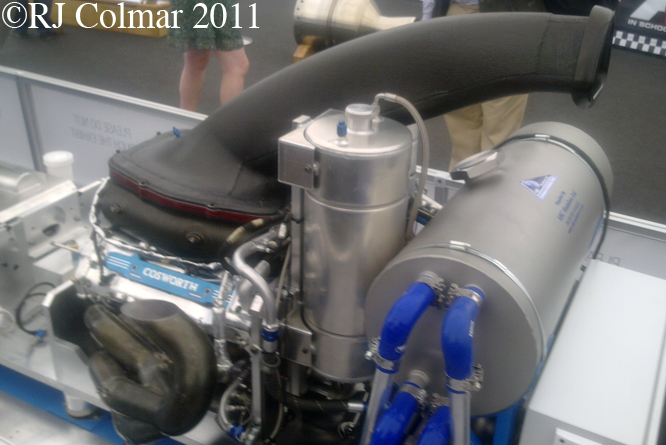
In order to accelerate another 700 mph this device will pump a ton of High Test Peroxide (HTP), highly concentrated hair dye, at 820 psi in 20 seconds through a silver catalyst which instantly decomposes the HTP into a 600°C stream of steam and oxygen which ignites the rockets fuel grain hydroxyl-terminated polybutadiene, like rubber pellets which will generate another 111 kN / 25,000 lb/f of thrust.

BLOOHOUND SSC, Mock Up, Goodwood Festival Of Speed

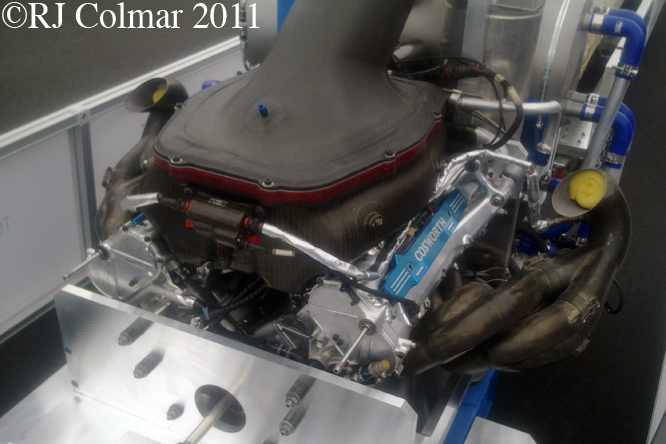
Already dubbed the most expensive fuel pump on a four wheeled vehicle in the world the pump is powered by a 2.4 litre / 146 cui Cosworth CA 2010 V8 motor which was designed for Formula One applications where the revolutions are restricted to 18,000 rpm.

BLOOHOUND SSC, Mock Up, Goodwood Festival Of Speed

The 18″ rocket was designed by Manchesters Daniel ‘Rocket Dan’ Jubb a self taught roketeer who has been building rackets since he was 5 years old. The first test of the BLOODHOUND SSC rocket were carried out earlier this year and the results exceeded expectations.

BLOOHOUND SSC, Mock Up, Goodwood Festival Of Speed

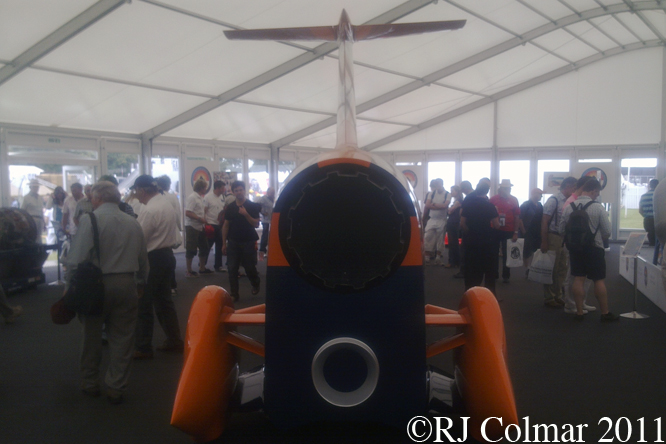
The vehicle shown here is a full scale mock up of the real thing which is being built a few miles down the road for me here in Bristol next to the SS Great Britain.

BLOOHOUND SSC, Mock Up, Goodwood Festival Of Speed

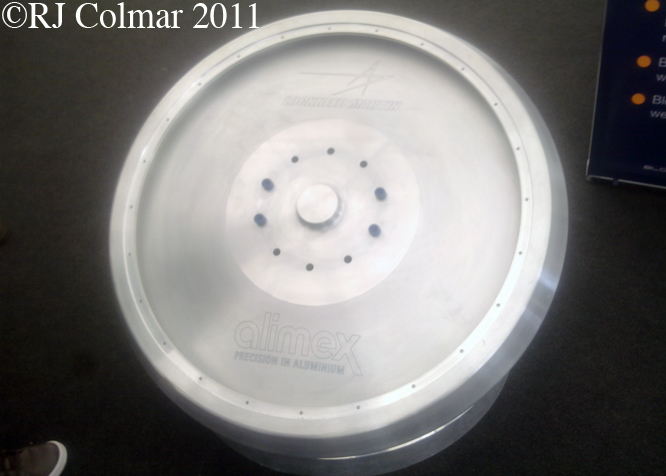
The 95 kg / 209 lb , Alimex aluminium wheels have been designed with the help of Lockheed Martin, at 1000 mph they will rotate at 10,000 rpm and the rims will experience 50,000 radial G !

BLOOHOUND SSC, Mock Up, Goodwood Festival Of Speed

In order to take the world record over 1,000 mph the car will have to make two runs in opposite directions with a combined average timed speed over the flying mile of over 1,000 mph. With only 19 kms of straight desert on which to play with stopping the car safely and turning it around, with in one hour, is crucial to slow the car down air brakes will be deployed once the car has slowed down to 800 mph and once the car has been slowed to 600 mph parachutes will be deployed with disc brakes available at speeds below 250 mph.

Early next year should see BLOODHOUND SSC being given it’s first test runs in the UK before being shipped to South Africa for a crack at setting a 1000mph Land Speed Record.

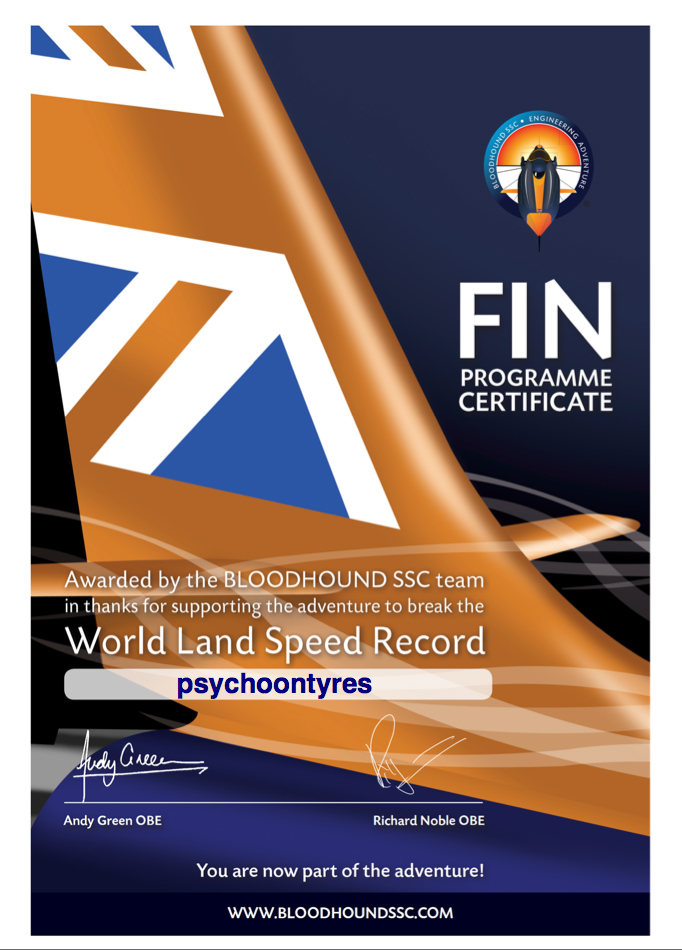
psychoontyres BLOODHOUND SSC Certificate

If you’d like to get involved with this Land Speed Record Engineering Adventure check out the BLOODHOUND SSC website linked here, the legend ‘psychoontyres’ will be appearing on the car as part of the Name on the Tail Fin program.

Wishing all GALPOT readers and contributors all the best for the New Year.

Thanks for joining me on this “Engineering Adventure Get Involved” edition of “Gettin a li’l psychoontyres” I hope you will join me again tomorrow. Don’t forget to come back now !
Share

Rocket Powered Unicycle – MG TF XPower 500 #SARRDWBGBWD034240

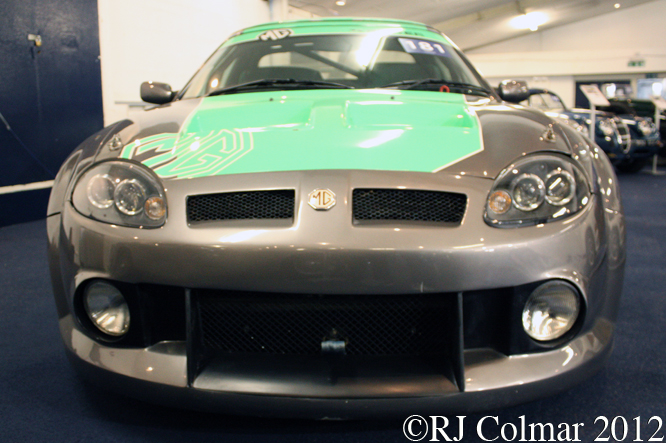
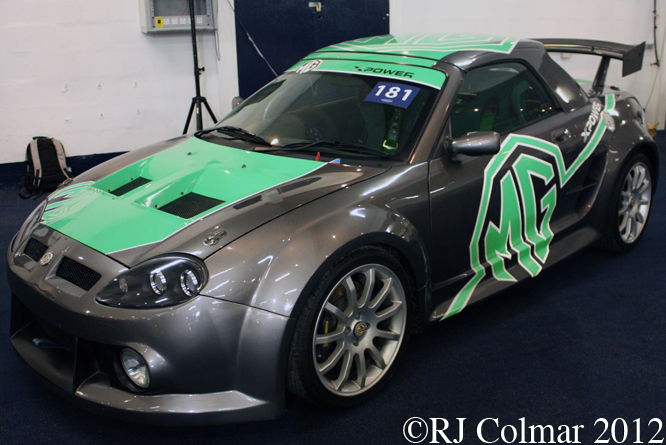
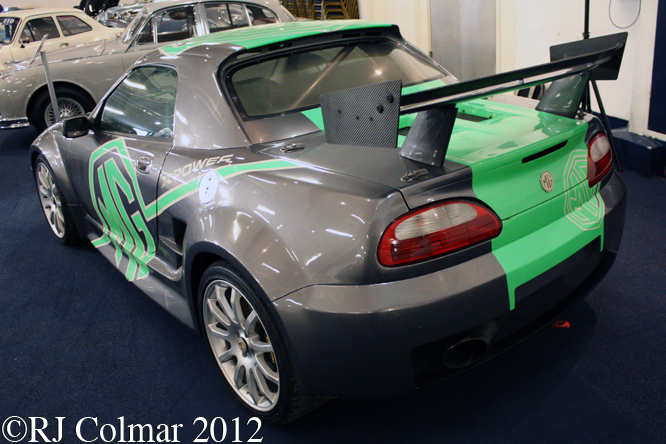
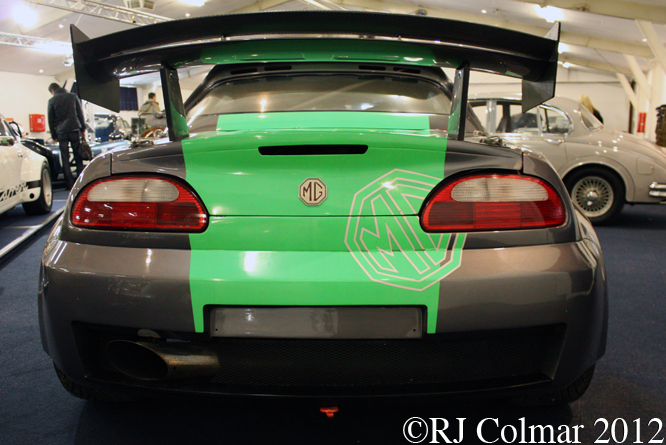
Just like I write “Gettin a li’l psycho on tyres”, because I find it quite irresistable it would appear when MG Rover got ditched by BMW MG went and built today’s unique, as in only one of, MG TF XPower 500 for exactly the same reason.

MG TF XPower 500, Silverstone Auctions, Race Retro, Stoneleigh

Sensational and equally outrageuous the MG TF XPower 500, was first shown to the public at Le Mans in 2001 alongside it’s Lola LM780 chassis Le Mans challenger.

MG TF XPower 500, Silverstone Auctions, Race Retro, Stoneleigh

Sitting on low profile 17″ road tyres and wheels the MG TF XPower 500 has a seam welded MG TF body which incorporates a racing standard survival cell, flared wheel arches and some aerodynamic aids to help keep the car on the ground.

MG TF XPower 500, Silverstone Auctions, Race Retro, Stoneleigh

Go for the MG TF XPower 500 comes from the same source as MG’s Lola MG Le Mans challenger namely a mid monunted Cosworth 2000 Le Mans XP20 2 litre / 122cui 4 cylinder turbo charged motor that produces 400 hp which transmits its power to the rear wheels through a 6 speed X-Trac sequential gearbox. Racing 4 pot AP disc brakes are used to slow the car down which has a ‘theoretical’ top speed in excess of 180 mph depending on the gear ratio’s used.

MG TF XPower 500, Silverstone Auctions, Race Retro, Stoneleigh

When Tony Dron tested the car with former Le Mans winner Mark Blundell he obseved the front wheels don’t do much in the corners and he was advised by Mark to suggest “Just think of the back end”. Tony noted “He’s right: imagine a rocket-powered unicycle and you get the idea.”

Thanks for joining me on this “Rocket Powered Unicycle” edition of “Gettin’ a li’l psycho on tyres”, I hope you will join me again tomorrow. Don’t forget to come back now !
Share

OK, But Not Very Fast – Lotus 58

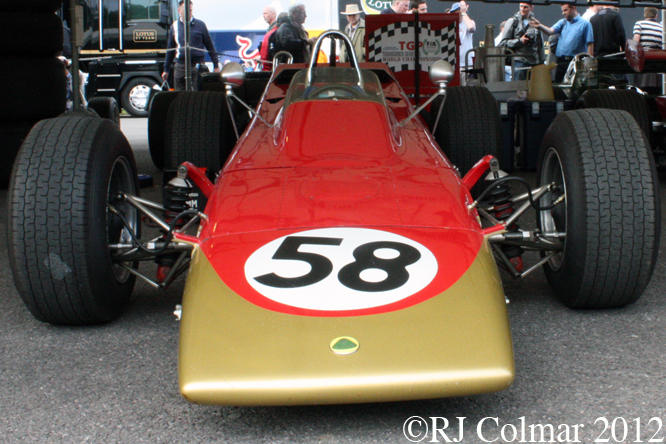
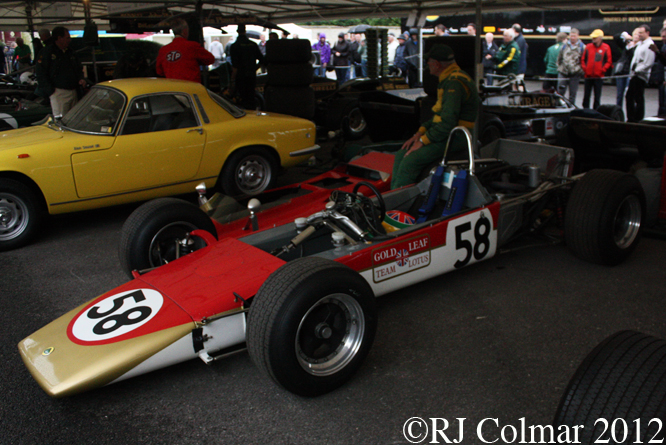
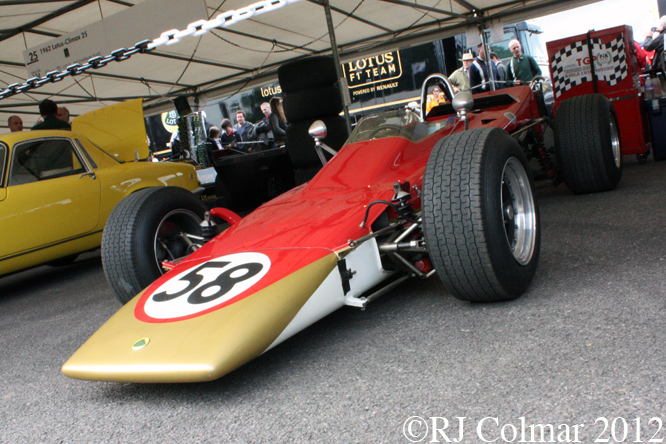
The Lotus 58 was designed with de Dion suspension front and rear, in Colin Chapman’s eternal quest for more grip, to take part in Formula 2 races for the 1968 season.

Lotus 58, Goodwood Festival of Speed

Chapman’s original intention was for the 58 to be used as a development vehicle for the Lotus 57 Grand Prix car which was to have used a similar chassis but fitted with a larger Ford Cosworth 3 litre / 183 cui that powered the various iterations of the Lotus 49.

The Lotus 58 chassis and wedge shaped body closely resembles that of the Lotus 56 Indy challenger but is powered by a 225 hp four cylinder 1598 cc / 97.5 cui Ford Cosworth FVA motor which met the requirements of the second tier open wheel Formula 2 regulations.

Lotus 58, Goodwood Festival of Speed

The one and only Lotus 58 chassis was completed the day Jim Clark was killed at Hockenheim, his death along with that of Jim’s replacement Mike Spence at Indy in a Lotus 56 along with numerous crashes that befell Jackie Oliver in his Lotus 49’s meant that development of the Lotus 58 was pushed back until the end of 1968 when Lotus had to decide which cars to take to the Antipodes for the Tasman Series.

Graham Hill thoroughly tested the car with a Tasman Spec 2.5 litre / 152.5 cui Cosworth DFW motor and came to the conclusion that it was “OK, but not very fast”. It would appear the advantages of the de Dion suspension which keep the wheels vertical in the corners and thereby keep a larger tyre footprint on the ground were not obvious enough to pursue. The Lotus 58 was pushed aside never having raced in Formula 2 as originally intended, or in the Tasman series, while the similar Cosworth DFV powered Lotus 57 never even left the drawing board.

Lotus 58, Goodwood Festival of Speed

In 1998 two enthusiasts persuaded Colin’s son Clive Chapman to restore the Lotus 58 and he gave the task to former Hill and Clark engineer at Lotus Eddie Dennis. After some 1500 hours of work Dennis ran the car at the former works Lotus test track at Hethel before handing it over to the new owners Malcolm Ricketts and Don Hands.

Thanks for joining me on this “OK, But Not Very Fast” edition of “Gettin’ a li’l psycho on tyres” I hope you will join me again tomorrow. Don’t forget to come back now !
Share

What’s In A Tooth ? – Lotus Ford 49 #R2 & #R3

The Lotus 49 consolidated the principle of using the motor that as an integral structural component of the design that was first seen on the BRM P83 and Lotus 43 which were both powered by the novel BRM H16 motor in 1966. The 49, designed by Maurice Phillipe however was powered by the then brand new, and much simpler Ford sponsored 3 litre / 183 cui 8 cylinder Cosworth DFV that was the brainchild of Keith Duckworth and Mike Costin.

Lotus 49, Goodwood Festival of Speed

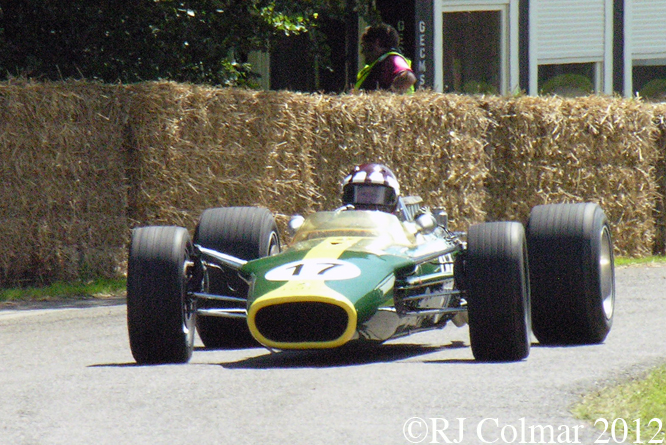
Despite many faults that would surface and be ironed out over the ensuing seasons the Lotus 49’s made a dream debut at Zandvoort for the 1967 Dutch Grand Prix with Graham Hill qualifying on pole and Jim Clark who had never so much as sat in the car before the first practice qualifying 8th. During the race Clark driving chassis #R2, seen above with Jackie Oliver at the wheel at Goodwood, used his legendary speed and mechanical sympathy to well judged victory while Hill experienced timing gear failure with two teeth next to each other on the timing gear breaking. After the race it was discovered Clark’s car had experienced a similar failure however a single tooth remained between the two broken teeth on Clarks timing gear ensuring just enough drive to make it to the finish.

Clark used Chassis #R2 to win both the 1967 British and US Grand Prix before being converted to 49T spec for the Tasman Series of races in Australasia which required an engine capacity of 2.5 litres / 152.5 cui which was achieved by fitting a different crankshaft with a shorter stroke to the DFV motors making them DFW spec. Jim won 4 races in the 8 race Series with the 49T spec chassis #R2 which combined with a couple of points paying places was enough to win the Championship from Chris Amon in his Ferrari 246 Dino.

Chassis #R2 was then loaned to Rob Walker racing during 1968 to replace chassis #R4 which driver Jo Siffert had crashed on his debut in a non championship race at Brands Hatch. Although #R4 was not damaged beyond repair by that accident it was subsequently destroyed in a workshop fire at Rob Walkers premises necessitating the loan of #R2. Once Walkers team had built up a new car, chassis #R7 now in B spec with the tall rear wing, which Siffert used to win the 1968 British GP.

Once chassis #R2 was returned by Rob Walker to Lotus it was immediately pressed into service again after Jackie Oliver had a comprehensive accident in #R6 at the 1968 French GP. For the British Grand Prix #R2 was repainted in Gold Leaf Team Lotus colours and fitted with the winged 49B spec nose cone and high rear wing. The car received further B spec upgrades for the German Grand Prix. Oliver would use chassis #R2 for the remainder of the 1968 season scoring a best 3rd place finish at the season finale in Mexico.

Lotus 49, National Motor Museum Beaulieu

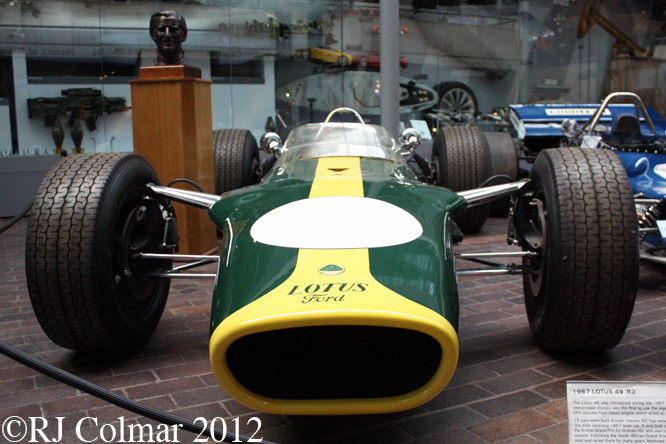
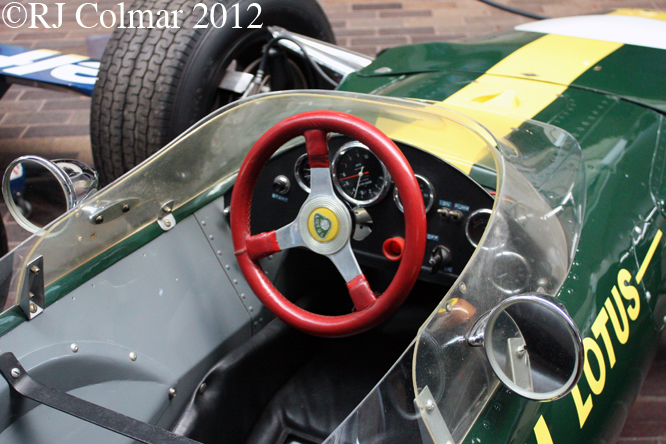
The car seen above at Beaulieu National Motor Museum is chassis #R3 which featured subtle differences to chassis #R1 and #R2 to aid the distribution of loads under braking at the front and to aid access to the brake balance adjuster which had previously only been possible by two mechanics picking up a third smaller mechanic and lowering him into the cockpit upside down ! Note the sculpture of Graham Hill on the plinth to the left of the car in this photo.

Lotus 49, National Motor Museum Beaulieu

Chassis #R3 first appeared at the 1967 British Grand Prix with Graham Hill at the wheel, he qualified 2nd behind Clark but while leading the race first an allen screw dropped off the rear suspension and after it was replaced the engine failed while he was making up good time. Chassis #R3 has the second longest track record of the 12 Lotus 49’s built.

After Hill scored a season best 2nd place in the 1967 US Grand Prix, behind Clark, and opened his championship winning 1968 season with another second place, again behind Clark at Kyalami chassis #R3 was sold to Rhodesian John Love who used the car to win the last two of six consecutive South African Formula One titles in 1968 and 1969, his successor Dave Carlton won the 1970 South African Championship driving the Lotus 49 chassis #R8 which was built to the final C spec.

Lotus 49, National Motor Museum Beaulieu

The 400 hp Ford Cosworth DFV was to become the mainstay of Formula One right through the 1970’s, it was far in advance of the Lotus 49 chassis and would only be toppled by the hugely more expensive turbocharged motors in the early 1980’s after 155 Grand Prix Victories. One of the triangular aluminium top engine mountings can be seen bolted with three bolts on the leading edge of the cam cover tapering into the back of the monocoque to which it was attached by a single bolt. Three further such mountings were all that were required to integrate the motor into the structure of the car.

Lotus 49, National Motor Museum Beaulieu

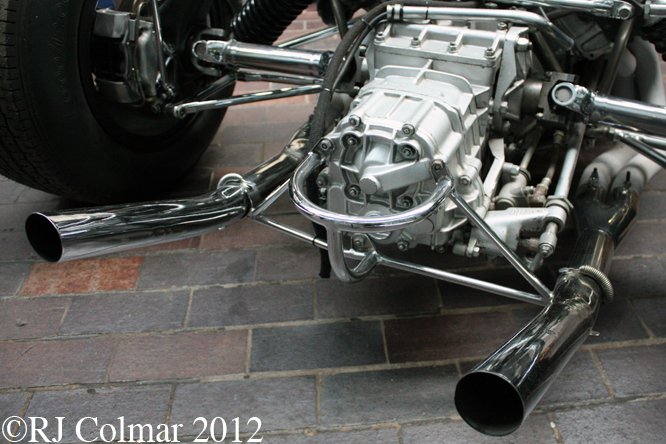
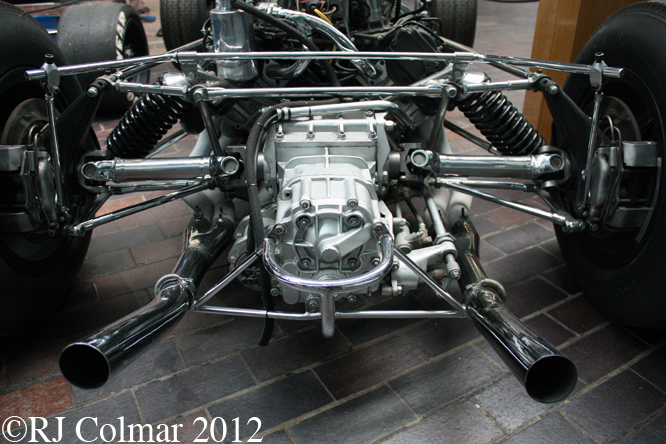
The rear suspension and drive shafts and gearbox would repeatedly prove trouble some for team Lotus as they got to grips with having such a powerful motor. The ZF gearbox in it’s original form was not strong enough and required additional strengthening which can be seen in the form of the thick vertical plate into which the drive shaft disappears. The ZF gearboxes were replaced on the 1968 B spec cars with Hewland units which were much easier to maintain trackside.

Lotus 49, National Motor Museum Beaulieu

The vestigal nudge bar was added to the back of the ZF gearboxes after the 1967 Dutch Grand Prix win in order to comply with a regulation about the dimensions between the end of the exhaust pipe and the back of the car. In other words when Jim Clark won the 1967 Dutch Grand Prix his Lotus 49 did not comply fully to the letter of the existing regulations.

Chassis #R3 is the only one of the Lotus 49’s never to run in B or C spec. Since it has been in the care of the National Motor Museum it has been involved in two serious accidents. The first, on a demonstration run, involved a tree in the Beaulieu grounds where it is kept in 1999 further details of the accident damage can be seen on this link. The second accident with the same driver occurred at a Silverstone Press Day in 2009 fortunately the damage was restricted ‘only’ to the left side suspension as can be seen in these linked photo’s.

Thanks for joining me on this “What Is In A Tooth ?” edition of “Gettin’ a li’l psycho on tyres”, I hope you will join me again tomorrow when I will be looking at a GSM Delta. Don’t forget to come back now !
Share

I Am Not A Number – Lotus Super Seven 1500 Cosworth #SB1688

Series 2 Lotus Sevens were introduced in June 1960 and remained in production until August 1968, they could be ordered either ready made or as complete knockdown kits (CKD’s). In order not to attract purchase tax the CKD’s were not allowed to be sold with instruction manuals on how to assemble the car. Ever the genius Colin Chapman sold his CKD’s with instructions on how to ‘disassemble’ his CKD’s.

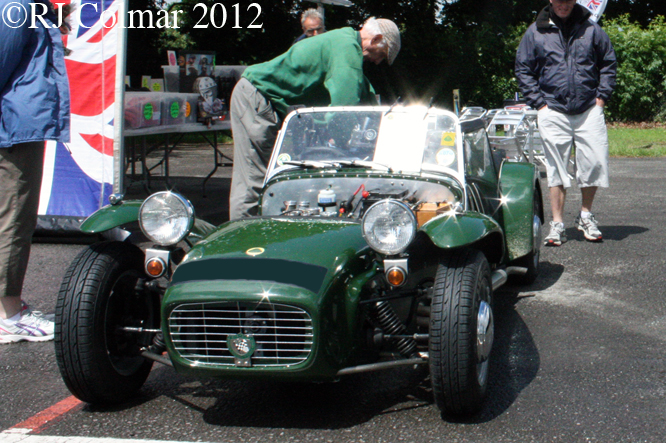
Lotus Super Seven 1500 Cosworth, Castle Combe C&SCAD

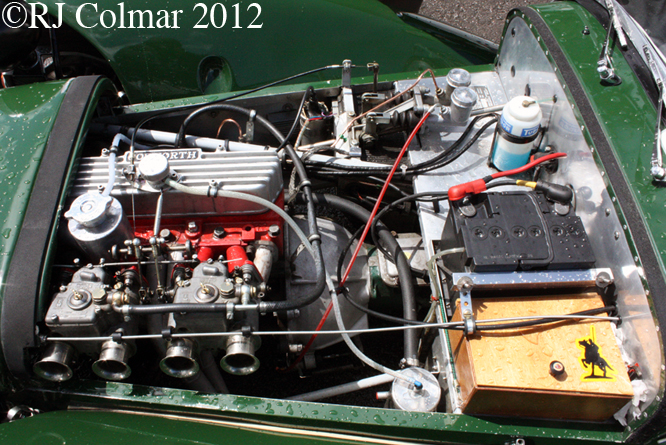
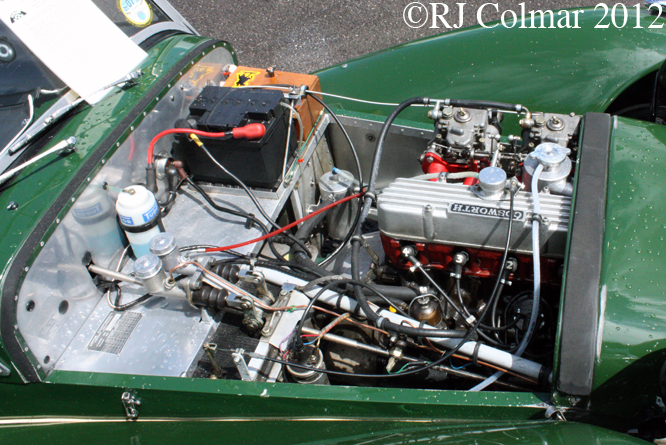
The Super Severn 1500 Cosworth variation of the Lotus Seven S2 was first seen in 1961 featuring 1498 cc / 91.4 cui pre coss flow Ford Motor that was more commonly found in the Ford Consul Classic, it’s two door sibling the Consul Capri and later the Ford Cortina.

Lotus Super Seven 1500 Cosworth, Castle Combe C&SCAD

Alongside the fast bits like the Cosworth camshaft and close ratio gearbox, came a Standard 10 rear axle with drum brakes, a Triumph Herald steering rack, front hubs, fitted with 9″ Girling disc brakes and on this particular car fetching optional wheels with hubcaps from the Lotus Elan.

Lotus Super Seven 1500 Cosworth, Castle Combe C&SCAD

Television buffs will recognise the Lotus Super Seven as the vehicle Patrick McGoohan selected as “A symbol of all The Prisoner was to represent; standing out from the crowd, quickness and agaility, independence and a touch of the rebel” for his character in ‘The Prisoner’ TV series.

This 1963 model, one of 1310 Series 2 cars built, is thought to have originally been sold to a Clubmans racing driver and was found and restored by the current owner eighteen years ago.

Thanks for joining me on this “I Am Not A Number” edition of ‘Gettin a li’l psycho on tyres’, I hope you will join me again tomorrow. Don’t forget to come back now !
Share