Tag Archives: Coupé

Perfect Daily Driver – Daimler Sovereign Coupé

Today’s post is dedicated to yet another GALPOT Birthday Boy Racer187 who some of you may know as the Rowdy Racer with a Daimler SP 250 I blogged about late last year.
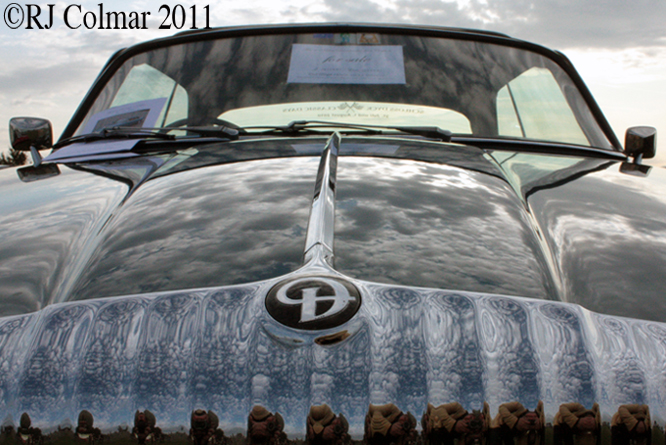
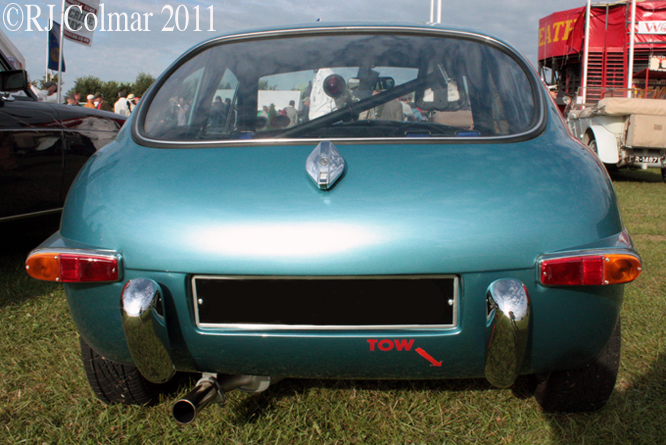
Daimler Sovereign Coupé

Today’s vehicle in featured vehicle in honor of Ryan is a Daimler Sovereign Pillarless Coupé which of the badge engineered Daimlers is my personal favorite.
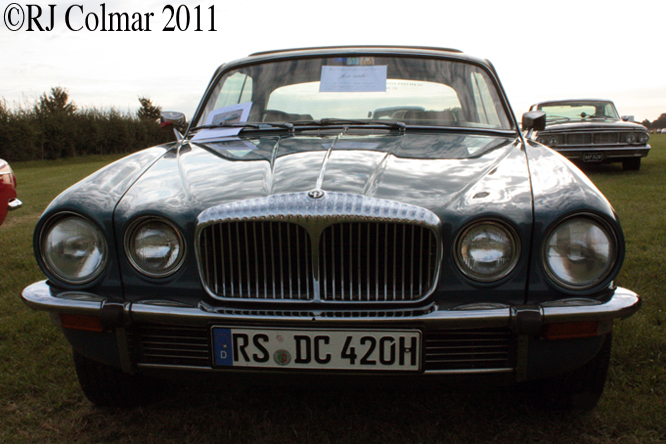
Daimler Sovereign Coupé, Goodwood Revival

This particular Right Hand Drive (RHD) 4.2 liter six cylinder model, described by the owner a a ‘Perfect Daily Driver’ appears to have been driven around 500 miles from Remscheid in Germany all the way to the Goodwood Revival.
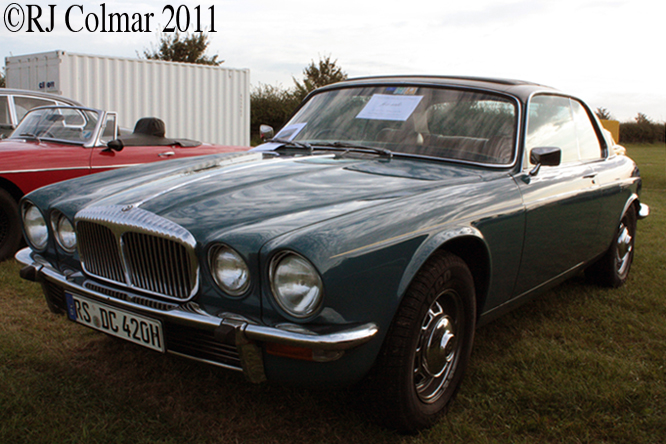
Daimler Sovereign Coupé, Goodwood Revival

The Daimler Sovereign Pillarless Coupé was in production from 1974 to 1978 and apart from its fluted grill and badges was externally identical to the Jaguar XJ Coupé but less than a third of the Jaguar / Daimler Coupé’s were Daimler variations.
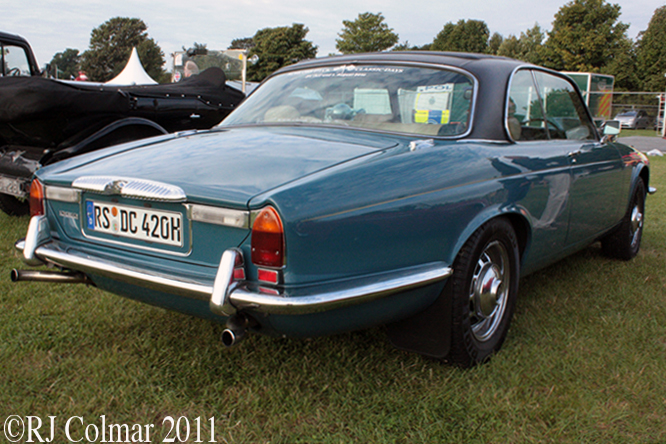
Daimler Sovereign Coupé, Goodwood Revival

Due to issues with the paint going brittle as it oxidized and flexing in the pillar less roof vinyl roofs were standard on both variants of the Coupé to hide the cracked paint where the roof flexed. The vinyl roofs then acted as moisture traps when the paint beneath did crack causing rusting issues. Modern paints do not become so brittle and some restorations of these models have the vinyl roof removed.

Daimler Sovereign Coupé, Goodwood Revival

This particular car has been subjected to a fully documented bare metal restoration which includes being repainted in Jaguar Squadron Blue.
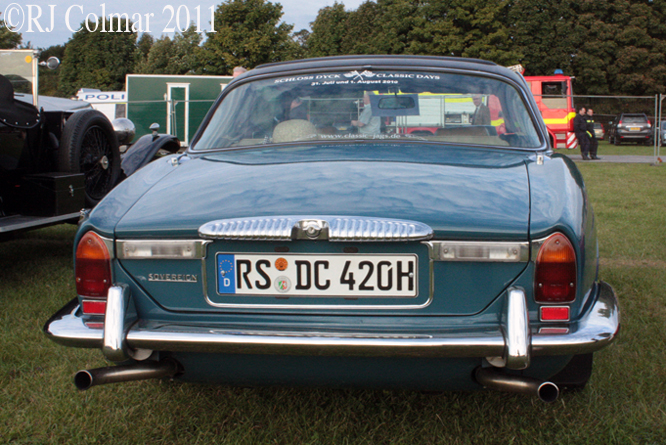
Daimler Sovereign Coupé, Goodwood Revival

What I particularly like about this restoration is that it features the correct vinyl roof and XJ / Sovereign Series II bumpers, all of the XJ / Sovereign Coupés were built with Series II bodies and chassis.

Wishing Racer187 aka Ryan Smith a very Happy Birthday.

Thanks for joining me on this Sovereign Pillarless Coupé edition of ‘Gettin’ a li’l psycho on tyres’, I hope you will join me again tomorrow. Don’t forget to come back now !

Share

Rare Mini Variation – Ogle SX1000

After serving as a decorated and honoured Supermarine Seafire pilot in the Second World War David Ogle DSC MBE attended the Central School of Art to study Industrial Design.

Ogle SX1000, Goodwood Revival

On completion of his studies he worked for Murphy Radio and later Bush Radio where he was credited with the design of the TR82 transistor radio.

Ogle SX1000, Goodwood Revival

In 1954 David founded his own industrial design studio which has been credited with the design of all manor of wheeled transport from Chopper Bicycles (1970), through the Reliant Scimitar, to award wining truck cabs for Leyland Road Train vehicles.

Ogle SX1000, Goodwood Revival

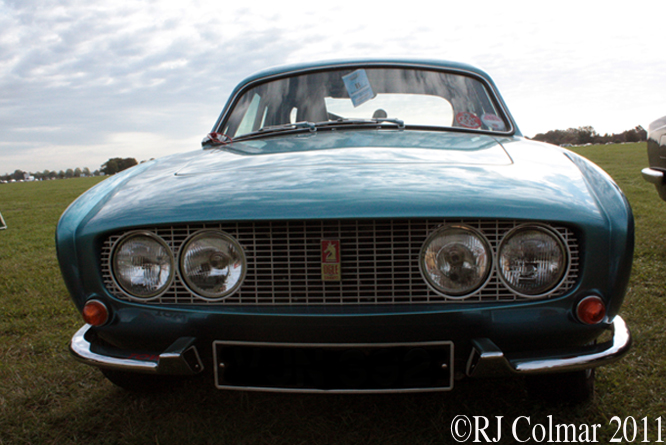
In 1959 Ogle design started building the first of three series of glass fibre bodied cars the 1.5 built on a Riley Chassis with a BMC (British Motor Corporation) motor of which eight were built.

In 1962 Ogle launched the SX1000, as seen here at Goodwood, initially a conversion built around a customer supplied Mini and later built around Ogle acquired Mini’s.

Ogle SX1000, Goodwood Revival

It is thought 66 of these vehicles were built with the last one leaving the factory in 1964. The slippery Coupé was capable of 110 mph when fitted with a top of the range Mini Cooper S engine.

Ogle SX1000, Goodwood Revival

After David Ogle died driving an SX1000 on the way to Brands Hatch and car production at Ogle had been wound up the SX1000 body moulds were sold to a boat builder in the Midlands who exhibited his self named Fletcher GT at the Racing Car Show in 1967.

Today with only 26 of the original SX1000’s thought to have survived Nostalgia Cars in Taunton Somerset produce identical replica SX1275 models as kits for Mini enthusiasts.

Thanks for joining me on todays SX1000 edition of ‘Gettin a li’l psycho on tyres’ I hope you will join me again tomorrow. Don’t forget to come back now !
Share

Perfect Car For A Wedding #6 – Rolls Royce Corniche

I am off to a wedding today, the first one I have attended where my friends children are the ones getting married, so it seems appropriate to feature another Perfect Car for a wedding on today’s blog.

Rolls Royce Corniche, Haynes IMM

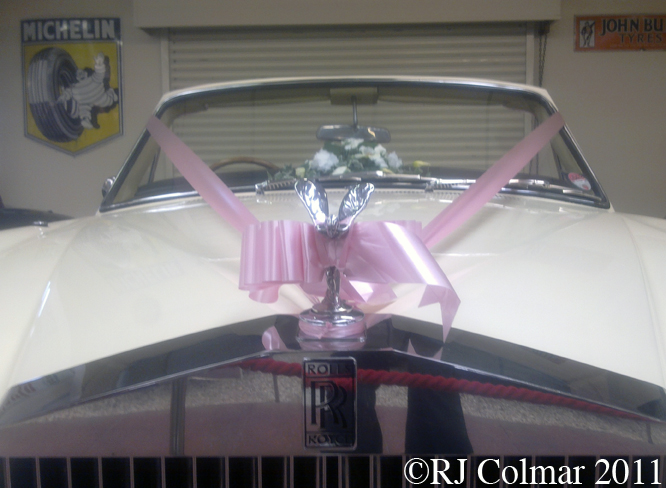
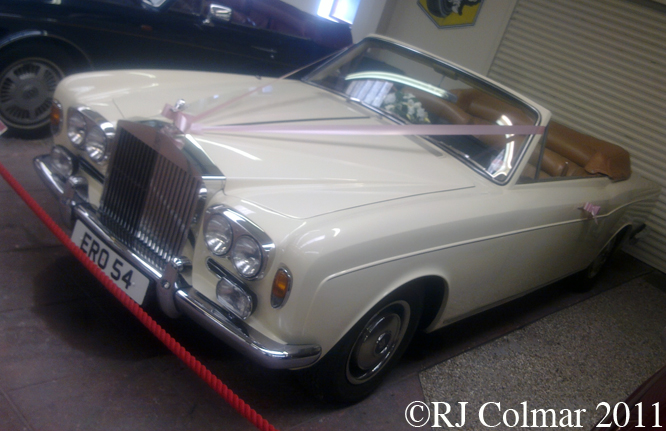
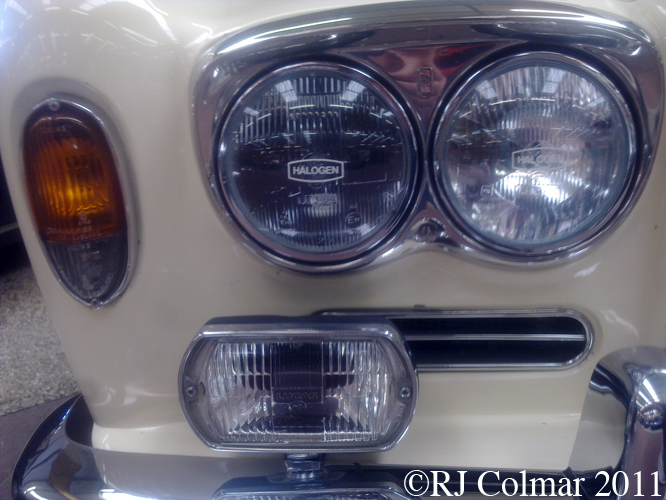
Today’s Rolls Royce is known as the Silver Shadow Mulliner Park Ward Drop Head Coupé which first appeared in 1967 was renamed Corniche in 1971 when this model scene at the Haynes International Motor Museum was built.

Rolls Royce Corniche, Haynes IMM

The Corniche assembled and finished in London by Mulliner Park Ward is based on the Rolls Royce Silver Shadow / Bentley T floor plan with the same ‘adequate’ aluminium 6230 cc / 380 cui Rolls Royce motor.

Rolls Royce Corniche, Haynes IMM

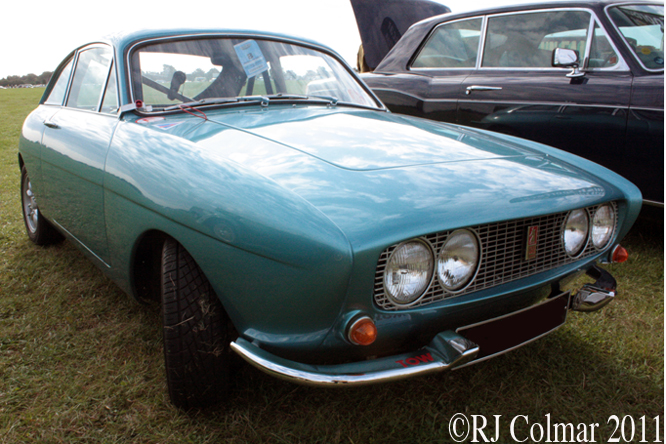
The Corniche name was first used by Rolls Royce in the 1930’s for a Mark V prototype with Parisian coach work by van Vooren, legend has it that after 15,000 miles of Continental testing in Europe was awaiting repatriation to England when it was hit by a bomb at Dieppe docks.

In the UK it would probably take a particularly brave couple to opt for a convertible on their wedding day but then as they used to say in Rome ‘Fortes fortuna adiuvat’. For the brave this Corniche can be hired from the Haynes International Motor Museum.

Wishing Lotti & Ronnie and all those getting married today all the best and many happy years together.

Thanks for joining me on this Corniche edition of ‘Gettin a lil’ psycho on tyres’, I hope you’ll join me again tomorrow. Don’t forget to come back now !
Share

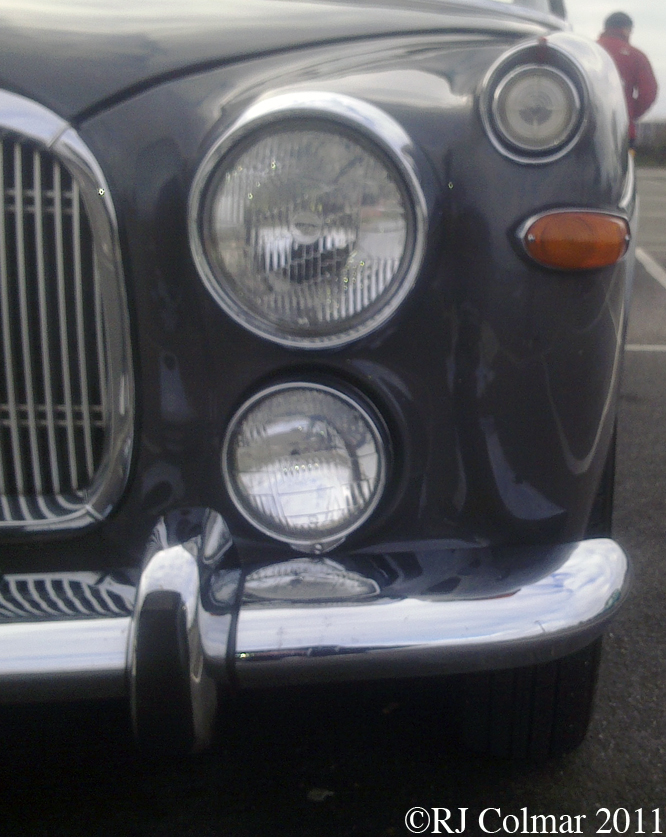
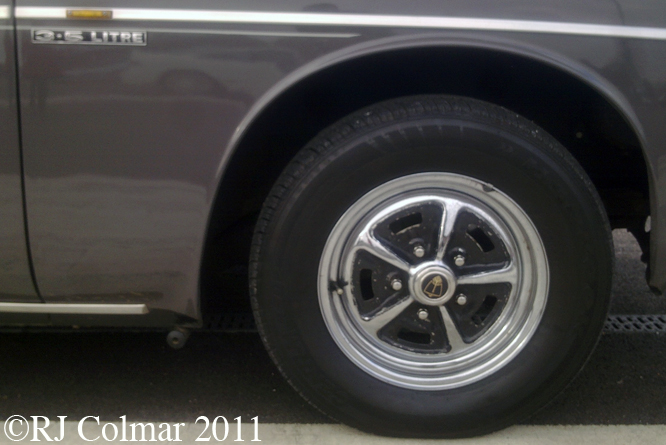
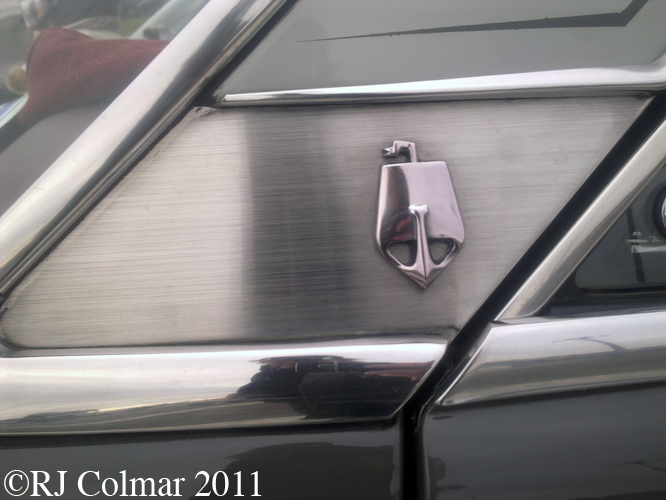
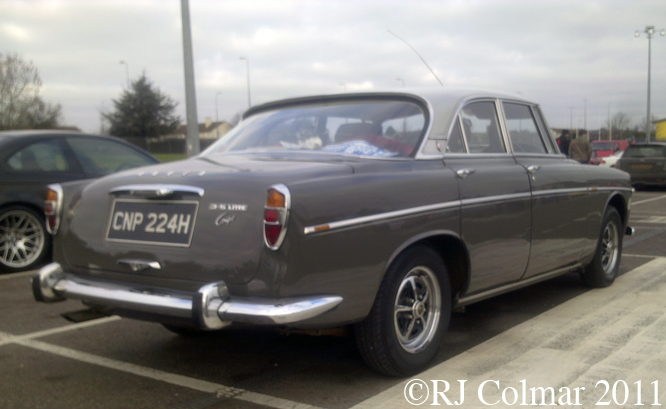
Powered Under Licence – Rover P5B 3.5 litre Coupe

In September 1960 the author of a technical review on the then new all aluminium 185 hp Buick 215 V8 engine could have had little idea of how prophetic for the British automotive industry his following words would be, “We will wager that the most widely copied engine of the next 10 years will be the superb new aluminium V8 by Buick.”

Rover P5B 3.5 Coupé, Mini Factory

Despite it’s glowing press the Buick V8 and various Oldsmobile and Pontiac variants these motors were only in production from 1961 to 1963, after 750,000 units had been produced the Buick, Oldsmobile and Pontiac switched back to cheaper to manufacture iron blocks which were cast with thinner walls than had hitherto been possible.

Rover P5B 3.5 Coupé, Mini Factory

Rover managing director Bill Martin-Hurst was on a sales mission trying to get Mercury Marine in Wisconsin interested in Rover gas turbine engines for marine applications when he stumbled across a Buick V8 being prepared for power boat racing on the Mercury Marine shop floor.

Rover P5B 3.5 Coupé, Mini Factory

Bill realised immediately that such a motor might have a future in several Rover car projects and had the motor on the shop floor shipped to England and made enquires at GM about making their recently discontinued aluminium motor under licence.

Rover P5B 3.5 Coupé, Mini Factory

Somewhat disbelieving GM agreed a deal which eventually included the soon to retire designer of the aluminium Buick 215 Joe Turley who would help prepare the V8 for production in a market that put engines under more stress, no speed limit at the UK at the time, than encountered in its original US application.

Rover P5B 3.5 Coupé, Mini Factory

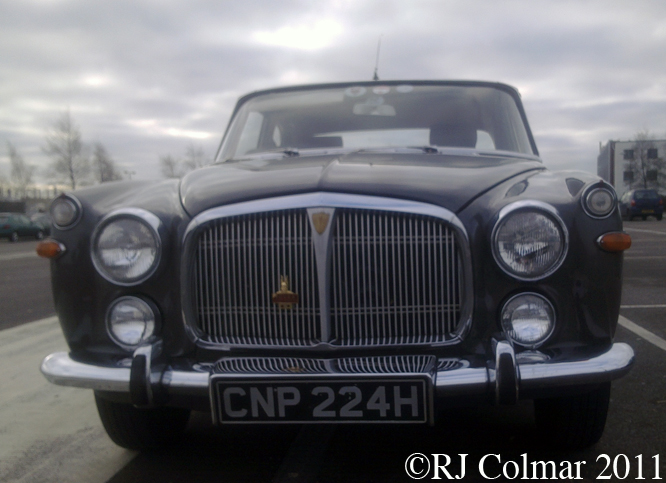
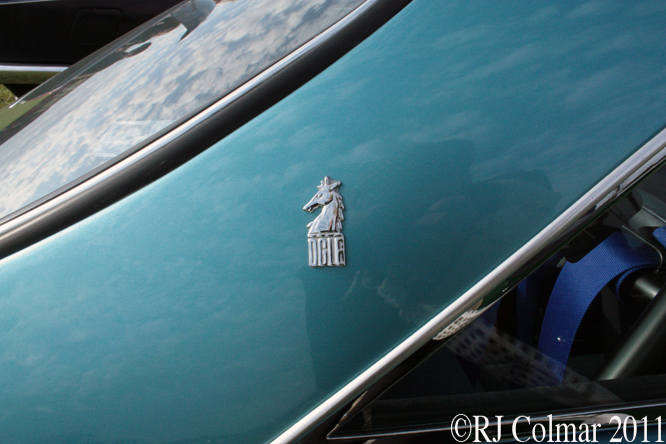
The Buick V8 was first tested in a P6 prototype, but the final iteration of older P5 design seen here, with a B for Buick designation, was the first Rover to be offered to the public with an aluminium Buick 215 V8 derived motor in 1967.

Rover P5B 3.5 Coupé, Mini Factory

Four successive British Prime Ministers and the Queen of England used P5B’s, so impressed was the British government with these vehicles that they bought the last batch of them for future government ministers to use in 1973. Indeed Prime Minister Margret Thatcher was often seen in one as late as 1979, before switching to a Jaguar.

Rover P5B 3.5 Coupé, Mini Factory

A Rover P5B featured alongside a Lamborghini Islero in ‘The Man Who Haunted Himself‘ starring Roger Moore, Olga Geoges-Picot and Hildegard Neil.

Vehicles featured on GALPOT that are powered by variations of the aluminium Rover V8 include :-

CMT

Reliant Scimitar GTE V8

Triumph TR7 Rally Sprint Replica

Triumph TR8 Convertible Replica

Triumph TR8 Twin Turbo

Further examples of Rover V8 powered vehicles can be found in these less specific blogs :-


GMC Suburban

Darian Wildcat T89 GTR

MGB Kayne Special

Rover SD1

Thanks for joining me on this Powered Under License edition of ‘Gettin’ a lil’ psycho on tyres’, I hope you will join me again for a Scandinavian Edition tomorrow. Don’t forget to come back now !
Share

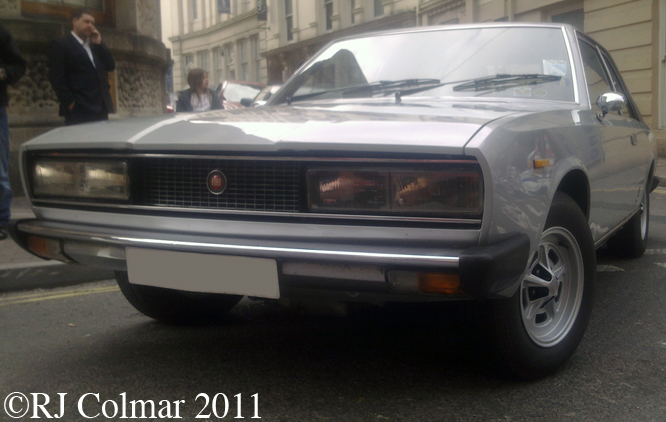
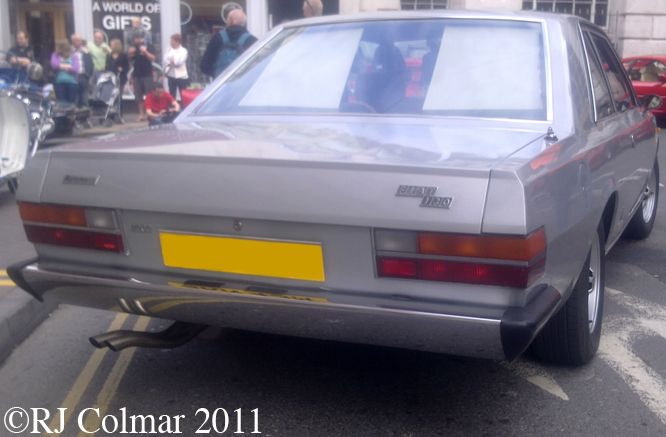
Pininfarina Renaissance – FIAT 130 Coupé

Returning to the Bristol Italian Auto Moto Festival back in April today’s car is the stylish sharp edged FIAT 130.

FIAT 130, BIAMF

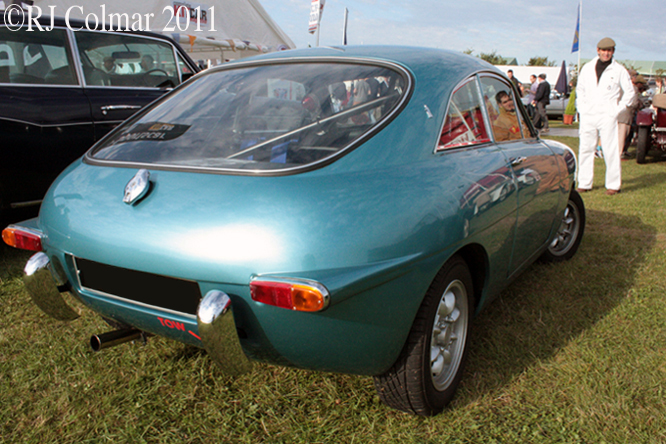
Launched to much acclaim at the 1971 Geneva Motor show the FIAT 130 Coupé was designed by Paolo Martin at Pininfarina and won a design prize which marked a renaissance for a company that had fallen from favour since it’s heyday designing the Fiat 1800 Peugeot 404 and Austin A55 and A60 concepts for large volume producers in the late 50’s and early 60’s.

This smart new vehicle was powered by a 165 hp 3235 cc / 197 cui twin over head cam V6 designed by Aurelio Lamperdi designer of the original 4 cylinder Testa Rossa engine.

FIAT 130, BIAMF

Just 4,294 examples of the FIAT 130 Coupé were produced from 1971 to 1977, this marked the end of FIAT’s presence in the Executive end of the automotive market, future vehicles for this market segment were handled by the Lancia marque which was also owned by the FIAT conglomerate.

Thanks for popping in to today’s Paolo Martin styled edition of ‘Gettin’ a lil’ psycho on tyres’, I hope you will join me again tomorrow. Don’t forget to come back now !
Share

Leading From The Front – Ferrari 550 Maranello

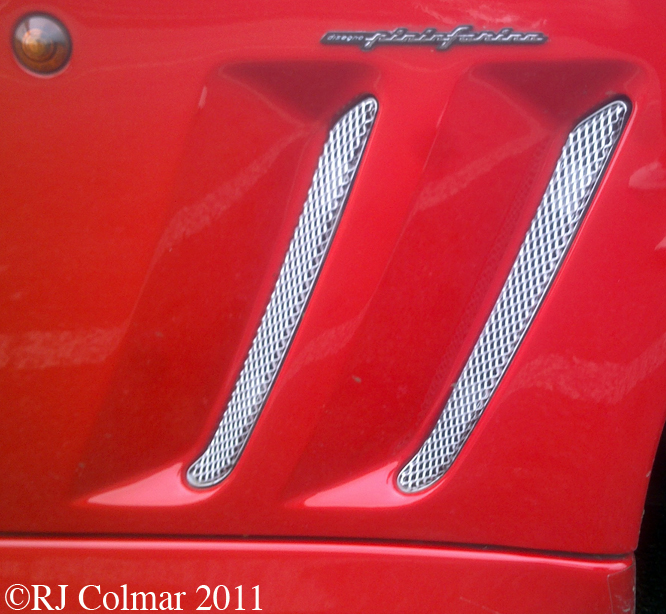
01 Image2393sc

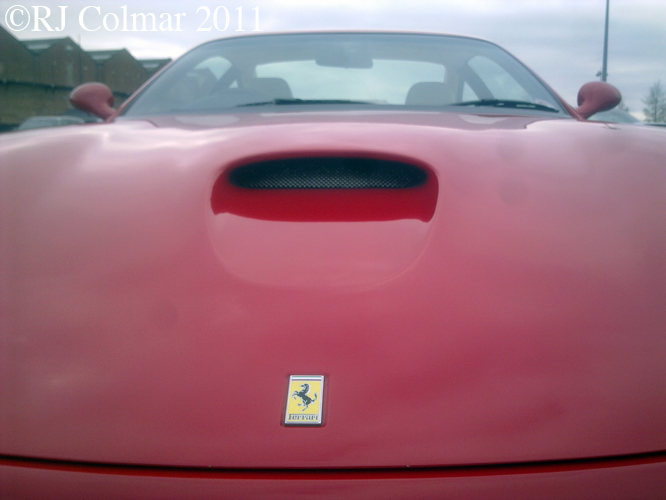
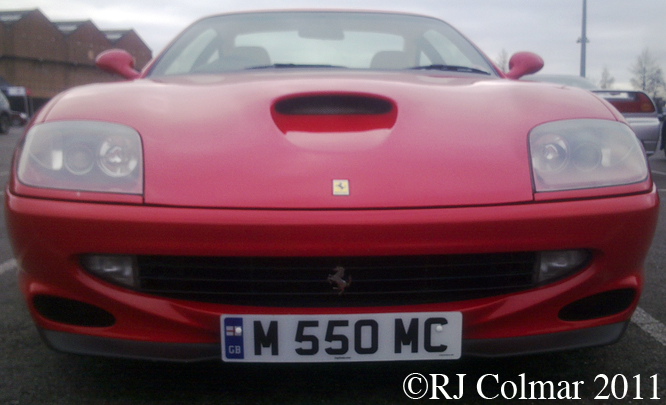
In 1996 the Ferrari 550 Maranello saw the return of a model with a motor in the front to the top of the Ferrari range for the first time, since the much loved Ferrari Daytona 365 GTB4, in 20 years.

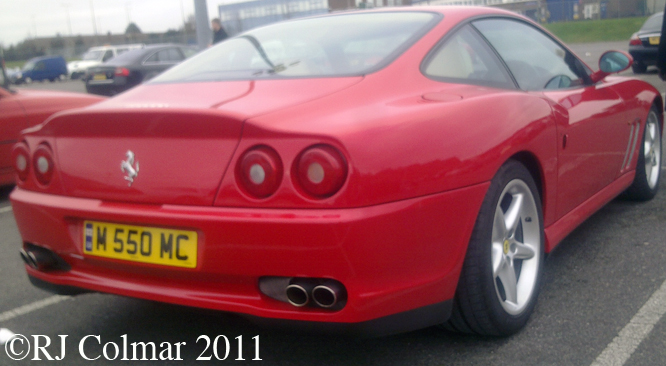
02 Image2392sc

This top end vehicle was powered by a 485 hp twin cam 48 valve V12.

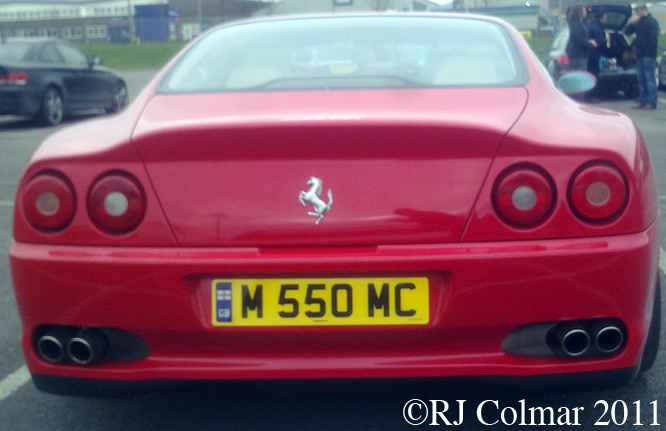
03 Image2391sc

Featuring a tubular steel chassis the 550 Maranello was clothed with an aluminium body.

04 Image2389sc

Capable of reaching 60 mph from rest in just 4.2 seconds the F550 could cover 402 meters in 12.5 seconds and had a top speed of 199 mph.

05 Image2388sc

The 550 Maranello was also used in sports car racing by several private entrants including Prodrive who built 10 vehicles for themselves and BMS Scuderia Italia. Victories included a Class win at Le Mans for Prodrive in 2003 and the FIA GT Championship for BMS Scuderia Italia in 2004.

Hope you have enjoyed today’s front engine Ferrari Friday edition of ‘Gettin a lil’ psycho on tyres’ and that you’ll join me again tomorrow. Don’t forget to come back now🙂

Share

Forgotten Marque #1 – Warwick 350GT

It’s not everyday I stumble upon a vehicle manufacturer I have never heard of but at last weekends Race Retro I came across two such manufacturers the first the subject of today’s blog is Warwick.

The origins of the Warwick lie in Peerless Cars Ltd founded by John Gordon and James Byrnes, Peerless built approximately 325 fiberglass vehicles with tubular space frames designed by Bernie Rodger around Triumph TR3 running gear. A Peerless GT Coupe driven by Peter Jopp and Percy Crabb finished 16th in the 1958 Le Mans 24 hour race.

Peerless Cars Ltd failed in 1960 and Bernie Rodger upgraded his design with a stiffer chassis, one piece forward hingeing bonnet and marketed it under the Warwick name though the vehicles were actually built in Colnbrook, Berkshire. Around 40 Warwicks are thought to have been manufactured from 1960 to 1962.

Meantime Peerless founder John Gordon teamed up with Jim Keeble to carry on manufacturing vehicles based on the original Peerless chassis with Chevrolet motors and completely new bodywork designed by Guigiaro and built by Bertone marketed under the Gordon – Keeble brand.

In 1961 Warwick manufactured two prototypes with all aluminium 3.5 litre / 215 cui Buick (BOP) 215 engines, the four tail pipes on this vehicle are evidence that this is one of those two prototypes.

The Warwick appeared at Race Retro on the Central Scanning stand, a company that specialises in scanning old parts so that they can be reverse engineered, thus making it theoretically possible to remanufacture almost any part for any vehicle that has ever been built so long as an original copy exists to be scanned.

I hope you have enjoyed today’s Forgotten Marque edition of ‘Getting a lil’ psycho on tyres’ and that you will join me again tomorrow for another forgotten marque. Don’t forget to come back now !
05/09/11 Looking into the name of this model I have come to realise it is properly called a Warwick 350GT not 305GT as originally published. Apologies for any confusion.

Share