Tag Archives: Ferrari

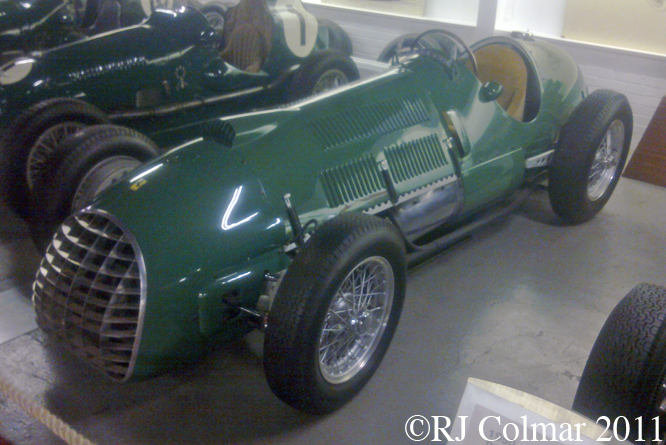
Two Time World Champ – Ferrari 500 #005

In 1951 there was a close fought contest for the World Drivers Championship between the Alfa Romeo drivers in old pre war 1.5 litre / 91.5 cui supercharged cars and Ferrari drivers in new 4.5 litre / 274.5 cui normally aspirated cars. Juan Manuel Fangio won the title but a run of three straight victories by Ferrari drivers González and Ascari was enough to convince Alfa Romeo that they could not hope to be so competitive with their old cars and so with no money to fund the building and development of new machines they quit Grand Prix racing as two time champions.
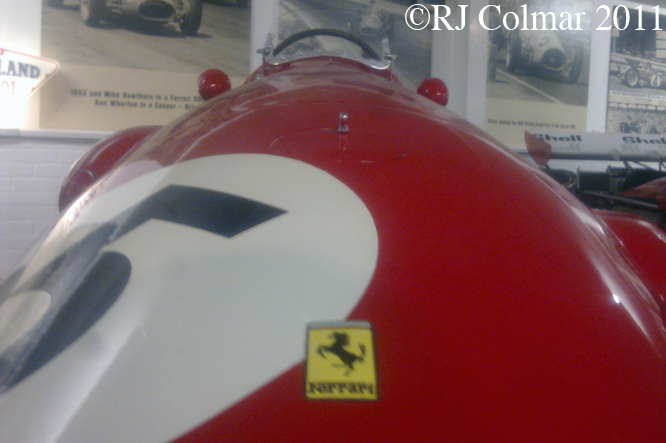
Ferrari 500, Donington

Alfa Romeo’s withdrawal left the FIA, organisers of World Championship Grand Prix Racing, with a shortage of entrants for the 1952 season only the up and coming Ferrari and brand new BRM team, who had built a beautiful sounding, but hideously complicated and unreliable 1.5 litre 91.5 cui supercharged V16 vehicle being prepared to enter events run to the existent formula one regulations.
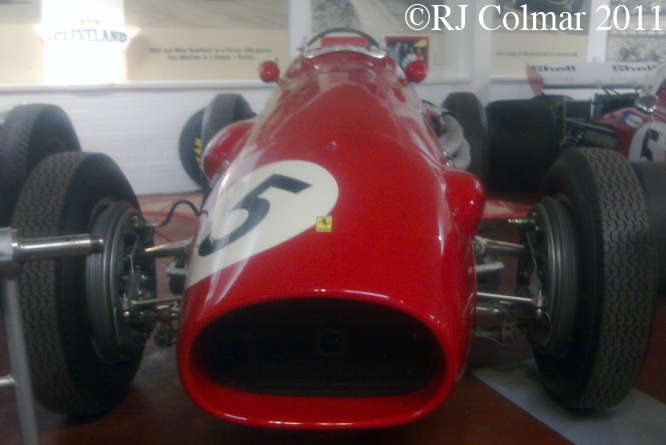
Ferrari 500, Donington

The FIA decided that they would run the 1952 and 1953 World Championship for cars built to Formula 2 regulations with normally aspirated 2 litre / 122 cui engines while new formula one regulations would be introduced in 1954. Ferrari had all the bases covered for 1952 as he had coincidentally just instructed Aurelio Lamperdi to design a 4 cylinder 2 litre / 122 cui engine that was powerful and extremely efficient.
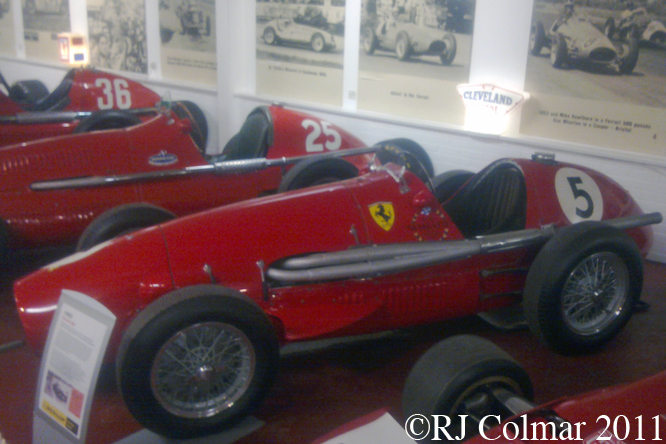
Ferrari 500, Donington

For 1952 Ferrari built six type ‘500’ Formula 2 Cars cars to compete in the World Championship and they won all of seven races into which they were entered missing the Indy 500, run to different regulations in which Alberto Ascari competed with a Ferrari 375.

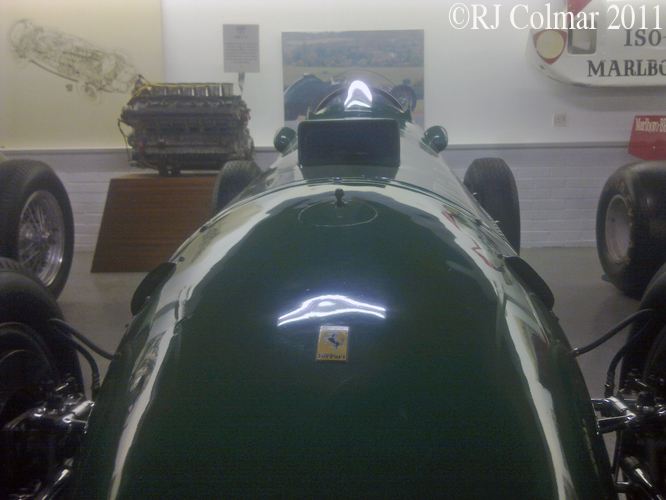
On his return from the 1952 Indy 500 Alberto Ascari won the six remaining World Championship races with the car, seen here at Donington Park, on his way to capturing the 1952 World Championship. Ascari retained the title using the same chassis in 1953 with another 5 victories.

The Ferrari ‘500’ design is one of the most successful of all time only the McLaren MP4/4 which won 15 races out of 16 in 1988 as against 7 out of 8 eligible events in 1952 for the ‘500’ is statistically more successful, though it could be argued that since the Indy 500 was not run to the same regulations as the rest of the 1952 World Championship the Ferrari ‘500’ has a 100 % winning record for the 1952 season.

This particular #005 chassis won an unequalled 7 straight World Championship Grand Prix races from 1952 to 1953, and 9 straight world championship races entered again the 1953 Indy 500 counted as a World Championship Grand Prix in 1953, and is credited with a total of 11 World Championship Grand Prix wins in total. As the highly regarded Doug Nye says of chassis #005 “Possibly the most successful chassis in Grand Prix history.”

The 4 cylinder engine went on to have a hugely successful career in sports car racing when installed in the 500 Mondial and 500 Testa Rossa’s.

Thanks for joining me on this Ferrari Friday edition of ‘Gettin’ a lil’ psycho on tyres, I hope you will join me again tomorrow. Don’t forget to come back now !


Share

1977 ECotY – Rover Vitesse

There were not many four door executive vehicles that would look comfortable parked along side a Ferrari or Maserati in the 1970’s but the Rover SD1 powered by the familiar alloy Buick derived V8 and designed by David Bache is certainly one that could keep such company in any car park and not look out of place.

Rover SD1 Vitesse, Atwell Wilson MM

Thanks in part to a painfully slow process of rationalisation that was occurring at British Leyland during the early 1970’s involving many duplicitous departments and management within the nationalised organisation it took 54 months for the SD1 to move from drawing board to production.

Rover SD1 Vitesse, Atwell Wilson MM

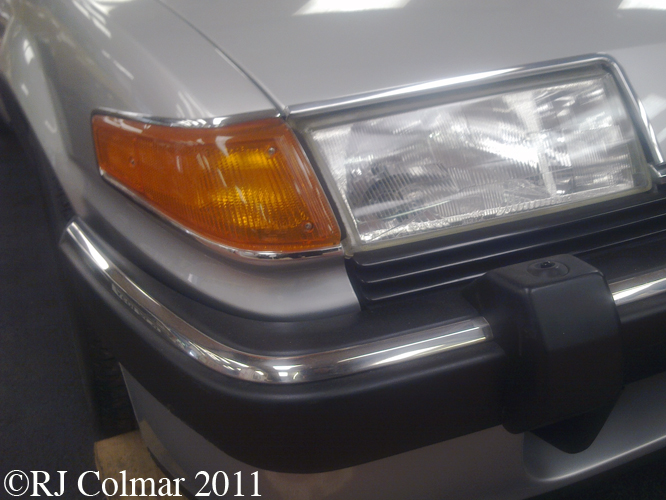
David Bache was not in the least shy about his design influences incorporated into the SD1 including these indicator lights which are almost identical to those found on a Ferrari Daytona.

Rover SD1 Vitesse, Atwell Wilson MM

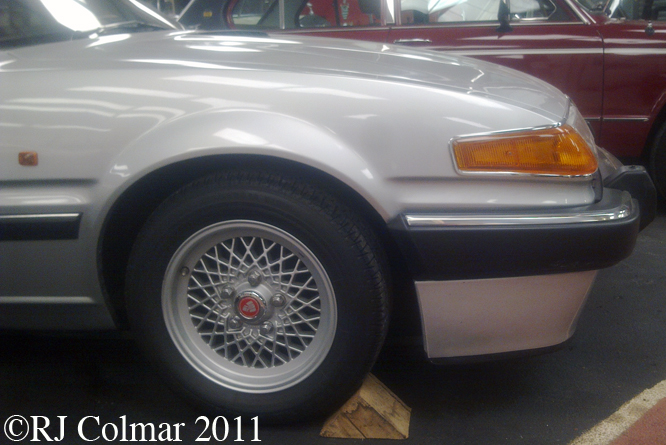
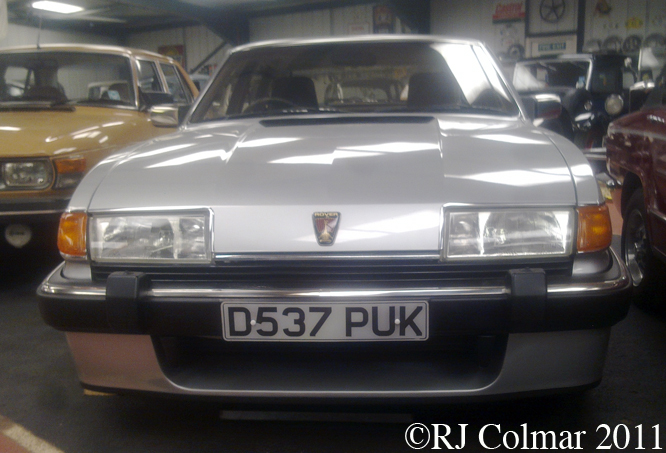
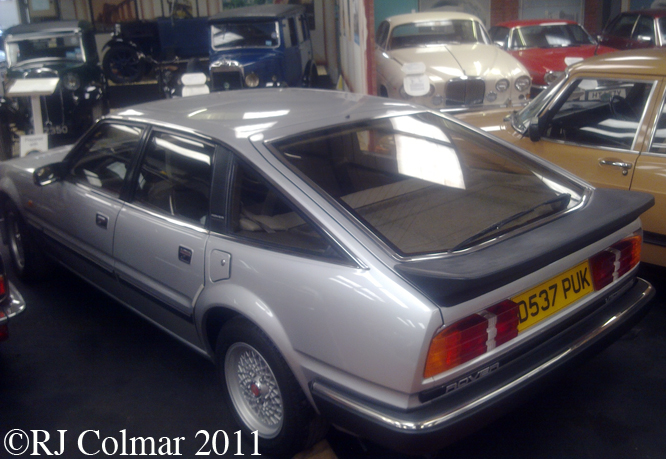
Built in a new purpose built £31 million factory in Solihull the SD1 was marketed as the Rover 3500 and launched in July 1976 to an ecstatic reception regarding the styling and performance, though the quality of some of the materials used and build were short of the market leaders particularly the emerging BMW brand. The deep front spoiler and BBS pattern wheels on this model signifies a later model in this case built in 1986.

Rover SD1 Vitesse, Atwell Wilson MM

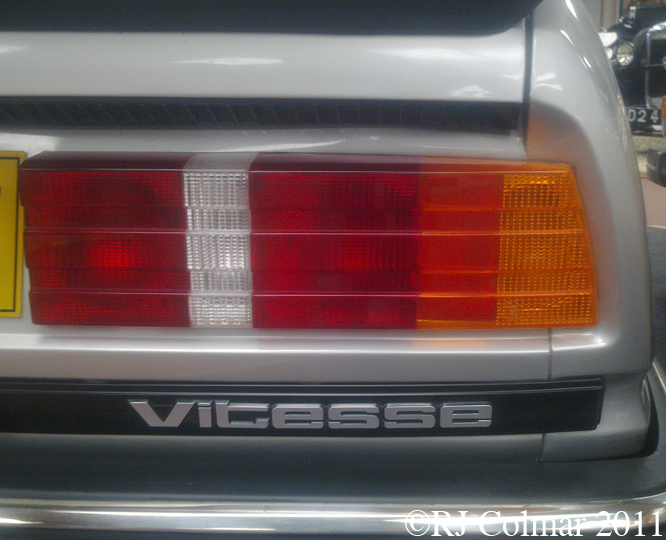
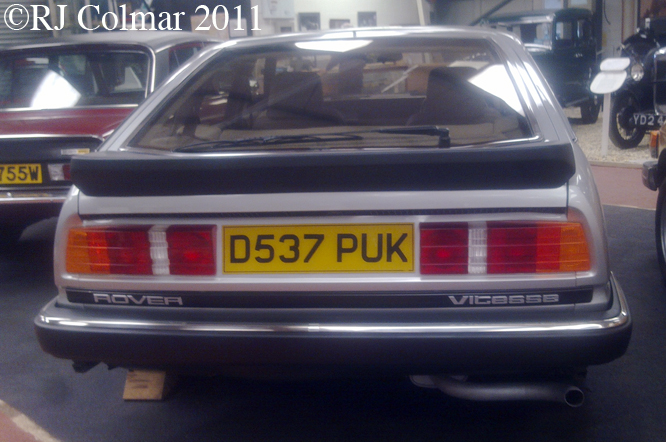
The Vitesse badge hitherto associated with Triumph models belies the fact that the SD1 had technical and marketing input from the still separate and competing Triumph design and management offices. In late 1980 the Rover Vitesse, seen here at the Atwell Wilson Motor Museum, was introduced as the performance version of the Rover 3500 and the Vanden Plas the Luxury version that included leather seats.

Rover SD1 Vitesse, Atwell Wilson MM

While the styling of the SD1 was ahead of it’s time the rear suspension was actually a technological step back from the de Dion suspension used on the previous Rover P6 to a live rear axle, though this made the cars easier and cheaper to build the move did not compromise the handling, much praised in the contemporary press, in anyway.

Rover SD1 Vitesse, Atwell Wilson MM

Since British Leyland had so many competing brands in its range the 1977 European Car of the Year award winner was not the money spinner that it should have been because it was priced so as not to compete directly with the Jaguar XJ6 against which it was seen in an extremely favourable light.

Thanks for joining me on the 1977 European Car of the Year edition of ‘Gettin’ a lil psycho on tyres’, I hope you’ll join me again tomorrow when I’ll be looking at a fully loaded turbocharged competitor of the Rover SD1. Don’t forget to come back now !

Share

16 Blocks of Classics ! – Carmel by the sea Concours d’Elegnce 2011

Here in the UK the Autumn is already closing in with days of rain. To cheer myself up with a hint of California sunshine I thought to share with you these fabulous photo’s from last month’s Carmel by the sea Concours d’Elegance kindly sent to me by Geoffrey Horton.

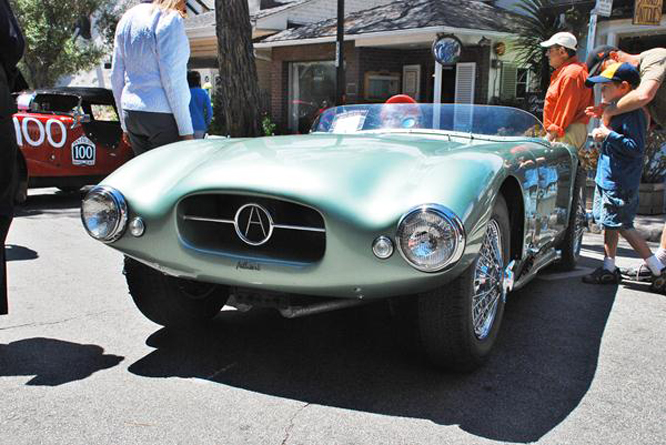
Allard J2R, Carmel BTS

I understand for the day of the event sixteen blocks in central Carmel are closed down and given over to that part of the motoring fraternity that is fanatical about presenting their cars built between 1945 and 1989 in better than new condition. First up a Cadillac powered 1955 Allard J2R.

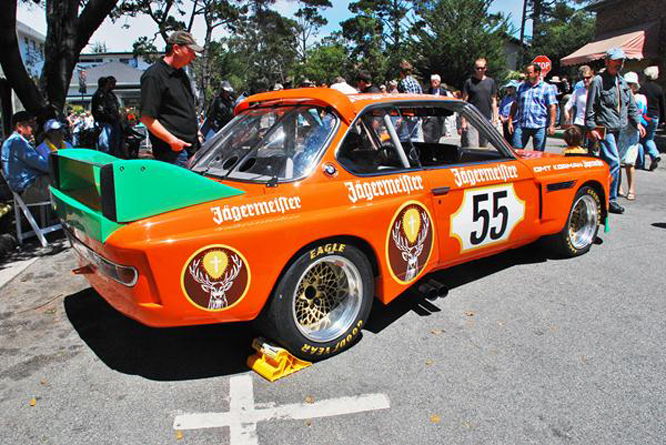
BMW CSL, Carmel BTS

When I first started reading ‘Motor Sport‘ in 1973 the car to have in touring car racing was the 3.0 litre / 183 cui BMW CSL which in full works Group 2 specification with ‘batmobile’ rear wing fairly wiped the hitherto dominant Ford Capri off the top place on the winners rostrum of the European Touring Car Championship. A #55 Jaegermeister sponsored 3.0 CSL looking very much like the car in Geoffrey’s photo, but without the 1974 IMSA GTO spec vented flared wheel arches, driven by Derek Bell and Harald Ertl, won the RAC Tourist Trophy on the 23rd Sept 1973.

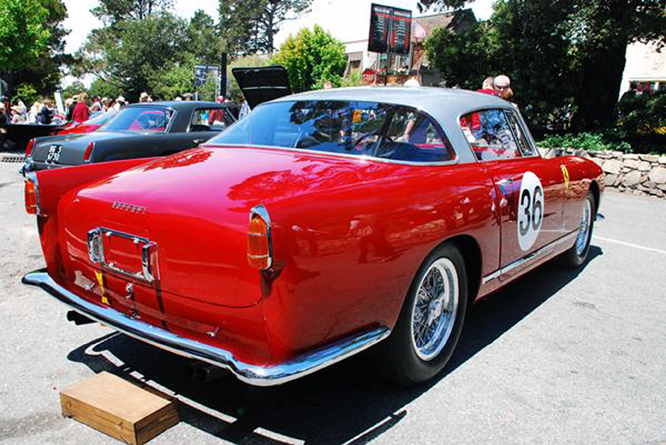
Ferrari 250 GT Boano, Carmel BTS

I have already posted a blog about the unique 1956 Ferrari 250 GT Boano Convertible, that was declared the winner of this years Carmel Concours, so with best wishes for the Birthday boy most of you know from his posts on this blog as Jr Cracker here is a Ferrari 250 GT Boano chassis 0553 GT which has gone through several colour changes and engine changes but after a twenty plus year gap now has it’s original motor safely re-installed. Last sold in January 2008 for US$ 975.000.

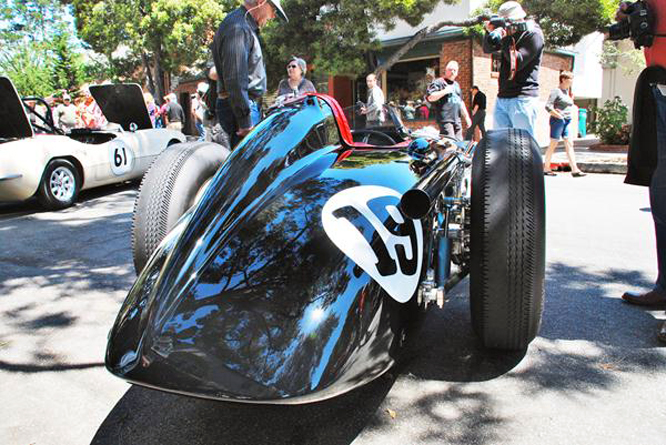
Bardahl Special, Carmel BTS

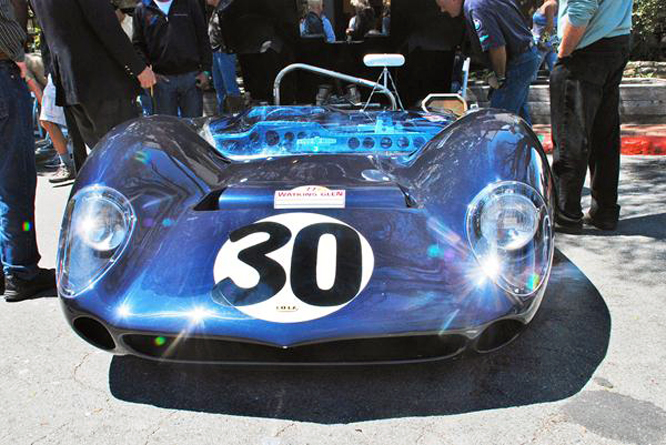
The 1957 Indy 500 was won by Sam Hanks in the Epperly Belond Exhaust Special, Jack Turner driving the #19 Bardahl Special a Kurtis 500G started 19th and came in 11th last man to complete the full 200 laps.

Lola T70 Ford, Carmel BTS

I believe this wonderful Lola T70 Mk 2 is the only car to have ever to have won a Can Am race powered by a Ford V8, a 302 cui motor fitted with Westlake heads, which Dan Gurney used to take honours in the second ever Can Am race at Bridgehampton in 1966. John Surtees won the 1966 Can Am series in a similar, but Chevrolet powered, Lola T70 Mk 2.

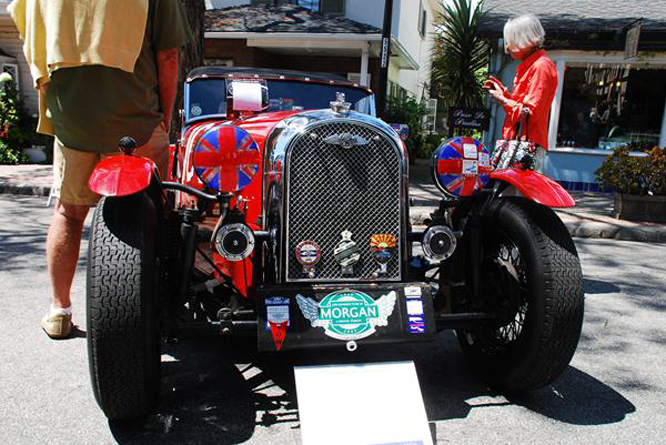
Morgan 4-4, Carmel BTS

The vintage and history of this Morgan 4-4 is still a mystery to me but nice to see someone flying the motherlands flag in a swinging sixties style.

My thanks to Geoffrey for his wonderful photos, I hope you will join me in wishing the man behind GALPOT’s Ferrari Friday’s, Jr Cracker, a very Happy Birthday !

Thanks for joining me on this Jr Cracker birthday edition of ‘Gettin’ a lil’ psycho on tyres, I hope you will join me again tomorrow when I’ll be taking a close look at a rare Aston Martin by Touring. Don’t forget to come back now !

Share

Ciao Enzo – Ferrari F40

Today’s Ferrari Friday blog is dedicated to the person who first suggested Ferrari Friday blogs to me many months ago, Jr Cracker, otherwise known to me as Mike who’s Birthday it is tomorrow.

Ferrari F40, Bristol IAMF

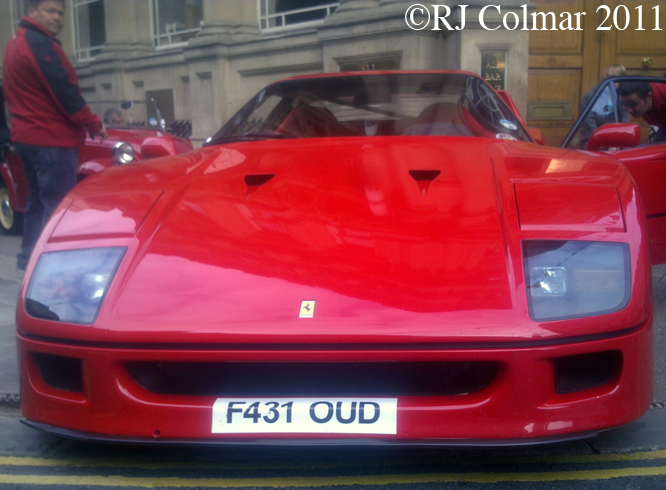
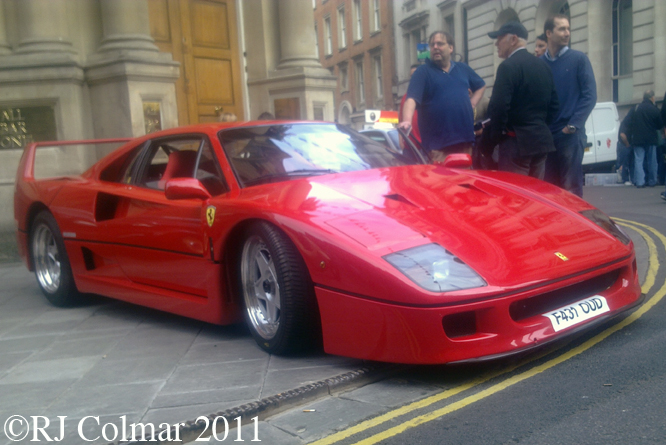
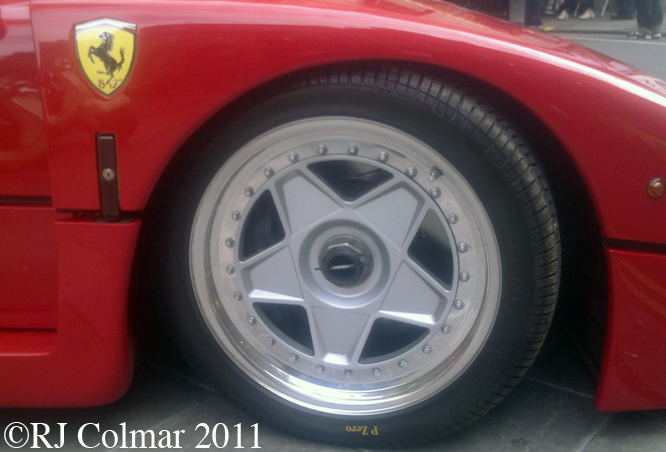
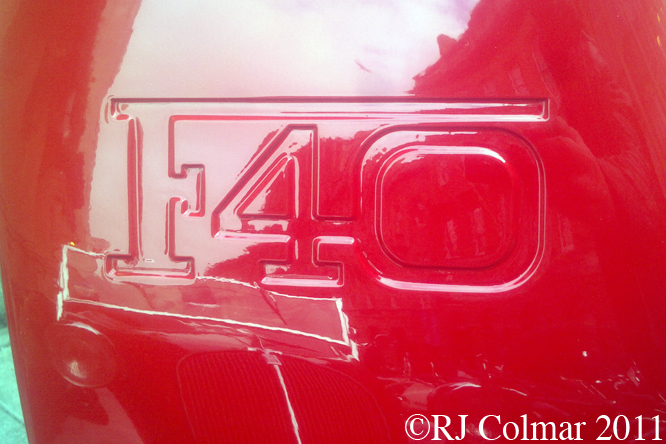
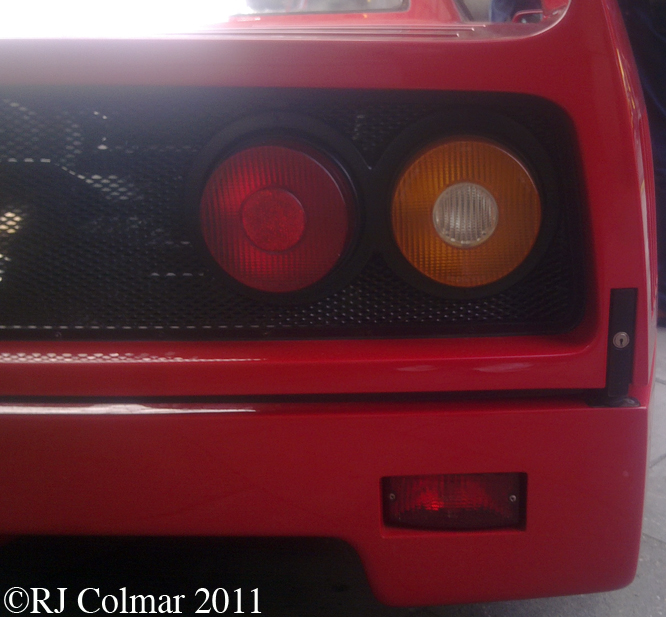
The Ferrari F40 what was technical tour de force intended to bring together 40 years of learning and achievement in one road vehicle to celebrate the first 40 remarkable years in the story of Ferrari S.p.A.

Ferrari F40, Bristol IAMF

With a tested 200 mph capability the F40 held the title of worlds fastest production car, when it was launched in 1987, to underline it’s technical superiority.

Ferrari F40, Bristol IAMF

The F40 was not only the companies most powerful and fastest car, but at US$ 400,000 in 1987, it was also the most expensive car Ferrari had ever offered for sale.

Ferrari F40, Bristol IAMF

1,315 examples of this type were manufactured between 1987 and 1992 the last of them selling for a rumoured US$1.6 million.

Ferrari F40, Bristol IAMF

Many of the technical specifications were advanced from the Ferrari (288) GTO including the twin turbo V8 engine which in this application was increased to 3 litres / 183 cui producing 470 hp.

Ferrari F40, Bristol IAMF

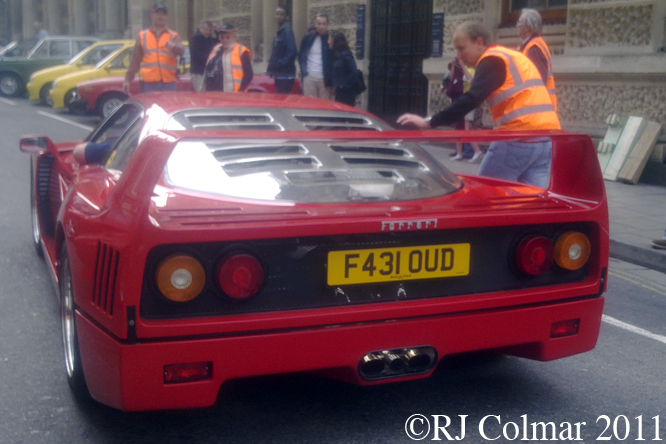
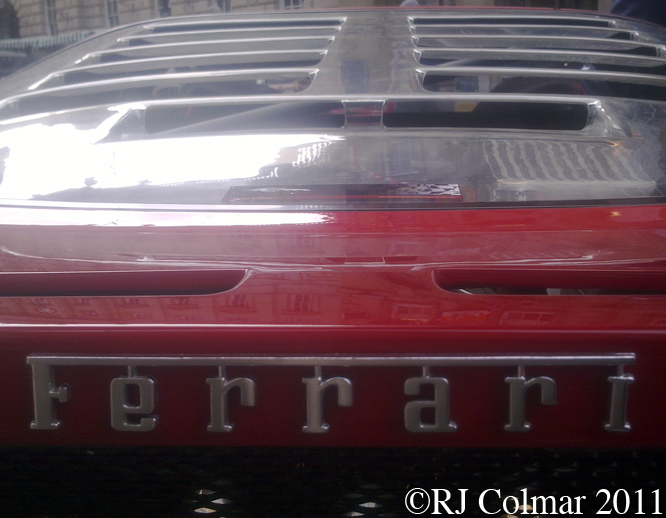
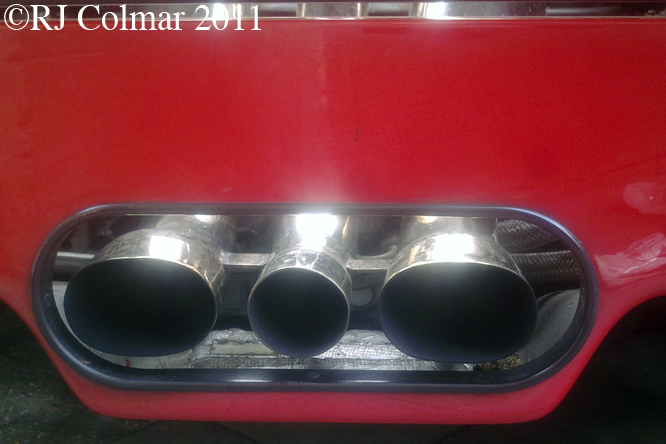
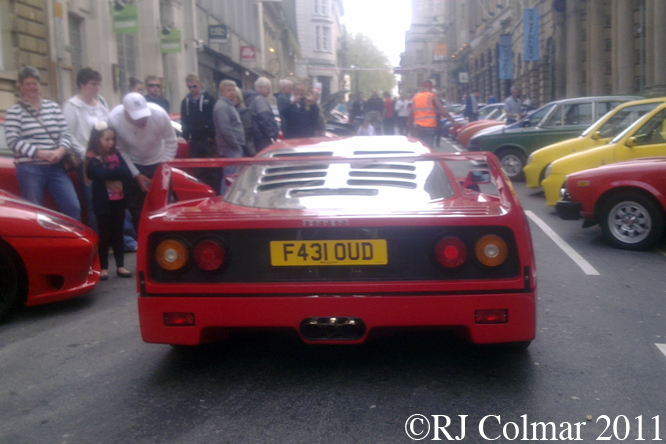
Keeping such a powerful motor cool in such a small vehicle required ventilation through the rear screen.

Ferrari F40, Bristol IAMF

Until 1990 F40’s like this particular 1989 example, seen at the Italian Auto Moto Festival, were bereft of power sapping catalytic converters.

Ferrari F40, Bristol IAMF

During Bonneville Speedweek 2006 Amir Rosenbaum recorded a top speed of 226 mph in his lightly modified F40, standard versions could reach 120 mph in just 11 seconds faster than both the Lamborghini Countach and Porsche 959 which were it’s main competitors.

Ferrari F40, Bristol IAMF

Enzo Ferrari knew when setting out the specifications of the F40 that this would be his final engineering statement and it was indeed the last vehicle bearing his own name that he was to commission before his death aged 90 in August 1988.

Thanks for joining me on the F40 Edition of ‘Gettin’ a lil’ psycho on tyres’, I hope you will join me again tomorrow. Don’t forget to come back now !

Share

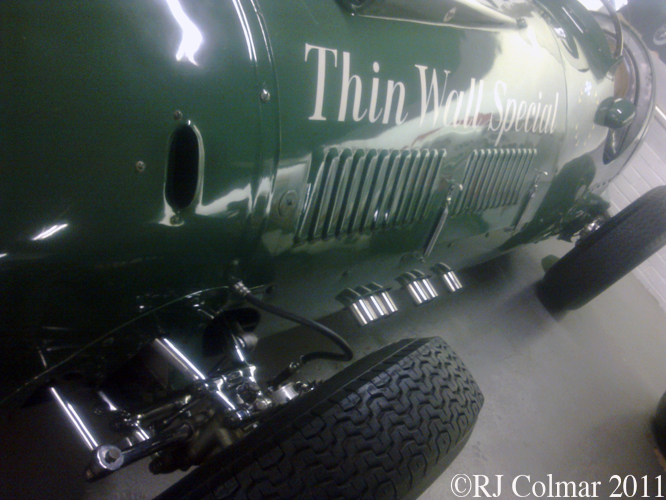
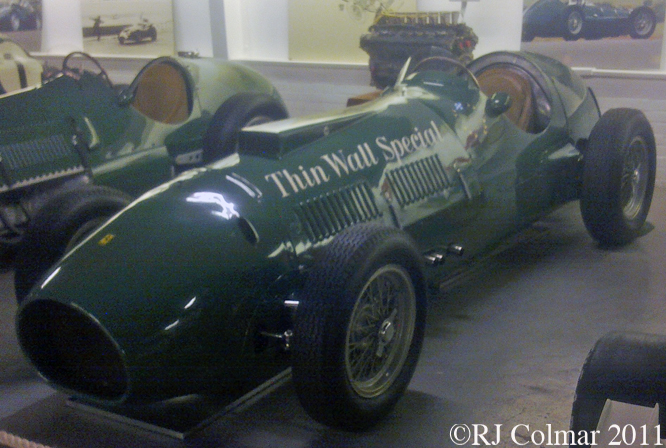
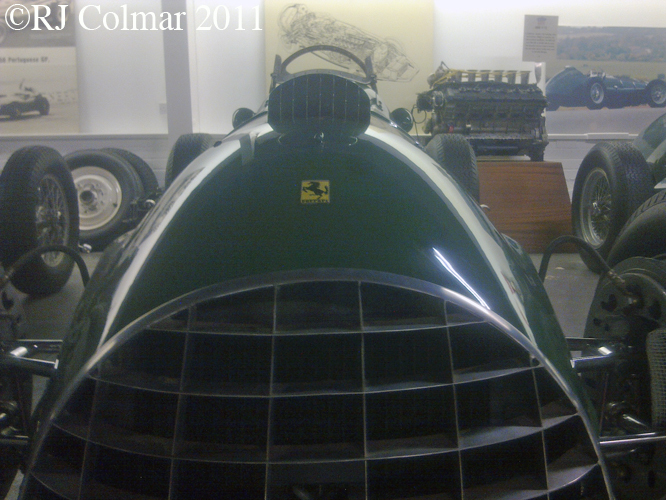
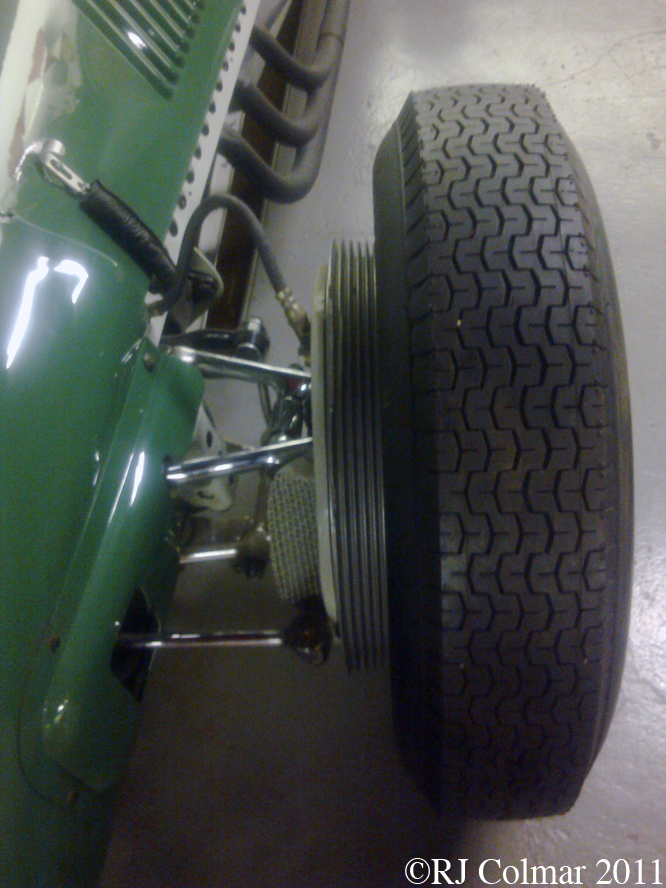
Thinwall Special #4 – Ferrari 375 #010

Having failed to become a regular Grand Prix contender with his first attempt at building the Ferrari 125 F1, Ferrari’s second attempt at building a Grand Prix car was based around a 4.5 litre / 274 cui normally aspirated V12 motor designed by Aurelio Lampredi.

Ferrari 375, Donington Collection

The 375 proved a more competitive proposition against the 1.5 litre / 91 cui supercharged pre war designs of Alfa Romeo that were the class of post WW2 Grand Prix fields. Jose Froilan Gonzalez was at the wheel of a 375 when he won the 1951 British Grand Prix, claiming the marques first victory in a World Championship Grand Prix Race.

Ferrari 375, Donington Collection

The fourth and final 1952 Thinwall Special seen here at the Donington Collection, shares the same, long Indianapolis chassis design as the Grant Piston Ring Special. This car should not be confused with the third Thinwall Special which comprised the Ferrari 125 chassis I looked at last week fitted with a 375 type motor that scored a famous victory in the rain shortened International Trophy at Silverstone in 1951.

Ferrari 375, Donington Collection

Piero Taruffi won the first and second of 8 victories recorded for this car at Dundrod and Silverstone in 1952. Mike Hawthorn and Nino Farina were also engaged to drive the car in 1952 and 1953. Peter Collins appears to have been the last driver to race this car, owned by Tony Vandervell, in 1954.

Many thanks to Don Capps for clarifying the distinctions between the four Thinwall Specials.

Thanks for joining me on this Ferrari Friday edition of ‘Gettin a lil’ psycho on tyres’ I hope you will join me again tomorrow for some banger racing. Don’t forget to come back now !

Share

Ferrari’s First F1 Design – Ferrari 125 F2 Spec #0114

In 1948 Ferrari built his first dedicated 125 F1 Grand Prix cars known to conform with the set of rules known as formula one and entered three of them into the 1948 Italian Grand Prix, held at Valentino Park on the 5th of September. Frenchman Raymond Sommer brought his 125 F1 home in third place. The Ferrari 125 WAS NOT however the first Ferrari ever to be entered in a race run to formula one regulations.

Ferrari 125, Donington Museum

The 125 F1 shared it’s 1.5 litre / 91.5 cui super charged V12 engine design, by Giocchino Colombo, with earlier successful Ferrari sports cars including the 166 series and the 125S series.

 Ferrari 125, Donington Museum

This particular chassis thought to have been built in 1949 for the factory racing team, appears to have been successfully raced with a normally aspirated 2 litre / 122 cui Colombo V12 to conform to the second tier Formula Two regulations in 1951 by Englishman Peter Whitehead in Europe and Australasia.

Ferrari 125, Donington Museum

During the late 1950’s this chassis had a Chevy V8 installed which was replaced by a remanufactured 2 litre V12 when Tom Wheatcroft had it restored in the 1970’s for his Donington Collection where these photographs were taken.

The 125 F1 was not a great success against the older Alfa Romeo’s, which led Ferrari to build his next formula one cars with larger unsupercharged engines with which one of his cars would win Ferrari’s first championship formula one race in 1951.

Thanks for joining me on this Ferrari Friday edition of ‘Gettin’ a lil’ psycho on tyres, I hope you will join me again tomorrow. Don’t forget to come back now !
Share

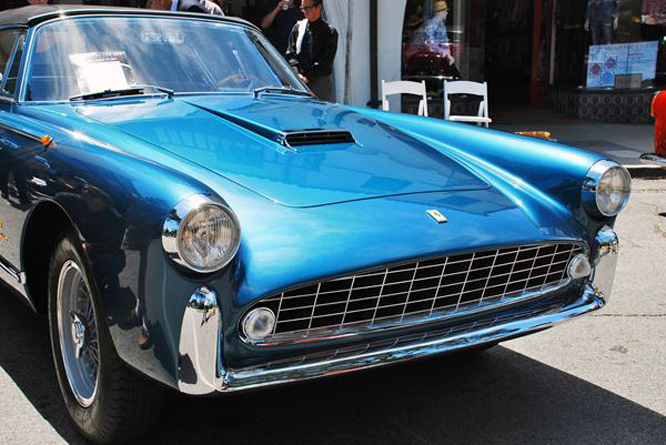
My Word Is My Bond – Ferrari 250 GT Boano Convertible

Today’s uniquely bodied Ferrari images come straight from the Carmel By The Sea Concours on the Avenue which was held on Tuesday courtesy of GALPOTS regular contributor Geoffrey Horton.

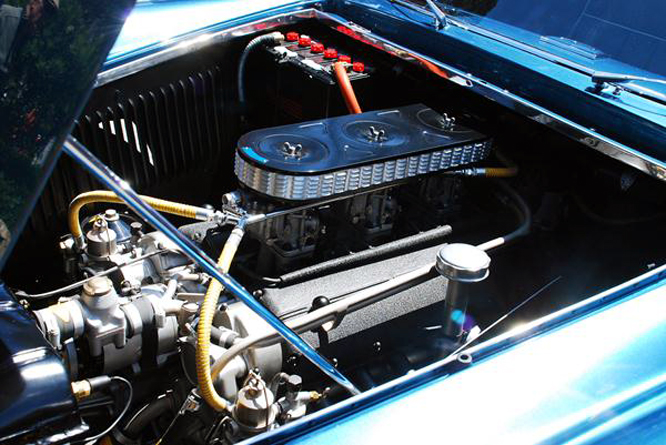
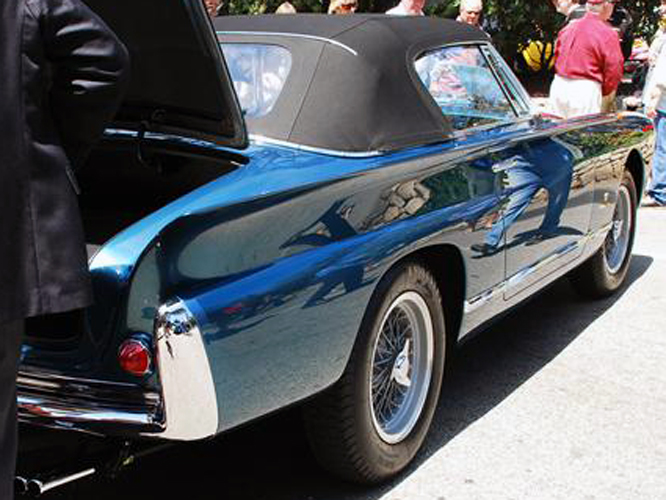
Ferrari 250 GT Boano Convertible

In 1955 a New Yorker Robert Lee set off on a Safari stopping over in Rome for a week on the outward journey. While in Italy Mr Lee went to Modena and visited Enzo Ferrari who suggested that if Mr Lee should ever want to buy a Ferrari he should buy one direct from the factory in Italy.

Mr Lee responded that he did not think a Ferrari would be up to running on the streets of New York, to which Enzo replied “If you buy a Ferrari, I guarantee it will run in New York City”.

Ferrari 250 GT Boano Convertible, Carmel By The Sea

In 1956 Mr Lee saw this 250 GT Convertible on the Ferrari stand at the New York Auto Show, when Mr Lee enquired about the possibility of purchasing it he was informed by Luigi Chinetti, Ferrari’s New York representative, that the car was not for sale and would be returned to Modena after the show.

Mr Lee then sent Enzo a Telegram reminding him of their meeting and offering $ 9,500 dollars, all he had, for the Convertible.

Ferrari 250 GT Boano Convertible, Carmel By The Sea

Soon after on the instructions of Mr Ferrari, Mr Chinetti asked Mr Lee to bring him a cashiers cheque for $9,500 and the worlds only 250 GT Boano Convertible, which is alleged to have cost $20,000 to build, would be his.

55 years and two restorations later this unique car still belongs to Mr Lee, possibly making it the worlds oldest Ferrari in continuous original ownership.

Jaguar XK150,  Carmel By The Sea

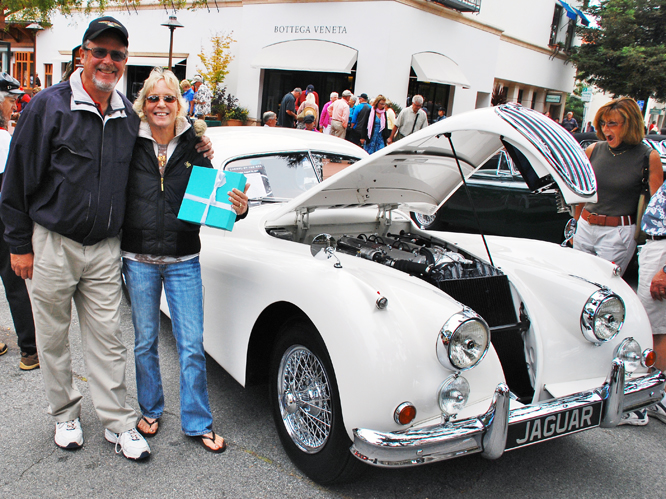
My thanks again to Geoffrey Horton, seen above with his sister Vanessa and XK140, for today’s photographs, I hope you will join me in congratulating Geoffrey on winning second place at the Carmel By The Sea Councours on The Avenue.

Hope you have enjoyed this Boano Convertible edition of ‘Gettin’ a lil’ psycho on tyres’ and that you will join me again tomorrow when I’ll be looking at a large Bristol. Don’t forget to come back now !
Share