Tag Archives: Ferrari

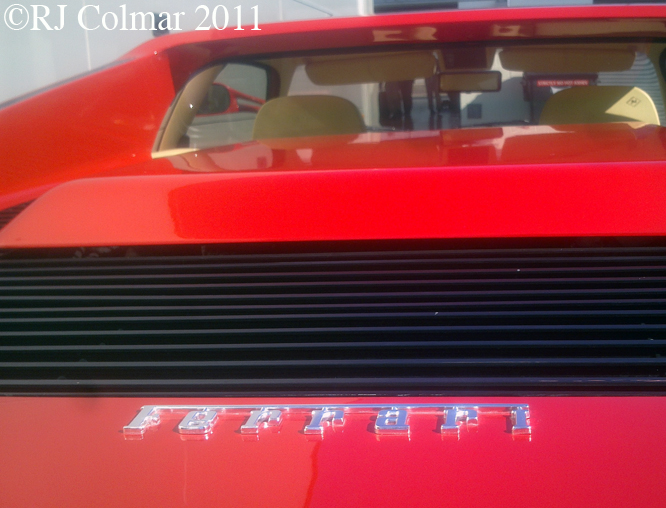
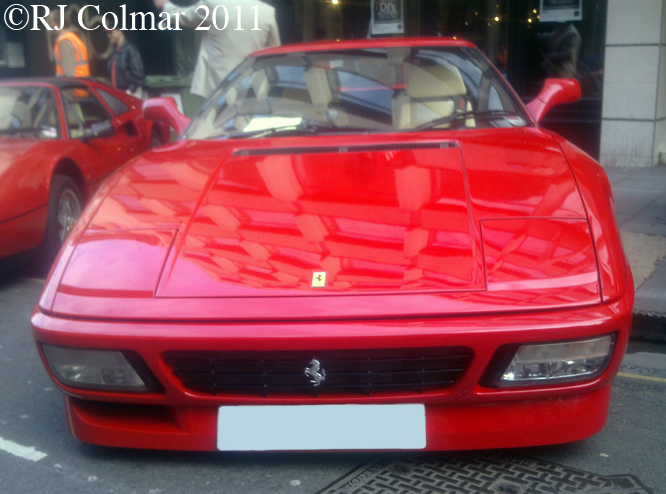
Baby Testarossa – Ferrari 348 TS

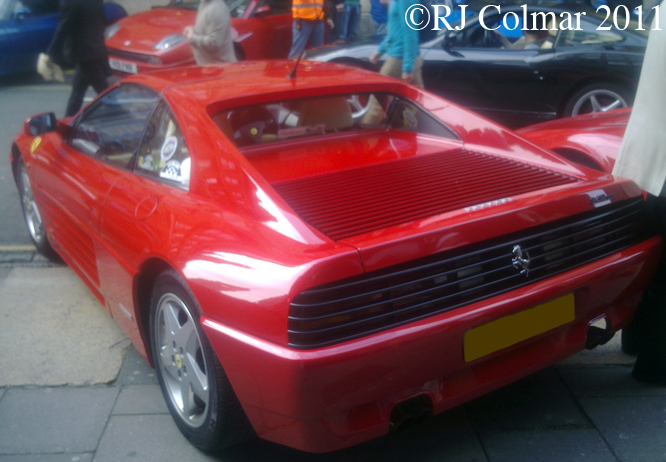
On Monday I looked at the GMC Syclone that was faster than a Ferrari, up to the 1/4 mile, today I am looking at the Spyder version of the Ferrari 348 that Car & Driver pitted the Syclone against in a road test.

Ferrari 348ts, BIAMF

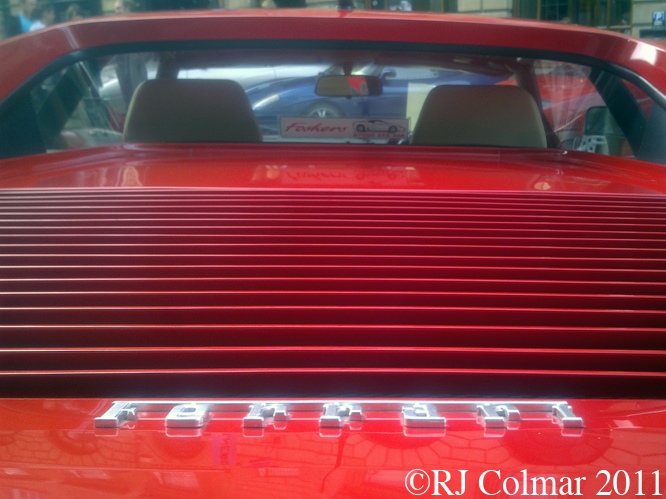
The Ferrari 348 replaced the Ferrari 328 in 1989,

Ferrari 348ts, BIAMF

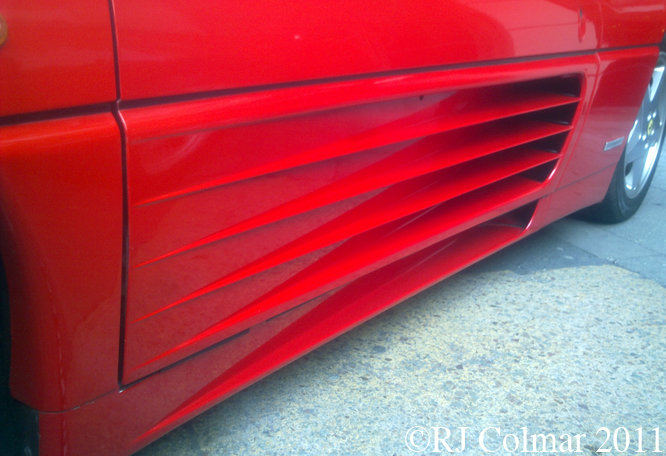
taking many of it’s striking styling queues from the Testarossa launched in 1984. The side mounted radiators meant passengers did not get toasted by the radiator pipes that ran alongside the cabin of the earlier 328 which featured a radiator mounted in the nose.

Ferrari 348ts, BIAMF

The 300 hp V8 motor was mounted longitudinally with a transverse gearbox ahead of the rear wheels, the opposite configuration of the earlier 328 which featured a transverse V8 engine and longitudinal gearbox.

Ferrari 348ts, BIAMF

While the Syclone proved faster than the 348 up to the 1/4 mile it soon ran out of puff when it reached 126 mph meaning this is the view Syclone drivers would get of the Ferrari as it powered up to 166 mph in a straight race.

Ferrari 348ts, BIAMF

8844 of these vehicles were produced from 1989 to 1995.

Thank for joining on this Ferrari Friday edition of ‘Gettin’ a lil’ psycho on tyres’, I hope you will join me again tomorrow. Don’t forget to come back now !

Share

Ferrari Turned Ugly – Ferrari 312 P #0876 ?

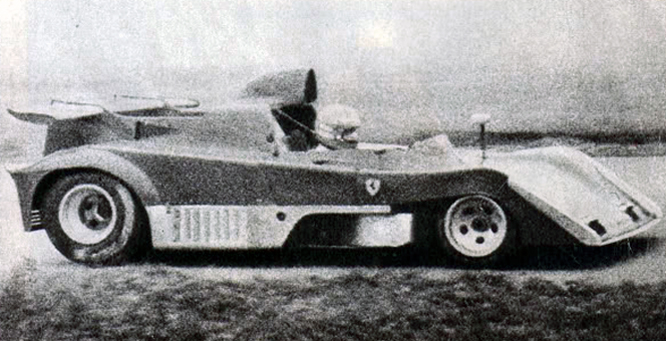
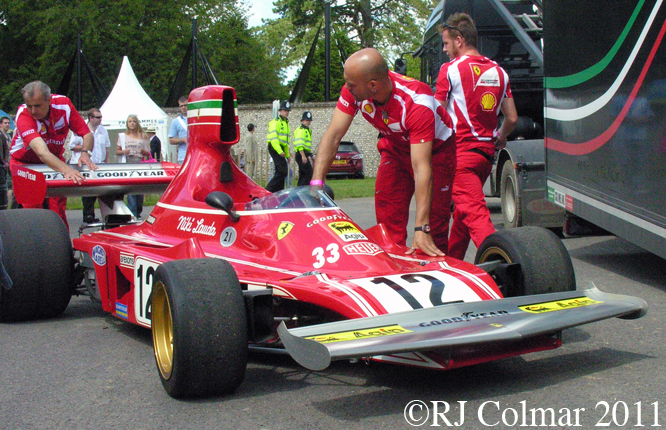
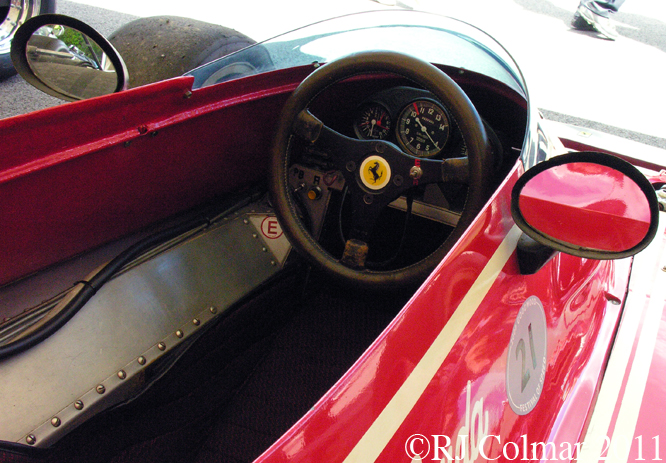
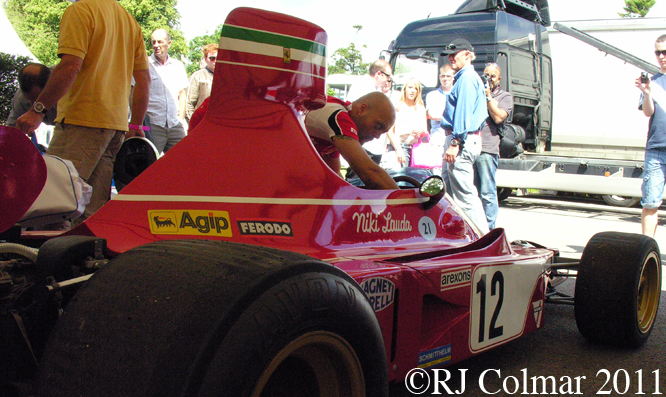
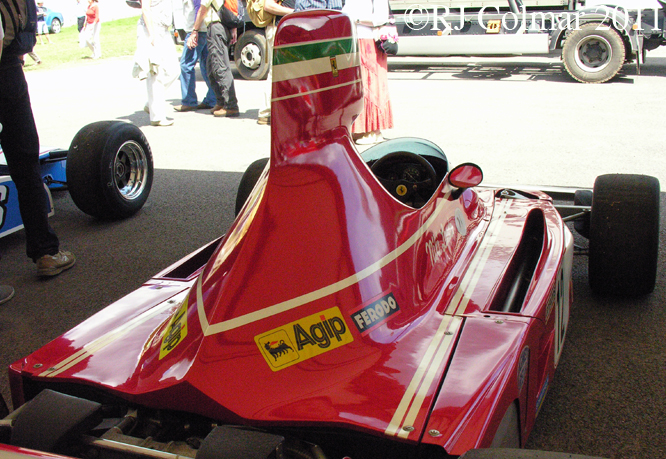
Some months ago I said that after Niki Lauda tested the proposed Ferrari 312 P sports prototype for 1974 he advised Enzo Ferrari that if he wanted to win the World Formula One Championship that he ought to drop the Sports Prototype Programme.

Ferrari P312 #0876 ?

(Ferrari 312 P 1974 Spec, Copyright holder unknown image will be correctly credited or removed upon request.)

The photo above shows Niki Lauda testing the 1974 312 P that is thought to be the work of Mauro ‘Fury’ Forghieri who simultaneously was working on turning the Formula One Ferrari 312 B3 into a competitive proposition.

It has emerged that it was more likely that Niki and Luca de Montemezolo between them successfully convinced Mr Ferrari that continuing the sports prototype programme was not a good idea.

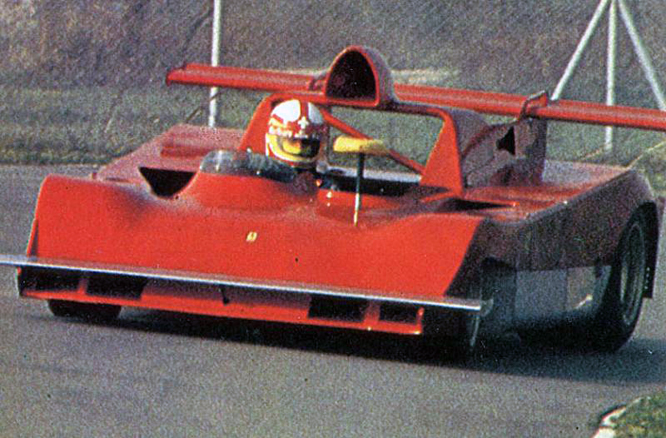
Ferrari P312 #0876 ?

(Ferrari 312 P 1974 Spec, Copyright holder unknown image will be correctly credited or removed upon request.)

As can be seen above even after the alleged advice and Lauda’s test drive, the car, seen here with Niki’s team mate Clay Regazzoni at the wheel, was developed further with the wide front wing being added before the car was dropped and plans to enter the World Sportscar Championship were abandoned.

It would appear 1974 spec 312 P was based on a short wheel base 1971 312 P chassis, probably #0876, this car, with it’s even more distinctive driver side cooler arrangement, than we saw in last weeks 1973 312 P blog, was never raced and has not ever been seen in public.

It is thought likely the car got destroyed on the orders of Enzo Ferrari early in 1974 before the Italian Tax Authorities were due to pay Mr Ferrari a visit.

My thanks to everyone on the 1974 Ferrari 312PB ‘evo’ thread at The Nostalgia Forum who contributed to this blog.

Hope you have enjoyed today’s Ugly Sister edition of ‘Gettin’ a lil’ psycho on tyres’, and that you will join me again, tomorrow. Don’t forget to come back now !

Share

Two Seat Grand Prix Car – Ferrari 312 P #0890

Last week on Ferrari Friday we looked at the catastrophe that befell the Ferrari teams Grand Prix effort as a result of Enzo’s illness sabbatical in 1972.

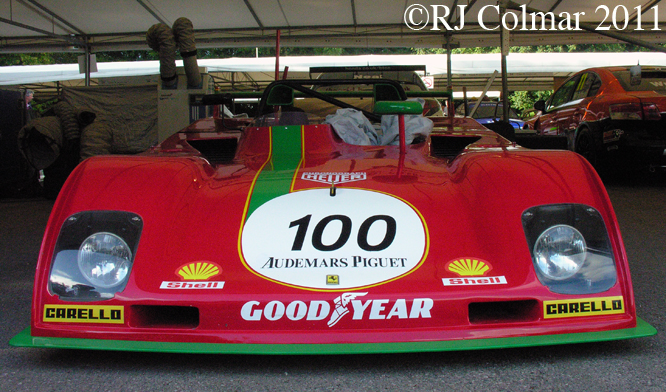
Ferrari 312 P, Goodwood FoS

The story of the Ferrari teams fortunes in sports car racing during this period were not quite so catastrophic but having red washed the World Sportscar Championship of 1972 winning all races except the Le Mans 24 hours, which the team did not enter allegedly because they did not believe their engine would prove sufficiently reliable, 1973 proved to be a disappointment.

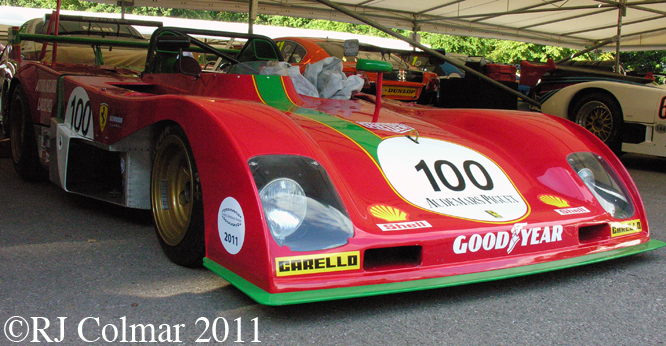
Ferrari 312 P, Goodwood FoS

Matra who had only entered, and won, the Le Mans 24 hours in 1972 made a successful bid for the World Sports Car Championship in 1973. While this was by no means as comprehensive a blue wash as Ferrari had achieved the year before.

The absence of ‘Fury’ Forghieri who had been exiled to the Fiorano test track by FIAT management during Enzo Ferrari’s sabatical was tangible in terms of Ferrari’s flagging sports car results.

Ferrari 312 P, Goodwood FoS

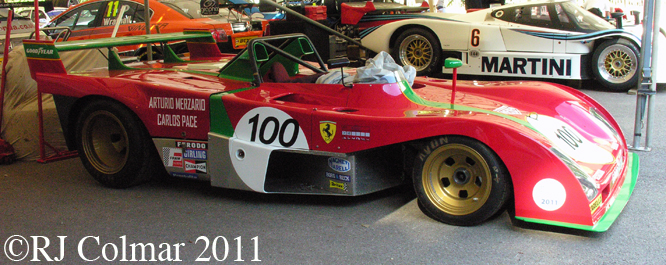
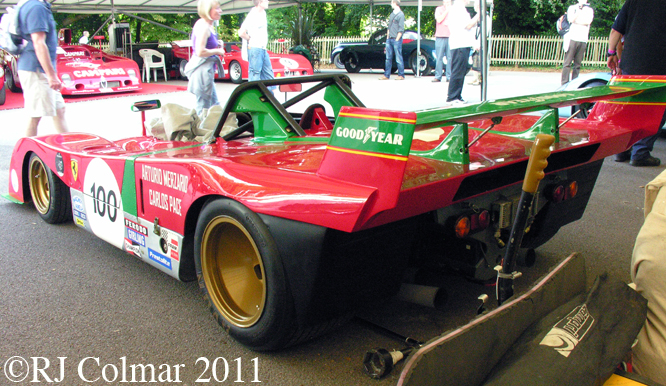
This 1973 spec Ferrari 312 PB chassis #0890 was built for the 1972 season during which Art Mezario and Brian Redman drove the car to victory in the Spa 1000 kms.

Ferrari 312 P, Goodwood FoS

Mezario also drove to a solo non championship victory at Imola in a 500 km race in this chassis, #0890 only disgraced it’s self once from six starts in 1972 with an engine failure at Kyalami.

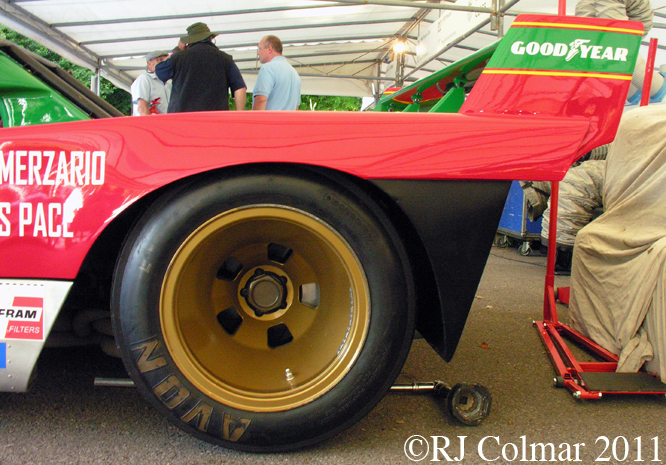
During 1973 #0890 was raced a further five times with 2nd place finishes it’s best results at Dijon for Ickx / Redman and at the Nurburgring for Carlos Pace / Merzario a partnership which brought the car a 3rd place in it’s final front line race in the 6 hours at The Glen.

Ferrari 312 P, Goodwood FoS

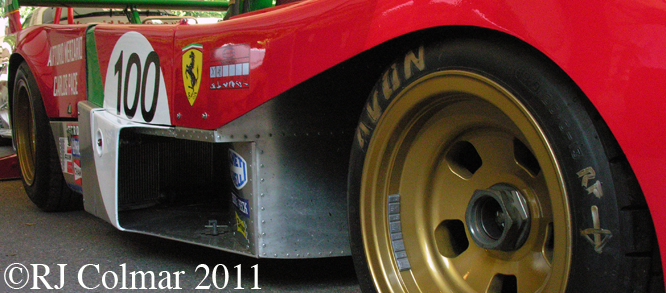
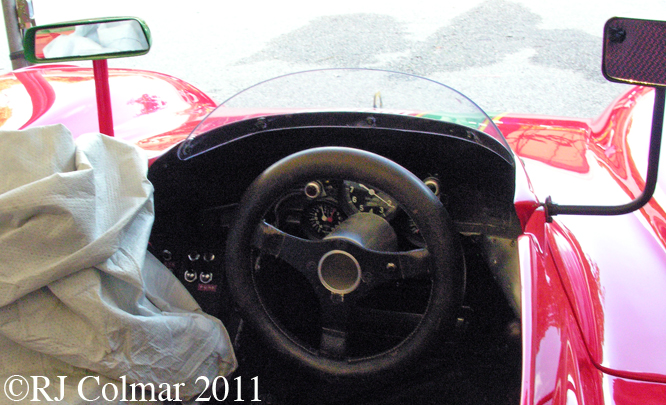
Chassis #0890 seen here at Goodwood Festival of Speed is easily recognisable being the only one of the six 312 P chassis that had the air intake modification to the drivers side chassis skin which appeared at the ADAC 1000 kms at the Nurburgring in 1973.

Ferrari 312 P, Goodwood FoS

In 1972 Ferrari built six 312 P chassis so that there could be a team of three freshly prepared cars at each of the World Championship races. The PB initials were used by the press to distinguish the car from the previous 312 P model of 1971.

Ferrari 312 P, Goodwood FoS

The 1972 Ferrari sports car team managed by Peter Schetty with Ermanno Cuoghi looking after the preparation of the cars was without doubt the class of the field,

Ferrari 312 P, Goodwood FoS

their cars powered by a water cooled 3 litre /183 cui 48 valve flat 12 motor that was in essence a Grand Prix engine detuned for reliability. Five of the six 312 P chassis originally built in 1972 are known to exist today.

Thanks for joining me on today’s PB edition of ‘Gettin’ a lil’ psycho on tyres’ and I hope that you will join me again tomorrow. Don’t forget to come back now !

Share

Endurance Record – Castle Combe

Thanks to the hospitality of Simon Lewis sponsor of the THE SIMON LEWIS TRANSPORT BOOKS FREE SINGLE-SEATER SERIES I found myself attending the British Endurance Championship Racing Weekend at Castle Combe on Sunday.
Smart, Castle Combe, BECRW

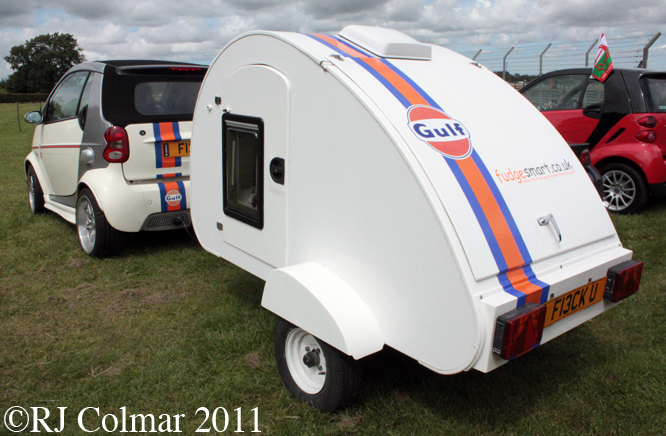
As I got out of the car and prepared myself for a long afternoon’s racing there was a demonstration of Smart cars in progress including this neat 3 axle combination of car and caravan. Not exactly what I had in mind when I made up my mind to retire from camping in favour of wheeled temporary accommodation, but this combo would certainly cut a smart dash in the Le Mans camp site.
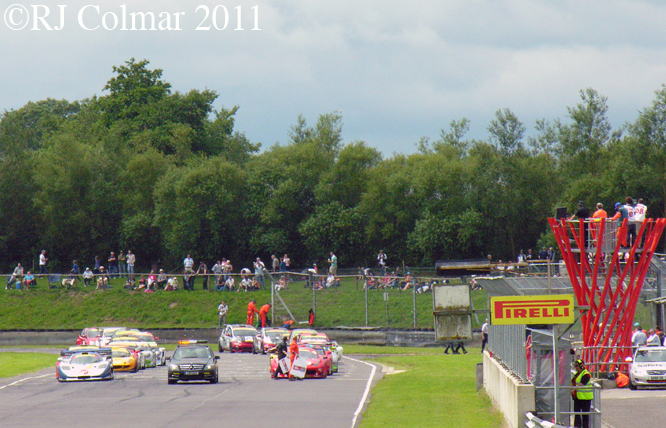
Britcar MSA Endurance Championship, Castle Combe, BECRW

The first race of the day was for Smart cars which preceded the Smart car demonstration, the second race of the day was the 2 hour Britcar MSA Endurance Championship Round which included a welcome grid walk for the public before the race got underway.
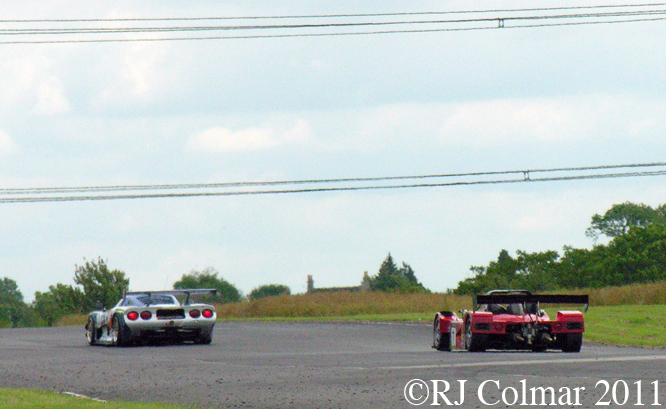
Britcar MSA Endurance Championship, Castle Combe, BECRW

Javier Morcillo from Spain driving the #3 Mosler MT900R set an electrifying early pace from pole position that only Micheal Millard driving the #7 Rapier 6 SR2 was able to match.
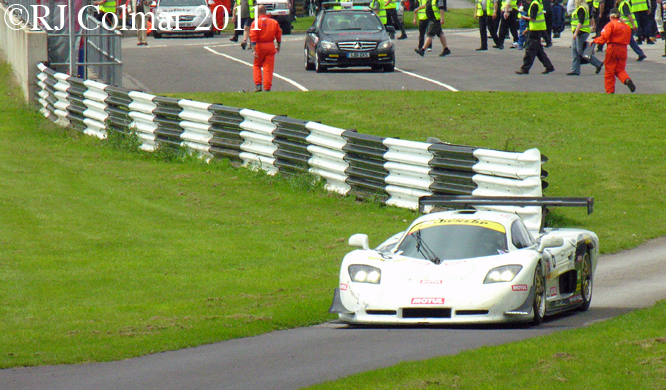
Calum Lockie, Mosler MT900R, Castle Combe, BECRW

I was rooting, in vane as it turned out, for one of my many racing instructors, Calum Lockie, driving the #6 Mosler who was forced to join the fray from a pit lane.
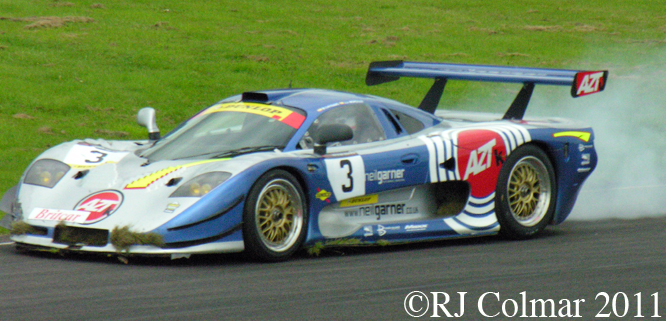
Javier Morcillo, Mosler MT900R, Castle Combe, BECRW

After an incident requiring a Safety Car, during which Lockie now running in the top six pitted early for fuel, Millard got past Morcillo who promptly indulged in some lawn mowing which forced him to stop with serious overheating issues out on the circuit.
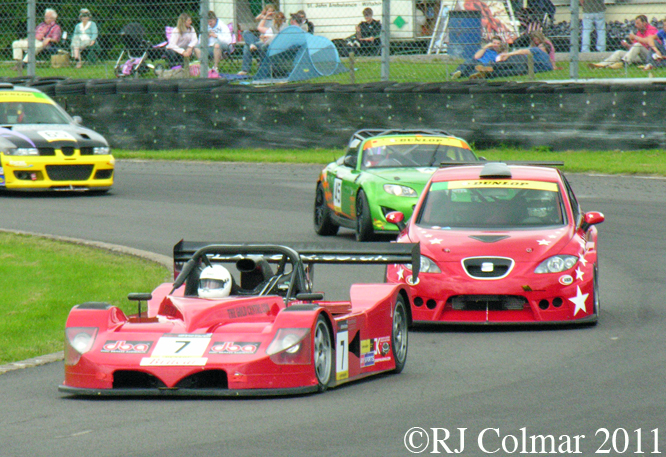
Micheal Millard, Rapier 6 SR2, Castle Combe, BECRW

Millard then proceeded to lead for most of the next hour, a lap ahead of the next fastest car on the circuit, who proved to be Lockie, until he pitted to hand over the Rapier to Ian Heward.
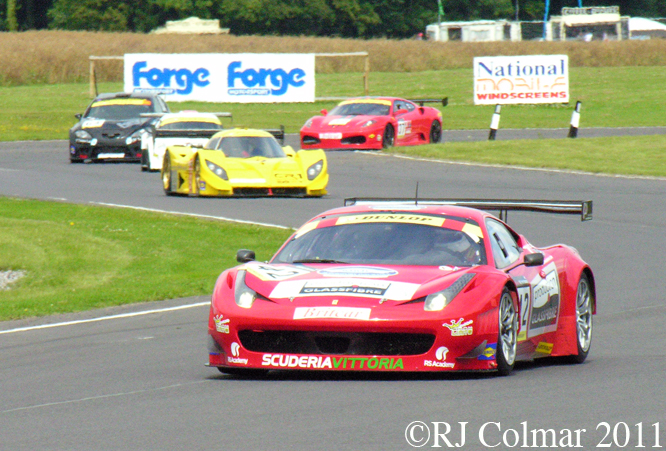
Phil Dryburgh / John Gaw, Scuderia Vittoria Ferrari 458, Castle Combe, BECRW

By the time the mandatory pit stops had all been completed it was the Scuderia Vittoria Ferrari 458 driven by Phil Dryburgh and John Gaw running in the invitational class that was uncomfortably in the lead being chased down by the Rapier of Millard/Heward.

No sooner had the #7 Rapier taken the lead with 25 mins to go then it too spun out, leaving the Scuderia Vittoria Ferrari to finish first for the second time in this years Britcar Championship. In the process Dryburgh and Gaw set a new Castle Combe record for the most laps covered in a single race at 96 laps up from the previous record of 95.
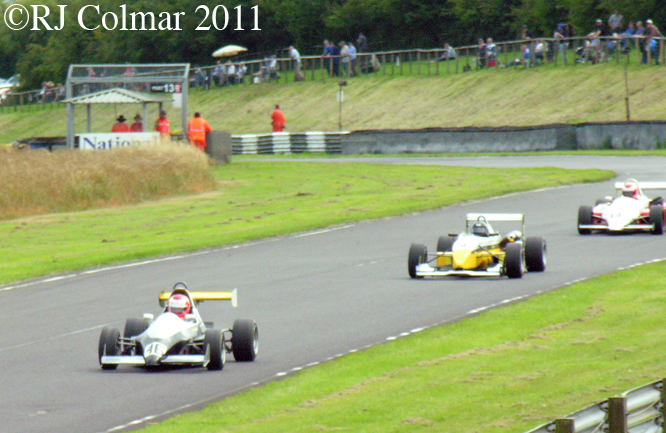
Arty Cameron, Jedi, Castle Combe, BECRW

The third race of the day was the first of two races in the THE SIMON LEWIS TRANSPORT BOOKS FREE SINGLE-SEATER SERIES. 2010 Monoposto 1000 cc champion Arty Cameron caused a huge upset by catching those ahead of him asleep at the start and snatched the lead from the third row of the grid driving the chain driven #46 Jedi and held it for the opening lap until the more powerful Formula 3 Dallara Renault F302 of pole sitter Stuart Wiltshire breezed past to a comfortable victory. Arty blew his motor making a race of it with the Formula 3 Ralt Vauxhall RT3 of Jim Blockley which came in second.
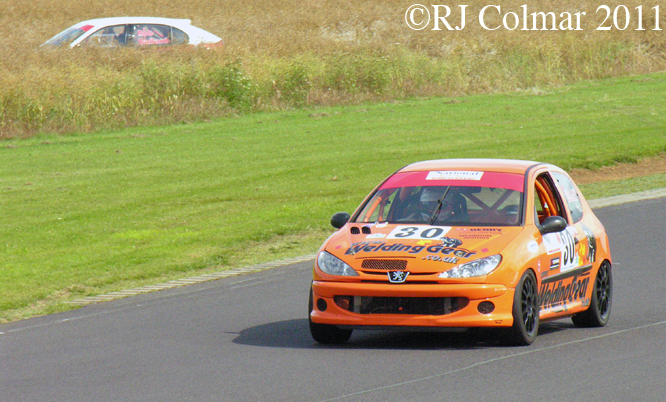
Tony Dolley, Peugeot 206 GTi, Castle Combe, BECRW

Tony Dolley driving a Peugeot 206 GTi drove to a second win of the weekend in the Castle Combe Racing Club Saloon Championship after his main challenger Rob Ballard went hay making in his Seat Cupra at Bobbies Chicane early in the race.
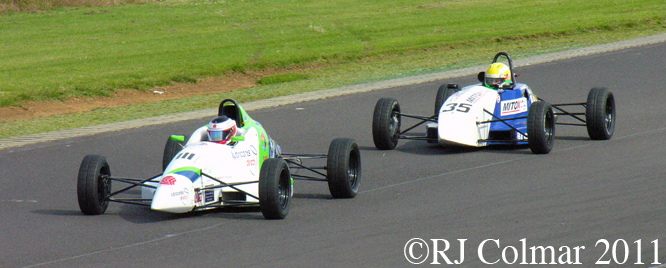
Ben Norton, #111 Spectrum 10b, Rob Hall, #35 Swift SC10, Castle Combe, BECRW

It’s been around 20 years since I last saw a Formula Ford race and though there was a change from using Ford Kent engines to Ford Zetec Engines in 1993 and again to using Ford Duratec Engines in 2006 this race catered for cars Formula Ford cars of all ages but all powered by the early Kent engines. My conviction that Formula One would be a lot more entertaining if the cars were built to Formula Ford regulations was confirmed by the race long duel of Ben Norton seen driving the #111 Spectrum 10b and Rob Hall in the #35 Swift SC10. The race was red flagged after an accident between two competitors on the penultimate lap. So far as I know neither was seriously hurt.
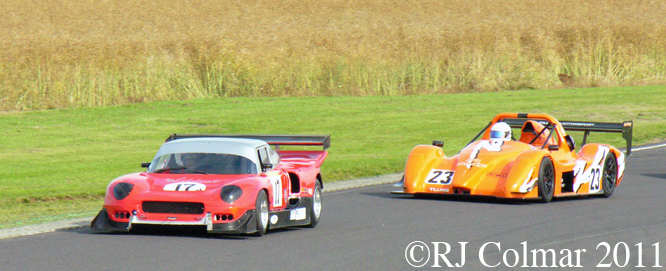
Ian Hall, Darrian T98 GTR, Simon Tilling, #23 Radical SR3 RS, Castle Combe, BECRW

Variety was again the watch word for the Castle Combe Sports and GT Championship which featured a somewhat recalcitrant Rover V8 powered #17 Darrian T98 GTR of Ian Hall seen here about to be overtaken by Simon Tillings immaculate #23 Radical SR3 RS powered by a 400 hp 1300 cc / 79 cui Radical Performance Engines tuned turbocharged Suzuki GSX_R motorcycle engine. Tilling, who starting from the back of the grid, blitzed the opposition recording a new class 103 mph lap record, and fastest overall lap of the day, in his amazingly agile machine.
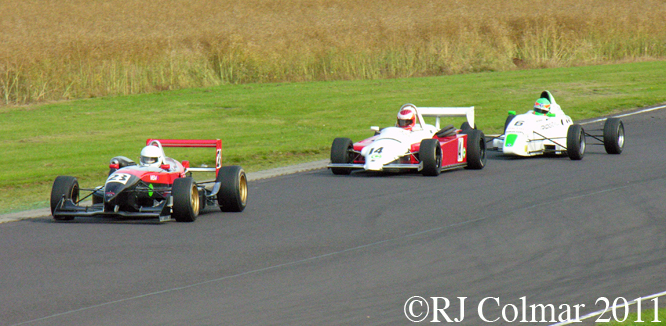
Ray Rowan, Dallara F398, Jim Blockley, Ralt RT3, Roger Orgee, Van Diemen RF00, Castle Combe, BECRW

The final race of the day was another in the THE SIMON LEWIS TRANSPORT BOOKS FREE SINGLE-SEATER SERIES and in the absence of Arty Cameron it was Castle Combe regular Roger Orgee, driving the #6 Ford Zetec powered Van Diemen RF00 Formula Ford car, who got the jump on Jim Blockley in the #24 Ralt and Ray Rowan in the Formula 3 #23 Dallara F398 and almost completed a lap in 2nd place before the more powerful Ralt and Dallara breezed past the wingless Van Diemen.
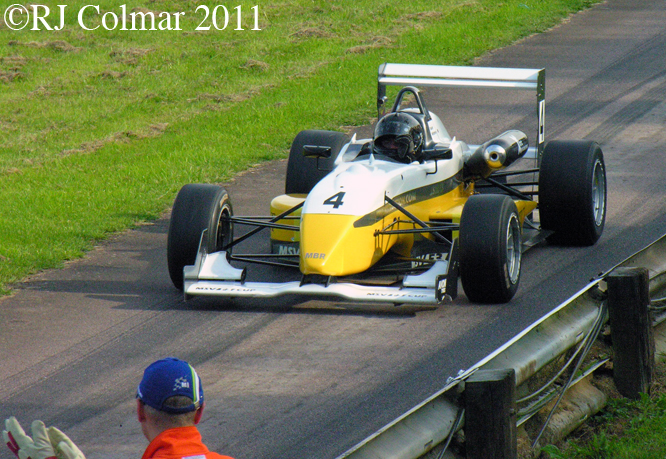
Stuart, Wiltshire, Dallara F302/04, Castle Combe, BECRW

Blackley in the Ralt passed Rowan for second but by this time Stuart Wiltshire was long gone on his way to his second victory, concluding an excellent day’s entertainment.

My thanks again to Simon Lewis who made today’s blog possible.

Hope you have enjoyed today’s Endurance edition of ‘Gettin’ a lil’ psycho on tyres’ and that you will join me again tomorrow for a look at a post war Rover. Don’t forget to come back now !

14 01 12 Amended Britcar record race distance to 96 laps not 97 laps as originally stated, thanks to Tim Murray and Pete Stowe for pointing out the error.
Share

Ferrari Testarossa

Sometime in the early 1990’s I was tootling a long a one track country lane in Hampshire on a wonderful summers afternoon, with the roof of my Citroen 2CV down, when I caught site of a bright red object in my rear view mirror.
Ferrari Testarossa, Silverstone Classic

Behind me was a Ferrari Testarossa with absolutely nowhere to go until we got to the next junction. Fortunately I went straight and the Testarossa went left. A couple of minuets later I got to my friends house where there was a note requesting that I go and pick up their kids from primary school, something I had done once or twice before.

Ferrari Testarossa, Silverstone Classic

When I got to the tiny village school there in the car park was the bright red Testarossa. I had arrived a couple of minuets early and the school secretary motioned that I sit down to wait for class to be dismissed. As I did so I noticed through the glass door to one of the classrooms was the familiar, to me through hundreds of images I had seen, figure of James Hunt reading a story to what turned out to be his son Freddies class.

Ferrari Testarossa, Silverstone Classic

The kids were absolutely captivated by his magnetism and completely oblivious to the reputation of the one who was reading to them. I can’t be sure the Ferrari James was driving that day was really his by then I seem to recall hearing that his Mercedes was up on blocks and that he was mostly to be found driving around in an ancient Austin A35 Van, featured yesterday, but no matter I saw a slice of James life that I will always treasure as much as his victory at the Nurburgring in 1976, which I also was lucky enough to see.

Ferrari Testarossa, Silverstone Classic

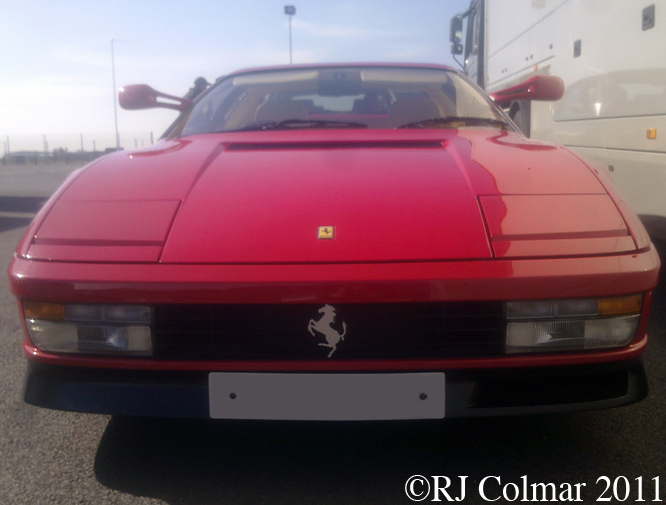
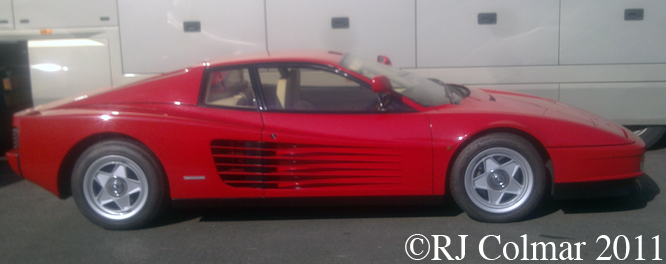
The Ferrari Testarossa was launched in 1984 as a top of the range model to replace the Ferrari 365 GTB4 / 512 Berlineta Boxer series. Powered by a 390 hp 48 valve Colomdo designed flat 12 with red cylinder heads, which was good for a top speed of 180 mph.

Ferrari Testarossa, Silverstone Classic

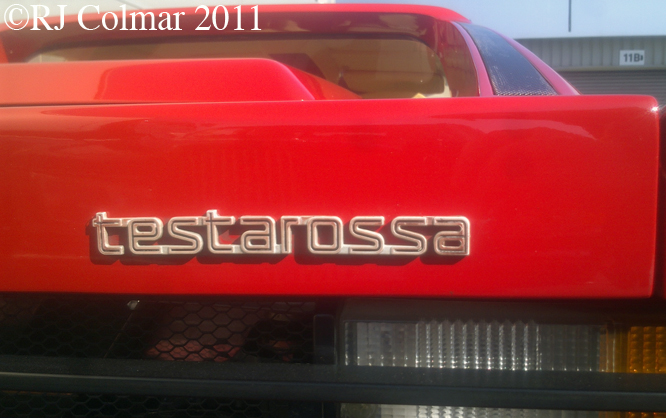
The Testarossa name is not to be confused with famous 1956 Ferrari Testa Rossa sports racing car which would probably be worth a lot more than a Testarossa, in any condition.

Ferrari Testarossa, Silverstone Classic

The $181,000 Testarossa, which was never raced but did make a cameo appearance in a TV show called Miami Mice, cashed in on the Ferrari reputation big time. Nearly 10,000 examples were built including 512 TR and F512 M variants launched in ’92 and ’95 respectively.

Hope you have enjoyed today’s village school edition of ‘Gettin’ a lil’ psycho on tyres’ and that you will join me again tomorrow. Don’t forget to come back now !

Share

‘Fury’ Returns – Ferrari 312 B3 #010

The first time I saw and heard a Ferrari racing in anger was on March 17th, 1974, in the Race of Champions at Brands Hatch. The day started out extremely wet and grey by the time a school friend, his parents and I had made it from the car park to the spectator enclosure we were all soaked through to the skin, with in minuets the cars filtered out of the pit lane opposite and there they were, two bright red Ferrari’s almost luminescent in the rain drenched gloom with a delightful throaty musical noise emanating from their 3 litre / 183 cui 312 flat 12 motors.

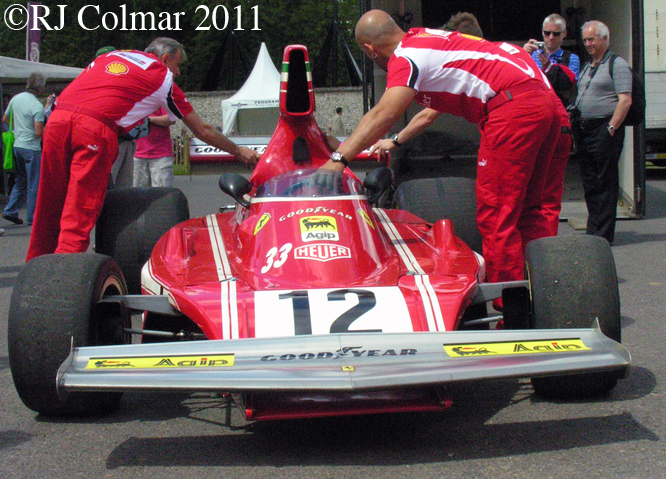
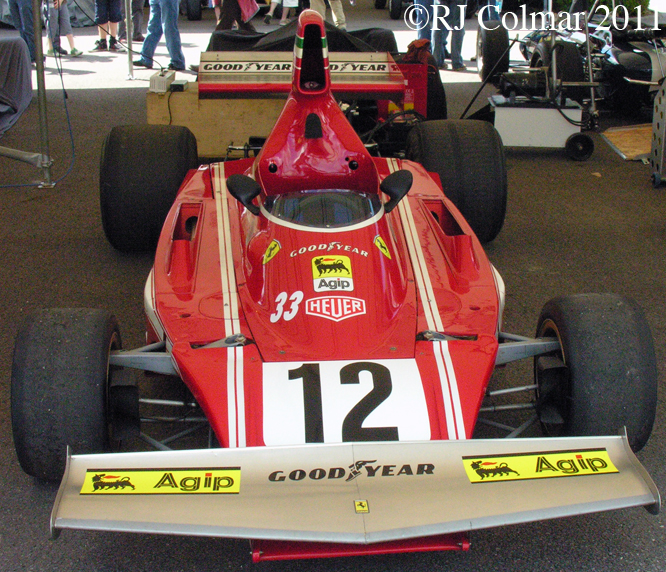
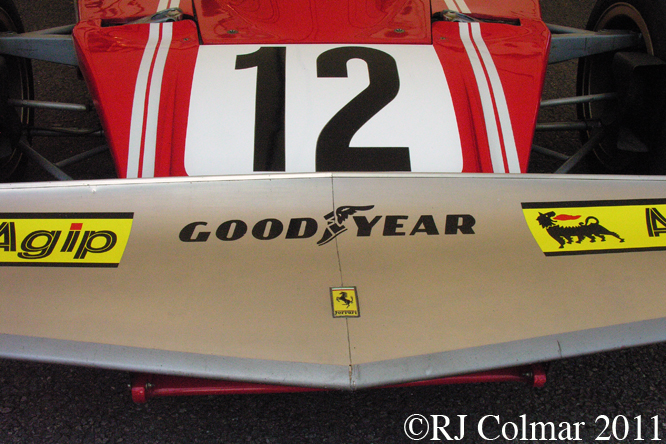
Ferrari 312 B3, Goodwood, FoS

A couple of weeks ago when I found myself in front of one of those very same Ferrari 312 B3’s, at Goodwood, the contrast in the weather could not have been greater, but my absolute joy at the sight of it was not in the least diminished, even though this time the car made no sound as it was pushed into it’s allotted spot in the Goodwood paddock.

Ferrari 312 B3, Goodwood, FoS

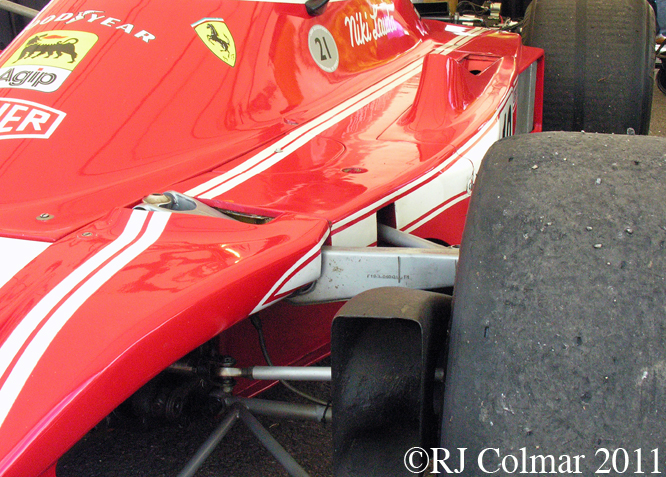
The Ferrari 312 B3 was never going to win any awards for beauty if it looks like it was designed by committee, that is because it was.

Ferrari 312 B3, Goodwood, FoS

In 1972 designer Mauro ‘Fury’ Forghieri built an experimental Grand Prix car in which he had tried to arrange all the cars ancillary components, oil tanks and coolers, as close to the centre of gravity of his new design as possible. The vehicle known as the ‘Snow Plough‘ was extensively tested but the handling proved to be too nervous to ever be entered in a race.

Ferrari 312 B3, Goodwood, FoS

Mid way through 1972 Mr Ferrari was not well and took some time off from the day to day running of his company and Mauro Forghieri, under pressure from FIAT executives in Turin found himself dropped from the team designing the 1973 Ferrari Grand Prix challenger which was eventually designed by Franco Rocchi Giacomo Caliri under the direction of FIAT’s Stefano Colombo.

Ferrari 312 B3, Goodwood, FoS

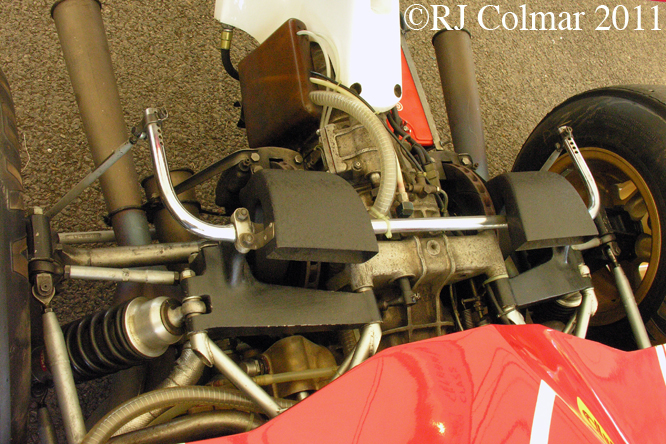
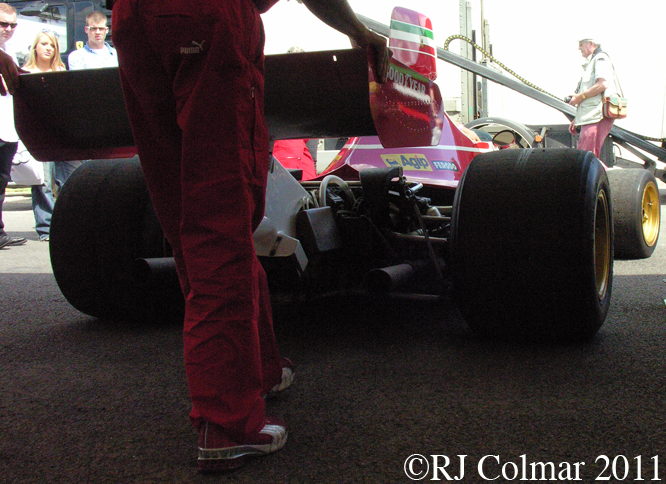
The 1973 Ferrari 312 B3 featured Ferrari’s first ever aluminium monocoque chassis which, in another Ferrari first, was manufactured by Thompson in England. The engine was used as a stressed member of the chassis following a lead set by Colin Chapman in 1967 with the Lotus 49 which used the Ford Cosworth DFV as a stressed member of the chassis, thus saving the considerable weight otherwise necessitated by an engine subframe.

Ferrari 312 B3, Goodwood, FoS

The long wide and low 1973 312 B3 including chassis #010 seen here were not a great success and upon his return to work in the summer of 1973 Mr Ferrari withdrew his cars from Grand Prix racing for several races and recalled Mauro Forghieri from his duties at the Fiorano test track and tasked him with making the 1973 car more competitive.

Ferrari 312 B3, Goodwood, FoS

‘Fury’ as Forghieri was allegedly nick named applied all of the lessons learned from the ‘snow plough’ project to the large 1973 B3 chassis mounting long thin inclined radiators behind the front wheels and oil tank ahead of the rear wheel to reduce the polar moment of inertia in an effort to improve the cars handling.

Ferrari 312 B3, Goodwood, FoS

Upon their return to the track the reconfigured cars were not any more competitive but over the winter of 1973/74 with the arrival of Niki Lauda the cars were extensively tested and refined into a much more competitive proposition for the 1974 season.

Ferrari 312 B3, Goodwood, FoS

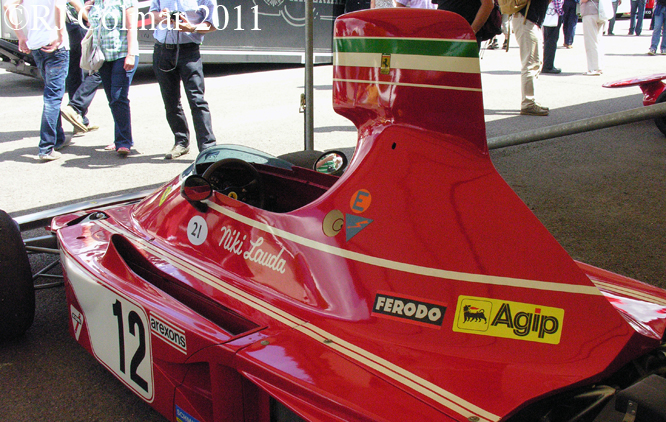
For 1974 the 312 B3’s appeared with completely reworked interim bodies that featured tall air boxes as pioneered by future Ferrari designer Dr Harvey Postlethwaite on James Hunt’s #27 Hesketh March 731.

Ferrari 312 B3, Goodwood, FoS

With future Ferrari President Luca di Montezemolo now heading the racing team management the revamped cars showed an immediate and consistent improvement in qualifying and in the races.

Ferrari 312 B3, Goodwood, FoS

Chassis #010 shown here was qualified 3rd in the hands of Niki Lauda at Brands Hatch for the non championship Race of Champions. Niki led during the early stages of the race but in a twist of irony he was over taken in a breath taking move on the outside of Paddock Bend by this chassis former incumbent Jacky Ickx who drove a Lotus 72 during the 1974 season.

Ferrari 312 B3, Goodwood, FoS

A couple of races later in Spain Niki Lauda won his first Grand Prix in a newer 312 B3 chassis with the definitive bodywork of the type worn by chassis #010 at Goodwood.

Lauda finished 4th in the 1974 season World Drivers Championship while more experienced team mate Clay Regazzoni was in contention for the championship right until the last race of the season when he was piped to the post by Emerson Fittipaldi in a McLaren.

My thanks to Aardy at Ferrari Chat for confirming the chassis number.
Thanks for joining me on this Fury edition of ‘Gettin’ a lil psycho on tyres’, I hope you’ll join me again tomorrow when I’ll be looking at a Super Hugger. Don’t forget to come back now !
Share

Not Quite ‘The Right One’ – Lancia LC2/85

Today I am starting a series of three consecutive blogs on cars that competed in the Group C World Endurance Championship, during the 1980’s I had the good fortune to follow the Group C World Endurance Championship for sports cars from it’s inception through some high’s to it’s eventual death.

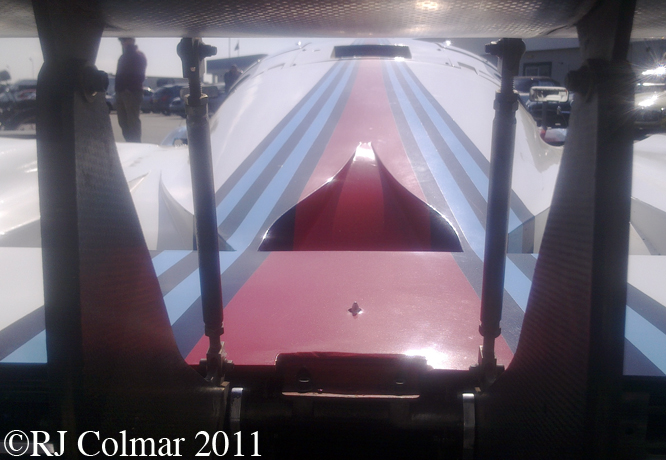
Lancia LC2 - Silverstone Classic PD

The series was for closed 2 seater racing vehicles weighing a minimum 800 kgs / 1760 lbs with the only restriction on the engine being fuel consumption. The cars were expected to race for 1000 kms / 621 miles on 600 litres / 131.87 of fuel. It was soon realised by participants that they needed to run vehicles with around 600 hp to go the distance with the available fuel.

Lancia LC2 - Silverstone Classic PD

This endurance fuel mileage racing series did not always produce the most riveting races though it was certainly had a few outstanding ones, but something about the endurance and fuel consumption formula appealed to me and the cars looked absolutely fabulous.

Lancia LC2 - Silverstone Classic PD

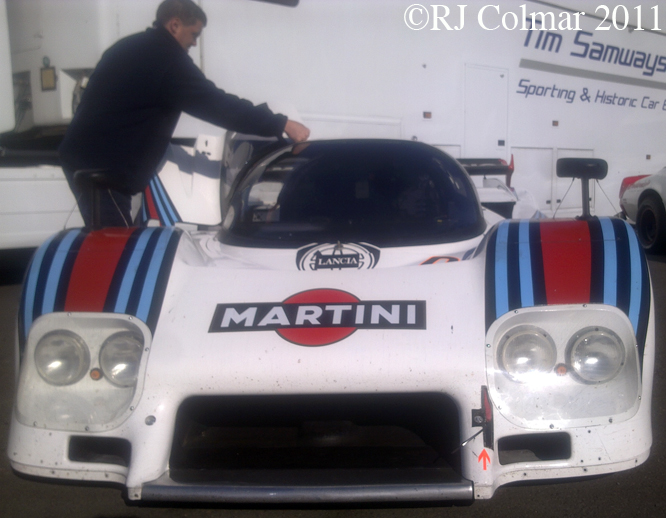
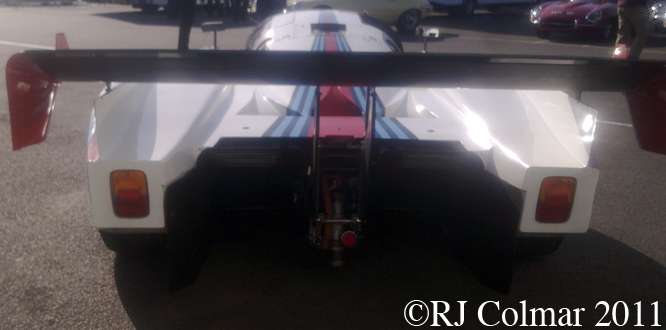
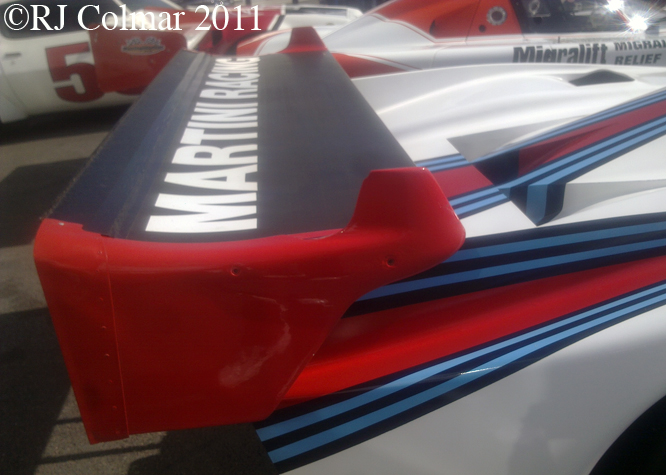
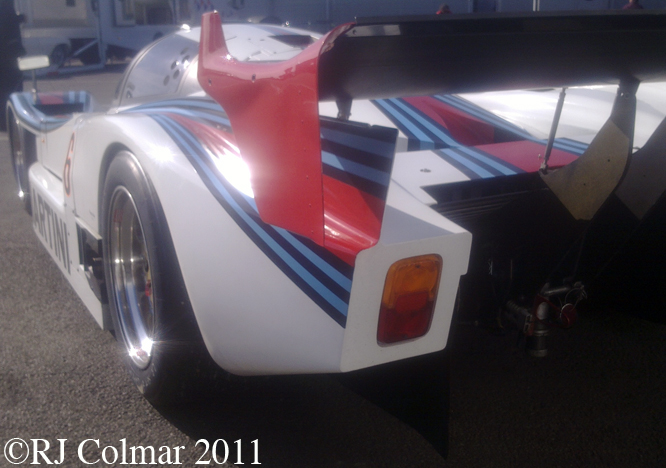
History will recall the early years 1982 – 1987 were dominated by Porsche with only token resistance from today’s car the Martini Lancia LC2 which was first raced in 1983. Lancia had tried to steal the 1982 World Endurance Championship for Drivers by building the LC1 to older group 6 regulations that only had one year of eligibility.

Lancia LC2 - Silverstone Classic PD

Not only did Lancia driver Riccardo Patrese come up short by 8 points to Porsches Jacky Ickx, but Lancia also in the process lost a whole years development on their Group C challenger to the all conquering Porsche 956 that Jacky Ickx had been driving.

Lancia LC2 - Silverstone Classic PD

The first problem the Lancia LC2 faced in 1983 was inferior Pirelli radial tyres which could not take the strain of the ground effect downforce generated by the aerodynamic venturi at the back of the car. The cars proved quick in qualifying but to add to the problems at Lancia the twin turbo Ferrari V8 motors could not back the speed up with reliability.

Lancia LC2 - Silverstone Classic PD

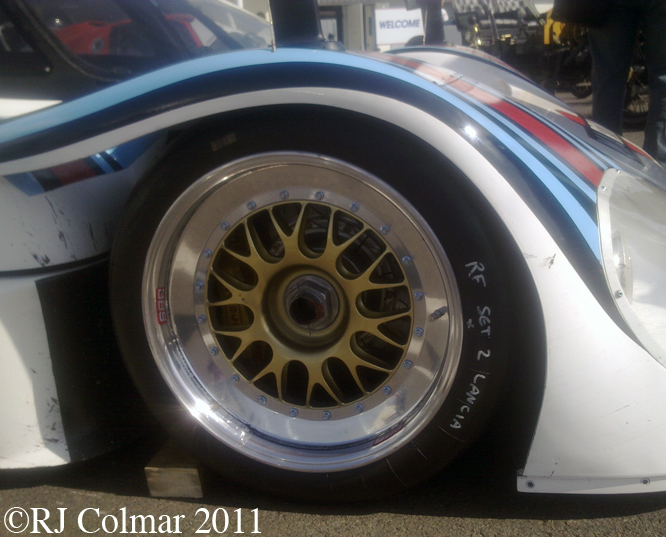
To cure the tyre issues the LC2’s ran with Dunlop cross ply tyres in 1984, this necessitated a change in suspension geometry. The cars were fast in qualifying as they had been in 1983 but the Speedline wheels were now not up to the job. Again the cars were fast in qualifying but rarely reliable over a race distance.

Lancia LC2 - Silverstone Classic PD

For 1985 Lancia switched back to radial construction tyres now supplied by Michelin, the Dallara built aluminium chassis were widened with a pronounced step in the side bodywork.

Lancia LC2 - Silverstone Classic PD

Again the cars were quick in qualifying but the Ferrari engines were unreliable. Though the team did score it’s one and only victory over the works Porsche team at Spa in a race that was called early out of respect foe Stefan Bellof who had been killed in the event. At the following race at Brands Hatch it looked like the Lancia team might score another victory over the works Porsche team when the two leading Lancia’s inexplicably hit it each other causing sufficient delays for the works Porsche to win again.

Lancia LC2 - Silverstone Classic PD

The Martini Lancia LC2’s only appeared in a couple of races in 1986 before they withdrew from road racing completely. With just one win against the main opposition and a couple of win’s when the works Porsche team were not present the works Martini Lancia effort was justly reflected in three 2nd place finishes from 1983 – 1985 in the World Endurance Championship behind the mighty Porsche team.

Lancia LC2 - Silverstone Classic PD

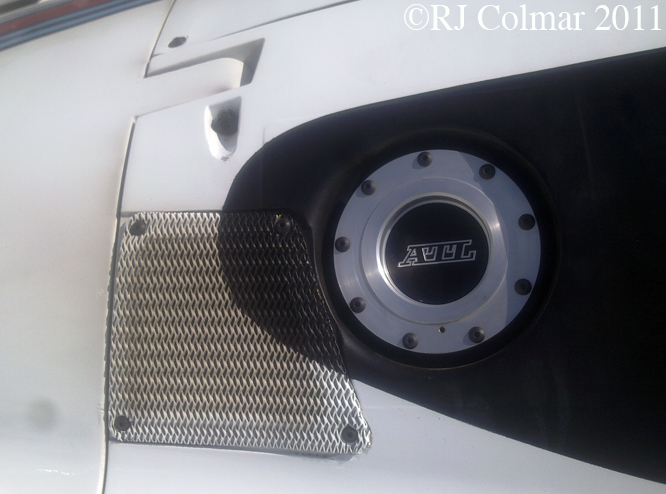
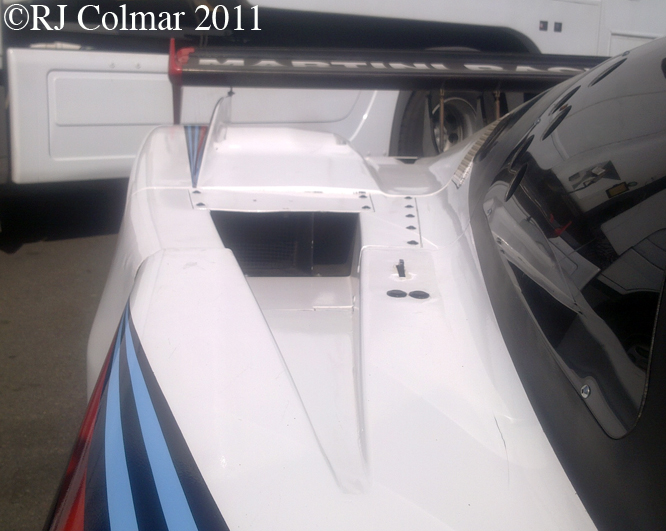
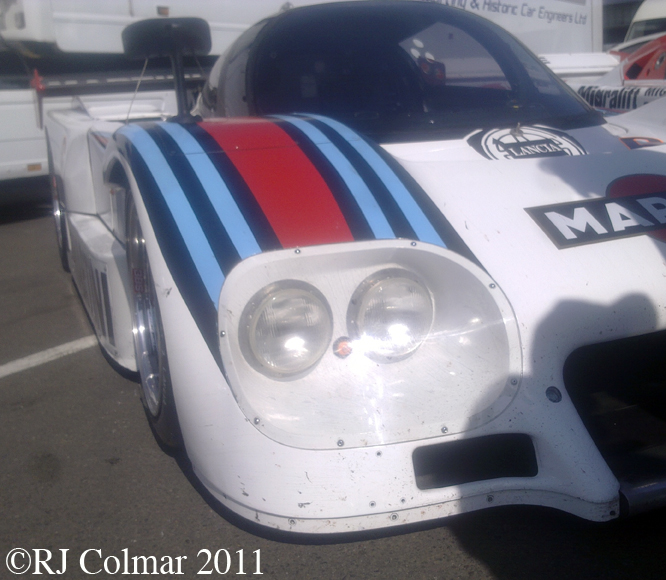
This 1985 car features a slippery nose that was only ever seen at Le Mans.

Next weekend there will be a race for Group C cars at the Silverstone Classic in which this Lancia is scheduled to take part, I hope to be there it should be a magnificent event.

Hope you have enjoyed today’s Martini edition of ‘Gettin’ a lil’ psycho on tyres’ and that you will join me again tomorrow when I’ll be taking a look at a Group C challenger from Germany. Don’t forget to come back now !

Share