Tag Archives: Festival

Field Filler – Ferrari 512 S #1006

17 Ferrari 512 S’s and parts for 8 others were built in late 1969 in response to the 25 917’s Porsche had built in early 1969 in order to be allowed to race in the World Sports Car Championship which allowed up to 5 litre / 305 cui engines. These rules were introduced so that a few old Ford GT 40’s could continue racing, it was never imagined that Porsche and then Ferrari would build 25 cars each to take part in the series which was intended to be for new 3 litre / 183 cui cars like the Ferrari 312P and Porsche 908.

Unlike Porsche who planned on using private works supported teams to run and develop the 917’s on it’s behalf, Ferrari planned on using a single works team to build and develop the 512 S, supplying the rest of the 512 S models to private entrants to whom Ferrari gave little by way of support effectively treating it’s privateer teams as little more than field fillers.
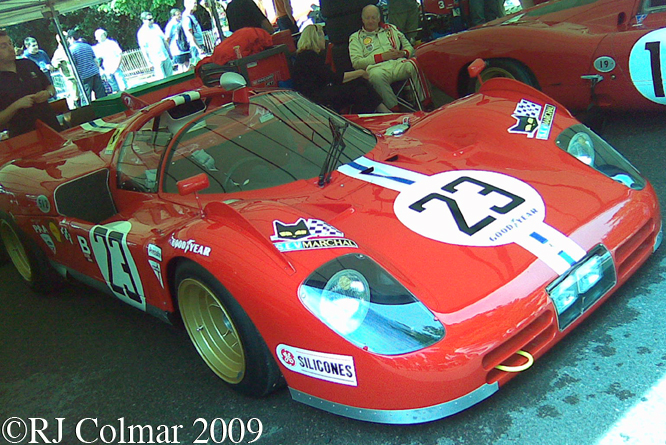
Ferrari 512 S, Goodwood Festival of Speed

Ferrari had to sell his road car operation to FIAT in order finance the production to the 512 S model, and as it turned out Porsche’s private partners had snapped up most of the best drivers.

Nonetheless Ferrari took the fight to Porsche with a single championship victory at the 1970 Sebring 12 hours courtesy of Mario Andretti, Nino Vaccarella and Ignazio Guinti driving a 512 S who beat Peter Revson and actor Steve McQueen in their Porsche 908 after Mario famously drove the last 90 mins of the race and chased down an exhausted Peter Revson in what Mario once described as the race of his life.

For most of the rest of the 1970 season the Ferrari 512 S was out classed every where, except at the non championship race run at Kyalami in South Africa, by the Porsche 917’s, particularly those of the JW Automotive team. Ferrari had difficulty selling all of it’s 512 S models, where as Porsche had to build a second run of 25 917’s to meet demand.

Ferrari 512 S, Goodwood Festival of Speed

This 512 S spyder, chassis #1006, was developed in order to save 25 kgs by the factory and sold to Luigi Chinetti’s N.A.R.T. team. Ronnie Buchnum and Tony Adamowicz drove it into second place at the 1971 24 hours of Daytona.

#1006 had to have both front and rear bodywork replaced during the course of the race, the body work is as it appeared on #1006 when it started the 1971 Daytona 24 hours with aerodynamic lips on the nose, which were not on the second nose fitted when it finished the race.

Thanks for joining me on this “Field Filler” edition of “Gettin a li’l psycho on tyres” I hope you will join me again tomorrow for a look at a one off Formula One Lotus that never raced. Don’t forget to come back now.

Share

Chassis or Aerodynamic Aid – Lotus Ford 88

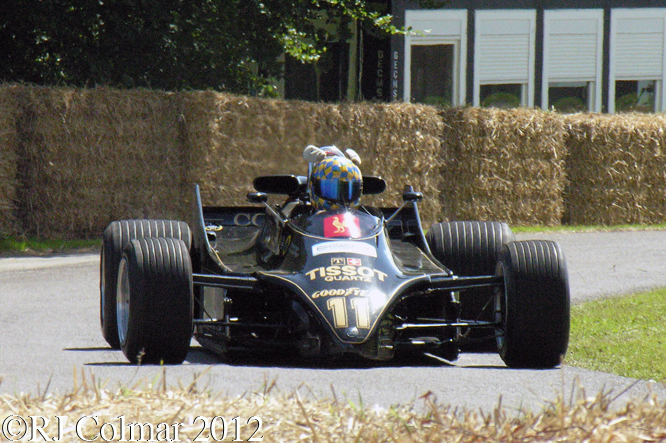
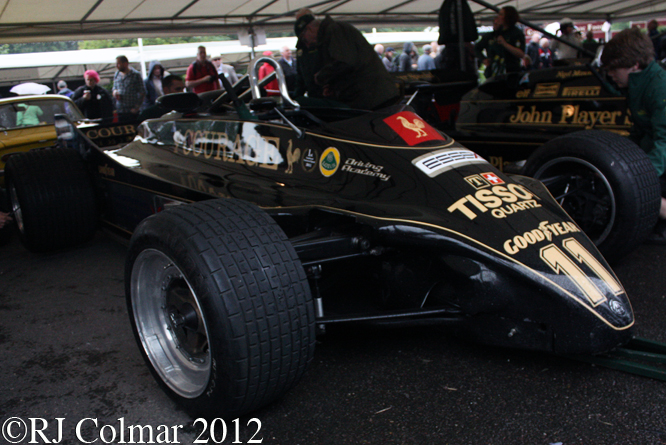
The Lotus 88 was a development from the ideas tested with the twin chassis Lotus 86. It differed, and was developed, in two crucial respects from the Lotus 86 it was designed to run with out skirts to seal the flow of air and would meet the 6 cm minimum ride height mandated by rules around late in 1980 for the 1981 season.

By having a secondary independently sprung chassis Lotus hoped to avoid the need to run their car with solid suspension which aided the road holding of ground effects pioneered by the Lotus Ford 79 which were sucked to the road surface as they moved through the air.

Lotus Ford 88B, Goodwood Festival of Speed

Gordon Murray designer at Brabham also came up with a solution to the 6 cm ride height rule which involved using hydraulic rams to raise the car above the minimum ride height in the pits, the only place the measurement could be checked, and lowering the ride height out once out on the track. This left the Brabham running effectively solid suspension once out of pit road.

All of the teams protested that the second Lotus chassis was in fact an independently aerodynamic aid and eventually the ruling body changed it’s mind having accepted the idea of a twin chassis car before the season started.

Lotus Ford 88B, Goodwood Festival of Speed

As a consequence after being protested during practice for the the United States West, Brazilian and British Grand Prix Lotus withdrew the 88 bodies with out ever having raced and used the more conventional Lotus 87 which used inner Lotus 88 chassis but with conventional side pods to generate ground effect and a similar hydraulic ram system for the suspension as used by Brabham.

Colin Chapman is said to have been disappointed that the twin chassis Formula One cars developed with Peter Wright, Tony Rudd and Martin Ogilvie were never allowed to compete believing that Formula One was supposed to be a proving ground for new innovation.

Thanks for joining me on this “Chassis or Aerodynamic Aid” edition of “Gettin’ a li’l psycho on tyres”, I hope you will join me again tomorrow. Don’t for get to come back now !
Share

Engineering Adventure Get Involved – The BLOODHOUND Project

Earlier this year a team of 300 workers in the Hakskeen Pan in the Nothern Cape of South Africa set about clearing rocks and obstacles from 9,500,000 square meters of desert, by hand, in order to prepare a 19 km long surface 500 meters wide in anticipation of the arrival in the new year of what may well prove to be the biggest land based engineering adventure of the decade.

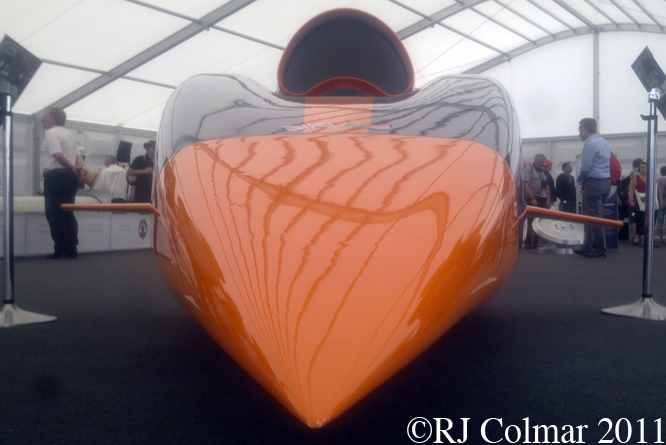
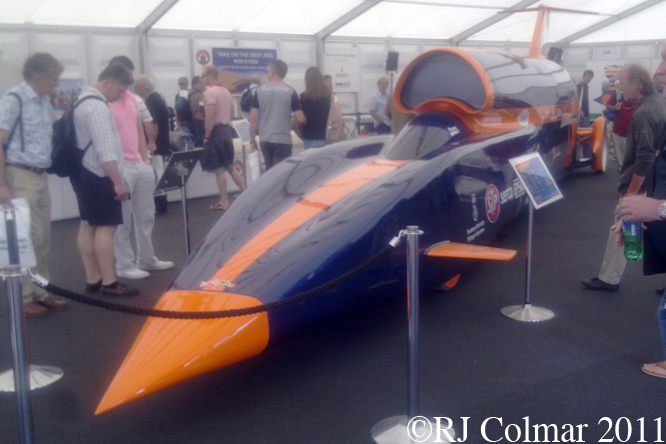
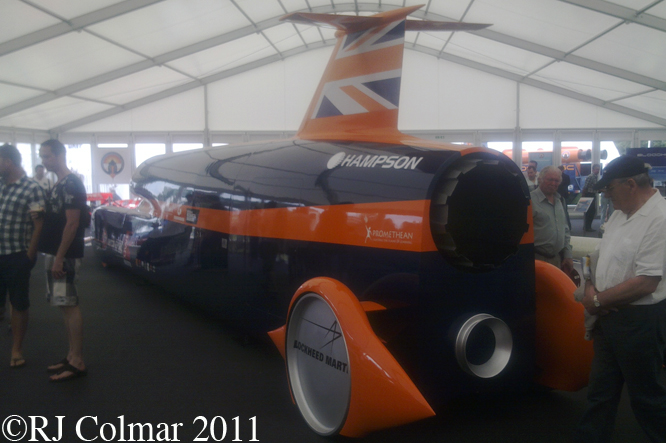
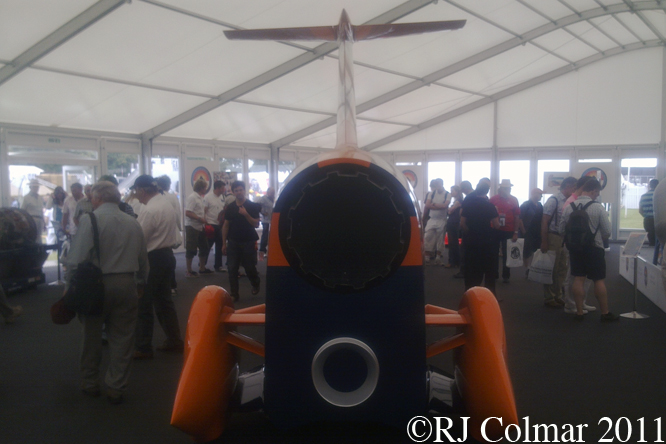
BLOOHOUND SSC, Mock Up, Goodwood Festival Of Speed

The Hakskeen Pan was chosen by former World Land Speed Record Holder Richard Noble, 633 mph in 1983, and present World Land Speed Record Holder Wing Commander Andy Green, 763mph in 1997, and their BLOODHOUND Project team as the most suitable venue to realise a £15 million pound dream in just over 80 seconds by driving their six and a half ton vehicle at a two way average speed of over 1,000 mph in 2 consecutive runs.

BLOOHOUND SSC, Mock Up, Goodwood Festival Of Speed

In order to achieve this goal some lateral thinking was required in order to get some basic backing. The BLOODHOUND project was announced in 2008 as one who’s primary mission is too inspire future generations of engineers with a program of school projects in both the UK and South Africa which are designed to inspire youngsters to see the possibilities and realise their dreams through engineering and team work. One school has already broken the Land Speed Record, for a model car.

BLOOHOUND SSC, Mock Up, Goodwood Festival Of Speed

Serving RAF pilot Wing Comander Andy Green will be taking the wheel of the BLOODHOUND SSC when it gets to Hakskeen Pan and to train for the 2.5g he will experience during acceleration and 3g he will experience during breaking he will be engaged in stunt flying exercises that expose his body to similar forces.

BLOOHOUND SSC, Mock Up, Goodwood Festival Of Speed

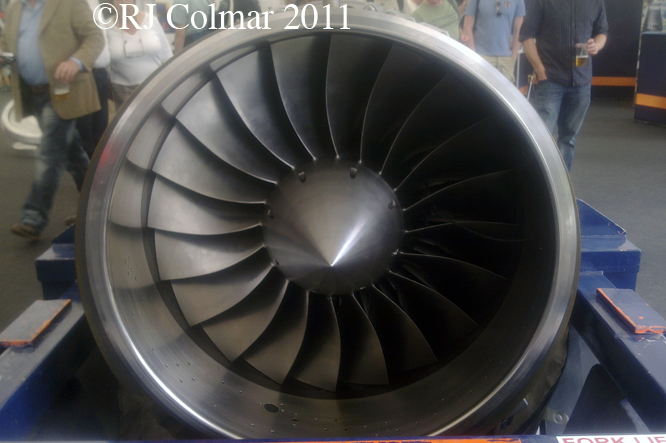
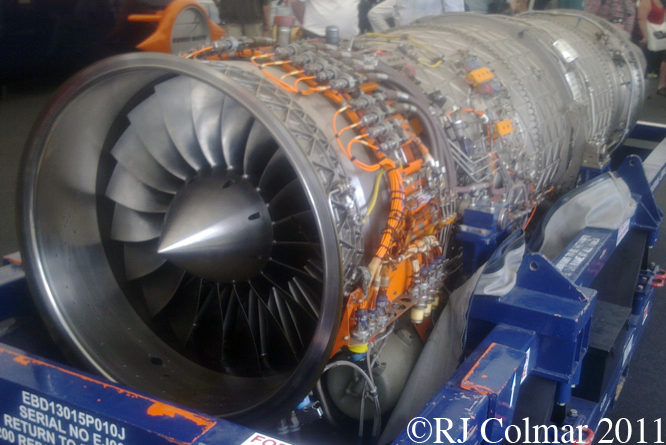
To propel the 6.5 ton BLOODHOUND SSC to 300 mph the team have acquired a prototype Eurojet EJ200 jet engine which produces 90 kN / 20,000 lb/f of thrust with the after burner on.

BLOOHOUND SSC, Mock Up, Goodwood Festival Of Speed

Allegedly the motor was destined for a Museum before getting reassigned to Land Speed Record breaking duties.

BLOOHOUND SSC, Mock Up, Goodwood Festival Of Speed

Two such motors are usually to be found in the Eurofighter Typhoon.

BLOOHOUND SSC, Mock Up, Goodwood Festival Of Speed

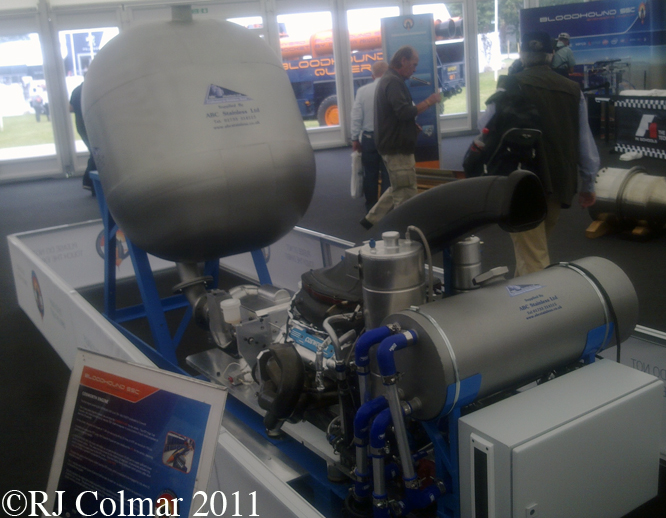
In order to accelerate another 700 mph this device will pump a ton of High Test Peroxide (HTP), highly concentrated hair dye, at 820 psi in 20 seconds through a silver catalyst which instantly decomposes the HTP into a 600°C stream of steam and oxygen which ignites the rockets fuel grain hydroxyl-terminated polybutadiene, like rubber pellets which will generate another 111 kN / 25,000 lb/f of thrust.

BLOOHOUND SSC, Mock Up, Goodwood Festival Of Speed

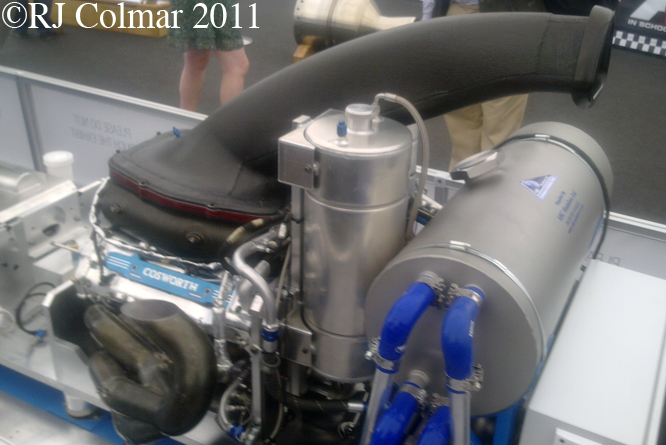
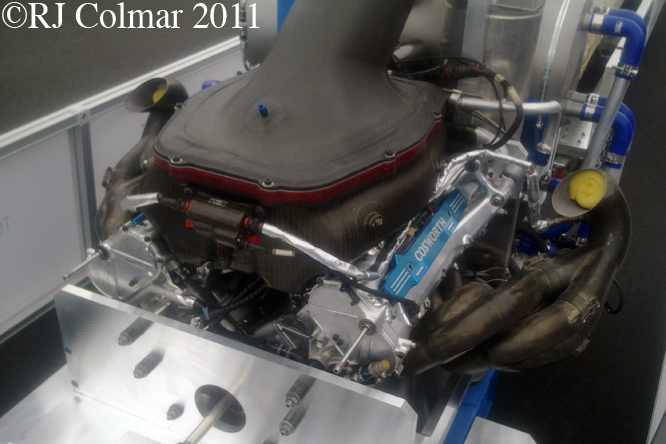
Already dubbed the most expensive fuel pump on a four wheeled vehicle in the world the pump is powered by a 2.4 litre / 146 cui Cosworth CA 2010 V8 motor which was designed for Formula One applications where the revolutions are restricted to 18,000 rpm.

BLOOHOUND SSC, Mock Up, Goodwood Festival Of Speed

The 18″ rocket was designed by Manchesters Daniel ‘Rocket Dan’ Jubb a self taught roketeer who has been building rackets since he was 5 years old. The first test of the BLOODHOUND SSC rocket were carried out earlier this year and the results exceeded expectations.

BLOOHOUND SSC, Mock Up, Goodwood Festival Of Speed

The vehicle shown here is a full scale mock up of the real thing which is being built a few miles down the road for me here in Bristol next to the SS Great Britain.

BLOOHOUND SSC, Mock Up, Goodwood Festival Of Speed

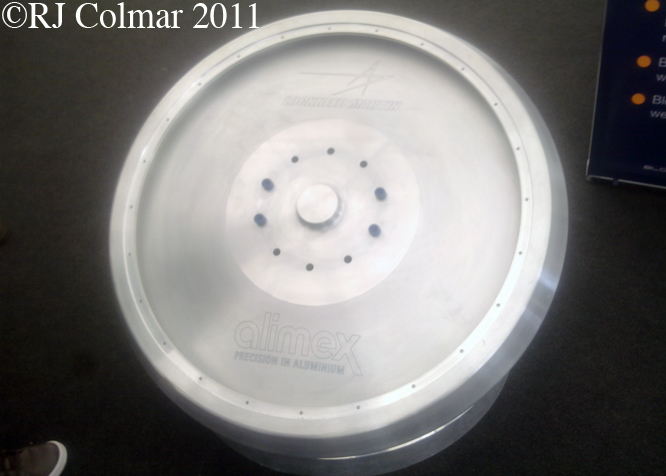
The 95 kg / 209 lb , Alimex aluminium wheels have been designed with the help of Lockheed Martin, at 1000 mph they will rotate at 10,000 rpm and the rims will experience 50,000 radial G !

BLOOHOUND SSC, Mock Up, Goodwood Festival Of Speed

In order to take the world record over 1,000 mph the car will have to make two runs in opposite directions with a combined average timed speed over the flying mile of over 1,000 mph. With only 19 kms of straight desert on which to play with stopping the car safely and turning it around, with in one hour, is crucial to slow the car down air brakes will be deployed once the car has slowed down to 800 mph and once the car has been slowed to 600 mph parachutes will be deployed with disc brakes available at speeds below 250 mph.

Early next year should see BLOODHOUND SSC being given it’s first test runs in the UK before being shipped to South Africa for a crack at setting a 1000mph Land Speed Record.

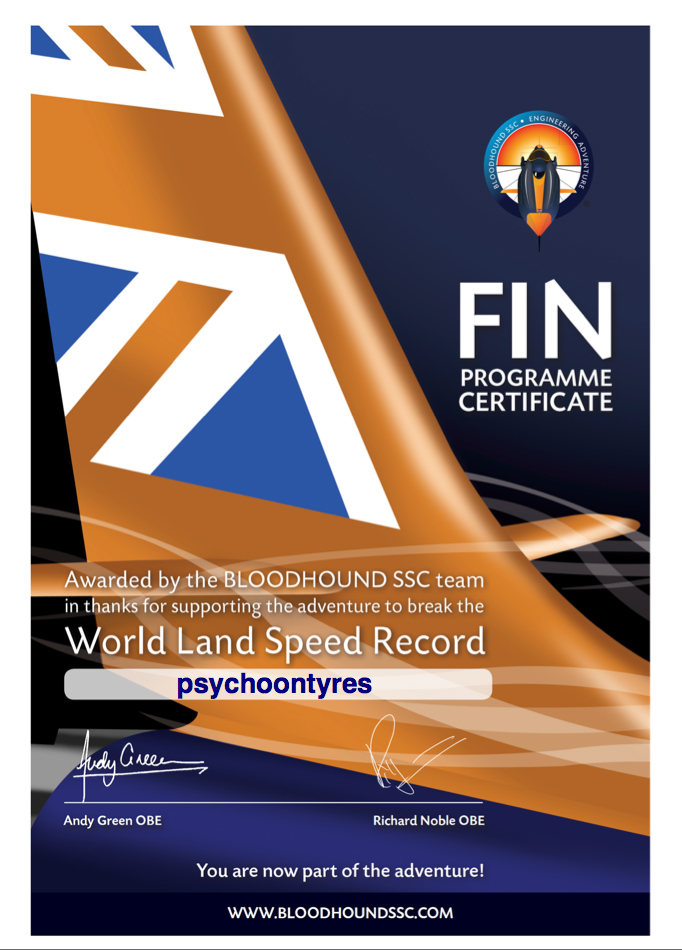
psychoontyres BLOODHOUND SSC Certificate

If you’d like to get involved with this Land Speed Record Engineering Adventure check out the BLOODHOUND SSC website linked here, the legend ‘psychoontyres’ will be appearing on the car as part of the Name on the Tail Fin program.

Wishing all GALPOT readers and contributors all the best for the New Year.

Thanks for joining me on this “Engineering Adventure Get Involved” edition of “Gettin a li’l psychoontyres” I hope you will join me again tomorrow. Don’t forget to come back now !
Share

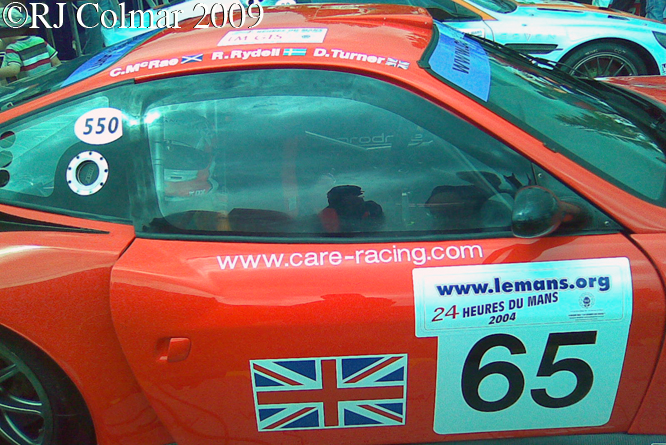
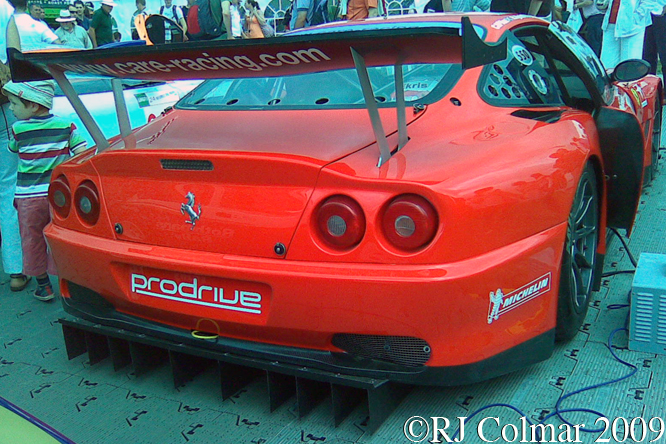
Celebrity Car – Ferrari 550 Maranello GTS

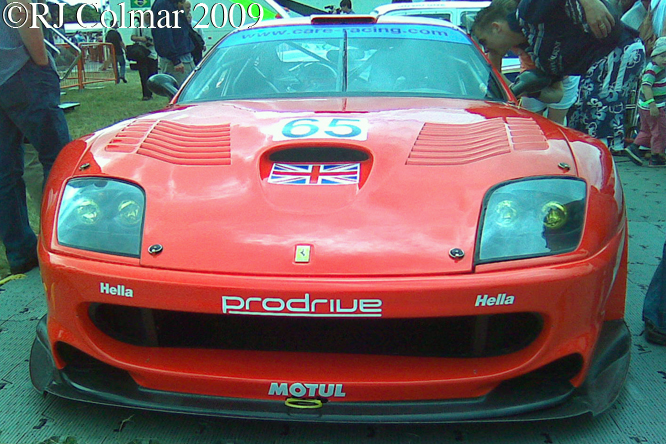
The 200 mph front engine rear gearbox 550 Maranello road model was introduced in 1996 with a 485 hp 5474 cc / 334 cui 4 valve quad cam V12 motor that could take the GT car from zero to 62 mph in 4.5 secs.

Ferrari 550 Maranello GTS, Goodwood Festival of Speed

Prodrive prepared a batch of 20 550 Maranello GTS’s for racing in Europe and the States where they were regular winners in the GT/GTS class in 2001.

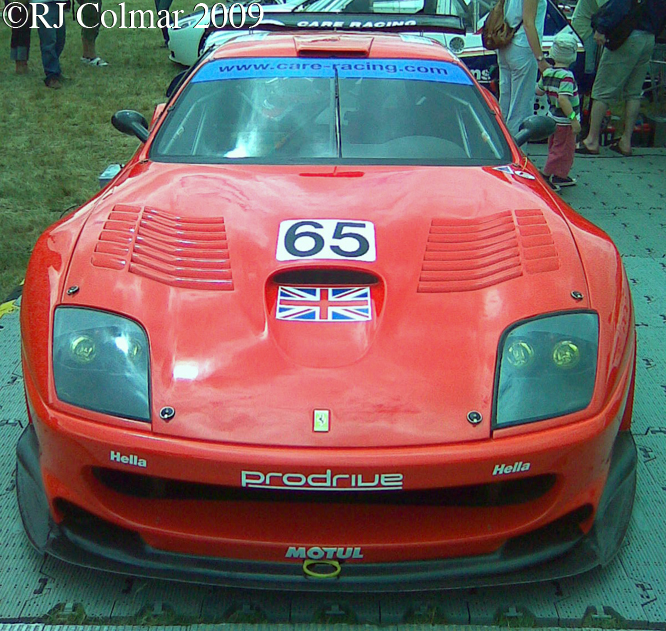
Ferrari 550 Maranello GTS, Goodwood Festival of Speed

In 2003 another Prodrive 550 Maranello GTS beat the Corvettes by 10 laps at the Le Mans 24 hour race coming home 10th overall.

Ferrari 550 Maranello GTS, Goodwood Festival of Speed

This chassis has taken part in at least 42 Races in the GT/GTS class for at least four different teams from 2002 to 2006 it has never recorded an out right win but has scored several class wins.

In 2004 this chassis (Prodrive 03) driven by Darren Turner, Rickard Rydell and Colin McRae came in 9th overall at Le Mans but was beaten by two Corvettes which finished 16 and 5 laps ahead respectively.

Ferrari 550 Maranello GTS, Goodwood Festival of Speed

Today’s featured Celebrity Car has been driven by a number of well known drivers including Colin McRae former World Rally Champion, Rickard Rydell former British Touring Car Champion, Alain Menu former British Touring Car Champion, Luc Alphand former World Cup Skiing Champion and Dakar winner, David Brabham, former Japanese GT Champion and Le Mans winner 2009, Jan Magnussen, former Danish Touring Car Champion, Danica Patrick queen of IRL and NASCAR, Darren Manning IRL driver, Christophe Bouchut 1993 Le Mans Winner, and one of my former racing instructors Tim Sugden former British and Asia Pacific GT Champion.

Thanks for joining me on today’s “Celebrity Car” edition of “Gettin’ a li’l psycho on tyres”, I hope you will join me again tomorrow, when I’ll be looking at a Formula One Lotus. Don’t forget to come back now !

Share

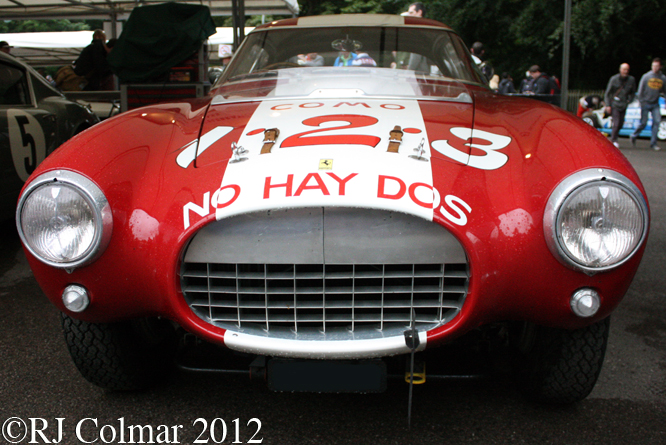
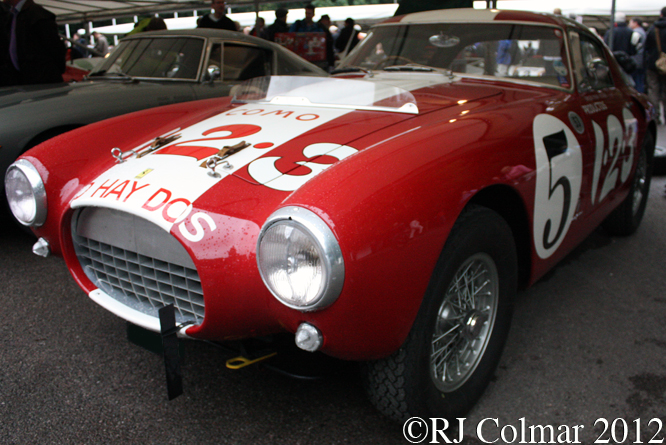
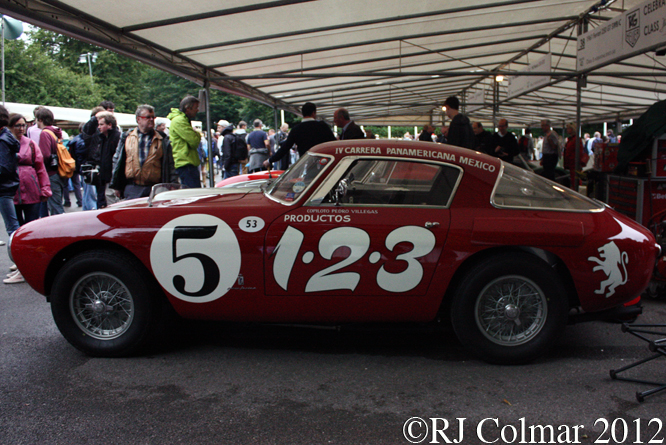
Nothing Better – Ferrari 250MM Pininfarina Berlinetta #0353 MM (0239 EU)

After beating Phil Hill on the second stage of the 1952 Carrera Panamerica Mexican hot shot Efrian Ruiz Echeverria skidded of the road while in 10th place overall on the third, of five, stage of the race in his Ferrari 212 Inter Berlinetta chassis #0239 EU.

Ferrari 250 MM, Goodwood Festival of Speed

He sent the car back to Ferrari for repairs and while it was there Efrian asked if the factory would build him a Ferrari 250MM like the one used by Giovanni Bracco which had proved to be the fastest car in the 1952 Carrera Panamerica field although transmission failure 300 miles from the finish handed a 1-2 victory to the Mercedes Benz Team.

Ferrari 250 MM, Goodwood Festival of Speed

Ferrari were happy to oblige going so far as swapping the identity from Efrian’s old 212 Inter #0239EU to that of the new 250MM chassis #0353MM at the owners request so that import duty would not have to be paid on the new car.

Ferrari 250 MM, Goodwood Festival of Speed

The 1953 Panamerica entry list included five works Lancia’s with Juan Manuel Fangio in the lead car and five non works Ferrari’s. Fangio led a 1/2/3 finish for the Lancia Team and Efrian came in as first privateer in 7th place. A result that remains the best for any Mexican driver in the original series of Carrera Panamerica races run from 1950 to 1954.

Ferrari 250 MM, Goodwood Festival of Speed

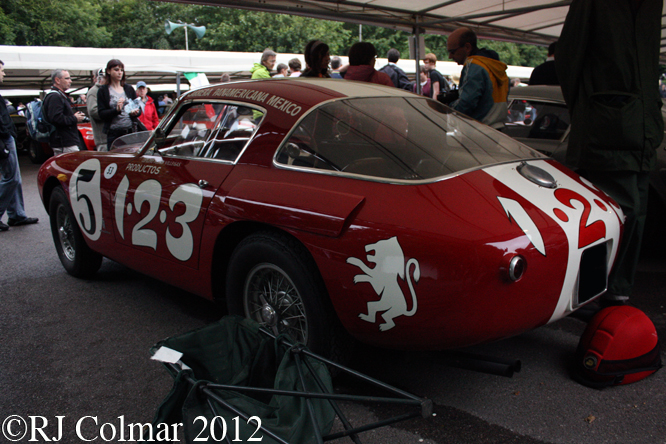
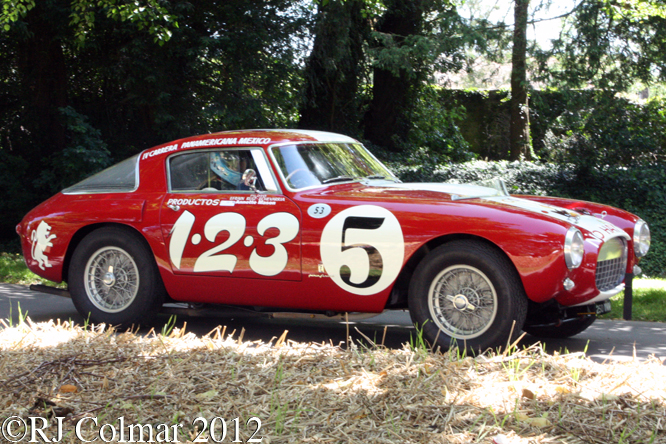
Thanks to William (WDH74) at The Nostalgia Forum I have found out what the meaning of the legend “Como 123 no hay dos” which appears to be a sponsors strap line on the bonnet of the car. “No hay dos” translates to “nothing better” from Mexican in this case nothing better than products from sponsor Industrias 1-2-3 owned by Santiago Ontanon who’s products include vegetable cooking oil and laundry detergent.

Ferrari 250 MM, Goodwood Festival of Speed

The 1953 Carrera Panamerica was #0353 MM (0239 EU)’s only in period competitive outing, the car passed through various hands and 3 restorations later the car is seen above at Goodwood Festival of Speed where it was entered by Nick Mason for his wife Annette to drive.

Ferrari 250 MM, Goodwood Festival of Speed

My thanks to WDH74, Arjan de Roos, Doug Nye, Regazzoni and Tmeranda at The Nostalgia Forum for lessons in Mexican and Mexican house hold product marketing.

Thanks for joining me on this “Nothing Better” edition of “Gettin’ a li’l psycho on tyres” I hope you will join me again tomorrow when I’ll be looking at a Lotus rally car project. Don’t forget to come back now !

Share

Mario & Ronnie Show – Lotus Ford 79 #79/2 & #79/3

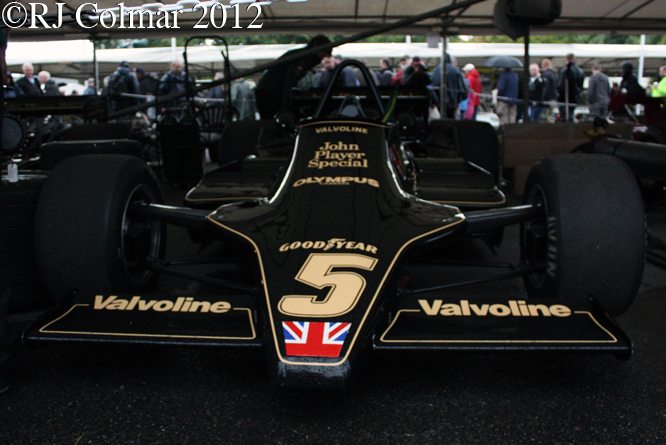
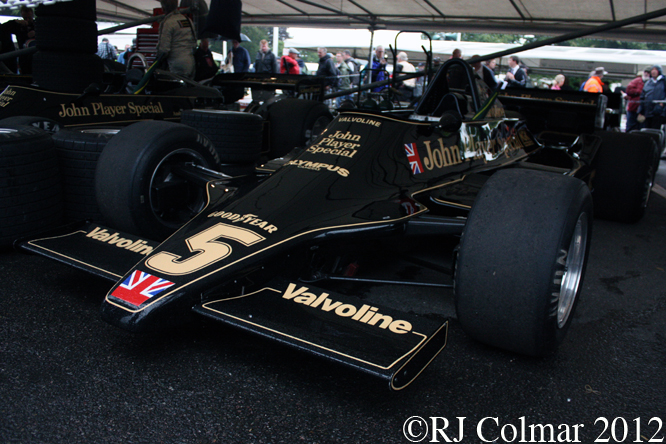
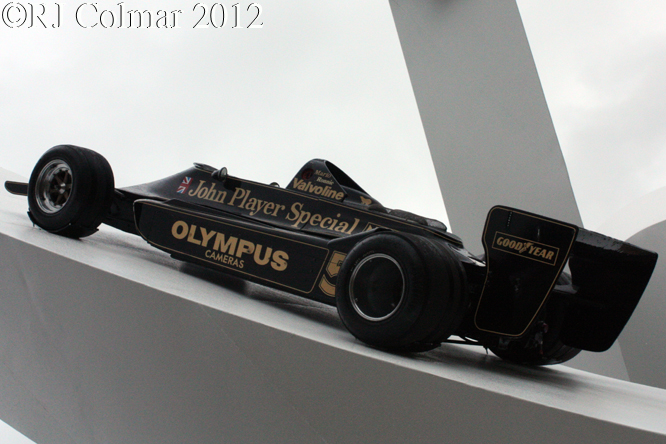
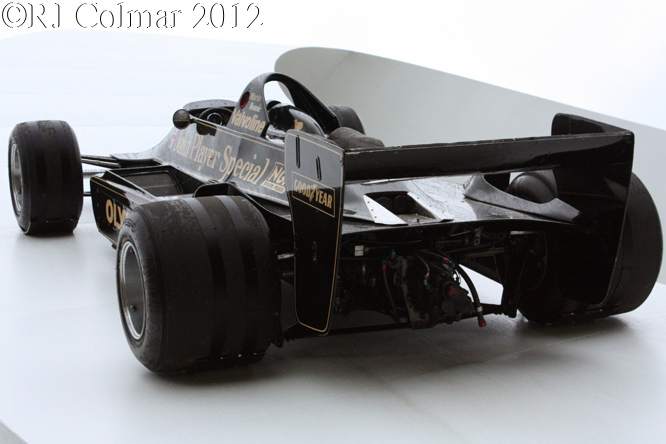
John Player Team Lotus hit the track running in 1978 with Mario Andretti winning the opening race of the season in Argentina and his team mate Ronnie Peterson winning the third race of the season after a thrilling last couple of laps in South Africa. Both of these victories were achieved with the previous seasons Lotus Ford 78 ‘wing car design’ for 1978 Colin Chapman and his engineers came up with something even more refined in the shape of today’s featured car the ‘ground effect’ Lotus Ford 79.

Lotus Ford 79, Goodwood, Festival of Speed

The Mario Andretti first raced a Lotus 79 in the non championship International Trophy race at Silverstone a race well remembered because the front row qualifiers Ronnie Peterson and Niki Lauda both spun of on the warm up lap leaving Andretti and James Hunt to start at the front of the grid despite qualifying 3rd and 4th. Andretti only lasted two laps before he spun out with Hunt spinning out one lap earlier at the same spot.

Lotus Ford 79, Goodwood, Festival of Speed

However for the Belgium Grand Prix there were no mistakes Mario qualified on pole and won, driving I believe from Ronnie who started 7th in the older Lotus Ford 78. At the Spanish Grand Prix Mario was I believe given the #79/3 seen above while Ronnie took over Mario’s Belgium winning #79/2 seen below. Mario qualified on pole and Ronnie 2nd and that is how the Spanish Grand Prix finished.

Lotus Ford 79, Goodwood, Festival of Speed

Mario retired from the Swedish Grand Prix after qualifying on pole leaving Ronnie to finish 3rd behind the controversial Brabham fan cars of Lauda and Watson. Bernie Ecclestone chose to withdraw the Brabham BT46 fan cars after just one race. At the following French Grand Prix Mario qualified 2nd and Ronnie 5th, however they finished 1st and 2nd respectively for the 3rd time in the 1978 season.

Lotus Ford 79, Goodwood, Festival of Speed

For the British Grand Prix it was Ronnie and pole and Mario next to him but both cars retired. In Germany Mario qualified on pole with Ronnie sat next to him on the grid and by now unsurprisingly that is how they finished the race. In Austria Ronnie was again on pole with Mario starting second however Mario retired leaving Ronnie to take an unchallenged win which would prove to be his last.

Lotus Ford 79, Goodwood, Festival of Speed

At the Dutch Grand Prix Mario qualified on pole in #79/3 with Ronnie beside him in #79/2 and the pair duly took their fifth and final 1-2 result of the season. This would prove to be Mario’s last Grand Prix win and indeed the last for any American driver and Ronnie’s last ever finish too. Ronnie crashed #79/2 during practice for the Italian GP and started the race from fifth in an older Lotus 78 while Andretti started from pole in the latest #79/4. Ronnie was involved in a start line accident which broke his legs, unfortunately during the night bone marrow from his injuries got into his blood stream and he died the following morning. The race was restarted and a subdued Mario finished sixth which was enough to claim the championship, but in truth Mario was far more concerned for Ronnie with whom he had been good friends since there time as team mates driving Ferrari sports cars in the early 1970’s. Ronnie for the second time in his career finished second in the World Drivers Championship.

Lotus Ford 79, Goodwood, Festival of Speed

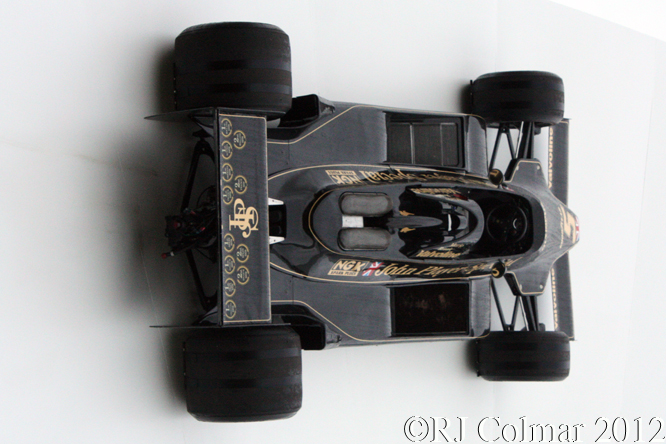
The success of the Lotus 79 was largely due to what was happening to the airflow beneath the bodywork, by building the monocoque just wide enough to hold the driver with fuel tank behind him and the motor behind that, Colin Chapman and his engineers Peter Wright, Geoff Aldridge, Martin Ogilvie and Tony Rudd used the side pods to create venturi by using a low wide neck at the front entrance to the side pods and tall wide exit, with side skirts sealing airflow under the car. When the car was moving air was guided into a partial vacuum created between the venturi side pods under surface and the surface of the road and this had the effect of sucking the car to road which allowed the car to negotiate corners at higher speeds than their competitors, most of whom had still not got to grips with the wing car aerodynamics advanced by the previous years Lotus 78.

For the last two races of the 1979 season perennial Formula One under achiever Jean Pierre Jarrier joined Mario in the team Mario qualified on pole in the USA with J-PJ 8th but neither car finished in the US Grand Prix. The final race of the season was held in Canada where Mario could only qualify 9th and Jean Pierre sat on pole. During the race Jean Pierre looked set for a win until he retired with an oil leak.

Mario finished tenth. The Lotus 79’s were set to be replaced by even more radical Lotus 80’s in 1979 but everything did not go to plan and so the 79’s were pressed into service again for most of the season but were out classed by their competitors who were getting to grips with ground effects aerodynamics.

A little post script courtesy Barry Boor, Mario Andretti was invited to drive the inauguration lap of the next home of the United States Grand Prix at Circuit of the America’s on October 21st, the car he drove was naturally a Lotus Ford 79 with which he won his world Championship, you can see how he got on in this linked youtube clip.

Thanks for joining me on this “Mario & Ronnie Show” edition of “Gettin’ a li’l psycho on tyres, I hope you will join me again tomorrow. Don’t forget to come back now !

Share

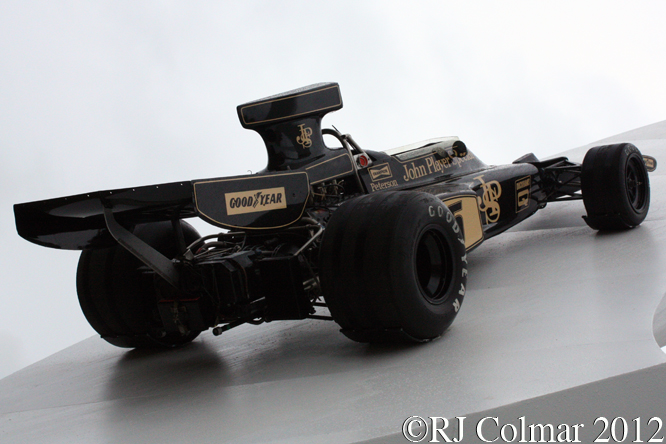
Ronnie’s Rocket – Lotus Ford 72 E

Lotus went into the 1973 Formula One Championship season as World Champion Constructors with reigning World Drivers Champion Emerson Fittipaldi being joined by a new team mate 1971 Championship runner up Ronnie Peterson.

Lotus 72 E, Goodwood Festival of Speed

The team started the season with the same Lotus 72 D model as they had used through out 1972 albeit now running on Goodyear tyres in place of the previous seasons Firestones. Emerson started the season well with 2 wins and a 3rd place from his first 3 starts while Ronnie had only two retirements and an 11th place finish to show from the same three races.

Lotus 72 E, Goodwood Festival of Speed

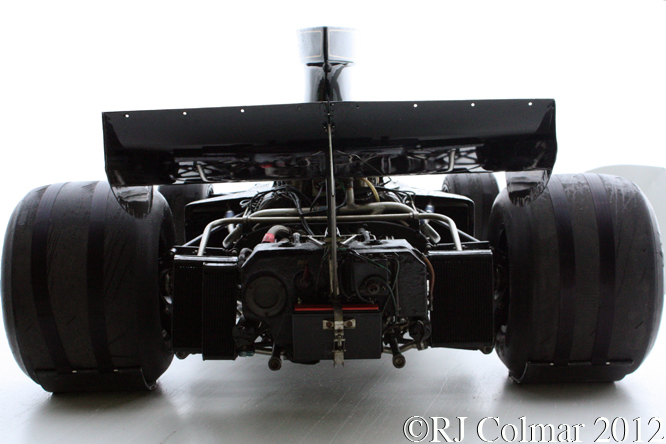
At the non championship Race of Championship the Lotus 72 D were brought up to E specification which included mounting the rear wing above the oil tank further back from the rear wheels and a wider track for the wheels front and rear. I well remember seeing both of the new cars spectacularly bottoming out on their debut at Brands Hatch as they approached the fearsome off camber and steep drop to Paddock Bend sending a shower of sparks from under the cars.

Lotus 72 E, Goodwood Festival of Speed

Both cars retired from the Race of Champions but Emerson won the 1973 Spanish Grand Prix, his last in a Lotus, before scoring three further second place finishes and a third on his way to a distant 2nd place championship finish behind Jackie Stewart and his Tyrrell Ford 006 who had clocked up five wins and two seconds on his way to his third and final title.

Lotus 72 E, Goodwood Festival of Speed

Ronnie meanwhile scored his first four Grand Prix wins and two second place finishes on his way to third in the championship title, helping Lotus win their second consecutive constructors championship. For 1974 Jackie Stewart retired, Emerson moved to McLaren to drive the M23, based very much on the principles of the Lotus 72, and Ronnie was joined at Lotus by Belgian Jacky Ickx.

Lotus 72 E, Goodwood Festival of Speed

Lotus started the 1974 season with the 72 E for the first two championship races and then Ickx used a 72E at the non championship Race of Champions and won after pulling off a brilliant overtaking move on Niki Lauda in his Ferrari 312 B3 going into Paddock Bend right in front of my nose. If all had gone to plan this would have been the last ever race for the Lotus 72 which had been introduced in 1970.

Lotus 72 E, Goodwood Festival of Speed

The Lotus 76 was first raced in the 1976 South African Grand Prix where neither car finished, Ronnie qualified his 76 at the non championship International Trophy at Silverstone and again at the Spanish Grand Prix but getting the car to finish proved impossible and so the Lotus 72 E’s were wheeled out again for the 1974 Monaco Grand Prix where Ronnie won from third on the grid, Ronnie added to more victories to the Lotus 72 E’s tally during the season to finish a distant fifth in the Championship which was won by his former team mate Emerson Fittipaldi in his Lotus 72 copy the McLaren M23.

For 1975 the Lotus 72 E’s were wheeled out again as the Lotus 76 had been abandoned as a failure, it would take a full twelve months for Lotus to build a new challenger such was the lack of financial resources and Lotus commitment to road car and sundry other projects. Ronnie gamely struggled on scoring just three points paying finishes while Jacky Ickx quit the team before the seasons end having scored a single second place finish.

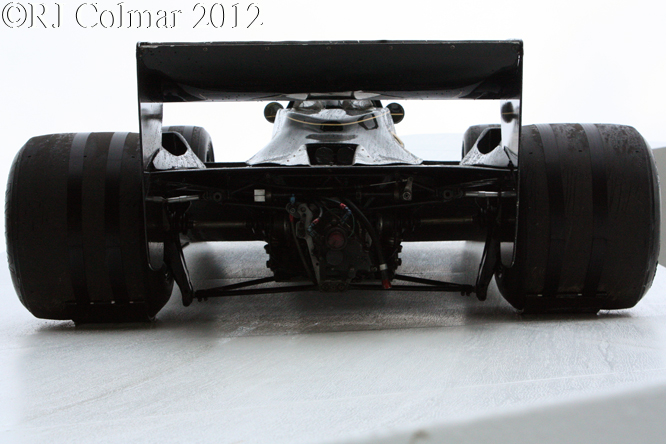
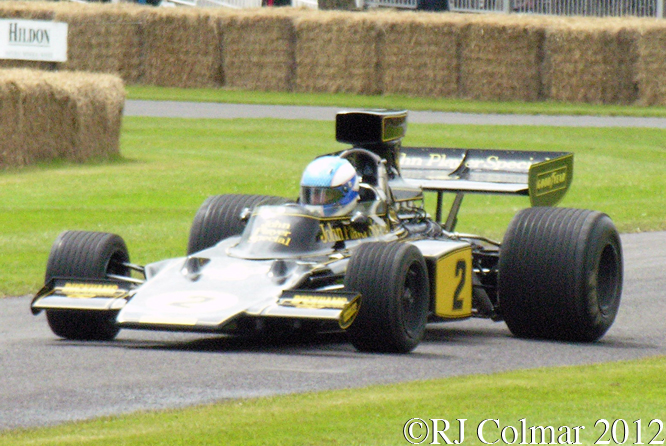
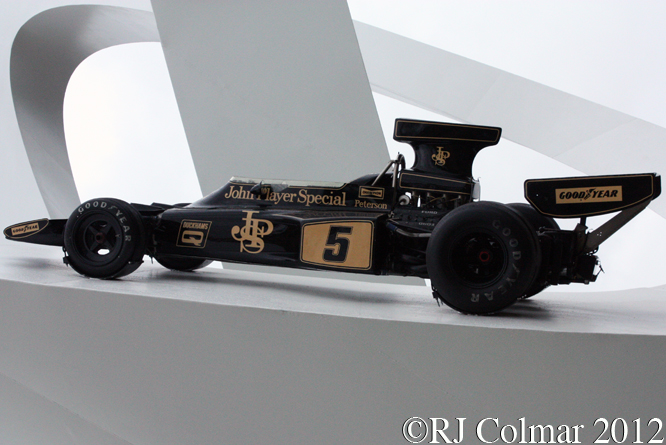
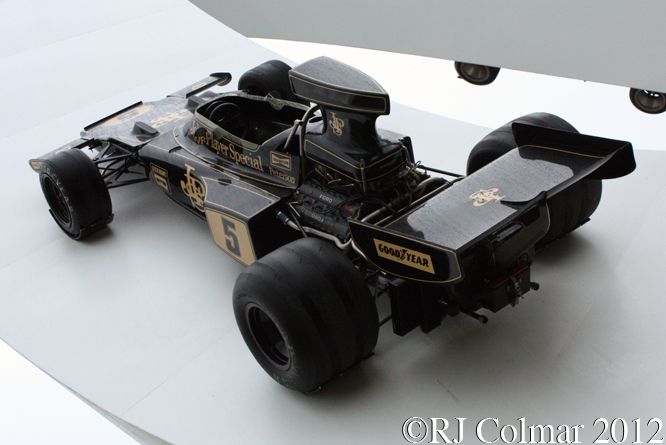
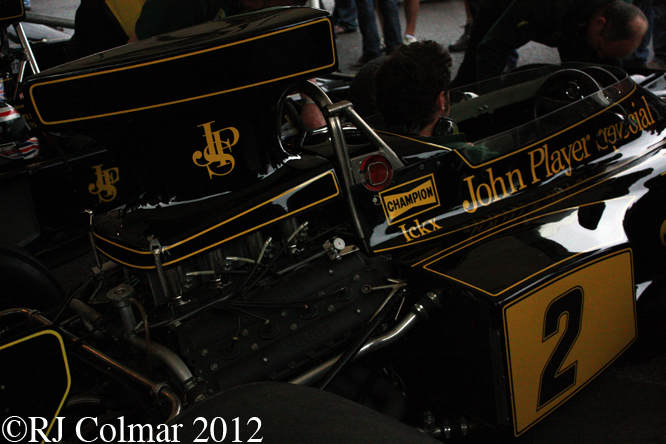
I believe the two cars seen here both belong to Classic Team Lotus with the #2 most likely being a replacement chassis for the wrecked Lotus 72/R5 driven by Emerson Fittipaldi in C spec to victory in the 1970 US Grand Prix and last used in E spec by Brian Henton in the 1975 US Grand Prix.

The #5 appears to be #72/R9 built new for the 1975 season and used exclusively by Ronnie Peterson who scored a best third place finish in the non championship 1975 Race of Champions at Brands Hatch, and three further points paying finishes including a 5th place finish in the 1975 United States Grand Prix which would be the cars final appearance.

Fans of the Lotus 72 in the UK will be interested to know that there will be a 24 min documentary on the story behind the Lotus 72 on Motors TV in December, keep your eye out for it in the schedule. The films director Gary Crichter will also be releasing a full 90 min version with 60 mons of extra’s of the film on dvd in the near future. Keep your eye out on the www.lotus72dvd.com website for further announcements.

Thanks for joining me on this “Ronnie’s Rocket” edition of “Gettin’ a li’l psycho on tyres” I hope you will join me again tomorrow, don’t forget to come back now !

Share