Tag Archives: Ford

An Ocean Of Crown Vics – Ford LTD Crown Victoria

The saying in the li’l ol’ England was that everything in the USA and indeed North America was bigger than anything ever seen in Europe and to a greater or lesser extent that was verified on my first trip to North America in 1988, the buildings the cars and even the average height and build of the people seemed to dwarf anything I was exposed to on a regular basis in London or anywhere else in Europe.

Ford LTD Crown Victoria, Indiana State Police, Indianapolis Motor Speedway

What I was not expecting on my 24 hour trip from Toronto to Indianapolis for the Indy 500 was the overwhelming number of race fans camped out in every suburban nook and cranny surrounding Indianapolis Motor Speedway. In Europe most race tracks don’t attract even half of the 250,000 fans IMS can hold and even then the fans are usually spread out over several miles of country side and so never approach the kind of concentration seen at Indy.

I had expected a pretty wild, read friendly if a little drunk, crowd and was not disappointed, though I am glad I did not take my girl friend with me, I think she may have felt just a little intimidated by the rowdy vibe. Soon after getting into the IMS infield just after dawn on race day I found an apparent ocean of Indiana State Police pre’88 face lift Ford LTD Crown Victoria’s and was so impressed with the scale of the law enforcement presence I took the photo above.

The pre ’88 face lift Ford LTD Crown Victoria, also known as the Crown Vic was launched in 1983, from what I have been able to discern police package Crown Vic’s were available either 160 hp 5 litre / 302 cui EFI V8’s or 180 hp 5.7 litre / 351 cui HO V8’s driving through four speed AOD (Automatic Overdrive) transmissions around 1987, never enough to beat the Chevrolet Caprice in the Michigan State Police tests run at Michigan International Speedway, but close enough to keep the order books open until the introduction of the Ford Crown Victoria Police Interceptor in 1992.

These cars were particularly popular with law enforcement agencies because they were rear wheel drive, RWD, having a perceived more predictable handling and because they featured a separate chassis onto which the body was attached offering the advantage of lower repair costs because the chassis was less likely to get damaged in inevitable collisions which law enforcement work would expose these vehicles to.

Thanks for joining me on this “A Field Full Of Crown Vics” edition of “Gettin’ a li’l psycho on tyres” I hope you will join me again tomorrow for Ferrari Friday. Don’t forget to come back now !

Share

Twin I Beam Flex-O-Matic – Ford F-Series Sport Custom

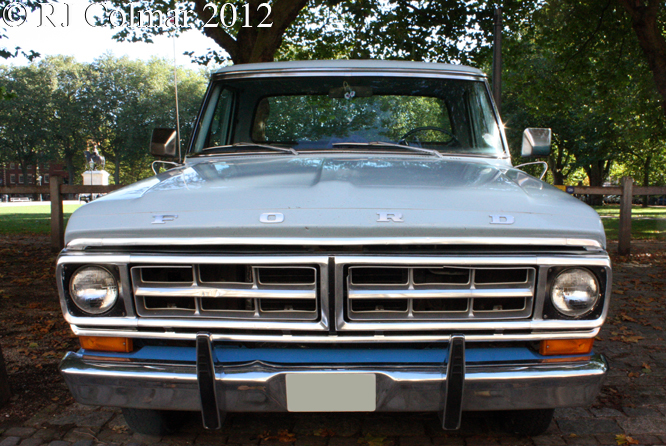
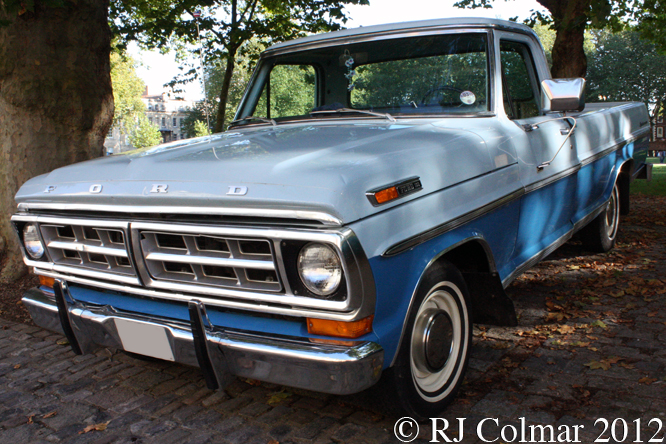
The fifth generation, US built, Ford F-Series pickups were built from 1967 to 1972, Brazilian versions were built from 1971 through 1992. A face lifted F-Series with a new grill appeared in 1970 and today’s featured ’71 Custom Sport version had further minor grill changes.

Ford Sport Custom, Avenue Drivers Club, Queen Square Bristol

’71 F-Series pick ups also featured a new steering wheel design, colour options and an AM/FM radio option.

Ford Sport Custom, Avenue Drivers Club, Queen Square Bristol

Ford marketed the ’71 F-Series on the strength of “Better ideas” which made “Ford Pickups work like a truck” and “ride like a car”.

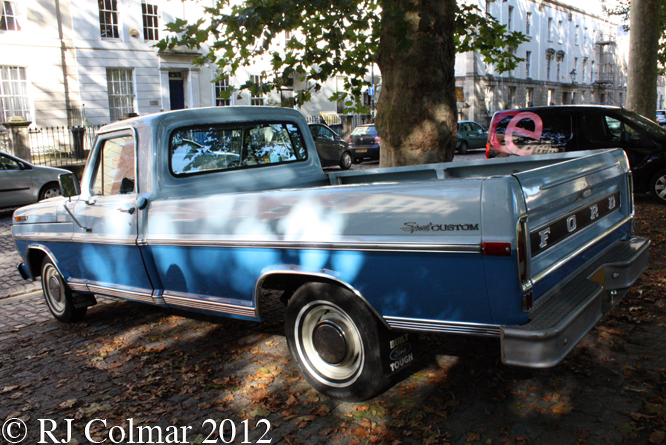
Ford Sport Custom, Avenue Drivers Club, Queen Square Bristol

Better idea’s also included independent front “Twin I-Beam” suspension, first seen in 1965, which dramatically improved the handling over the pre 65’s solid front axle suspension, and dramatically increased the appeal of the F-series beyond the traditional agricultural and building trades communities.

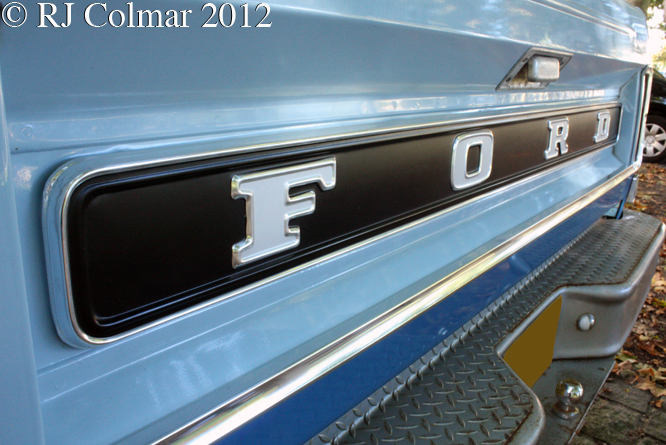
Ford Sport Custom, Avenue Drivers Club, Queen Square Bristol

The rear suspension was known as “Flex-O-Matic” in Ford’s marketing literature, this appears to be a regular solid rear axle and leaf spring set up with a rubber pad twixt the rear leaf springs and a shackle attached to the body which acts as a shock absorber on any upward movement of the axle.

Ford Sport Custom, Avenue Drivers Club, Queen Square Bristol

The Twin-I-Beam and Flex-O-matic suspension are the bain of ‘Rodders’ lives because the front cannot be lowered without adversely affecting the geometry of the front wheels leaving them with too much negative camber, and the rubber pad and shackle interfere with the lowering of the rear suspension.

The Sport Custom seen in these photographs at an Avenue Drivers Club meeting is powered by a 215 hp 5.9 litre / 360 cui FE V8 motor.

Thanks for joining me on this “Twin I Beam Flex-O-Matic” edition of “Gettin’ a li’l psycho on tyres”, I hope you’ll join me again tomorrow when I be looking at a vehicle that appears to define the term “horseless carriage”. Don’t forget to come back now !

Share

Protoect-O-Top – Ford Ranchero

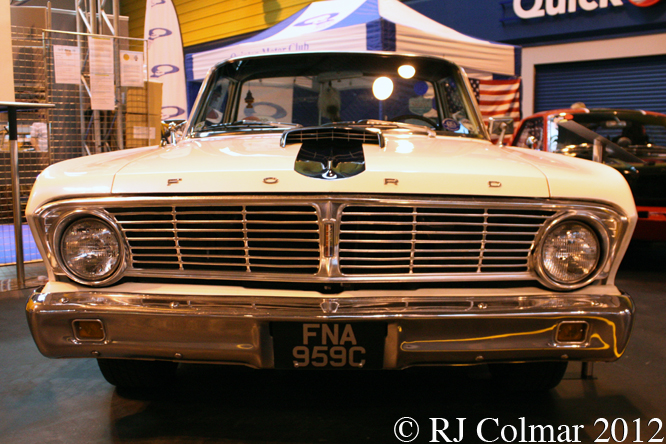
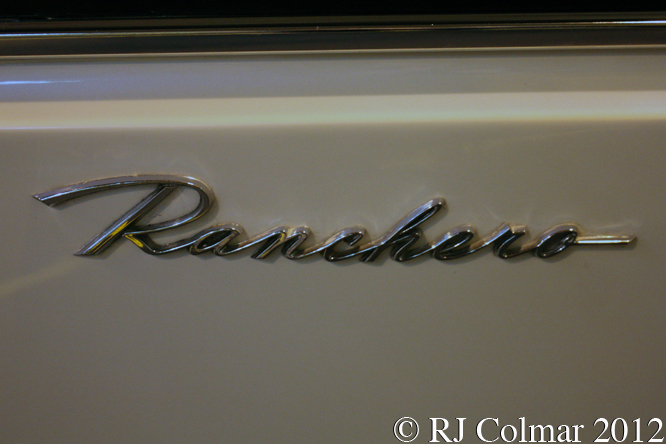
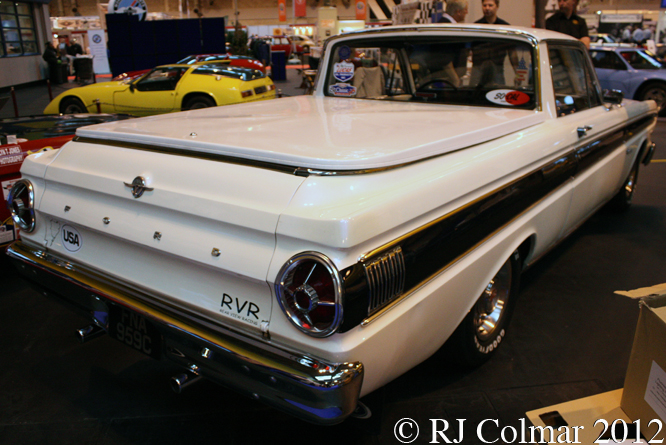
Unlike it’s earlier siblings, which had been based on the full size Ford Custom range, the second generation Ford Ranchero was based on the mid size Ford Falcon range and launched in 1960.

Ford Ranchero, Classic Motor Show, NEC Birmingham

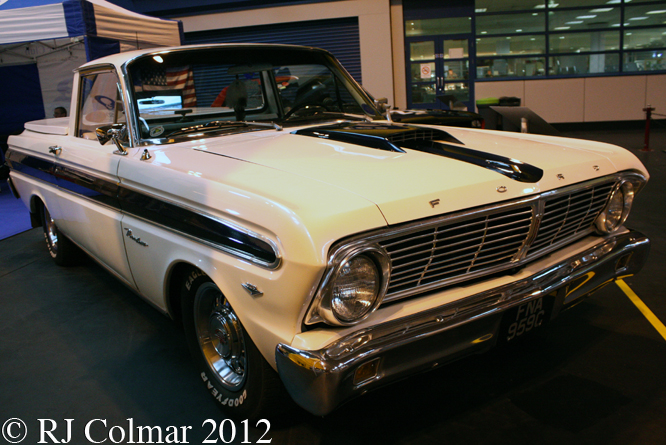
In 1964 like it’s parent Falcon the Ranchero received a face lift with the 4.7 litre / 289 cui Windsor V8 replacing the 4.3 litre / 260 cui variant in the top performance models.

Ford Ranchero, Classic Motor Show, NEC Birmingham

Note that while the ’64 Falcon was known as second generation, the ’60 to ’65 model Ranchero’s inclusive are known as second generation Ranchero’s.

Ford Ranchero, Classic Motor Show, NEC Birmingham

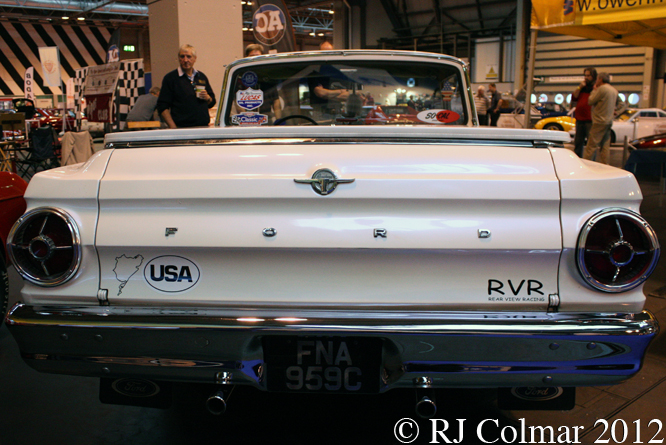
Toady’s featured vehicle powered by a “289” was built in 1965, but appears not to have been imported into the UK until 2009.

Ford Ranchero, Classic Motor Show, NEC Birmingham

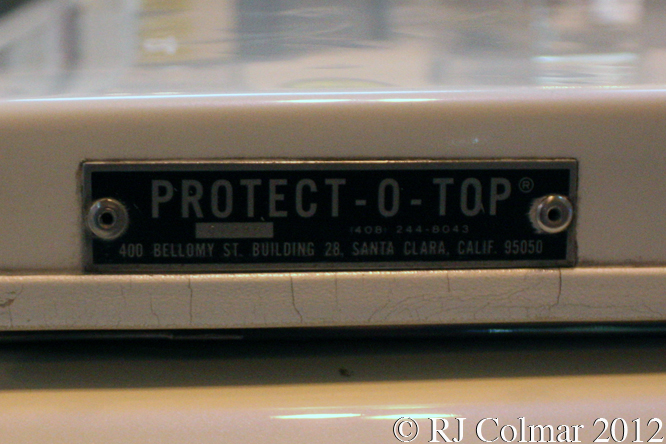
The rear deck is covered by an aftermarket Protect-O-Top made of fibre glass with spring loaded hinges made in Santa Clara CA, Protect-O-Top appears to have gone out of business after the owner failed to attract a buyer some years ago.

Ford Ranchero, Classic Motor Show, NEC Birmingham

In 2011 a ’65 Ranchero owner managed to trace two former Protect-O-Top employees who had access to the original moulds. They were persuaded to make up some new Ranchero Protect-O-Tops for between $650 and $900 each. The cost of shipping these items doubled the cost, because they could only be carried at commercial rates due to their “66 x 60” unpacked size.

Ford Ranchero, Classic Motor Show, NEC Birmingham

With a larger payload than the VW Type 2 pickup, against which the Ranchero was designed to compete, the model did well, unlike it’s parent Falcon which could not hold it’s own against the new Ford Mustang pony car.

Thanks for joining me on this “Protoect-O-Top” edition of “Gettin’ a li’l psycho on tyres” I hope you will join me again tomorrow. Don’t forget to come back now !

Brighton Speed Trials Under Threat of Permanent Cancellation !

In their infinite wisdom, Brighton & Hove City Council are seeking to ban the Brighton Speed Trials from 2014.

If you care about speed and or motorsport history, please sign this linked petition to save Brighton Speed Trials in 2014 and beyond.

It’s a faf to Register before signing, but relatively painless compared to loosing the event which has been run with few interruptions since 1905.

You do not need to be resident in Brighton or even the UK to sign.

More on Brighton Speed Trials on this link.

Thanks and please spread the word through whatever social media you have at your disposal.

Share

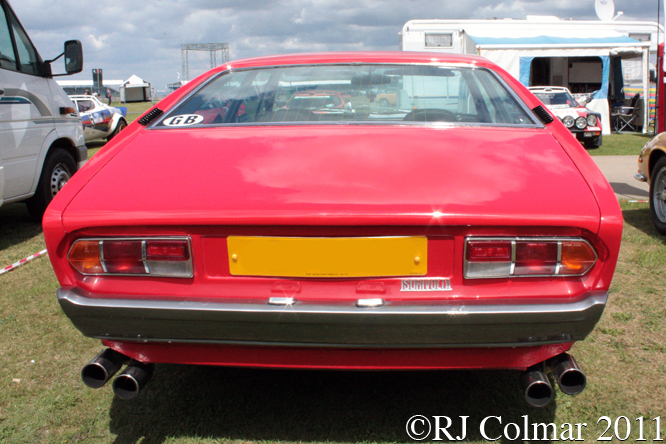
Wife’s New Clothes – Iso Rivolta Lele IR6

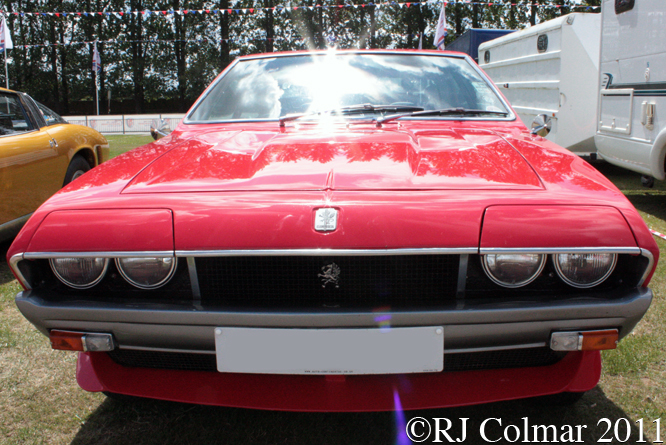
Before designing the body for the 2+2 Lamborghini Jarama which I looked at a couple of weeks ago, Bertone’s Marchello Gandini was commissioned to design what was intended to be a one off 2+2 body for an ISO Rivolta IR300.

ISO Rivolta Lele IR6 Sport, Silverstone Classic

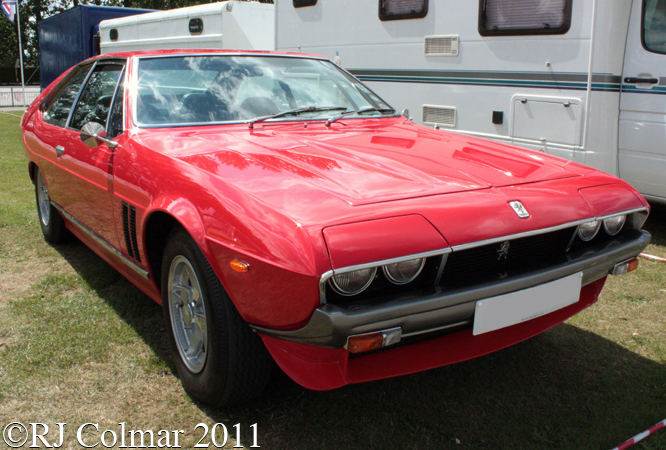
Piero Rivolta was so impressed with Gandini’s new design that he had the one off put into production lending his wife’s name to the new ISO Rivolta Lele which was launched in 1969 powered by a Chevrolet V8 tuned to either give 300hp or 350 hp.

ISO Rivolta Lele IR6 Sport, Silverstone Classic

In 1972 after General Motors demanded payment for it’s motors prior to shipping ISO Rivolta switched to using Ford Cleveland motors in it’s Grifo, Fidia and Lele models with the Ford powered Lele becoming the Lele IR6 with 325hp of which 130 were built from 1972 until ISO Rivolta went bankrupt in 1974. Around 20 Lele IR6 models with manual transmissions were built with their Cleveland motors tuned to give 360 hp and these were known as IR6 Sports.

ISO Rivolta Lele IR6 Sport, Silverstone Classic

In all 285 ISO Lele’s, of all types, are thought to have been built including 3 or possibly 4 cars commissioned by Philip Morris for ISO Marlboro F1 drivers Howden Ganley and Nanni Galli along with associated promotions.

Thanks for joining me on this “Wife’s New Clothes” edition of “Gettin’ a li’l psycho on tyres” I hope you will join me again tomorrow. Don’t forget to come back now !

Brighton Speed Trials Under Threat of Permanent Cancellation !

In their infinite wisdom, Brighton & Hove City Council are seeking to ban the Brighton Speed Trials from 2014.

If you care about speed and or motorsport history, please sign this linked petition to save Brighton Speed Trials in 2014 and beyond.

It’s a faf to Register before signing, but relatively painless compared to loosing the event which has been run with few interruptions since 1905.

You do not need to be resident in Brighton or even the UK to sign.

Thanks and please spread the word through whatever social media you have at your disposal.

Share

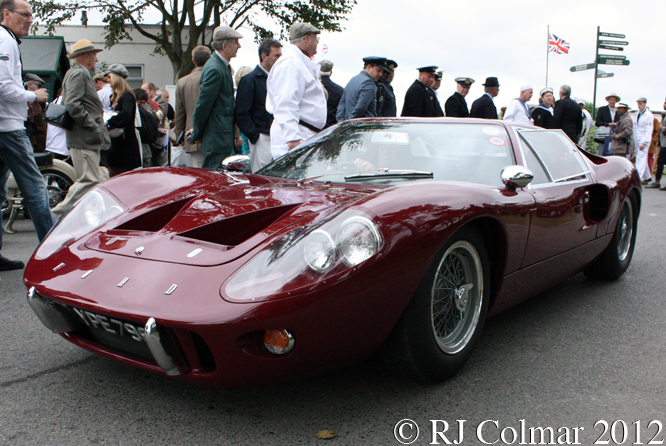
Lower Exhaust More Hot Luggage – Ford GT 40 MK III #M3 1103

Today’s featured car is a Ford GT40 Mk III chassis M3 1103, I believe the third of just seven built under JW Automotive’s direction at Slough.

Ford GT40 Mk III, Goodwood Revival

#M3 1103 was built in 1968 and sold to the Chairman of Beaverbrook Newspapers Sir Max Aitken who kept it for four years before selling it to someone who had flared wheel arches fitted to accommodate alloy wheels and repainted white with blue stripes.

The third owner kept the car at the National Motor Museum in Beaulieu for many years through the 1980’s.

CKL Developments
were responsible for preserving #M3 1103, which has less than 6,500 miles on the clock to it’s original condition and correct deep red colour for it’s forth and current owner.

Since my original GT40 Mk 111 post I have found out that the tailpipes on the Mk III were lowered to run alongside the gearbox, as opposed to over the top of the gearbox on all previous incarnations of the GT40, which allowed for a larger luggage space on top of the gearbox with the disadvantage that the luggage was now much warmer than had previously been the case.

The white car featured a couple of years ago is #M3 1107, the last of the GT40’s to be made in Slough, it has been retained by Ford since the day it was completed. #M3 1107 has been seen in numerous museums and for a while was used as personal transport by Ford’s über Public Relations executive Walter Hayes while he was based at Ford HQ in Dearborn.

#M3 1103 is seen above at the Goodwood Revival meeting where both it at #M3 1107 are regularly used as course cars during the running of the Goodwood Revival race meetings.

Thanks for joining me on this “Lower Exhaust More Hot Luggage” edition of “Gettin’ a li’l psycho on tyres”, I hope you will join me for a look at a one off vehicle commissioned from Ferrari and Pininfarina. Don’t forget to come back now !

Brighton Speed Trials Under Threat of Permanent Cancellation !

In their infinite wisdom, Brighton & Hove City Council are seeking to ban the Brighton Speed Trials from 2014.

If you care about speed and or motorsport history, please sign this linked petition to save Brighton Speed Trials in 2014 and beyond.

It’s a faf to Register before signing, but relatively painless compared to loosing the event which has been run with few interruptions since 1905.

You do not need to be resident in Brighton or even the UK to sign.

Thanks and please spread the word through whatever social media you have at your disposal.

Share

Made In Zambia – Costa Borthers ALFA Romeo Special

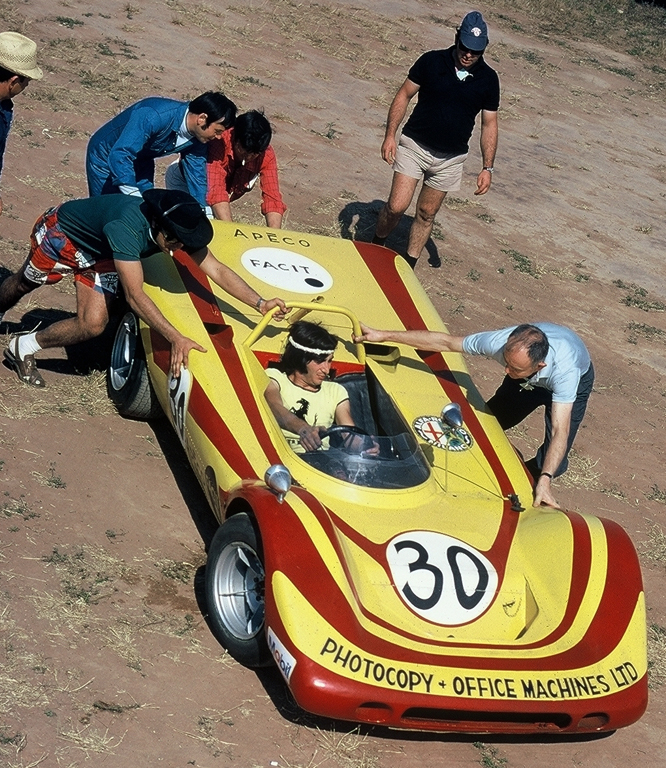
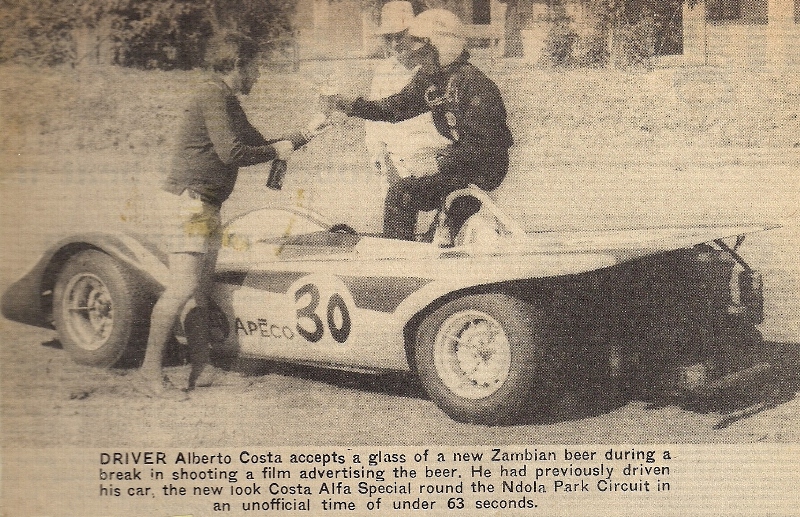
Season’s Greetings today’s post is only possible thanks to the wonders of the Internet being able to put people in touch who have never met, but have the briefest of shared experiences. Today’s featured car the Costa Brothers Alfa Romeo was built to compete in local races in Zambia at the end of the 1960’s.
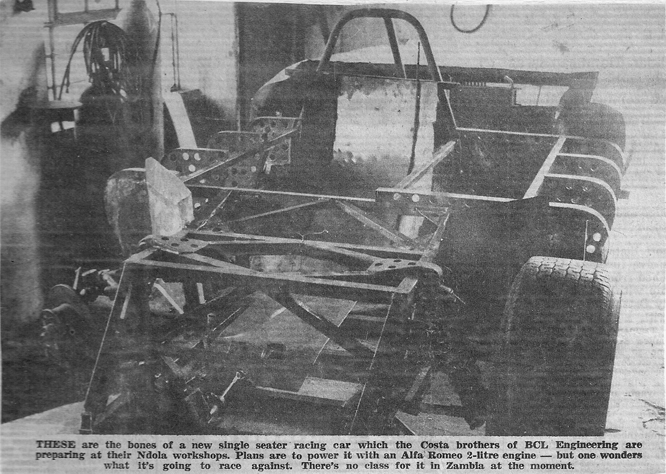
 Costa ALFA Romeo Special

Inspired by Carlo Abarth, who had designed several successful racing cars with the engine behind the rear axle, the Costa Special was conceived as a single seater with the driver offset to the right, and with enclosed wheel body work and built in their shop in Ndola on what is known as the Copperbelt.
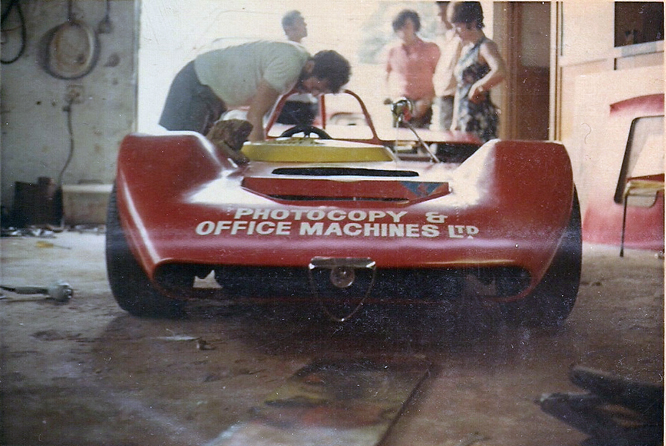
 Costa ALFA Romeo Special

The design was finalised by trial and error by brothers Remo and Alberto Costa, qualified structural and mechanical engineers from Borgo Val di Taro , Parma, Italy, Remo moved to Zambia as a technical supervisor for FIAT. By 1968 Remo and Alberto had settled into Ndola and having messed around with a FIAT 500 Abarth in Italy fell in with the Racing Club at Ndola Park.
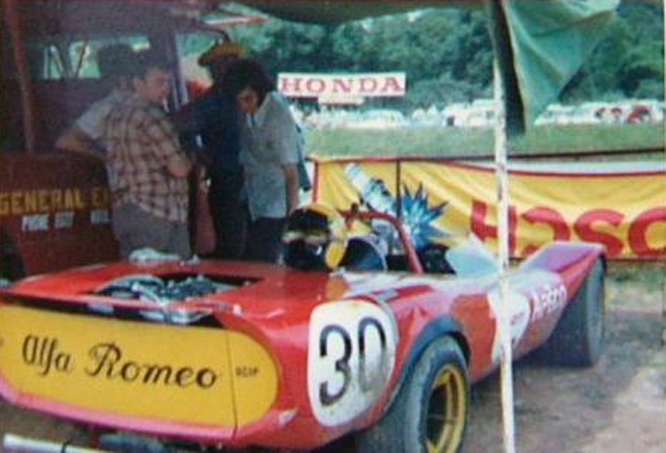
 Costa ALFA Romeo Special

In it’s first incarnation the special appears to have used a crashed Fiat 850 as a donor car and had a 1570cc ALFA Romeo motor, taken from Remo’s Giulia Spyder hanging out behind the rear axle driven through a Volkswagen Beetle gearbox with bodywork covering the motor.
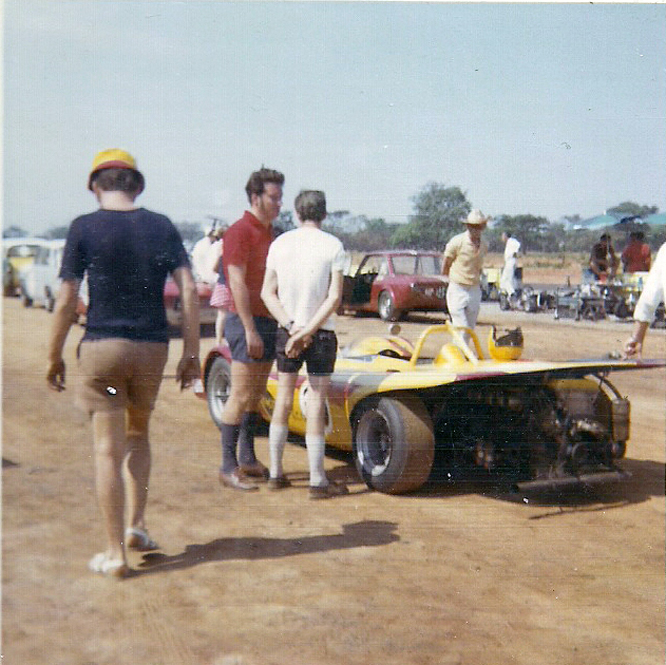
 Costa ALFA Romeo Special

The car was built in the brothers spare time, with the help from a considerable proprotion of the substantial expatriate Italian population in Ndola. They even had contacts that were able to secure some parts at short notice by Alitalia one of the few European Airlines operating scheduled flights out of Zambia. The all enclosing rear bodywork was replaced with a rear deck to improve engine cooling.
 Costa ALFA Romeo Special

Remo and Alberto shared the driving. Ken Lancashire who wrote many reports on local racing for the Zambian Press seems to have made a habit of mistakenly refering to Alberto as Alfredo, that “might” have had something to do with the consumption of a local brew called Castle.
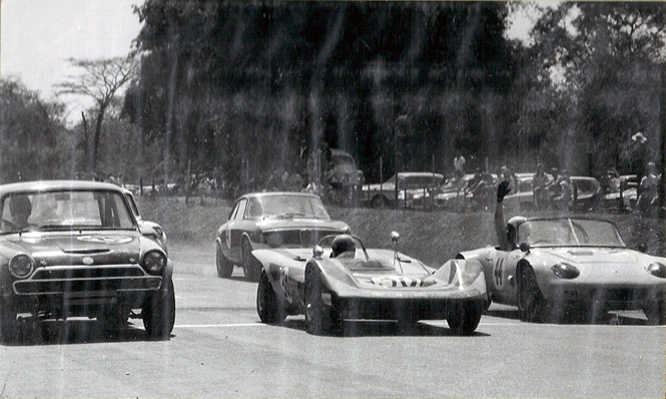
 Costa ALFA Romeo Special

The car was classified as a Group 6 prototype sports car, although it was the only entry in the class, it was allowed to race against a potpourri of entries, above stalled Kevin Cameron raises his arm on the grid in his modified Elan, at Ndola Park as the Costa Special and an as yet unidentified driver in a modified Mk 1 Ford Cortina get away cleanly.
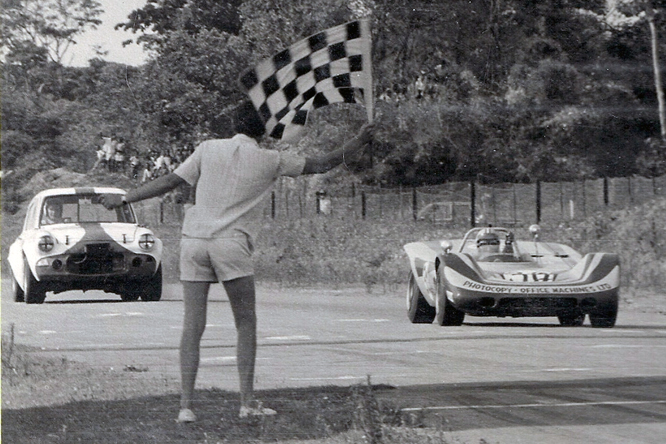
 Costa ALFA Romeo Special

Remo tells me he has no idea how many races the special won up until the car was sold in 1973 when Remo moved to Nigeria and Alberto to Botswana. Remo says “Alberto (was) faster but also more impulsive , or won or broke , I calmer and slower. Above the Costa Special takes another victory at Ndola Park ahead of a modified Ford Anglia driven by an as yet unidentified driver, note the rudimentary safety features there is a rudimentary bank and a fence between the spectators and and the cars,
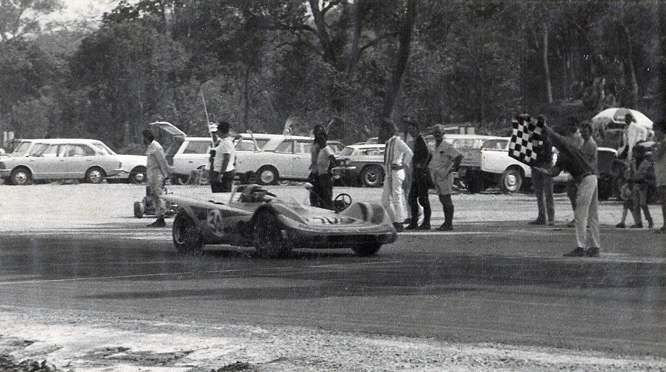
Costa Alfa Romeo Special

this was not always the case as seen in the photo above at a track I believe to be the Lawrence Allen Circuit outside Chingola. Race meetings were run with practice in the morning a mid day scratch race with all the cars starting together followed by an afternoon handicap race with the cars starting individually according to handicap with the slowest away first.
Costa Alfa Romeo Special

When the Costa Brothers left Zambia in 1973 they sold the car by now fitted with a 1750 cc twin spark Alfa Romeo motor and Colotti 5 speed gearbox to Sergio Pavan. They do not know the ultimate fate of the car but do know that Sergio turned the engine and gearbox round to make it a mid engined racer.

Multo grazie to Remo Costa for sharing today’s photographs from his collection and telling me the details, after seeing a post I left on The Nostalgia Forum three years ago.

During my parents time in Zambia there were 4 or 5 motor racing meetings a year of which my parents and I would go to one or two during school holidays from England. These would draw several thousand paying spectators to the two road courses, Ndola Park and Lawrence Allen Circuit.

If you have information about one other road course Bennett’s also in the Copperbelt, possibly near Kitwe, which I have not been able locate on Google Earth and at least one street circuit that ran through the streets of Garneton a suburb north of Kitwe please get in touch.

I believe Garneton was the scene of the countries first motor sport events held on tarmac, though I am not sure exactly when that was.

If you have any further information and or photographs about motor sport in Zambia or the former Northern Rhodesia on two wheels or four, on road or offroad, please do not hesitate to get in contact. In particular if you are, or know of, journalists by the name of Fidelis Munsongo, Dan Fisher (also a kart racer), or Ken Lancashire all of whom I believe might have reported stories to the Times Of Zambia.

Finally if anyone knows of the wearabouts of Sergio Pavan the second owner of the Casta Brothers Special please get in touch.

Thanks for joining me on this “Made In Zambia” edition of “Gettin’ a li’l psycho on tyres” I hope you will join me again tomorrow when I’ll be looking at a Ford GT40 MIII. Wishing you a Merry Christmas and Happy New Year, don’t forget to come back now !

Brighton Speed Trials Under Threat of Permanent Cancellation !

In their infinite wisdom, Brighton & Hove City Council are seeking to ban the Brighton Speed Trials from 2014.

If you care about speed and or motorsport history, please sign this linked petition to save Brighton Speed Trials in 2014 and beyond.

It’s a faf to Register before signing, but relatively painless compared to loosing the event which has been run with few interruptions since 1905.

You do not need to be resident in Brighton or even the UK to sign.

Thanks and please spread the word through whatever social media you have at your disposal
Share

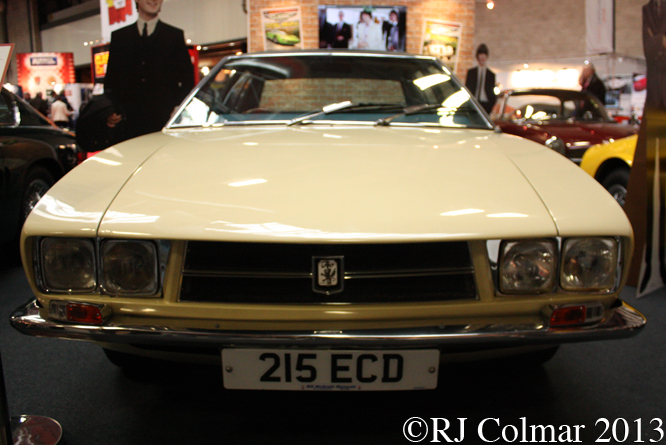
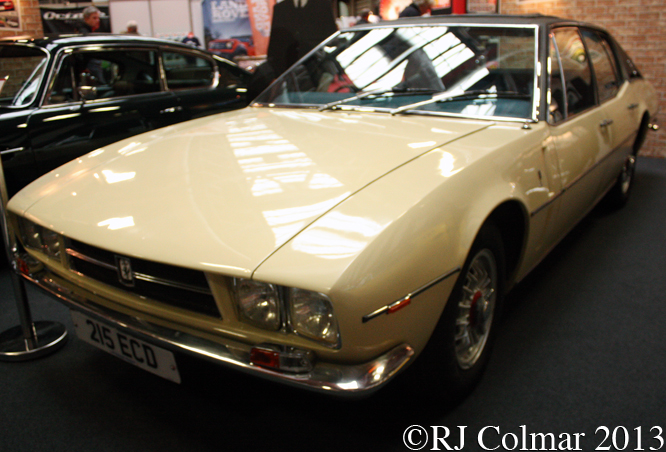
Fastest Four Seats – ISO Rivolta Fidia

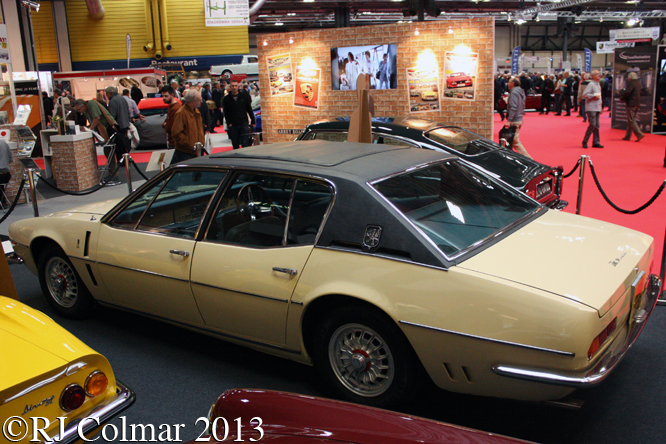
The ISO Rivolta Fidia was designed with a body by Giorgetto Giugiaro then still working for Ghia, to compete with the Maserati Quattroporte first seen in 1963, and was first shown to the public at in 1967 at the Frankfurt Motor Show where it carried the S4 name.

ISO Rivolta Fidia, Classic Motor Show, NEC, Birmingham

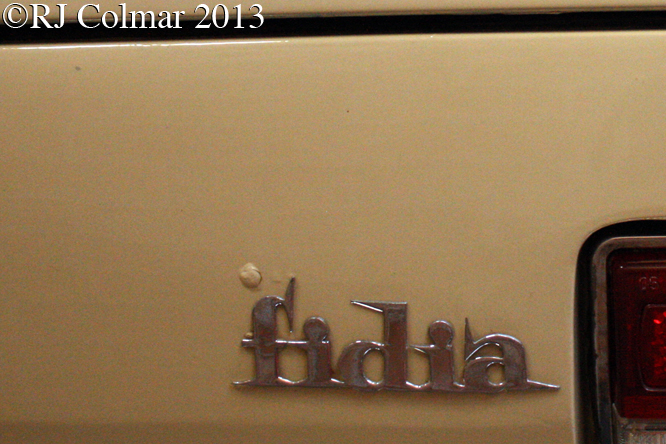
By the time of the 1969 press launch in Athens the S4 had been renamed Fidia after the artist “Phidias” who was responsible for the friezes that decorated the Parthenon that Lord Elgin controversially sent to England in 1802.

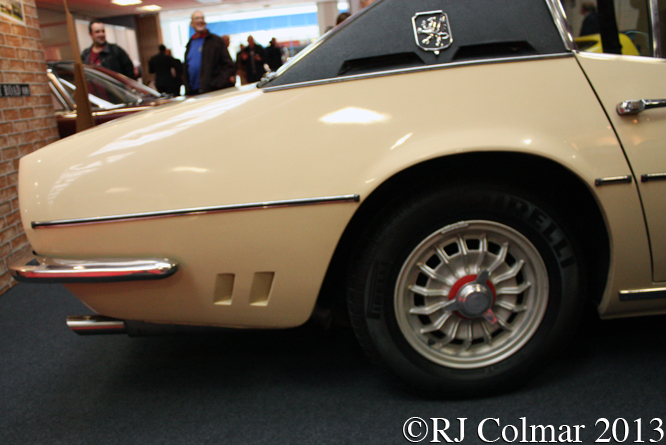
ISO Rivolta Fidia, Classic Motor Show, NEC, Birmingham

The choice of Athens for the press launch was not the wisest as the local petrol was not of sufficiently high octane to prevent “pinking” which where the peak of the combustion process no longer occurs at the optimum moment for the four-stroke cycle.

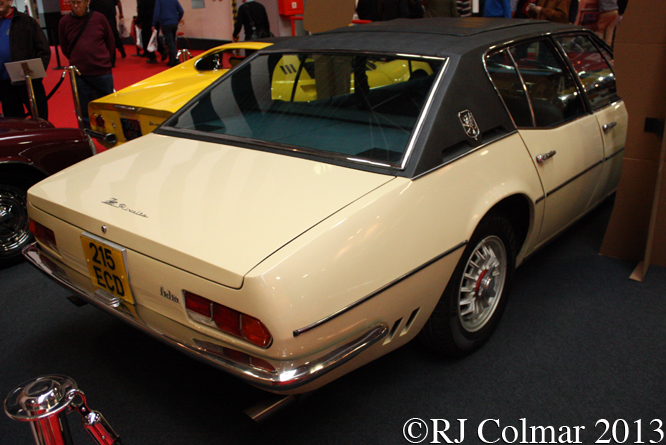
ISO Rivolta Fidia, Classic Motor Show, NEC, Birmingham

At the time of the press launch, with the strap line “The Fastest Four Seats In The World” today’s featured car the second built and first with right hand drive, had already been built and delivered to it’s owner John Lennon for a price in excess of a comparable Rolls Royce.

ISO Rivolta Fidia, Classic Motor Show, NEC, Birmingham

Until General Motors demanded payment in advance of shipping the Fidia was powered by the 5.4 litre / 327 cui small block Chevrolet motor which gave the car an impressive rest to 60 mph time of 7 seconds.

ISO Rivolta Fidia, Classic Motor Show, NEC, Birmingham

From 1973 on the Fidia was powered by Fords 5.8 litre / 352 cui V8 with either a 5 speed manual ZF transmission or Fords Cruise-o-matic automatic transmission.

ISO Rivolta Fidia, Classic Motor Show, NEC, Birmingham

Despite John Lennon buying three Fidia’s, with 192 built between 1967 and 1975 the Fidia never reached the production levels of the Quattroporte of which 776 had been built when production came to a stop in 1969.

Thanks for joining me on this “Fastest Four Seats” edition of “Gettin’ a li’l psycho on tyres” I hope you will join me again tomorrow for a look at an Australian built Land Crab. Don’t forget to come back now !

Share