Tag Archives: Ford

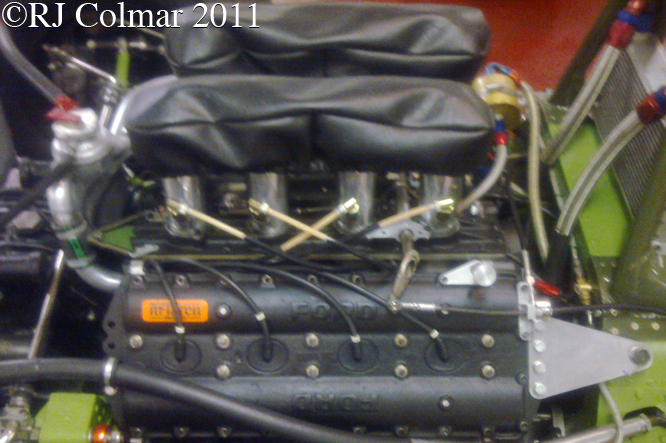
Dinger’s All Wheel Drive – McLaren Ford M9A

After the limited success of the Ferguson P99 in circuit racing from 1961 to 1963 Peter Westbury drove the P99 in 1964 and won the British Hillclimb Championship.

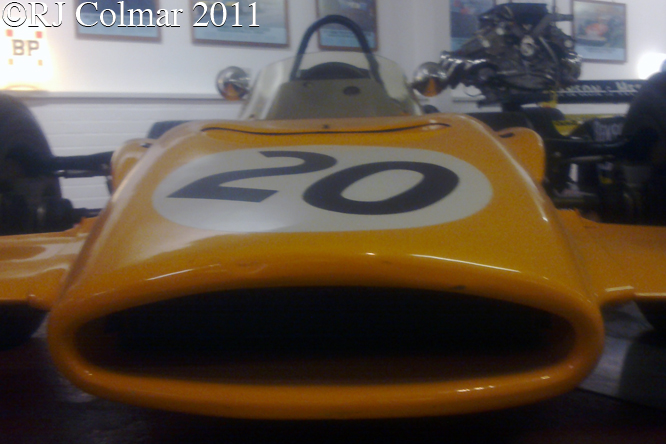
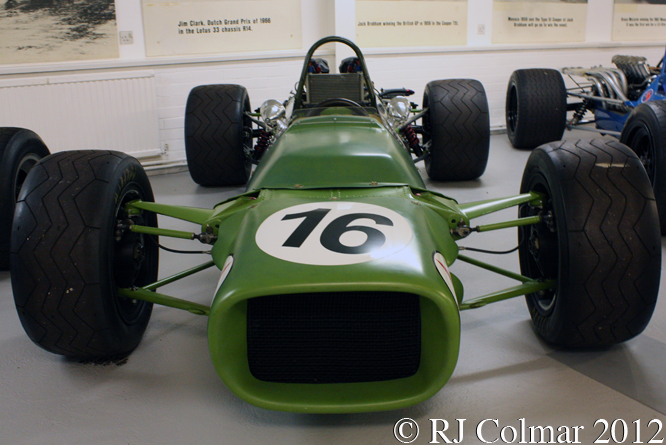
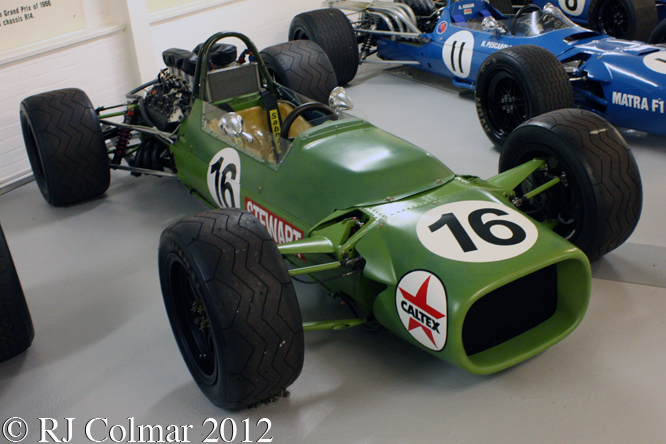
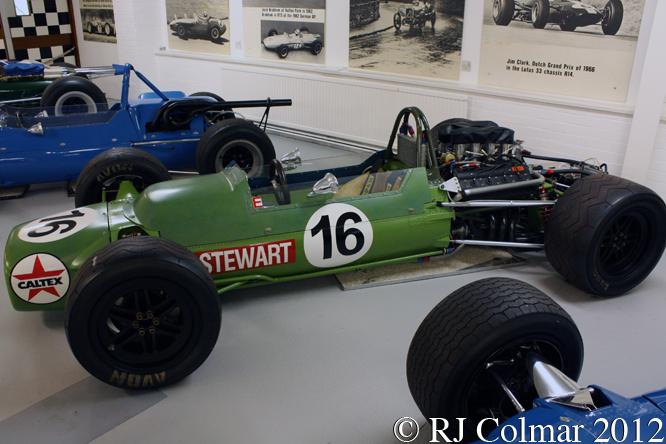
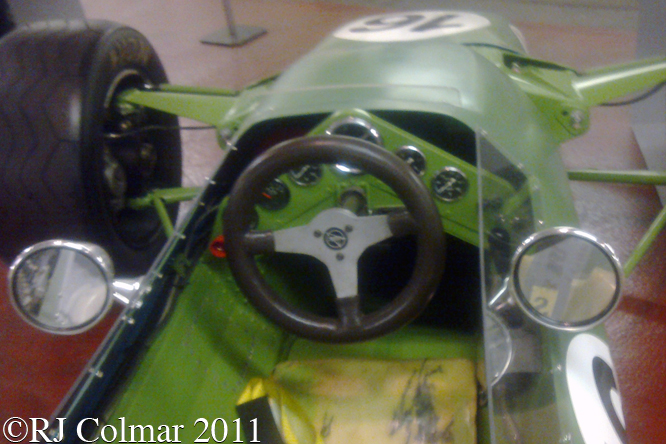
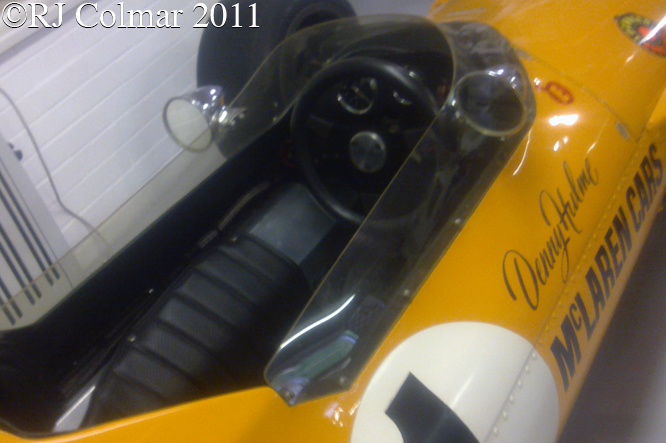
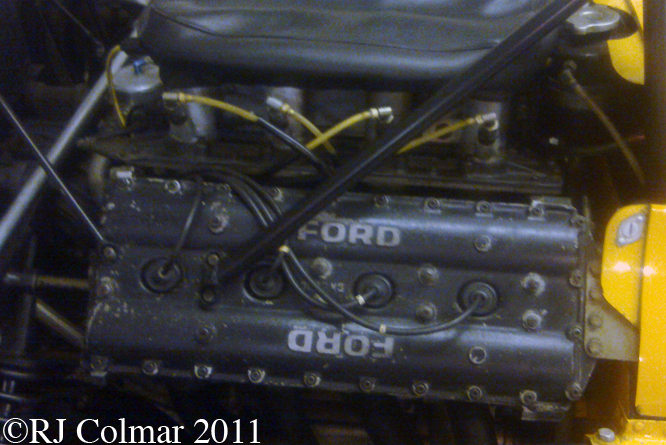
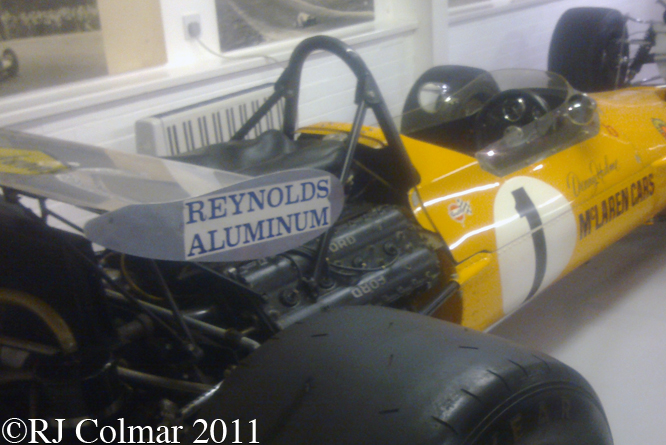
McLaren Ford M9A, Donington Park Museum

Meanwhile Andy Granatelli working with Ferguson had entered Bobby Unser in the Studebaker STP Special for the 1964 Indy 500 where he qualified 22nd but retired after an accident on the opening lap. BRM also became interested in all wheel drive in 1964 building the BRM P67 to test the system in anticipation of the forthcoming 3 litre / 183 cui motors that were to be mandated for Formula One in 1966. The P67 was driven in practice for the 1964 British Grand Prix by Grand Prix debutant Richard Attwood where the car was the slowest to take part. BRM concluded remarkably quickly that all wheel drive held no benefits for them and with drew the car from the race.

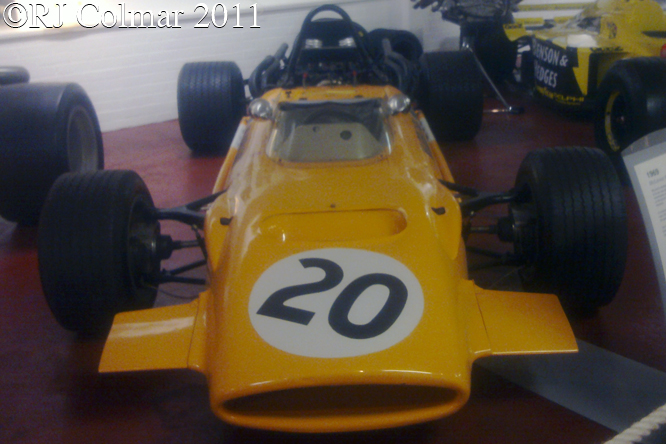
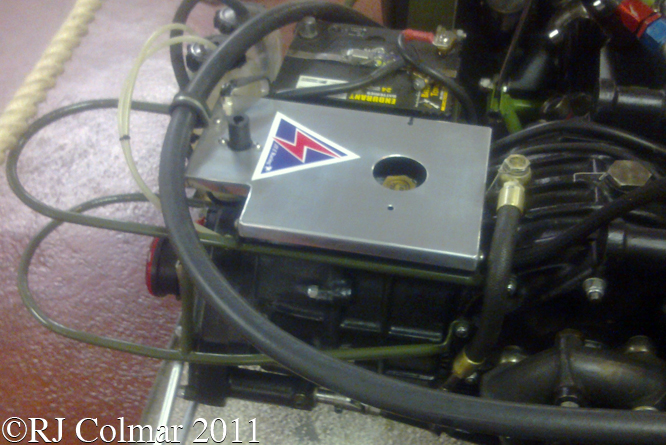
McLaren Ford M9A, Donington Park Museum

In 1968 Peter Westbury resurrected the P67 to win the British Hill Climb Championship again. By this time the Granatelli entered ’67 Paxton Special and ’68 Lotus 56 had both come with in 25 miles of winning the Indy 500 in successive years with gas turbine cars both featuring all wheel drive.

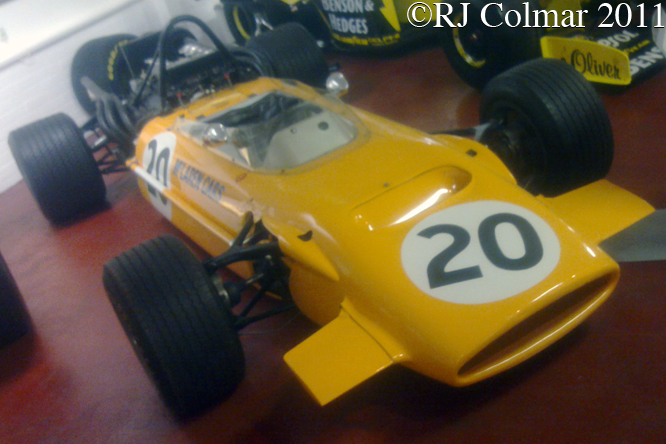
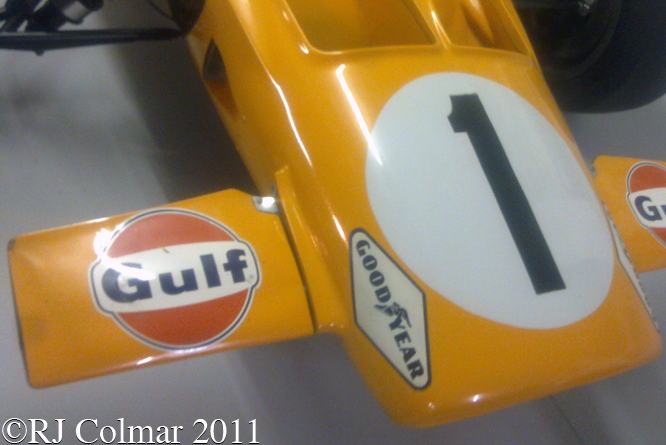
McLaren Ford M9A, Donington Park Museum

By 1969 four teams were ready to try all wheel drive again despite BRM’s Tony Rudd telling anyone who would listen that the system would not work in Formula One. One of those teams was led by Bruce McLaren who helped Swiss designer Jo Marquart with the Ford Cosworth powered M9A.

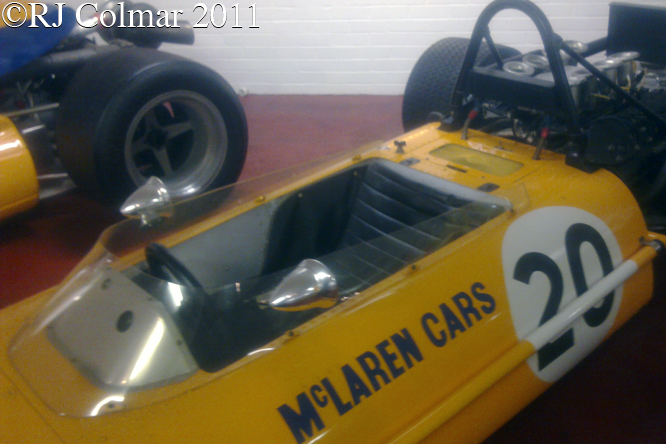
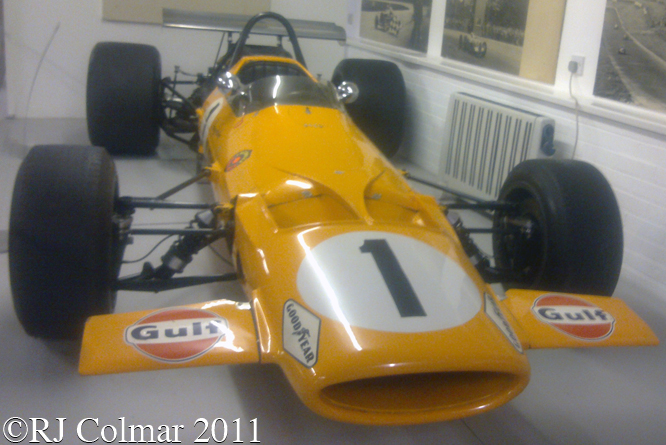
McLaren Ford M9A, Donington Park Museum

The car was tested and entered into the 1969 British Grand Prix for Derek ‘Dinger’ Bell to drive. Derek qualified 15th, of seventeen, and retired having completed just 5 laps when the rear suspension failed.

McLaren Ford M9A, Donington Park Museum

For McLaren this was enough to confirm what BRM had realised, that all wheel drive was not for Formula One, by 1969 improvements in aerodynamics and tyres which by now were much wider than when the Ferguson P99 first appeared had reduced the necessity for drive to the front wheels.

Thanks for joining me on this “Dinger’s All Wheel Drive” edition of “Gettin’ a li’l psycho on tyres” I hope you will join me again tomorrow. Don’t forget to come back now !

Share

Primer Car – MATRA Ford MS9

For 1968 Ken Tyrrell joined McLaren and Lotus by electing to buy a supply of Ford Cosworth DFV engines and did a deal with MATRA, who’s chassis he had run in Formula 2, to supply Formula One chassis for Jackie Stewart. While finishing the new MS10 challenger MATRA built the MS9 as an interim development car featuring a shortened MS7 Formula 2 monocoque which was adapted to take the DFV as a stressed member.

MATRA MS9, Donington Museum

The interim car was fitted with suspension adapted from it’s sports car programme to acommodate the larger Formula One wheels. The car was painted in a zinc or other chromate pigmented primer usually found in the aerospace business, MATRA’s prime business, to protect aluminium alloy.

MATRA MS9, Donington Museum

Jackie liked the car in testing and elected to race the primer test car in the 1968 South African Grand Prix in favour of the new MS10. Apparently a late attempt was made to paint the car French blue but the paint chosen did not adhere to the primer.

MATRA MS9, Donington Museum

Finance for the new MATRA International Team was provided by a new natianalised French oil brand Elf, which took over a large number of French Caltex retail outlets in 1968 that were subject to a carefully orchestrated overnight nationwide rebranding program.

MATRA MS9, Donington Museum

Having qualified an impressive third with only the Lotus 49’s of Jim Clark and Graham Hill ahead of him, Jackie Stewart stepped into the MS9 to start the race knowing he did not have enough fuel on board to complete the race without a pit stop.

MATRA MS9, Donington Museum

However on lap 43 the car had to retire with a broken valve spring and dropped valve.

MATRA MS9, Donington Museum

This car was then replaced by the MS10 for the remainder of the season. Note the curved grey bar is part of a subframe that links the rear suspension and gearbox directly to the chassis which kept the rear suspension and gearbox in place when the engine was removed.

Thanks for joining me on this primer car edition of “Gettin’ a li’l psycho on tyres” I hope you will join me again tomorrow. Don’t forget to come back now !

Share

Third Time Lucky – McLaren Ford M7A

After the disappointments of the Ford Indy derived V8 and Serenissima V8 used in the 1966 McLaren M2B, the interim BRM V8 Formula 2 based McLaren M4B and BRM V12 powered M5A of 1967 Bruce Mclaren bought 5 Ford Cosworth DFV motors for the 1968 season which were used as in the integral structure of the McLaren M7A designed by Robin Herd, Gordon Coppuck and Bruce himself.

McLaren M7A, Donington Park Museum

The M7A’s and 3 derivatives, M7B, M7C, and Alfa Romeo powered M7D were entered by the works team from 1968 to 1970. For 1968 the works Formula One McLaren’s were sponsored  by Shell while the McLaren Can Am Cars were sponsored by Gulf.

McLaren M7A, Donington Park Museum

Reigning World Champion Denny Hulme left Brabham to join McLaren in 1968 and on the M7A’s debut at the non Championship Race of Champions at Brands Hatch Bruce came first and team mate Denny Third. The M7A’s came in first and second at the non Championship International Trophy at Silverstone with Denny Hulme came edging the team founder.

McLaren M7A, Donington Park Museum

On their third championship appearance, after Spain and Monaco, Bruce McLaren became the second man to win a Grand Prix bearing his own name crossing the line first to win the 1968 Belgian Grand Prix. It would prove to be his forth and final Grand Prix victory.

McLaren M7A, Donington Park Museum

Denny Hulme won the Italian and Canadian Grand Prix towards the end of the season and finished third in the World Drivers Championship behind Graham Hill and Jackie Stewart, Bruce finished fifth in points standings. McLaren finished second in the constructors Championship behind Lotus but ahead of the Ken Tyrrell entered Matra driven by Jackie Stewart all three constructors used Ford Cosworth DFV motors.

McLaren M7A, Donington Park Museum

In 1969 Bruce only drove an M7A in South Africa where he finished fifth before focusing on the M7C, which will be the subject of a future blog, which featured a more substantial monocoque. Denny meanwhile continued driving the M7A throughout the 1969 season winning the season finale in Mexico. Denny finished the season 6th in points with Bruce 3rd, the Mclaren team finished 4th and last of the Ford Cosworth DFV powered teams in the constructors championship.

The M7B fitted with outrigged panier fuel tanks made only one works championship appearance at the 1969 South African Grand Prix where Bruce Mclaren finished 5th. He later sold the car to Colin Crabbe who’s Antique Automobiles team entered it in four races for Vic Elford who finished a best fifth in the 1969 Dutch Grand Prix.

In 1970 McLaren adapted an M7 to take a non stressed Alfa Romeo V8 which became known as the M7D the car recorded three DNQ’s, did not qualify, a not classified finish in France and a DNS, did not start, in the 1970 British Grand Prix. After the first four events Nanni Galli took over the M7D from Andrea de Adamich, recording the cars third DNQ at the Italian Grand Prix.

Privately entered M7A were driven in three races by Dan Gurney for All American Racers in 1968, best finish forth in the US Grand Prix, and Basil van Rooyen for Team Lawson in the 1969 South African Grand Prix where he retired with brake problems after completing 12 laps.

Thanks for joining me on this “Third Time Lucky” edition of ‘Gettin’ a lil’ psycho on tyres’ I hope you will join me again tomorrow. Don’t forget to come back now !

06/07/13 Errata as Tim has pointed out below Bruce finished the 1960 season second in the World Drivers Championship and so his 3rd place in points in 1969 did not equal his career best as originally stated. Apologies for any confusion.

Share

5th Tony Marsh Memorial Weekend – Gurston Down

On Sunday I made the first of what I hope will be many visits to Gurston Down for the 5th Tony Marsh Memorial Weekend hillclimb. Gurston Down just west of Salisbury is set on a working farm and was devised by six time British Hillclimb champion Tony Marsh in 1965.
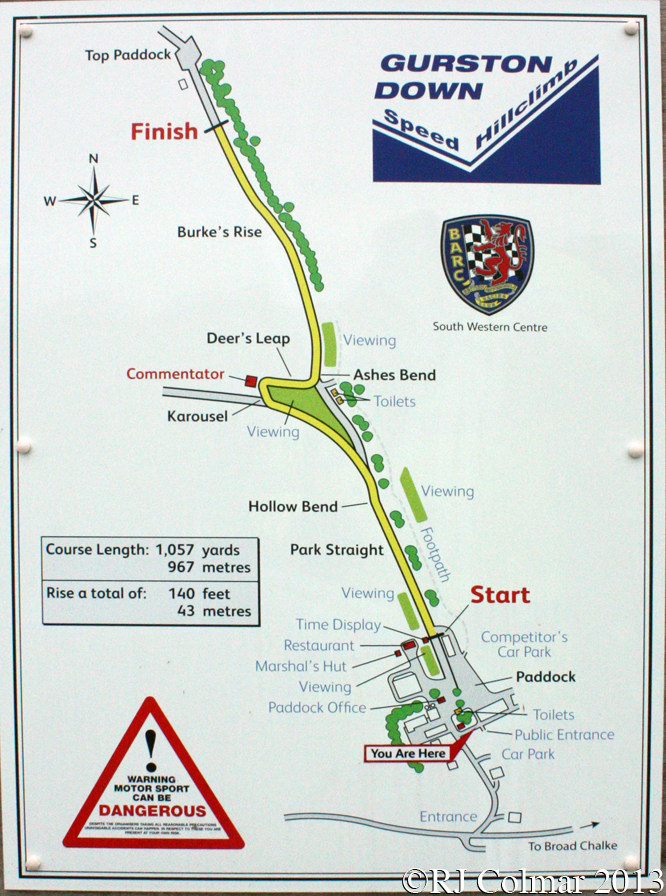
Gurston Down, Wiltshire

The course is just over a half a mile long and rises a total 140 feet, it is also the only Hillclimb in the UK that starts on a downward slope. As I found out on Sunday the facilities and viewing areas are excellent and it is no surprise to hear that Gurston Down has won the Norrie Galbraith Memorial Trophy for best organised British Hillclimb Championship event a record eight times.
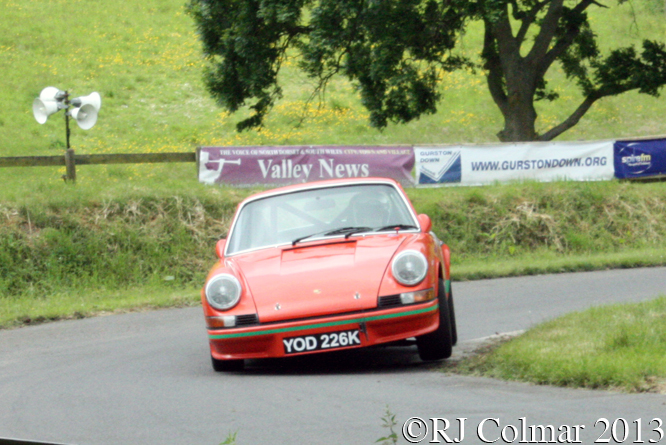
Mortimer, Porsche 911, Gurston Down, Wiltshire

After a cup of tea and obligatory bacon and egg roll in the excellent restaurant on arrival I made my way up to the Ashes Bend towards the top of the hill during the opening practice runs arriving in time to observe the second practice runs. Above Bob Mortimer lifts an inside front wheel in his Porsche 911 at the apex of Ashes.
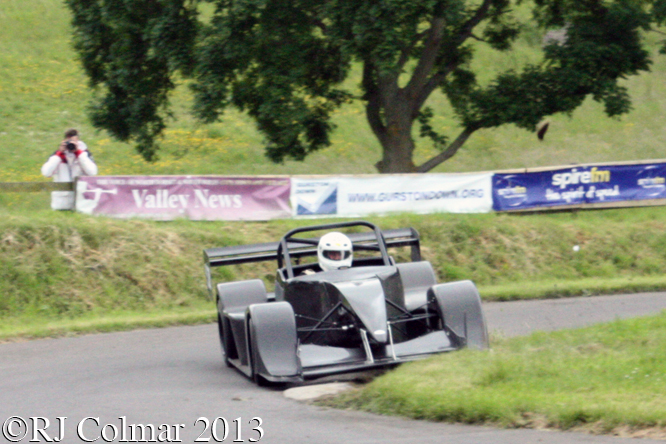
Gates, Force LM, Gurston Down, Wiltshire

On his second practice run Johnathon Gates was forced into a bit of lawn mowing at Ashes bend as the back of his car stepped out unexpectedly under braking. No damage was done and he ended the day with 8th fastest time.
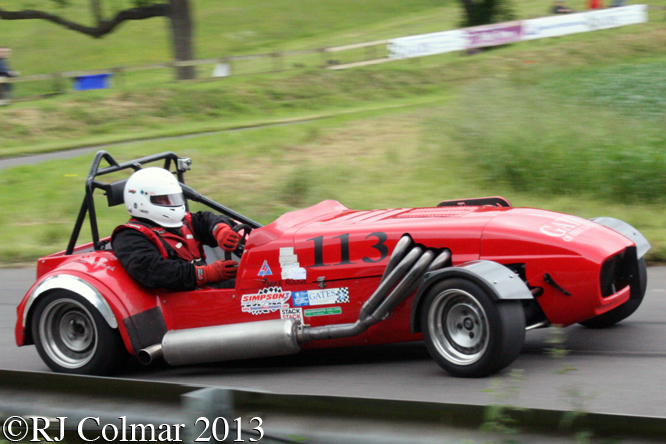
Rudge, Westfield SEi, Gurston Down, Wiltshire

Mike Rudge is seen correcting oversteer / push coming out of Ashes in his Westfield SEi, he easily won his class by seven seconds more surprisingly to me he finished with 9th fastest time of the day beating a number of single seat open wheel cars in the process.
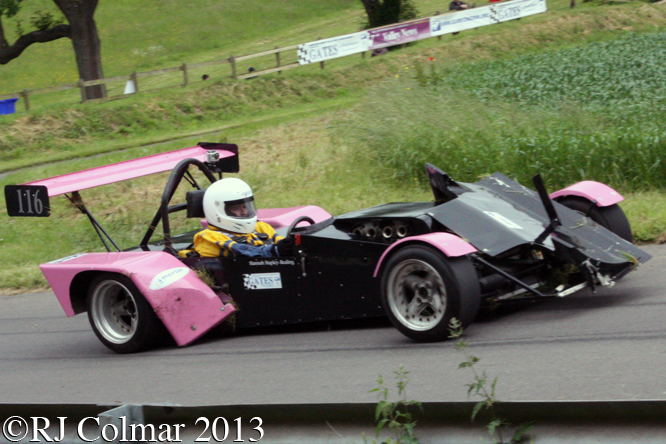
Stapely-Bealing, Formula 1300, Gurston Down, Wiltshire

During her second practice run Hannah Stapely-Bealing came by showing signs of contact with the Wiltshire scenery however the car was repaired and put in two timed runs, however the motor of her Formula 1300 Clubmans car was no longer running cleanly and she was around a second off her first practice run.
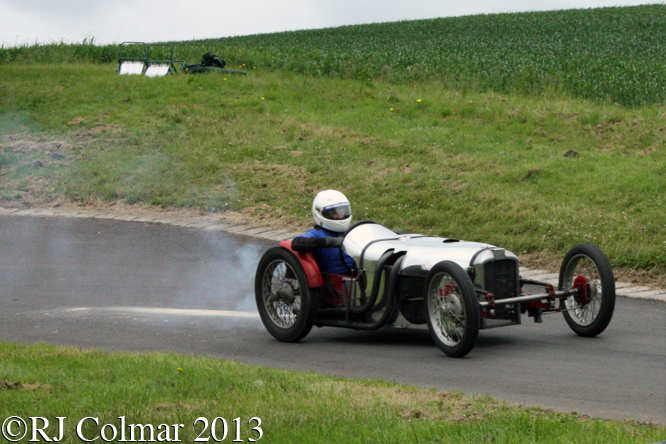
Bloody Mary, Gurston Down, Wiltshire

National Motor Museum Beaulieu kindly sent along former Autosport Technical Editor John Bolsters “Bloody Mary” Special for a welcome demonstration. The special started as a project for two teenagers to scare the cow’s in a nearby field and became a successful if by all accounts rather terrifying Brough Superior powered hill climb winner.
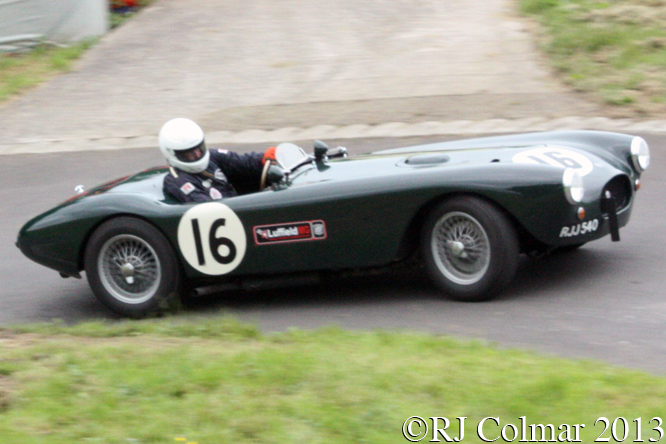
Penfound, Lester MG, Gurston Down, Wiltshire

I was introduced to another new, to me, manufacturer at Gurston namely Lester who built MG powered cars in the 1950’s. Stewart Penfound navigates the steep and tight Karousel in his example above.
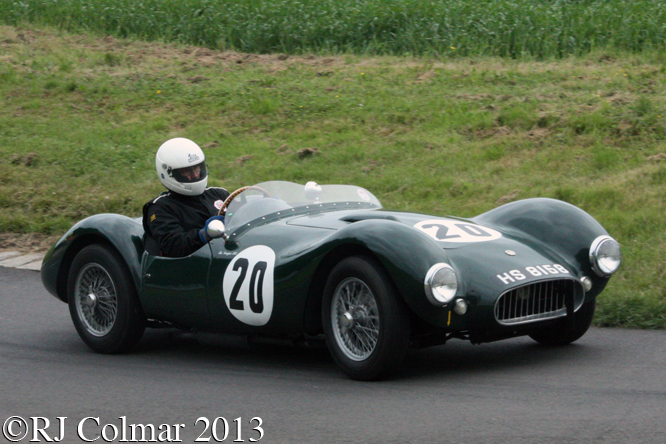
Pamplin, MG XPAG Special, Gurston Down, Wiltshire

Another interesting MG was Chris Pamplin’s MG XPAG Special as listed in the programme and 1935 MG Magnette according to the registration plate.
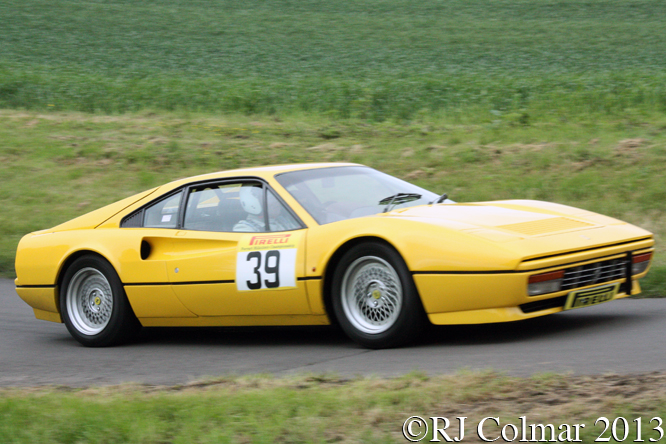
Spicer, Ferrari 328 GTB, Gurston Down, Wiltshire

Standing out from an otherwise mostly red crowd of Ferrari’s was Mike Spicers Modena Yellow 328 GTB seen approaching Deer Leap which recorded 2nd fastest Ferrari time of the day.
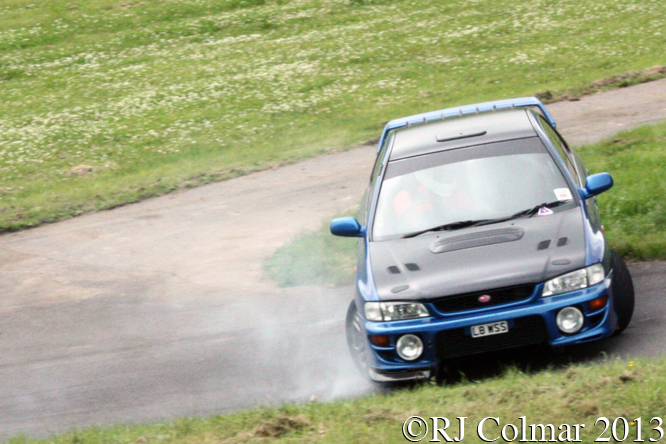
Fanner, Subaru Impreza, Gurston Down, Wiltshire

Lewis Fanner will have given his wife with whom he shares their Subaru Impreza a scare as he spun the car going into Karousel. Fortunately he did not hit anything and returned to the paddock for his one remaining run.
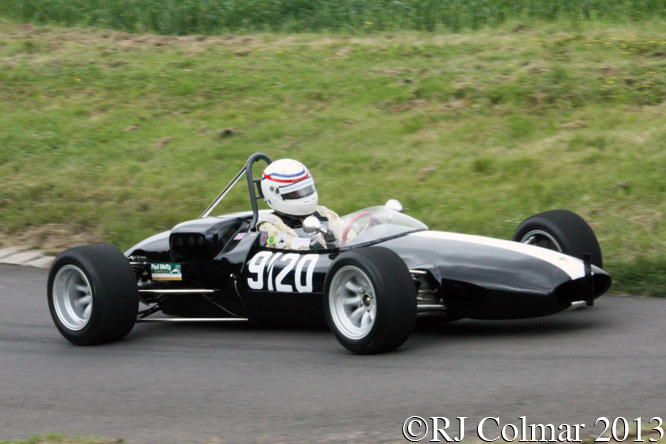
Hadfield, Lotus 22, Gurston Down, Wiltshire

Simon Hadfield and Geoff Hunt shared this Lotus 22, originally designed for Formula Junior competition, and finished the faster of the two albiet second in class to the more modern Ensign LNF3 driven by Fyrth Crosse.
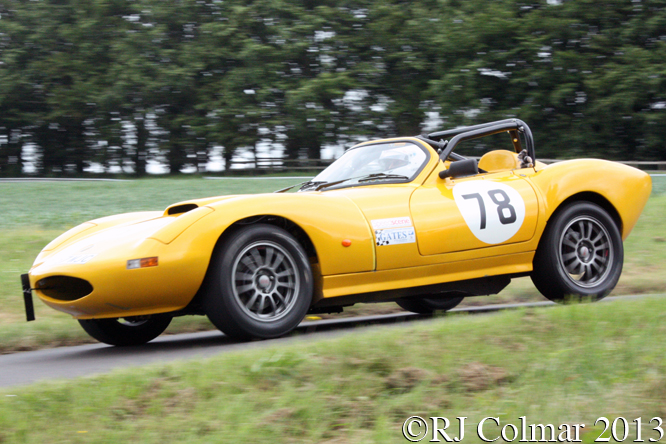
Beale, Ginetta G33, Gurston Down, Wiltshire

Over the past couple of months the lines of Graham Beales class winning Ginetta G33 have really grown on me, apparently the idea for the Rover V8 powered car was conceived on a table cloth in a pizzeria by Mark Warklett and Noel Palmer.
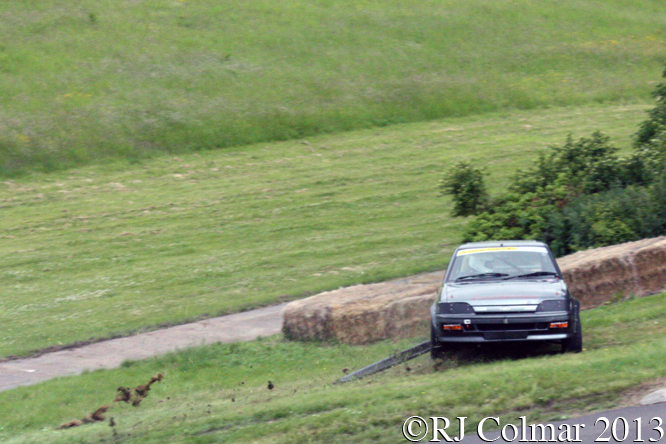
Street, Ford Escort XR31, Gurston Down, Wiltshire

Darren Street was another who found the entry to Karousel a bit tricky in his Ford Escort XR3i, here he is seen on his way to an appointment with the hay bales. Fortunately he suffered no injuries and he eventually drove to the top of the hill under his own steam.
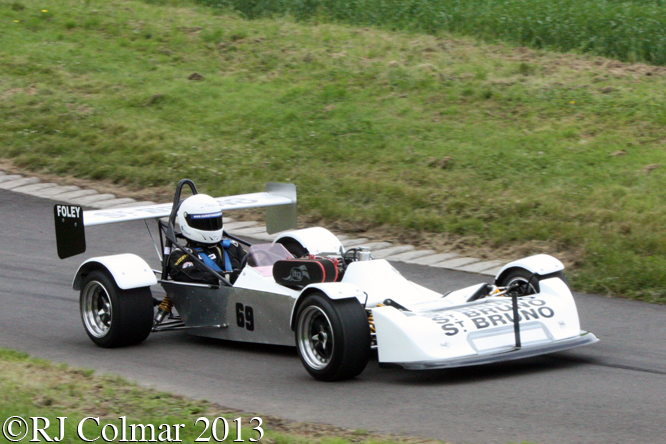
Lewis, St Bruno Roughcutter,  Gurston Down, Wiltshire

Like the Bloody Mary Special Adrian Lewis’s St Bruno Roughcutter Clubman’s car has an Autosport connection it being the creation of Barry Foley, best known as Autosports ‘Catchpole’ cartoonist. Barry built the car in the early 1970’s crediting help from a variety of sources including design input from Maurice Phillipe himself a part time Clubmans racer when not busy designing Formula One cars.
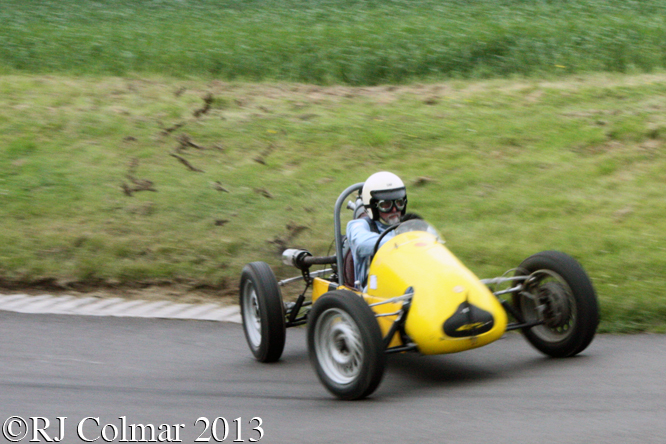
Dent, Hornet F3,  Gurston Down, Wiltshire

On both of his timed runs Alistair Dent lost time when his tail got onto the grass on the exit of Karousel, which had the benefit of at least entertaining those of us watching, above Alistair is seen on his first run in the Hornet JAP powered 500 F3 car.
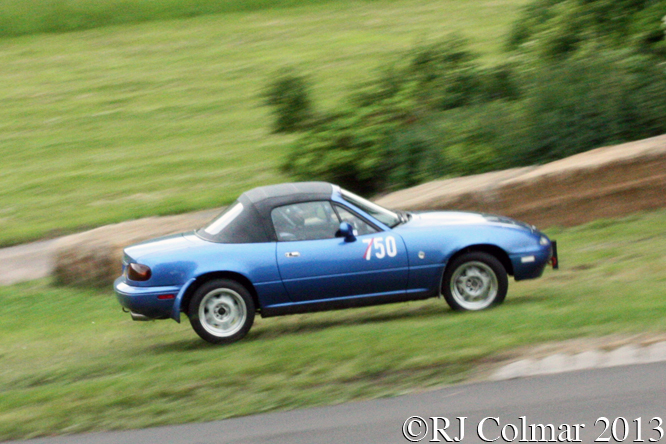
Chard, Mazda MX5, Gurston Down, Wiltshire

By for the most serious incident of the day was when Karl Chard left the road at Karousel and ended up going straight into the hay bales. Fortunately again Karl was unhurt which is more than can be said for the Mazda MX 5 which he shares with his brother Ian. At least all the wheels were still attached.
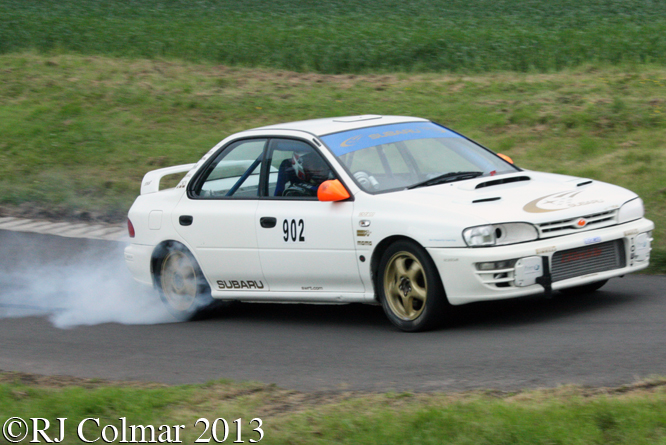
Flagg, Subaru Impreza STi, Gurston Down, Wiltshire

David Flagg lost 3/10ths of a second on his second timed run this display of wheel spin from his Subaru on the run to Deer Leap probably did not help his cause.
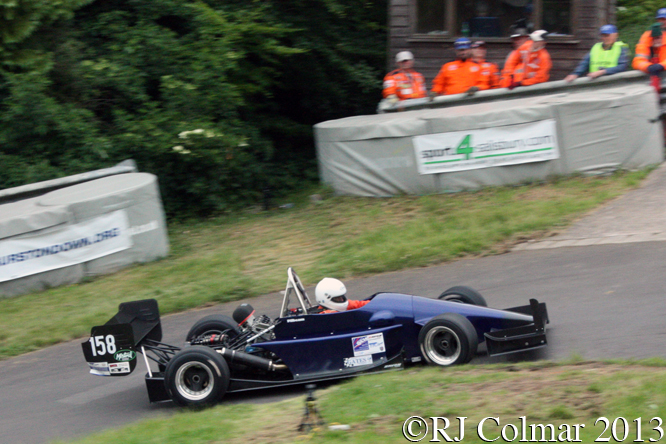
Hollier, Pilbeam MP62, Gurston Down, Wiltshire

Edward Hollier set best time of the day (BTD) running the course in 29.19 seconds in his Pilbeam MP62, both of his runs were quicker than the next fastest competitor Peter Smith who was driving a Force in the same class as Edward. Coincidentally Ed won last time that I saw him running at Wiscombe Park last month.

Another great day out at yet another great venue, if you have never been I doubt you will be disappointed.

Thanks for joining me on this “5th Tony Marsh Memorial Weekend” I hope you will join me again tomorrow. Don’t forget to come back now !

PS Shameless plug my British Grand Preview can be found at Motorsports Unplugged on this link.
Share

Wall Of Noise – Aston Martin AMR 1 #01 & #03

In 1989 Group C sports car racing reached new heights popularity among manufacturers when Aston Martin joined in the fun as a manufacturer. Aston Martin Tickford had supplied motors for the Nimrod Group C cars that were run from 1982 until 1984. They also supplied the even less successful EMKA Productions and Cheetah teams which ran sporadically from 1983 to 1985.
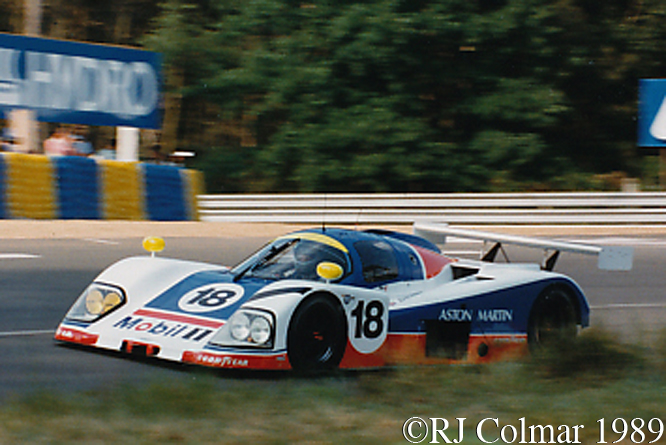
Aston Martin AMR1, Le Mans

The seeds of the 1989 program were laid after an agreement between Aston’s owners Victor Gauntlet and Peter Livanos that Aston Martin should go the whole hog and manufacture a Le Mans challenger wholly in house. A month after they announced their plans Ford took a controlling interest in Aston Martin and to the surprise of Gauntlet and Livanous agreed the racing program should continue on condition that it did not interfere with Aston’s production vehicles and that it would require no finance from Ford recommending a separate company should be set up to run the racing operation.

Aston Martin AMR1, Le Mans

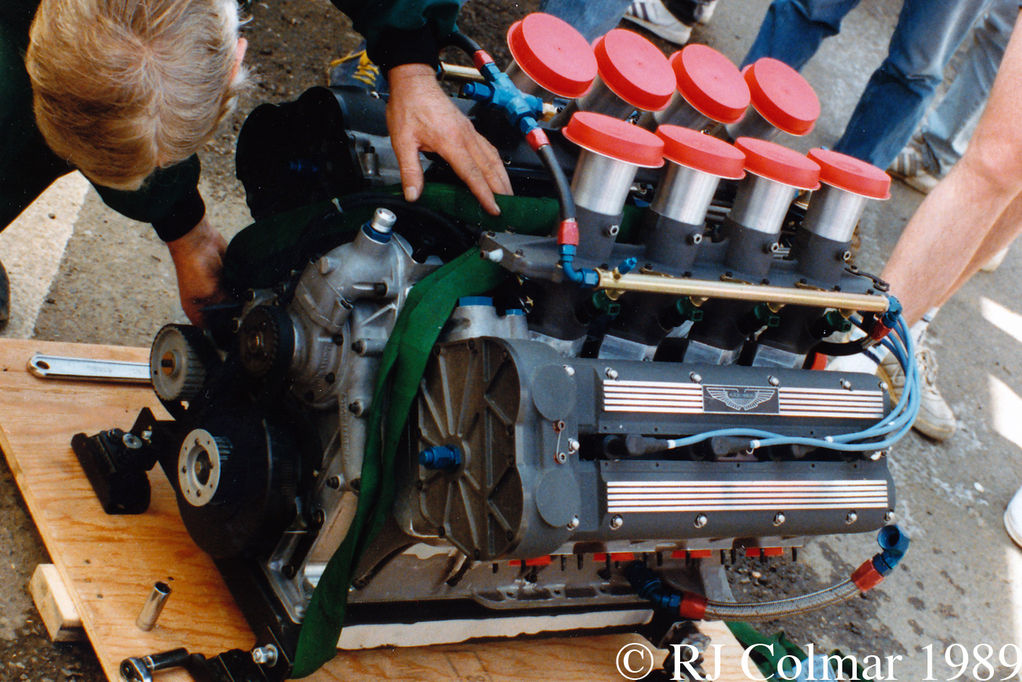
Aston Martin and Ray Mallock, using the Ecurie Eccose name with whom he had won the junior Group C2 championship in 1986 created a new company called Proteus Technology Ltd known as Protech. Protech was to be funded for six years to the tune of £26 million by the Livanos family. Callaway Engineering was engaged to develop the 5.3 litre Aston Martin Virage V8 motor into first a 600 hp 6 litre / 366 cui motor and later a 700 hp 6.3 litre unit.

Aston Martin AMR1, Le Mans

The team hoped to have the first cars, designed by Max Bostrom, racing towards the end of 1988 and when the deadline passed they prepared themselves for a start at the first Group C race of 1989. An accident during testing meant the team were without a car to take to the first race of 1989 and so attracted a US$ 250,000 fine for missing the race.

Aston Martin AMR1, Le Mans

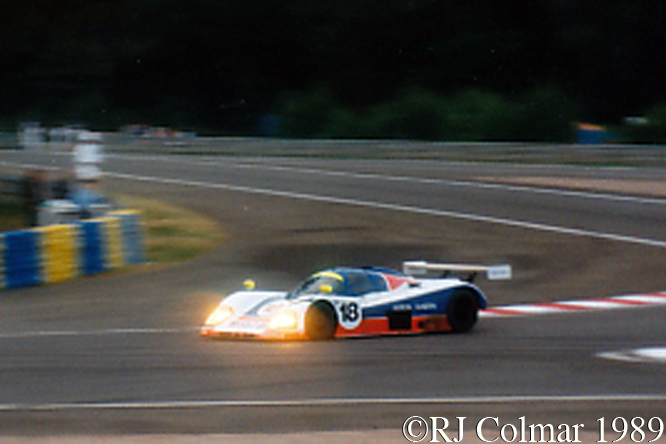
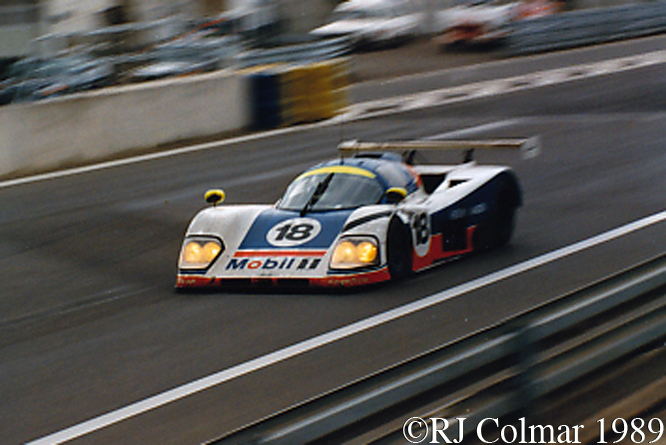
The AMR1’s first appearance was at Dijon where AMR1/01 driven by David Leslie and Brian Redman finished a distant 17th. At Le Mans which was a non championship event two cars were entered the #18 AMR1/01 for Redman, Micheal Roe and Costas Los while the #19 AMR/03 was driven by Leslie, Ray Mallock and David Sears.

Aston Martin (Callaway) RDP87, Le Mans

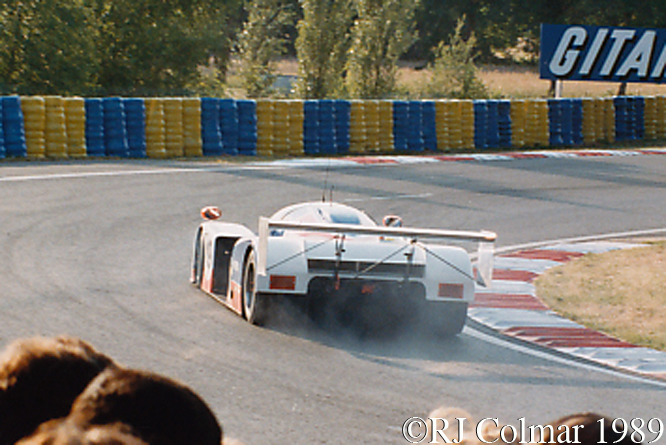
Despite circulating in a wall of noise equal to anything heard in the NASCAR Sprint Cup the AMR1’s were short on horsepower and overweight the #18 qualified 32nd while the #19 could only qualify 40th. The #19, seen at Arnage below, eventually retired with electrical issues early on the Sunday morning of the race while the #18 soldiered round to an 11th place finish.

Aston Martin AMR1, Le Mans

In the next race, at Brands Hatch, Redman and Leslie scored the teams best result a 4th place finish. Aston Martin finished the season 6th behind Mercedes-Benz, two private Porsche teams, Jaguar and Nissan but ahead of the factory Toyota team.

During the course of 1989 Bernie Ecclestone convinced the FIA that the future of Sports Car racing lay with 3.5 litre engine rules as required in Formula One from 1991. Aston Martin had no choice but to withdraw at the end of 1989 as they had no suitable engine and Ford had given the nod to Jaguar to use it’s own Ford Cosowrth HB V8 Formula One engine, and running the unfinished Aston Martin AMR2 for a year made no sense.

My thanks to fausto at The Nostalgia Forum for finding the link to the AMR2 wind tunnel models.

Thanks for joining me on this “Wall Of Noise edition of “Gettin’ a li’l psycho on tyres” I hope you will join me again tomorrow. Don’t forget to come back now !

Share

Air-time – Cholmondeley Pageant Of Power

Cholmondeley Pageant Of Power takes place on the estate of the Marquess Of Cholmondeley, a descendent of Sir Robert Walpole the first British Prime Minister, against the back drop of his fine 19th century mock Gothic castle in Cheshire.

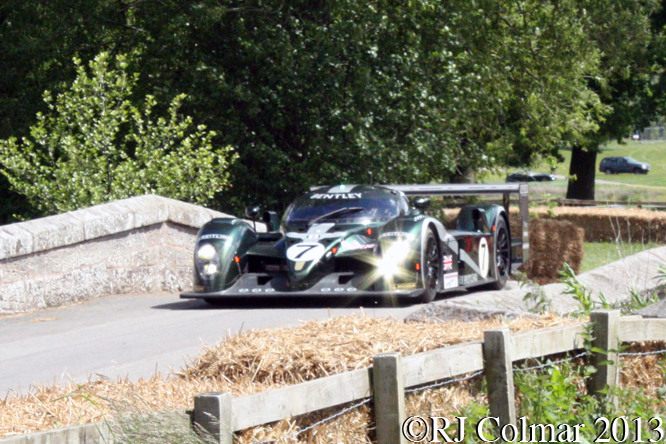
G Smith, Bentley Speed 8, Cholomondeley Pageant Of Power

The opportunity to get close to the Le Mans winning Bentley Speed 8, the subject of next Monday’s blog, seen above demonstrated by Guy Smith who drove this car to victory in 2003 is what initially attracted me to make the journey.

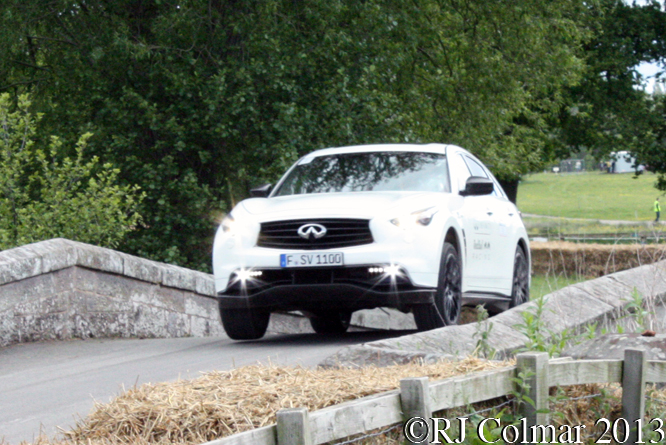
Kingston/Cropley, Infiniti FX Vettel, Cholomondeley Pageant Of Power

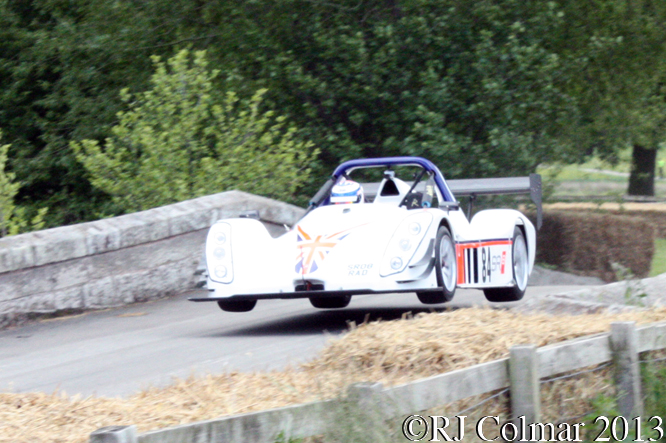
There were many attractions at the event on four wheels, two wheels, hovering and flying, but I spent the whole of Saturday morning transfixed by the sight of the participants in the sprint event getting air-time over the bridge close to the finish and it is that feature which I would like to share today. Above the Infiniti FX Vettel named after reigning three time world champion Sebastian Vettel was driven by Autocar journalists Lewis Kingston and Steve Cropley.

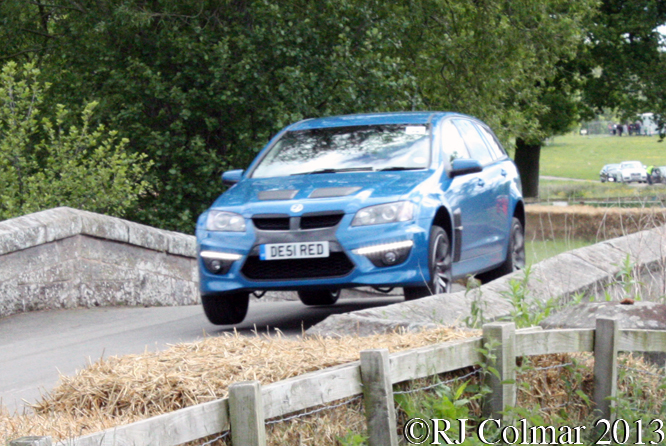
Cray/Cropley, Vauxhall VXR8 Tourer, Cholomondeley Pageant Of Power

Vauxhall Motors Director Martyn Cray shared this Corvette C6 powered Vauxhall VXR8 Tourer with Steve Cropley, the Tourer is based on the Holden Special Vehicles GTS.

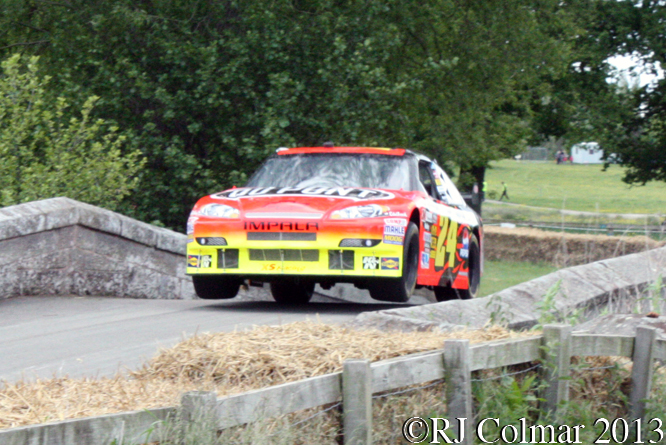
Strafford, COT, Chevrolet Impala SS, Cholomondeley Pageant Of Power

Last time I saw a Sprint Cup COT Chevrolet Impala SS was at Talladega four years ago this one appears to have once been part of the Stewart Haas Racing fleet run for Ryan Newman but has been repainted in the Hendrick Motorsports Dupont colours used by Jeff Gordon for owner driver Mick Strafford.

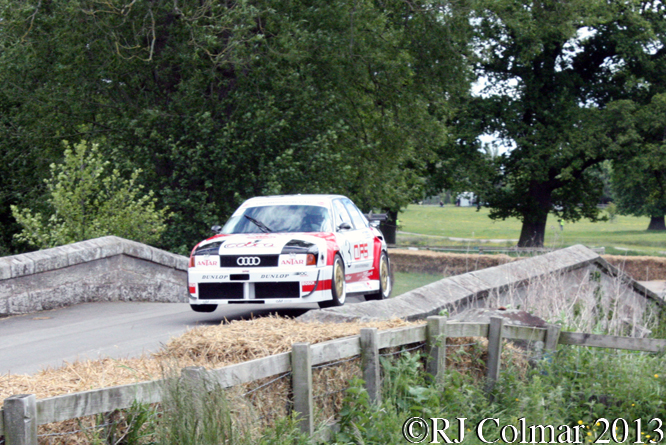
Van Nierop, Audi 80, Cholomondeley Pageant Of Power

In the early 1990’s Xavier Lapeyre ’90, Marc Sourd ’91 and Frank Biela ’92 won the French Supertourisme championships with all wheel drive Audi 80’s like the one driven above driven by Johannes Van Nierop.

Reid, Ford Mustang Mach 1, Cholomondeley Pageant Of Power

Glaswegian Anthony Reid, 1992 Japanese Formula Three open wheel champions and Saloon car ace and a regular Jaguar C-type competitor, is seen getting three wheels off the ground in a Ford Mustang Mach 1.

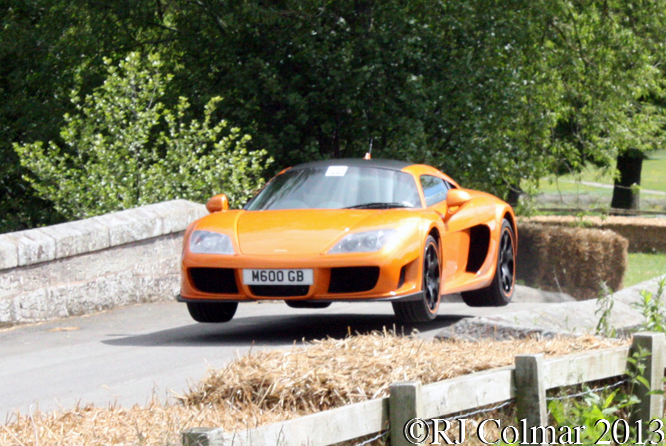
Boutwood, Nobel M600, Cholomondeley Pageant Of Power

Among the Supercars Peter Boutwood’s Noble M600 won the high jump award …

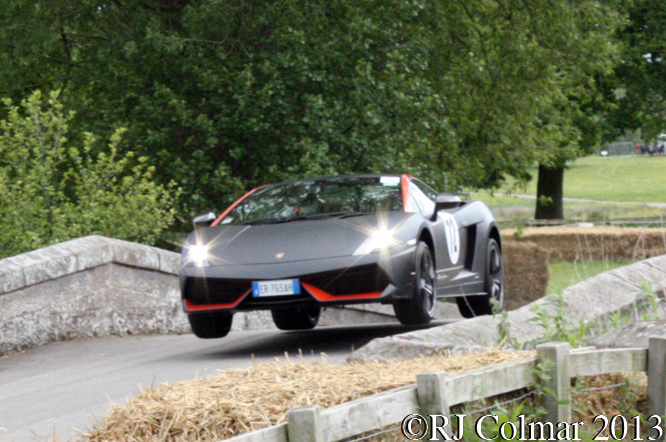
Marshall-Rowe, Lamborghini, LP570, Superleggera, Cholomondeley Pageant Of Power

from the Lamborghini LP570 Superleggera driven by Tim Marshall-Rowe.

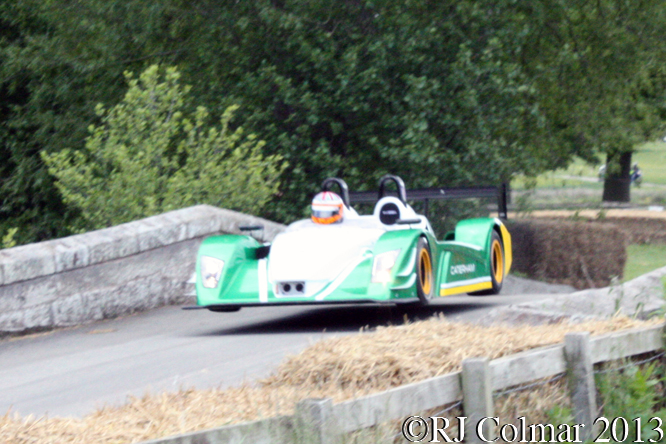
Mansell, Caterham SP/300.R, Cholomondeley Pageant Of Power

Scott Mansell was in the running for the high and long jump events in the Track Day class with the Caterham SP/300.R but …

Robbie Kerr, Radical SR3 RS,  Cholomondeley Pageant Of Power

he could not quite match the best efforts of Robbie Kerr driving a Radical SR3 RS.

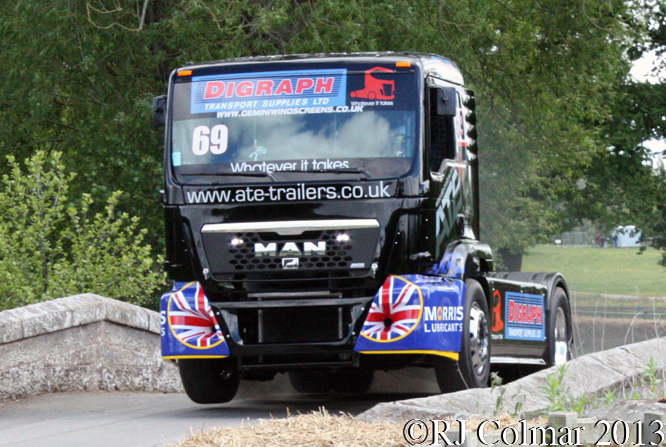
Jenkins, MAN TGX, Cholomondeley Pageant Of Power

Easily winner of the Golden Cojones award was 2011 Truck Champion “MAN in black” driver David Jenkins who manhandled his MAN TGX at terrifying speeds through the narrow lanes of Cholomondeley.

All in all the Pageant of Power was neither as corporate or as busy as Goodwood Festival of Speed which made for a great day out in the opulent surroundings of a country home in Cheshire.

My thanks to Alan Cox for identify Anthony Reid.

Thanks for joining me on this ‘Air-time’ edition of “Gettin’ a li’l psycho on tyres” I hope you will join me again tomorrow. Don’t forget to come back now !

Share

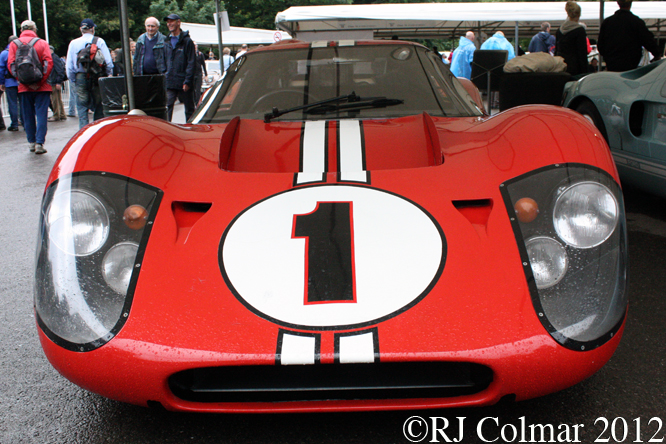
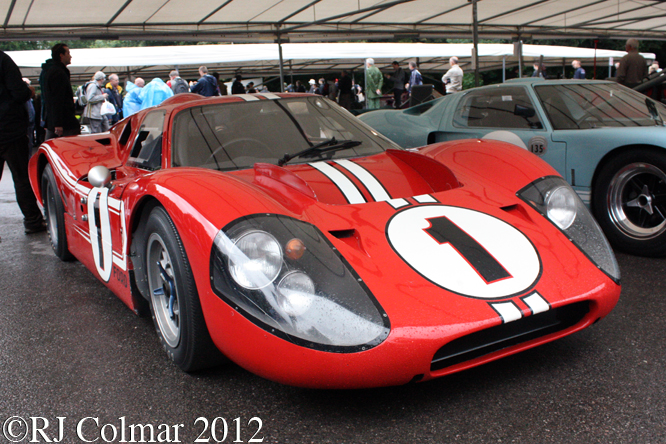
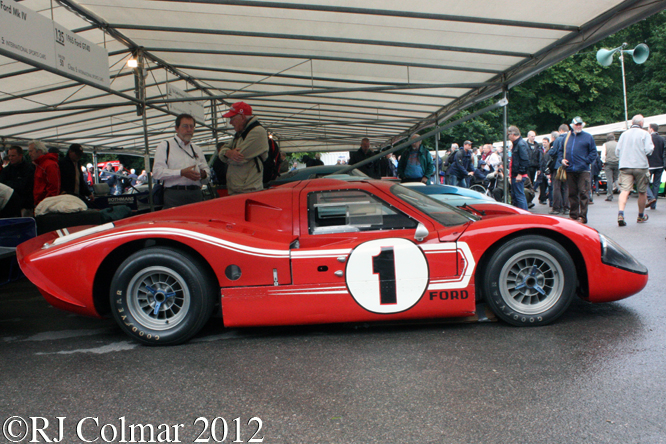
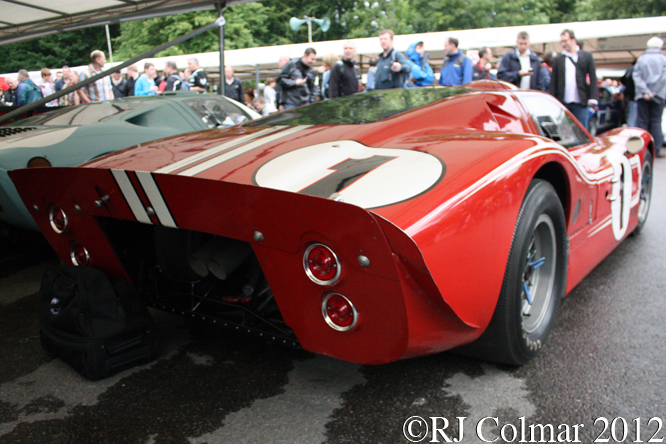
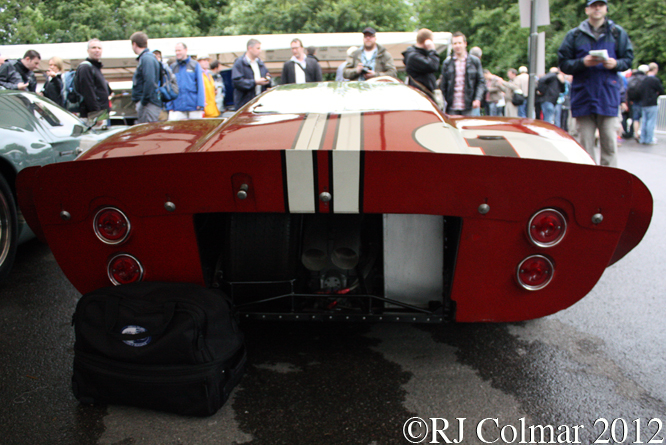
Shimmying Past Scrutineers – Ford Mark IV #J5

The Ford Mark IV was the culmination of Ford’s determination to crush Ferrari on it’s own turf, after Enzo had bailed out of selling his eponymous company to the men from Dearborn at the last minute in 1963.

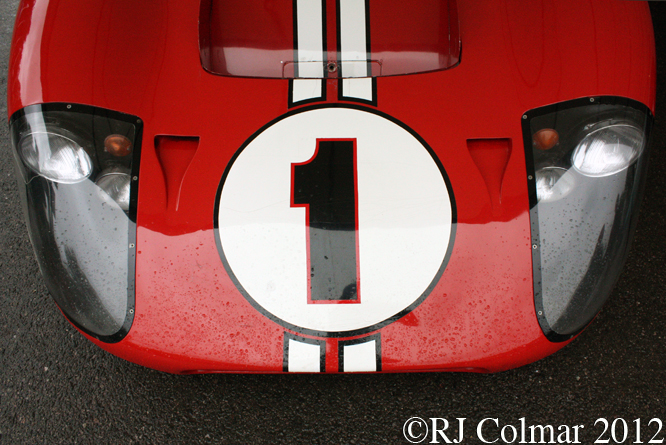
Ford Mark IV, Goodwood Festival of Speed

What started out as an Eric Broadley designed Lola GT powered by a Ford Indy spec V8 in 1963 had been developed into the Ford GT40 with input from Ford’s designers led by Roy Lunn. The GT40 was the subject of two humiliating failures at Le Mans in ’64 and ’65 but then blossomed into the Shelby developed 7 litre / 427 cui Ford GT40 Mark II that swept to a 1,2,3 victory at Le Mans in 1966.

Ford Mark IV, Goodwood Festival of Speed

Unable to convince Ford that they needed to build the GT40 with an aluminium frame to save weight Eric Broadley left the GT40 project in 1965 and returned to Lola while Ford and Shelby got to grips with producing a steel framed car that was both powerful enough and strong enough to last 24 hours at a race winning pace.

Ford Mark IV, Goodwood Festival of Speed

Ford soon realised that Eric was right about the extra weight carried by the steel framed cars and before the steel framed GT40 Mk II’s romped to victory, in ’66, they set about building an aluminium framed version of the GT40 with the same drive train and suspension components known as the J-Car featuring an innovative aluminium honeycomb monocoque manufactured by Brunswick Aerospace.

Ford Mark IV, Goodwood Festival of Speed

The J-Car was subject to much experimentation with body shapes and even crash testing after Ken Miles had been killed in a freak accident testing a J-Car. By 1967 Ford had four of the new Mark IV’s ready for the Le Mans 24 hours powered by 7 litre / 427 cui motors.

Ford Mark IV, Goodwood Festival of Speed

According to Dan Gurney the Mark IV’s were fitted with suspension shims to ensure they passed the scrutineers / tech inspectors minimum ride height test held in the middle of town, these shims then “fell off” on the way back to the race track to ensure the Fords had some aerodynamic stability when they hit 200 plus mph on the 4 mile Mulsanne straight.

Ford Mark IV, Goodwood Festival of Speed

Dan Gurney set the winning car up then he and Le Mans rookie AJ Foyt then set about winning the race, during the middle of the night Dan over slept forcing AJ to do a double stint behind the wheel but other than that their car had no problems on it’s way to a four lap victory over the Ferrari P4 of Ludovico Scarfiotti and Mike Parkes. The sister Shelby run Goodyear shod car of Bruce McLaren and Mark Donohue came forth behind another Ferrari P4 after loosing time with a tale piece that was ripped off.

Ford Mark IV, Goodwood Festival of Speed

On the podium Dan Gurney started a tradition of shaking up the winners bottle and spraying champagne all over the gathered revelers which has been repeated by race winners around the world countless times since. The day after the race the Mark IV’s were effectively banned from racing in 1968 and Ford withdrew from any further factory participation on the spot.

Ferrari ended up winning the World Sports Car Championship in 1967 but it hardly mattered since everyone remembers who won the signature event of the series the Le Mans 24 hour race.

The car driven by Gurney was different from the three other Mark IV’s in the race because to accommodate Dan’s 6’3″ frame a blister was built into the roof and the seat was lowered. After the race all four Mark IV’s, the two Firestone shod cars run by Holman Moody had crashed out, returned to the States were overhauled and all four painted to look like the winner complete with a blister in the roof.

The winning car chassis #J5 has been kept at the Ford Museum however I am led to believe this is the same car that appeared at Goodwood last year, but I maintain an open mind since Ford sold chassis #J6 to New York collector James Glickenhaus believing they had sold him the 1967 winning car until closer inspection revealed otherwise.

Thanks for joining me on this “Shimmying Past Scrutineers” edition of “Gettin’ a li’l psycho on tyres” I hope you will join me again tomorrow. Don’t forget to come back now !

PS Don’t miss my Canadian Grand Prix opinions at Motorsports Unplugged.

Share