Tag Archives: Ford

Howards Day – Castle Combe Easter Monday

Easter Monday’s meeting at Castle Combe was dedicated to the memory of Howard Strawford who died on February 23rd leaving a huge void for not only his family and friends but also the greater Motorsport community in South West England.
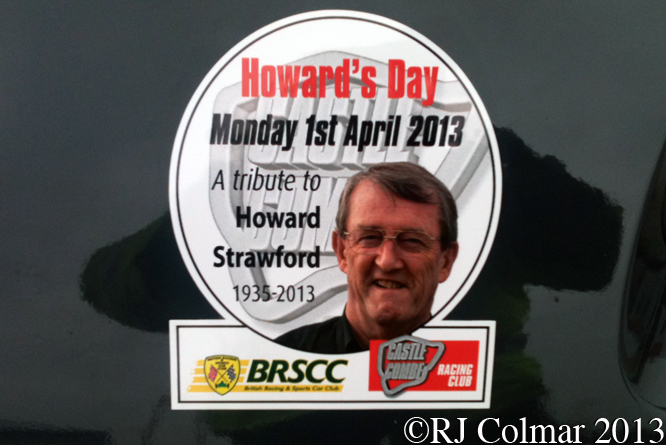
Howards Day, Castle Combe

Howards legacy is the Castle Combe Circuit as it stands today which he saved from closure in the 1970’s after managing to secure the support of former World Champion James Hunt. By 1981 Howard had gained permanent planning permission to operate the track as a motor sports venue and engaged in a programme of continual improvements to the tracks facilities which have been to the benefit of both national and club motor sport. Belated condolences to Howards family and friends.
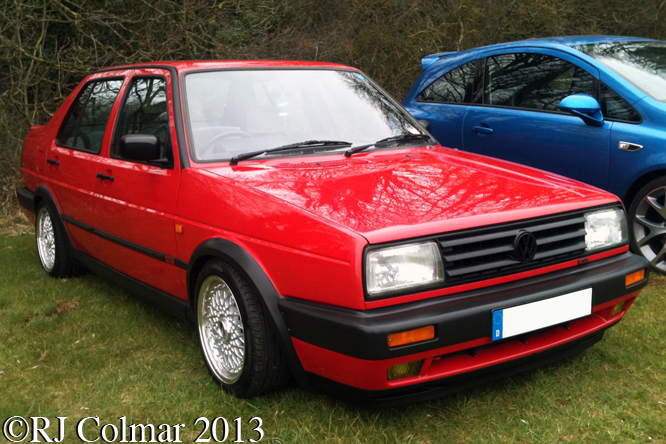
Volkswagen Jetta GTi, Howards Day, Castle Combe

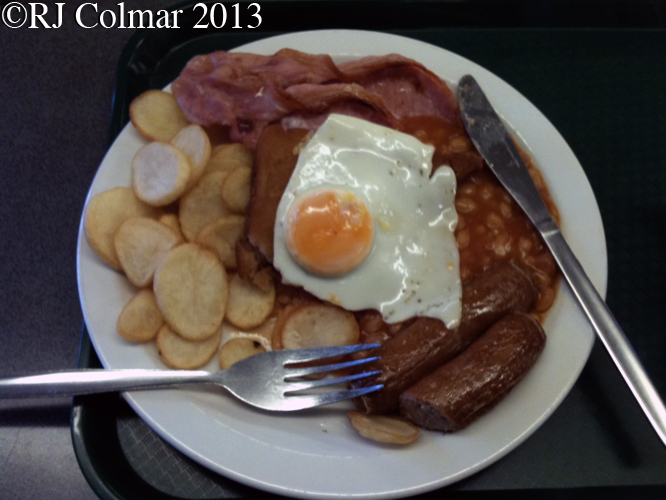
When I got to the circuit I headed straight for Tavern Club House where I had agreed to meet Ted the day before at Thruxton and enjoyed my second Big Boys Breakfast in 8 days. Afterwards Ted and I went for a stroll around the circuit when we stumbled across this immaculate 1989 VW Jetta GTi.
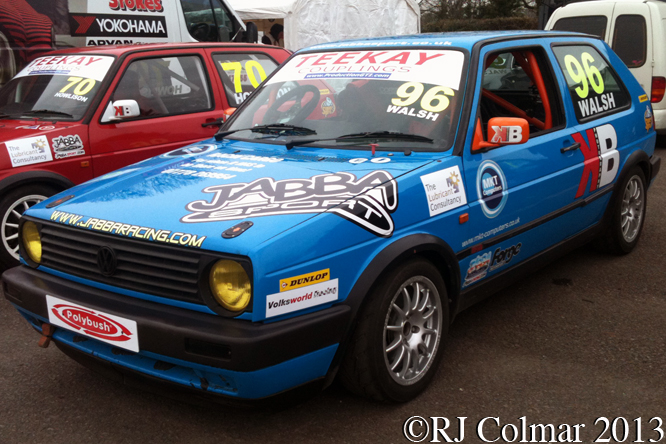
Volkswagen Golf GTi, Howards Day, Castle Combe

As we walked round the track the wind picked up and it got sufficiently cold for Ted to decide to head for the warmth of his dark room while I wondered around the paddock where I stumbled across Martyn Walsh’s VW Golf GTi which qualified 9th for the first of the two BRSCC Teekay Couplings Production GTi Championship races and finished 7th in the first race and went one better in the second GTi race finishing 6th.
Super Mighty Mini, Howards Day, Castle Combe

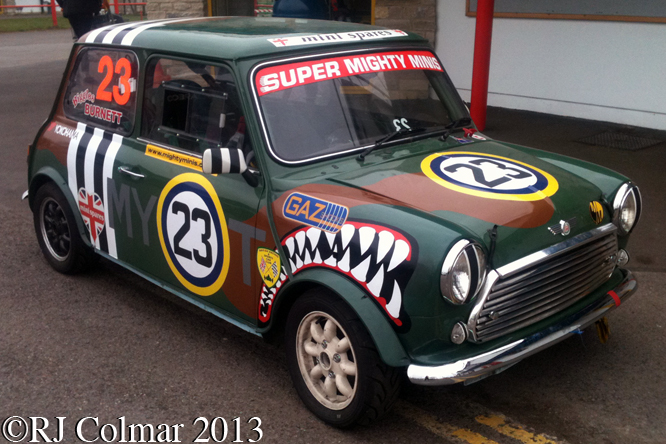
Mini’s were in abundance at Castle Combe with races for the 60 hp Mighty Mini’s and 90 hp Super Mighty Mini’s the #23 MerlinPoweredMini.com of Mark Burnett runs in the more powerful Super Mini class however on this occasion it appears he traveled from Guildford in vain having failed to set a qualifying time he recorded a did not finish (DNF) with zero laps completed in Race 1 and did not take the start in Race 2.
Vauxhall Astra, Howards Day, Castle Combe

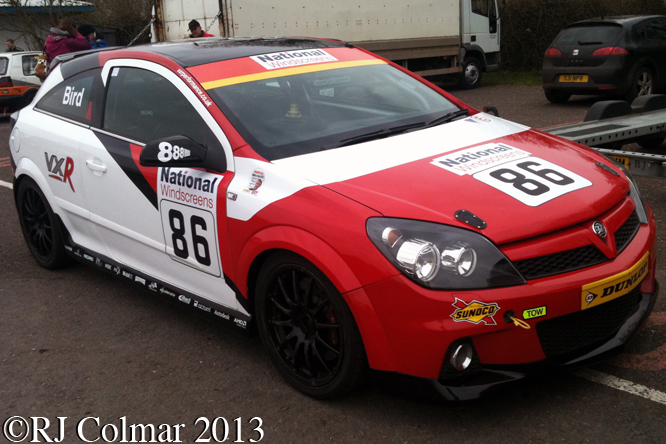
The Castle Combe Saloon Car Championship in Association with National Windscreens has some new entires this season including the #86 Vauxhall Astra of Kevin Bird who used to campaign a BMW 130i in this series. Kevin qualified 10th and finished 7th in the single race for the series.
Reynard FF84, Howards Day, Castle Combe

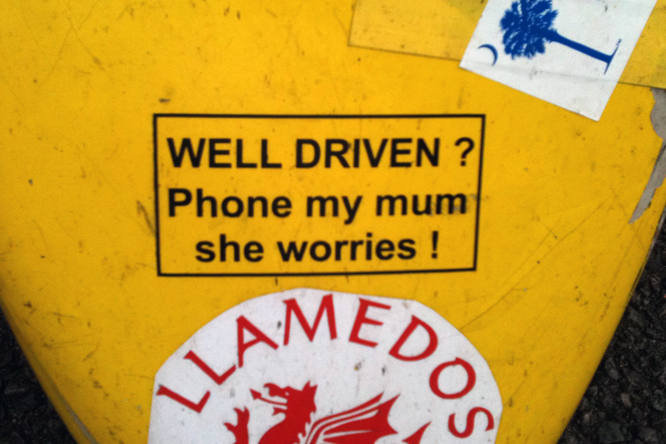
There appeared to be more stickers on Juiceie Bruceie’s BJ Welders Real Steel 4×4 / Llaemdos Racing Reynard FF84 than fibre glass, but as we shall see there was only one little incident Juiceie’s Mum might have had to worry about in the Formula Ford race for which he qualified a respectable 18th ahead of four newer vehicles.
Chevrolet LS3, Howards Day, Castle Combe

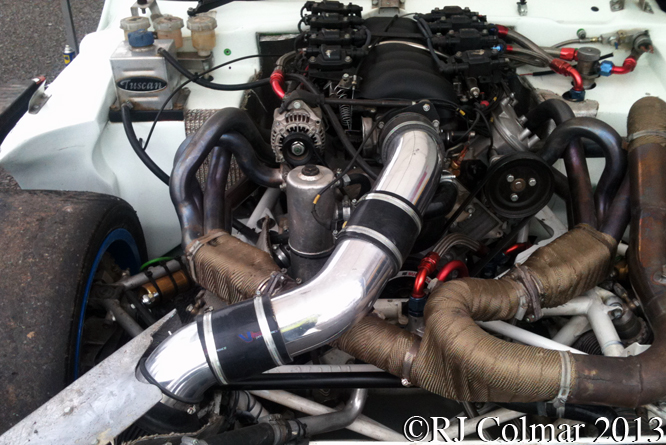
Perry Waddams used the prodigious horsepower of his Chevrolet LS3 motor to power his #77 Crowthorne.com TVR Tuscan to 12th on the grid and an 8th place finish in the Castle Combe, Sports & GT Championship supported by Siliconehoses.com.
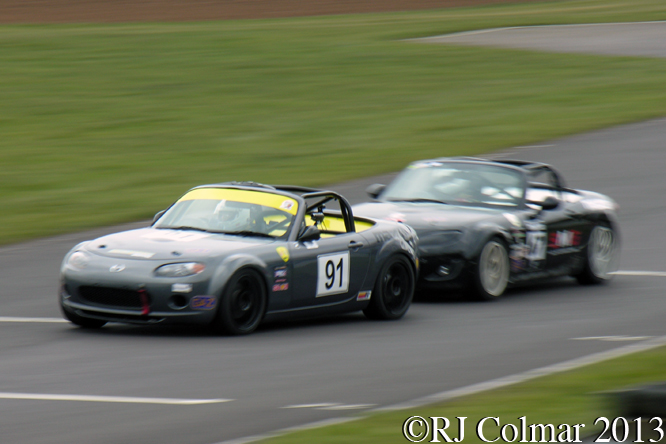
BRSCC Mazda MX-5 SuperCup, Howards Day, Castle Combe

The first race in the 11 race programme only had 7 starters but it only takes two cars to make a race and Matthew Davies in the #91 Mazda MX5 Mk3 and Andrew Clarkson in the #67 Team SMG / Clarkson Electrical MX5 Mk 3 both wanted to win the first BRSCC Mazda MX5 SuperCup race of the day. Clarkson eventually won by less than a second from pole but only after at least 5 changes in the lead up to lap ten of the 15 lap race.
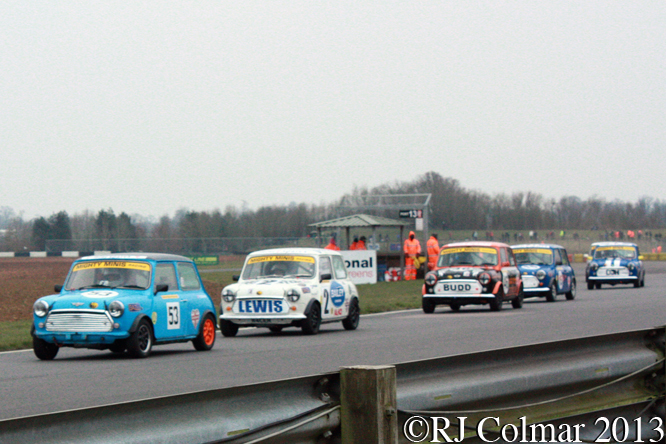
BRSCC, Mighty Minis Championship, Howards Day, Castle Combe

Jonathan Lewis driving the #2 Mighty Mini won the first BRSCC Mighty Mini Race from pole and is recorded as having led all but one lap however the race lead changed many more times particularly with Damien Harrington in the #53 Mini seen above leading on Westway leading into the final Camp Corner where Lewis was always ready and able to steal the lead back again. The winning margin was just .106 seconds after 13 laps.
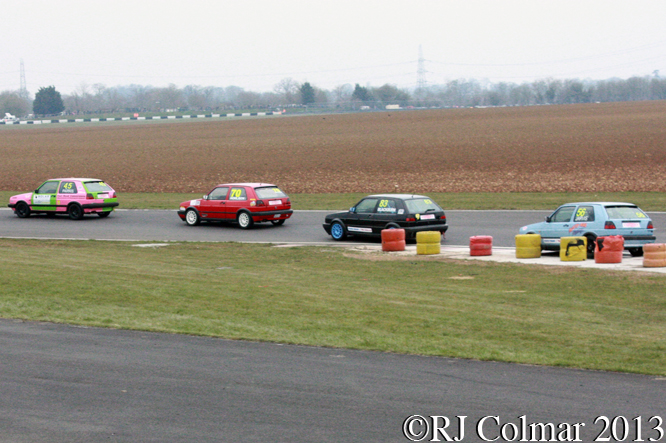
BRSCC, Teekay Couplings, Production GTi Championship, Howards Day, Castle Combe

Simon Hill in his evil handling GTi provided the only opposition to pole sitter Lewis Hopkins in the BRSCC Teekay Couplings Production GTi Championship race, Lewis won the 11 lap contest by over 5 seconds. Further down the field #45 David Parris is seen in 10th place before retiring on lap 6 being chased through Bobbies chicane by #70 James Howlison, #83 Paul Blackburn and #56 Nick Jarvis who finished the 11 lap race in 9th, 10th and 11th places respectively.
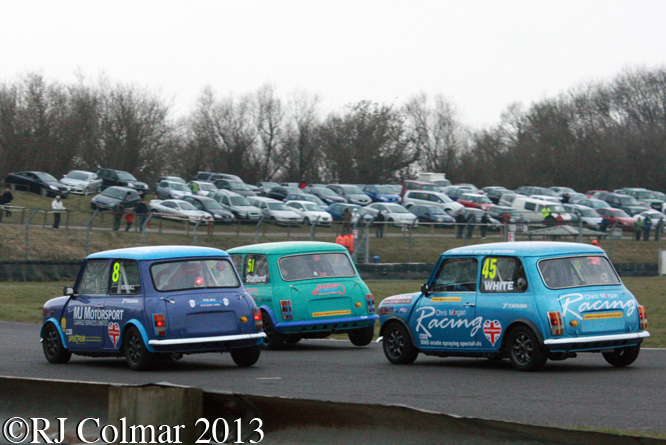
BRSCC, Super Mighty Minis Championship, Howards Day, Castle Combe

Next up was Race 1 for the Super Mighty Mini’s, Peter Trevett was swallowed up by the grid at the start and eventually finished fifth but it was Elliot Stafford who led by over a second until lap 6 when the pressure started to mount from Jamie White, Patrick Ford and Scott Kendall. #51 Elliot, who held on to win by less than a quarter of a second, is seen raising a rear wheel above as #8 Scott Kendall and #45 Jamie White try and find a way past going into Tower Corner.
National Windscreens, Castle Combe Saloon Car Championship, Howards Day, Castle Combe

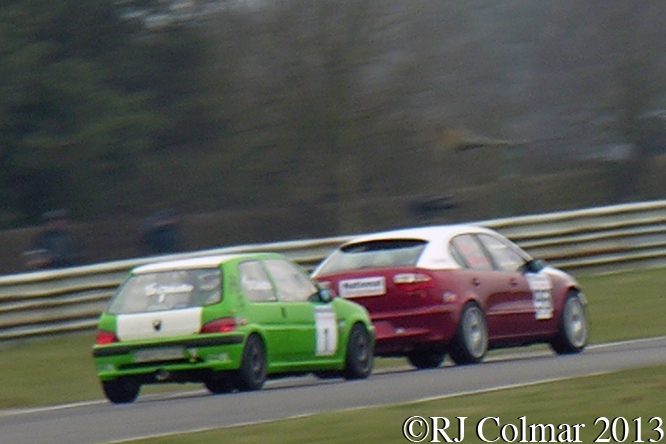
With the temperature in the tropical 3 degrees above freezing zone a great race looked in prospect from the Castle Combe Saloon Car Championship in Association with National Windscreens race, even though Mark Wyatt in his Vauxhall Astra had qualified nearly 2 seconds ahead of anyone else. William di Cluadio made a race of it and led lap one in his green championship winning W-A-S Racing Peugeot 106 GTi but Mark was back in charge until lap 6 when he retired at Quarry. di Claudio led again until lap 10 when he finally succumbed to the superior power of Rob Ballards Chippenham Conversions / Interceptor Racing SEAT Leon 20v Turbo. Rob is seen above having just over taken William out of Old Paddock on his way to a 1.5 second victory.
StartLine, Castle Combe, Formula Ford 1600 Championship, Howards Day, Castle Combe

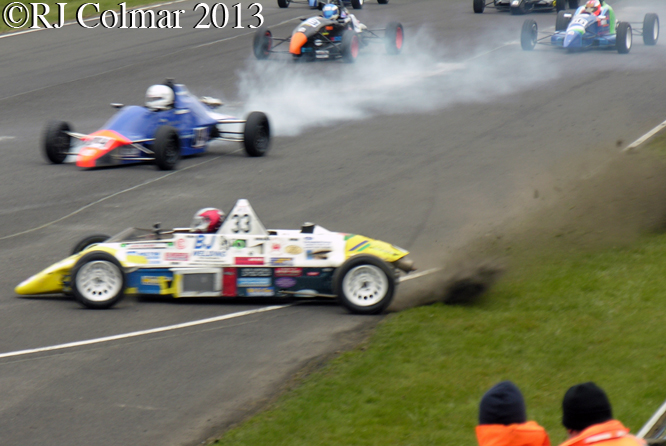
Steven Jensen started his 2013 Castle Combe Formula Ford 1600 Championship supported by StartLine with a convincing victory from pole, his only challenger was Roger Orgee who retired his #3 Van Diemen on lap 6. However down the field there was plenty of excitement, the aforementioned Juiceie Bruceie got his Reynard FF84 off to a brilliant start rising from 18th on the grid to 10th at the end of lap 1 before he appeared to out brake himself going into the Esses, Juiceie recovered and finished an eventual 16th one lap down.
BRSCC Mazda MX-5 SuperCup, Howards Day, Castle Combe

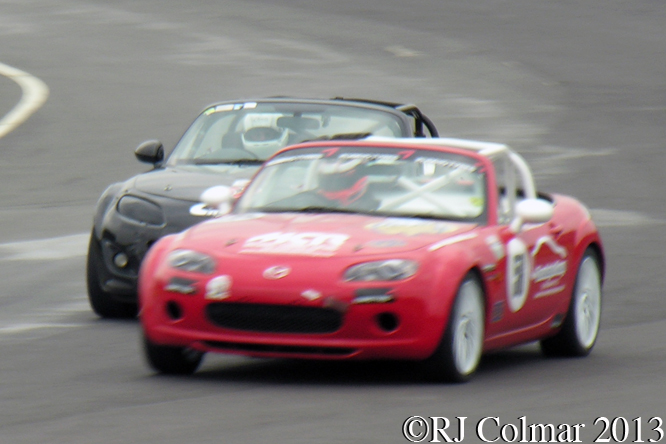
The second Mazda MX5 SuperCup race was won by Matthew Davies by six seconds from Andrew Clarkson in the #67 Mazda, who temporarily gave his second place up Mike Comber coming out of Quarry in the #58 MX5 as seen above. Mike could not make the pass stick over the remainder of the lap and settled for his second third place finish of the day.
Micheal Kason, Fiat X1/9, Howards Day, Castle Combe

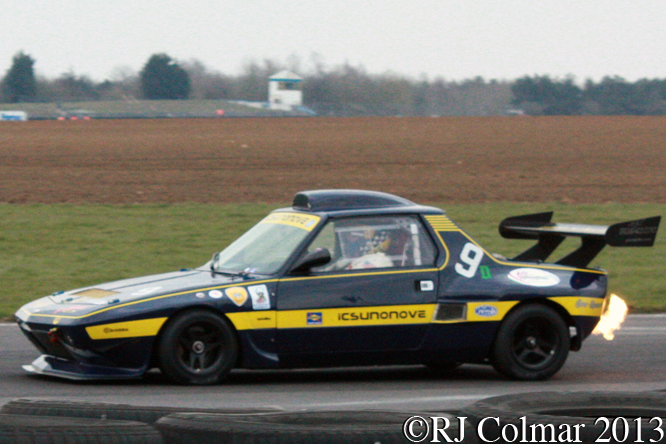
The Castle Combe Sports and GT Championship supported by Siliconhoses.com race did not live up to the expectations of a battle between the leading Radicals of pole sitter Josh Smith fellow front row starter Andrew Shanley and second row starters Manhal Allos and Simon Tilling, Tilling retired out on the circuit on lap 2 which required the safety car to neutralise the field on lap 6 and in the ensuing chaos Andrew Shanley was handed a one lap lead as a result of the wrong car being picked up as the leader. Still former drag racer Michael Kason’s Zubedo.com Dallara Fiat X1/9 provided plenty of flame spitting entertainment as it headed for a 16th place finish, which kept me occupied for the remainder of the race.
BRSCC, Mighty Minis Championship, Howards Day, Castle Combe

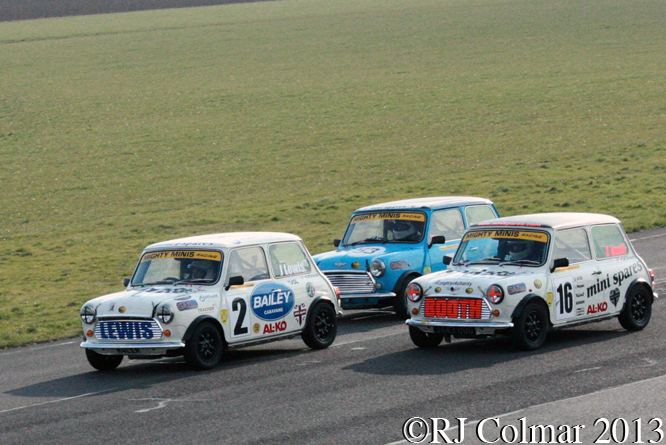
With 8 races down and 3 more to go the 60 hp Mighty Minis came out for their second run and it was a real barnstormer with Jonathan Lewis, teenager Zack Booth, Pole sitter Damien Harrington and Charlie Budd all leading at least one lap by never more than half a second. In the end Harrington pulled of a last lap last corner maneuver at the last corner Camp that stuck all the way to the finish line to win his second race of the day by .108 secs. Above #2 Jonathan Lewis, who finished 2nd, #16 Zack Booth, who finished 3rd and eventual winner #53 Damien dispute every inch of tarmac on the run up to Avon Rise midway through the race.
BRSCC, Teekay Couplings, Production GTi Championship, Howards Day, Castle Combe

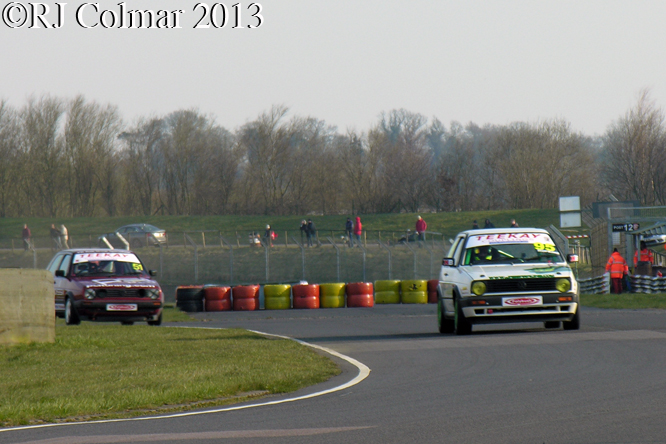
For a while it looked like Simon Hill had got on top of his handling demons which were much in evidence in the first Production GTi race but after just two laps the red #51 GTi had to concede to the faster white #95 of Lewis Hopkins who became the second two time winner of the day.
BRSCC, Super Mighty Minis Championship, Howards Day, Castle Combe

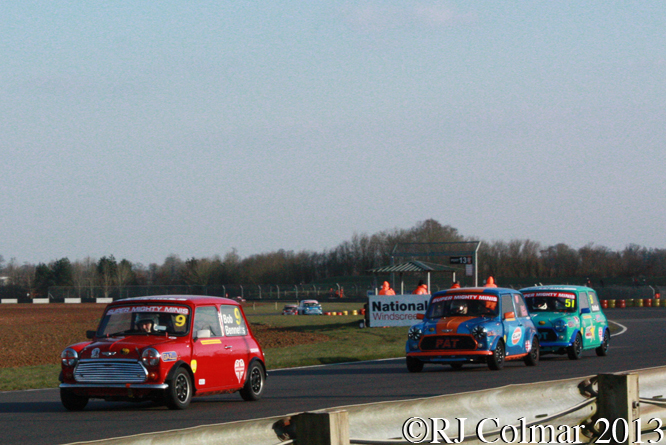
The Super Mighty Mini’s concluded the meeting with their second run and their was no going home early and guessing the result, above with two laps to go Bob Bennets, who would finish 3rd leads on lap 12, on lap 13 is was the turn of #77 Patrick Ford who finished 2nd to lead and at Camp Corner on the final lap Elliot Stafford nailed his exit perfectly to become the second two time winner of the day.

As a tribute to Castle Combes much missed savior Howard Strawford the day had served as a poignant reminder to all that Howard had done for motor sport and the wonderful legacy and high standards that those of us who remain will have to live up to.

Thanks for joining me on this ‘Howards Day’ edition of “Gettin’ a li’l psycho on tyres” I hope you will join me again tomorrow, don’t forget to come back now !

21/04/13 PS My thanks to Castle Combe historian Pete Stowe for pointing out various spelling errors in drivers names, apologies to all concerned.

Share

Racing Transformer – McLaren Elva Mark I #M1A-20-15

In 1952 aged just 14 years old Bruce McLaren entered his first competition driving event a hillclimb in New Zealand with an Austin A7 Ulster which hois Dad Les had restored. by 1957 he was driving a Cooper Climax which he also modified sufficiently to become runnner up in the 1957 and 1958 New Zealand Formula 2 series.
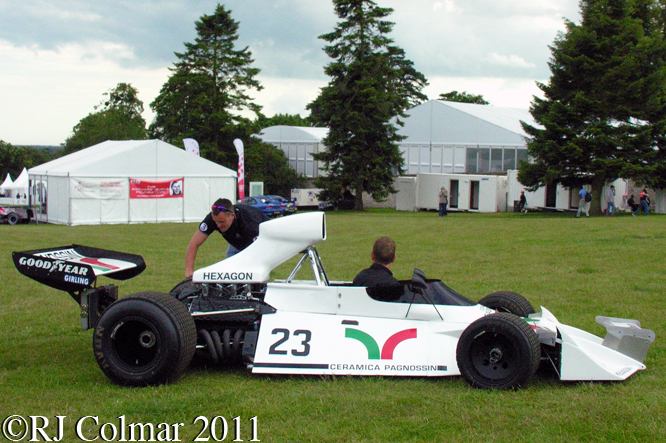
By the end of 1958 Bruce made his Grand Prix debut in the German Grand Prix driving a works Formula 2 Cooper Climax where he finished fifth but was not awarded any World Championship points which were only awarded to drivers of Formula One cars. Bruce stayed with Cooper for seven years becoming the then youngest Grand Prix winner aged just 22 in the 1959 US Grand Prix at which his team mate Jack Brabham won his clinched his World Championship.

In 1963 Bruce founded Bruce McLaren Motor Racing Ltd and his first car was the Zerex Special a car that had been transformed from a 1.5 litre / 91.5 cui Cooper Climax single seater Formula one car to a two seater sports car powered by an Oldsmobile V8 featuring a tube frame of Bruces own devising, the rechassisied car painted garden gate green was distinguished by eight stub exhausts angled to the rear, won first time out at Mosport in Canada in 1964 and again at Brands Hatch the same year. This car was last seen in Venezuela at the end of the 20th Century.

For 1964 Bruce built 3 Oldsmobible powered M1A sports racing cars which were the first first to bear his name, of which the first Bruce raced, the second was used for testing and the third was a show car. Bruce entered into an agreement with Trojan who were also owners of Elva Cars to build a production run of customer M1A’s under license for the 1965 season.

McLaren Elva Mark I, Goodwood Revival

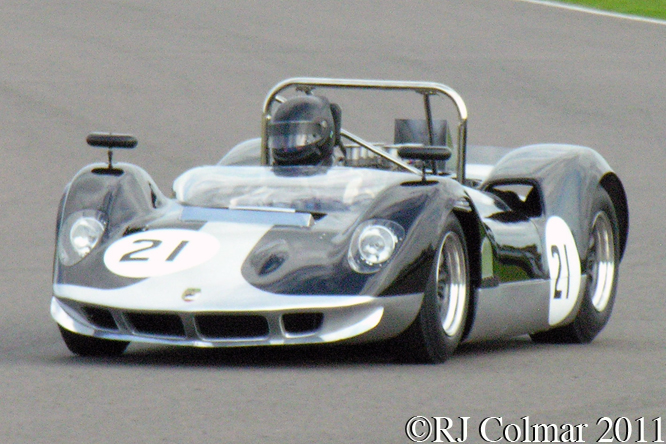
Today’s featured car is one of the 24 M1A’s built under license and was marketed in the USA as the McLaren Elva Mark 1 which could be fitted with Chevrolet, Ford or Oldsmobile V8’s. This particular chassis #M1A-20-15 was originally supplied to Joe Starkey who is recorded as having won seven events in McLaren Elva Mark 1 chassis in 1965 and 1966, although at the time of writing these achievements have not been specifically ascribed to the chassis featured today. If you believe this car is the one Joe won those races in, as seen winning at Green Valley in 1966 in this linked photo by Jerry Melton please do not hesitate to chime in below.

In 1968 having failed to attract much interest in it’s 3 litre / 183 cui Formula A open wheel series the SCCA opened up it’s premier category to 5 litre / 302 cui stock block motors which over the ensuing 6 years proved extremely popular in the US, UK South Africa and particularly Australia where the F5000 series, as Formula A was known outside the USA, remained a premier category until 1982.

For the new 5 litre / 302 cui regulations Joe Starkey had his M1A transformed into an offset single seater open wheel car running a 500 cc / 30 cui undersized Oldsmobile motor. Starkey’s McLaren in open wheel form can be seen in this grainy linked photo. Joe was not alone converting a McLaren 2 seater into an open wheeler for Formula A.

Since the featured photograph of the car restored to it’s original closed wheel form was taken, with current owner John Bladon driving at Goodwood, the large chrome safety cage has been replaced with a black one of more modest proportions in time for a winter trip to Australia.

I’ll be celebrating McLaren’s first 50 years by featuring 3 more McLarens on Sunday’s for the rest of April.

My thanks to owner John Bladon, David McKinney and RA Historian from The Nostalgia Forum for their help identifying today’s featured car.

Thanks for joining me on this “Racing Transformer” edition of “Gettin’ a li’l psycho on tyres” I hope you will join me again tomorrow. Don’t forget to come back now !

Share

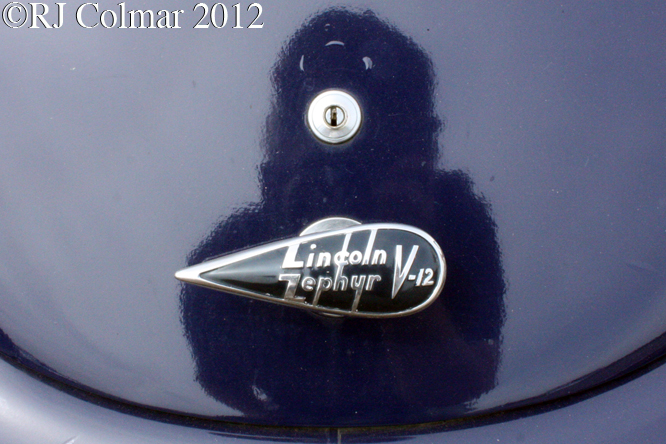
Streamline Dream Car – Lincoln Zephyr V12

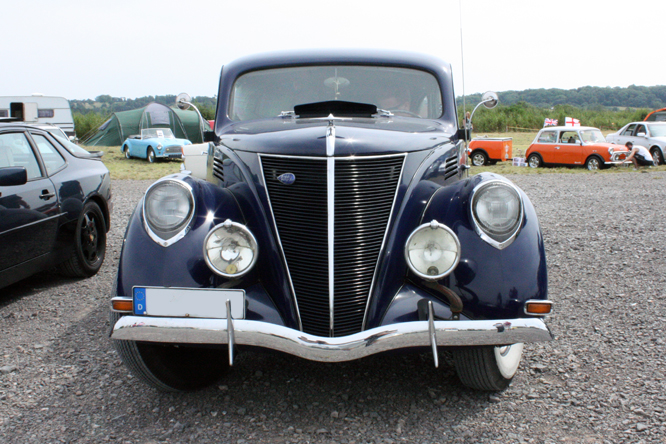
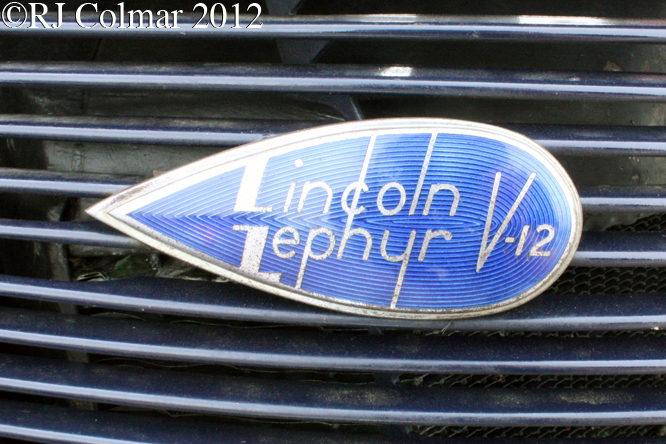
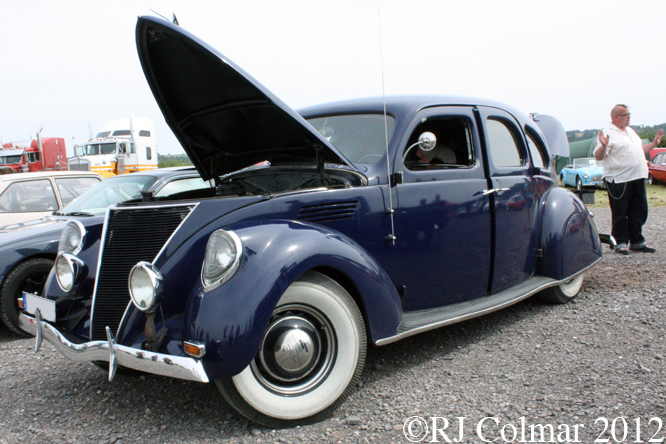
One of many WOW ! moments I had last year was at the Summer Classics meeting held at Easter Compton when I turned round and saw today’s featured 1936 Lincoln Zephyr V12 purring up the main drag carrying two adults two children and a large black and white TV all the way from Dresden, Germany.

Lincoln Zephyr V12, Summer Classics, Easter Compton

Edsel Ford is credited with conceiving the Zephyr V12 to slot in between the top of the range Lincoln K Series and top of the Ford brand V8 Deluxe.

Lincoln Zephyr V12, Summer Classics, Easter Compton

Edsels initial choice was for a design based on the Biggs Dream Car designed by Jonn Tjaarda and Howard Bonbright a rear engined concept vehicle that was first shown by Ford at the The Century of Progress Exhibition in 1933-1934

Lincoln Zephyr V12, Summer Classics, Easter Compton

High school drop out and head of Ford’s design department Eugene Turenne Gregorie is credited with turning the Biggs Dream Car concept into the finalised front engined streamline design, which must have been seen as something of a gamble in the light of the failure of the Chrysler Airflow model built between 1934 and 1937.

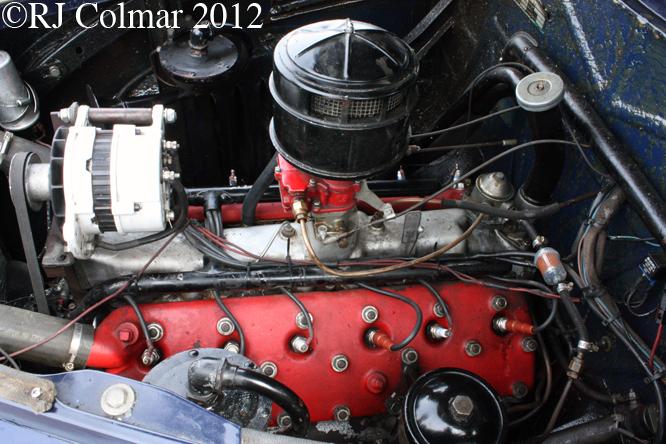
Lincoln Zephyr V12, Summer Classics, Easter Compton

The 110hp 75º degree V12 motor was a development of the Ford flathead V8, not related in anyway to the Lincoln K series V12 motors, top speed for the Zephyr was 90 mph.

Lincoln Zephyr V12, Summer Classics, Easter Compton

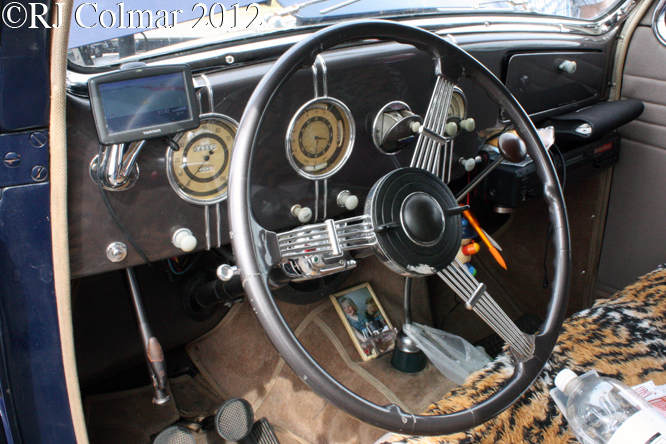
Standard on the 1936 Zephyr was the locking glove box, options included the radio and satellite navigation.

Lincoln Zephyr V12, Summer Classics, Easter Compton

During the first year of production the Zephyr V12 was available in 4 door and 2 door saloon / sedan versions.

Lincoln Zephyr V12, Summer Classics, Easter Compton

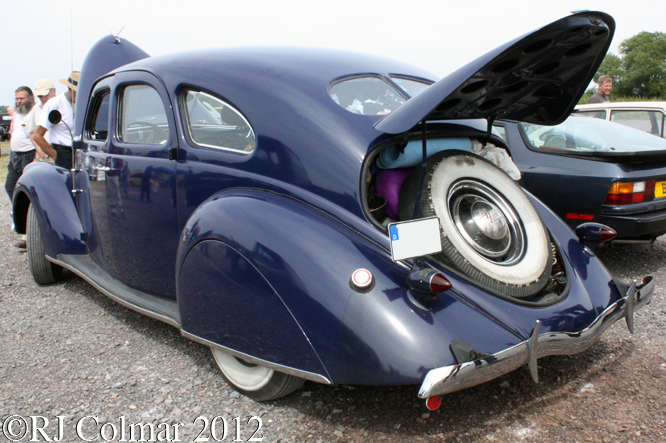
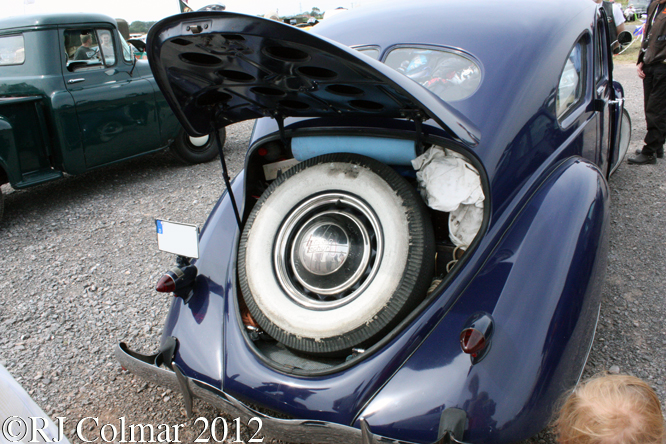
Note the bullet shaped tail light lenses which would become a notable feature along with tall tail fins on several GM products 22 years later.

Lincoln Zephyr V12, Summer Classics, Easter Compton

The Lincoln Zephyr V12 proved to be a big hit with 15,000 vehicles sold in the first year of production which accounted for 80% of all Lincoln sales in 1936, and remained in production until 1940.

Share

Nelson Rowes to Double – HSCC Thruxton Revival Easter Sunday

Sunday finally brought months of waiting to an end for this race fan as I headed to Thruxton after teaching my Mum how to use her cruise control very early on Sunday morning.

Thruxton Circuit, Hampshire, UK

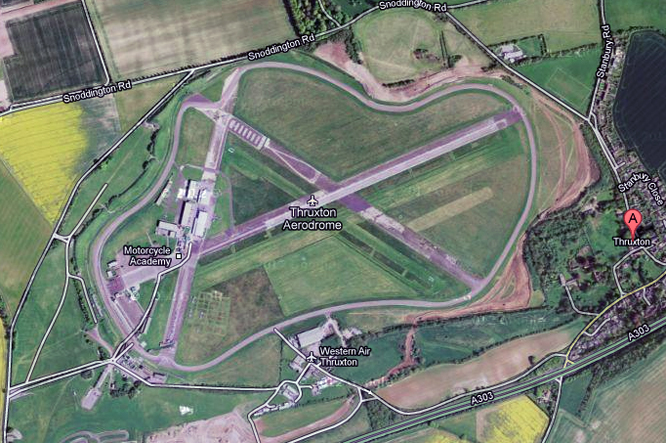
Thruxton Circuit in Hampshire like many British race tracks began life as a military air base during the 1939 – 45 war, it opened in 1940 and served as a base for the RAF and USAF troop carrying aircraft and gliders notably used for the D-Day landings on June 6th 1944 and many subsequent operations requiring large numbers of air borne troops. The first race meetings were held on a circuit using the perimeter roads in the 1950’s but the track was considered too bumpy and it was not until the British Automobile Racing Club, BARC, needed a new home following the closure of the Goodwood circuit in 1966 the Thruxton was reactivated more or less in the form we know it today.

Daimler V8-250, Thruxton Easter Revival

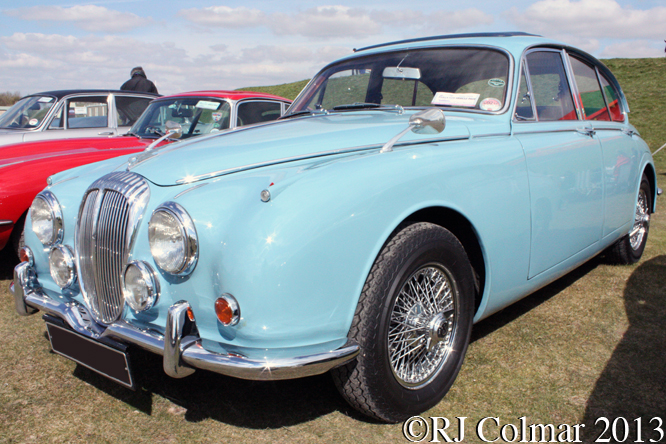
Last time I was at Thruxton well known Grand Prix pundit and 13 time Grand Prix winner David Coultard was still driving in Formula Ford in 1989, my first visit to Thruxton a couple of years earlier was notable for a win by my school pal Sven driving his Alfa Romeo Alfasud for whom I was acting as gofer. Consequently I got to drive his car round the track at snails pace following Sven as he stood in the back of the victory parade lap car. The entrance to the circuit on Sunday was flanked by a variety of Mini’s, Triumphs and Jaguars, in amongst the Jaguar Enthusiasts Club vehicles was this 1969 Daimler V8 250.

HSCC Classic Racing Cars, Thruxton Easter Revival

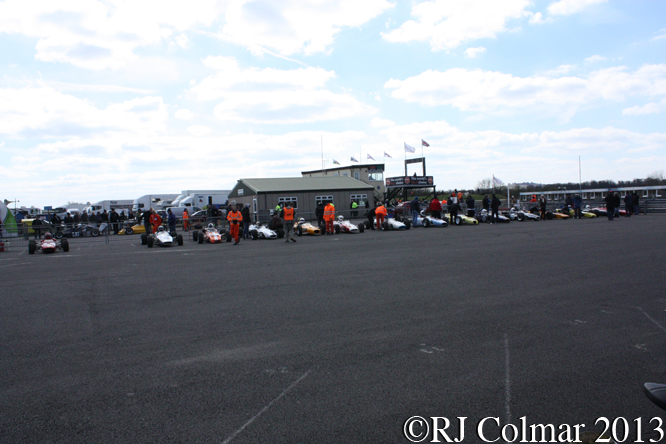
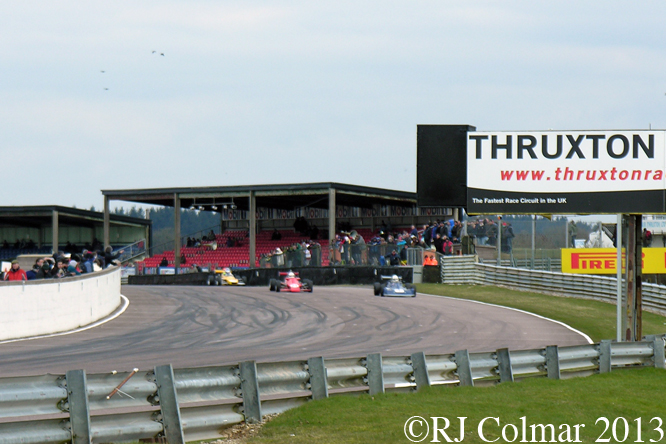
I got to the track just as the last practice was about to begin above the HSCC Classic Racing Cars, comprising Formula 2,3,B and Ford open wheelers dating from 1963 to 1970 line up in the holding area prior to the start of their practice session.

Austin A105, Thruxton Easter Revival

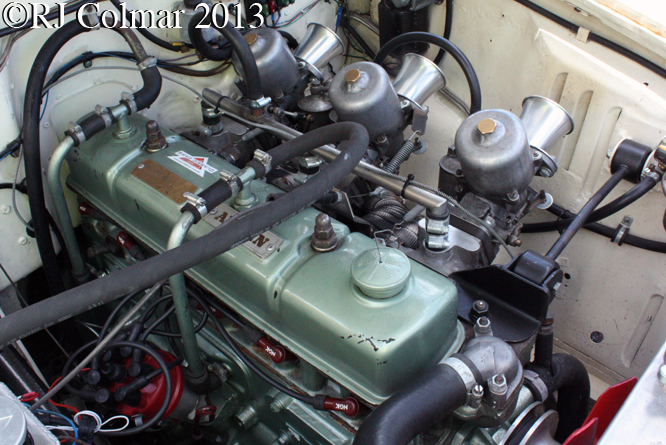
The paddock was full of delights like this 1958 six cylinder Austin A105 of the type that Jack Sears used to win the very first British Saloon Car Championship in 1958. Thruxton has a great mix of corners from tight 90 degrees to long sweepers meaning this A105 driven by Andrew Davenall found it’s self in a race long scrap with the much better handling Mini Cooper of David Dunnell which went in favour of the former towards the back of the HSCC Historic Touring Car field.
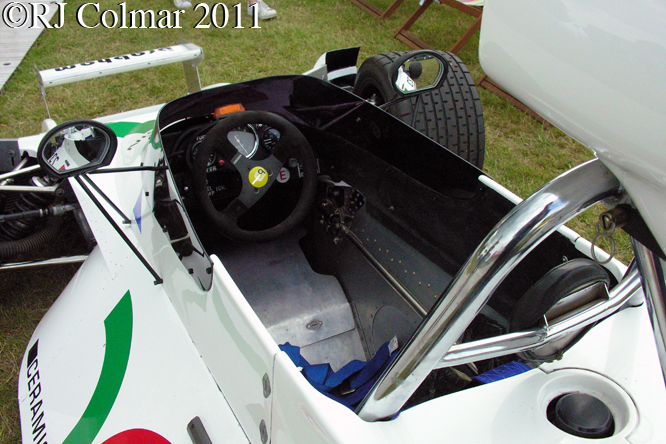
Kvanti Mk I, Thruxton Easter Revival

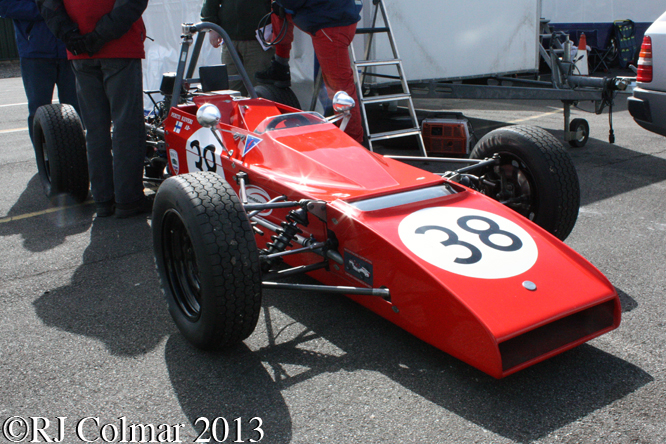
Making a welcome appearance from Finland in the Historic Formula Ford race was this 1971 Kvanti Mk I driven by Pertti Kilveri.
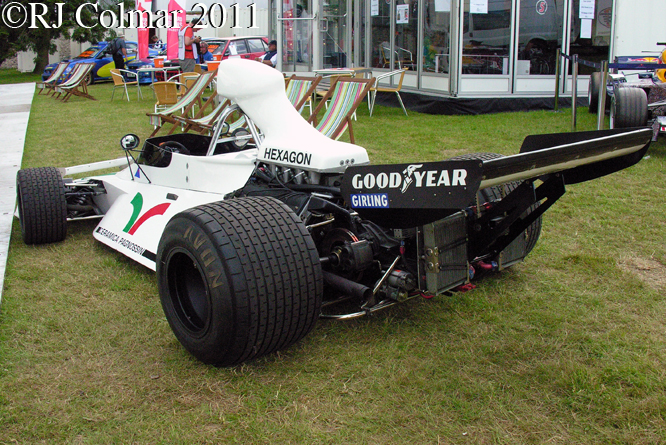
Ford Boss 302 Mustang, Thruxton Easter Revival

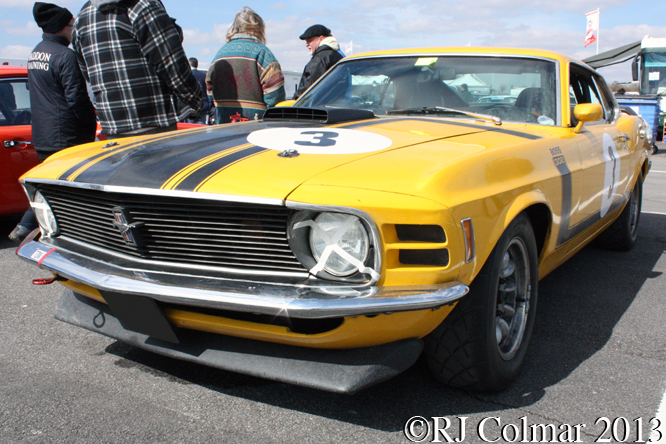
Another car that was to find it’s self in the midst of a mid field scrap was this 1969 Boss Mustang driven by Martin Edridge which managed to edge out the 1969 Camaro driven by Nick Savage both of whom were miles behind the better handling Lotus Elan’s that took the top three spots in the HSCC Historic Road Sports Championship.

Osella BMW PA4, Thruxton Easter Revival

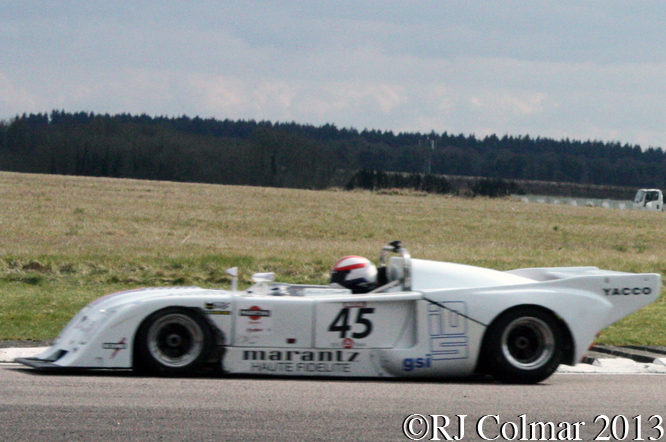
There were two races for racing cars powered by 2 litre 92 cui motors at Thruxton on Sunday the Martini Trophy Race featured 2 litre Group 6 cars like the BMW powered 1976 Osella PA4 driven by Italian Cosimo Turizio unfortunately Cosimo retired shortly before the end of the race handing Ray Mallock driving a 1976 Mallock Mk18 in the invitational class a second place finish.

Nissan Primera GT, Thruxton Easter Revival

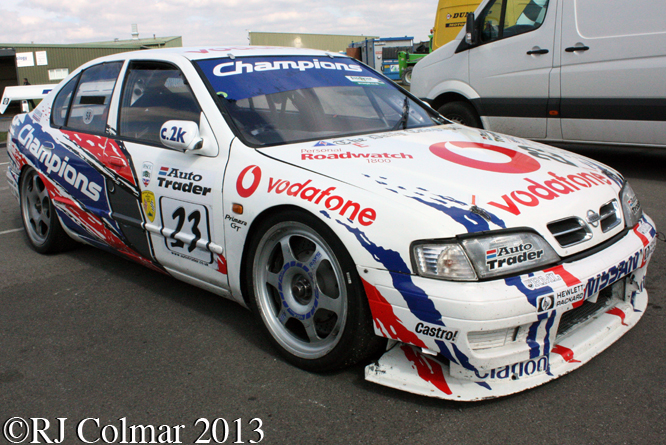
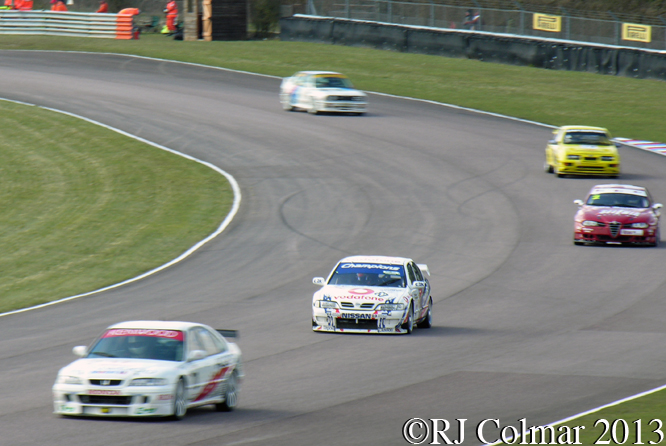
The Super Touring Car Race featured Derek Palmer’s 1999 Nissan Primera GT, which was originally built and prepared by Ray Mallock Limited (RML) for Laurent Aiello who became the first Frenchman to win the British Touring Car Championship.

Brabham BT30, Thruxton Easter Revival

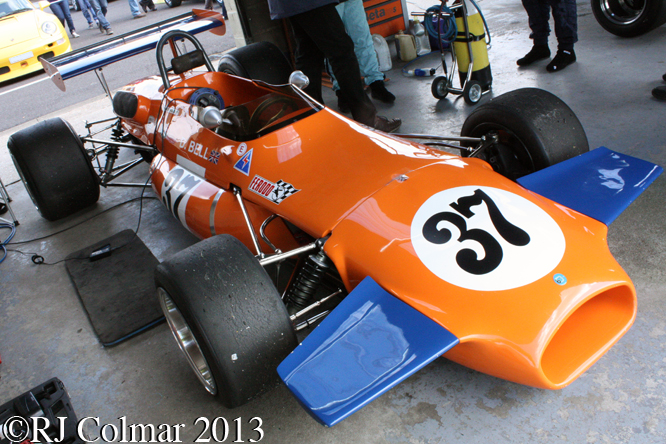
Ted Walker was in the pits time keeping for Lincoln Small who was driving the Brabham BT30 in the featured Jochen Rindt Trophy race. Lincoln’s Brabham is the same one that Derek Bell drove for Tom Wheatcroft to a second place finish in the 1970 European Formula 2 Championship.

Jochen Rindt Trophy Race, Thruxton Easter Revival

The Jochen Rindt Trophy race on Sunday was won by Martin O’Connell driving a 1977 Chevron B40 that looks as though it might be the same won as Alain Prost drove for Fred Opert prior to becoming a four time World Champion. Martin is seen above leading Andrew Smith’s March 742 car at Campbell Corner on the opening lap. Andrew finished second but only after loosing a couple of places in the opening laps and regaining them.

Super Touring Car Race, Thruxton Easter Revival

There was not a huge entry for the Super Touring Car Race on Sunday, partly because some of the entries were lost after the race for these cars held the day before. However Derek Palmer in the Nissan was always ready to take any advantage of Stewart Whyte’s 1996 Honda Accord although he did not have the speed to challenge Stewart for the top spot on the podium.

Chevron B36, Thruxton Easter Revival

Martin O’Connel came close to scoring a second comfortable win on Sunday with his Chevron B36 above in the Martini Trophy Race however he suffered a puncture which handed the lead to the similar car of Nick Flemimg.

HSCC Historic Road Sports Race, Thruxton Easter Revival

The HSCC Historic Road Sports Race was as mentioned earlier a Lotus Elan benefit, but not before Andrew Sheppard, driving a nimble 1962 Lotus Seven S2, had found a way past the #9 1963 Elan of eventual winner Roger Waite. Andrew unfortunately was soon to retire out on the circuit.

HSCC Historic Formula Ford Race, Thruxton Easter Revival

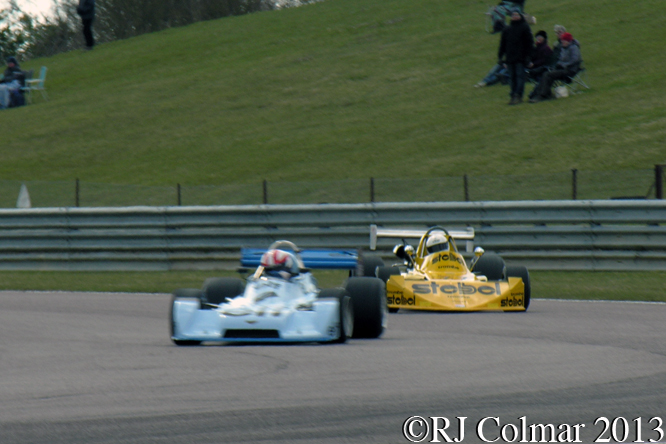
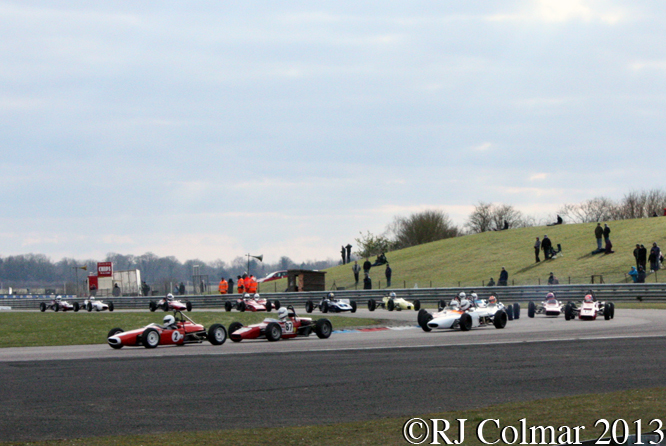
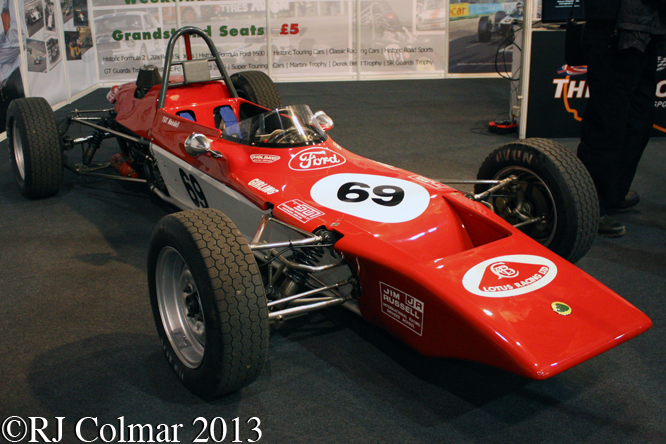
The full grid of Formula Ford cars was thinned out after a contretemps on the opening lap after the first attempted start. Bristol Veterinarian Nelson Rowe, driving the #87 1971 Crosslé 20F, made a great start from the first attempt but was beaten by Benn Simms driving the #2 1968 Jmr 7 Jomo on the second start as seen above. Nelson quickly found away past Benn and drove to his first victory of the day having only to worry if he had enough petrol to make it to the finish after the additional start and pace lap. Former Grand Prix driver Tiff Needell seen above in 7th place second from right was thrilled to find away to a third place finish in his 1971 Lotus 69 and was heard talking about appearance money before committing to making any further appearances in the series.

HSCC Historic Touring Car  Race, Thruxton Easter Revival

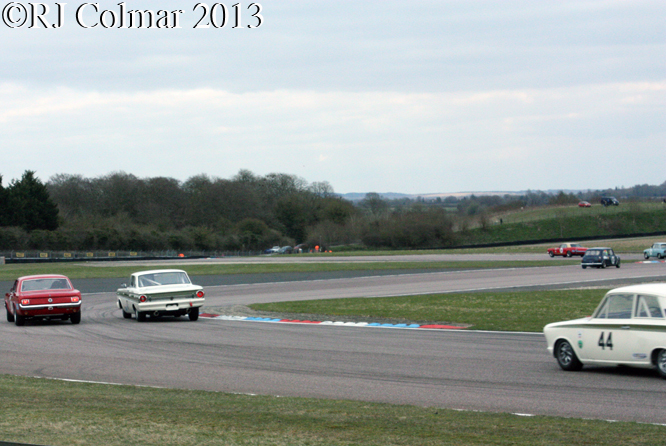
The HSCC Historic Touring Car Race also had to be stopped after Neil Brown went bouncing into what looked like at least 3 barrel rolls at nobel. Amazingly Neil released himself and appeared completely unharmed from the incident. Richard Dutton made a second clean start and headed for a comfortable win in his read and gold 1965 Mustang which can be seen leading some back markers above but it was Mike Gardiner driving a 1964 Ford Falcon who took the restart from the back of the grid who provided most of the entertainment. Mike is seen above relieving the ’65 Mustang driven by Warren Biggs of second place going into Campbell.

Historic Formula Ford 2000  Race, Thruxton Easter Revival

Nelson Rowe driving the #1 1979 Reynard SF79 was in command of the Pinto powered Historic Formula Ford 2000 race through out all though teenager Callum Grant did his best to earn a beer driving a 1978 Delta T78 to a commendable second place finish.

Lotus 59, Thruxton Easter Revival

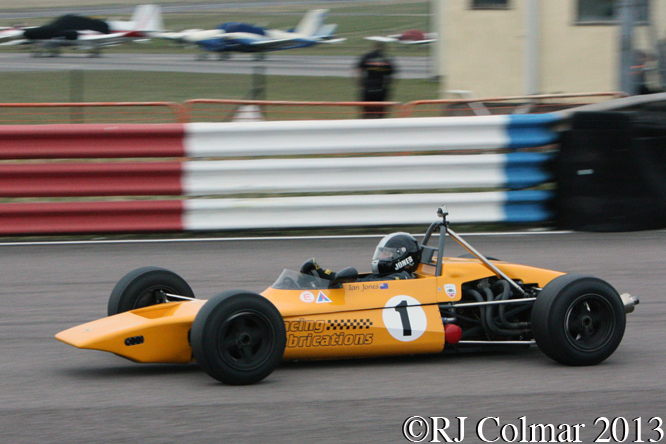
The final race of the day for HSCC Classic Racing Cars was a Ian Jones benefit, he was never headed from poll driving the #1 1969 Lotus 59 seen above in Formula B spec. Again despite the absence of a memorable duel for the lead there were some great scraps going on behind Ian. All in all I got my 12 quids worth on a day where the temperatures were marginally above freezing and a good supply of affordable track side snacks and hot drinks kept my sense of humour from running for the cover of the nearest duvet or three.

Thanks for joining me on this “Nelson Rowes to Double” edition of “Gettin’ a li’l psycho on tyres” I hope you will join me again tomorrow. Don’t forget to come back now !

Share

Bonus Built Facelift – Ford F1 Pickup

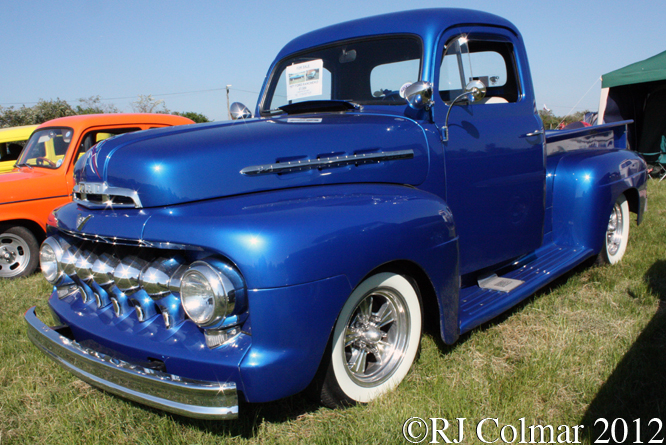
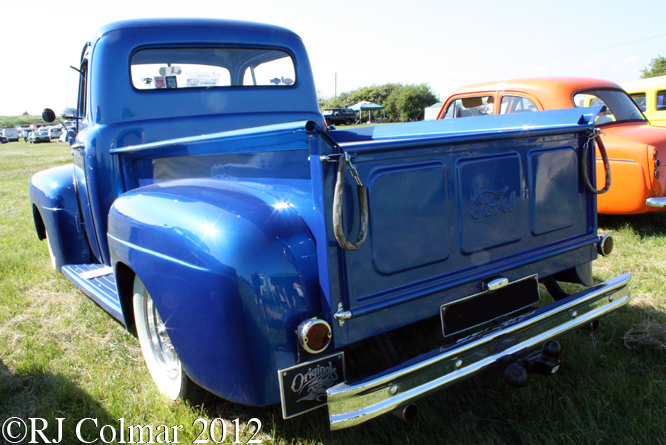
Last week week I looked at a 1949 Bonus Built Ford F1 this weeks pick up is the face lifted version first seen in 1951.

Ford F1 Pickup, Yanks Picnic Shakespeare County Raceway

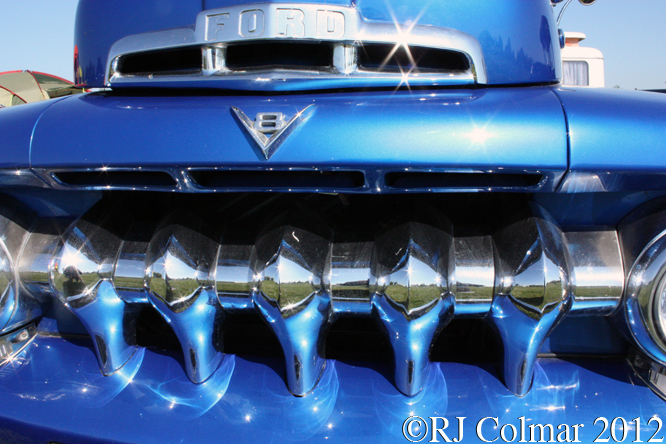
So far as I have been able to discern the grill would originally have only been fitted with three teeth, customisers seem to like adding additional teeth on the grill to fill in the gaps.

Ford F1 Pickup, Yanks Picnic Shakespeare County Raceway

All first Generation F1′s were powered either by a 95 hp flathead straight 6 or 100 hp flathead V8, the 4.8 litre / 292 cui quoted for today’s featured pickup suggests something more contemporary than a regular flathead is installed under the bonnet / hood.

Ford F1 Pickup, Yanks Picnic Shakespeare County Raceway

The new dashboard of the face lifted 1951 F1 featured an ashtray and glovebox. Twin windscreen wipers and the foot operated windscreen washer were still optional.

Ford F1 Pickup, Yanks Picnic Shakespeare County Raceway

The rear cab window was enlarged in 1951 for better reward visibility.

Ford F1 Pickup, Yanks Picnic Shakespeare County Raceway

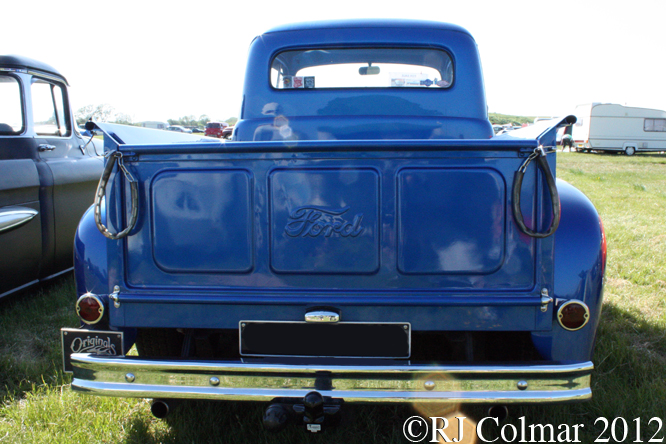
Finally the steel panels on the 6 1/2 foot cargo bed were replaced with hard wood items which are much easier to repair and replace.

Thanks for joining me on this “Bonus Built Facelift” edition of “Gettin a li’l psycho on tyres” I hope you will join me again tomorrow. Don’t forget to come back now !

Share

Murray’s Triangular Monocoque – Brabham Cosworth BT42 #BT42/6

After winning three World Drivers Championships two with Cooper in 1959 and 1960 and one with his own Brabham Team in 1966 Jack Brabham decided he was going to sell up and retire at the end of 1969. He got as far as selling the team to his partner the Australian designer/engineer Ron Tauranac in 1969 but after Jochen Rindt elected to stay with the Lotus team for 1970 Jack Brabham drove for the team in 1970 before hanging up his helmet with his team placed 4th in the constructors championship.

Brabham BT42, Goodwood Festival of Speed,

The following season Ron ran the Brabham team with Graham Hill and Tim Schenken scoring a non championship race win with Graham Hill and a few points in the championship. Ron decided that he needed a business partner to continue and ended up selling the team to a former racer sometime team owner and driver manager called Bernie Ecclestone. It soon become clear that both Ecclestone and Tauranac liked things done their was and so Ron left early in 1972.

Brabham BT42, Goodwood Festival of Speed,

For the 1972 season Graham Hill was still the number one driver with Argentinian Carlos Reutemann and Wilson Fittipaldi, brother of 1972 World Champion Emerson, driving second and third string entries.For the second year running Brabham finished 9th in the constructors championship last of the point’s scorers.

Brabham BT42, Goodwood Festival of Speed,

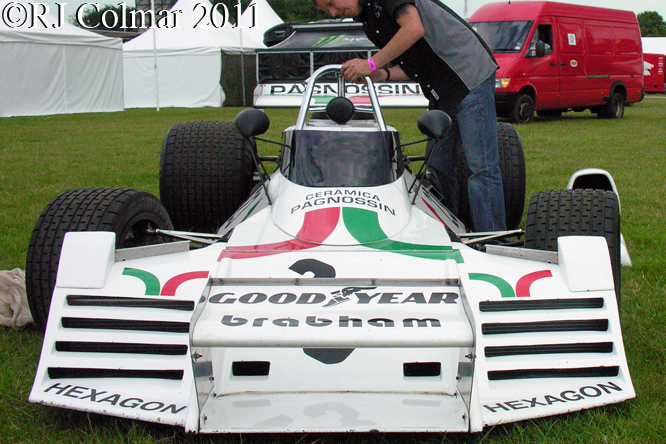
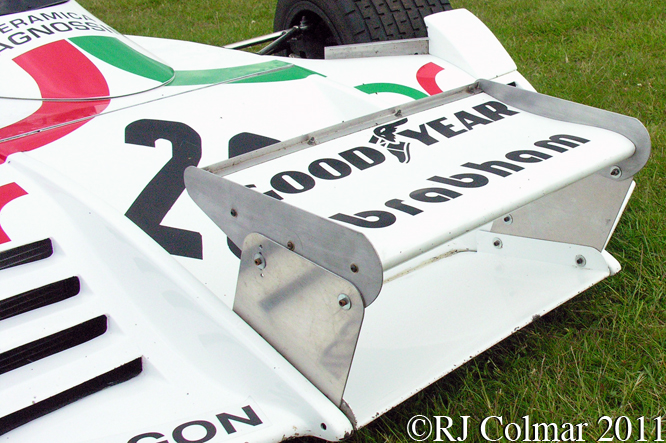
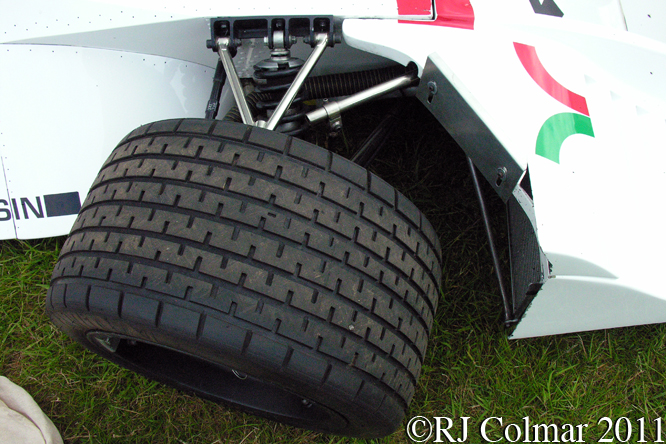
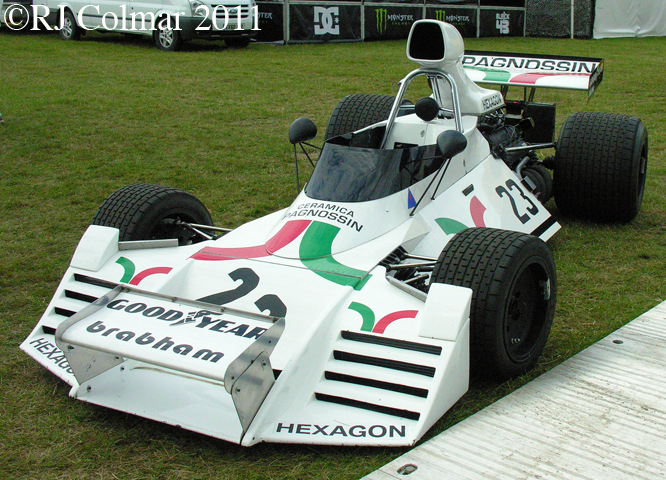
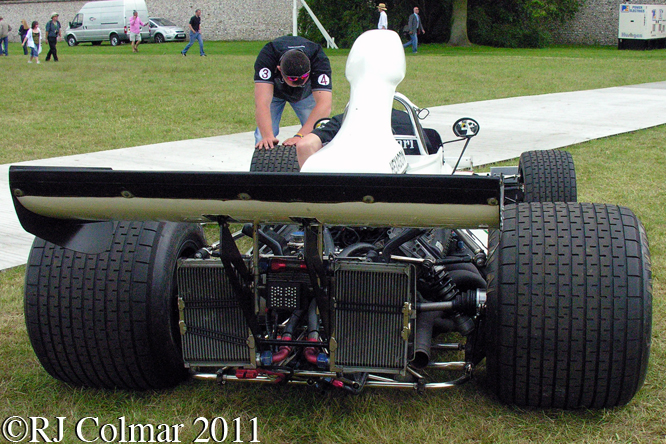
For 1973 South African Gordon Murray was given the responsibility of coming up with the Brabham team’s new challenger and he came up with the Brabham BT42 built around a monocoque that unusually, for the time, featured a triangular cross section as seen seen in these photographs.

Brabham BT42, Goodwood Festival of Speed,

Carlos Reutemann and and Wilson Fittipaldi were the teams front line drivers being joined on occasion by Andrea de Adamich until he broke his legs in an accident on the opening lap of the British Grand Prix, Andrea was replaced by Rolf Stommelen and then John Watson in the final Grand Prix of the season at Watkins Glen.

Brabham BT42, Goodwood Festival of Speed,

Reutemann managed six points paying finishes with the best being two thirds in the 1973 French and US Grand Prix while Andrea, in an older 1972 Brabham BT37, and Wilson added another 6 points between them all of which moved Brabham back up to 4th in the World Constructors championship.

Brabham BT42, Goodwood Festival of Speed,

This particular chassis is the sixth and final Brabham BT42 built it first appeared in the 1973 Austrian Grand Prix as a replacement for the chassis damaged in the accident at the 1973 British GP. Rolf Stommelen drove the car three times qualifying a best 12th in Italy and finishing a best 12th in Italy and Canada. John Watson qualified the car 24th for the US Grand Prix but the engine did not go the race distance.

Brabham BT42, Goodwood Festival of Speed,

Bernie Ecclestone sold chassis #BT42/6 and BT42/5 to Martino Finotto for the 1974 season, Finotto a seasoned sports car racer realised he was out of his depth in Formula One and so arranged for fellow sportscar racers Swiss Silvio Moser, 1973 and ’74 Le Mans winner Gérard Larrousse, Austrian Helmut Koenigg and Italian Carlo Facetti to drive the cars in several European Grand Prix.

Brabham BT42, Goodwood Festival of Speed,

In the end only Gérard Larrousse made a start in the car, having qualified 28th for the 1974 Belgian Grand Prix he retired with tyre issues. When Gérard unsuccessfully tried to qualify the car at the 1974 French Grand Prix it carried a particularly hideous airbox as can be seen in this linked image.

Thanks for joining me on this “Murray’s Triangular Monocoque” edition of “Gettin’ a li’l psycho on tyres” I hope you will join me again tomorrow. Don’t forget to come back now !

Share

Bonus Built – Ford F1 1/2 Ton Pickup

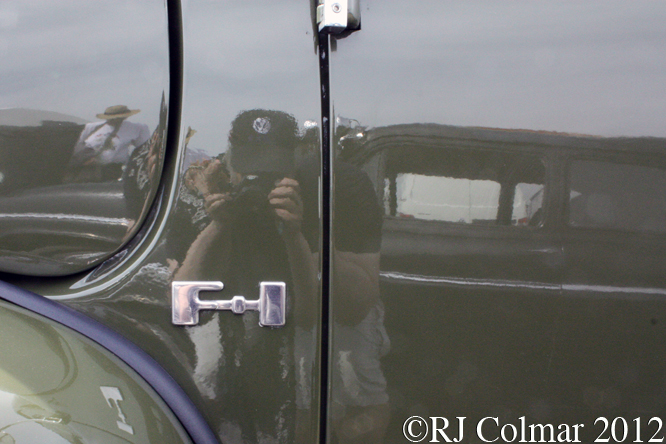
In 1948 Ford introduced the new F Series pickups that were built on dedicated, Bonus Built, pickup chassis rather than the hitherto strengthend car chassis.

Ford F1 Pickup, Summer Classics, Easter Compton

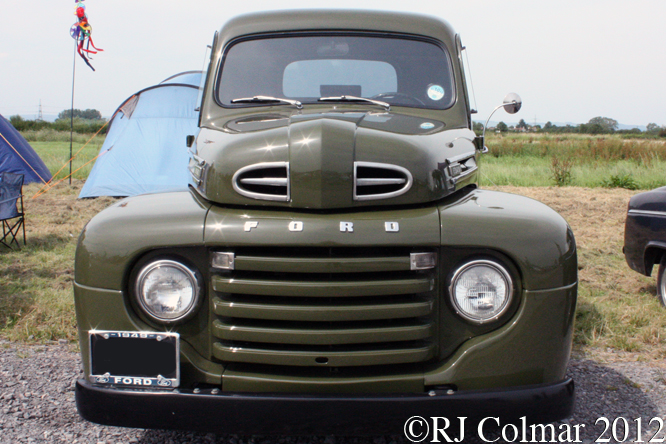
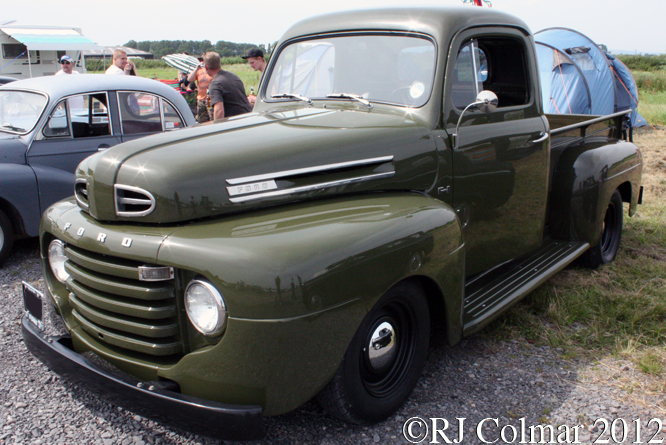
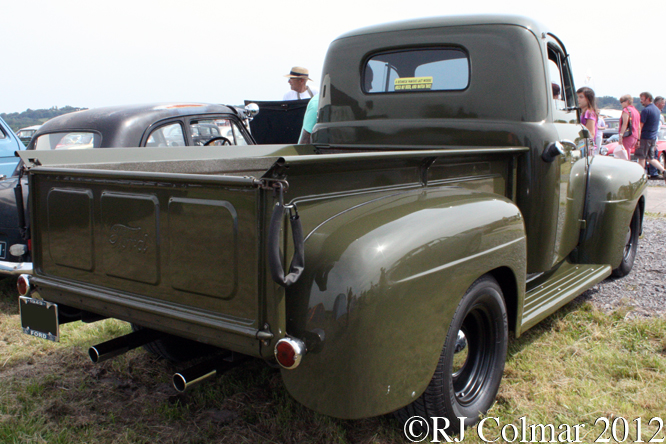
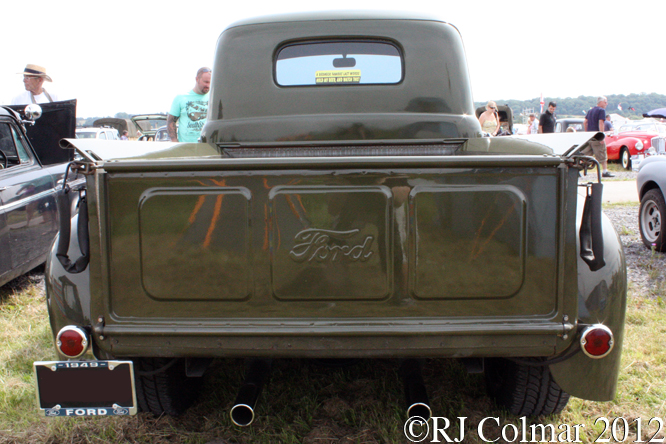
The F1 seen here is a 1949 F1 half ton pickup with a single piece windscreen / windshield and integrated in to the wings / fenders headlights.

Ford F1 Pickup, Summer Classics, Easter Compton

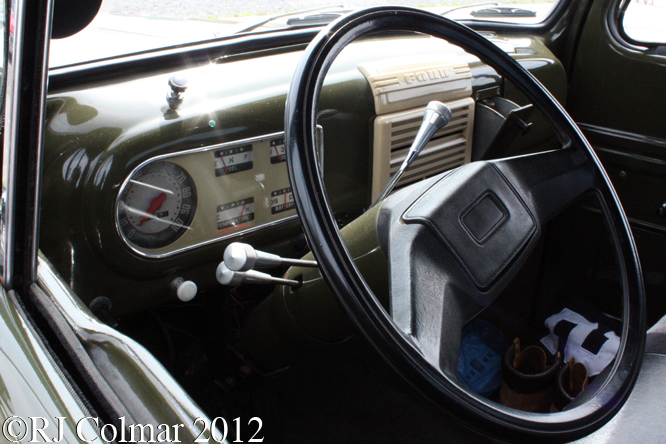
This one is fitted with the optional passenger side windscreen wiper, other options included foot plunger operated windscreen washer, passenger side sun visor and passenger side tail light !

Ford F1 Pickup, Summer Classics, Easter Compton

First Generation F1’s were powered either by a 95 hp flathead straight 6 or 100 hp flathead V8, the 4.2 litre / 256 cui quoted for today’s featured pick up suggests something more contemporary than a regular flathead might be lurking under the hood.

Ford F1 Pickup, Summer Classics, Easter Compton

Three different transmissions were available for the First Generation F1, 3 speed light duty, 3 speed heavy duty or 4 speed.

Ford F1 Pickup, Summer Classics, Easter Compton

The F1 came with a 6 1/2 foot bed or 4 door panel body.

Ford F1 Pickup, Summer Classics, Easter Compton

First Generation F1’s were assembled at Dearborn and Highland Park MI, Edison NJ, Long Beach CA, Norfolk Assembley VI, St Paul MN, St Louis MO, and Hapeville GA. First Generation F1’s were face lifted in 1950 and remained in production until 1952.

Thanks for joining me on this “Bonus Built” edition of “Gettin’ a li’l psycho on tyres”, I hope you will join me again tomorrow. Don’t forget to come back now !

Share