Tag Archives: Ford

Mario & Ronnie Show – Lotus Ford 79 #79/2 & #79/3

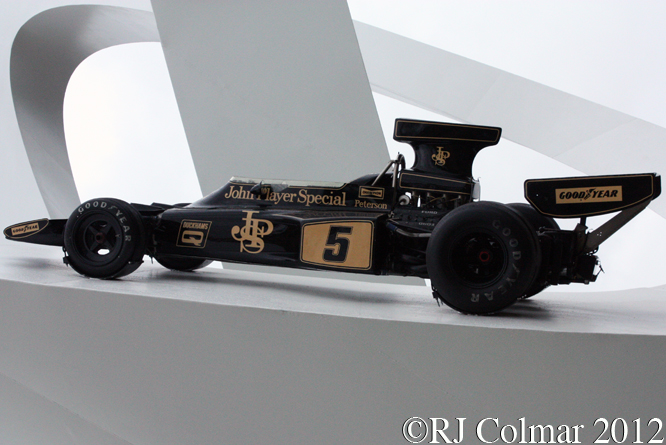
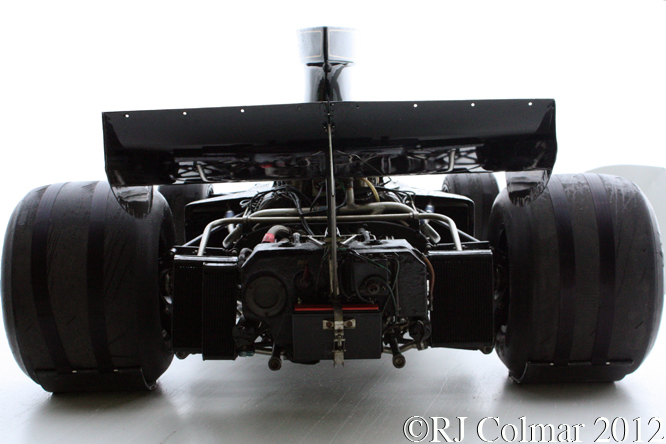
John Player Team Lotus hit the track running in 1978 with Mario Andretti winning the opening race of the season in Argentina and his team mate Ronnie Peterson winning the third race of the season after a thrilling last couple of laps in South Africa. Both of these victories were achieved with the previous seasons Lotus Ford 78 ‘wing car design’ for 1978 Colin Chapman and his engineers came up with something even more refined in the shape of today’s featured car the ‘ground effect’ Lotus Ford 79.
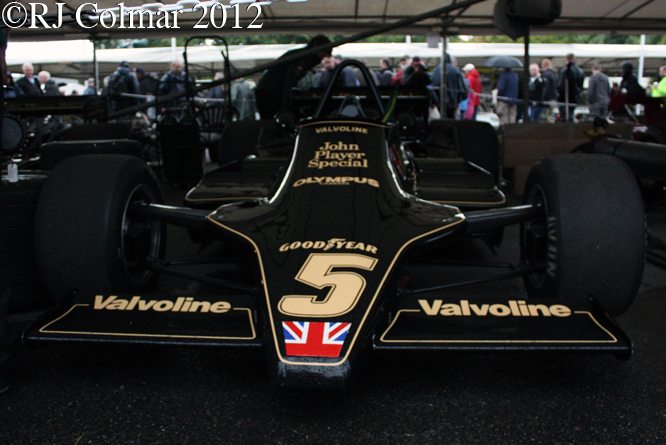
Lotus Ford 79, Goodwood, Festival of Speed

The Mario Andretti first raced a Lotus 79 in the non championship International Trophy race at Silverstone a race well remembered because the front row qualifiers Ronnie Peterson and Niki Lauda both spun of on the warm up lap leaving Andretti and James Hunt to start at the front of the grid despite qualifying 3rd and 4th. Andretti only lasted two laps before he spun out with Hunt spinning out one lap earlier at the same spot.
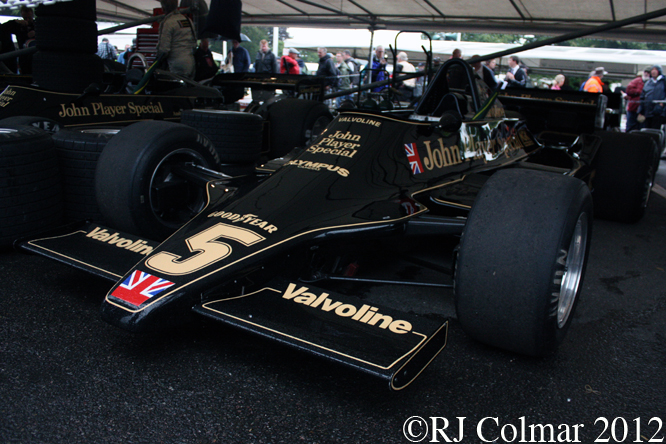
Lotus Ford 79, Goodwood, Festival of Speed

However for the Belgium Grand Prix there were no mistakes Mario qualified on pole and won, driving I believe from Ronnie who started 7th in the older Lotus Ford 78. At the Spanish Grand Prix Mario was I believe given the #79/3 seen above while Ronnie took over Mario’s Belgium winning #79/2 seen below. Mario qualified on pole and Ronnie 2nd and that is how the Spanish Grand Prix finished.
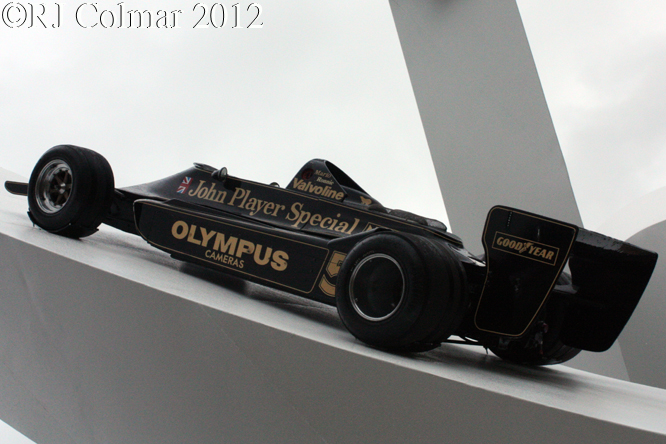
Lotus Ford 79, Goodwood, Festival of Speed

Mario retired from the Swedish Grand Prix after qualifying on pole leaving Ronnie to finish 3rd behind the controversial Brabham fan cars of Lauda and Watson. Bernie Ecclestone chose to withdraw the Brabham BT46 fan cars after just one race. At the following French Grand Prix Mario qualified 2nd and Ronnie 5th, however they finished 1st and 2nd respectively for the 3rd time in the 1978 season.
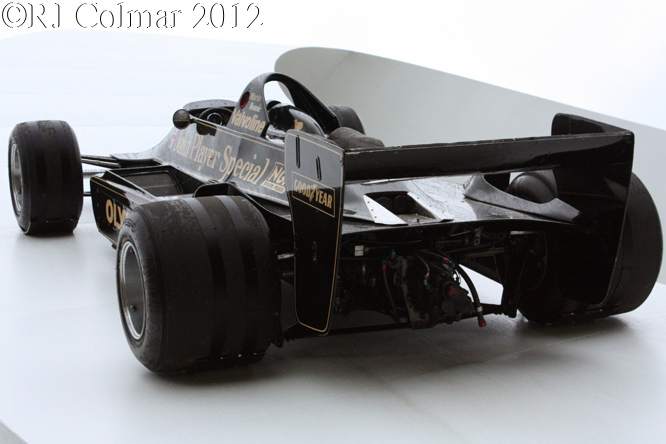
Lotus Ford 79, Goodwood, Festival of Speed

For the British Grand Prix it was Ronnie and pole and Mario next to him but both cars retired. In Germany Mario qualified on pole with Ronnie sat next to him on the grid and by now unsurprisingly that is how they finished the race. In Austria Ronnie was again on pole with Mario starting second however Mario retired leaving Ronnie to take an unchallenged win which would prove to be his last.
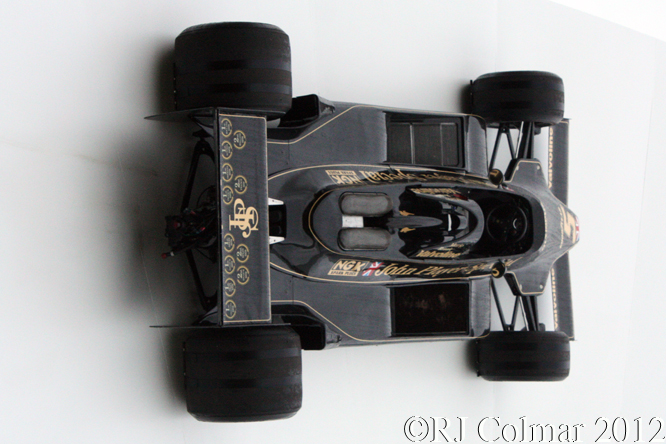
Lotus Ford 79, Goodwood, Festival of Speed

At the Dutch Grand Prix Mario qualified on pole in #79/3 with Ronnie beside him in #79/2 and the pair duly took their fifth and final 1-2 result of the season. This would prove to be Mario’s last Grand Prix win and indeed the last for any American driver and Ronnie’s last ever finish too. Ronnie crashed #79/2 during practice for the Italian GP and started the race from fifth in an older Lotus 78 while Andretti started from pole in the latest #79/4. Ronnie was involved in a start line accident which broke his legs, unfortunately during the night bone marrow from his injuries got into his blood stream and he died the following morning. The race was restarted and a subdued Mario finished sixth which was enough to claim the championship, but in truth Mario was far more concerned for Ronnie with whom he had been good friends since there time as team mates driving Ferrari sports cars in the early 1970’s. Ronnie for the second time in his career finished second in the World Drivers Championship.
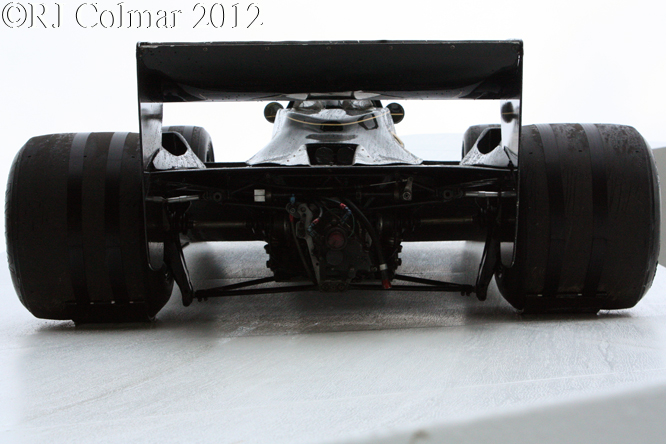
Lotus Ford 79, Goodwood, Festival of Speed

The success of the Lotus 79 was largely due to what was happening to the airflow beneath the bodywork, by building the monocoque just wide enough to hold the driver with fuel tank behind him and the motor behind that, Colin Chapman and his engineers Peter Wright, Geoff Aldridge, Martin Ogilvie and Tony Rudd used the side pods to create venturi by using a low wide neck at the front entrance to the side pods and tall wide exit, with side skirts sealing airflow under the car. When the car was moving air was guided into a partial vacuum created between the venturi side pods under surface and the surface of the road and this had the effect of sucking the car to road which allowed the car to negotiate corners at higher speeds than their competitors, most of whom had still not got to grips with the wing car aerodynamics advanced by the previous years Lotus 78.

For the last two races of the 1979 season perennial Formula One under achiever Jean Pierre Jarrier joined Mario in the team Mario qualified on pole in the USA with J-PJ 8th but neither car finished in the US Grand Prix. The final race of the season was held in Canada where Mario could only qualify 9th and Jean Pierre sat on pole. During the race Jean Pierre looked set for a win until he retired with an oil leak.

Mario finished tenth. The Lotus 79’s were set to be replaced by even more radical Lotus 80’s in 1979 but everything did not go to plan and so the 79’s were pressed into service again for most of the season but were out classed by their competitors who were getting to grips with ground effects aerodynamics.

A little post script courtesy Barry Boor, Mario Andretti was invited to drive the inauguration lap of the next home of the United States Grand Prix at Circuit of the America’s on October 21st, the car he drove was naturally a Lotus Ford 79 with which he won his world Championship, you can see how he got on in this linked youtube clip.

Thanks for joining me on this “Mario & Ronnie Show” edition of “Gettin’ a li’l psycho on tyres, I hope you will join me again tomorrow. Don’t forget to come back now !

Share

Ronnie’s Rocket – Lotus Ford 72 E

Lotus went into the 1973 Formula One Championship season as World Champion Constructors with reigning World Drivers Champion Emerson Fittipaldi being joined by a new team mate 1971 Championship runner up Ronnie Peterson.

Lotus 72 E, Goodwood Festival of Speed

The team started the season with the same Lotus 72 D model as they had used through out 1972 albeit now running on Goodyear tyres in place of the previous seasons Firestones. Emerson started the season well with 2 wins and a 3rd place from his first 3 starts while Ronnie had only two retirements and an 11th place finish to show from the same three races.

Lotus 72 E, Goodwood Festival of Speed

At the non championship Race of Championship the Lotus 72 D were brought up to E specification which included mounting the rear wing above the oil tank further back from the rear wheels and a wider track for the wheels front and rear. I well remember seeing both of the new cars spectacularly bottoming out on their debut at Brands Hatch as they approached the fearsome off camber and steep drop to Paddock Bend sending a shower of sparks from under the cars.

Lotus 72 E, Goodwood Festival of Speed

Both cars retired from the Race of Champions but Emerson won the 1973 Spanish Grand Prix, his last in a Lotus, before scoring three further second place finishes and a third on his way to a distant 2nd place championship finish behind Jackie Stewart and his Tyrrell Ford 006 who had clocked up five wins and two seconds on his way to his third and final title.

Lotus 72 E, Goodwood Festival of Speed

Ronnie meanwhile scored his first four Grand Prix wins and two second place finishes on his way to third in the championship title, helping Lotus win their second consecutive constructors championship. For 1974 Jackie Stewart retired, Emerson moved to McLaren to drive the M23, based very much on the principles of the Lotus 72, and Ronnie was joined at Lotus by Belgian Jacky Ickx.

Lotus 72 E, Goodwood Festival of Speed

Lotus started the 1974 season with the 72 E for the first two championship races and then Ickx used a 72E at the non championship Race of Champions and won after pulling off a brilliant overtaking move on Niki Lauda in his Ferrari 312 B3 going into Paddock Bend right in front of my nose. If all had gone to plan this would have been the last ever race for the Lotus 72 which had been introduced in 1970.

Lotus 72 E, Goodwood Festival of Speed

The Lotus 76 was first raced in the 1976 South African Grand Prix where neither car finished, Ronnie qualified his 76 at the non championship International Trophy at Silverstone and again at the Spanish Grand Prix but getting the car to finish proved impossible and so the Lotus 72 E’s were wheeled out again for the 1974 Monaco Grand Prix where Ronnie won from third on the grid, Ronnie added to more victories to the Lotus 72 E’s tally during the season to finish a distant fifth in the Championship which was won by his former team mate Emerson Fittipaldi in his Lotus 72 copy the McLaren M23.

For 1975 the Lotus 72 E’s were wheeled out again as the Lotus 76 had been abandoned as a failure, it would take a full twelve months for Lotus to build a new challenger such was the lack of financial resources and Lotus commitment to road car and sundry other projects. Ronnie gamely struggled on scoring just three points paying finishes while Jacky Ickx quit the team before the seasons end having scored a single second place finish.

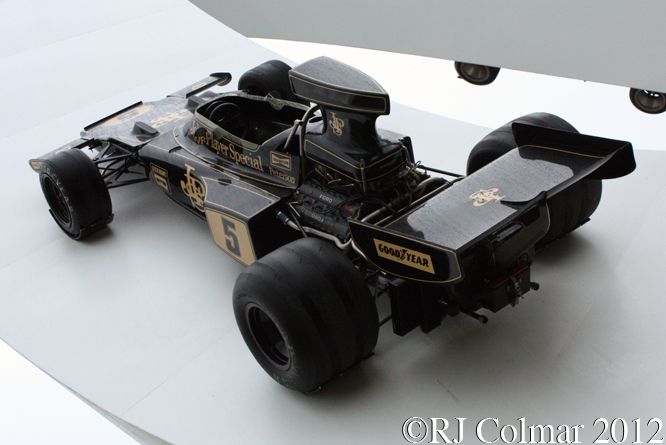
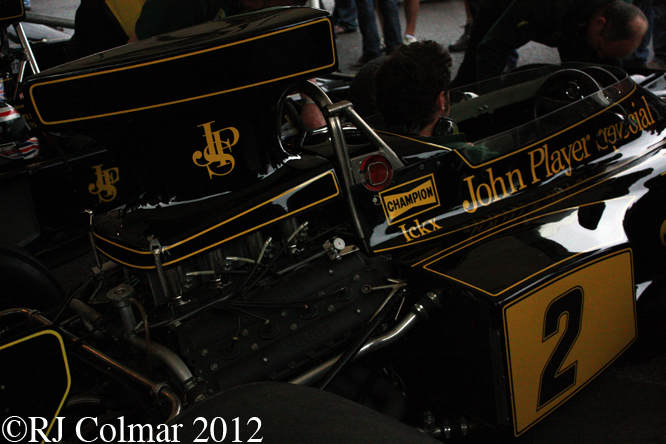
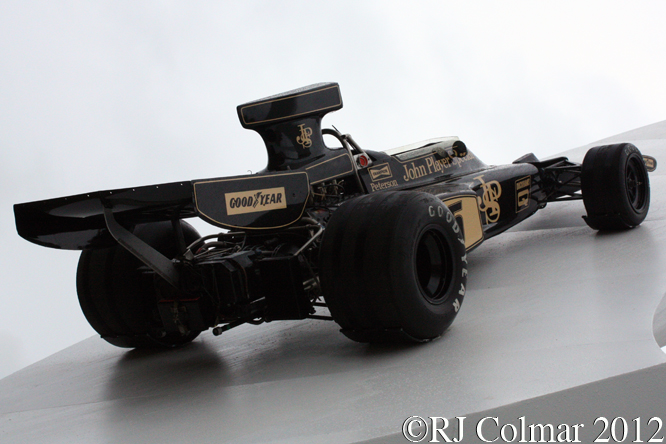
I believe the two cars seen here both belong to Classic Team Lotus with the #2 most likely being a replacement chassis for the wrecked Lotus 72/R5 driven by Emerson Fittipaldi in C spec to victory in the 1970 US Grand Prix and last used in E spec by Brian Henton in the 1975 US Grand Prix.

The #5 appears to be #72/R9 built new for the 1975 season and used exclusively by Ronnie Peterson who scored a best third place finish in the non championship 1975 Race of Champions at Brands Hatch, and three further points paying finishes including a 5th place finish in the 1975 United States Grand Prix which would be the cars final appearance.

Fans of the Lotus 72 in the UK will be interested to know that there will be a 24 min documentary on the story behind the Lotus 72 on Motors TV in December, keep your eye out for it in the schedule. The films director Gary Crichter will also be releasing a full 90 min version with 60 mons of extra’s of the film on dvd in the near future. Keep your eye out on the www.lotus72dvd.com website for further announcements.

Thanks for joining me on this “Ronnie’s Rocket” edition of “Gettin’ a li’l psycho on tyres” I hope you will join me again tomorrow, don’t forget to come back now !

Share

Coffee, Croissant & Cars #5 – Avenue Drivers Club

Last Sunday I was due to take part in a production trial however for the second time this season heavy rain the week before saw the event canceled so I trundled down the hill to Queen Square in Bristol on Sunday for a morning of Coffee, Croissant & Cars, well actually Rooisbos Tea, Lemon Cake and Cars but I’m sure you’ll forgive the truth getting in the way of a good headline.

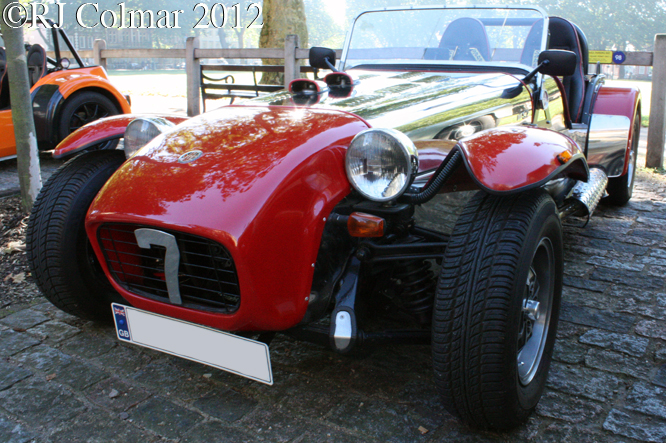
Robin Hood S7, Avenue Drivers Club, Bristol

Adding to the collection of vehicle manufacturers I have never heard of before, above is a Robin Hood S7, a kit car made, quelle surprise, in Nottingham, unlike the Caterham 7 the Robin Hood uses a steel monocoque chassis in place of the space frame chassis of it’s better known competitor.

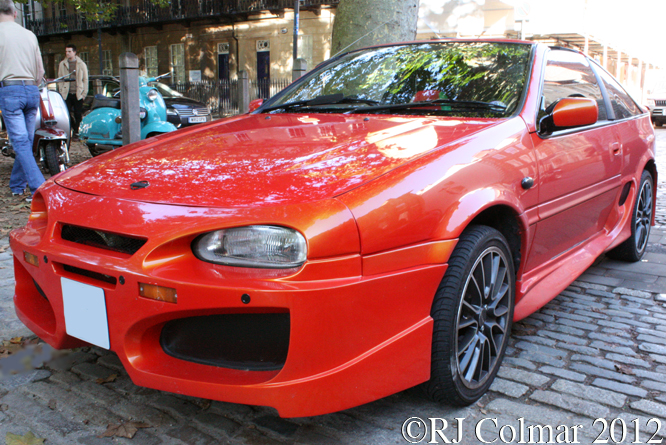
Nissan 100 NX Pacific, Avenue Drivers Club, Bristol

Nissan’s 100NX is a small sports orientated vehicle alongside the 200SX and larger 300ZX that was built from 1991 to 1996. The Targa top is a factory option unlike the wild body panels on the front and sides.

Triumph Stag, Avenue Drivers Club, Bristol

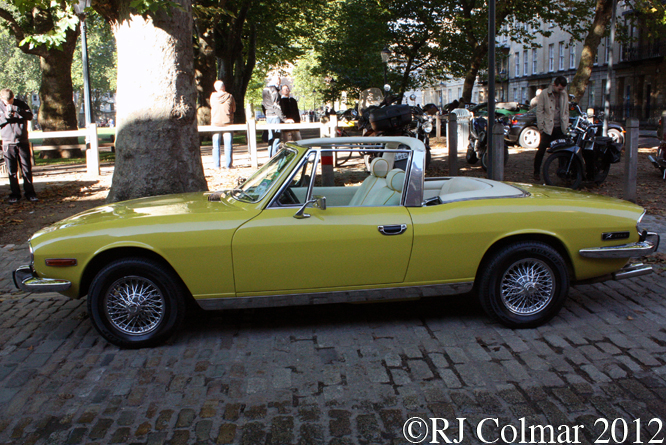
A law student friend of mine had a Triumph Stag back in the early 1980’s and he used to take great delight in filling it with five people and going into town for a wild night out on the tiles in it. Regrettably it was in nowhere near as good condition as this example built in 1971.

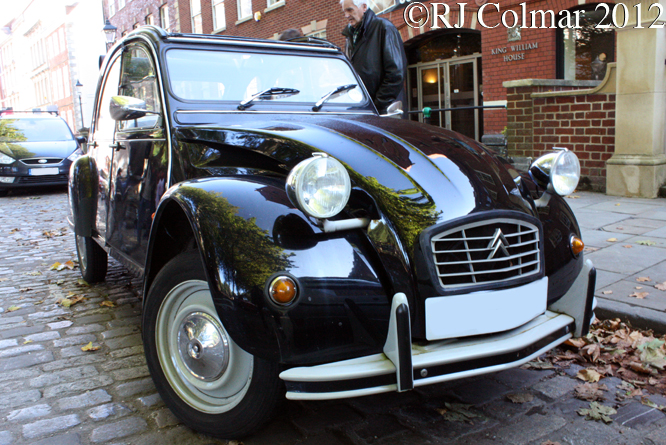
Citroen 2CV, Avenue Drivers Club, Bristol

Easily the most fun car I have ever driven is Citroen’s 2CV this one dates from 1989 just over a year before production came to an end after 42 years.

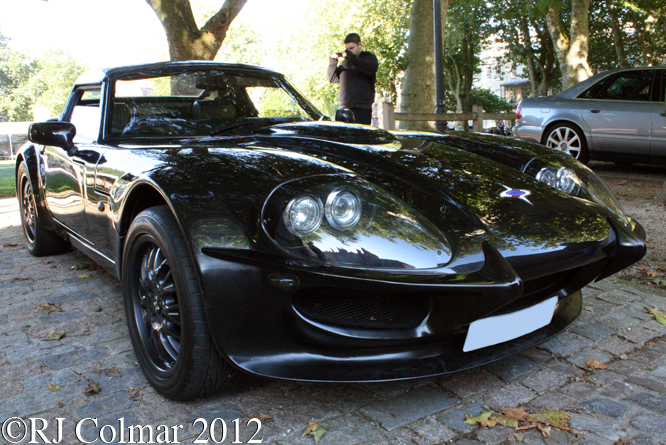
Marcos Mantara, Avenue Drivers Club, Bristol

In 1992 Marcos abandoned the kit car market in favour of manufacturing complete vehicles like the Mantara, this 1996 model is powered by a 3.9 litre / 240.7 cui all aluminium Rover V8 that dates back to Buick in 1960.

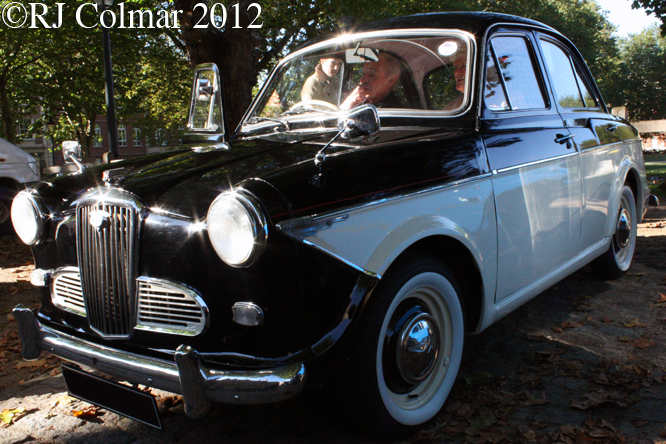
Wolseley 1500, Avenue Drivers Club, Bristol

This 1961 Series II Wolseley 1500 share it’s chassis and running gear with the Morris Minor but shares its body with the Riley 1.5.

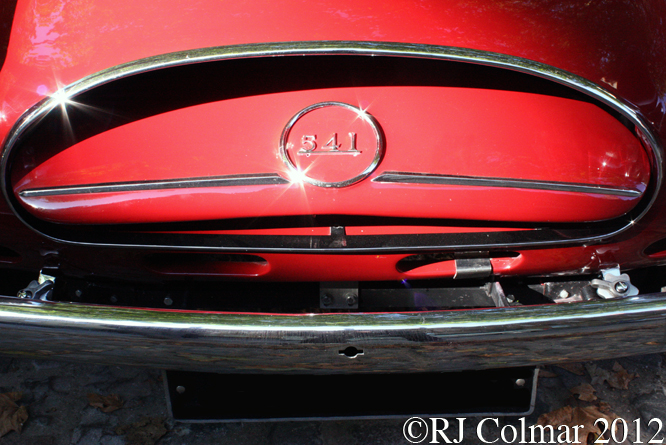
Jensen 541, Avenue Drivers Club, Bristol

This 1956 Jensen 541 is powered by a 125 hp Austin Sheerline six cylinder limousine motor enough to give glass fibre the four seater a 120 mph plus performance.

Austin Seven, Avenue Drivers Club, Bristol

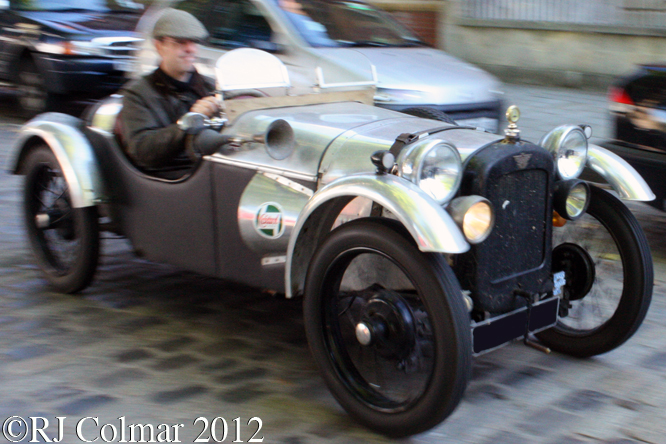
The sort of car one might have expected to see taking part in Production car trials in 1938 is this Austin Seven, probably nearly as much driving one of these as a 2CV judging by the smile on the drivers face.

BMW M3, Avenue Drivers Club, Bristol

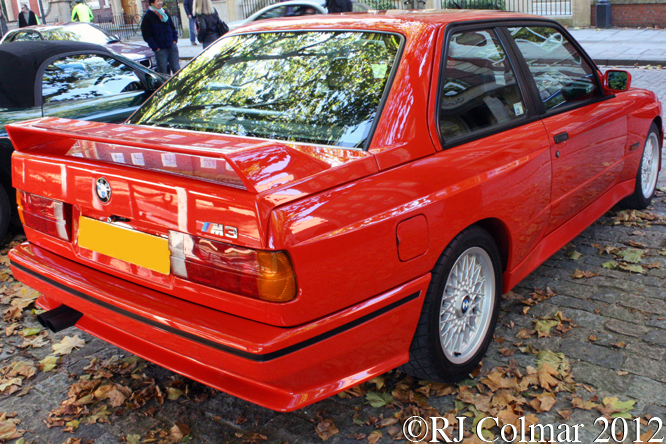
The BMW M3 was primarily devised as a production car on which to base racing versions to run against the Ford Sierra RS Cosworth and Mercedes 190 2.3-16V. It had 12 body panels that differed to the stand 3 series E30 body shell including the high boot / trunk lid and spoiler. This completely original 1987 example looks like is a sure Concours d’Elegance winner.

TVR Vixen S2, Avenue Drivers Club, Bristol

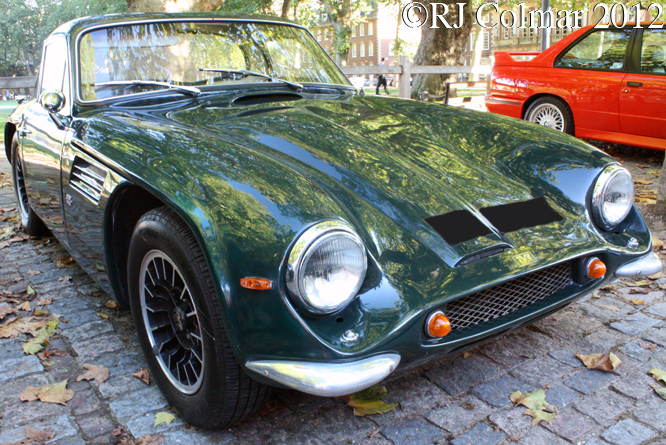
Launched in 1967 with an 88 hp Ford Kent motor the glass fibre bodied TVR Vixen easily out performed mass produced sports cars like the large engined MGB GT, the example above is a 1969 Vixen S2.

Austin 1800, Avenue Drivers Club, Bristol

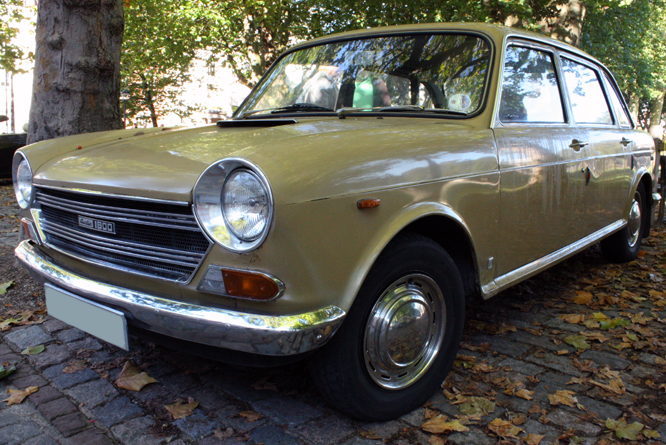
The Austin 1800 was voted Car of the Year in 1965 when it was launched, it’s odd dimensions are the result of it having a transverse mounted motor and front wheel drive. Over the years it was steadily improved the car above appears to be a 1973 Series 3 version.

Ford F100, Avenue Drivers Club, Bristol

Finally just as the morning came to a close a couple of US 8 foot beds that never have to be made turned up including this 1971 fifth Generation Ford F100 which comes with a 5.9 litre / 359 cui V8 motor.

Thanks for joining me on this “Coffee, Croissant & Cars #5” edition of “Gettin’ a li’l psycho on tyres” I hope you will join me again tomorrow when I’ll be looking at a little pick up. Don’t forget to come back now !

Share

Shelby Pierce Arrow – Niello Concours at Serrano

The weekend before last Geoffrey Horton took his Jaguar out of it’s garage for the last time this year to attend the Niello Concours at Serrano. He kindly sent today’s featured photographs for us to enjoy.

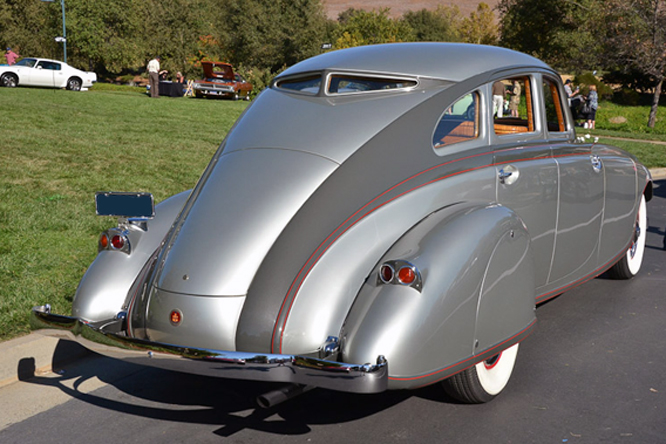
Pierce Silver Arrow, Niello Serrano Concours d'Elegance

The achievements of Pierce Arrow and Carroll Shelby were being celebrated at Niello, above a 1933 Pierce Silver Arrow one of only three such 115 mph V12’s known to exist.

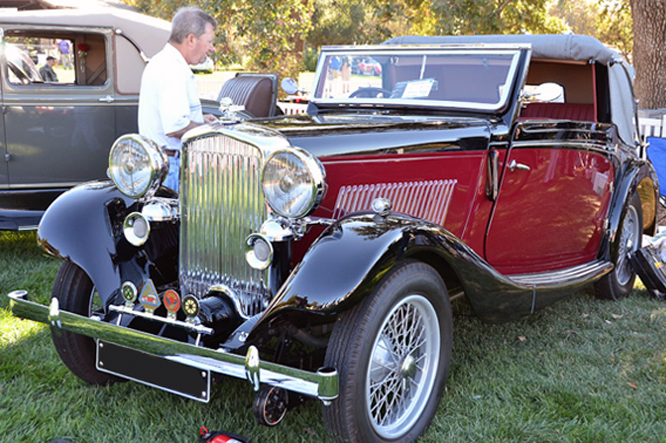
British Salmson S4C, Niello Serrano Concours d'Elegance

Suffering from slow sales of aero engines made under license from (French) Salmson in 1934 British Salmson extended it’s license deal to include local manufacture of Salmson cars. Above is a 1936 S4C similar to it’s French counterpart except that it has syncromesh on the top two gears of the gearbox. Around 250 S4C’s were manufactured from 1934 to 1938.

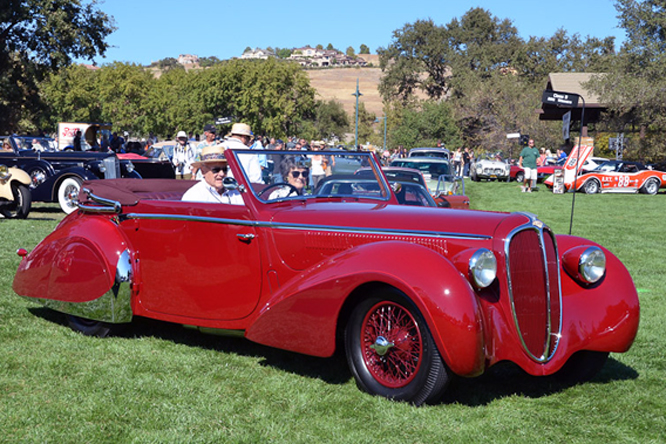
Delahaye, Niello Serrano Concours d'Elegance

For a Delahaye the vehicle above is pretty tame, by Delahaye standards, I’m not sure of either the year, model or coachbuilder, looks most likely a 135 which could have been built 1935 and 1954. If you know which more please do not be afraid to chime in below.

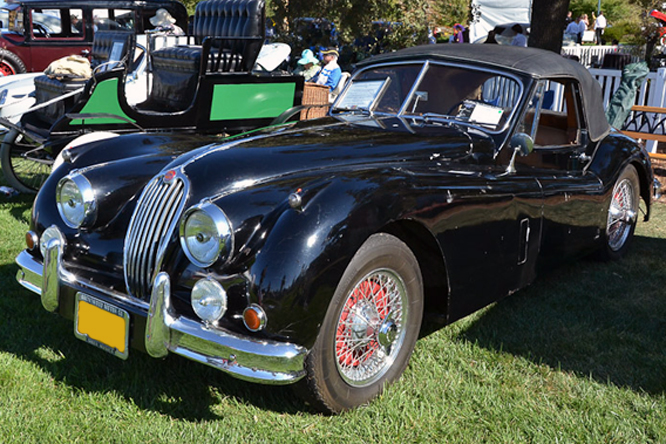
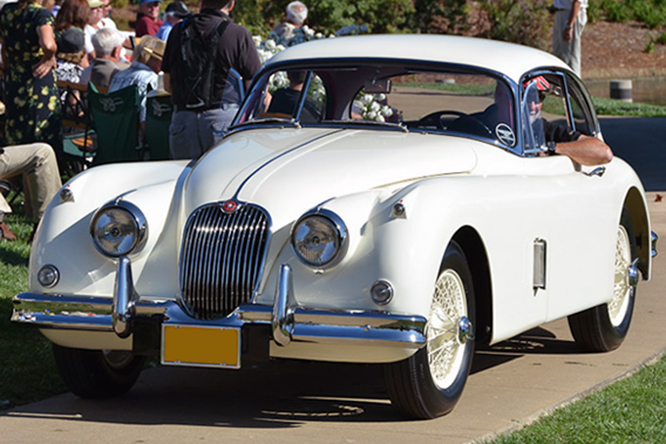
Jaguar XK140 MC DHC SE, Niello Serrano Concours d'Elegance

As regular GALPOT readers will know Geoffrey Horton restored a rats nest back into a 1955 Jaguar XK140 FHC SE / MC which he now enters in Concours events. The 1956 example above has been in the same family since 4th January 1956, it is totally original and unrestored, as the owner says “cost of $90,000” and “cost of to keep it original, with sentimental value = priceless”

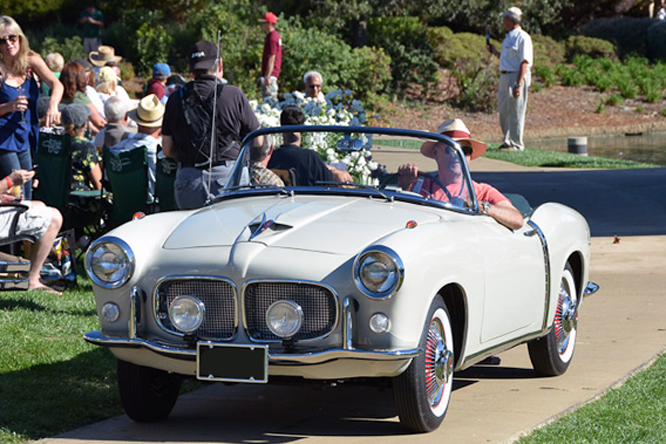
FIAT 1200 TV Spider, Niello Serrano Concours d'Elegance

Not sure what this one is at the time of writing looks a little like a Mk 1 Triumph Spitfire with a lot of additional chrome, the wheels look like they come from a Berkeley. If you know what this one is please chime in below, it’s certainly not in my I-spy book of cars.

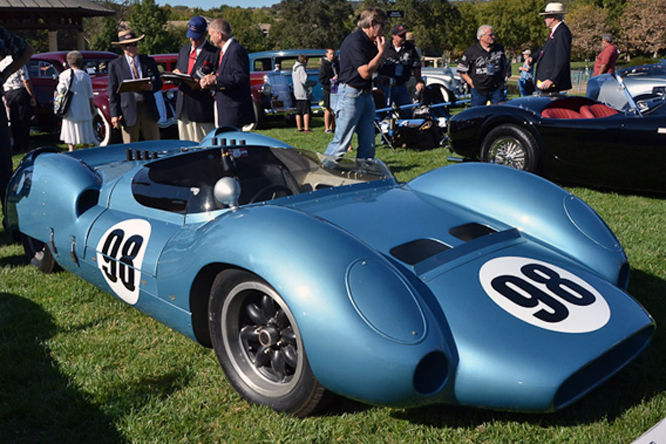
Shelby King Cobra, Niello Serrano Concours d'Elegance

Carroll Shelby ordered two new Cooper Monaco’s beefed up to carry Shelby’s 289 Ford V8’s for the 1963 URRSC sports car championship.
Chassis #CM/1/63 seen here was driven by rapidly rising star Dave MacDonald to victories in both the 1963 Los Angeles Times Grand Prix at Riverside and the Monterey Pacific Grand Prix at Laguna Seca which along which helped MacDonald secure the 1963 URRSC sports car championship.

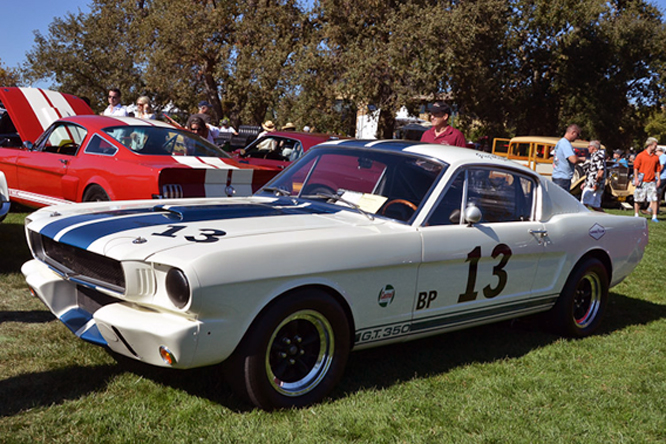
Shelby GT.350, Niello Serrano Concours d'Elegance

The 1965 Shelby GT 350 was built to compete in the SCCA National B Production Championship with full race suspension larger oil pan and straight through exhaust side pipes. It was fitted with ‘only two’ seats to comply with the SCCA regulations. This particular copy, one of 562 built in 1965, has been in the same family since new.

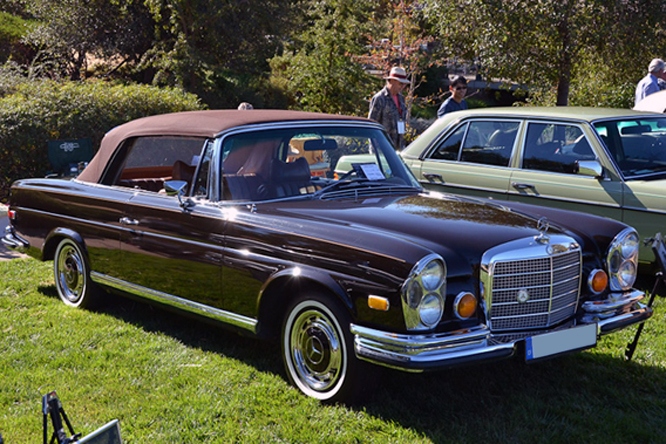
Mercedes Benz 280 SE, Niello Serrano Concours d'Elegance

For 1970 the US Department of Transport demanded extra visibility over the bonnet / hood of all cars and so all post 1970 model year Mercedes 280 SE’s received a lower grill than in previous years. The Low Grill 280 SE Cabriolet above is one of just 237 built in 1970.

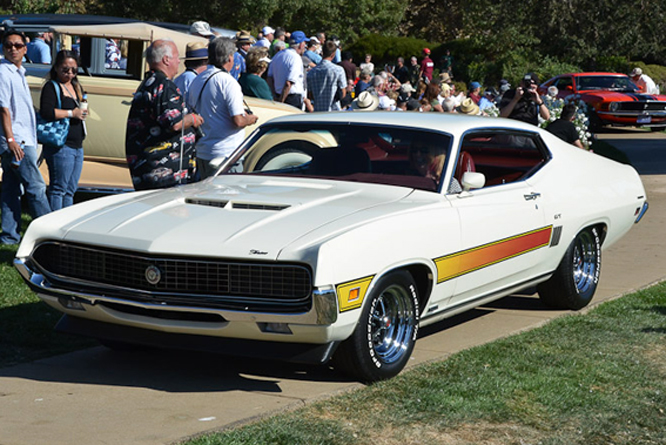
Ford Gran Torino, Niello Serrano Concours d'Elegance

Capable of reaching 60 mph in six seconds and covering the quarter mile in just 14.4 seconds the Ford Torino GT introduced in 1970 could be ordered with sports deck, hideaway head lamps and reflective side stripes, just like the one seen above.

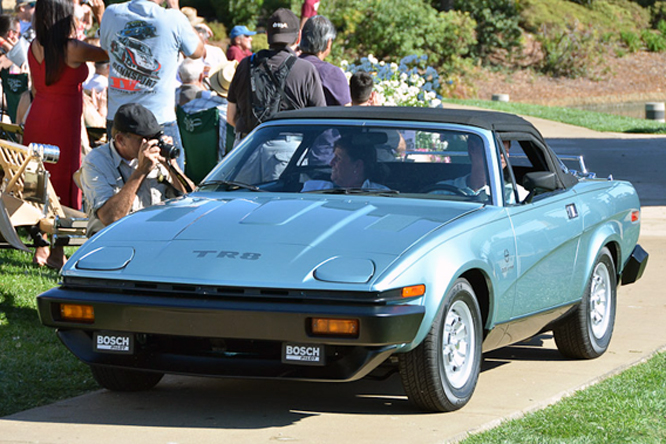
Triumph TR8, Niello Serrano Concours d'Elegance

The English Corvette as the Triumph TR8 was known was manufactured 1978 to 1982. This one would appear to be one one of the 2400 dropheads built between 1980 and 1982.

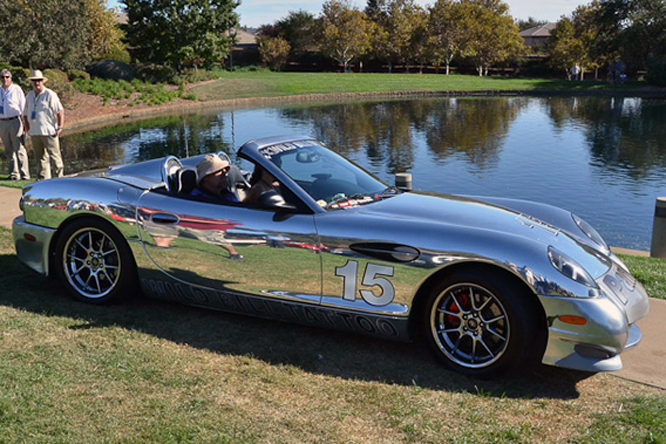
Panoz Esperante GTLM, Niello Serrano Concours d'Elegance

The Panoz Esperante can be ordered in GT, GTLM and GTS specs with an after market JRD upgrade available if you need the speed and have the budget to satiate it. The car above is a 2005 model is the first of 80 Supercharged GTLM models. Amongst Wild Bills other vehicles are an amphibious Amphicar and Messerschmitt Kabinen Roller !

Jaguar XK140 MC DHC SE, Niello Serrano Concours d'Elegance

And so it’s time to thank Geoffrey one the last time this year for his fabulous Concours d’Elegance contributions to GALPOT this year, there will of course be further contributions about individual vehicles, and hope that his Jaguar stays safe over the off season in anticipation of the 2013 California Concours d’Elegance season.

Thanks for joining me on this “Shelby Pierce Arrow” edition of “Gettin’ a li’l psycho on tyres” I hope you will join me again tomorrow. Don’t forget to come back now !
PS Since writing this Geoffrey has informed me that the unidentified car that looks like a cross between a Triumph and a Berkeley is a 1956 FIAT 1200 TV Spider. We live and we learn ! Thanks again to Geoffrey.

Share

Multi Formula Open Wheeler – Lotus 69

For the 1970 season Lotus used the catch all Lotus 69 type number for cars designed, by Dave Baldwin, to compete in four different open wheel Formula.

Namely Formula Ford which used prescribed narrow tyres and 95 hp single carburetor Ford Kent 4 cylinder engines, Formula 3 which used heavily modified 1 litre / 61 cui production block 4 cylinder motors in 1970 and modified 1600 cc / 97.6 cui production block motors in 1971, Formula B with 1600cc / 97.6 cui motors tuned somewhere between Formula Ford and Formula 3, and finally Formula 2 which ran with the most powerful 200 plus hp 1600 cc / 97.6 cui motors with production blocks of which at least 5000 copies had been made.

Lotus 69, Spirit of the 60′s, Dyrham Park

Today’s featured car, seen at Dyrham Park and belonging to Tony Wallens, is a 1971 Formula 3 spec Lotus 69 with a modified 1600 cc / 97.6 cui production block motor, the space frame chassis is derived from the Lotus 59 open wheelers and it shares many components with it’s Lotus 69 siblings, although the Formula 2 Lotus 69 was built around a monocoque to meet the requirements for a bag fuel tank.

In 1971 Dave Walker flew and swept the board in his Gold Leaf Team Lotus 69 winning 25 races Formula 3 races from 32 starts.

Despite these successes, Emerson Fittipaldi also won three races in his Formula 2 Lotus 69, while in Formula Ford Stan Matthews placed forth in the 1971 British Oxygen Formula Ford championship with his 69, Lotus took the decision to withdraw from the customer racing car market and focus on works Formula 3, and Formula 1 efforts in 1972, Formula 2 and Formula 1 campaigns in 1973 and solely Formula One campaigns from 1974 on.

Thanks for joining me on this “Multi Formula Open Wheeler” edition of “Gettin’ a li’l psycho on tyres”, I hope you will join me again tomorrow for a day at the races. Don’t forget to come back now !
Share

Autumn Classic – Castle Combe

Last Saturday morning I made my way to Castle Combe for the Autumn Classic meeting, regrettably the last but one racing meeting of the season, as you shall see I couldn’t make Sunday’s final Castle Combe meeting due to a commitment elsewhere.

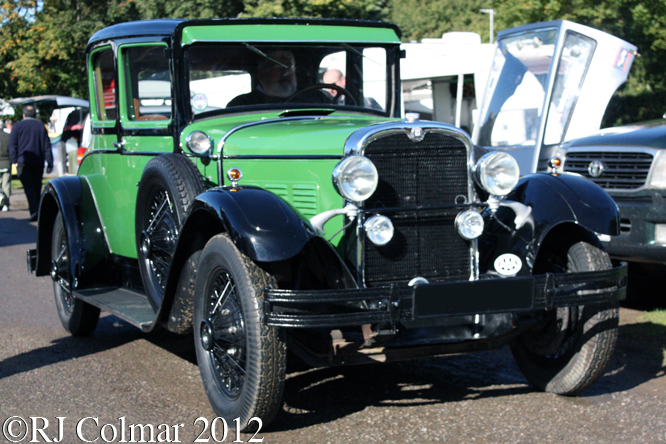
Dodge Brothers Senior, Autumn Classic Castle Combe

This event marked the first visit by the Vintage Sports Car Club for thirty years. I followed the 1929 Dodge Brothers Senior above in through the gate.

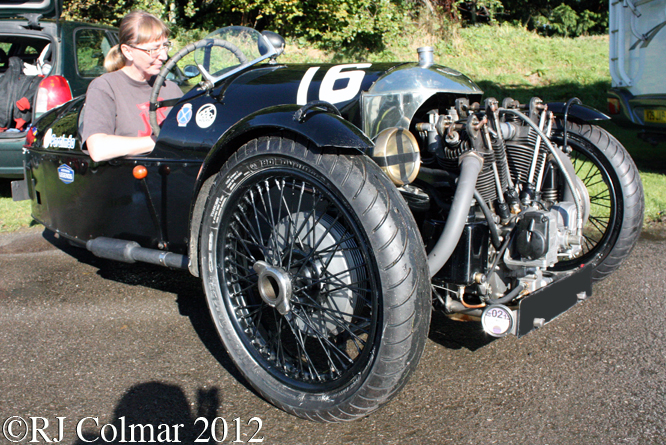
Morgan Super Aero, Autumn Classic Castle Combe

In the paddock Sue Darbyshire was warming up her Morgan Super Sports for morning practice which qualified 6th for the VSCC Pre War Sports Cars race and in which she crossed the finish line of the race in 4th.

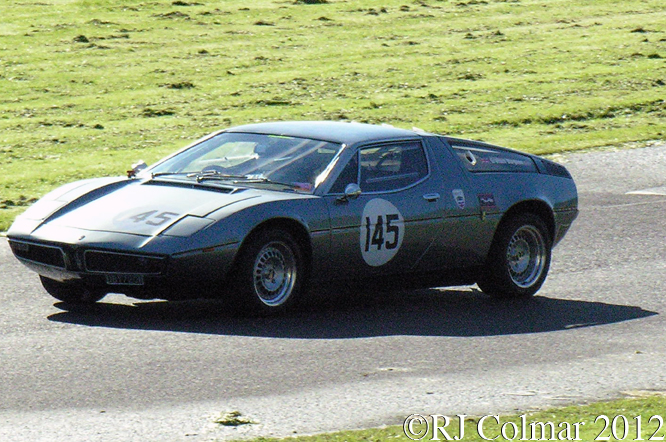
Maserati Bora, Autumn Classic Castle Combe

Out on the track practice for the Bernie’s V8 Historic V8 Racers Association race was well underway, the series caters for V8 powered cars racing on road legal treaded tyres. I was most pleasantly surprised to find one of less than 600 Maserati Bora’s built among the entries, Graham Burgess is seen above qualifying for 15th on the grid, he finished the race in 11th.

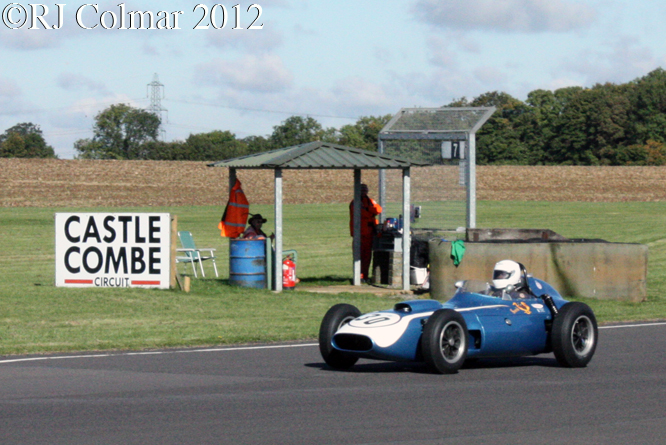
Scarab, Autumn Classic Castle Combe

During the lunch break Julian Bronson demonstrated his 1960 Scarab Grand Prix car that was built, maintained and on occasion driven by Chuck Daigh for Woolworth heir Lance Reventlow. This is the third of the three open wheelers built and was raced by Chuck with a regular Offenhauser during 1961 in a couple of non championship Formula One races, with out the ill feted Desmodromic cylinder heads fitted to the first two cars.

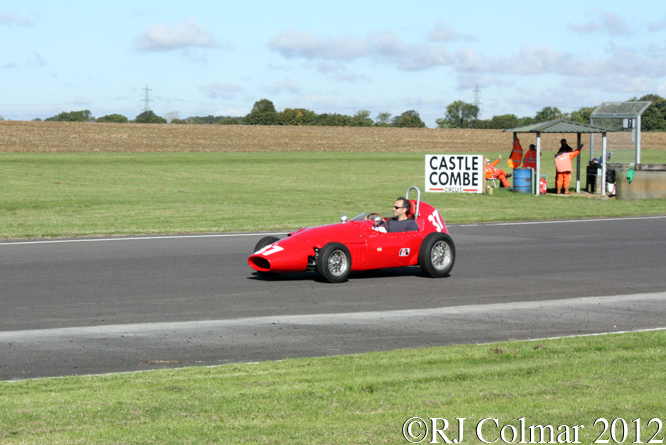
Stranguellini FJ, Autumn Classic Castle Combe

After the success of the Spirit of the Sixties event held at Dyrham Park last year the Bristol Motor Club were invited to organise an Essence of Dyrham demonstration at Castle Combe last weekend, Martin Sheppard’s 1958 Stanguellini Formula Junior, was the only open wheeler to take part.

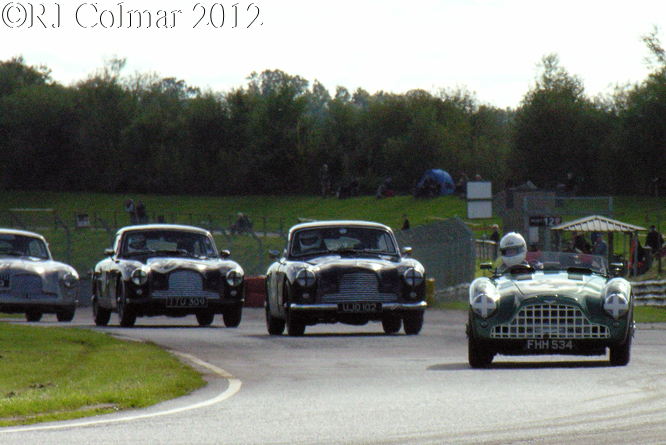
Historic Aston Martin's, Autumn Classic Castle Combe

After the lunch break racing got under way in earnest with Chris Woodgate making the most of his pole position in his Aston Martin DB 3 to come home over thirty seconds to the good from Nicholas Ruddell in his #25 Aston Martin DB2/4, Nigel Batchellor seen in second place in the #36 DB 2/4 above dropped out, while Timothy Stamper lost 3rd place for several laps to Anne Reed before claiming back third spot on the podium in his #39 Aston Martin 2/4.

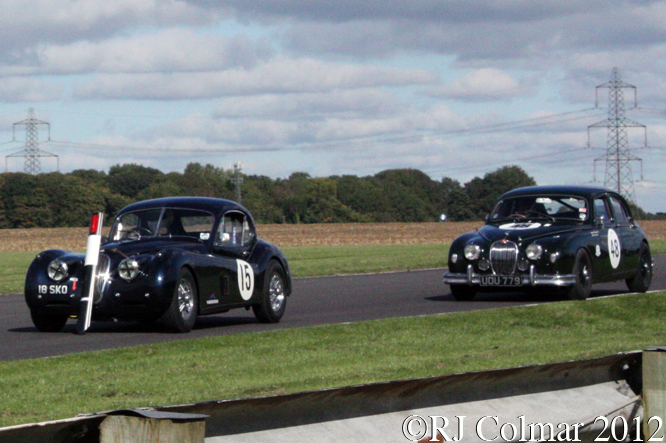
JEC, Pre 1966 Jaguars, Autumn Classic Castle Combe

Anthony Reid stamped his authority on the Jaguar Enthusiasts Club Pre 1966 Jaguars race right from the word go, but there was plenty of action going on behind. Above John Burton in the #15 XK 120 carries evidence of cutting a chicane, John managed to hang on to 5th place eventually finishing 10 seconds ahead of Peter Dorlin’s #48 Mark 1 Saloon, after an entertaining battle Peter finished 1 place ahead of his brother Richard, in a Mk 2 Saloon.

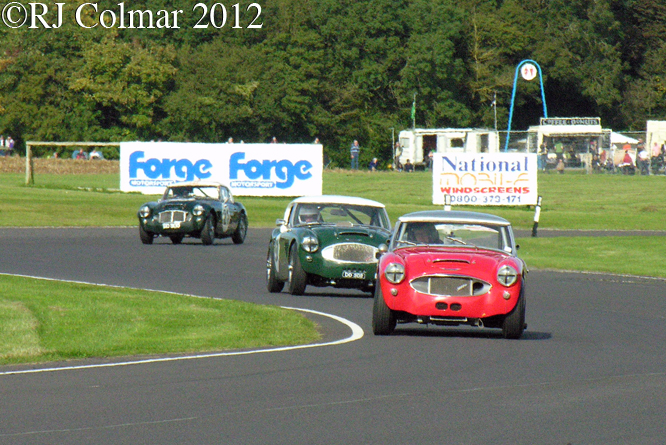
John Gott Memorial Trophy, Autumn Classic Castle Combe

The Big Healey Challenge race was interrupted by a pace car incident which virtually handed a one lap lead to forth place starter Anders Schildt from Sweden, but these classics still proved highly entertaining to watch as they grappled with Castle Combes notoriously undulating surface. Above Anders leads eventual third place finisher David Smithie who appeared to be closing Anders down for the lead until the pace car intervened effectively handing Schildt the John Gott Trophy on a plate.

Bernie's V8s HVRA, Autumn Classic, Castle Combe

If the Healey’s were struggling with Castle Combes undulations the Bernie’s V8’s fared little better as evidenced when a rear shock absorber failed on the #78 Dodge Challenger of Belgian Bert Smeets. The rare South African #6 Ford Capri Piranha of Andrew Haddon managed to lap the entire field in less than 40 minuets on his way to victory in a race which was also interrupted by a Safety Car period after an incident involving the series organisers Bernie Choodosh’s Chevrolet Corvette.

FisCar "50's Inter Marque, Autumn Classic, Castle Combe

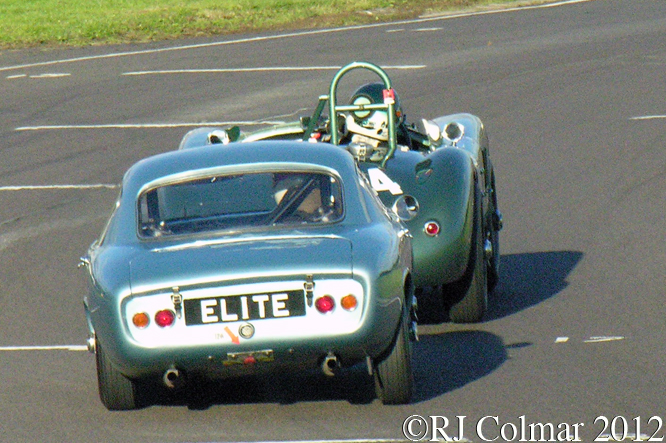
After lengthy repairs to the Castle Combe crash barrier the 50’s Inter Marque race provided plenty of thrills and spills. Nigel Webb just managed to keep his C-type Jaguar ahead of Nigel Bancrofts indecently quick Lotus Elite which was giving away over two litres / 122 cui in swept volume to the Jaguar. Webb came into hand over to Anthony Reid who regained the lead after the Elite’s mandatory pit stop and headed for his second trip to victory lane of the day. Bancroft who elected to drive solo finished second.

VSCC Pre War Sports Cars, Autumn Classic, Castle Combe

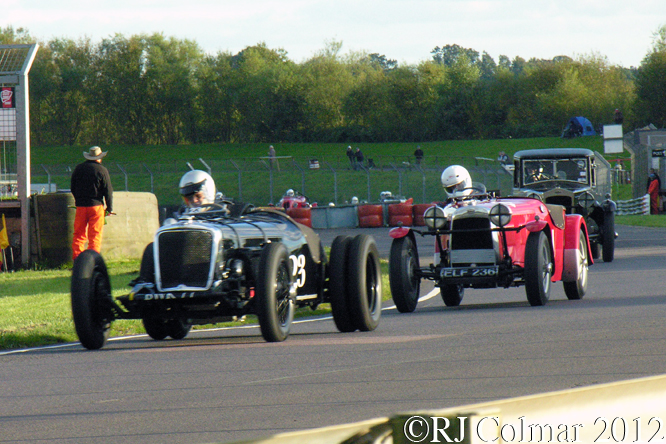
Tom McWhirter driving the unusual 6 wheel #23 Jaguar SS 100 is seen leading the opening lap of the the VSCC Pre War Sports Car race from the #21 HRG Andrew Mitchell and #29 Patrick Blakeney-Edwards Frazer Nash Owlette. Tom won the race by nearly 3 seconds from Andrew who in turn finished just over 16 and a half seconds ahead of Patrick.

Twilight Challenge, Autumn Classic, Castle Combe

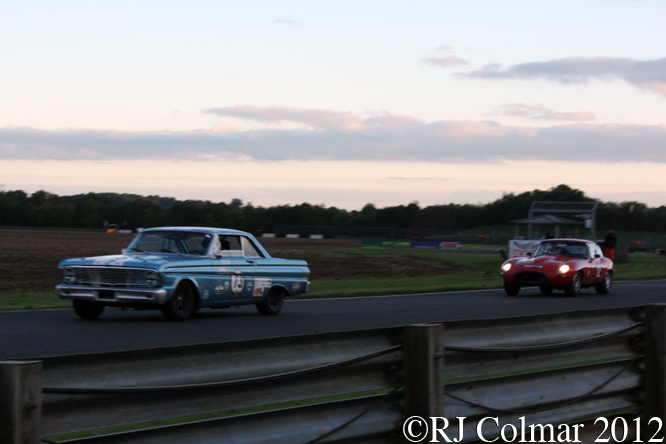
The Twilight Challenge featured just seven starters but there were still battles aplenty thanks to the mandatory pit stop requirement. Tim Pearce claimed the victory in his Morgan Plus 8, the #73 Ford Falcon of Chris Clarkson above is hounded by the Jaguar E-Type of Alan Bull. Alan retired the Jaguar, while Chris and co driver Williams came home second 26 seconds adrift of the Morgan.

I hope it is not another 30 years before the VSCC returns to Castle Combe and that Bernies V8’s and twilight racing return early in the new year with bigger grids.

Full results for all last weekends races at Castle Combe can be found on this link.

Thanks for joining me on this ‘Autumn Classic’ edition of “Gettin a li’l psycho on tyres” I hope you will join me again tomorrow for a look at a 1954 Blue Flame powered sports car. Don’t forget to come back now !
Share

Cut and Bury – Lotus Ford 64

After coming close to winning the 1968 Indianapolis 500 with the Pratt & Whitney gas turbine powered Lotus 56 driven by Joe Leonard the powers at Indianapolis decided to ban gas turbine power and all wheel drive for the 1969 season, but eventually relented and allowed all wheel drive vehicles that had wheels no more than 9″ wide all round. Rear wheel drive vehicles were allowed to go to 14″ wide wheels at the rear.

Lotus Ford 64, Goodwood Festival Of Speed

Colin Chapman rose to the challenge of building a car to the new regulations with the financial encouragement from Andy Granatelli’s STP Oil Treatment. The Lotus 64 was a new chassis which was powered by a 700hp turbocharged double overhead cam Ford V8 motor driving an all wheel drive system that was lifted from the Lotus 56 as indeed was much of the rest of the chassis.

In order to connect the motor to the mid mounted gearbox the motor had to be mounted backwards so the drive came from the front, as on the ill feted Lotus Ford 63 all wheel drive Grand Prix car.

Mario Andretti, Graham Hill and Jochen Rindt were lined up to drive the three team cars and a spare was built just in case of unforeseeable eventualities. Straight out of the box the cars were on the pace of the gas turbine Lotus 56 from the year before setting record speeds. However Mario Andretti’s car had a rear hub failure which sent him into the wall. Mario was lucky to get away with superficial burns to his face and after it was determined the failure was due to a design fault that could not be rectified in the available time frame the three Lotus 64’s were withdrawn from the race.

Mario jumped into the #2 Hawk Ford belonging to Granatelli and promptly qualified 2nd to AJ Foyt and then won the race after Lloyd Ruby was knocked out of contention by leaving the pits with his refueling hose still attached.

Andy Granatelli wanted to buy one of the remaining 64’s but when negotiations broke down Colin Chapman is alleged to have ordered the now engineless cars be returned to Hethel, Lotus home base, where he promised to take a hack saw to them personally cut them up and dig a whole and personally bury them. As it turned out all three cars were put in a shed.

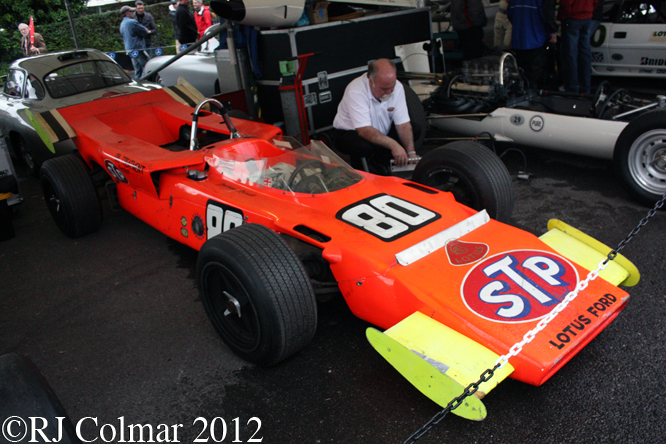
Jochen Rindt’s #80 is seen above sans motor, this is the second of the three remaining 64’s to have emerged in recent years the other one has a correct Ford motor installed.

Thanks for joining me on this “Cut and Bury” edition of “Gettin’ a li’l psycho on tyres, I hope you will join me again tomorrow when I’ll be looking at the first car to record a 200 mph average closed circuit lap during a race. Don’t forget to come back now !
Share