Tag Archives: Ford

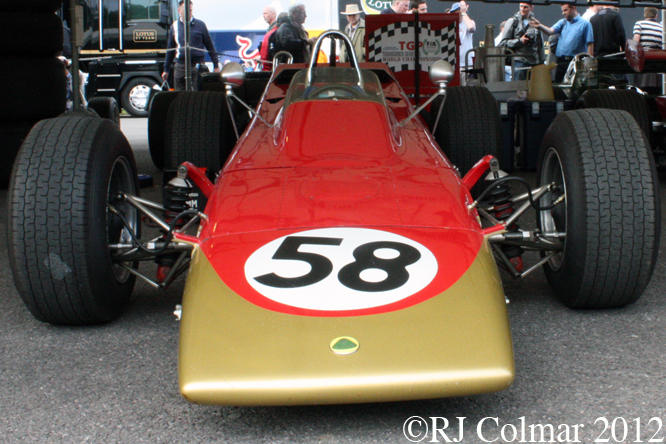
OK, But Not Very Fast – Lotus 58

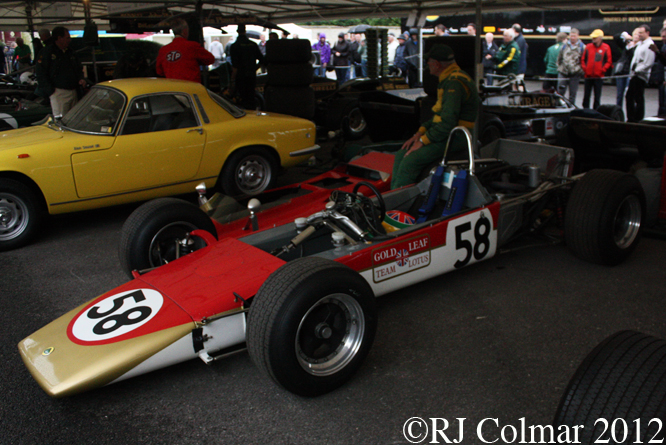
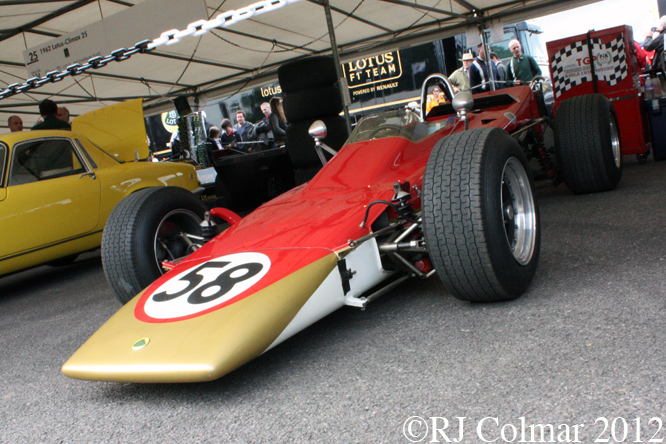
The Lotus 58 was designed with de Dion suspension front and rear, in Colin Chapman’s eternal quest for more grip, to take part in Formula 2 races for the 1968 season.

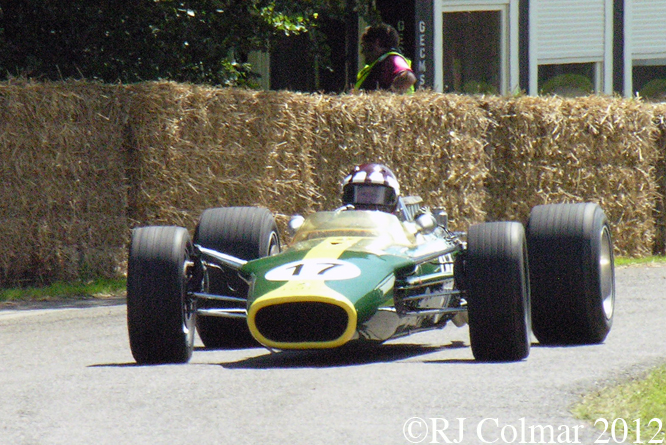
Lotus 58, Goodwood Festival of Speed

Chapman’s original intention was for the 58 to be used as a development vehicle for the Lotus 57 Grand Prix car which was to have used a similar chassis but fitted with a larger Ford Cosworth 3 litre / 183 cui that powered the various iterations of the Lotus 49.

The Lotus 58 chassis and wedge shaped body closely resembles that of the Lotus 56 Indy challenger but is powered by a 225 hp four cylinder 1598 cc / 97.5 cui Ford Cosworth FVA motor which met the requirements of the second tier open wheel Formula 2 regulations.

Lotus 58, Goodwood Festival of Speed

The one and only Lotus 58 chassis was completed the day Jim Clark was killed at Hockenheim, his death along with that of Jim’s replacement Mike Spence at Indy in a Lotus 56 along with numerous crashes that befell Jackie Oliver in his Lotus 49’s meant that development of the Lotus 58 was pushed back until the end of 1968 when Lotus had to decide which cars to take to the Antipodes for the Tasman Series.

Graham Hill thoroughly tested the car with a Tasman Spec 2.5 litre / 152.5 cui Cosworth DFW motor and came to the conclusion that it was “OK, but not very fast”. It would appear the advantages of the de Dion suspension which keep the wheels vertical in the corners and thereby keep a larger tyre footprint on the ground were not obvious enough to pursue. The Lotus 58 was pushed aside never having raced in Formula 2 as originally intended, or in the Tasman series, while the similar Cosworth DFV powered Lotus 57 never even left the drawing board.

Lotus 58, Goodwood Festival of Speed

In 1998 two enthusiasts persuaded Colin’s son Clive Chapman to restore the Lotus 58 and he gave the task to former Hill and Clark engineer at Lotus Eddie Dennis. After some 1500 hours of work Dennis ran the car at the former works Lotus test track at Hethel before handing it over to the new owners Malcolm Ricketts and Don Hands.

Thanks for joining me on this “OK, But Not Very Fast” edition of “Gettin’ a li’l psycho on tyres” I hope you will join me again tomorrow. Don’t forget to come back now !

Share

Summer Classics – Easter Compton

Halfway between Bristol and the former holiday resort Severn Beach lies Washingpool Farm just outside Easter Compton which played host to Summer Classics at the weekend.

Zil 131, Summer Classics, Easter Compton

By no means the biggest show I have attended this year, what Summer Classics lacked in quantity it more than made up with in quality and good company on Saturday. Above is a 150 hp V8 that took part in a race, possibly the greatest race of all time the nuclear arms race. This 1971 6 x 6 Zil 131 was fitted out as a Zelda R140 mobile radio station designed to be used as a mobile command center. The cabs for the radio operators on the back of the trucks were designed to survive nuclear fall out and thus ensure the possibility of mutual destruction !

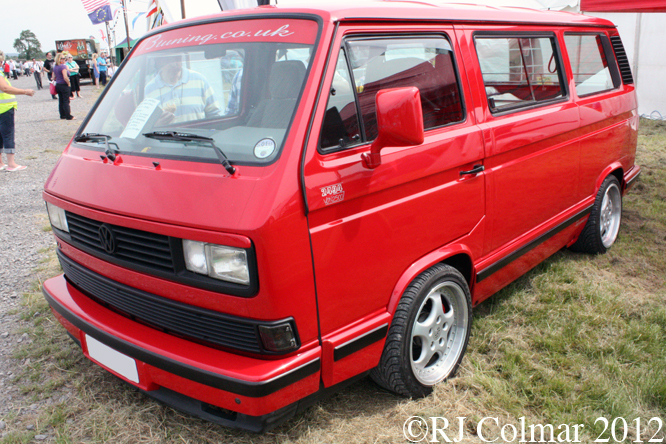
Volkswagen Subaru Multivan, Last Limited Edition, Summer Classics, Easter Compton

The Type 3 Transporter / Multivan above is one of the last 6, 2494 of 2500, Last Limited Edition (LLE) Multivans made in 1992. There was also a Redstar limited edition available to VW employees only and production of the Type 3 continued in Mexico until 2003. This particular LLE Multivan is a particularly quick camper having been fitted with a 230 hp 3.3 liter / 201 cui Subaru flat six motor, Porsche gearbox and brakes and a Scania Shifter.

Paramount Sport, Summer Classics, Easter Compton

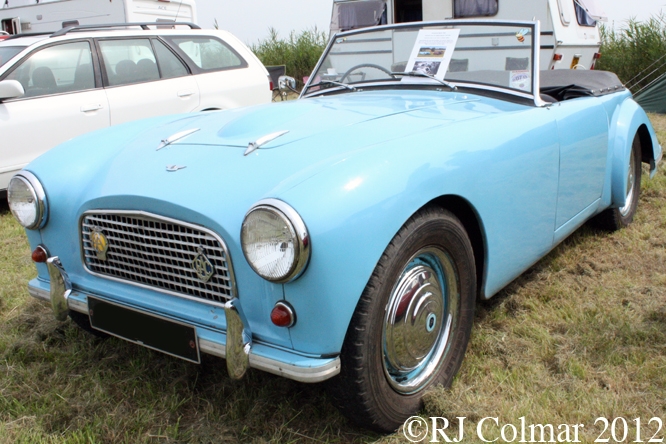
Saturdays ‘car manufacturer I had never even heard of before’ was Paramount. The 1953 Paramount Sports above featuring an aluminium body on an ash frame is one of only 3 road worthy Paramount vehicles from a total of 80 of all types thought to exist.

MG6 GT, Summer Classics, Easter Compton

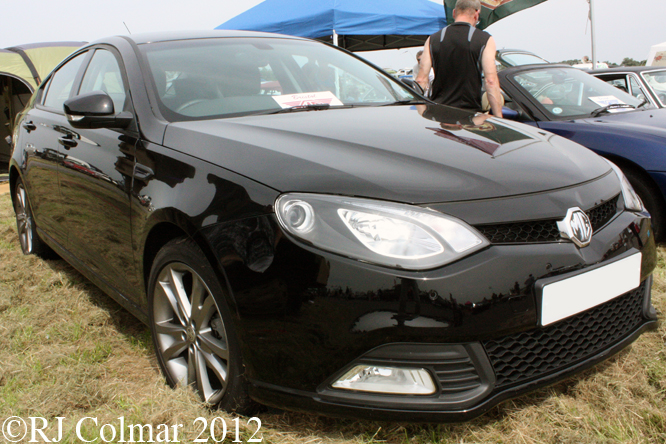
After the MG Rover group disappeared in 2005 the MG marque was revived in 2011 with help from many former employees who were re employed at the MG Motor UK Technical Center by new owners of the MG marque SAIC Motor. The MG6 GT above, built from a complete knock down kit supplied by SAIC was assembled at Longbridge, home to the former MG Rover Group. Despite a successful presence in the British Saloon Car Championship production volumes so far are thought to be small probably not yet reaching a thousand.

Peterbilt, 8 Seconds, Summer Classics, Easter Compton

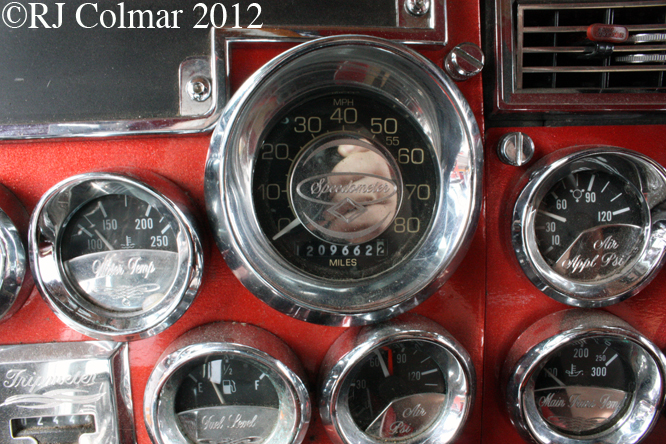
I have never sat in a Peterbilt before, nor a TV star nor a vehicle that has 1,000,000 miles, I ticked all those boxes on Saturday when I climbed into the cab of Straight 8 a 1993 Peterbilt which was featured in Trick My Truck in January 2007. As can be seen the truck has over 1.2 million miles on the clock !

Rover 3500S, Summer Classics, Easter Compton

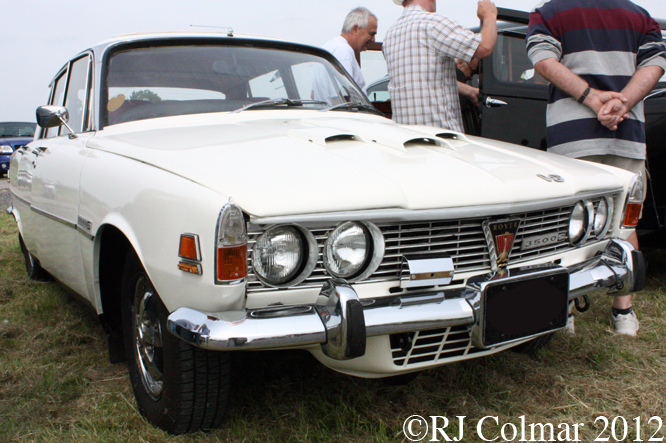
The Rover 3500S came in two different forms for the UK Market S stood for Synchromesh as used in the four speed manual gearbox while in the US Market all Rover 3500 S models were automatics. Looking at the dash this is clearly a right hand drive vehicle, unfortunately I did not notice if the car was a converted LHD automatic or a UK supplied manual making use of the Rover parts bin with a US spec front number plate mounting, ice warning device seen to the left of the number plate and US spec bonnet with three air intakes. The wipers would suggest this is a UK spec car with some US spec goodies.

Armstrong Siddeley Whitley, Summer Classics, Easter Compton

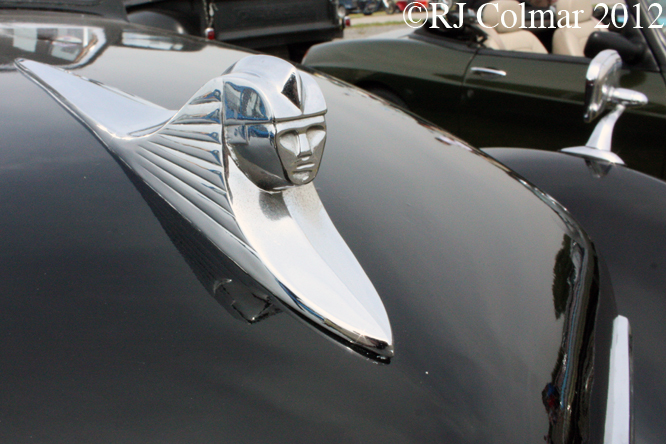
Unlike Bristol Cars which refrained from using the names of Bristol Aeroplanes, it’s parent organisation, for it’s vehicles until 1975 Armstrong Siddeley used the names of it’s parent companies WW2 aircraft, including Hurricane and Lancaster upon the the resumption of vehicle manufacture in 1945. The Sphinx mascot is seen above on a 1953 Armstrong Siddeley Whitley which takes it’s name from a twin engined bomber that is named after a suburb of Coventry where Armstrong Siddeley’s were built.

Lincoln Zephyr, Summer Classics, Easter Compton

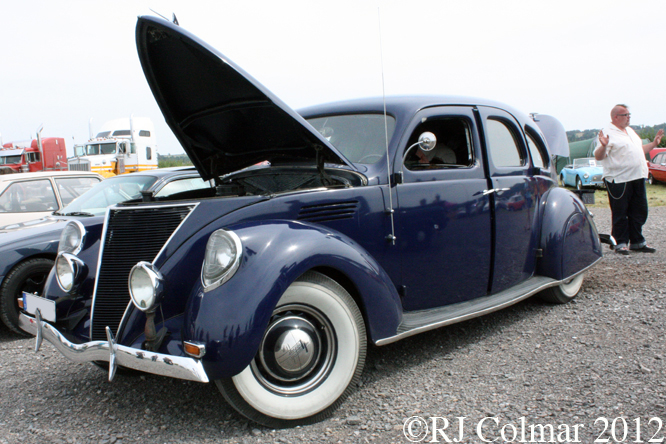
My personal vote for car of the show goes to this 1936 Lincoln Zephyr. This V12 was occupied by a family of four with an outsize classic TV and was making it’s way on a 1600 plus mile holiday journey from Dresden, Germany at an eye watering 21 mpg imperial / 18 mpg US !

Singer Le Mans, Summer Classics, Easter Compton

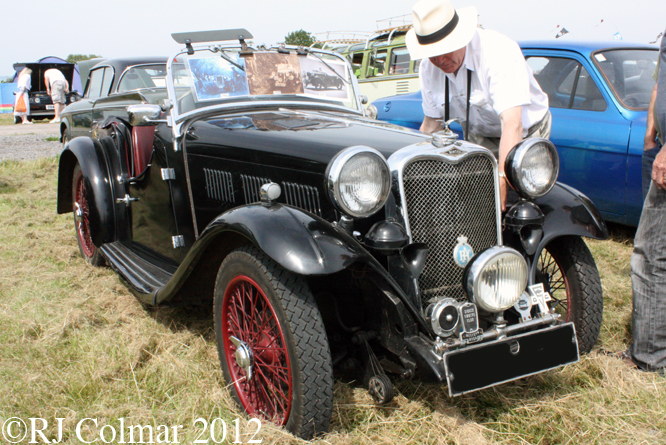
Among many storied cars at the Summer Classics Show on Saturday was this Singer Le Mans built in December 1935 it took part in the 1936 Exeter Trials with HD Acres at the wheel as can be seen on this link. By 1939 the Singer had acquired the large centre fog light and was in the hands of RJW Appleton who used it to compete in the Lands End Trial. The present owner spent many years rebuilding the Singer after acquiring a big box of ‘bits’.

Ford Torino, Summer Classics, Easter Compton

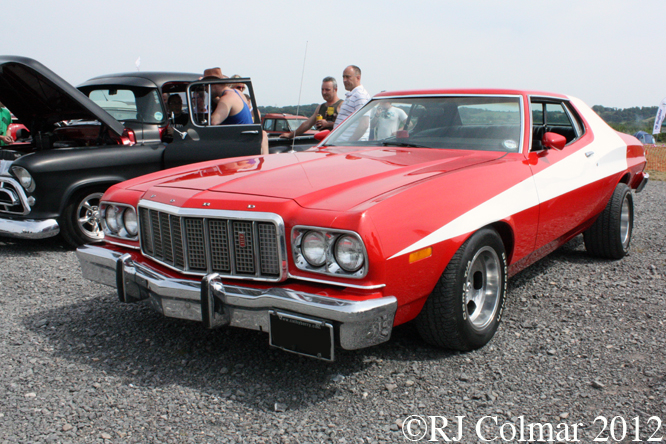
The “striped tomato” 1974 Ford Gran Torino seeen above is one of the first six built in 1973, for the ’74 model year. It was picked up by it’s current owner in San Francisco with a straight body and has been slowly restored since with well over £6k in suspension parts alone. By all accounts Paul “Michael” Glaser took an instant disliking to the car with which he will be forever associated as Starsky from the Starsky & Hutch TV series. He thought the car looked like a ridiculous ride for a supposed undercover cop and referred to it as striped tomato both in private and later in scripts for the show.

Sunbeam Alpine, Summer Classics, Easter Compton

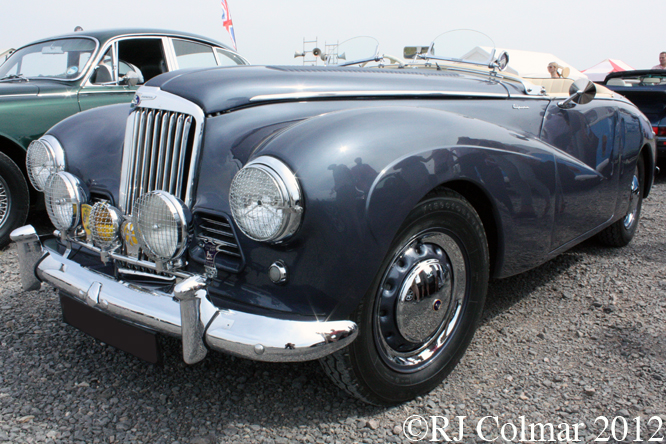
Fresh paintwork and equally fresh cream leather interior suggest this 1953 Sunbeam Alpine Mk I has been recently restored, love the way the Brooklands Aero screens sets the look of this car apart from it’s 1.582 siblings that were built from 1953 to 1955.

BSA Combination, Summer Classics, Easter Compton

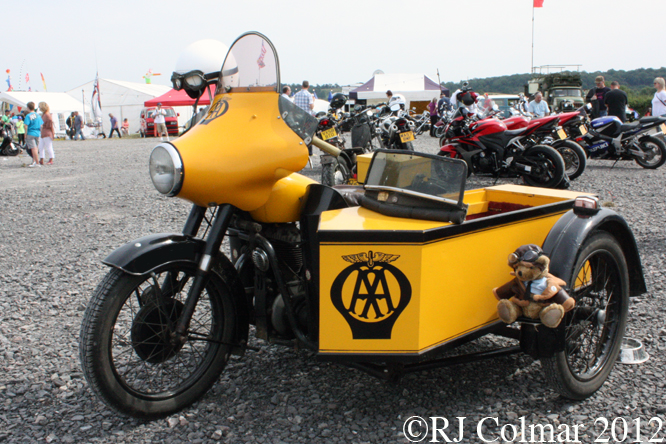
BSA first built the 591cc / 36 cui M21 in 1937, with production lasting until 1963 ! Used by the armed forces and in large numbers with combination sidecars, as seen with the 1951 model above, by the Automobile Association (AA) as roadside assistance units.

Thanks for joining me on this “Summer Classics” edition of “Gettin’ a li’l psycho on tyres” I hope you will join me again tomorrow. Don’t forget to come back now !

Share

This Is Not A Volkswagen – Quantum Coupé

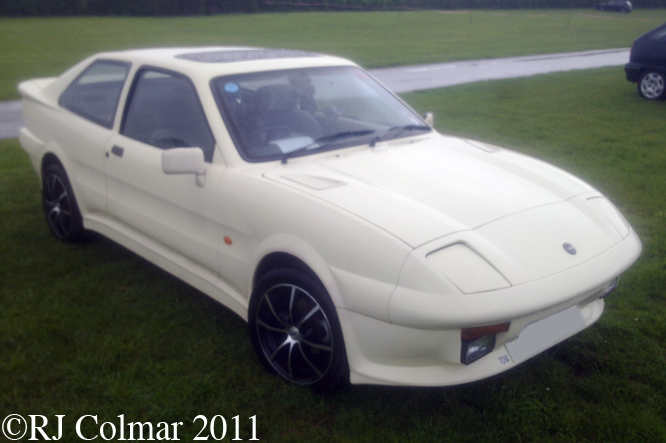
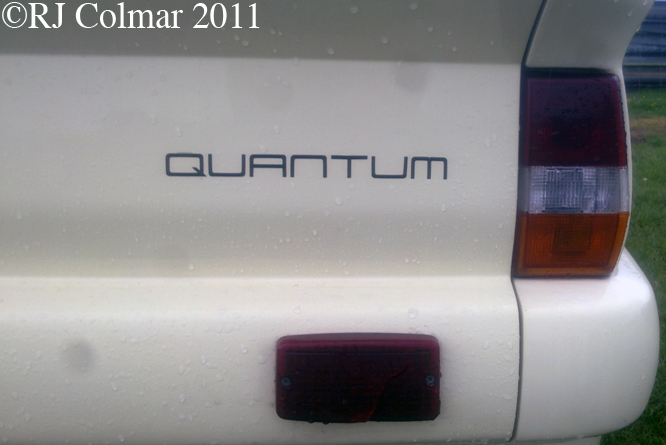
Not to be confused with the VW Passat Coupé which sold in the US as the Quantum, Quantum Sports Cars (QSC) Coupé was the brainchild of Mark and Harvey Wooldridge who founded QSC in 1987.

Quantum Coupé, Castle Combe

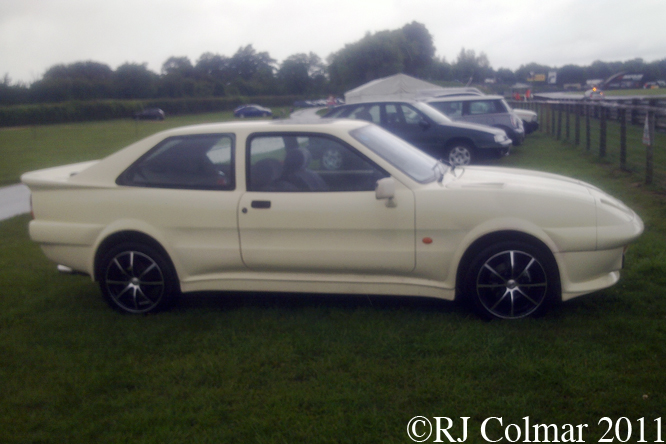
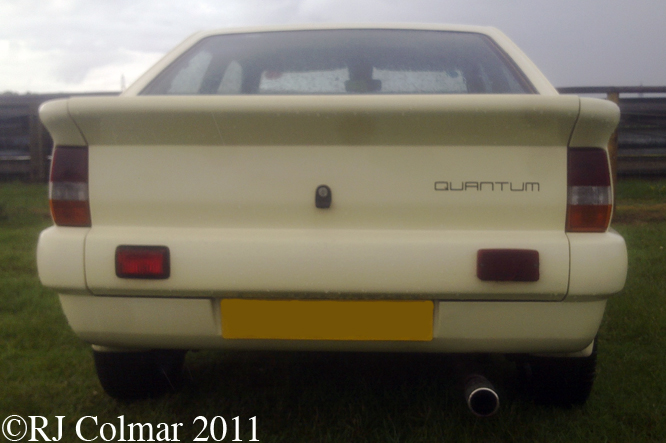
The Coupé was the brothers first model and featured an all glass reinforced plastic, grp, shell that benefited from computer analysis to ensure structural rigidity.

Quantum Coupé, Castle Combe

The mechanical running gear and many fittings of the Coupé were designed to be sourced from Ford Fiesta Mk 1 donor cars.

Quantum Coupé, Castle Combe

The very first Quantum Coupé was scrapped in the interests of safety after it had under gone many modifications during the prototype stage. The second Quantum suffered a similar fate after an accident wrote it off.

Quantum Coupé, Castle Combe

The car seen here uses parts from a 1985 donor car.

Quantum Coupé, Castle Combe

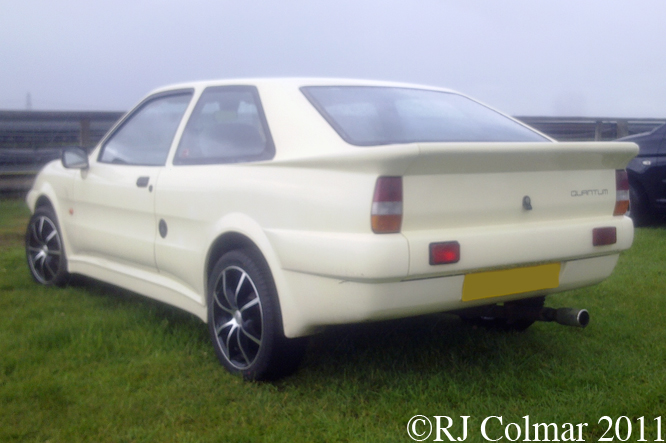
Only 17 Quantum Coupé’s were built in total, the model was replaced with a more successful saloon which required a Ford Fiesta Mk 2 donor car.

Thanks for joining me on this “This is not a Volkswagen” edition of “Gettin’ a li’l psycho on tyres” I hope you will join me again tomorrow. Don’t forget to come back now !

Share

Family Affair – GSM Delta

In 1957 John Scott met South African Bob Van-Niekerk who had plans to build a sports car in South Africa. John told Bob that if he one of his cars won a race in Britain he would arrange to manufacture them in the UK.

GSM Delta, Prescott

Bob with fellow South African’s Willie Meissner and Verster de Wit who was responsible for the body styling produced a mould in the UK and sold the first body built in the UK in order to pay the cost of shipping the moulds to South Africa.

GSM Delta, Prescott

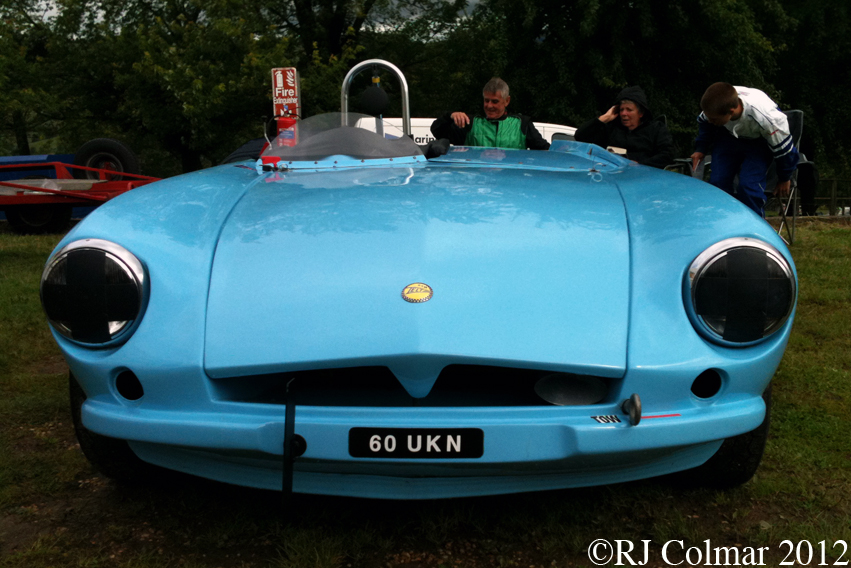
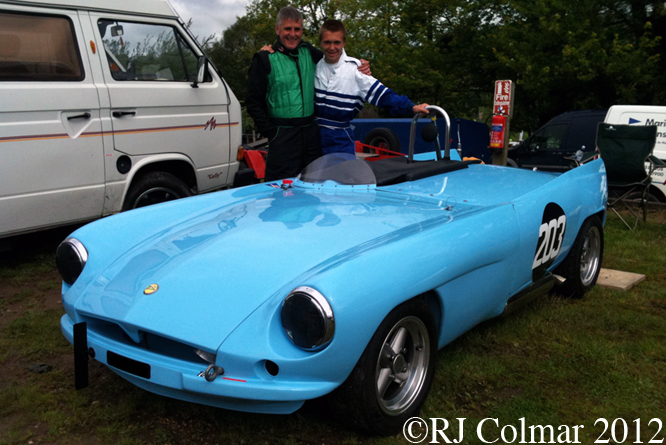
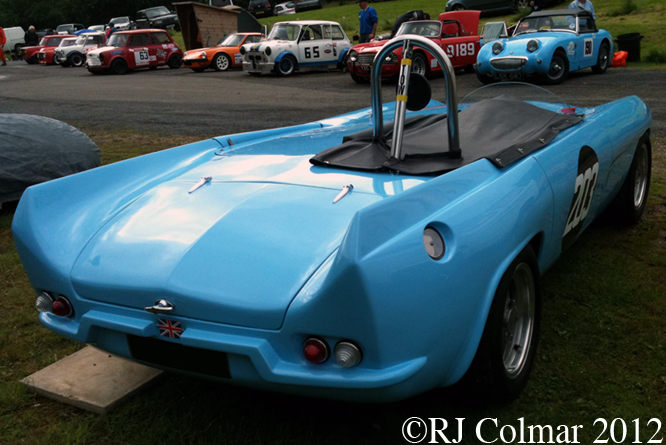
Above John Scott’s son Clive is seen standing next to his grand son, John’s great grandson, Ben behind the 1962 GSM Delta Clive purchased in 2009.

Bob went back to South Africa and set up GSM (Glass Sport Motors) with Willie Meissner and started production of their first vehicle which carried the Dart name.

GSM Delta, Prescott

Immediately competitive in South Africa, scoring 1-2 victory on it’s debut in a 4 hour race in Cape Town in 1958, by 1960 one of the GSM Dart’s found it’s way to the UK in 1960 and won first time out at Brands Hatch. True to his word John started a second production shop for the GSM in West Malling, Kent renaming the car Delta, as Daimler had already found out the Dart name was the property of Chrysler in the USA.

GSM Delta, Prescott

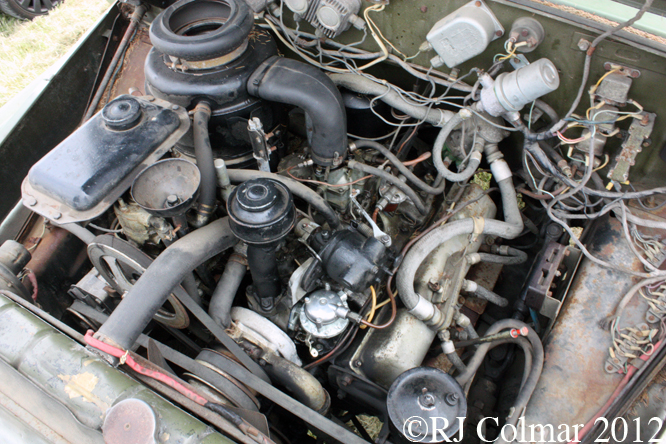
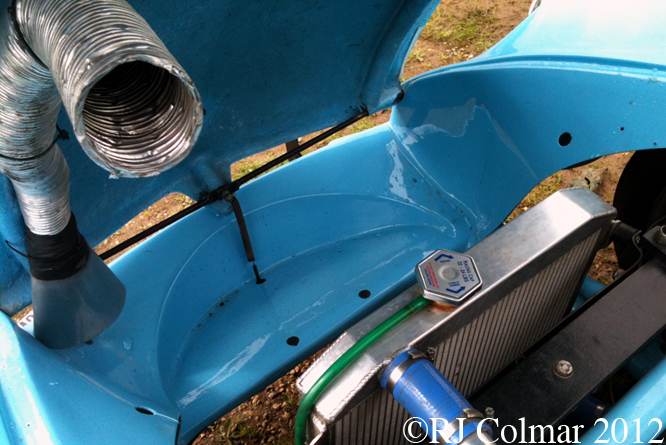
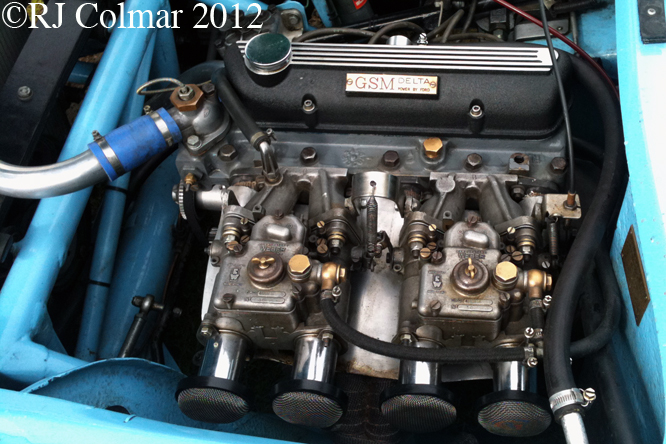
Power for the GSM Delta came from off the shelf Ford’s from 1 litre / 61 cui to 1.5 litres / 92 cui in size, the motor seen here is one of the larger pre crossflow Ford unit’s. Ford components were also used for the steering, brakes, gearbox and rear axle.

GSM Delta, Prescott

When Clive bought this car in 2009 he was surprised to find that he recognised his mothers handwriting in the log book.

GSM Delta, Prescott

Among the winners in the British built GSM Delta’s between 1960 and 1965 was Dutchman Jan van Niekerk, Jeff Uren, 1959 British Saloon Car Champion who is also known as the man behind the “Savage Cartina’s“, John Glyde Walker, Joe Krupwicz Americans Bob Clift, Bill Osband, Dave Johnson and Don Grohs.

GSM Delta, Prescott

Figures vary as to how many GSM Delta’s were built between 1960 and 1961, Clive puts the number at “approximately 40” of which he believes fewer than 10 remain. The car that Clive owns won the 2001 Paul Matty Challenge in 2001 and the 2006 Aldon / HSA Championship.

My thanks to Clive for his help with today’s blog.

Thanks for joining me on this “Family Affair” edition of “Gettin’ a li’l psycho on tyres”, I hope you will join me again tomorrow. Don’t forget to come back now !

Share

What’s In A Tooth ? – Lotus Ford 49 #R2 & #R3

The Lotus 49 consolidated the principle of using the motor that as an integral structural component of the design that was first seen on the BRM P83 and Lotus 43 which were both powered by the novel BRM H16 motor in 1966. The 49, designed by Maurice Phillipe however was powered by the then brand new, and much simpler Ford sponsored 3 litre / 183 cui 8 cylinder Cosworth DFV that was the brainchild of Keith Duckworth and Mike Costin.

Lotus 49, Goodwood Festival of Speed

Despite many faults that would surface and be ironed out over the ensuing seasons the Lotus 49’s made a dream debut at Zandvoort for the 1967 Dutch Grand Prix with Graham Hill qualifying on pole and Jim Clark who had never so much as sat in the car before the first practice qualifying 8th. During the race Clark driving chassis #R2, seen above with Jackie Oliver at the wheel at Goodwood, used his legendary speed and mechanical sympathy to well judged victory while Hill experienced timing gear failure with two teeth next to each other on the timing gear breaking. After the race it was discovered Clark’s car had experienced a similar failure however a single tooth remained between the two broken teeth on Clarks timing gear ensuring just enough drive to make it to the finish.

Clark used Chassis #R2 to win both the 1967 British and US Grand Prix before being converted to 49T spec for the Tasman Series of races in Australasia which required an engine capacity of 2.5 litres / 152.5 cui which was achieved by fitting a different crankshaft with a shorter stroke to the DFV motors making them DFW spec. Jim won 4 races in the 8 race Series with the 49T spec chassis #R2 which combined with a couple of points paying places was enough to win the Championship from Chris Amon in his Ferrari 246 Dino.

Chassis #R2 was then loaned to Rob Walker racing during 1968 to replace chassis #R4 which driver Jo Siffert had crashed on his debut in a non championship race at Brands Hatch. Although #R4 was not damaged beyond repair by that accident it was subsequently destroyed in a workshop fire at Rob Walkers premises necessitating the loan of #R2. Once Walkers team had built up a new car, chassis #R7 now in B spec with the tall rear wing, which Siffert used to win the 1968 British GP.

Once chassis #R2 was returned by Rob Walker to Lotus it was immediately pressed into service again after Jackie Oliver had a comprehensive accident in #R6 at the 1968 French GP. For the British Grand Prix #R2 was repainted in Gold Leaf Team Lotus colours and fitted with the winged 49B spec nose cone and high rear wing. The car received further B spec upgrades for the German Grand Prix. Oliver would use chassis #R2 for the remainder of the 1968 season scoring a best 3rd place finish at the season finale in Mexico.

Lotus 49, National Motor Museum Beaulieu

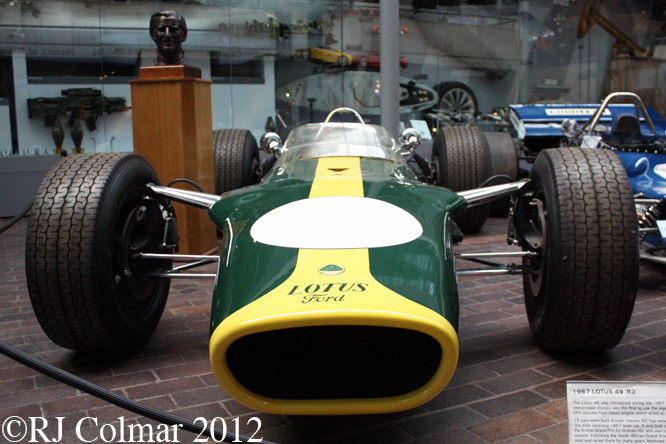
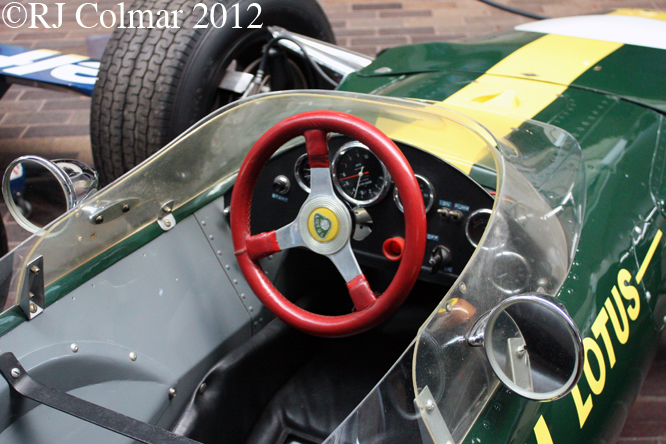
The car seen above at Beaulieu National Motor Museum is chassis #R3 which featured subtle differences to chassis #R1 and #R2 to aid the distribution of loads under braking at the front and to aid access to the brake balance adjuster which had previously only been possible by two mechanics picking up a third smaller mechanic and lowering him into the cockpit upside down ! Note the sculpture of Graham Hill on the plinth to the left of the car in this photo.

Lotus 49, National Motor Museum Beaulieu

Chassis #R3 first appeared at the 1967 British Grand Prix with Graham Hill at the wheel, he qualified 2nd behind Clark but while leading the race first an allen screw dropped off the rear suspension and after it was replaced the engine failed while he was making up good time. Chassis #R3 has the second longest track record of the 12 Lotus 49’s built.

After Hill scored a season best 2nd place in the 1967 US Grand Prix, behind Clark, and opened his championship winning 1968 season with another second place, again behind Clark at Kyalami chassis #R3 was sold to Rhodesian John Love who used the car to win the last two of six consecutive South African Formula One titles in 1968 and 1969, his successor Dave Carlton won the 1970 South African Championship driving the Lotus 49 chassis #R8 which was built to the final C spec.

Lotus 49, National Motor Museum Beaulieu

The 400 hp Ford Cosworth DFV was to become the mainstay of Formula One right through the 1970’s, it was far in advance of the Lotus 49 chassis and would only be toppled by the hugely more expensive turbocharged motors in the early 1980’s after 155 Grand Prix Victories. One of the triangular aluminium top engine mountings can be seen bolted with three bolts on the leading edge of the cam cover tapering into the back of the monocoque to which it was attached by a single bolt. Three further such mountings were all that were required to integrate the motor into the structure of the car.

Lotus 49, National Motor Museum Beaulieu

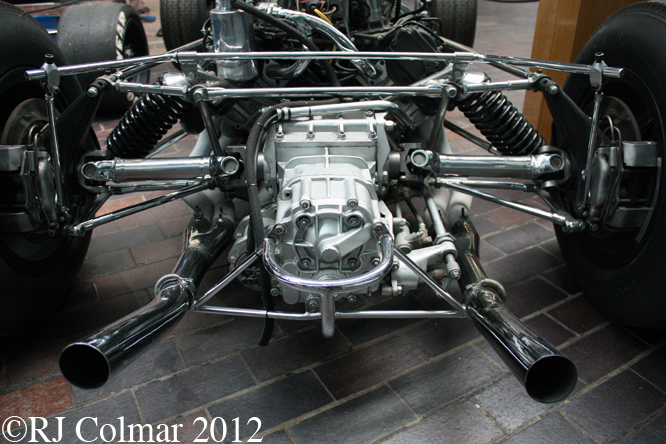
The rear suspension and drive shafts and gearbox would repeatedly prove trouble some for team Lotus as they got to grips with having such a powerful motor. The ZF gearbox in it’s original form was not strong enough and required additional strengthening which can be seen in the form of the thick vertical plate into which the drive shaft disappears. The ZF gearboxes were replaced on the 1968 B spec cars with Hewland units which were much easier to maintain trackside.

Lotus 49, National Motor Museum Beaulieu

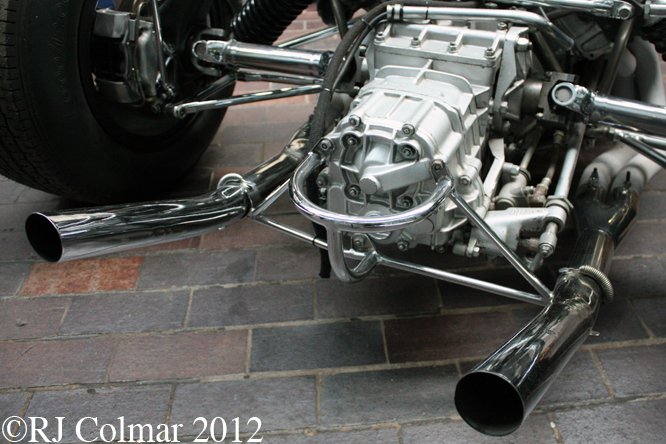
The vestigal nudge bar was added to the back of the ZF gearboxes after the 1967 Dutch Grand Prix win in order to comply with a regulation about the dimensions between the end of the exhaust pipe and the back of the car. In other words when Jim Clark won the 1967 Dutch Grand Prix his Lotus 49 did not comply fully to the letter of the existing regulations.

Chassis #R3 is the only one of the Lotus 49’s never to run in B or C spec. Since it has been in the care of the National Motor Museum it has been involved in two serious accidents. The first, on a demonstration run, involved a tree in the Beaulieu grounds where it is kept in 1999 further details of the accident damage can be seen on this link. The second accident with the same driver occurred at a Silverstone Press Day in 2009 fortunately the damage was restricted ‘only’ to the left side suspension as can be seen in these linked photo’s.

Thanks for joining me on this “What Is In A Tooth ?” edition of “Gettin’ a li’l psycho on tyres”, I hope you will join me again tomorrow when I will be looking at a GSM Delta. Don’t forget to come back now !

Share

Classics At The Castle – Sherborne Castle

Sherborne Castle is a 16th Century Tudor Mansion built for Sir Walter Raleigh who leased the grounds of the ruined old Castle from the crown in 1592. Last weekend David Root, wearing his Italian Auto Moto Club hat, kindly invited me to Sherborne Castle to visit a very busy Classics at the Castle event.
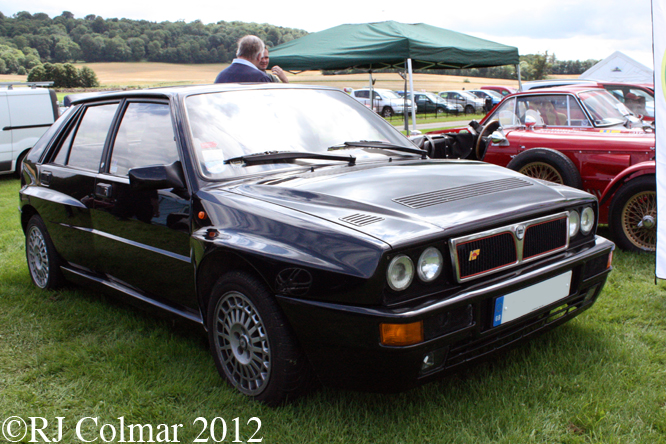
Lancia Delta Integrale, Classics at the Castle, Sherborne Castle

As one might expect from the grounds of such a storied estate many interesting automotive stories, myths and legends emerged from the day. The Lancia Delta Integrale seen above parked next to David’s Lenham Alfa was painted pearlescent white when it was purchased by Lance Bombardier Mark (Bing) Chandler several years ago. Mark intended to return the car to it’s original factory specification however before he could fulfill that dream he was killed in action in the Helmand province of Afghanistan while protecting the local population from insurgent intimidation. In memory to their son Marks parents have had the Lancia restored to it’s original factory specification.
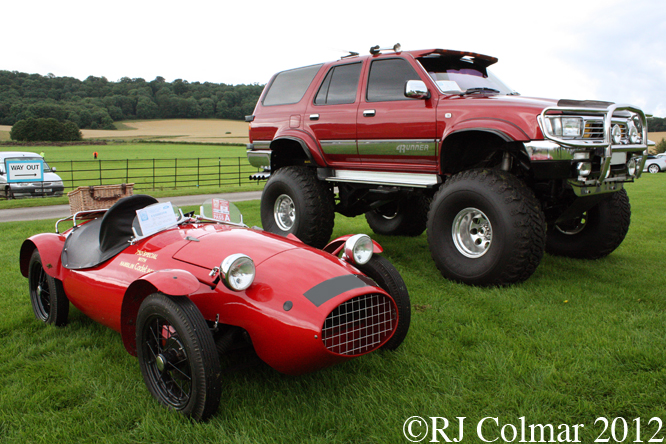
Hamblin Cadet, Toyota 4Runner, Classics at the Castle, Sherborne Castle

As can be seen by the striking contrast between the Austin 7 Hamblin Cadet and the second generation Toyota 4Runner Sunday’s event catered for a diverse range of motoring tastes.
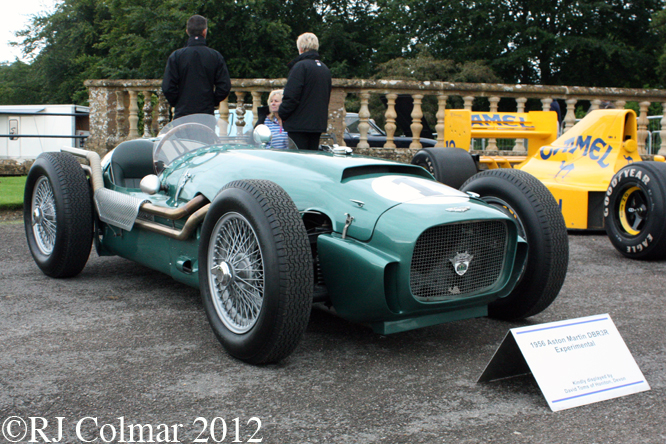
Aston Martin (???), Classics at the Castle, Sherborne Castle

Some years ago the special above was labeled as being the Aston Martin DP155 however once some experts has compared it to period photo’s of DP155, a car that was raced in New Zealand by Reg Parnell in 1956, it was noticed the driver sat in a central position atop the transmission in DP155 and that a number of other features of the special in my photograph above did not match the description of DP155. The mystery of this specials identity has still not been solved four years after this linked thread was started on The Nostalgia Forum.
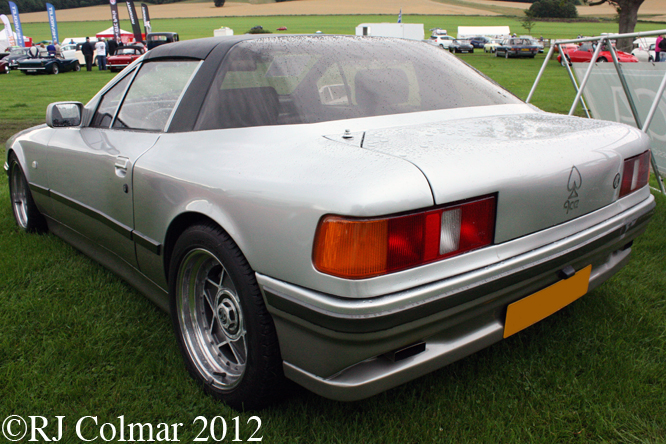
AC (Brooklands) Ace 1986 Concept, Classics at the Castle, Sherborne Castle

The AC (Brooklands) Ace above was the first of two Ace prototypes, the car seen above was also known at the “Ace of Spades” featured a Ford Taraus V6 motor and all wheel drive. Curiously both the prototype Aces, the second second Ace prototype is powered by a Lotus Engine and was built in 1997, are coming up for auction at Dorset Vintage & Classic Auction on September 20th.
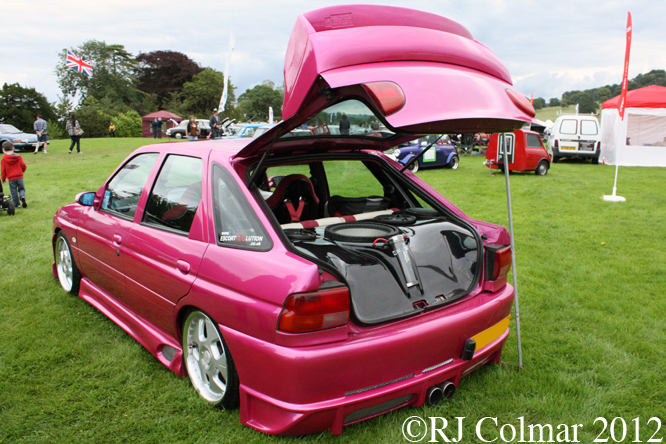
Ford Escort, Classics at the Castle, Sherborne Castle

Despite being born in an age where Ian Gilmore once told his sound engineers “We want everything louder than everything else”, it’s been a while since I sat in a vehicle with a hi fidelity system big enough to host a rave, I remember the first time I did so, in 1990, I played Bach’s Brandenburg Concerto No:3 in G and was very moved despite not turning the volume passed the number 4 on the dial. The four door Escort Mark V is reminiscent of the 2 door Project 2000 Ford Escort Mk VI RS2000 built by Max Power magazine towards the end of the last century.
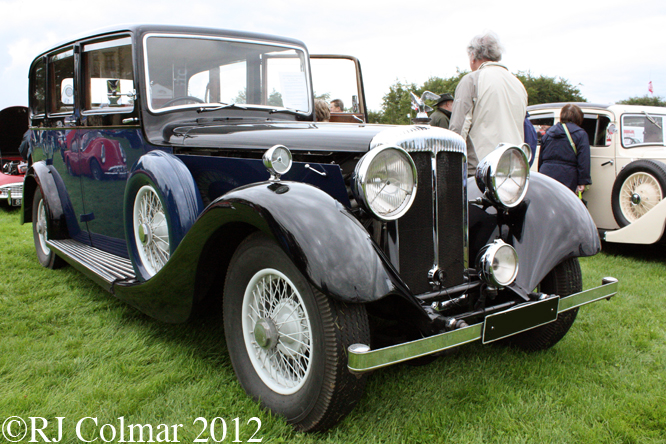
Daimler 32 hp, Classics at the Castle, Sherborne Castle

According to the blurb in the window of this 1937 32hp Daimler “… is widely repudiated to be the personal transport of King Edward VIII, Duke of Windsor and Mrs Wallis Simpson following his abdication and exile to France.” An odd use of the word repudiate which I have neither been able to refute or repute.
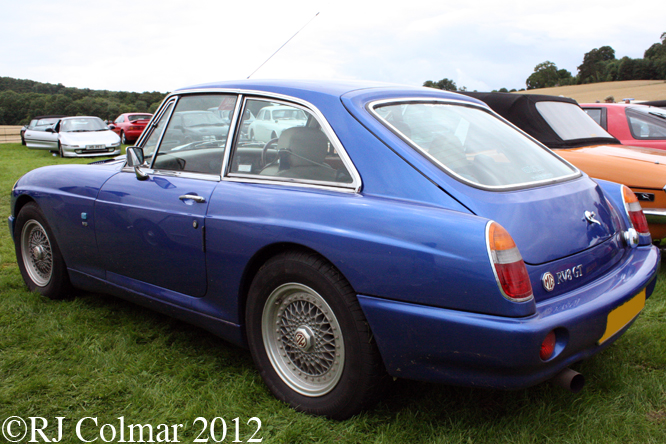
MG RV8 GT, Classics at the Castle, Sherborne Castle

Perversely while the original 1973-1976 MGB V8 was only available with a GT Coupé body while the retro 1993-1995 MG RV8 was only available with a Roadster body. Some enthusiasts have taken it into their own hands to bring older GT’s up to RV8 spec complete with all the lower body panels from the newer model like the owner of the 1972 GT above which features a 190 hp 3947 cc / 240.8 cui RV8 motor.
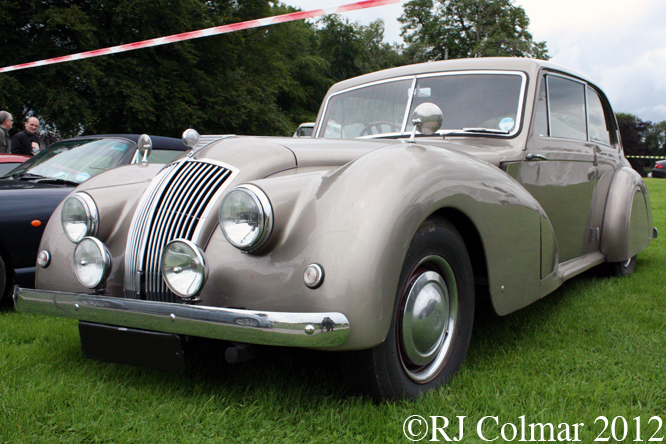
AC 2 litre Saloon, Classics at the Castle, Sherborne Castle

With an 85 hp aluminium block motor with origins that date back to 1922, solid front and rear axles and a wooden frame to carry the body the 1955 AC 2 litre Saloon was not exactly ground braking, but it did handle and perform well with an 80 mph top speed, though not as well as the contemporary Bristol 403 which was capable of over 100 mph.
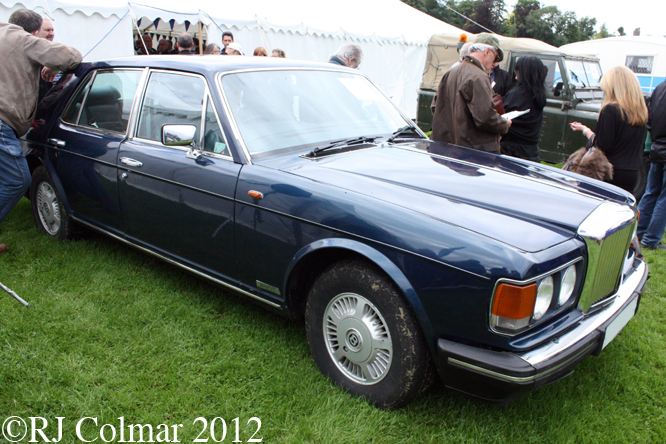
Bentley Mulsanne, Classics at the Castle, Sherborne Castle

David and i looked at each other in disbelief as bidding got underway for Lot 15 a 1987 Bentley Mulsanne previously owned by Geoffrey Rose chairman of the Royal Automobile Club (RAC) got underway for just £1,500 in the Charterhouse Auctions tent. Surprisingly what must be nearly a 3 ton vehicle finally went to someone for just £2,300 excluding the auctioneers commission. That is a lot of car for not much money, though taxing it and keeping it running for a year might cost a lot more than the car is actually worth.
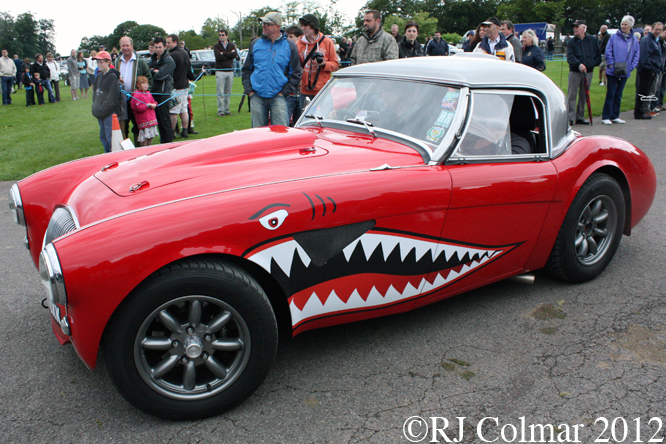
Austin Healey (Uncobra), Classics at the Castle, Sherborne Castle

Over a year ago some of you may remember I attended a Piston Heads meeting in the car park of the BMW factory, for the Classics in the Castle event the Piston Heads were asked to organise a classic and sports car run, the vehicles that took part in this event with in an event is deserving of it’s own blog which I may get round to when there are not quite so many events to cover in the off season. Among my favorites was this 1954 Austin Healey 100 BN1 which was first fitted with a Chevrolet V8 by Greg Gatehouse in California around 1965. It is now on it’s third V8 a Fastco 6276 cc / 383 cui crate unit. Amongst the other interesting upgrades is an button actuated hydraulic handbrake which replaces the conventional cable operated system.
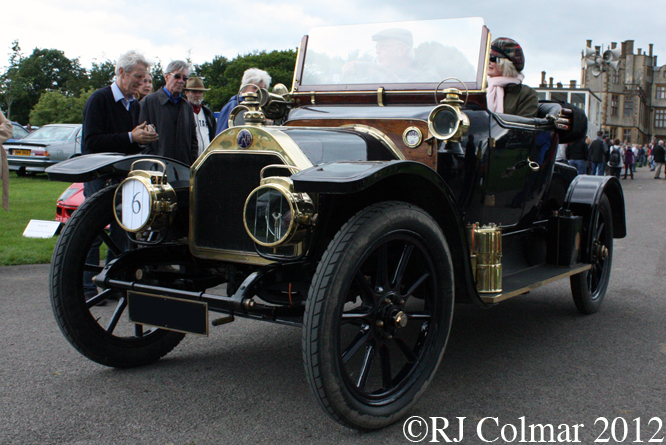
F.N. Roadster, Classics at the Castle, Sherborne Castle

FN are well known Belgian manufactuers of fire arms, in the early twentieth century they also manufactured cars and motorcycles. Above is a 1912 FN Roadster that was taking part in a smaller Vintage Run which also finished at Sherborne Castle last Sunday.
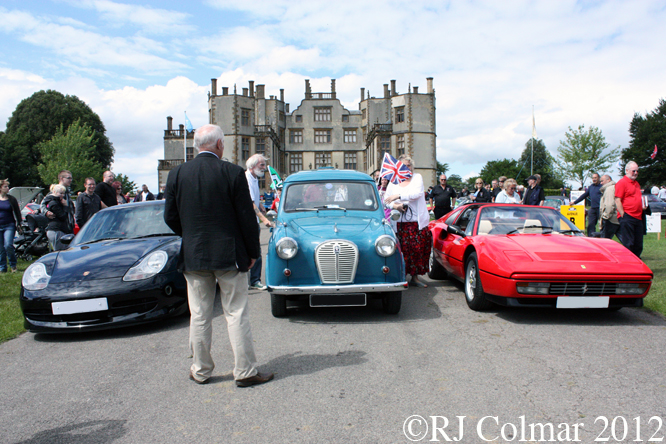
Club Winners, Classics at the Castle, Sherborne Castle

Disappointingly there was no Concours d’Elegance or even an audience vote for a popular car but the stands of the various clubs taking part were judged in a competition with the Austin A30/A35 owners club coming third, Porsche Club GB second and Wessex Ferrari being awarded first prize.

Many thanks to David Root and the members of the Italian Auto Moto Club who made today’s blog possible, and to Tim Murray who pointed me in the right direction regarding the green open wheel special.

Thanks for joining me on this “Classics At The Castle” edition of “Gettin’ a li’l psycho on tyres” I hope you will join me again tomorrow when all being well I be bringing you the latest from this weekends Silverstone Classic event. Don’t forget to come back now !
Share

Coffee, Croissant & Cars – Avenue Drivers Club

Last Sunday I went to my third meeting with the Avenue Drivers Club meeting which took place just a stones throw from GALPOT Towers in Queens Square.

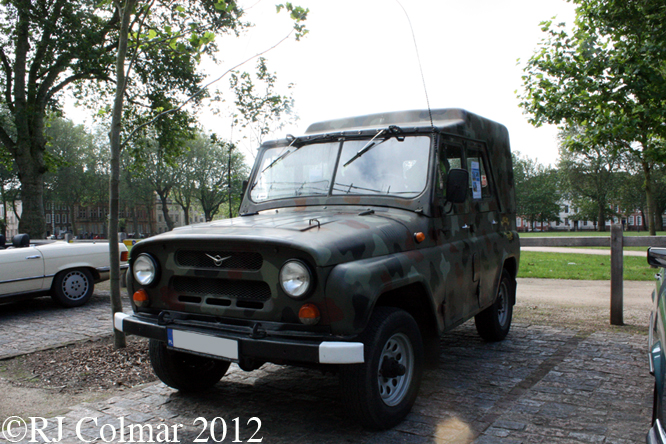
UAZ, Avenue Drivers Club, Bristol

While I have heard of and seen a few Soviet Built UAZ’s in my travels to foreign climbs but this is the first one I have dared to see up close let alone photograph. I am not sure of it’s age but I am guessing it was originally supplied for military service which would make the model either a UAZ 469 or more likely a post 1985 UAZ 31512, these vehicles had a great reputation for reliability until first the factory started using cheaper materials for construction and then counterfeit spare parts flooded the market.

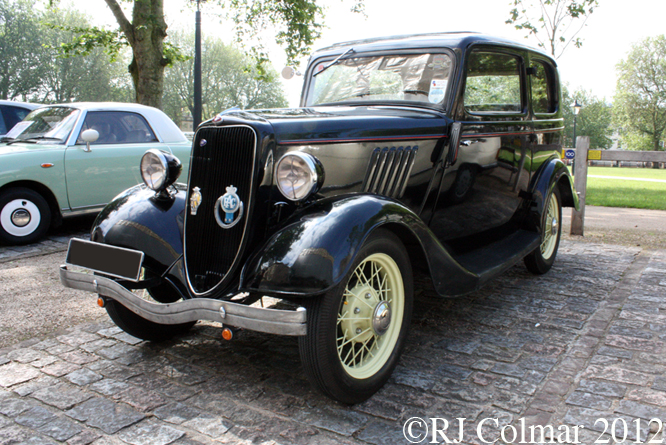
Ford 8 hp, Avenue Drivers Club, Bristol

Among the many vintage vehicles present was this ‘long rad’ 1935 Model Y Ford one of around 1300 survivors of the of 170,000 built between 1933 and 1937.

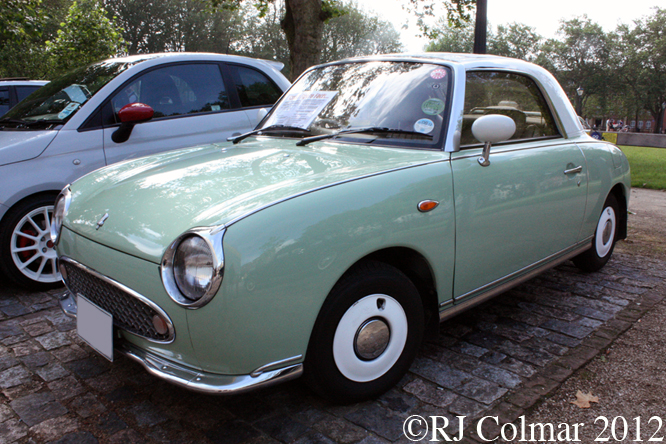
Nissan Figaro, Avenue Drivers Club, Bristol

Present at many of the show’s and meetings I have been to this summer has been this 1991 Nissan Figaro a retro styled vehicle that takes it’s design queue’s from the seven iterations of the Datsun Sports / Fairlady roadsters produced between 1959 and 1970.

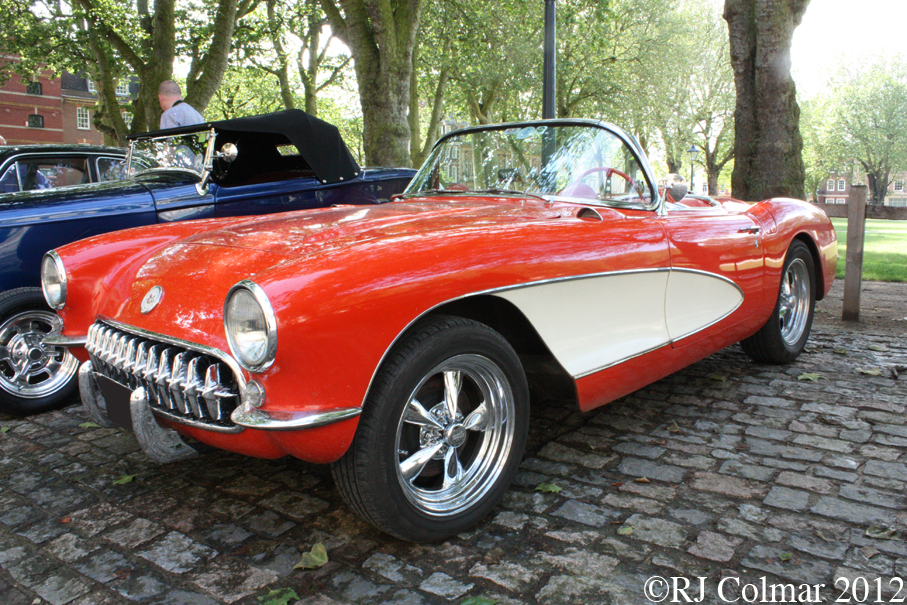
Chevrolet Corvette, Avenue Drivers Club, Bristol

Looking tres cool on it’s non factory alloy wheels was this 1957 Chevrolet Corvette C1, the interior if which was as immaculate as the exterior.

Vauxhall 30/90, Avenue Drivers Club, Bristol

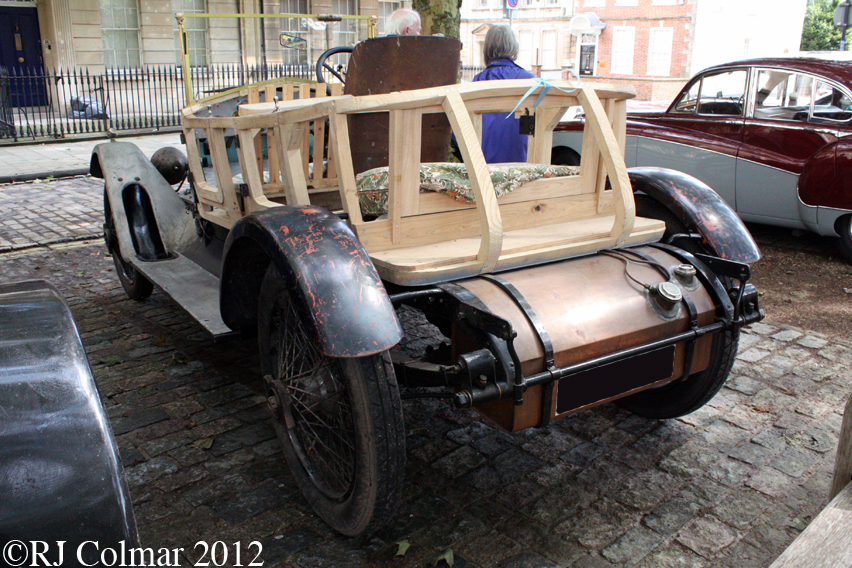
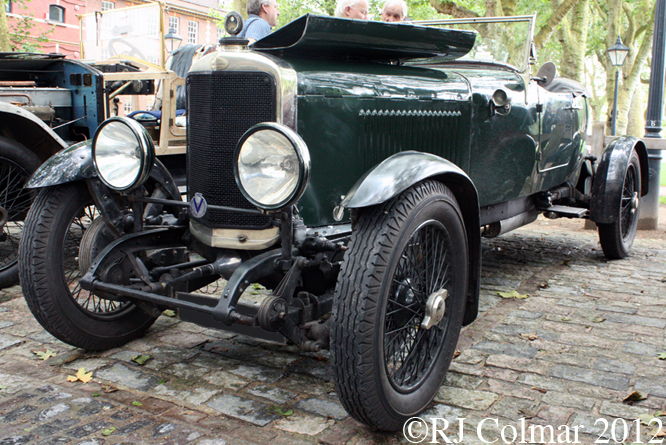
Car of the day for me was this 1922 Vauxhall 30/90 a work in progress that was repatriated from a former British Colony in the 1970’s. Where as in Britain such vehicles exterior panels will have corroded away in the former colony, where this car spent the first fifty years of it’s life, the metal work remained in good shape but the extensive original wooden body frame had been completely munched away by termites !

Trojan 200, Avenue Drivers Club, Bristol

This 1963 Trojan 200 three wheeler complete with single door opening forwards from the front and a soft top was built under licence from the German aircraft manufacturer Heinkel. Trojan went on to become a manufacturer of many racing cars including under licence several Mclarens models powered by Chevrolet V8’s for both Can Am and Formula 5000 and a one off Formula One car.

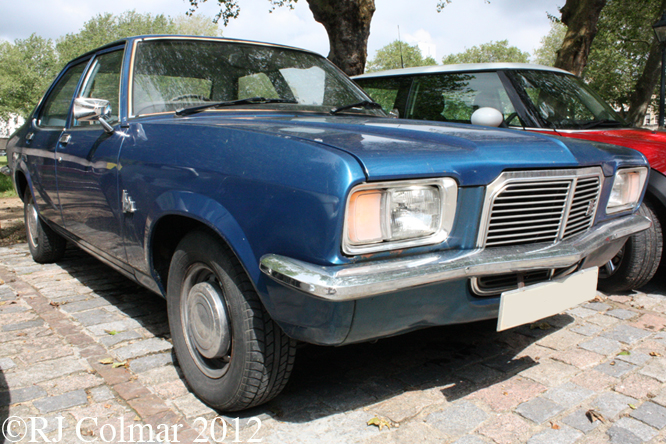
Vauxhall Victor, Avenue Drivers Club, Bristol

The 1974 Vauxhall Victor above was being offered for sale for £1,000 if your interested I have the phone number, usual disclaimers apply.

Sunbeam 20/9, Avenue Drivers Club, Bristol

Close second in my favorite cars of the day was this Sunbeam Pick Up which started life as a 1929 Sunbeam 20/9. The vintage cars alone have made my outings to the Avenue Drivers Clubs meetings on the second Sunday of every month more than worth the effort.

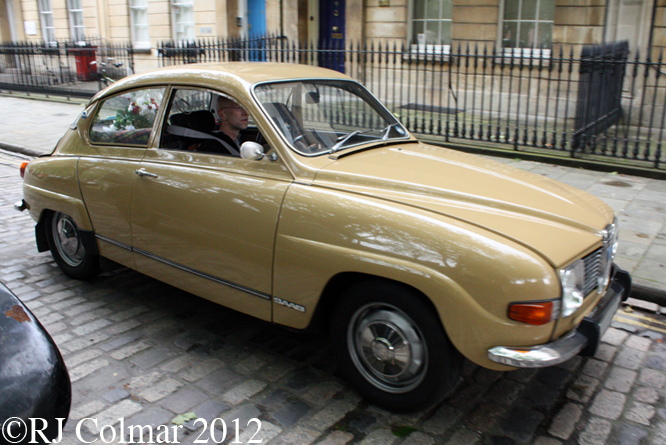
SAAB 96V4, Avenue Drivers Club, Bristol

Gracie above is a 1972 SAAB 96V4 which had less than 10,000 miles on the clock in 2006 due to the original owners putting it in storage two years after they bought after giving up driving. The car was found in a wooden garage 25 years later and underwent a thorough restoration of it’s mechanical parts which had deteriorated through lack of use.

Sunbeam, Avenue Drivers Club, Bristol

Not sure at the time of writing weather the 3 litre / 183 cui twin cam powered 1927 Sunbeam 2 seater is a 20 hp or 35 hp model but it looks and sounds very purposeful with its tail faired in like the hull of a boat.

Jaguar MK VIII, Avenue Drivers Club, Bristol

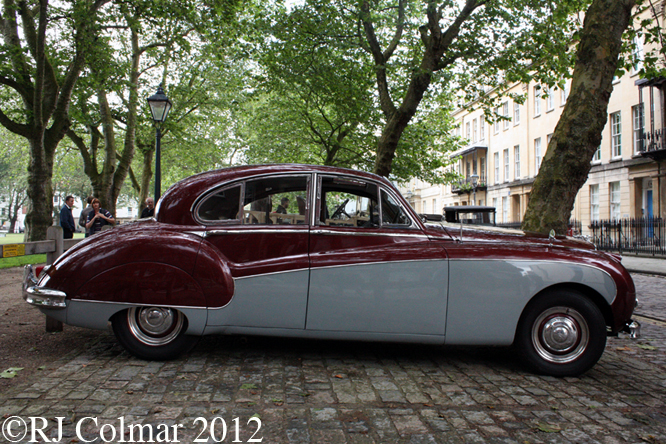
Personifying the gentrification of Bristol’s Queens Square was this elegant 1958 Jaguar MkIII, the car is powered by the same 190 hp motor as used in the Jaguar XK140 launched two years earlier.

Volvo 121, Avenue Drivers Club, Bristol

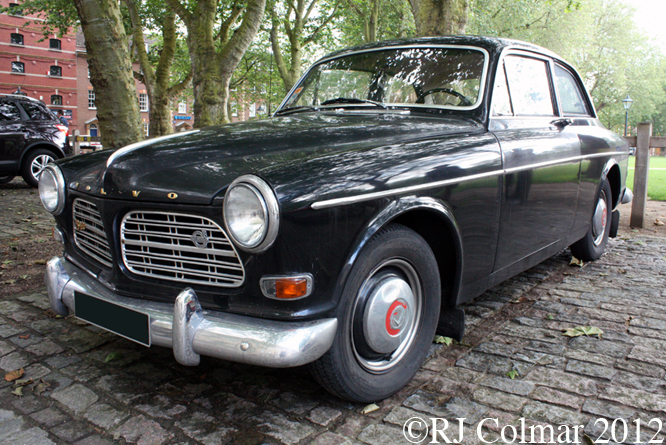
Finally I had a long chat with Rich who owns the 1963 Volvo 121 above and his friend Matt, turns out they spotted this left hooker on the internet and then went to Sweden to go and get it. Their journey back through Germany was enlivened by a perished connection between the steering shafts. Rich has all the original documentation for his pride and joy and reckons it has covered over 300,000 kilometers about 240,000 miles.

Thanks for joining me on this “Coffee, Croissant and Cars” edition of “Gettin’ a li’l psycho on tyres”, I hope you will join me again tomorrow. Don’t forget to come back now !
Share