Tag Archives: Ford

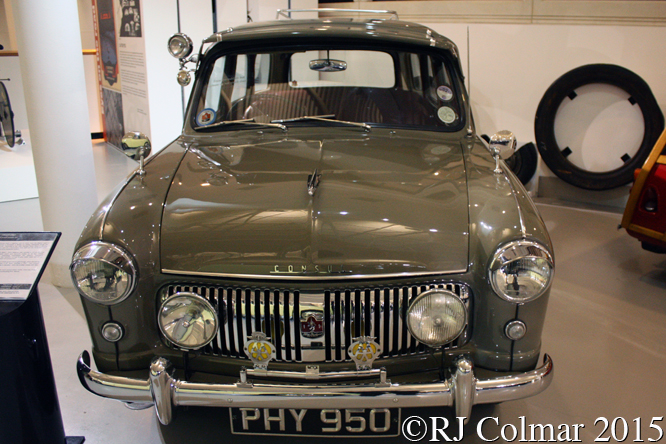
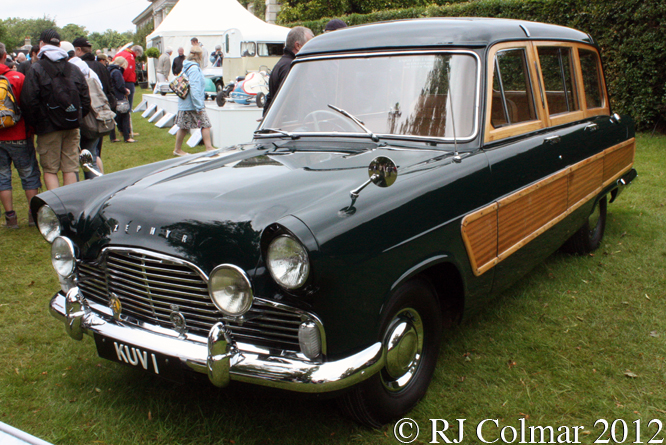
Queens Abbott – Ford Zephyr 6 Abbott Estate

Former Wolseley designer Edward Dixon Abbott turned his attention to coach building after taking over Page and Hunt based in Farnham in 1929. His company Abbott’s of Farnham building bespoke for a range of manufacturers chassis including Bentley, Bristol, Frazer Nash, Healey, Lagonda, Rolls Royce, Sunbeam Talbot and even a one off Ferrari 212 Export, but it is Abbott’s bodies on Ford estate cars, after the ’39-’45 war, which were probably the most accessible.

In 1956 Ford launched the Mk II Consul, Zephyr and Zodiac models which became known as the 3 Graces.

Ford Zephyr 6 Abbott Estate, Goodwood Festival of Speed,

The same year Her Majesty Queen Elizabeth II took delivery of today’s featured one off Zephyr 6 wagon, which I believe was converted by Abbott’s.

The vehicle with an extra tall roof unusually seats nine and was primarily used for ferrying guests and their luggage around the Queens holiday residence the Sandringham Estate not far from The Royal Stud.

Notice how the wiper blades are set up to give the passenger the best view of the road ahead in inclement weather, I wondered if that was because HRH preferred to let Prince Philip drive, however it seems this odd feature was carried over from the Mk I Ford Consul, Zephyr and Zodiac models to all of the Mk II Consul, Zephyr and Zodiac variants.

Thanks for joining me on this “Queen’s Abbott” edition of “Gettin’ a li’l psycho on tyres” I hope you will join me again tomorrow. Don’t forget to come back now !

Share

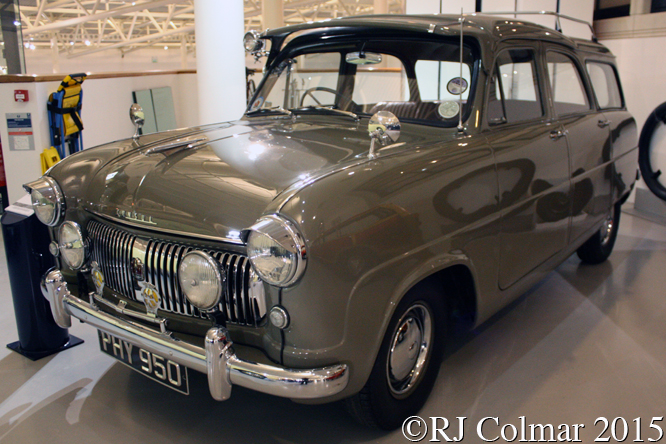
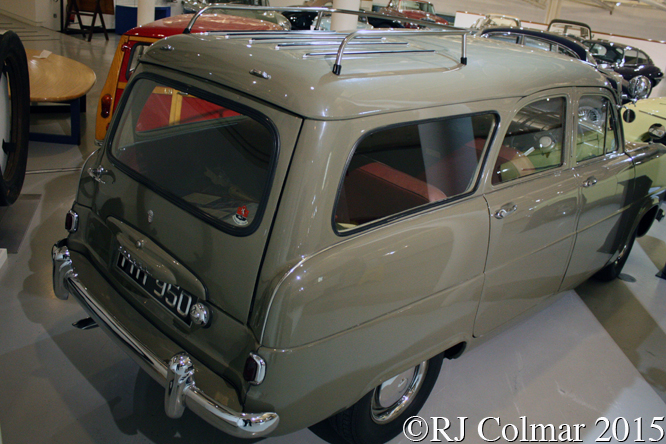
Trimmed in PVC – Ford Consul Mk1 Abbot Estate

The Ford Consul was the base model of Fords large British cars that replaced the V8 Pilot and included the Zodiak and Zephyr 6 models.

Ford Consul Mk1 Abbot Estate, The Heritage Motor Centre, Gaydon

The Consul included a host of modern features that included unitary monocoque body shell, and independent front MacPherson strut suspension, hydraulic clutch and hydraulic brakes on all four 13″ wheels and a curved one piece windscreen that reduced glare from on coming traffic.

Ford Consul Mk1 Abbot Estate, The Heritage Motor Centre, Gaydon

Inside the stylish George Walker designed body was a three speed column shift and full width bench seats front and rear that were trimmed in the latest easy to clean PVC.

Ford Consul Mk1 Abbot Estate, The Heritage Motor Centre, Gaydon

Three body styles were available for the original consul saloon / sedan, convertible with manually operated roof contracted out to Carbodies in Coventry and Estate / Wagon contracted out to Abbots in Farnham.

With a top speed of 72 mph and a rest to 60 mph time of 28 seconds the 1.5 / 91.5 cui 4 cylinder Consul Mk1 first seen in October 1950 remained in production until 1956, the example seen here at the The Heritage Motor Centre, Gaydon was first registered on the 19th of March 1953 and is shown as having a 1.7 litre engine fitted which probably came from a later Mk2 Consul.

Thanks for joining me on this “Trimmed in PVC” edition of “Gettin’ a li’l psycho on tyres” I hope you will join me again tomorrow. Don’t forget to come back now !

Share

Hertfordshire County Auto & Aero Club Autumn Sprint- Debden Airfield

At the beginning of October I received an e-mail asking for volunteers to marshal at the Hertfordshire County Auto & Aero Club, Autumn Sprint being run at Debden Airfield in Essex, a couple of days later I received a request to attend an interview in Scunthorpe and proposed to the Clerk of the course Pete Walters that if he could find me somewhere to stay on the night after the event I would be delighted to go up from Bristol to help out.

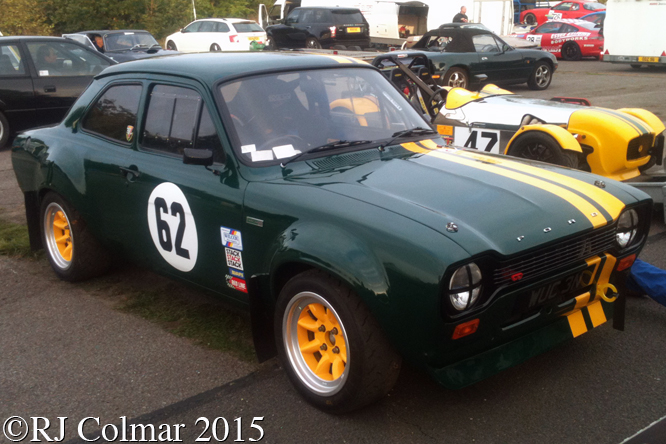
Ford Escort RS1600_6187sc

Lionel Reeves kindly stepped forward to offer me accommodation and so off I trekked to Debden the day after the Autumn Classic at Castle Combe. Hertfordshire County Auto & Aero Club established in 1903, the year the Wright Brothers made their first powered flight, is one of the oldest in the county, the Aero refers to the sport of ballooning. Among the random selection of cars I photographed is the immaculate 1974 #62 Ford Escort which finished 3rd in class B10 driven by Howard Lester.

Leyland Mini Clubman, Julian Kirwan, Hertfordshire County Auto & Aero Club, Autumn Sprint, Debden Airfield, Essex

Julian Kirwan finished second in Class A3 driving the 1970 #16 Mini Clubman with a 1400 cc / 85.4 cui engine.

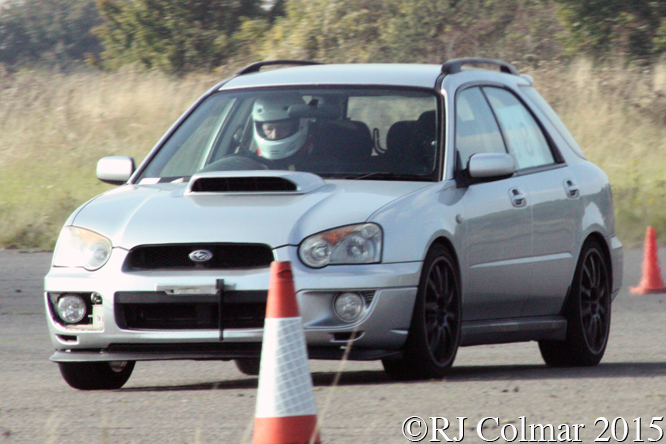
Subaru Impreza WRX Turbo Hatchback, Tim Morrison, Hertfordshire County Auto & Aero Club, Autumn Sprint, Debden Airfield, Essex

Flying the flag for Estates / Wagons was Tim Morrison driving his 2003 #38 Subaru Impreza WRX Turbo Hatchback, who was classified 3rd in class A6.

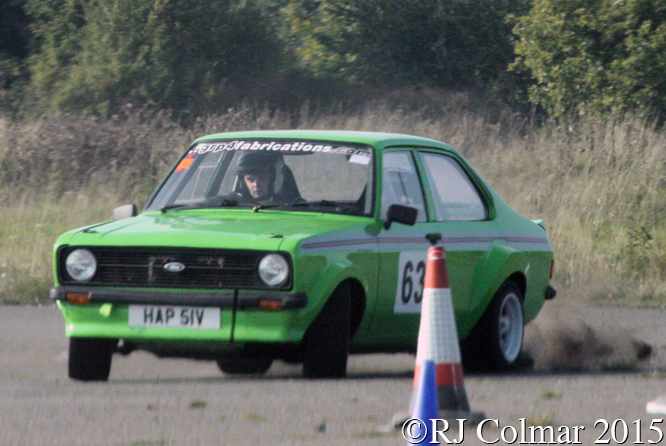
Ford Escort 1300 GL Auto, Charlie French, Hertfordshire County Auto & Aero Club, Autumn Sprint, Debden Airfield, Essex

Kicking up the dust above in his #63 Ford Escort Mk2, which I believe has been modified from it’s original 1980 1300 GL Auto spec, is Charlie French who finished 4th in class.

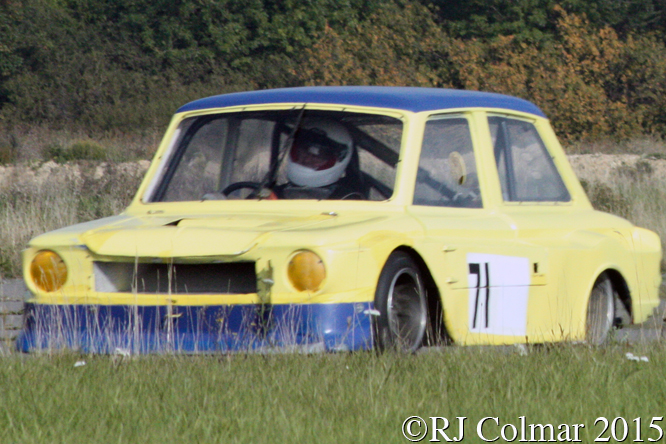
Davrian Imp Saloon, John Webster,Hertfordshire County Auto & Aero Club, Autumn Sprint, Debden Airfield, Essex

I’m looking forward to finding out about the history of John Websters #71 Davrian Imp Saloon in the fullness of time, on this occasion he finished second in Class C12.

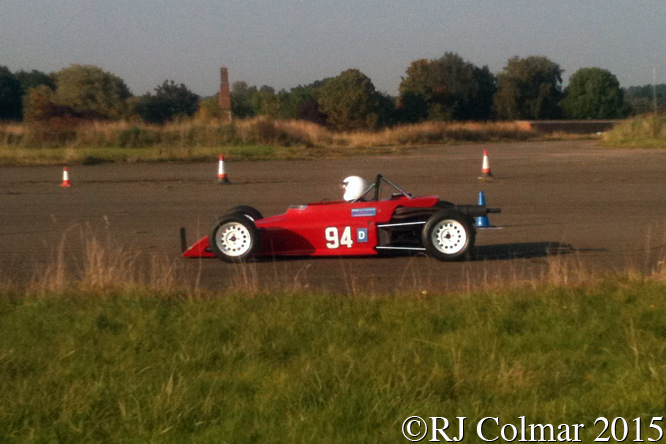
Merlyn Mk 30, Colin Glass, Hertfordshire County Auto & Aero Club, Autumn Sprint, Debden Airfield, Essex

Finally Colin Glass won class D16 in his Merlyn Formula Ford with what I believe is 1977 Mk 30 bodywork, fastest time of the day was set by Tony Beesley in his 1 litre / 61 cui Jedi Mk 4.

My thanks to everyone at the Hertfordshire County Auto & Aero Club who made me feel most welcome and especially Lionel and Margret Reeves for their hospitality.

Thanks for joining me on this “Hertfordshire County Auto & Aero Club Autumn Sprint” edition of “Gettin’ a li’l psycho on tyres” I hope you will join me again tomorrow when I’ll be looking at a Talbot Matra. Don’t forget to come back now !

Share

Reflecting Good Taste – Lincoln Capri

From 1952 to 1959 Lincoln manufactured the Capri with 4 door sedan, 2 door coupé and 2 door convertible bodies only the first generation was manufactured from 1952 to 1955 the second from 1956 to 1957 and the third and final generation from 1958 to 1959.

Lincoln Capri, Hillsborough Concours d'Elegance

Powered by the all new 160hp 5.2 litre / 317 cui Lincoln Y-block that replaced the flat heads in all Lincoln’s in 1952 the Capri when tested by Popular Mechanics reached 60mph from rest in 14.8 seconds, covered the 1/4 mile in 21.3 seconds and recorded fuel consumption of 21 mpg at an average speed of 40mph.

Lincoln Capri, Hillsborough Concours d'Elegance

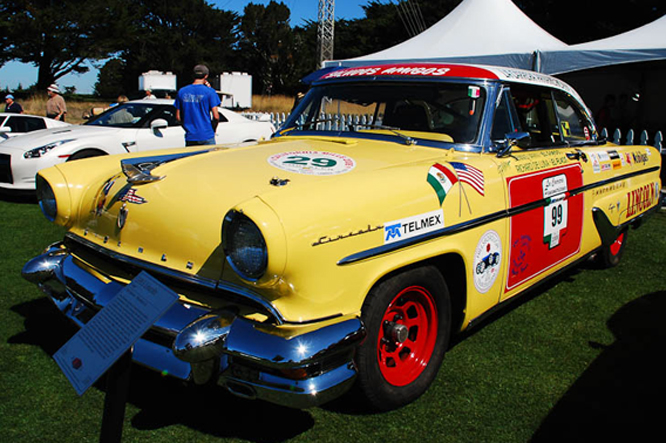
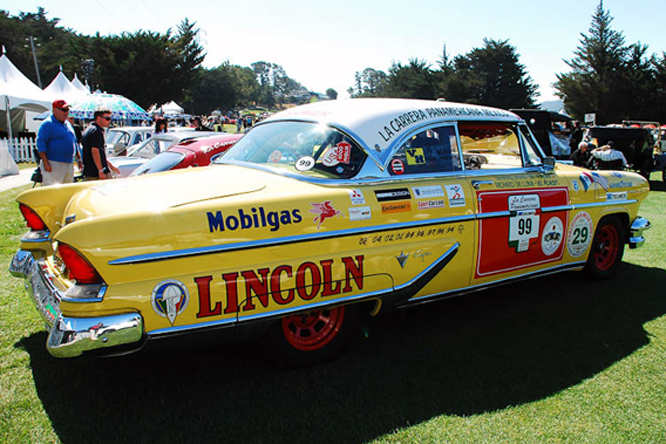
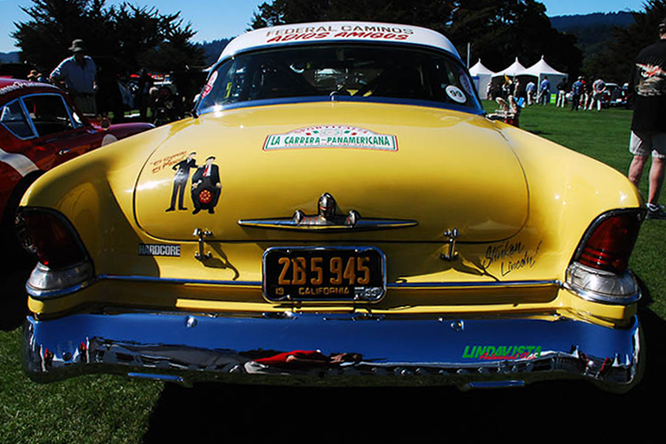
To mark the Capri out from it’s competitors like the Cadillac 62 series, Chrysler New Yorker and Packard 400 teams of Lincolns were entered in the last three Carrera Panamericana races that saw them win the Tourismo Internacional class on each occasion with Chuck Stevenson and Clay Smith finishing 7th overall in 1952 and 1953 while Ray Crawford and Enrique Iglesias finished 9th overall to claim class honours in 1954.

Lincoln Capri, Hillsborough Concours d'Elegance

With the strap line “Everything about Lincoln reflects good taste” the 1955 Capri was offered with a 225hp 5.6 litre / 341 cui Y-block atop which sat a 4 barrel carburetor.

Lincoln Capri, Hillsborough Concours d'Elegance

There was no Carrera Panamericana for the more powerful Lincoln Capri to prove itself as a result of the 1955 disaster at Le Mans and so far as I know the model was never seen in contemporary competition again.

Lincoln Capri, Hillsborough Concours d'Elegance

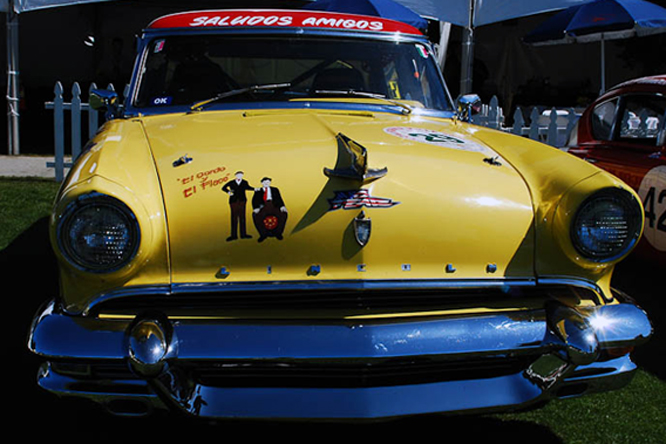
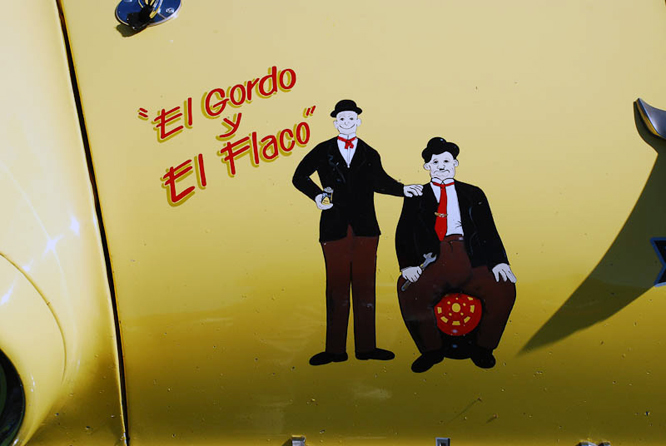
Today’s featured 1955 Lincoln Capri owned by Dick “El Flaco” de Luna was competition prepared by Dennis “El Gordo” Varni who fitted a modern 425hp 5 litre / 302 cui Ford V8 and all modern safety and handling equipment to the car which is now said to handle like a 4000 lb Porsche. The duo have competed on numerous resurrections of the Carrera Panamericana winning outright in 1999 alongside numerous class awards.

My thanks to Geoffrey Horton for sharing these photograph’s taken at Hillsborough Concours d’Elegance in 2011.

Thanks for joining me on this “Reflecting Good Taste” edition of “Gettin’ a li’l psycho on tyres” I hope you will join me again tomorrow when I’ll be looking at a Ferrari that competed on the Carerra Panamericana in 1952 and 1953. Don’t forget to come back now !

Share

Scottish Hillclimb Champion – Chevron Holbay B17 #F3.70.08

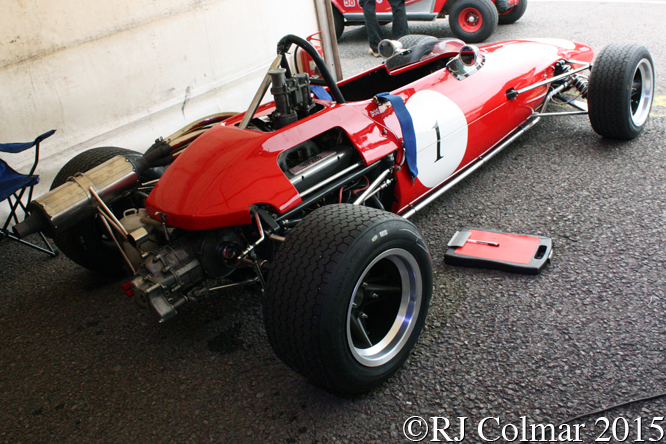
1967 Chevron started building cars with 1 litre / 61. cui “Screamer” motors to comply with the tertiary international Formula 3 regulations.

The manufacturers first Formula 3 model was the one off B7 driven by Peter Gethin towards the end of 1967, this was followed by a batch of 8 production versions of the B7 built in 1968 known as B9’s
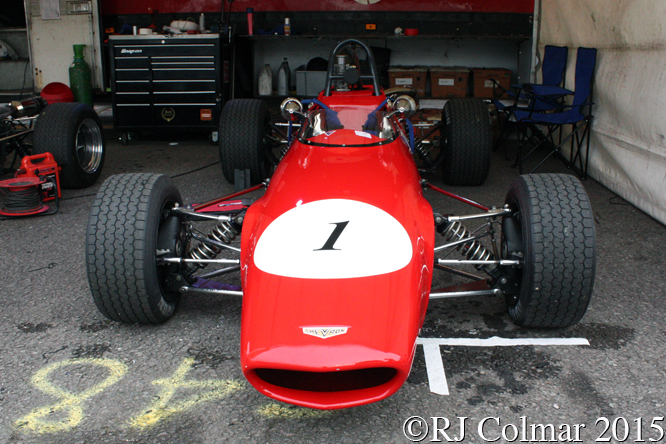
Chevron Novamotor B17, Grand Finals, Castle Combe,

A one off B9B with stressed panels incorporated into the frame was built at the end of 1968 and again raced by Peter Gethin who drove the car to a debut win.

The following year Chevron built 14 production versions of the B9B known as the B15 and in 1970 9 upgraded Formula 3 cars followed known as B17’s.
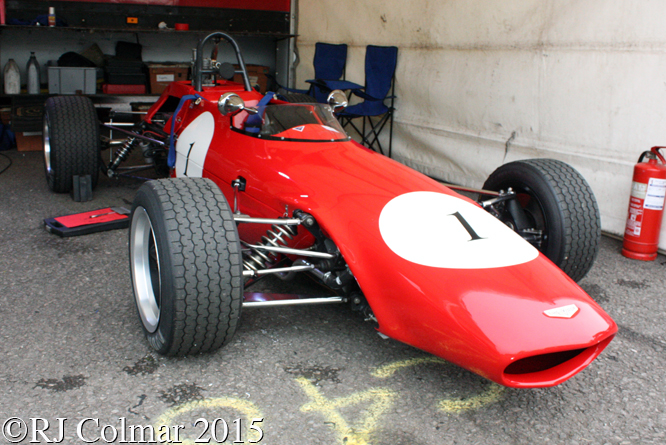
Chevron Novamotor B17, Grand Finals, Castle Combe,

I believe today’s featured car seen in these photographs at the recent Grand Finals Castle Combe meeting where it was driven by Jim Blockley is the same car as that advertised by David Pullen in October 2013.

Distinguishing features include the one piece top body work from the back of the cockpit to the nose, the exhaust, and the universal joint with sliding spline driveshafts in place of the more common for the period Rotoflex driveshaft couplings.
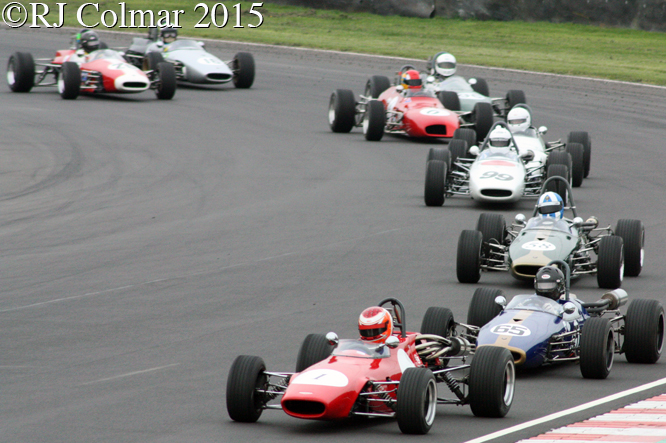
Chevron Novamotor B17, Jim Blockley, Grand Finals, Castle Combe,

According to former Derek Bennett Engineering employee Kevin ‘Ossy’ Hodge, who was involved in building nearly all the B17’s, the car formerly belonging to David Pullen is the eighth Formula 3 B17 to be built and was originally supplied to Ken Sedgley.

Kevin also established recently that unlike Chevron’s GT’s chassis frames for the B8, B16 and later B19 models which were built by sub contractor Arch Motors the frames for the open wheelers were subcontracted out to Racing Frames in Ware, Hertfordshire.
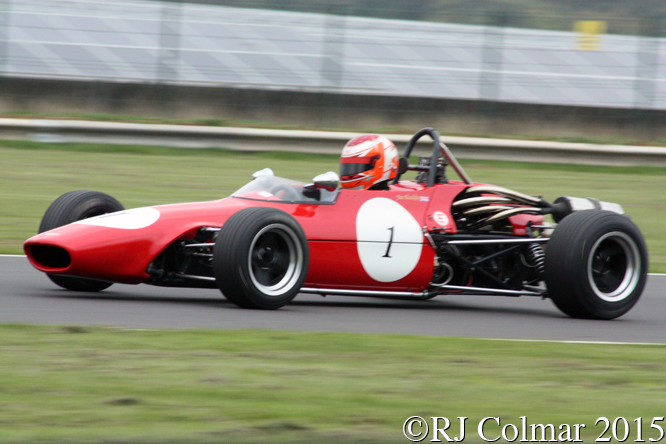
Chevron Novamotor B17, Jim Blockley, Grand Finals, Castle Combe,

In his notes on Ken Sedgley’s B17, see note 13 on this link, Allen Brown records that #F3.70.08 was raced by Ken in Formula 3 and Libre events with Holbay motors and upgraded the following year with a 1600 cc / 97 cui Holbay motor compliant with the new for 1971 spec Formula 3.

John Finch of Chesterfield bought and raced the car midway through 1971 and shared it with Graham Lynch in 1972, the following year a Formula Atlantic Spec production based twin cam was fitted and the car was raced in both Formula Atlantic and Formula Libre events.
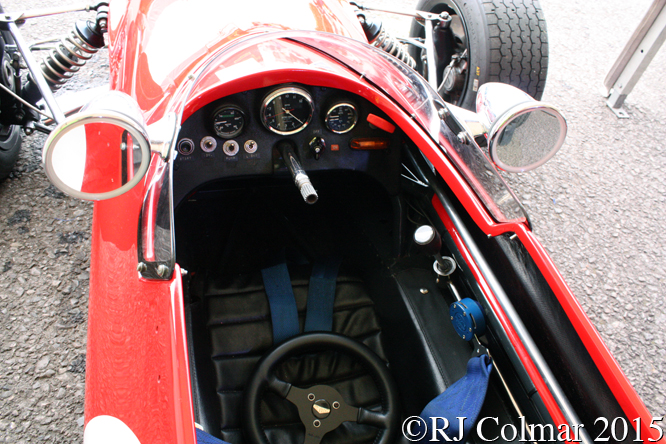
Chevron Novamotor B17, Grand Finals, Castle Combe,

Alan Thompson bought the car for hillclimbing campaigning it in 1975 and 1976 which culminated in him securing the 1976 Scottish Hillclimb Championship.

Russell Paterson acquired the car in 1977 but crashed it before it passed through the hands of Bobby Howlings and M Wakefield-Brand in 1978.
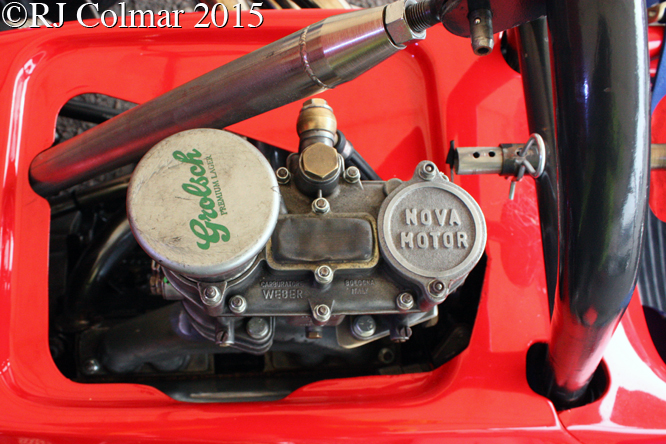
Chevron Novamotor B17, Grand Finals, Castle Combe,

David Pullen bought the car in 1991 and in the spring of 2009 the car was significantly rebuilt with a 1964 to 1970 F3 spec 1 litre / 61 cui Holbay R70 MAE engine rebuilt by Stuart Rolt and Mk8 Hewland 4 speed gearbox by Cavan Riley.

John Pearson raced this car in 2014 prior to selling it to Jim Blockley who raced a Brabham in Historic Formula 3 events up until appearing in the Chevron at Castle Combe.
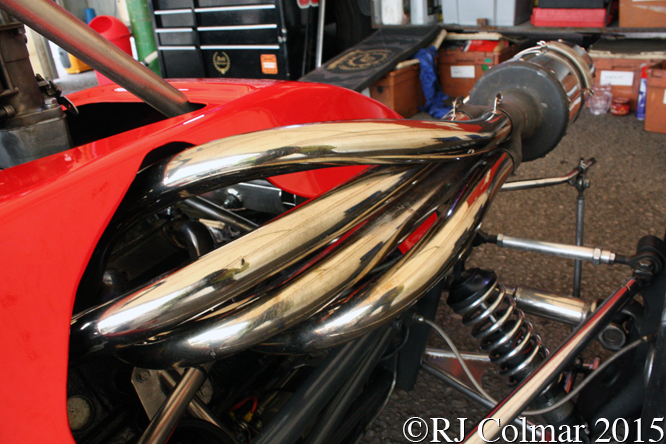
Chevron Novamotor B17, Grand Finals, Castle Combe,

The 1964 to 1970 Formula 3 engine specs required the use of a production engine block and a single choke carburetor fitted with a 36mm restrictor twixt the carburetor and inlet manifold.

The cylinder heads were free to be modified with gear driven cams replacing cam chains and dry sump lubrication for the crankshaft, the 1 litre / 61 cui Formula 3 motor’s were known as “screamers” because they could occasionally be buzzed up to 13,000 rpm with little or no damage.
Chevron Novamotor B17, Grand Finals, Castle Combe,

By far the most popular blocks used in the “Screamer” formula were the three crank bearing 105E and 109E blocks from Ford, Cosworth built a Modified Anglia Engine known as the “MAE” based on 105E but the term “MAE” appears to have carried over onto products for the same market from both Holbay and Novamotor who also used Ford 3 bearing engine blocks.

It was soon realised that the least resistance to flow was offered by a twin choke Weber IDA down draught carburetor with a blanked off choke, for which special inlet manifolds were built to fit engines that were tilted over at 30 degrees along the crankshaft axis in the chassis.

My thanks to all who contributed to the B17 thread at TenTenths and to the Ford 105E thread at The Nostalgia Forum especially Snakedriver, Ray Bell, John Saunders and David Birchall who kindly answered my question regarding the use of the blanked off twin choke carburetors.

Thanks for joining me on this “Scottish Hillclimb Champion” edition of “Gettin’ a li’l psycho on tyres” I hope you will join me again tomorrow. Don’t forget to come back now !
Share

Ak’s Iron Horse – Caballo de Hiero

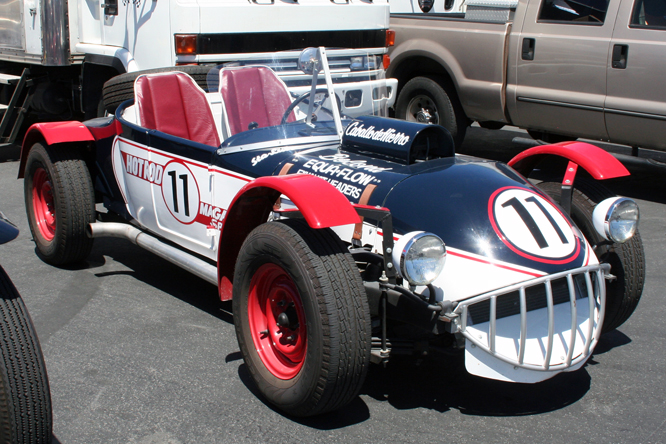
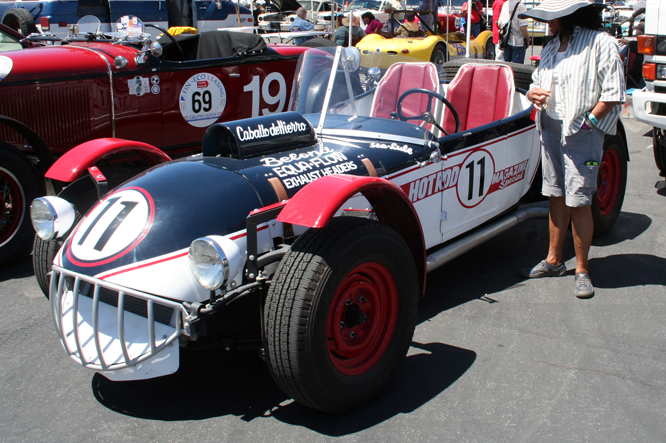
When Zeke and Larry Miller needed someone to keep the four-banger Chevy roadster they had just built from running into the back of their daily driver as they towed it on the end of a chain up to Muroc Dry Lake they nominated their younger kid brother Akton, born in 1920, to take the drivers seat and act as brake man for the 100 mile journey to the frozen lake.

When the three Danish born brothers got their Ak was surprised to be offered the drive and set a 94mph time as a career in speed got kicked started that would see Ak become a founding member of the Road Runners car club in 1937, from which he was later ejected for refusing to bow to the flathead Ford Hot Rodders dogma by building and running a straight eight Buick in his Chevy, President of the Southern California Timing Association, SCTA, and one of the founding officers of the National Hot Rod Association, NHRA, in 1951.

Caballo de Hiero, Rolex Monterey Motorsports Reunion, Laguna Seca,

While transforming countless Southern California ragamuffins enthusiasm into a recognized sport of which he became the acceptable face in a blazer and tie, he built and ran a variety of vehicles to compete on the lakes, 1/4 mile, road racing and Pikes Peak.

Today’s featured Caballo de Hiero was built using an Oldsmobile V8 in a Ford frame to compete in the Carrera Panamericana in 1953, Ak drove the car with Doug Harrison in the passenger seat and came home a respectable 14th overall and 8th in class that included sophisticated Ferrari’s and Talbot Lago’s .

Caballo de Hiero, Rolex Monterey Motorsports Reunion, Laguna Seca,

The following year the hot rodding duo came in an even better seventh overall and 5th in class, they had hoped to return in 1955 but the race was cancelled in the wake of the disaster at Le Mans.

Ak and Doug had a crack at the Mille Miglia in 1957 with an all new El Caballo II but retired and Ak then moved onto competing at Pikes Peak, with a Chevy powered chassis of his own design with a Devin body, where he won his class on his debut which would be the first of eight class victories over 20 years.

On his 71st birthday Ak joined the 200 mph club at Bonneville, a speed event he helped found in 1949, driving a 225mph Crosley coupé built by his long time business partner Jack Lufkin and Ron Benham that was owned by Earl Wooden.

My thanks to Geoffrey Horton who kindly asked Karl Krause to take these photo’s at Rolex Monterey Motorsports Reunion held at Laguna Seca a couple of month’s ago.

Thanks for joining me on this “Ak’s Iron Horse” edition of “Gettin’ a li’l psycho on tyres” I hope you will join me again tomorrow for Ferrari Friday. Don’t forget to come back now !

Share

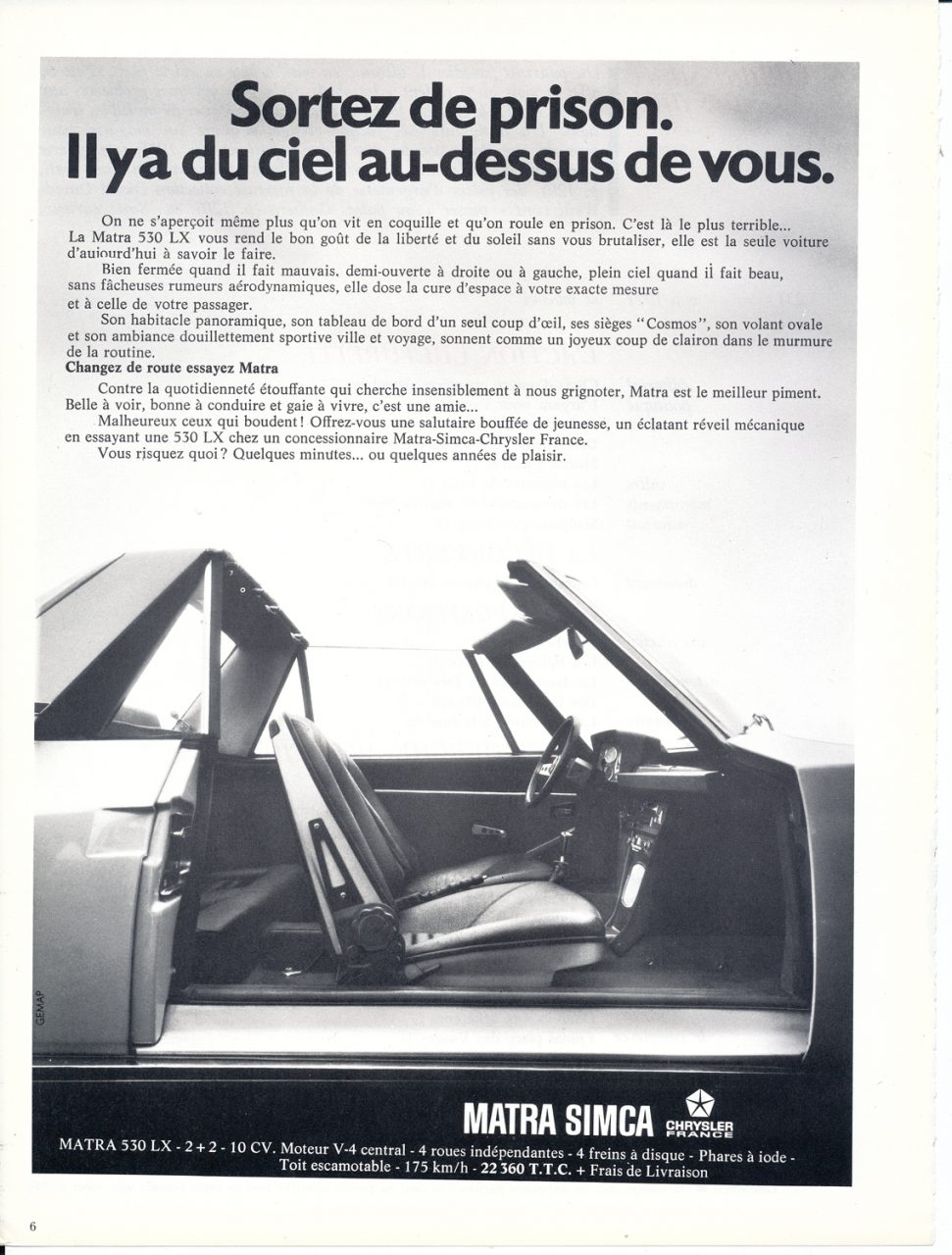
Voiture Des Copains – Matra Simca 530LX

In 1967 Matra replaced it’s René Bonnet inspired Djet model with the 530 an all new mid engined 2+2 deigned by Philippe Guédon who had previously worked for Simca.

Conceived as the car for buddies, Voiture Des Copains, the 2+2 with pop up lights and a targa top was powered by a German sourced 70hp V4 Ford accessed by through the rear window.

While the engines and drive train were built in Germany the steel back bone chassis were built by Carrier in Alençon, Normandy and assembly was completed 150 miles away by French coach builder Brissonneau et Lotz at Creil in Picardy.

Matra Simca 530LX

In 1969 the 530 was upgraded with the engine now producing 75hp and a deal was done with Chrysler Europe to distribute the Ford powered cars through their Simca network from 1970 and to work on a joint replacement.

Production of all but the motor and drive train for the 530 was also brought together under the single roof of the Matra Automobiles facility at Romorantin in the Loire Valley around this time.

Giovanni Michelotti was responsible for minor styling upgrades to the 530 which became the 530LX in 1970 these included replacing the acrylic glass removable rear window with a glass hatch held open with gas struts and the removal of a nudge bar from the front bumper.

Matra Simca 530LX

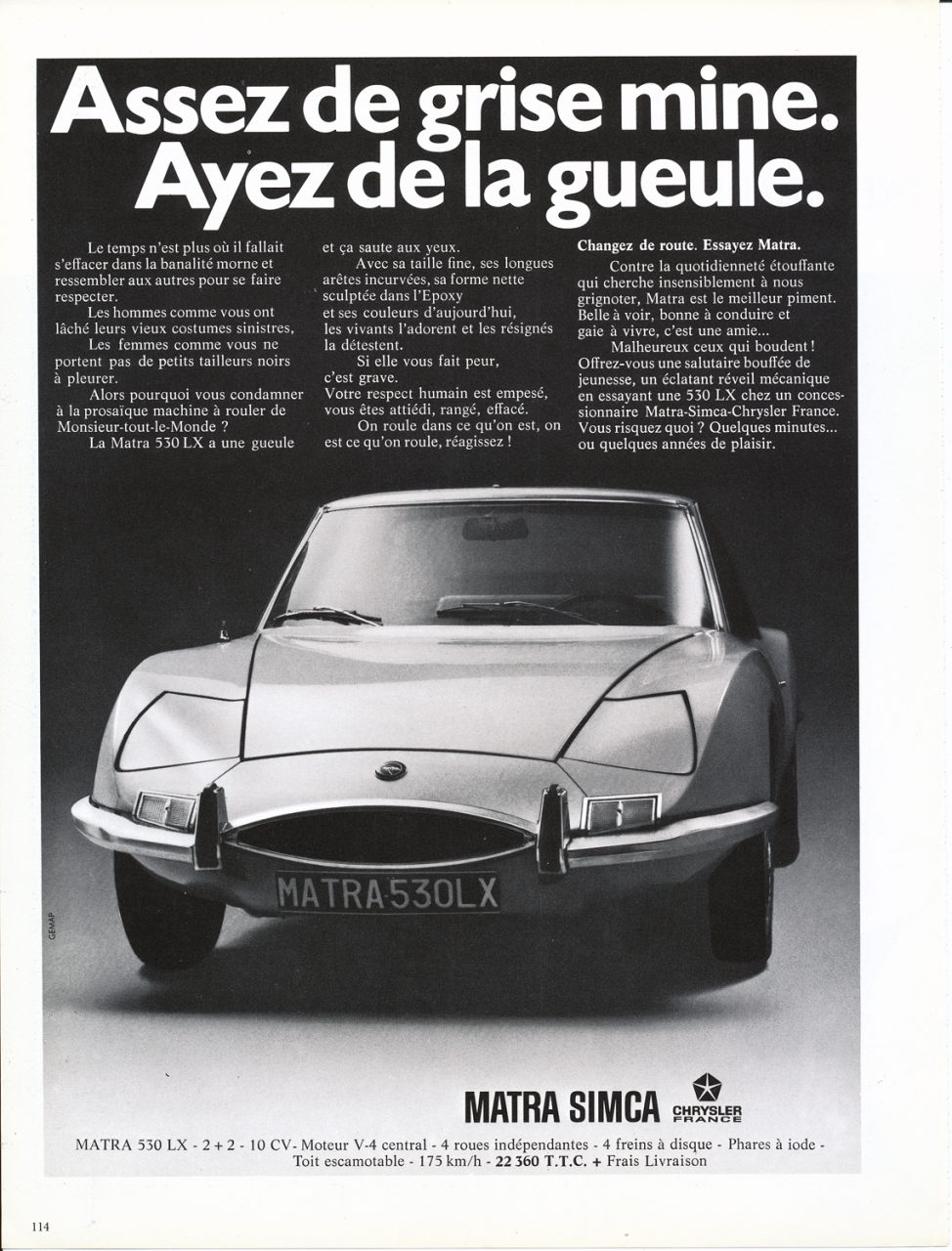
These 530LX ads found in the French journal “Connaissance des arts” date from March and May 1971 respectively five months before the introduction of the budget black bumper, orange or white only 530SX which had the targa top and pop up headlights deleted.

The under powered 530’s competitors included the Lotus Elan +2 and Porsche 912 which were both more expensive and the cheaper MG B GT.

9,609 530s, 2,062 530As, 4,731 530LXs and 1,146 530SX’s were built by the time production ceased in 1973.

Thanks for joining me on this “Voiture Des Copains” edition of “Gettin’ a li’l psycho on tyres” I hope you will join me again tomorrow. Don’t forget to come back now !

Share