Tag Archives: GALPOT

Dick Mayo Sprint – Castle Combe

Another weekend another hectic schedule, on Saturday I spent the day marshaling at Castle Combe for the Dick Mayo Sprint run by the Bristol Motor Club (BMC), returning a favour when Zoe Tooth of the BMC kindly sat took the passenger seat when I tried to defend my Cross Trophy some months ago.

I was paired up with Richard, a new BMC member, to look after the marshals post on the inside of Old Paddock Bend on what turned out to be a windy but mercifully mostly dry day. Since I was the senior marshal on the post with a novice and there was only two of us, there was no opportunity to ‘stand down’ and take any photo’s of the on track action. During the lunch break, after a delicious sweet and sour pork with rice and chips, I managed to make a quick tour of the paddock to take a few snaps with my mobile phone.
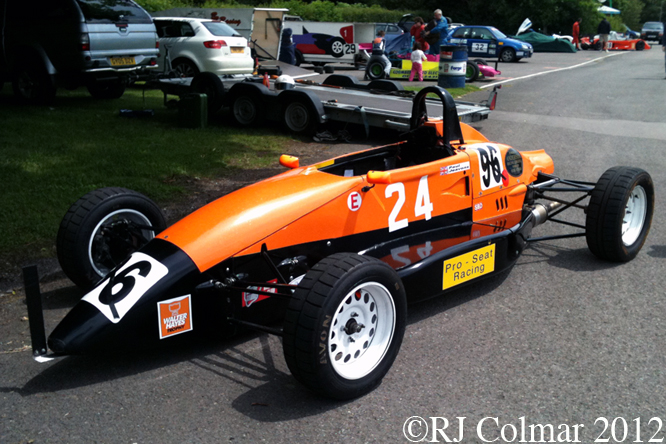
RAY GR095, Dick Mayo Sprint, Castle Combe

Of the open wheelers only the Formula Ford spec #24 RAY GR095 of Paul Jevons was not covered against the elements, given that Pauls Ray was the only open wheeler running on treaded tyres, without any aerodynamic down force and probably the least horsepower it is perhaps not surprising he finished last in the F2 Racing Car Class.
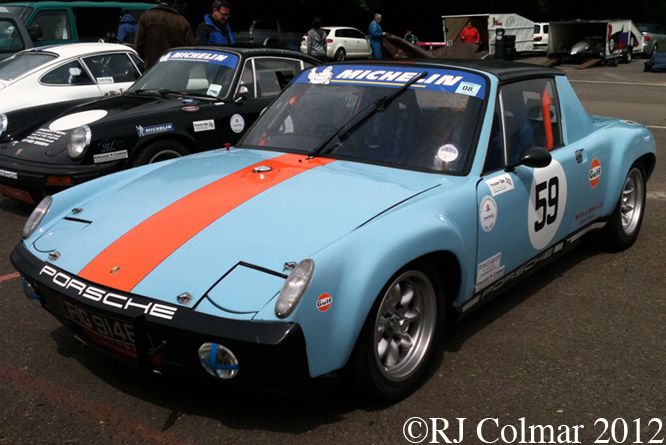
Porsche 914/6, Dick Mayo Sprint, Castle Combe

Porsche Club GB were present in force at the Dick Mayo Sprint the stand out example of the marque being the #59 Porsche 914/6 belonging to Wayne Eason running a 3 litre / 183 cui flat 6 in the 161 to 205 bhp class, despite what ought to be superior handling of it’s mid engine layout Wayne’s 914/6 was beaten by the two rear engine 911 variants running in his class.
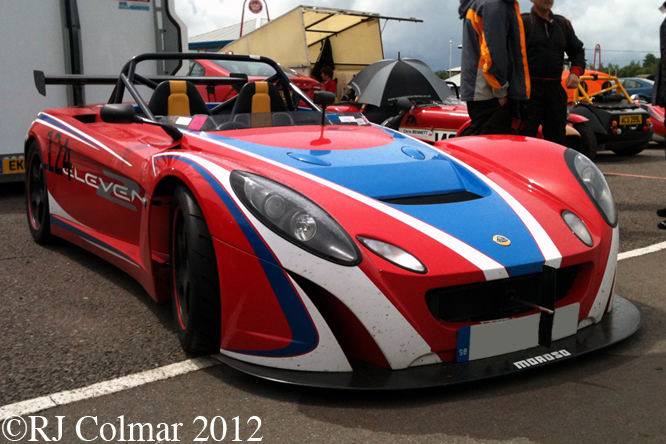
Lotus 2-Eleven, Dick Mayo Sprint, Castle Combe

Amongst many Caterham 7’s and Lotus Elise variations the whistling supercharged, Lotus 2-Eleven track day car of fellow Bristol Pegasus Motor Club (BPMC) member James Spear stood out out as a novelty, James came third in the 12 strong Road Going Specialist Production Cars Class behind a Noble and a Westfield (Caterhan 7 look a like).
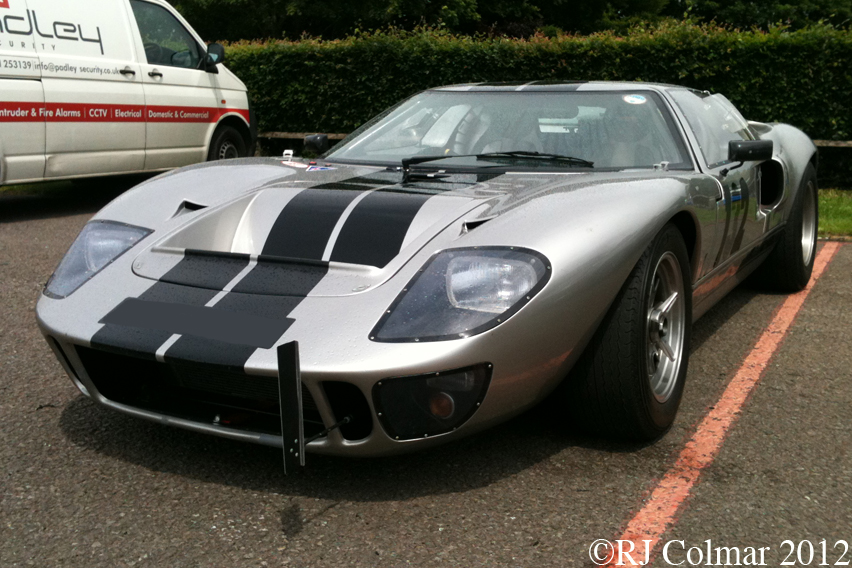
GTD, Dick Mayo Sprint, Castle Combe

Running in the same class and coming 5th, as James, was yet another fellow BPMC member Julian West in his #132 GTD manufactured by GT Developments in Poole Dorset and not to be confused with the Tornado TSC GT40 replicas which are built in Kidderminster.
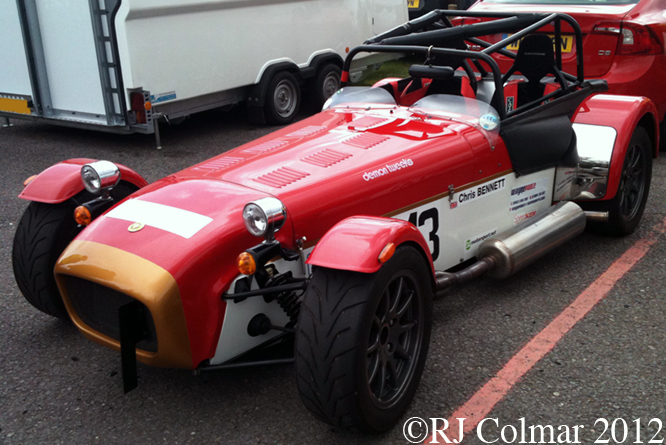
Caterham Roadsport, Dick Mayo Sprint, Castle Combe

The Gold Leaf Team Lotus tribute liveried #143 Caterham 7 Roadsport, above, of Chris Bennet came in 5th in the smaller capacity Road Going Specialist Production Cars Class.
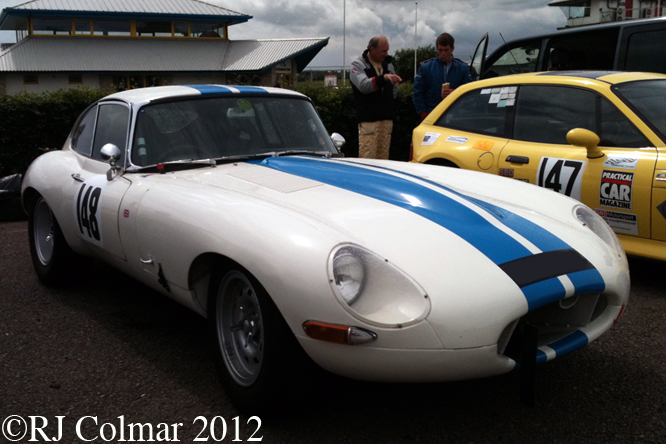
Jaguar E-Type, Dick Mayo Sprint, Castle Combe

Porsche Club GB member Paul Kenelly ran his 1962 #148 Jaguar E-type coupé in the largest engine capacity class of the four Roadgoing Series Production classes finishing with the 9th best time from 10 in his class.
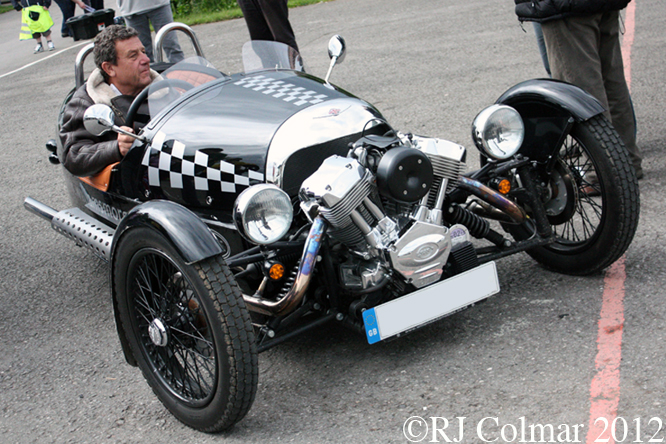
Morgan 3 Wheeler, Dick Mayo Sprint, Castle Combe

Terry Graves driving a Gould managed to record fastest time of the day, as the final runners came out rain made the track so damp the last competitor manged a time that was a full minute and more slower than the best time of the day, ironically by the time Richard and I had put our extinguishers out on the track ready for collection and jumped in his Subaru and returned to the paddock the sun was out and the track was dry ! Above the Morgan 3 wheeler drew a lot of attention in the paddock as it arrived to be put on show for the following days BMC Family Clubs Day, which I will feature next Sunday.

Thanks for joining me on this “Dick Mayo Sprint” edition of “Gettin’ a li’l psycho on tyres” I hope you will join me again tomorrow. Don’t forget to come back now !

Share

Double Twelve – Brooklands

Last Sunday I was spoiled for choice of interesting events to attend and opted for going to Brooklands where the Double Twelve event was billed as the biggest motoring competition held at the World’s oldest circuit since 1939. Unfortunately I missed the speed trials which were held on Saturday but I did catch the Driving Concours on Sunday.

Hupmobile Eight, Brooklands Double Twelve

As ever, when I visit Brooklands,I probably learned more on Sunday than I had forgotten in a life time. Among many cars I had either never seen let alone heard of was this Hupmobile Eight in the car park.

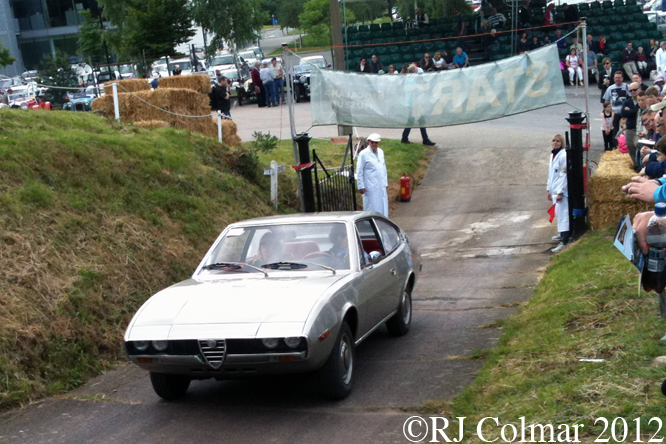
ALFA Romeo, 1750 Berlinetta Prototype, Brooklands, Double Twelve

This ALFA Romeo, looks like a anorexic “Montreal” but in fact is a 1968 “1750 Berlinetta” a road registered prototype driven here by Corrado Lopresto, one of several ALFA Romeo Prototypes present and one of numerous cars that had been brought over from Italy for the Double 12.

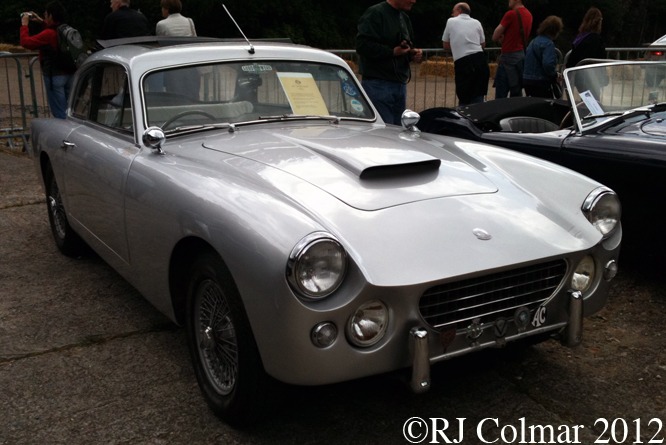
AC Bristol, Greyhound, Brooklands, Double Twelve

A Bristol powered AC Greyound cost 25% more than a Shelby American Cobra when it was manufactured, this 1963 example is one of 82 built between 1958 and 1964 and features a sunroof fitted new by the Allard Motor Company.

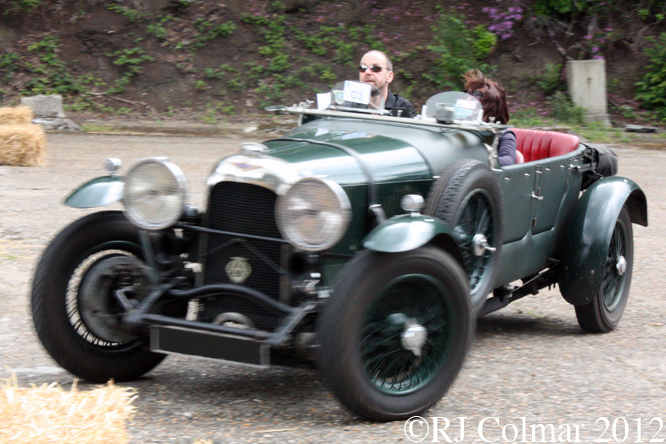
Lagonda 2 litre, Brooklands, Double Twelve

Martin Tinsley driving the 1932 2 litre Lagonda, above, demonstrates it’s impressive turning circle on one of the driving tests.

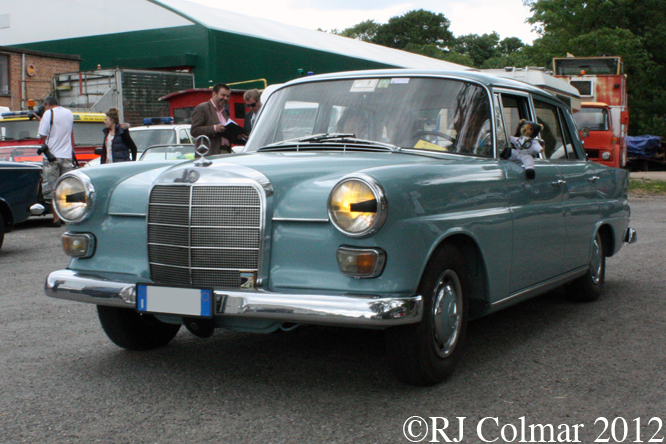
Mercedes Benz, 230, Brooklands, Double Twelve

Another vehicle that had come all the way from Italy was the Mercedes 230, above, driven by Massimo Delbo who won the Mercedes Benz Pre and Post War Sports and Touring Cars class of the Driving Concours.

Hotchkiss Brandt M201 JEEP, Brooklands, Double Twelve

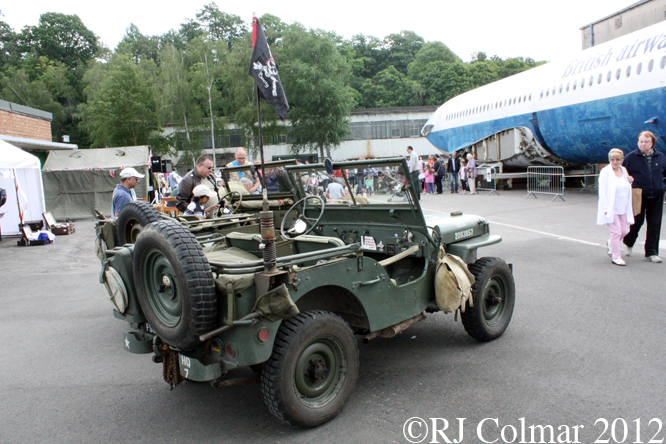
Looks like a Willy’s JEEP from the good ol’ USA and was billed as a WWII Jeep, but in fact this M201 was built under license by Hotchkiss Brandt in 1957 for a contract from the French Military. If you would like to own this vehicle it is the prize in a Raffle organised by the War and Peace Show more details on this link. I now have tickets to win a Morgan, a Triumph and a JEEP, one day I just have to get lucky !

Lotus 61, Brooklands, Double Twelve

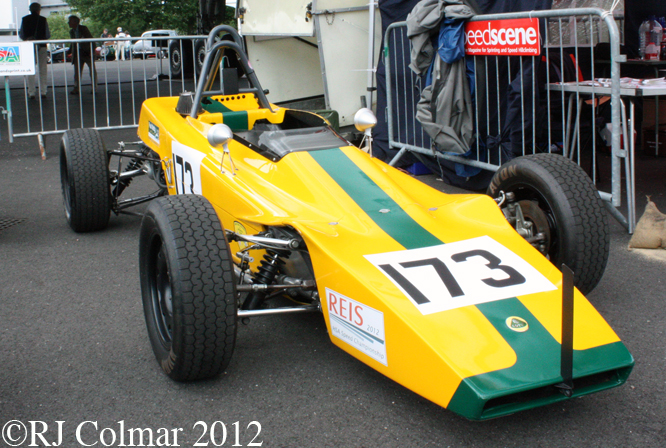
The first time I took a photo of Les Buck’s Lotus 61 it was tipping down at Prescott the photo was so blurry all I could make out was that the car was yellow and green. Les told me he plans to be out at Prescott today so weather permitting I’ll have a second crack at getting a photo of the car in action.

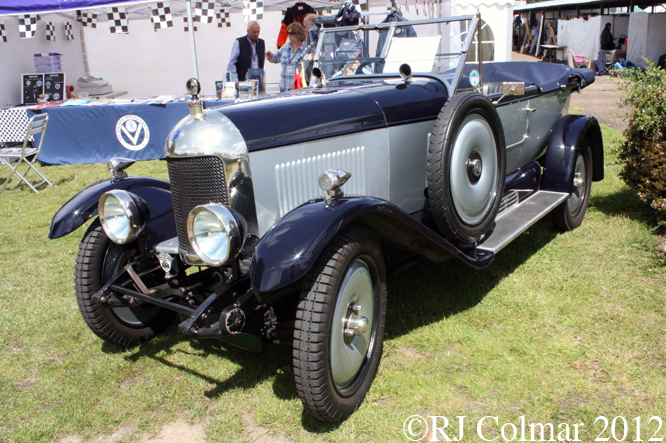
MG Super Sport, Brooklands, Double Twelve

With my recent run of Tuesday MG blogs it was a thrill and a surprise to stumble across the oldest MG known to exist this MG Super Sports dates back to 8th January 1925 and during the ’39-’45 war was converted to a hay-mower !

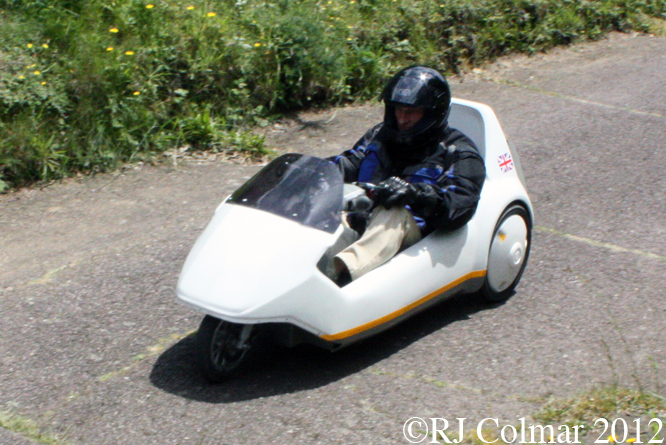
Sinclair C5, Brooklands, Double Twelve

Restricted to a top speed of 15 mph, in order not to be categorised as a motor vehicle on British roads, the Sinclair C5 was a hybrid powered by an electric motor or pedal power. Despite being launched with the aid of Stirling Moss, in 1985, it was the object of much derision with a lamentable performance climbing hills. I suspect this model may have a turbo conversion with 24v electrics because it effortlessly whistled up the Test Hill without the aid of pedal power and appeared to be traveling well over 15 mph.

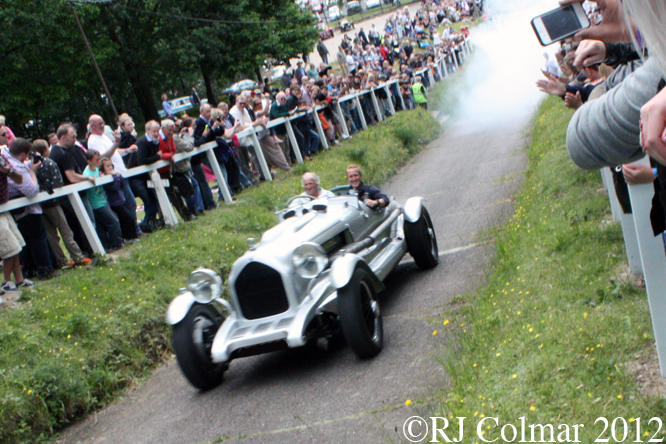
Rolls Royce, Handlye Special, Brooklands, Double Twelve

At the other end of power spectrum was the Rolls Royce Merlin / Meteor powered 27 litre / 1650 cui Handlye Special, built and driven by Robin Beech, which by virtue of laying a single 20 yard black stripe at the bottom of the Test Hill got my vote for the “Gettin’ a li’l Psycho on Tyres” award !

DB HBR5, Rolls Royce, Brooklands, Double Twelve

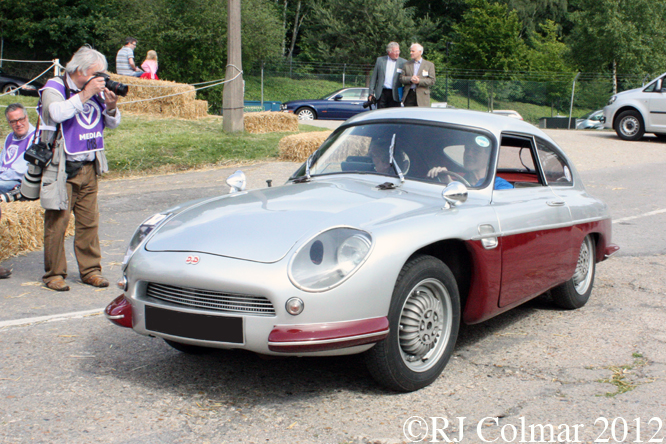
The ‘Deutsch Bonnet’ DB HBR5 Coupé belonging to Derek Fritz came third in it’s class of the Driving Concours event a car I shall cover in greater detail in a future Wednesday Continental Curiosity blog.

Fraser Nash TT Replica, Brooklands, Double Twelve

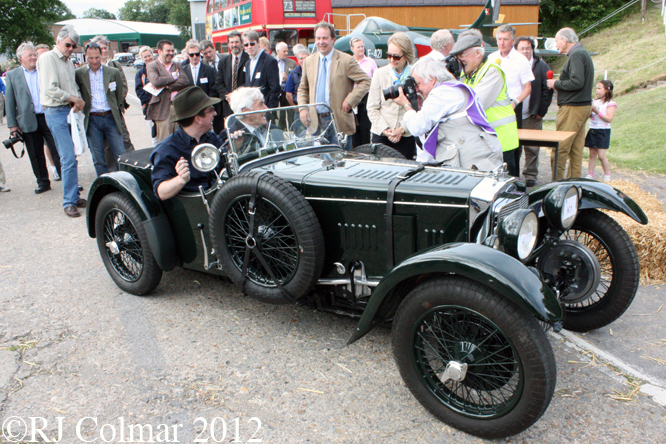
Overall winner of the Driving Concours was Andrew Hall in the 1935 Fraser Nash TT Replica, not to be confused with being a replica of a 1935 car, Andrew can be seen in the passenger seat receiving the trophy a Brooklands Screen mounted on hefty chunck of the Brooklands Track.

Thanks for joining me on this “Double Twelve” edition of ‘Gettin’ a li’l psycho on tyres’ I hope you will join me again tomorrow. Don’t forget to come back now !
Share

Jumping Coffee Cups ! – Lotus Esprit S1 Group 5

When Richard Jenvey announced that he would be competing in the 2 litre / 122 cui division of the Group 5 World Manufacturers championship with a Lotus Esprit in 1978, such was my naivety that my heart leapt with joy at the prospect of the domination that BMW had enjoyed in this class with the brick like BMW 320i would at last be broken by a proper sports car.

Richard made a name for himself driving modified sports cars including a supercharged MG Midget in ’73 and a Lotus Elan from ’74 to ’75 winning the 1975 Modsports Championship. In 1975 Richard also started racing in the European Sports Car Championship with the unique Vogue 2 litre / 122 cui sports car a car he eventually bought, modified and sold to team mate David Mercer.

Lotus Esprit Roll Out

Photo Courtesy Richard Jenvey Copyright 1979

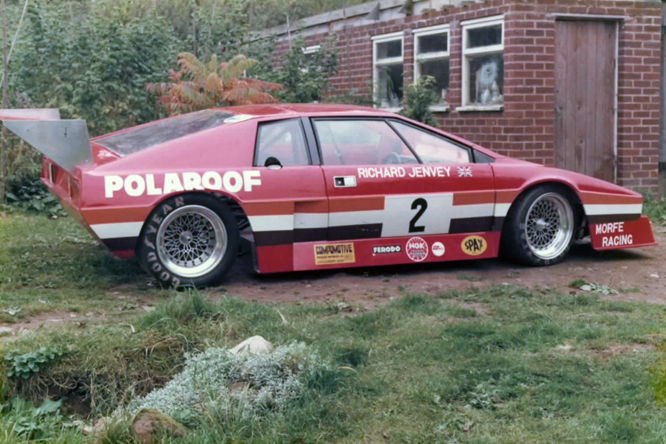
With a group of enthusiastic amateurs Richard set about building his Group 5 Lotus Esprit in 1978. The team retained most of the original Lotus backbone chassis and built a monocoque around it effectively turning the Lotus backbone chassis into a passenger.

Richard tells me that when the Lotus Sales Director approached Colin Chapman to support another team about building a similar car Colin Chapman hit the table so hard to emphasise a negative response that his coffee cup jumped off the desk. When the Sales Director made a second approach, on behalf of Richard, Colin appears to have learned a valuable lesson and relented agreeing to supply enough parts for Vegatune to build a 270 hp 2 litre / 122cui engine on favorable terms. Lotus also supplied an Esprit body shell with which to make the mould for the racers body. The original body shell was then sold on which helped cover ‘a fair fraction’ of the costs of building the car which ended up right on the minimum weight limit.

Lotus Esprit, Silverstone

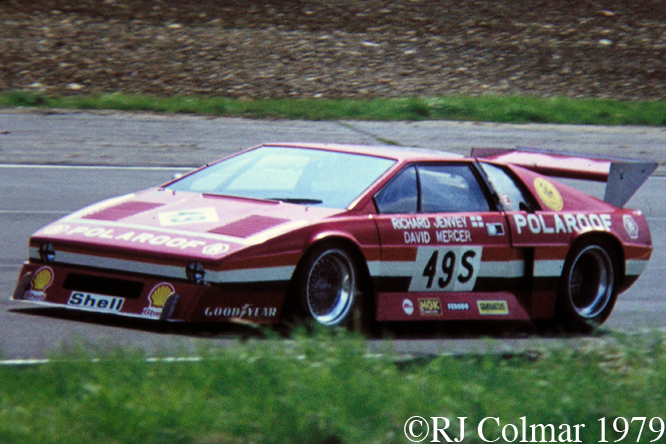
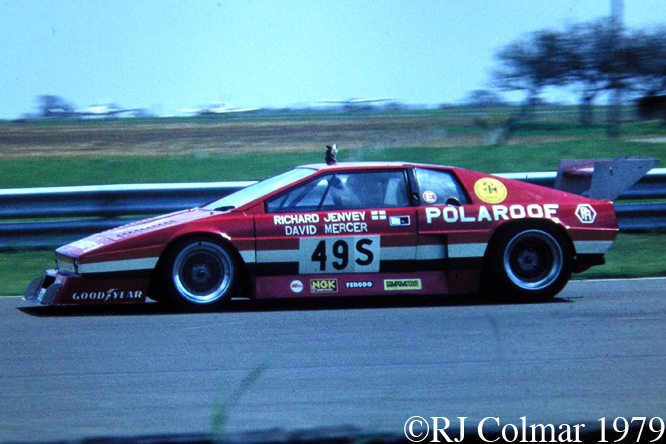
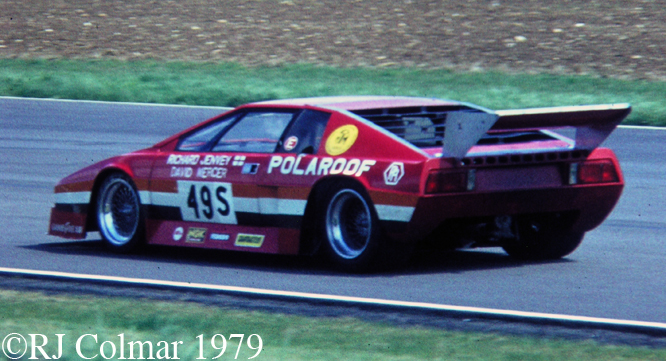
The Polaroof Morfe Racing Lotus Esprit first appeared at the Dijon 6 hours in April 1979 qualifying first in class ahead of a Fiat X1/9 and BMW 320i, but was the first of the three to retire from the race with engine maladies. At Silverstone, where the car is seen above, the Esprit qualified 3rd in class behind the debuting Lancia Beta Montecarlo turbo and an older BMW 320i. During the race Richard and David Mercer only had to finish to win the class but distributor problems saw the car retire.

Over the following two years Richards Lotus made at least seven further starts in World Championship and German Championship events recording a best 7th place finish in the 1981 German Championship round at Zolder. Once the engine was reliable little problems continued to beset the Esprit including seat padding slipping which caused Lawrie Hickman to inadvertently break the gear linkage in his efforts to avoid an accident at Dijon. On another occasion with in a couple of miles of the finish flag and a class victory at the Nurburgring, where the start money was always very generous, a loose alternator wire, combined with running with the headlights on, flattened the battery and officials prevented Richard from connecting the spare which the car carried.

Lotus Esprit, Silverstone

Richard and Lawrie Hickman, who co drove Richards Lotus in 1981 agree that the Esprit was fabulous to drive but was underpowered against the factory turbocharged Group 5 cars running in the same class from Lancia, BMW and Ford which had over 600 hp available ! Interestingly as the Group 5 series was coming to an end Richard started building a turbocharged Group C car, which was never completed due to a late change in the regulations and Richard had plans to run the Lotus with the turbocharged motor from the Group C project before it was retired.

Unfortunately these plans also came to nought when a batch of faulty con rod bolts failed while the normally aspirated motor was being ‘run in’ during practice for the 1981 Silverstone 6 Hours, causing the team to miss the race and starting money. Even more importantly the engine failure also caused the team to miss collecting the ‘very generous’ start money at the Nurburgring two weeks later and so the Esprit retired without ever running with the more powerful motor.

Lotus Esprit, Silverstone

Richard still owns the Esprit which he describes as being “spread around Shropshire”, he is currently engaged in re-accumulating all the parts in one place with a view to either selling it or building it for his son, Mike Jenvey, to race in classic events.

Regrettably, although the Esprit added welcome variety to the events in which it competed, the privateer Morfe Racing with Polaroof team, like the contemporary Janspeed Triumph Twin Turbo TR8 team did not have the level of backing to compete reliably let alone competitively against the works supported outfits of Lancia in the World Championship events which were joined by Ford in the German Championship events.

The photo’s show the Esprit’s official “roll out” to the raspberry patch in Richards garden and the remainder the Esprit’s British debut at Silverstone in 1979.

My thanks to Richard Jenvey who kindly answered my questions about the project, also to The Nostalgia Forum regulars Alan Raine, who suggested I get in touch with Richard, Tony “Giraffe” Gallagher who kindly passed on Lawrie Hickman’s observations, Norman Jones, fausto, Simon Hadfield, fatbaldbloke, Jesper O Hansen, Edward Fitzgerald, La Sarthe, Simon Lewis and Tony Kingston for their comments.

Thanks for joining me on this ‘Jumping Coffee Cups !’ edition of ‘Gettin’ a li’l psycho on tyres’, I hope you will join me again tomorrow. Don’t forget to come back now !
Share

Dino Evolution – Ferrari 166/206 #0834

Enzo Ferrari was a man who believed that to remain competitive he needed to start with a good car and then continually seek to improve it’s performance with modifications.

The Ferrari 166/206, following the footsteps of the Ferrari Dino 196S and it’s similarly Dino V6 powered Formula siblings the front engined ‘246’ and rear engined Shark Nose ‘Dino 156‘, perfectly exemplifies his Enzo’s continual modification philosophy.

Ferrari 166/206, Silverstone Classic

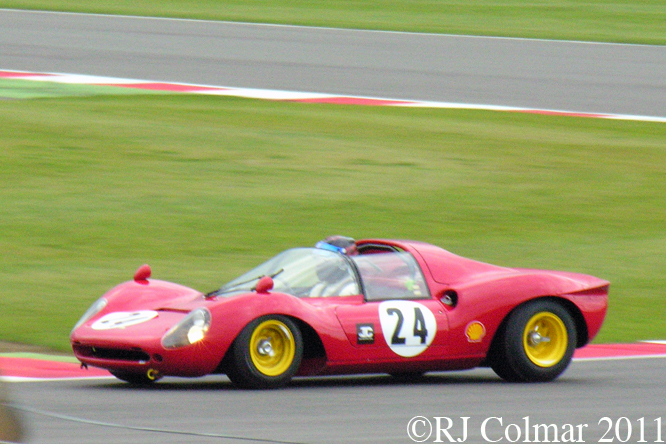
The original Dino 166/P specification of chassis #0834 seen, in these photo’s at Silverstone Classic last year, was built around a new 185hp variant of the Dino V6 with twin overhead cam shafts per bank, quad cam, and twin plug ignition and a capacity of 1592 cc / 97.2 cui.

The original body was a closed coupé style, similar to that of a bigger V12 powered Ferrari P2 and can be seen on this link.

Despite it’s good handling, in this form the car driven by Giancarlo Baghetti and Giampiero Biscaldi retired from the 1965 1000 kms at Monza after one lap with engine failure, then Lorenzo Bandini drove it to victory at the Vallelunga GP.

However the 166/P’s biggest success against much stronger opposition was at the 1965 Nürburgring 1000 kms where Bandini and Nino Vaccarella came home 4th behind two Ferrari P/2’s and a Porsche 904/8 all with larger motors. This performance was thought so unlikely the events scruitineers had the motor stripped to confirm it’s capacity.

At the 1965 Le Mans 24 hours Baghetti and Mario Casoni only lasted 21 minutes before it retired with a broken valve.

Ferrari 166/206, Silverstone Classic

Two months after Le Mans chassis #0834 was upgraded to 206 S/P specification with a 218hp 1986 cc / 121.2 cui Dino V6 motor and a low cut open top Spyder body, which can be seen on this link.

Ludovico Scarfiotti used the car in this form to win the European Hillclimb championship setting new course records in all of the remaining 1965 championship rounds.

In 1967 the car appeared in the Targa Florio with a third, 206 S, body configuration, similar to the one seen in today’s photographs, where it finished 4th with Jonathan Williams and Vittorio Venturi at the wheel.

Two years later Leandro Terra and Turillo Barbuscia drove #0834 still in 2 litre / 122 cui spec to a 25th place finish in the 1969 Targa Florio.

#0834 is currently owned by Harry Leventis who shares the driving with Gregor Fisken on a regular basis in the The Italian Historic Car Cup.

There is an interesting observation about the “Dino 206” cars by the highly esteemed journalist Doug Nye on this link, makes one wonder what Ing. Forghieri may have come up with on a good day !

Thanks for joining me on this “Dino Evolution” edition of “Gettin’ a li’l psycho on tyres”. I hope you will join me again tomorrow. Don’t forget to come back now !
Share

Drive With Care – Dodge Coronet Super Bee

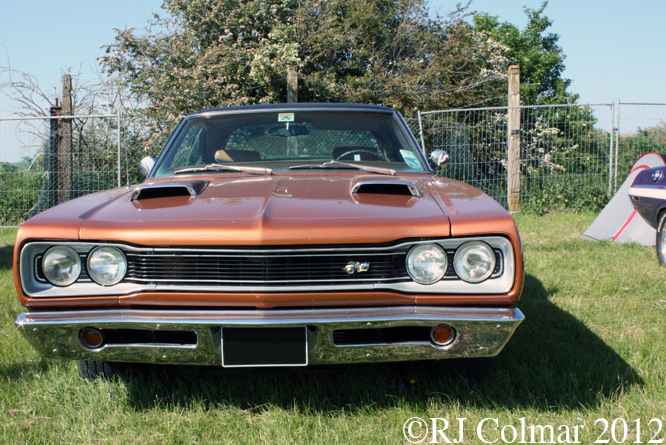
The Dodge Coronet Super Bee owe’s its existence to the intra corporate rivalry between Plymouth and Dodge to become parent company Chrysler’s performance brand. Plymouth took the lead in that rivalry when it introduced the Road Runner in 1968 and under the of Dodge General Manager Robert McCurry Dodge responded with the first Super Bee later the same year.

Dodge Coronet Super Bee, Shakespeare County Raceway

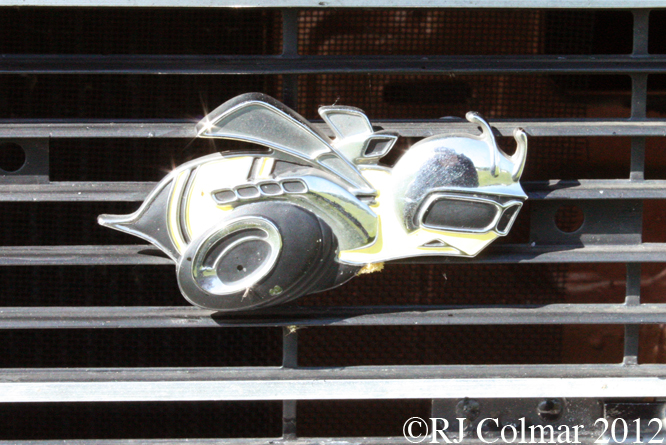
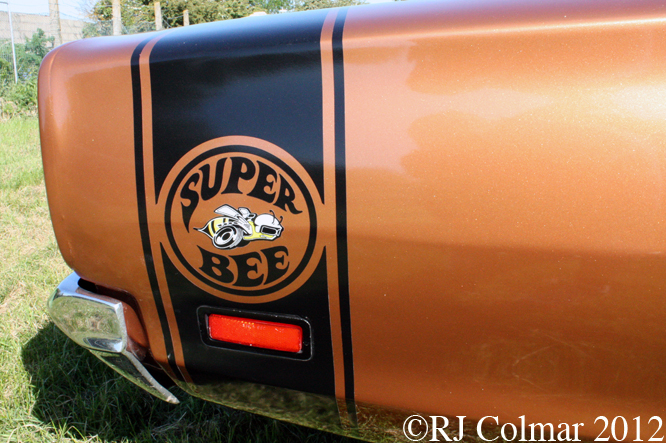
Senior Designer Harvey J Winn is credited with coming up with the name and Super Bee logo which was also turned into a diecast medallion which identified Dodge’s performance model.

Dodge Coronet Super Bee, Shakespeare County Raceway

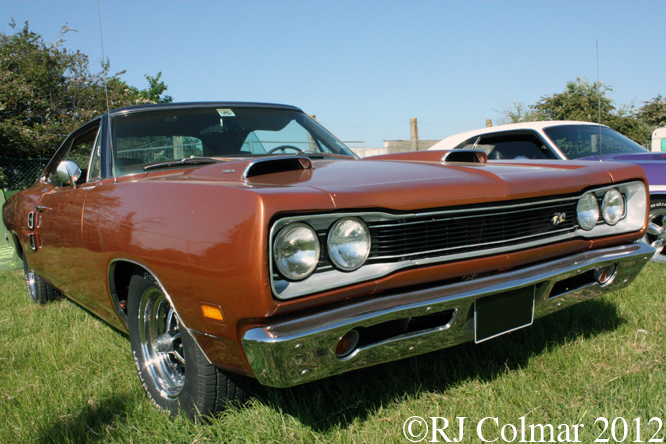
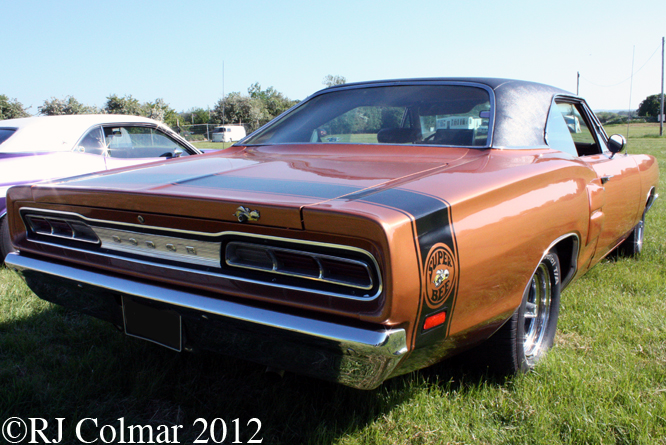
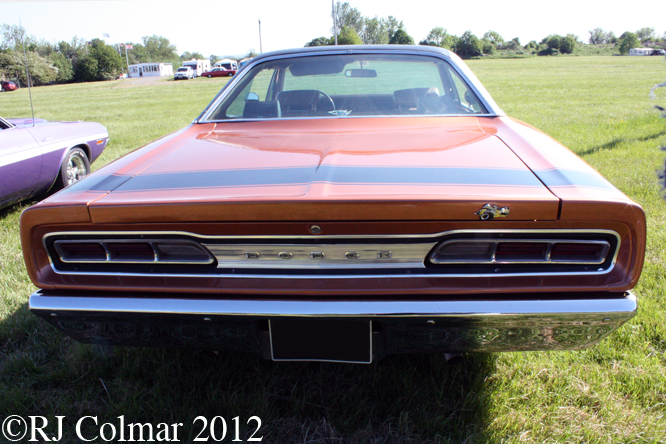
The face lifted 1969 model, seen here at Shakespeare County Raceway, is powered by the standard 335 hp 6276 cc / 383 cui Magnum V8, which was advertised with the “Cool It” strap line, as being fitted with 440 Magnum heads, valve gear, hot cam and manifolds.

Dodge Coronet Super Bee, Shakespeare County Raceway

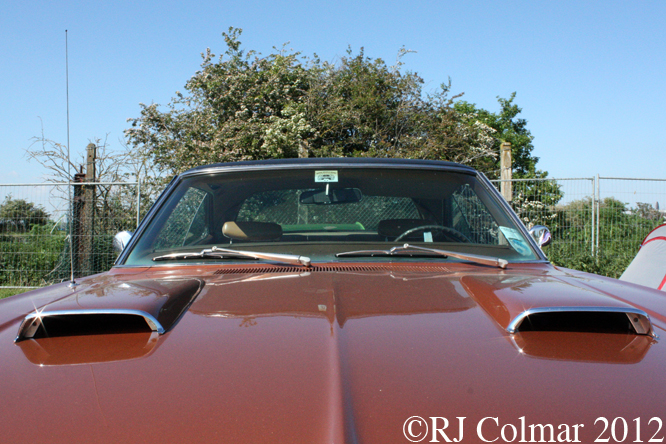
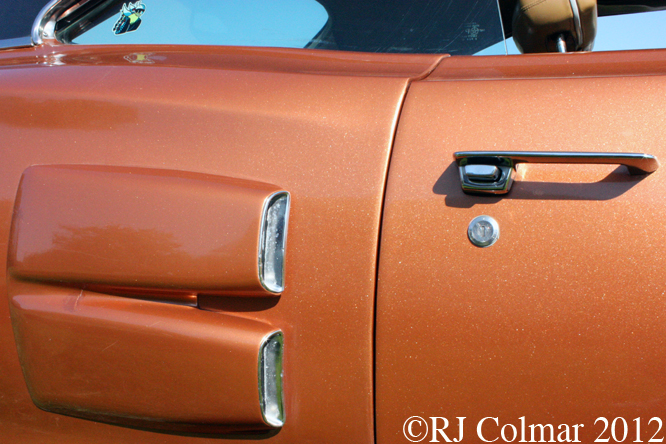
Introduced for the 1969 model was this option, coded N-96, twin “Ramcharger” air induction hood that forces air into the carburetors, unlike the scoops on the “Coyote Duster” option hood for the Road Runner which ‘merely’ acted as vents.

Dodge Coronet Super Bee, Shakespeare County Raceway

Back in the day the N-96 hood commanded respect at the light’s today it command a premium over Super Bees not carrying this performance enhancing option.

Dodge Coronet Super Bee, Shakespeare County Raceway

Sitting on a 117 inch wheel base, one inch longer than the Road Runner, the Super Bee was 65 lbs heavier than it’s rival from Plymouth.

Dodge Coronet Super Bee, Shakespeare County Raceway

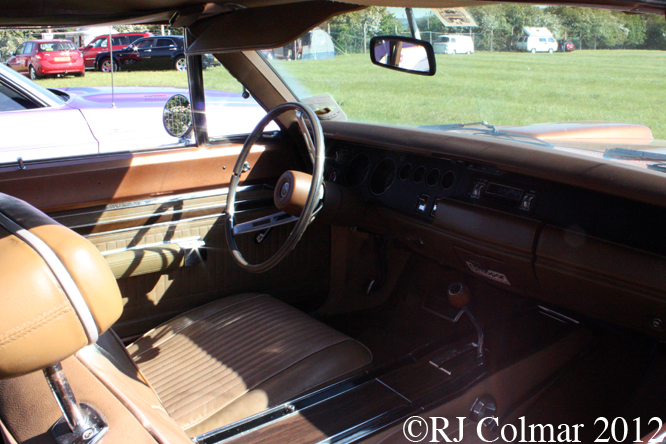
Inside the 1969 Coronet Super Bee featured a Dodge Charger Rallye instrument panel, and manual versions had a Hurst Shifter to operate the four speed transmission.

Dodge Coronet Super Bee, Shakespeare County Raceway

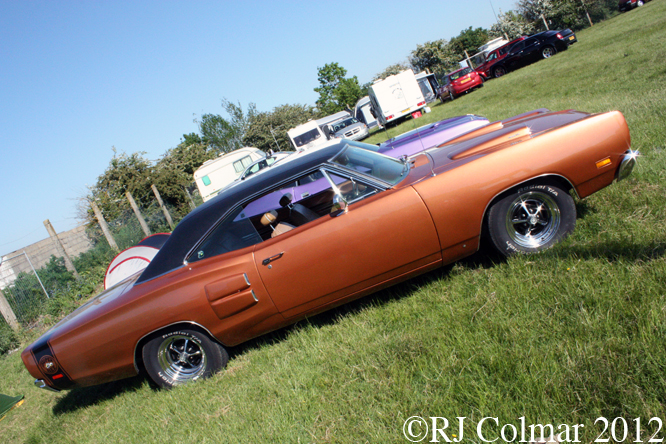
So far as I know the side vents unlike the bonnet vents are purely decorative, as they were on many contemporary vehicles like the Mustang.

Dodge Coronet Super Bee, Shakespeare County Raceway

Like the Road Runner the tail featured a wrap around strip, unlike the Plymouth, Dodge did not have to pay Warner Brothers a royalty for their logo.

Dodge Coronet Super Bee, Shakespeare County Raceway

Heavy duty features that came standard with the Super Bee included the clutch, suspension, shock absorbers and brakes which ensured that safety was no accident and that owners could drive with care as encouraged in contemporary sales literature.

Dodge Coronet Super Bee, Shakespeare County Raceway

1969 was the zenith of Dodge Coronet Super Bee production with 25,727 ‘383’ units produced, an additional 1,907 1969 models were manufactured with the Magnum 440 Six Pack and 162 with the 426 Hemi motor.

Thanks for joining me on this “Drive With Care” edition of “Gettin’ a li’l psycho on tyres” I hope you will join me again tomorrow for Ferrari Friday. Don’t forget to come back now !
Share

Fritz’s Kabinenroller – Messerschmitt KR200

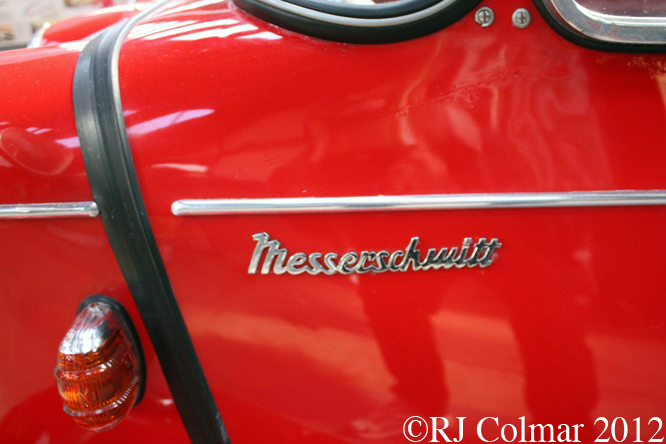
Unlike Bristol Aeroplane Company which chose to prepare for and switch from aircraft production to car production after the ’39-’45 war Messerschmitt was temporarily banned from aircraft production after the cessation of hostilities and had little choice but to switch to automobile manufacture in order to survive.

Messerschmitt KR200, Bristol Classic Car Show

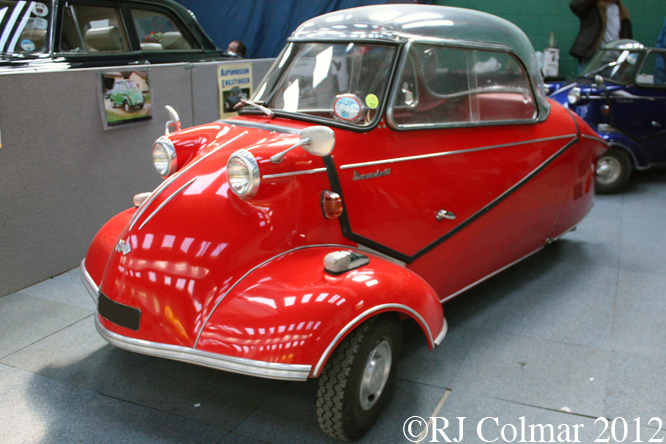
In 1952 Fritz Fend showed Messerschmitt his idea for a three wheeled motor scooter, Kabinenroller, based on the design of an earlier invalid vehicle which found a market among non invalids desperate for cheap transport alike.

Messerschmitt KR200, Bristol Classic Car Show

The KR175 was produced from 1952 to 1955 when it was substantially redesigned around the original frame.

Messerschmitt KR200, Bristol Classic Car Show

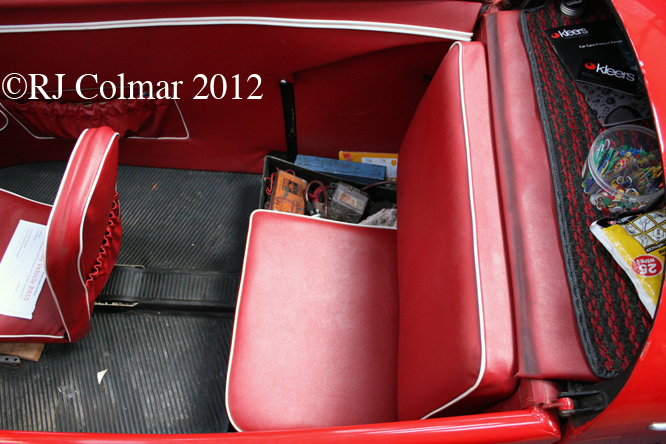
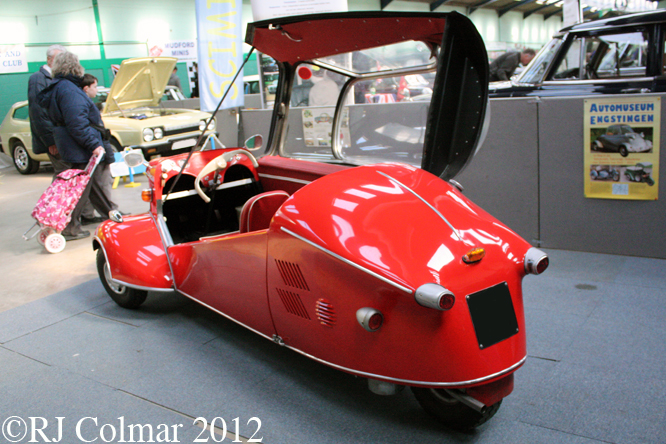
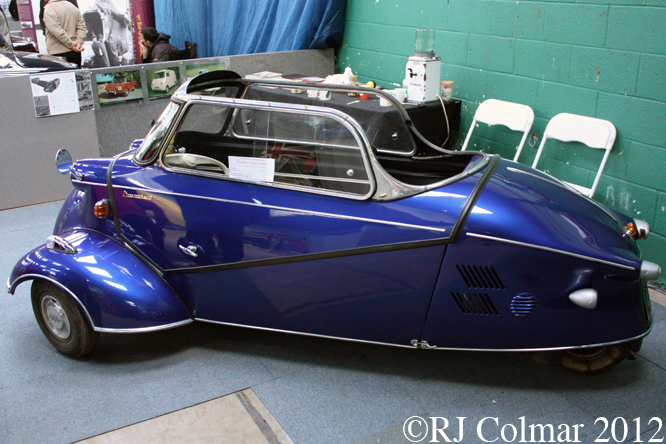
The new KR200 as seen here at the Bristol Classic Car Show featured cut outs in the wheel wings / fenders.

Messerschmitt KR200, Bristol Classic Car Show

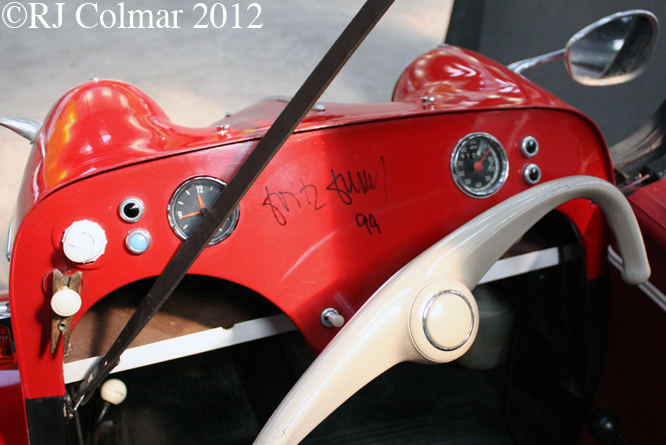
Note this car was driven to Regensburg in 1999 where the designer Fritz Fend signed the dash.

Messerschmitt KR200, Bristol Classic Car Show

Other improvements on the KR200 included improved canopy design, larger wheels and suspension improvements attributed to the introduction of hydraulic shock absorbers.

Messerschmitt KR200, Bristol Classic Car Show

The larger 10 hp 200 cc / 12.2 cui 2 stroke motor gave the KR200 a top speed of 56 mph and because it was a two stroke it could be reversed by pressing a button which reversed the direction in which the motor spun.

Messerschmitt KR200, Bristol Classic Car Show

To prove the viability of the KR200 a single seat low drag body version was taken to the Hockenheimring in 1955 where it set 22 international class records including an average speed of 64 mph for 24 hours.

Messerschmitt KR200, Bristol Classic Car Show

The KR200 was a huge success such that when Messerschmitt resumed aircraft manufacturing in 1956 Fend was allowed to purchase the assets needed to carry on with car production and carry on using the Messerschmitt brand name.

Messerschmitt KR200, Bristol Classic Car Show

In all 40,000 KR200’s were manufactured up until 1964 including a KR201 roadster. A 4 wheel version was also developed along with a variety of 3 wheel utility vehicles.

Fritz Fend is also credited with inventing the alarm system that goes off when one pulls the key out of the ignition of a vehicle after one forgets to turn the light off.

Thanks for joining me on this “Fritz’s Kaninenroller” edition of “Gettin’ a li’l psycho on tyres” I hope you will join me again tomorrow when I’ll be looking at a Swinger that suffered repeated damage when being parked in the Bay area. Don’t forget to come back now !
Share

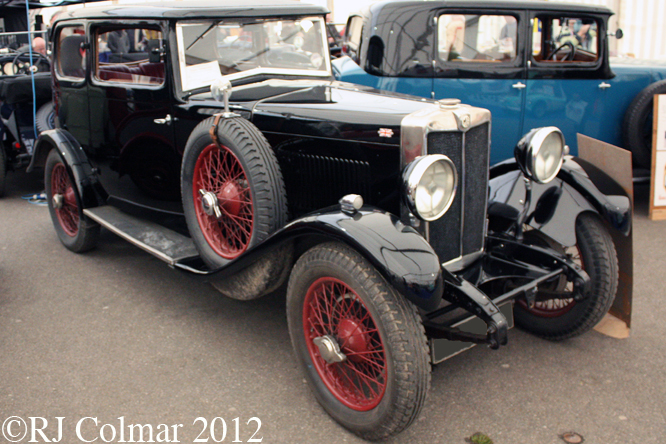
Continental Tourer – MG 18/80 Six Saloonette Mk I

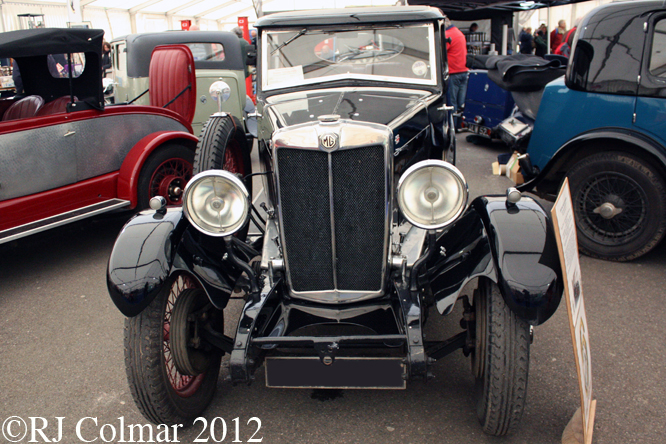
Today’s featured MG 18/80 Six was through University Motors of, the then very fashionable, Park Lane, London W1 in 1931 for £625 painted black and cream.

MG 18/80 Six Salonette MkI, Bristol Classic Car Show

Technically this car is similar to the Tigress bodied 18/80 featured a couple of weeks ago with a 2468cc / 150 cui six cylinder motor that gives an 80 mph potential.

MG 18/80 Six Salonette MkI, Bristol Classic Car Show

The history of this particular car is unknown between its original sale and the 1960’s when it resurfaced several times as it changed ownership. Since it’s restoration in the 1970’s it has been used for touring in the UK and on the Continent.

Thanks for joining me on this “Continental Tourer” edition of “Gettin’ a li’l psycho on tyres”, I hope you will loin me tomorrow when I’ll be looking at a classic Messerschmitt. Don’t forget to get to come back now !
Share