Tag Archives: Geoffrey Horton

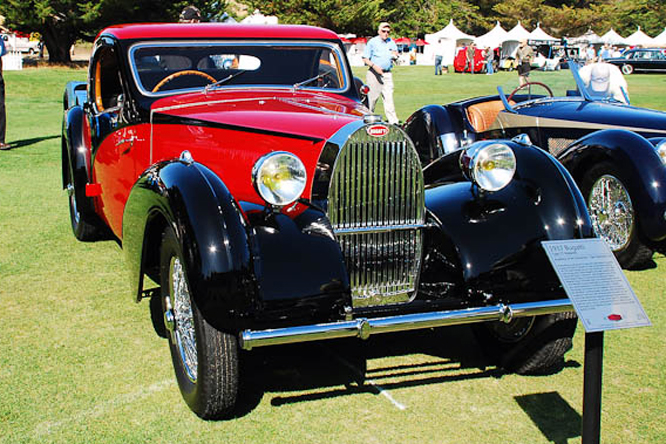
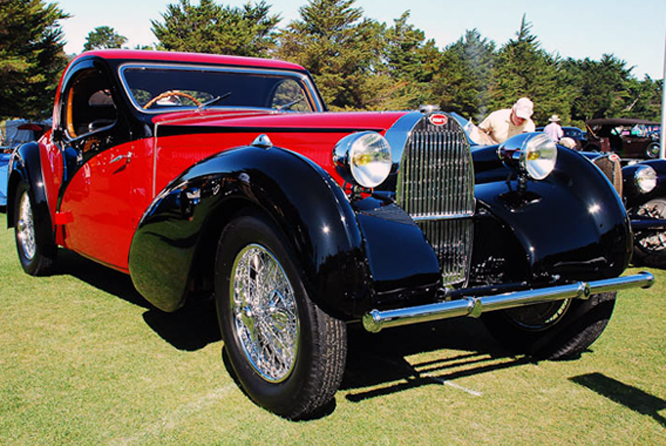
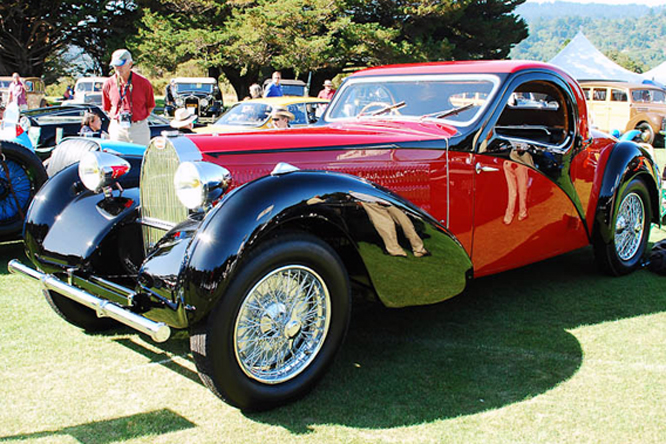
Mythological Hunting Virgin – Bugatti Type 57, Atalante Coupé, #57504

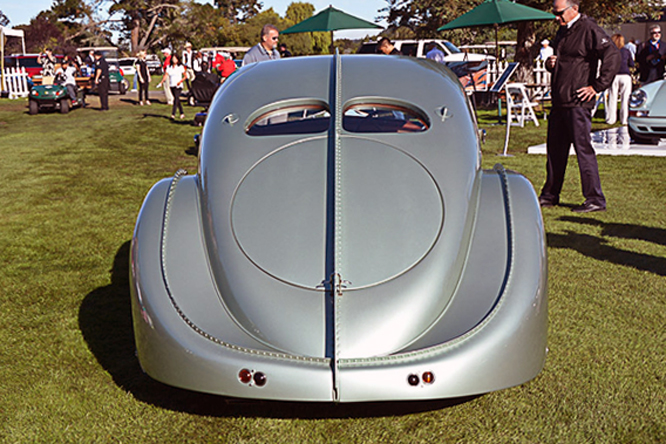
Of the 710 Bugatti Type 57’s built between 1934 and 1940 the single fast back Aerolithe, four fast back Atlantics an 17 Atalante Coupés, such as the one seen here, were fitted with the most radical bodies for the period.

Bugatti, Type 57, Atalante, Hillsborough Concours d'Elegance

Named after a mythological Greek Goddess who was brought up by bears to become a happy but fierce hunter, sworn to virginity, the Atalante differs from the Atlantic having a single screen and none of the riveting seams for which the Atlantic and Aerolithe are best remembered for.

Bugatti, Type 57, Atalante, Hillsborough Concours d'Elegance

Unlike the Atlantic body which was only fitted on the lower Type 57 S chassis the Atalante Coupé was fitted to both original type 57 chassis with the axles below the chassis rails and the lower 57S chassis.

Bugatti, Type 57, Atalante, Hillsborough Bugatti, Type 57, Atalante, Hillsborough Concours d'Elegance d'Elegance

The Atalante body seen here by Geoffrey Horton at Hillsborough Concours d’Elegance a couple of years ago is fitted to an original Type 57 chassis as can be seen by the fact that the bonnet / hood stands well clear of the height of the front wings / fenders.

Bugatti, Type 57, Atalante, Hillsborough Concours d'Elegance

This particular Atalante was built in 1937 and is believed by the owners, the Academy of Art University® in San Francisco, to have been retained by the factory and used by Jean Bugatti who was responsible for the styling.

My thanks to Geoffrey Horton for sharing his photographs taken at Hillsborough Concours d’Elegance in 2011.

Thanks for joining me on this “Mythological Hunting Virgin” edition of “Gettin’ a li’l psycho on tyres”, I hope you will join me again tomorrow. Don’t forget to come back now !

Share

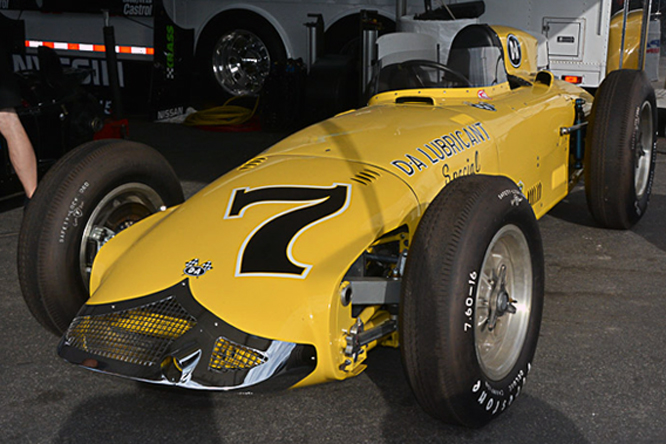
D.A. Lubricant Special – Kurtis Offenhauser KK500H

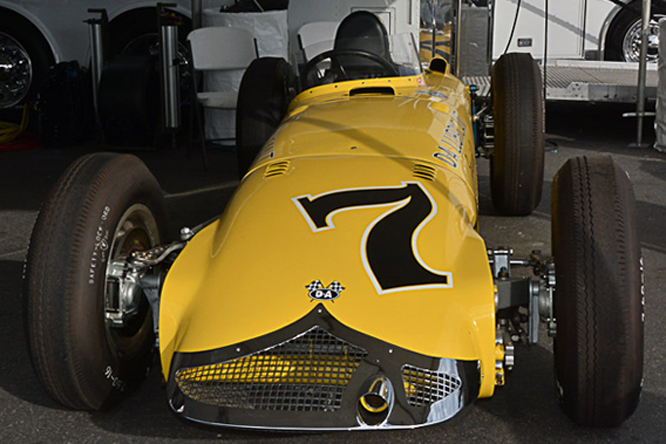
For the 1958 Indianapolis 500 D.A.Lubricants sponsored an Offenhauser powered Kurtis KK500H that was to be driven by Johnny Thomson. Unlike previous Kurtis Indy cars this one did not lift it’s inside front wheel when going through the corners because it was the first Kurtis to be fitted with independent front suspension.

Kurtis Offenhauser 500H, Rolex Reunion, Laguna Seca

Johnny qualified the D.A.Lubricants Special 22nd and on the first lap got tangled up in the accident that killed Pat O’Conor damaging the suspension. Johnny continued for another 51 laps before the team called it a day, to be classified 23rd, with damaged steering. The race was won by Jim Bryan in the Salih Offy Belond Special.

Kurtis Offenhauser 500H, Rolex Reunion, Laguna Seca

In 1959 the D.A.Lubricants Special became the Smokey’s Reverse Torque Special driven by Duane Carter who qualified 12th and finished 7th to record the cars only Indy 500 finish in a race dominated by the Watson Offy’s driven by Roger Ward and Jim Rathman. Interestingly Smokey Yunnick had realised that by reversing the direction of the crankshaft and flywheel rotation the car should have had a better balance through the corners, hence the Smokey’s Reverse Torque name.

Kurtis Offenhauser 500H, Rolex Reunion, Laguna Seca

This cars final appearance in the 500 was in 1960 when Don Freeland drove the car now known as the Ross-Babcock Traveler qualifying 11th but being classified 22nd after withdrawing from the race with a magneto problem.

Ron Fournier restored the car to 1958 D.A.Lubricants configuration and to meet current vintage racing requirements in 2007.

My thanks to Geoffrey Horton for sharing his photo’s of the car seen at last years Rolex Reunion at Lagunna Seca.

THanks for joining me on this “D.A. Lubricant Special” edition of “Gettin’ a li’l psycho on tyres” I hope you will join me for Maserati Monday tomorrow. Don’t forget to come back now !

Share

Sweet Talking The Wife – Ferrari 250 GT/E #4049

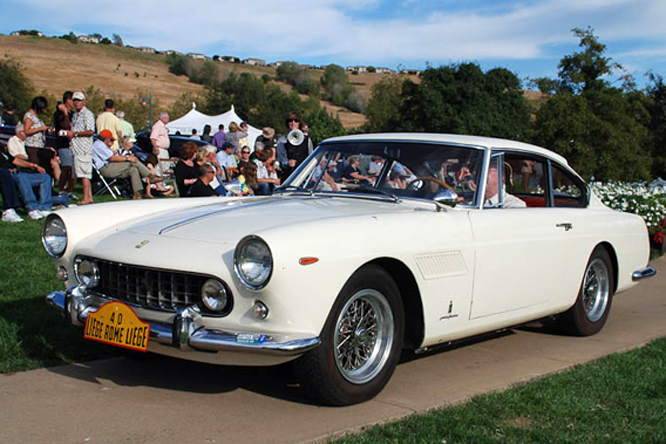
Today’s featured Ferrari is an Ivory White 1962 Series 2 250 GT/E that was originally delivered to Jacques Swaters in Belgium. By 1967 the vehicle was offered for sale in San Francisco when the previous owner bought it and used as his daily driver taking it to work at McClellan Air Force Base north east of Sacramento.

Ferrari 250 GT/E, Niello Serano Concours d'Elegance

One night the present owners son saw the car being driven through the neighborhood and followed it home and made a mental note of where it was and told his Dad Jim Bonney who at the time owned an Alfa Romeo GTV.

Soon after Jim went and introduced himself to the previous owner and established that the car was not for sale but stayed in touch for a couple of years.

One day Jim got the bright idea of appealing to the decision maker in the previous owners house and waited until the previous owner was out and then introduced himself to his wife. On ‘discovering’ the previous owner was out he left a business card with revised figure for the car on the back.

Some months later the previous owner got in touch with Jim and they did a deal which meant Jim had to sell his GTV and raise $5,000.

Jim has kept the car more or less as he bought it, the paint was last done around 1995 while the motor was last overhauled around 1980.

I’m not exactly sure why the car is carrying the #40 Liege Rome Liege plates I am not aware of a 250 GT/E competing in that event but would be glad to hear of any evidence to the contrary.

My thanks to Geoffrey Horton for sharing today’s photograph taken at Niello Serano Concours d’Elegance a couple of years ago.

Thanks for joining me on this “Sweet Talking The Wife” edition of “Gettin’ a li’l psycho on tyres” I hope you will join me again tomorrow for a rare British Car with an American motor and an Italian styled body. Don’t forget to come back now !

Share

Creme de Menthe – Bugatti Type 57 Aerolithe Recreation #57104

The chassis for today’s featured Bugatti Type 57 #57104 was the fourth Type 57 to be built and the oldest known to have survived. In 1934 it was delivered to Bugatti’s agent in Paris Lamberjack. Somewhere around the mid to late 1940’s the car lost what is believed to have been it Van Voren body, but the chassis and major mechanical items apart from the front axle remained as a ‘flock of parts which passed through many owners including Tom Barrett, co-founder of the Barrett-Jackson auction house.

When Tom realised he needed a low slung Type 57SC chassis, on which to build a recreation of the famous Atlantique, he sold the flock of Type 57 parts along with a consignment of Bugatti Type 59 parts to David Grainger of The Guild of Automotive Restorers of Bradford north of Toronto, Ontario.
Bugatti Type 57, Quail Concours d'Elegance,

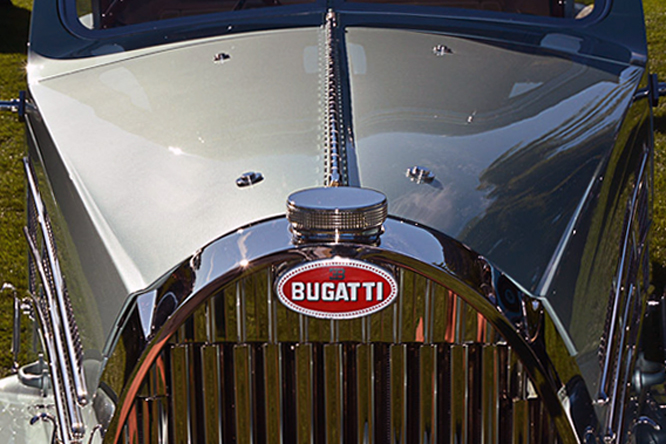
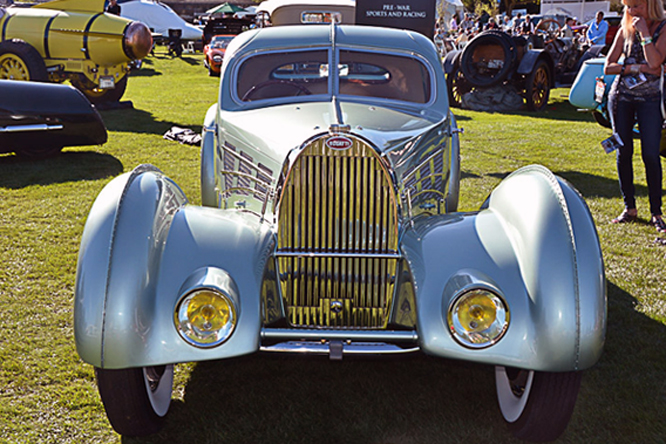
David spent 3 years restoring the Type 59 from little more than half of the original parts before turning his attention to what he might do with #57104. At some point David came across some images of Jean Bugatti’s masterpiece, the Aerolithe which featured center stage of Bugatti’s stand at the 1935 Paris Auto Show.

The Aerolithe, French for meteor, disappeared after it had been road tested by two British enthusiasts in the United Kingdom and returned to the factory in 1936. There is no documentation as to what became of the car but it is presumed to have been broken up not least because it’s body was crafted out of magnesium alloy otherwise known as Elektron a valuable material that the Germans used in the production of it’s World War Two aircraft.
Bugatti Type 57, Quail Concours d'Elegance,

When Jean Bugatti revealed to the press that the signature riveted joins which stand proud of the compound curved body work came about as a result of the use of Elektron the car is said to have become known as the Elektron Coupé.

Once David had come to the inescapable conclusion that the Aerolithe had almost certainly built on an early Type 57 chassis because; it’s low slung variants 57 S and 57 SC were either not available in the time frame prior to the 1935 Paris Show, the bulges in the body work to accommodate the early Type 57 steering box and because there was no obvious way to mount the fuel tank and spare wheel with the later low slung type 57 chassis, he knew the body he wanted to recreate for #57104 was that of the Aerolithe.
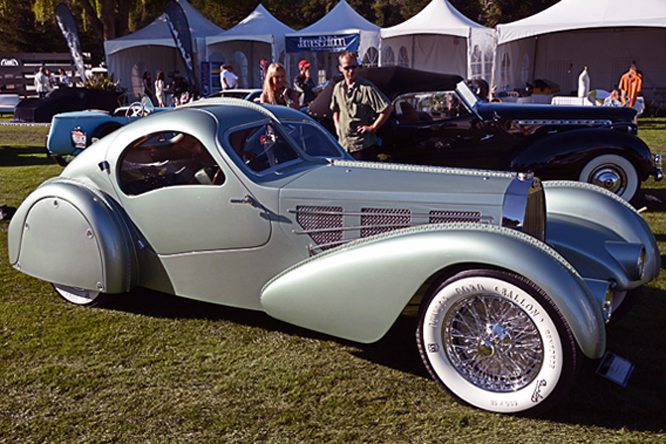
Bugatti Type 57, Quail Concours d'Elegance,

Not only did David want to recreate the car he wanted to do so using the same materials and tools that were available at the Bugatti factory in 1934/5. To undertake such a project David found someone to underwrite the project who not only had the astronomical bank balance required, but crucially also the same vision regarding the materials, tools and techniques to be used, in the form of Christopher Ohrstrom who amongst his other hobbies is chairman of the World Monuments Fund which aims to preserve architectural sites like Angkor Wat in Cambodia.

Once David had found a backer his next problem was to work out the original shape he was trying to recreate from just 11 black and white photographs and two drawings from the Bugatti Trust in the UK, one of the radiator grill and the other of a foot pedal.
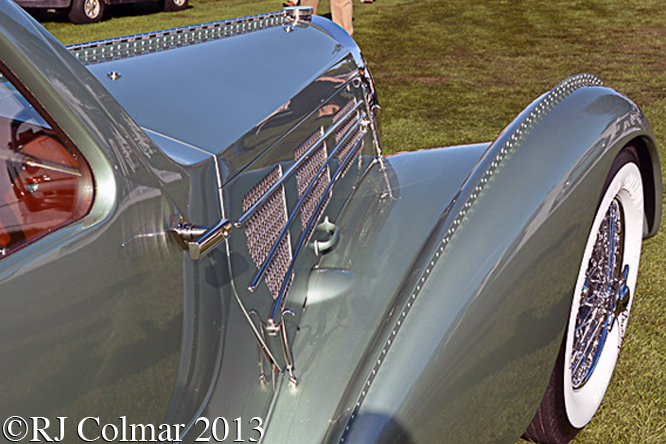
Bugatti Type 57, Quail Concours d'Elegance,

Eventually two more photographs were found and a set of drawings produced, safe in the knowledge that anything that did not look absolutely correct would be rejected and the part remade until it looked a perfect match to what could be discerned from the reference material.

The employees at The Guild of Automotive Restorers next had to find out all about working with magnesium alloy. Magnesium is thought to constitute around 11% of the earths naturally occurring minerals however the metal does not occur naturally rather it occurs in the form of salts.
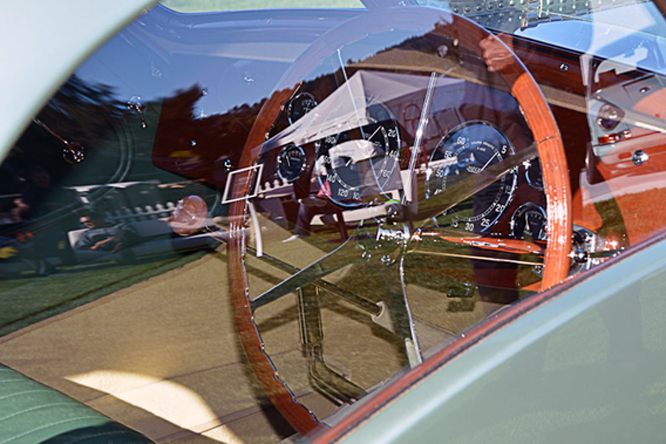
Bugatti Type 57, Quail Concours d'Elegance,

When it is liberated from salts by electrolysis it is incredibly light, extremely brittle, difficult to turn into compound shapes with an English Wheel, has a good memory for it’s original shape, is extremely reactive with other elements like oxygen and to make maters worse it melts at the relatively low 650 degrees centigrade has a high specific heat making it useful for fireworks and flares and reacts explosively with water !

It was deemed wise to be wearing something akin to a space suit when working with Magnesium alloy, blended with materials that make it a little less reactive and flamable or likely to erupt on contact with water.
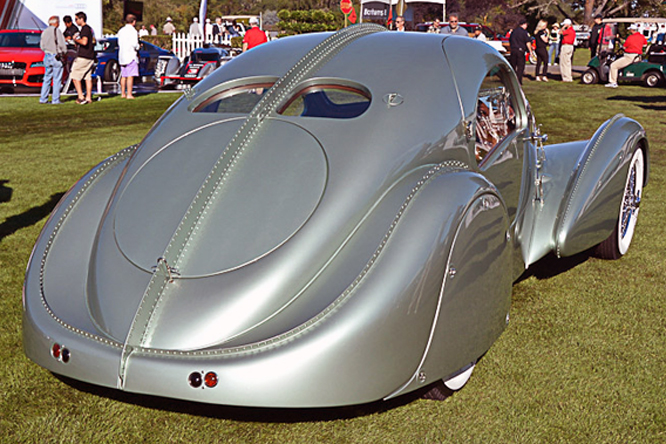
Bugatti Type 57, Quail Concours d'Elegance,

The curves were achieved by heating the material to between 850 degrees F and 1000 degrees F, before the alloy caught fire and then using the English Wheel in the time honoured manner. However for the most complex shapes smaller pieces were made and then riveted together with time sapping hidden rivets.

Preparation of the chassis required moving the engine back less than 4 inches so that the 3.3 litre 198.8 cui 8 cylinder motor could be mounted lower in the chassis as can be seen in the original photographs.
Bugatti Type 57, Quail Concours d'Elegance,

The interior details were partially available from a single photograph which showed a familiar Bugatti pattern to the dash instruments and interior equipment. The car was built as a show car rather than one to order so there is a logic to the conventional interior layout.

Most perplexing was the colour of the original car, it seemed unlikely that the original was silver as it appeared in the black and white photographs and this was confirmed through an interpreter when David met an ex Bugatti employee who told David that the car was known in the factory by the name “Creme de Menthe” or cream of mint. Some time later David acquired a painting of “Creme de Menthe” by one of the employees who had worked on it’s design and it also clearly showed the car was indeed Mint coloured, apt because silver were the German national racing colours and so would have been very out of favour in Alsace where it was built but also because magnesium is one of the constituents of chlorophyll, which of course give mint leaves, and all other green plants their pigment.

Finally David went to Goodyear and Goodrich who own the Dunlop brand an got permission to recreate the Dunlop logos on white rubber which was then vulcanised into groves cut into the inner and out walls of original Dunlop 90 series tyres so that they too appeared exactly as they had at the Paris Show.

My thanks to Geoffrey Horton for sharing today’s photographs of this magnificent vehicle which took well over 7000 hours to recreate.

Thanks for joining me on this “Creme de Menthe” edition of “Gettin’ a li’l psycho on tyres” I hope you will join me again tomorrow, when I shall be looking at a car painted up in tribute to one of Ayrton Senna’s sponsors. Don’t forget to come back now !
Share

Wonder Bread Special – Rigling #0113S

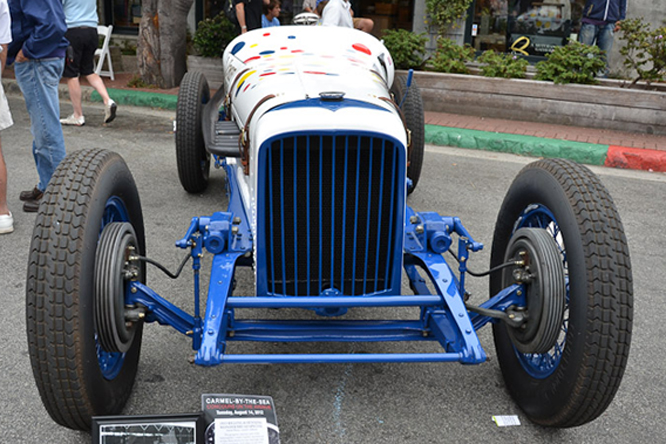
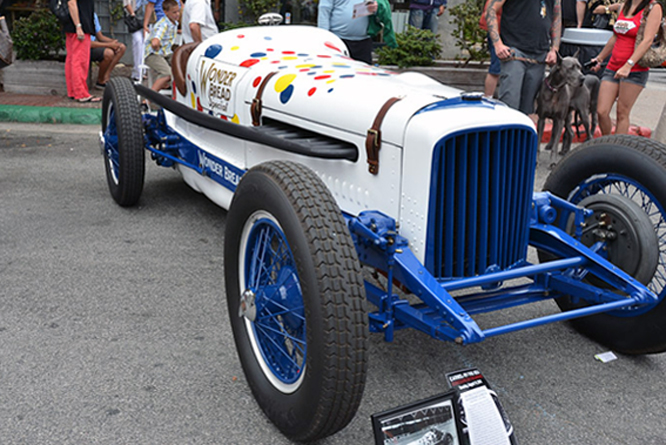
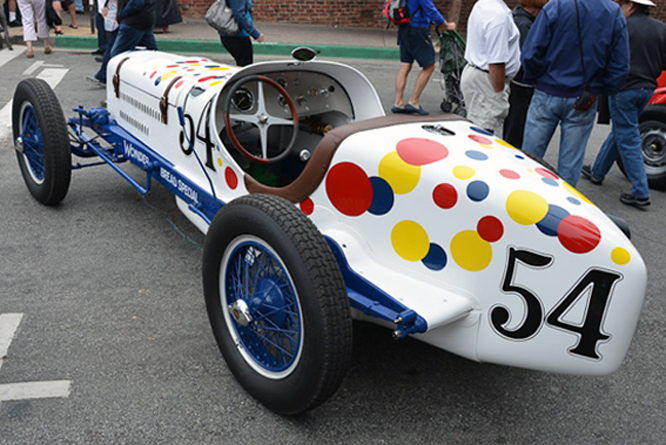
It’s the month of May where the focus of open wheel racing fans traditionally descends on Indianapolis of the “Greatest Spectacle In Racing” run, inclement weather not withstanding, on Memorial Day weekend. As in years passed this months Sunday blogs will look at some of the vehicles from Indy’s 103 year history starting with this 1933 Rigling.

Rigling & Henning Buick, Wonder Bread Special, Concours on the Avenue, Carmel by the Sea

Getting the story of US built cars that participated in the Indy 500 up to 1964 right is probably one of the more difficult challenges a motor historian can undertake, in part because the open wheel scene was largely a cottage industry with only a hand full of people in the know and in part because naming rights were sold in return for sponsorship. Identification and histories of cars from the low tech low cost so called Junkyard Formula of the post depression years 1930 – 1939 are particularly hard to discern because of the low budgets and many unannounced deals that took place to keep the grids full.

Rigling & Henning Buick, Wonder Bread Special, Concours on the Avenue, Carmel by the Sea

So far as I know the earliest appearance of a chassis credited to Herman Rigling was in the 1931 Indy 500 when 8 of the 40 starters are credited with being built by Rigling. The Rigling built cars were powered by either Buick, Miller, Studebaker, Clemons or Dusenberg motors. Top Rigling finisher was Phil Shafer in his Buick powered example known as the Shafer 8 he was classified 12th.

Rigling & Henning Buick, Wonder Bread Special, Concours on the Avenue, Carmel by the Sea

There is a photograph showing what appears to be today’s featured car, the #54 Wonder Bread Special, at Indianapolis Motor Speedway in 1933 with rookie George Barringer at the wheel with Earl Allen his riding mechanician. George and Earl appear to have failed to qualify for the race.

Wonder Bread, a brand invented by the Indianapolis based Taggart bakery, did however sponsor the #18 Duesenburg driven by Joe Russo who classified 17th and running with 192 laps completed, while H.W. Stubblefield driving the #8 Abels and Fink Auto Rigling Buick did finish 5th in the The 21st International 500-Mile Sweepstakes Race.

George Barringer made his first Indy start in 1934 driving the #18 Boyle Products Miller being classified 15th completing 161 laps before a front axle problem intervened. His best Indy 500 result came in 1939 when he finished 6th driving Bill Whites Well Offy.

Some of the above is at variance with the information displayed with the car at Concours on the Avenue in Carmel by the Sea some years ago, if you have evidence to show my information is incorrect please do not hesitate to chime in below.

My thanks to Geoffrey Horton for sharing his photo’s of the #54 Wonder Bread Special seen at Concours on the Avenue, Carmel by the Sea in 2012.

Thanks for joining me on this “Wonder Bread Special” edition of “Gettin’ a li’l psycho on tyres”, I hope you will join me for Maserati Friday tomorrow. Don’t forget to come back now !

Share

Wendy’s Indoor Playground – Ferrari 250 GT/E #2259 GT

Like some Bristol cars there are some Ferrari’s you either love or see as opportunities to tear apart for recycling into more desirable models or heaven forbid turn into complete replica’s of more illustrious models, in the UK these vehicles are known as “Marmite” cars, you either love, or love to hate them.

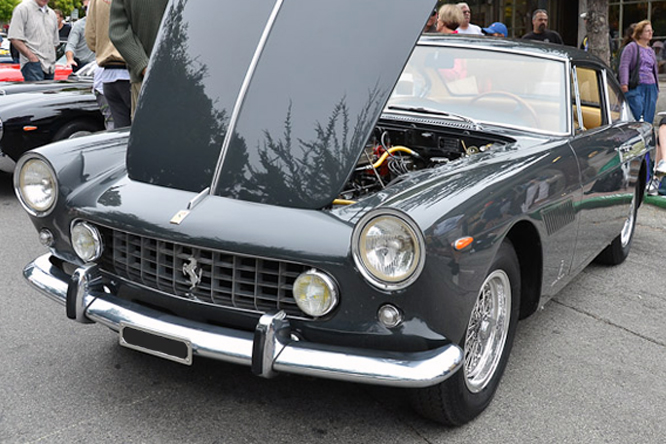
One such is the first production model, as opposed to special order model, Ferrari to be fitted with a rear seat and useable boot / trunk as standard like today’s featured Ferrari 250 GT/E.

Ferrari 250GT/E, Concours on the Avenue, Carmel by the Sea

The practicalities of the 250 GT/E made it a huge, by Ferrari standards, seller with 955 cars built in 3 series between 1959 and 1963. Today’s featured car chassis #2259 GT, seen by Geoffrey Horton at Carmel by the Sea some years ago, is one of the 302 Series I vehicles built between 1960 and 1961.

Thanks to the intervention of Tom Yang, pronounced Young, and a deal cut in the privacy of a Wendy’s indoor play area #2259 is a two owner car.

Ferrari 250GT/E, Concours on the Avenue, Carmel by the Sea

The first owner was Carlo Durante who bought the car in Milan in 1960, Carlo who runs his own auto shop Alfa of Tacoma in Washington drove the car for nine years before some bad fuel clogged up a carburetor causing one of the pistons to run too lean and get holed.

Carlo got his 63,000 mile car back to his shop striped the engine out and for next 40 years nothing more happened as the pressure of work meant Carlo did not have time to attend to his pride and joy.

Ferrari 250GT/E, Concours on the Avenue, Carmel by the Sea

Fast forward to the Autumn of 2009 and California Ferrari preservation expert Tom Yang got wind of Carlo’s car and through a mutual friend built up a friendship that culminated in Tom introducing Carlo to a potentially sympathetic new owner. After they had been to visit Carlo and his 250 GTE all three went to a Wendy’s and a deal was struck.

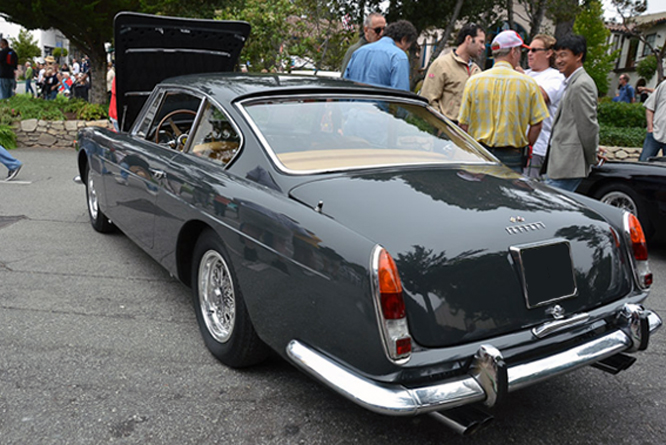
Tom who would take care of the recommissioning of #2259 GT received it at his workshop on the last day of March 2011 and fourteen months later it was back, in not just working order, but Concours condition as can be seen in these photo’s taken by Geoffrey in August 2012.

Ferrari 250GT/E, Concours on the Avenue, Carmel by the Sea

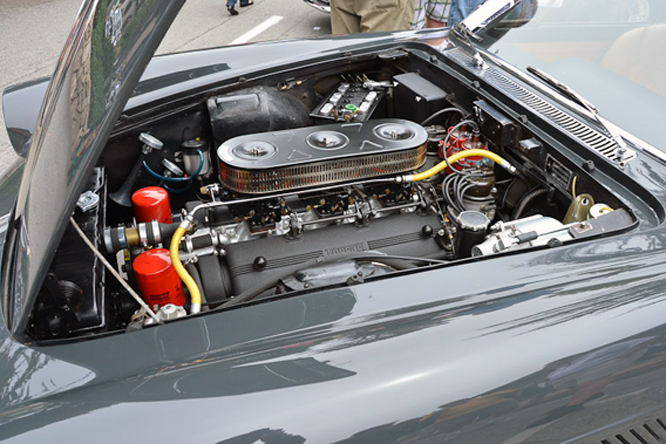
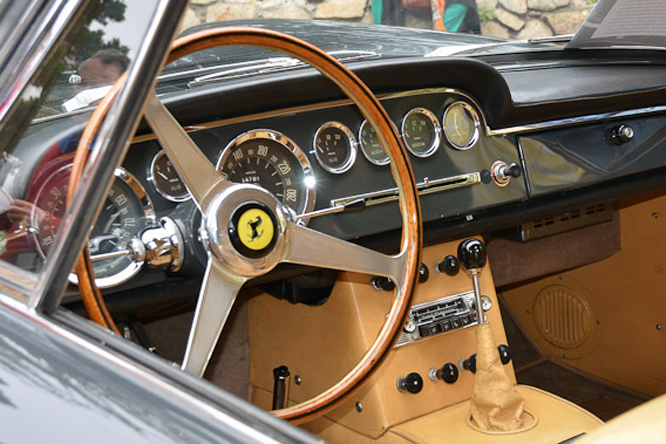
Most of the car is still original, including the paintwork, despite having the 3 liter / 183 cui V12 motor painstakingly rebuilt, the rear differential resealed, brakes overhauled to better than original condition and the carpets replaced. The seats were saved and repaired as was the original wood rimmed Nardi steering wheel which has been beautifully preserved.

The new owner was awarded the FCA Pacific Region Vintage Concours Preservation Award at Concorso Italiano, Laguna Seca Golf Ranch just 3 day’s after these photo’s were taken. Coincidentally the man responsible for the preservation of #2259 GT, Tom Yang is seen in the bottom photo wearing the grey blazer on the right.

My thanks to Geoffrey Horton for sharing today’s featured photographs and to Tom Wilson, not only for his lightening quick response to my enquiry about today’s featured Ferrari at Ferrari Chat, but also for recommending Tom Yang’s excellent website which documents it’s preservation and recommissioning.

Thanks for joining me on this “Wendy’s Indoor Playground” edition of “Gettin’ a li’l psycho on tyres” I hope you will join me again tomorrow for a look at the last of this month’s Gilbern series. Don’t forget to come back now !

Share

Winning Pace Car ? – Ford Torino GT Convertible

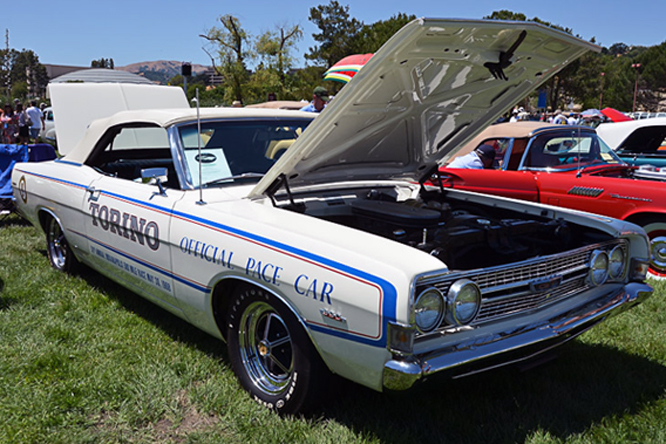
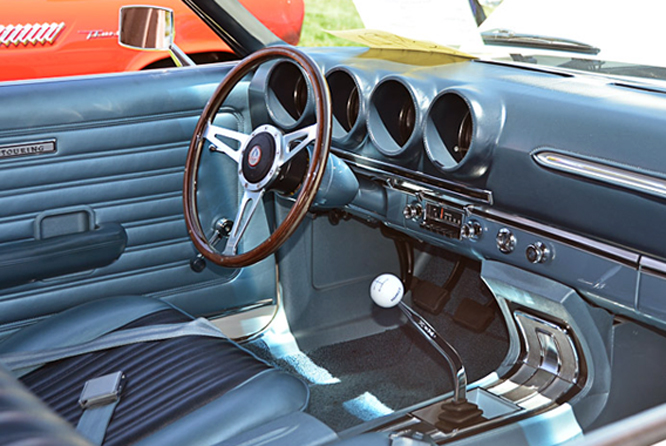
For 1968 Ford launched a new mid size model with a 116″ wheel base called the Torino which was placed over the previous Fairlane’s attracting a predictable price hike in return.

Ford Torino GT Convertible, Marin Concours d'Elegance

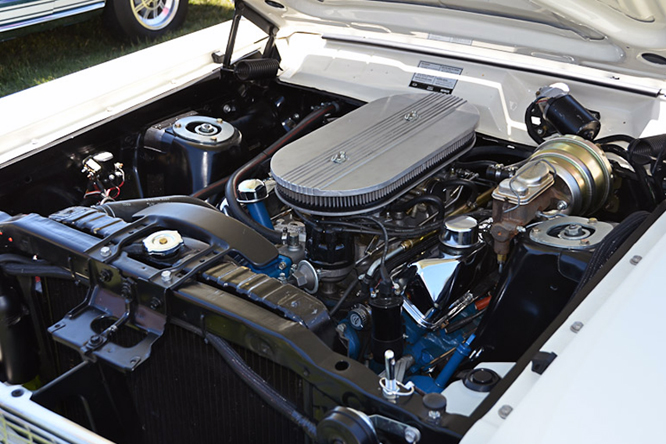
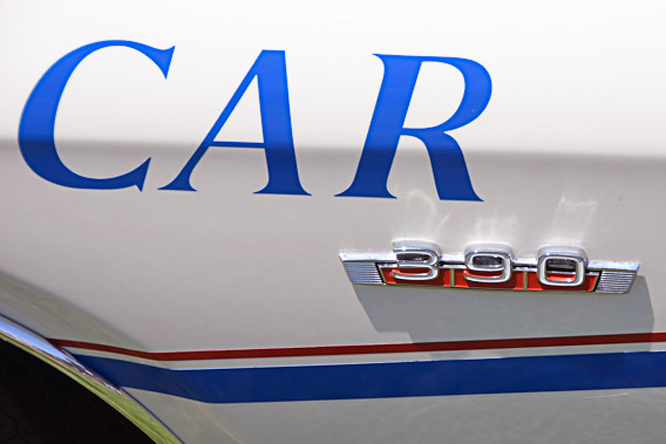
To promote the new model Ford did a deal with the organisers of the Indy 500 to provide a fleet of Torino GT Convertible pace cars for the use of event officials which included two 428’s, one 390 and one hundred and fifty six 302 Automatics known as ‘festival cars’.

Ford Torino GT Convertible, Marin Concours d'Elegance

Additionally Ford dealers could order a limited edition ’68 Pace Car spec Torino GT convertible. It is thought 709 of these limited edition vehicles were built with around 90% percent having the lower spec 302 motor fitted.

Ford Torino GT Convertible, Marin Concours d'Elegance

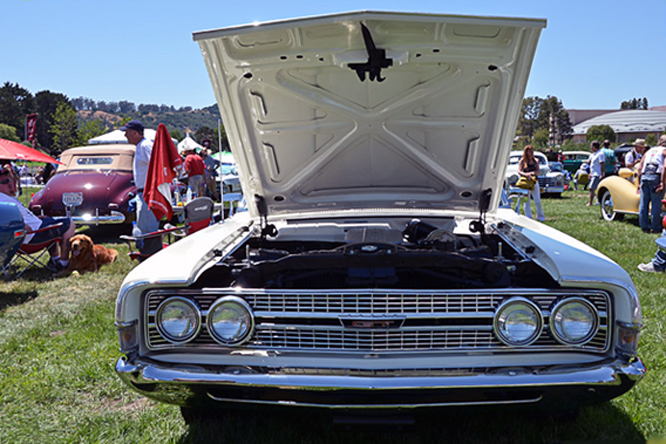
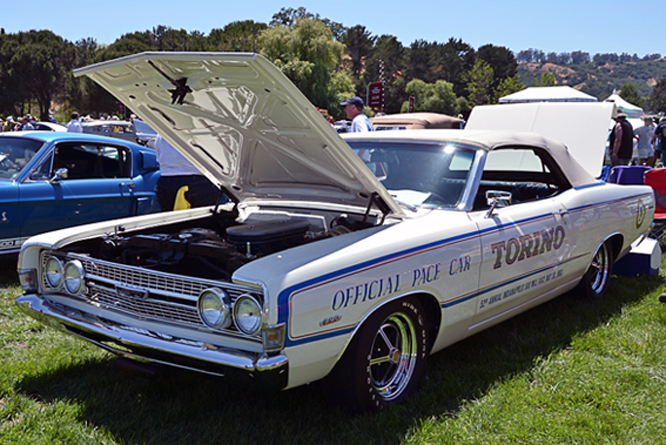
It is possible, with a little room for scepticism in the absence of any number of confirming details, that today’s featured example seen by Geoffrey Horton at last years Marin Concours d’Elegance is the 309 Pace Car used at Indy.

Ford Torino GT Convertible, Marin Concours d'Elegance

The give away evidence that this might be the 390 GT Torino Convertible used at Indy are the bonnet / hood pins which are unlikely to have been fitted to any of the Dealer ordered Limited Edition pace cars.

Ford Torino GT Convertible, Marin Concours d'Elegance

The ’68 Indy 500 was won by Bobby Unser driving a turbocharged 4 cylinder Offenhauser powered Eagle from team owner Dan Gurney in a Ford V8 powered Eagle. The ’68 race was also used as a backdrop for the film ‘Winning’ which introduced Paul Newman to Motorsport and led to his participation as a driver and successful team co owner.

Ford Torino GT Convertible, Marin Concours d'Elegance

‘Winning’ brought some no doubt welcome additional coverage for the GT Torino Pace Cars which also featured in the film. If you have evidence to either confirm or refute the notion that this car is one of the cars supplied to Indianapolis Motor Speedway in 1968 please do not hesitate to chime in below.

Thanks for joining me on this “Winning Pace Car ?” edition of “Gettin’ a li’l psycho on tyres”, I hope you will join me for Ferrari Friday tomorrow. Don’t forget to come back now !
Share