Tag Archives: Goodwood

Safety Campaigner – BRM P261 #P2617-R

At the end of 1964 Ritchie Ginther left BRM to join Honda and was replaced by a rookie Scotsman, a protege of Timber Merchant and emergent entrant Ken Tyrrell, by the name of Jackie Stewart who would go on to make an impact on the sport way beyond that of quite possibly any other Formula One driver in history.

During his first season Jackie drove a BRM P261 to victory after just 8 starts in the Italian Grand Prix, cementing a reputation as a rapidly maturing driver on the back of 6 other finishes that included three 2nds, one 3rd and a 6th.
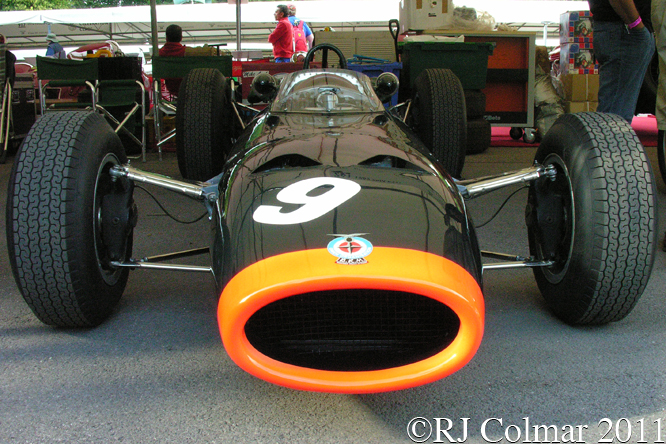
BRM P261, Goodwood Festival of Speed

In the off season BRM headed to the warmer climbs of the antipodes for the Tasman series which Jackie won at his first attempt taking four victories from 8 starts with a 2 litre / 122 cui V8 BRM P261 against a field that was allowed to run engines up to 2.5 litres /.

After winning the 1966 Formula One season opening Monaco Grand Prix, still in a 2 litre V8 BRM P261 but now running in a championship for cars with 3 litre / 183 cui motors, Jackie was caught out by a flash flood and had an accident at Spa during the Belgium Grand Prix which would and continues to change the sport for ever.
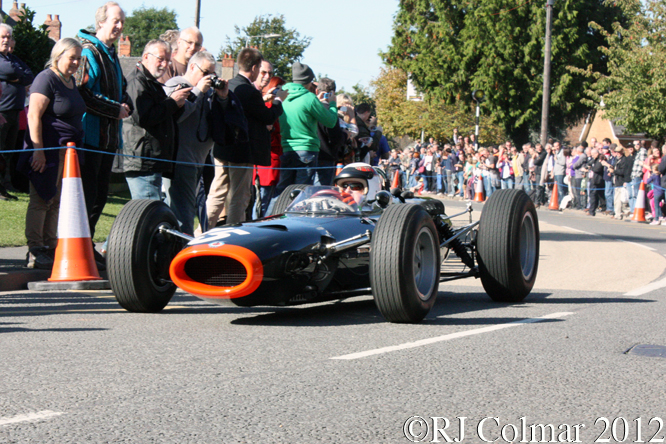
BRM P261, Sir Jackie Stewart, BRM Day, Bourne

Jackies injuries were minor compared to the fact that he found himself trapped and soaking in a banana shaped tub of fuel with no safety switch to turn off the vehicles electrics, no tools with which to undo his steering wheel, and no marshals to help him either.
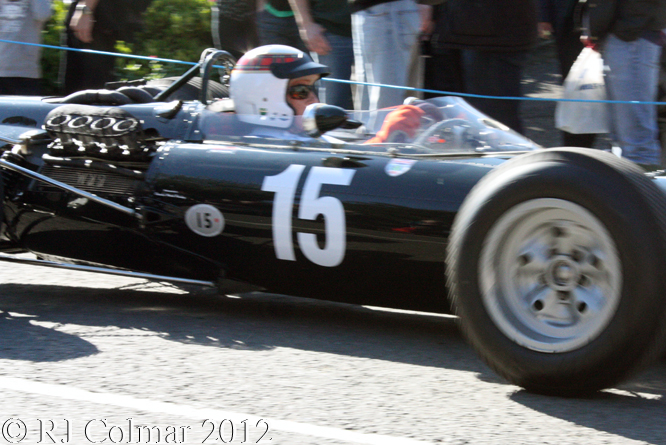
BRM P261, Sir Jackie Stewart, BRM Day, Bourne

Eventually his team mate Graham Hill and Bob Bondurant who was driving a privately entered BRM P261 came to Jackies rescue after they were also caught out by the same flash flood.

Using a tool kit from a spectators car Jackie was released from #P2617 after a 25 minuet soak in petrol, his ambulance and police escort managed to get lost on the way to the hospital and during the incident Jackie bravely decided that what ever the cost motor racing was about showing off his skill and not his bravery.
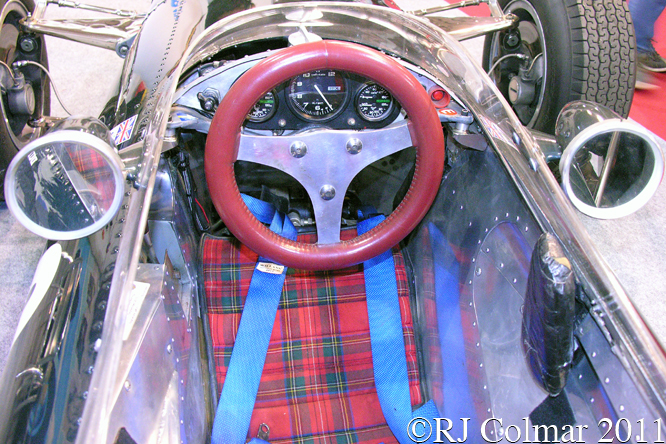
BRM P261, Race Retro, Stoneleigh

As a result of Sir Jackies tireless campaigning on safety during which he lost far too many friends to accidents and many hundreds if not thousands more due to their refusal to see that by the mid 1960’s many tracks were no longer suitable for the machinery running on them.

Tracks today are far better suited to the equipment that runs on them and the equipment is infinitely better equipped to cope when things go wrong, but as Jules Bianchi found out late last year safety is an issue which can never be taken seriously enough, and lessons must be learned from every incident lest they be repeated.
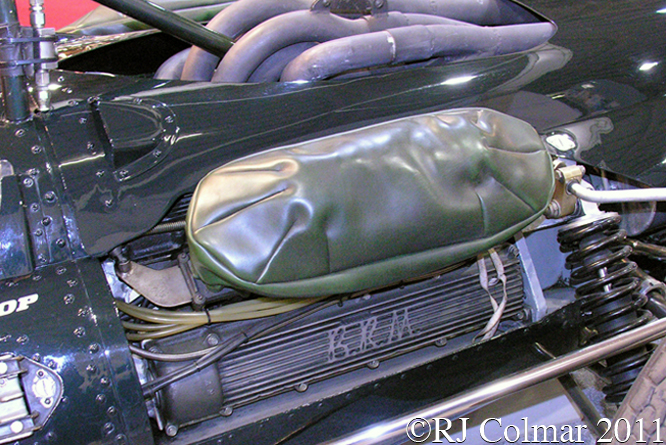
BRM P261, Race Retro, Stoneleigh

Jackie left BRM at the end of 1967 to join Ken Tyrrell who had guided Jackie from the junior ranks to the steps of BRM, while Jackie was loosing his rookie stripes Ken made plans to buy the latest Ford Cosworth DFV for the 1968 season and did a deal to use them in Matra chassis.
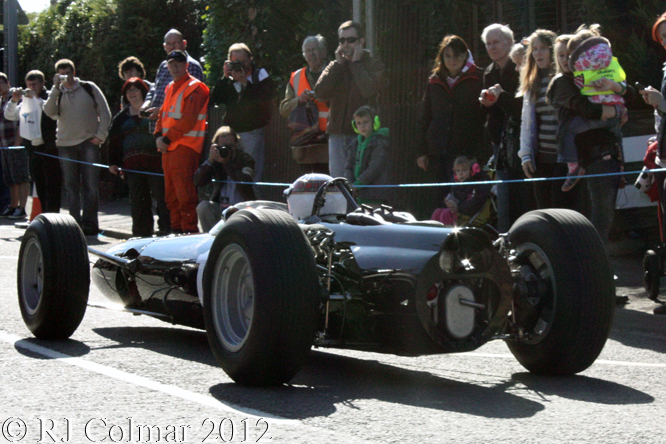
BRM P261, Sir Jackie Stewart, BRM Day, Bourne

Jackie retired from the sport with the 1969, ’71 and ’73 titles in his pocket, it was the death of his team mate Francois Cevert during practice for the 1973 US Grand Prix that prevented him from making 100 career Grand Prix starts.

In retirement now Sir Jackie went on to found the Stewart Grand Prix team with his son Paul which they sold on to Ford after winning the 1999 European Grand Prix in Germany. Ford rebranded Stewart Grand Prix as Jaguar and after a couple of seasons sold the team onto Dietrich Mateschitz of Red Bull who rebranded the team into Red Bull Racing now quadruple world champions.

Sir Jackie is seen driving the BRM P261 chassis #2617-R, run by Classic World Racing, that has been recreated by Mike Ostroumoff and former works BRM P261 driver Richard Attwood who won the 1970 Le Mans 24 hours with Hans Hermann driving a Porsche 917.

Thanks for joining me on this “Safety Campaigner” edition of “Gettin’ a li’l psycho on tyres I hope you will join me again tomorrow. Don’t forget to come back now !

Share

The Cropduster – Stanton Special

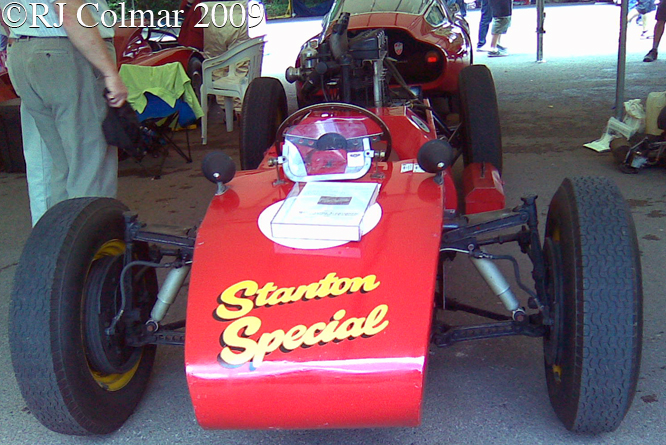
In 1953 New Zealand’s Stanton Brothers built today’s featured Stanton Special for hill climbing and circuit racing competitions.

Stanton Special, Goodwood Festival of Speed,

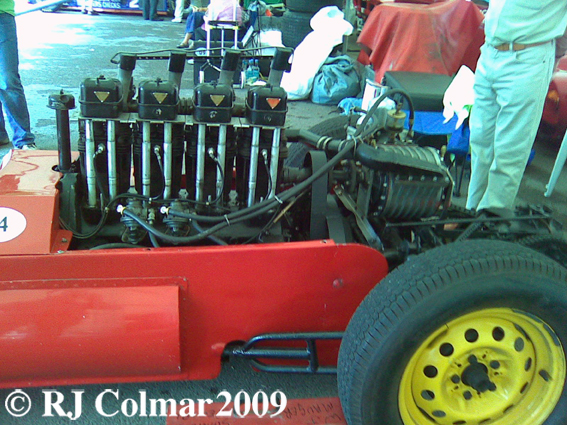
Well before it became a convention for open wheel cars the Stanton Brothers mounted the supercharged 197hp 4 cylinder 6.1 litre / 372 cui de Havilland Gypsy Major engine, taken and inverted from a de Havilland Gypsy Moth crop dusting aeroplane, longitudinally behind the driver.

Stanton Special, Goodwood Festival of Speed,

MF Stanton drove the Stanton Special to the Outright New Zealand Standing Start Quarter Mile Sprint record of 12.42 secs, 72.4637 mph on October 4th 1958, a record that might possibly stand for all time since New Zealand completed it’s metrication programme on 14th December 1976.

Thanks for joining me on this “The Cropduster” edition of “Gettin’ a li’l psycho on tyres” I hope you will join me again tomorrow when I’ll be visiting the first World Endurance Championship race of the season which proved to be a cracker from start to finish.. Don’t forget to come back now !

Share

Transverse Success – Honda RA 272

13 years after it’s foundation in 1949 Honda Motor Company moved into the production of it’s first S360 micro sports cars in June 1963.

A month earlier Soichiro Honda set his Research and Development engineers to work on a 1.5 litre / 91.5 cui 60 ° V12 motor for use in a Formula One application.

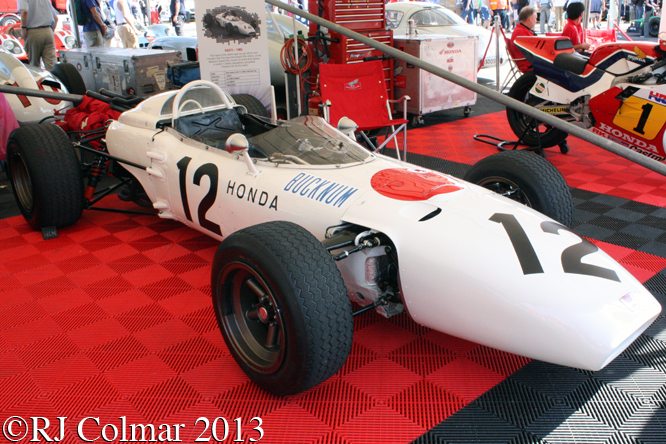
Honda RA272, Goodwood Festival of Speed

It would appear that after a deal fell through to work with Lotus the engineers, who had become world champions in Motorcycle Racing, used a 1961 Cooper in their possession as the starting point for an all new RA270 chassis.

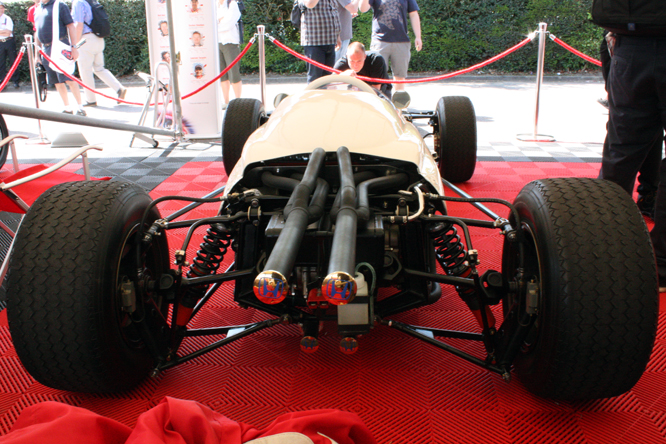
This gold prototype tested, but never raced, by Jack Brabham in 1964 was notable for a transverse mounted engine and for having 12 exhausts coming straight out of the back.

Honda RA272, Goodwood Festival of Speed

At the 1964 German Grand Prix Honda made their Formula One debut with the RA271 driven by American Ronnie Bucknum, which still had a transverse mounted V12, but conventional exhaust manifolds with two tail pipes.

Ronnie qualified 22nd and was classified 13th despite having an accident after completing 11 laps of the scheduled 15 lap race, Ronnie retired from both the Italian and US Grand Prix later in the season.

Honda RA272, Goodwood Festival of Speed

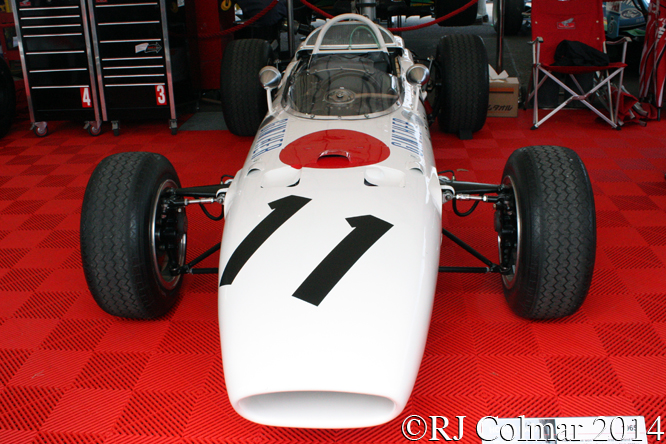
For 1965 the Honda engineers Yoshio Nakamura and Shoichi Sano kept the transverse mounted V12 which was said to produce 230 hp at 13,000 rpm.

American BRM refugee Richie Ginther joined Ronnie Bucknum in the team.

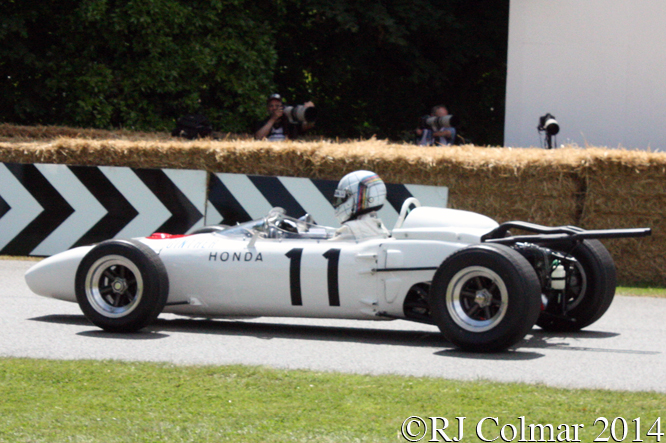
Honda RA272, Gabriele Tarquini, Goodwood Festival of Speed

After the team missed the season opening South African Grand Prix and recording two retirements at Monaco, Richie scored the team’s first World Championship point with a sixth place finish at Belgian Grand Prix after starting 4th on the grid.

At the French and British Grand Prix Richie two more retirement and with the team now running just the one car he finished 6th in the Dutch Grand Prix from third on the grid.

Honda RA272, Gabriele Tarquini, Goodwood Festival of Speed

Honda missed the German Grand Prix but came back with cars for Richie and Ronnie for the remaining three races of the season.

Richie finished 14th and 7th in Italian and the United States Grand Prix where Ronnie retired and was classified 13 respectively with both drivers suffering from ignition issues.

Honda RA272, Goodwood Festival of Speed

However at the 1965 Mexican Grand Prix, the last of the 1.5 litre / 91.5 cui era it all came good for Honda when Richie qualified 3rd and Ronnie 10th.

Against the form of British drivers and British built cars from Lotus and BRM winning the previous nine races of the season Richie came through for the win and Ronnie came home in fifth place.

This race would remain Richie’s only victory in Formula One and remarkably the Honda team have added only two more Formula One victories as constructors to that total, at the Italian Grand Prix with John Surtees in 1967 and with Jenson Button in 2006 Hungarian Grand Prix.

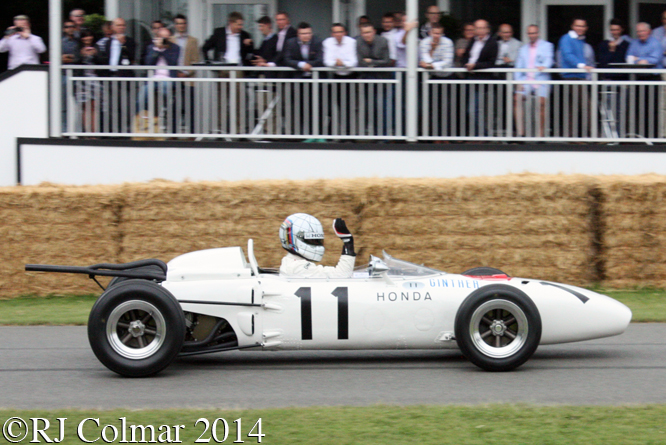
Former Italian Formula One Driver and Honda works world touring car driver Gabriel Tarquini is seen at the the wheel of Richie Ginther’s #11 Mexican Grand Prix winning car at Goodwood Festival of Speed last year.

Thanks for joining me on this “Longitudinal Success” edition of “Gettin a li’l psycho on tyres” I hope you will join me again for Maserati Monday tomorrow. Don’t forget to come back now !
19/04/15 Thanks to Tim Murray for pointing out that the RA 272’s kept the transverse mounted engine layout for 1965.

Share

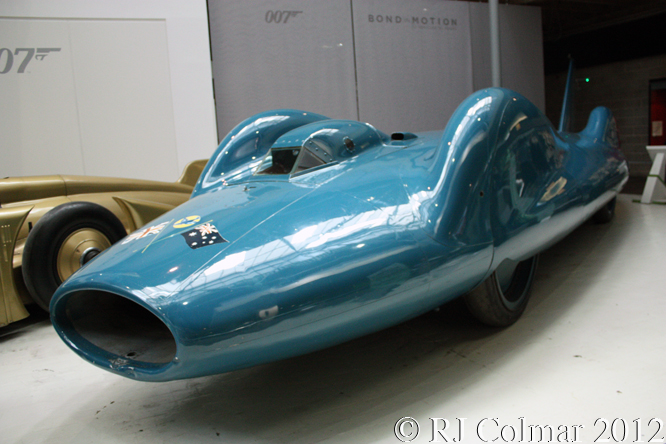
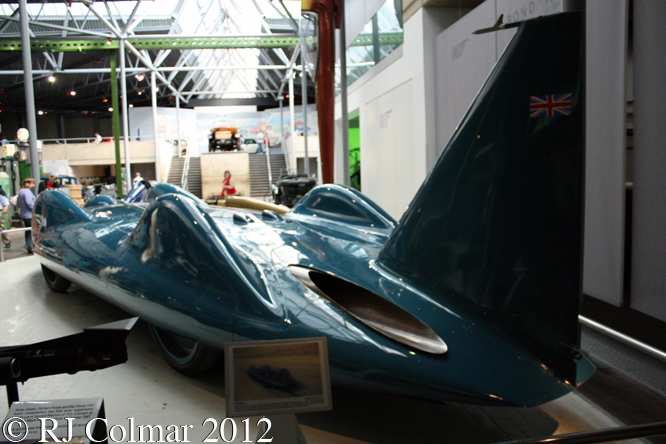
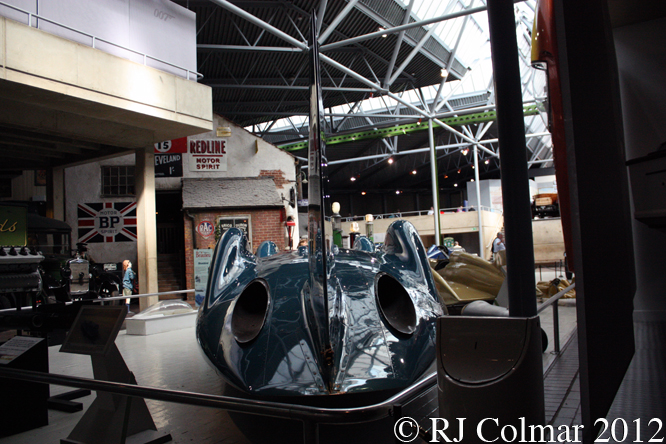
Four Independently Sprung Tons – Bluebird Proteus CN7

Between 1955 and 1964 Donald Campbell, son of Sir Malcom, set 6 World Water Speed records in the remarkable jet powered hyroplane Bluebird K7.

Equally remarkably during much of this time Donald was also raising the funds for todays featured Bluebird-Proteus CN7 for an attack on the 394 mph land speed record which had been set by John Cobb driving the Railton Mobil Special in September 1947.

After Donald had set a new water speed record of 202 mph with his K7 hydroplane he asked it’s designers Lew and Ken Norris if they would like to design and build today’s featured record breaking car.

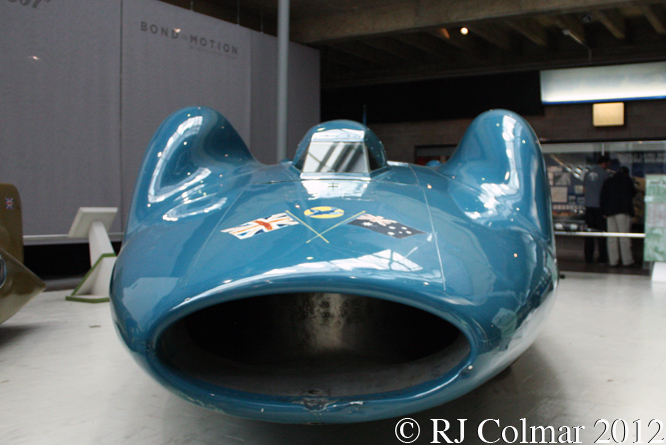
Bluebird-Proteus CN7, National Motor Museum, Beaulieu,

The Norris brothers set about devising possibly the worlds most sophisticated motor vehicle with a monocoque chassis housing a modified 4,450hp Bristol-Siddeley Proteus turbo prop motor that delivers power through two gearboxes to the front and rear axles which in turn drive the independently sprung 52 inch Dunlop wheels.

The Norris Brothers and many since anticipated that the Bluebird Proteus CN7 would be capable of 500 mph.

Despite the cars front wheels having only a 4 degree turning angle Donald Campbell gave the CN7 it’s first public outing at Goodwood in 1960 managing a couple of demonstration laps. With the engine running at idling speed it still managed to reach 100 mph on the straight.

Bluebird-Proteus CN7, National Motor Museum, Beaulieu,

Donald’s first attempts to break the World Land Speed record at Bonneville in 1960 ended with an accident in which he suffered a fractured lower skull and a broken ear drum.

While recuperating Donald learned to fly and rebuilt CN7 for a Land Speed Record Attempt in 1963.

Bluebird-Proteus CN7, National Motor Museum, Beaulieu,

Lake Eyre in Australia was chosen not only because more space was available by also because it had not rained there for 20 years… until Donald and CN7 turned up.

In 1964 Donald returned to Lake Eyre and without a properly dried out salt surface managed to raise the World Land Speed Record to a disappointing 403 mph, nearly 100 miles an hour short of his target.

On the 31st of December 1964 Donald became the first man to set World Speed Records on Land and Water in the same year when he set his final new record aboard K7 of 276 mph on Lake Dumbkeyung also in Australia.

Bluebird-Proteus CN7, National Motor Museum, Beaulieu,

The regulations for land speed records were relaxed to allow thrust powered vehicles without driven wheels shortly after Donald set his record in the four wheel drive CN7.

The Norris brothers were envisaging rocket propulsion for a new Bluebird Mach 1.1 vehicle when Donald was killed aboard K7 on Coniston Water in England while he was trying to raise the World Water Speed record on January 4th 1967.

Bluebird Proteus CN7 is seen in these photographs at the National Motor Museum, Beaulieu where it is usually to be found when not out on loan.

Thanks for joining me on this “Four Independently Sprung Tons” edition of “Gettin’ a li’l psycho on tyres” I hope you will join me again tomorrow when I’ll be looking at another Triumph Rally car. Don’t forget to come back now !

Share

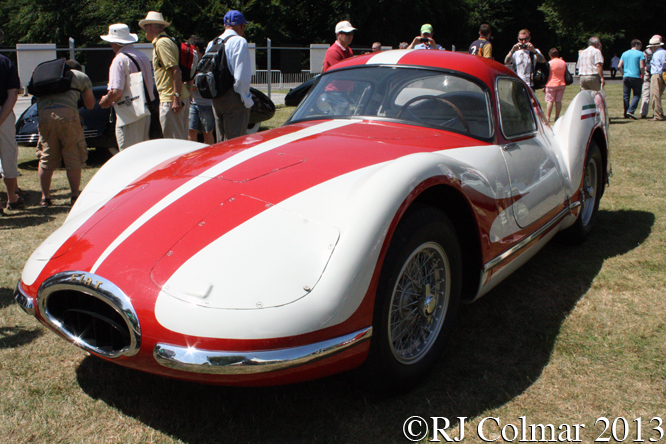
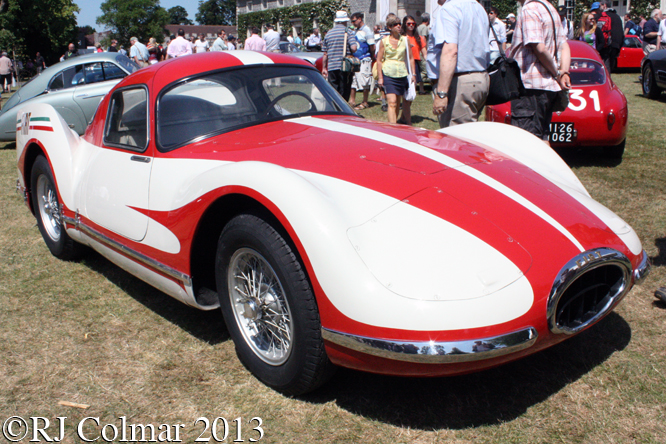
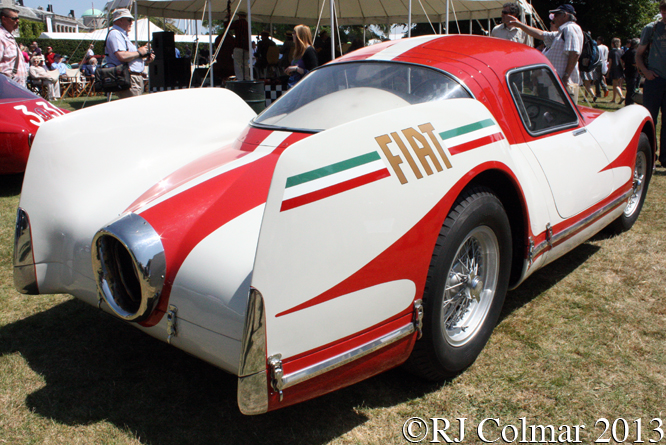
Cd 0.14 – FIAT 8001 Turbina

Spurred on by the news that Rover was looking to transfer it’s WW2 jet engine technology to production car use FIAT joined the fray in 1948 led by technical director Dante Giacosa.

FIAT Turbina, Goodwood Festival of Speed,

FIAT at the time was building building gas turbines for aeronautical and civil applications but in order to maintain secrecy from others in the FIAT empire Giacosa had a team of three engineers develop a purpose built turbine from scratch.

FIAT Turbina, Goodwood Festival of Speed,

Former Isotta Fraschini stylist Fabio Luigi Rapi was responsible for the shape of the 8001 Turbina which when tested at Turin Polytechnic indicated the drag co efficient was down to a record low of cd 0.14.

FIAT Turbina, Goodwood Festival of Speed,

Carlo Salamano first tested the 8001 Turbina on the famous oval test track set on the roof of FIAT’s Lingotto building in Turin in February 1954.

FIAT Turbina, Goodwood Festival of Speed,

With 300hp available the the 8001 Turbina was thought to be easily capable of breaking the 152 mph gas turbine powered world record set by Rover in 1952, however before the Turbina got a chance to go record breaking Frenchman Jean Hebert set a new gas turbine powered record of 191.8 mph in Renault’s purpose built record breaker “Etoile Filante” in September 1956 and it was recognised immediately that this was beyond the FIAT’s capability.

Thanks for joining me on this “Cd 0.14” edition of “Gettin’ a li’l psycho on tyres” I hope you will join me again tomorrow. Don’t forget to come back now !

Share

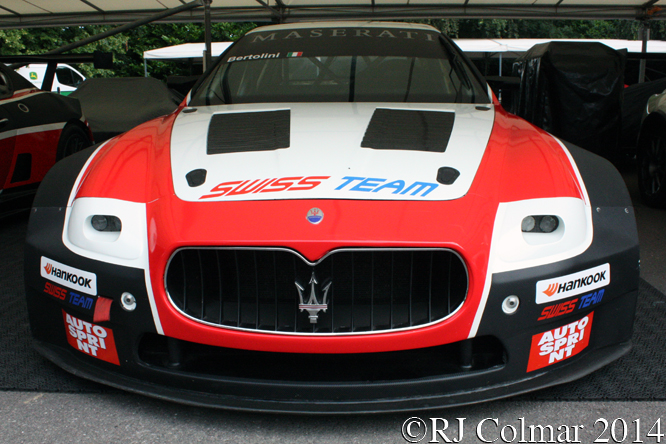
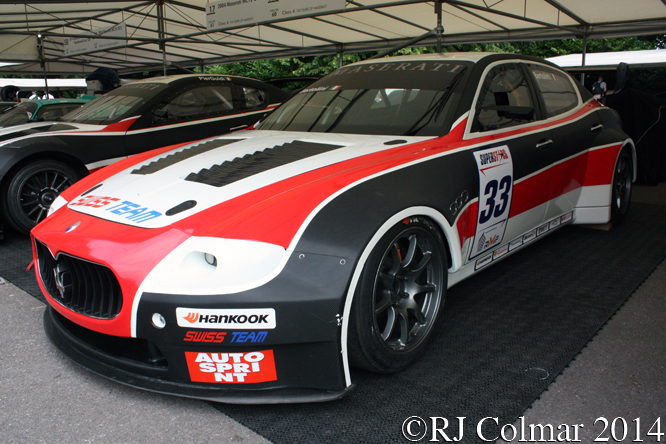
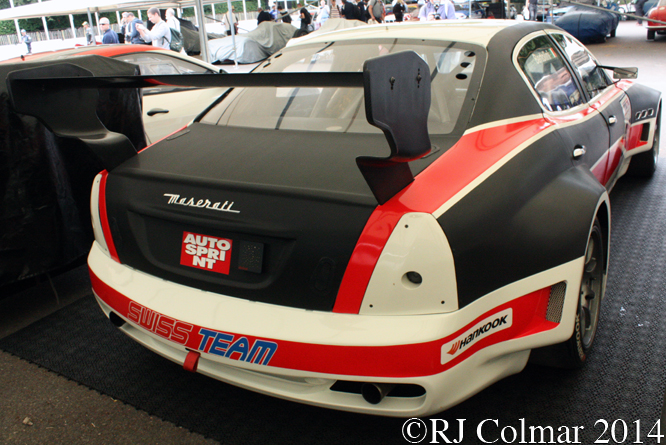
International Superstar – Maserati Quattroporte EVO

The International Superstar Series evolved as an FIA approved European Series out of the Italian Superstar Series in 2007.

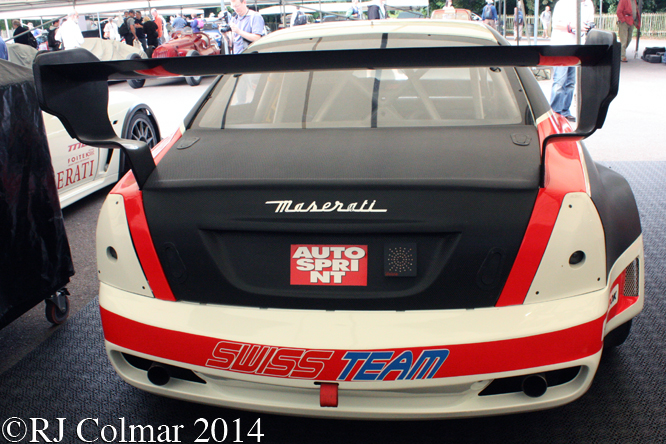
Maserati Quattroporte EVO, Goodwood Festival of Speed,

Today’s featured Maserati Quattroporte EVO was developed by Swiss Team in 2009 originally for former Fondmetal Formula One driver Andrea Chiesa to drive.

Maserati Quattroporte EVO, Goodwood Festival of Speed,

Based on the fifth generation M139 Quattroporte this car is powered by a 4.2 litre / 259 cui 32 valve multi purpose Ferrari Maserati F136 motor that is found in a variety of Maserati’s and Ferrari’s.

Maserati Quattroporte EVO, Goodwood Festival of Speed,

Swiss Team ran the Quattroporte EVO from 2009 until 2012.

Maserati Quattroporte EVO, Goodwood Festival of Speed,

The teams highlight was when when multiple FIA GT Champion Andrea Bertolini won the International Superstar Championship in 2011.

Thanks for joining me on this “International Superstar” edition of “Gettin’ a li’l psycho on tyres” I hope you will join me again tomorrow. Don’t forget to come back now !
Share

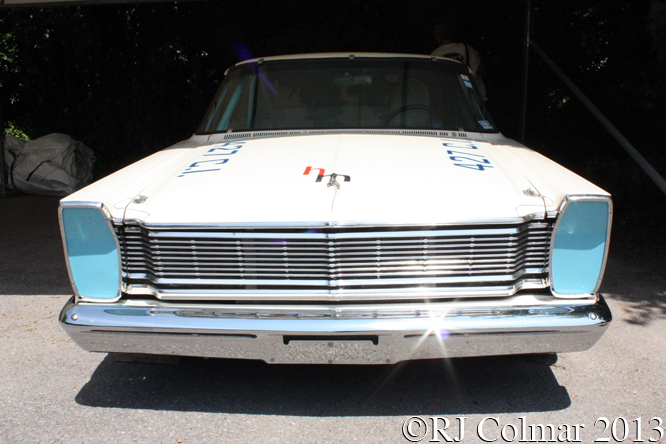
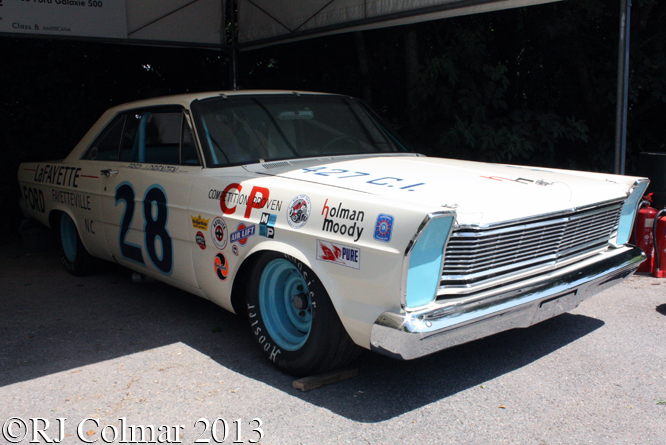
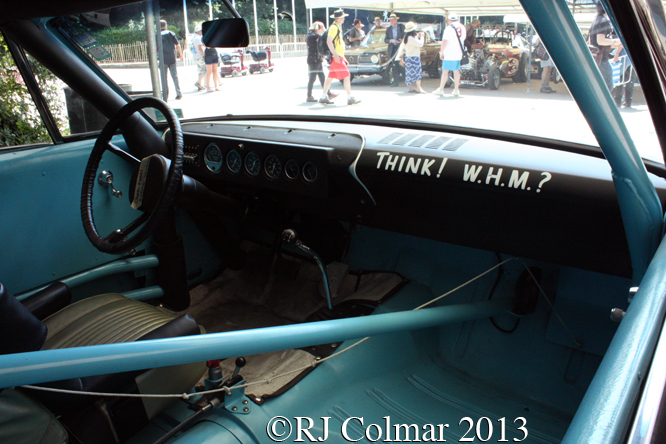
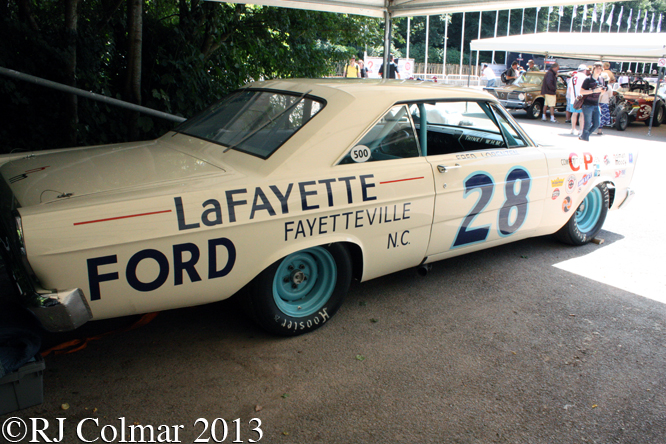
THINK ! W.H.M. ? – Ford Galaxie 500

Fred Lorenzen’s won his debut event, to see who would be the first to turn over a 1937 Plymouth, in Elmhurst, Illinois aged 15 in 1949.

He graduated to NASCAR by 1956, but it was not until after he had won the 1958 and 1959 USAC Championships in a Talarico Bros. built Chevrolet and run 10 races as an owner driver in the 1960 NASCAR series that he got an offer from Ralph Moody to join the Holman Moody team for the 1961 season.

Ford Galaxie 500, Goodwood Festival of Speed,

The new partnership made fifteen starts during the 1961 season and Fred won three of them at Martinsville, Darlington and Atlanta.

Prior to the Darlington win Ralph, a well respected former driver, coached Fred on how to beat one of the favourites Curtis Turner in the event of a showdown between the two of them.

Ford Galaxie 500, Goodwood Festival of Speed,

Sure enough as the laps wound down Fred found himself fighting Chris for the lead but could find no way past having forgotten Ralph’s instructions before the start of the race.

During a late pit stop a furious Ralph asked Fred in no uncertain terms “Think Boy ! What The Heck Is The Matter ?” Fred followed Ralph’s instruction’s to the letter going into the last lap and sold Chris a dummy to the outside which allowed his to go low and take the lead for the win in his open Ford Sunliner while Chris was busy acquiring a Darlington Stripe.

Ford Galaxie 500, Goodwood Festival of Speed,

During the second year of their partnership Fred crossed the line first twice more from 19 starts to finish a career best 3rd in points.

Fred crossed the line first 6 times from 29 starts in 1963 to become the first driver to win over $100,000 in a single season.

Ford Galaxie 500, Goodwood Festival of Speed,

In 1964 the partnership made only 16 starts from a possible 62, but astonishingly won 8 of them.

At the 1965 Daytona 500 Fred started 4th and came through to take the win in a vehicle similar to the one featured today and finished the season with 4 wins from 17 starts.

Ford Galaxie 500, Goodwood Festival of Speed,

Fred made a total of 15 more starts for Holman Moody in the 1966 and 1967 seasons winning three more races, he also made one start in Junior Johnson’s famous cut down yellow Galaxie known as the Yellow Banana, but crashed it after leading 24 laps.

Taking a break from the sport during the 1968 and 1969 seasons Fred came back for three more partial seasons with a variety of owners from 1970 to 1972 scoring 11 top five finishes from 29 starts leaving his career record at 28 wins from just 158 starts with 32 pole positions.

Last month Fred was inducted into the NASCAR Hall of fame, the car featured today is believed to be one of several replica’s of Fred’s 1965 Holman Moody Galaxy 500 originally built by Jack Sullivan with fellow wrenches Herb Nab and Freddy McCall.

Thanks for joining me on this “THINK ! W.H.M ? edition of “Gettin’ a li’l psycho on tyres” I hope you will join me again tomorrow for Ferrari Friday. Don’t forget to come back now !
Share