Tag Archives: Goodwood

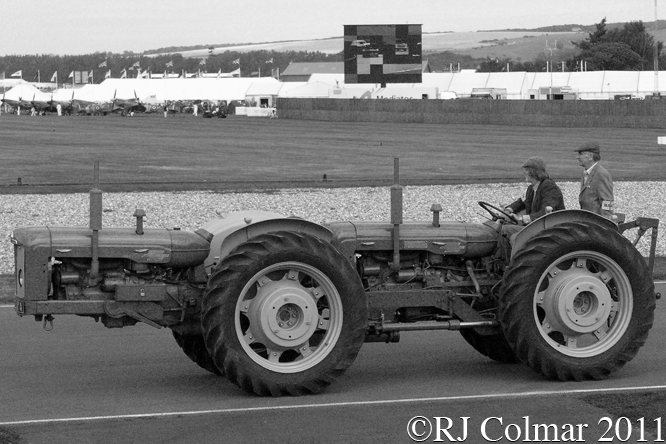
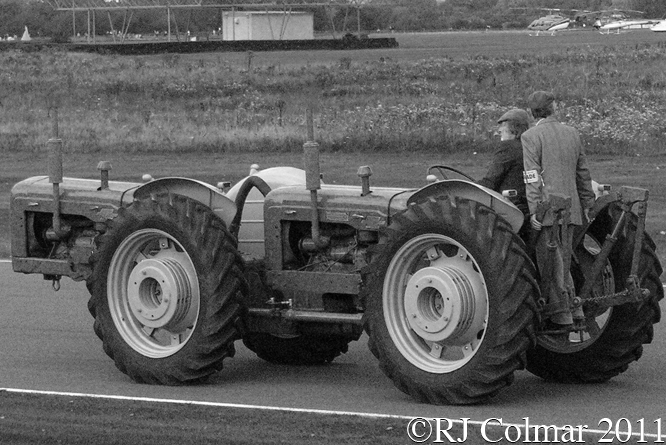
Doubling Horse Power – Doe Dual Drive 130

This month I thought it would be fun to look at a few farm vehicles I have stumbled across in recent years.

In June 1898 Ernest Doe took out a lease on a blacksmiths shop in Ulting near Maldon in Essex. By 1910 the business of shoeing horses and repairing agricultural equipment had been successful enough for Ernest to by the free hold for the business and a neighbouring farm.

11-Doe Dual Drive 130 4094sc

After the Great ’14-’18 war eldest son Ernest Charles persuaded his father to invest in some of the 6000 tractors which had been sent from by the US to help the Allied war effort. By the ’39-’45 war Ernst Doe were distributing Fordson, David Brown, Allis Chalmers and Case tractors with Ransome machinery.

Doe Dual Drive 130 4095sc

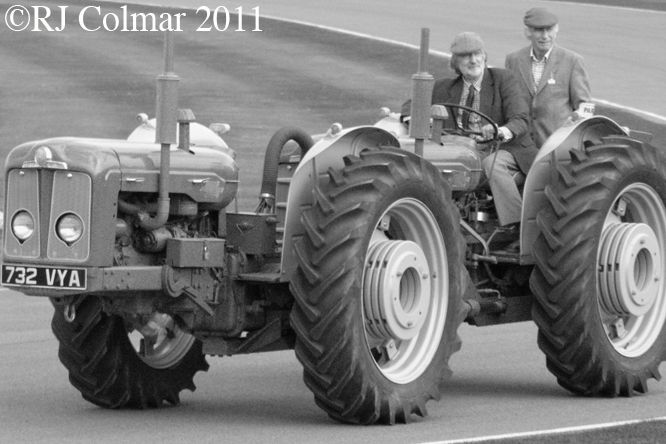
Wanting more power from his tractor Essex farmer George Pryor bought two new Fordsons removed the front wheels of both and linked them with a turntable that allowed the enlarged vehicle to be steered with the aid of a pair of hydraulic rams. In 1958 Ernst Doe built an improved version of Pryor’s tractor linking two Fordson Major tractors. With a combined 100 hp and all wheel drive the vehicle outperformed everything else available in the UK with the bonus that it required special equipment because regular farmyard equipment was too flimsy when operated by the Doe Dual Power.

Doe Dual Drive 130 4096sc

The name was later changed to Doe Dual Drive often abbreviated to Triple D. By 1963 Doe built an even more powerful tractor using to a pair Ford 5000’s like the Triple D 130 seen here at Goodwood. The final Triple D 150 variant was built with a pair of Ford Force 5000 units. Eventually more conventional tractors with more powerful single engines caught up with the performance of the Triple D and rendered it obsolete because of the increased maintenance necessitated by having a vehicle with two motors and two gearboxes.

It is thought around 300 Triple D’s were built and today they can fetch over £50,000 at auction. Today Ernst Doe, still a family business, operates from 19 outlets in the east of England distributing a variety of plant and machinery including New Holland tractors.

Thanks for joining me on this “Doubling Horse Power” edition of “Gettin’ a li’l psycho on tyres” I hope you will join me again tomorrow when I’ll be looking at the first of this months series of Edwardian vehicles. Don’t forget to come back now !

Share

It’s Not Simplex – Mercedes Simplex

On the 1st of March 1902 the; former organiser of steam train races on the Morovian railway, diplomat, tobacco trader, insurance inspector and entrepreneur who sat on the board of the Daimler Motoren Gesellschaft (DMG), Emil Jellinek took delivery of the very first Mercedes Simplex in Nice, France, a month ahead of the Nice – La Turbie Hillclmb into which it was entered for E.T.Stead. A second Simplex was entered in the same event to be driven by Albert Lemaître, official winner of ‘the world’s first competitive motoring event’ from Paris to Rouen in 1897.
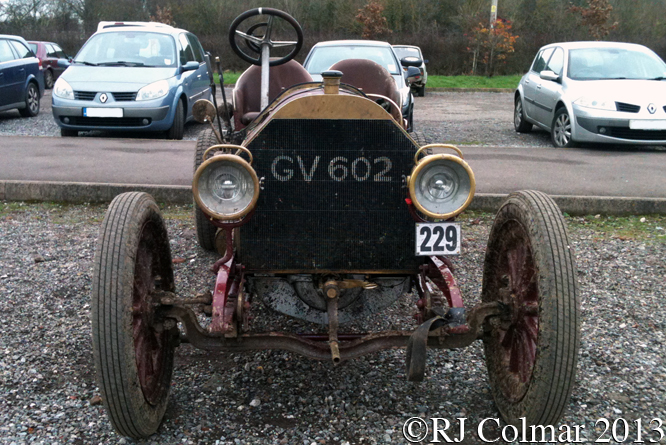
Mercedes Simplex, Exeter Trial,

As the 35hp Mercedes, driven by Wilhelm Werner, of 1901 had done the new Simplex model swept to a 1-2 victory with Stead leading Lemaítre home. After Werner had won the Frankfurt circuit race later in the same year he and Otto Hieronimus returned to Nice in 1903 and claimed another 1-2 for the Simplex model with Otto beating Werner.
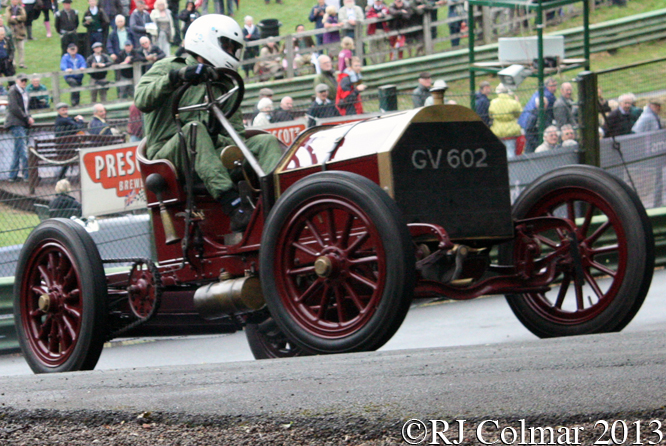
Mercedes Simplex, VSCC Prescott

In his pursuit of a “mechanical greyhound” Jellink father of daughter Mercedes who’s name Jellink insisted on selling DMG’s products under, had encouraged Wilhelm Maybach and Gottlieb Daimler’s son Paul to pursue lightweight designs against all contemporary mechanical wisdom. That wisdom had been largely based on experience with steam locomotives which as a general rule of thumb could be reckoned to be faster the bigger they were.
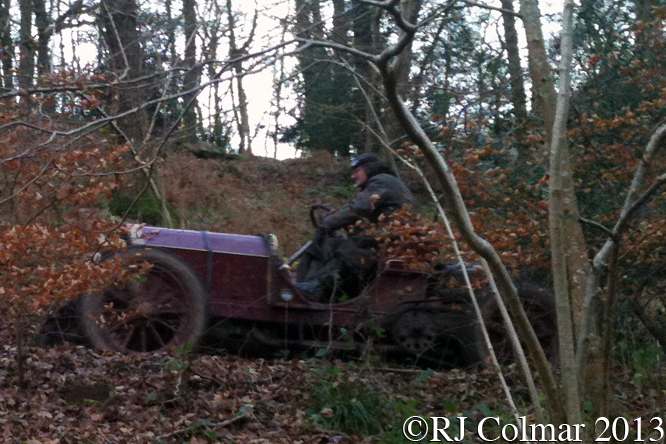
Mercedes Simplex, Exeter Trial,

While the Simplex was not outwardly revolutionary, it followed the Panard Systém with the engine at the front and rear wheel drive it was the detail improvements which made it such a good performer. In particular the transmission featured 4 forward speeds that were engaged by the worlds first foot operated (Simplex) spring pressure clutch which made changing gears a good deal easier and faster.
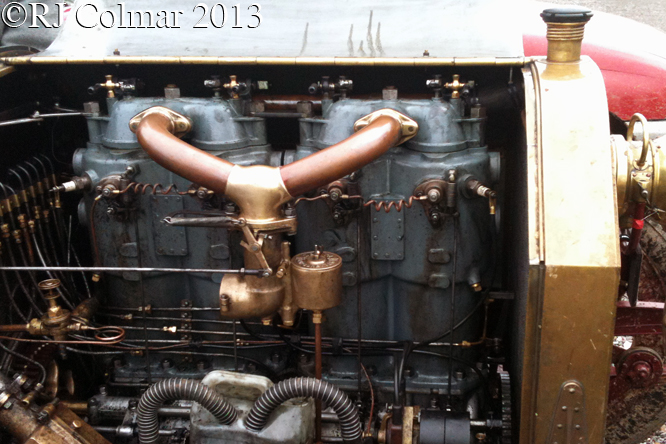
Mercedes Simplex, Goodwood Festival of Speed

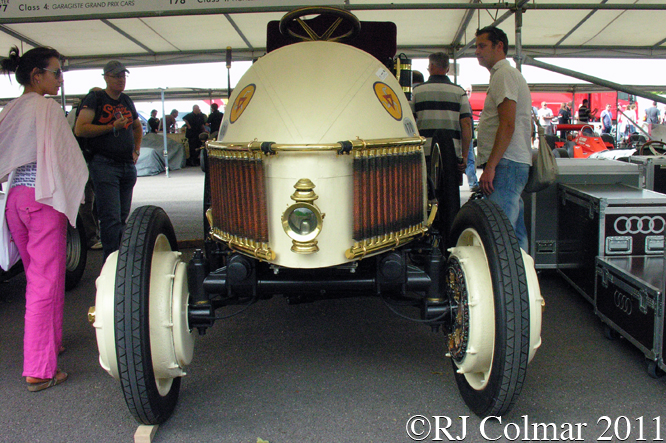
By enclosing the motor from above and below the Simplex relied on the draft of air through the worlds first honeycomb radiator to cool the motor which was not fitted with a cooling fan, but instead relied for a draft on the air vanes built into the 60 cm / 23 5/8ths inch flywheel. This improved cooling system allowed a 2 litre saving in water coolant over the previous model, now only 7 litres 1.5 gallons of water were required to cool the four cylinder motor.
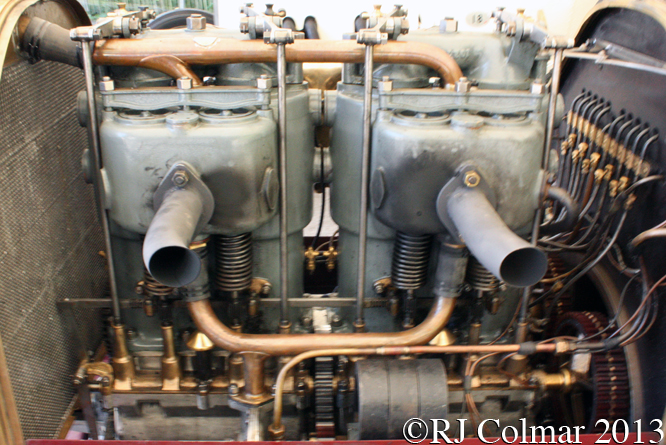
Mercedes Simplex, Exeter Trial,

Interestingly the vehicle was not only fitted with regular rear wheel brakes as were most vehicles of the time but it was also fitted with a band brake acting on a shaft connecting the gearbox to the sprocket shaft which was also actuated by a foot pedal. When ever the brakes were applied water dripped from a reservoir onto the friction surfaces to keep them cool.
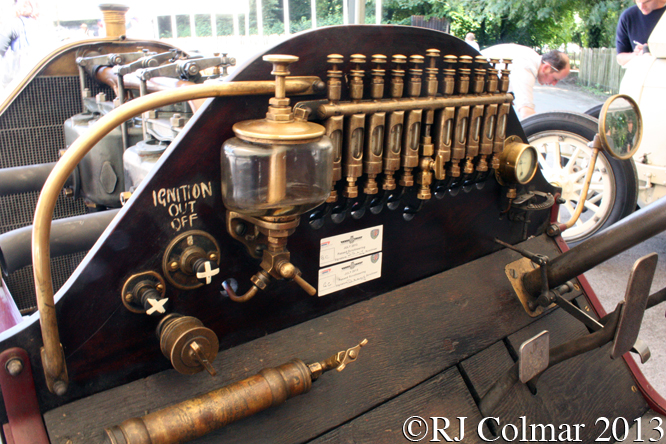
Mercedes Simplex, Goodwood Festival of Speed

At the Berlin Motor Show in 1903 when the Simplex was presented to Emperor Wilhelm II he is alleged to have shared some Imperial Prussian humour with Wilhelm Maybach, saying “A truly beautiful engine you have here! But it’s not as simplex as that, you know.” Polish Count Zborowski crashed his Simplex out of the 1903 Nice – La Turbine hillclimb but Mercedes honour was salvaged later in the week when Hermann Braun won the Nice Mile race on the Promenade des Anglais.
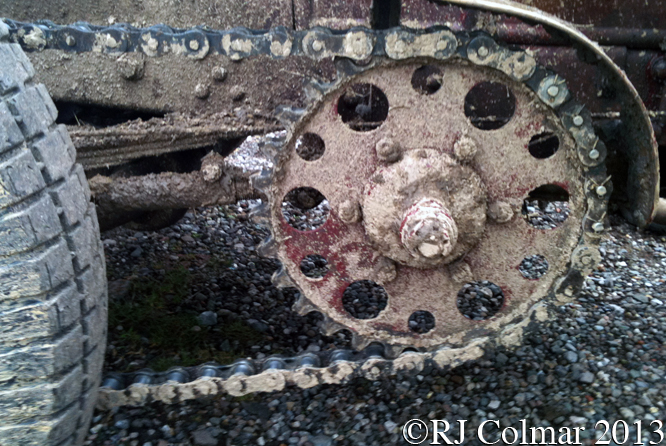
Mercedes Simplex, Exeter Trial,

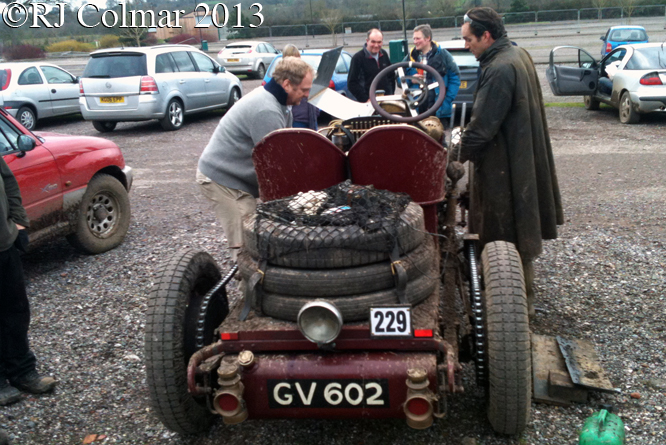
Originally fitted with a 6,786 cc / 411 cui 40 hp motor later models, like today’s featured 1903 example driven by Ben Collings in the Exeter Trial with his father in the passenger seat and at Prescott, were fitted with a 9,236 cc / 563 cui producing 60hp at under 1500 rpm. A further race victory was achieved by Belgian Camille ‘Red Devil’ Jenatzy in the 1903 Gordon Bennett Cup run over a 40 mile closed figure of eight road course marshalled by over 2,000 police officers. This victory was only achieved after Mercedes lost their intended three 12.7 litre / 775 cui 90 hp machines, along with 87 further vehicles, in a fire at DMG’s Cannstatt plant and the factory had borrowed three 60hp Simplex vehicles from their customers to enter the race, the winning #4 car was lent by US millionaire Clarence Clay Dinsmore.
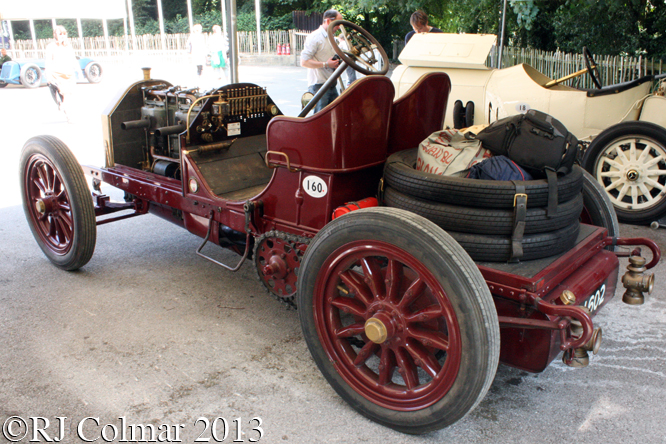
Mercedes Simplex, Goodwood Festival of Speed

On March 14th 1902 Billionaire William K. Vanderbilt Jr took delivery of the fifth 40 hp Simplex to be built from the Cannstadt factory and drove it 600 kms to Paris where he arrived the following day, this was the first of several Simplex models Vanderbilt would own and this car is thought to be not only the oldest surviving Simplex, but the oldest surviving Mercedes in the world. In January 1904 Vanderbilt briefly held claim to the land speed record when he recorded a speed of over 92 mph at the wheel of a 90hp Simplex at Daytona Beach.
Mercedes Simplex, Exeter Trial,

Louis Rigolly raised the record to 95.705 mph driving a Gobron-Brillie in Nice 2 months later. Pierre de Caters driving a 90 hp Simplex at Ostend in Belgium raised the bar to just over 97mph in May 1904 before Louis Rigolly became the first man to exceed 100 mph when he was timed at 103 mph driving his Gobron-Brillie Ostend in July 1904.

Manufactured from 1902 to 1909 there are thought to be just 13 Simplex cars still in existence, GV 602 has been in the Collings family for many decades.

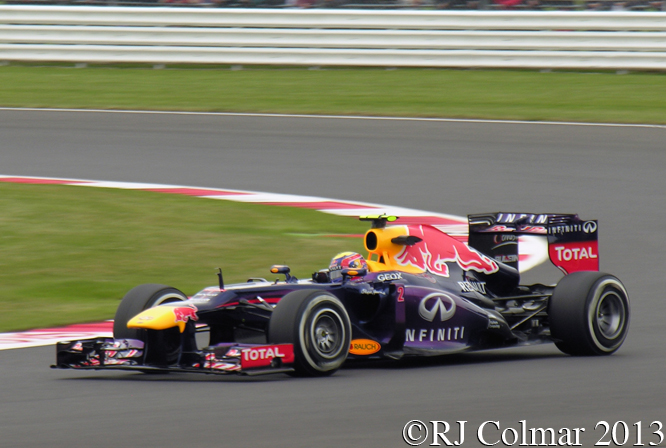
Thanks for joining me on this “It’s not Simplex” edition of “Gettin’ a li’l psycho on tyres”, I hope you will join me again tomorrow when I’ll be looking at a how the Red Bull young guns team got on in the 2013 Formula One Championship. Don’t forget to come back now !
Share

Ever Living Boneshaker – Lohner Porsche Semper Vivus

Ferdinand Porsche was born to German speaking parents in Maffersdorf now in the Czech Republic in 1875 and showed a strong interest in and aptitude for technology at an early age. Before he left home for Vienna at 18 Ferdinand had installed his parents house with the first electric light system in Maffersdorf.

Lohner Porsche Semper Vivus, Goodwood Revival

In Vienna Porsche worked for Bella Egger & Co., a company specialising in electrical products which is better known to day as Brown Boveri. After only a couple years Porsche had been promoted to a management position before joining the newly created Electric Car Department at Hofwagenfabrik Jacob Lohner & Co., a Vienna-based company part of the Austro-Hungarian military industrial complex.

Lohner Porsche Semper Vivus, Goodwood Revival

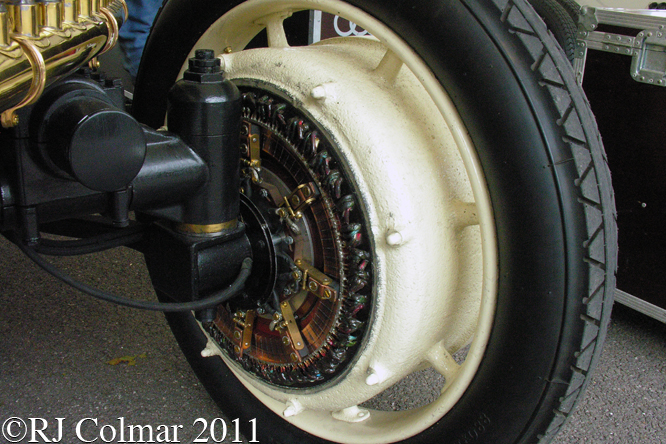
While at Lohner Porsche took up a ten year old idea by American inventor Wellington Adams to develop electric hub motor’s for a prototype all wheel drive electric Lohner buses.

Lohner Porsche Semper Vivus, Goodwood Revival

His Lohner Porsche System was received with great acclaim in 1898 and a modified vehicle was ordered by British coach builder EW Hart which was to incorporate a petrol motor to act as a generator for the electric motors to extend the vehicles range.

Lohner Porsche Semper Vivus, Goodwood Revival

The completed vehicle weighing in at some 4 tons was delivered on time in 1900 and was used to compete in an electric vehicle endurance trial from which the driver Ferdinand Porsche had to retire with a severe cold brought on by the extreme wet weather.

Lohner Porsche Semper Vivus, Goodwood Revival

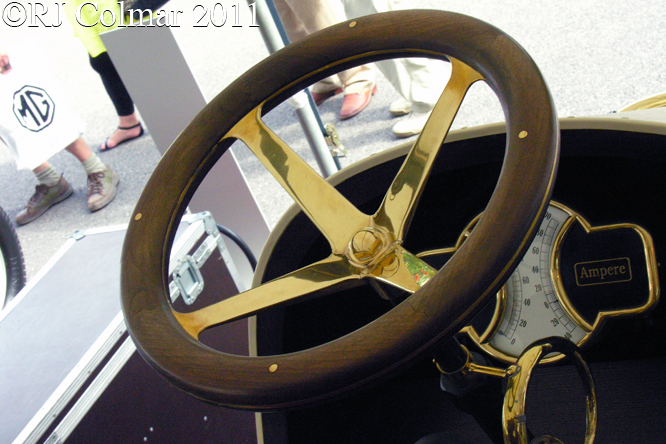
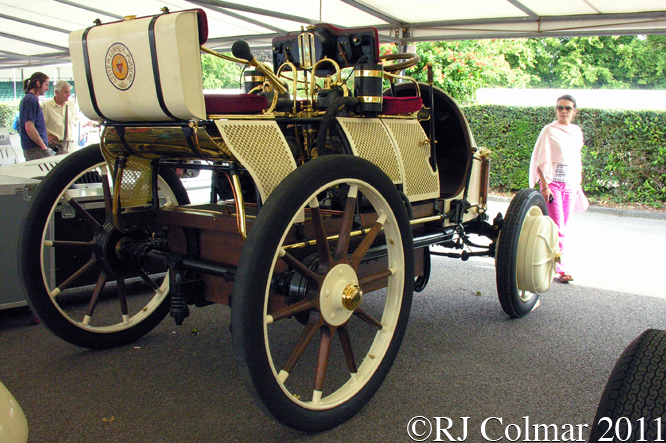
The 1900 Lohner-Porsche “Semper Vivus” (Ever Living) model employed two front electric hub motors each giving over 25 hp that are powered by batteries and two de Dion Boulton petrol motors each connected to generators which can be used to power the electric hub motors direct and charge the batteries, making the three ton “Semper Vivus” one of the earliest examples of a duel fuel vehicle.

Lohner Porsche Semper Vivus, Goodwood Revival

Sitting 6 feet off the ground the driver has an excellent view off the road, however steering a Semper Vivus, with those heavy hub motors, will not impress anybody on a school run,

Lohner Porsche Semper Vivus, Goodwood Revival

neither will the unsprung rear axle and so the Semper Vivus never went into production and so did not quite live up to it’s “Ever Living” moniker.

The recreation seen here at Goodwood Festival of Speed was built 111 years after the original in a collaboration between The Porsche Museum and Hubert Drescher it took four years to complete and is said to have the same performance as the original.

Thanks for joining me on this “Ever Living Boneshaker” edition of “Gettin’ a li’l psycho on tyres” I hope you will join me again tomorrow when I’ll be looking at Williams 2013 Formula One challenger.

Brighton Speed Trials Under Threat of Permanent Cancellation !

In their infinite wisdom, Brighton & Hove City Council are seeking to ban the Brighton Speed Trials from 2014.

If you care about speed and or motorsport history, please sign this linked petition to save Brighton Speed Trials in 2014 and beyond.

It’s a faf to Register before signing, but relatively painless compared to loosing the event which has been run with few interruptions since 1905.

You do not need to be resident in Brighton or even the UK to sign.

Share

Recreation Racer – Peterson Supercharged 6.5 litre Road Racer

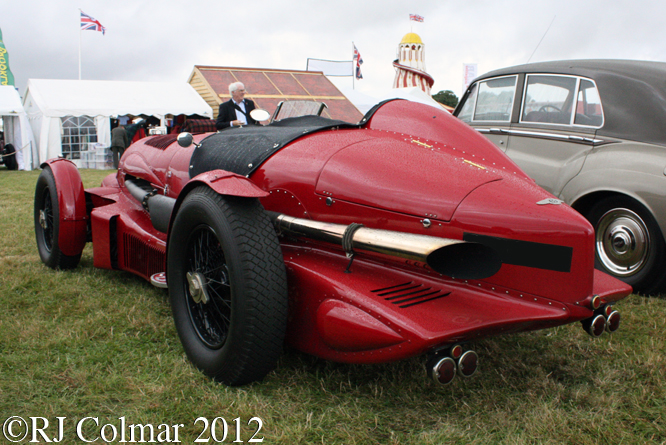
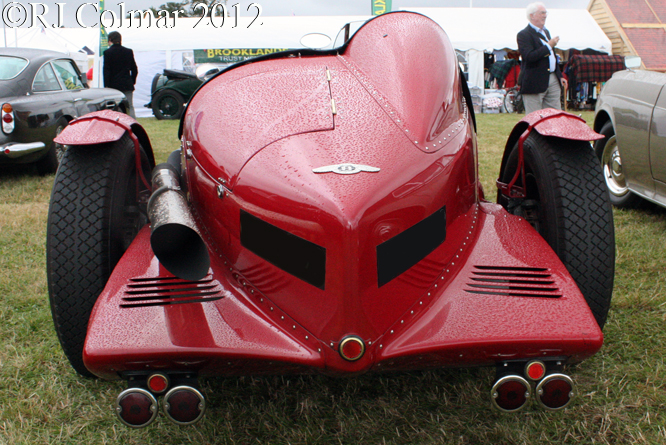
Tucked away in deepest Devon Peterson Engineering is a globally respected purveyor of hand made components for vintage Bentley cars.

Bentley Mk VI, Peterson SC Special, Goodwood Revival

The rural business run by Bob Peterson also has a fine reputation for restoring, rebuilding and recreating vintage Bentley Motor Cars.

Bentley Mk VI, Peterson SC Special, Goodwood Revival

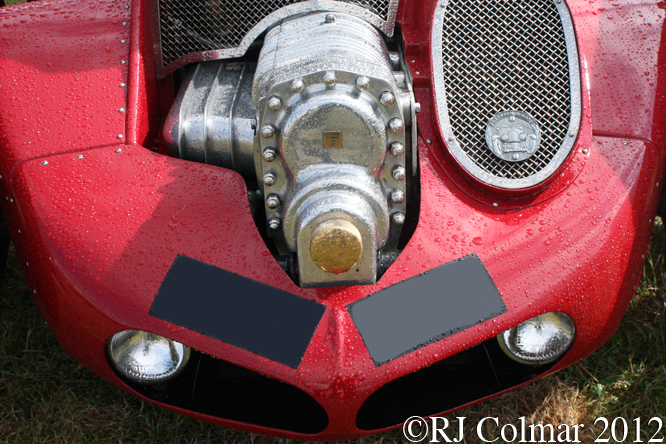
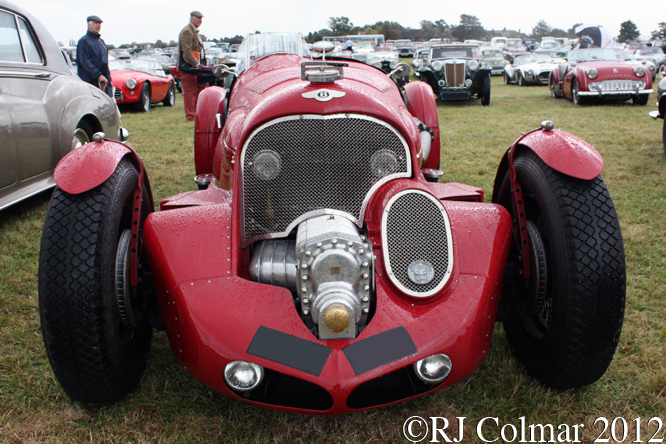
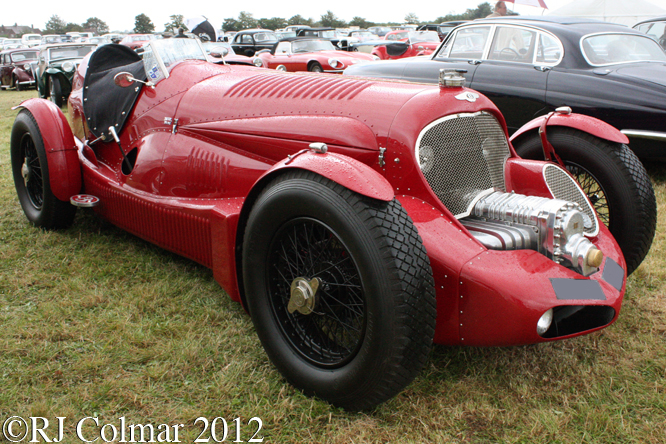
Today’s featured Peterson Supercharged 6.5 litre Road Racer is a recreation of the famous methanol burning red Bentley Blower Tim Birkin drove at Brooklands from 1929 to 1932.

Bentley Mk VI, Peterson SC Special, Goodwood Revival

This car like many Petersen Specials relies on a 400 hp 6.5 litre 406.5 cui supercharged 8 cylinder Rolls Royce motor for power in place of the donor cars original 6 cylinder normally aspirated Bentley motor.

Bentley Mk VI, Peterson SC Special, Goodwood Revival

Like last Sunday’s Blue Velvet Special the Peterson Special is built around a Bentley Mk VI chassis in this case one of the last delivered in 1953.

Bentley Mk VI, Peterson SC Special, Goodwood Revival

Along with, Limited Slip Differential (LSD), dual circuit hydraulic disc brakes and fully adjustable suspension the Petersen Supercharged 6.5 litre Road Racer is fitted with Dunlop Racing tyres.

Thanks for joining me on this “Receation Racer” edition of “Gettin’ a li’l psycho on tyres” I hope you will join me again tomorrow. Don’t forget to come back now !
Share

Fragrant Debut Pole – McLaren Cosworth M23 #M23/1

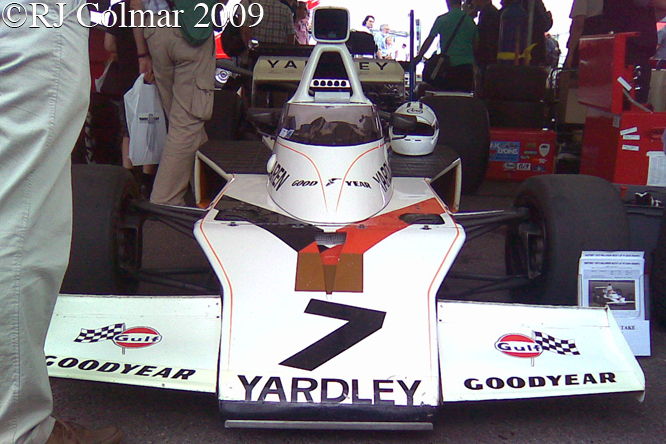
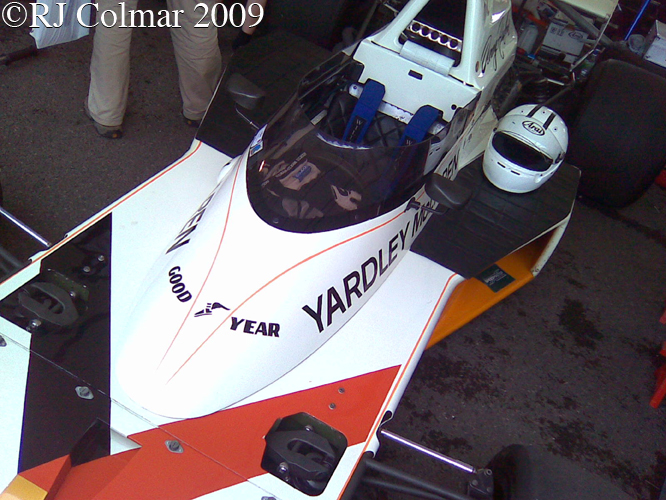
At the 1973 South African Grand Prix 1967 World Champion New Zealander Denny Hulme qualified on pole for the first and only time in his entire formula one career which lasted from 1965 until 1974. Remarkably he was driving a brand new Ford Cosworth powered McLaren M23, #M23/1 featured today, that was designed by Gordon Coppuck and which was to replace the Ralph Bellamy designed McLaren M19C.

McLaren Cosworth M23, Goodwood Festival Of Speed

The design of the M23 was broadly similar to the design of the 1972 turbo Offy powered McLaren M16 which Mark Donohue drive to victory in the 1972 Indy 500, except in the DFV motor of the M23 was bolted into the chassis rather to a sub frame and the side radiators of the M23 were surrounded by a deformable structure to protect the fuel tanks in the side of the chassis.

Denny Hulme came fifth in the 1973 South African Grand Prix which was won by Jackie Stewart driving a Tyrrell 006. At the 1973 Swedish Grand Prix Denny Hulme took the first of the M23’s 16 World Championship race victories, two races later Peter Revson scored the models 2nd victory at the British Grand Prix a feat Peter would repeat at the Canadian Grand Prix towards the end of the season. Despite scoring two more wins than in the previous season McLaren again finished third in the 1973 World Constructors championship as they had in 1972.

McLaren Cosworth M23, Goodwood Festival Of Speed

For 1974 McLaren again attracted BRM’s sponsor Philip Morris and the Marlboro brand, Yardley having sponsored BRM in 1970 and 1971 prior to joining McLaren for 1972. Peter Revson moved to join the UOP Shadow outfit and was replaced at McLaren by 1972 World Champion Emerson Fittipaldi from Lotus.

Emerson won three world championship races in 1974 on his way to his second World Drivers Championship and McLaren’s first World Constructors Championship, backed up by Denny Hulme who won the first race of the 1974 World Championship season in Aregetina which would be his last prior to retiring from the sport at the end of the season. Chassis #M23/1 was used in the early 1974 season by a third Yardley backed factory entry for Mike Hailwood who joined McLaren from Surtees. Mike ‘the Bikes’ best result was third in the South African Grand Prix which would become his career high world championship result. An accident in Germany at the wheel of another M23 prematurely terminated Mikes driving career, though he would return to motor cycling at which he was a seven time world champion and add two Isle of Man TT trophies in 1978 and 1979 to bring his total to fourteen.

In 1975 Emerson claimed two more championship victories on his way to second in the title behind Niki Lauda in the superior Ferrari 312T which had a more powerful motor and superior handling thanks to a transversely mounted gearbox and the testing skills of it’s driver. Another Surtees refugee Jochen Mass who had teken over Mike Hailwoods Yardley McLaren drive in 1974 replaced Denny Hulme and scored his only Grand Prix victory at the ill feted 1975 Spanish Grand Prix.

James Hunt replaced Emerson Fittipaldi for 1976 and McLaren ended up using the M23 for a forth straight season as they were locked in an epic battle with Niki Lauda for the 1976 title that has been immortalised by Ron Howard in the film “Rush” released earlier this year. On his way to the 1976 World Drivers Championship James won 6 races to become the M23 model’s most successful driver.

By 1977 the M23 was pressed into a fifth season of competition as a works racer before a much modified McLaren M26 was finally brought up to speed mid way through the season, non works McLaren’s were used sporadically in World Championship events until 1978 when rising star Nelson Piquet recorded a 9th place finish in the Canadian Grand Prix on what was to be the M23’s final World Championship appearance.

Tony Trimmer won the British Formula One Championship driving a Melchester Racing McLaren M23 in 1978.

Thanks for joining me on this “Fragrant Debut Pole” edition of “Gettin’ a li’l psycho on tyres” I hope you will join me again tomorrow. Don’t forget to come back now !
Share

Sixties Ferrari Covers – GALPOT Automobilia

Continuing to clear some of the motor racing stuff I have collected over the years today’s post features a couple of MotorSport covers that are currently on line on my “lightpress” e-bay account.

MotorSport, Goodwood, April 1966

First up from April 1966 the staff at MotorSport believed that the idea of an apparently arbitrary 3 liter / 183 cui limit on the size of forth coming GT regulations was not either in the interest of the sport, or the British motor industry who’s GT cars from Jaguar and Aston Martin with motors over the new limit would be rendered obsolete despite not being particularly quicker than their competition with smaller motors. The photo shows the start of the 1963 Goodwood Tourist Trophy race featuring four Ferrari 250 GTO’s, 2 Aston Martins and 2 E-type Jaguars which was won by Graham Hill in the #11 250 GTO.

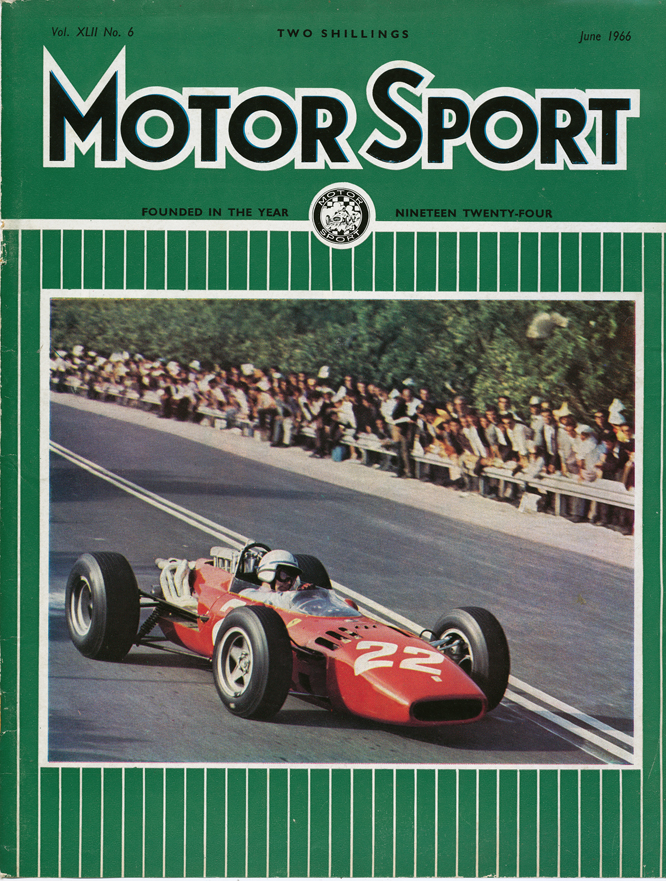
MotorSport, Surtess, Ferrari 312, Siracusa, June 1966

By June 1966 the Ferrari V12 3 litre 183 cui Formula One car was looking a good bet to win the championship with 1964 champion John Surtees at the wheel. John is seen guiding his Ferrari 312 fitted with a downsized sports car V12 motor through the streets of Siracusa on his way to an easy non championship victory. Note how Sicilian spectators are clearly seen ligning the inside of the crash barriers which were presumably installed to protect them. By the end of June John Surtees quit the Ferrari team after a disagreement with Ferrari management which deprived him and Ferrari of Championships which up until then had been theirs for the taking.

MotorSport, Bandini, Ferrari P3/4, Daytona, March 1967

Finally after a humiliating defeat to Ford at Le Mans in 1966 in February 1967 Ferrari stole a little Ford thunder by claiming victory in the Daytona 24 hour race. Seen on the cover of the March 1967 edition of MotorSport is Lorenzo Bandini at the wheel of the #23 Ferrari P3/4 he shared on his way to victory with Chris Amon. The #26 North American Racing Team Ferrari P4 driven by Pedro Rodriguez and Jean Guichet finished second.

Thanks for joining me on this “Sixties Ferrari Covers” edition of “Gettin’ a li’l psycho on tyres” I hope you will join me again tomorrow. Don’t forget to come back now !
Share

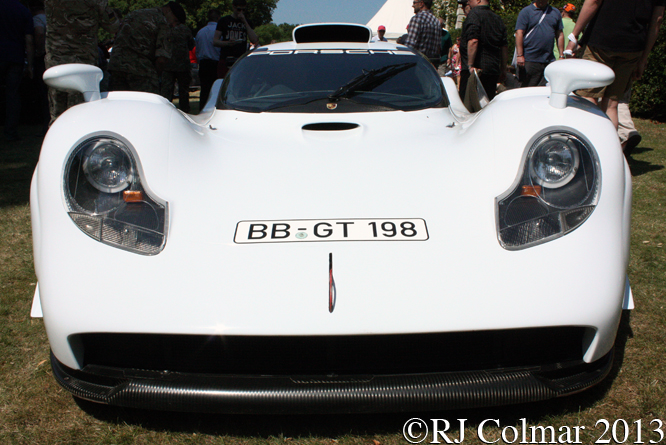
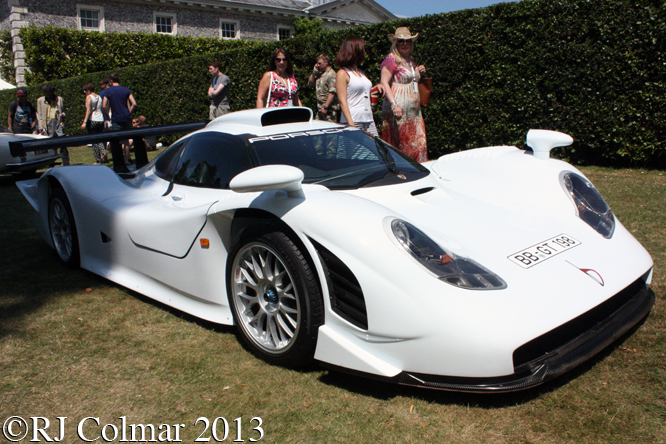
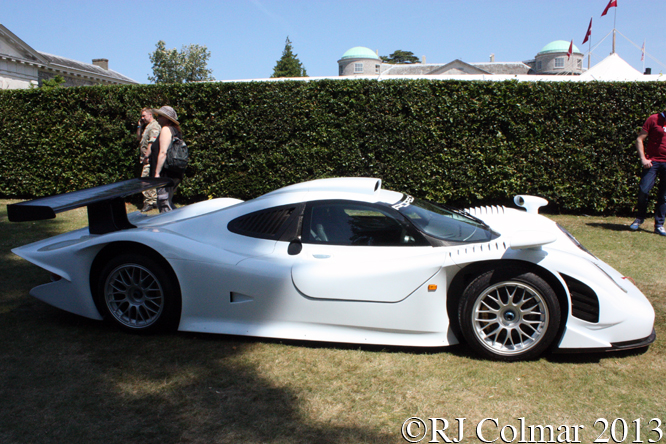
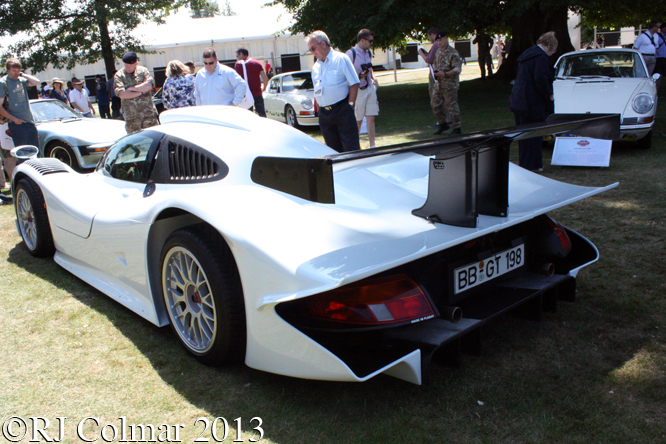
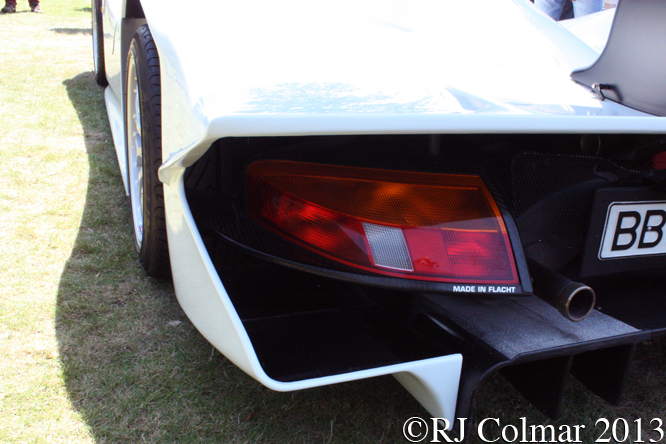
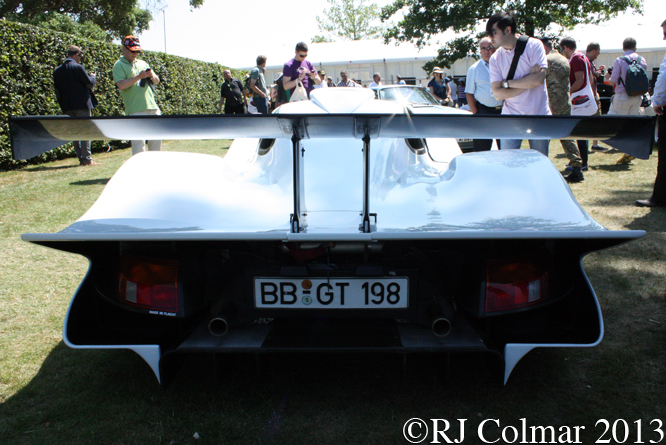
The Water Coooled Mid Engined One – Porsche 911 GT1-98 Straßenversion

For 1998 the GT1 regulations for endurance regulations only required one example of a model to be built for road use in order for the model to be legible to compete under the GT1 regulations. In 1996 and 1997 manufacturers had been required to produce 25 copies of a model in order to compete in GT1 endurance racing which had led to many compromises being made in order to keep the cost of production on the right side of the million dollar mark.

Porsche 911 GT1 98 Strassenversion, Goodwood Festival of Speed

With only one example being required to meet the 1998 GT 1 regulations Porsche effectively built their 911 GT1-98 for racing first and converted one for road use, today’s featured car, which passed all the mandatory tests to gain type approval in Germany.

Porsche 911 GT1 98 Strassenversion, Goodwood Festival of Speed

To meet the stringent emission laws the 650 hp twin turbocharged motor, as used in the all conquering Group C Porsche 962’s of the mid 1980’s had to be detuned to 537 hp, enough to propel today’s featured car from rest to 62 mph in 3.9 seconds and on to a top speed of 191 mph.

Porsche 911 GT1 98 Strassenversion, Goodwood Festival of Speed

The big improvement of the 911 GT1-98 over the previous models was the location of the engine form the standard 911 behind the rear axle line location to a more beneficial ahead of the rear axle, this benefited the handling by reducing the polar momentum, the force of weight outside the front and rear axle lines and by allowing venturi to be built into the rear body work which helped suck the car to the ground as it traveled with out sacrificing too much by way of top speed.

Porsche 911 GT1 98 Strassenversion, Goodwood Festival of Speed

The full carbon fiber monocoque for the 911 GT1-98 Porsche’s very first which made exclusive use of the exotic material.

Porsche 911 GT1 98 Strassenversion, Goodwood Festival of Speed

After the racing versions of the 911 GT1-98 had secured an unlikely one-two finish at Le Mans in 1998, where they were by no means the fastest cars, Porsche retired from official participation in the 24 hour classic with a record 16 victories that stands to this day.

Porsche 911 GT1 98 Strassenversion, Goodwood Festival of Speed

This year Porsche returned to Le Mans in the GT Class where they recorded their 99th class win, in anticipation for a full scale attack on overall victory with an LMP car to driven by Mark Weber next year.

Thanks for joining me on this “The Water Cooled Mid Engined One” edition of “Gettin’ a li’l psycho on tyres” I hope you will join me for a look at the final evolution of Porsche’s 997 the GT3 RS 4.0. Don’t forget to come back now !
Share