Tag Archives: Goodwood

Exclusive Muscle – Chrysler 300L

The Chrysler 300 ‘letter series’ was introduced in 1955 initially as an exclusive range for 300 hp 2 door coupés. Every year from 1955 to 1965 a new 300 model was introduced with a new suffix designtion.
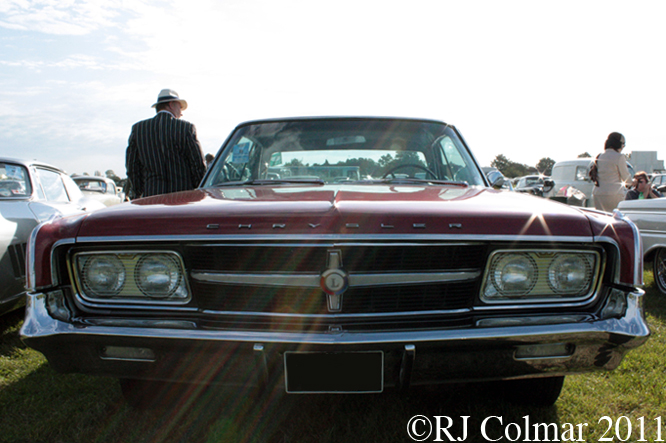
Chrysler 300L, Goodwood Revival

With the introduction of the 300C in 1957 power was up to 375hp which could be ordered in hard top and soft top versions. The following year a 300D recorded a top speed of over 156 mph during the speed weeks at Bonneville Salt Flats.
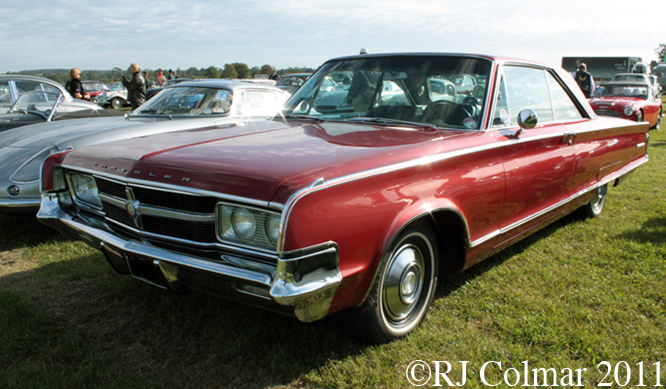
Chrysler 300L, Goodwood Revival

Up to 1959 the 300 letter series vehicles had been powered by ‘Hemi’ motors that had grown to 6.4 litres / 392 cui. From 1959 onwards 6.8 litre 413 cui Golden Lion motors were used with wedge heads
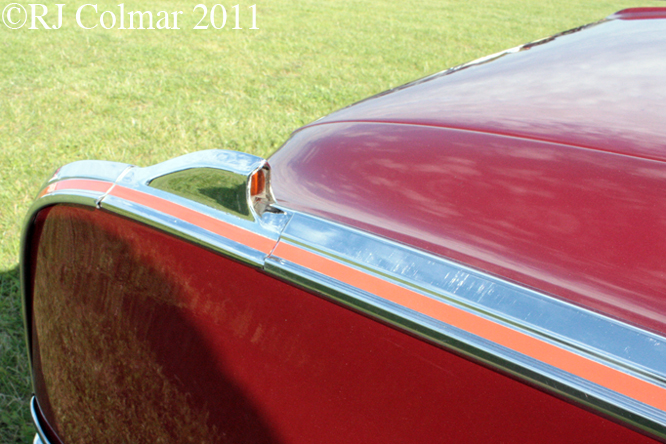
Chrysler 300L, Goodwood Revival

For 1960 the 300’s ditched the separate chassis and body building technique in favour of unibody construction. 1963 was the last of the 300 letter series to be designed by Virgil Exner and his team, just 400 300J’s all hard tops were built.

Chrysler 300L, Goodwood Revival

For 1964 over a thousand dollars was trimmed from the base line price of the 300K by making leather seats extra cost optional and down rating the base engine to 360 hp with the 380 hp still available as an extra cost option and sales rocketed to 3022 coupés and 625 convertibles.

Chrysler 300L, Goodwood Revival

The 1965 300L featured today was designed under the leadership of Elwood Engel, it would be the last of the uninterrupted 300 letter series vehicles, powered only by the 360 hp version of the Golden Lion motor. 2405 coupés and 440 convertibles were sold.

The 300 letter series have become extremely sort after models, the high power motors mark them as forerunners of the 1960’s muscle cars and the low build numbers means that the rarest models can fetch prices in the range of US$500,000.

Thanks for joining me on this Exclusive Muscle edition of ‘Gettin’ a li’l psycho on tyres’, I hope you will join me again tomorrow. Don’t forget to come back now !

Share

Pushing The Backbone – Lotus 30

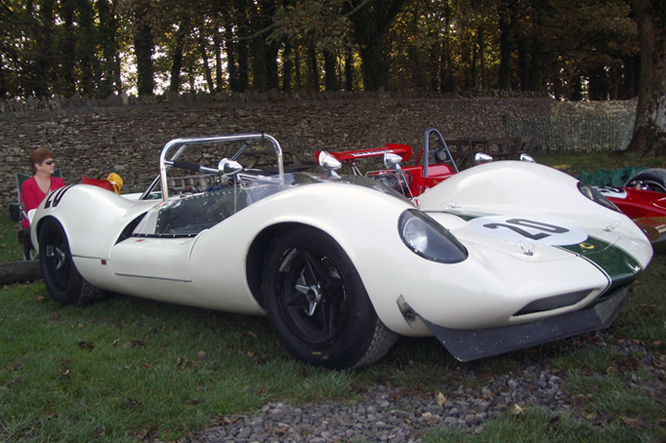
Allegedly Colin Chapman was a little upset about losing the contract to develop the Ford GT40 to Lola and set out to build a sports racing car in 1964 that would show Ford that they had made the wrong choice.

Colin’s idea was to use a back bone chassis similar to the one used in his successful Lotus Elan but stronger to accommodate a 4.7 litre / 286 cui Ford Fairlane motor in the rear. It is said that Colin stubbornly over ruled his designer Len Terry when the latter advised against such an idea and went ahead and built the car with a sleek curvacious body measuring just 26.5″ high.

Lotus 30 #30-L-12, Dyrham Park

Photo Courtesy of Tim Murray above, shows Andrew Bradshaw’s Lotus 30 at Dyrham Park.

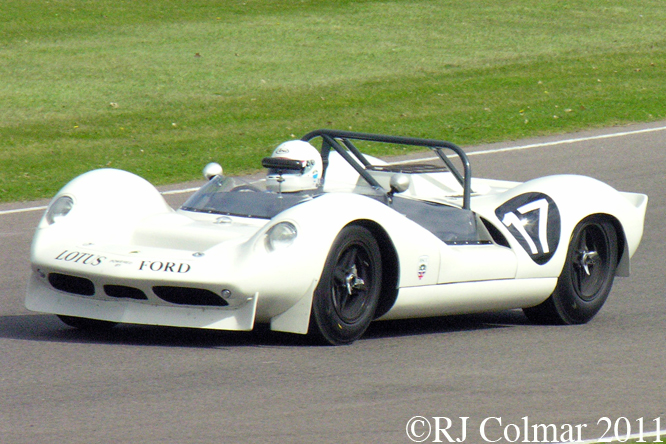
The original Lotus 30 clothed in a fibre glass body that made regular maintenance exceedingly difficult weighed less than 700 kgs / 1600 lbs and had 350 hp which was transmitted to the ground by 13″ wheels and was stopped by solid disc brakes all round. Unfortunately while the car won a few races, notably in the hands of Jim Clark the chassis, as predicted by Len Terry proved insufficiently strong which resulted in the backbone flexing, and on at least one occasion a chassis is recorded as having snapped in half. It is thought 18 Lotus 30’s were built with an additional 2 replacement chassis being supplied for damaged cars.

Lotus 30, Goodwood Revival

Matthew Watts example seen here at last years Goodwood Revival has been fitted with an interpretation of the period body modifications developed by JCB research to over come overheating problems caused by the spare wheel, required by the Group 7 rules, being placed behind the radiator in the nose.

For 1965 the model was updated; with a stronger chassis backbone, spoilers, larger wheels and ventilated disc brakes, was built, though not solving all of the problems 9 examples of the S2 were built and sold. Towards the end of 1965 Colin Chapman uprated this chassis again calling the new model the Lotus 40, dubbed by Richie Ginther as ‘like the Lotus 30 but with ten extra problems’ but the three Lotus 40 chassis were no match for the Group 7 cars produced by either Lola or McLaren.

Despite the lack of success against the Lola’s and McLarens the Lotus 30 was still being raced in British club events until the early 1970’s by John Markey.

My thanks to Lotus30.com for the chassis information Woulter Melisson at Ultimatecarpage.com and Martin Krejci at racingsportscars.com for additional information and results. Thanks also to Graham Gauld, pete53, Roger Lund, Tony Gallagher and Ted Walker at The Nostalgia Forum for additional information regarding today’s featured vehicle.

Thanks for joining me on this ‘Pushing The Backbone’ edition of ‘Gettin’ a li’l psycho on tyres’, I hope you will join me again tomorrow. Don’t forget to come back now !
PS I hope you will join me in wishing best wishes to GALPOT Concours d’Elegance Correspondent and Birthday Boy Geoffrey Horton ! 🙂

Share

Allez ! Allez ! Allez ! Gilles ! – Ferrari 312 T3 #034

Regular readers who go back to my days posting stories about cars at rowdy.com may remember seeing today’s photo’s before, however since my original post is long lost to the infosphere and I have found out a little more about this particular car I will ask your indulgence a second time.

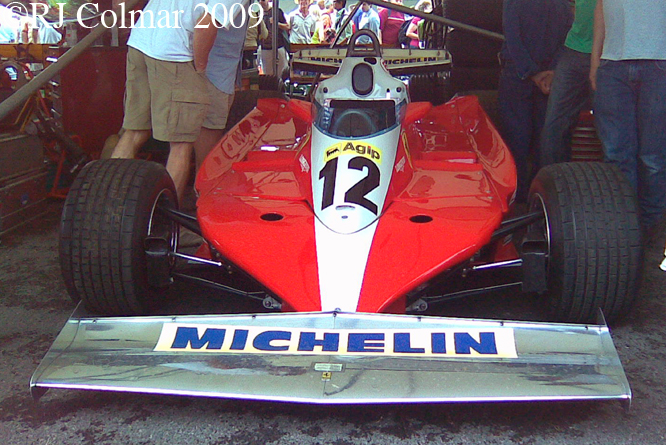
Ferrari 312 T3, Goodwood FoS

The Ferrari 312 T3 was the third evolution of the Ferrari Grand Prix cars built to Formula One regulations with a 3 liter / 183 cui 180 degree V12 motor and transverse gearbox built for the 1978 World Drivers and Constructors Championships which had been won for a second time in 1977 by Niki Lauda who moved onto the Brabham Team for ’78. Argentinian Carlos Reutemann and Canadian young gun Gilles Villeneuve were to drive for the Ferrari team in 1978 and despite the car being completely outclassed by the revolutionary Lotus 79 ground effects car the superior reliability of the Ferrari 312 T3 managed to secure second place in the Constructors Championship for Ferrari picking up 4 wins to the eight scored by the Lotus team.

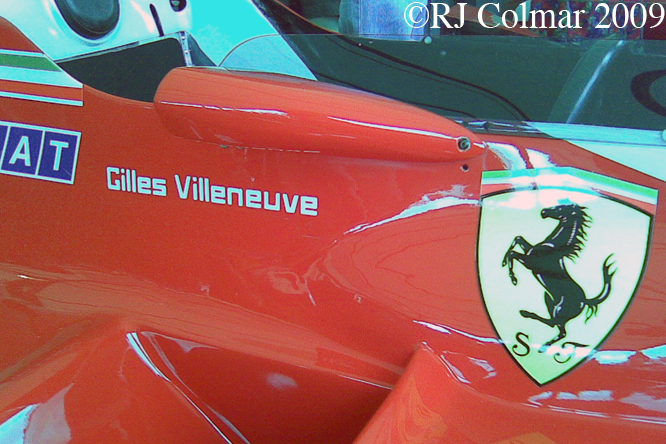
Ferrari 312 T3, Goodwood FoS

This particular car, chassis #034, was used exclusively by Gilles Villeneuve in 1978 and for one race in 1979, the most important of which was the 1978 Canadian Grand Prix which marked Gilles first Grand Prix victory. This car was acquired by Mr N.Mason in the mid 1980’s and has been a regular guest at the Goodwood Festival of Speed, where the car is seen here, ever since.

Thanks for joining me on this ‘Allez ! Allez ! Allez ! Gilles !’ edition of ‘Gettin’ a li’l psycho on tyres’, I hope you will join me again tomorrow. Don’t forget to come back now !
Share

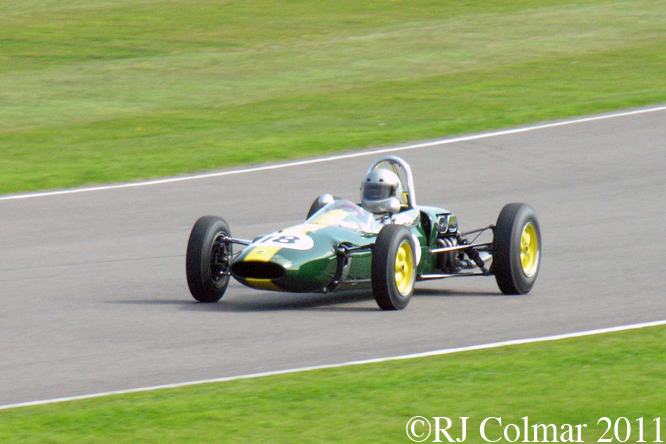
Too Much Added Lightness – Lotus 27 27-JM-22 & 27-JM-2

The design of the 1963 Lotus 27 Formula Junior car followed the principles of the 1963 Lotus 25 Formula One car featuring a monocoque. Keen to save weight, cost and promote the use of fibre glass which Colin Chapman used extensively in the Lotus Elite and Elan models the 27 monocoque initially differed from the bigger, aluminium skinned, Lotus 25 monocoque by having a fibre glass outer skin.

Former motor cycle racer and film distributor Ron Harris ran the works Lotus Formula Junior team in 1963 for 1962 Formula Junior champion Peter Arundell, Mike Spence and John Fenning. With only one car available for Peter first time out at Oulton Park the team scored a lucky victory after the faster Brabhams including that of Denny Hulme retired with engine problems. The victory was lucky because the monocoque was so weak it badly affected the handling of the Lotus 27.

5 or 6 Lotus 27 chassis are thought to have been constructed with fibre glass outer skins and nearly 4 months past before Peter returned to his winning ways by which time the fibre glass outer skin of his Lotus 27’s monocoque had been replaced by rolled aluminium which stiffened the monocoque and improved the 27’s handling.

With 6 successive late season wins Peter Arundell secured his second successive British Formula Junior title by one point over Denny Hulme.

Lotus 27, Goodwood Revival

Chris Locke is seen above at the Goodwood Revival in his Lotus chassis 27-JM-22. This car was sold originally to one C Haas, better known these days as the racing impresario the multi championship winning Newman/Hass/Lanigan Indycar team.

According to San Anselmo CA resident Lotus aficionado Chris Locke’s website, Carl sold the car to General Motors who wanted to study the monocoque engineering and design, some years later General Motors donated the Lotus to the auto shop department of a Detroit high school. Teacher Pat Nelson liberated the car by substituting a more practical vehicle for his students to learn from before the racer had been dismantled.

Pat raced 27-JM-22 from the late 60’s to mid 70’s before Jim Lloyd took over the car in 1977 and raced it some more. Jim was photographed with his 27 – JM – 22 parked next to Mario Andretti’s championship winning Lotus 79 at the US Grand Prix in 1978. Six successive owners owned and raced the car the last of which had a the tub replaced after an accident in 1999. Chris became the owner in 2001 and has the car looked after John Anderson Racing in the States and Historic Team Lotus in Europe.

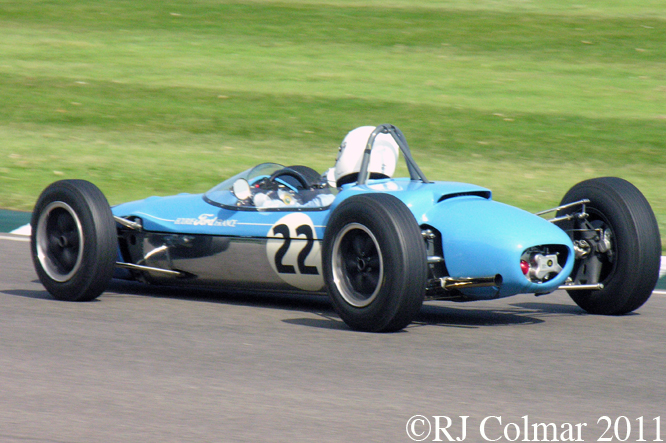
Lotus 27, Goodwood Revival

The second Lotus 27, 27-JM-2, featured today driven by Nick Fennell above was acquired for Jean Vinatier by Ecurie Ford France on the 28th May 1963, The team were running tragic future Grand Prix driver Jo Schlesser in a rival Brabham BT6 at the same time.

Of the two Jo scored better and consistent results until the August 18th 1963 when Jean recorded fastest lap on his way to two heat wins and win on aggregate in a French Formula Junior Championship at Nogaro. Jean recorded a further 3rd place at Montlhéry near Paris before the seasons end.

Jean went on to become French National Rally Champion in an Alpine Renault in 1969 and represented the same team at Le Mans a track at which he recorded 15 24 hour race starts between 1950 and 1973.

Thanks to Peter, Pete, willga, and Ron at The Nostalgia Forum for their comments on the 27’s construction.

Thanks for joining me on this ‘Too Much Added Lightness’ edition of ‘Gettin’ a li’l psycho on tyres’, I hope you will join me again tomorrow. Don’t forget to come back now !
Share

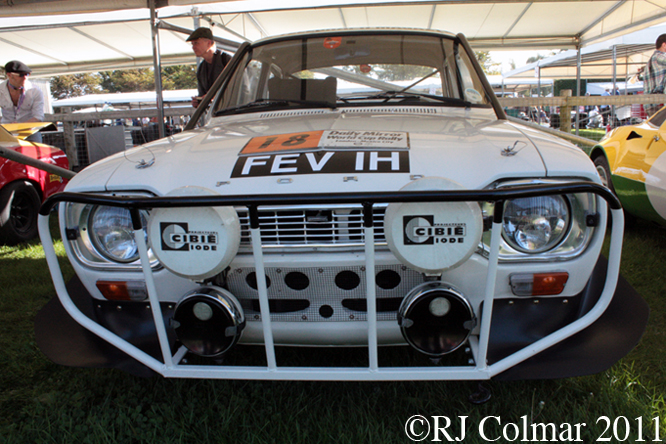
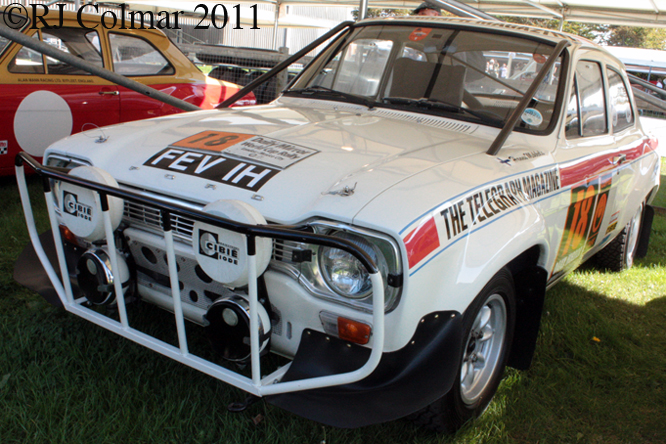
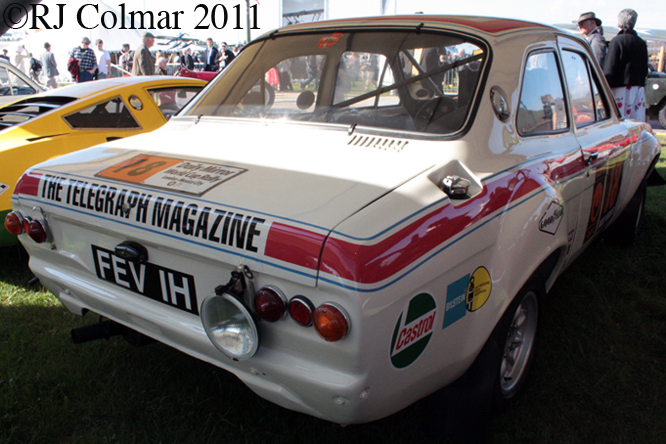
Bombproof Escort – Ford Escort 1850GT FEV 1H

Motorsport owe’s much of it’s history to the publishers of Newspapers keen create events which would resonate and engage their readers, indeed the very first recorded motorsport events emanated from the minds of the editors of ‘Le Vélocipède’, who in 1887 attracted a single car entry for a 1.2 mile race across Paris and ‘Le Petit Journal’, who in 1897 69 entries for a 79 mile ‘race’ from Paris to Rouen. By 1908 individual events took on global challenges such as the 12,000 mile 169 day New York west to Paris race which was co sponsored by The New York Times and Le Martin.

Ford Escort 1850 GT, Goodwood Revival

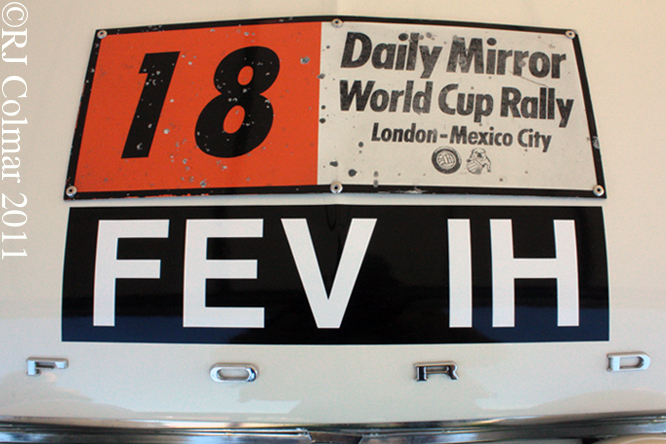
Possibly inspired by another 10,000 mile ten day event the London to Sydney Rally of 1968, Australian advertising sage Wylton Dickson came up with the idea of organizing a 1970 World Cup Rally to link London which had played host to the 1966 World (Soccer) Cup to Mexico which was to play host to the 1970 World (Soccer) Cup at a party in London over a glass of wine while chatting to Irish Rally Champion Paddy Hopkirk.

Ford Escort 1850 GT, Goodwood Revival

Wylton, who had never so much as seen a rally before approached Stuart Turner Ford competitions manager who gave him the thumbs up and the Daily Mirror who provided the sponsorship for the event. British Rally Champion John Sprinzel was allowed to set up an HQ at the Royal Automobile Clubs Belgrave offices from which to run the whole 16,000 mile event which crossed 26 countries on three continents in 25 days.

Ford Escort 1850 GT, Goodwood Revival

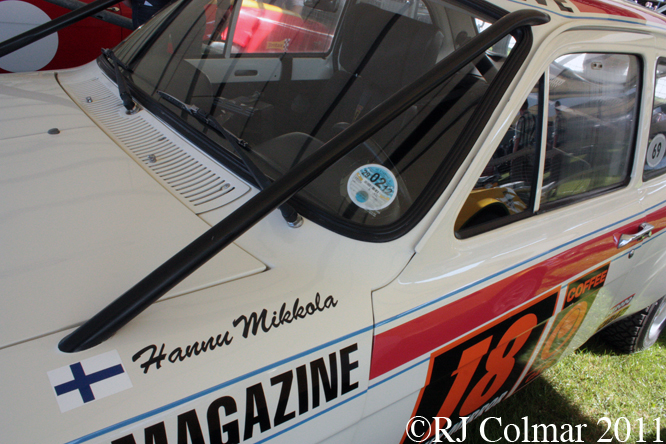
Good to his word when the 1970 World Cup Rally was announced Stuart Turner entered 6 Ford Escorts into the event for Poles Sobieslaw Zasada / Marek Wachowsk, Finns Hannu Mikkola / Gunnar Palm, England soccer star Jimmy Greaves with pro co driver Tony Fall, Monte Carlo Rally winners Raunno Aaltonen / Henry Liddon, British rally stars Roger Clark / Alec Poole and Finish rally legend Timo Makinen co driven by Frenchman Gilbert Staepelaere. Other entries in the 96 car field included a VW Beach Buggy a five car factory Moskivitch team from the USSR and two privately entered Rolls Royce’s a Silver Cloud and a Silver Shadow !

Ford Escort 1850 GT, Goodwood Revival

Ford’s official reason for fitting these bars in front of the windscreen was that they were to protect the drivers from Condors in the Andes mountains of South America, but it has been noted that these bars connect the top of the front suspension towers to the top of the A pillars which coincidentally helps transfer suspension shock to the roof diverting them away from some of the weaker welds in the bodywork.

Ford Escort 1850 GT, Goodwood Revival

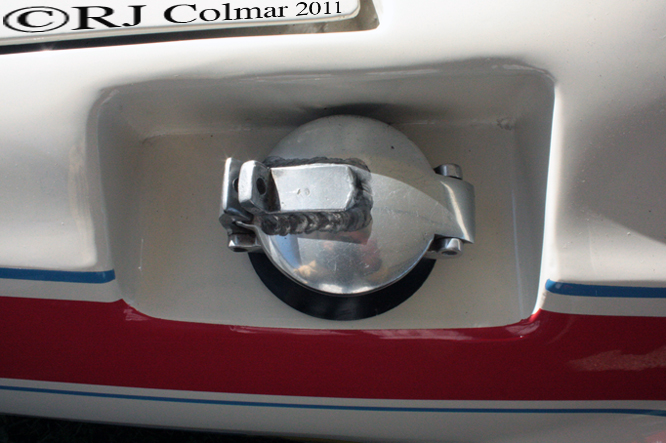
It is thought enough parts were produced for just 8 of the 1970 World Cup spec 1850 GT Escorts, which after the disappointment of easily leading the 1968 London to Sydney Marathon only for the Lotus Twin Cam engine in Roger Clark’s Cortina Lotus to fail, meaning these cars were built to be bomb proof against all foreseeable eventualities. Instead of using Lotus Twin Cam motors Ford Kent 1600cc / 97 cui pushrod motors were bored out to 1850cc / 112 cui fitted with a single Weber carburetor and dry sump lubrication which aids ground clearance. These motors were simple, durable and above all easily repairable, they were tuned to run on the low octane fuel that was to be found in the high altitude andean mountains on the South American legs of the route where stages of 500 plus miles were not uncommon and average speeds in excess of 90 mph were expected in order not to attract penalty points.

Ford Escort 1850 GT, Goodwood Revival

Hannu Mikkola had a relatively trouble free run dropping just 9 hours in penalty points over the course of the 25 day marathon, 4 of the other Escorts in the top 6 of the 23 finishers. During the course of the event FEV 1H became one of the most famous of Rally Vehicles of all time and is still among the most loved. As a result of the 1970 World Cup Rally win Ford launched a new sporty version of the Escort called the Ford Mexico with the 1600 / 97 cui Kent pushrod motor fitted to an Advanced Vehicle Operations strengthened “Type 49” body shell.

In 1995 there was a 25th Anniversary re run of the 1970 World Cup Rally, miraculously Ford ‘found’ a new unused Escort shell and built a new car to the same specifications as FEV 1H. Hannu Mikkola came out of retirement with Gunnar Palm to win the rerun as well, the new cars registration is H1 FEV.

Thanks for joining me on this Bombproof Escort edition of ‘Gettin’ a li’l psycho on tyres’, I hope you will join me again tomorrow. Don’t forget to come back now !
Share

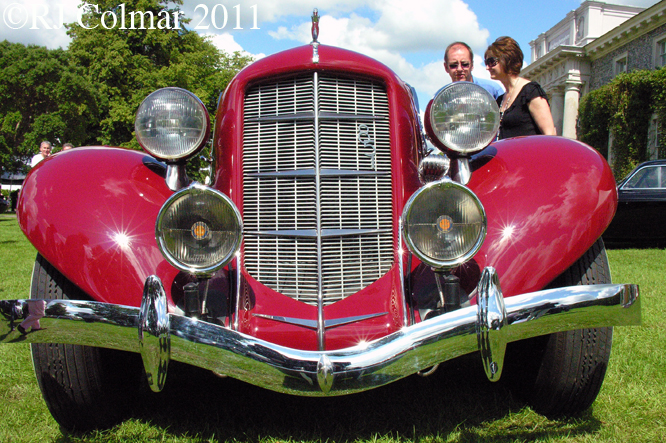
Unlucky In Love – Auburn 851 SC Speedster

The Auburn 8-851 SC was a response to the failure of the previous 12 cylinder 12-160 model to sell at Dodge V8 prices, customers, even during those depression years up to 1933, erroneously thought there had to be something wrong with the product to be offered at such bargain prices !

Auburn 851 SC, Goodwood Revival

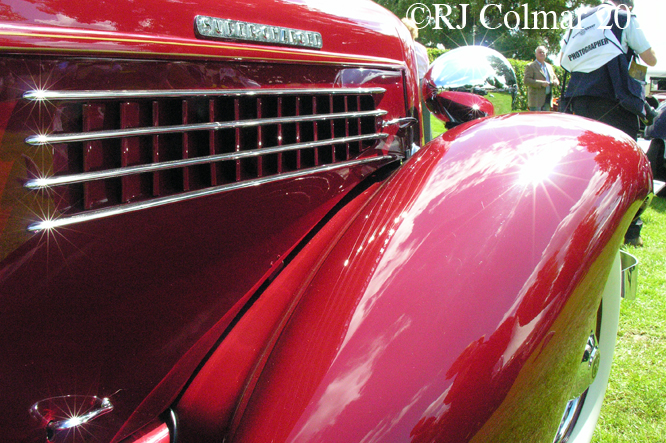
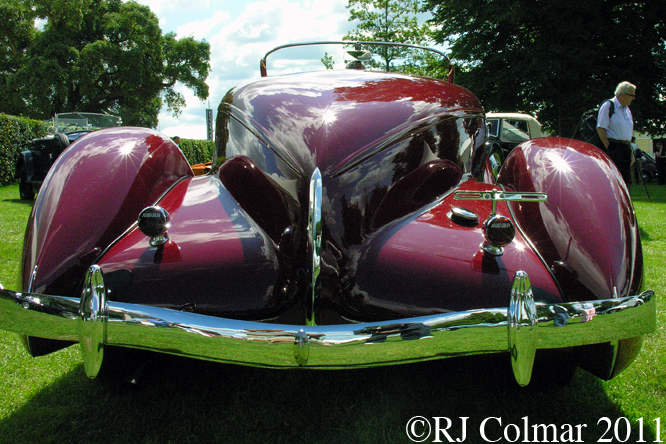
Restyled by Gordon Beuhrig, of a model originally designed by Alan Leamy, the Speedster is one of the all time most memorable elegant designs from nose to boat tail.

Auburn 851 SC, Goodwood Revival

The 8 indicating 8 cylinders was dropped from the model name to become ‘851’ which was available with a normally aspirated straight 8 Lycoming motor or a 150 hp supercharged one.

Auburn 851 SC, Goodwood Revival

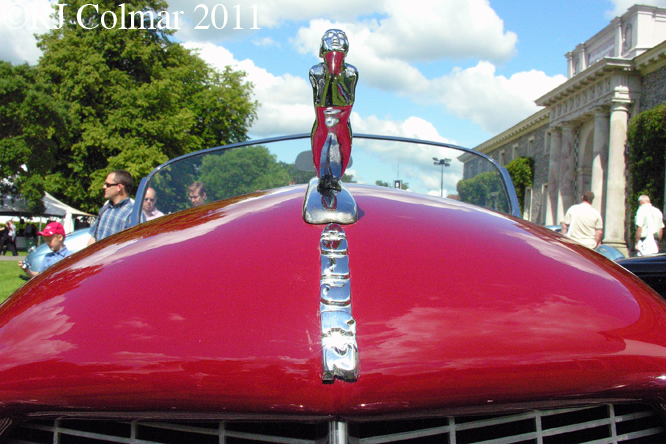
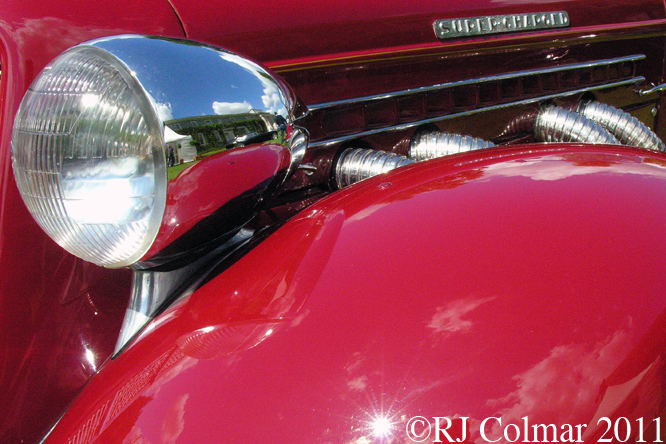
The casual observer looking at the front of an Auburn was never left in any doubt about the Supercharged version of the “851” chrome headers of the SC were matched by tasteful text on the bonnet / hood which shouted out top of the range model …

Auburn 851 SC, Goodwood Revival

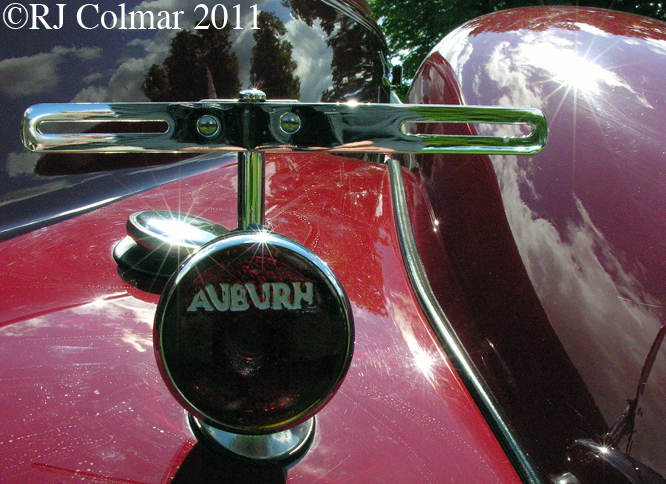
even on the intake side of the motor !

Auburn 851 SC, Goodwood Revival

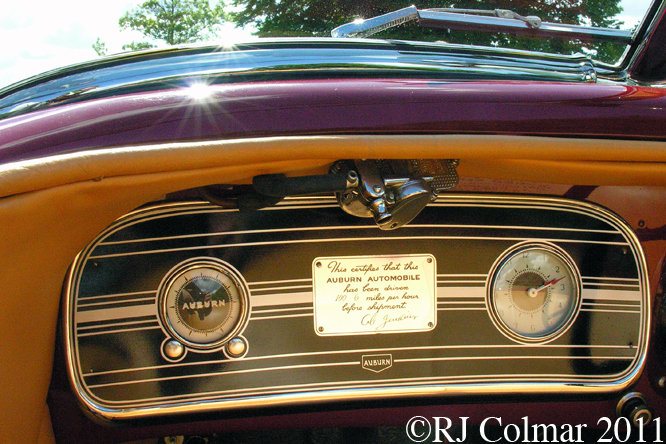
Fabled speed merchant Ab Jenkins took a stock 851 SC Speedster and ran it for 12 hours at an average speed of 100 mph soon after the model launched on January 1st 1935. Ab Jenkins was then employed to test each 851 SC Speedster to over 100 mph before shipment, the plaque on this one shows Ab tested the car to 100.6 mph.

Auburn 851 SC, Goodwood Revival

Around 5000 normally aspirated and supercharged version of the ‘851’ were sold in 1935, but the following year sales of the same model rebadged ‘852’ tanked leading EL Cord to wind up production at the 40 year old Auburn company for good.

Auburn 851 SC, Goodwood Revival

This particular car was purchased by Eduardo Montinola as a courting gift for Philippine model Susan Magalona who married Eduardo’s rival Carlos Ledesma a sugar baron in what was described as the marriage of the year, in the Philippines, with gifts that included a truck full of peanuts ! The Marriage was loveless and annulled and Susan subsequently married millionaire diplomat by the name of Federico Elizalde.

Thanks for joining me on this ‘Unlucky In Love’ edition of ‘Gettin’ a li’l psycho on tyres’ I hope you will join me again tomorrow. Don’t forget to come back now !
Share

Torino Transformation – SIATA 400F

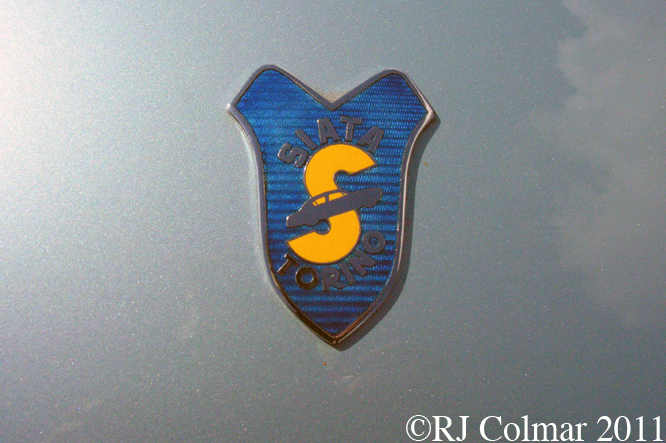
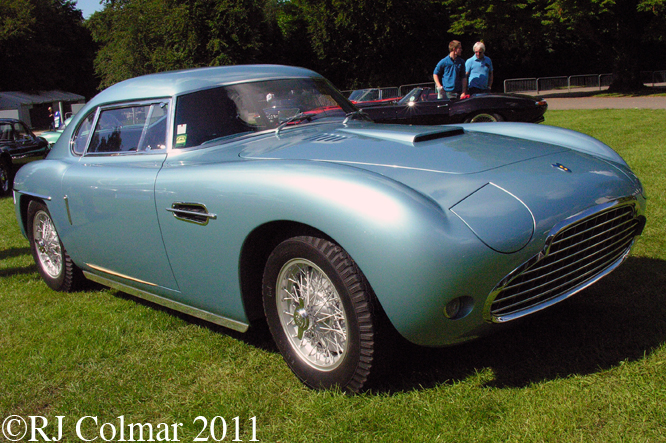
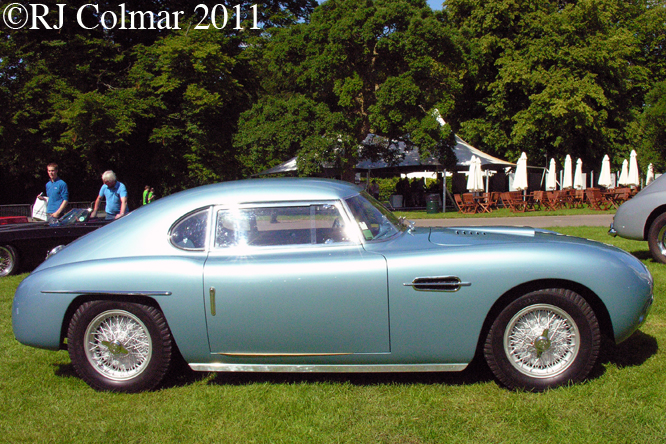
It would appear that the SIATA 400F is a Coupé version of the SIATA 208S which Steve McQueen referred to as his ‘little Ferrari.

SIATA 400F, Goodwood F o S

SIATA, Societa Italiana Auto Trasformazioni Accessori, an automotive accessory company was founded in 1926 by Giorgio Ambrosini an amateur racing driver to make and sell performance parts for vehicles manufactured by FIAT.

SIATA 400F, Goodwood F o S

After the Second World War SIATA started manufacturing vehicles with first FIAT 500 cc / 30 cui and then with larger American Crosley Motors.

SIATA 400F, Goodwood F o S

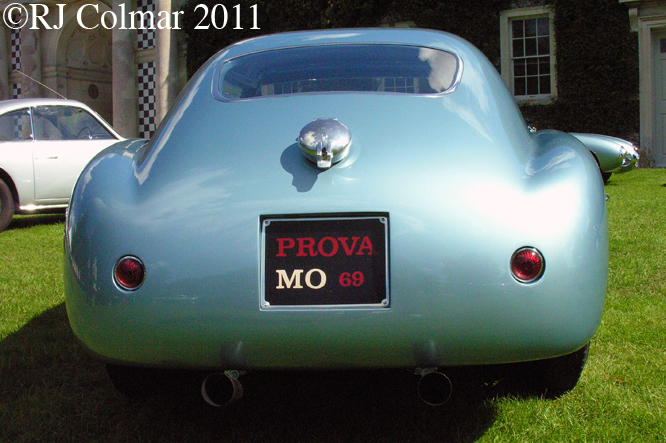
From 1953 to 1955 SIATA manufactured around 35 208’s sports cars and no more than ten 400 F Coupés, of the type seen here at Goodwood Festival of Speed, all powered by Dante Giacosa designed 2 litre / 122 cui FIAT ‘8V’ motors.

SIATA 400F, Goodwood F o S

The chassis design is credited to be the work of Austrian Rudolf Hruska who’s cv includes working on a huge variety of vehicles from the original Beetle, Tiger tank Simca 1000, FIAT 124/128 and a variety of ALFA Romeo’s including the ALFA Sud.

SIATA 400F, Goodwood F o S

The Berlinetta Bodywork of the 400 F is credited to Giovanni Michelotti who was working for Farina at the time, with the body panels manufactured by Carrozzeria Balbo in Turin.

Thanks for joining me on this Torino Transformation edition of ‘Gettin a li’l psycho on tyres’ I hope you will join me again tomorrow when I’ll be announcing the winner of the Automobiliart GALPOT Seasonal Quiz and publishing the answers. Don’t forget to come back now !
Share