Tag Archives: Hill

What’s In A Tooth ? – Lotus Ford 49 #R2 & #R3

The Lotus 49 consolidated the principle of using the motor that as an integral structural component of the design that was first seen on the BRM P83 and Lotus 43 which were both powered by the novel BRM H16 motor in 1966. The 49, designed by Maurice Phillipe however was powered by the then brand new, and much simpler Ford sponsored 3 litre / 183 cui 8 cylinder Cosworth DFV that was the brainchild of Keith Duckworth and Mike Costin.
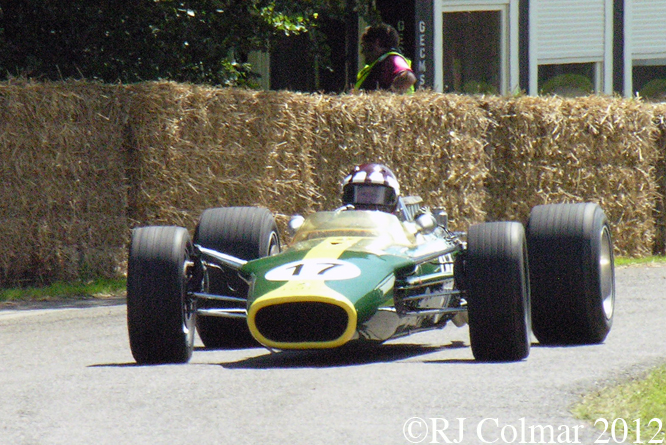
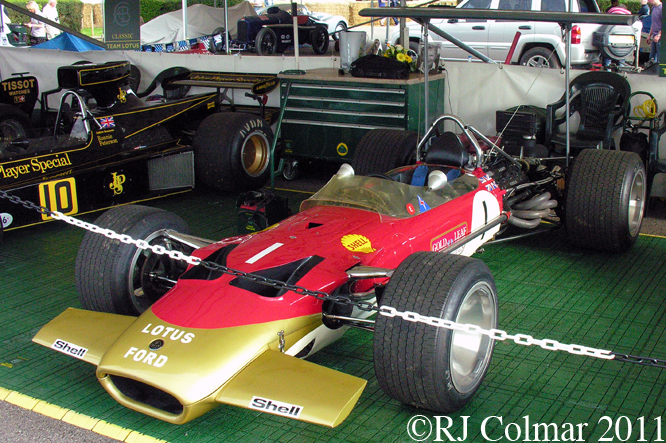
Lotus 49, Goodwood Festival of Speed

Despite many faults that would surface and be ironed out over the ensuing seasons the Lotus 49’s made a dream debut at Zandvoort for the 1967 Dutch Grand Prix with Graham Hill qualifying on pole and Jim Clark who had never so much as sat in the car before the first practice qualifying 8th. During the race Clark driving chassis #R2, seen above with Jackie Oliver at the wheel at Goodwood, used his legendary speed and mechanical sympathy to well judged victory while Hill experienced timing gear failure with two teeth next to each other on the timing gear breaking. After the race it was discovered Clark’s car had experienced a similar failure however a single tooth remained between the two broken teeth on Clarks timing gear ensuring just enough drive to make it to the finish.

Clark used Chassis #R2 to win both the 1967 British and US Grand Prix before being converted to 49T spec for the Tasman Series of races in Australasia which required an engine capacity of 2.5 litres / 152.5 cui which was achieved by fitting a different crankshaft with a shorter stroke to the DFV motors making them DFW spec. Jim won 4 races in the 8 race Series with the 49T spec chassis #R2 which combined with a couple of points paying places was enough to win the Championship from Chris Amon in his Ferrari 246 Dino.

Chassis #R2 was then loaned to Rob Walker racing during 1968 to replace chassis #R4 which driver Jo Siffert had crashed on his debut in a non championship race at Brands Hatch. Although #R4 was not damaged beyond repair by that accident it was subsequently destroyed in a workshop fire at Rob Walkers premises necessitating the loan of #R2. Once Walkers team had built up a new car, chassis #R7 now in B spec with the tall rear wing, which Siffert used to win the 1968 British GP.

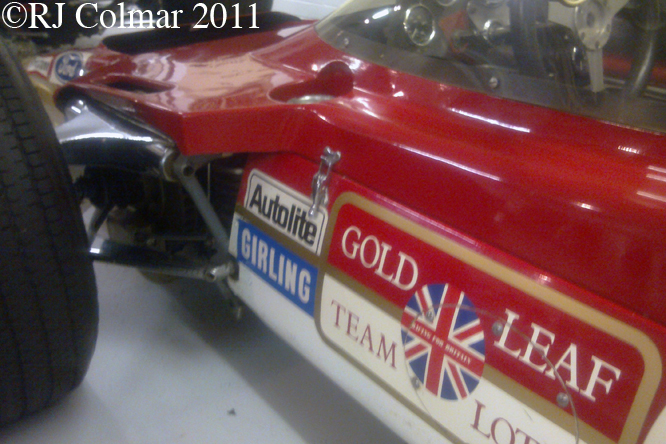
Once chassis #R2 was returned by Rob Walker to Lotus it was immediately pressed into service again after Jackie Oliver had a comprehensive accident in #R6 at the 1968 French GP. For the British Grand Prix #R2 was repainted in Gold Leaf Team Lotus colours and fitted with the winged 49B spec nose cone and high rear wing. The car received further B spec upgrades for the German Grand Prix. Oliver would use chassis #R2 for the remainder of the 1968 season scoring a best 3rd place finish at the season finale in Mexico.
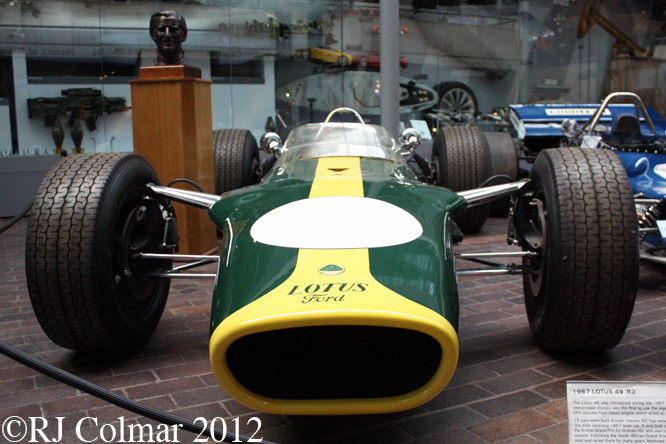
Lotus 49, National Motor Museum Beaulieu

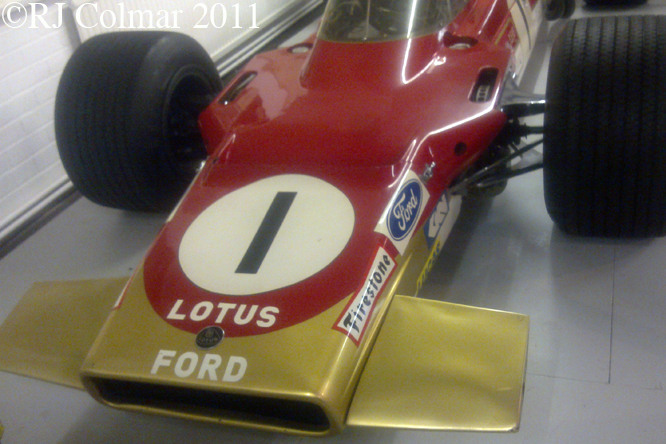
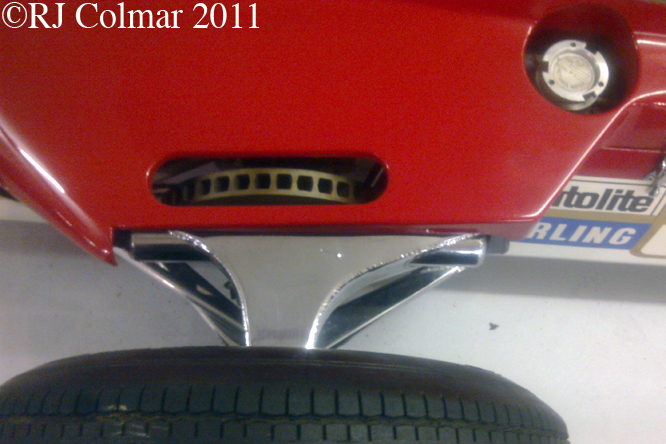
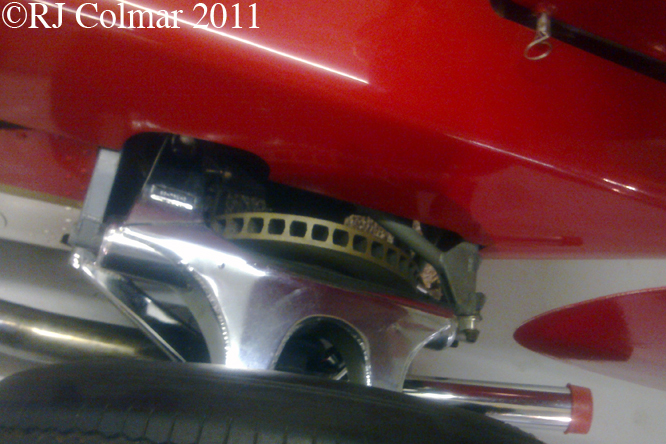
The car seen above at Beaulieu National Motor Museum is chassis #R3 which featured subtle differences to chassis #R1 and #R2 to aid the distribution of loads under braking at the front and to aid access to the brake balance adjuster which had previously only been possible by two mechanics picking up a third smaller mechanic and lowering him into the cockpit upside down ! Note the sculpture of Graham Hill on the plinth to the left of the car in this photo.
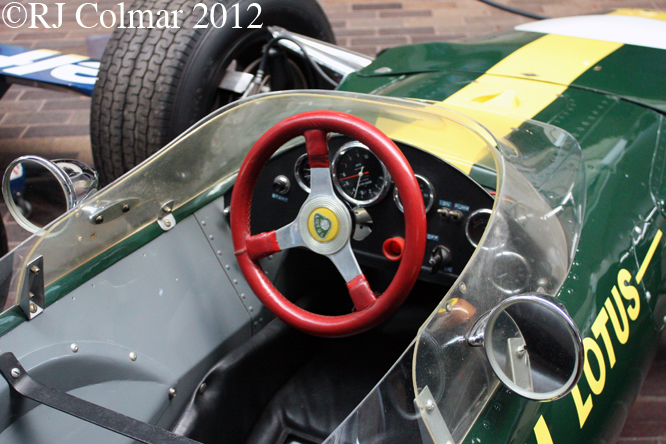
Lotus 49, National Motor Museum Beaulieu

Chassis #R3 first appeared at the 1967 British Grand Prix with Graham Hill at the wheel, he qualified 2nd behind Clark but while leading the race first an allen screw dropped off the rear suspension and after it was replaced the engine failed while he was making up good time. Chassis #R3 has the second longest track record of the 12 Lotus 49’s built.

After Hill scored a season best 2nd place in the 1967 US Grand Prix, behind Clark, and opened his championship winning 1968 season with another second place, again behind Clark at Kyalami chassis #R3 was sold to Rhodesian John Love who used the car to win the last two of six consecutive South African Formula One titles in 1968 and 1969, his successor Dave Carlton won the 1970 South African Championship driving the Lotus 49 chassis #R8 which was built to the final C spec.

Lotus 49, National Motor Museum Beaulieu

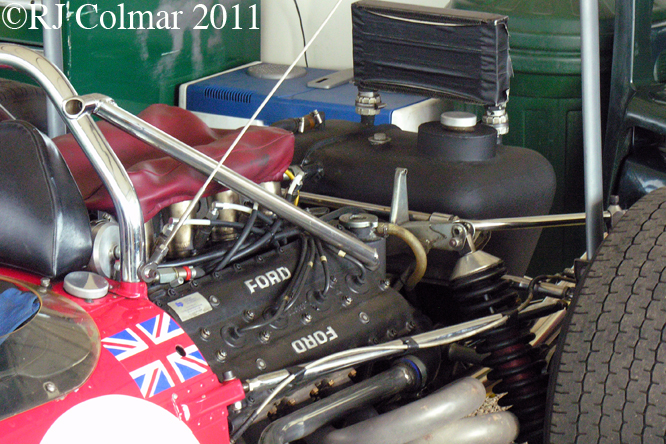
The 400 hp Ford Cosworth DFV was to become the mainstay of Formula One right through the 1970’s, it was far in advance of the Lotus 49 chassis and would only be toppled by the hugely more expensive turbocharged motors in the early 1980’s after 155 Grand Prix Victories. One of the triangular aluminium top engine mountings can be seen bolted with three bolts on the leading edge of the cam cover tapering into the back of the monocoque to which it was attached by a single bolt. Three further such mountings were all that were required to integrate the motor into the structure of the car.
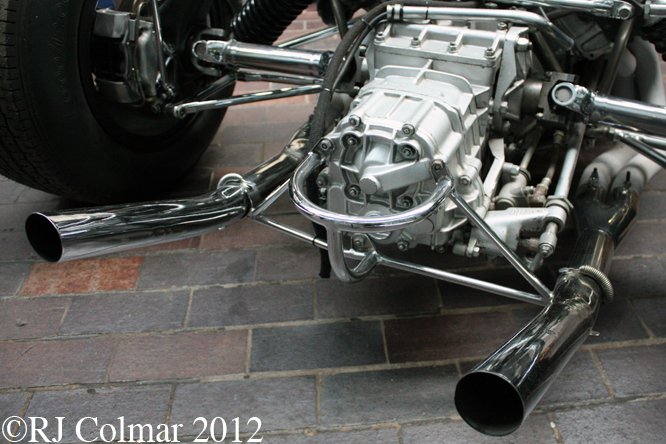
Lotus 49, National Motor Museum Beaulieu

The rear suspension and drive shafts and gearbox would repeatedly prove trouble some for team Lotus as they got to grips with having such a powerful motor. The ZF gearbox in it’s original form was not strong enough and required additional strengthening which can be seen in the form of the thick vertical plate into which the drive shaft disappears. The ZF gearboxes were replaced on the 1968 B spec cars with Hewland units which were much easier to maintain trackside.
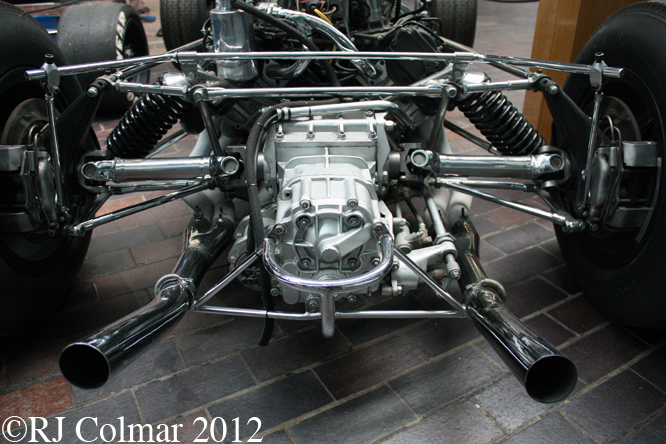
Lotus 49, National Motor Museum Beaulieu

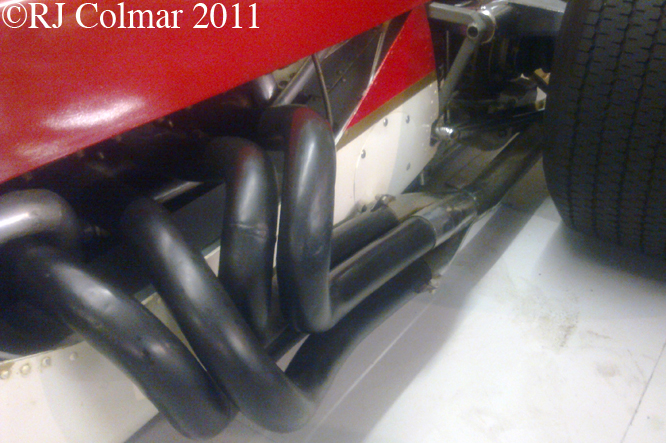
The vestigal nudge bar was added to the back of the ZF gearboxes after the 1967 Dutch Grand Prix win in order to comply with a regulation about the dimensions between the end of the exhaust pipe and the back of the car. In other words when Jim Clark won the 1967 Dutch Grand Prix his Lotus 49 did not comply fully to the letter of the existing regulations.

Chassis #R3 is the only one of the Lotus 49’s never to run in B or C spec. Since it has been in the care of the National Motor Museum it has been involved in two serious accidents. The first, on a demonstration run, involved a tree in the Beaulieu grounds where it is kept in 1999 further details of the accident damage can be seen on this link. The second accident with the same driver occurred at a Silverstone Press Day in 2009 fortunately the damage was restricted ‘only’ to the left side suspension as can be seen in these linked photo’s.

Thanks for joining me on this “What Is In A Tooth ?” edition of “Gettin’ a li’l psycho on tyres”, I hope you will join me again tomorrow when I will be looking at a GSM Delta. Don’t forget to come back now !

Share

Sunday Morning Lotus Hunting – Prescott

Apologies to readers of the regular Tuesday MG blogs which will return next week. On Sunday I attended the Speed Hill Climb at Prescott in search of a couple of Lotus models for Saturdays Lotus blogs.

GSM Delta Ford, Prescott

On arrival in the paddock I found much more than I bargained for, this GSM Delta Ford will feature in a forthcoming blog thanks to the owner Clive Scott who told me all about the car and his families involvement with it’s manufacture. Clive finished the day forth in a class of 15.

Ginetta G12 Zetec, Prescott

For a moment I thought this Ginetta G12 might be yet another car once owned by David Render, but Nick Stephens told me that this was not the case with his Ford Zetec powered example.

Maguire Mini Cooper S, Prescott

Derek Kessell has owned this Maguire Mini Cooper S for 24 years, it has never been raced and only ever used on hillclimbs. It was originally built with a Mini Clubman estate / station wagon body.

Force Empire DS600 Suzuki, Prescott

The tyres on Bill Chaplin’s Force Empire DS600 Suzuki show how tricky the conditions at Prescott were on Sunday Morning, full wets on the front and intermediates on the back, notice also a wild array of tweaked aerodynamic appendages that would not look out of place on a Formula One Car which helped Bill claim third fastest time in a class of 12.

OMS Hornet Suzuki, Prescott

Tina Hawkes driving her OMS Hornet Suzuki turned around her third fastest timed run in the lottery morning conditions, seen here, to a fastest time in class in the dry afternoon run.

Kayne Special III, Prescott

Last week I received an e-mail from John Biggs owner of the Kayne Special III, above, asking if I could put him in touch with Colin Cooper who built the car. When I met John on Sunday he told me that Colin had come to visit Prescott on Saturday and that they had a long chat about the car.

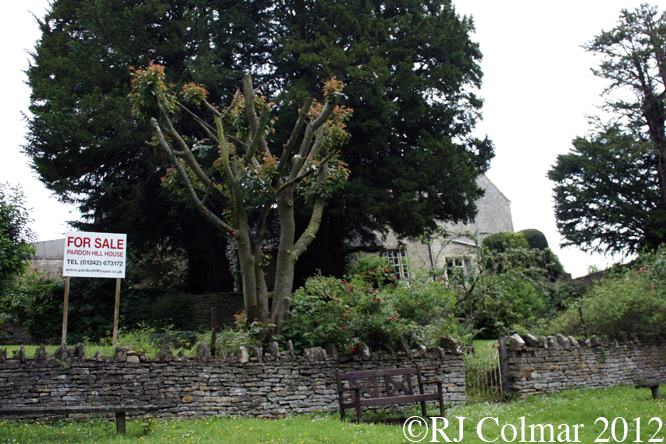
Pardon Hill House, Prescott

I know this is not a property blog, BUT, Pardon Hill House just has to be one of the most desirable properties on the planet for any motorsport enthusiast. You can see the Prescott Hill Climb course right in front of you from the benches right outside the back gate. Here’s hoping my lottery numbers come up before it is too late !

Chevron B47, Prescott

In the wake of the successful Lotus 79 in 1978 almost all open wheel cars the following season were built to take advantage of ground effects with varying degrees of success. Future Ferrari and Mclaren F1 driver Stephan Johansson was one of several drivers who started the 1979 with a Chevron B47, quite possibly the one in the photo above, but switched before long to the more successful March chassis on his way to claiming 4th spot in the 1979 British Formula 3 championship. Chris Bentley Jones who drove the car on Sunday claimed third fastest time in class.

Pilbeam MP97 Judd, Prescott

Sandra Tomlin, above, managed to avoid the wooden spoon in class and pip her son Oliver with whom she shares the wheel of the Pilbeam MP97 Judd.

Lotus 51A Ford, Prescott

I received a tip off last week that a couple of Lotus 51’s would be at Prescott like the won driven by Briony Serrell above, Brioney finished with 5th best time in a class of 13.

Lotus 51A, Prescott

Martin Tippet’s Lotus 51 was suffering from electrical issues and he could only manage 8th best time in class.

Lotus 61 Ford, Prescott

My thanks to Les Buck who is seen driving his Lotus 61 above, finished forth in class, for tipping me off last week at Brooklands that this event was taking place.

OMS CF06 Powertec SBD, Prescott

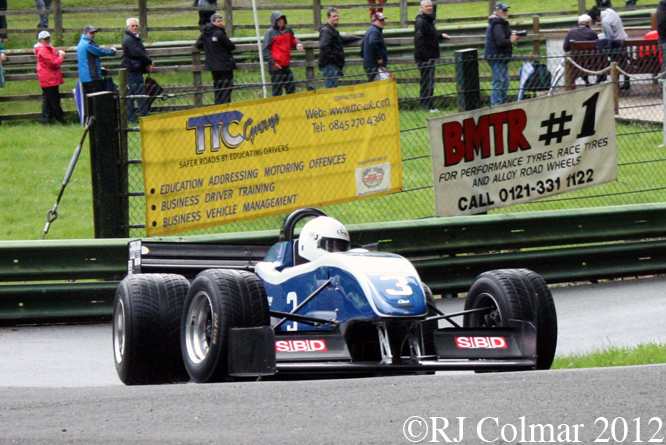
The two rounds of the Midland Hillclimb Championship main event were convincingly dominated by championship leader Trevor Wills driving the #3 OMS CFO6 Powertec SBD seen above.

Jaguar XK140, Prescott

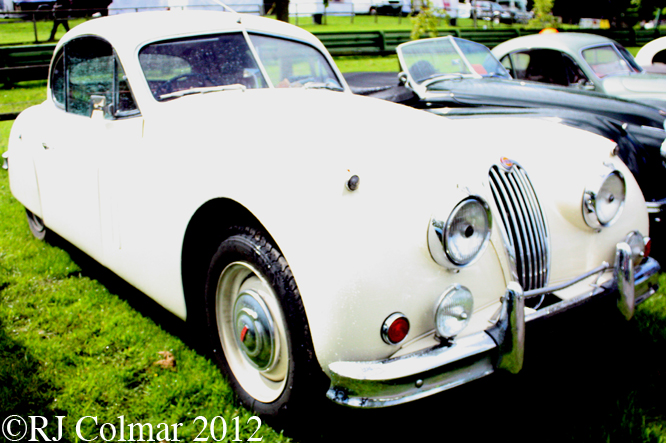
Finally just as I was leaving a couple of dozen Jaguar XK’s appeared, including this 1956 XK 140, fitted with easy to clean steel wheels, which reminded me that GALPOT regular Geoffrey Horton would soon be getting up to compete in a Concours event in California with his own example of the model.

Further information on the timing results for this event can be found on Roger Warren’s excellent Resultsman website.

Thanks for joining me on this “Sunday Morning Lotus Hunting” edition of “Gettin’ a li’l psycho on tyres” I hope you will join me again tomorrow when I’ll be looking at an extraordinary FIAT 600. Don’t forget to come back now !
Share

Never Seen It As Bad As This ! – Prescott Speed Hill Climb

Britain’s wettest drought in history continued apace this weekend, but I did not let that get in the way of attending 3 very different events in 3 days. I’ll not be blogging them in order for any particular reason but I’ll start with the last one, Prescott Speed Hillclimb which I attended yesterday afternoon, first and post blogs on the Bristol Italian Auto Moto Festival on Sunday and the Spring Performance Car Action Day at Castle Combe next Monday.

March 792, Prescott SHC

I got to Prescott yesterday afternoon just in time to have a quick £3.00 bacon sarnie and have a quick look around the paddock before making my way to the top of the hill. The last time I saw a March 792 sporting Philip Morris Marlboro colours for Swedish hot shot Eje Elgh, like the one above belonging to Stuart Ridge, was 25th March 1979 at Silverstone.

Porsche 996 GT3, Prescott SHC

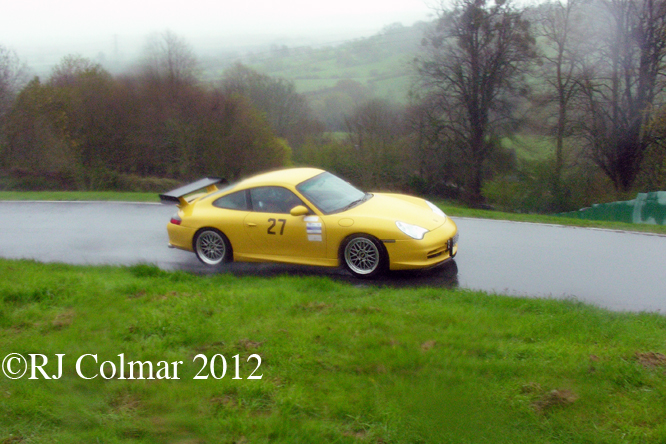
The two days had much in common it was close to freezing at Silverstone and only 4º C yesterday, at both events it was absolutely tipping with rain but mercifully there are a few more trees at Prescott which gave a vestigal illusion of shelter from the strong Easterly winds. Above Robert Lancaster-Gaye above heads for a over 2000 cc / 122 cui Road Going class win in his Porsche 996 GT3.

Ginetta G15, Prescott SHC

Before I left home I checked the weather and there were severe weather and flood warnings for the beautiful Gloucestershire countryside in which Prescott is located. Andrew Russell could not get below 60 seconds in the Modified Series Production class Hillman Imp powered Ginetta G15.

Westfield iRacer, Prescott SHC

With a 120 mph capability and 0-60 time of 5 seconds the Westfield iRacer is shockingly quick for a vehicle that is barely audible thanks to it’s two 100 hp electric motors which drive each rear wheel. The iRacer was being demonstrated in racing spec which has a 15 minute battery life. 2/3rds of the battery weight can be saved for hill climb events which, in the UK, rarely last more than a minute per run.

Chevrolet Special, Prescott SHC

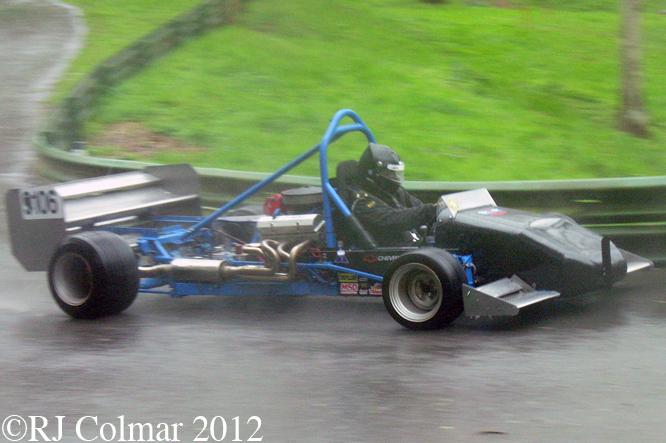
Part of the attraction of going to Prescott was the promise of seeing some big brutal cars with plenty of horsepower, nothing quite prepared me for the two Chevrolet Specials and Jagernought Rover which were built for sand racing in the Channel Isles, thats Gurnsey, Jersey and Alderney in the English Channel. Scot Rayson’s Chevrolet Special above used to be Jaguar powered, it still has the Jaguar running gear but is now powered by a 6.3 litre 384 cui Chevy V8. Spare a thought for the Sand Racers who as I write this are headed back across the English Channel in significantly less than calm waters.

OMS 25, Prescott SHC

One reason today’s blog was posted a little late is that the intelweb will tell you the driver of the car above is Tricia Davis to add to the confusion the programme tells me that the car is a Reynard 913 which it most certainly is not. The programme tells me Tricia did not take part while a Terry Davis did but also in a Reynard. I believe most of the photo’s on the interweb showing this helmet and ascribing it to Tricia are incorrectly labeled and vice versa for Terry Davis. I further believe that Terry has acquired or at the very least borrowed an OMS 25 for the event. My ears were too wrapped up against the weather to discern if this information was disseminated over the Prescott tanoy. Please correct me below if I have that completely wrong !

DJ Firehawk, Prescott SHC

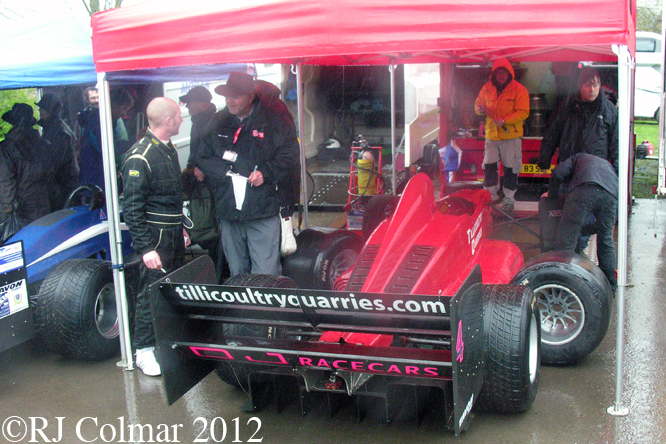
As I was walking down the hill during the event one marshal quipped that he had never seen the conditions so bad, fortunately this did not stop Wallace Menzies claiming a Race Cars over 2000 cc / 122 cui class victory in the #4 Cosworth powered Tillicoultry Quarries DJ Firestorm, that’s a Firestorm model manufactured by DJ Race Cars. To the left of the #4 DJ Firestorm Lee Adams can be seen telling a journalist….

GWR Raptor, Prescott SHC

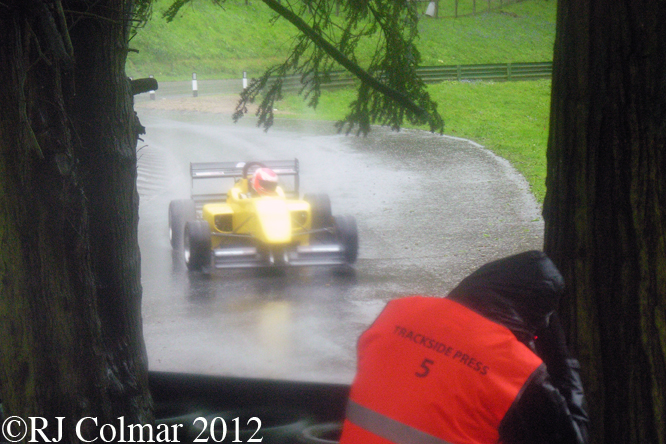
how he stormed up Prescott in 43.82 seconds to claim fastest time of the day (FTD) in his giant killing up to 1600 cc / 97.6 cui class GWR Raptor Extreme, seen commencing his final run above.

My thanks to the Prescott press office for a hot off the press copy of the unconfirmed results which not only allowed me to share the information here but also warmed my hands up nicely as I walked back to the car.

Thanks for joining me on this ‘Never Seen It As Bad As This !’ edition of ‘Gettin’ a li’l psycho on tyres’ I hope you will join me again tomorrow when I shall be looking at continuing the series of blogs on Colin Coppers specials looking at the Kayne Special III. Don’t forget to come back now !
Share

White Elephant – Lotus 63

The thinking behind the Lotus 63 intended to capitalise on the lessons learned from the all wheel drive Lotus 56 Champ Car, which nearly won the Indy 500 in 1968, and replace the Lotus 49 for the 1969 Grand Prix season.

Lotus 63, Donington Park Museum

Colin Chapman recognised that the 3 litre / 183 cui Ford Cosworth DFV V8 which he had been responsible for commissioning with Ford finance had more power than the Lotus 49 could properly utilise even with the aid of wings which generated downforce on the wheels when in motion.

Lotus 63, Donington Park Museum

Having learned about the benefits of all wheel drive from the Lotus 56 Indianapolis programme Colin Directed Maurice Phillipe to design an all wheel drive car for Grand Prix racing, this was by no means the first such Grand Prix vehicle the 1961 Ferguson P99 featured such a transmission and won the non championship 1961 Oulton Park Gold Cup with Stirling Moss at the wheel.

Lotus 63, Donington Park Museum

The fuel cells for the 63 were built into the sides of the car and under the drivers seat !

Lotus 63, Donington Park Museum

The mounting of the Cosworth DFV broke with tradition having the clutch at the front driving the four wheels through shafts mounted in tunnels on the left hand side of the car. The second pipe from the left in this photo is connected to the radiator at the front.

Lotus 63, Donington Park Museum

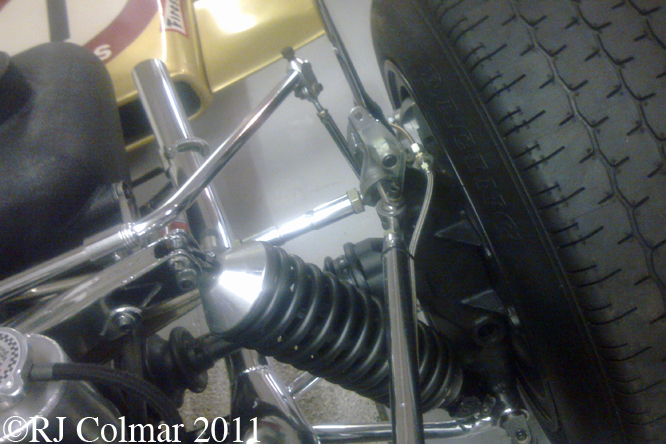
To reduce unsprung weight and improve handling the ventilated disc brakes were mounted in board front and rear.

Lotus 63, Donington Park Museum

Graham Hill tested the Lotus 63 once and refused to race it feeling the car was unsafe, Jochen Rindt managed a best second place in the non championship 1969 Oulton Park but like Hill was not keen on driving a car with his feet ahead of the front axles and his legs beneath them !

Grand Prix novice John Miles who did the bulk of the testing for the model, because Chapman thought he would lack any preconceptions to hinder development, managed one non points finish from four starts and Mario Andretti crashed in both races he started with the Lotus 63. By the end of 1969 the car was running with a heavy drive bias to the rear thus negating the advantages of four wheel drive and so the car was abandoned as a white elephant in favour of the new Lotus 72 design which would set the Grand Prix world alight in 1970.

The Lotus 63 featured today is regularly on view at the Donington Park Museum.

Owner driver Roger Dawson – Damer lost his life in an accident while driving his Lotus 63 at the 2000 Goodwood Festival of Speed.

Thanks for joining me on this ‘White Elephant’ edition of ‘Gettin’ a li’l psycho on tyres’, I hope you’ll join me again tomorrow when I’ll be celebrating the 40th Anniversary of the Maserati Merak. Don’t forget to come back now !
PS I hope you will join me in wishing GALPOT contributor Ralf Pickel a speedy recovery from a nasty accident at Hockenheim in which he broke both legs last week.

Share

Son of Silent Sam – Lotus 56

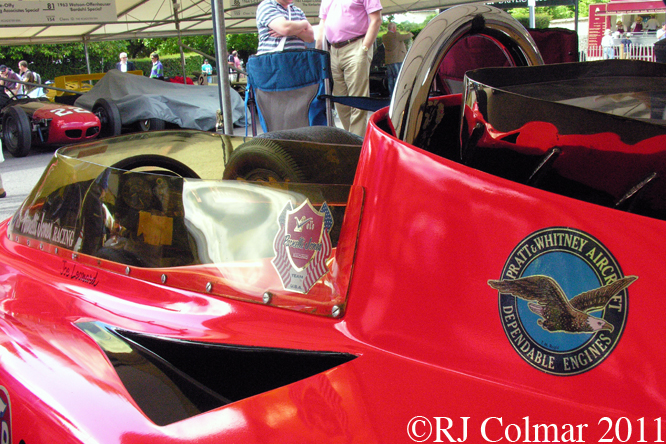
The 1968 Lotus 56 picked up on the technology used by the STP-Paxton Turbocar “Silent Sam designed by Ken Wallis for the 1967 Indy 500 with which Parnelli Jones came within 8 miles of winning before a transmission bearing failure intervened.

Lotus 56, Goodwood, FoS

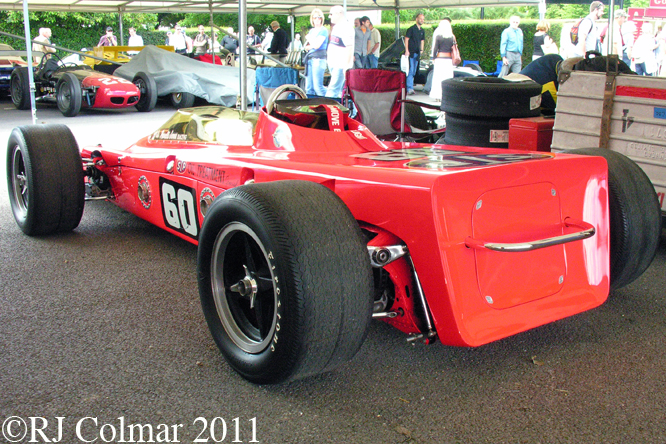
Like the STP Paxton Turbocar the Lotus 56, was also bankrolled by STP’s Andy Granatelli, used four wheel drive transmission.

The Lotus 56Lotus 56, Goodwood, FoS

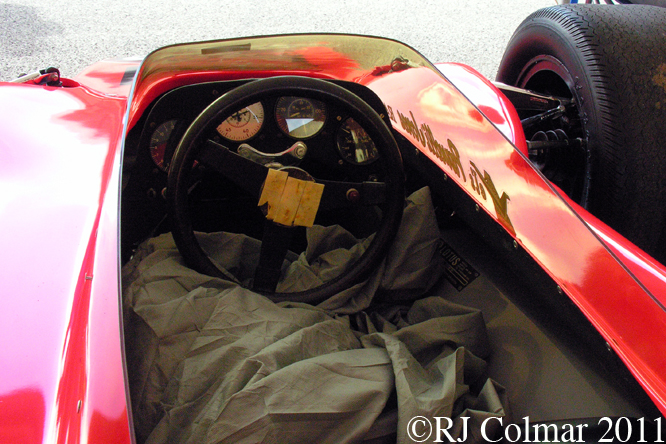
However the Lotus 56 rather than mounting the engine alongside the driver on a backbone chassis as had been the case with the STP Paxton Turbocar, Maurice Phillipe’s design had the motor conventionally mounted behind the driver in what was to become an influential wedge shaped vehicle.

Lotus 56, Goodwood, FoS

Jim Clark was originally penciled in to drive the Lotus 56 but his death during a race in Germany in April ’68 meant British driver Mike Spence was called in to do the early testing of the Lotus 56, unfortunately Mike was killed during practice three weeks before the start of the Indy 500 after hitting the wall in turn one.

Lotus 56, Goodwood, FoS

After an accident with in older STP Paxton Turbo car Joe Leonard joined Graham Hill and Art Pollard in the remaining Lotus 56’s.

Lotus 56, Goodwood, FoS

Despite running with an air restrictor plate mandated for 1968 Joe managed to qualify on pole for the ‘500’ thanks in part to the efficient aerodynamics and superior 4wd handling.

Lotus 56, Goodwood, FoS

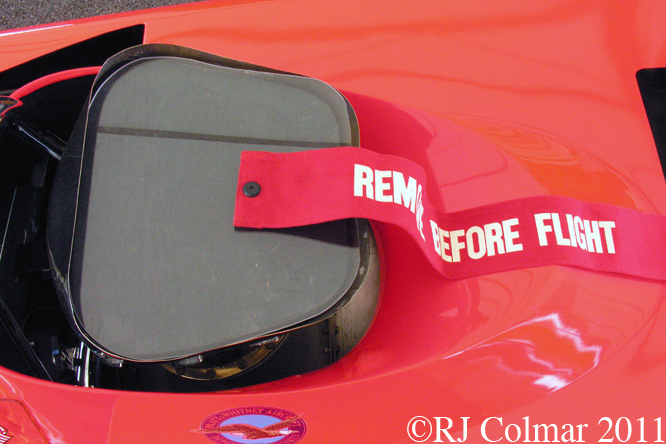
The big advantage of using a Pratt & Whitney Canada PT6 turbo shaft motor, more familiarly seen in a variety of fixed wing and rotary wing aircraft, was reliability these motors are known to have a mean time between outages (MTBO) of 9000 hours !

Lotus 56, Goodwood, FoS

The disadvantage of turbo shaft motor was eye watering fuel consumption which means turbine powered cars carry more weight and have to re fuel more often than cars powered by conventional piston motor’s.

Lotus 56, Goodwood, FoS

In the 1968 500 Graham Hill had an accident Art Pollard broke down while Joe Leonard was leading with a few laps to go when a fuel pump shaft failed meaning Granatelli came close but failed to win a cigar for the second year running.

Turbo shaft motors and four wheel drive were outlawed from the Champ Car circuit from 1969. The Lotus 56 design, in 56B specification, was subsequently sporadically used in Grand Prix races during 1971, but apart from phenomenal performance in the wet no overall advantage was found by using the combination of four wheel drive and turbine shaft propelled vehicles.

Thanks for joining me on this ‘Son of Silent Sam’ edition of ‘Gettin’ a lil psycho on tyres’, I hope you will join me again tomorrow. Don’t forget to come back now !
Share

Choice Of Champions – Lotus 49B #R10 & #R12

The story of the Lotus 49 in all of it’s guises is inextricably linked to the one component that was a decade ahead of it’s time the Ford DFV motor, which did not win it’s last race until 1983 and was still being used in 1985 running against turbocharged powered cars.

Lotus 49B, Goodwood, FoS

The Lotus 49 was originally built to compete in the 1967 Formula One season for drivers Jim Clark and Graham Hill. Colin Chapman had arranged for Ford to finance the building of the 3 litre / 183 cui Ford Cosworth V8 engine which like the BRM H16 Colin had used in 1966 was to be used as an integral component of the chassis, ie, if you take the motor out of the car the rear wheels would no longer be connected to the rest of the car sufficiently to be able to even push it.

Lotus 49B, Goodwood, FoS

The Lotus 49 design, credited to Maurice Phillipe, was based on the 1965 Indy winning Lotus 38 which Len Terry is credited with being responsible for. Jim Clark drove the Lotus 49 to a debut win in the 1967 Dutch Grand Prix. The Type 49 in all it’s guises won 12 Grand Prix in total the last a lucky last lap win at the 1970 Monaco Grand Prix with Jochen Rindt at the wheel.

Lotus 49B, Donington Park Museum

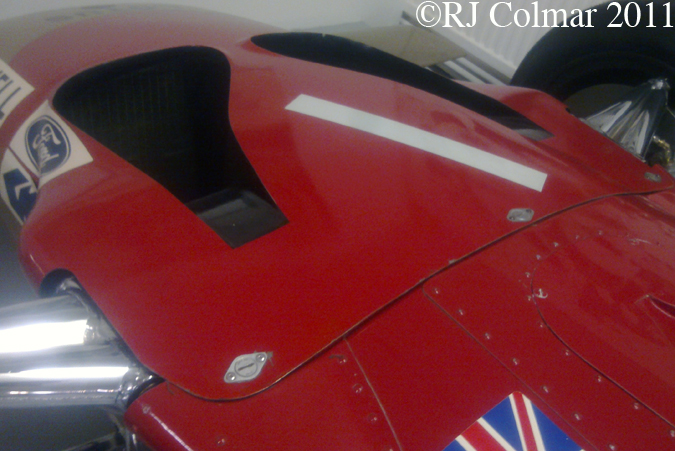
These air ducts, introduced on the 49B in 1969, allowed air to pass through the radiator and escape over the top of the car, where as on the original car the air had passed through the nose cone and out the sides of the car ahead of the front suspension units.

Lotus 49B, Goodwood, FoS

Producing around 400 hp when it first became available, Colin Chapman had an advantage over every other car in the field with the light and reliable Cosworth DFV which had years of development ahead of it that would see it’s output reach just short of 500 hp in 1985. Unfortunately, for Colin Chapman, realising that they needed to be seen running against other competitive teams Ford renegade on it’s exclusive deal with Lotus at the end of 1967 and allowed Ken Tyrrells Matra team to use Ford engines as well in 1968. By the mid 1970’s only Ferrari and BRM were the only regular runners not using Cosworth DFV’s.

Lotus 49B, Donington Park Museum

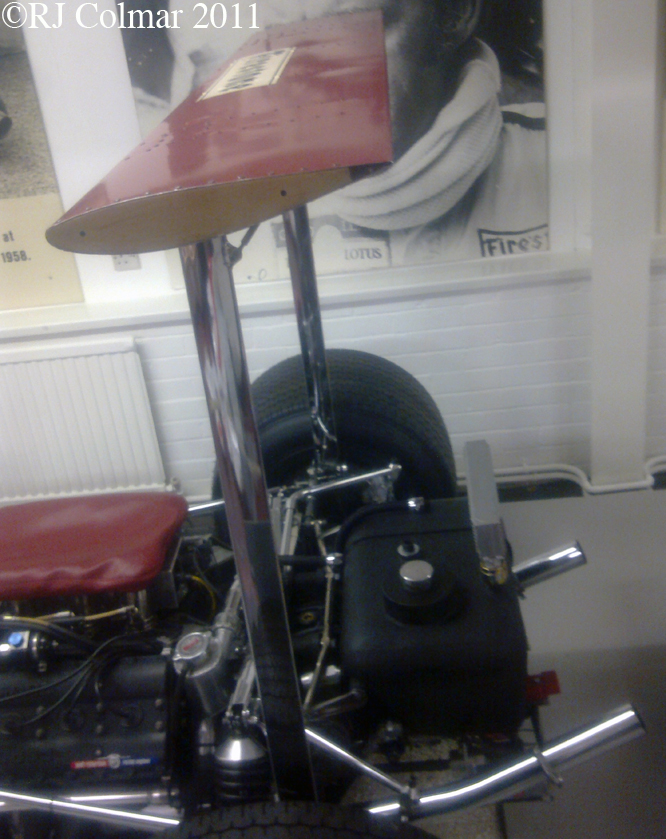
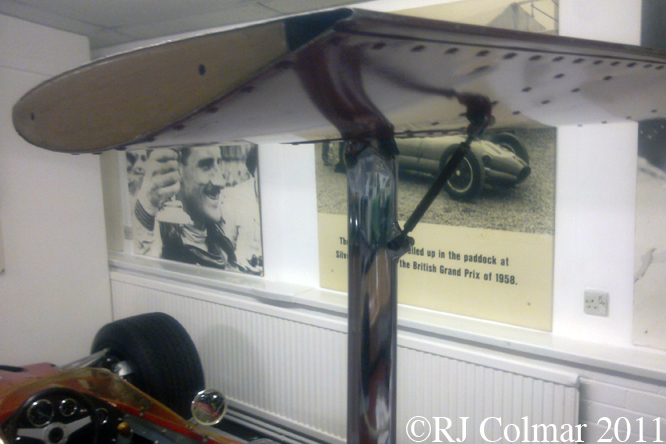
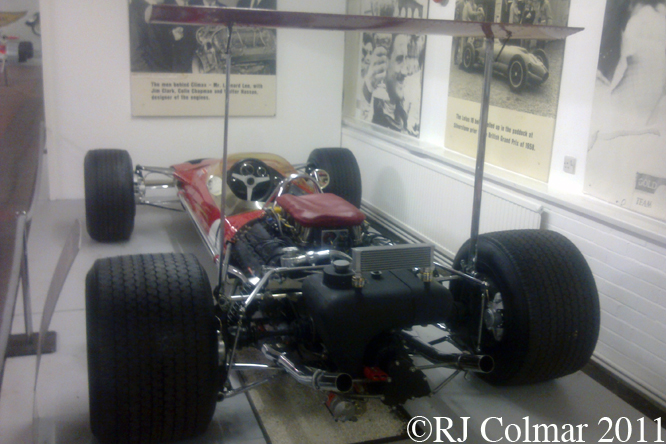
In 1968 Brabham and Ferrari copied the high aerofoil concept first seen on the Chaparral 2E Can Am car in 1966 and on the 1967 Chaparral 2F in the World Prototype championship, a month later the Lotus 49B with new rear hubs to carry the 400 lbs of downforce generated by the rear wing appeared at the French Grand Prix.

Lotus 49B, Donington Park Museum

This photo shows clearly how big an issue rear grip was back in 1968 not only is their a rear wing but the Hewland gearbox is surrounded by a large oil tank in an effort to distribute as much weight to the rear of the car as possible to improve road holding.

Lotus 49B, Donington Park Museum

The inverted aeroplane wing shape and light construction of the rear wing can be seen here, in 1969 similar wings were attached to the front hubs as well, but two bad accidents caused by collapsing wings for Lotus Team mates Graham Hill and Jochen Rindt led to these devices being strictly controlled from the 1969 Monaco Grand Prix on.

Lotus 49B, Donington Park Museum

So far as I can tell the chassis seen here, in the first, second and forth photo’s, at Goodwood is #R10. Chassis R10 was probably the original 49 #R5 which for reasons that are not clear was renumbered.

While carrying the #R5 chassis plate the car was raced in his second world championship winning year by Graham Hill to win the 1968 Monaco Grand Prix, #R10 was subsequently used by 1978 World Champion Mario Andretti to win pole for his first Grand Prix start in the 1968 US Grand Prix at Watkins Glen.

Future 1970 champion Jochen Rindt was the first to use running with a 2.5 litre / 152.6 cui version of the Ford Cosworth DFV. Jochen won two Tasman Championship races in #R10.

Reigning 1968 World Champion Graham next used #R10 to win the 1969 Monaco Grand Prix. The following season Graham was driving the Lotus 49 #R7 for the privateer Rob Walker team which he crashed beyond immediate repair during practice at Monaco. Fortunately Lotus number 2 driver John Miles had failed to qualify for the race in #R10 and so it was hastily repainted in Rob Walkers colours the night before the race for Graham to drive. He finished 5th despite having broken his legs in the 1969 season ending US Grand Prix driving the same chassis just 7 months earlier !

1972 & 1974 double world champion Emerson Fittipaldi made his Grand Prix debut in Lotus Ford 49 #R10, at the British Grand Prix in 1970.

Finally the first race I ever recall seeing on TV was the 1968 British Grand Prix which was led by first Graham Hill, then his team mate Jackie Oliver before being won by Jo Siffert all three were driving Lotus 49 B’s Jo’s being the odd one out being entered by Rob Walker, who GALPOT regulars may recall had a lot of success running Stirling Moss in his Lotus 18 during the early 1960’s. Jo’s victory was the last to be recorded by a private entrant in a ‘customer’ non works customer car.

Thanks for joining me on this ‘Choice Of Champions’ edition of ‘Gettin’ a li’l psycho on tyres. I hope you will join me again tomorrow. Don’t forget to come back now !
24 04 12 PS Tim Murray has kindly pointed out that I originally incorrectly attributed the design of the Lotus 49 to Len Terry when it should have been Maurice Phillipe, apologies for any confusion. If you see an error of fact anywhere in GALPOT blogs please do not hesitate to inform me in the comments box. Thanks to Tim for the correction.

03 08 12 Serious Errata further reading of Micheal Olivers “Lotus 49 the story of a Legend” has shown that the car which is seen in the 3rd, 5th, 6th and 7th photo’s above at the Donington Collection is actually chassis #R12 and not chassis #R10 as seen in the 1st, 2nd 4th photo’s above, there are several distinguishing features which should have made this obvious at the time I originally posted this blog including the black ‘Lotus Ford’ lettering on the nose various decals and the chrome exhaust at the rear !
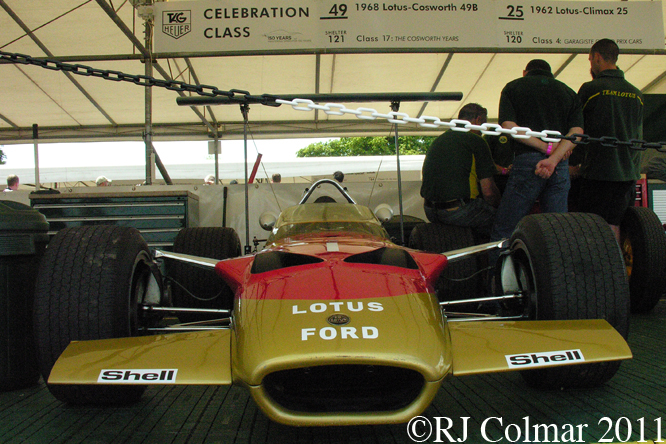
Chassis R12 was built up as a show car, for the Ford Motor Company, using the floor from the Lotus 49B R6/1 which was crashed by Jackie Oliver at the 1968 French Grand Prix. Built as a non runner chassis #R12 is consequently the only Lotus 49 which has never been raced, it was donated to Tom Wheatcroft’s Donington Collection when Ford no longer had a use for it.

Sincerest apologies for this error.

Share

Kiwi Adventures – Ferrari 246 #0007

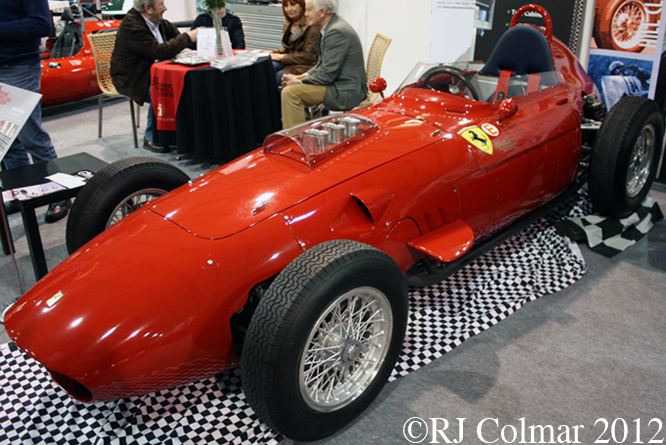
A couple of weeks ago at Race Retro I caught up with the last front engined car to win a Grand Prix again. This car was originally given the chassis number #0007 and driven by Wolfgang von Trips, Oliver Gendebien, and Phil Hill in 1958 recording just one 5th place finish in Portugal with ‘Taffy’ von Trips at the wheel.

Ferrari 246, Race Retro

The following season it driven by Dan Gurney in 4 Grand Prix recording a best finish of 2nd on aggregate at Avus in the 1959 German Grand Prix.

Ferrari 246, Race Retro

In 1960 #0007 was wheeled out for Phil Hill again for five more Grand Prix appearing for the last time at the Italian Grand Prix which Phil Hill won, in a clean sweep of the podium for the Italian marque, ahead of Richie Ginther and the Belgian Willy Marisse who was a lap down.

Ferrari 246, Race Retro

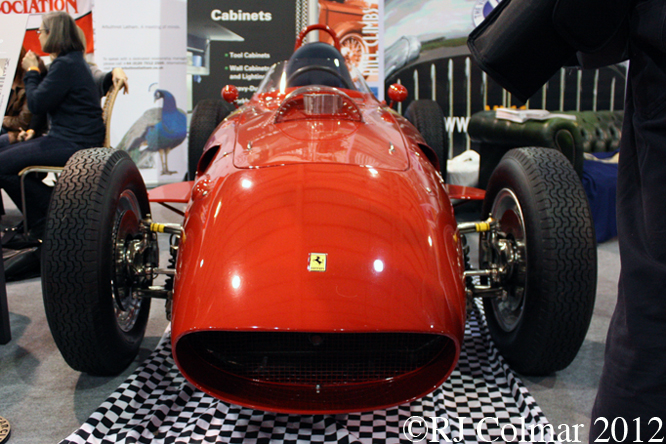
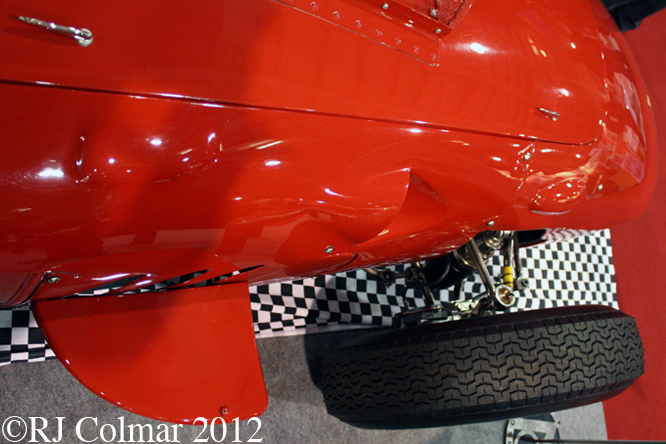
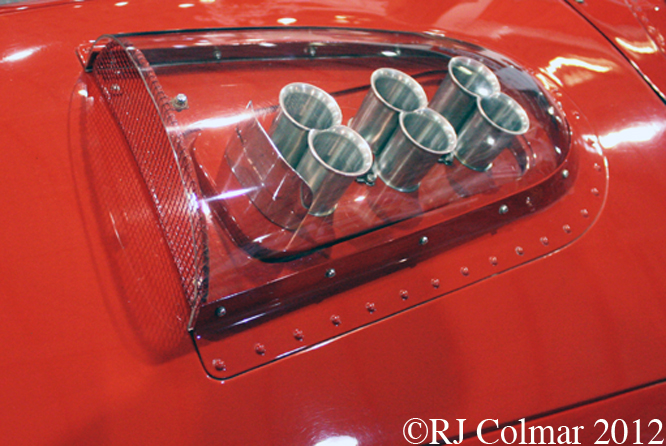
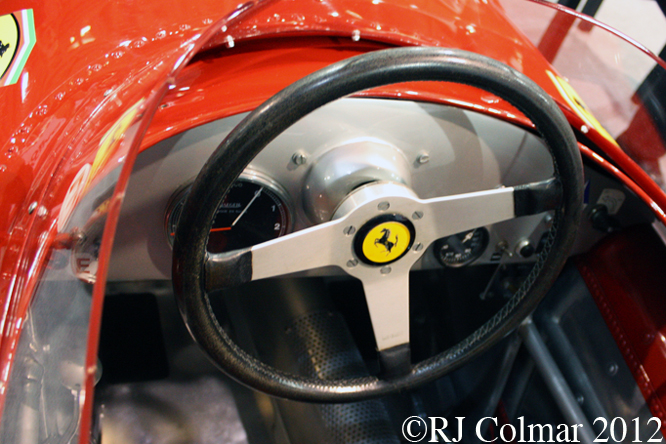
The significance of the win the last ever in a championship Grand Prix recorded by a car with the engine in the front was a matter of complete indifference to Ferrari as evidenced by the fact that before the year was out the trusty 2.5 litre Dino V6 motor had been swapped for V12 250 TR motor by the factory. The whole car, renumbered at Maranello as chassis #0788, had been entrusted to New Zealander Pat Hoare who won in 1961 at Waimate and the 1962 New Zealand Gold Star Championship with it.

Ferrari 246, Race Retro

After the car proved no longer competitive and Pat Hoare had retired from racing Pat converted the single seater into a closed two seat GTO coupé replica which can be seen in this link.

Ferrari 246, Race Retro

The car was acquired by respected historic racer Neil Corner in 1978 and restored to it’s V12 open wheel chassis spec.

Ferrari 246, Race Retro

Today the car is owned and rock manager Tony Smith, who had a had a replica Dino V6 motor installed, raced #0007 at Goodwood Revival last year when I first saw it.

14/05/12 Ammended to read ‘and restored to it’s V12 open wheel chassis spec’ and ‘, who had a replica V6 motor installed, in the light of Charles Hollands comments below.

Share