Tag Archives: Hill

Chinese Whispers – Ferrari 375MM Vignale #0286AM

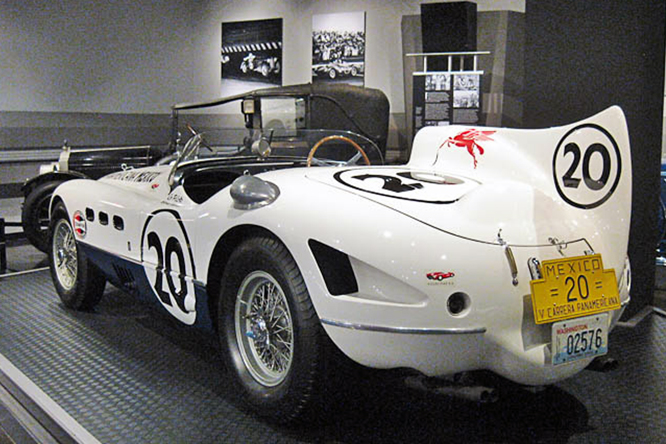
Today we are looking at a one off Ferrari 375MM Vignale chassis #0286AM, seen here at the recent Phil Hill Tribute at the Peterson Museum, that for 35 years was reported as being buried in a hole in the ground.

The Vignale bodied chassis 0286AM started life as one of four from a total of 10 340 MM’s with a 4.1 litre 250 cui Lamperdi V12. However before #0286AM left the factory it’s motor was upgraded first with a 4.5 litre / 274 cui V12 which had it’s origins in the Ferrari 375 Grand Prix Car, bringing the erstwhile Vignale bodied 340 MM up to 375 MM spec, in fact today’s car is seen as the prototype 375 MM. The motor was then bored out to 4.9 litres / 299 cui to the so called 375 plus spec.
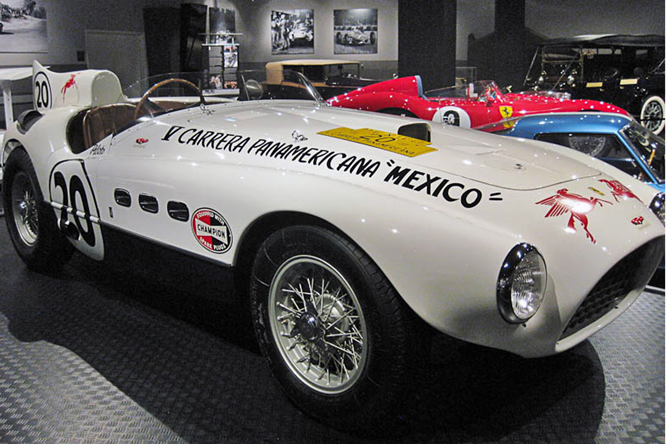
Ferrari 375 MM Vignale, Peterson Museum

#0286AM appeared at four events in 1953, Luigi Villoresi qualified on pole for a sports car race at Spa but the car was withdrawn before the start due to engine problems. Villoresi set fastest lap in the Circuito di Senigallia Race but again retired with engine problems.

Alberto Ascari and Giuseppe Farina drove #0286AM to victory at the 1953 Nurburgring 1000 kms after the engine had been changed from one of the other team cars before the start of the race. Somewhere around this time #0286AM was scheduled to transfer to the ownership of Tony Parravano however the engine problems at the Nurburgring meant this transaction never took place and Tony was given another 375 MM chassis #0362AM.

US Ferrari importer Luigi Chinetti then bought #0286AM painted it black added a full width screen and entered it for himself and Alfonso de Portago in the 1900 mile 1953 Carrera Panamericana where engine problems prevented the car from completing the race. The car was then sold to Carlos Braniff in Mexico City.
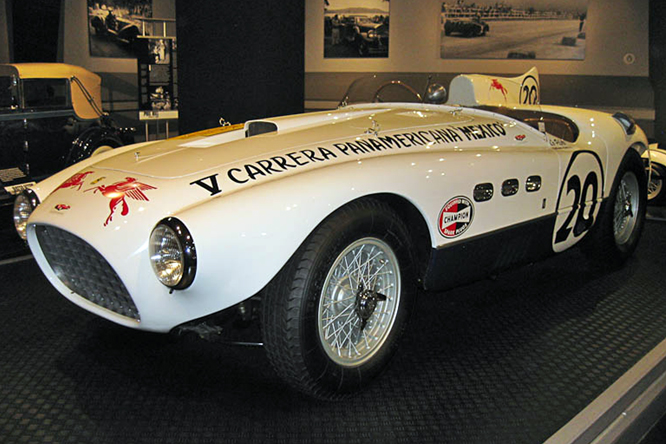
Ferrari 375 MM Vignale, Peterson Museum

Braniff had the car prepared for the 1954 Carrera Panemericana with a standard 4.5 litre / 274 cui motor he had a second spare wheel fitted in the tail and added the distinctive head rest and fin as well as adding cooling vents for the wheels. Carlos drove the car to a second place finish at the The Lone Star National Sports Car Race held at Bergstrom and Phil Hill came second in the Orange Empire National Races held at March AFB prior to the Carrera Panemericana for which Hill was teamed up with Richie Ginther.

Hill & Ginther were in contention for the 1954 Carrera Panemericana win when they ran out of fuel on the 7th of 8 stages, on which they only managed a forth place finish. Hill & Ginther made up for the disappointment by completing the 572 mile final stage of the event, held on open roads remember, at a blistering 137 mph average to recover a 2nd place finish overall. That 137 mph average for the eighth stage of the Carrera Panamericana has never been beaten.

In 1955 Lou Buero became the owner of the car now repainted dark red / brown during the 1955 season Carrol Shelby drove the car to a victory at Torrey Pines. Lou Buero then had the head cylinder heads crack at the end of season races at Nassau and #0286AM would then go unseen in public for 39 years.
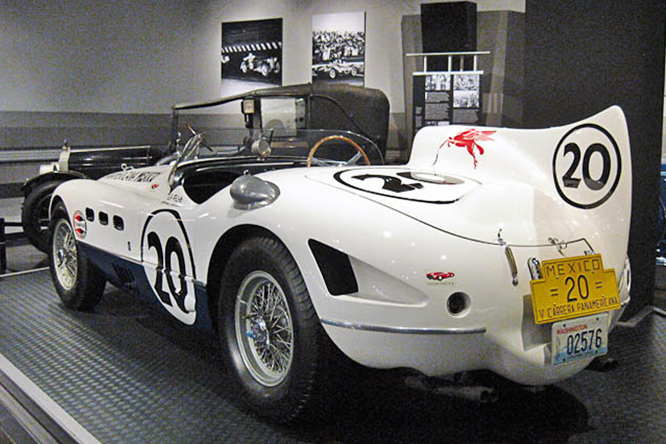
Ferrari 375 MM Vignale, Peterson Museum

It turns out that the reports of the car being buried in the earth were just a tad far of the mark, after Lou Buero Snr passed away his son had tried to revive #0286AM by attempting to fit a Jaguar motor and gearbox, however having failed he entombed the car in a 20ft trailer barricading it in so that no one could steal it in 1956. The myth of the car being buried in the ground stemming perhaps the inevitable Chinese Whispers over the ensuing 39 years owing to the dark red / colour of the car when it was last seen and the fact that it had been entombed in a trailer.

#0286AM was in need of a ground up restoration after spending 35 years in less than ideal conditions in Arcata, California, galvanic corrosion of the steering wheel had been so bad the wood rim of the steering wheel had dropped off ! The process began in 1994 and by 1997 Phil Hill was reunited with #0286AM and he promptly drove it to victory at the Monterey Historic Automobile Races. That same year #0286AM also won the Pebble Beach Cup at the Concours d’Elegance.

My thanks to Mark Savory who was partly responsible for restoring #0286AM who’s website gives a more complete history and further photo’s of the car.

Thanks for joining me on this 137 mph edition of ‘Gettin’ a li’l psycho on tyres, I hope you will join me again tomorrow. Don’t forget to come back now !

PS Don’t forget …

Automobiliart GALPOT Seasonal Quiz
Automobiliart, Paul Chenard

December 26th – January 2nd

Win a set of Paul Chenard Greetings Cards
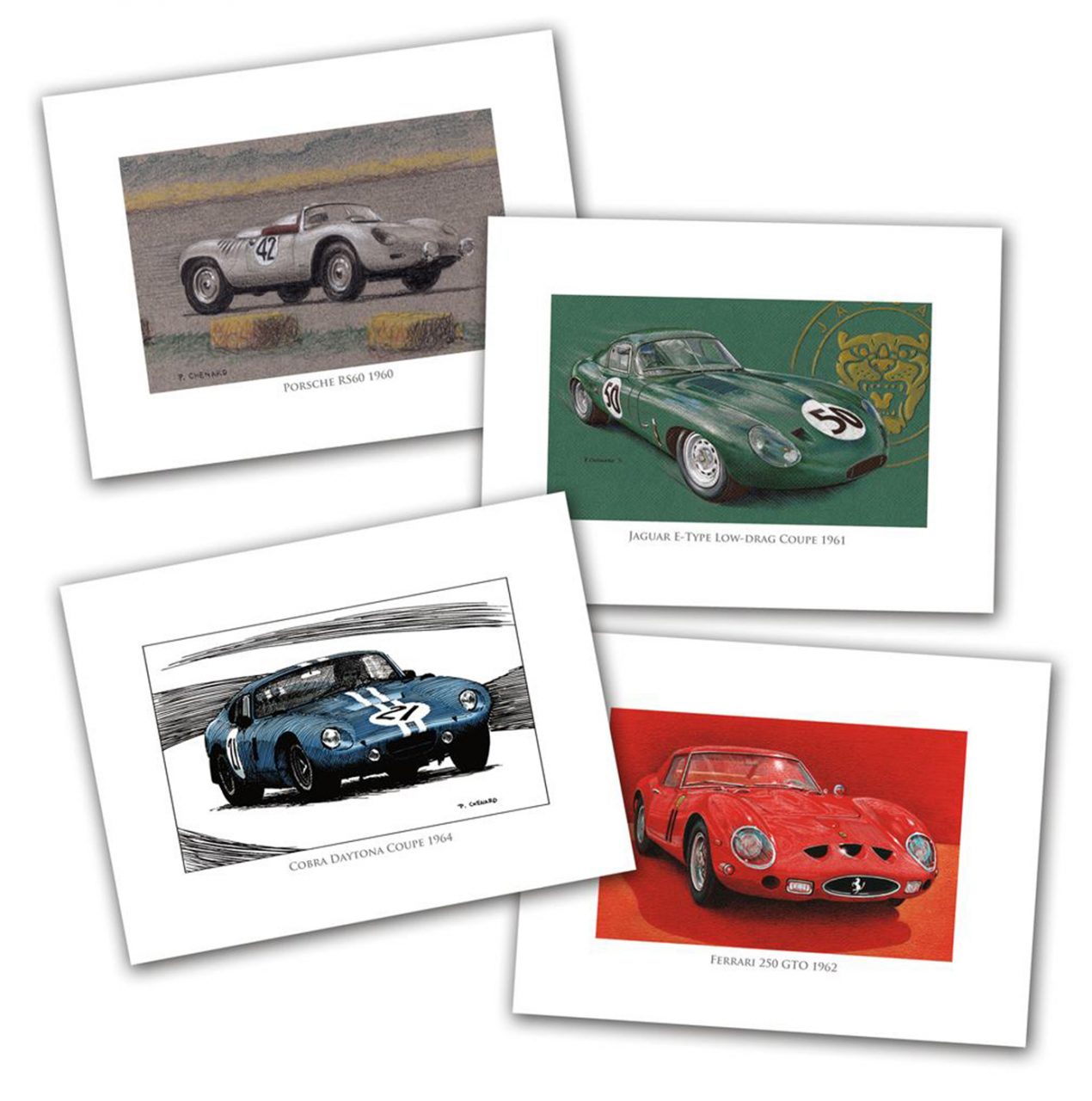
Sports-GT cars set, Paul Chenard

Set 1 Sports & GT Cars

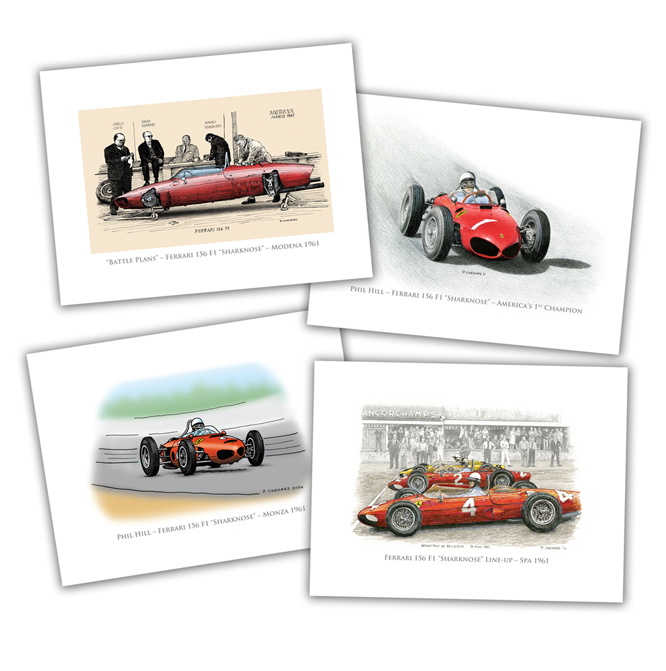
Phil Hill, Sharknose Ferrari Set, Paul Chenard

Set 2 Phil Hill World Drivers Championship 50th Anniversary Edition
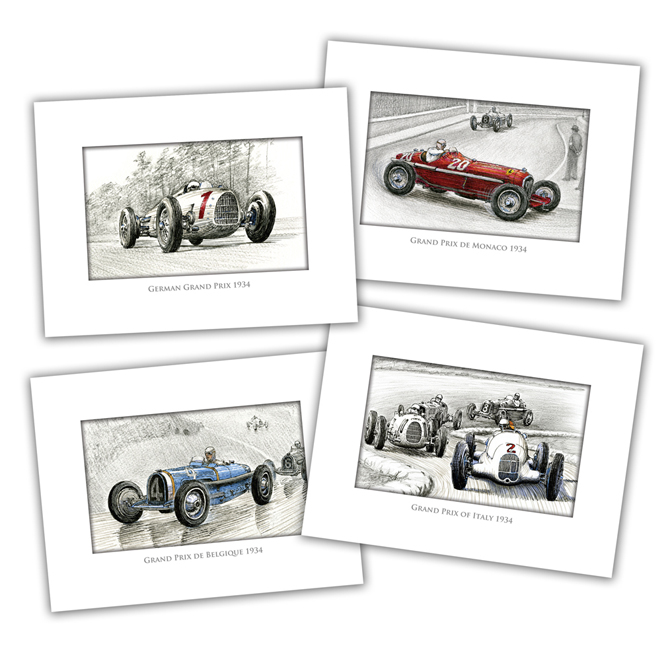
1934 GP Season Card set, Paul Chenard

Set 3 1934 Season

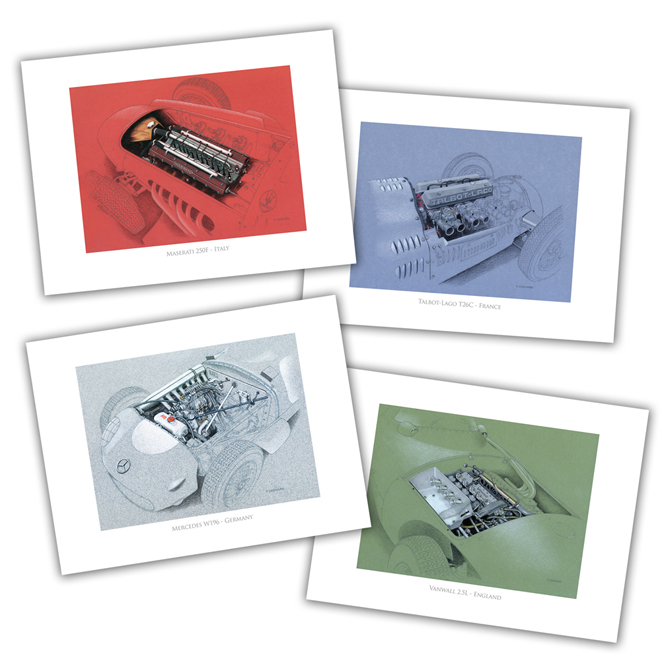
1950s Grand Prix Engines

Set 4 Grand Prix Engines of the 1950’s

or
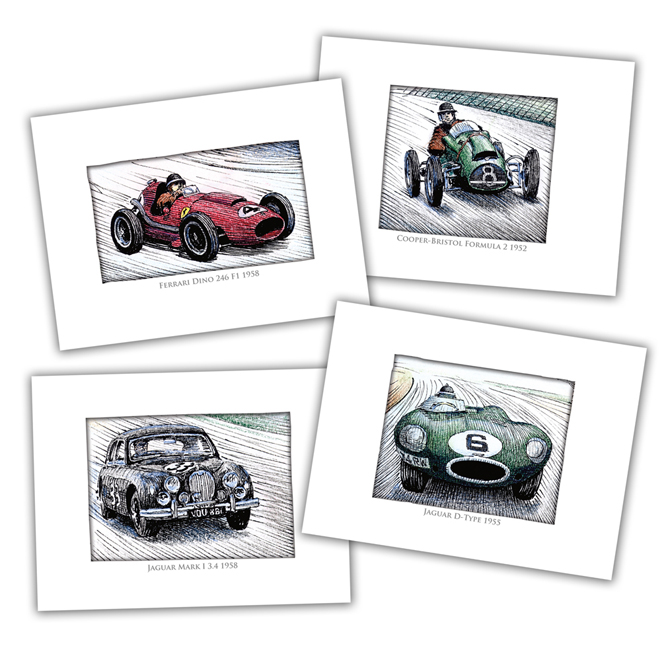
Mike Hawtorns racecars Card set, Paul Chenard

Set 5 Mike Hawthorn’s Race Cars

The Automobiliart GALPOT Seasonal Quiz will comprise 8 categories.

Overall winner chooses one set of Paul Chenard Greetings Cards from the five sets shown above.

The cards measure 15.24cm x 11.43cm, come in packs of 12 with 3 copies of 4 designs in each set, plus A6 envelopes.

Which set will you choose ?

The free to enter Automobiliart GALPOT Seasonal Quiz will run from December 26th – January 2nd Entries close January 8th 2012, Winner announced January 16th 2012.

Full details on December 26th at GALPOT.

Looking for Automotive Seasonal Gift Idea’s? Visit Automobiliart Now !

Share

Phil Hill Tribute – Peterson Museum

It’s a great pleasure to blog about the recent tribute to Phil Hill, celebrating the 50th anniversary of his World Championship win, at the Peterson Automotive Museum thanks to GALPOT’s roving correspondent Geoffrey Horton.

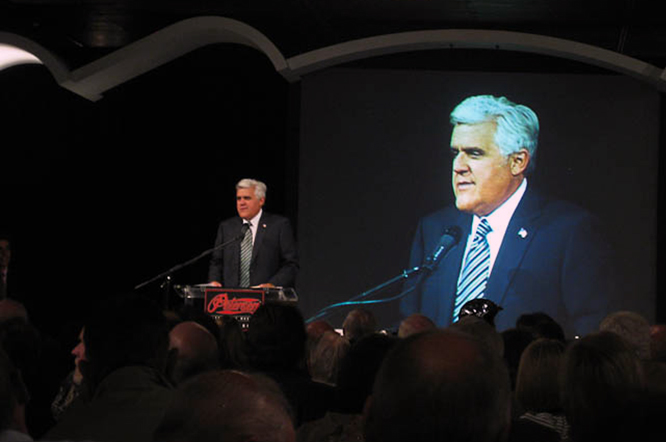
Jay Leno, Phil Hill Tribute, PAM

Ueber car enthusiast Jay Leno was amongst the guests to lend humour to the occasion.

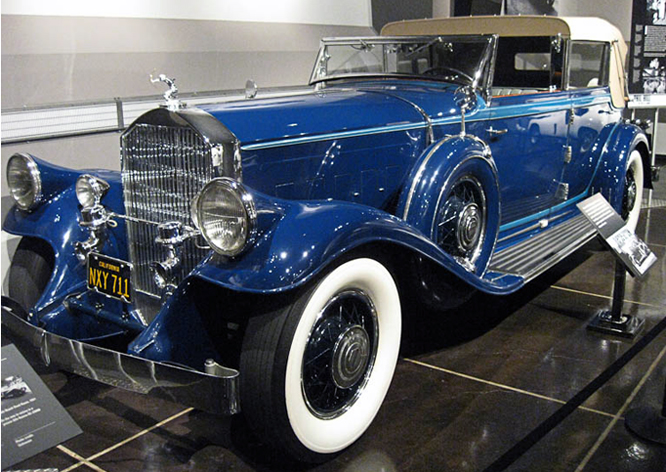
Pierce Arrow, PAM

Amongst the exhibits was this 1931 Pierce Arrow convertible sedan by Lebaron that was ordered new by Phil’s Aunt and in which Phil leaned to drive. He also used the car to attend USC and in 1955 he restored the car with his brother Jerry and promptly unexpectedly won the Best in Show award at Pebble Beach.

Peterson Automotive Museum

Some of Phil’s competitors from his early days at this event shared with the appreciative audience stories of Phil’s early exploits with an MG TC in Cal Club events which were not always entirely legal events held on circuits.

Ferrari 375MM Vignale, Peterson Automotive Museum

Of the delectable Ferrari’s present that Phil has driven was this unique 1953 375MM with Vignale bodywork and non stock tailfin that was added after the car was built in 1954. Phil drove this car to a second place finish in the 1954 Carrera Panamericana. It was also later driven by Carol Shelby.

Peterson Automotive Museum

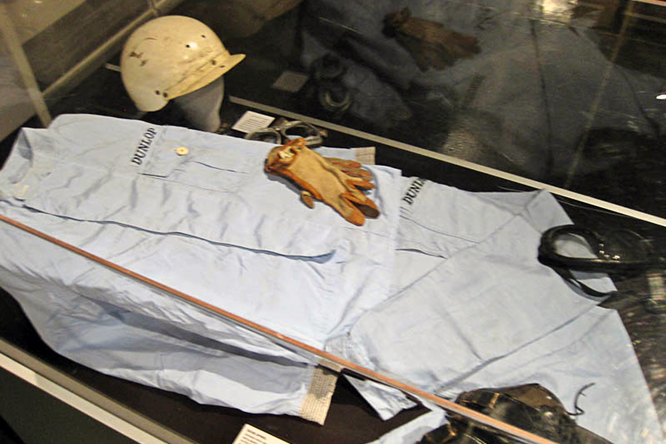
Nothing remains of the original Shark Nose Ferrari 156 which he used to win the 1961 World Drivers Championship, they were all destroyed on the instruction of Enzo Ferrari, but the helmet seen here was used by Phil in his Championship winning season.

Packard Model 30, Peterson Automotive Museum

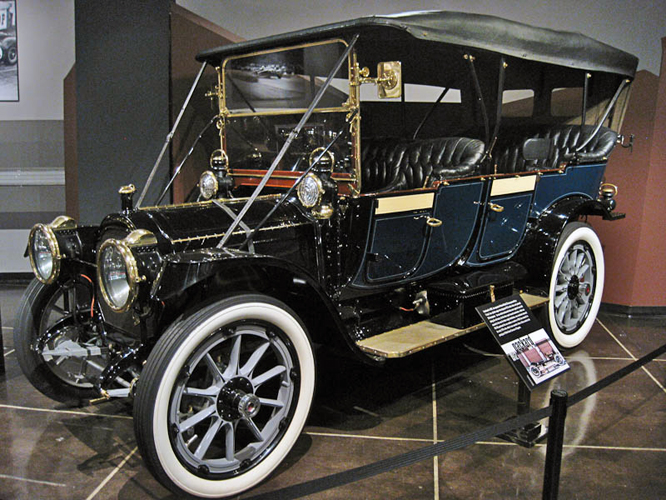
This 1912 Packard Model 30 with a gearbox mounted ahead of the rear axle and rear cable operated brakes only was purchased by Phil in 1966 and won it’s class at Pebble Beach Concours d’Elegance in the 1970’s

Peterson Automotive Museum

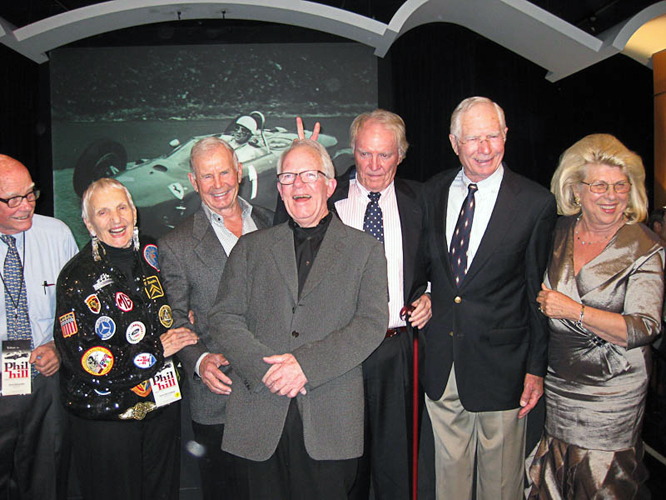
Guests who discussed the life and times of Phil were left to right, John Lamm, Editor at Large “Road and Track, Denise McLuggage racing driver and journalist, Parnelli Jones, Jesse Alexander photographer, Dan Gurney, Jim Hall and Phil’s wife Alma.

My thanks to Geoffrey Horton for sending me the photo’s and the details of the Phil Hill Tribute evening at Peterson Automotive Museum.

Thanks for joining me on this Phil Hill edition of ‘Gettin’ a li’l psycho on tyres’ I hope you will join me again tomorrow. Don’t forget to come back now !

Share

Wobbly Web Wheels – Lotus 12

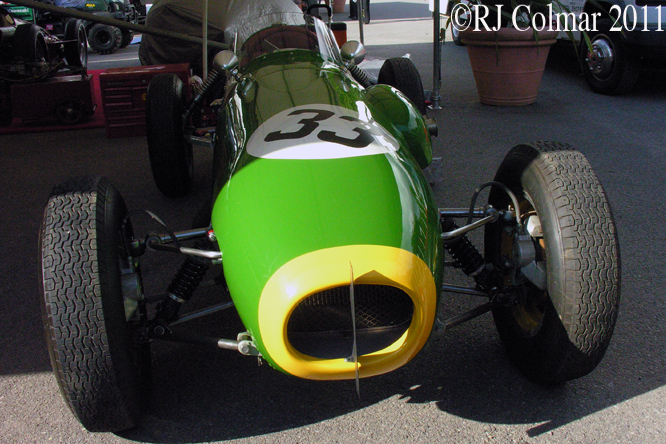
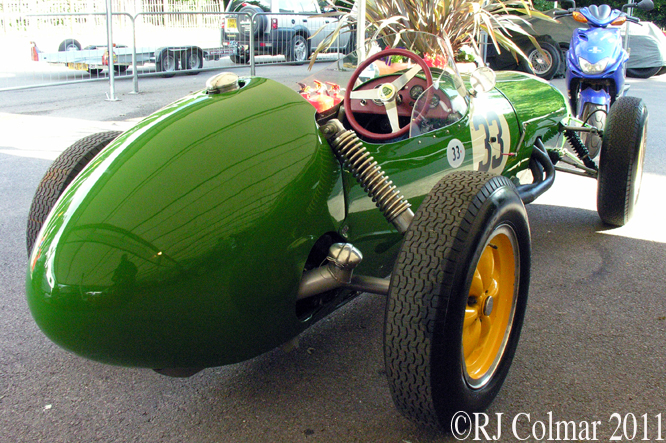
Despite only being fitted with mock up engine and all new rear transaxle made of wood the Lotus 12 with a chassis made of Reynolds 531 tubing looked sensational to the select members of the press lucky enough to it in the stable block at the back of a hotel in Hornsey in October 1956.

Lotus 12

Lotus 12, Goodwood Festival of Speed, June 2011

The space frame chassis had independent wishbone suspension on the front and was to be powered by a 4 cylinder Coventry Climax motor built to meet the then second tier Formula 2 regulations. The gearbox mounted to the rear transaxle was to feature a sequential shift as used on motor cycles.

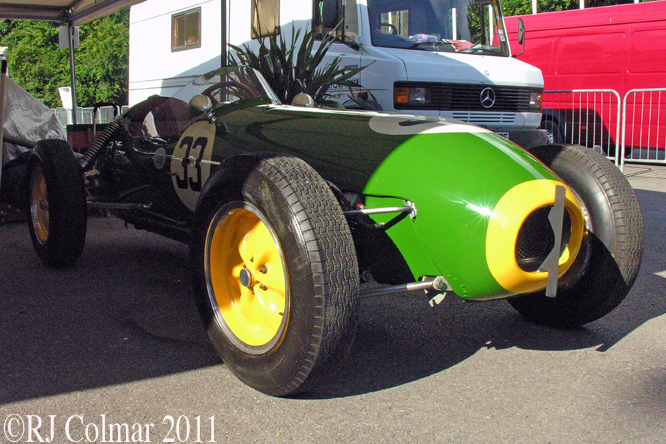
Lotus 12

Lotus 12, Goodwood Festival of Speed, June 2011

Typical of designer Colin Chapmans maxim to add lightness the magnesium ‘wobbly web’ wheels, inspired by a design Colin had seen on a US military aircraft, were fitted with six wheel nuts instead of the more common central knock off nut because Formula 2 races did not, as a general rule, require pit stops to change tyres and the six small wheel nuts weighed less than the one knock off nut.

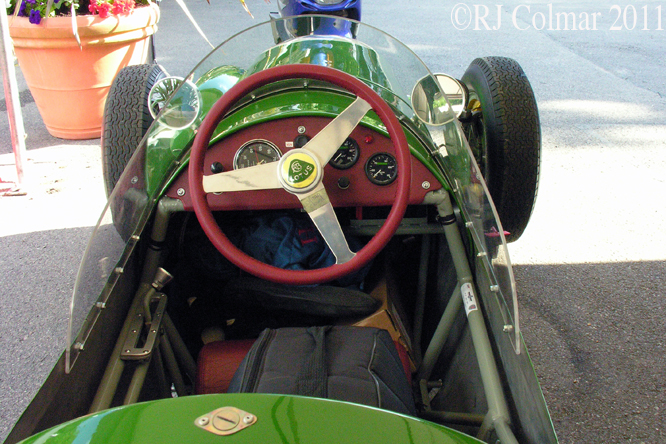
Lotus 12

Lotus 12, Goodwood Festival of Speed, 2011

Colin Chapmans first foray into open wheel racing under his own Lotus banner while innovative was not as successful in 1957 as had been the Vanwall for which Colin had designed the chassis, but this did not prevent him from fitting the 12 with an oversize version of the Formula 2 Coventry Climax engine and running two examples at the Monaco Grand Prix in 1958 for Graham Hill and a second F2 spec car for Cliff Allinson to mark Lotus first entry into the top Formula One tier of the sport.

Lotus 12

Lotus 12, Goodwood Festival of Speed, 2011

The first two Lotus 12’s featured de Dion suspension but Chapman refined his design by fitting his own version of the Macpherson struts fitted with universal joints that became known as the Chapman strut, a system also used on the Lotus Elise. In Formula One races the Lotus 12 scored some promising sixth place finishies and a remarkable 4th place in Belgium but the most important Colin Chapman was now playing on the big stage where he would leave an indelible mark right up until his untimely demise im 1982.

Thanks for joining me on this Wobbly Web edition of ‘Gettin’ a li’l psycho on tyres’ I hope you will join me again tomorrow when we will be looking at a big cat. Don’t forget to come back now !

Share

E-Type – Vauxhall 30-98 Velox Tourer

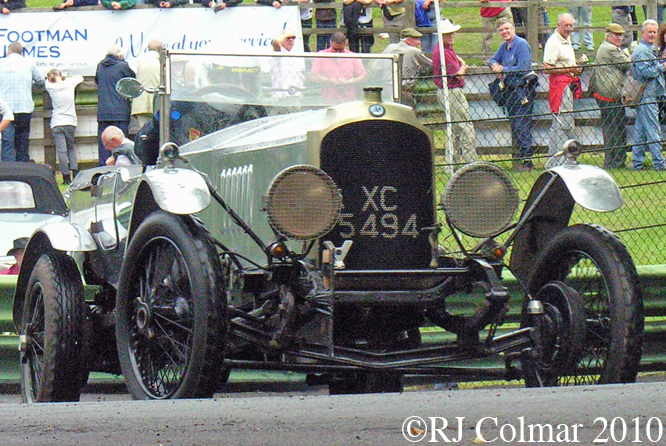
In 1913 Vauxhall announced their replacement for the Vauxhall D-Type known officially as the 30-98 or E-Type. 13 chassis were built before the Great War of 1914 – 1918, during which period Vauxhall fulfilled orders from the War Department to build the older D-type models for the use of nobility and Generals alike.

Mark Butterworth, Vauxhall 30/98, Prescott

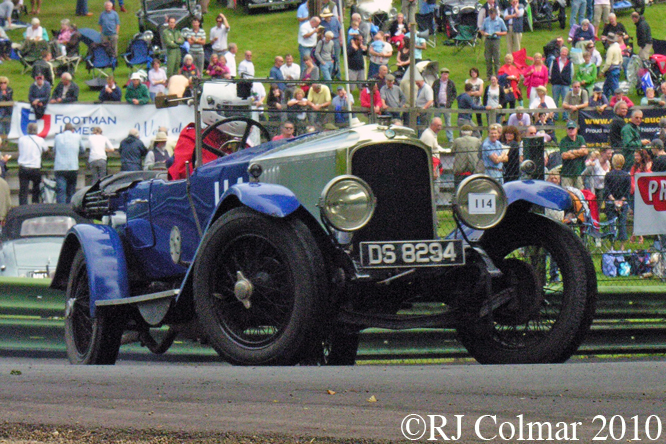
Between the cessation of hostilities and 1922 it is thought around 270 further 30-98 E-types were built with 90 hp 4,525 cc / 276 cui four cylinder side valve engines which gave the car when striped down a 100 mph capability. Above Mark Butterworth negotiates the Pardon Hainpin at Prescott in his 1921 model. Unlike the equally fast contemporary Bentleys, Vauxhall 30-98 models only acquired front brakes during the production span of the model.

Phil Dobbin, Vauxhall 30/98 OE, Loton Park

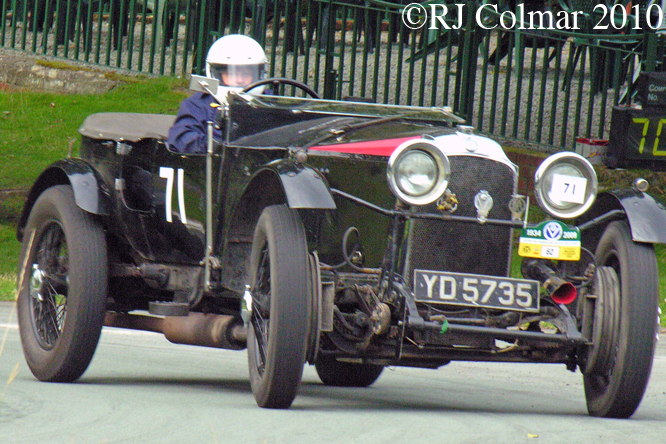
The 30-98 E type was fitted with an improved 115 hp overhead valve engine in 1922, known as the OE to distinguish it from its older side valve engined siblings. Above Phil Dobbin can be seen lining up his 1924 30-98 OE for the start of a run up the hill at Loton Park.

Nicola Quartermaine , Vauxhall 30/98, Loton Park

1924 was the most successful year for the 30/98 E-type when 111 examples were built. Nicola Quartermaine’s 30-98 seen above negotiating the Triangle at Loton Park above comprises an older 1921 pre OE chassis and a 1924 4224 cc / 258 cui OE motor.

Roger Thorpe , Vauxhall 30/98, Prescott

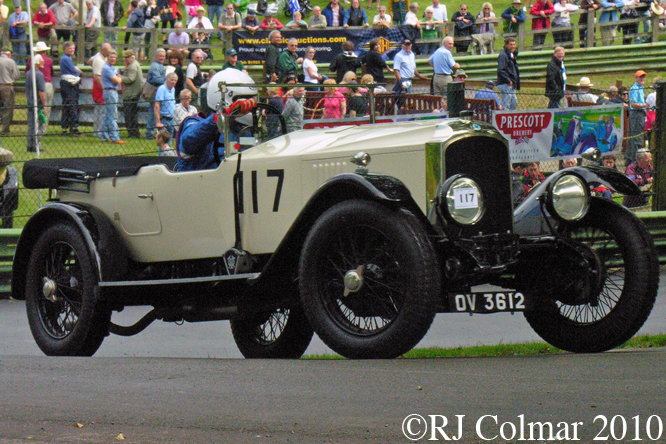
Around 60% of all 30-98 E-types, like the 1924 chassis OE 102 driven by Roger Thorpe at Prescott above were exported to Australia, some have since made their way back to the mother land.

Adam Jones , Vauxhall 30/98, Prescott

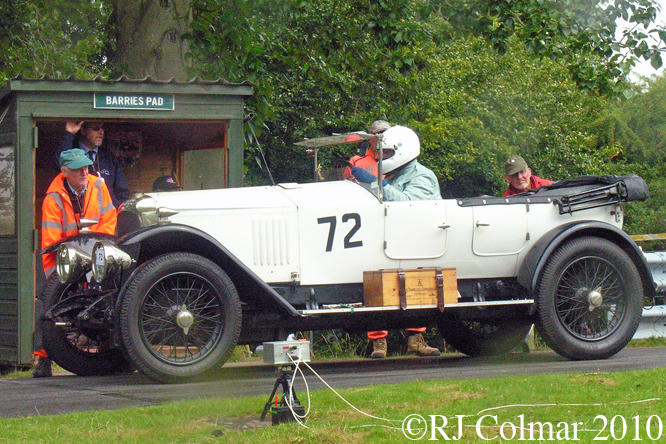
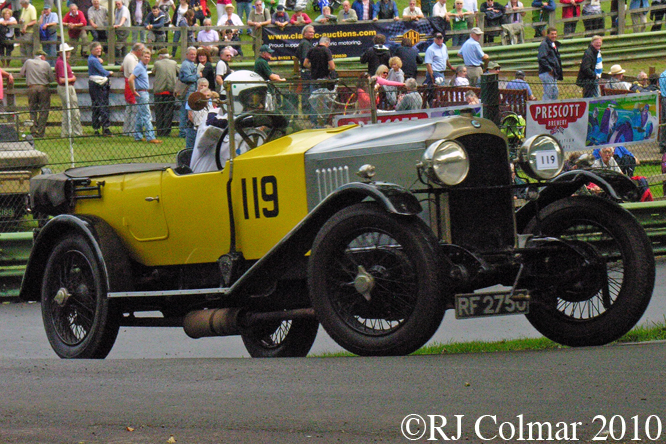
Vauxhall 30-98 E-types were available with either 4 seater tourer or 2 seater ‘Wesum’ boat tail body work with a ‘dicky’ (fold out) seat in the boat tail from the factory, alternatively a chassis could be ordered and sent to a coachworks for a bespoke body. Grosvenor Carriage Company for example, part of the Vauxhall dealer Shaw & Kilburn empire, built bodies for Vauxhalls exclusively during the production life of the 30-98. Above Adam Jones drives a 1925 4 seater with a tourer body, similar to all the vehicle bodies featured in today’s post. Note the absence of a drivers door on all of the vehicles featured in today’s post !

Dr Nick Bell, Vauxhall 30/98, Prescott

The class leading speed and later 4 wheel braking of the 30-98 was not enough to deliver consistent earnings for Vauxhall and in 1925 the company was sold for US$ 2.5 million to General Motors who set about challenging Ford at a lower end of the UK market than Vauxhall had hitherto catered for. Above Dr Nick Bell above drives a 1927 30-98 OE tourer, chassis OE 304, one of the last of the in total 312 OE’s built since 1922.

Thanks for joining me on this E-Type edition of ‘Gettin’ a li’l psycho on tyres’ I hope you will join me again tomorrow. Don’t forget to come back now !

Share

Dino Remembered – Ferrari 246S #0784

At the end of 1955 Alfredo ‘Dino’ Ferrari proposed the idea of building a twin over head cam 1.5 litre / 91.5 cui V6 motor for use in second tier open wheel Formula 2 racing to his father Enzo. Soon afterwards ‘Dino’ was hospitalised with Duchenne muscular dystrophy, while in hospital ‘Dino’ discussed the technical details of his idea with legendary engineer Vittorio Jano.

Jano translated his disscusions with ‘Dino’ into what would become the first ‘Dino’ V6 which was used in Formula 2 races in 1957, by which time ‘Dino’ had fatally succumbed to his illness.

The motor had the two banks of cylinders unusually inclined at 65 degrees by 1958 a larger version of the ‘Dino’ V6 had been installed in Ferrari’s Grand Prix cars and used by Mike Hawthorn to win the 1958 World Drivers Championship.

A 2 litre / 122 cui version of the ‘Dino’ engine was installed in a sports car, s/n #0740, for Peter Collins to drive at Goodwood in the 1958 Sussex trophy where he came 2nd. The sports car was indistinguishable from the older Fantusi bodied 250TR apart from the 3 twin choke carburetors sticking out of the bonnet /hood where the larger engined 250 TR had 6.

Ferrari 246S, Bobby Verdon-Roe, Siverstone Classic

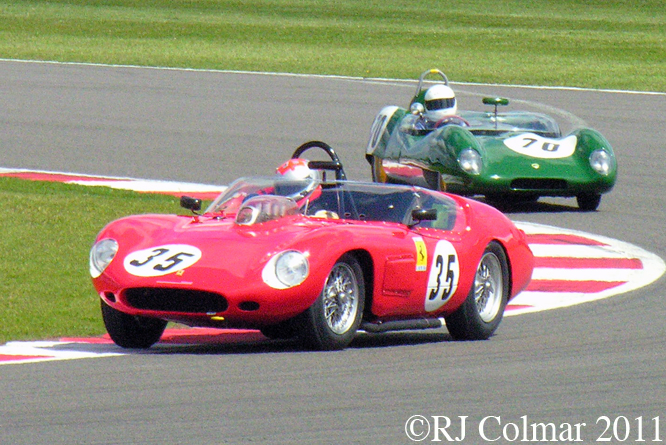
Several more variations of the Dino V6’s were built and raced including single over head cam versions with 60 degree inclinations between the cylinders. #0784 seen here in the hands of Bobby Verdon Roe at the Silverstone Classic was the last of the 246S models to be built in 1959.

#0784 was fitted with a twin cam V6 and uniquely with Formula One derived independent rear suspension. On it’s debut Phil Hill and Graf Berghe ‘Taffy’ von Trips drove this chassis into second place in the 1960 Targa Florio. This would remain the cars best result despite the best efforts Richie Ginther, Ludovico Scarfiotti, Ed Hugus, Alan, Cornell jr, Ricardo & Pedro Rodriguez, and Bob Grossman.

In 1962 the car was fitted with the high tail body seen on the car today. Among it’s many owners since the 1960’s was Nick Mason’s friend and Pink Floyd Manager Steve O’Rourke who was briefly the custodian of #0784 in 1997. More recently in 2009 Bobby Verdon Rowe and Nick Leventis took this 246S to victory lane in a one hour race at the Goodwood revival in 2009.

Thanks for joining me on the Dino V6 edition of ‘Gettin’ a lil’ psycho on tyres’ I hope you will join me again tomorrow. Don’t forget to come back now !

Share

Goodwood Revival #5 – Ferrari Open Wheel

Last Friday I managed to get photo’s of many of the Ferrari’s on track and just the one off track at Goodwood. In order to break these photo’s down into manageable blogs today I’ll be looking at five of the single seaters present at last weeks Revival meeting.

Ferrari 500/625, Goodwood Revival

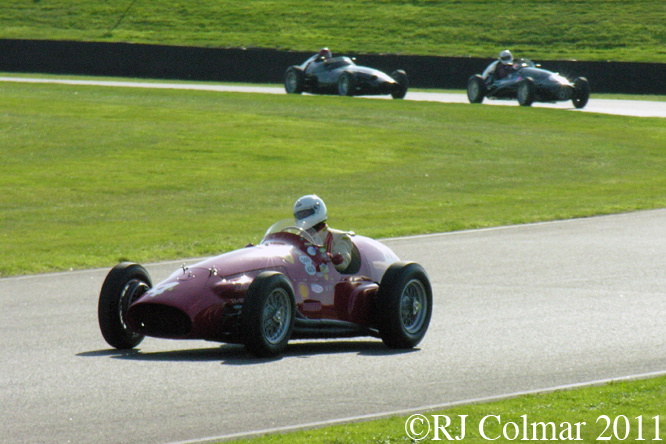
Oldest of the open wheelers present was this 1952 Ferrari 500/625 chassis #0482, this type started life as a 2 litre / 122 cui Formula 2 vehicle for the 1952 and 1953 World Championship seasons and was then upgraded for the 1954 season to 2.5 litre / 153 cui for the 1954 World Championship which was run to new Formula One regulations. I am not entirely sure what the exact history of this particular chassis is.

Lancia Ferrari D50A (Replica), Goodwood Revival

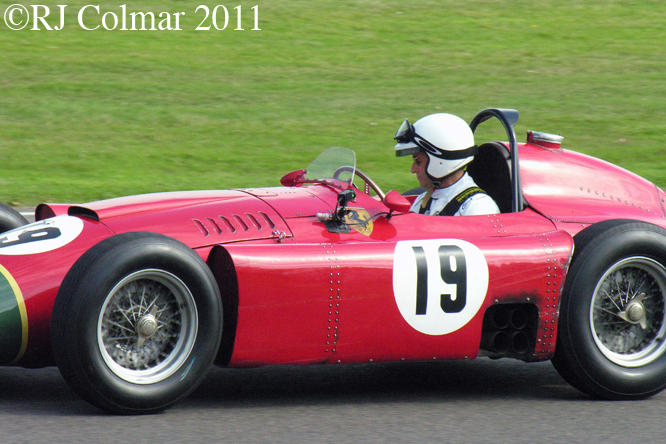
So far as I can tell this Lancia Ferrari is a recreation of the 1956 D50a type, as used by Juan Manuel Fangio to win his forth World Championship in 1956. This particular car, built by Jm Stokes who has manufactured six such vehicles, has Alain de Cadenet operating the loud pedal of the throaty V8, by some considerable margin making the best sound of the day on the track.

Ferrari Dino 246 (Replica), Goodwood Revival

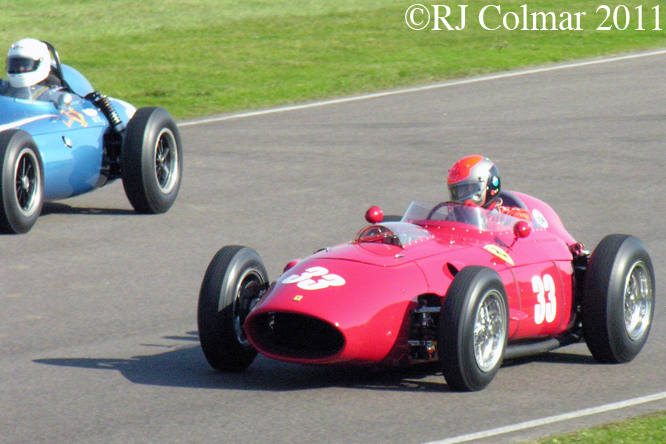
This V6 powered 1959 #33 Ferrari Dino 246 owned by Ian Wade and driven by Rick Hall is also a recreation,

Ferrari Dino 246, Goodwood Revival

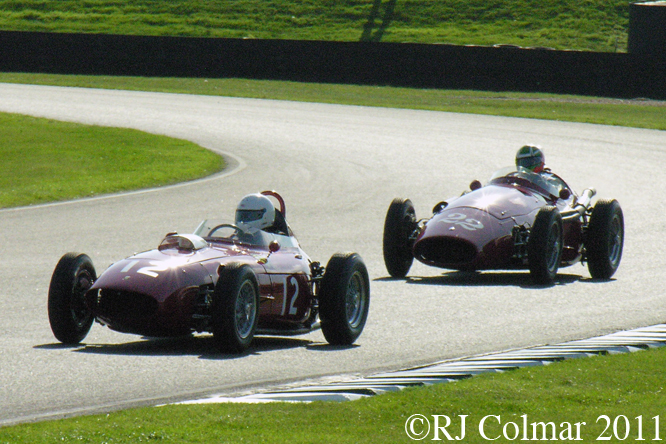
while the #12 1960 Dino seen here driven by Tony Smith is genuine with a history. The chassis number was originally #0007 Phil Hill led a Ferrari 1-2-3 victory at the 1960 Italian Grand Prix with this car. This was Phil’s first ever Grand Prix win and the last ever recorded for a Formula One car with a front mounted motor. Genesis and Metallica manager
Tony Smith can be seen talking about and driving this car on this link.

Ferrari Dino 156 (Replica), Goodwood Revival

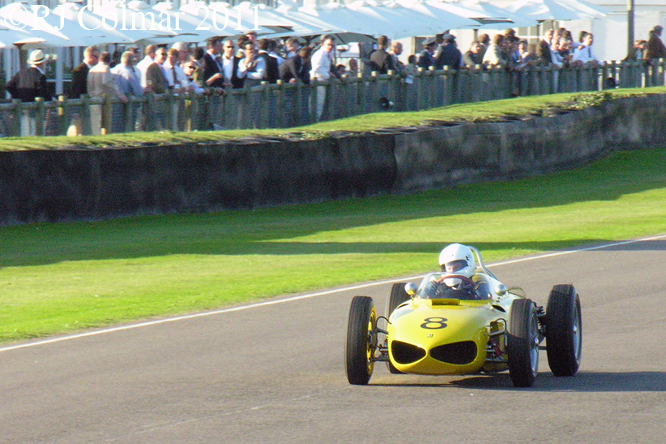
Finally the 1961 Ferrari 156 #0002R, above with Jan Biekens at the wheel, is a recreation of the type of vehicle that Phil Hill drove to become the first American World Drives Champion. This car is a recreation, again by Jim Stokes, of 156 chassis #0002, with a 65 degree V6, as used by Oliver Geneblen to finish 4th in the 1961 Belgian GP, Geneblen’s car was painted yellow in deference to the Equipe Nationale Belge team which entered him into the race.

Thanks for joining me on this open wheel edition of ‘Gettin’ a lil’ psycho on tyres’ I hope you will join me again tomorrow when I’ll be taking a look at some of the fashion that graced the Goodwood last weekend. Don’t forget to come back now !

Share

Grand Prix City – Donington Park Museum

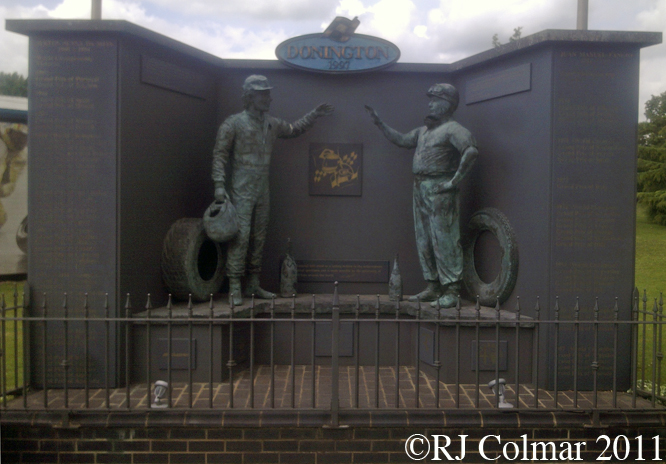
Donington Park Museum

(Ayrton Senna & Juan Manuel Fangio)

A couple of weeks ago I had the opportunity to drop in to the Donington Park Museum, home to the Donington Park Grand Prix Collection. Donington Park dates back to at least the Doomesday Book compiled in 1086 and is one of the longest established deer parks in the UK.

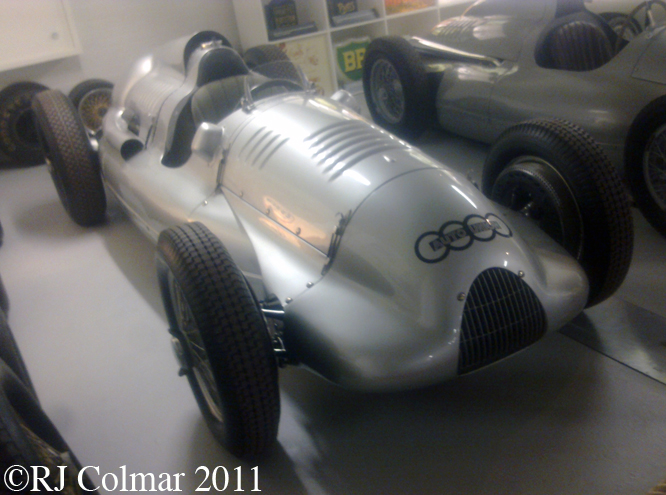
Auto Union Type D, Donington Park Museum

(1939 Auto Union Type D)

After serving as a Prisoner Of War camp for German officers in World War 1, a race track was built in 1931 for £12,000. The track played host to Grand Prix races featuring the Mercedes and Auto Union ‘Silver Arrows’ Grand Prix cars, Tazio Nuvolari driving an Auto Union during practice for the 1938 British Grand Prix fatally struck a stray deer.

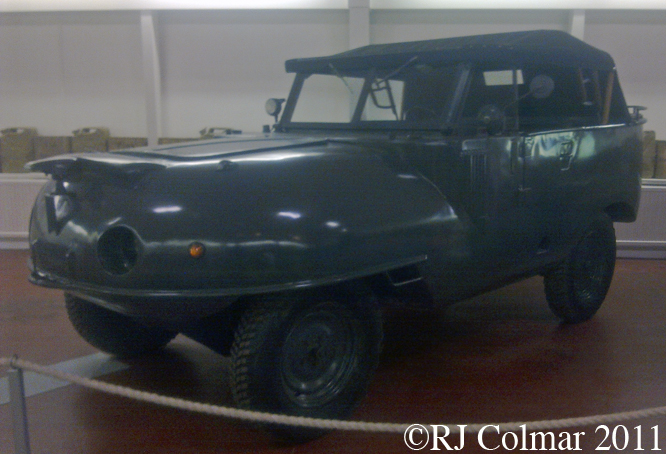
Trippel SG6, Donington Park Museum

(1942 Trippel SG 6)

During World War 2 Donington Park became home to 50,000 vehicles as the largest military transport depot in Europe. In 1971 local building magnate Tom Wheatcroft took over the Donington Park circuit and 8 years later racing was resumed after a nearly 40 year break. The highlight of the resumption of racing at Donington was almost certainly the 1993 European Grand Prix.

Vanwall VW9, Donington Park Museum

(1958 Vanwall VW9)

Tom Wheatcroft alongside his property developing business had a passion for racing, collecting vehicles associated with the circuits pre war history, vehicles used in WW2, during which Tom served in a tank regiment and British built Grand Prix cars.

March BMW 732, Donington Park Museum

(1973 March BMW 732)

He also sponsored and entered talented drivers, including Derek Bell, Richard Morgan and in particular Roger Williamson whom Wheatcroft financed in Formula 3 and 2 and an ill fated Grand Prix drive in which Roger met his untimely demise in a horrific accident during the 1973 Dutch Grand Prix.

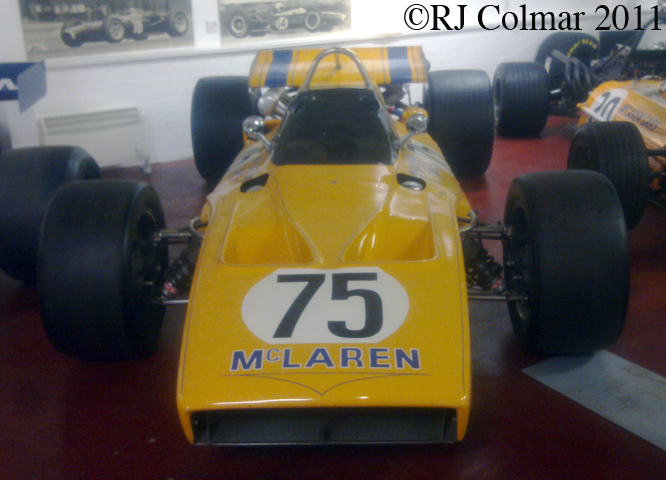
McLaren M15, Donington Park Museum

(1970 McLaren Offy M15)

The Donington Park Museum houses the largest collection of McLaren

Williams FW02, Donington Park Museum

(1973 Williams – Cosworth FX3B)

and Williams vehicles outside of these two prestigious manufacturers own collections.

Hill GH2, Donington Park Museum

(1975 Hill – Ford GH2)

I spent several memorable hours going round the museum housing a veritable feast of some of the highs and low’s of British Grand Prix endeavour. Situated just of the M1 near Nottingham, at just £8 a visit, I’ll look forward to dropping in again when the opportunity next presents it’s self.

Slightly off topic, wishing all GALPOT readers in the USA and US readers abroad Happy Independence day.

Thanks for dropping today’s Donington Park edition of ‘Gettin’ a lil psycho on tyres’ i hope you’ll join me again tomorrow for a look an Independence day cruise in the UK. Don’t forget to come back now !

Share