Tag Archives: Indianapolis

Three Time Winner – McLaren Offy M16

09 07 03 022sc

The McLaren M16 was designed by Gordon Coppuck in 1970 and took essential design queues from the Lotus 72, that was dominant in Formula One, including the chisel nose and side mounted radiators.
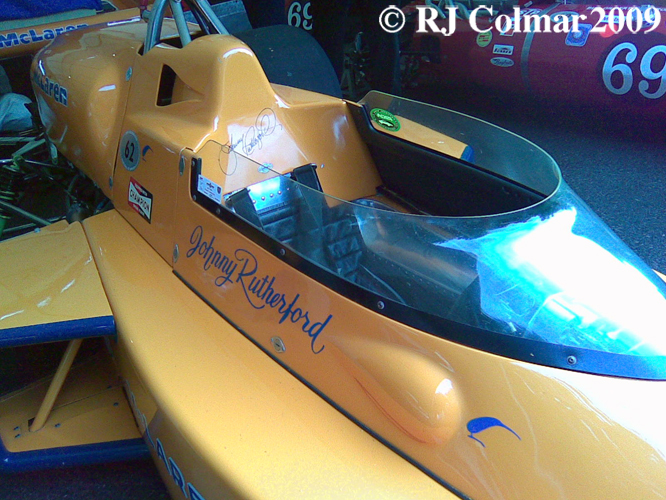
09 07 03 023sc

On it’s Indy debut in 1971 M16’s of Revson, Donohue and Hulme qualified 1st, 2nd and 4th for the 500, the race was won by repeat winner Al Unser with Peter Revson coming home a career best 2nd. Mark Donohue driving for the private Penske team said of the M16 that it “…obsoleted every other car on track…” and proved it with a win in 1972.
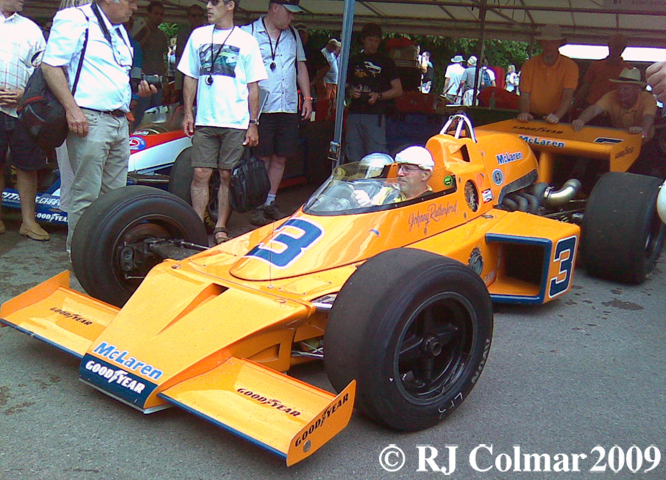
Image343sc

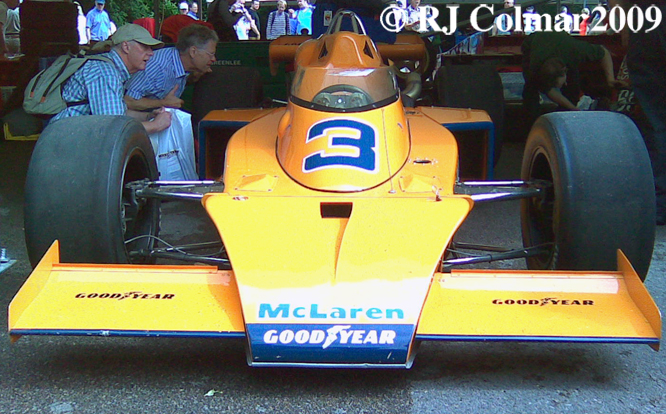
In 1973 Johnny Rutherford, seen driving the M16C/5 here at Goodwood Festival of Speed, took pole position again in his works M16 though the Eagles of Johncock and Vukovich Jr took first and second in the race that was called early due to rain. The following season driving the same car Rutherford started 25th on the grid and went on to win the first of his three Indy 500’s.
Indy75 022s

Photo Ed Arnaudin

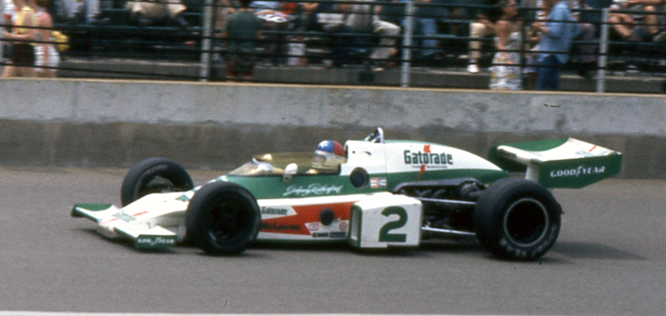
In 1975 Rutherford drove the #2 Gatorade M16E/1 qualifying 7th and coming in second.
Indy75 005s

Photo Ed Arnaudin

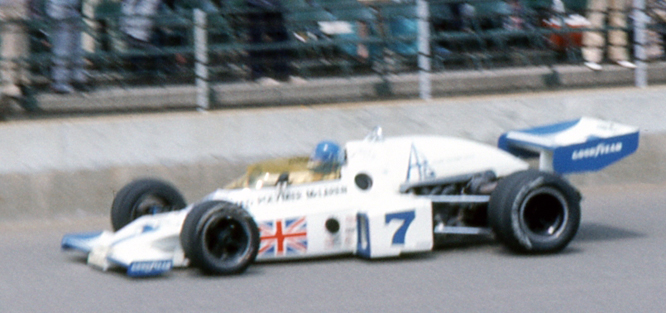
Lloyd Ruby drove the #7 Allied Polymer Group M16E/2 qualifying 6th and finishing 32nd in 1975 and in 1976 Rutherford dominated the Indy 500 with a victory from pole in this ex Ruby chassis. Cliff Hucul raced this same car at Indy from ’77 – ’79 qualifying a best 18th in ’79 and finishing a best 22nd in ’77.
Indy75 009s

Photo Ed Arnaudin

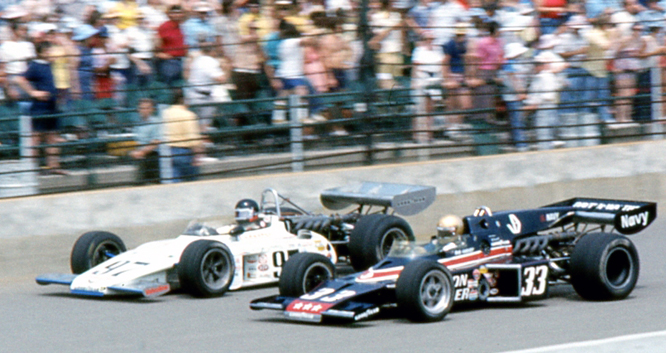
Bob Harkey seen in the #33 Dayton Walther M16C/2 here in 1975 qualified 23rd for the Indy 500 and after 18 laps handed the car over to Salt Walther who’s own M16 had experienced turbo failure after 2 laps. Salt was flagged in 10th at the conclusion of the rain affected race. In 1976 David Hobbs nade his fourth and final Indy start in this car starting 31st and finishing 29th.

In 1978 Jerry Karl modified M16C/2 fitting a Chevrolet stock block motor, Karl made three starts in ’78, ’80 and ’81 recording best start positions of 28th in ’78 and ’80 and a best finish of 14th in ’78. This car still fitted with a Chevy stock block but now with orange #15 bodywork as used by Peter Revson resides in the Matthew Collection.

My thanks to Steve Arnaudin for scanning his Dad’s photographs and to everyone who contributed to the M16 thread on The Nostalgia Forum for providing the chassis details.

Hope you have enjoyed today’s chisel nose edition of ‘Gettin’ a lil’ psycho on tyres’ and that you will join me again tomorrow. Don’t forget to come back now !


Share

The Kiwi Bear – McLaren Offy M15

This is the only photo to have so far surfaced by Ed Arnaudin at Indianapolis from 1970.

Indy70 001s

The car is a McLaren M15, based loosely on the Can Am dominating M8 chassis, Gordon Coppuck incorporated numerous parts from the M8 Can Am car into the design of the M15. The stressed aluminium monocoque chassis was held together with 3 steel bulkheads with the 4 cylinder Offy turbocharged engine bolted directly to the rear most and supported by two a frame running form the bulkhead to the bell housing.

The drivers of the cars were originally scheduled to be 1967 world champion Denny Hulme known as ‘The Bear’ in the #73 and Chris Amon in the #75, though team founder, Bruce McLaren also turned a few laps in the #79 spare car on the first day of practice running in a three car line astern McLaren train with fellow New Zealanders Denny and Chris. Bruce however never had any intention of taking the start.

The #73 of Denny caught fire during practice as a result of a fuel leak from a quick release breather cap that had not been properly secured. As Denny slowed the car down the intensity of the largely unseen methanol flames increased forcing him to jump from his car while it was still moving at an estimated 70 mph !

Denny was to miss the 500 due to the burns his hands received, meanwhile Chris Amon was not happy about the Indianapolis track set up, his speed was 3 mph slower than Bobby Unser who tested the #75 and the extent of the injuries received by Denny convinced him to withdraw from the race.

Teddy Meyer team manager drafted Carl Williams into the #75, he qualified 19th and finished 8th, while Peter Revson was drafted into the #73 qualifying 16th he retired from the race with a broken magneto classified 22nd.

2 days after the 1970 Indy 500 McLaren founder Bruce McLaren was killed testing the latest incarnation of the McLaren M8 Can Am car leaving Denny Hulme and Peter Revson to become the back bone of the McLaren team in Formula One, USAC and Can Am series until 1974.

Thank you for joining me on this Team Kiwi edition of ‘Gettin’ a lil psycho on tyres’ I hope you will join me again tomorrow. Don’t forget to come back now !
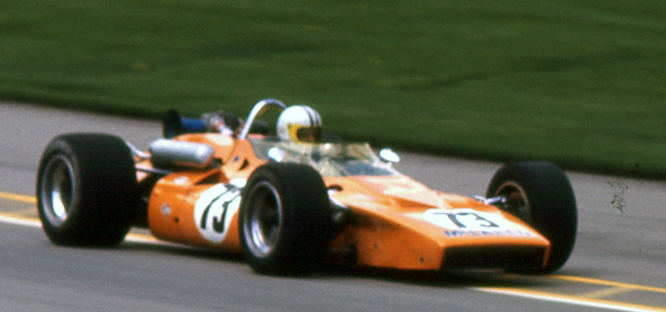
07 12 12 PS Jerry Entin has kindly informed me that the original plan was for Denny Hulme to drive the #73 but that he burned his hands shaking down the #79 McLaren. As a consequence Peter Revson was drafted in to drive the #73. I’ll be writing a full follow up blog with some interesting new photographs during the month of May.

Share

Taxi Driver – Jim Robbins Eagle Ford T/C Mk 2

Continuing GALPOTS potted history of the Indianapolis 500 Ed’s photos shown here today were taken in 1969, when Ed Arnaudin took the opportunity to get good and close to the Jim Robbins team again.

Indy69 001s

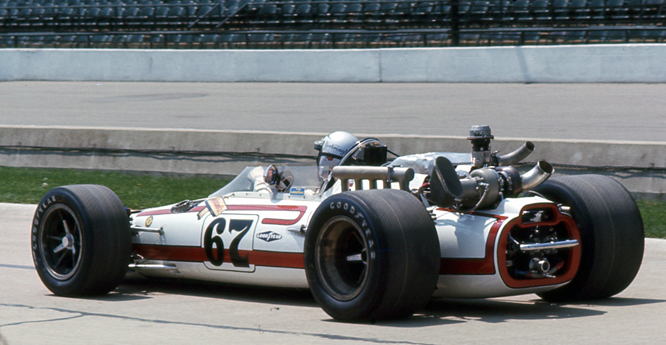
The driver of the #67 Eagle Ford is Lee Roy Yarbrough, not related to Cale Yarborough, from Jacksonville, Florida.

Lee Roy is said to have won his first race at 19 at a local dirt track and progressed through the NASCAR Sportsman Division with 11 wins and onto Modifieds where he won 83 features in 3 years.

On reaching the top Grand National Division, today called Sprint Cup he won 14 races from 198 starts over 12 years. His best season was 1969 7 wins, including Darlington, Charlotte and both races at Daytona, from 31 starts in the seasons 54 races. Many retirements due to engine failure kept him out of the title hunt won by David Pearson.

Lee Roy made just three starts in the ‘Indy 500’ in ’67 ’69 and ’70 his best finish was in 1970 when he completed 107 laps and retired with turbo failure and was classified in 19th place.

His career, as were several others,was adversely affected by the withdrawal of Ford from competition and Yabrough disappeared from NASCAR after failing to secure a ride for the Daytona 500 in 1973, he was eventually admitted to a mental hospital where a fall inflicted a fatal traumatic brain injury aged 46.

#67 Lee Roy Yarbrough 1969s

Jim Robbins turned up at the Brickyard in 1969 with three vehicles the #10 and #27 Vollstedts and the #67 Eagle Ford Mk 2, seen here, a design inspired by UK free lance design consultant Len Terry. This vehicle appears to be one of several built in 1968, though at this stage I do not know it’s exact history prior to the 1969 race.

After Denny Zimmerman failed to get the #67 up to speed in 1969 Lee Roy Yarbrough moved over from his ride in the #27 Vollstedt to qualify 8th for the Indy 500, during the race a turbo pipe broke sending him into retirement and a final classification of 23rd.

Indy69 008s

All of Jim Robbins 1969 entries were powered by turbocharged Ford engines, a turbocharger had first been used at Indy in 1952 on the Cummins Diesel.

With the arrival of the normally aspirated 4,195 cc / 255 cui Ford V8’s in 1963, several Offenhauser powered teams turned to supercharging smaller 2,752 cc / 168 cui motors to remain competitive in 1965, following the lead set by Novi some years earlier.

A couple of Offenhauser powered vehicles had mechanically more efficient turbochargers fitted to these smaller motors in place of the superchargers in 1966. Bobby Unser drove his Eagle Offy to the first turbocharged victory at Indianapolis in 1968.

In 1969 Ford also went the smaller capacity turbocharged route and only three cars in the 33 car field of ’69 did not have smaller 168 cui engines with turbochargers fitted.

Note how the large turbocharger air intake on the left rear of the #67 is rearward facing so as to avoid the problems experienced by the Cummins Diesel turbocharger in 1952 which sucked up so much debris from its front facing turbo air intake that the turbines terminally failed on lap 40.

I’d like to thank Steve Arnaudin for scanning today’s photographs and Amphicar at The Nostalgia Forum for his help in identifying the car.

Hope you have enjoyed today’s Len Terry inspired edition of ‘Gettin’ a lil’ psycho on tyres’ and that you’ll join me again tomorrow. Don’t forget to come back now !

Share

When Everything Went Wrong – Dave MacDonald and Eddie Sachs

Indy64 9s

The Indianapolis 500 run in 1964 will be for ever remembered as one of those days where everything that could go wrong, did go wrong, not just in front of the 250,000 spectators at the track , including the late Ed Arnaudin who took took today’s photos from the exit of turn 4, but also on live close circuit cinema broadcasts through out the United States.

The out come of everything going wrong was a fireball and the instant death of Eddie Sachs and a couple of hours later, as a result of his injuries, the death of Dave MacDonald.

Eddie Sachs was known as the ‘Clown Prince of Auto Racing’. Born May 28th 1927 in Allentown, PA, Eddie won the 1958 USAC Midwest Sprint Car Championship.

From 65 AAA and USAC starts Eddie won 8 USAC Championship races, he started twice from pole at Indianapolis in 1960 and ’61. With three laps to go in ’61 Eddie made a pit stop from the lead to replace a delaminating tyre finishing second saying afterwards “I’d sooner finish second than be dead.” This was to be his best career result in the ‘Indy 500’.

In 1963 Eddie was running 4th behind Parnelli Jones and Jim Clark in the Indy 500, when Parnelli’s oil tank split spilling oil on the track allegedly causing Eddie to spin into retirement with 9 laps to go. After the race Eddie got into a fist fight with Parnelli over the issue and earned himself a year on probation from USAC.

Dick Sommers Eddie’s team owner at the race has been quoted since as saying “I’ve often regretted not having yelled and screamed at the USAC board that day in the hope that Eddie would follow suit. He probably would have been suspended for a year and might be still around.”

Dave MacDonald known as the ‘Master of Oversteer’ was born in July 23rd 1936 in El Monte, CA, Dave’s start in motor sport was on the Drag Strips of California and proceeded on to road courses with Don Steven’s Corvettes usually numbered ’00’. Scoring a remarkable 26 wins from 57 races in three seasons brought Dave to the attention of Carroll Shelby in 1963.

Shelby’s faith in Dave was rewarded with 17 further outright and class wins including the first wins recorded in the 260, 289 and Shelby Daytona Cobra’s. Daves last victory was at the wheel of a King Cobra at the USRCC event at Kent Washington on May 10th 1964. From 101 races Dave managed a remarkable 44 victories.

Also severely injured in the aftermath of the 2nd lap incident at Indy in 1964 was Ronnie Duman who’s car caught fire after a secondary collision causing injuries from which it took two and a half months to recover.

Indy64 10s

As if to emphasis just how difficult it was to learn the lessons of the fireball at Indy in 1964 Bobby Marshmam, who started in the middle of the front row at Indy that year, went tire testing at Phoenix at the end of the season, he was wearing jeans and a T-shirt when his fuel tank ruptured in an accident. A week later Bobby died of the burns sustained in the accident.

My thanks to Steve Arnaudin for the scans of his Dad’s photographs.

Join me again tomorrow for another edition of ‘Getting a lil’ psycho on tyres’. Don’t forget to come back now !

Share

Stock Block – Thompson Buick/Chevrolet

In 1961 legendary American speed king Mickey Thompson employed british Dolphin Engineering designer John Crosthwaite to design and build three challengers for the 1962 Indianapolis 500.

Aided by Fritz Voigt and his crew the challengers were transformed from blank sheet of paper into drawings and three complete cars in just 120 days.

Indy62 002s

(Photo by Ed Arnaudin)

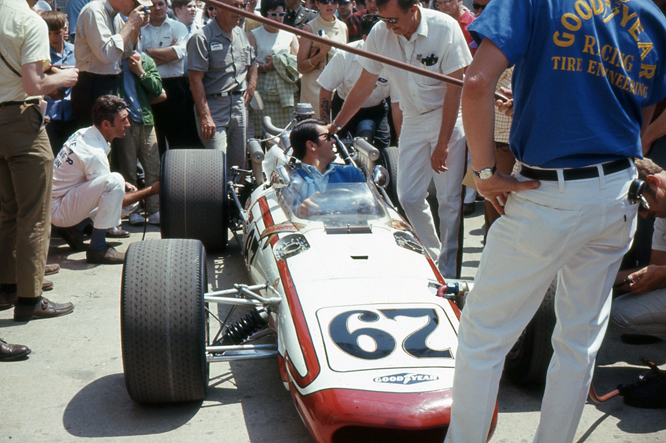
Dan Gurney, possibly seen sitting in the vehicle above, had a lot riding on the 1962 Indy 500, at his own expense he invited Colin Chapman the genius behind Lotus Cars over to see the 1962 Indy 500 with a view to getting a deal done for Lotus to hook up with Ford and himself for a proper shot at the 500 in 1963.

Whatever else happened in 1962 Dan had to look good. Dan had originally agreed to drive the gas turbine powered #52 John Zink Trackburner, however the characteristics of the power plant did not sit comfortably with Dan who was racing on an oval for the first time, so he switched to drive Mickey Thompsons all aluminium Buick V8 stock block powered #34 Thompson instead.

Dan made a wise move, qualifying 8th and retiring with a seized rear end in 20th, the move looked doubly good for Dan when one of two drivers who drove the #52 John Zink Trackburner after Dan had left, veteran Bill Cheesbourg, followed Dan and drove the #35 Harvey Aluminium Special also a Thompson – Buick.

Cheesbourg like the previous incumbent Chuck Daigh failed to qualify the #35.

A third #33 Thompson Buick, belonging to Jim Kimberly, who the year earlier had owned and run the Kimberly Cooper Climax, was driven by Porky Rachwitz, Jack Fairman who both failed to qualify.

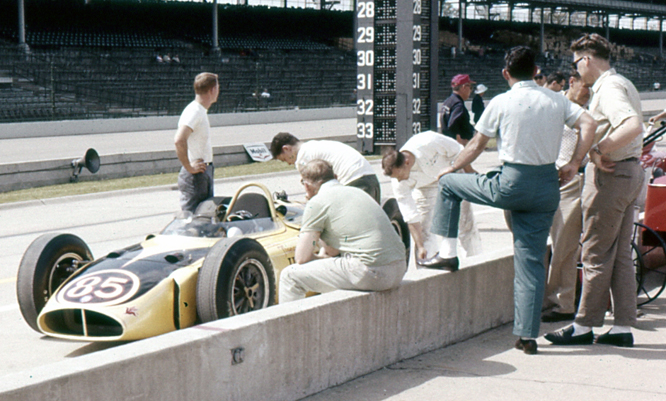
Indy63 001s

(Photo by Ed Arnaudin)

For 1963 Thompson took four cars to Indianapolis all now powered by Chevrolet stock blocks, the # 85 shown here with, possibly Micky Thompson standing on the extreme right behind the pit wall, is one of the original 1962 cars, driven in 1963 by Bill Cheesbourg until he wrecked the car in practice before qualifying had even started.

Cheesbourg who seems to have made a career out of driving novel designs at Indy failed to qualify a conventional #27 Watson for the race in 1963 while the #85 is not recorded as having taken any further part in the ’63 race after it was wrecked.

My thanks to Steve Arnaudin who kindly scanned his Dad’s photo’s for me to share and to Tom, FB84, Michael, Jim, EB, Amphicar, Tim and Tom G over at TNF who have helped me identify the cars and stories attached to them.

Hope you have enjoyed today’s Stock Block edition of ‘Gettin’ a lil psyco on tyres’ and that you will join me again tomorrow. Don’t forget to come back now !
Share

1962 DNQ – John Zink Trackburner

The other day I caught a bit of a radio programme about interview questions asked of potential Oxbridge (Oxford & Cambridge) university students, one of which was “If you are not in California how do you know it exists ?”

This got me thinking about if one was not at a particular race how could one know what happened ?

Looking into the story behind today’s photograph by Ed Arnaudin several ‘beliefs’ I have long held were ‘corrected’, namely that after the appearance of Jack Brabham’s Cooper Coventry Climax T54 the next car with an engine in the back to appear at Indianapolis was Jim Clark’s #92 Lotus Ford 29 in 1963.

Much to my surprise I found out that there were two rear engine vehicle types at Indianapolis in 1962 !

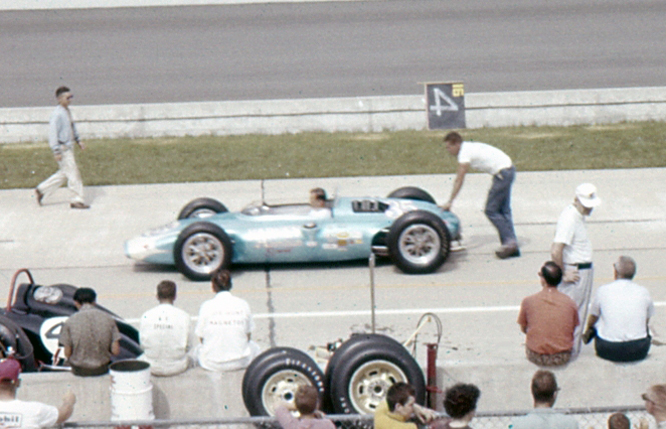
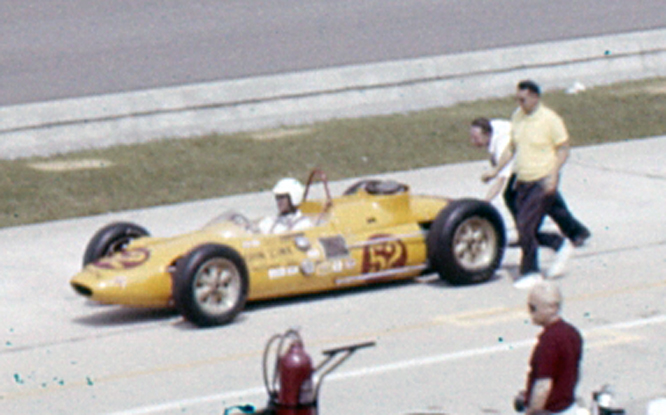
John Zink Trackburner, Indianapolis

The John Zink Trackburner, above, and Mickey Thompson’s Harvey Aluminium Special, remarkably they were both driven by Dan Gurney who invited Colin Chapman of Lotus over, all expenses paid, for the 1962 Indy 500 in an attempt to secure a deal with Lotus & Ford to have a winning shot at the race in 1963 !

The history of running turbines in Indy cars goes back to 1955 when a Kurtis Kraft 3000 chassis was fitted with a 175 hp Gas Turbine with the support of USAF General Curtis Le May. This vehicle known as the SAC Fireboid, see images at the bottom of this link, was used for testing by Firestone and for a demonstration at Indy in 1955.

In 1958 a Mr Williams of the Boeing Aircraft Company approached Frank Kurtis in 1958 to design a purpose made turbine powered vehicle, allegedly Frank drew up plans for a vehicle with the engine at the rear, primarily do deal with the 1000º F plus exhaust gas temperatures. However the powers that be at USAC were not sufficiently timely or co-operative to get the project up and running.

For 1962 the 1955 and ’56 winning owner John Zink had his Chief Mechanic Denny Moore build a rear engine chassis to take a Boeing Turbine.

Prior to the Indy 500 the car was tested and crashed by John ‘Jack’ Zink at his own private 5/8ths mile circuit which included 11º banking ! After repairs the car was taken to Indianapolis where the rookie road racer Dan Gurney tried it after passing his Rookie test in a front engine Roadster.

Gurney managed to run at 143 mph not fast enough to qualify in the gas turbine Trackburner and felt that though more speed was achievable throttle lag in traffic would present insurmountable problems during the race. Dan ended up qualifying and racing Thompson’s Buick stock block, under, powered Harvey Aluminium Special instead.

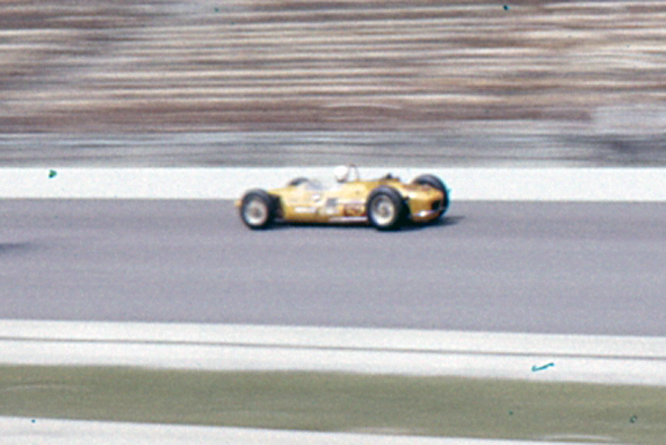
Indy veteran Duane Carter was next to run in the Gas Turbine Trackburner, Carter ran slower in the corners but faster on the straights than Gurney recording a best time of 142 mph.

John Zink Trackburner, Indianapolis

Duane qualified for the ’62 Indy 500 in a conventional roadster belonging to Zink and Bill Cheesebourg, most likely the driver seen in the car here, had a shot at running in the turbine Trackburner he managed a best time of 145 mph but like Gurney fancied his chances in a Buick stock block powered Thompson, unlike Gurney he could not get up to qualifying speed before crashing.

Finally Duane Carter in danger of being bumped off the grid had one more shot at qualifying in the turbine Trackburner but he could not record a time faster than 143 mph. It was concluded that despite running nearly a full race distance during qualification for the 500 the combination of throttle lag, high track side temperatures, and inconsistencies born out of the three different drivers who spent time in the cockpit led to the cars failure to qualify.

My thanks to Steve Arnadin for scanning his Dad’s photograph, to Tom, E.B, Michael, Tim, at The Nostalgia Forum, for filling a large gap in my knowledge.

Hope you have enjoyed today’s belief changing edition of ‘Gettin’ a lil’ psycho on tyres’ and that you’ll join me again tomorrow. Don’t forget to come back now !

Share

Sign of things to come – Kimberly Cooper Special

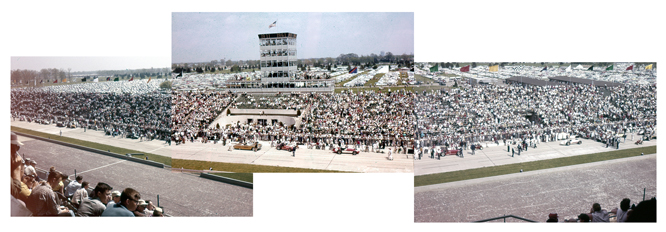
Today’s blog, on the 50th anniversary running of the ‘ Indy 500’ in 1961, comes courtesy of photographs by Ed Arnaudin and Phillippe de Lespinay.

01 Copyright Ed Arnaudin 1961_61s

Photo by Ed Arnaudin.

AJ Foyt recorded his first of four victories at Indy in 1961 driving the Bowes Seal Fast Special, a Trevis Roadster, outrunning Ed Sachs and Roger Ward both driving Watson Roadsters.

Cooper T54, Jack Brabham, Indy 500

Photo by Ed Arnaudin.

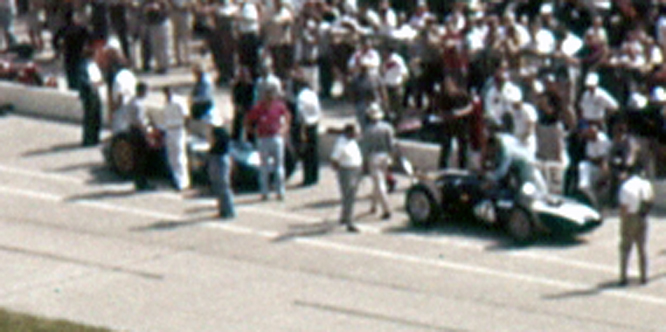
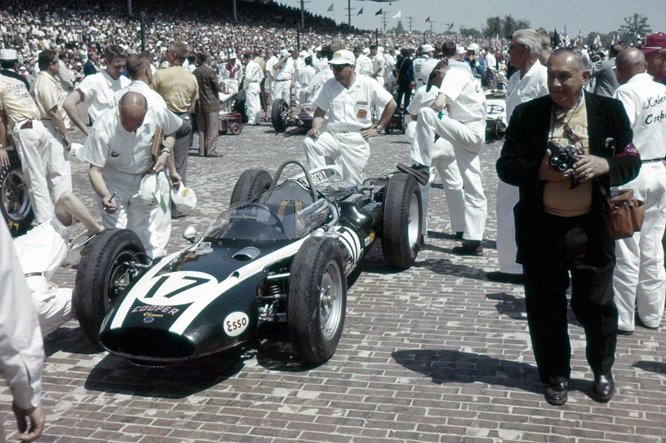
Also on the grid of the 1961 Indy 500 was a small car built in England driven by an Australian who started 13th and came in 9th, perhaps not a stunning performance but none the less a significant marker for the future designs that would appear at Indianapolis.

Cooper Climax T54, Kimberely Cooper Special, Indianapolis Motor Speedway

Photo by Ed Arnaudin.

The #17 Kimberly Cooper Special, was the smallest car in the field powered by the smallest engine a 270 HP 2750 cc / 167 cui 4 cylinder Coventry Climax which gave away around 150 HP to it’s Offenhauser powered opposition. Uniquely that day in May the Cooper had it’s Coventry Climax engine mounted behind the driver.

Despite it’s power disadvantage which showed in straight line speed the Coopers lighter weight and rear engine configuration gave two time, reigning, World Champion,Jack Brabham a superior handling car going round the corners.

Had the team not made an unscheduled third stop, spending over 8 minutes stationary over three stops ‘Black Jack’ wound have been in a competitive position at the end of the race.

Cooper never returned to Indianapolis. The marker they had put down with the rear engine layout was taken up by others and by 1969 all Indy 500 qualifiers had engines mounted in the back, a development that was met with some resistance by both organizers and fellow competitors, who were less than thrilled by all manner of new comers turning up and eventually sweeping up the victory spoils.

In 1963 owner Kjell Kvale, believing some hopelessly optimistic performance figures for a 6 cylinder Aston Martin engine had Joe Huffaker install it in ‘Black Jacks’ 1961 Cooper T54 for Pedro Rodriguez to drive. Due to poor straight line speed Pedro Rodriguez was bumped in qualifying for the 1963 Indy 500.

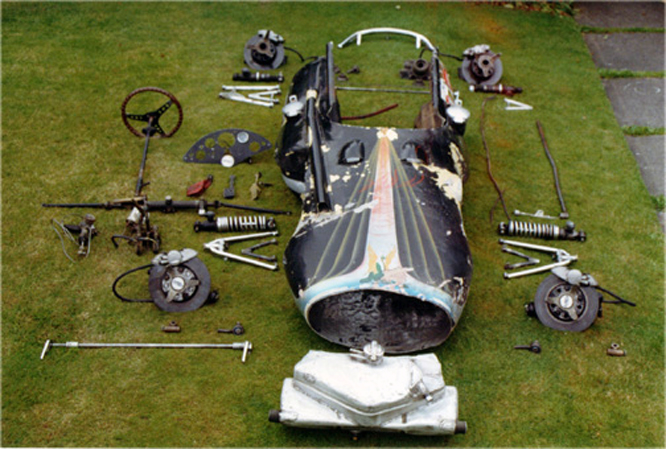
The unique T54 then passed through 3 hands and by 1977 it had morphed into a Chevrolet powered sprint car. Fortunately many of the original parts that had been replaced in the morphing process had been kept.

Cooper T54, Philippe de Lespinay

Photograph courtesy of Philippe de Lespinay

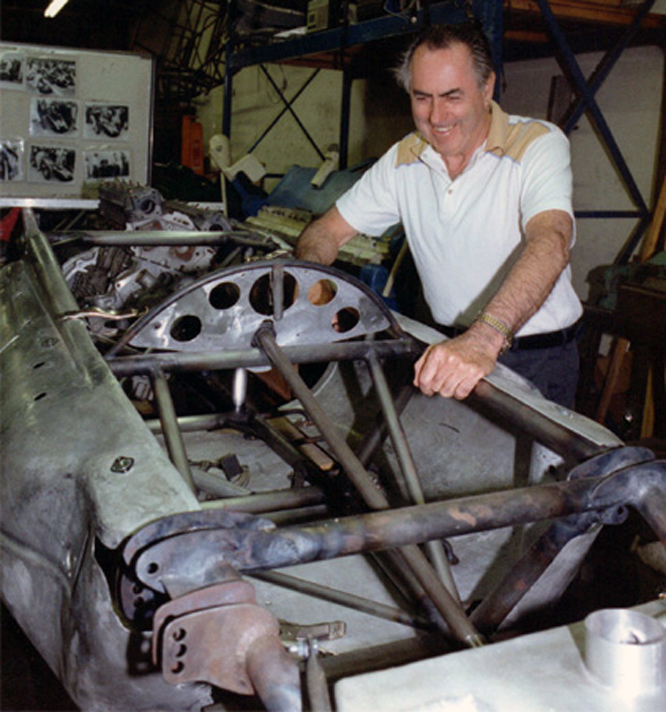
In 1990 Philippe de Lespinay and Robert G Arnold managed to purchase over 70% of the parts belonging to the T54, along with it’s original equally storied engine, giving Thomas Beauchamp, Gene Crowe and Quincy Epperly the task of restoring the Cooper back to it’s 1961 specification using as all of the recovered original parts, including all of the surviving body panels.

Cooper T54,  Jack Brabham

Photograph courtesy of Philippe de Lespinay

During the restoration Jack Brabham found time to visit the shop in California and inspect the work in progress.

Cooper T54,  Jack Brabham

Photograph courtesy of Philippe de Lespinay Monterey 2006

Thirty years after first driving the T54 at Indianapolis Jack Brabham took a belated fairy tale victory to win the 1991 Monterey Cup.

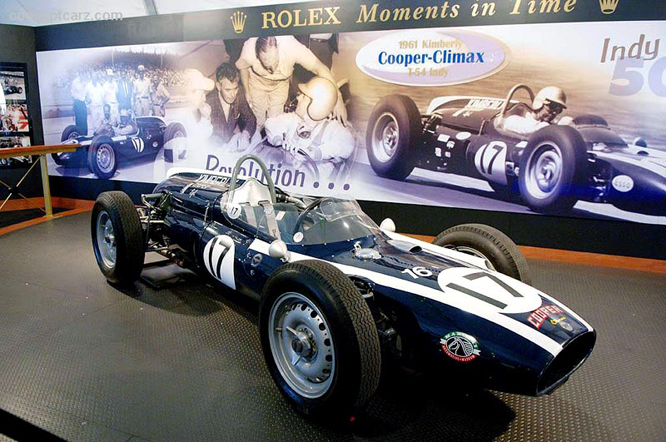
Cooper T54, Rolex Moments in Time.

Photograph courtesy of Philippe de Lespinay

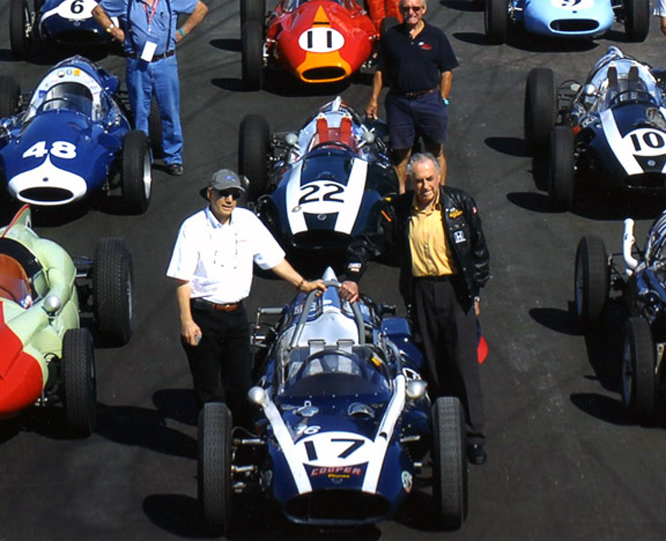
Since then the T54 has appeared at the Petersen Automotive Museum, the Marconi Automotive Museum, Pebble Beach Concours d’Elegance and in 2006 was selected as the star of the 2006 Rolex display at Monterey.

In July Philippe will be bring the Kimberly Cooper Special also known as the Cooper Coventry Climax T54 to Goodwood Festival of Speed, where I look forward to seeing the car for the first time in the flesh and meeting Philippe.

My thanks to Steve Arnaudin for scanning and sending his Dad’s photos, to Phillipe de Lespinay for permission to use his photos more of which along with the complete story on the restoration of the T54 may be seen here.

Hope you have enjoyed today’s rear engine edition of ‘Gettin’ a lil’ psycho on tyres’, and that you will join me again tomorrow. Don’t forget to come back now !
Correction in an earlier edit of this blog I incorrectly stated Pedro Rodrigueuz had crashed the Cooper Aston Martin, this was definitely not the case and a case of labelling error by a third party, apologies for any confusion caused.

Share