Tag Archives: Jones

BAC MSC Challenge Trophy – Autumn Classic Castle Combe

It’s not everyday that I get to write a feature about a single 15 min race, but last Sunday 500cc Formula 3 cars returned to their spiritual home to compete in a race solely for the 500cc Formula 3 cars for the first time in 59 years.
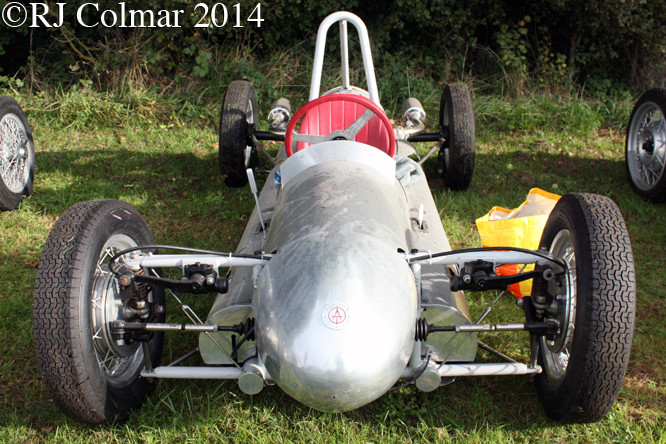
Iota Milli Union, Autumn Classic, Castle Combe

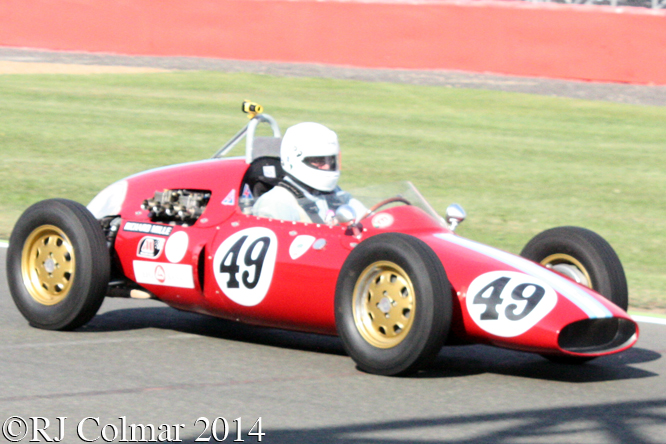
Not all of the cars that turned up were competing, among the static displays with the 500 Owners Association was this Iota Milli Union, considered to be one of the oldest 500cc Formula 3 cars built to the original Iota plans advanced by Dick Caesar.

This particular car was originally built by Bristol Telephone Engineer and motorcycle racer GH Millington in 1946/7. This combination took part in the first closed event at Castle Combe run in July 1950 where Gerry Millington finished second in the first race for the newly internationally recognised formula to be run at the circuit.

Currently the car is in need of a new £600 magneto which the present owner can ill afford at the moment.
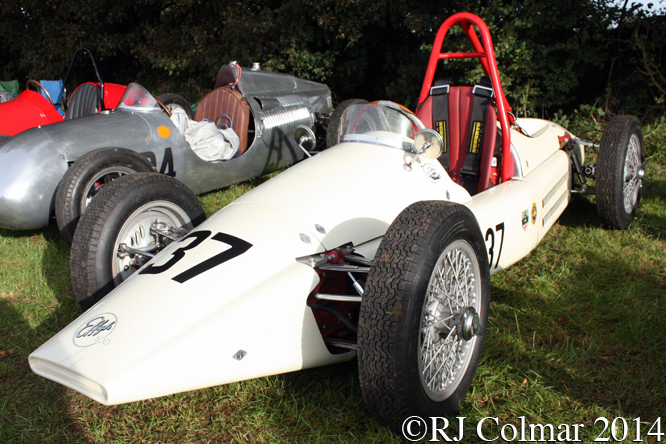
Effyh, Autumn Classic, Castle Combe

The Efflyh above is thought to be one of 10 500cc F3 cars built in Sweden, I believe this particular car built in 1950 found it’s way to Senator T. Newell Wood who drove it on his 960-acre Brynfan Tyddyn estate in Pennsylvania. In 1956 this car is thought to have been fitted with a Norton engine, Cooper suspension and the straight edged bodywork seen here.
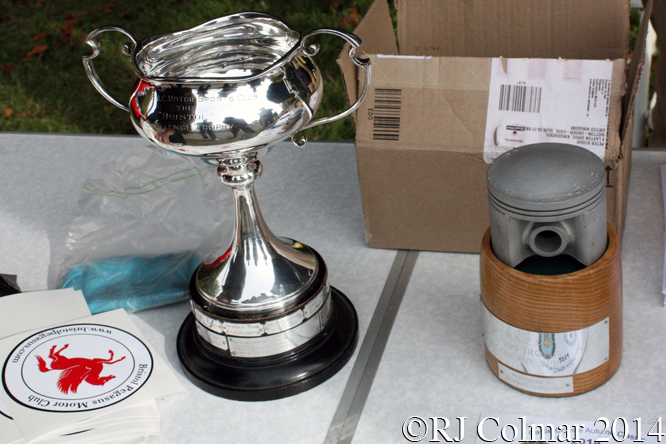
BACMSC Challenge Trophy, Autumn Classic, Castle Combe

The prize for competitors in the 500cc Formula 3 race was the Bristol Aeroplane Company Motor Sports Club’s Challenge Trophy which was commissioned by the same club that is generally regarded as being the home of the 500cc Formula 3, since many of those instrumental in devising it were employees of the Bristol Aeroplane Company during the ’39-’45 war.

The original BAC MSC was reformed as the 500 Club in 1946 an organisation that later morphed into the British Racing and Sports Car Club. Bristol Aeroplane Company revived the BAC MSC as the Bristol Pegasus Motor Club in 1955.

I am afraid my attempt at lashing my video camera to the spectator fence for the start of the BAC MSC Challenge Trophy race was less than successful, but in this clip you get a feel for the sound these cars make en masse, turn up the volume to off the dial !
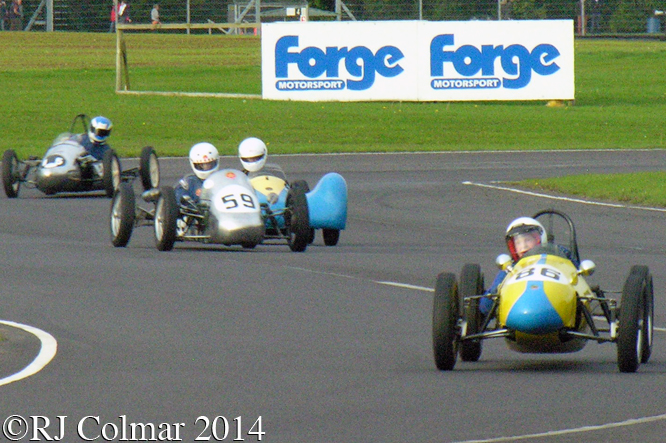
BACMSC Challenge, Autumn Classic, Castle Combe

Regular readers may remember that at the beginning of the season I attended the VSCC Spring Start meeting at Silverstone where John Turner driving the #86 Cooper Mk 9 and Richard Bishop Miller driving the #57 Revis ended up in hospital. It was great to see both drivers going at it hammer and tongs with their repaired steeds at Castle Combe. On this occasion John finished 6th Richard 8th with Xavier Kingsland in the Staride Mk 3 I looked at last week 12th.
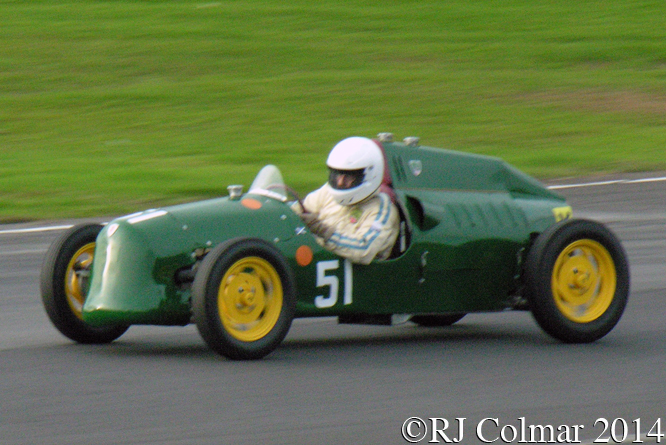
JP Mk 1, Alan Croft, Autumn Classic, Castle Combe

16 different manufacturers were named on the entry list many vehicles were unique others, like the Scottish built JP Mk 1 driven by Alan Croft above, went into production.
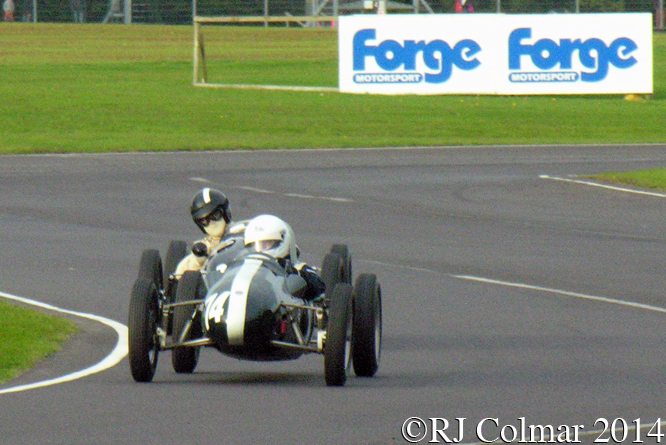
Cooper Mk X , Steve Jones, Autumn Classic, Castle Combe

The BACMSC Challenge Trophy race was won by Steve Jones aboard his Cooper Mk X by just over half a second from George Shackleton, seen popping his head out as they enter Old Paddock, who was driving a Cooper Mk 8.

Thanks for joining me on this “BACMSC Challenge Trophy” edition of “Gettin’ a li’l psycho on tyres” I hope you will join me again tomorrow when I’ll be looking at another ERA. Don’t forget to come back now !

Share

Scratched Entry – Lola T70 SL70/13

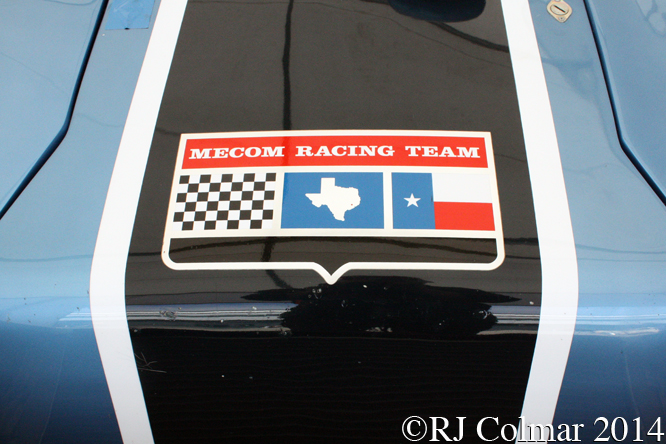
In 1955 aged just 15 John Mecom Jr went to work for one of the wealthiest independent oil men in Texas and indeed the world, namely his father John Whitfield Mecom Snr. By 1960 Jr had dropped out of University of Oklahoma, but was kept busy negotiating oil deals in the middle east and founding the Mecom Racing Team.

Lola T70, Silverstone Classic

The Mecom Racing Team ran sports cars for the likes of a young Roger Penske and Augie Pabst, a one off open wheel Formula One Lotus for Rob Schroeder in 1962, before running rookies Jackie Stewart and Graham Hill at the Indy 500 in 1966. Graham won the race which had been dominated by Jackie until 8 laps from the end.

Lola T70, Silverstone Classic

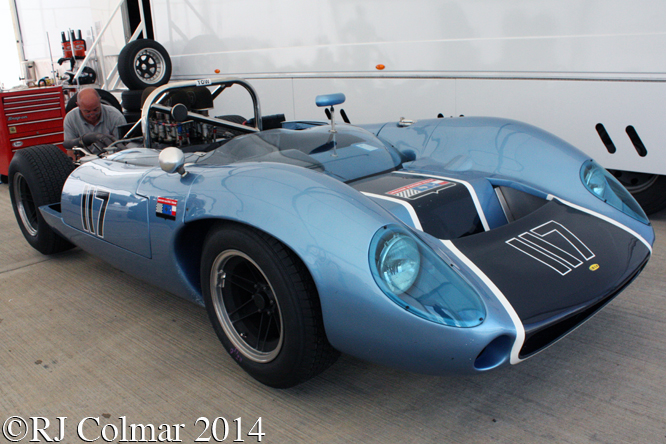
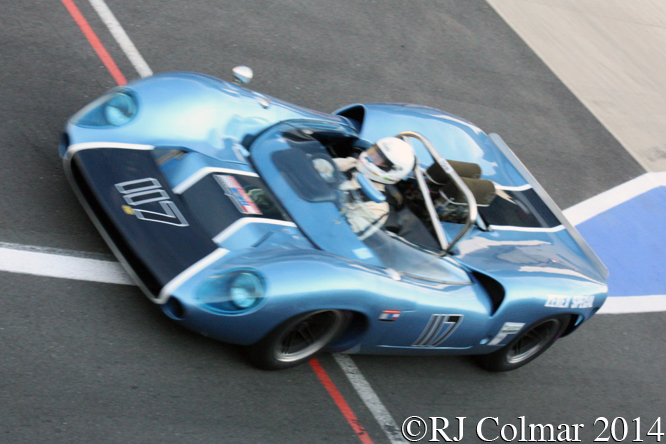
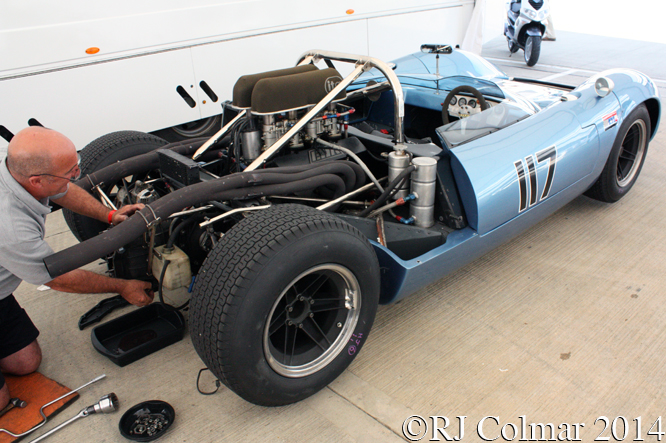
Today’s featured Lola T70, which I believe is chassis SL70/13, is one of at least three T70’s that were owned by the Mecom Racing Team. So far as I know the car was driven by Walt Hangsen in qualifying for the 1965 Las Vegas 200 mile race during which Walt crashed and seriously damaged the Ford 4.7 litre / 286 cui powered car after qualifying 6th fastest.

Lola T70, Jones, FIA Masters Historic Sports Cars, Silverstone Classic

As a result of the accident the Mecom Racing Team scratched their entries for this car and the sister chassis SL70/12, which was to have been driven by Jackie Stewart, from the 1965 Nassau Speed Week.

Lola T70, Silverstone Classic

Alongside his racing activities John Mecom Jr founded the New Orleans Saints football, grid iron, team in 1966 and wound up the Mecom Racing Team in 1967.

SL70/13 eventually found its way to the UK where Colin Parry-Williams raced it with a 5 litre / 302 cui Chevy motor in the 1980’s and 1990’s.

Howard Jones is seen at the wheel of SL70/13, now powered by a 5.7 litre / 328 cui motor, about to take part in the FIA Masters Historic Sports Cars race at Silverstone Classic above. Howard acquired the car in 2006.

Thanks for joining me on this “Scratched Entry” edition of “Gettin’ a li’l psycho on tyres”, I hope you will join me again for Ferrari Friday tomorrow. Don’t forget to come back now !
Share

Super Saturday Part 1/2 – Silverstone Classic

Artist Gerhard Richter once observed something akin to ‘that so long as one still has an object from the past it remains contemporary’, at Silverstone Classic on Super Saturday, the world’s biggest classic car show, there were many objects from man’s not so long past and many came to life in a vibrant crescendo of the twelve races which I was privileged to witness.

de Tomaso ISIS, Gregory, Silverstone Classic

For some time I have been on the look out for a Formula Junior de Tomaso. The 1959 FIAT powered ISIS example driven by Mike Gregory was one of two different de Tomaso models in the opening Peter Arundell Trophy Formula Junior race of the day which was won by Sam Wilson driving a Lotus after his main challenger David Methley spun out in his evil handling Brabham.

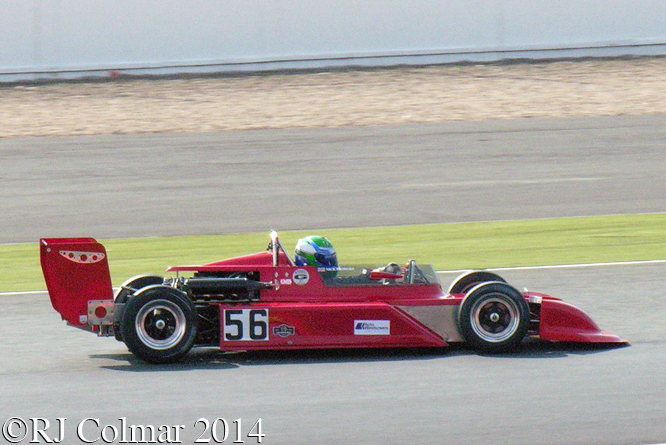
March 783, Padmore, Silverstone Classic

Silverstone Classic are great at introducing new events to their crowded schedule and one of the debutant events on this years schedule was the Brian Henton Trophy for classic Formula 3 cars of the type that helped launch the careers of Tony Brise, Tom Pryce, Gunnar Nilsson and Stephen South not to mention Nelson Piquet, Derek Warwick, and a chap called Ayrton da Silva who changed his name to something more snappy. Above Nick Pardmore guides his 1978 March 783, with ’79 side pods, through Stowe Corner on his way to victory.

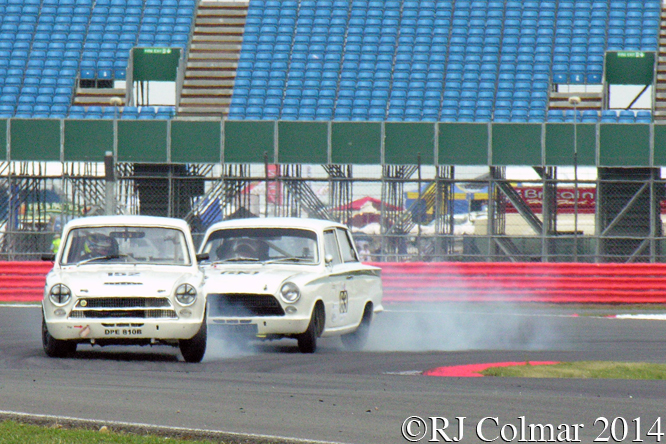
Ford Cortinas, Shedden, Meaden, Silverstone Classic

For the best part of half an hour British Touring Car Championship (BTCC) regular Gordon Shedden and Richard Meaden kept us entertained with door handle to door handle racing at the front of the Sir John Whitmore Trophy race for under 2 litre / 122 cui saloon cars. Unfortunately when Gordon, seen leading above, came in for his mandatory pit stop his Lotus Cortina expired with an over heating issue before BTCC veteran Matt Neale could take over leaving Richard and Grant Tromans to take a well earned win.

Lister Costin Jaguar, Ward, Silverstone Classic

Chris Ward driving the Costin bodied Lister Jaguar above twice held the lead in the Stirling Moss Trophy for pre ’61 Sports Cars but he could not hold off the winning Knobbly bodied Lister Jaguar driven by Jon Minshaw/Phil Keen.

Hesketh 308C, Jones, Silverstone Classic

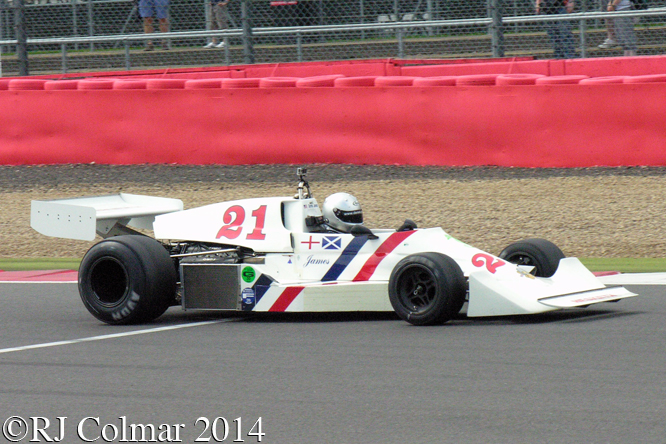
In 1975 it was announced that the hitherto enormous air boxes that had become an aesthetic blight on Formula One were to be banned along with various other changes. The first car to be built to the new regulations was the Hesketh 308C which was designed by Harvey Postlethwaite for James Hunt to drive. Above Derek Jones is seen driving a 308C in the FIA Masters Formula One race which was won by Ollie Hancock in a ’78 Fittipaldi F5A, after the race was stopped to allow the extraction of Sidney Hoole from what remained of the fabulous Ensign N173. Sidney was taken to hospital with a leg injury described as not ‘thought to be serious’.

Opel Belmont (sic), Wolfe, Silverstone Classic

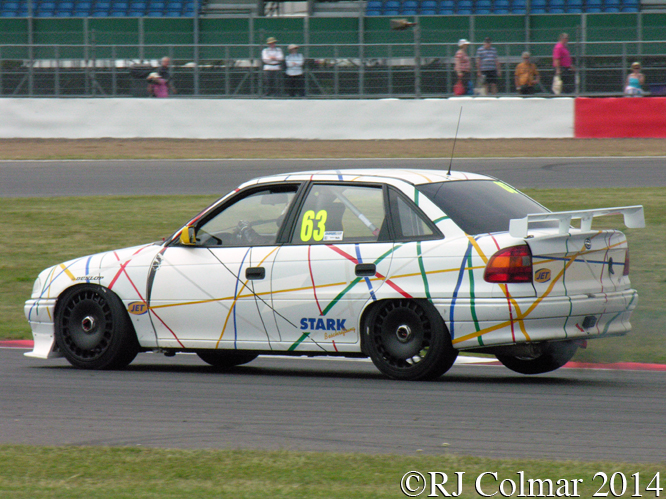
The sixth event of the Silverstone Classic ‘Super Saturday’ was the Jet Super Touring Car Trophy for a variety of Touring cars from the Early 70’s to the turn of the Millennium. The close fought race was won by James Dodd from Stewart Whyte both driving Honda Accords. Andy Wolfe is seen driving a 1993 Jet sponsored Opel Astra, listed incorrectly in the programme as an Opel Belmont, which won it’s class in the 1993 Nurburgring 24 hours.

Thanks for joining me on this ‘Super Saturday Part 1/2′ edition of “Gettin’ a li’l psycho on tyres” I hope you will join me again tomorrow when I’ll continue with the second half of the Super Saturday race programme. Don’t forget to come back now !
Share

AJ Watson RIP – Racing Associates Watson Roadster

Today’s post is dedicated to the memory or AJ Watson who passed four days past his 90th birthday on May 12th. AJ designed and built 23 Watson Roadster Indy Cars after redesigning John Zinks 1955 Indy 500 winning Kurtis KK500C driven by Bob Sweikert.

Rathman Watson, Sachs Ewing, 1960 Indianapolis 500

AJ’s own designs won the Indy 500 in ’56 with Pat Flaherty driving John Zinks car followed by Rodger Ward in the ’59 Leader Card Watson and Jim Rathman in the 1960 Ken – Paul Watson seen above being chased Eddie Sachs in the Van Dean Lines Ewing.

1962 Indianapolis 500

Rodger Ward won again in the Leader Card Watson in ’62, seen in the middle of the front row above, followed by Parnelli Jones in JC Agajanian example in ’63 seen below.

Jones, Agajanian , Watson, 1963 Indy 500

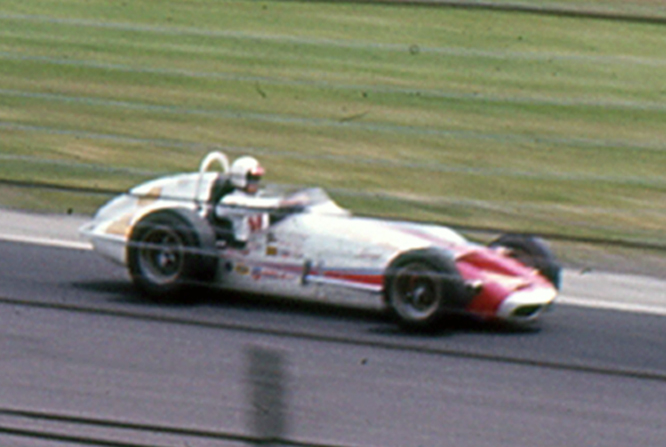
Finally AJ Foyt, seen above drove the Ansted-Thompson Racing Watson to victory in ’64 which would become the last Indy 500 victory for a front engined Roadster.

Foyt, Ansted-Thompson Racing Watson, 1964, Indianapolis 500

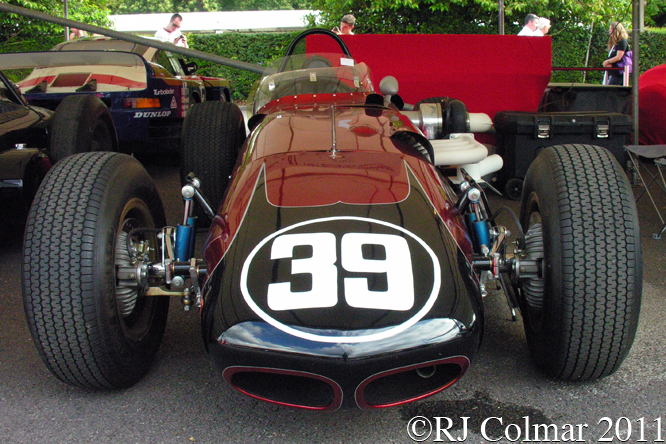
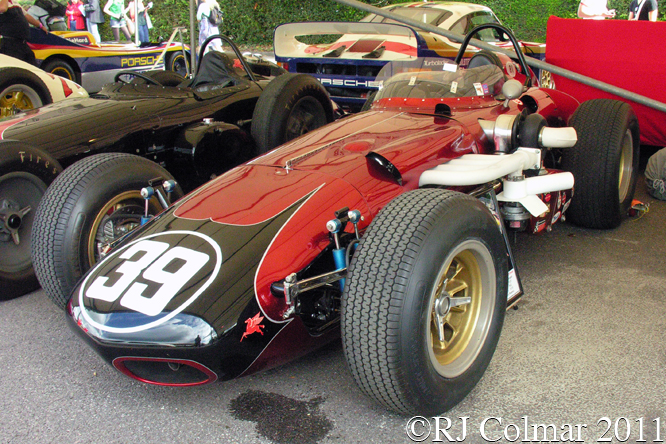
Today’s featured car is perhaps the ultimate development of the Watson line, it was built in 1963 for Racing Associates who entered Ebb Rose. Ebb got bumped off the grid, but the following year the car was entered for Johnny Rutherford who qualified 15th and was classified 27th.

Racing Associates Watson, Goodwood Festival of Speed

For 1965 Bobby Grim was entered in the Racing Associates Watson and failed to qualify the 252 cui Offy powered machine.

Racing Associates Watson, Goodwood Festival of Speed

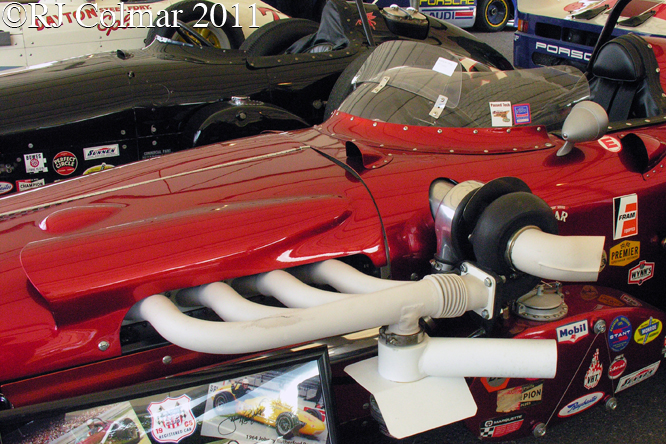
In 1966 Racing Associates has a 168 cui Offy fitted which gave an additional 50 hp thanks to the white pipes and turbocharger fitted to the exhaust. This time Bobby Grim just qualified 31st and was classified 31st after being involved in the start line pile up, on what would be the last appearance of a Watson in the Indy 500.

Racing Associates Watson, Goodwood Festival of Speed

This was also the beginning of a new and final chapter in the story of the famous Offy motor which in turbocharged form would power Bobby Unser to victory in 1968; Mark Donohue ’72, Gordon Johncock ’73, Johnny Rutherford in ’74 and ’76 interupted by Bobby Unser in ’75 and would continue to be used until 1983 when the two Offenhauser Volstedts failed to qualify.

My thanks to Steve Arnaudin for sharing his late Dad Ed Arnaudin’s photo’s of the Watson Roadster’s in their heyday.

I hope you will join me in wishing AJ Watson’s family and friends including GALPOT contributor my sincerest condolences.

Thanks for joining me on this “AJ Watson RIP” edition of “Gettin’ a li’l psycho on tyres” I hope you will join me again tomorrow. Don’t forget to come back now !
Share

Lower Cleaner – Lola Chevrolet T330 #HU4

The 1973 Formula 5000 season which played out in three championships across three continents saw winning cars produced by four different manufacturers namely Chevron, McRae, Trojan and Lola. It was the last named that won most of the races in all three series with their T330 model, a lower and cleaner version of the 1972 T300, like chassis #HU4 featured today which took part in all three series.

Lola T330, Michigan International Speedway

(Photo Copyright Mark Windecker 1973)

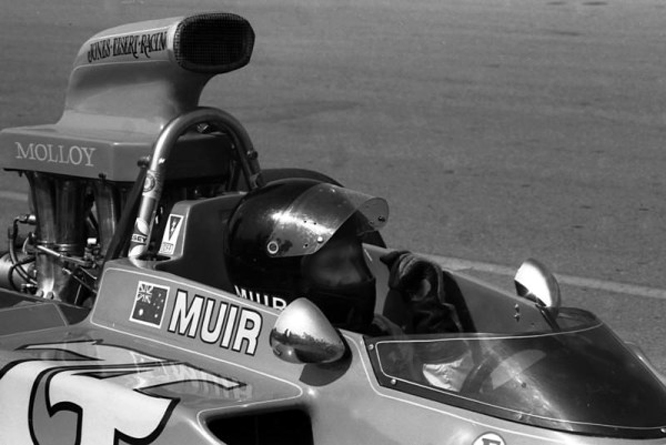
According to Old Racing Cars.com chassis #HU4 was first raced at Surfers Paradise in the fourth round of the Tasman Series by Gary Campbell where he retired with an overheating motor. Gary crashed during practice for the next race at Warwick Farm and the car was then bought by Australian Bobby Muir who repaired it and took it to Riverside, where Chuck Jones and Jerry Eisert became co entrants with Bobby for the first round of the US L&M Formula 5000 championship.

Bobby’s best result was a 10th at Riverside after which followed a string of five retirements until Road Atlanta where Bobby crashed in practice and failed to take the start. The photo’s by Mark Windecker show #HU4 and Bobby sitting in it at Michigan International Speedway.

Bob Muir, Lola T330, Michigan International Speedway

(Photo Copyright Mark Windecker 1973)

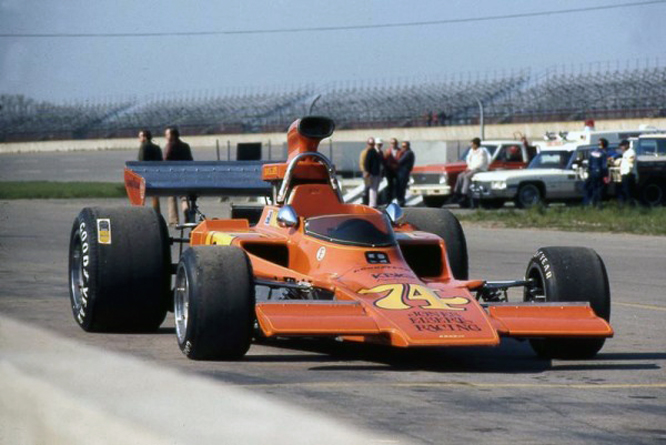
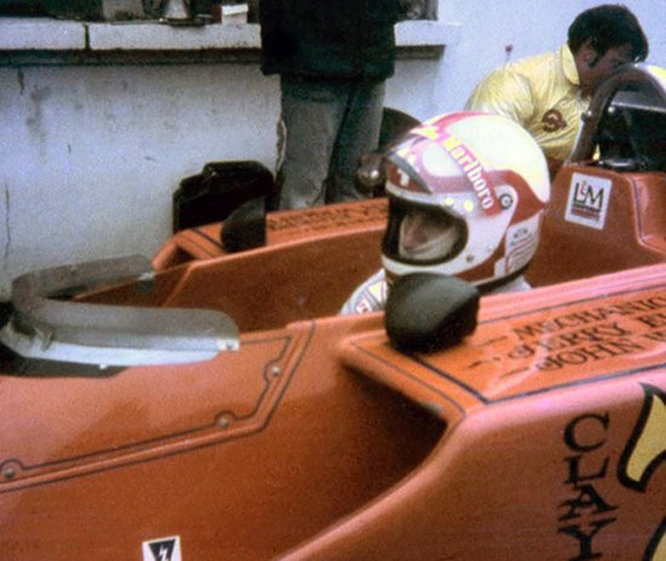
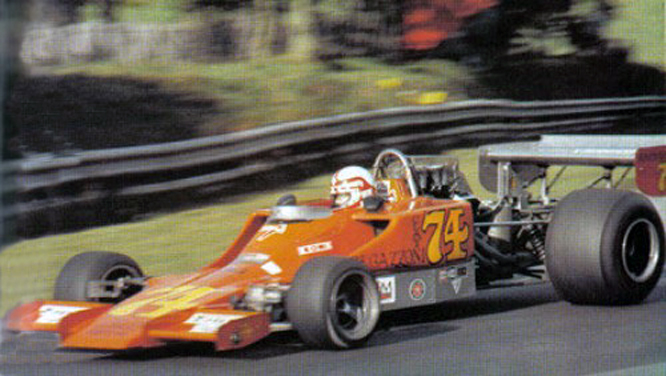
After missing Pocono #HU4 was entered into the final US race of the season at Seattle by Chuck and Jerry for Clay Regazzoni who was about to transition from BRM to back to the Ferrari formula one Team. As this linked picture show’s the #74 had a new nose with a single full width wing mounted above it, an idea Ferrari had first used at the 1973 Italian Grand Prix three weeks earlier. #HU4 was also fitted with larger radiators requiring deeper ducts at the request of engine builder Ron Armstrong.

Clay Regazzoni, Lola T330, Brands Hatch

(Photo Chuck Jones Collection)

Clay retired in Seattle, but that did not prevent the Jones Eisert team from sending the #HU4 to Brands Hatch for the final race of the Rothmans European Formula 5000 championship where these two photograph’s from Chuck Jones Collection show Clay, who finished 12th, at the wheel.

Clay Regazzoni, Lola T330, Brands Hatch

(Photo Chuck Jones Collection)

In December 1973 AW Brown acquired #HU4 and ran if four Damien Magee in the 1974 European Formula 5000 Championship until the engine blew at Zandvoort and the team was disbanded. Damien scored #HU4’s all time best result a 4th place finish in the series second visit to Brands Hatch. Damien finished the season driving a 1973 Trojan #T101 chassis #T101-105.

#HU4 does not appear to have raced again until it started appearing in Historic Events in 2001. When I finally get around to looking for cars for the GALPOT Museum high on my list of cars to purchase will be #HU4 in it’s funky #74 orange Jones, Eisert and Regazzoni livery which hit the spot when this 14 year old first laid eyes on it in a magazine.

Chuck Jones and Clay Regazzoni would team up again in 1977 when Chuck was involved with the Ensign Formula One team and Clay was chosen as the driver.

My thanks to Jerry Entin for kindly securing permission for me to use Mark Windecker’s photos from Michigan International Speedway and the photo’s from Chuck Jones Collection taken at Brands Hatch.

Thanks for joining me on this “Lower Cleaner” edition of “Gettin’ a li’l psycho on tyres”. I hope you will join me again tomorrow when I’ll be looking at another stylish ISO Rivolta. Don’t forget to come back now !
Share

6 Wheel 4WD Final Call – Williams FW08B

Going into the 1982 season Williams had won not only a drivers Championship with Alan Jones in 1980, but two consecutive constructors Championships on which the team openly has always prided it’s self on more than any drivers championship.

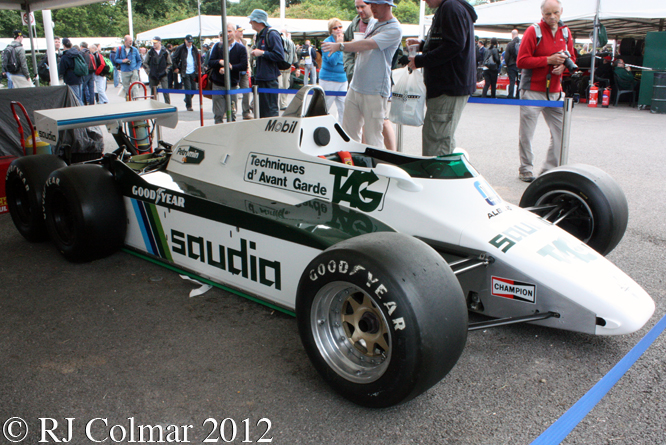
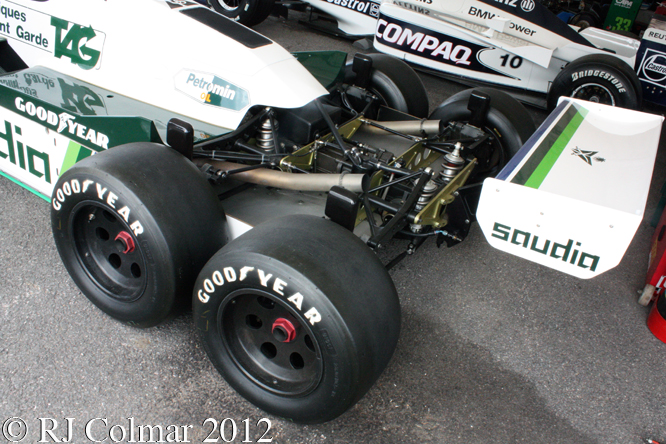
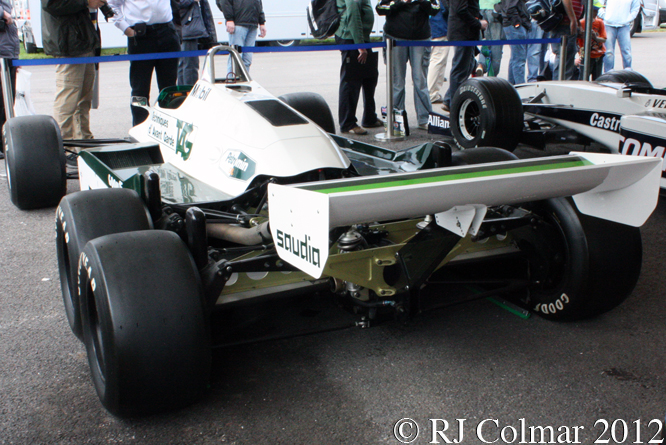
At the end of 1981 Williams designer Patrick Head and aerodynamicist Frank Dernie revisited the idea of running a six wheel formula one car with four driven wheels as Robin Herd at March had done during the winter of 1976/77 with the March 2-4-0.

Williams, Cosworth, FW08B, Goodwood Festival of Speed

Unlike March the Williams team were not interested in the publicity from the concept but, already having sufficient financial backing to see the concept through, they were interested in the results and specifically a third consecutive constructors championship which the concept might be able to deliver.

Williams, Cosworth, FW08B, Goodwood Festival of Speed

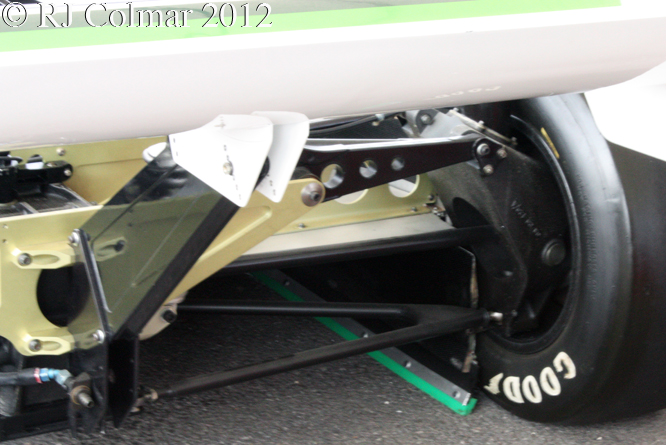
The rear 4 wheel drive transmission was tried out first on a 1981 FW07C chassis #FW07C/11 which became D spec with the additional driving wheels. Alan Jones tested the car before heading off into ‘temporary’ retirement in Australia.

Williams, Cosworth, FW08B, Goodwood Festival of Speed

With Jones team mate Carlos Reutemann also considering retirement after blowing an opportunity to win the 1981 World Drivers Championship at the last race in 1981, Fittipaldi refugee, Keke Rosberg was taken on to test both the FW07D, the new two wheel drive FW08 and four wheel drive FW08B as seen in these photographs.

Williams, Cosworth, FW08B, Goodwood Festival of Speed

In January 1982 it was reported in Motor Sport that “Patrick Head is pressing on with his experimental six wheeled Williams….”, by February 1982 Motor Sport reported that “Williams will not be racing the six wheeler…” without any further reasons being given leading one to conclude the 4 wheel 2 wheel drive FW08 had proved sufficiently superior not to proceed with the FW08B.

Although Patrick Head has said that at a meeting of the Formula One teams others were horrified at the increased expense of the system and prospect of the chaos that would ensue during pitstops. The FIA eventually also put a restriction on the number of wheels for a Formula One car limited to just 4 of which 2 maybe driven.

Despite being reliant on the venerable, but reasonably reliable Cosworth DFV motor when all around them the turbo charged motors were showing ever more horsepower Keke Rosberg managed to win the 1982 drivers championship with the FW08, winning just one race in the sixteen race series but scoring enough points from his remaining placings to beat his turbocharged competitors.

The constructors championship was won by Ferrari and had not Gilles Villeneuve been killed and Didier Pironi injured during the season a Ferrari driver might well have won the 1982 championship.

Thanks for joining me on this “6 Wheel 4WD Final Call” edition of “Gettin’ a li’l psycho on tyres”, I hope you will join me again tomorrow. Don’t forget to come back now.

Share

$150 Silver Dollars And An Avanti – 1962 Indianapolis 500

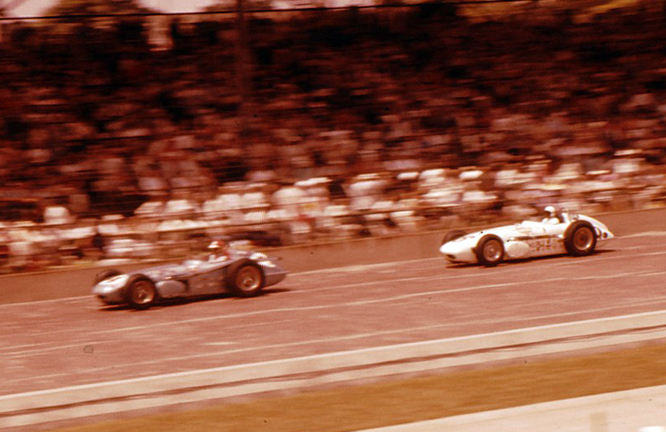
$150 Silver Dollars and a Studebaker Avanti were among the prizes taken home by two drivers from the Indianapolis Month of May in 1962.

On Pole Day the track temperature was measured at a scintillating 142° F / 61° C but amazingly this did not stop Parnelli Jones, in his Watson Offy, becoming the first man to average over 150 mph for his 4 qualifying laps to claim pole and an impromptu prize from a rival car owner of 150 silver dollars.

Indianapolis 1962

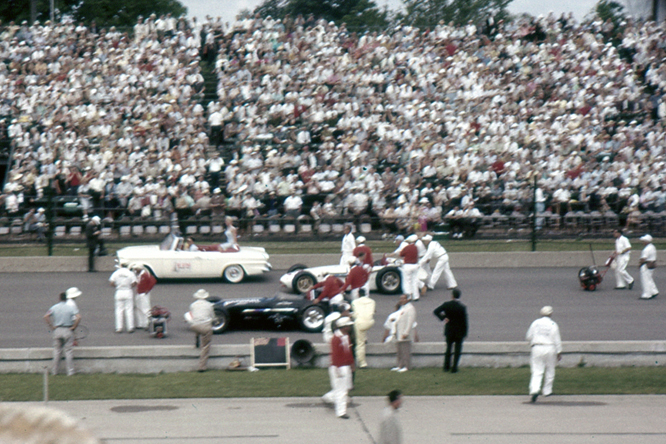
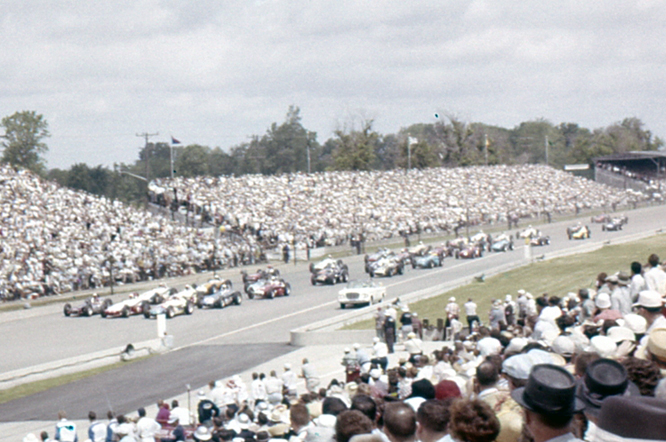
In Ed Arnaudins photo above a Studebaker Skylark Convertible passes the white Watson Offy of Shorty Templeton as is pushed to its outside second row grid position and the black Phillips Offy of Bud Tigelstad making its way to an inside forth row grid position.

Shorty and Bud would finish the race in 11th and 15th places respectively.

Indianapolis 1962

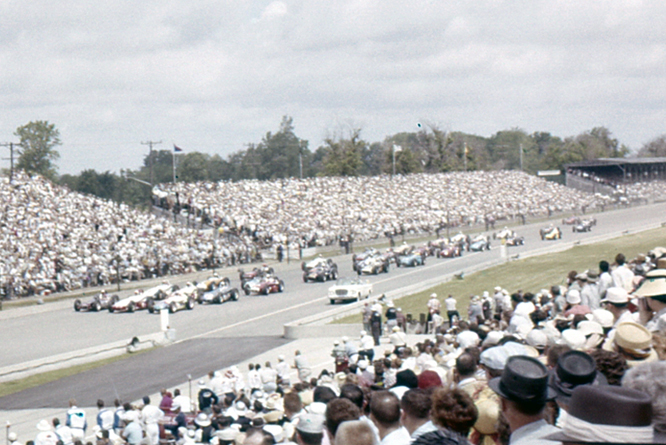
As the Skylark pace car returns to pit road Parnelli Jones from the inside of the front row leads Roger Ward, Watson Offy, Bobby Marshman, Epperly Offy, and the rest of the field to the start line. Rookie Dan Gurney in the middle of the third row seems to be struggling to get his rear engined stock block Thompson Buick up to speed.

Parnelli Jones led the first 300 miles comfortably before experiencing problems including coming to rest in the pits. AJ Foyt, Trevis Offy, was second in the early running until losing a wheel. And so Roger Ward came through to chase Jones down and take the lead, heading his team mate Len Sutton across the line for a Leader Card 1-2 victory at a new record 140 mph average for the race.

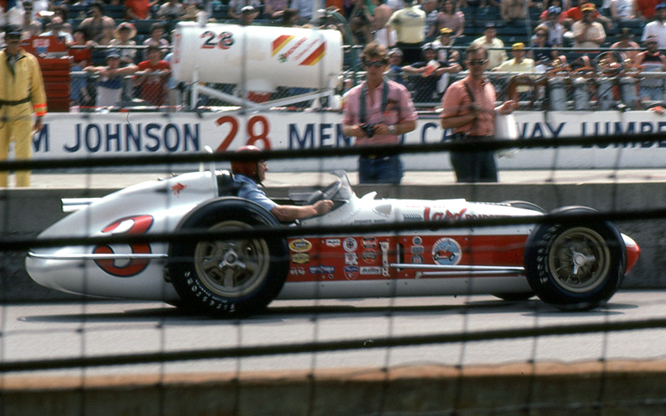
Watson Offy, Indianapolis 1982

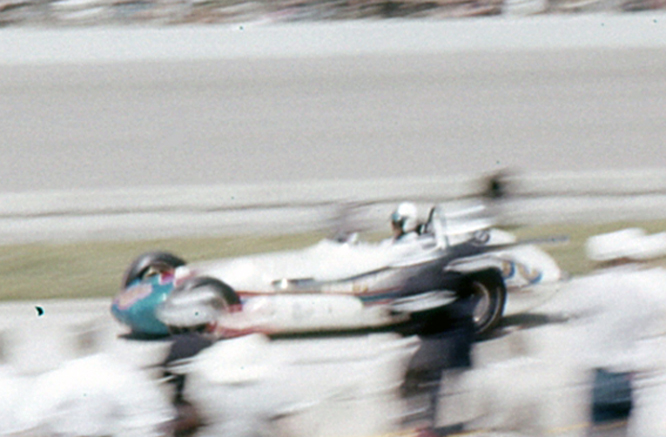
In Ed’s photo above Roger is seen driving the #3 Leader Card Special during the 1982 pre race parade. Roger won a £125,000 and became the first owner of a Studebaker Avanti which was part of his prize package.

My thanks to Ed Arnaudin and his son Steve for today’s photographs and to E.B and Brian at The Nostalgia Forum for their help identifying Roger and the two racing cars in the top photo.

Thanks for joining me on this “$150 Silver Dollars And An Avanti” edition of “Gettin’ a li’l psycho on tyres” I hope you will join me again tomorrow for a trip through the National Motor Museum. Don’t forget to come back now !
Share